Life's Clockwork Melody in Bloom
Life's Clockwork Melody in Bloom — an illustrated science story. 10 illustrated pages, free to read on Wonder Science.
Page 1
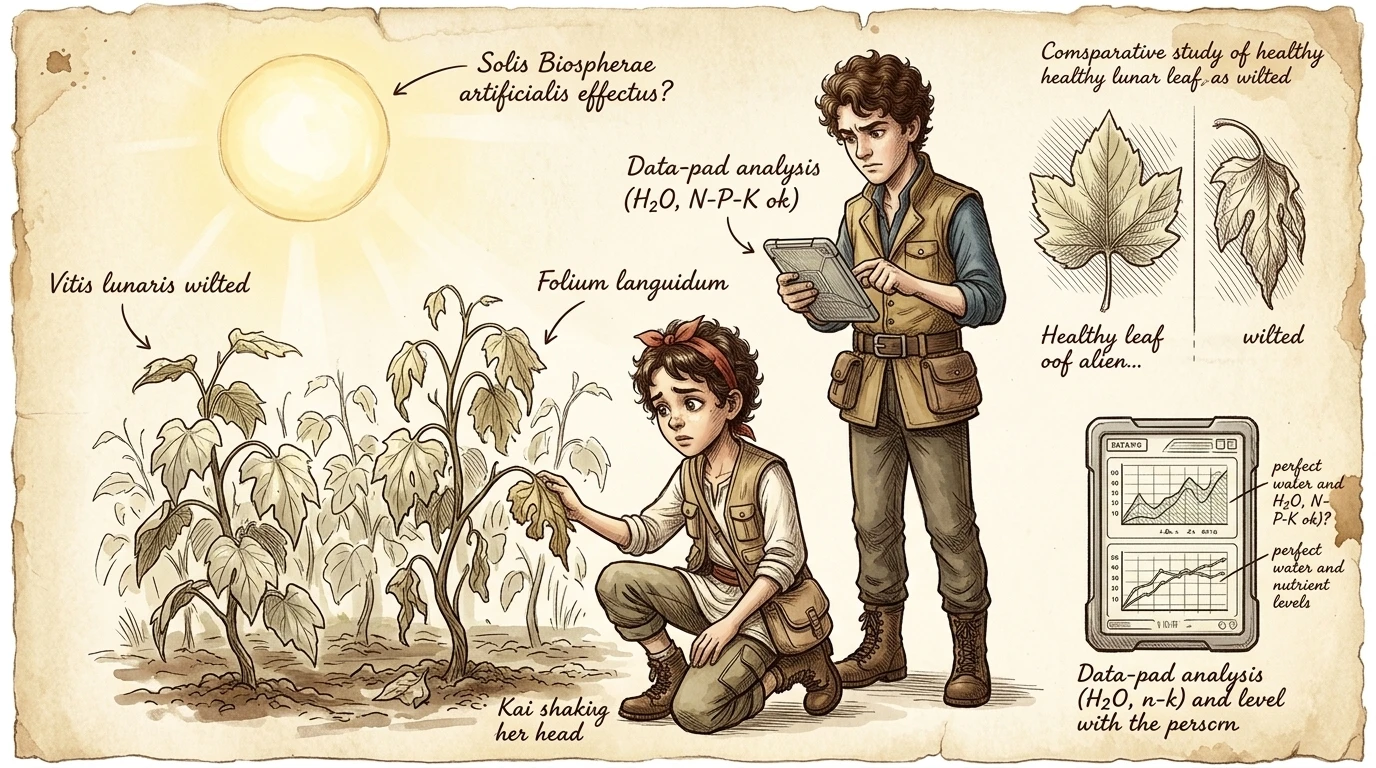
In the brilliant glow of the Biosphere's artificial sun, a section of lunar-vine plants drooped sadly. "All my sensors show perfect water and nutrient levels," Leo said, tapping his data-pad with a frown. Kai knelt down, gently touching a wilting leaf and shaking her head. "But look at them, Leo. They're telling us a different story."
Page 2
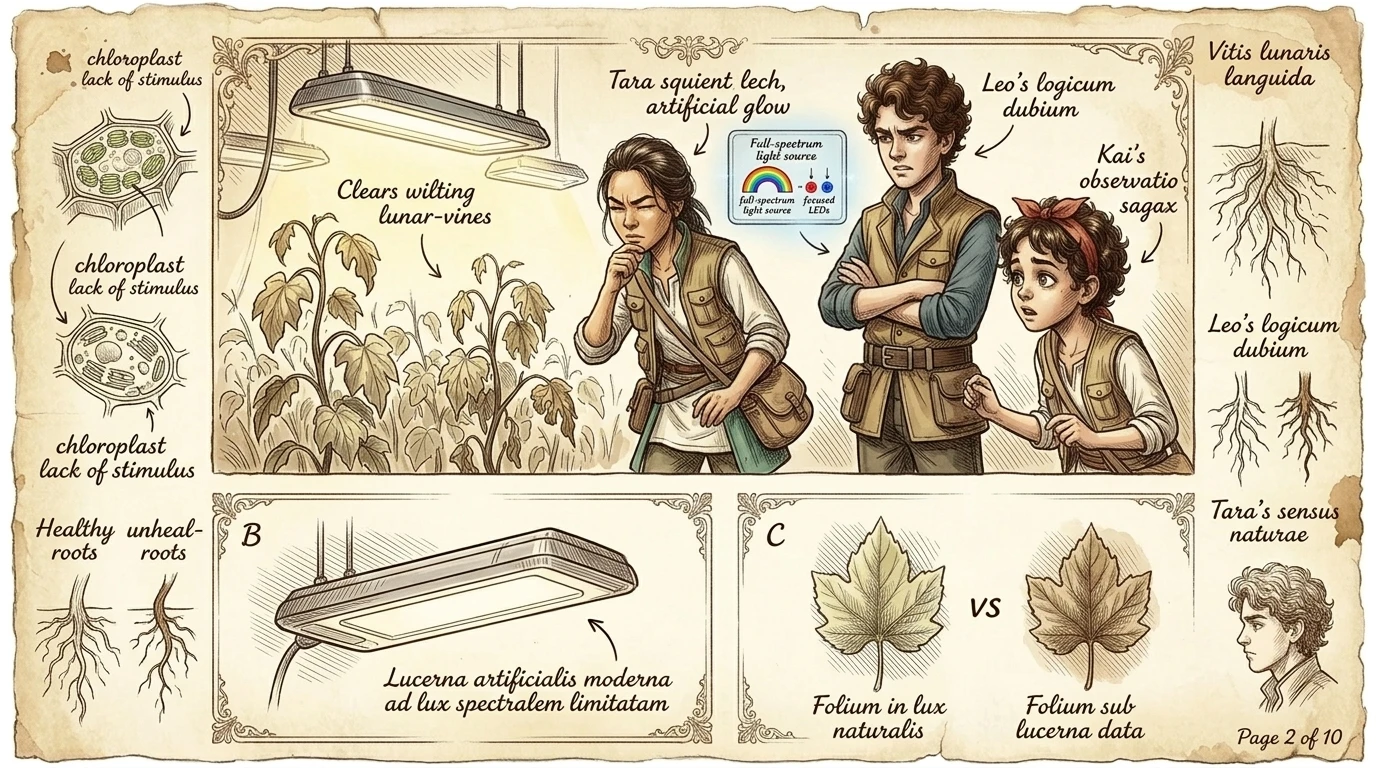
"Maybe the problem isn't the soil," Tara murmured, squinting at the high-tech lamps above. "The light here just feels... flat." Leo scoffed, "It's full-spectrum light, the best kind! In my robotics lab, we use specific red and blue LEDs for different tasks, but this is supposed to have everything." Kai looked from the lamps to the leaves, a thought beginning to form. "What if 'everything' isn't what they need? What if plants are picky eaters... for light?"
Page 3
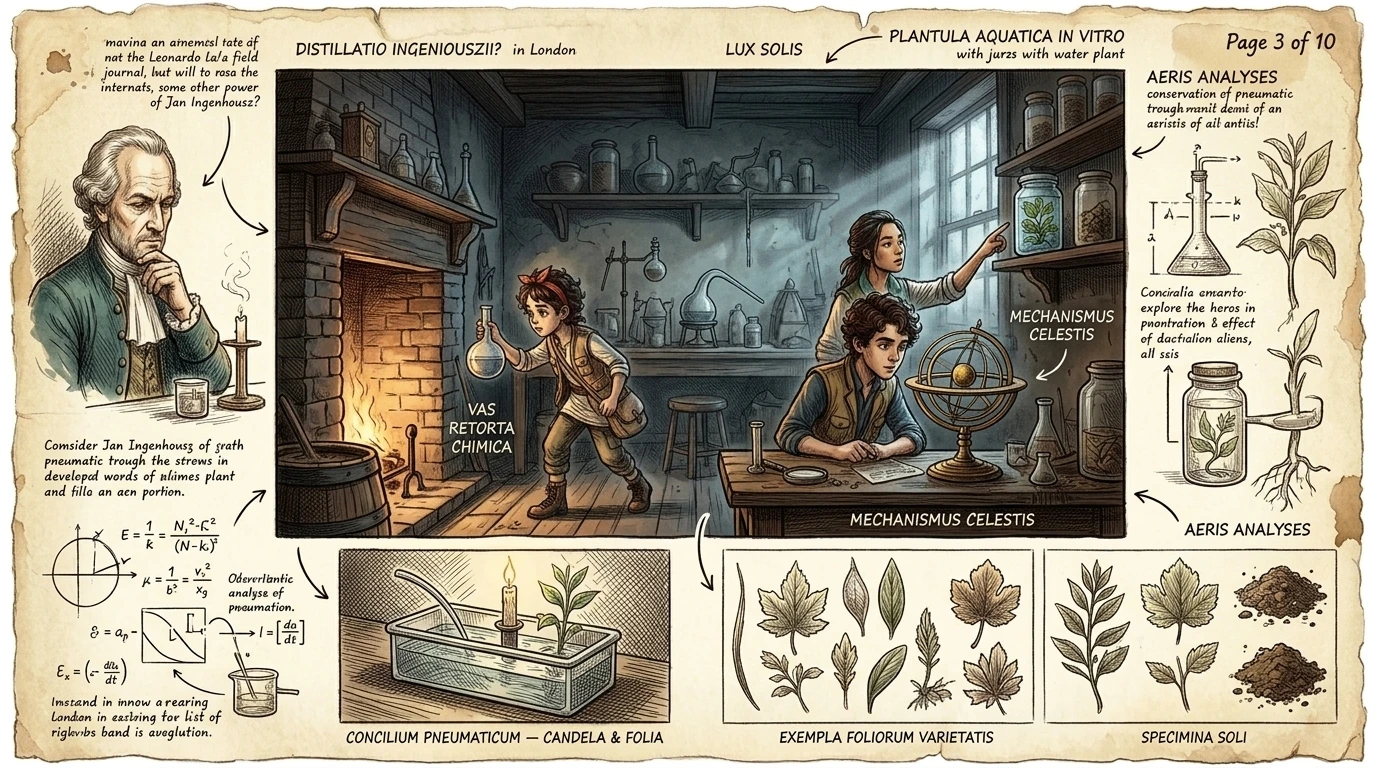
This puzzle wasn't new; it began centuries ago, long before biospheres and data-pads. The mystery of what plants truly needed started in the 1770s, in a foggy London laboratory. There, in a world lit only by fire and the sun, one man was asking a similar question about the very air we breathe.
Page 4
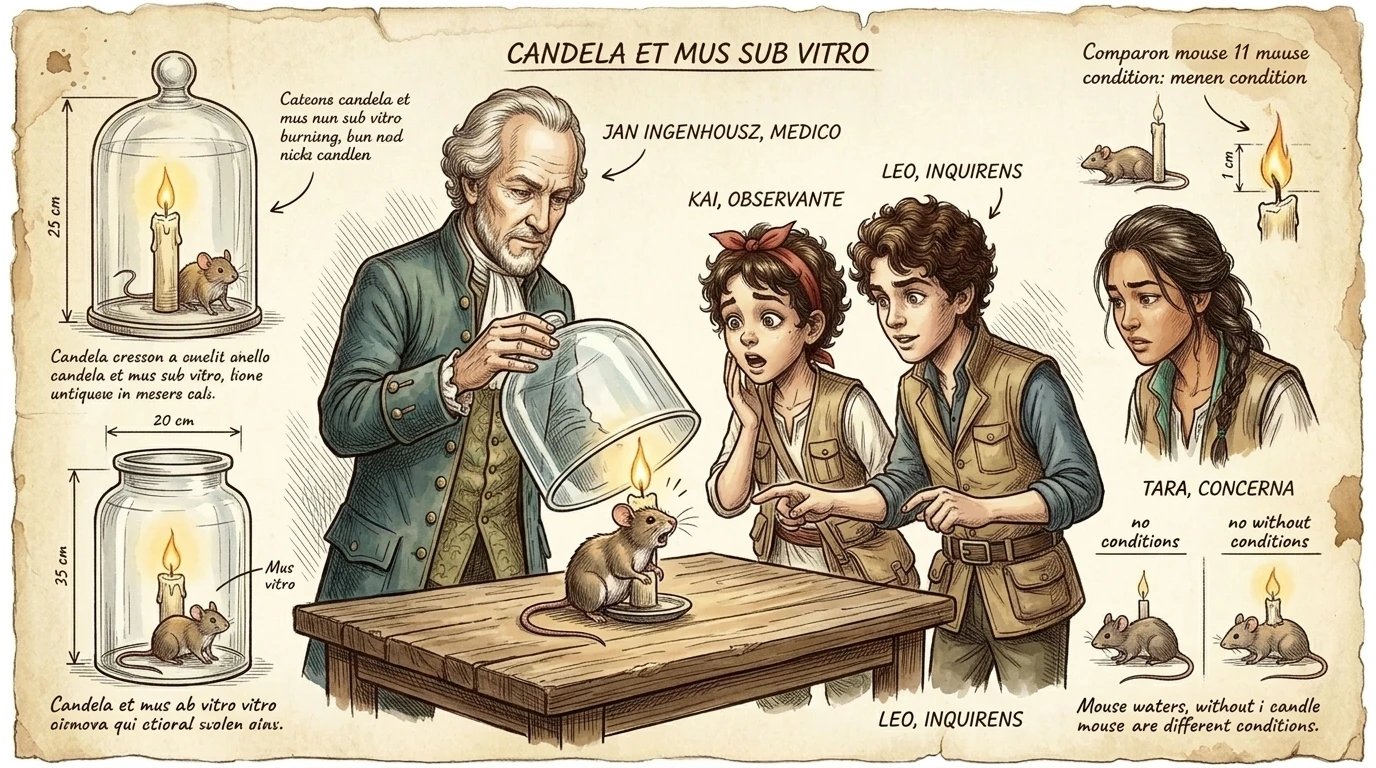
"His name was Jan Ingenhousz," Kai whispered, as if watching a film. "He was a famous doctor, but he was fascinated by what the scientist Joseph Priestley called 'damaged air'—the air left after a candle burned out." Leo pointed. "Look, he's putting a mouse and a candle under that glass jar!" Tara added, "That seems like a bad idea for the mouse."
Page 5
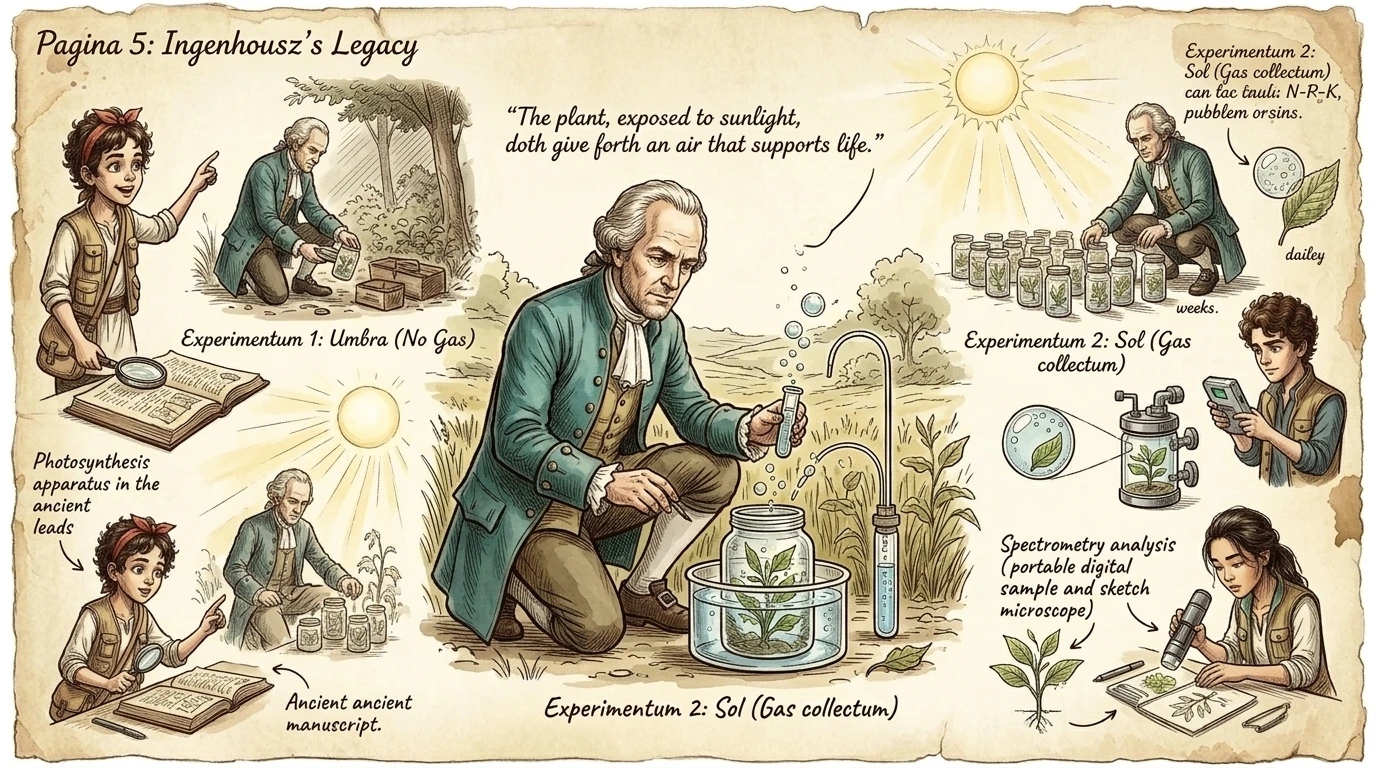
Ingenhousz worked for weeks, meticulously placing different things under the jars. Kai remembered a quote from Leonardo da Vinci. "'Learning never exhausts the mind,' she whispered. 'He was right, look how Ingenhousz keeps trying, even when an experiment fails.'" He spent hours just watching, noticing every tiny change inside the glass.
Page 6
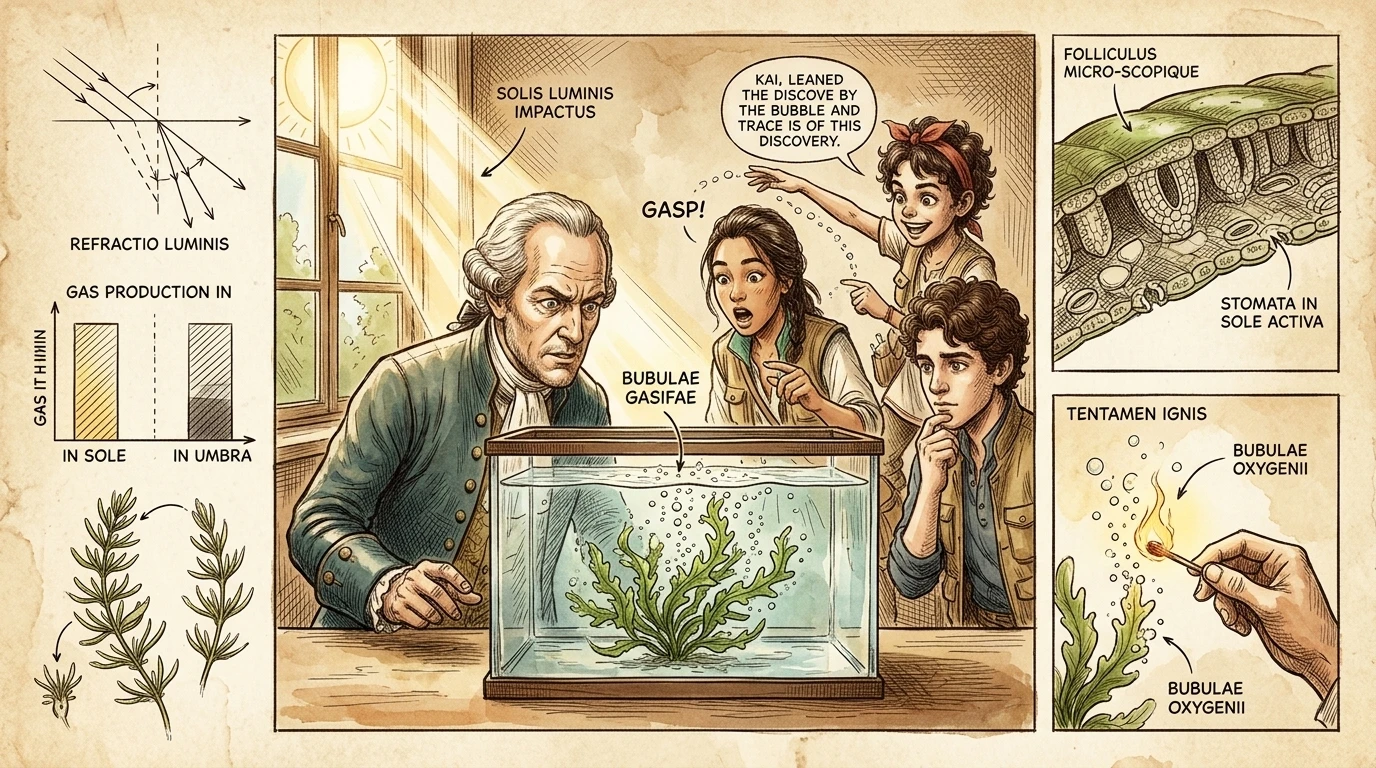
Then came the breakthrough moment. Ingenhousz submerged a water weed in a tank of water and placed it in direct sunlight. "Look! Bubbles!" Tara gasped, pointing at the leaves. "He realized the plant was releasing a new kind of air," Kai explained, "but it only happened in the light! He proved plants don't damage the air; they restore it using sunlight."
Page 7
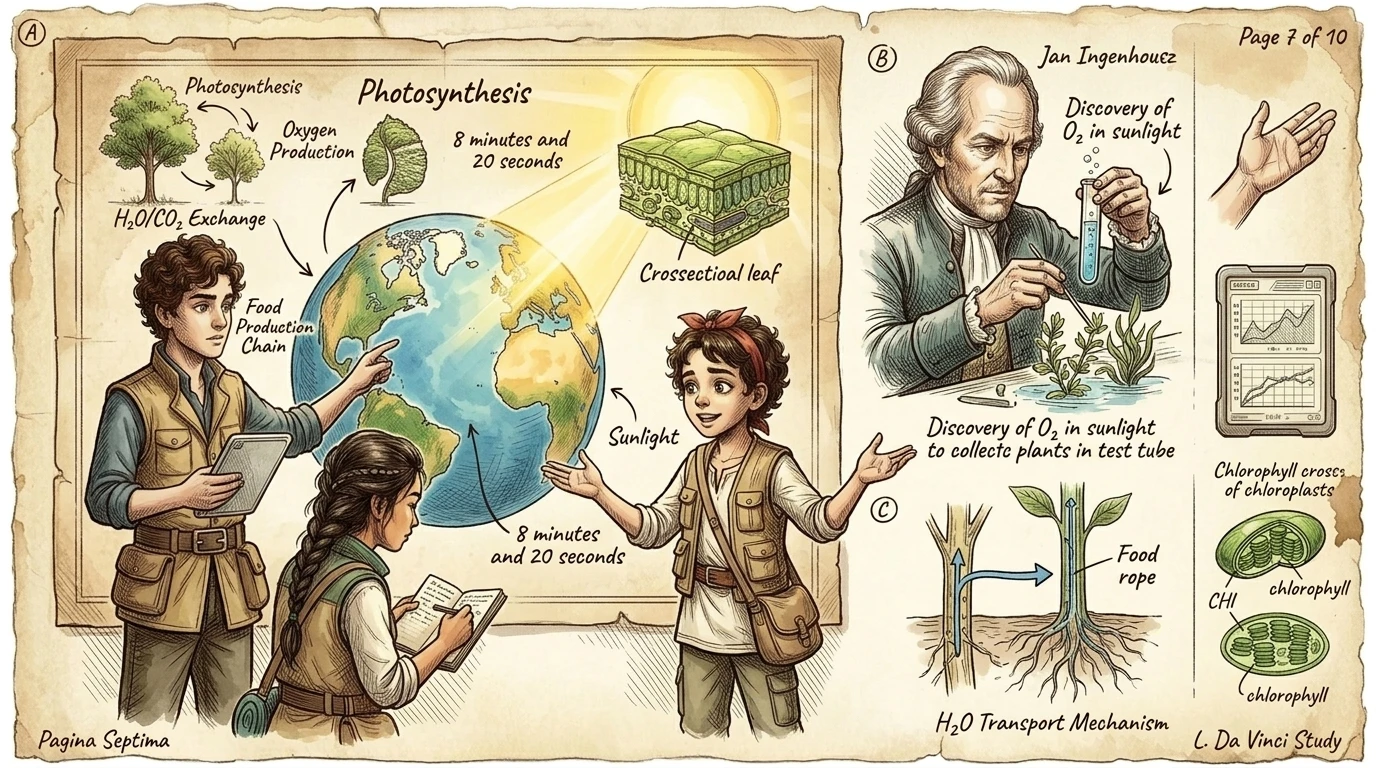
That discovery changed everything. "It's called photosynthesis," Kai said. "It's the engine that powers almost all life on Earth." From that single experiment, we learned how to grow more food, how forests create oxygen, and even how to build life support systems for our biosphere. "In fact," she added, "the light from our actual sun takes 8 minutes and 20 seconds to reach Earth, and plants turn it into the very air we breathe."
Page 8
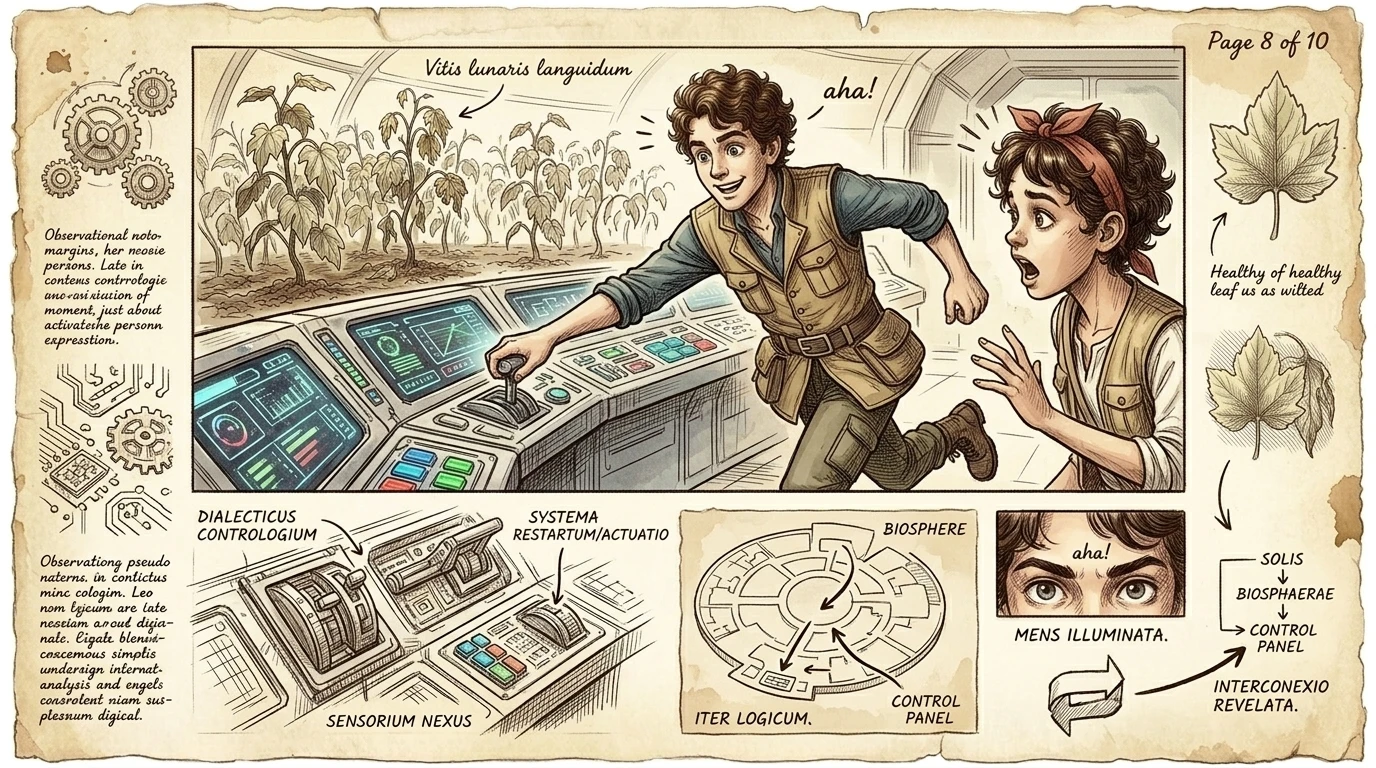
Back in front of the wilting lunar-vines, the final piece clicked into place for Leo. "Of course! Your red and blue LEDs!" Kai exclaimed, turning to him. "Ingenhousz used sunlight, which has all the colors. Our lamps are full-spectrum, but maybe these alien plants evolved to use more red and blue light for photosynthesis!" Leo's eyes lit up as he sprinted for a control panel. "It's not the amount of light, it's the recipe!"
Page 9
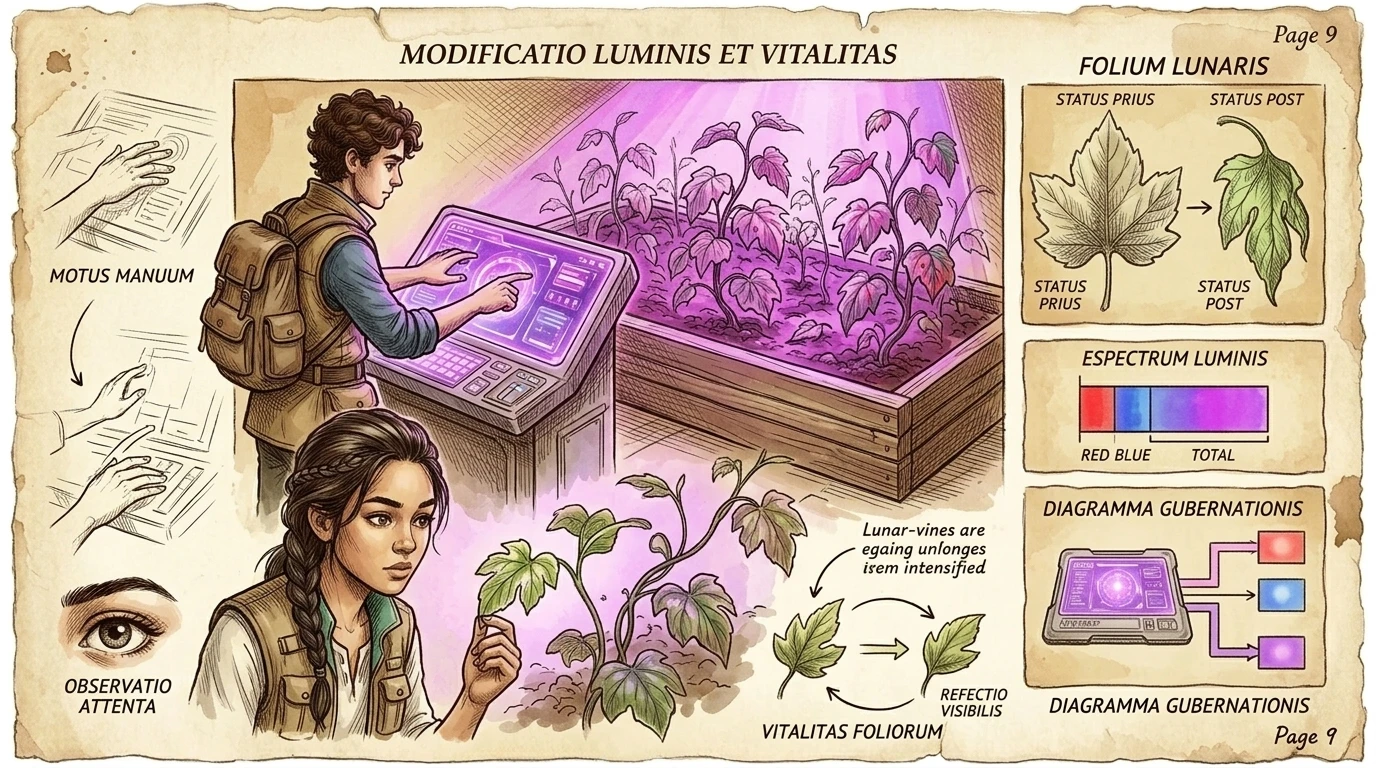
Leo's fingers flew across the holographic interface, adjusting the light's color balance. A purplish hue washed over the garden bed as the red and blue outputs increased. "It's like the purple lights you see in professional greenhouses," Tara noted, watching a leaf seem to unfurl slightly. "You guys worked together to solve it," she said. "You're a good team."
Page 10
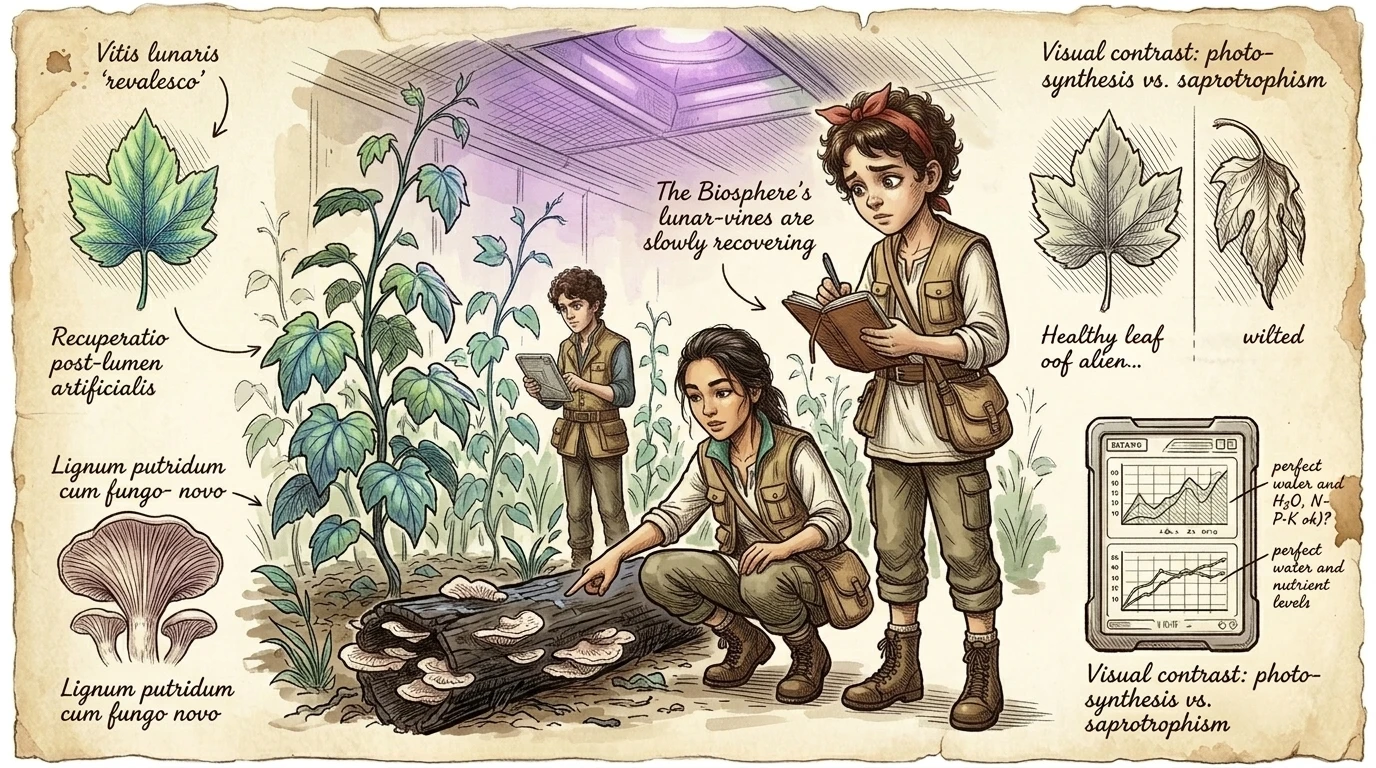
The lunar-vines slowly began to recover, their leaves reaching for the custom-tuned light. "Plants don't just live in the light," Kai said, pulling out her notebook, "they eat it." Tara pointed to a strange, pale fungus growing on a dark, damp log nearby. "Okay, but if plants eat light," she asked, "what do things that grow in the total darkness eat?"
About this story
- Audience: kids (ages 6–12)
Questions and answers
Questions and answers about Life's Clockwork Melody in Bloom
Read Wonder Science on your phone
Wonder Science is available on Android. Get Wonder Science on Google Play.