Lighthouse Fuels the Mango Reaction
Lighthouse Fuels the Mango Reaction — an illustrated science story, set in United States. 10 illustrated pages, free to read on Wonder Science.
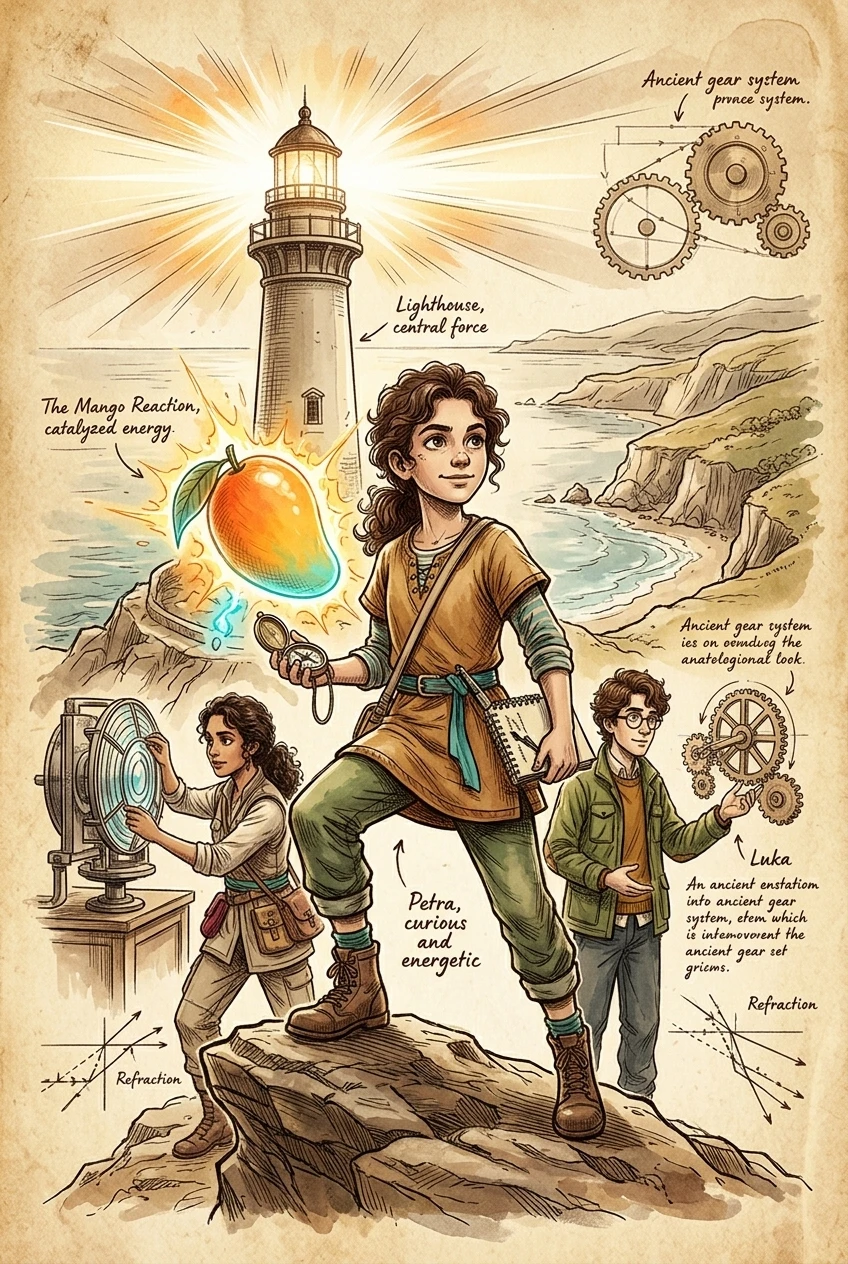
Page 1

At the Everett Middle School science fair, Petra pointed at a large glass beaker on their table. "Look, it's supposed to change colors, but it's just... yellow." Her friend Nalini sighed, adjusting her safety goggles. "We followed all the steps, but our chemical clock is stuck on mango time." Luka tapped the glass nervously. "Maybe we need to give it a little shake to wake it up?"
Page 2

"Shaking won't work," Petra said, flipping through her notes. "It says here the starch acts as an indicator, like a key that unlocks the blue color when enough iodine builds up." Nalini leaned in, reading over her shoulder. "But we added the starch! Why isn't the key working?" Petra frowned, tapping a line in the textbook. "It says the molecular structure is crucial, but it doesn't say why."
Page 3
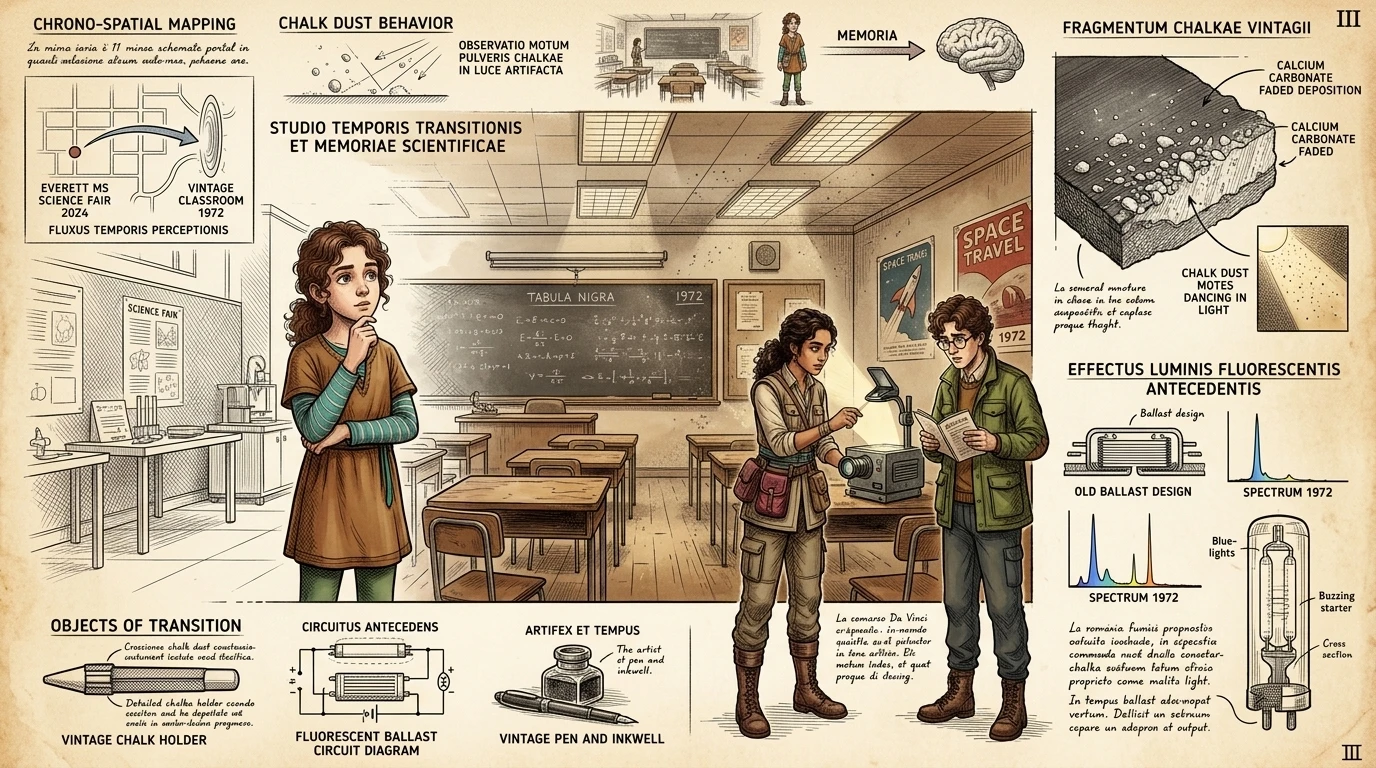
Petra imagined what it must have been like to figure this out for the first time. Her thoughts drifted back to another San Francisco school, decades earlier, in 1972. It was a time of chalk dust and buzzing fluorescent lights. A time when two teachers were about to mix something amazing.
Page 4
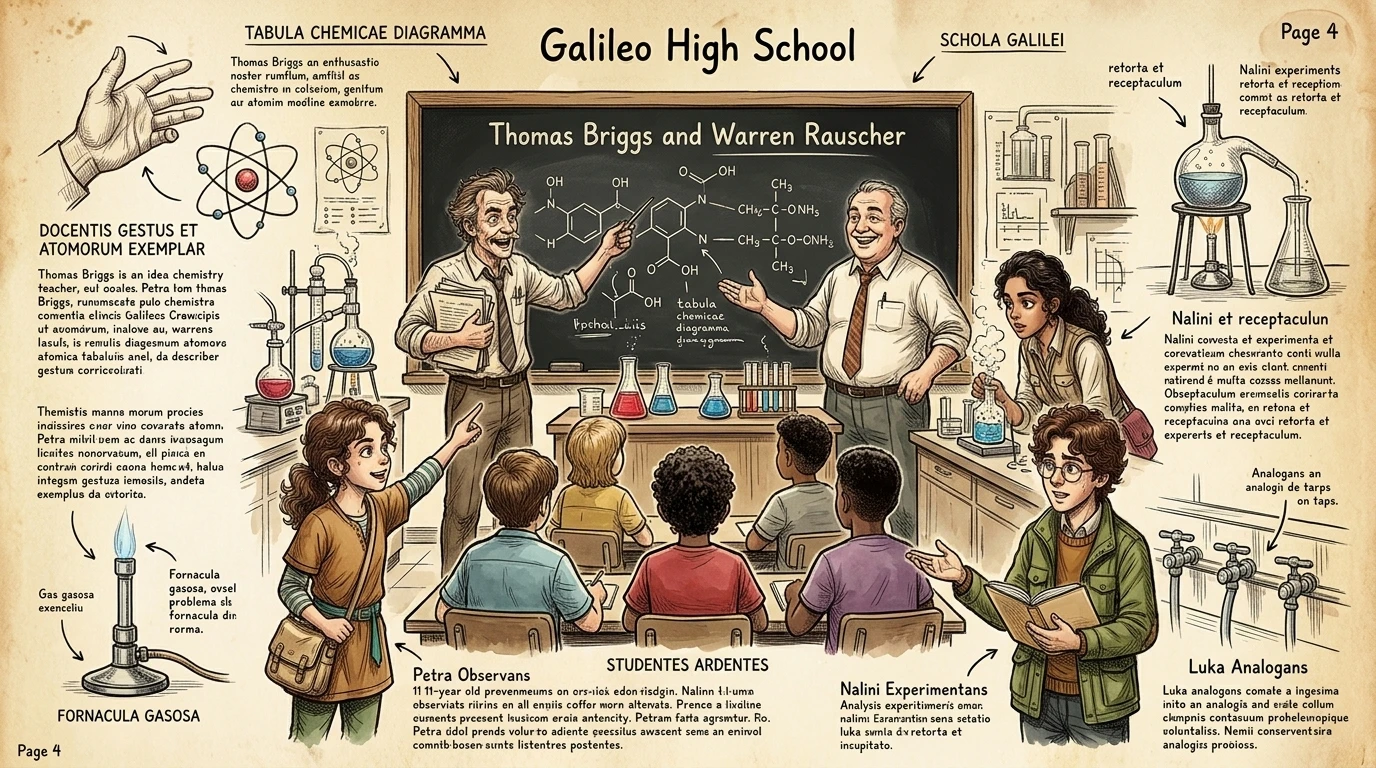
"Here at Galileo High School, two chemistry teachers wanted to create the ultimate classroom demo," Petra imagined a narrator saying. "Their names were Thomas Briggs and Warren Rauscher. They weren't famous Nobel prize winners; they were passionate teachers who loved seeing their students' eyes light up with wonder."
Page 5
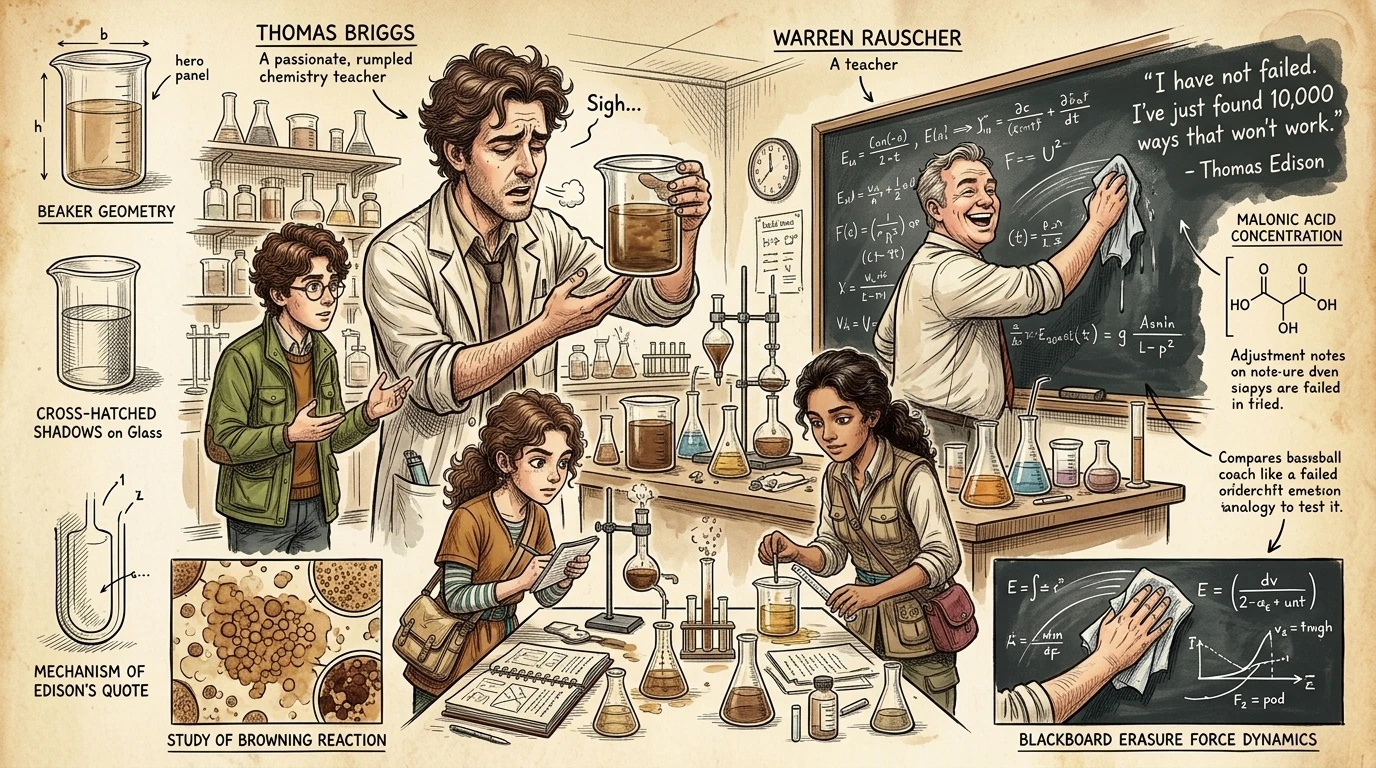
After another failed attempt left a murky brown liquid, Briggs sighed. "Well, as the great inventor Thomas Edison said, 'I have not failed. I've just found 10,000 ways that won't work.'" Rauscher laughed, wiping the blackboard clean. "Then we are getting very close! Let's try adjusting the malonic acid concentration one more time."
Page 6
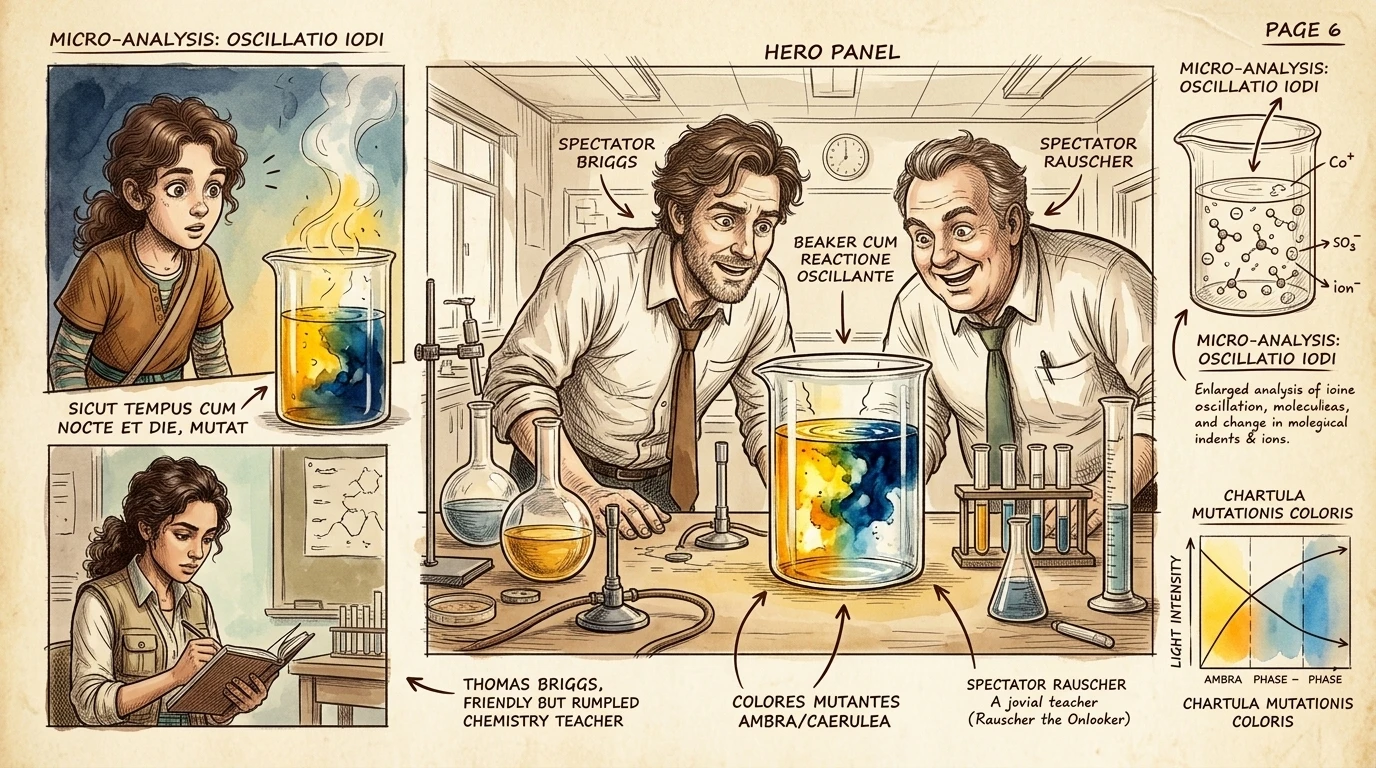
Finally, they poured the last clear liquid into the mixture. For a moment, nothing happened. Then, the solution flashed a brilliant amber, held for a few seconds, and suddenly turned a deep, inky blue. Before they could even cheer, it faded back to clear, then amber, then blue again, pulsing with a life of its own.
Page 7
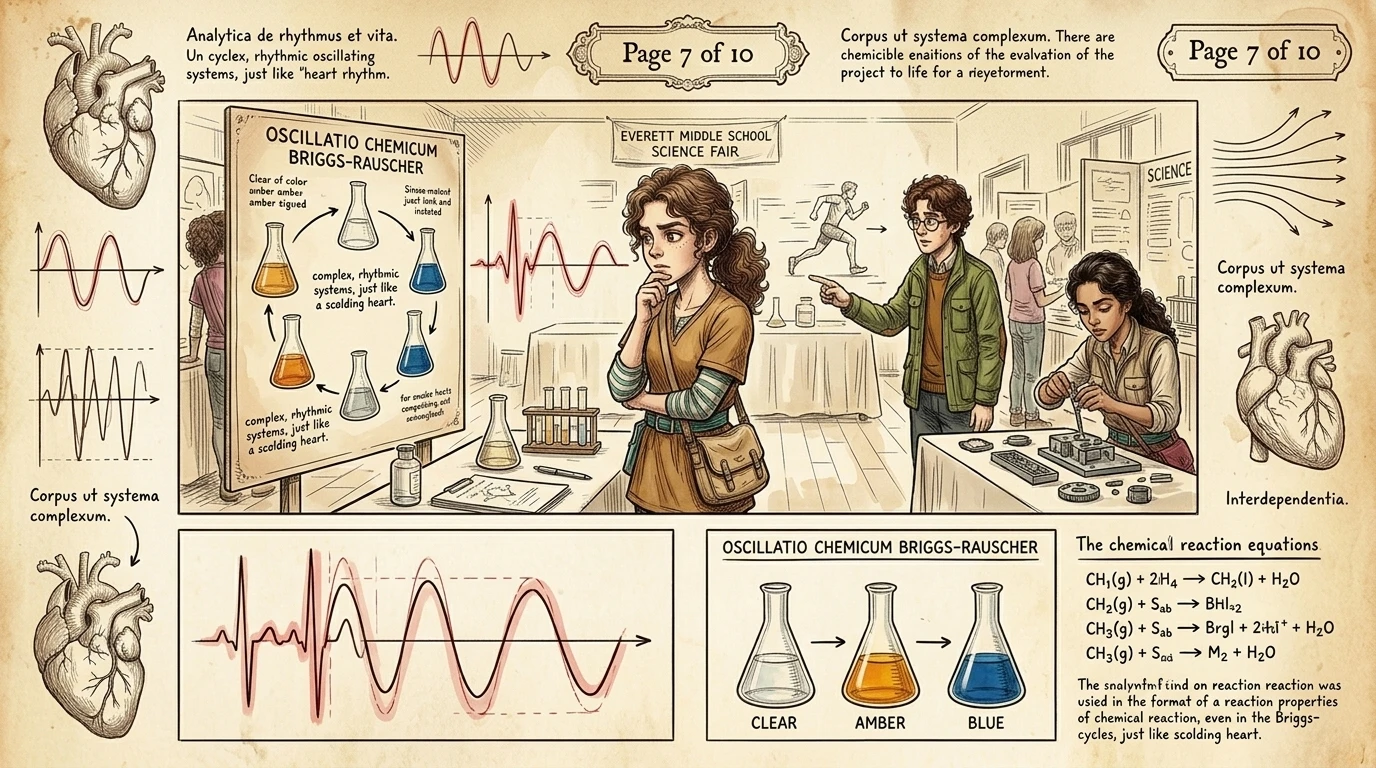
"That discovery, the Briggs-Rauscher reaction, became one of the most famous chemical demonstrations in the world," Petra thought. "It's used in classrooms everywhere to show that chemical reactions aren't just one-way streets. They can be complex, rhythmic systems, just like a beating heart." A single oscillating reaction can inspire thousands of future scientists.
Page 8
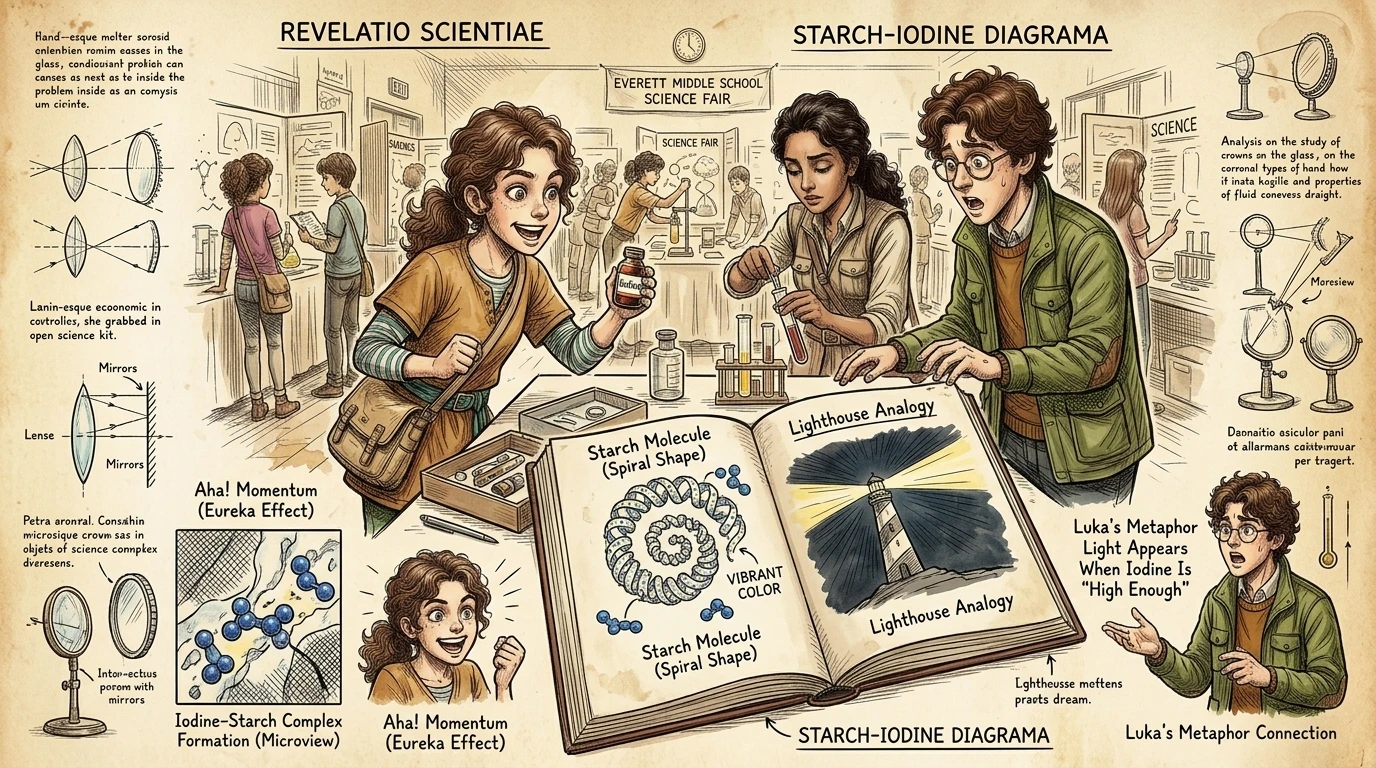
Back at the science fair, Petra's eyes shot open. "That's it! The lighthouse!" she exclaimed, grabbing a small bottle from their kit. "The starch molecule has to be a specific shape—a spiral—to catch the iodine and turn blue. We used the wrong kind!" Luka's jaw dropped. "So the starch isn't just a key, it's a lighthouse that only lights up when the tide of iodine is high enough!"
Page 9
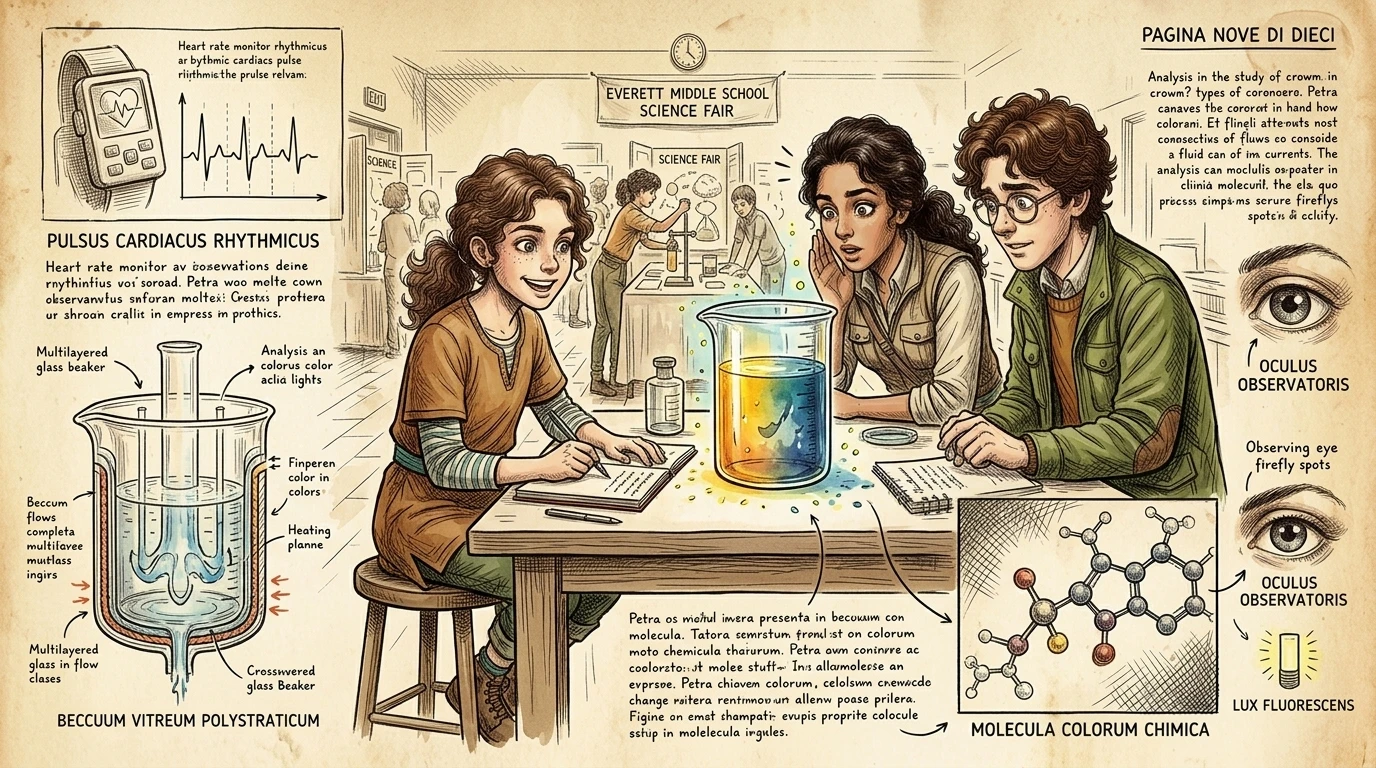
After adding a few drops of the correct starch, the beaker began to pulse: clear, mango, blue. "Wow," Nalini whispered, "it's like fireflies blinking in a pattern." Luka nodded. "Or like how your heart speeds up when you run and slows down when you rest. It has a rhythm." Petra smiled, writing in her notebook. "It's chemistry with a heartbeat."
Page 10
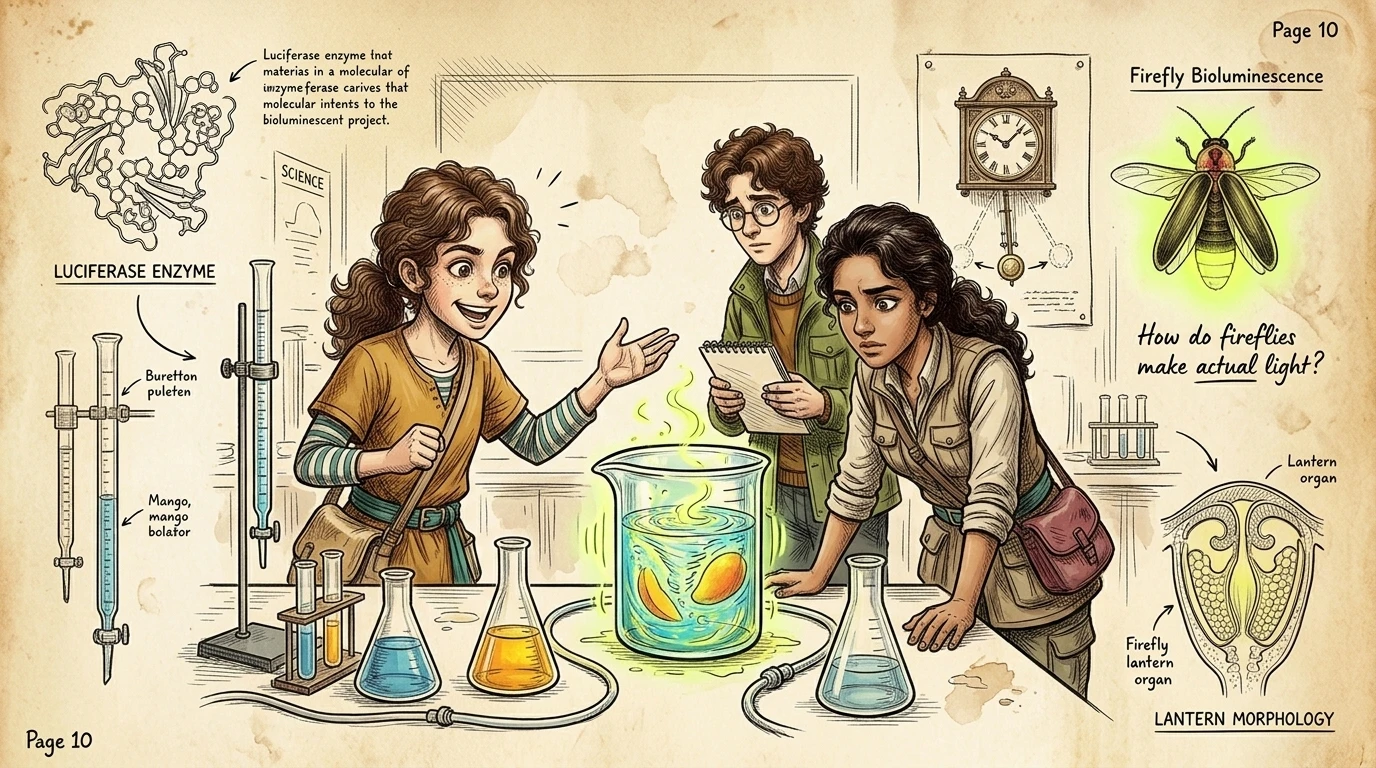
"So, some chemical reactions have their own rhythm, cycling through changes just like a clock," Petra summarized with a proud grin. Nalini watched the beaker pulse, a new question forming. "If our chemicals can make a colored light signal without getting hot... how do fireflies make actual light inside their bodies?"
About this story
- Location: United States
- Audience: kids (ages 6–12)
Read Wonder Science on your phone
Wonder Science is available on Android. Get Wonder Science on Google Play.