Lynn Margulis
Lynn Margulis — an illustrated science story, set in Global. 10 illustrated pages, free to read on Wonder Science.
Page 1
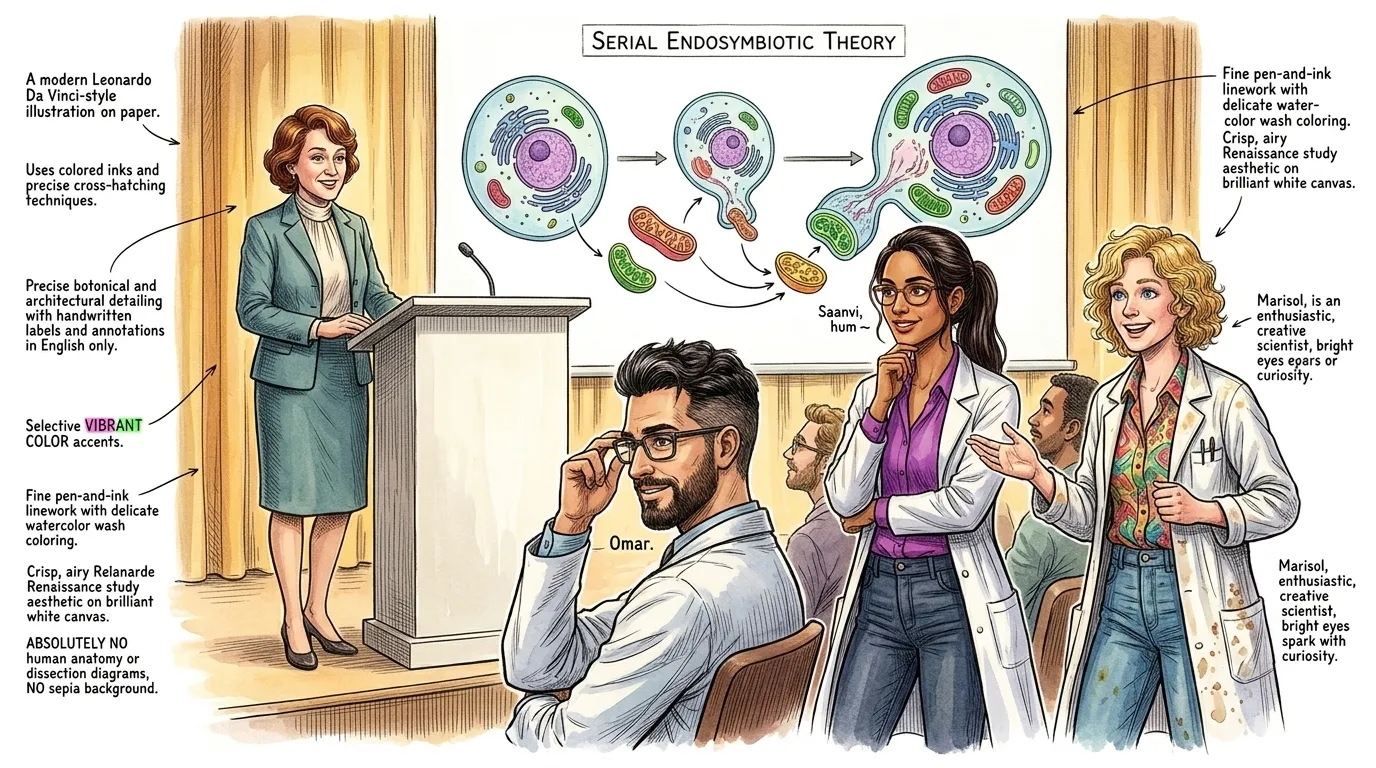
The year is 1967. A scientific conference hums with the electric tension of new ideas, yet few are prepared for the radical proposition Lynn Margulis is about to lay bare. With a resolve that defied prevailing dogma, Margulis presented her groundbreaking 'Serial Endosymbiotic Theory,' challenging the very foundation of how life's complexity arose.
"'Her audacity is remarkable,' Omar murmured, adjusting his glasses, his gaze fixed on the podium. 'To suggest that eukaryotic cells, the building blocks of all complex life, didn't just 'evolve' but were formed from a series of ancient mergers?'
'Indeed,' Saanvi responded, her voice a low, thoughtful hum. 'It flies directly in the face of conventional Darwinian gradualism for cellular evolution. The scientific establishment is not known for embracing such radical shifts easily.'
'Yet, the evidence she hints at – the distinct DNA within mitochondria and chloroplasts – it's compelling,' Marisol added, gesturing towards the stage. 'She's proposing a revolution in our understanding of symbiosis, one that reshapes the entire tree of life.'"
Page 2
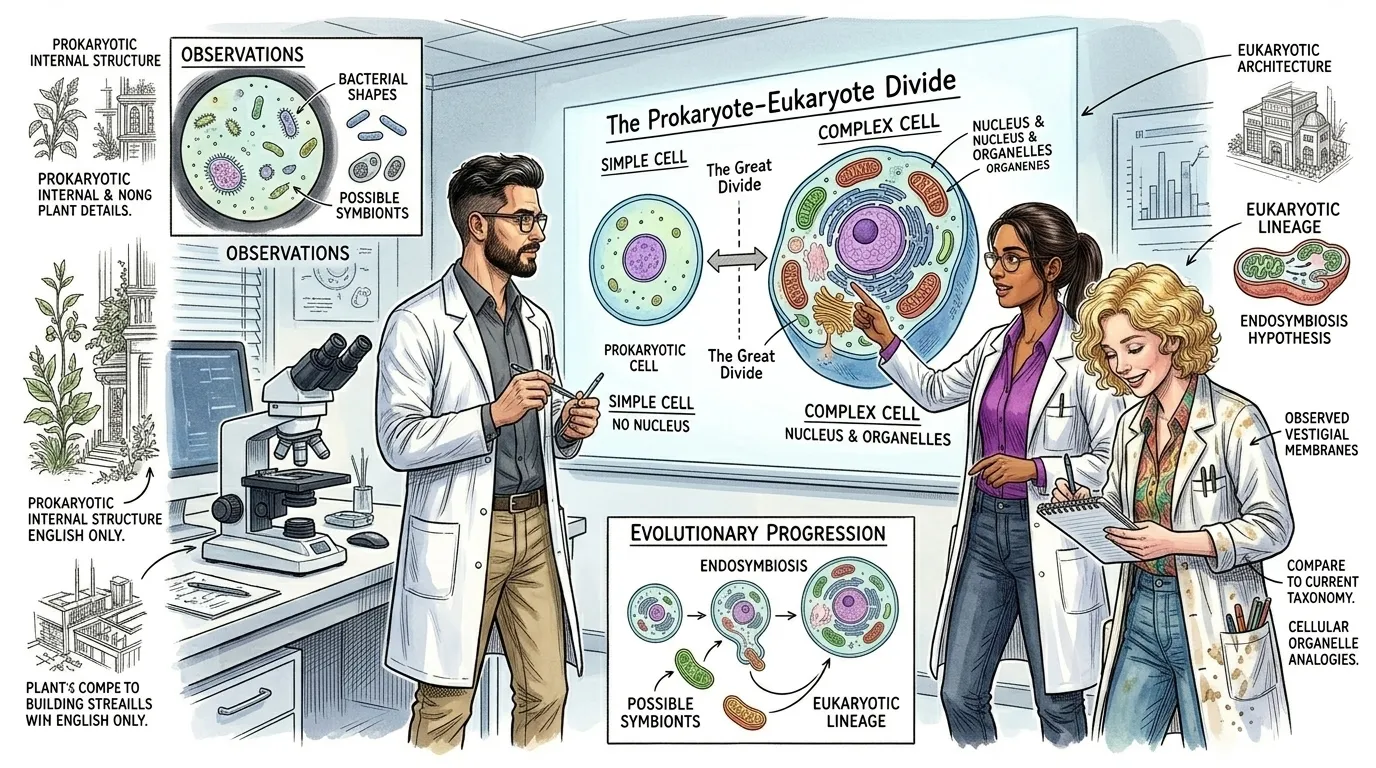
Before Margulis, the evolutionary jump from simple prokaryotic cells to complex eukaryotic cells – those with a nucleus and specialized organelles like mitochondria and chloroplasts – was a profound mystery. How did a cell suddenly gain such intricate internal architecture? The prevailing view struggled to bridge this immense chasm with mere incremental mutations.
"'The sheer complexity of a eukaryotic cell is mind-boggling compared to a prokaryote,' Omar noted, examining a detailed digital rendering projected onto a lab wall. 'A prokaryote is essentially a self-contained bag of chemicals, while a eukaryote has power plants, processing centers, and even its own transport system.'
'Exactly,' Saanvi affirmed, pointing to the projection. 'Traditional evolutionary models struggled to explain the sudden appearance of these organelles. It was like trying to explain the emergence of a multi-room house from a single tent through gradual, random improvements.'
'The question that haunted biologists was: where did these specialized components come from?' Marisol mused, sketching in a notebook. 'This 'great divide' between prokaryotes and eukaryotes was perhaps the most significant evolutionary hurdle, demanding a truly revolutionary explanation.'"
Page 3
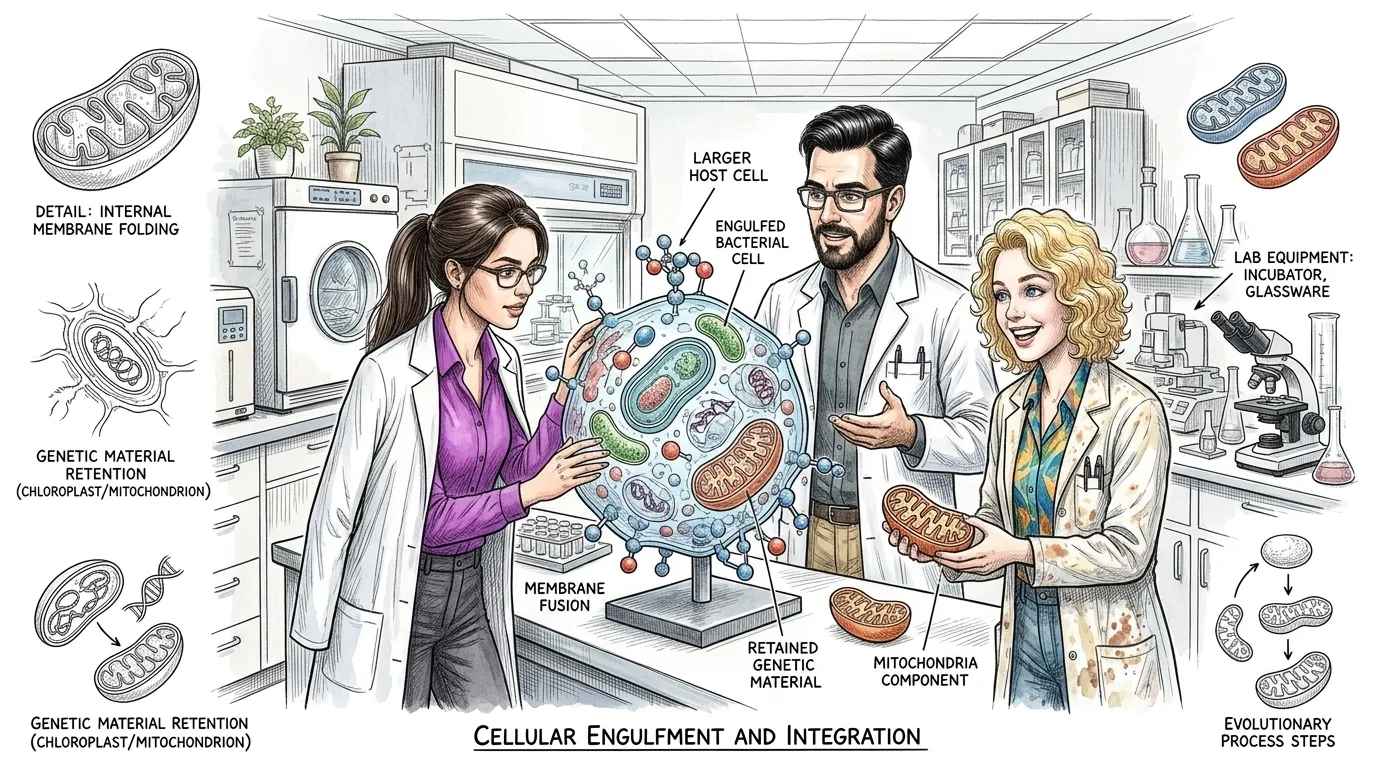
Margulis's theory proposed a radically different path: rather than evolving organelles from within, a large host cell engulfed smaller, independent bacteria. Instead of being digested, these smaller cells became permanent, working residents. This cooperative survival, a process known as endosymbiosis, transformed simple life into something far more sophisticated.
"'She wasn't just suggesting cooperation; she was suggesting literal cellular absorption that led to interdependence,' Omar explained, now standing by a large molecular model on a table. 'Imagine one organism essentially inviting another to live inside it, not as a parasite, but as a partner contributing vital functions.'
'The crucial insight, which seemed fantastical at the time, was that these swallowed bacteria retained their own genetic material and reproductive methods,' Saanvi added, turning the model to examine its intricate structure. 'It was a symbiotic event that became so integrated it was irreversible.'
'This 'fusion' offered incredible advantages,' Marisol summarized, picking up a smaller component representing a mitochondrion. 'The host cell gained efficient energy production, or the ability to photosynthesize, leapfrogging countless generations of slow, independent evolution in a single, dramatic stroke.'"
Page 4
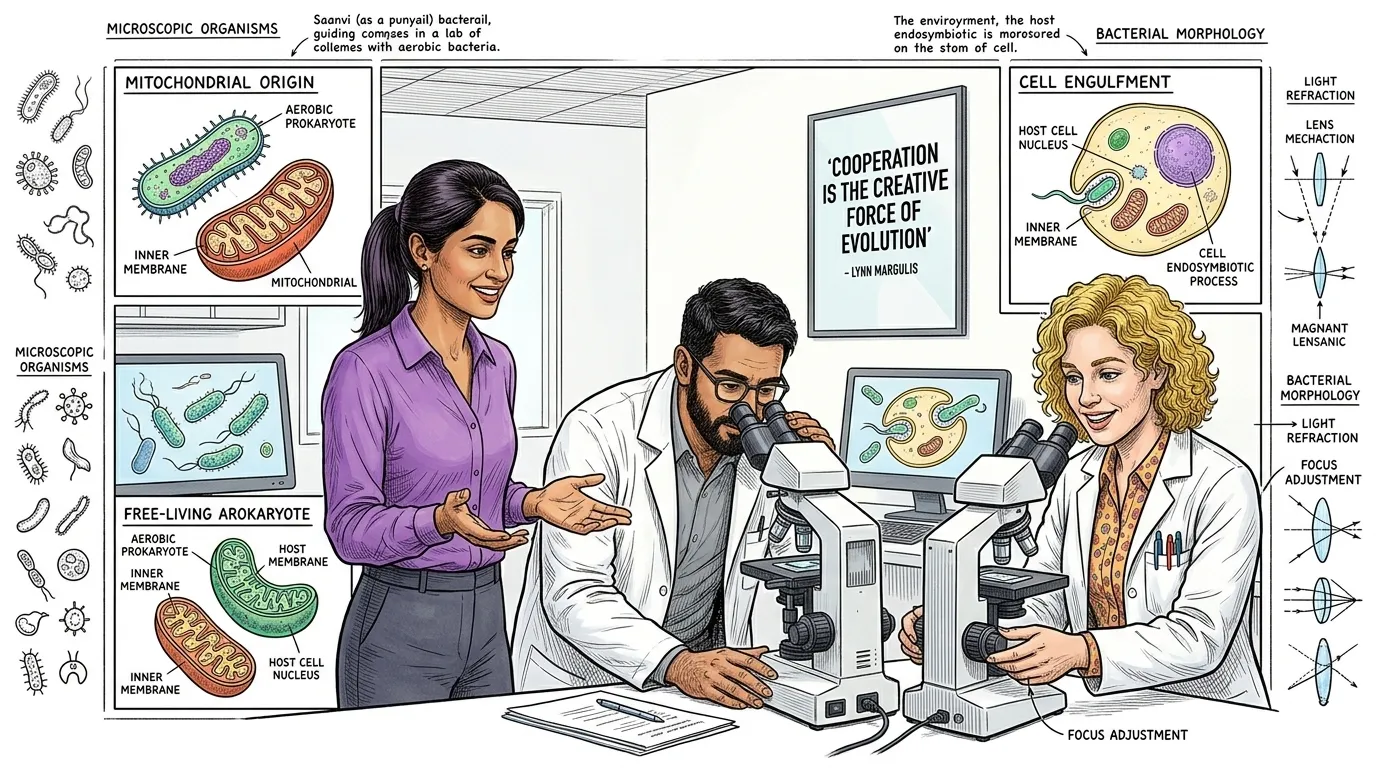
Central to Margulis's theory was the origin of mitochondria, the 'powerhouses' of eukaryotic cells responsible for generating energy. She posited they were once free-living aerobic bacteria, thriving in an oxygen-rich environment. When a larger, anaerobic host cell engulfed them, a mutually beneficial partnership began.
"'Imagine a world where oxygen was once a poison to many early cells,' Saanvi began, leading them to a different lab station with advanced microscopes. 'Then, some bacteria evolved to not just tolerate oxygen, but to harness it for massive energy production. They were a biological goldmine.'
'And the larger host cell, which struggled with oxygen, saw an opportunity,' Omar elaborated, peering into a microscope at a stained cell slide. 'By taking in these oxygen-breathing bacteria, it essentially acquired a ready-made power plant. This was a game-changer for survival and growth.'
'It's a spectacular example of evolutionary cooperation,' Marisol concluded, adjusting the focus on her own microscope. 'The host provides protection and resources, while the endosymbiont provides a vital, complex function. As Lynn Margulis herself once said, 'Life did not take over the globe by combat, but by cooperation.' It was a radical idea for its time, highlighting collaboration over competition as a primary driver of evolution.'"
Page 5
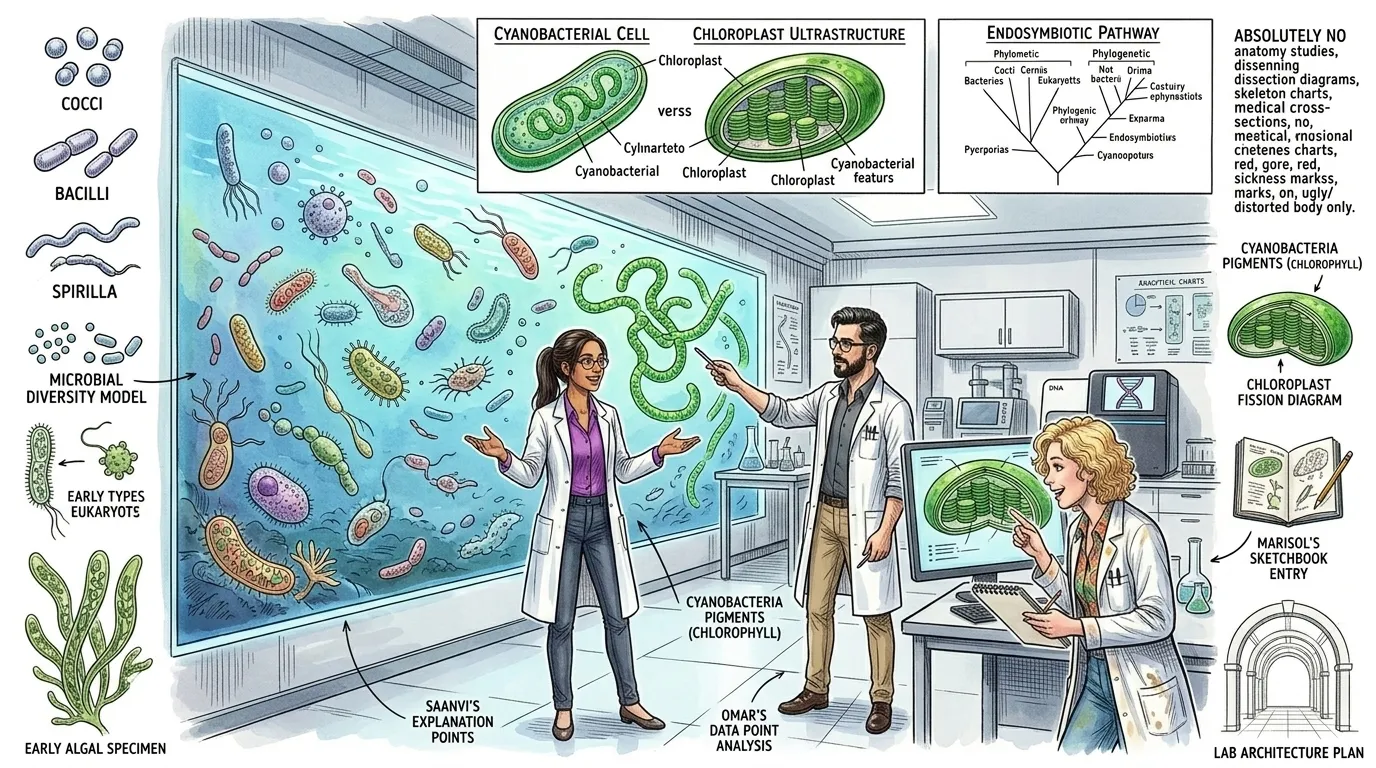
The story of chloroplasts mirrored that of mitochondria. These crucial organelles, found in plant cells and responsible for photosynthesis, were proposed by Margulis to be the descendants of free-living cyanobacteria. These ancient photosynthetic microbes brought the ability to convert sunlight into energy, fundamentally altering life on Earth.
"'Without cyanobacteria, complex plant life, and therefore much of the animal kingdom, wouldn't exist as we know it,' Saanvi explained, gesturing towards a vast digital model of a primeval ocean teeming with microscopic life.
'Their ability to capture solar energy was revolutionary,' Omar added, highlighting specific green structures within the digital ocean. 'When a host cell incorporated these photosynthetic powerhouses, it essentially became a self-sustaining factory. Sunlight became a direct fuel source.'
'This secondary endosymbiotic event was a pivotal moment,' Marisol observed, pointing out the distinct layers in a projected chloroplast cross-section. 'It led to the emergence of algae and eventually all green plants, completely transforming Earth's atmosphere and ecosystems by producing oxygen.'"
Page 6
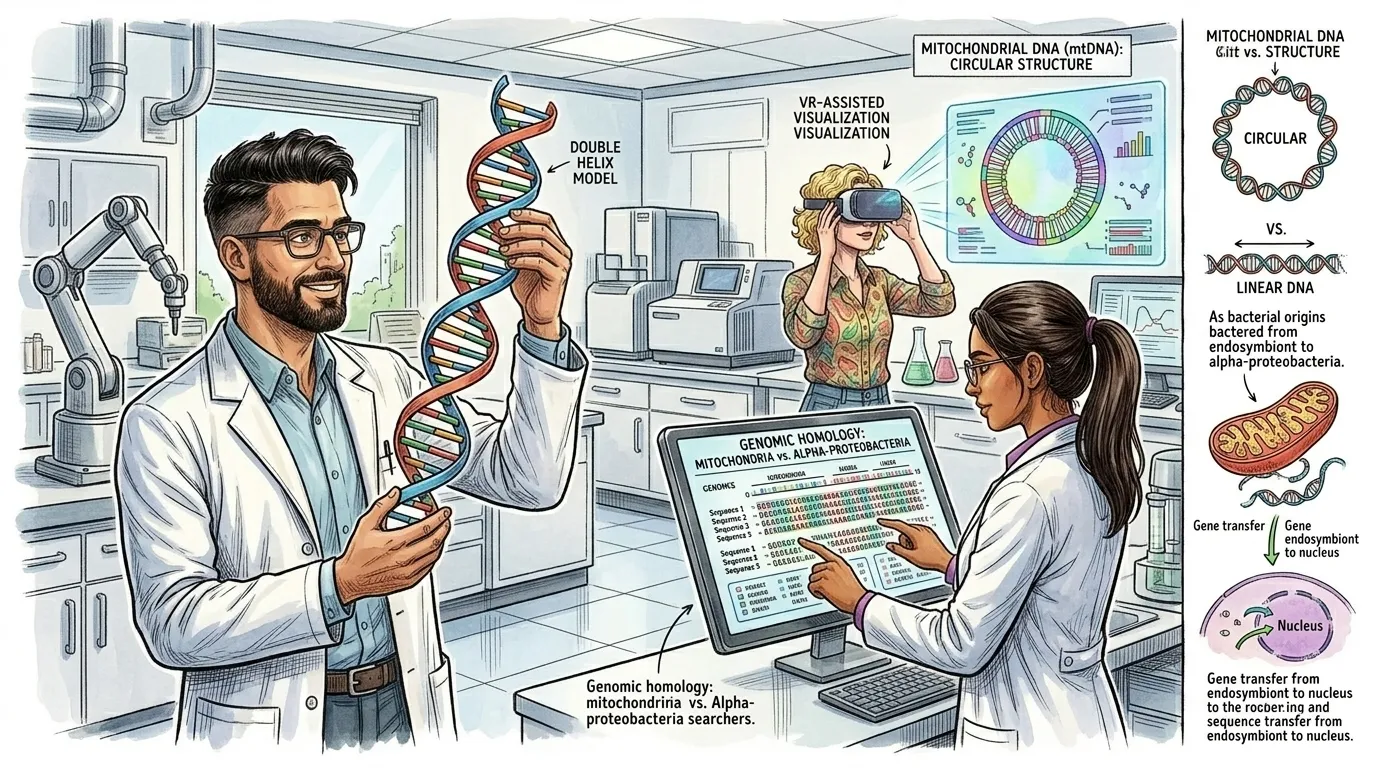
The most compelling evidence for endosymbiosis came from within the organelles themselves. Margulis championed the then-controversial observation that mitochondria and chloroplasts possess their own distinct circular DNA, reproduce independently, and have ribosomes remarkably similar to bacteria. These weren't mere cellular components; they were remnants of free-living ancestors.
"'It's like finding mini-libraries inside your own house, each with its own unique collection of books and its own way of copying them,' Omar explained, holding up a simplified 3D model of a double-helix DNA strand. 'The fact that these organelles have their own genetic blueprints, separate from the cell's nucleus, was the smoking gun.'
'And not just any DNA,' Saanvi added, tapping a screen displaying a genomic comparison. 'Their DNA, and even their ribosomal structures, bear a striking resemblance to modern-day bacteria, not the host cell. This genetic signature is incredibly persuasive.'
'This wasn't just a theory; it was a detective story told in molecular biology,' Marisol remarked, adjusting a virtual reality headset that projected a molecular visualization of mitochondrial DNA. 'Every detail, from their double membranes to their independent division, pointed towards an origin as distinct, autonomous organisms now living in permanent partnership.'"
Page 7
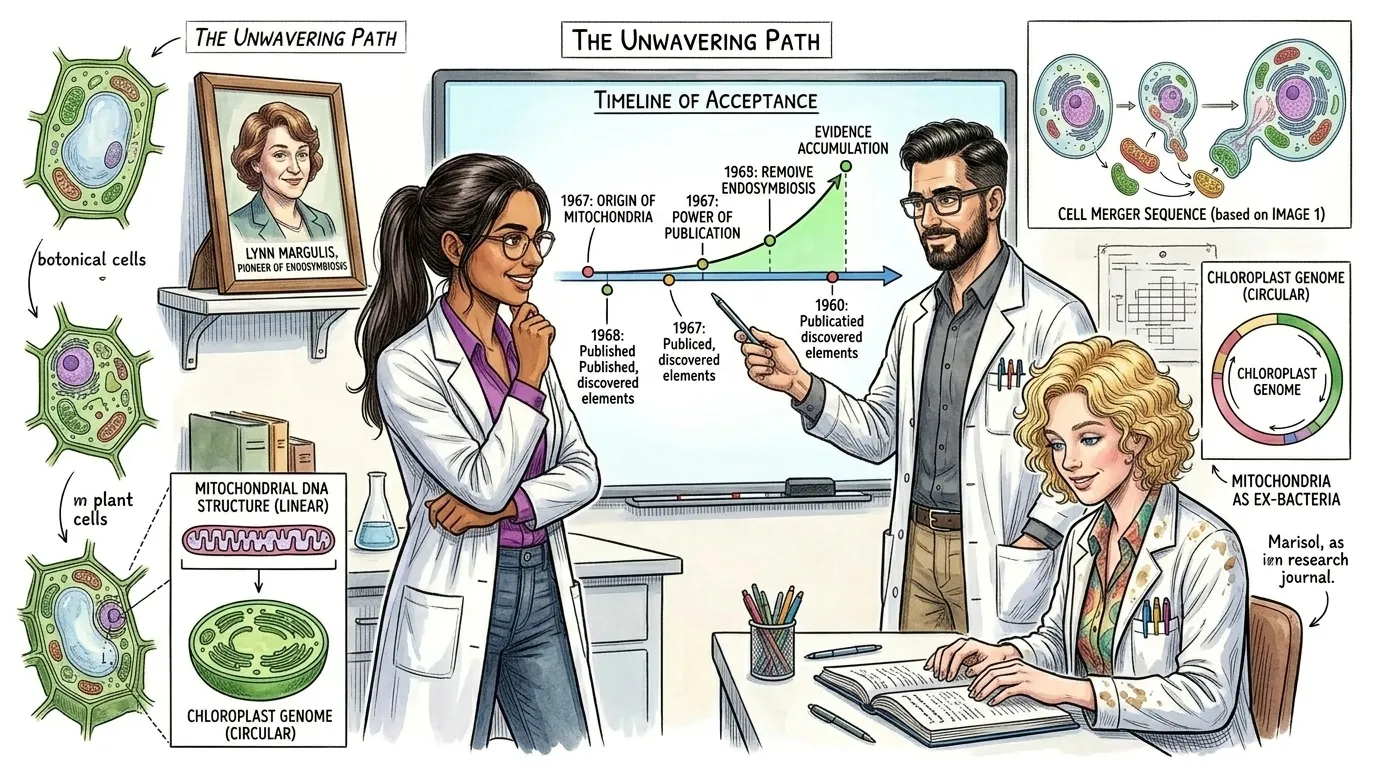
Despite the growing body of evidence, Lynn Margulis faced years of skepticism and rejection from the scientific establishment. Her papers were initially dismissed, her ideas considered too unorthodox. Yet, her unwavering persistence, combined with accumulating molecular and genetic proof, slowly chipped away at resistance, transforming her radical hypothesis into an accepted cornerstone of evolutionary biology.
"'It's a powerful lesson in scientific tenacity,' Saanvi reflected, looking at a framed photograph of a younger Lynn Margulis in a quiet corner of their lab. 'For years, she was ridiculed, her theory considered a fringe idea. But she believed in her data, and she kept presenting it.'
'And eventually, the data became too overwhelming to ignore,' Omar added, pointing to a historical timeline on a digital whiteboard, showing key publications and discoveries supporting endosymbiosis. 'The sequencing of mitochondrial and chloroplast genomes provided irrefutable proof, echoing her bold predictions from decades prior.'
'Her journey reminds us that truly revolutionary ideas often face initial resistance,' Marisol concluded, typing notes into a research journal. 'It's a testament to the scientific method's ultimate ability to self-correct and embrace truth, even when it challenges deeply held paradigms.'"
Page 8
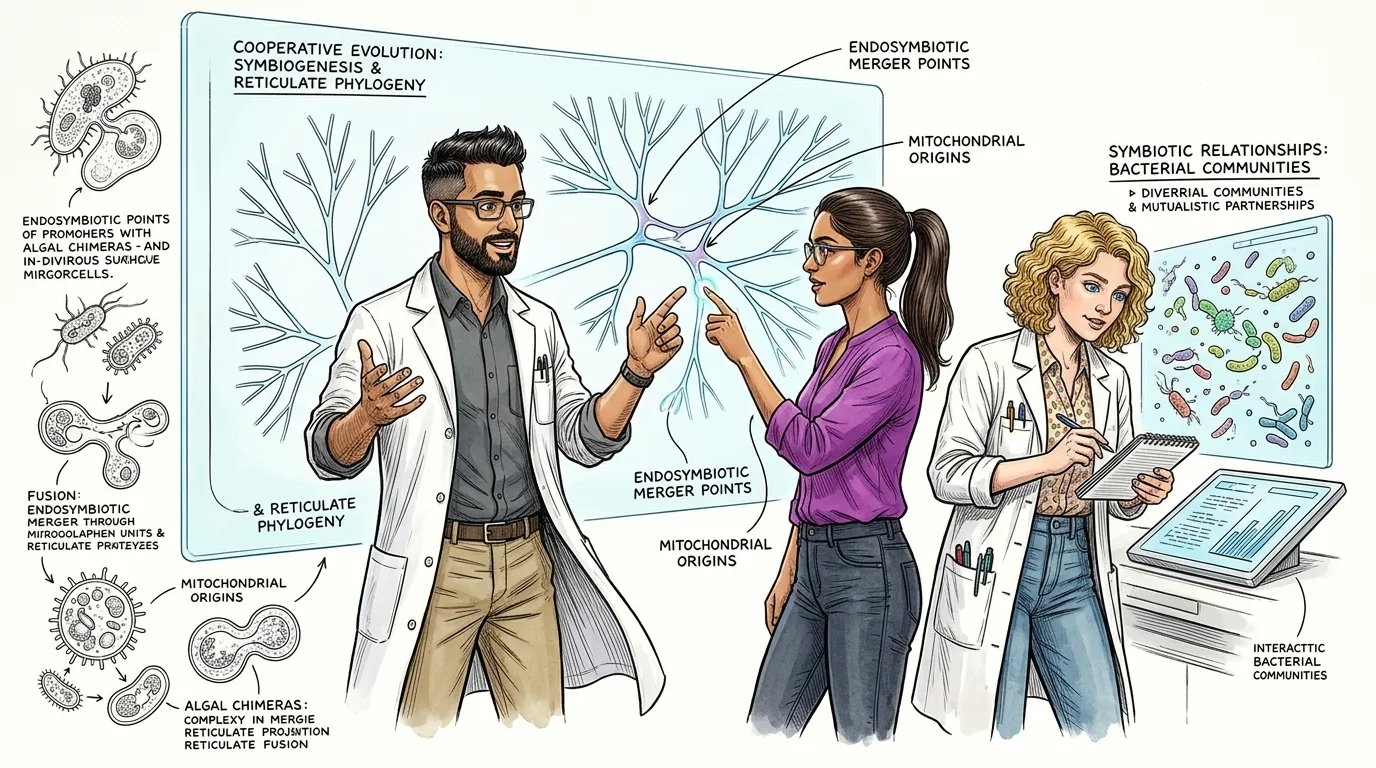
The acceptance of the Endosymbiotic Theory profoundly reshaped our understanding of evolutionary history. It added a crucial dimension to Darwinian evolution, demonstrating that cooperation and integration could be as powerful a force for generating novelty and complexity as competition and mutation. This 'symbiotic evolution' explained not just organelles, but opened doors to new interpretations of biological development.
"'It radically expanded our view of the tree of life,' Omar stated, gesturing towards a vast holographic projection of a complex phylogenetic tree in their research lab. 'Instead of just branches splitting, we now see branches merging, creating entirely new forms. It's evolution through interspecies collaboration.'
'The implications are enormous, touching everything from disease to developmental biology,' Saanvi added, her finger tracing a specific node on the holographic tree where two lineages converge. 'Understanding these ancient mergers helps us trace the origins of many cellular processes and even understand vulnerabilities in modern cells.'
'This perspective also gave rise to new ways of thinking about biological interactions,' Marisol explained, examining a detailed simulation of bacterial communities. 'We now look for symbiotic relationships everywhere, from our gut microbiome to intricate ecosystems, recognizing that life thrives not just through individual struggle, but through profound interdependence.'"
Page 9
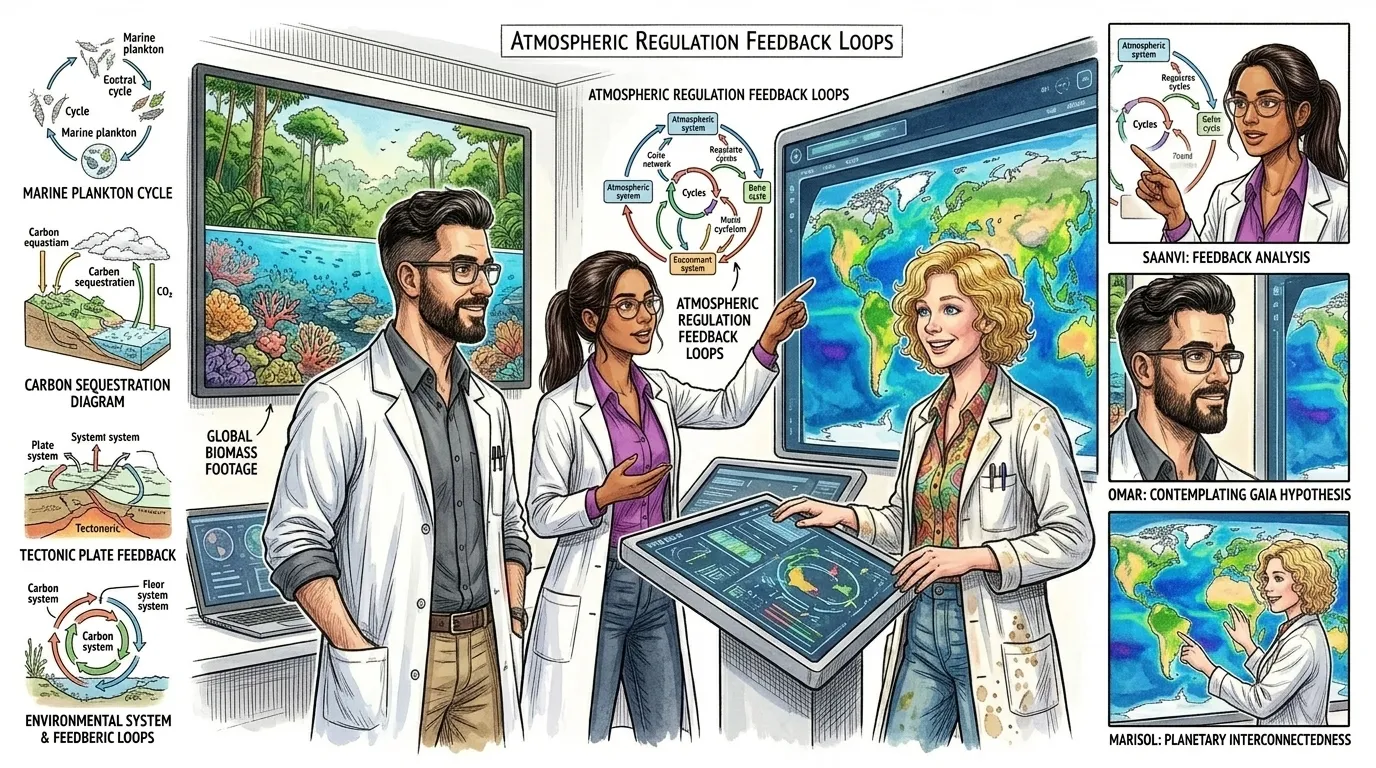
Margulis's fascination with symbiosis extended beyond the cellular level. She became a prominent proponent of the Gaia hypothesis, co-developed with James Lovelock. This bold concept views Earth itself as a single, self-regulating superorganism, where all living things, from bacteria to redwood forests, interact to maintain conditions hospitable for life. Cellular cooperation scaled up to planetary systems.
"'It was a logical extension of her thinking, wasn't it?' Omar pondered, watching a documentary clip on a large screen showing footage of lush rainforests and vast coral reefs. 'If cooperation could create complex cells, why not a complex planet?'
'The Gaia hypothesis suggests that biological and physical systems are so intertwined, they form a feedback loop,' Saanvi explained, pointing to a diagram showing atmospheric composition regulated by biological activity. 'Life doesn't just adapt to Earth; it actively shapes Earth, from the oxygen in our air to the very geology.'
'It's a profound shift from viewing Earth as a passive stage for life to an active participant,' Marisol added, adjusting the screen to show a global map highlighting areas of high biological productivity. 'It underscores the deep interdependence of all life and the planetary systems, emphasizing a holistic view that started with those ancient cellular mergers.'"
Page 10
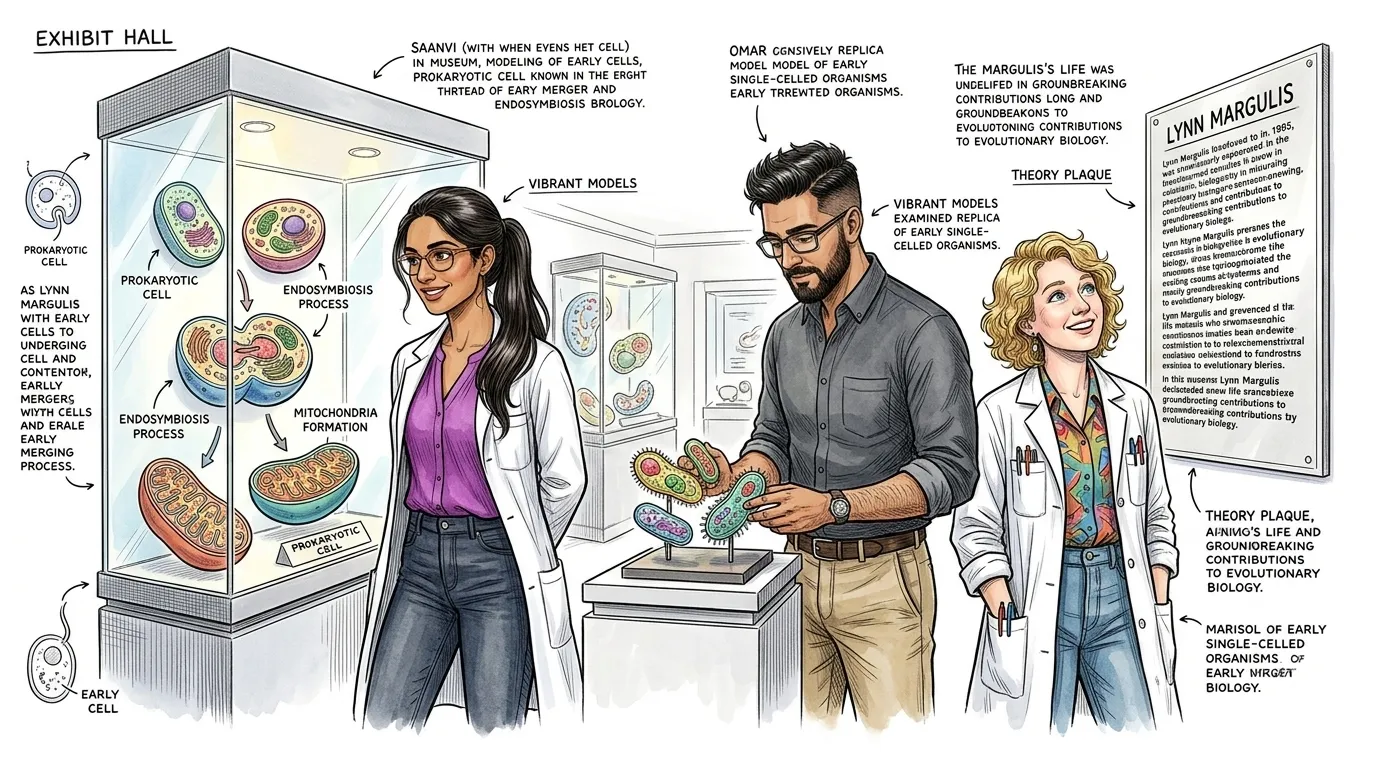
Lynn Margulis's legacy is one of profound re-envisioning, urging science to look beyond reductionist views and embrace the complex web of life. Her work transformed our understanding of cellular evolution, emphasized the critical role of symbiosis, and laid foundational ideas for systems biology and planetary science. Her theories continue to inspire new research into the fundamental interconnectedness of all living systems.
"'Her contributions are indispensable,' Saanvi concluded, standing beside a museum-quality exhibit dedicated to Margulis. 'She didn't just explain how eukaryotic cells formed; she provided a powerful new narrative for evolution itself, one where cooperation is as vital as competition.'
'Margulis championed a perspective that was initially met with resistance but ultimately prevailed due to the strength of its evidence,' Omar added, examining a detailed replica of early single-celled organisms. 'Her work on endosymbiosis fundamentally changed how we teach and research cell biology and evolution today.'
'Her willingness to challenge the status quo, to think differently about fundamental biological questions, truly makes her one of the 'Great Women in Science',' Marisol affirmed, looking at a plaque detailing Margulis's life. 'Her influence permeates virtually every aspect of modern biology, reminding us that the most impactful discoveries often come from those brave enough to see the world anew.'"
About this story
- Location: Global
- Audience: general readers
Questions and answers
Read Wonder Science on your phone
Wonder Science is available on Android. Get Wonder Science on Google Play.