Mango's Acid Adventure: Unlocking Flavor
Mango's Acid Adventure: Unlocking Flavor — an illustrated science story. 10 illustrated pages, free to read on Wonder Science.
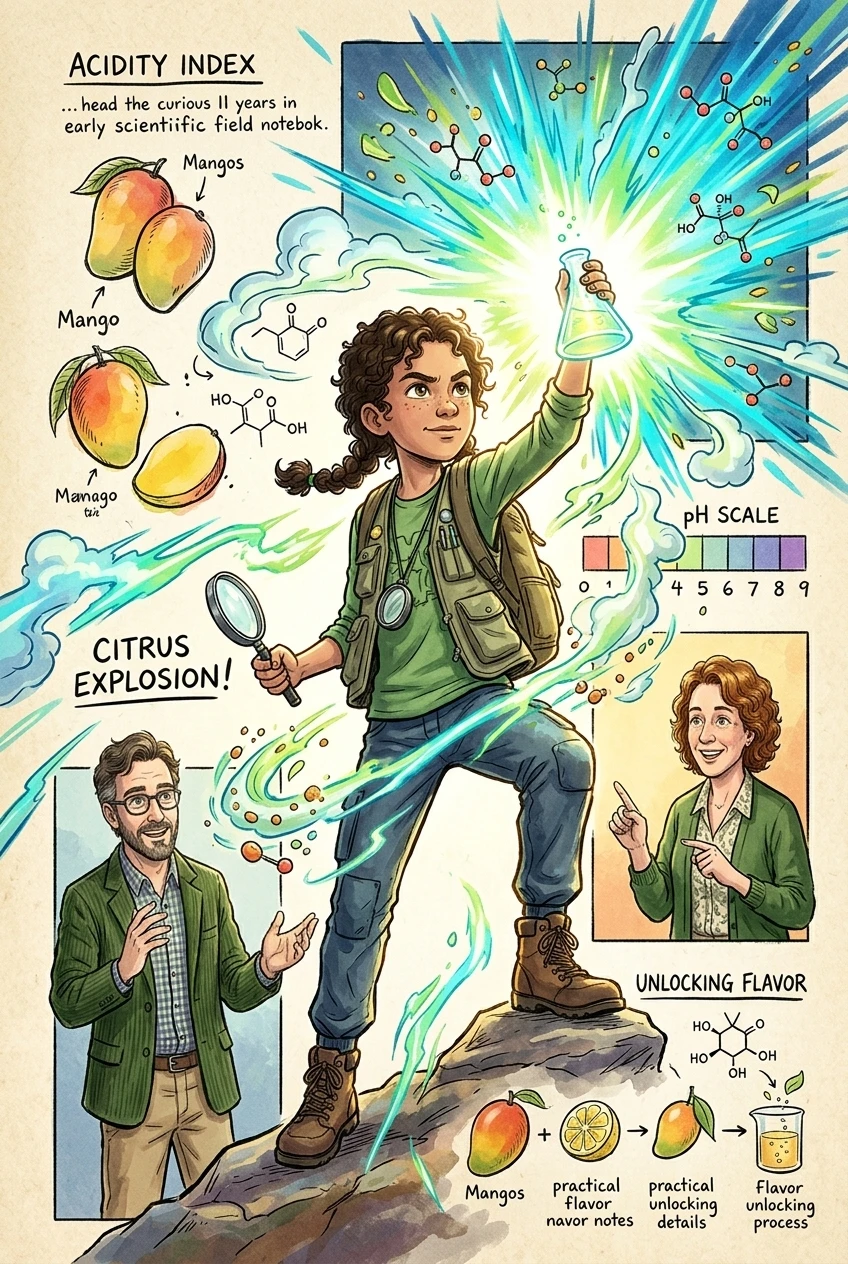
Page 1
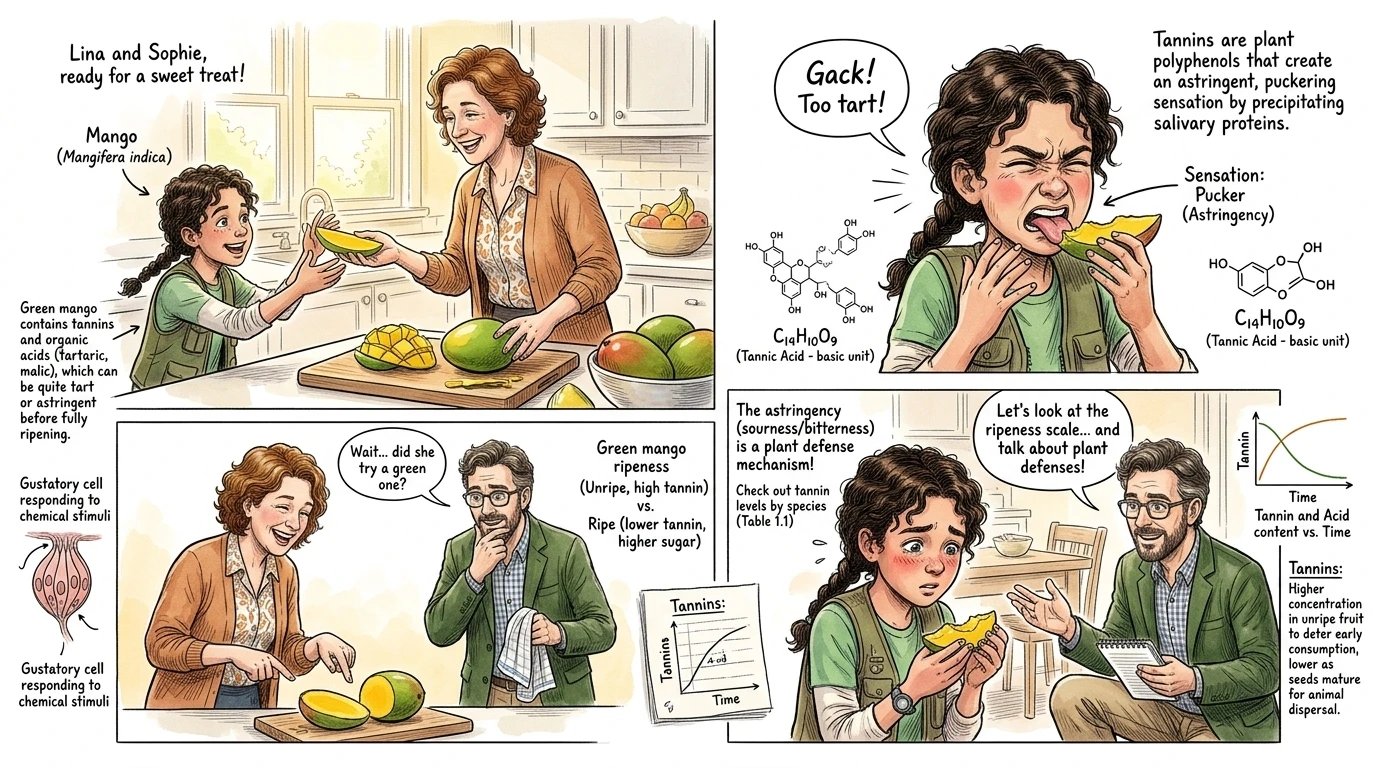
Lina watched her mother slice a large, green mango in their sunny kitchen. "Can I try a piece now, Mom?" she asked, reaching for a slice. Sophie smiled and handed one over, but as Lina took a bite, her face scrunched up immediately. "Whoa!" Lina exclaimed, fanning her mouth, "Why is that so incredibly sour?"
Page 2
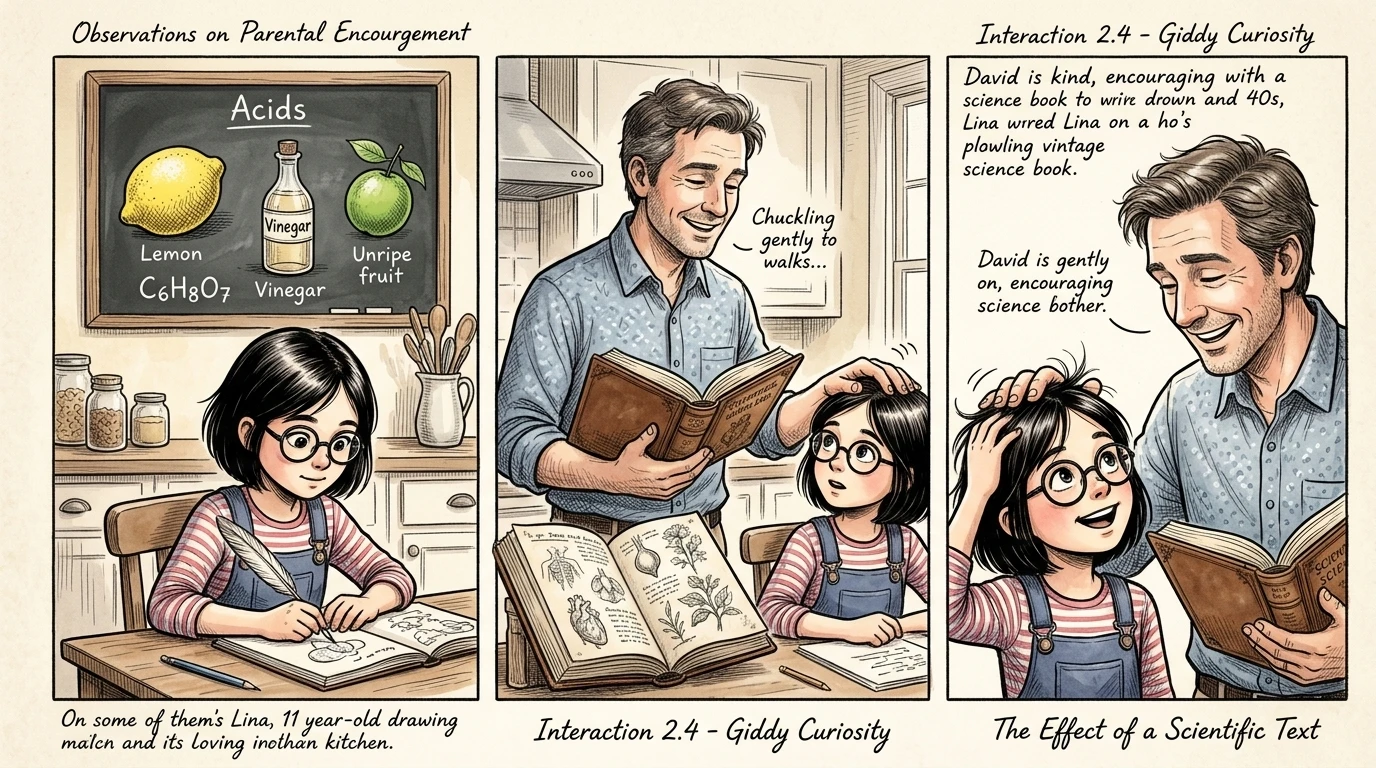
Her father, David, chuckled as he walked in, holding a book. "That's the power of citric acid!" he said, ruffling Lina's hair. "Acids are what give lemons, vinegar, and unripe fruit that sharp, sour taste." Lina's eyes widened. "So it's a chemical? I wish we had some of that special paper from science class to test it!"
Page 3
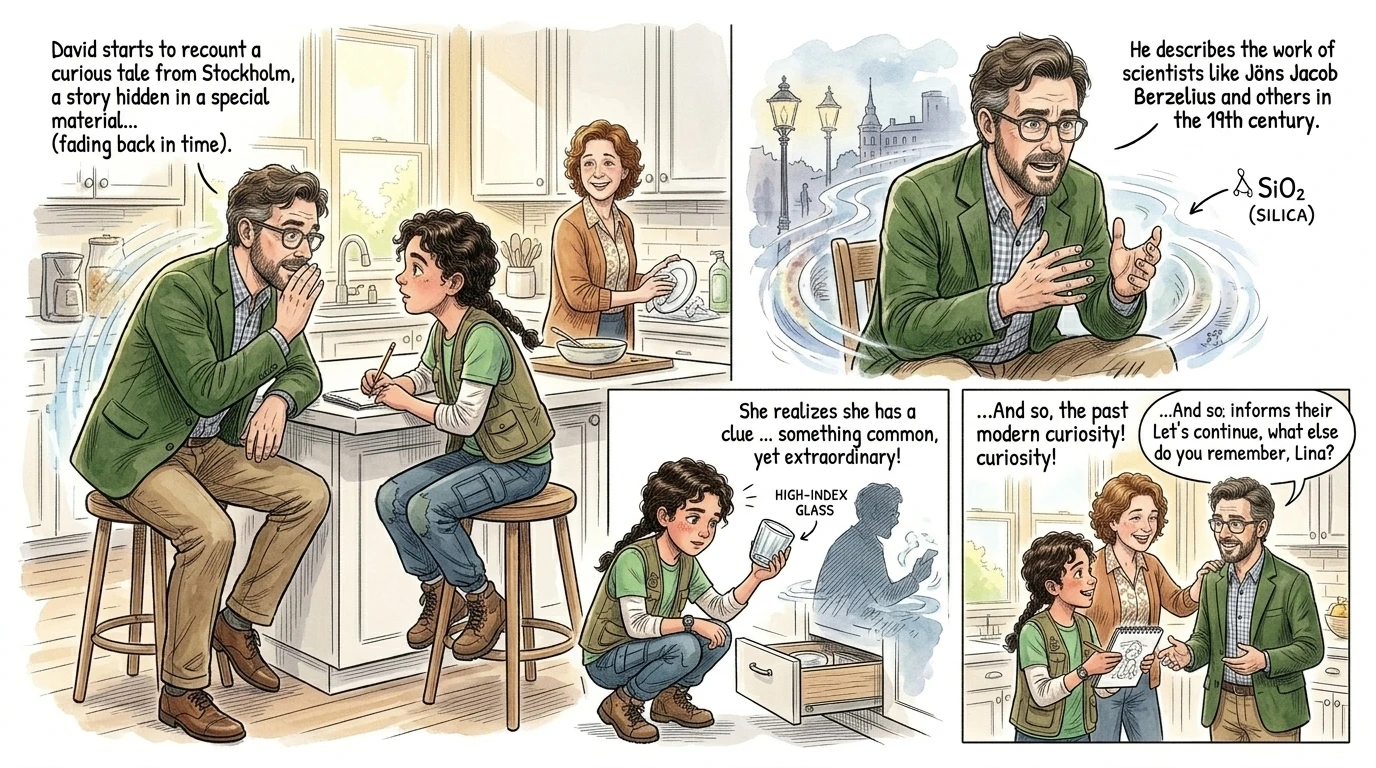
"To really understand what makes an acid an acid, we have to go back in time," David said, his voice dropping to a storyteller's whisper. "Imagine Sweden in the late 1800s, a world lit by gas lamps, not light bulbs." A shimmering transition seems to ripple through the kitchen. "A young, stubborn student was about to challenge everything his professors thought they knew."
Page 4
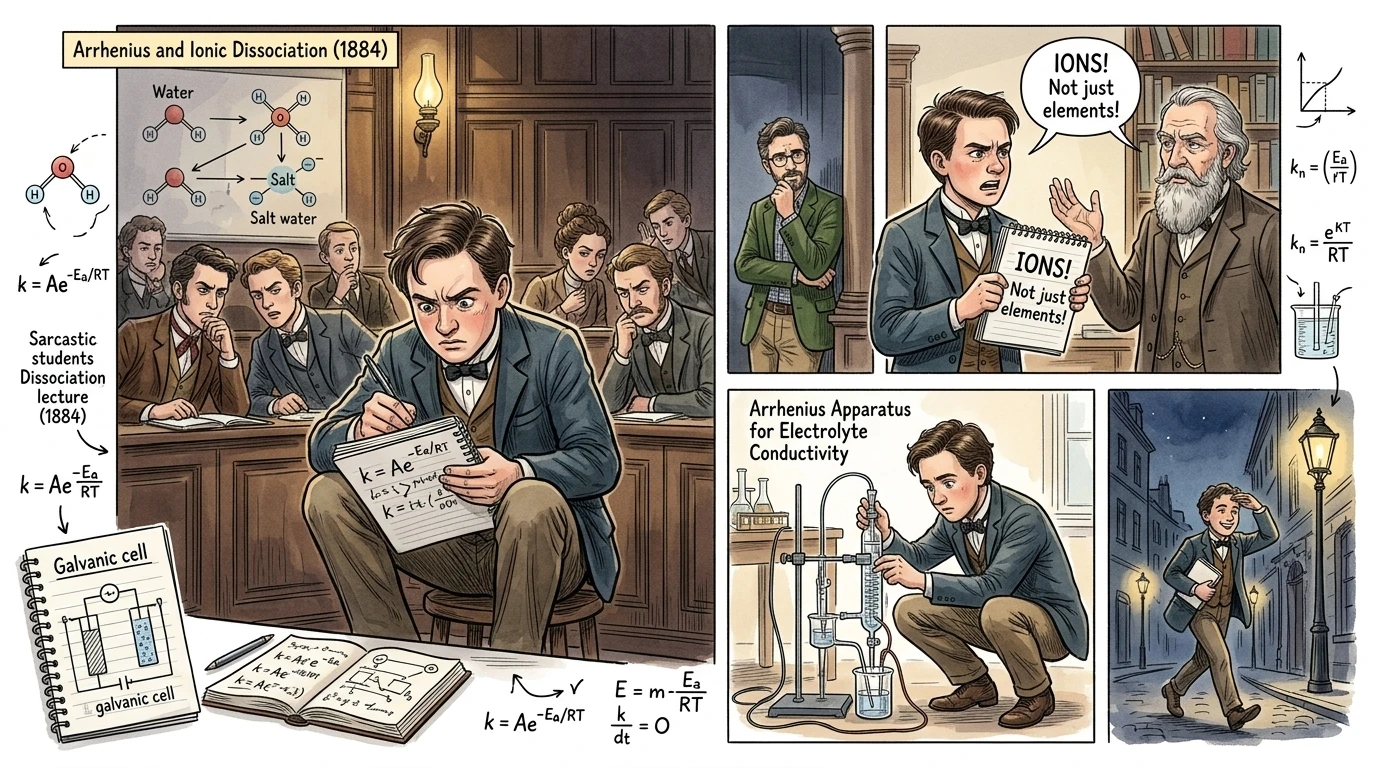
"His name was Svante Arrhenius," David's voice narrated, as a young man with a determined face appeared. "He was fascinated by a simple puzzle: why do some liquids, like salt water, conduct electricity, while others, like pure water, don't?" The young Arrhenius was scribbling furiously in a notebook, ignoring the skeptical glances of his peers. "He believed the answer was hidden inside the water itself."
Page 5
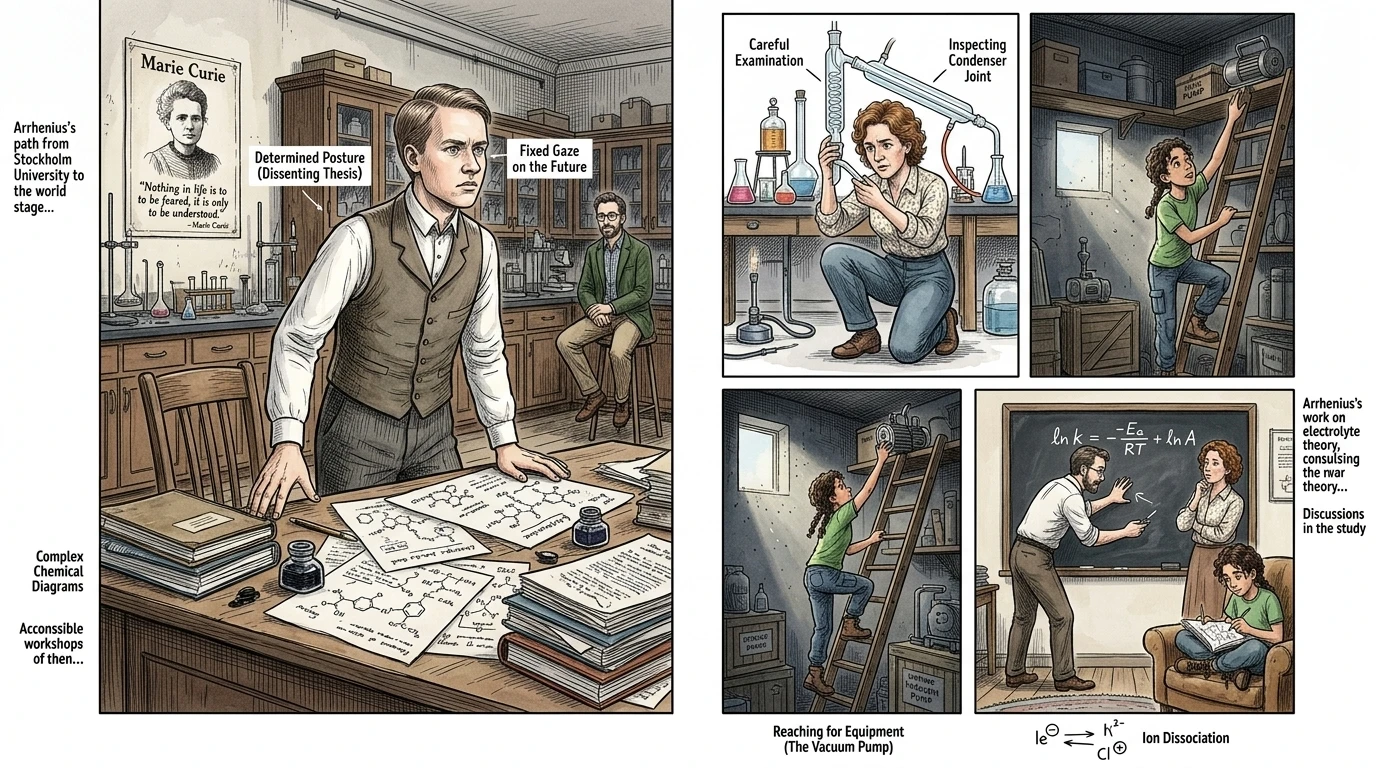
Arrhenius's professors called his ideas absurd, nearly failing him for his doctoral thesis in 1884. "But he remembered the words of the great scientist Marie Curie: 'Nothing in life is to be feared, it is only to be understood,'" David explained. "He knew he was onto something huge, even if nobody else believed him yet." Arrhenius pushed his notes aside and stood up, ready to design a new experiment.
Page 6
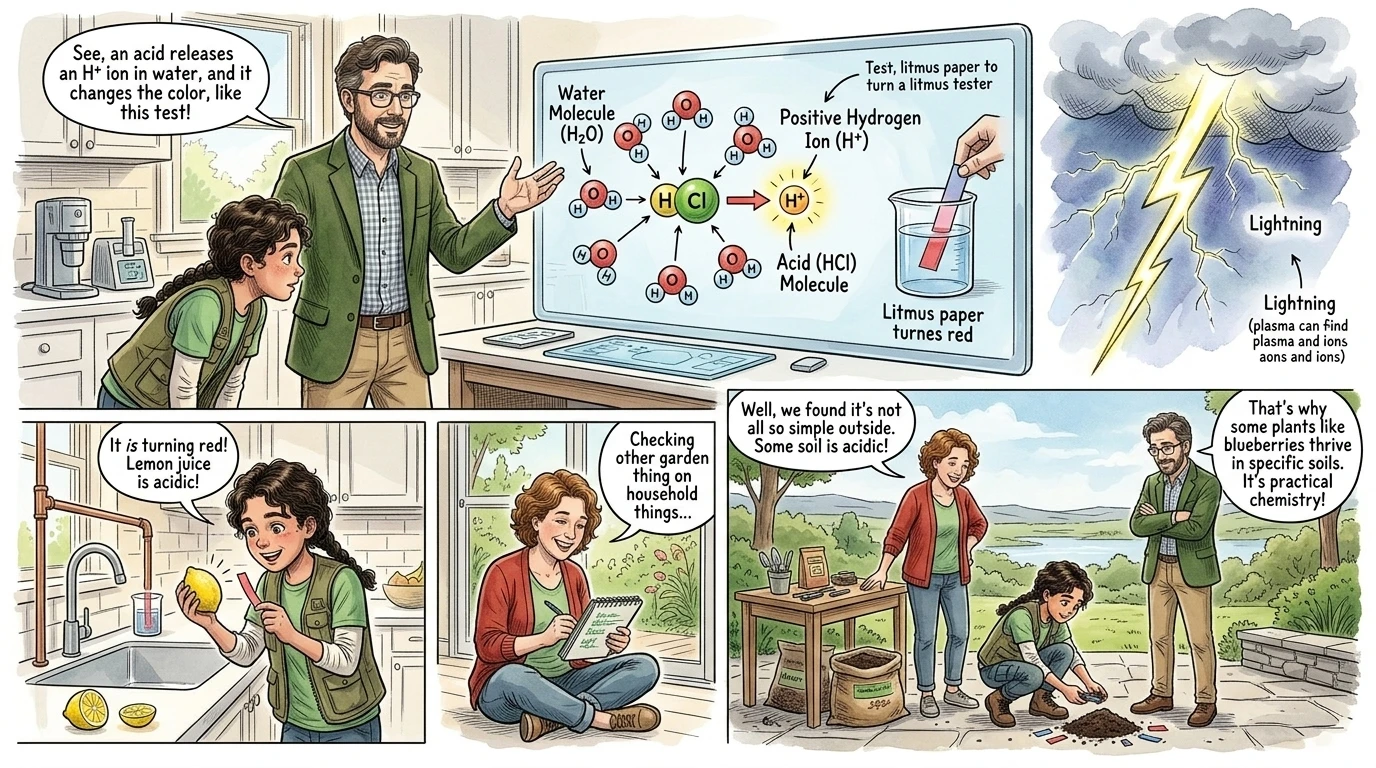
His breakthrough was a wild idea: acids release positively charged hydrogen atoms, called ions, when they dissolve in water! "It's these moving ions that carry electricity through the water," David's voice explained. "Think about it—a bolt of lightning is five times hotter than the surface of the Sun, and it's just a giant stream of moving charged particles, like tiny ions!"
Page 7
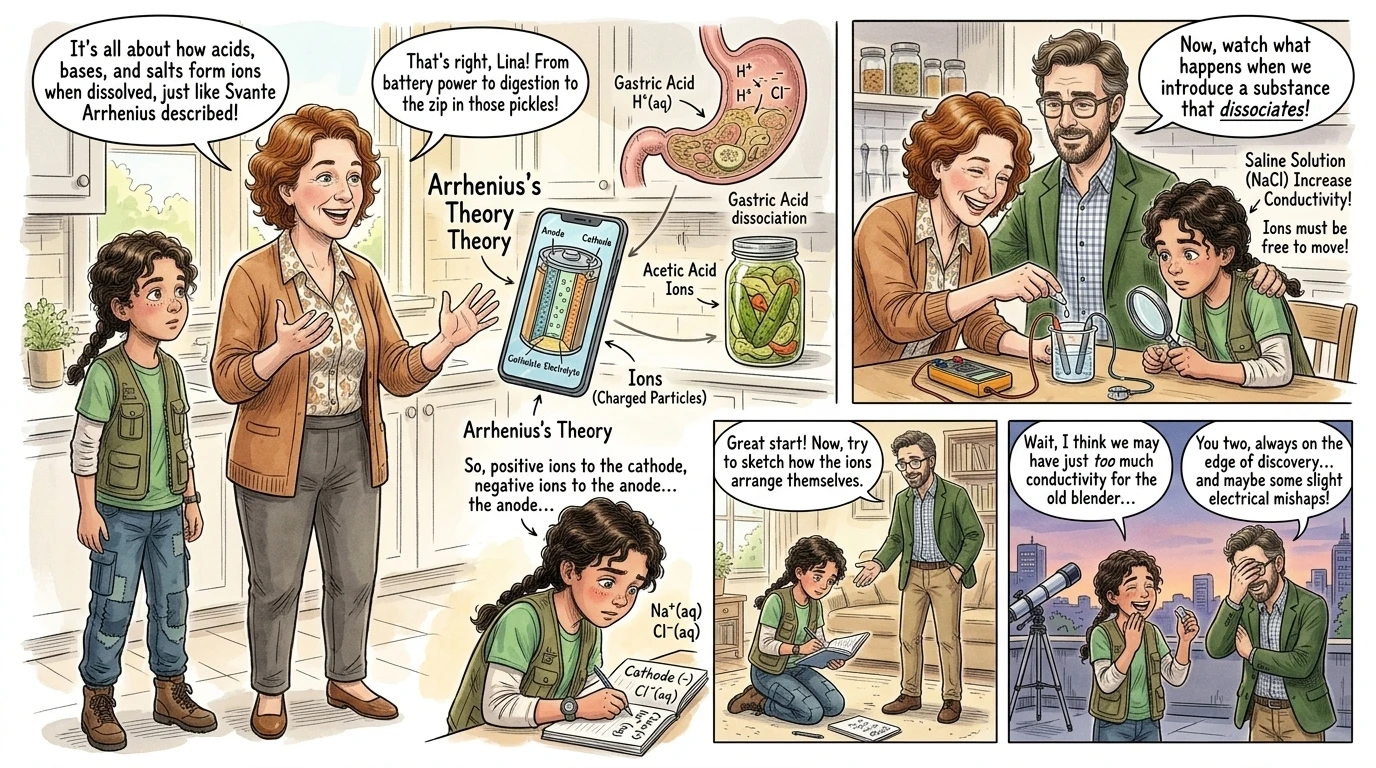
"Arrhenius's theory of ions won him the Nobel Prize in Chemistry in 1903 and changed the world," Sophie added. "That discovery is why we have modern batteries in our phones and cars!" David nodded. "It also helps us understand everything from how our stomachs digest food to how we use vinegar to preserve pickles."
Page 8
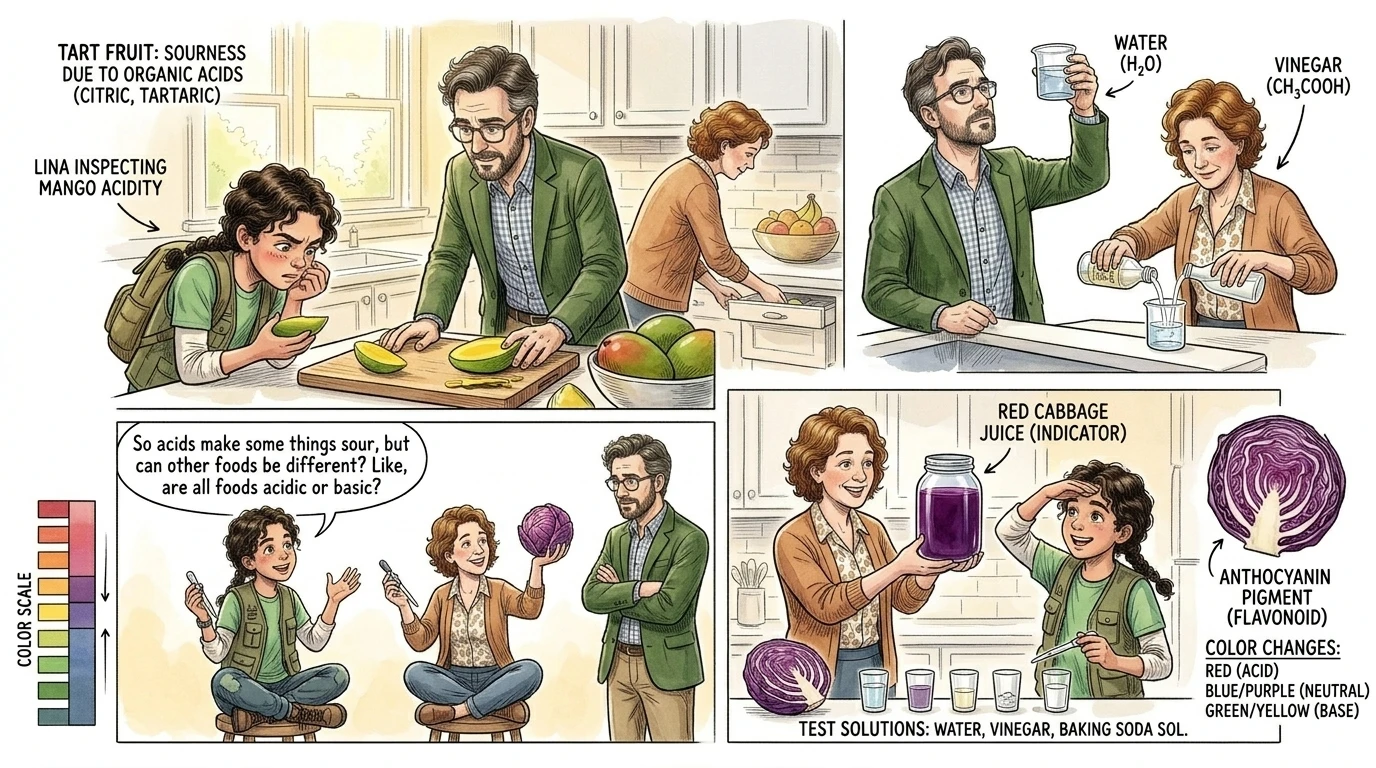
Back in the kitchen, the sunlight felt even brighter. "So the mango is sour because its acid releases hydrogen ions right on my tongue!" Lina declared triumphantly. "Oh, so that's what's happening!" Sophie said, her eyes lighting up with understanding. David smiled. "Exactly! And since you remembered your science class, let's try a little experiment to see what else is acidic."
Page 9
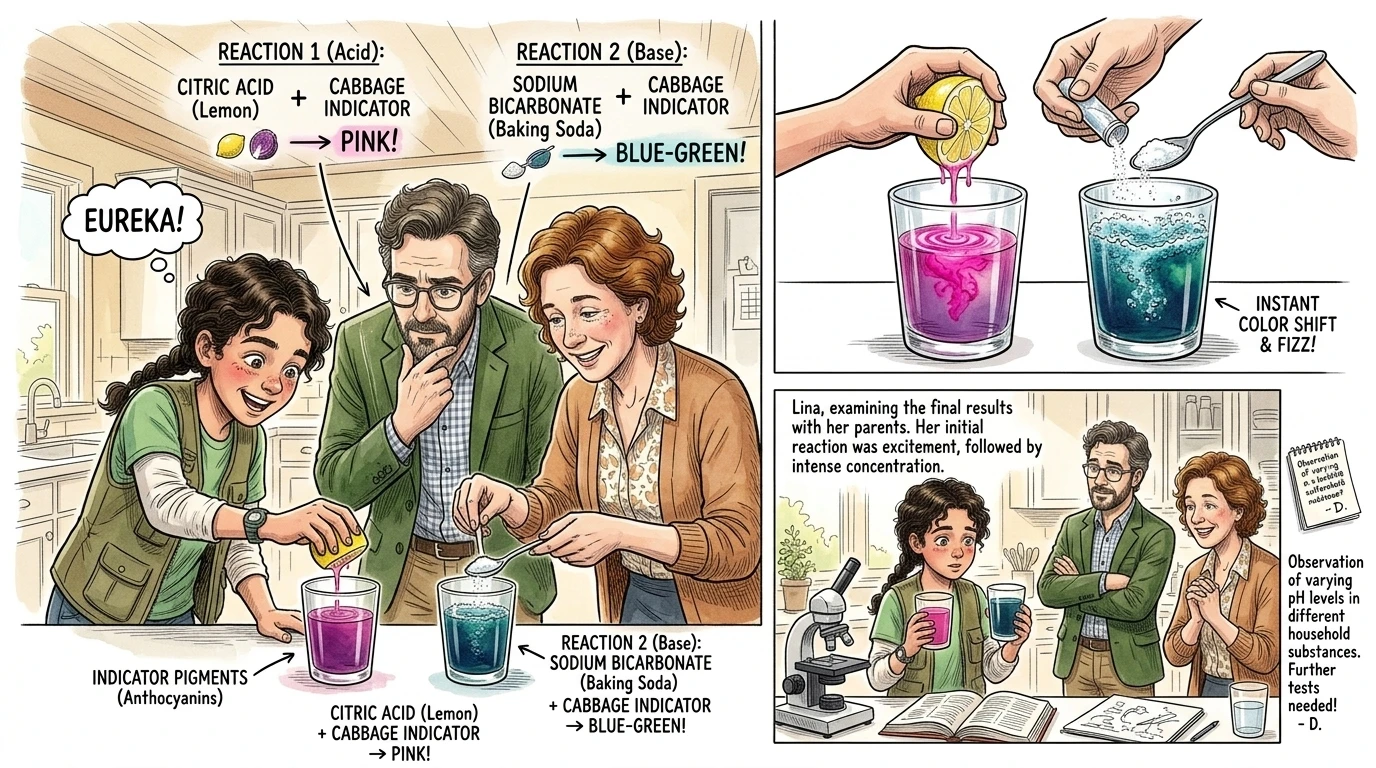
They poured the purple cabbage juice into three small glasses. "Now, add some lemon juice to this one," David instructed. Lina squeezed the lemon, and the liquid instantly turned a vibrant pink! "It's an acid!" she shouted. When Sophie spooned baking soda into the next glass, it fizzed and turned a deep blue-green.
Page 10
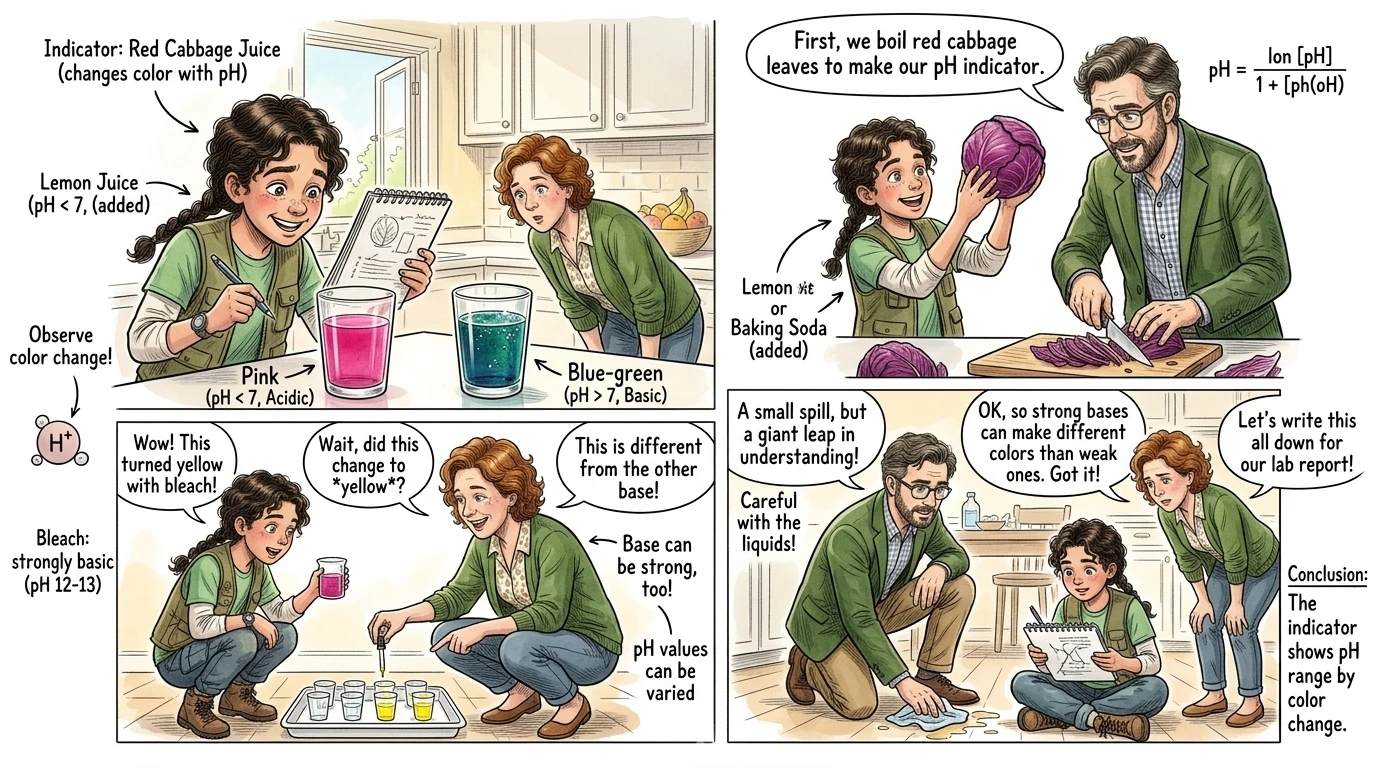
"Wow, so acids turn the cabbage juice pink, but this other stuff turns it blue," Lina observed. "So acids are all about giving away hydrogen ions!" Her mom looked at the bubbly blue glass thoughtfully. "If the sour things are called acids, what do we call the slippery, bitter ones like baking soda?" Lina grabbed her notebook, a new question already forming as she began to write.
About this story
- Audience: kids (ages 6–12)
Questions and answers
Questions and answers about Mango's Acid Adventure: Unlocking Flavor
Read Wonder Science on your phone
Wonder Science is available on Android. Get Wonder Science on Google Play.