Marie Curie

Marie Curie — an illustrated science story, set in Global. 10 illustrated pages, free to read on Wonder Science.
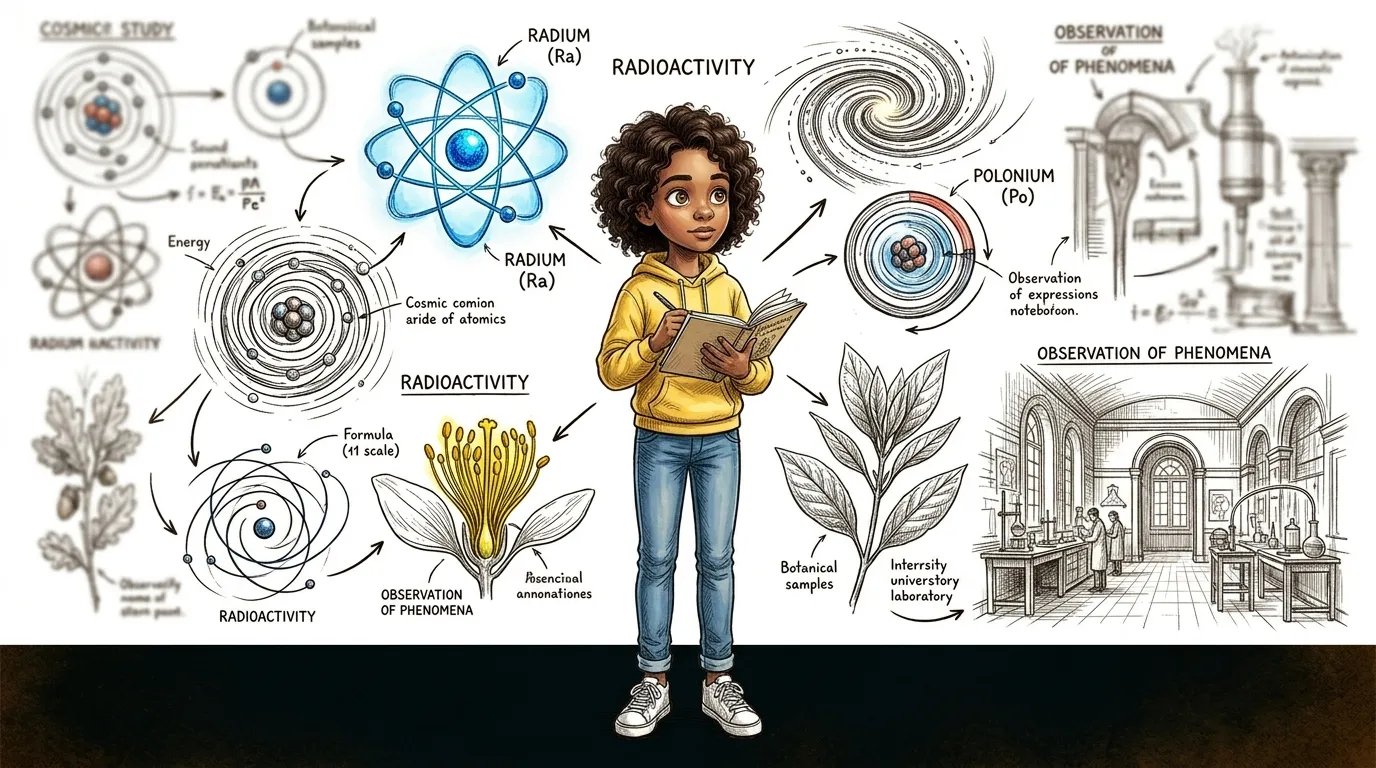
Marie Curie — book cover — Wonder Science
Marie Curie — an illustrated science story, set in Global. 10 illustrated pages, free to read on Wonder Science.

Page 1
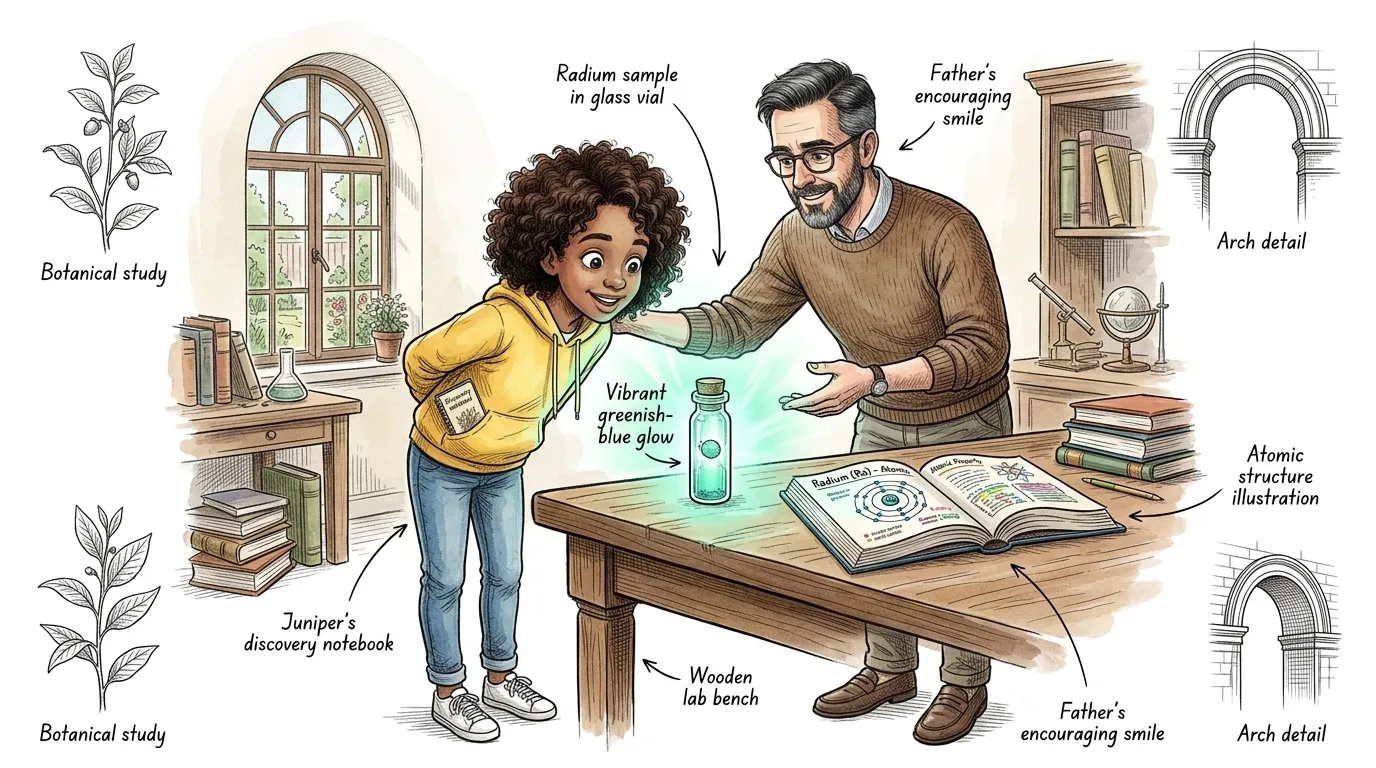
The glow of a radium sample illuminates a darkened room. It's a ghostly, ethereal light, born of something entirely new.
The glow of a radium sample illuminates a darkened room. It's a ghostly, ethereal light, born of something entirely new. This is radioactivity, and it will change the world. But the effort to harness it will come at a great personal cost. Fact: Introduction to radium and its properties.

The glow of a radium sample illuminates a darkened room. It's a ghostly, ethereal light, born of something entirely new. This is radioactivity, and it will change the world. But the effort to harness it will come at a great personal cost.

Fact: Introduction to radium and its properties.

Page 2
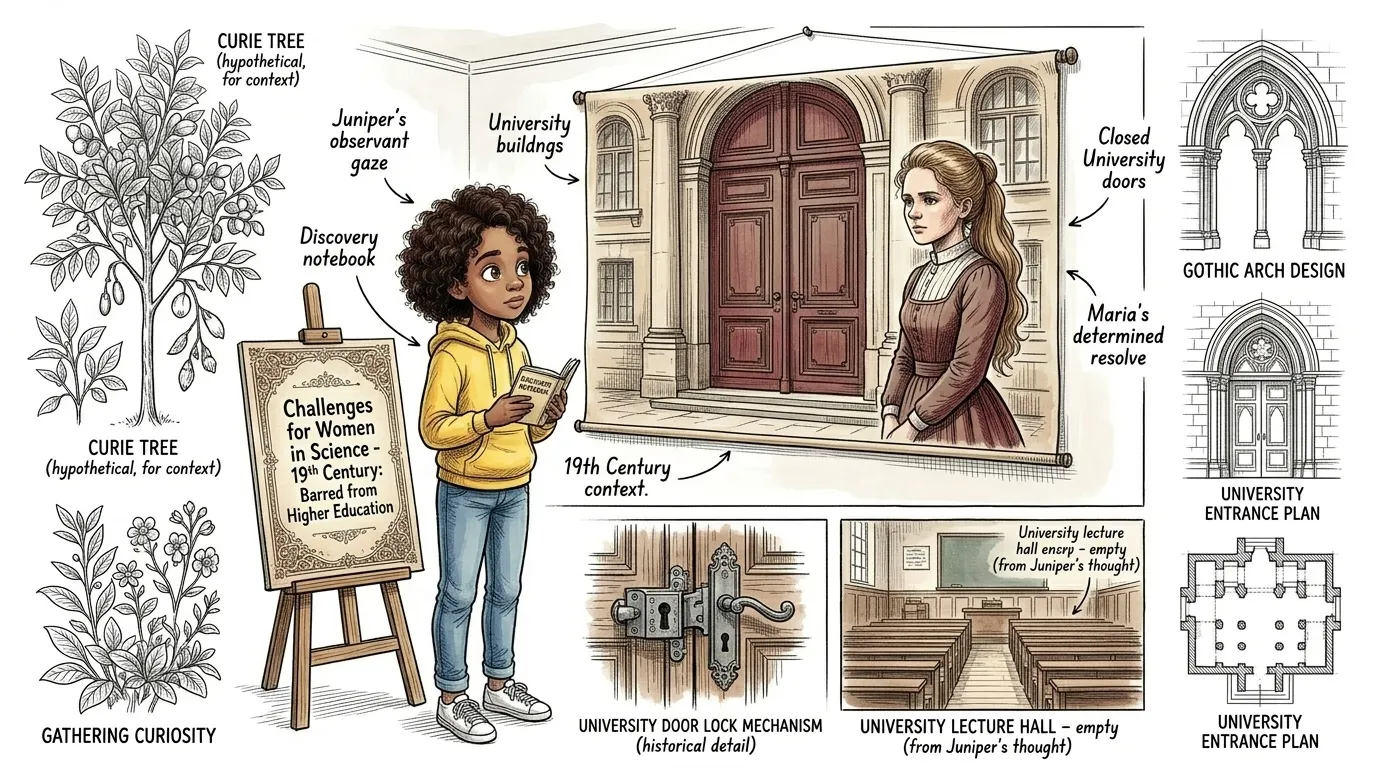
Born Maria Skłodowska in Warsaw, Poland, Marie Curie faced immense obstacles. Under Russian rule, women were barred from higher education. The problem?
Born Maria Skłodowska in Warsaw, Poland, Marie Curie faced immense obstacles. Under Russian rule, women were barred from higher education. The problem? How could she gain access to proper scientific training? The solution was as improbable as it was courageous. Fact: The challenges faced by women in science in the 19th century.

Born Maria Skłodowska in Warsaw, Poland, Marie Curie faced immense obstacles. Under Russian rule, women were barred from higher education. The problem? How could she gain access to proper scientific training? The solution was as improbable as it was courageous.

Fact: The challenges faced by women in science in the 19th century.

Page 3
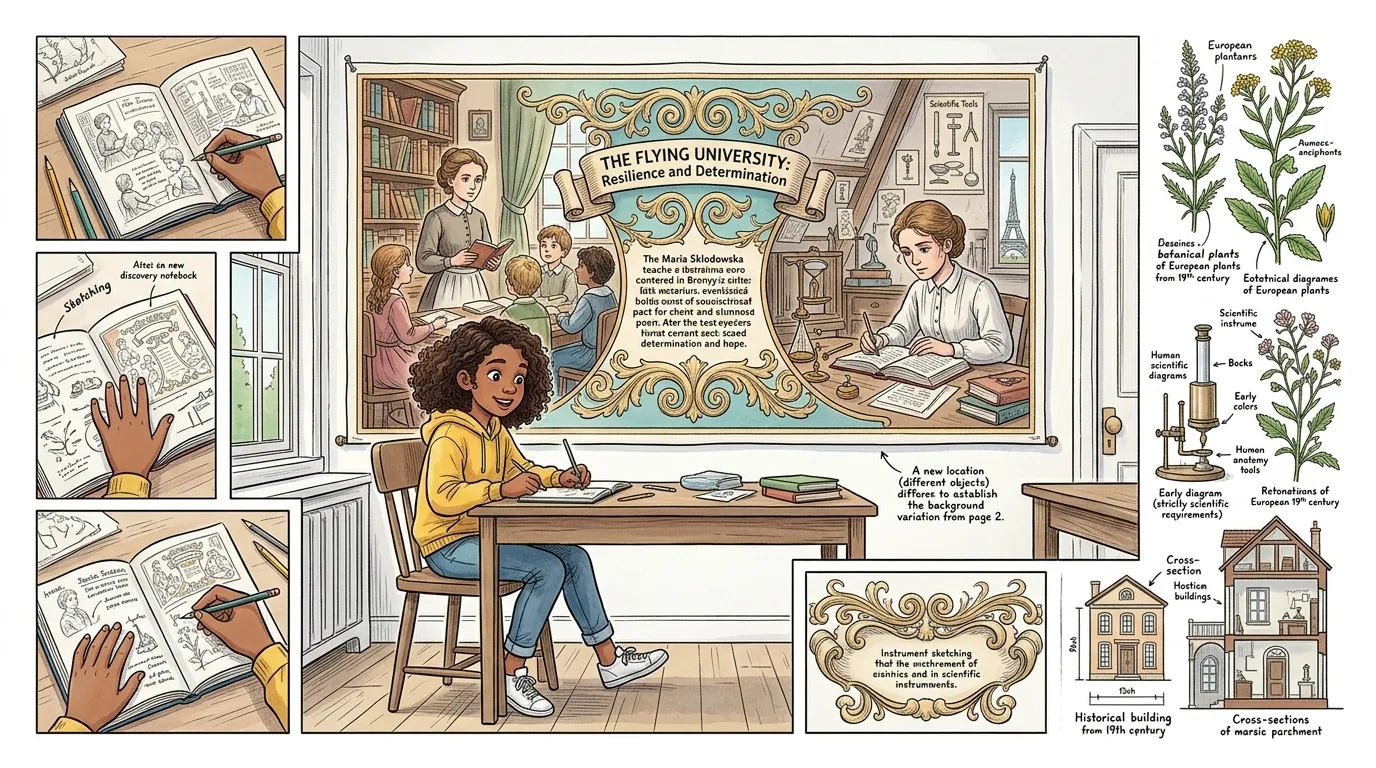
Maria and her sister Bronya made a pact. Maria would work as a governess to support Bronya's medical studies in Paris, and then Bronya would return the favor.
Maria and her sister Bronya made a pact. Maria would work as a governess to support Bronya's medical studies in Paris, and then Bronya would return the favor. This ingenious solution was known as the Flying University—a clandestine network providing education to those excluded by the Russian Empire. Fact: The Flying University as a symbol of resilience and determination.

Maria and her sister Bronya made a pact. Maria would work as a governess to support Bronya's medical studies in Paris, and then Bronya would return the favor. This ingenious solution was known as the Flying University—a clandestine network providing education to those excluded by the Russian Empire.

Fact: The Flying University as a symbol of resilience and determination.

Page 4
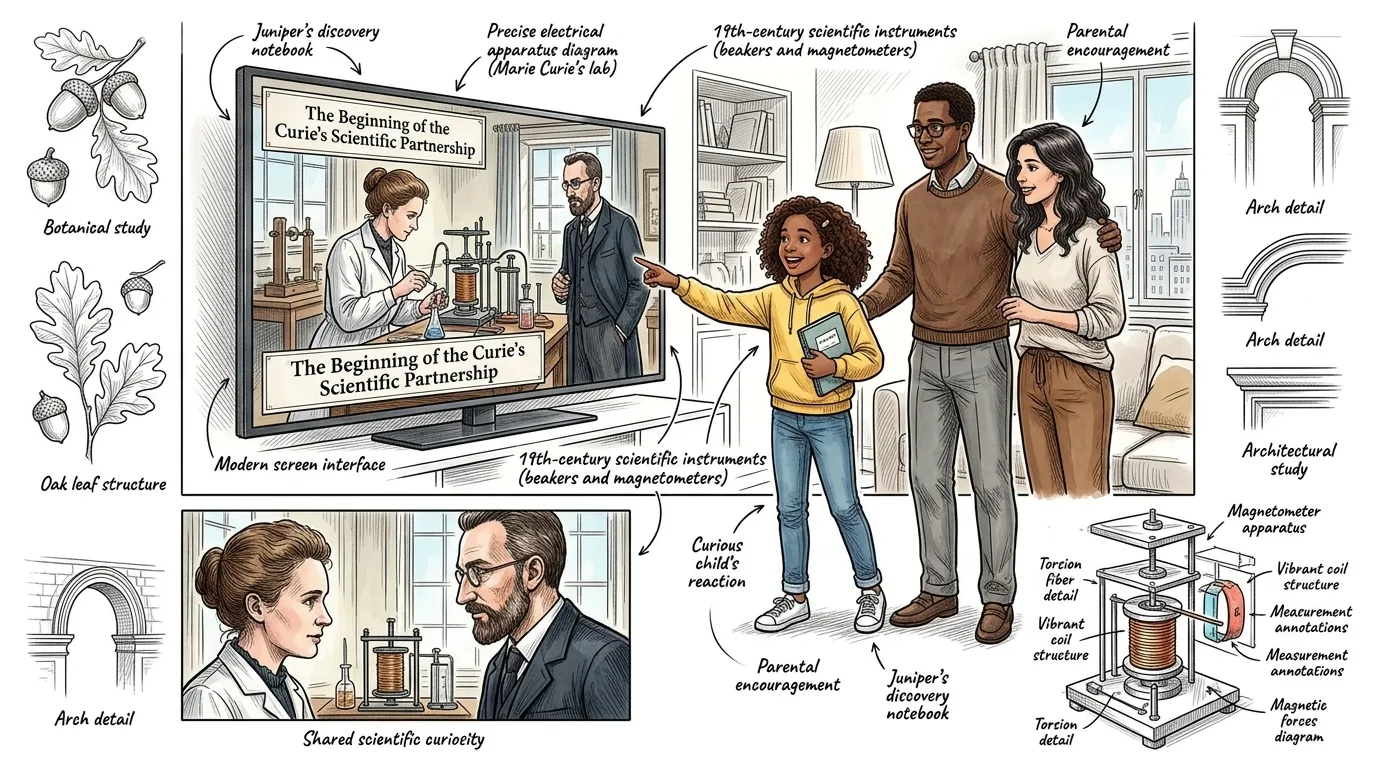
In Paris, Maria—now Marie—pursued her scientific passions. A chance encounter with Pierre Curie, a physicist studying magnetism, proved pivotal.
In Paris, Maria—now Marie—pursued her scientific passions. A chance encounter with Pierre Curie, a physicist studying magnetism, proved pivotal. Their shared love for science ignited a powerful partnership. 'One never notices what has been done; one can only see what remains to be done,' Marie often said, quoting herself later in life, reflecting on their insatiable curiosity. Fact: The beginning of the Curie's scientific partnership.

In Paris, Maria—now Marie—pursued her scientific passions. A chance encounter with Pierre Curie, a physicist studying magnetism, proved pivotal. Their shared love for science ignited a powerful partnership. 'One never notices what has been done; one can only see what remains to be done,' Marie often said, quoting herself later in life, reflecting on their insatiable curiosity.

Fact: The beginning of the Curie's scientific partnership.

Page 5
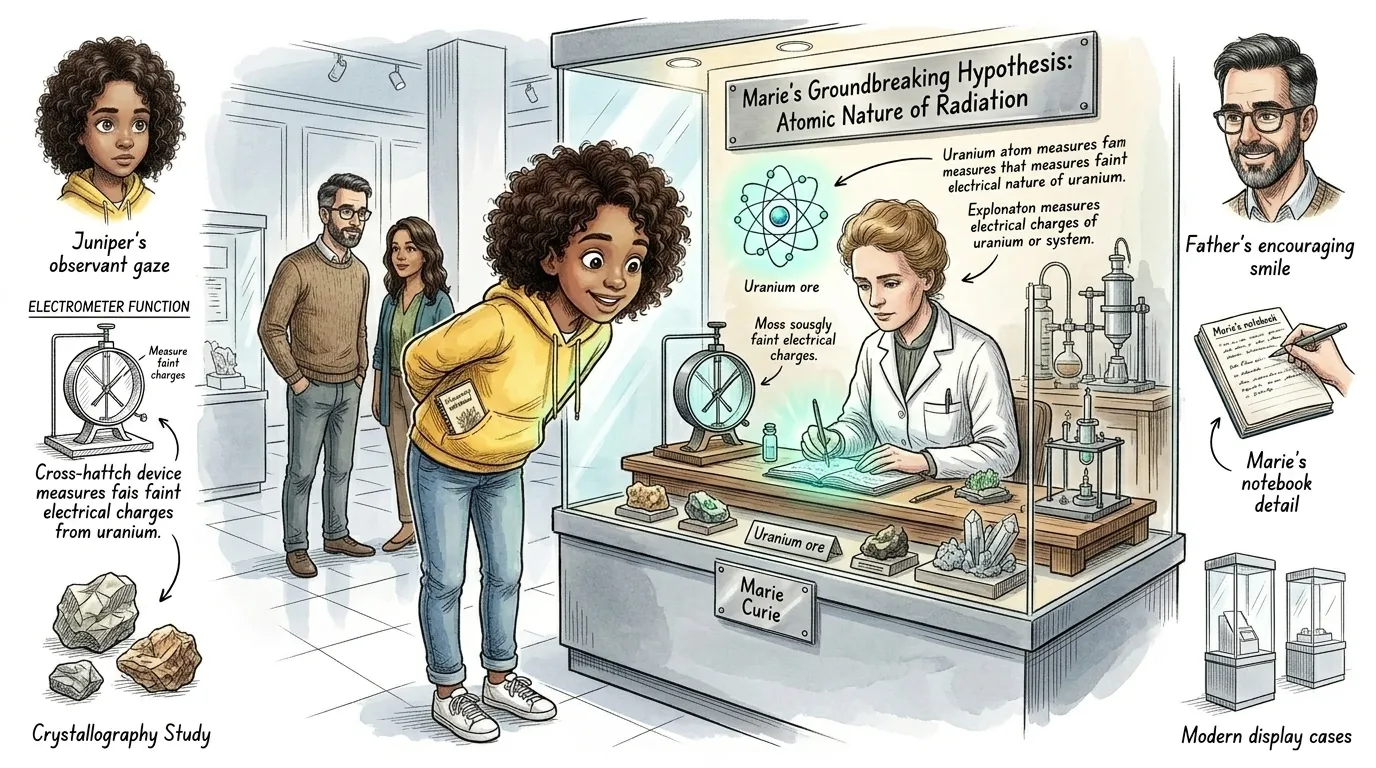
Henri Becquerel's discovery that uranium emitted radiation sparked Marie's interest. She hypothesized that this radiation was an atomic property, not a…
Henri Becquerel's discovery that uranium emitted radiation sparked Marie's interest. She hypothesized that this radiation was an atomic property, not a molecular one. This revolutionary idea formed the basis of her doctoral thesis and the birth of a new field: radioactivity. Fact: Marie's groundbreaking hypothesis on the atomic nature of radiation.

Henri Becquerel's discovery that uranium emitted radiation sparked Marie's interest. She hypothesized that this radiation was an atomic property, not a molecular one. This revolutionary idea formed the basis of her doctoral thesis and the birth of a new field: radioactivity.

Fact: Marie's groundbreaking hypothesis on the atomic nature of radiation.

Page 6
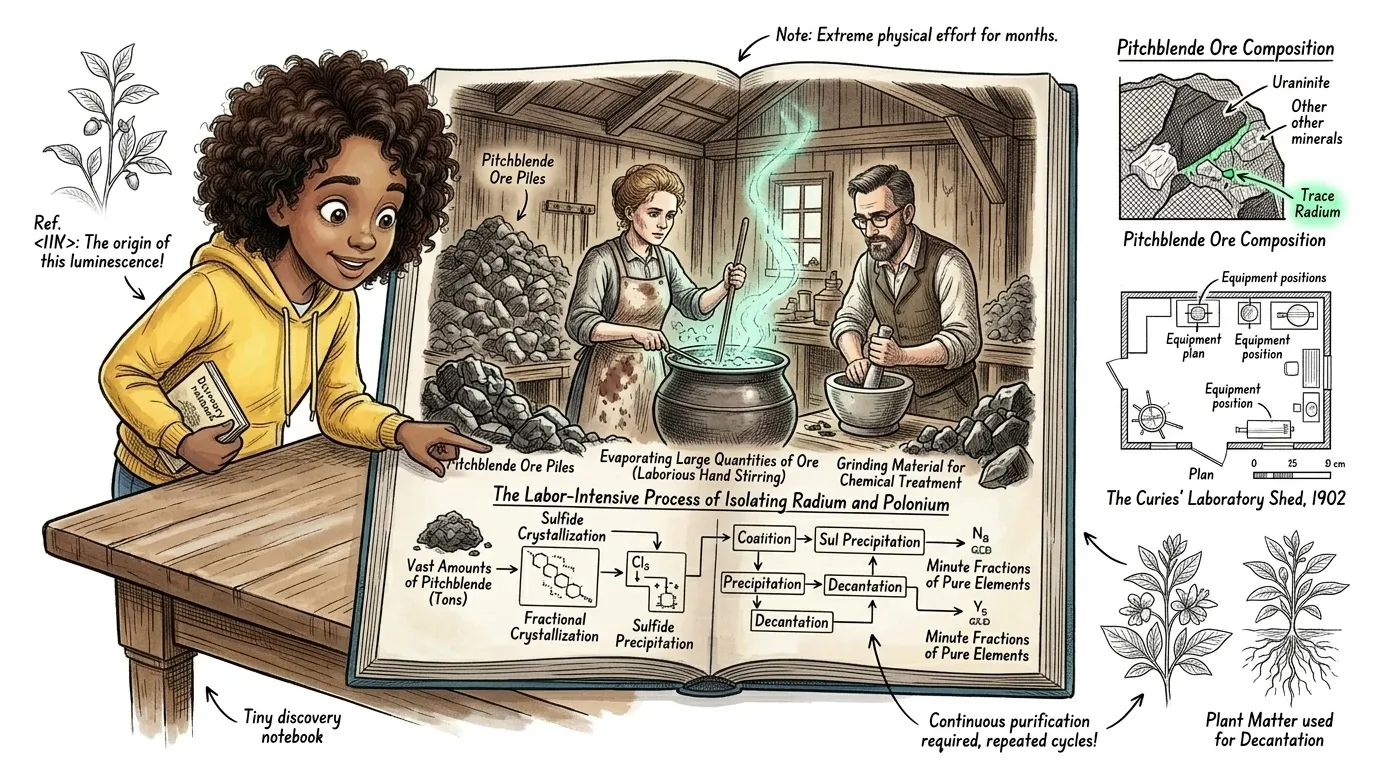
Marie and Pierre focused on pitchblende, a uranium ore far more radioactive than uranium itself. This meant pitchblende contained another, even more radioactive…
Marie and Pierre focused on pitchblende, a uranium ore far more radioactive than uranium itself. This meant pitchblende contained another, even more radioactive element. Isolating this element became an arduous task, requiring tons of pitchblende and years of relentless work. Fact: The labor-intensive process of isolating radium and polonium.

Marie and Pierre focused on pitchblende, a uranium ore far more radioactive than uranium itself. This meant pitchblende contained another, even more radioactive element. Isolating this element became an arduous task, requiring tons of pitchblende and years of relentless work.

Fact: The labor-intensive process of isolating radium and polonium.

Page 7
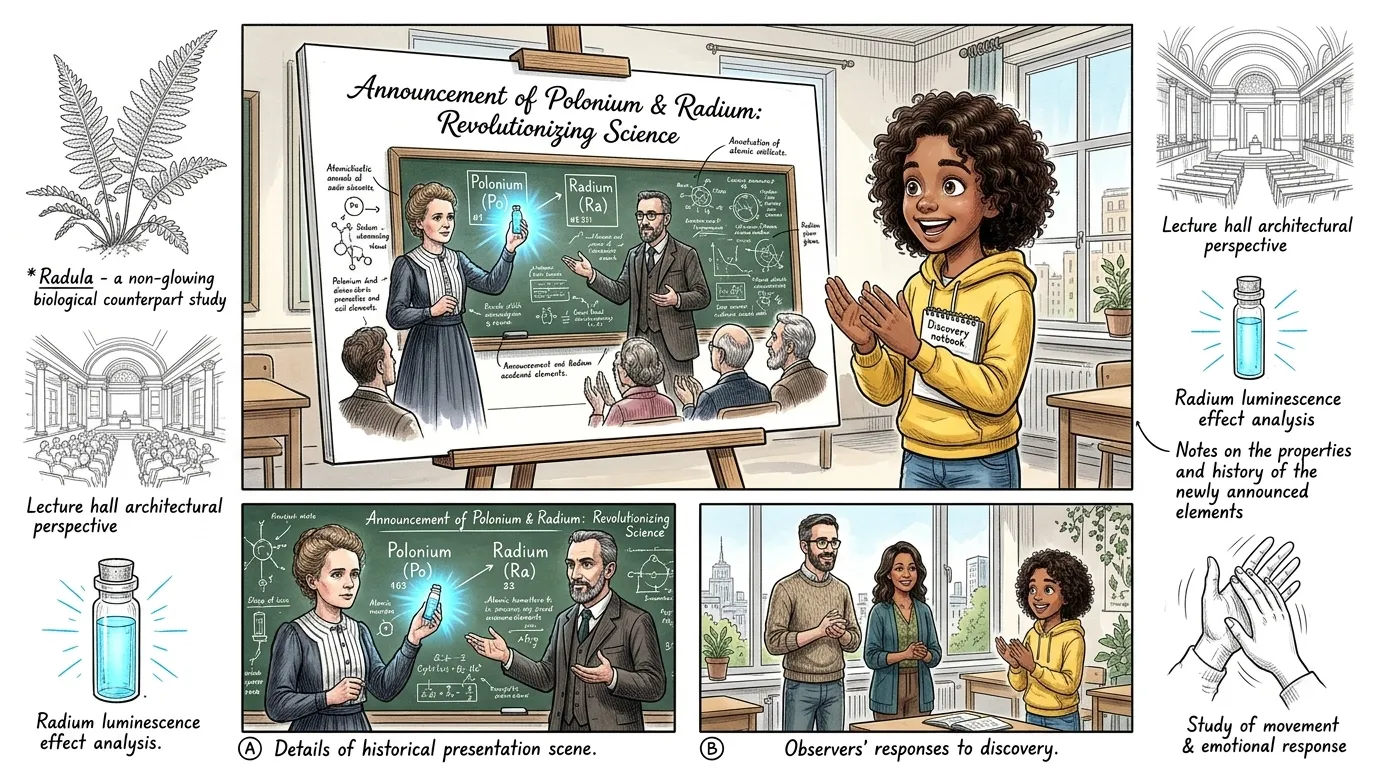
In 1898, the Curies announced the discovery of two new elements: polonium, named after Marie's native Poland, and radium, meaning 'ray' in Latin.
In 1898, the Curies announced the discovery of two new elements: polonium, named after Marie's native Poland, and radium, meaning 'ray' in Latin. These discoveries revolutionized physics and chemistry, challenging existing notions of the atom. Fact: The announcement of polonium and radium and its impact on the scientific community.

In 1898, the Curies announced the discovery of two new elements: polonium, named after Marie's native Poland, and radium, meaning 'ray' in Latin. These discoveries revolutionized physics and chemistry, challenging existing notions of the atom.

Fact: The announcement of polonium and radium and its impact on the scientific community.

Page 8
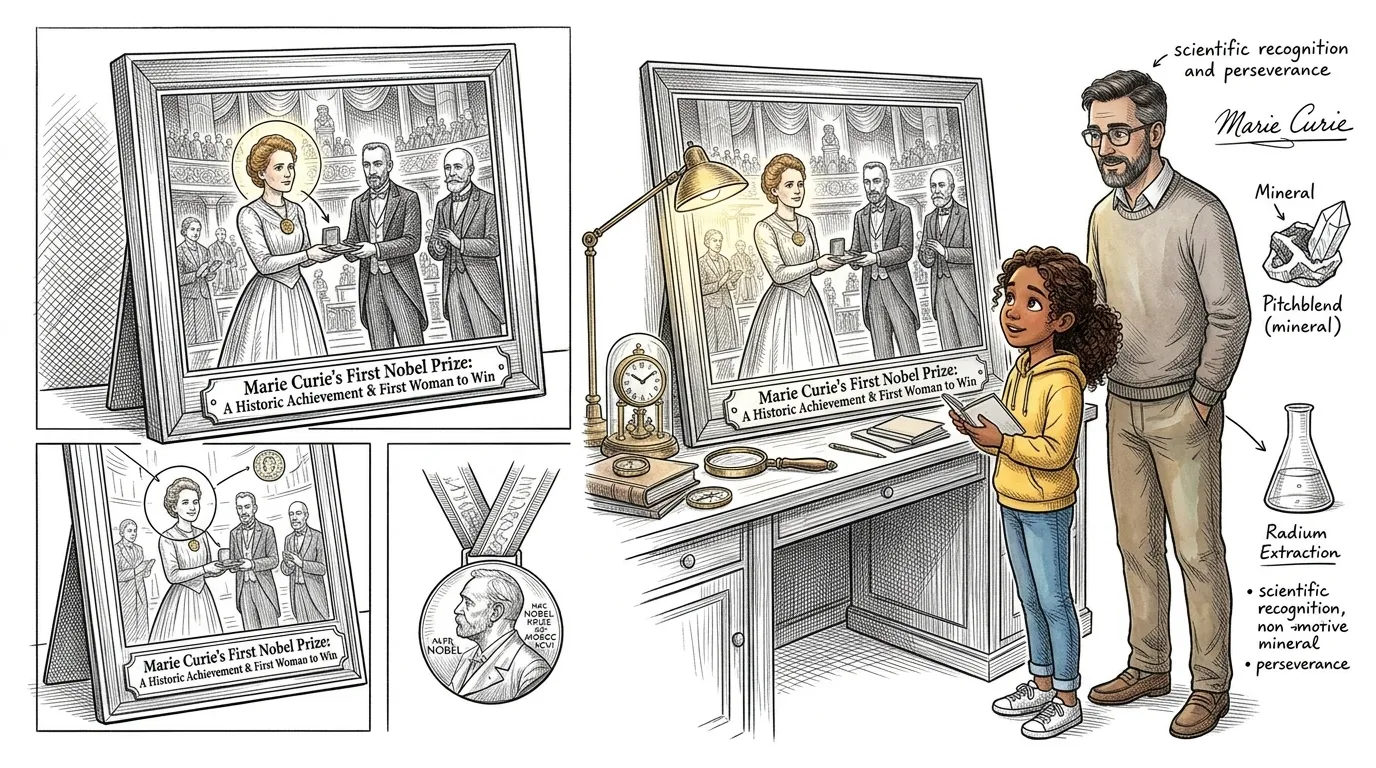
In 1903, Marie and Pierre Curie, along with Henri Becquerel, were awarded the Nobel Prize in Physics for their research on radioactivity.
In 1903, Marie and Pierre Curie, along with Henri Becquerel, were awarded the Nobel Prize in Physics for their research on radioactivity. Marie became the first woman to receive this honor. Years later, she would win a second Nobel Prize, this time in Chemistry, making her the first person to win in two different sciences. Fact: Marie Curie's first Nobel Prize and her historic achievement.

In 1903, Marie and Pierre Curie, along with Henri Becquerel, were awarded the Nobel Prize in Physics for their research on radioactivity. Marie became the first woman to receive this honor. Years later, she would win a second Nobel Prize, this time in Chemistry, making her the first person to win in two different sciences.

Fact: Marie Curie's first Nobel Prize and her historic achievement.

Page 9
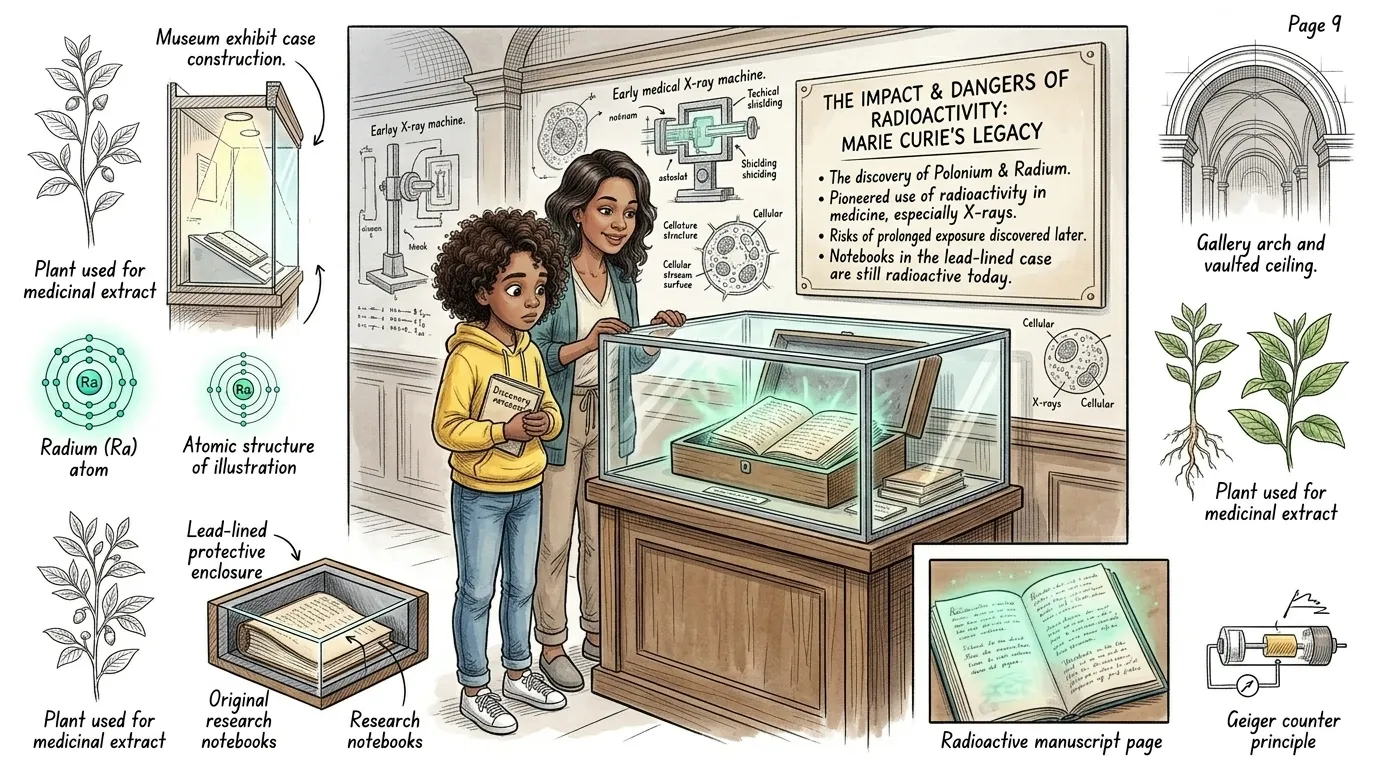
Marie Curie's work paved the way for countless medical advancements, from cancer treatment to X-ray technology. However, her dedication to science came at a…
Marie Curie's work paved the way for countless medical advancements, from cancer treatment to X-ray technology. However, her dedication to science came at a steep price. Prolonged exposure to radiation ultimately led to her death in 1934. Her notebooks, still radioactive, are stored in lead-lined boxes. Fact: The impact of Marie Curie's work on medicine and the dangers of radioactivity.

Marie Curie's work paved the way for countless medical advancements, from cancer treatment to X-ray technology. However, her dedication to science came at a steep price. Prolonged exposure to radiation ultimately led to her death in 1934. Her notebooks, still radioactive, are stored in lead-lined boxes.

Fact: The impact of Marie Curie's work on medicine and the dangers of radioactivity.

Page 10
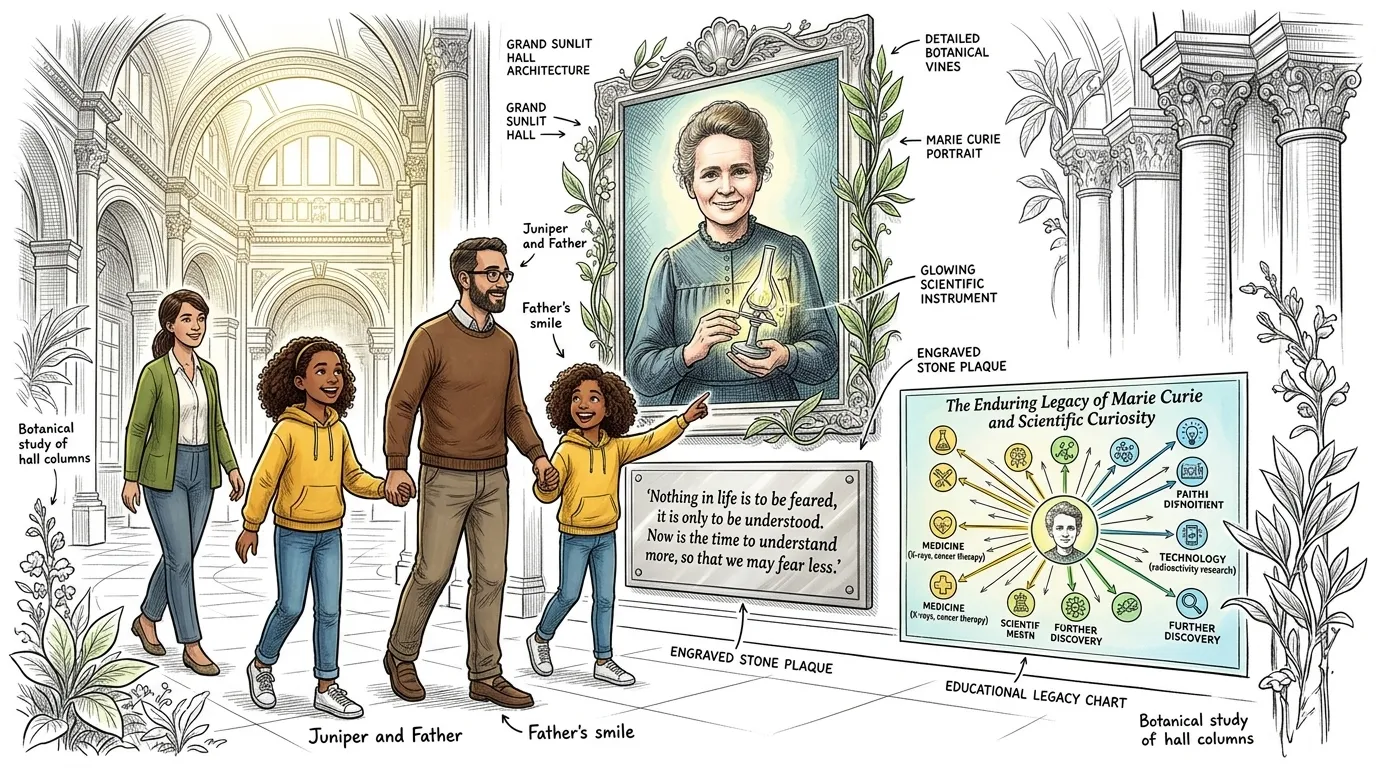
Marie Curie's life stands as a testament to the power of curiosity, perseverance, and the pursuit of knowledge. Her discoveries continue to shape our world…
Marie Curie's life stands as a testament to the power of curiosity, perseverance, and the pursuit of knowledge. Her discoveries continue to shape our world, reminding us that even the smallest ray of light can illuminate the darkest corners of the unknown. As she herself noted, 'Nothing in life is to be feared, it is only to be understood.

Marie Curie's life stands as a testament to the power of curiosity, perseverance, and the pursuit of knowledge. Her discoveries continue to shape our world, reminding us that even the smallest ray of light can illuminate the darkest corners of the unknown. As she herself noted, 'Nothing in life is to be feared, it is only to be understood. Now is the time to understand more, so that we may fear less.'

Fact: The enduring legacy of Marie Curie and the importance of scientific curiosity.

About this story

  • Location: Global
  • Audience: kids (ages 6–12)

Questions and answers

Questions and answers about Marie Curie

Read Wonder Science on your phone

Wonder Science is available on Android. Get Wonder Science on Google Play.

More Wonder Science stories

All Wonder Science stories · Open the library