Mary Anning
Mary Anning — an illustrated science story, set in Global. 10 illustrated pages, free to read on Wonder Science.
Page 1
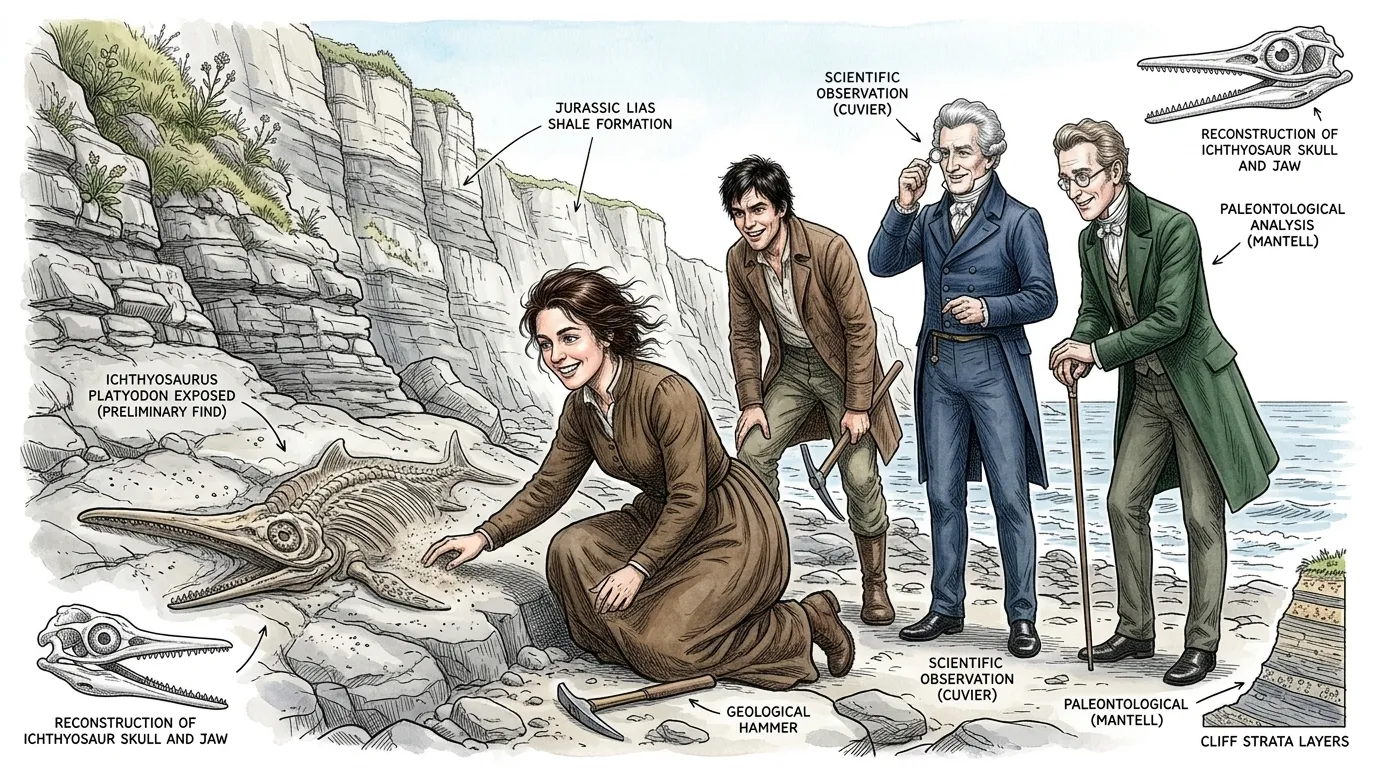
The year is 1811. Along the treacherous, eroding cliffs of Lyme Regis, a young woman named Mary Anning navigates the perilous terrain, her eyes sharply scanning the shale and limestone. This rugged stretch of the English Dorset coast, known as the Jurassic Coast, was a perilous yet bountiful trove of ancient secrets. Her brother had recently unearthed an extraordinary skull, but it was Mary, with her unparalleled perseverance, who would complete the puzzle, revealing one of the most astonishing creatures the world had ever seen. This wasn't merely a collection of old bones; it was the first complete skeleton of an Ichthyosaur, a marine reptile from an era unimaginably distant, shattering existing perceptions of Earth's history and the permanence of life itself.
Page 2
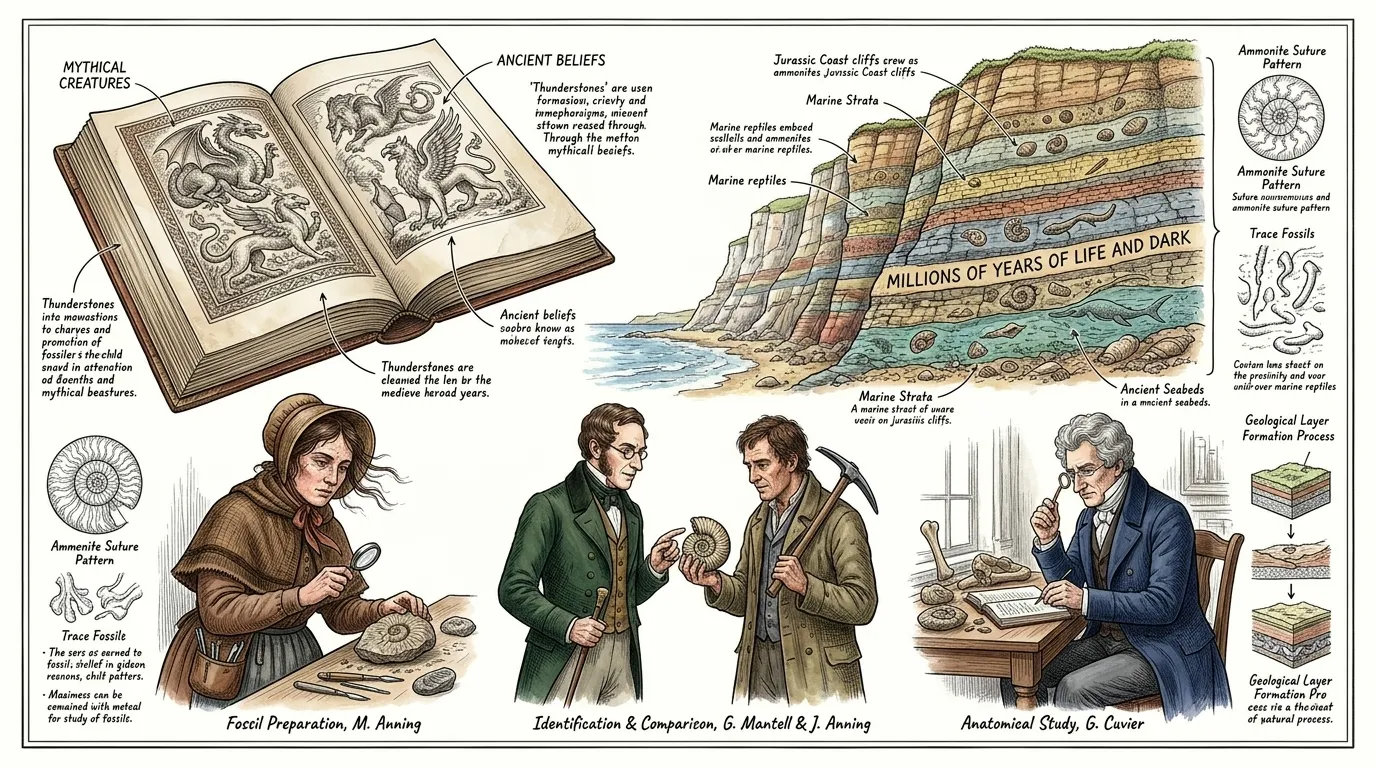
Before Anning's groundbreaking finds, the prevailing worldview was largely shaped by biblical interpretations, positing a young Earth where all species created by divine hand still existed. Fossils, often dismissed as 'thunderstones' or remnants of mythical beasts, were poorly understood. The concept of extinction was radical, challenging fundamental theological and scientific assumptions. Yet, the dramatic geology of Lyme Regis, with its easily accessible strata of Jurassic marine deposits, was a natural laboratory, holding clues that would soon prove inescapable. These layered rocks recorded millions of years of life and death, waiting for an observer keen enough to read their story.
Page 3
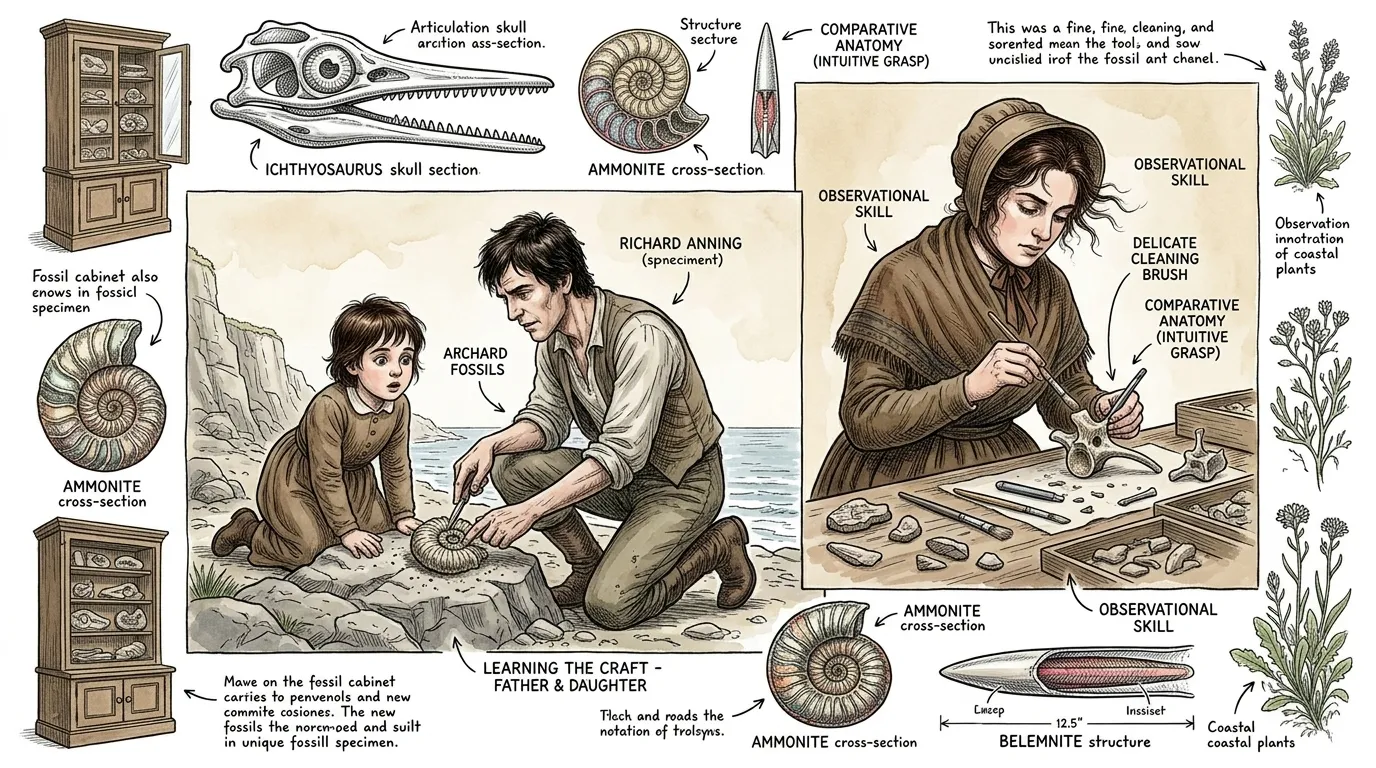
Mary Anning's life was a testament to resilience born of necessity. Born into poverty in 1799, she learned to 'read' the cliffs from her father, a cabinetmaker who supplemented his income by selling local fossils to tourists. After his death, Mary and her family relied entirely on her ability to find and meticulously prepare these natural treasures. Her unparalleled observational skills, honed from childhood, combined with an intuitive grasp of comparative anatomy, allowed her to distinguish significant finds from mere detritus. This was not mere collecting; it was an emerging science, driven by a self-taught genius against a backdrop of societal indifference and academic exclusion.
Page 4
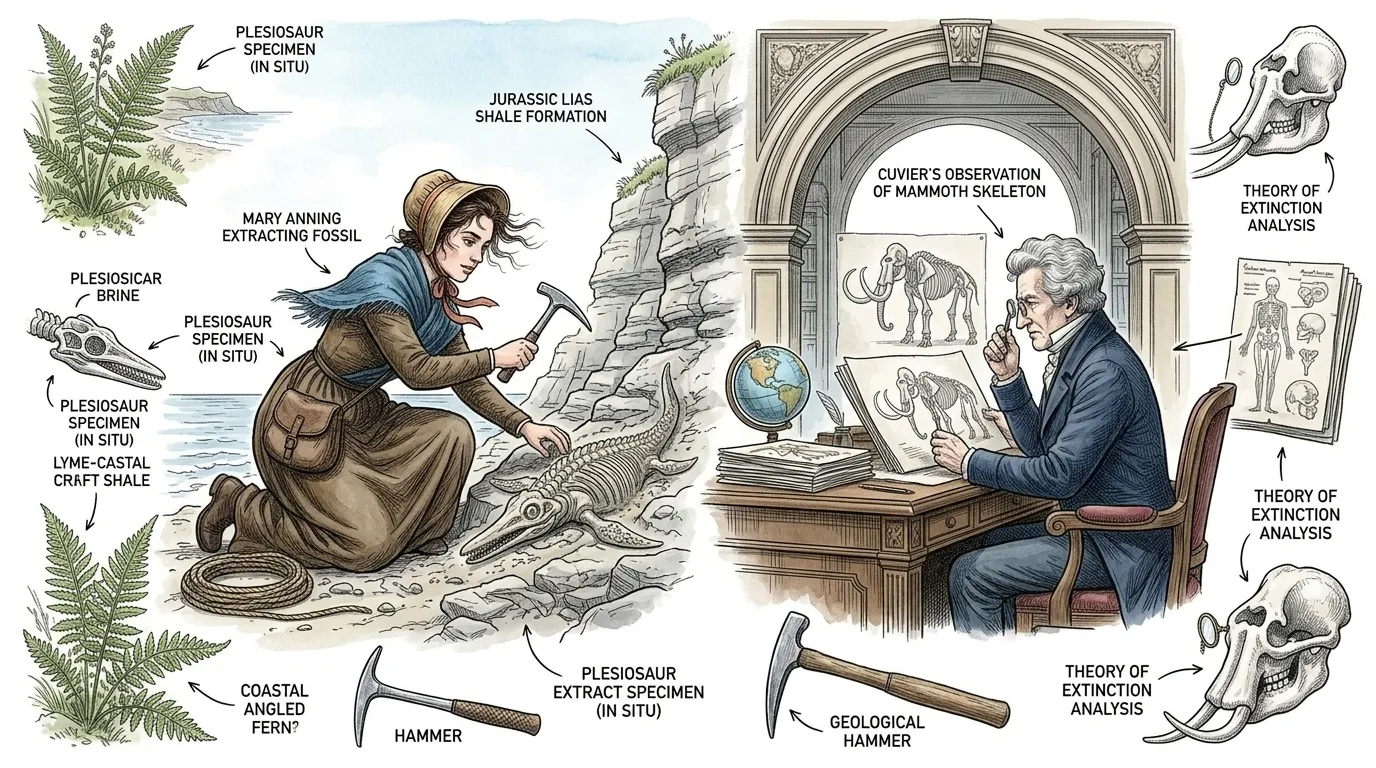
While Mary Anning was unearthing unprecedented fossils in England, across the Channel, French anatomist Georges Cuvier (1769-1832) was developing his theory of extinction. His meticulous study of fossil mammals, particularly the woolly mammoth, suggested that entire species had vanished from Earth. Anning's finds—the Ichthyosaur, and soon, the Plesiosaur—provided irrefutable evidence from the marine realm. Her profound anatomical insight, developed through countless hours of study and comparison, was critical. She didn't just find bones; she understood their articulation and the ancient organisms they represented. This meticulous skill in identifying and extracting delicate, complete specimens would become the crucial 'key' to unlock true paleontological understanding.
Page 5
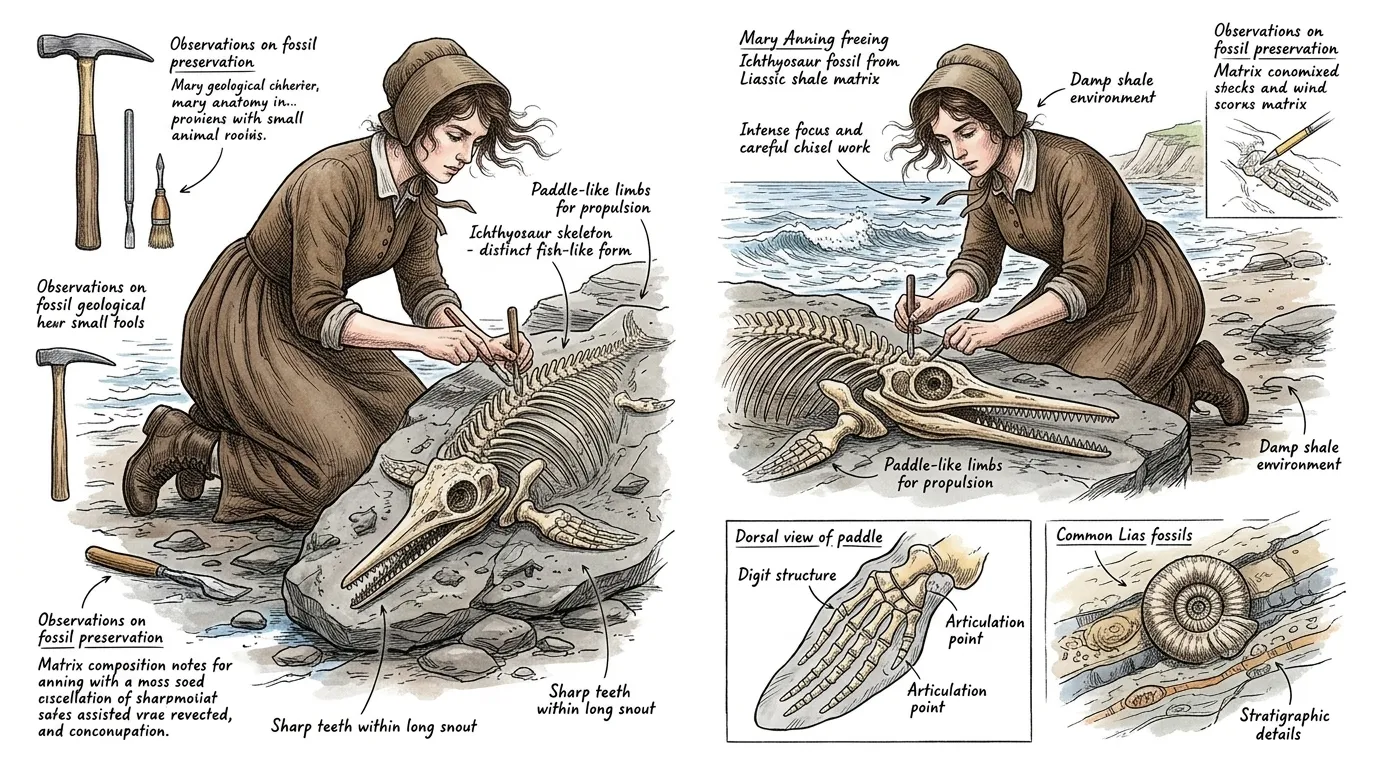
Mary Anning's discovery of the first complete Ichthyosaur skeleton in 1811 (following her brother Joseph's earlier find of a partial skull) was a landmark event. Its fish-like body, powerful paddle-like limbs, and long snout filled with sharp teeth painted a picture of a formidable marine predator. Anning's meticulous extraction process, often working alone against the clock as the tide advanced, ensured the specimen's integrity. The completed fossil, painstakingly cleaned and articulated, showcased an animal perfectly adapted to ancient oceans, far removed from any living creature. It was a tangible window into a lost world, forcing the scientific community to confront a reality previously confined to speculation.
Page 6
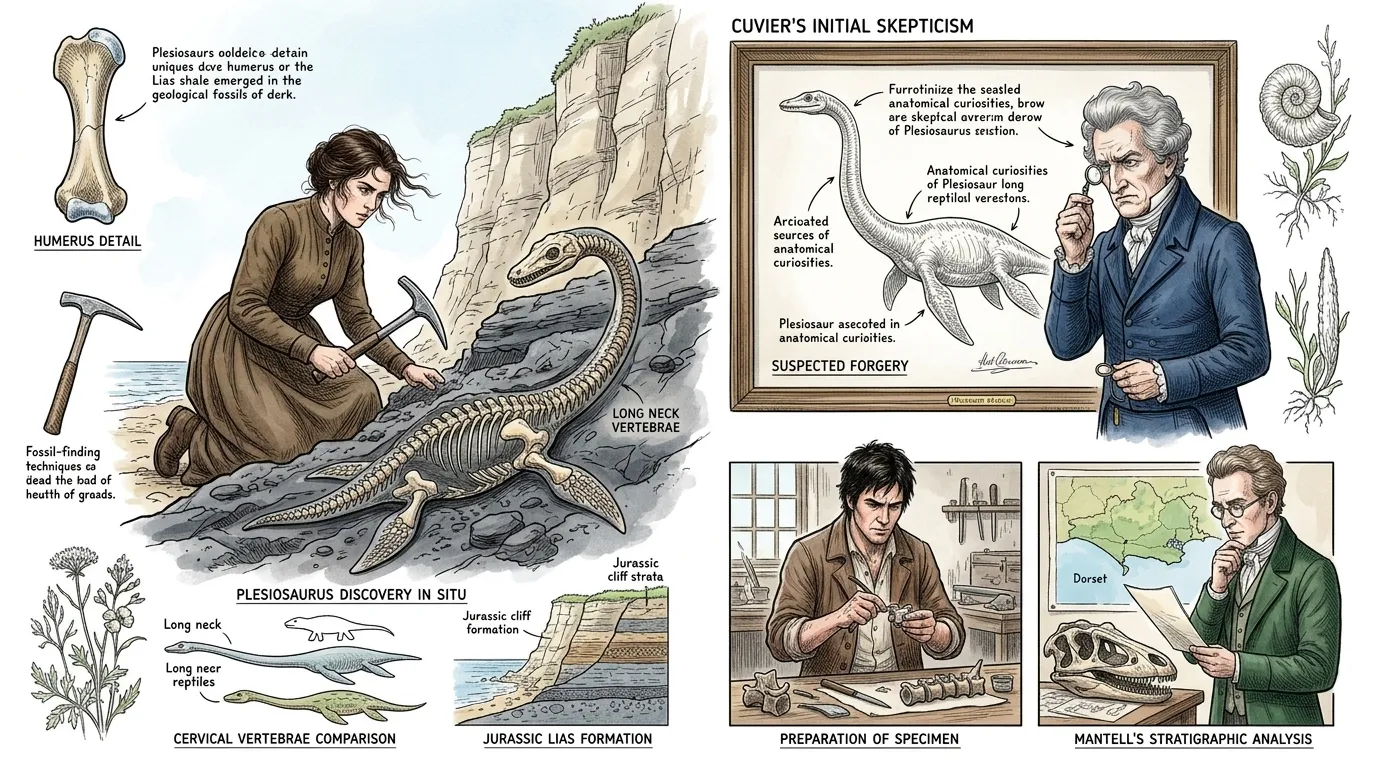
In 1821, Anning unearthed an even stranger creature: the Plesiosaur. With its unusually long neck, small head, and four large, paddle-like flippers, it defied easy classification. Such was its bizarre appearance that some prominent anatomists, including the renowned Georges Cuvier, initially suspected it to be a forgery, a chimera of different animals. It was Mary's precise anatomical knowledge, the meticulous documentation of the fossil's position in the rock, and the sheer completeness of the specimen that ultimately convinced the skeptical scientific establishment. Her ability to reconstruct the creature's likely form and function from its delicate bones provided irrefutable proof, a testament to her profound understanding of prehistoric life.
Page 7
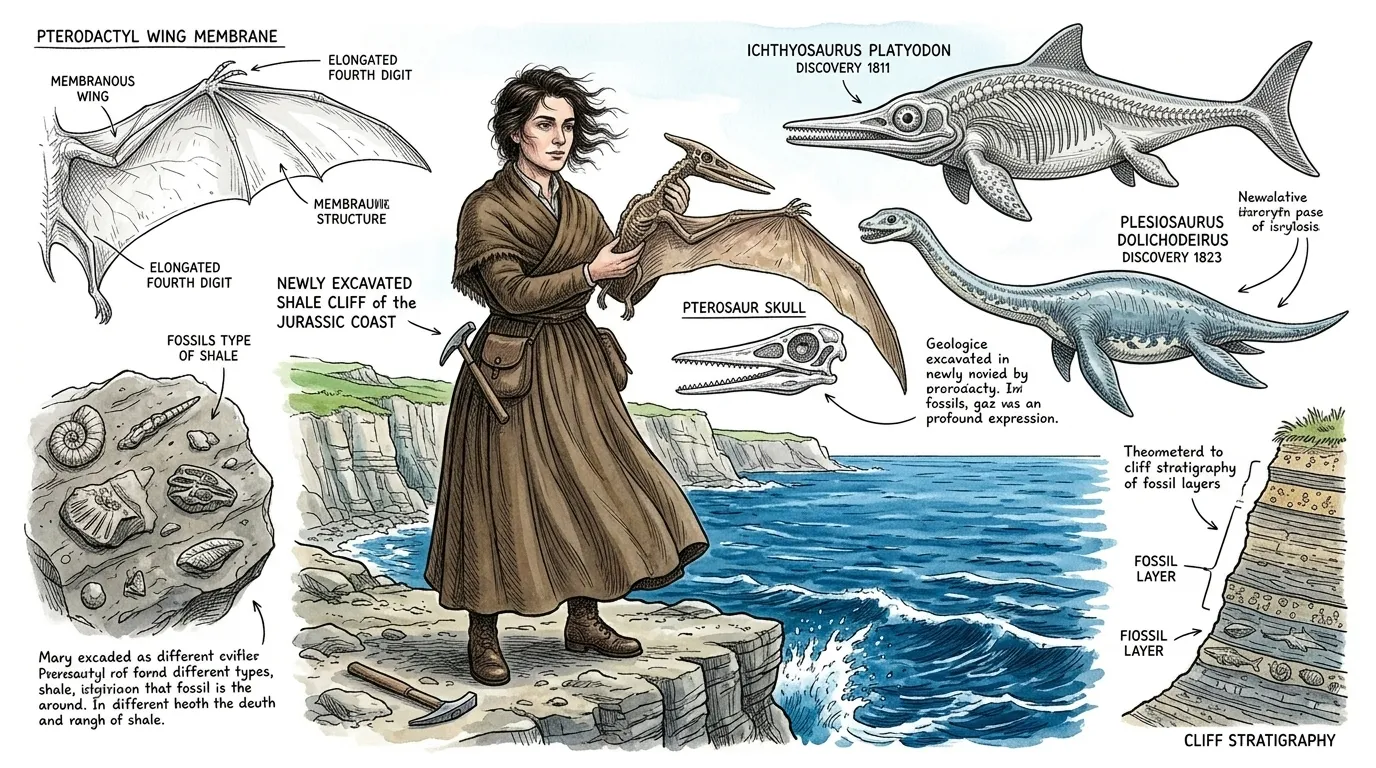
Anning's discoveries continued, solidifying the radical notion of a world once populated by creatures utterly unlike anything alive today. In 1828, she found the first Pterodactyl (now correctly identified as a Pterosaur) skeleton outside of Germany, an airborne reptile with membranous wings. This trilogy of marine, aquatic, and aerial giants—Ichthyosaur, Plesiosaur, Pterosaur—collectively painted an unprecedented portrait of a Mesozoic Era teeming with alien life. Her relentless work provided the raw, undeniable evidence that fueled the burgeoning fields of paleontology and geology, challenging established chronologies and inspiring a new generation to contemplate the Earth's deep past.
Page 8
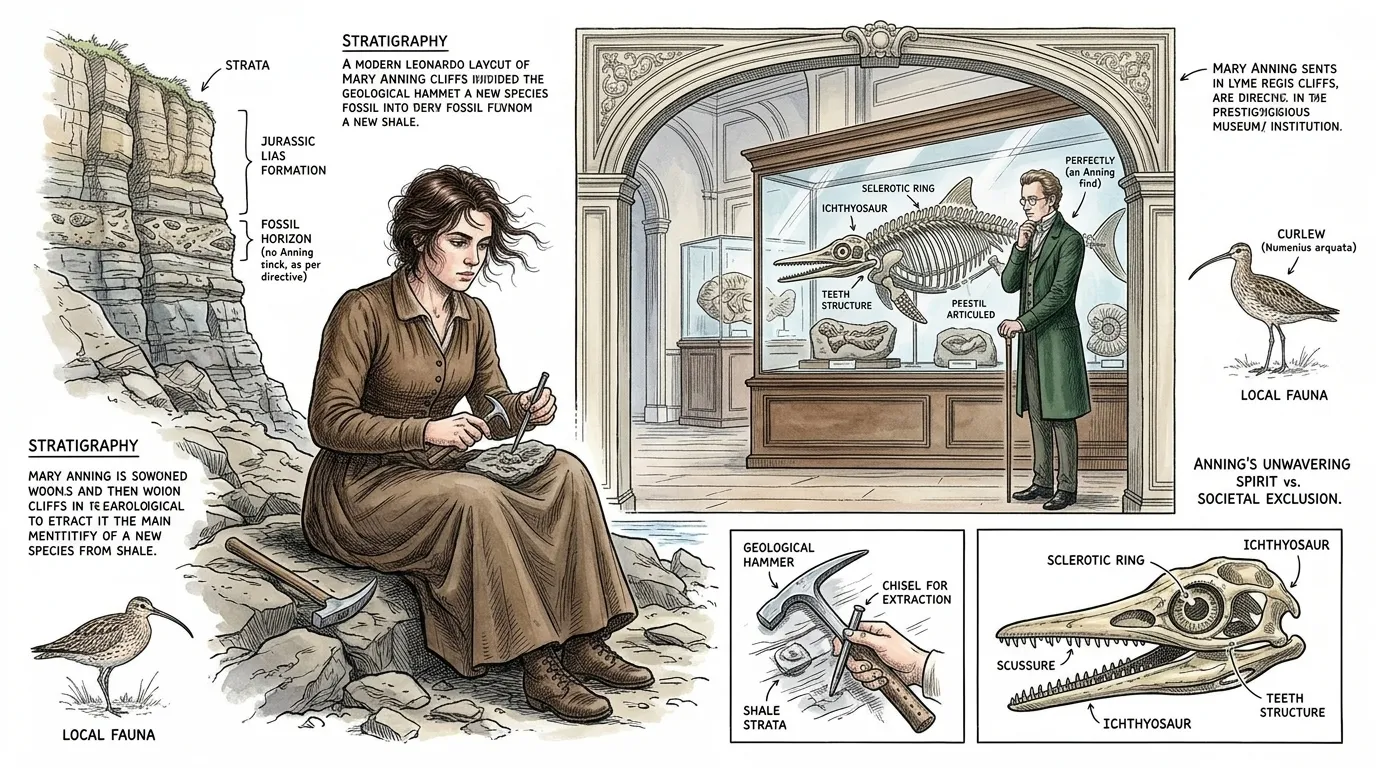
Despite the undeniable scientific importance of her finds and her peerless expertise, Mary Anning, a working-class woman, largely remained an outsider to the male-dominated scientific societies of her time. Her discoveries were frequently purchased by wealthy collectors and celebrated academics who often failed to acknowledge her crucial role. However, her specimens became cornerstones of geological and paleontological collections worldwide, driving scientific discourse and sparking new theories. As the prominent paleontologist Gideon Mantell (1790-1852) once reflected, 'The most important discoveries are often made by those with the keenest eyes and an unwavering spirit, regardless of their station.' Her meticulous techniques and profound anatomical understanding, developed through decades of practical experience, allowed her to correctly identify new species from fragments, a skill few could match, thereby providing the irrefutable evidence that reshaped scientific understanding. This was the payoff of her unique 'key' to ancient life.
Page 9
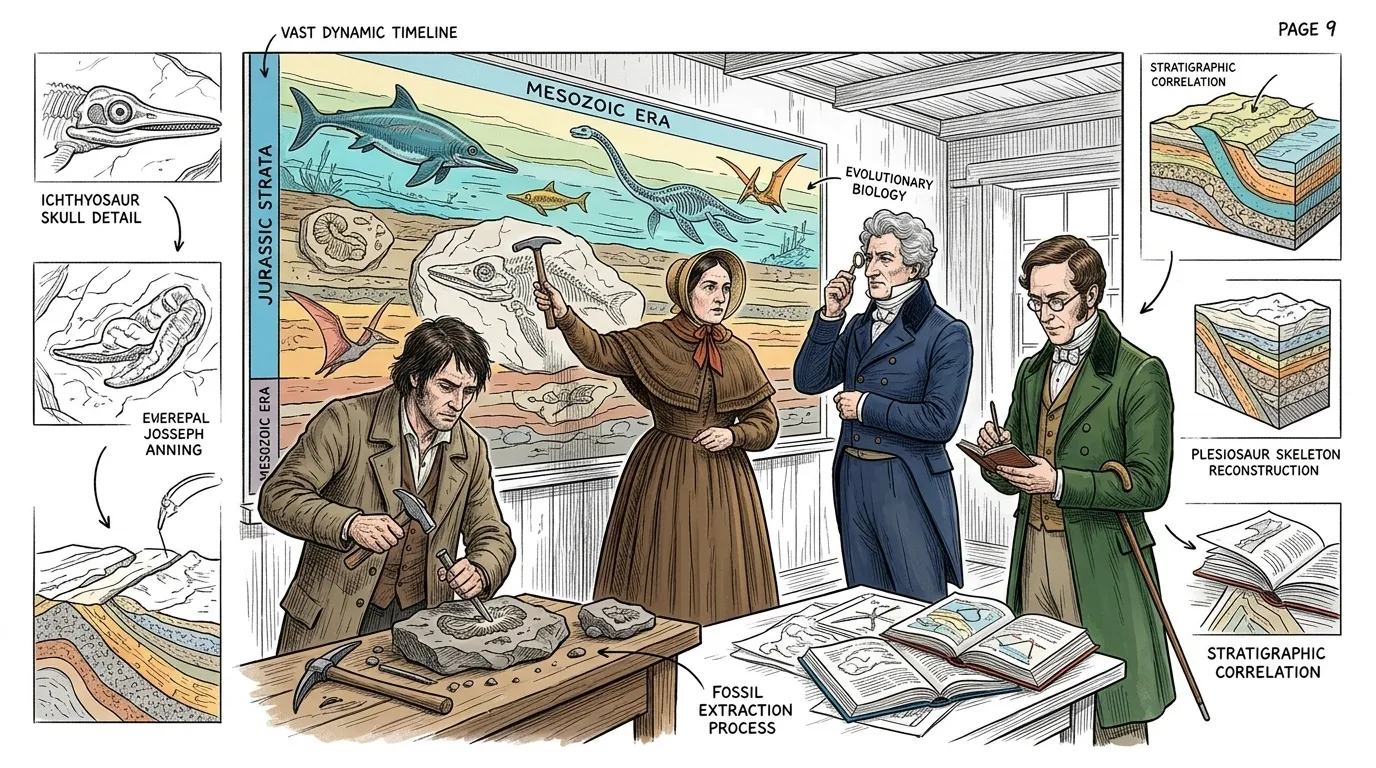
Anning's discoveries, alongside those of other early paleontologists, irrevocably altered the scientific understanding of life's history. The fossil record began to reveal a vast, dynamic timeline stretching millions of years into the past, challenging the biblical literalism that underpinned much of 18th-century natural philosophy. Her work, though often uncredited, laid foundational stones for evolutionary biology and advanced the understanding of geological time. The extinct marine reptiles she brought to light became iconic representations of a planet constantly changing, species rising and falling, and the profound interconnectedness of geological and biological processes. Her specimens were not just curiosities; they were chapters in Earth's autobiography, meticulously preserved.
Page 10
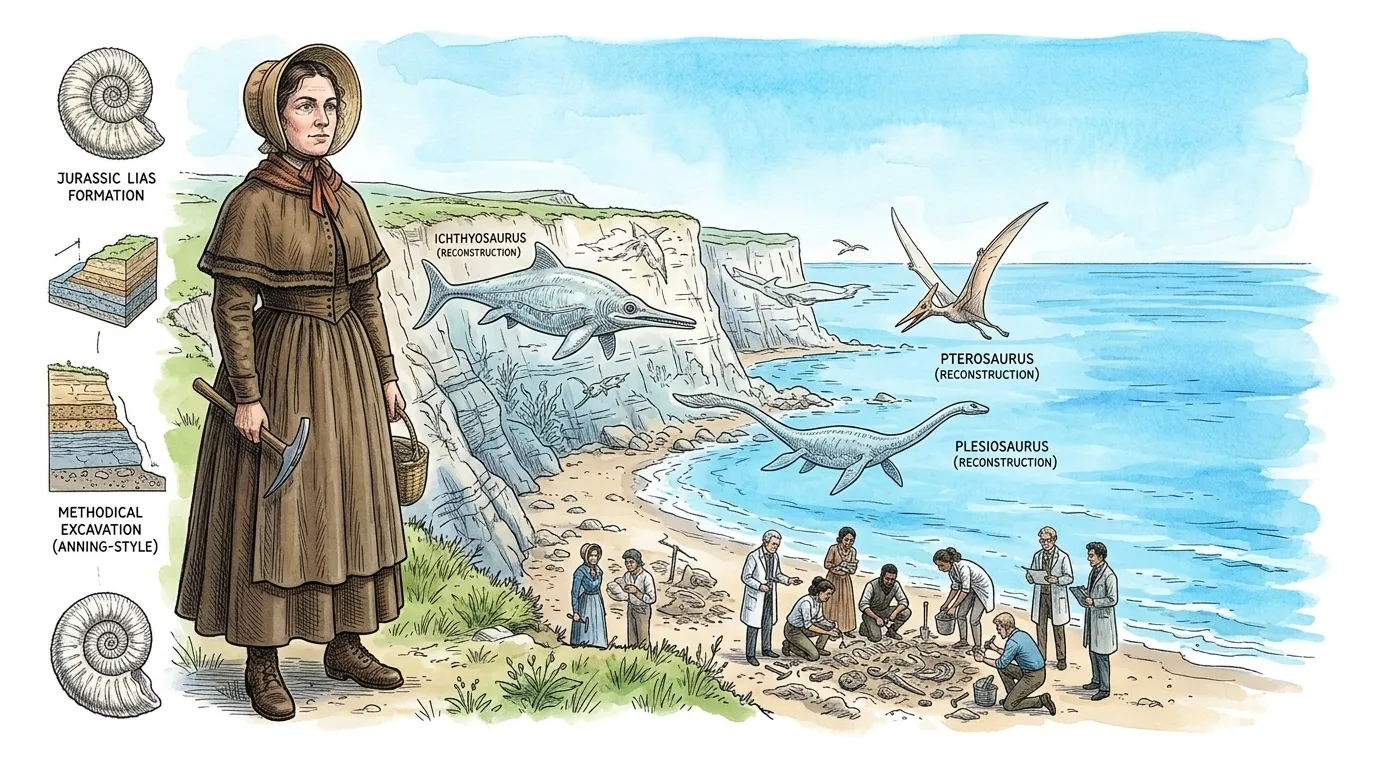
Mary Anning's legacy extends far beyond her remarkable fossil finds. She stands as a potent symbol of scientific curiosity, perseverance against adversity, and the profound impact a single individual can have on human understanding. Her work established the methodologies for careful fossil excavation and preparation, practices still fundamental to paleontology today. Though denied formal recognition in her lifetime, her contributions are now celebrated globally, inspiring generations of scientists, particularly women, to pursue their passions in the natural sciences. Anning's meticulous exploration of the Jurassic Coast profoundly reshaped our perception of Earth's ancient past, leaving us with a richer, more wondrous narrative of life's enduring journey.
About this story
- Location: Global
- Audience: general readers
Questions and answers
Read Wonder Science on your phone
Wonder Science is available on Android. Get Wonder Science on Google Play.