Max Born
Max Born — an illustrated science story, set in Global. 10 illustrated pages, free to read on Wonder Science.
Page 1
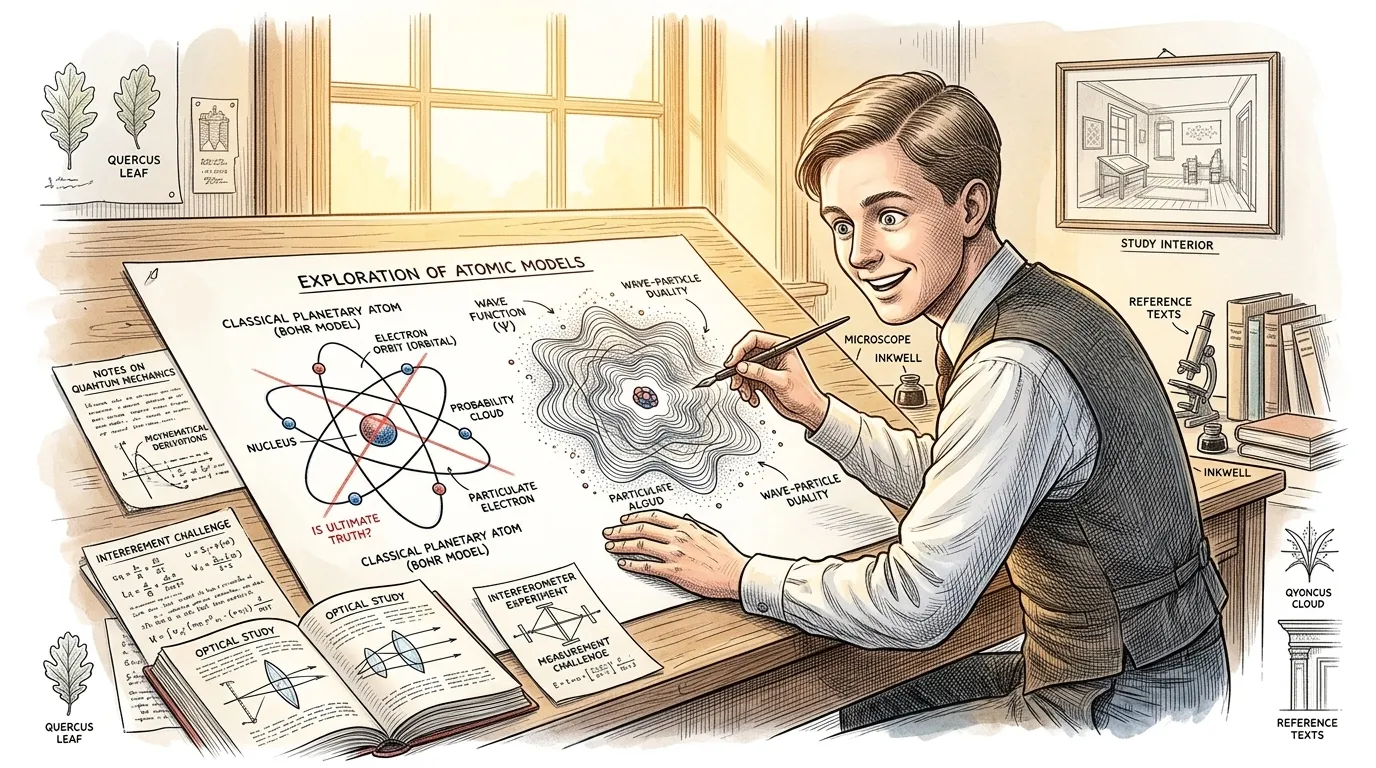
In the early 20th century, physics faced a profound crisis. Classical mechanics, which had brilliantly explained the macroscopic world, crumbled when confronted with the bizarre behavior of matter at the atomic scale. Electrons, once imagined as tiny billiard balls orbiting a nucleus, defied simple Newtonian rules, behaving simultaneously as particles and waves. This unsettling duality plunged physicists into a conceptual void, forcing them to reimagine the very fabric of reality.
Page 2
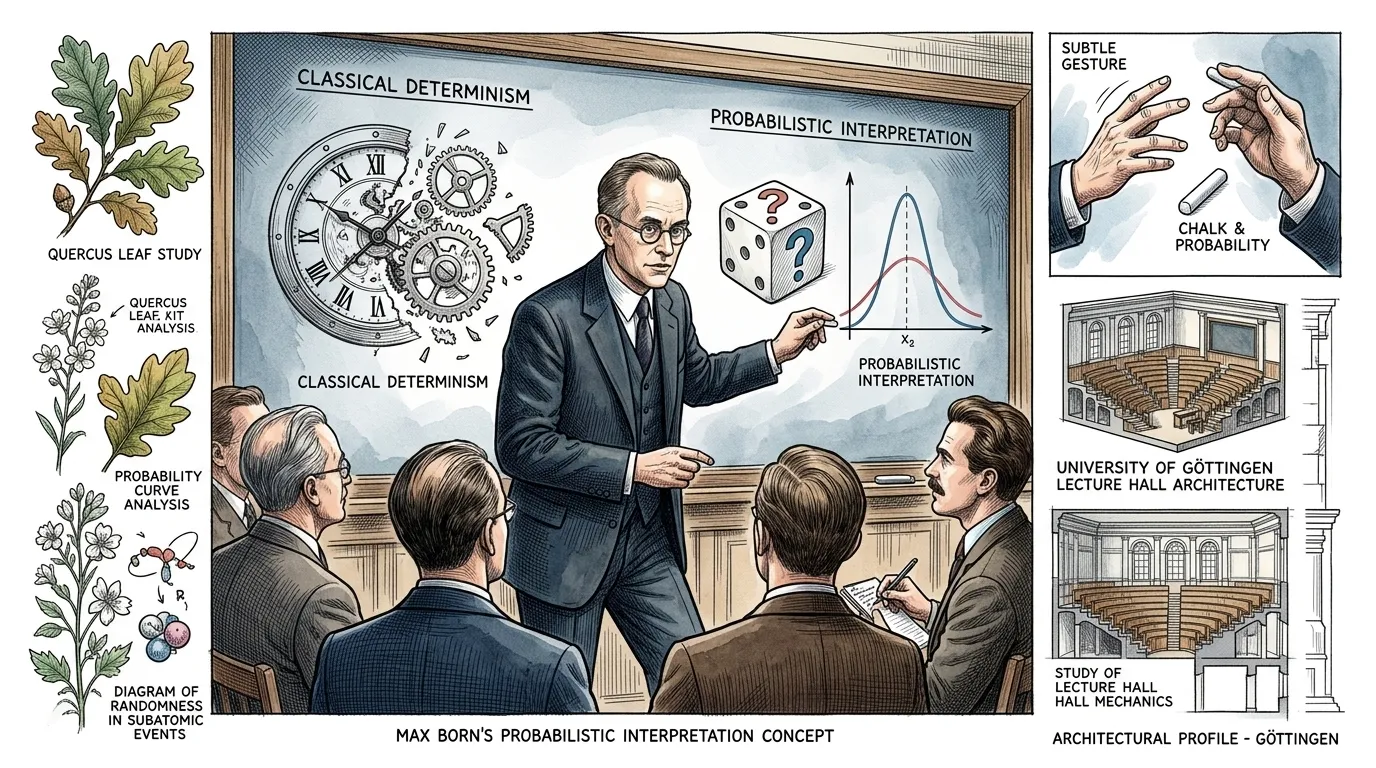
At the heart of this revolution stood Max Born, a German physicist whose work at the University of Göttingen became a crucible for quantum mechanics. Born championed the idea that classical determinism—the belief that the future is entirely predictable from present conditions—had no place in the quantum realm. Instead, he argued for a statistical, probabilistic interpretation that would fundamentally reshape our understanding of cause and effect, laying the groundwork for how we perceive atomic phenomena today.
Page 3
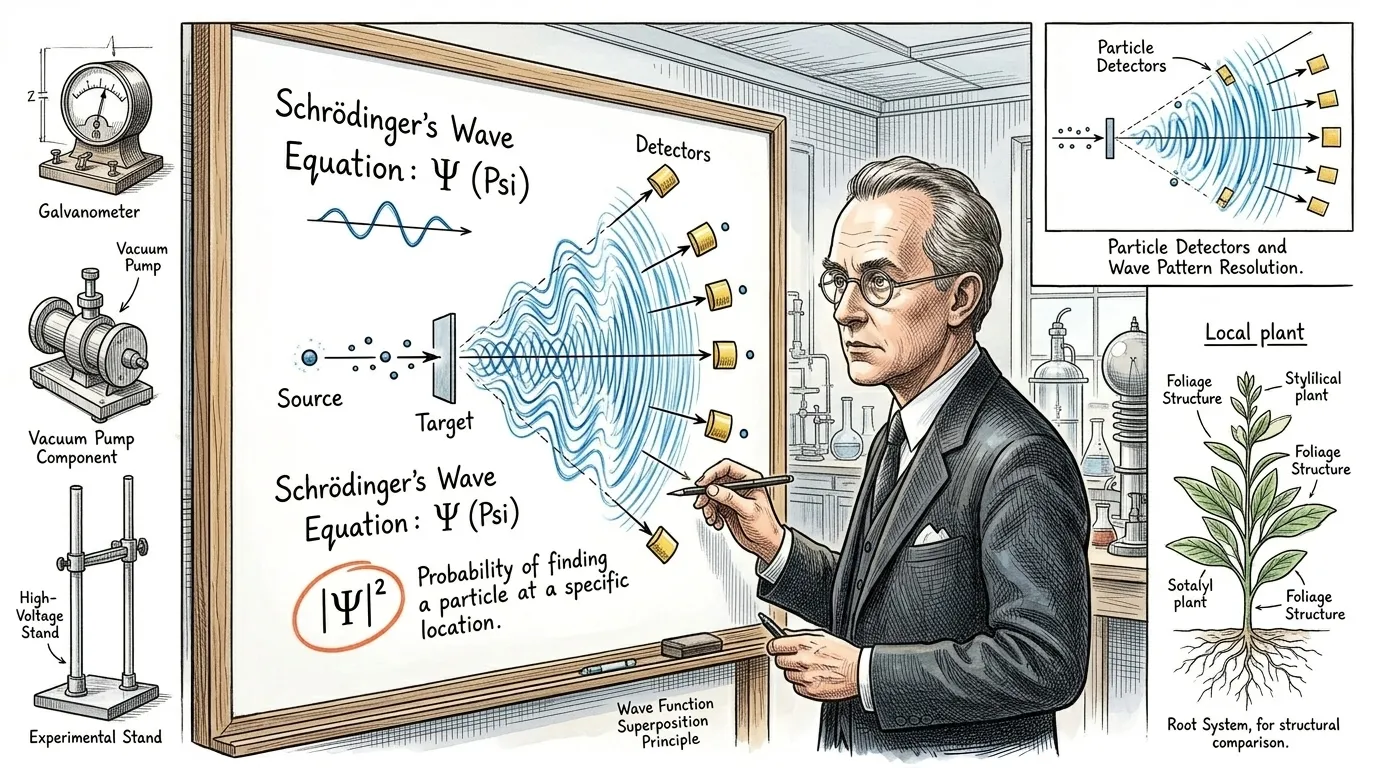
The puzzle was clear: Erwin Schrödinger's wave equation described electrons as waves, but experiments always detected them as discrete particles. This seeming contradiction perplexed even the greatest minds. Born, observing the patterns in scattering experiments, realized that the wave function, Ψ (Psi), didn't represent a physical wave of matter. Instead, its square, Ψ 2, offered something far more profound: the probability of finding a particle at a specific location.
Page 4
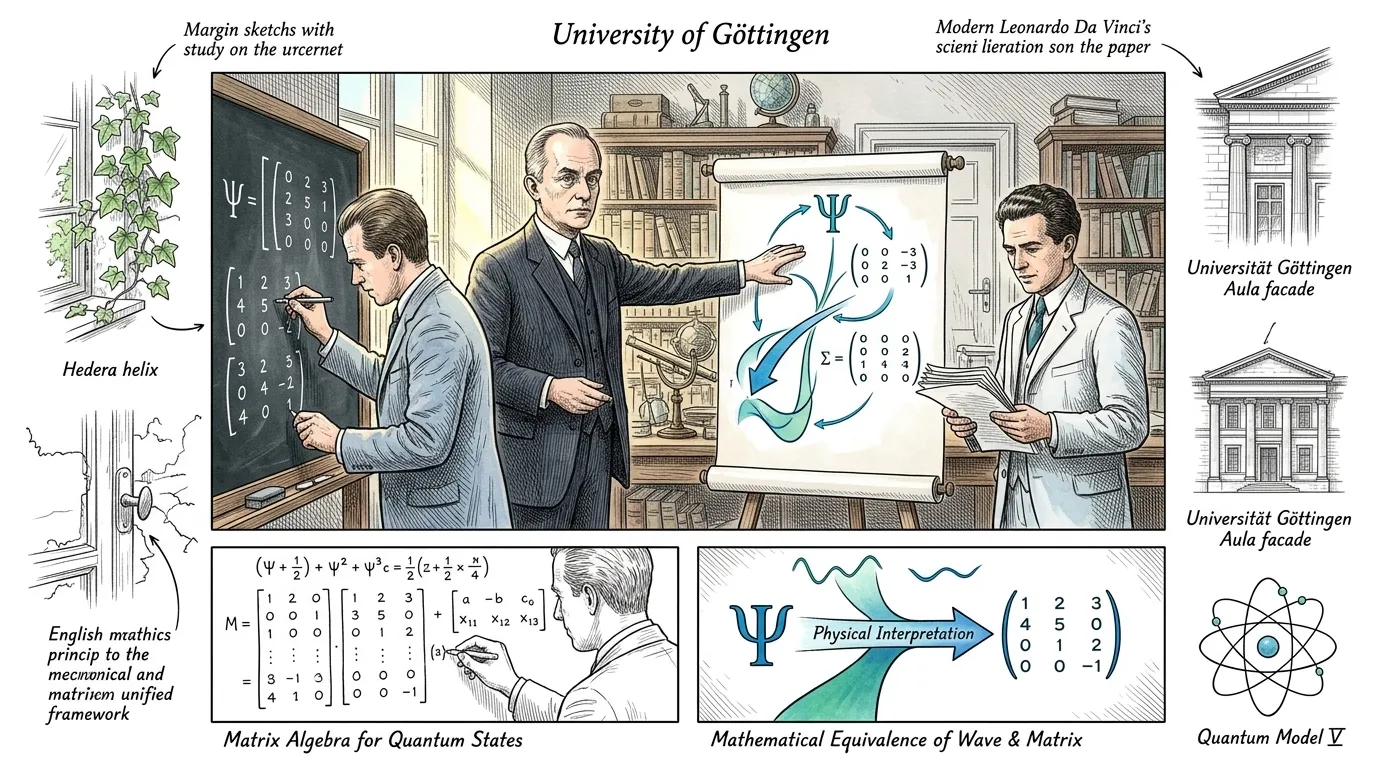
Born's Göttingen was a nexus of brilliant young minds, including Werner Heisenberg and Pascual Jordan, who were developing matrix mechanics, a different mathematical formulation of quantum theory. These divergent approaches initially led to confusion. Born, with his profound mathematical insight, quickly recognized their underlying unity and, crucially, provided the missing physical interpretation that bridged the gap between abstract equations and experimental observation. This synthesis was critical, solidifying the framework for quantum mechanics.
Page 5
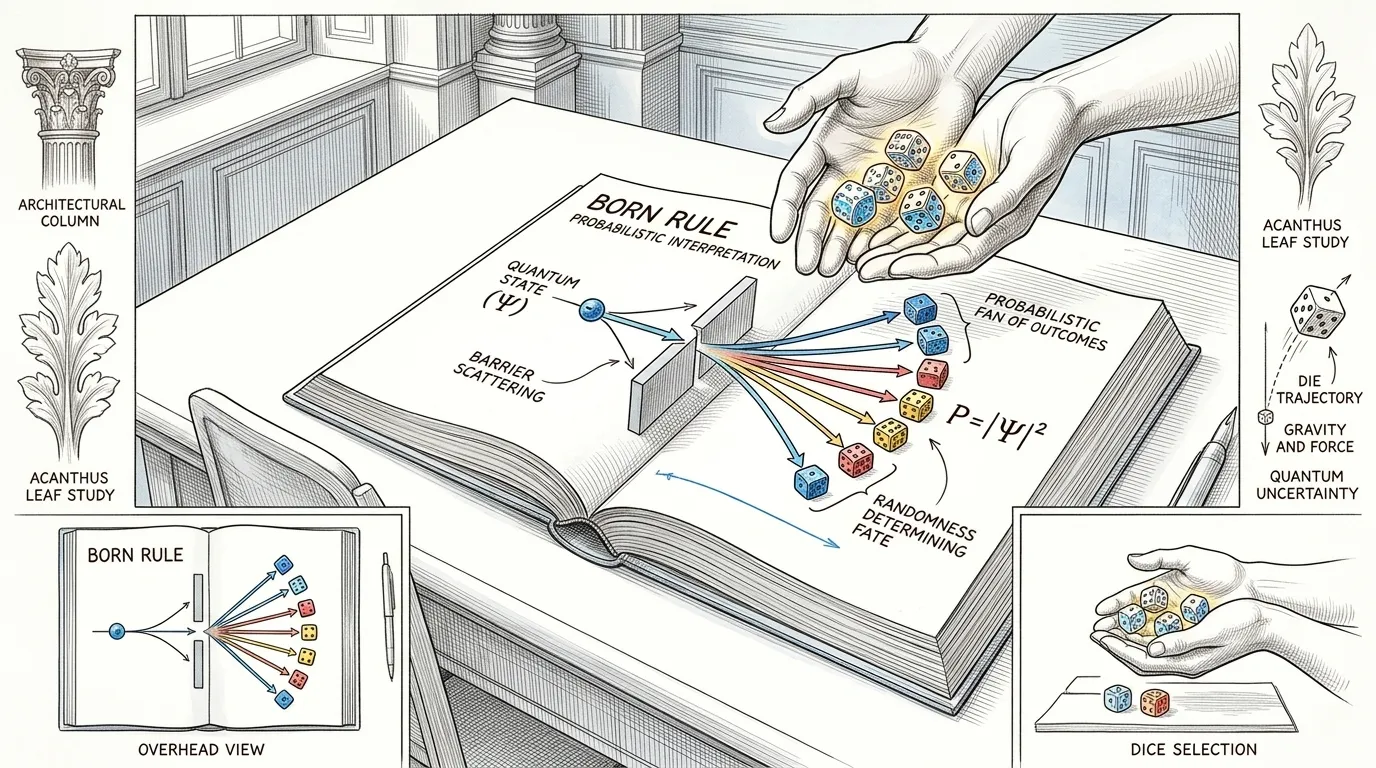
The genius of Born's probabilistic interpretation, often called the 'Born Rule,' lies in its simplicity and radical departure from classical thought. It declared that even with perfect knowledge of a quantum system, we cannot predict the exact outcome of a single event. Instead, we can only calculate the likelihood of various outcomes. It's like knowing the odds in a cosmic game of dice, but never being certain of the next roll, challenging millennia of scientific certainty.
Page 6
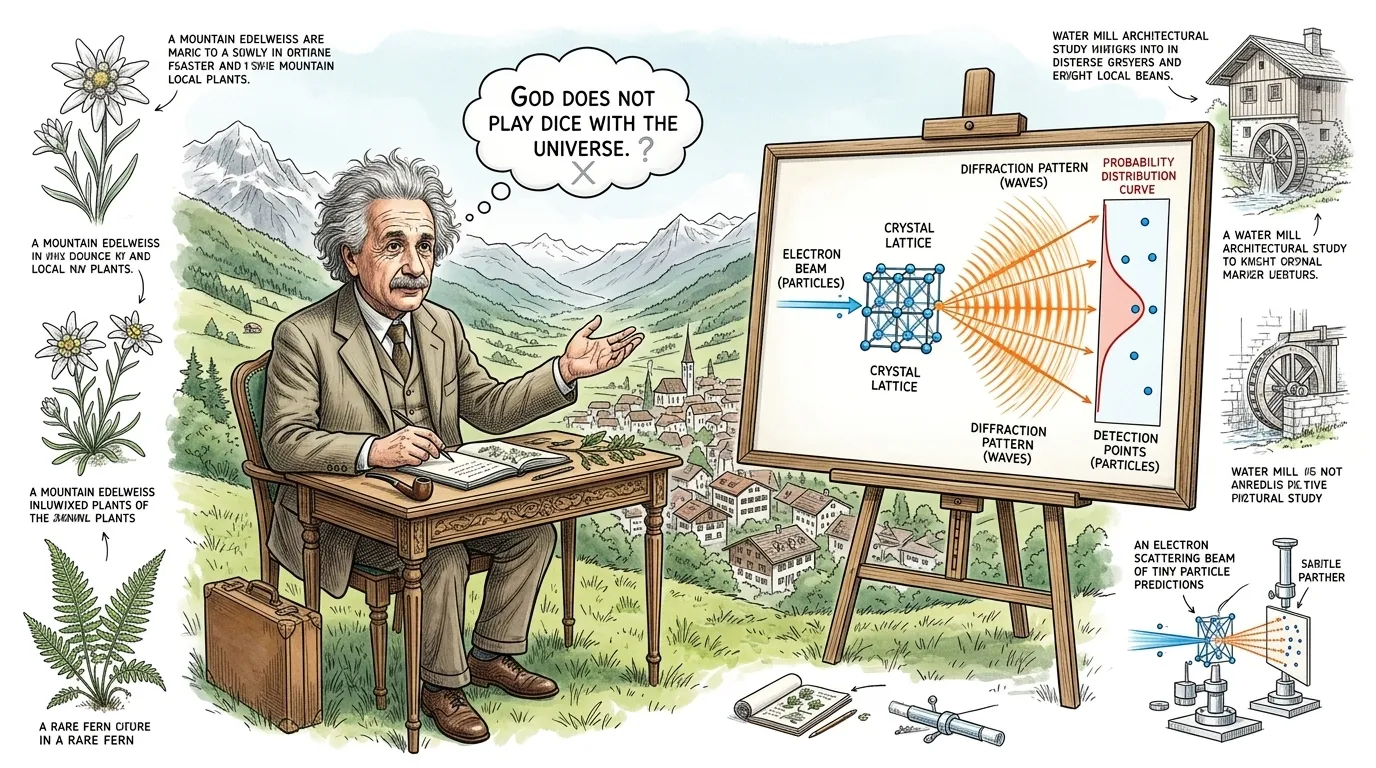
This statistical nature of reality was difficult for many to accept, including Albert Einstein, who famously declared, 'God does not play dice with the universe.' Yet, Born's interpretation proved to be empirically sound. Experiments involving electron scattering off crystals showed that the electrons indeed behaved like waves, creating diffraction patterns, but when detected, they always appeared as discrete particles, arriving at points whose distribution precisely matched Born's probability predictions.
Page 7
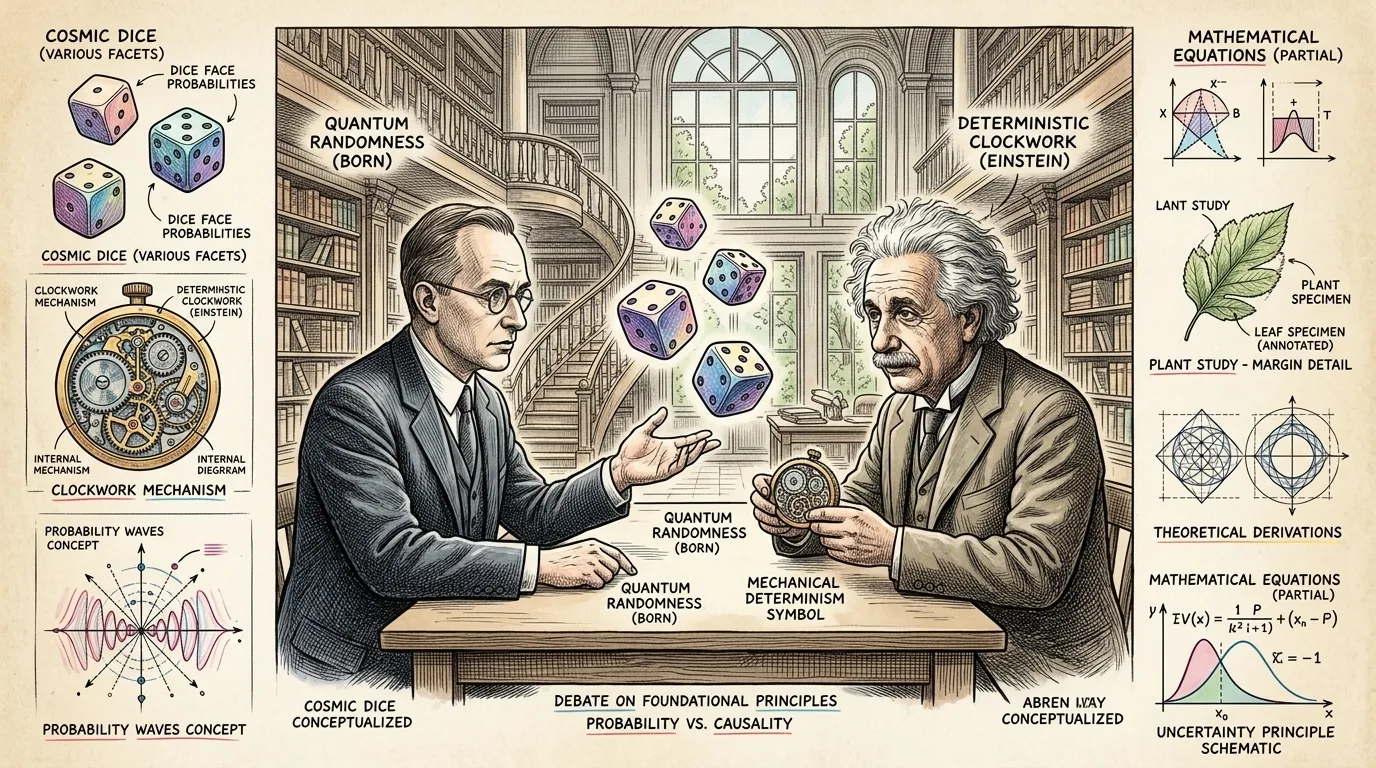
The debate between Born and Einstein wasn't merely scientific; it was philosophical, touching upon the very nature of reality and causality. Einstein sought a deeper, hidden determinism, believing quantum mechanics to be incomplete. Born, however, embraced the intrinsic randomness, asserting that at the quantum level, probability isn't a measure of our ignorance, but a fundamental property of nature itself. This radical acceptance became a cornerstone of what is now known as the Copenhagen interpretation.
Page 8
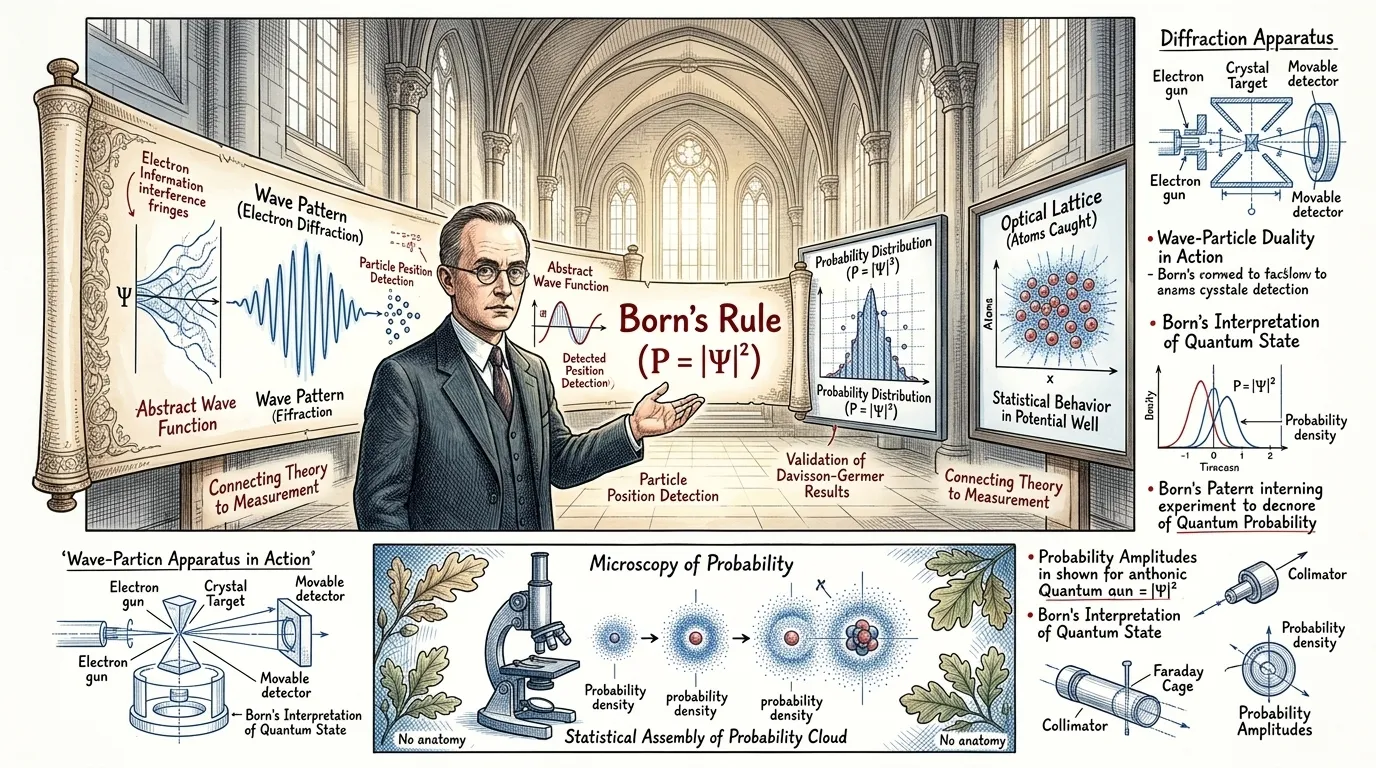
Born's probabilistic interpretation, initially met with skepticism, slowly gained universal acceptance as experimental evidence mounted. From electron diffraction experiments (like those validated by George Paget Thomson and Clinton Davisson) to the behavior of atoms in optical lattices, countless observations consistently reaffirmed that the universe indeed plays dice, and Born's rule defines the odds. It provided the essential bridge from the abstract mathematics of wave functions to the observable reality of particles, making quantum mechanics a truly predictive science.
Page 9
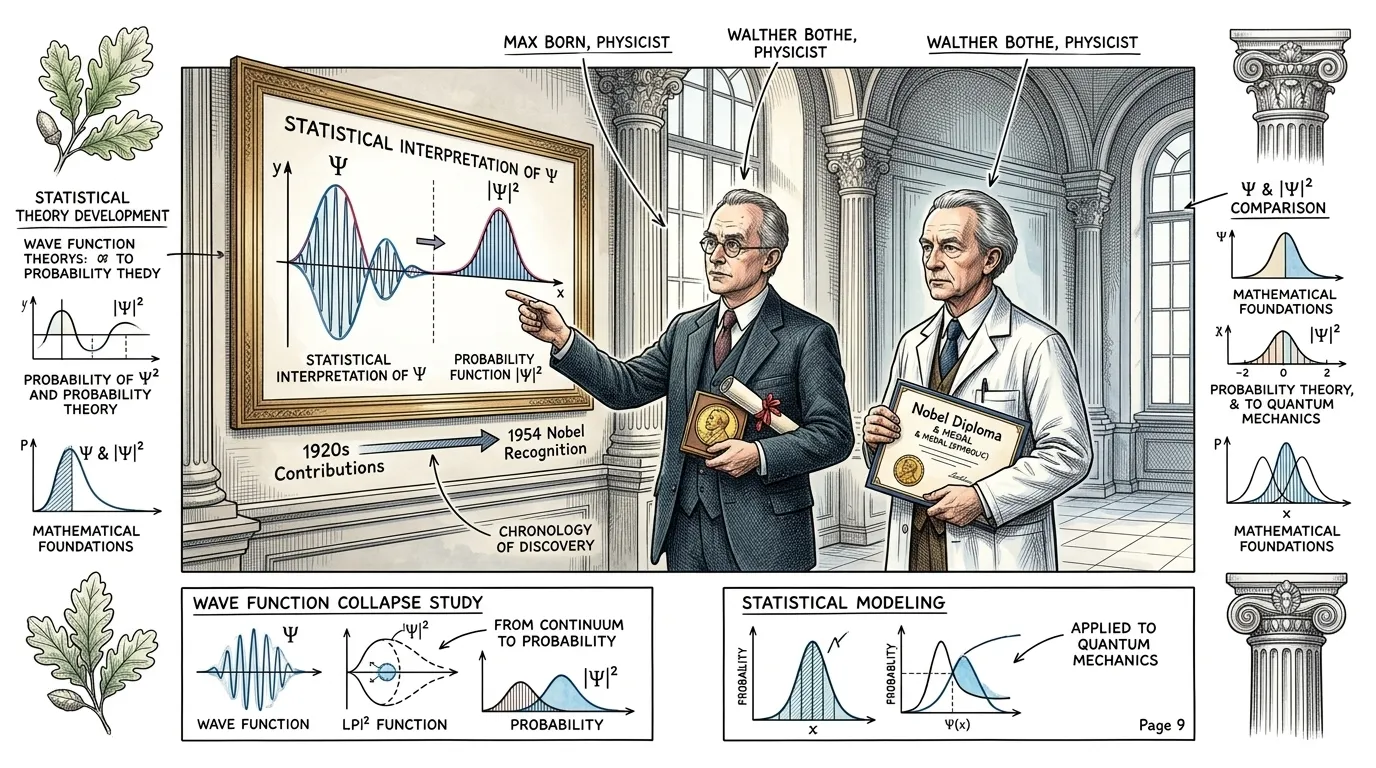
Despite his groundbreaking contributions to quantum mechanics in the 1920s, it wasn't until 1954 that Max Born received the Nobel Prize in Physics, sharing it with Walther Bothe. The long delay underscored the profound conceptual shift his work demanded, taking decades for the scientific community to fully grasp and integrate. His citation recognized his 'fundamental research in quantum mechanics, especially for his statistical interpretation of the wave function,' solidifying his place as one of the architects of modern physics.
Page 10
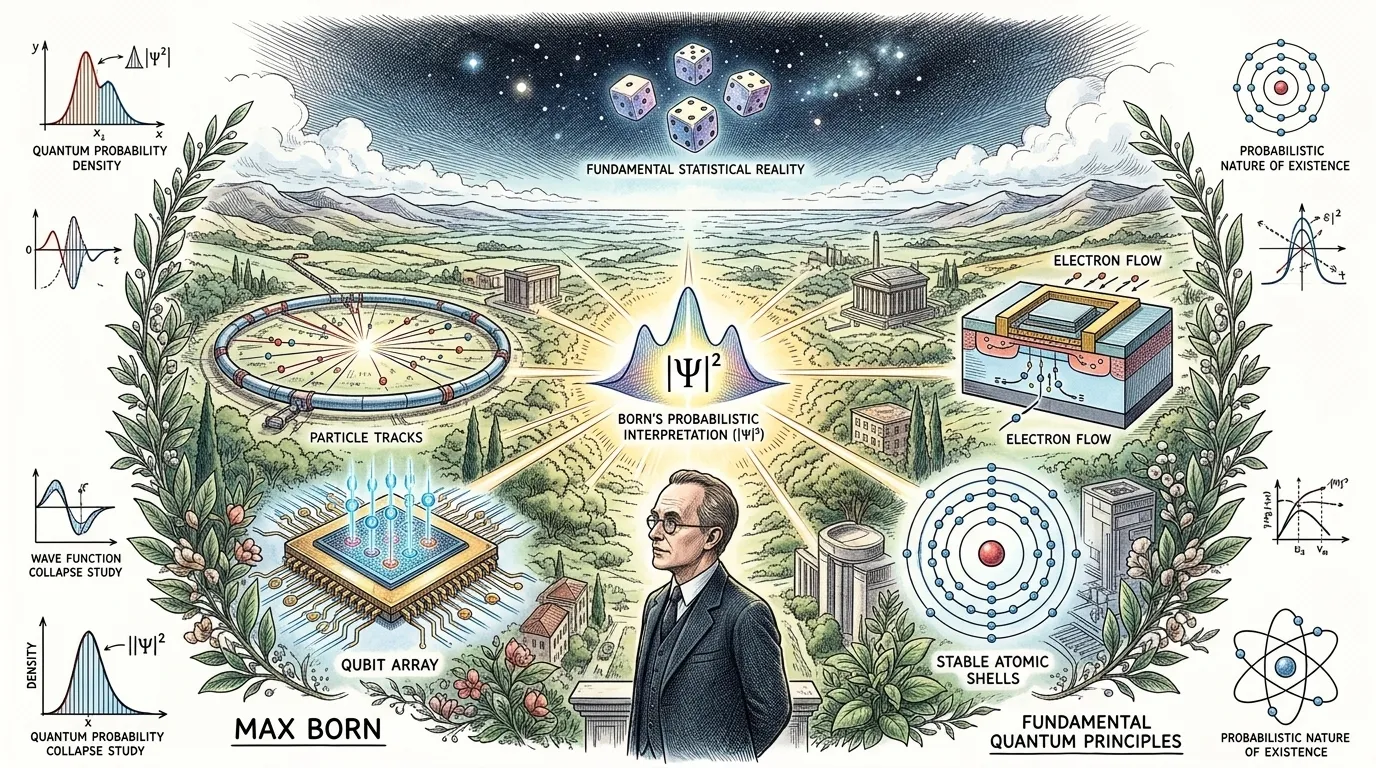
Max Born's legacy extends far beyond a single equation. His probabilistic interpretation underpins nearly all modern physics, from particle accelerators to quantum computing, from the behavior of semiconductors to the very stability of atoms. He forced humanity to accept that at its deepest level, reality is not deterministic but inherently statistical. His vision, initially controversial, became the bedrock of quantum mechanics, opening up a universe of possibilities and proving that sometimes, the most profound truths are found in the roll of cosmic dice.
About this story
- Location: Global
- Audience: general readers
Questions and answers
Read Wonder Science on your phone
Wonder Science is available on Android. Get Wonder Science on Google Play.