Max Planck
Max Planck — an illustrated science story, set in Global. 10 illustrated pages, free to read on Wonder Science.
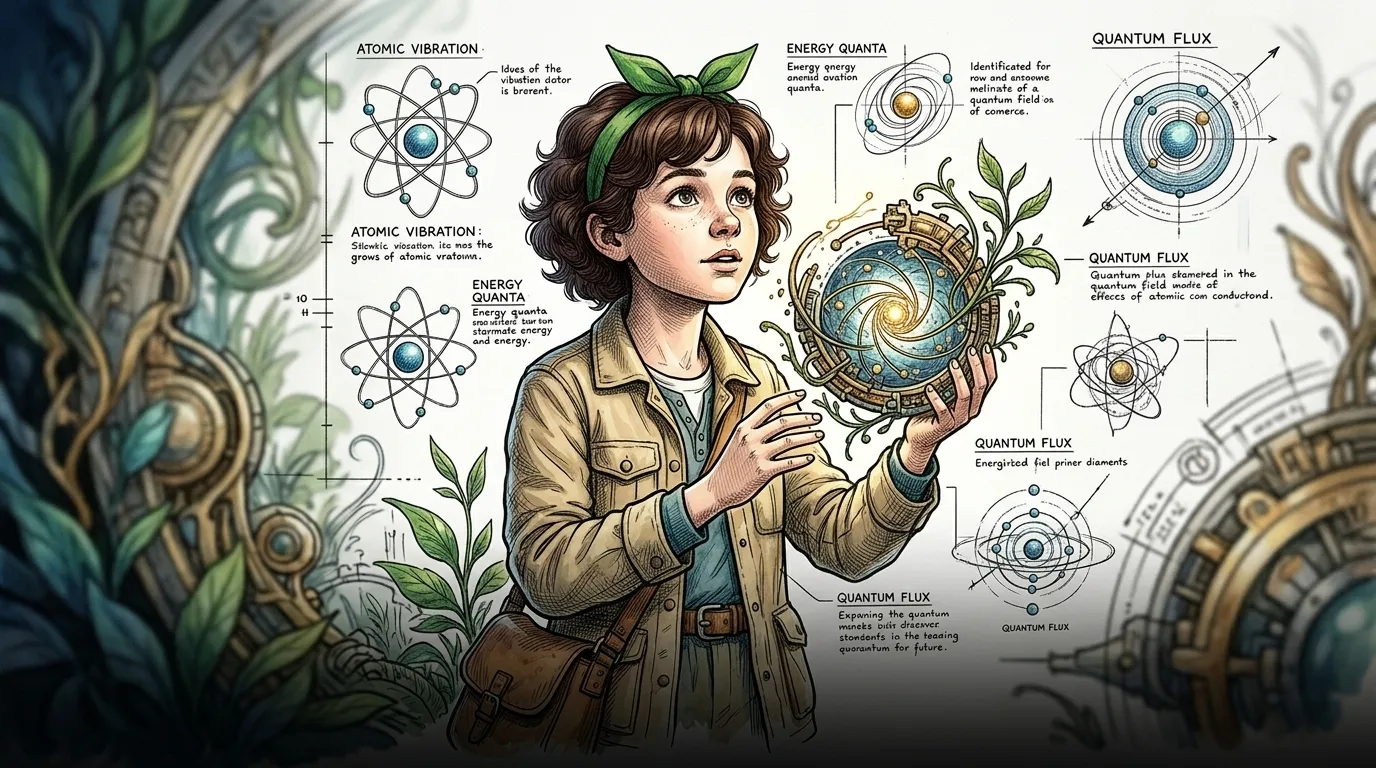
Page 1
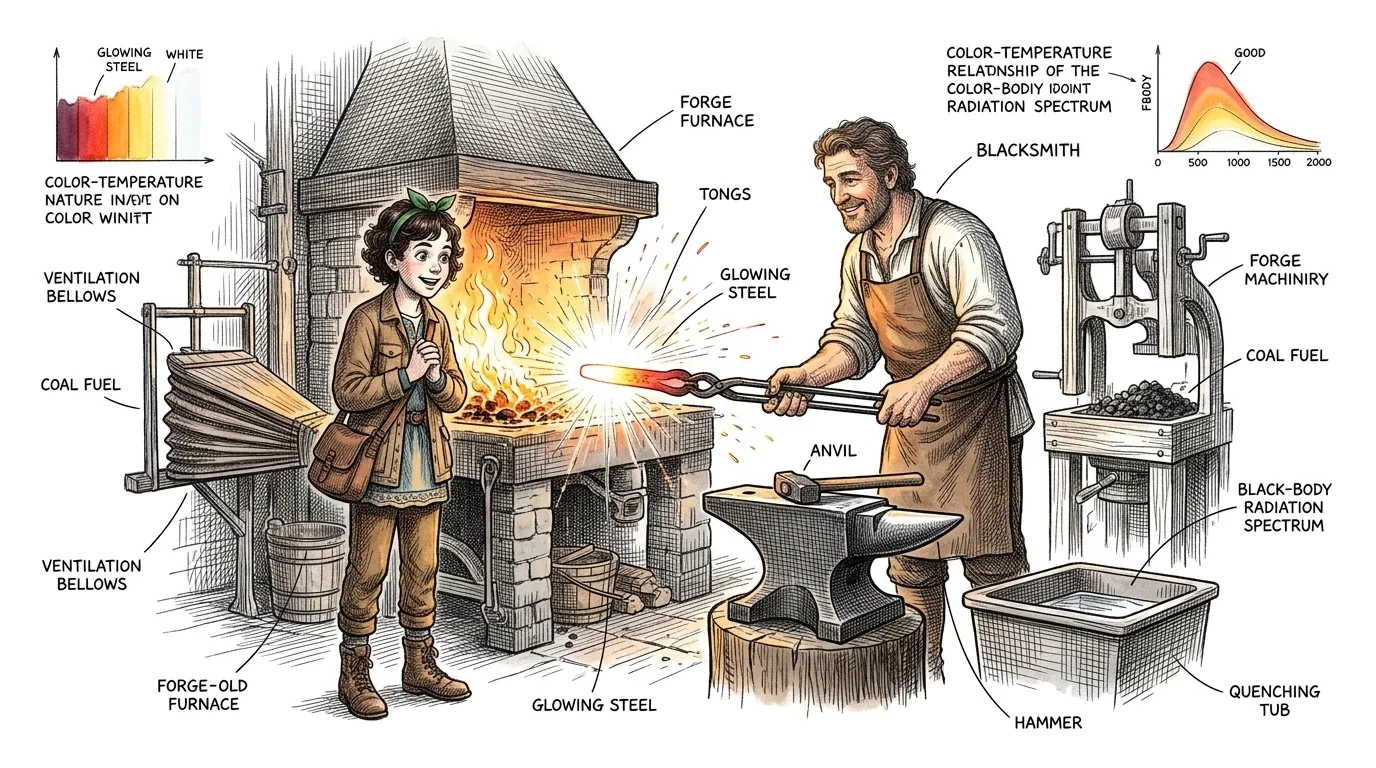
The universe sings a song of energy, but for centuries, we only heard whispers. Imagine a blacksmith heating metal; the glow shifts from red to orange to white as it gets hotter. Why? Max Planck dared to ask this question, and his answer shattered classical physics. The answer was the quantum.
Fact: The image should show the dramatic visual phenomenon of black-body radiation with high realism.
Page 2
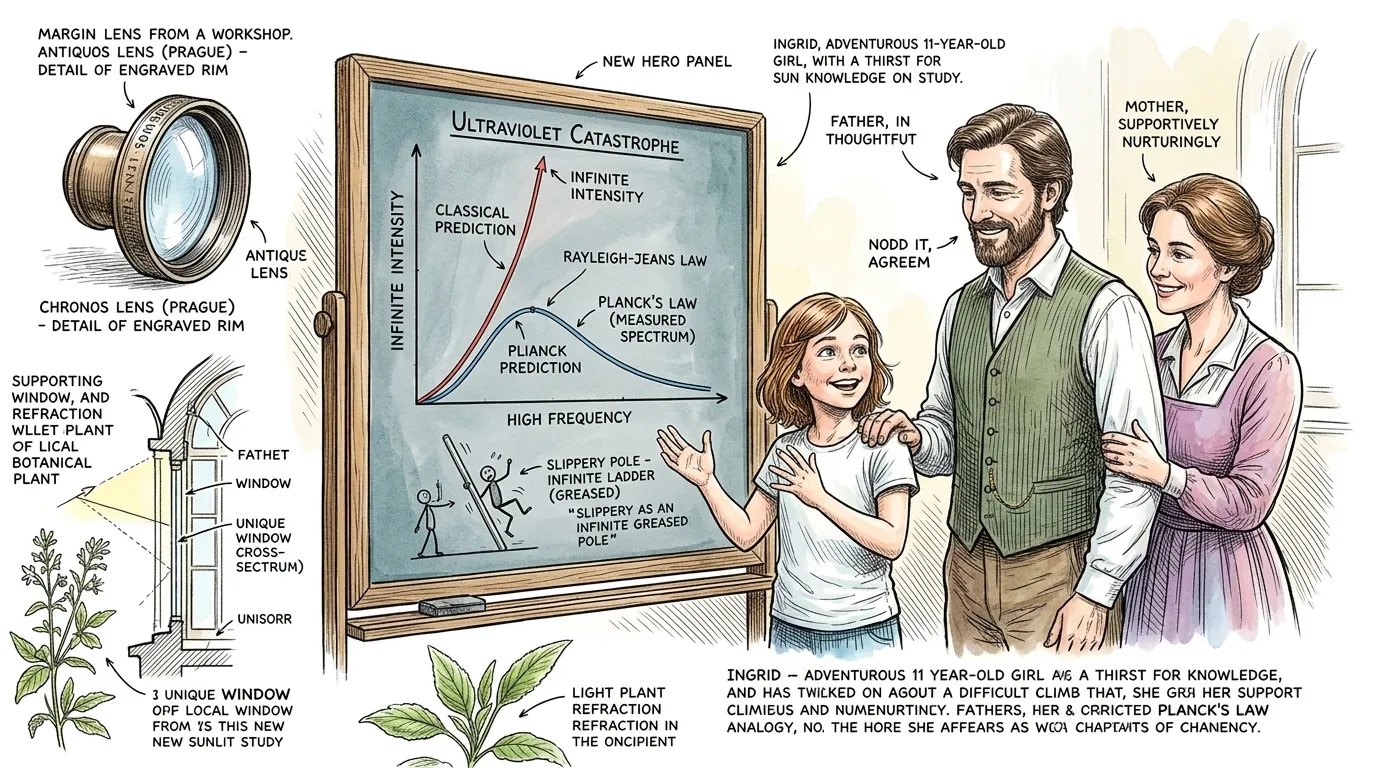
Scientists in the late 1800s were stumped. They tried to explain the spectrum of light emitted by heated objects – black bodies – using classical physics. But the equations predicted that the intensity of light would increase infinitely at higher frequencies, creating a "ultraviolet catastrophe."
"'It's like they were trying to climb a greased pole,' Ingrid exclaimed, 'slipping at every step!' Her father replied, 'Exactly, and that's where Max Planck stepped in, armed with an idea so revolutionary, it reshaped the entire field of physics."
Fact: The image must show the 'ultraviolet catastrophe' graph as a visual element.
Page 3
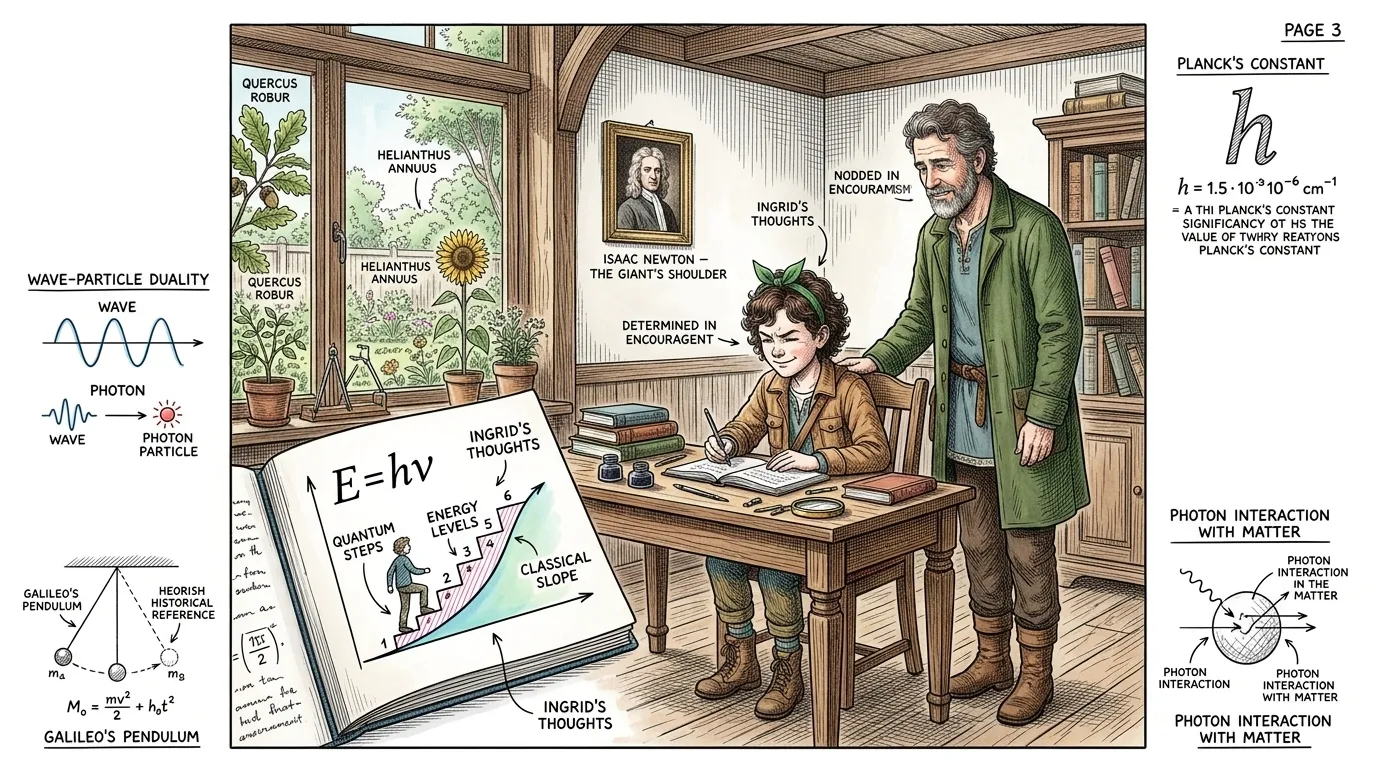
In 1900, Max Planck made a bold assumption: energy isn't continuous but comes in discrete packets, or "quanta". He proposed that the energy of each quantum is proportional to its frequency, E hv, where 'h' is Planck's constant. This seemingly small change solved the black-body problem and ushered in the era of quantum mechanics.
"Ingrid squinted at her notebook. "Planck said energy is like a set of stairs, not a ramp?" Her father nodded. "Precisely. It's like what Isaac Newton said: 'If I have seen further it is by standing on the shoulders of giants.' Planck built on existing ideas, but his leap was truly revolutionary.""
Fact: The equation E hv MUST be clearly visible in the image.
Page 4
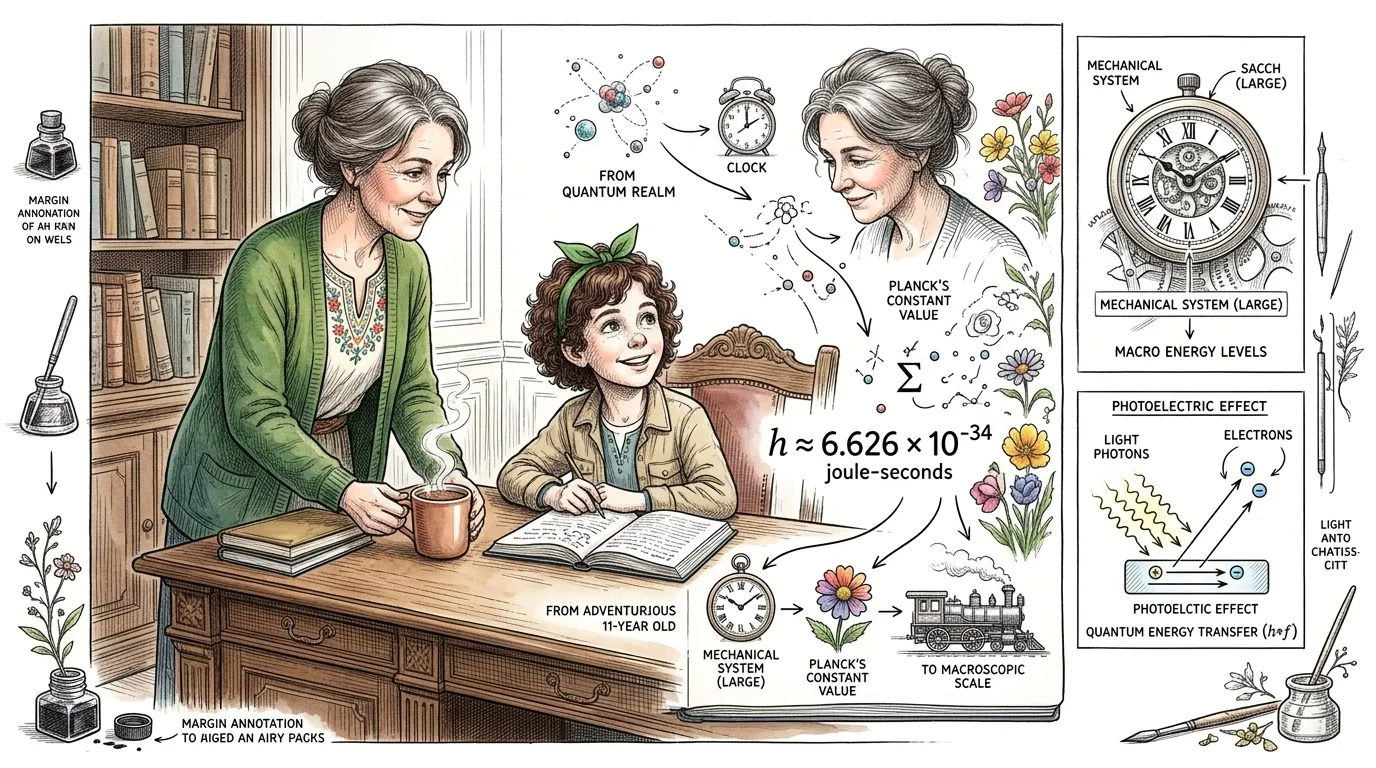
Planck's constant, 'h', is a fundamental constant of nature. It reveals the granularity of the universe at its most basic level. Its value is incredibly small—approximately 6.626 x 10 -34 joule-seconds—but its implications are enormous. It links the microscopic world of atoms and particles to the macroscopic world we experience.
"Mom walked in, placing a mug of hot chocolate beside Ingrid's notebook. "So, this 'h' is the secret key to everything?" Ingrid grinned. "Almost, Mom! It's like the smallest possible unit of action. Without it, reality would be completely different!""
Fact: The value of Planck's constant must be numerically accurate and clearly visible.
Page 5
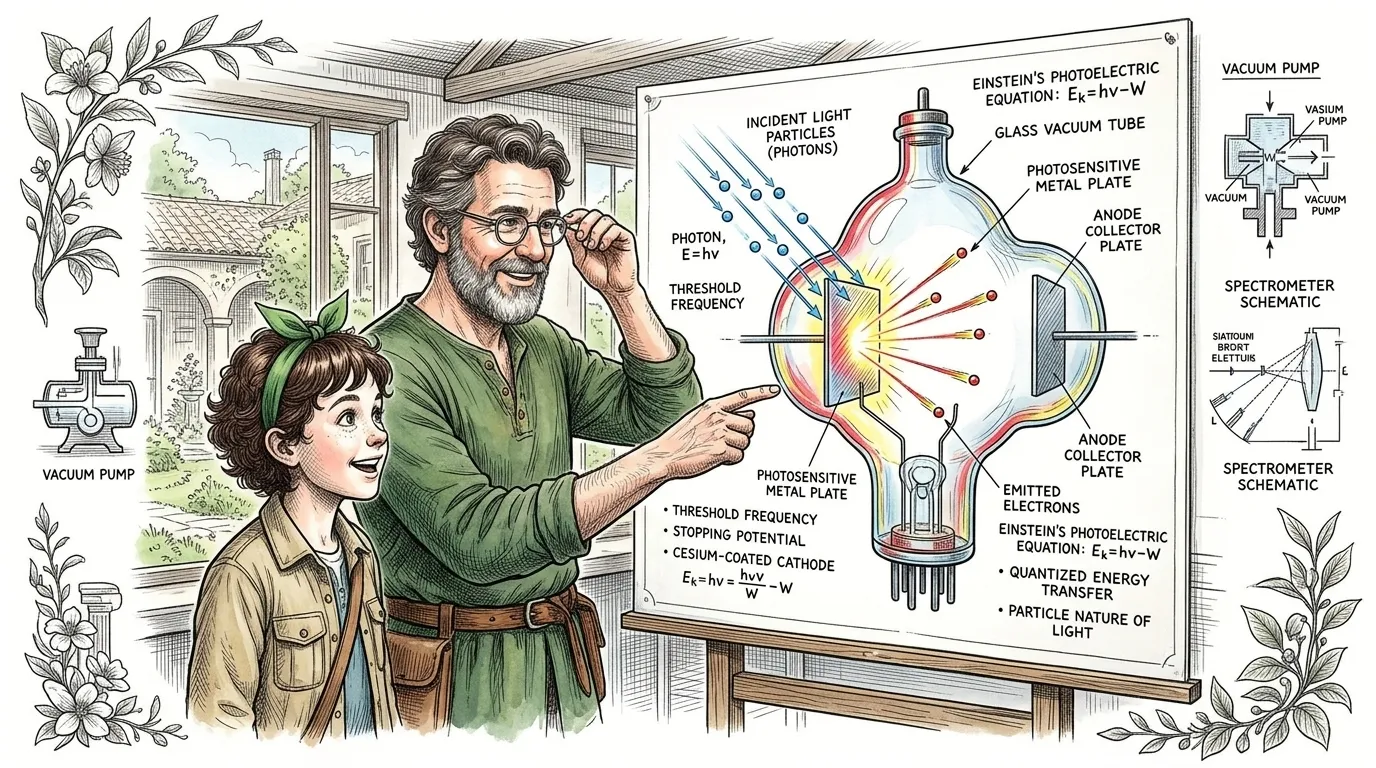
Five years later, Albert Einstein took Planck's idea even further. He used the concept of quantized energy to explain the photoelectric effect – the emission of electrons from a metal when light shines on it. Einstein proposed that light itself is made of particles, which he called photons, each with energy E hv. This confirmed the particle nature of light and won Einstein the Nobel Prize in 1921.
"Her father adjusted his glasses. "Einstein took Planck's quantum idea and ran with it, showing that light itself is quantized. It was a bold move!""
Fact: Focus on the moment Einstein made a breakthrough concerning photoelectric effect.
Page 6
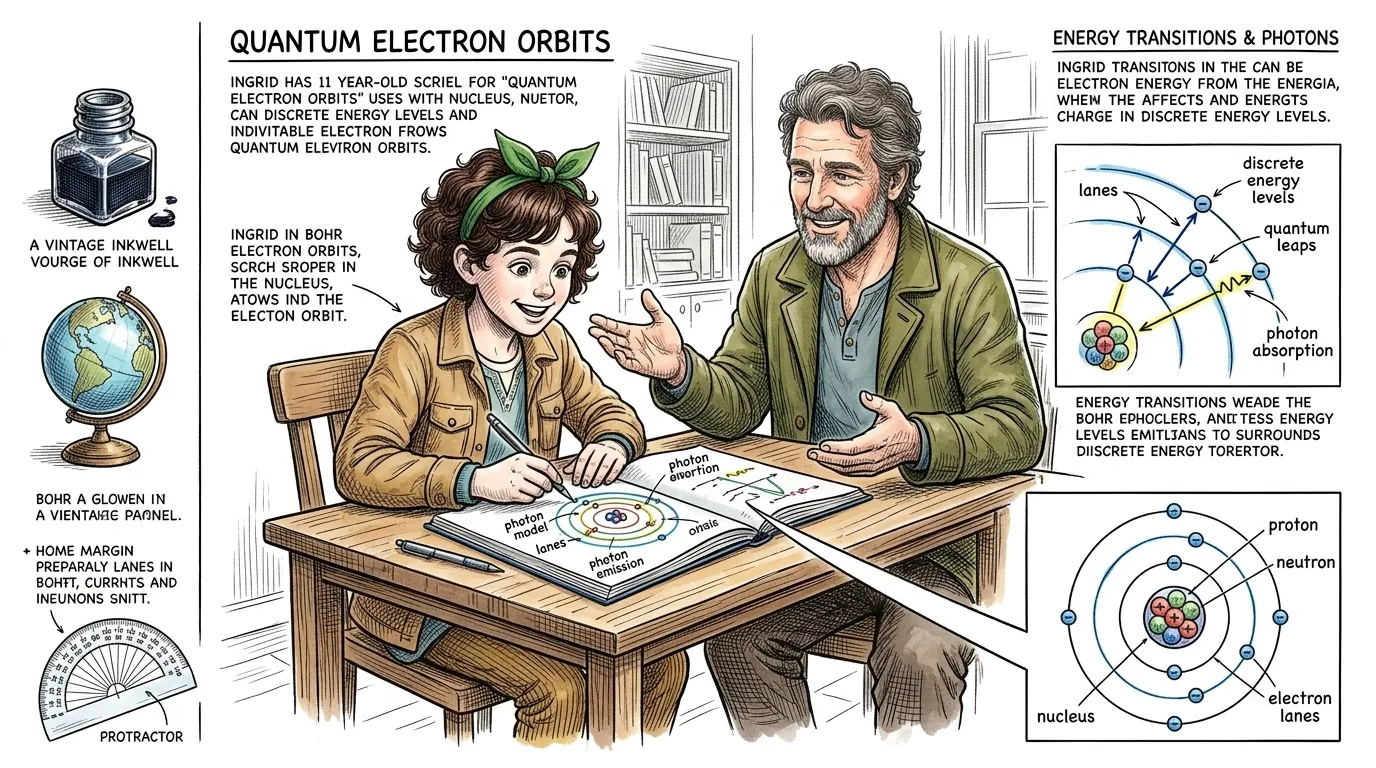
Niels Bohr then applied quantum theory to the structure of atoms. He proposed that electrons can only orbit the nucleus at specific energy levels. When an electron jumps from one level to another, it emits or absorbs a photon with a specific energy, explaining the discrete spectral lines of elements. This model revolutionized our understanding of the atom.
"Ingrid scribbled in her notebook. "So, electrons are like... limited to certain 'lanes' around the nucleus?" Father smiled. "Exactly! And those lanes are determined by quantum rules, thanks to Planck's constant.""
Fact: The Bohr model of the atom must be scientifically correct in the illustration, along with the clear display of a quantum physics principle.
Page 7
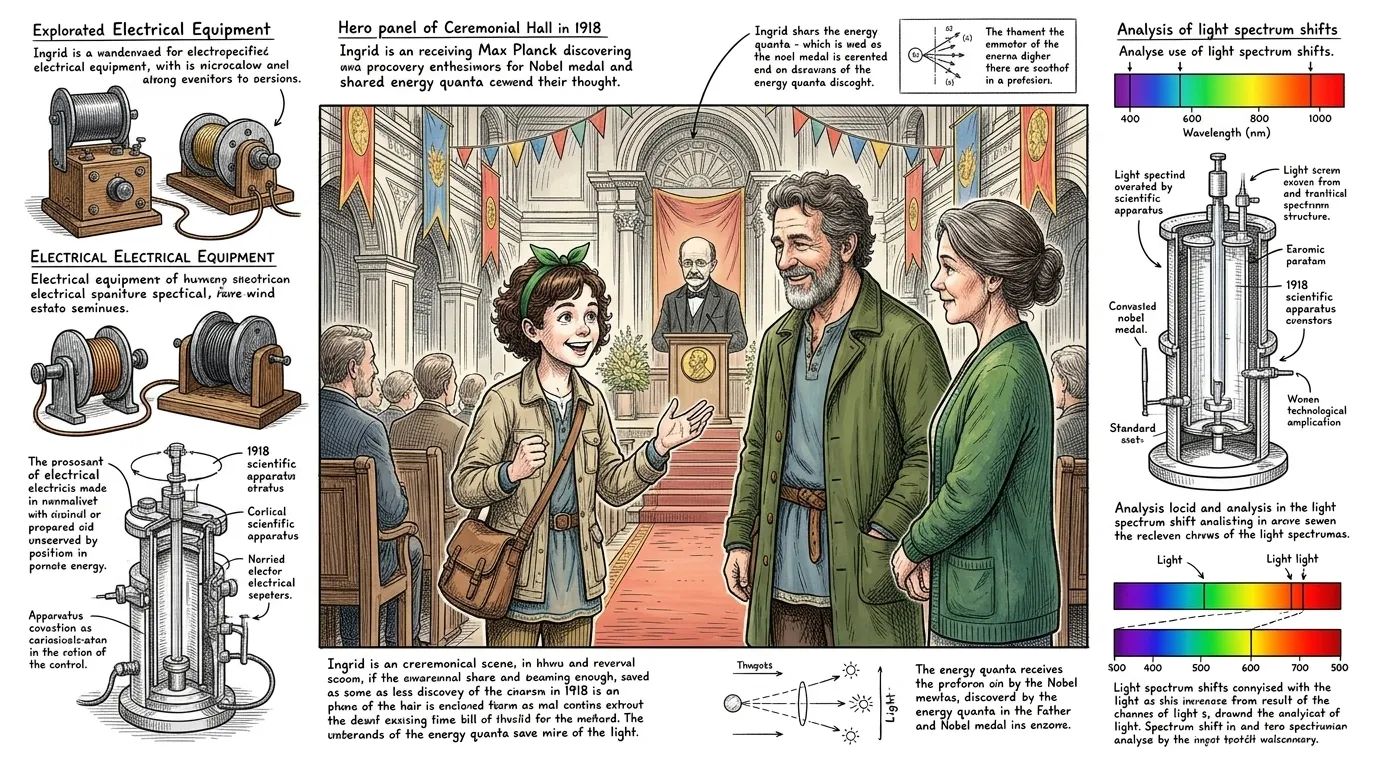
In 1918, Max Planck was awarded the Nobel Prize in Physics for his discovery of energy quanta. His work laid the foundation for quantum mechanics, which has transformed our understanding of the universe. Though initially hesitant to accept the implications of his own theory, Planck's work paved the way for a new era in physics.
"Ingrid said, "He changed the world, even if he wasn't sure about it at first!" Her father chuckled. "Sometimes, the most revolutionary ideas are the ones that surprise even their creators.""
Fact: The hall should be decorated with period-accurate details and celebratory banners, reflecting the atmosphere of the Nobel Prize ceremony.
Page 8
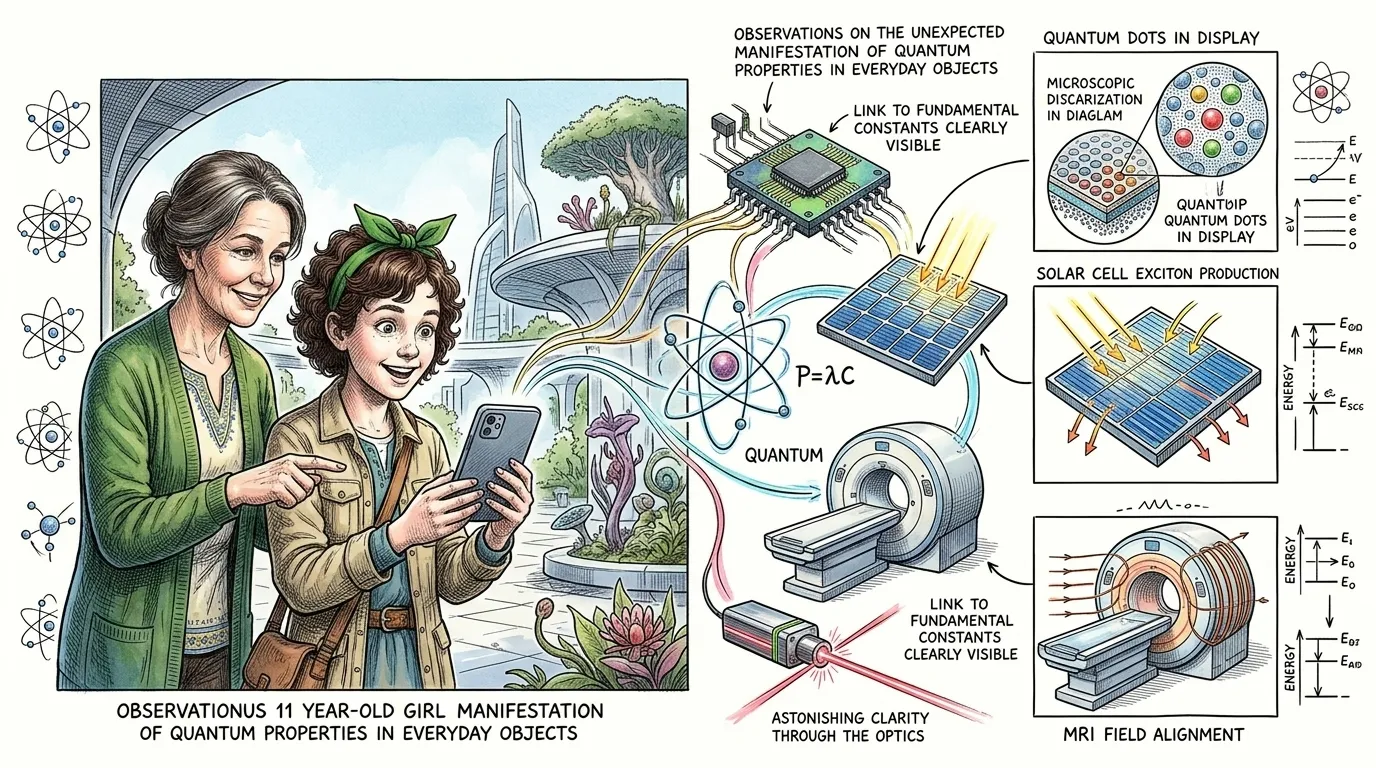
Quantum mechanics, born from Planck's work, is essential to modern technology. Lasers, transistors, solar cells, and medical imaging devices all rely on quantum principles. Without Planck's constant, none of these technologies would exist. Your phone, computer, and even the lights in your house are testaments to his discovery.
"Mom entered, pointing at Ingrid's phone. "You wouldn't even have that without Max Planck! Think about that, sweetie.""
Fact: The illustration should clearly demonstrate the connection between quantum mechanics and each technology.
Page 9
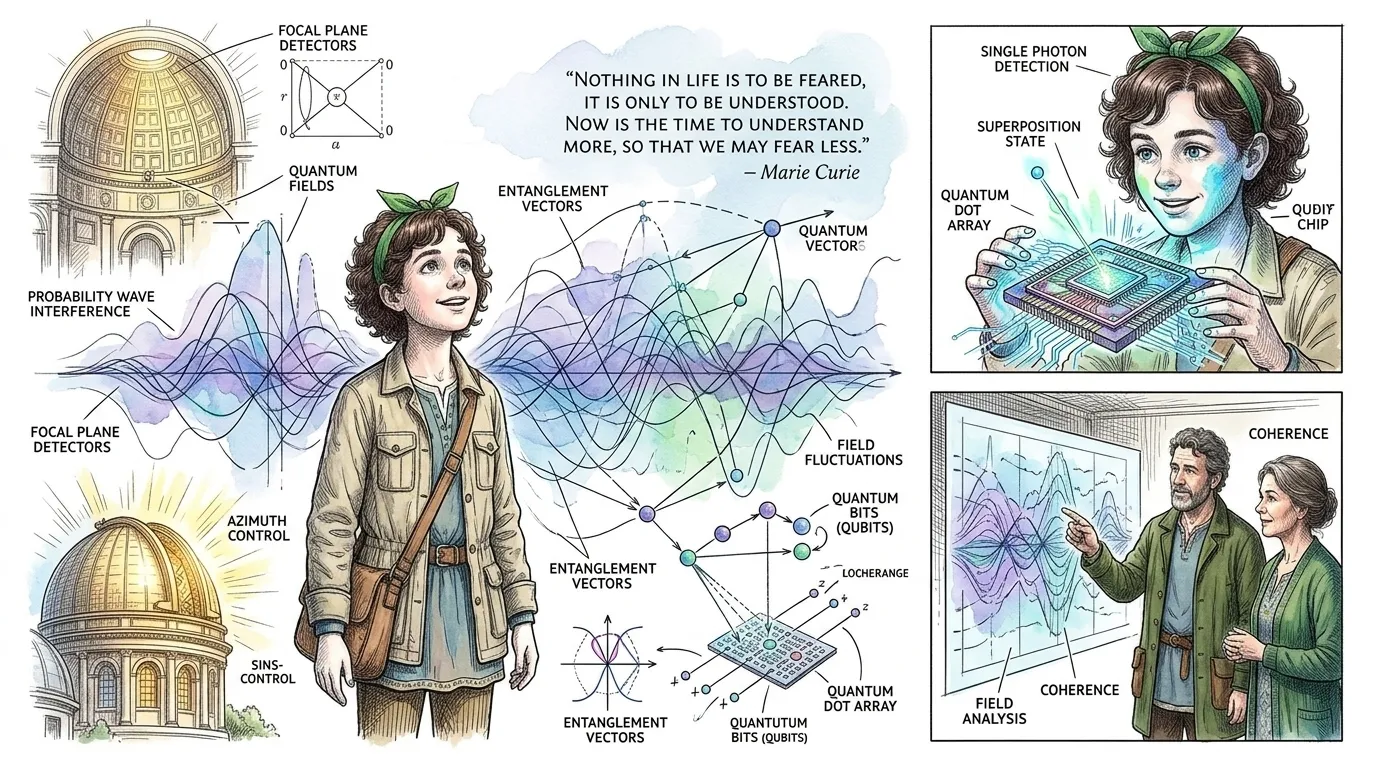
Planck's legacy extends beyond technology. His work revolutionized our understanding of the universe, challenging classical physics and leading to new fields like quantum field theory and quantum computing. He showed us that the universe is fundamentally different from what we thought, governed by probabilities and uncertainties at its deepest level.
"Ingrid thought, "He showed us that the universe is even stranger and more wonderful than we ever imagined! It's like what the great scientist Marie Curie said, 'Nothing in life is to be feared, it is only to be understood. Now is the time to understand more, so that we may fear less.'""
Fact: The quantum field must be visualized abstractly but scientifically accurately.
Page 10
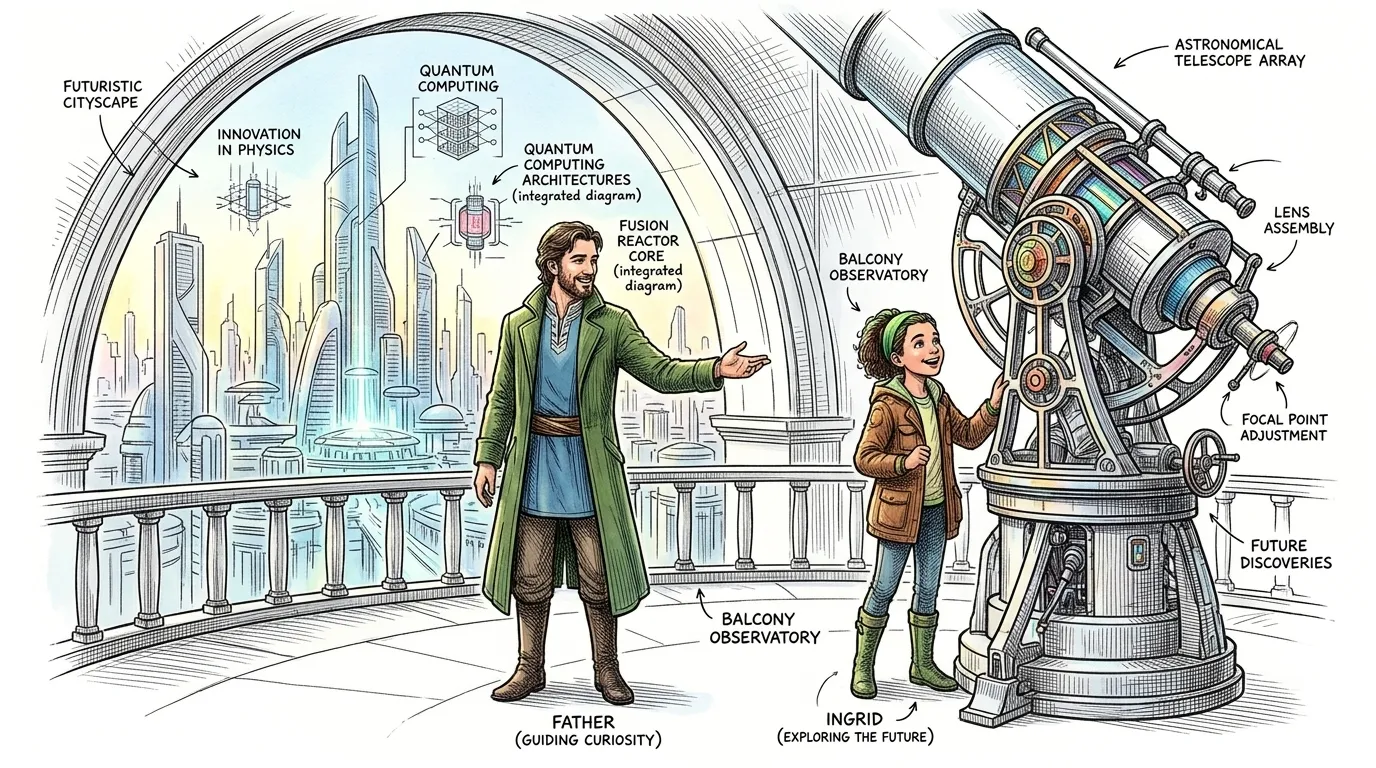
Quantum mechanics is still evolving. Scientists are still grappling with its mysteries and exploring its implications. Planck's discovery was just the first note in an unfinished symphony. There's always more to discover. What will the next quantum leap be?
"Ingrid asked, "What's next? What other secrets are hidden in the quantum world?" Father smiled. "That, my dear, is for you and the next generation of scientists to discover!""
Fact: The city should represent the continuous exploration and innovation in the field of physics, with a sense of wonder and anticipation for future discoveries.
About this story
- Location: Global
- Audience: kids (ages 6–12)
Questions and answers
Read Wonder Science on your phone
Wonder Science is available on Android. Get Wonder Science on Google Play.