Mary Leakey
Mary Leakey — an illustrated science story, set in Global. 10 illustrated pages, free to read on Wonder Science.
Page 1
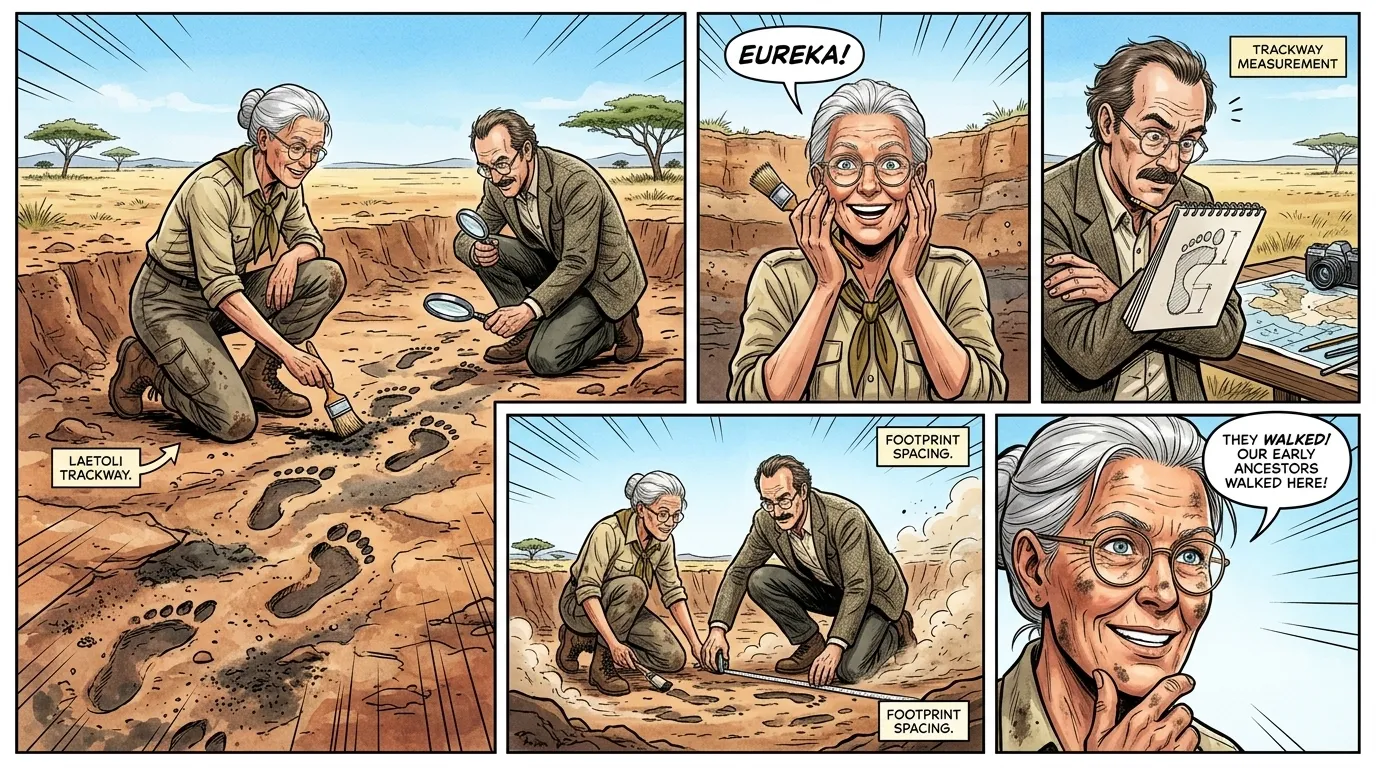
The year is 1978. In the remote, sun-baked plains of Laetoli, Tanzania, an extraordinary discovery is underway. Paleoanthropologist Mary Leakey and her team meticulously excavate a volcanic ash layer, revealing something that would fundamentally alter our understanding of human evolution: an ancient pathway, preserved for millions of years. This wasn't merely a fossil; it was a snapshot of a moment 3.6 million years ago, a tangible record of early hominins walking upright, long before the emergence of what we traditionally recognize as 'humans'.
Page 2
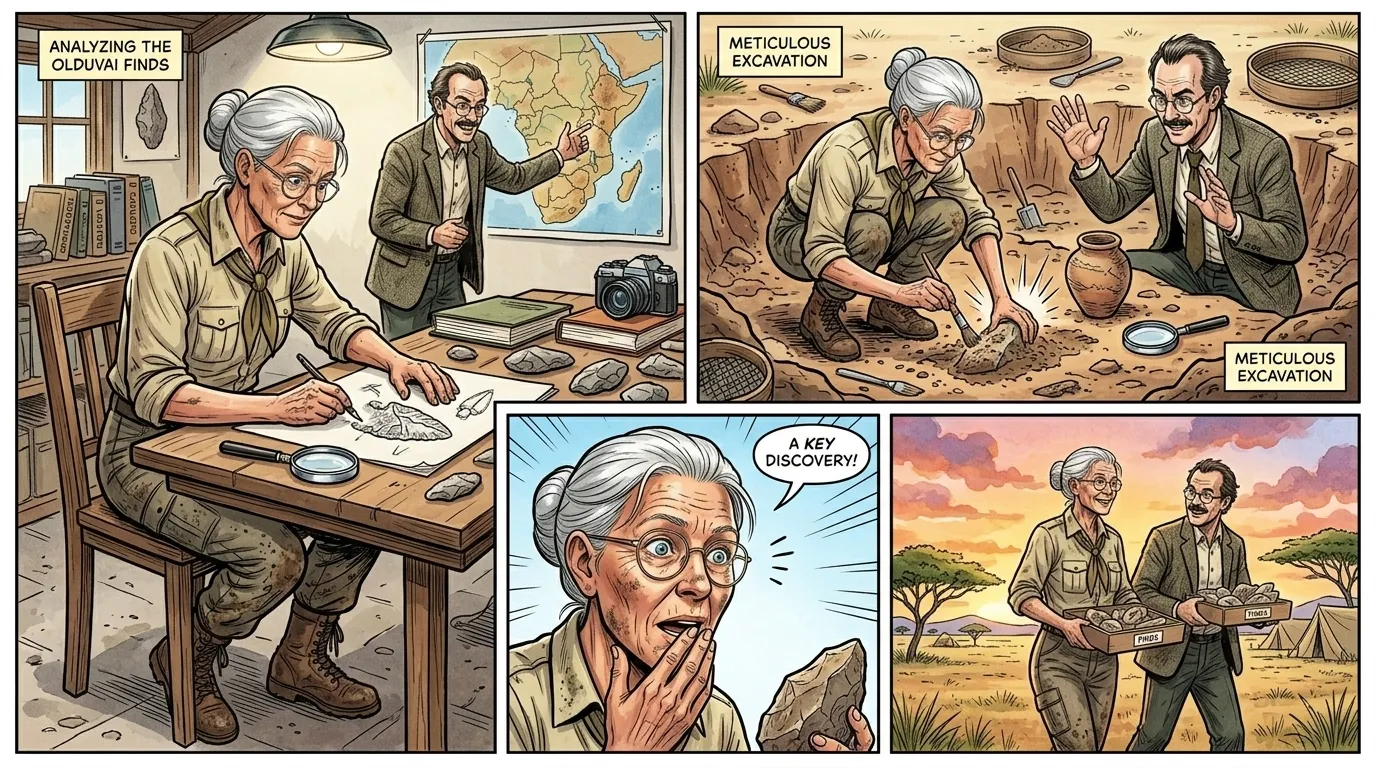
Born Mary Nicol in London in 1913, Mary Leakey's formal education was unconventional, largely self-directed. Her fascination with prehistory began early, sparked by visits to archaeological sites and museums. Without a university degree, she cultivated a remarkable talent for meticulous excavation and precise artistic rendering of stone tools, skills that would become invaluable. Her early collaborations, notably with Dorothy Liddell and later Louis Leakey, cemented her reputation as an exceptional field archaeologist and lithic analyst, preparing her for the monumental work that lay ahead in East Africa.
Page 3
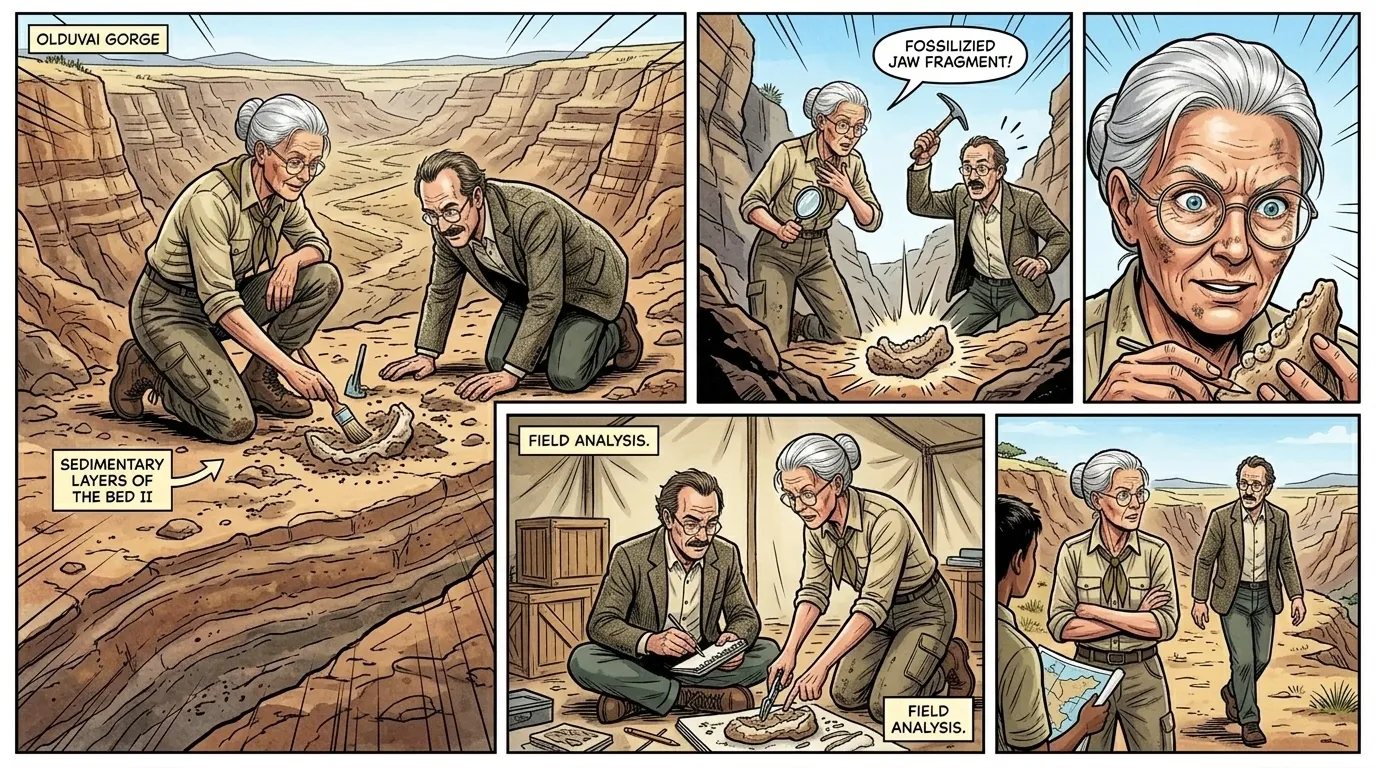
The discovery of human origins was a central scientific quest in the mid-20th century. Olduvai Gorge, a steep-sided ravine in northern Tanzania, offered an unprecedented window into this deep past. Its unique geology, formed by successive volcanic eruptions and sedimentary layers, created a natural archive, preserving millions of years of hominin activity, animal fossils, and environmental changes. The Leakeys' decades-long commitment to this harsh, remote landscape was driven by the conviction that here, the earliest chapters of the human story were waiting to be revealed, layer by painstaking layer.
Page 4
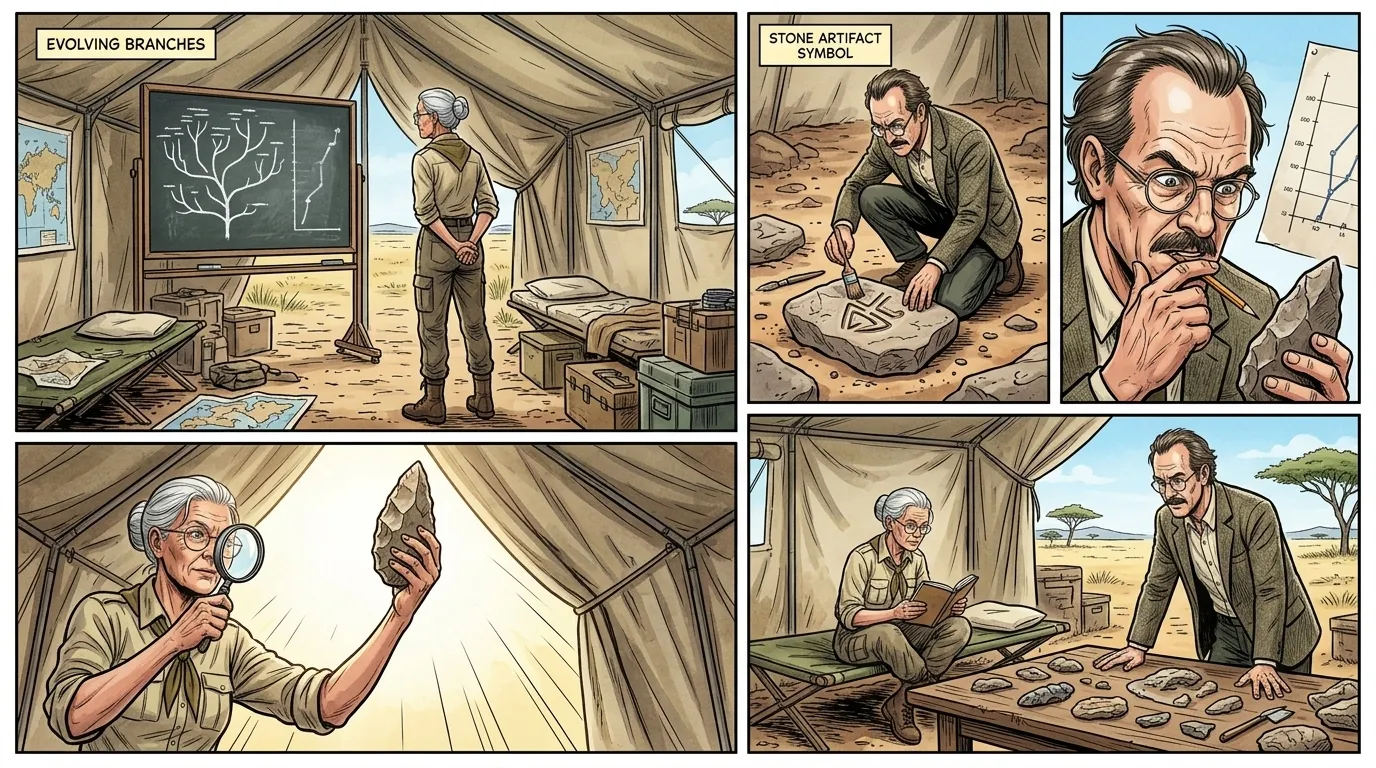
Before the Leakeys' groundbreaking work, much of the understanding of early hominins was based on limited finds from South Africa, often suggesting a single, linear progression of human evolution. The East African discoveries, particularly from Olduvai, began to challenge this simplistic view, hinting at a far more complex and bushy family tree. Scientists grappled with questions of bipedalism, brain size, and the advent of tool-making, striving to place new fossil finds within a coherent narrative of our ancestral past, often sparking intense debate within the scientific community.
Page 5
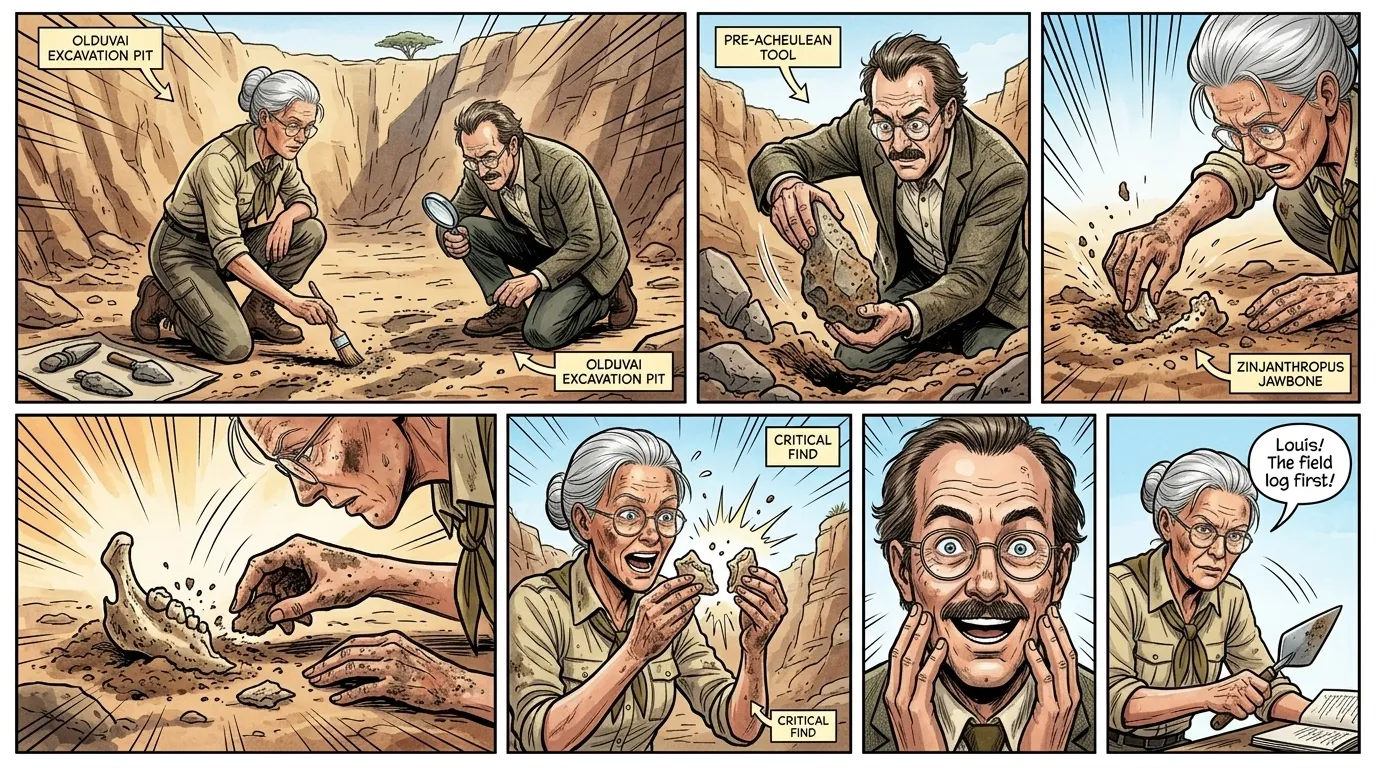
In 1959, at Olduvai Gorge, Mary Leakey made a pivotal discovery: the skull fragments of a hominin, later named Zinjanthropus boisei (now Paranthropus boisei). This specimen, with its massive jaws and sagittal crest, was unlike any known hominin, pushing back the timeline for early hominins with robust features to 1.75 million years ago. Its presence alongside primitive stone tools raised profound questions about who made these tools and how different hominin species coexisted, fundamentally reshaping the narrative of early human technological and dietary adaptations.
Page 6
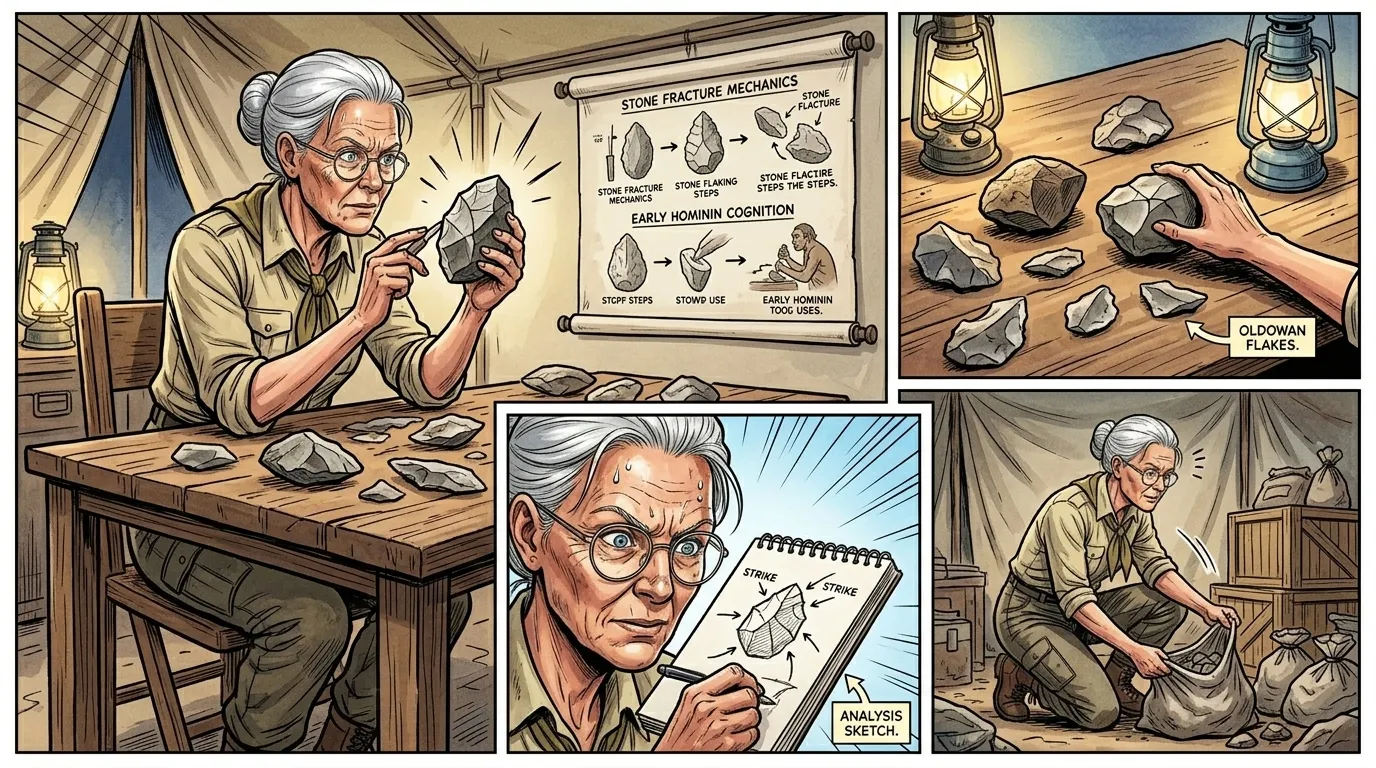
Mary Leakey's expertise extended beyond fossils to the analysis of ancient technology. Her systematic classification of the Oldowan tools, the earliest known stone tool industry, found at Olduvai, was groundbreaking. These simple choppers and flakes, dating back 2.6 to 1.7 million years, revealed sophisticated planning and understanding of stone fracture mechanics. They provided tangible evidence of early hominin cognitive abilities and resourcefulness, profoundly impacting our understanding of how our ancestors survived and thrived, and demonstrating a crucial step in the evolution of human intelligence and cultural development.
Page 7
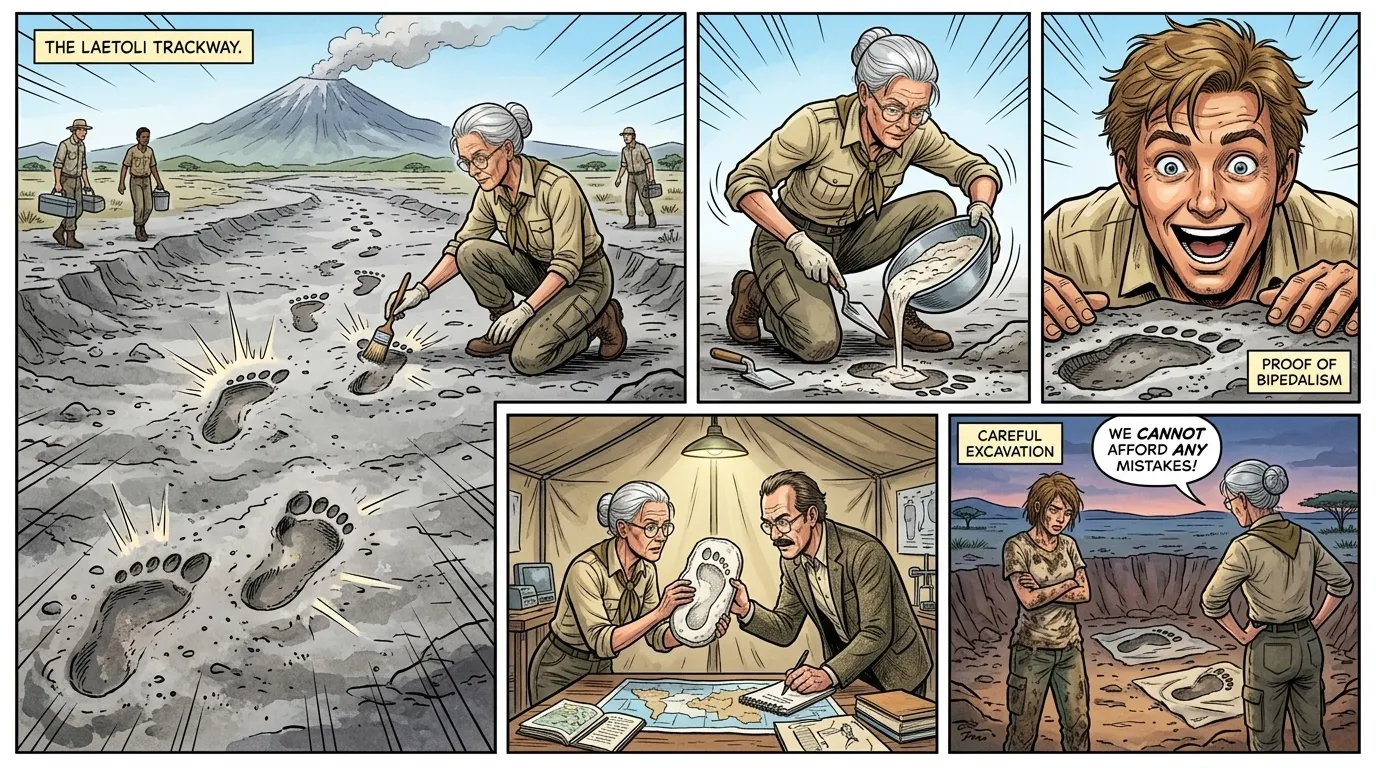
The 1978 discovery at Laetoli transcended all previous finds. A thick layer of volcanic ash, gently rained down from the nearby Sadiman volcano, had been walked upon by at least two, possibly three, hominins 3.6 million years ago. The subsequent light rainfall and further ashfall perfectly preserved these footprints. Mary Leakey's meticulous excavation and preservation efforts ensured that this fragile evidence of bipedal locomotion — the defining characteristic of hominins — was safeguarded, offering incontrovertible proof that our ancestors were walking upright millions of years earlier than previously imagined.
Page 8
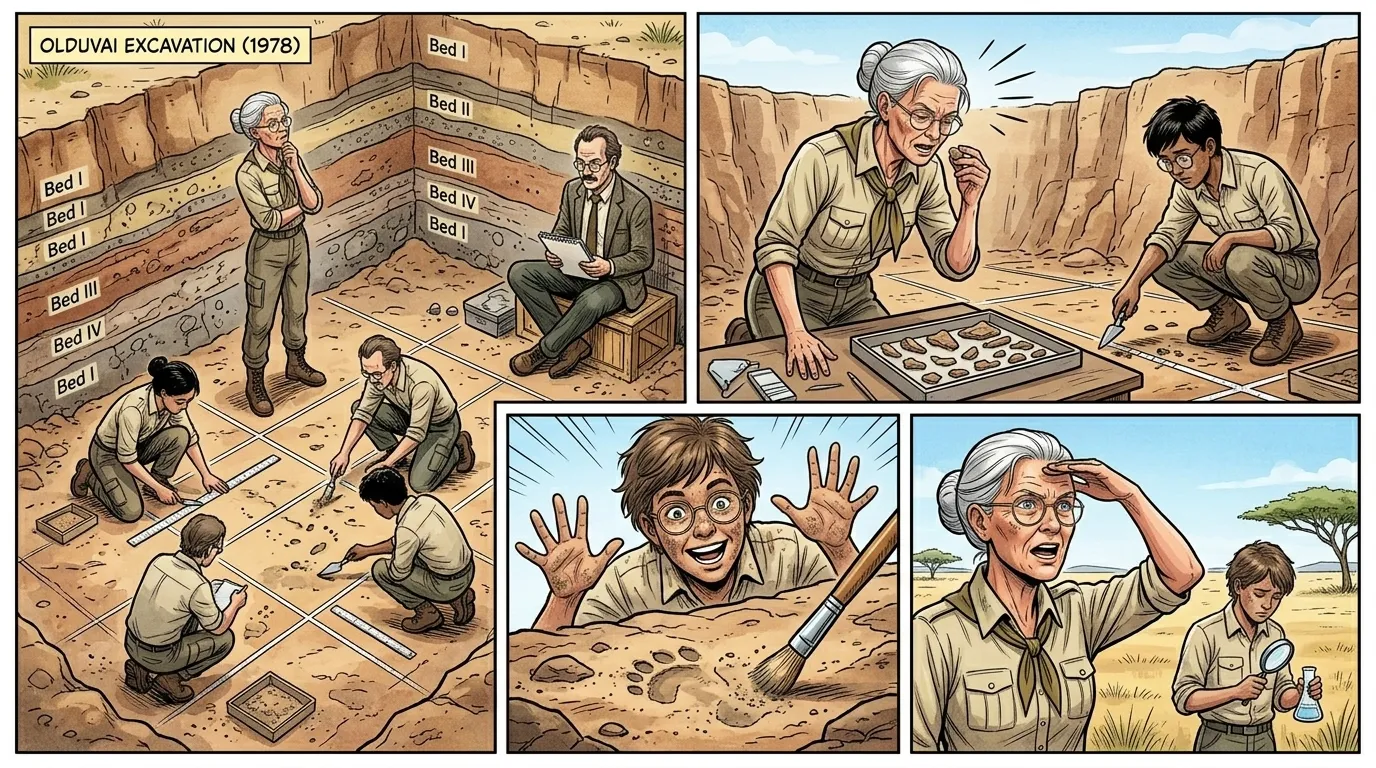
Mary Leakey's impact extended far beyond individual discoveries. She championed methodical excavation techniques, stratigraphic analysis, and meticulous recording, setting new standards for paleoanthropological fieldwork. Her insistence on precise contextual data for every artifact and fossil transformed what was often a treasure hunt into a rigorous scientific discipline. She established and directed research at Olduvai and Laetoli independently, fostering an environment of careful, systematic inquiry that inspired generations of researchers and ensured the preservation and interpretation of irreplaceable evidence.
Page 9
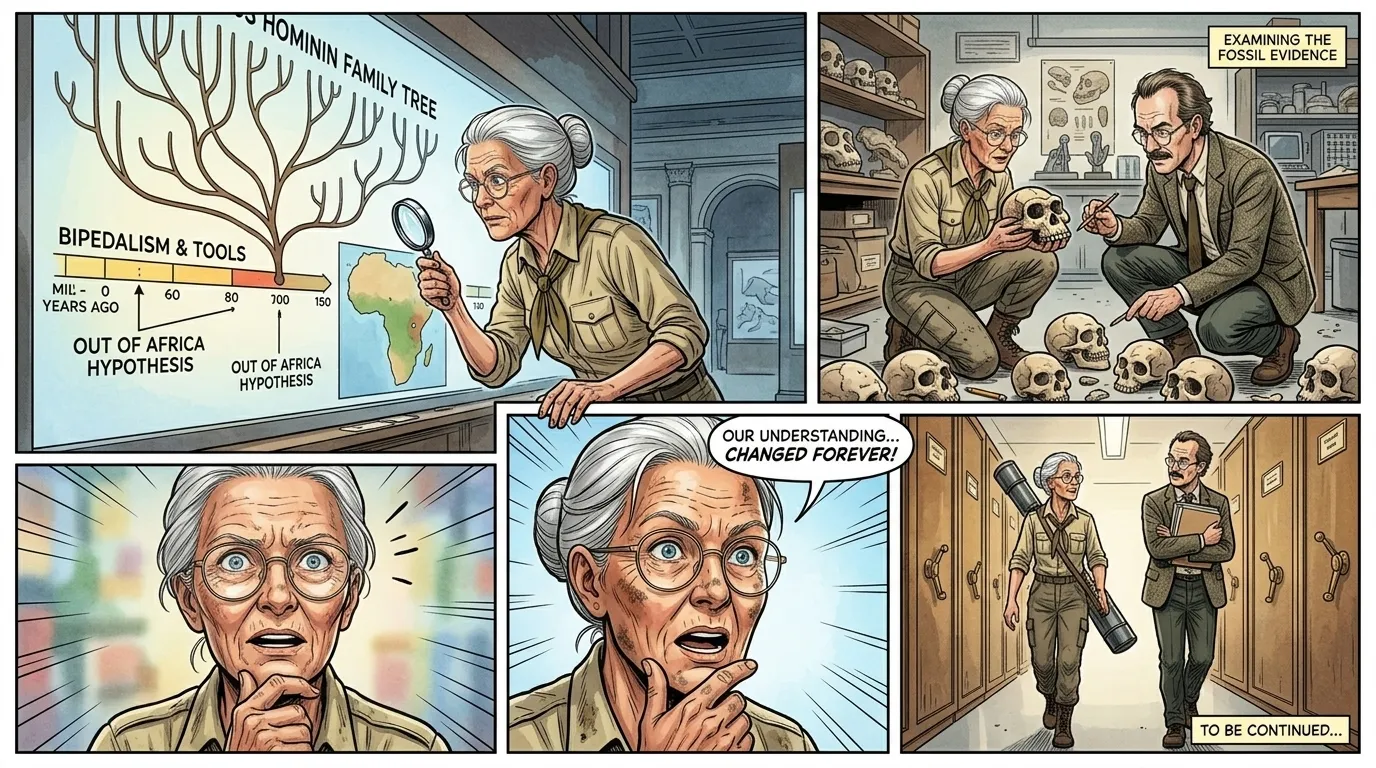
Mary Leakey's discoveries profoundly reshaped our understanding of human evolution. Her work unveiled a more complex and diverse hominin family tree than previously imagined, demonstrating that multiple species coexisted in ancient Africa. It pushed back the timeline for key human traits like bipedalism and tool-making by millions of years, igniting new debates and inspiring further exploration. The meticulous evidence she uncovered provided critical data for refining the 'Out of Africa' hypothesis and continues to serve as a cornerstone for all subsequent research into our earliest ancestors, solidifying Africa's central role in the human story.
Page 10
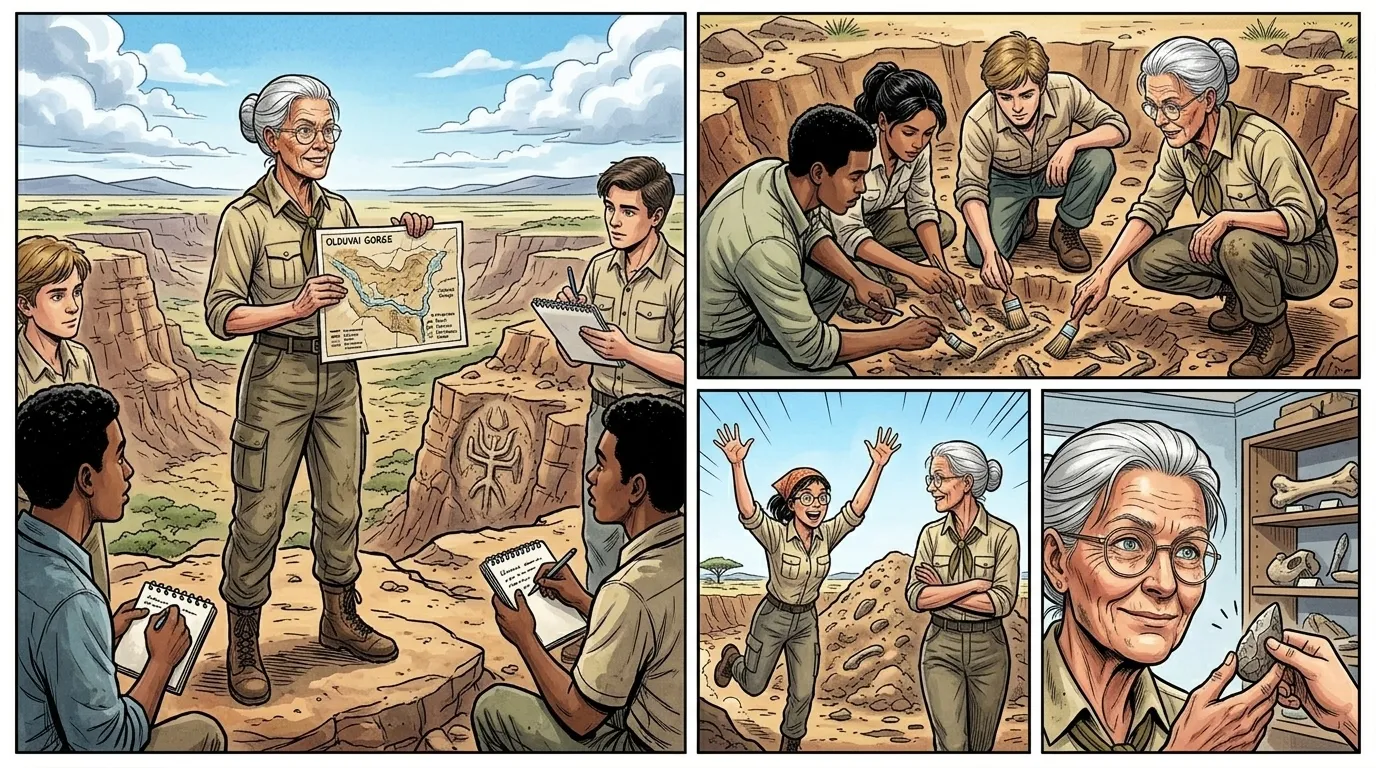
Mary Leakey's life was a testament to relentless curiosity, scientific rigor, and an unwavering dedication to unlocking the secrets of our past. Her iconic finds, from Zinjanthropus to the Laetoli footprints, provided irrefutable evidence that profoundly altered scientific understanding and captured the public imagination. Her legacy endures not only in the fossils and tools she unearthed but also in the methodologies she pioneered and the generations of scientists she inspired. Mary Leakey stands as a colossus in paleoanthropology, a reminder that the greatest discoveries often arise from keen observation, immense patience, and an insatiable desire to understand where we come from.
About this story
- Location: Global
- Audience: general readers
Questions and answers
Read Wonder Science on your phone
Wonder Science is available on Android. Get Wonder Science on Google Play.