Maria Goeppert Mayer
Maria Goeppert Mayer — an illustrated science story, set in Global. 10 illustrated pages, free to read on Wonder Science.
Page 1
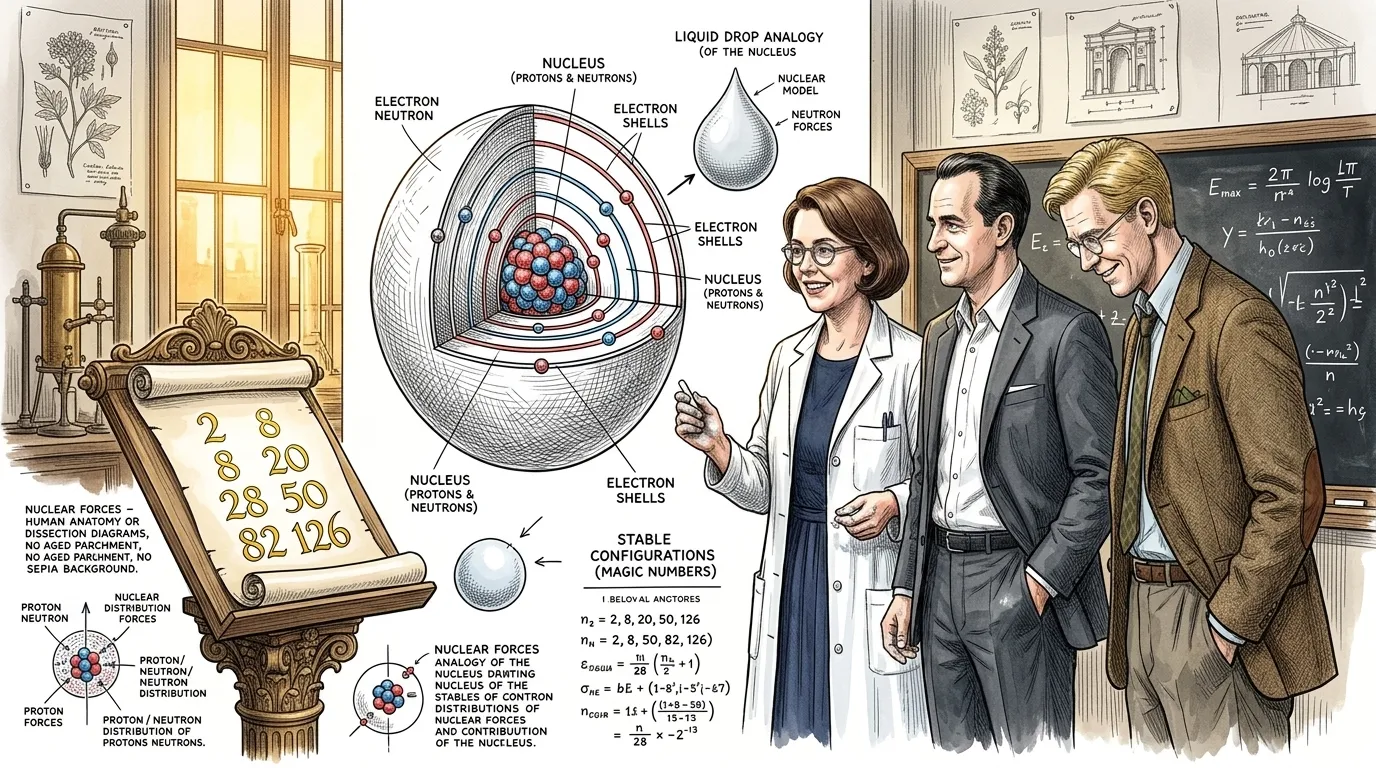
Deep within the heart of every atom lies the nucleus, a dense, enigmatic core housing protons and neutrons. For decades, its structure remained a profound mystery, often visualized crudely as a formless liquid drop. Yet, experimental physicists consistently observed an astonishing pattern: certain nuclei possessed extraordinary stability, defying the prevailing models. These were the 'magic numbers'—2, 8, 20, 28, 50, 82, and 126—like cosmic bedrock, these specific counts of protons or neutrons formed exceptionally robust atomic nuclei, a phenomenon that puzzled the scientific world.
Page 2
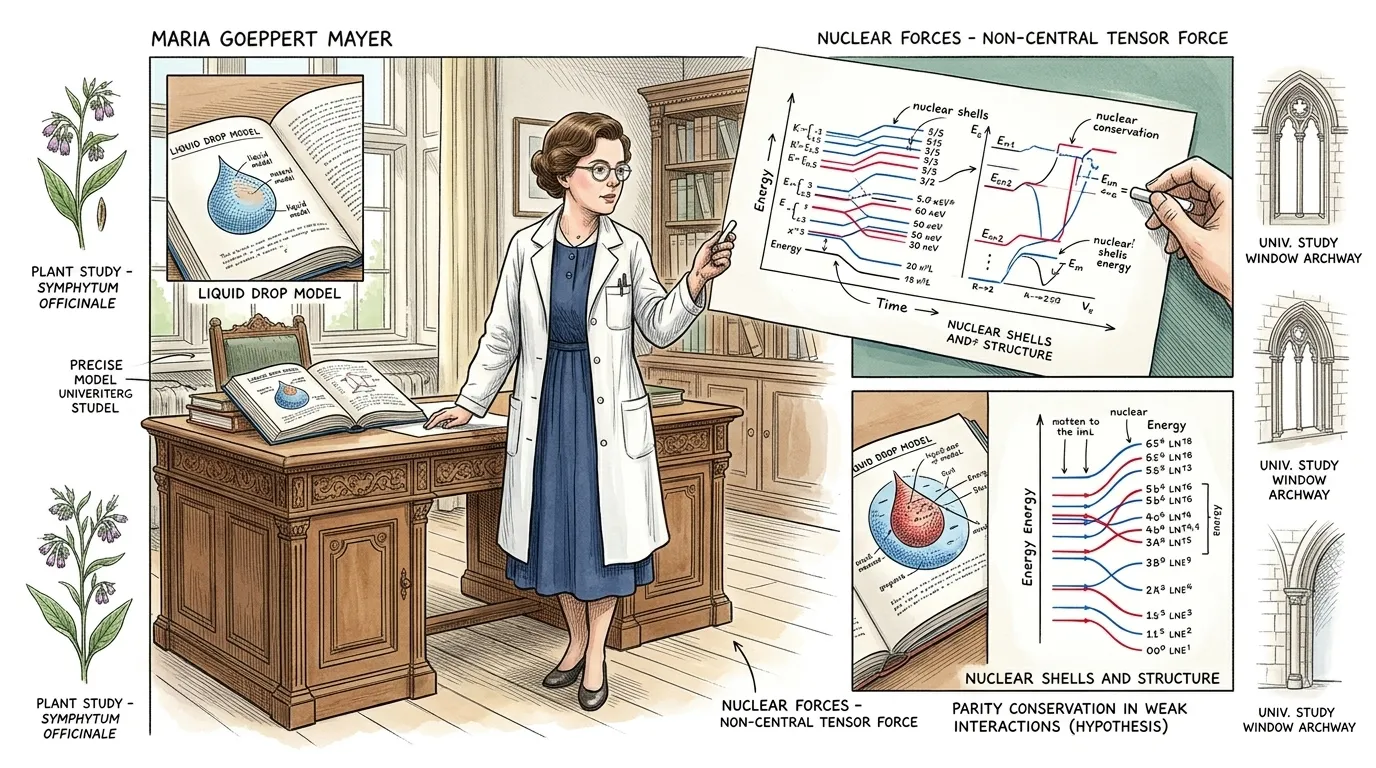
Born in 1906, Maria Goeppert Mayer was a formidable intellect, destined for a career in theoretical physics at a time when opportunities for women in science were scarce and often uncompensated. Graduating with a Ph.D. from Göttingen in 1930, she moved to the United States, where she would spend years working in unpaid or volunteer positions, following her husband's academic career. Despite these systemic barriers, her mind tirelessly grappled with the most fundamental questions of the universe, including the perplexing stability patterns of atomic nuclei, a puzzle that hinted at an underlying order far more intricate than the liquid-drop model suggested.
Page 3
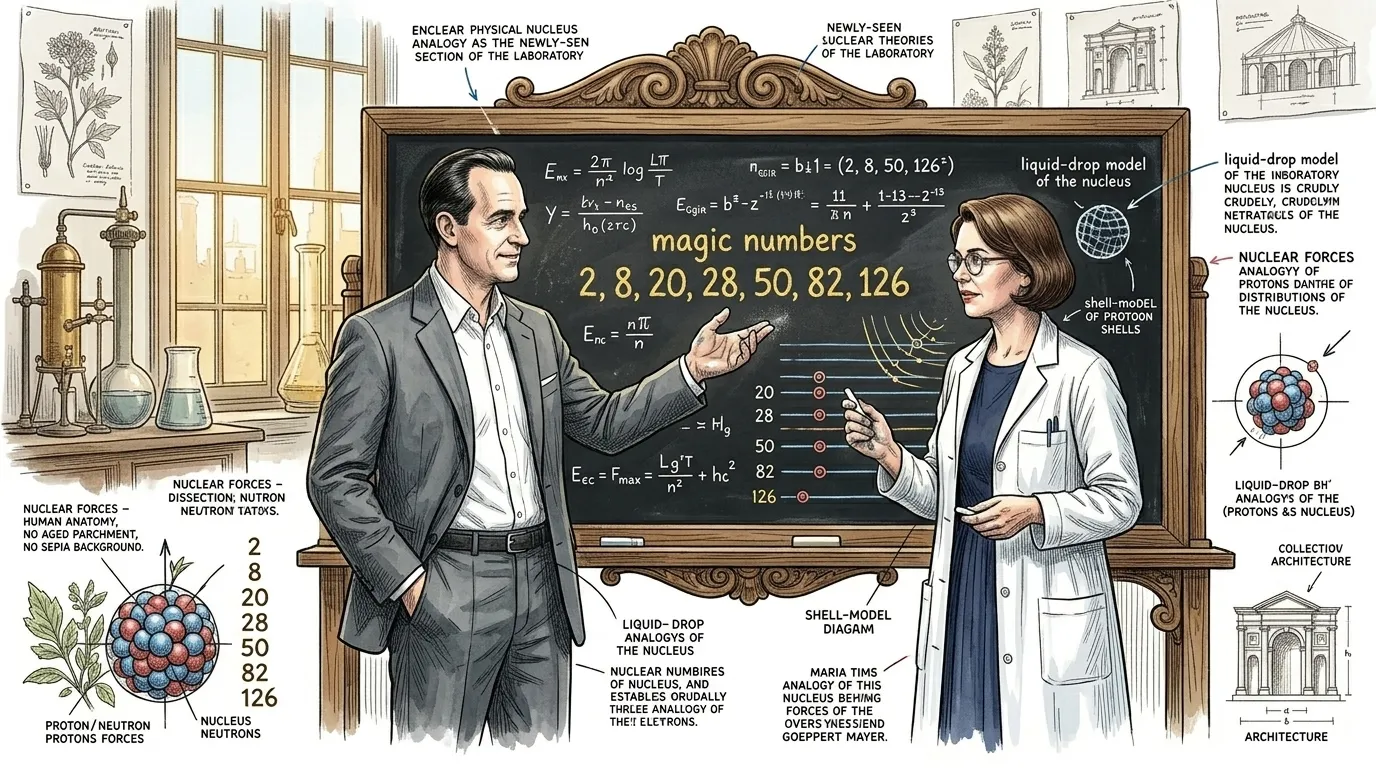
The 'magic numbers' were a persistent anomaly: nuclei with 2, 8, 20, 28, 50, 82, or 126 protons or neutrons were disproportionately stable, much like noble gases in chemistry. This empirical observation was a stark contradiction to the prevalent liquid-drop model, which viewed the nucleus as a homogenous, featureless blob. Enrico Fermi, a Nobel laureate, famously challenged her to investigate this puzzle, asking, 'Is there any evidence for shell structure in the nucleus?' This question became the driving force behind her most profound work, demanding a radical rethinking of the atomic nucleus.
"'Is there any evidence for shell structure in the nucleus?'"
Page 4
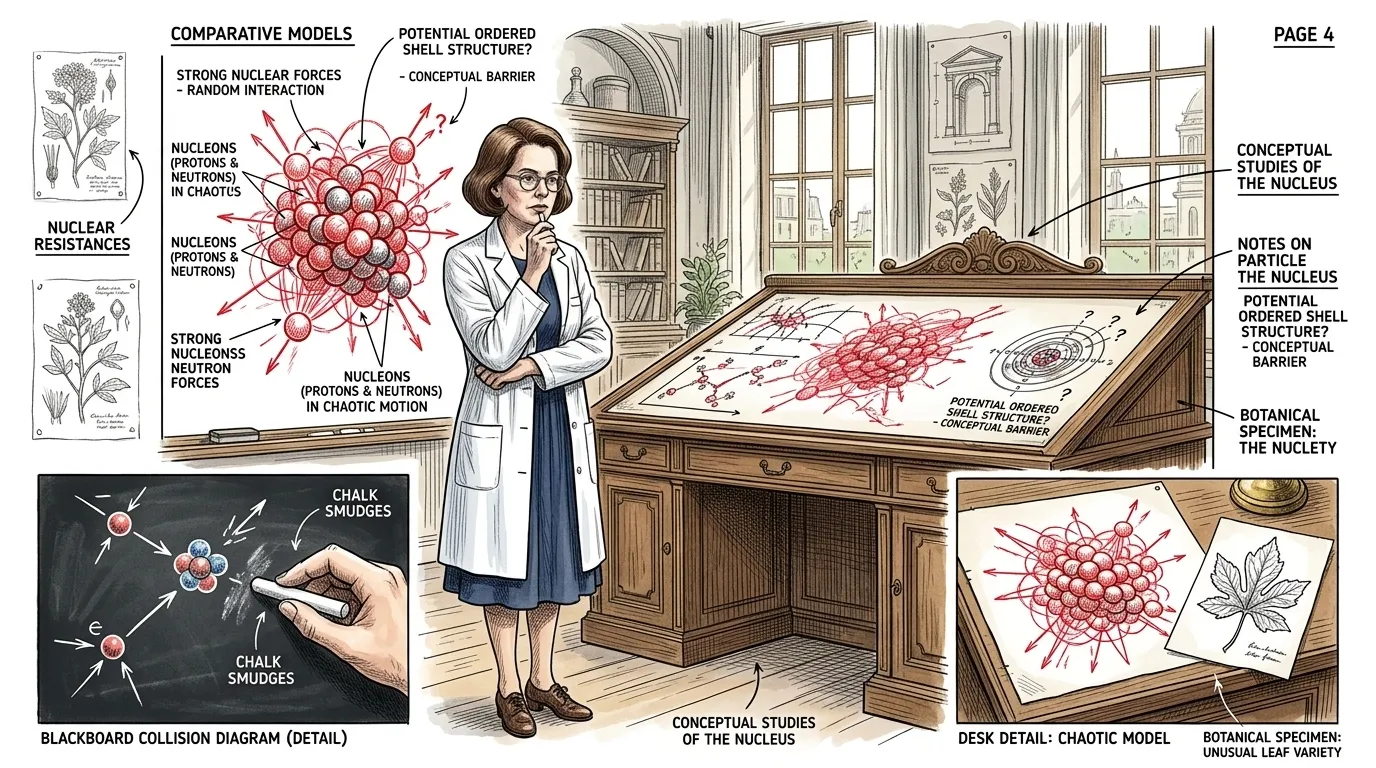
The challenge was immense. Unlike electrons orbiting the atomic nucleus, nucleons (protons and neutrons) inside the nucleus were thought to be in constant, chaotic interaction, making an ordered shell structure seem impossible. How could individual particles maintain distinct orbits when surrounded by the strong nuclear force of their neighbors? This conceptual barrier prevented many from envisioning a nuclear structure akin to the electron shells that explained atomic chemistry. It required a profound leap of intuition to see order within the apparent chaos.
Page 5
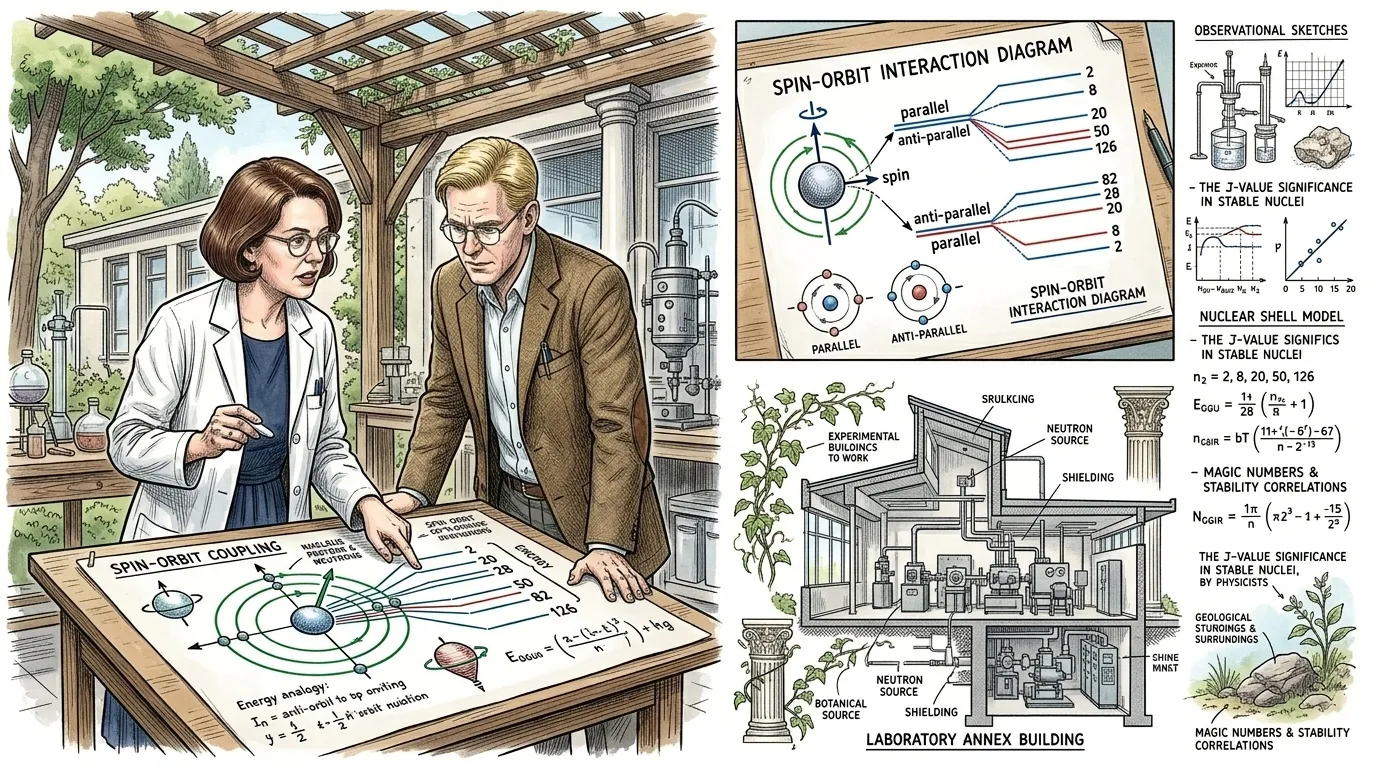
Maria Goeppert Mayer's groundbreaking insight, developed in collaboration with Hans Jensen, J. Hans D. Jensen, Otto Haxel, and Hans Suess, was to propose a nuclear shell model where nucleons occupy distinct energy levels, much like electrons. But there was a critical difference: to account for the magic numbers, she hypothesized a strong 'spin-orbit coupling.' This meant that a nucleon's orbital motion around the nucleus profoundly influenced its spin, and vice-versa, creating a powerful interaction that split energy levels in a very specific way. It was this elegant mechanism that would unlock the nucleus's secrets.
Page 6
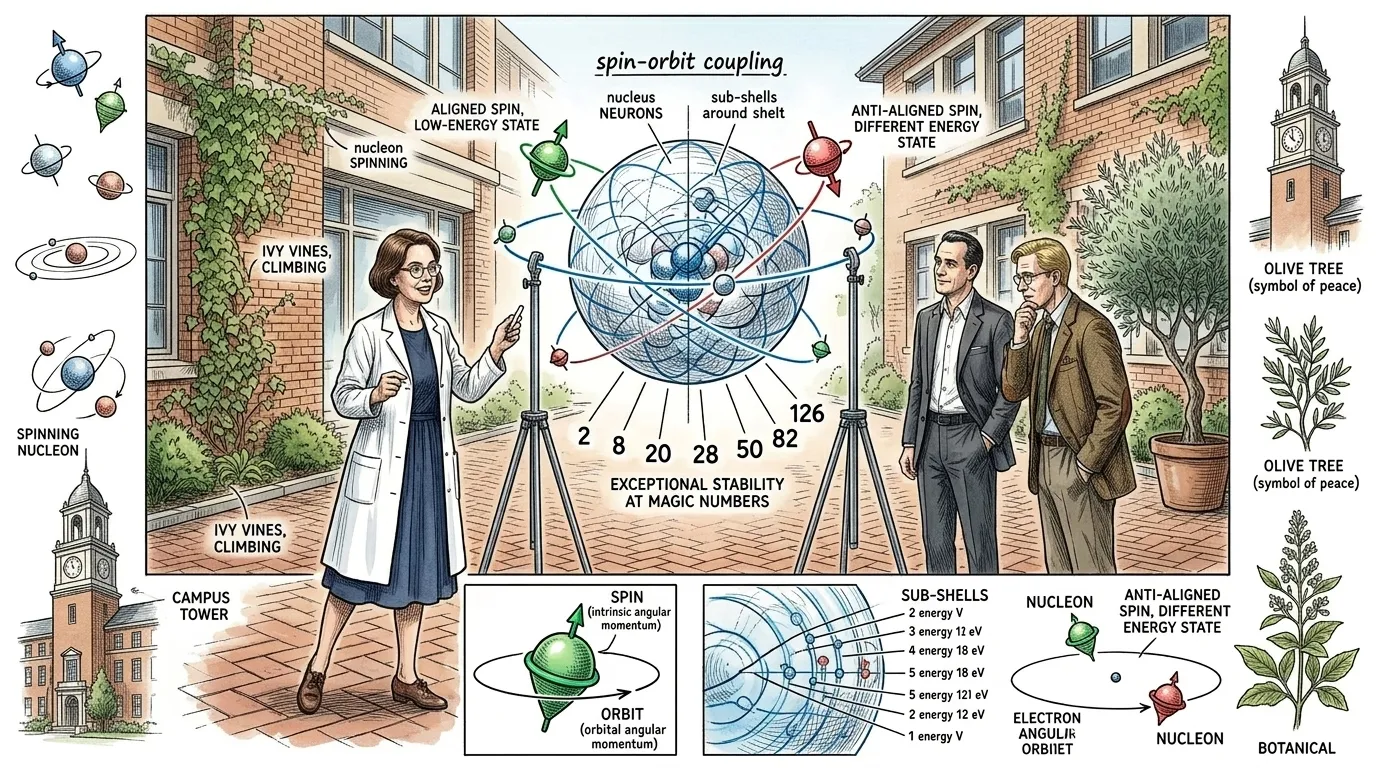
Imagine nucleons not just as random particles, but as tiny spinning tops also orbiting a central point. Maria Goeppert Mayer realized that the direction of this spin relative to the orbit was crucial. If the spin was aligned with the orbit, the nucleon would experience a slightly different energy state than if it was anti-aligned. This subtle, yet powerful, interaction effectively created new 'sub-shells' within the main energy levels. When these sub-shells were completely filled with nucleons, the nucleus achieved exceptional stability, precisely at the 'magic numbers.' It was an elegant solution to a long-standing riddle.
Page 7
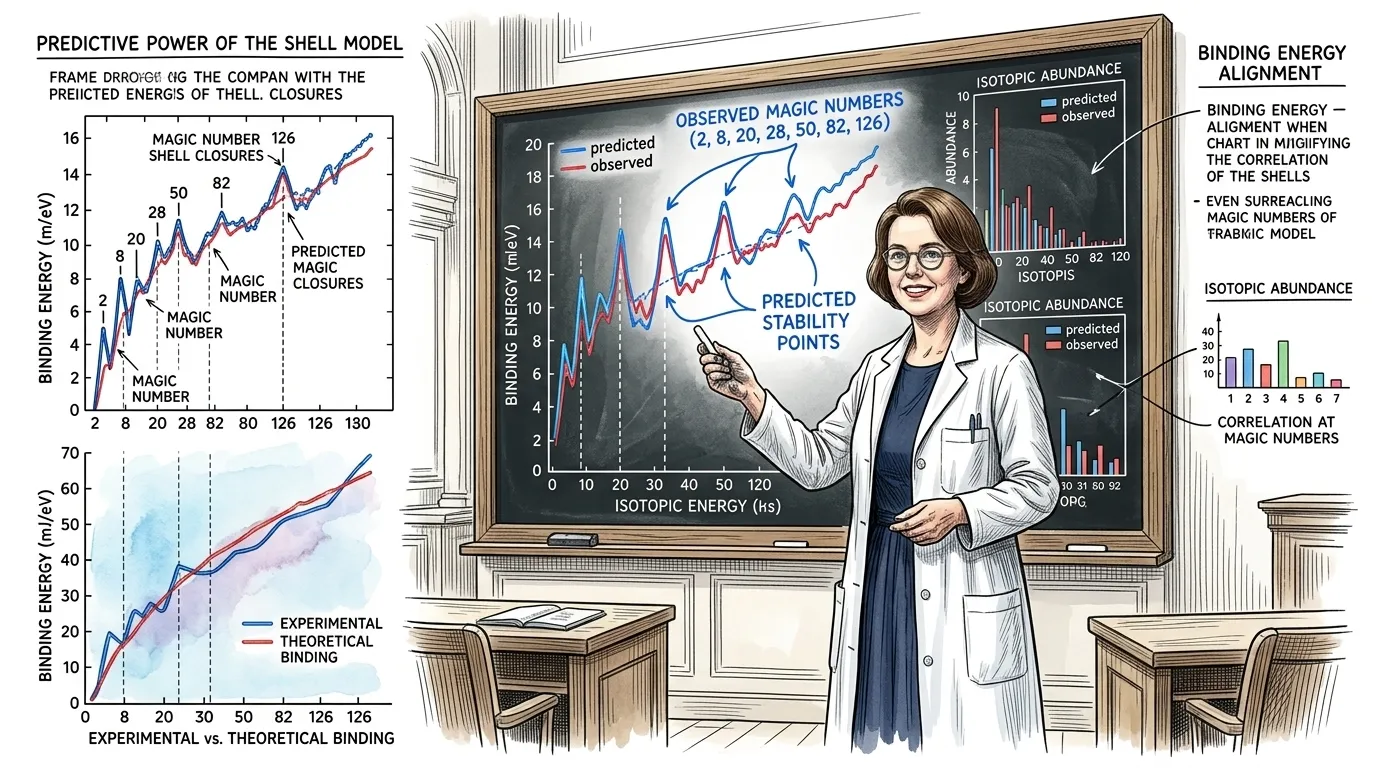
Her model not only explained the existing magic numbers but also predicted properties of new, undiscovered isotopes. The scientific community, initially skeptical, quickly came to recognize the profound power of her theory. Through meticulous calculations and a deep understanding of quantum mechanics, Goeppert Mayer demonstrated how these shell closures accounted for the observed binding energies, isotopic abundances, and excited states of nuclei. It was a triumph of theoretical physics, bringing order and predictability to the subatomic realm, where chaos had once reigned supreme.
Page 8
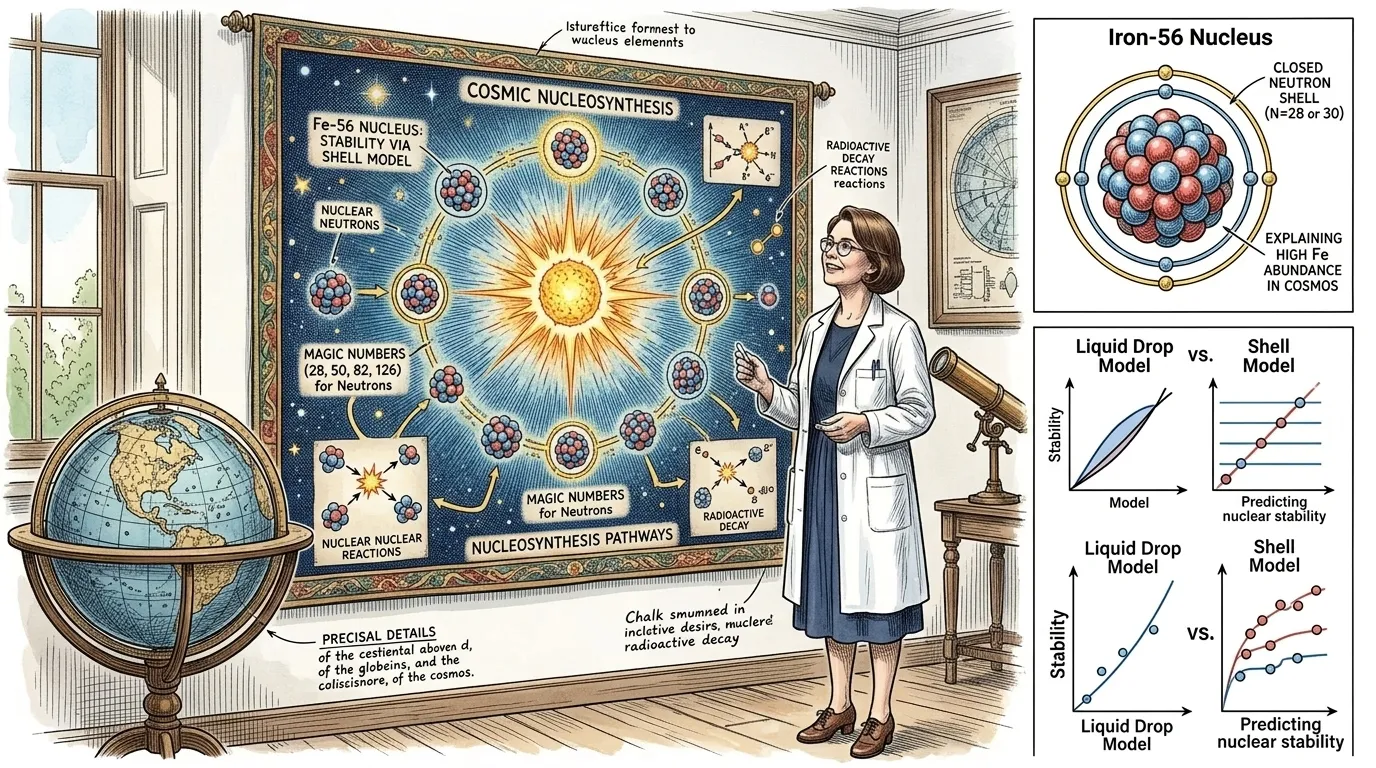
The nuclear shell model provided the foundational framework for understanding nuclear structure, akin to how the electron shell model explained chemistry. Its impact rippled through physics, influencing the study of nuclear reactions, radioactive decay, and the very processes of nucleosynthesis in stars. Suddenly, the formation of elements like iron, with its magic number of 26 protons (and stable isotopes with 28 or 30 neutrons), made elegant sense. Her theory was a key piece in the grand cosmic puzzle, revealing how the universe forged the building blocks of matter.
Page 9
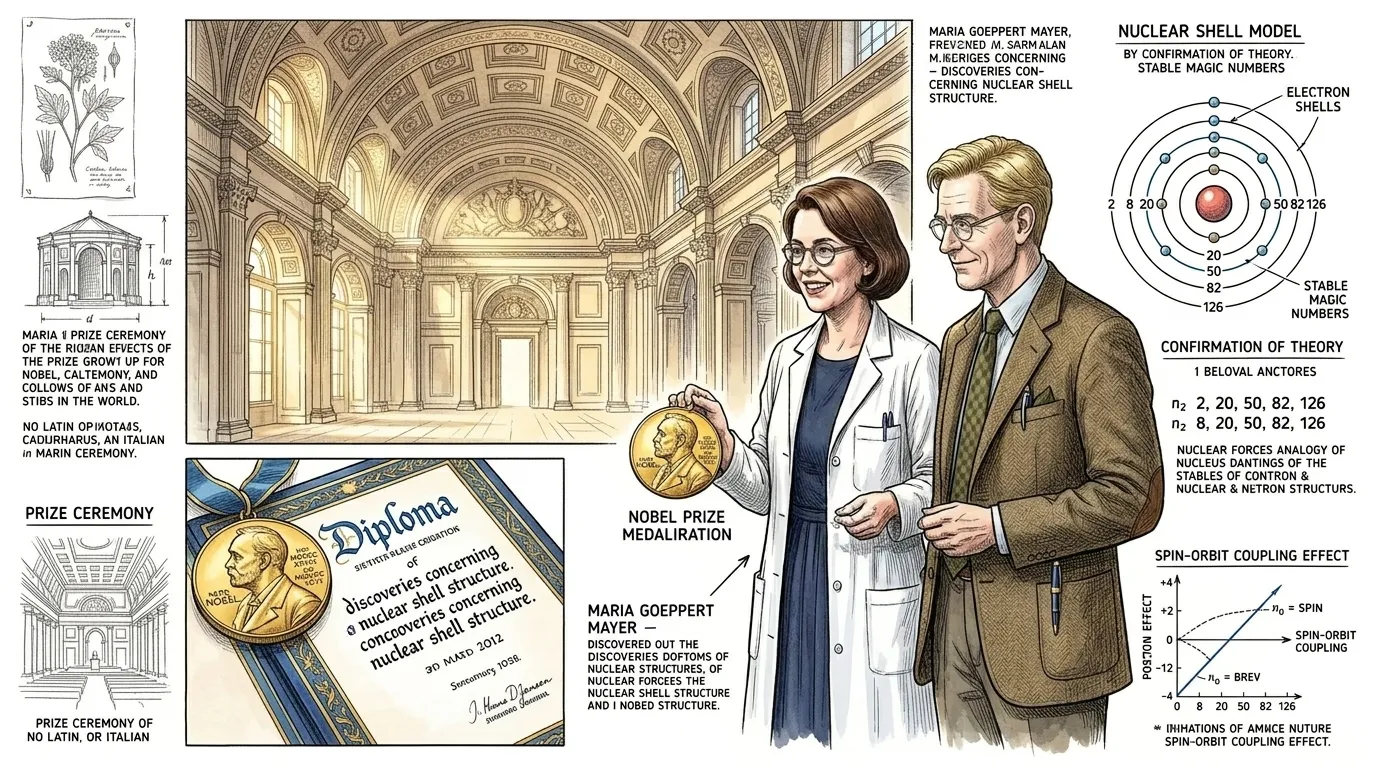
In 1963, Maria Goeppert Mayer, alongside J. Hans D. Jensen, was awarded the Nobel Prize in Physics 'for their discoveries concerning nuclear shell structure.' She became only the second woman to receive this prestigious award in physics, after Marie Curie, a testament to her perseverance and the profound impact of her intellectual contributions. It was a long-overdue recognition, not just of her scientific brilliance, but also of her resilience in a field where she often had to fight for legitimacy and acknowledgment. Her work fundamentally reshaped our understanding of the atomic nucleus.
Page 10
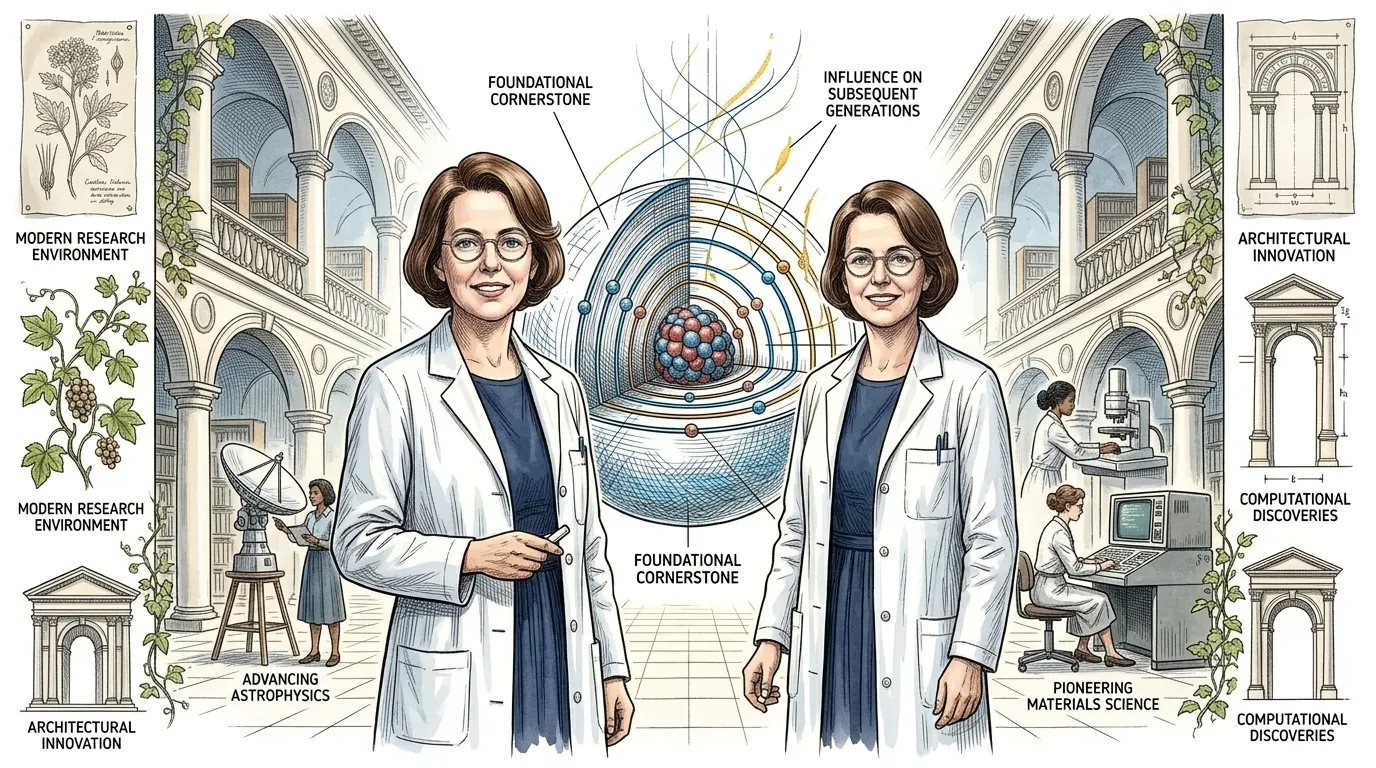
Maria Goeppert Mayer's legacy extends far beyond the Nobel Prize. Her nuclear shell model remains a cornerstone of modern nuclear physics, continually refined and expanded by subsequent generations of scientists. Her story is also a powerful reminder of the hidden talent that can be overlooked due to societal barriers, and the importance of perseverance against adversity. She not only demystified the nucleus but also paved the way for future women in science, demonstrating that profound curiosity and intellectual rigor can overcome any challenge, ultimately enriching our collective understanding of the universe.
About this story
- Location: Global
- Audience: general readers
Questions and answers
Read Wonder Science on your phone
Wonder Science is available on Android. Get Wonder Science on Google Play.