Maria Sibylla Merian
Maria Sibylla Merian — an illustrated science story, set in Global. 10 illustrated pages, free to read on Wonder Science.
Page 1
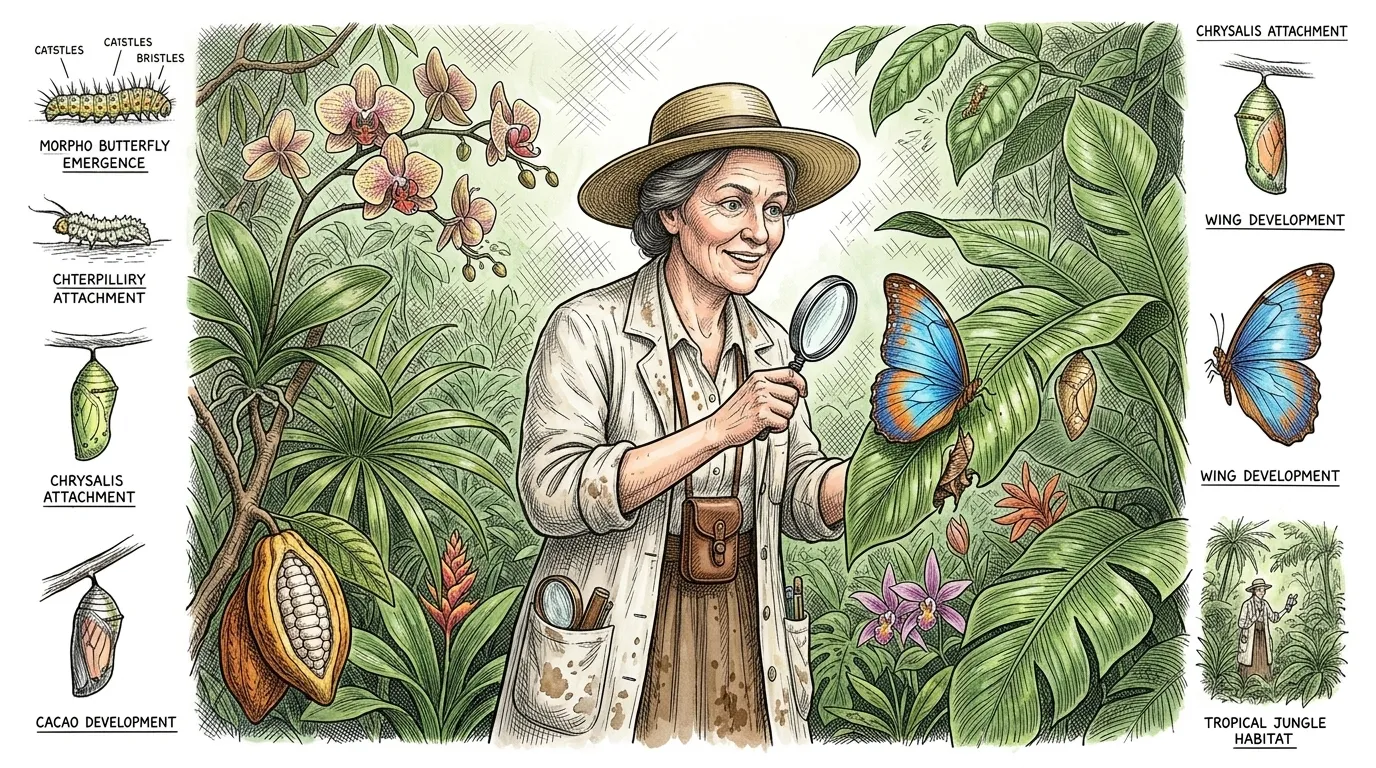
In the sweltering heat and dense humidity of 17th-century Suriname, a remarkable journey unfolded. Maria Sibylla Merian, a woman past fifty, defied every societal expectation, embarking on an unprecedented scientific expedition to document the natural world. She was not just an artist; she was an intrepid naturalist, determined to unveil the secrets of insect life cycles previously shrouded in myth and speculation.
Page 2
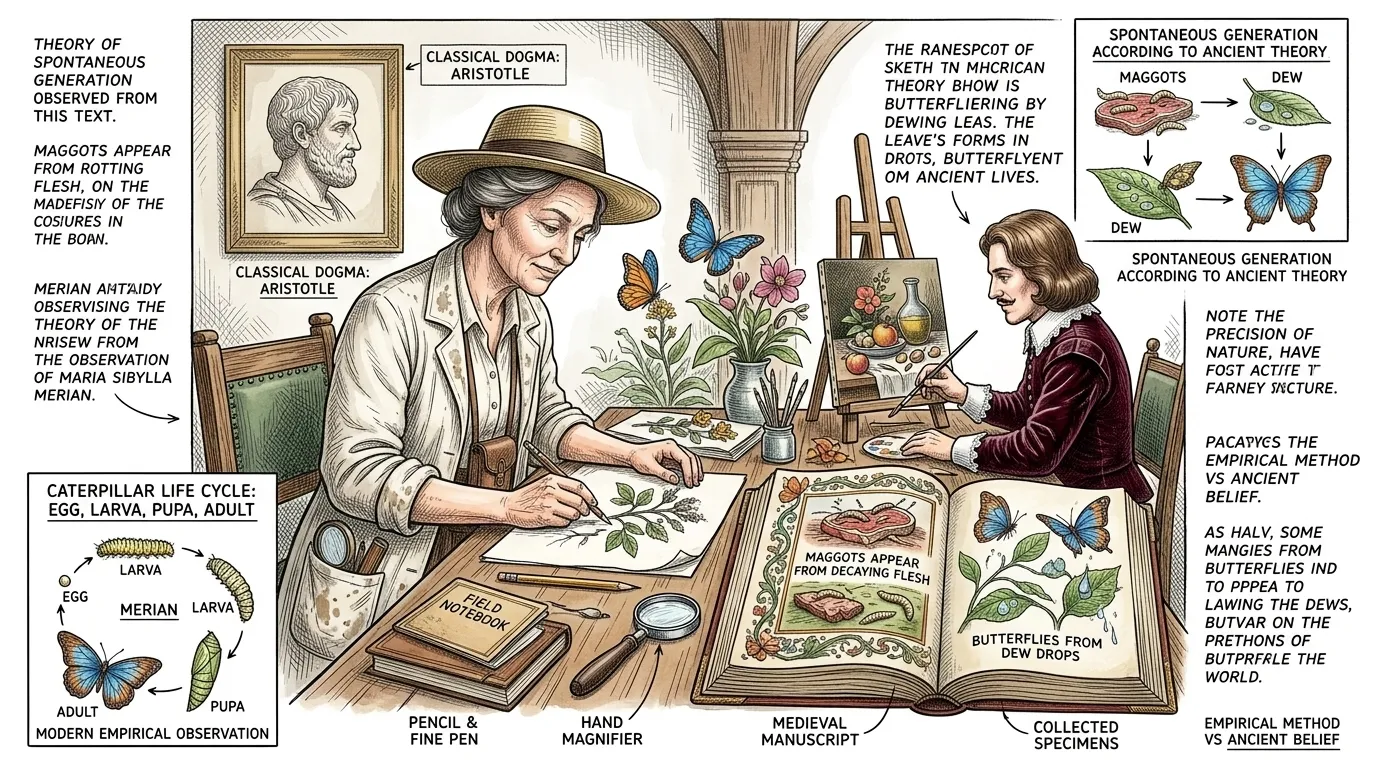
Before Merian's meticulous observations, the prevailing scientific dogma, rooted in Aristotelian philosophy, held that insects spontaneously generated from decaying matter. Maggots from rotting meat, butterflies from morning dew—these were not seen as complex life cycles, but rather as sudden appearances from non-living sources. This belief, unchallenged for centuries, represented a profound gap in humanity's understanding of biology.
Page 3
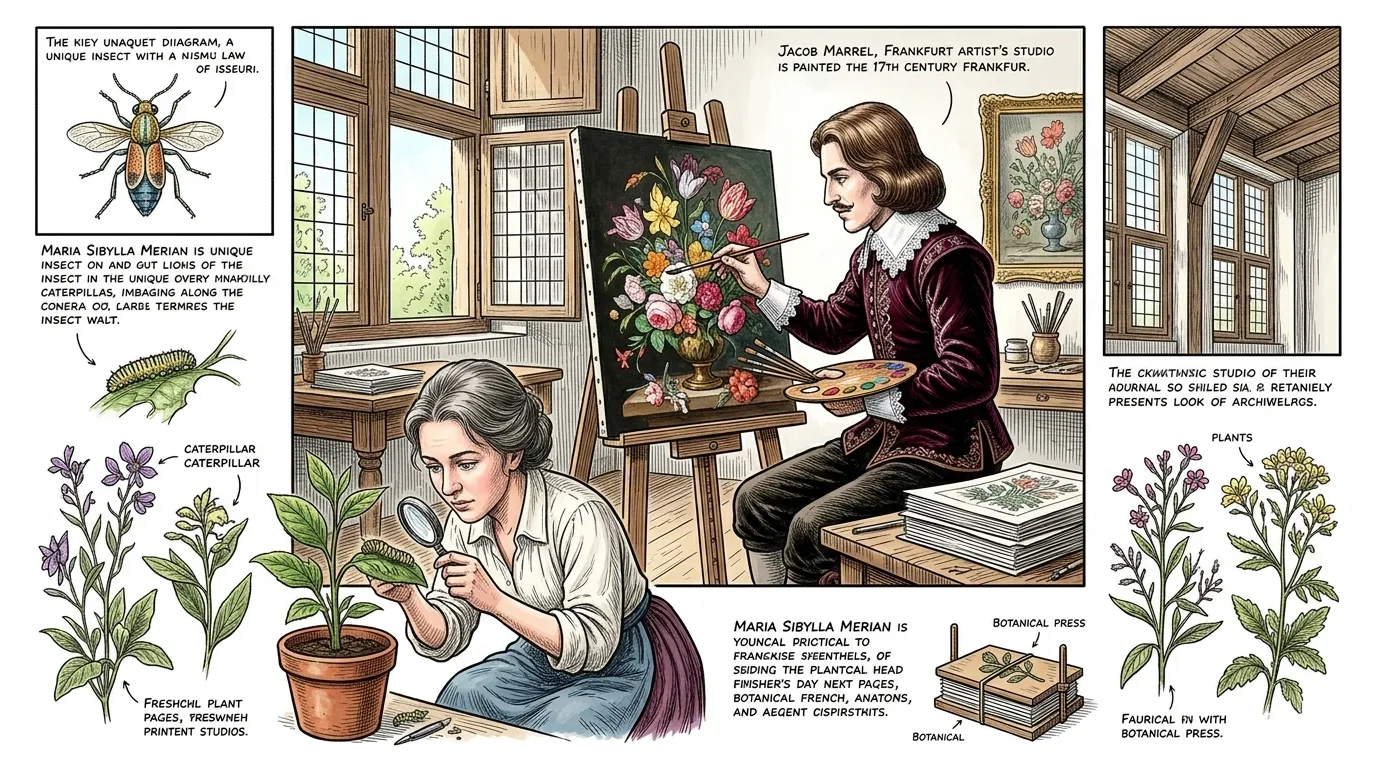
Born in Frankfurt in 1647, Maria Sibylla Merian inherited a unique legacy. Her stepfather, Jacob Marrel, was a still-life painter, and her family operated a prominent publishing house. From a young age, Merian's artistic talent was evident, but her curiosity extended beyond pigments and paper. She spent countless hours observing caterpillars, noting their transformation with an intense focus that was rare for her era, blurring the lines between art and nascent scientific inquiry.
Page 4
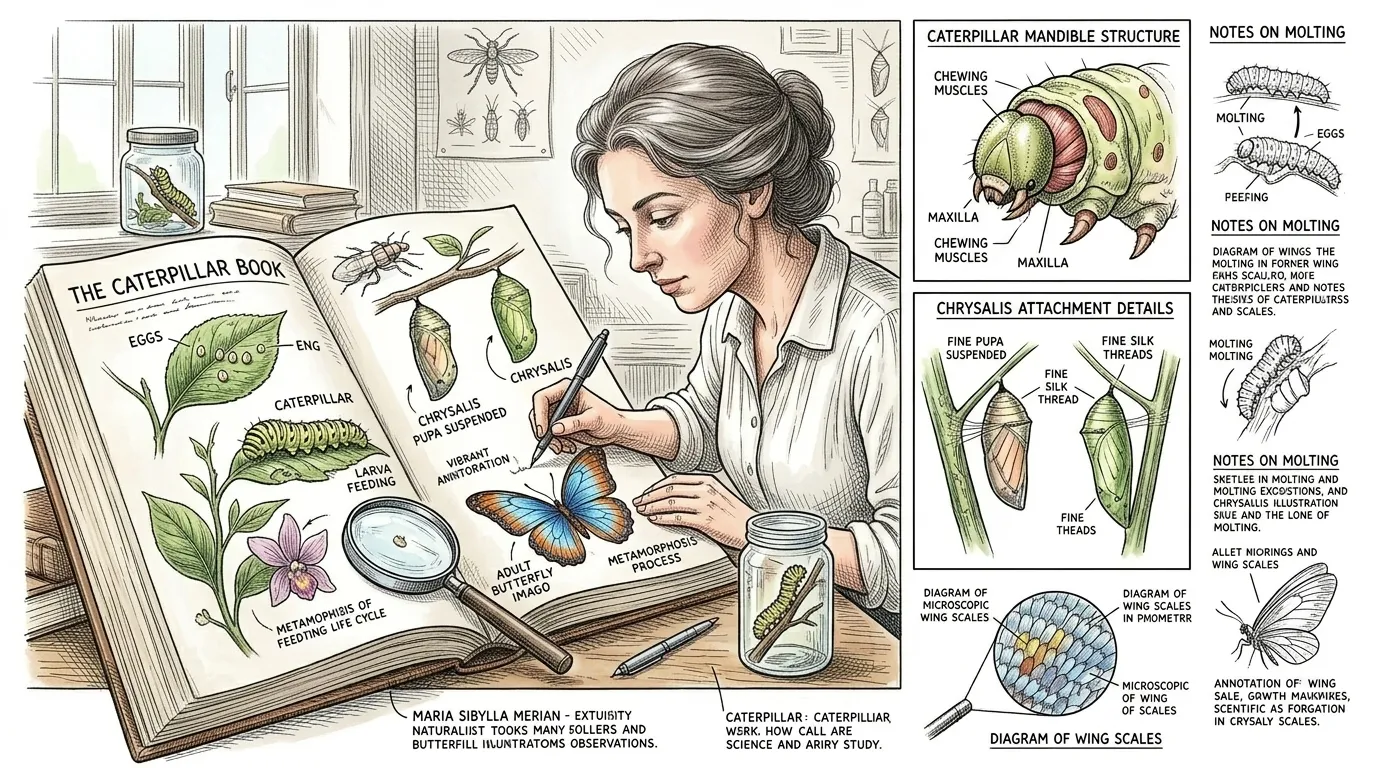
Merian's early investigations, conducted in Europe, meticulously tracked the life cycles of butterflies, moths, and other insects. Through painstaking observation, she documented the stages of metamorphosis—from egg to larva (caterpillar), pupa (chrysalis), and finally, the winged adult. Her work, compiled in her first major publication, 'The Caterpillar Book,' was not merely beautiful art; it was groundbreaking empirical evidence challenging centuries of established dogma about insect generation.
Page 5
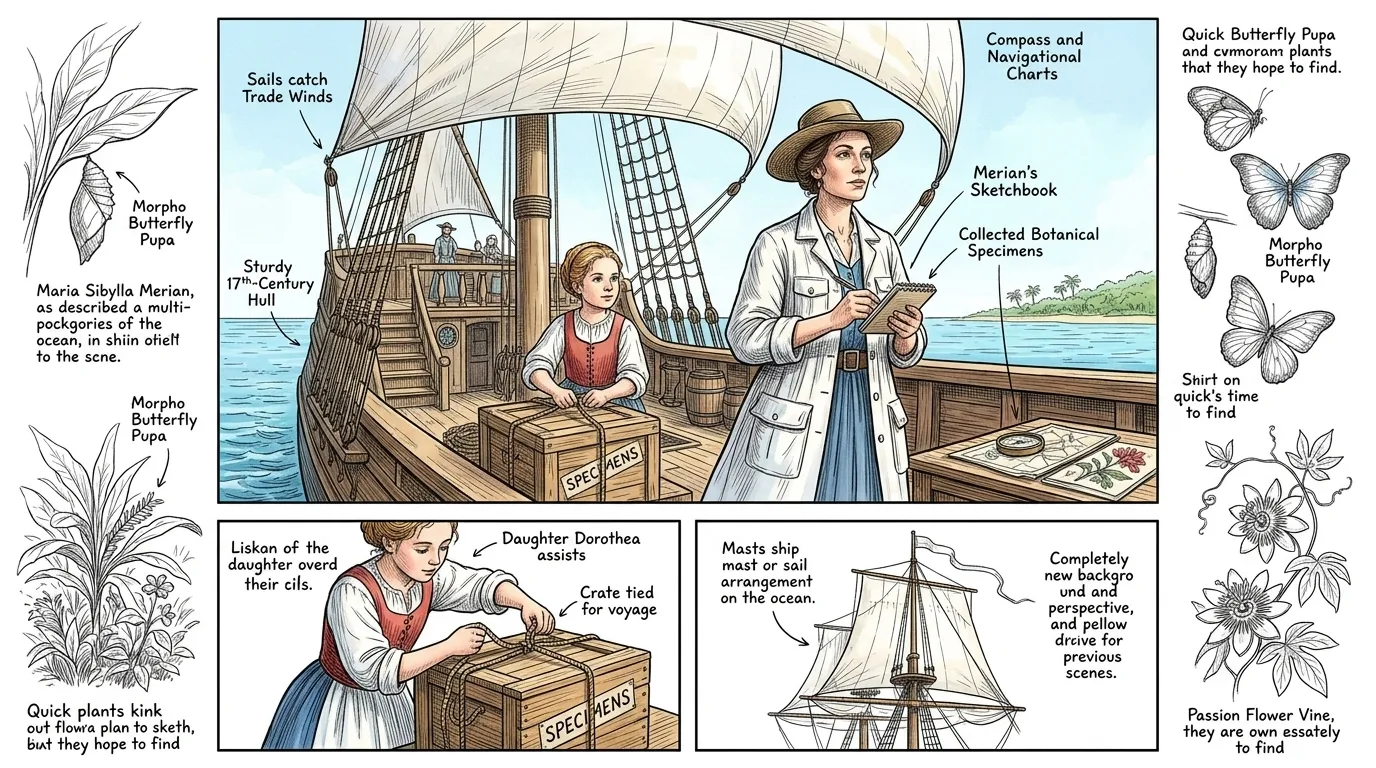
At 52, a time when most women settled into quiet domesticity, Merian made an astonishing decision: she would travel to the Dutch colony of Suriname, South America, accompanied only by her younger daughter. This was an era when scientific expeditions were almost exclusively the domain of wealthy men, and never undertaken by a woman of her age. It was a perilous, expensive, and socially transgressive undertaking driven by an insatiable scientific curiosity.
Page 6
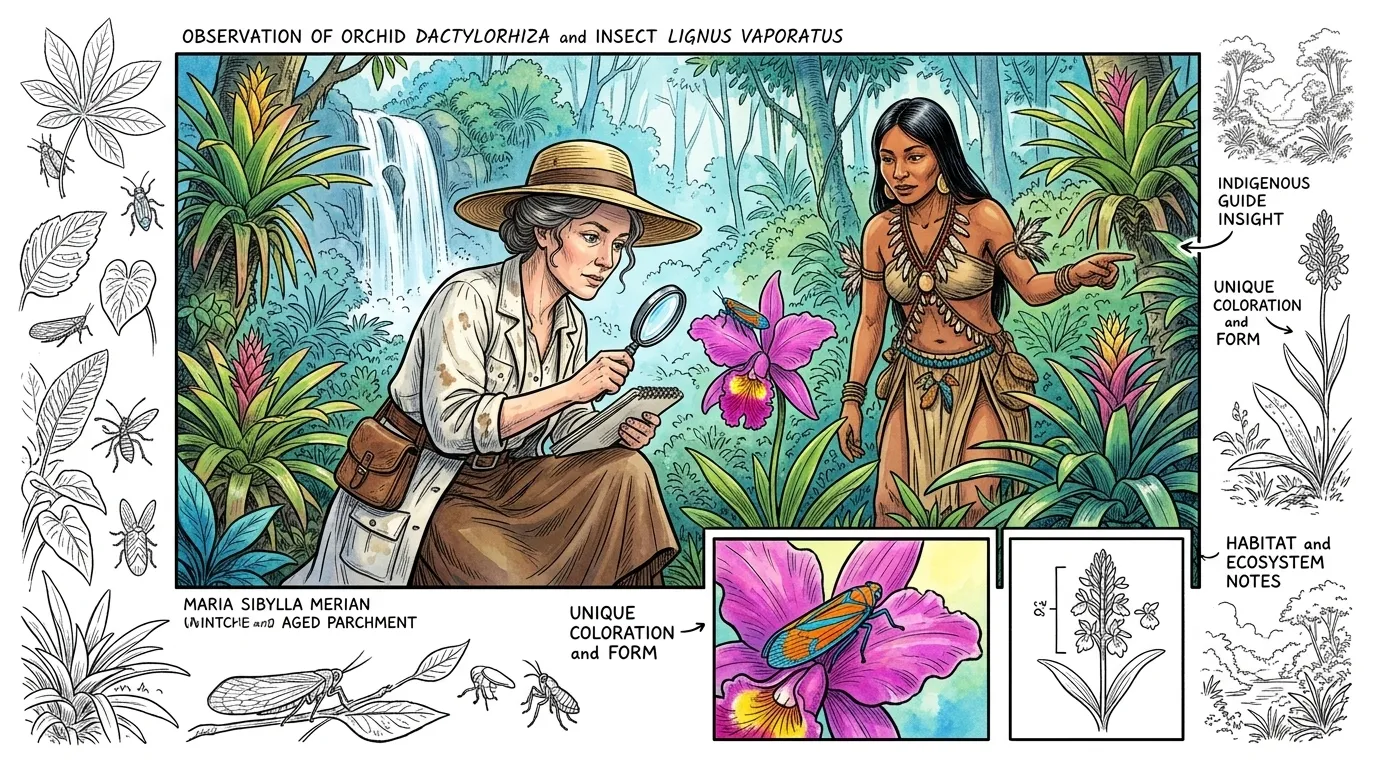
For two years, Merian immersed herself in the Surinamese jungle. She lived among indigenous and enslaved communities, learning from their intimate knowledge of the local flora and fauna. She didn't merely collect dead specimens; she observed, sketched, and documented insects alive, in their natural habitats, interacting with their host plants. This holistic, ecological approach was revolutionary, offering an unprecedented view into tropical biodiversity.
Page 7
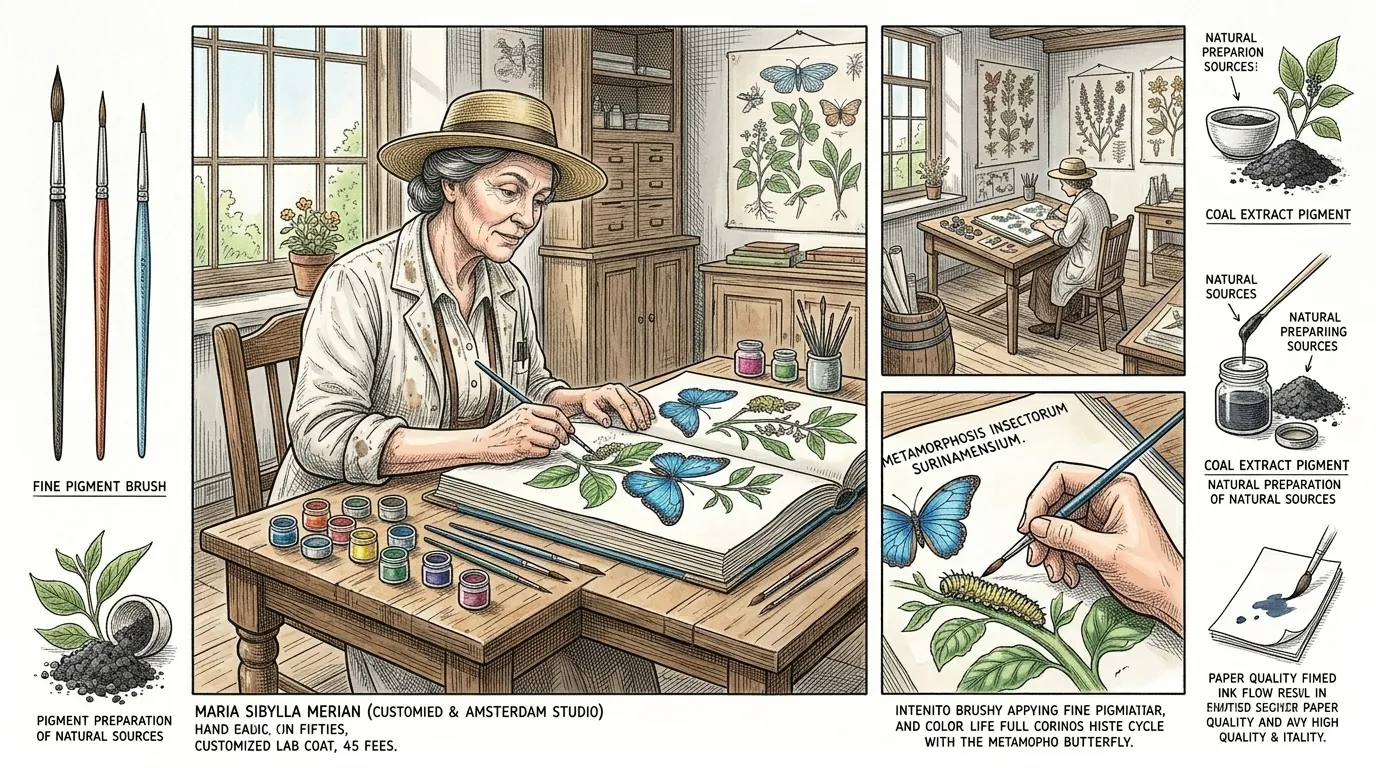
Upon her return to Amsterdam, Merian dedicated herself to producing her magnum opus: 'Metamorphosis Insectorum Surinamensium.' Published in 1705, it was a lavish, hand-colored folio detailing the life cycles of over 60 species of Surinamese insects, each depicted with breathtaking artistic skill and unparalleled scientific accuracy. Her plates were not just illustrations; they were complete ecological narratives, showing insects, their larvae, pupae, and the plants they fed upon, all in dynamic compositions.
Page 8
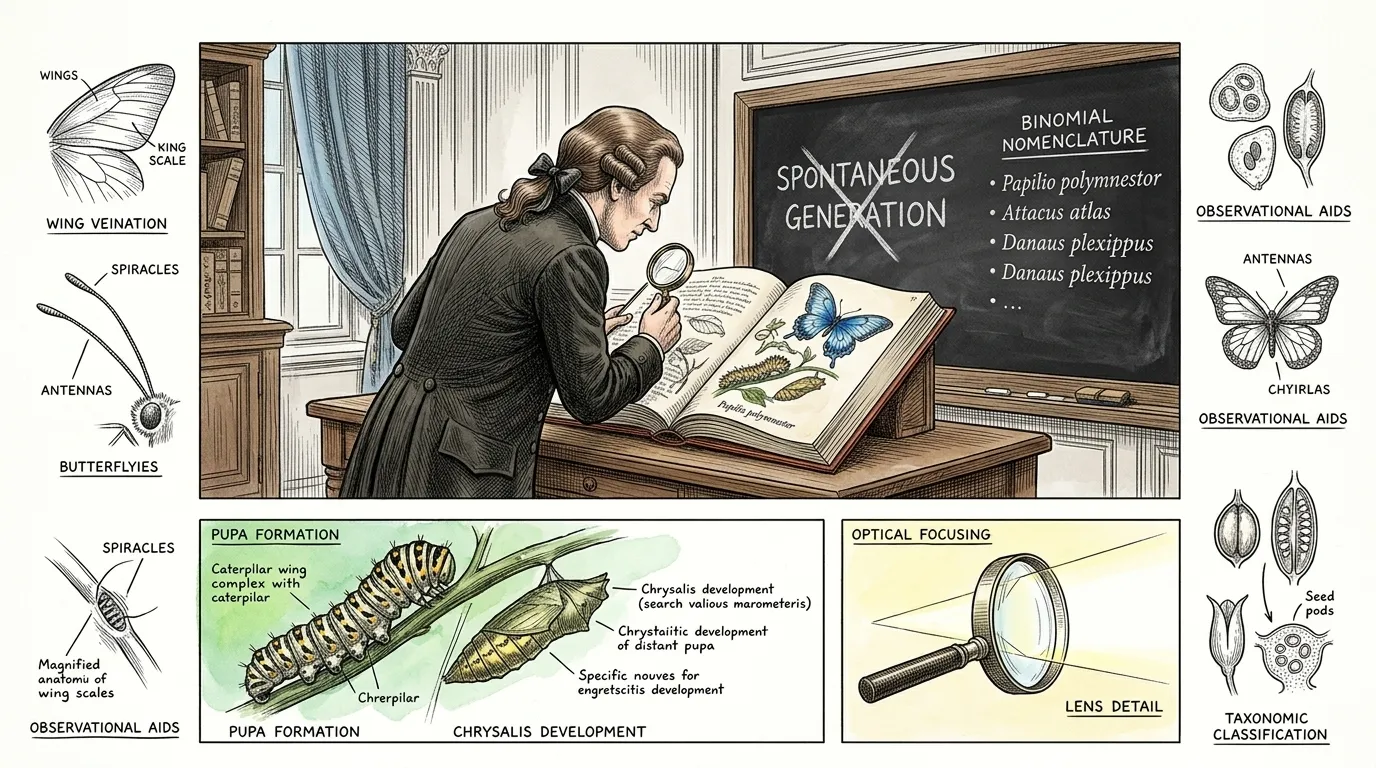
Merian's 'Metamorphosis Insectorum Surinamensium' had an immediate and profound impact. It shattered the theory of spontaneous generation for insects, providing irrefutable visual evidence of their complex life cycles. Her work became a foundational text for entomologists like Carl Linnaeus, who later developed the system of binomial nomenclature. Beyond science, her artistic style set a new standard for natural history illustration, influencing generations of artists and naturalists to integrate ecological context into their depictions.
Page 9
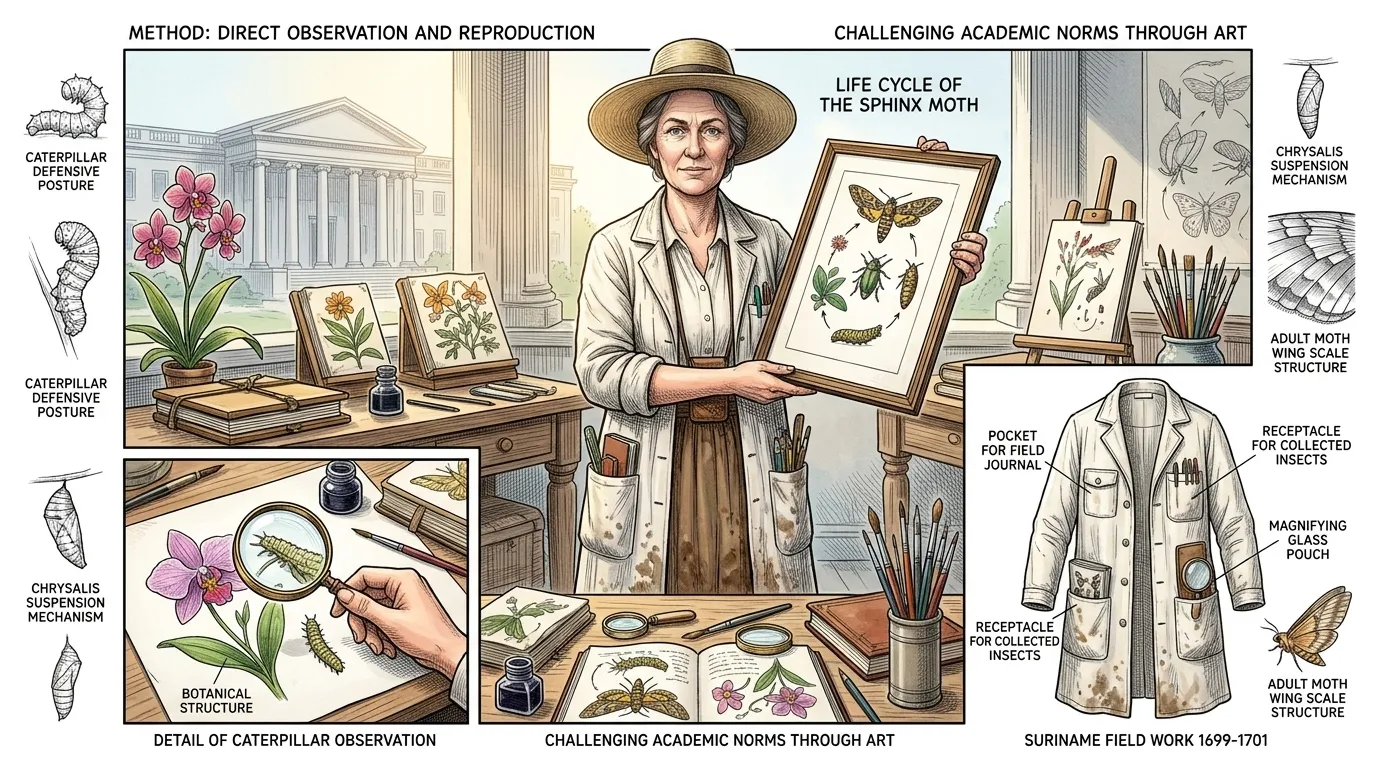
Maria Sibylla Merian's legacy extended beyond her scientific contributions. As an independently funded female scientist and artist, she challenged the restrictive gender roles of the 17th and 18th centuries. Her refusal to conform to academic institutions or rely on male patronage made her an extraordinary pioneer. Her work proved that meticulous observation, combined with artistic talent, could advance scientific understanding, leaving an indelible mark on how we study the natural world.
Page 10
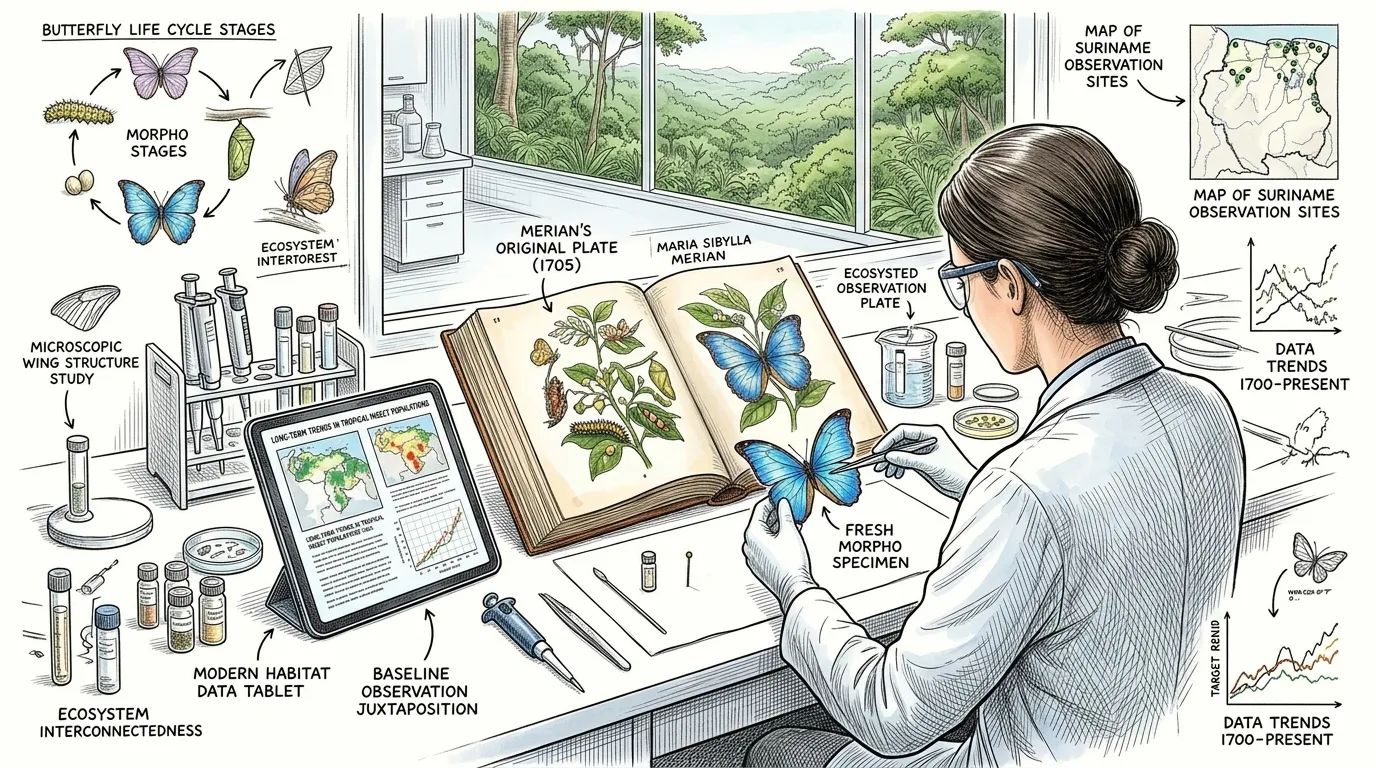
Today, Merian's work continues to inspire. Her detailed ecological illustrations are not just historical artifacts; they are invaluable baselines for biodiversity studies, allowing scientists to track changes in insect populations and plant interactions over centuries. In an age of accelerating habitat loss, her pioneering approach—observing life in its intricate context—serves as a powerful reminder of the delicate interconnectedness of ecosystems and the urgent need for their conservation.
About this story
- Location: Global
- Audience: general readers
Questions and answers
Read Wonder Science on your phone
Wonder Science is available on Android. Get Wonder Science on Google Play.