Lev Landau
Lev Landau — an illustrated science story, set in Global. 10 illustrated pages, free to read on Wonder Science.
Page 1
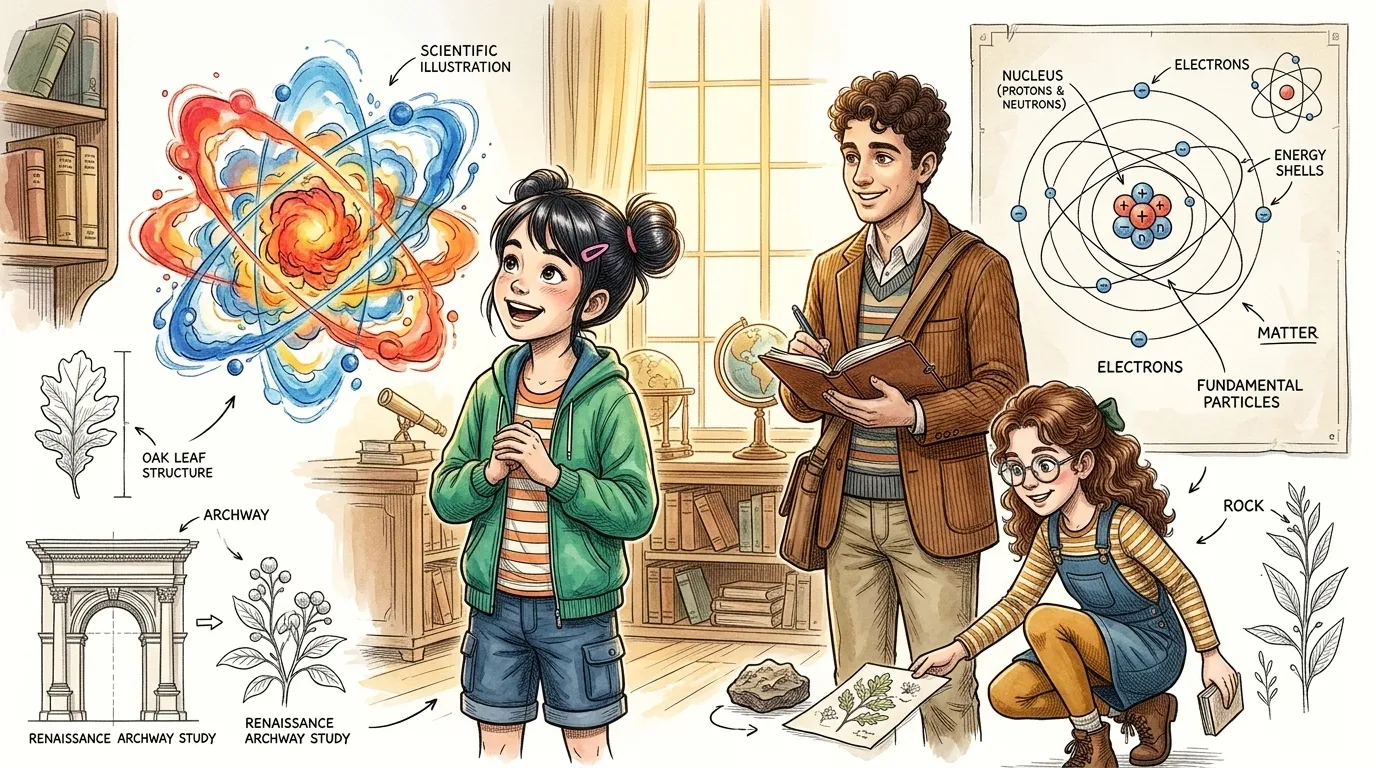
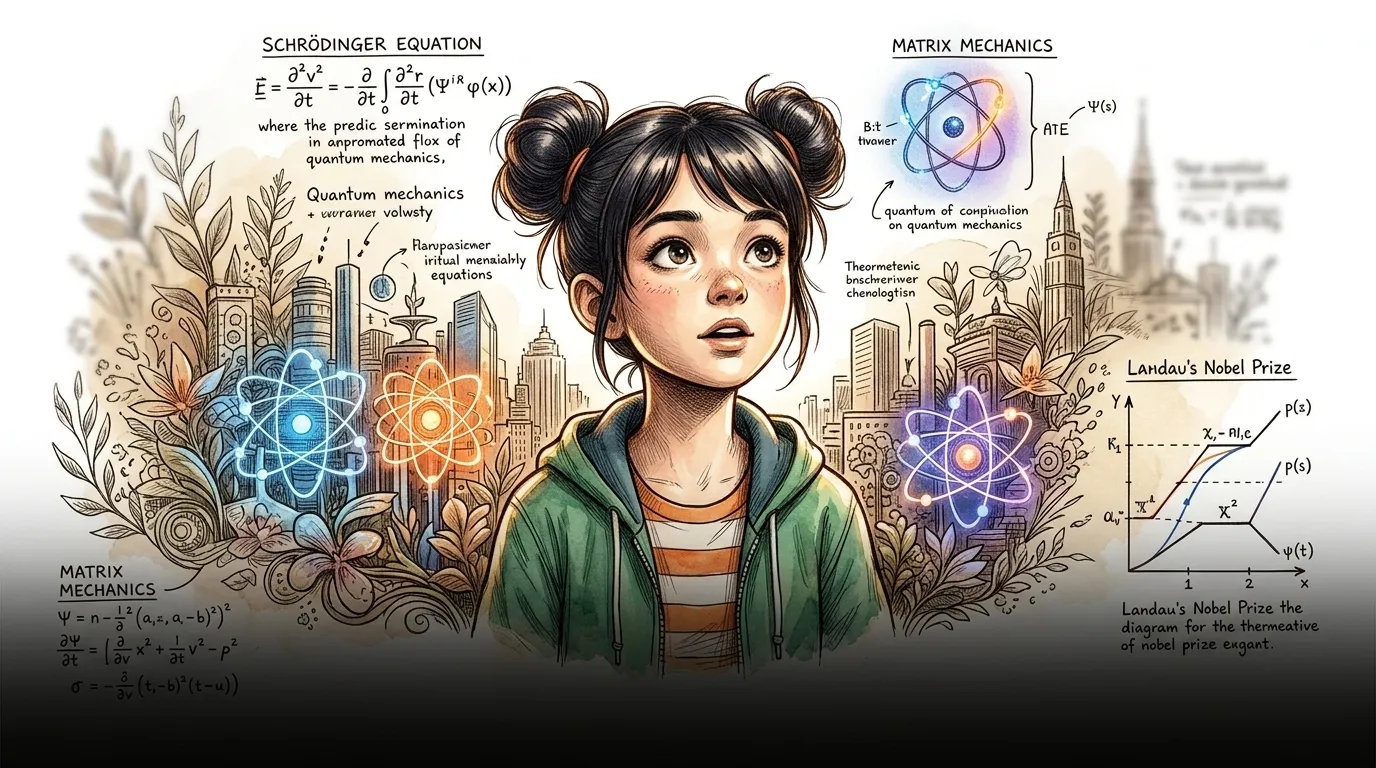
The atomic bomb. A chilling symbol of humanity's scientific prowess. But its creation spurred research into the most fundamental aspects of matter. Lev Landau, a Soviet physicist, became a key figure in understanding the strange world of superfluidity, work that would ultimately earn him the Nobel Prize.\n\n Fact: Dramatic opening shot: atomic cloud; superimpose child observer; hint at fundamental research.
Page 2
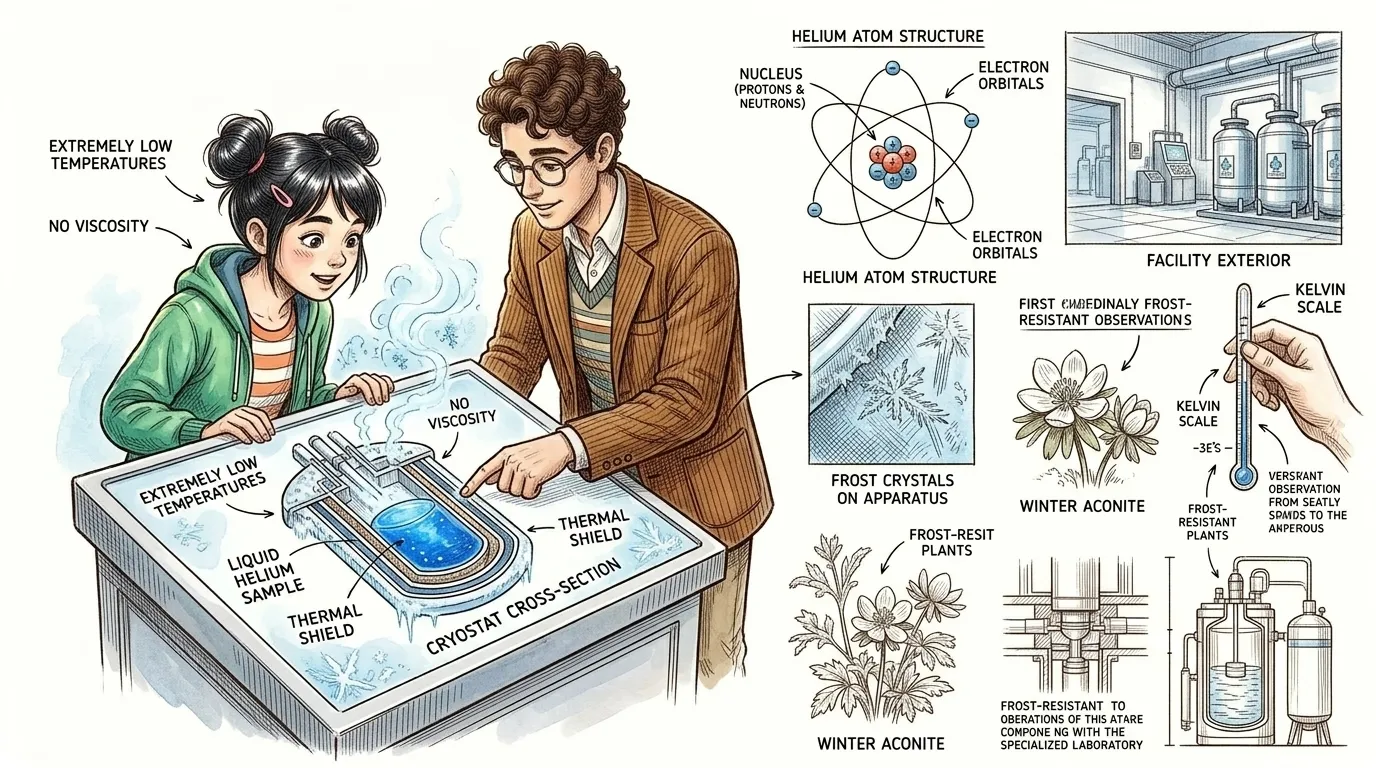
Landau wasn't always focused on atomic matters. His genius spanned many fields. But it was his work on superfluidity – the bizarre behavior of liquid helium at extremely low temperatures – that truly set him apart. He sought to explain this phenomenon, where the liquid flows with absolutely no viscosity.\n\n Fact: Cryostat diagram; liquid helium sample; visual hint at extreme cold.
Page 3
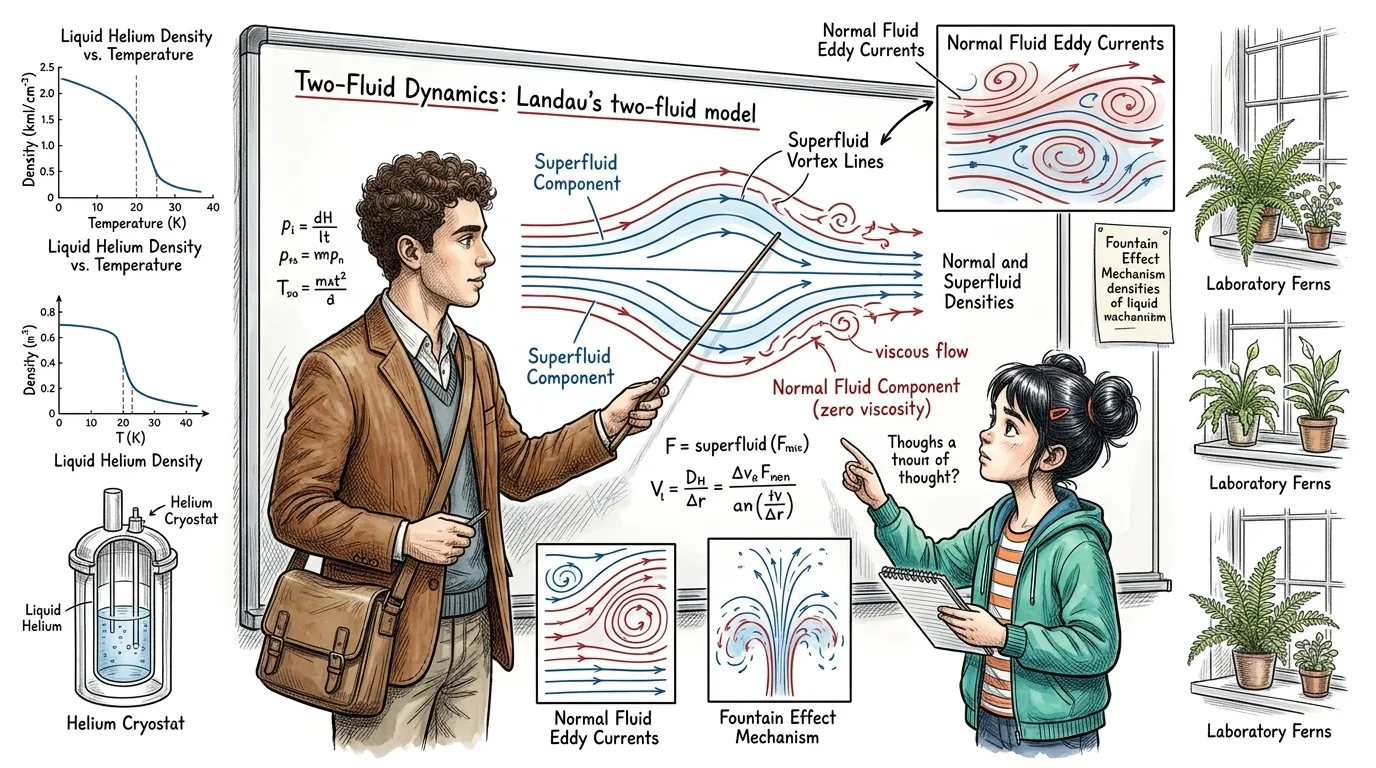
His explanation? A two-fluid model. Landau proposed that at these super-low temperatures, liquid helium behaves as if it were made of two components: a 'normal' fluid and a 'superfluid.' The superfluid component flows without friction, while the normal component retains some viscosity. It was a radical idea.\n\n Fact: Whiteboard with equations; two-fluid diagram (normal vs. superfluid); mentor pointing.
Page 4
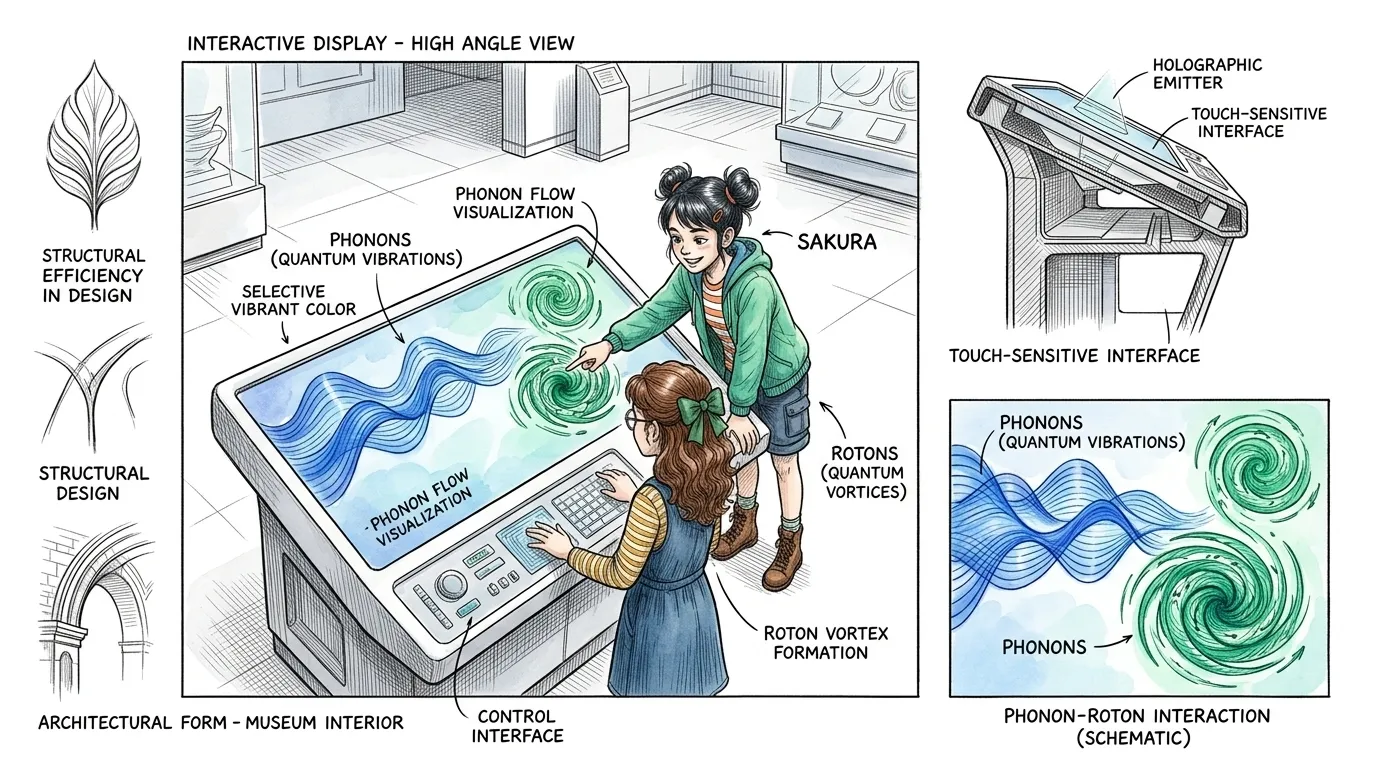
But Landau didn't stop there. He further theorized the existence of 'elementary excitations' within the superfluid: phonons (sound waves) and rotons (quantum vortices). These excitations, he argued, were key to understanding the liquid's behavior at different temperatures.\n\n Fact: Museum interactive display; phonon and roton visualization; children observing.
Page 5
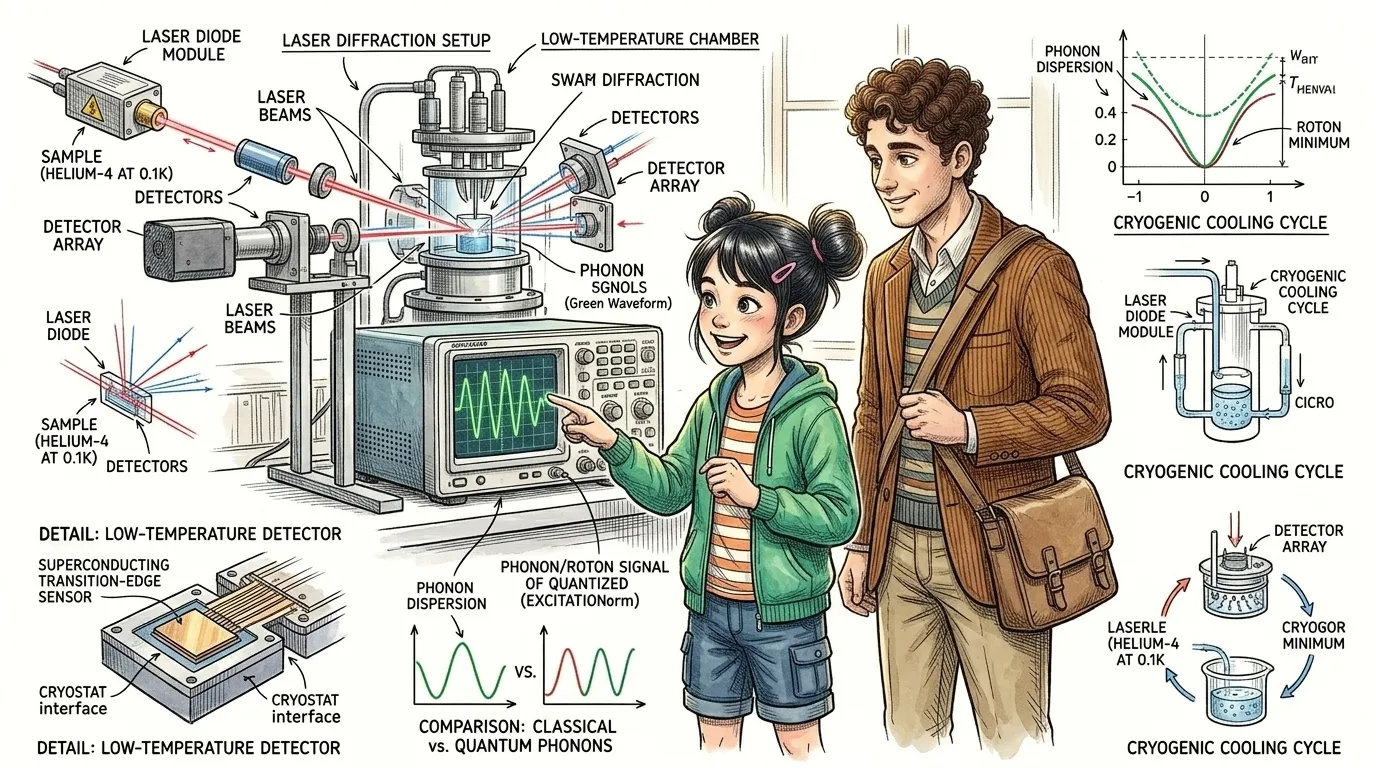
Landau's theories weren't just mathematical musings. They were testable predictions. Experiments later confirmed the existence of phonons and rotons, providing strong evidence for his two-fluid model. These experiments demonstrated the quantized nature of energy within the superfluid.\n\n Fact: Low-temperature lab; laser diffraction experiment; oscilloscope showing phonon/roton signal.
Page 6
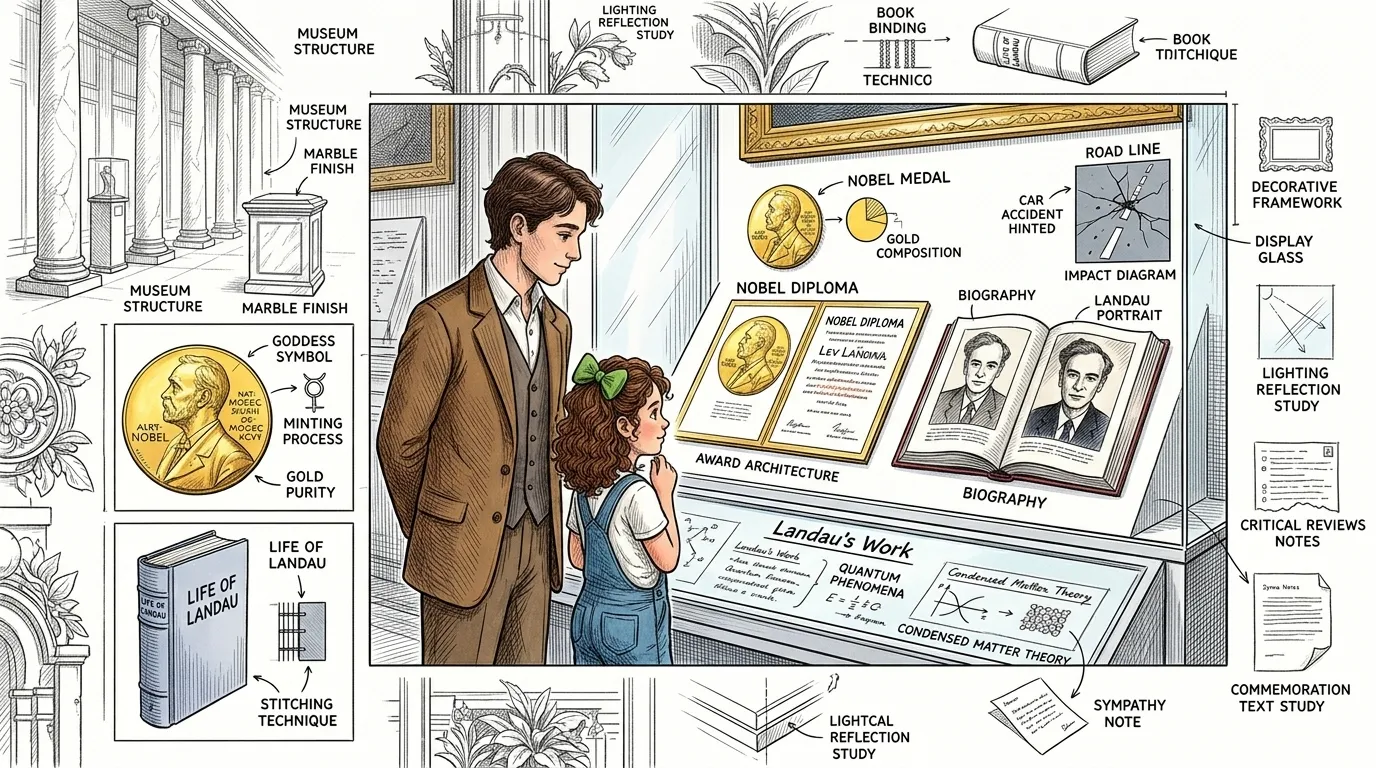
In 1962, Landau received the Nobel Prize in Physics for his pioneering work on superfluidity. However, tragedy struck that same year. A severe car accident left him in a coma for months. Although he survived, his scientific abilities were severely impaired.\n\n Fact: Nobel Prize ceremony (B&W photo); biographical book; subtle hint at car accident.
Page 7
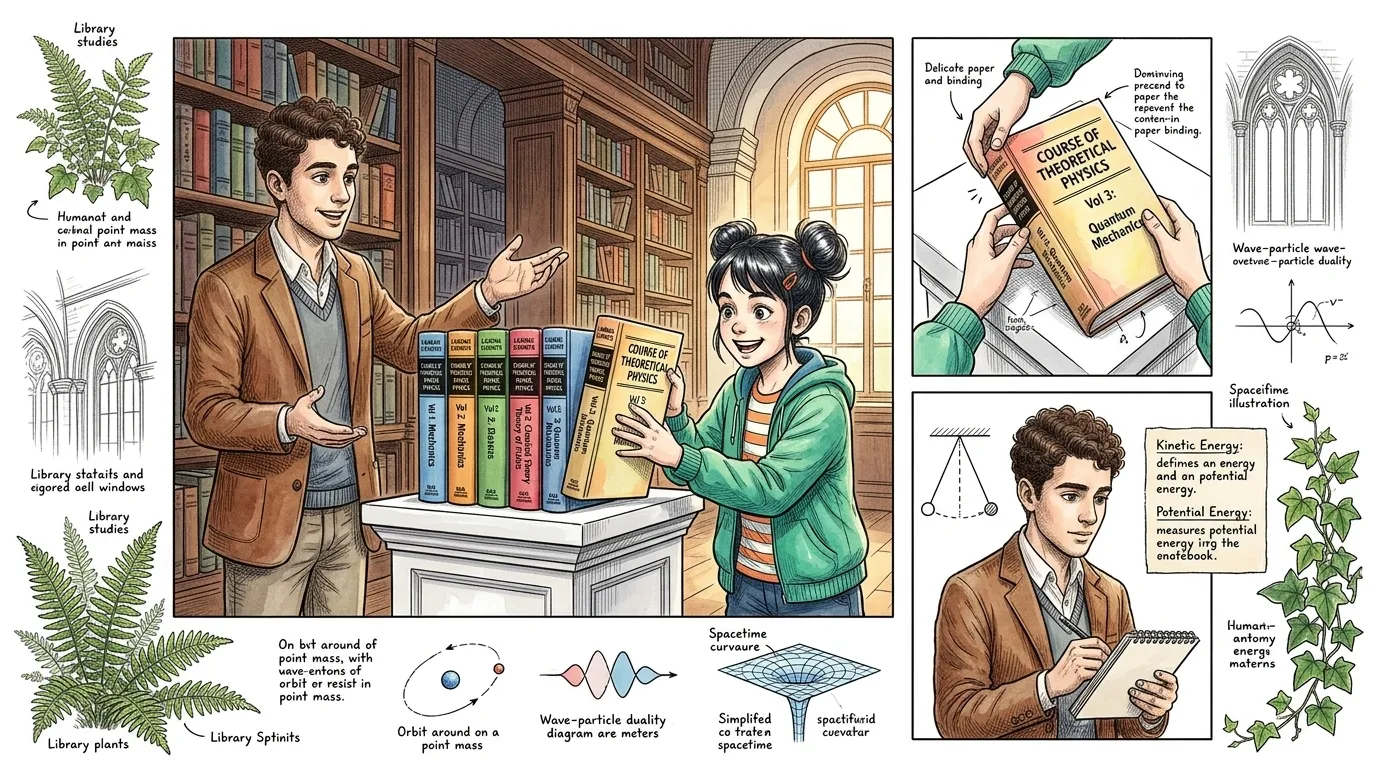
Landau's contributions extended far beyond superfluidity. He made significant advances in many areas of theoretical physics, including condensed matter physics, quantum electrodynamics, and plasma physics. His 'Course of Theoretical Physics,' co-authored with Evgeny Lifshitz, remains a cornerstone of physics education.\n\n Fact: Physics library; prominent display of Landau & Lifshitz textbooks; mentor recommending the book.
Page 8
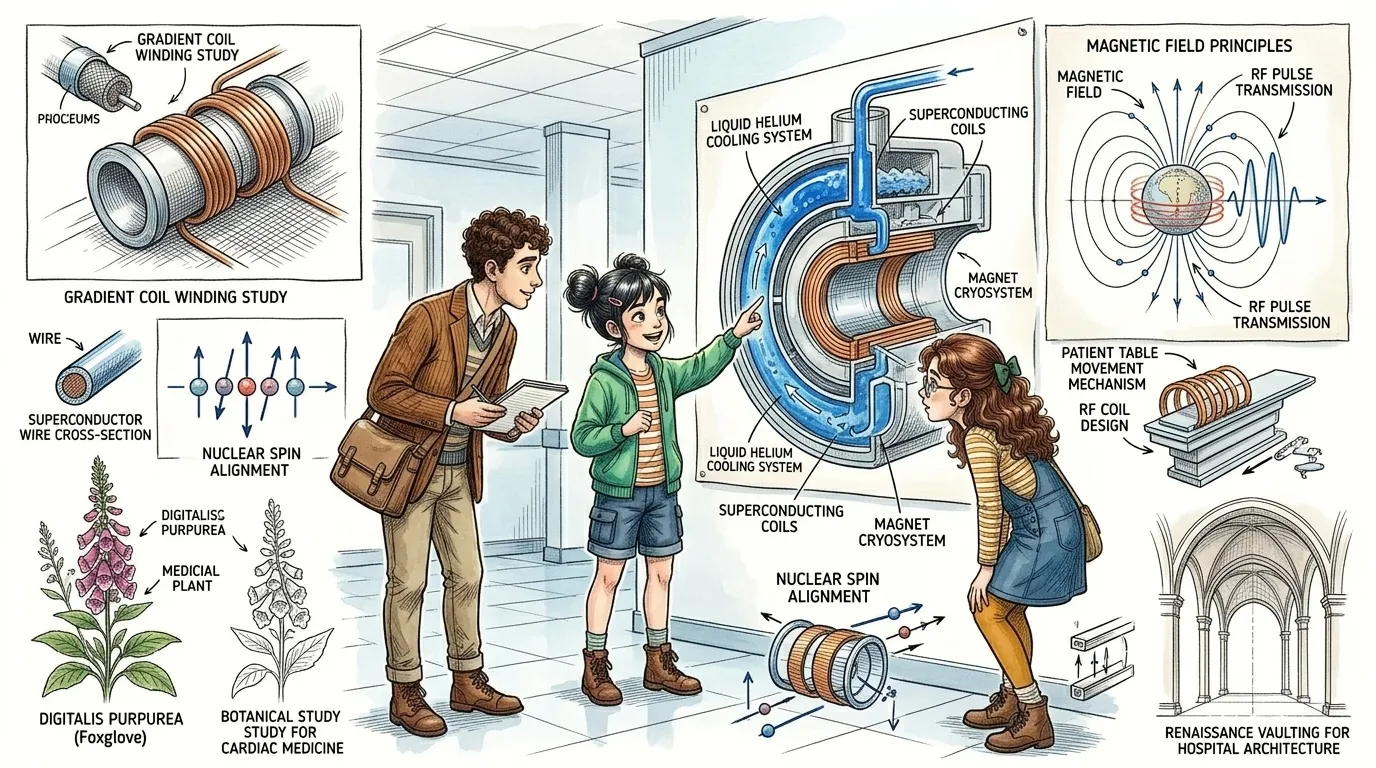
The strange properties of superfluids aren't just curiosities. They have practical applications, particularly in the development of highly sensitive detectors and precision measurement devices. Superfluid helium is used in cooling superconducting magnets in MRI machines.\n\n Fact: Hospital with MRI machine; cutaway view showing liquid helium cooling; superimposed MRI principle diagram.
Page 9
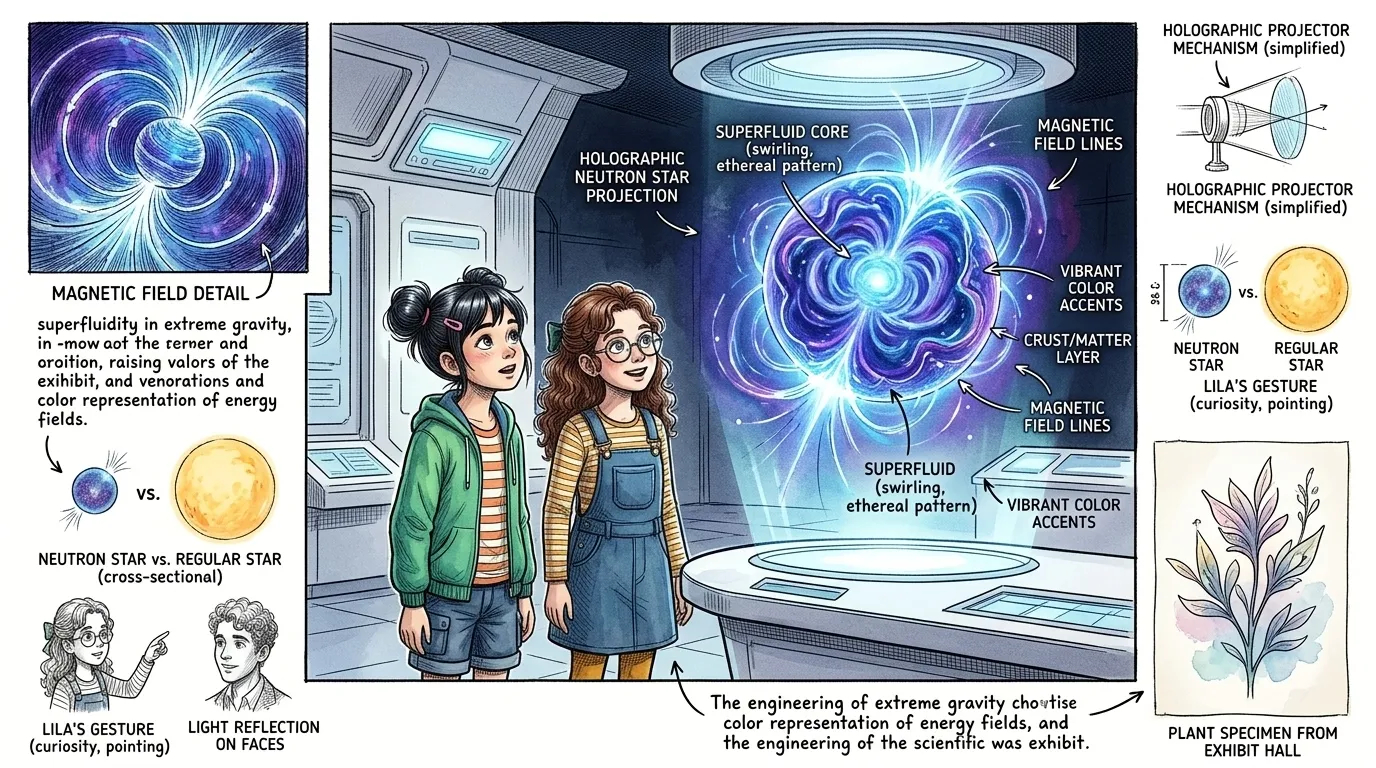
Physicists now believe that superfluidity might exist in other systems, including neutron stars. The extreme densities and temperatures within these celestial objects could create conditions where nuclear matter behaves like a superfluid. This could influence the behavior and evolution of neutron stars.\n\n Fact: Neutron star rendering; cross-sectional view showing superfluid core; holographic display with observer.
Page 10
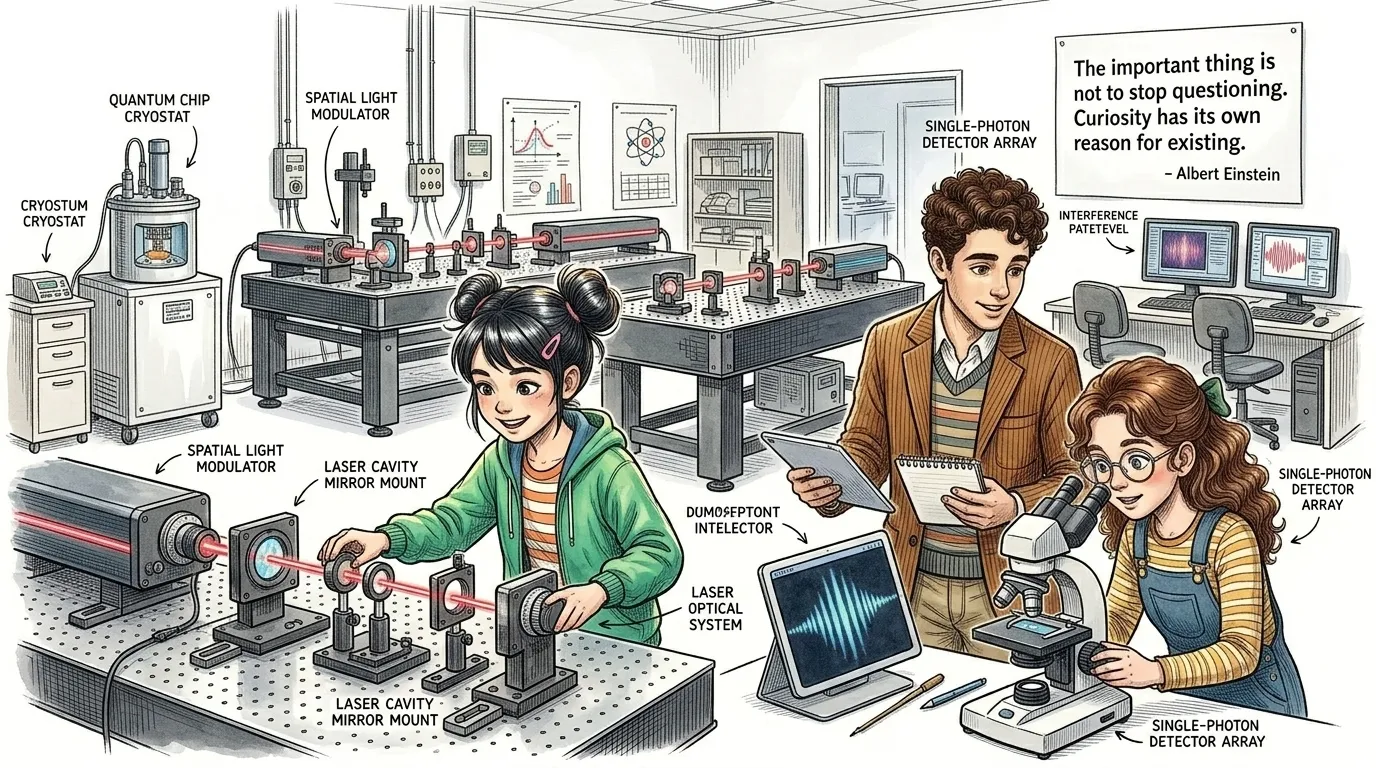
Landau's work opened a window into the strange and fascinating world of quantum matter. While many of his ideas have been confirmed, there are still mysteries to unravel. As Albert Einstein once said, 'The important thing is not to stop questioning. Curiosity has its own reason for existing.' And the quest to understand the universe continues.\n\n Fact: Modern physics lab (wide view); scientists working; Einstein quote poster; hopeful closing image.
About this story
- Location: Global
- Audience: kids (ages 6–12)
Read Wonder Science on your phone
Wonder Science is available on Android. Get Wonder Science on Google Play.