John Glenn
John Glenn — an illustrated science story, set in Global. 10 illustrated pages, free to read on Wonder Science.
Page 1
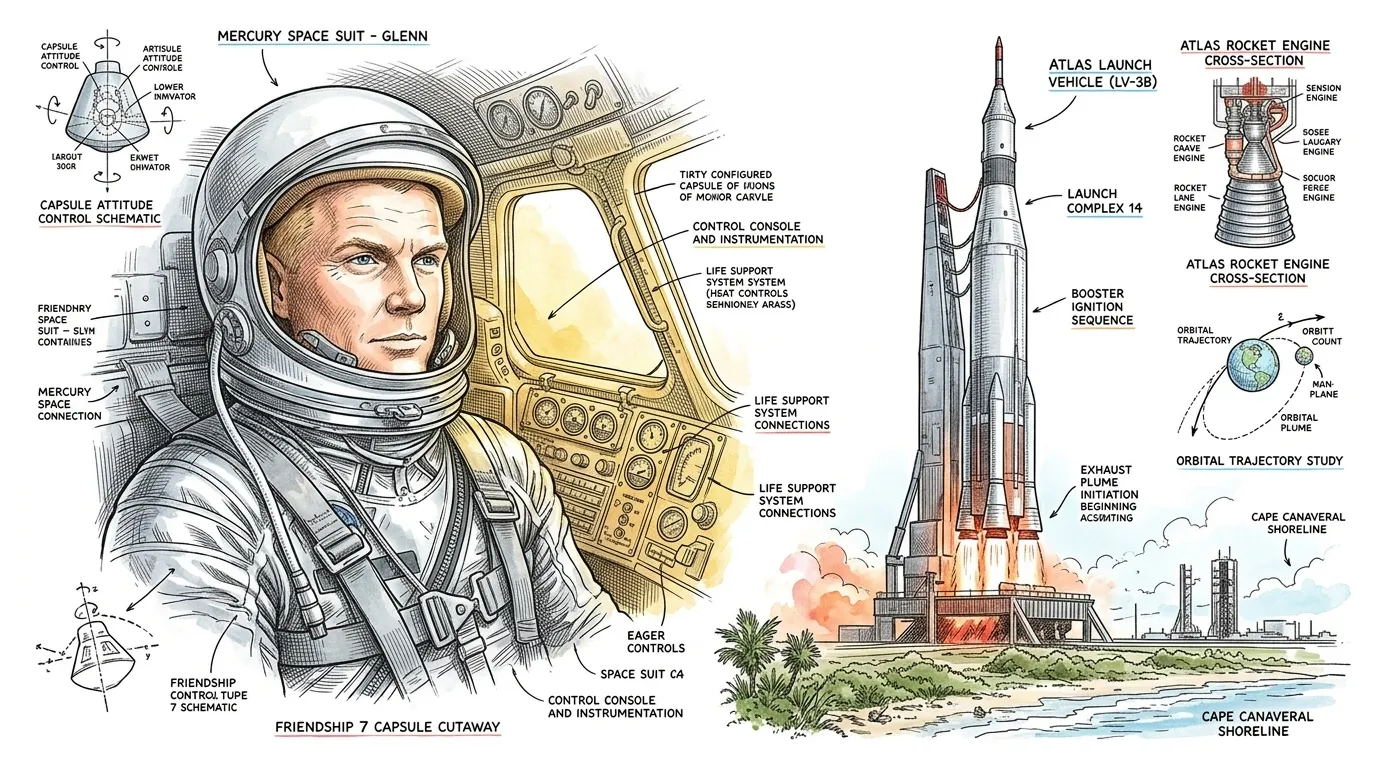
Atop a colossal Atlas rocket, poised on Launch Complex 14 at Cape Canaveral, sat a lone figure on February 20, 1962. This was John Glenn, Project Mercury astronaut, strapped into his Friendship 7 capsule, about to undertake a mission that would redefine America's place in the nascent Space Age. The roar of the engines signaled not just a launch, but a pivotal moment in human ambition, propelling him into history as the first American to orbit Earth.
"As the powerful Atlas engines ignited, a voice from Mission Control crackled, "Godspeed, John Glenn!" Glenn, maintaining composure, responded, "Roger, the clock is running. We're on our way.""
Page 2
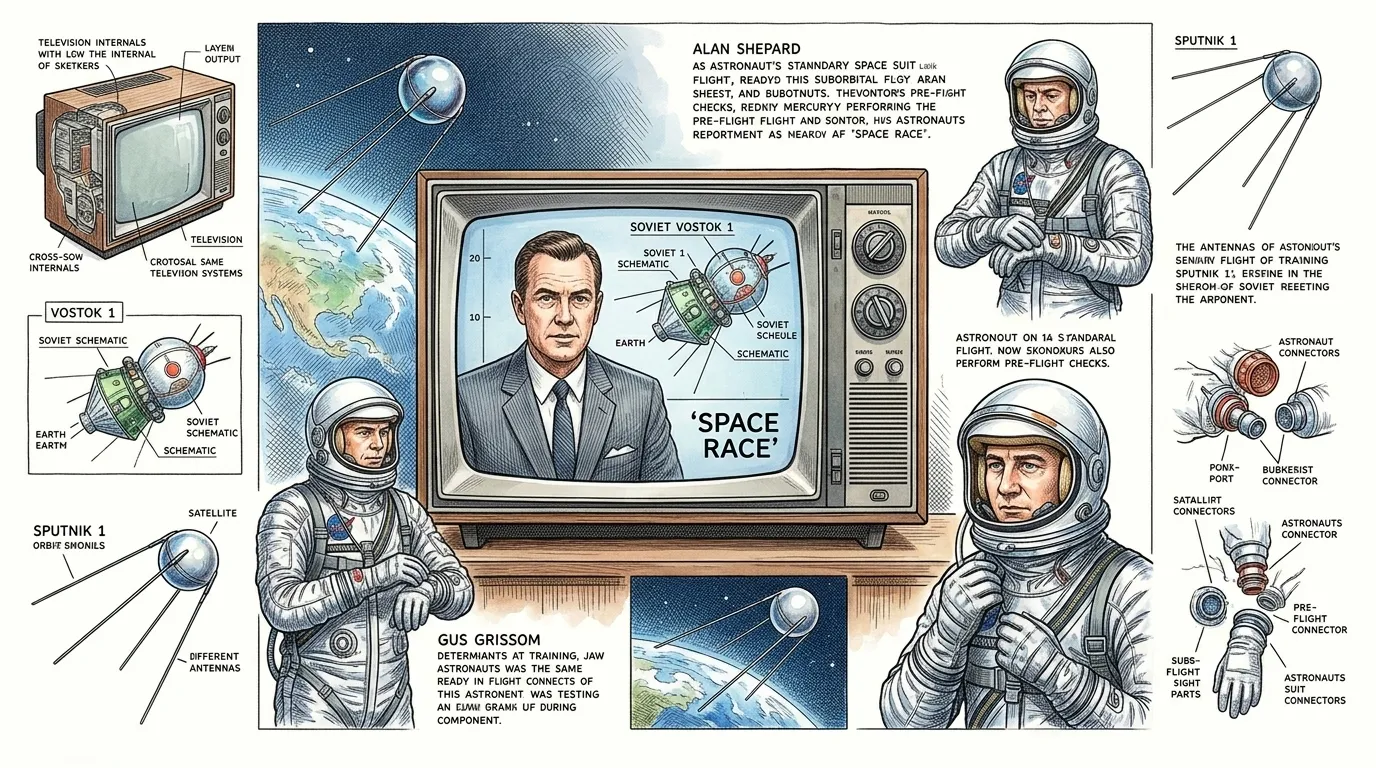
Glenn's flight was not an isolated triumph but a critical response in a geopolitical contest: the Space Race. Initiated by the Soviet Union's launch of Sputnik 1 in 1957, this ideological struggle propelled both superpowers into a frantic quest for cosmic supremacy. While the U.S. had achieved suborbital flights with Alan Shepard and Gus Grissom, the orbital domain remained the ultimate goal, a challenge already met by Soviet cosmonaut Yuri Gagarin in 1961.
"A news anchor from a vintage television broadcast, with a serious expression, reports: "The Soviet Union has once again demonstrated its technological prowess, orbiting a man in space. The pressure is immense for the United States to catch up.""
Page 3
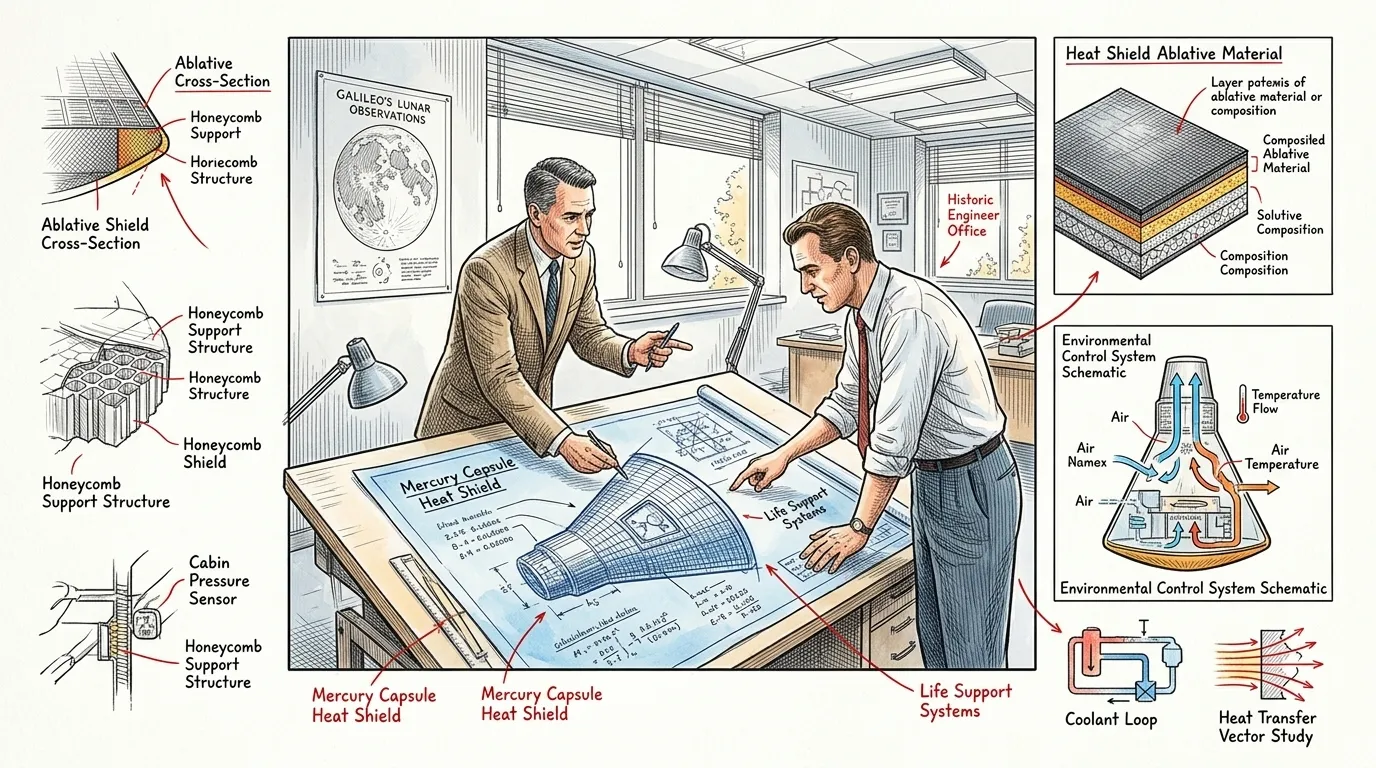
The challenge of orbiting a human was immense, demanding unprecedented feats of engineering and physiological understanding. Project Mercury, established by NASA in 1958, aimed to address three fundamental questions: Could a human survive launch acceleration and zero gravity? Could they function effectively in the space environment? And crucially, could a spacecraft and astronaut return safely to Earth? These were questions that Galileo Galilei, centuries earlier, had only dreamed of asking about celestial mechanics, a domain now directly confronting human biology and machine reliability.
"A historic engineer, focused on a blueprint, explains to a colleague, "The heat shield is paramount; re-entry friction is the crucible. Every calculation, every material choice, must withstand forces previously unimaginable." Another responds, "Life support is equally critical. We are pushing the very limits of human endurance within this metal shell.""
Page 4
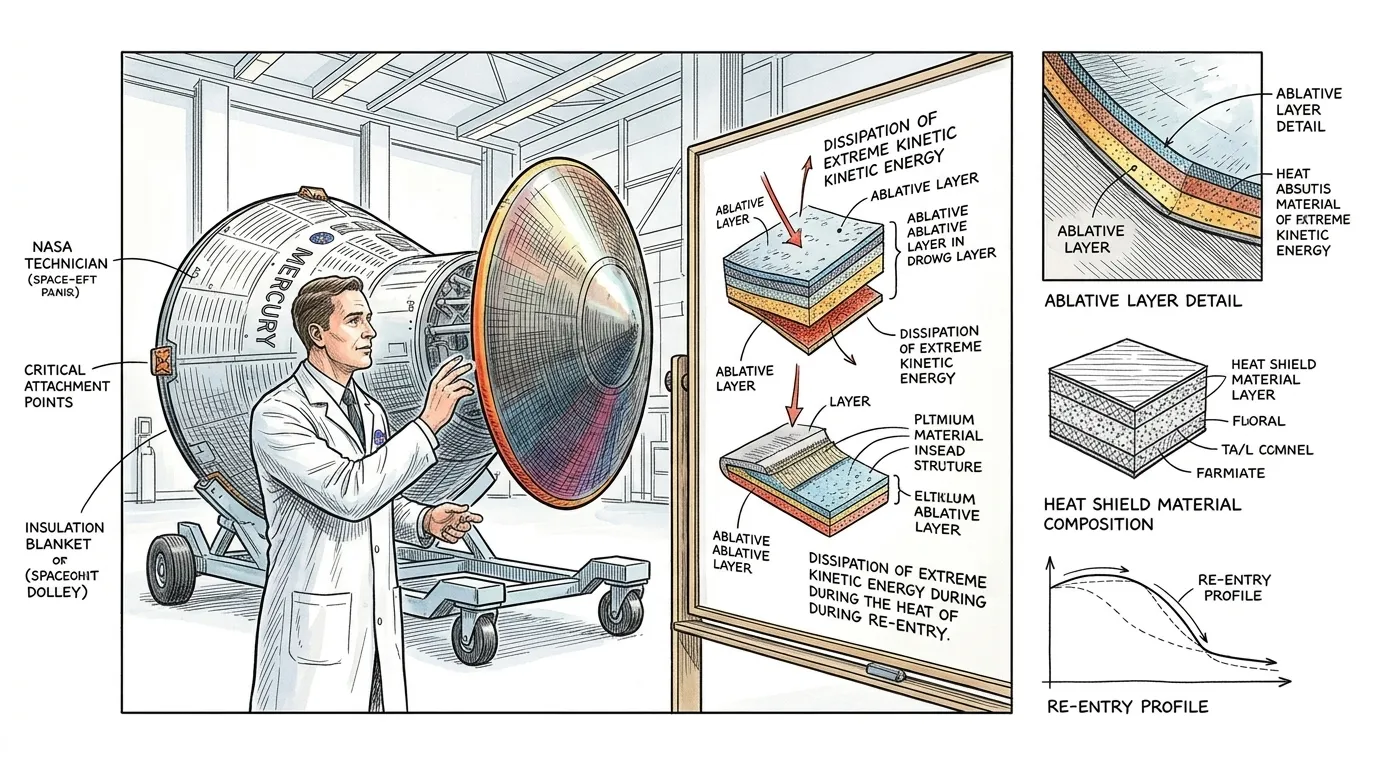
The Mercury spacecraft, a compact, bell-shaped vessel, was a marvel of minimalist engineering, designed for one mission: to get an astronaut into orbit and back safely. Its most critical component was the ablative heat shield, a revolutionary design intended to burn away in layers during re-entry, dissipating the extreme kinetic energy as heat. Without this innovation, inspired by earlier ballistic missile warhead research, atmospheric re-entry would have been a catastrophic fireball, illustrating the profound engineering challenges that early spaceflight represented.
"A NASA technician, examining the outer shell of a Mercury capsule, points to a specific area and remarks, "This ablation shield is our primary defense. It's a sacrificial layer, designed to give its life for the crew inside. No greater testament to the ingenuity of our engineers.""
Page 5
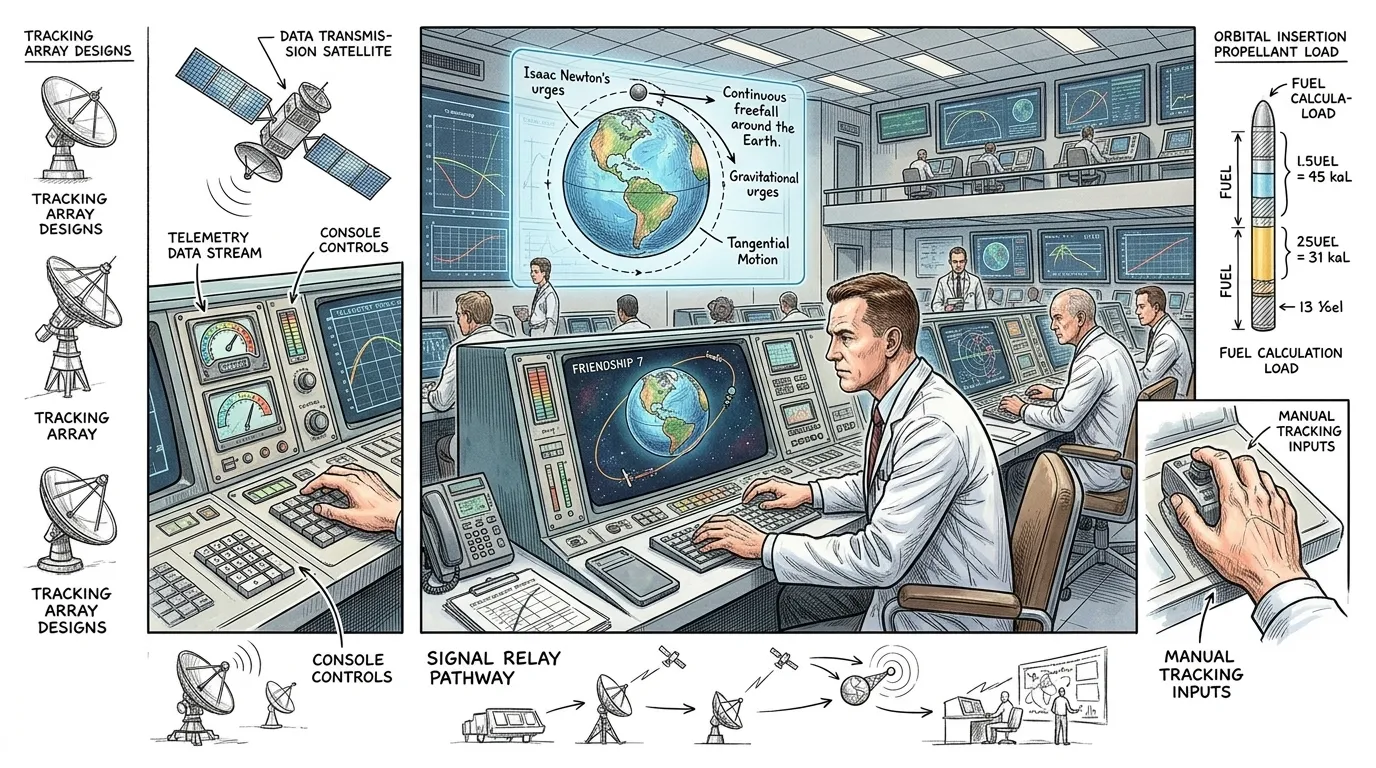
Achieving orbit isn't about escaping Earth's gravity, but rather about matching its pull with immense horizontal velocity. As Isaac Newton first theorized centuries ago, an object projected fast enough would continuously 'fall around' the Earth instead of crashing into it. John Glenn's Friendship 7 reached a speed of over 28,000 kilometers per hour (17,500 mph), effectively becoming a perpetually falling object, demonstrating the elegant dance between gravitational force and tangential motion that defines orbital mechanics.
"A mission control scientist, intently watching telemetry data, states, "He's stable in orbit. That sustained velocity, perfectly balanced with Earth's gravitational pull, means he's now in a continuous state of freefall around the planet.""
Page 6
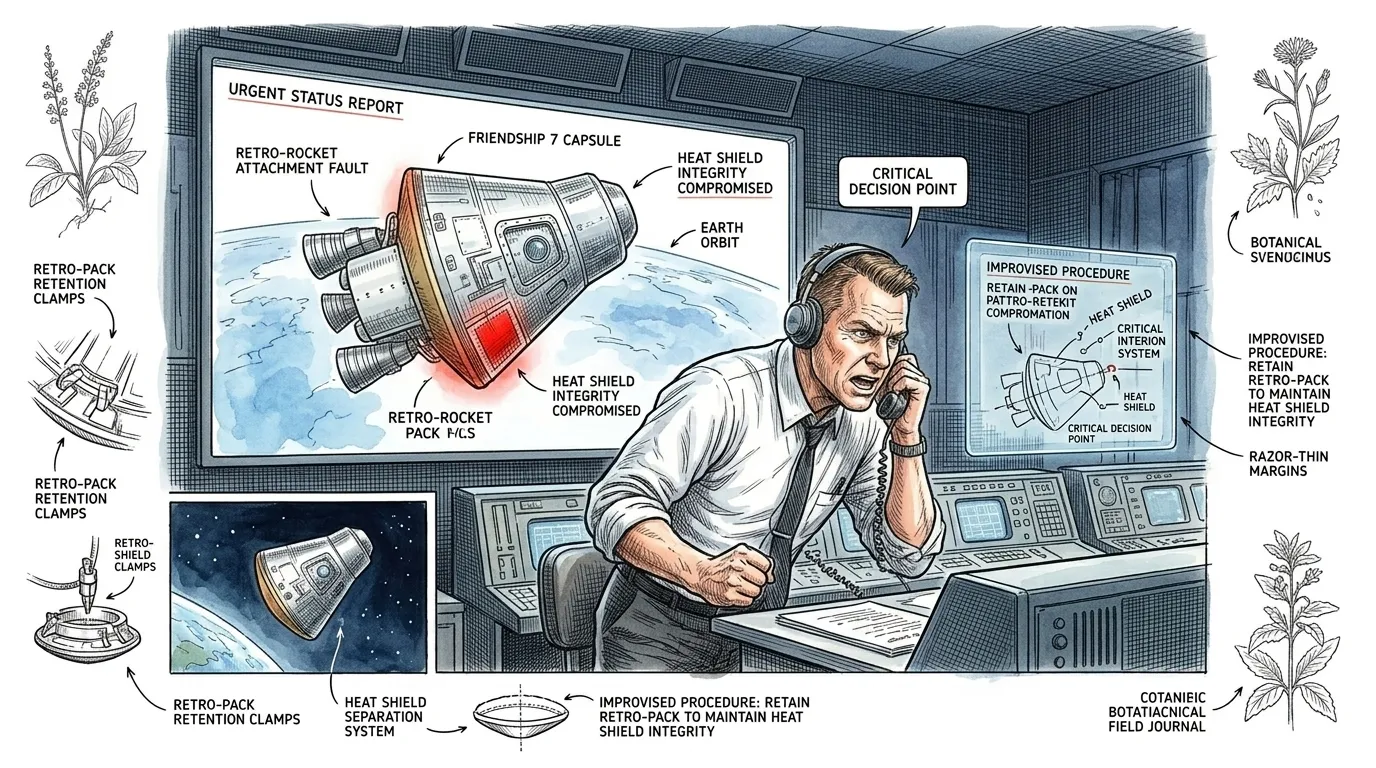
Mid-mission, a critical sensor indicated that Friendship 7's heat shield might be loose. A detached heat shield during re-entry would have been catastrophic. Mission Control made the swift decision to keep the retro-rocket pack attached after firing, hoping it would hold the heat shield in place, a tense improvisation in the face of imminent danger. This unforeseen challenge tested the ingenuity of both Glenn and the ground team, underscoring the razor-thin margins of early spaceflight.
"A highly stressed flight director in Mission Control, his face grim, issues an urgent command: "Tell him to retain the retro-pack! Confirm heat shield integrity at all costs. We are going to ride it in hot, and pray.""
Page 7
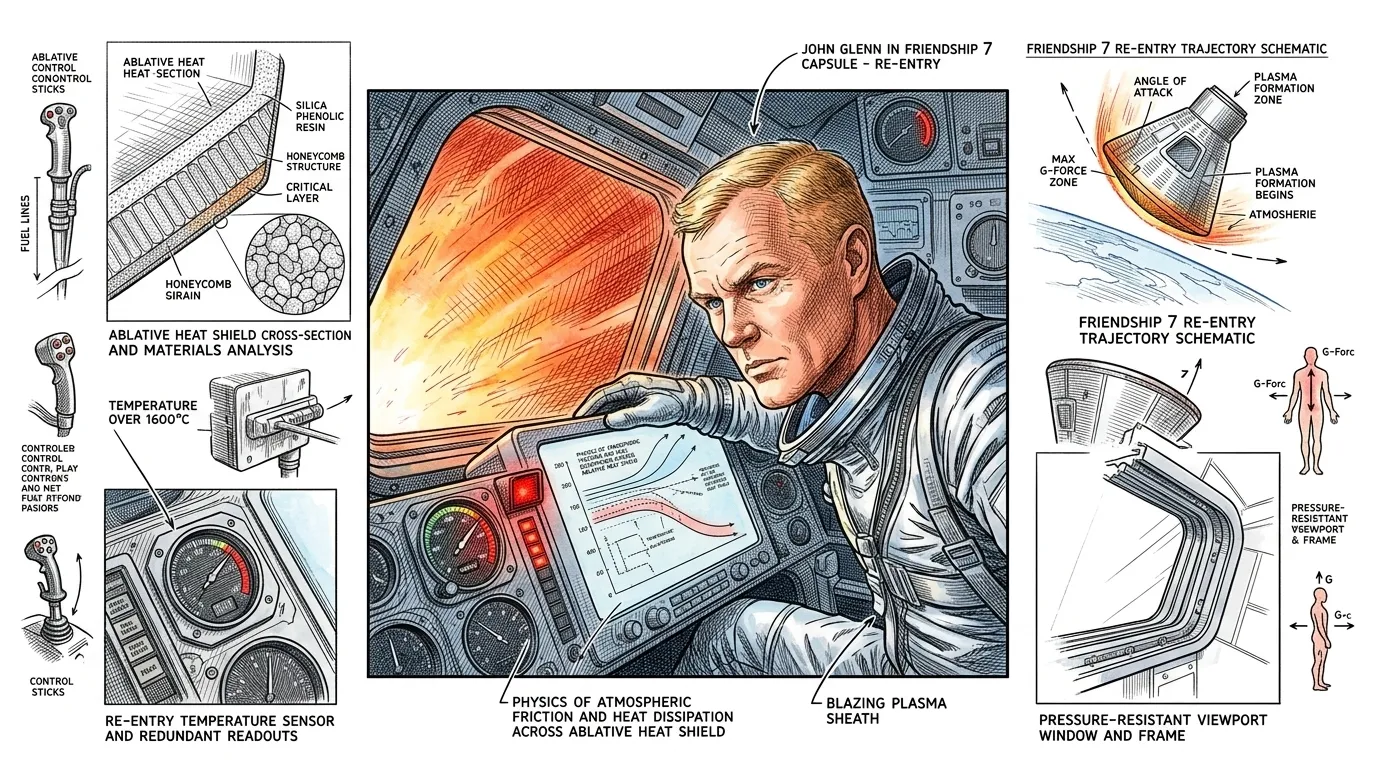
Re-entry was the most perilous phase of the mission. As Friendship 7 plunged back into Earth's atmosphere, the friction generated immense heat, enveloping the capsule in a blazing plasma sheath. For several minutes, a communications blackout occurred, leaving Mission Control in anxious silence, unsure of Glenn's fate. He endured temperatures of over 1,600 C outside the capsule, a testament to the heat shield's design and the astronaut's resilience. His observations during this fiery descent provided invaluable data for future missions.
"John Glenn, voice strained, reports during re-entry: "It's a real fireball outside. Feels like I'm coming apart. But the heat shield is doing its job.""
Page 8
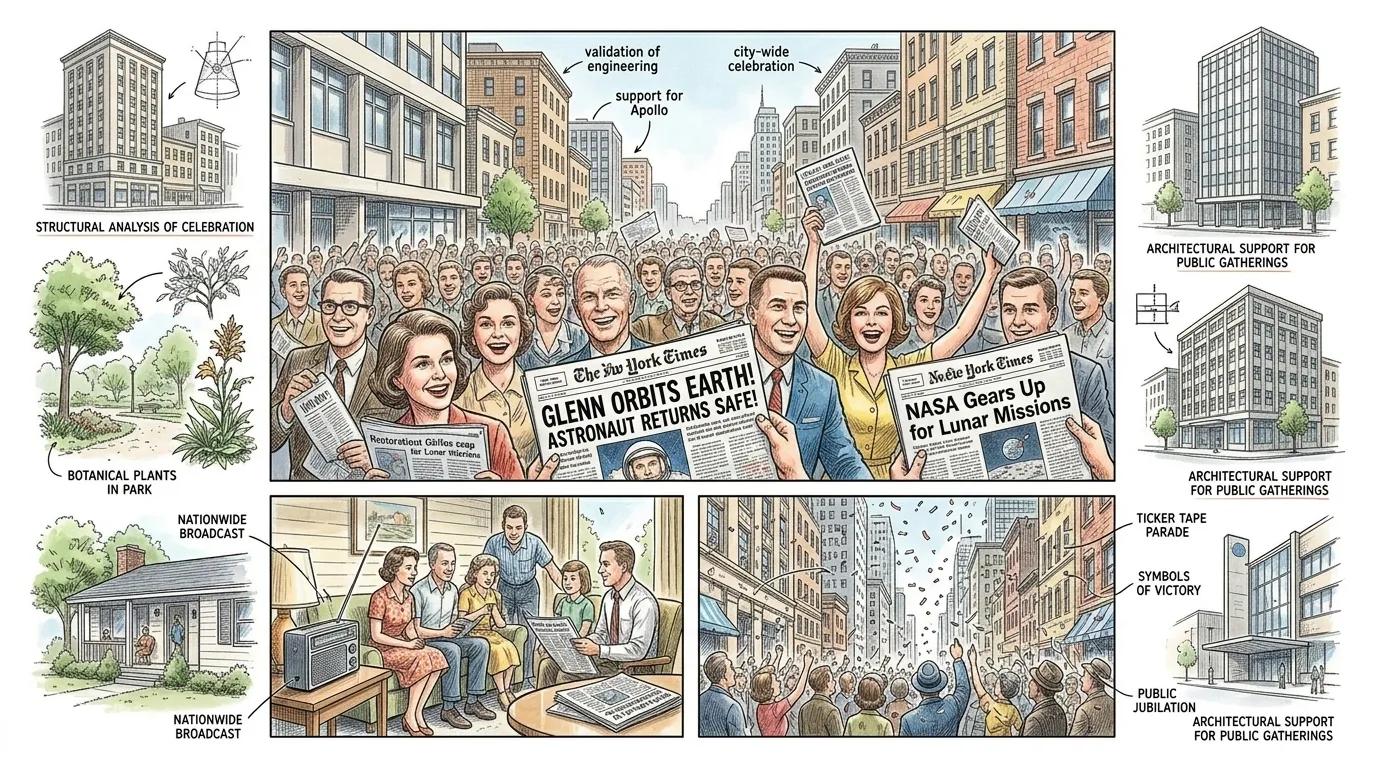
John Glenn's safe return after three orbits ignited a wave of national euphoria and confidence. His mission proved that humans could not only survive but actively perform tasks in orbit, validating years of scientific and engineering effort. This success was instrumental in bolstering public and political support for the ambitious Apollo program, which would ultimately land humans on the Moon. Glenn's flight transformed abstract scientific endeavors into a tangible, inspiring reality for millions, bridging the gap between theoretical space science and practical exploration.
"A newspaper headline from 1962, held aloft by a jubilant crowd, screams, "GLENN ORBITS EARTH! ASTRONAUT RETURNS SAFE!" Another headline below it reads, "NASA Gears Up for Lunar Missions.""
Page 9
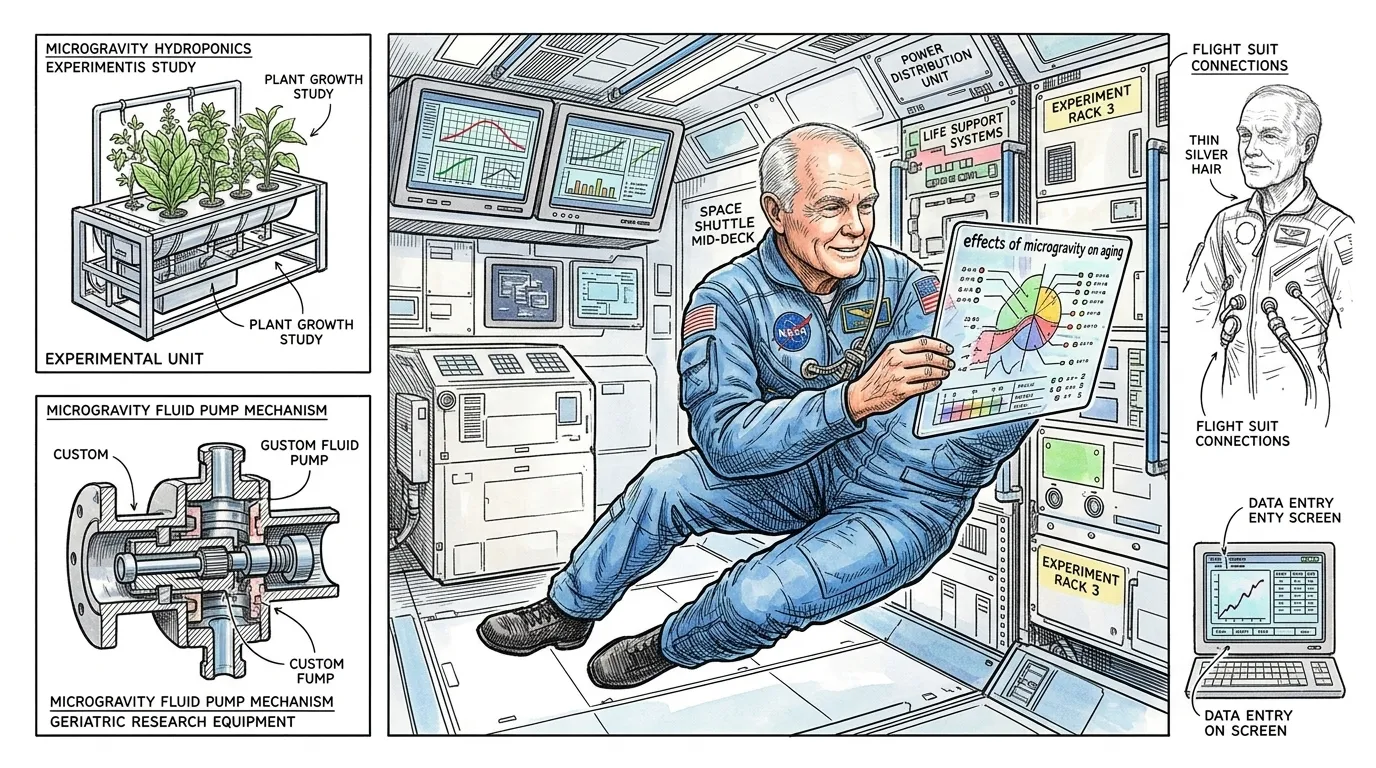
Decades after his historic Mercury flight, John Glenn made an unprecedented return to space aboard the Space Shuttle Discovery in 1998, at the age of 77. This mission, STS-95, was not merely symbolic; it provided invaluable data on the effects of spaceflight on an aging human body, contributing directly to geriatric research back on Earth. Glenn's willingness to undertake this second mission solidified his status as a true pioneer, demonstrating a lifelong commitment to scientific inquiry and exploration, a testament to his belief in the enduring value of human presence in space.
"Glenn, floating in the Space Shuttle, with a thoughtful smile, reflects, "To be back here, after all these years, it truly puts into perspective the journey we've undertaken. There's still so much to learn, so much to explore.""
Page 10
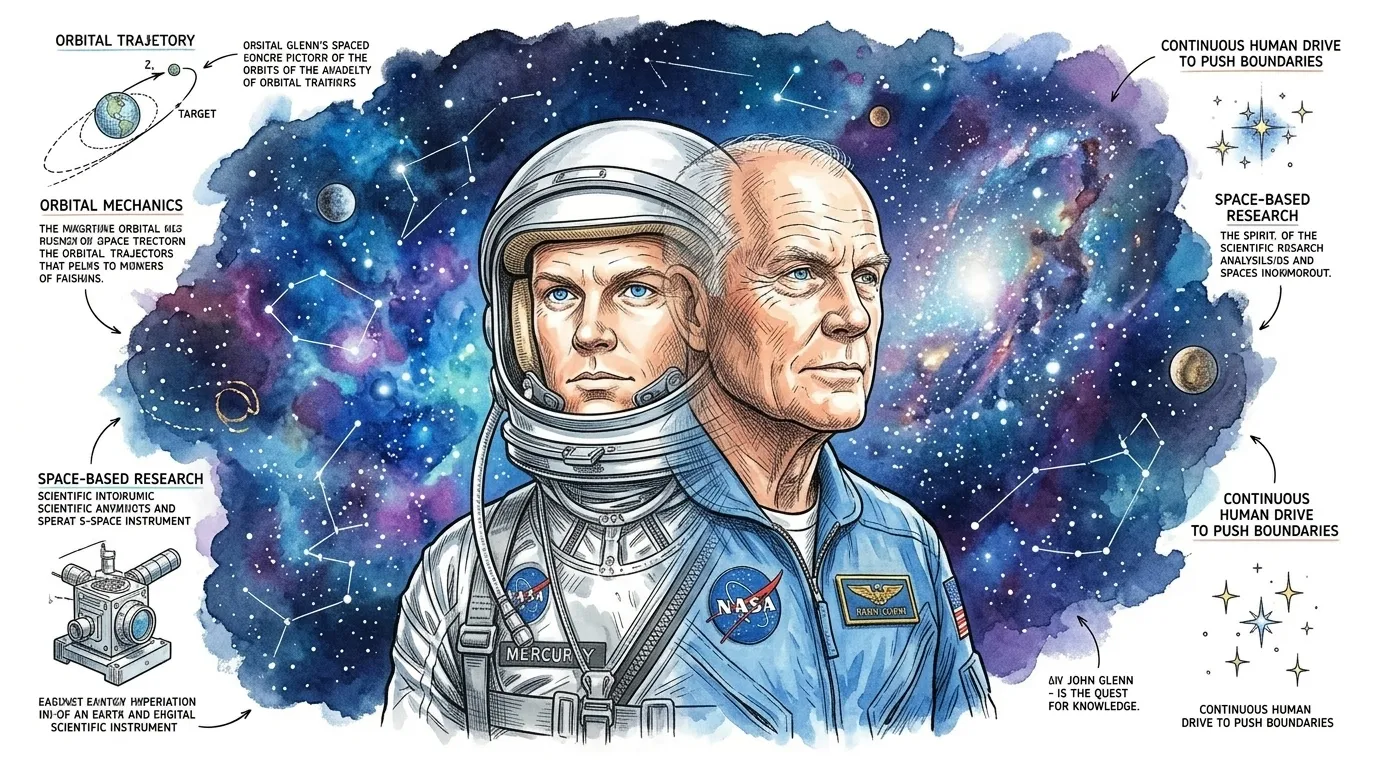
John Glenn's life embodied the spirit of exploration, bridging the heroic early days of the Space Race with the advanced scientific endeavors of modern orbital mechanics and space-based research. His dual journeys, first as a trailblazing Mercury astronaut and later as a septuagenarian Space Shuttle crew member, underscored the continuous human drive to push boundaries. His contributions continue to inspire not only space scientists and engineers, but anyone who looks to the stars and wonders what lies beyond.
"A documentary narrator's voice concludes, "John Glenn, an American icon, reminds us that the quest for knowledge, like the universe itself, has no true ending.""
About this story
- Location: Global
- Audience: general readers
Questions and answers
Read Wonder Science on your phone
Wonder Science is available on Android. Get Wonder Science on Google Play.