The Old Man and His Grandson
A trembling bowl, a wooden trough, and the small boy who taught his parents what waited for them too
Page 1
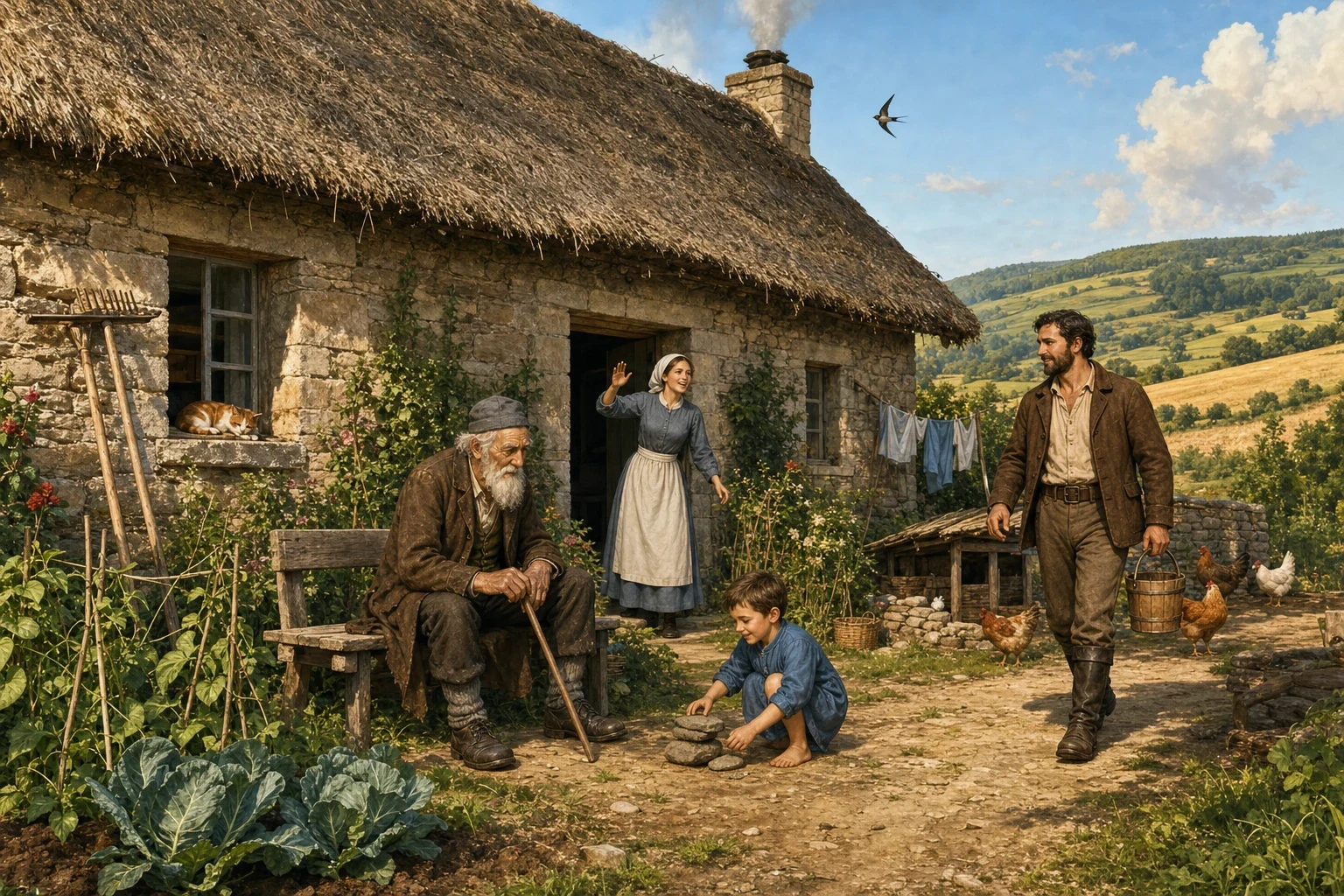
In a green farming valley stood a small stone farmhouse with a thatched roof, a vegetable garden by the door, and fields of barley rolling away toward low wooded hills. Here lived a farmer, his wife, and their four-year-old son — and here too lived the farmer's own father, a very old man with a long white beard, who had worked this same land all his life. His eyes were growing dim now and his hands trembled, but every fine evening he liked to sit on the bench by the door with his little grandson playing at his feet. The whole family ate every meal together at one big table inside, the old man at the head of it, in the place he had always sat. If a little soup spilled from his shaking spoon, nobody minded, not yet. It was a quiet, ordinary farm, and nothing about it looked as though it would ever change.
Page 2
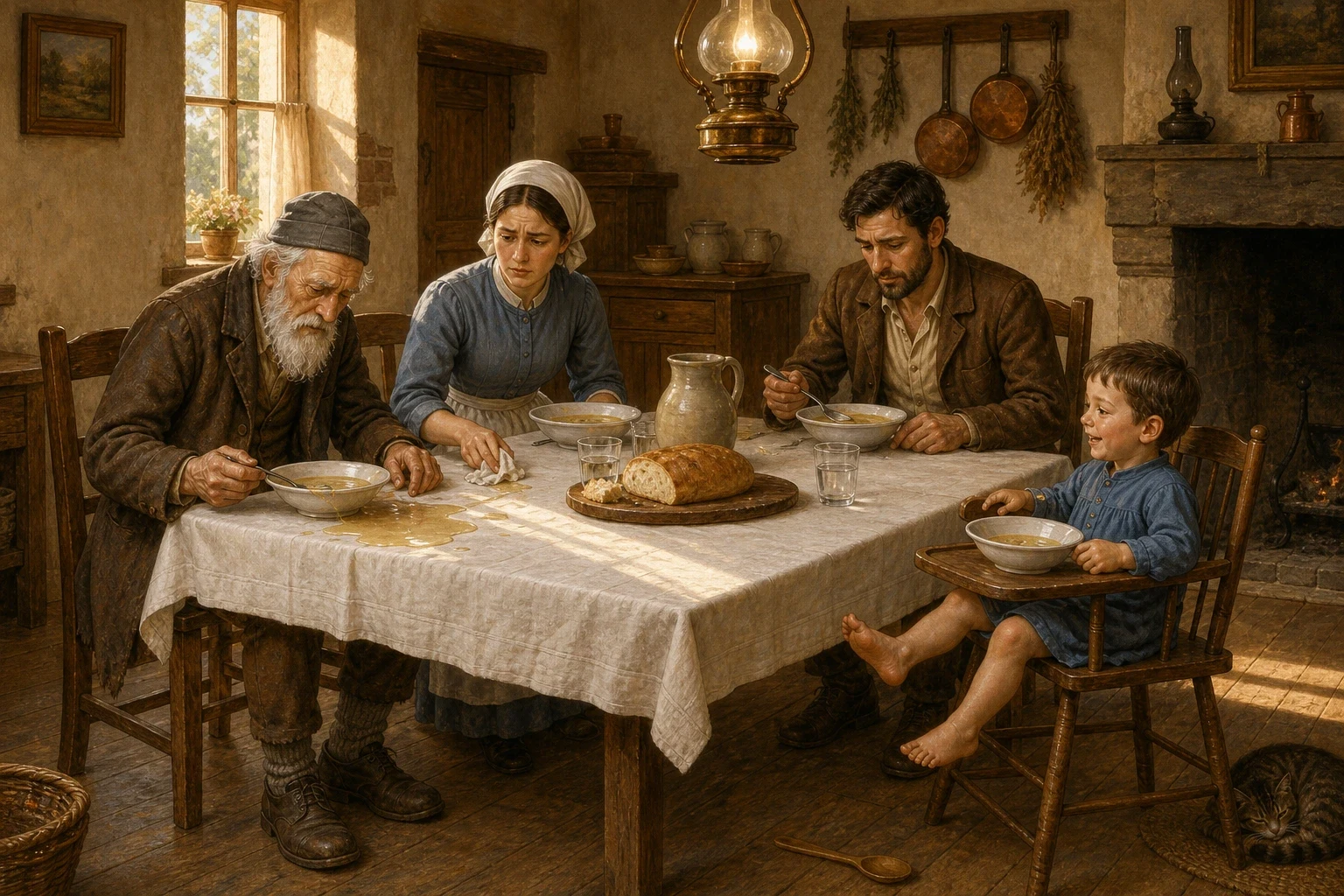
One evening, as the family sat together at the table, the old grandfather's hand shook harder than usual as he lifted his spoon, and his soup splashed across the white tablecloth. It was not the first time this had happened, but this time the farmer's wife frowned deeply and said nothing, only wiped at the cloth with her napkin. The farmer himself looked away from his father and did not speak either. The little grandson, too young to understand why the room had gone quiet, kept on eating happily, kicking his heels against his chair. The old man looked down at the stain on the cloth, and then at his own trembling hands, and said nothing at all. He had grown old without meaning to, and there was nothing he could do about his hands now. The meal finished in an uncomfortable silence that had never happened at that table before.
Page 3
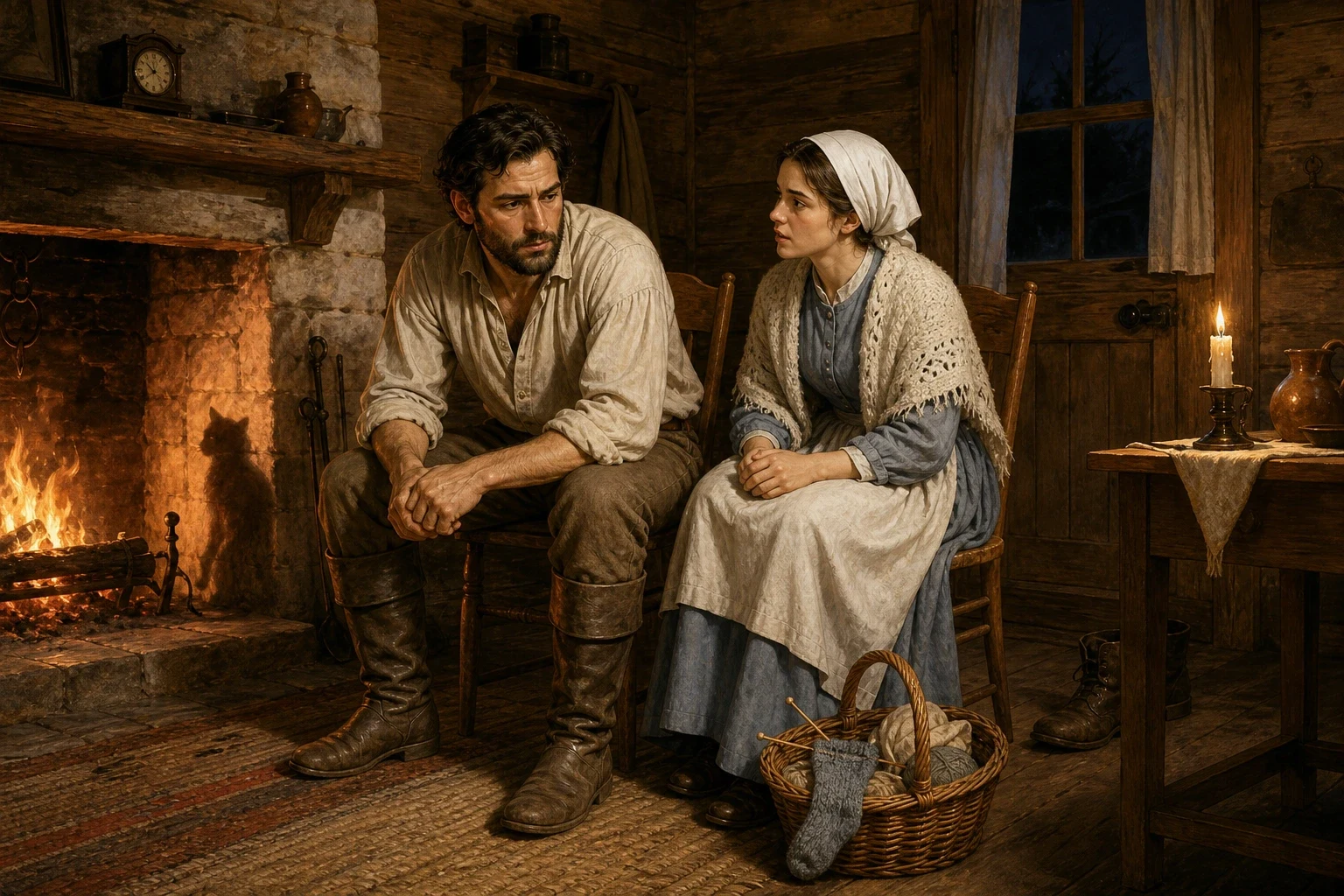
That night, after the old man and the little boy had both gone to bed, the farmer and his wife sat up together by the fire in the small parlor next to the kitchen. The wife spoke first. She said that she could not keep washing soup from the good tablecloth every week, and that watching his trembling hands at every meal made her feel uneasy. The farmer did not argue with her, though something in him felt wrong about what she suggested next. They agreed that from now on, the old grandfather would not sit at the table with them anymore. Instead he would be given his own place to eat, alone, in the corner behind the kitchen stove, with his food served in a plain earthenware bowl instead of a proper dish. Neither of them said this unkindly aloud. They only said it was simpler this way, and went up to bed without speaking of it again.
Page 4
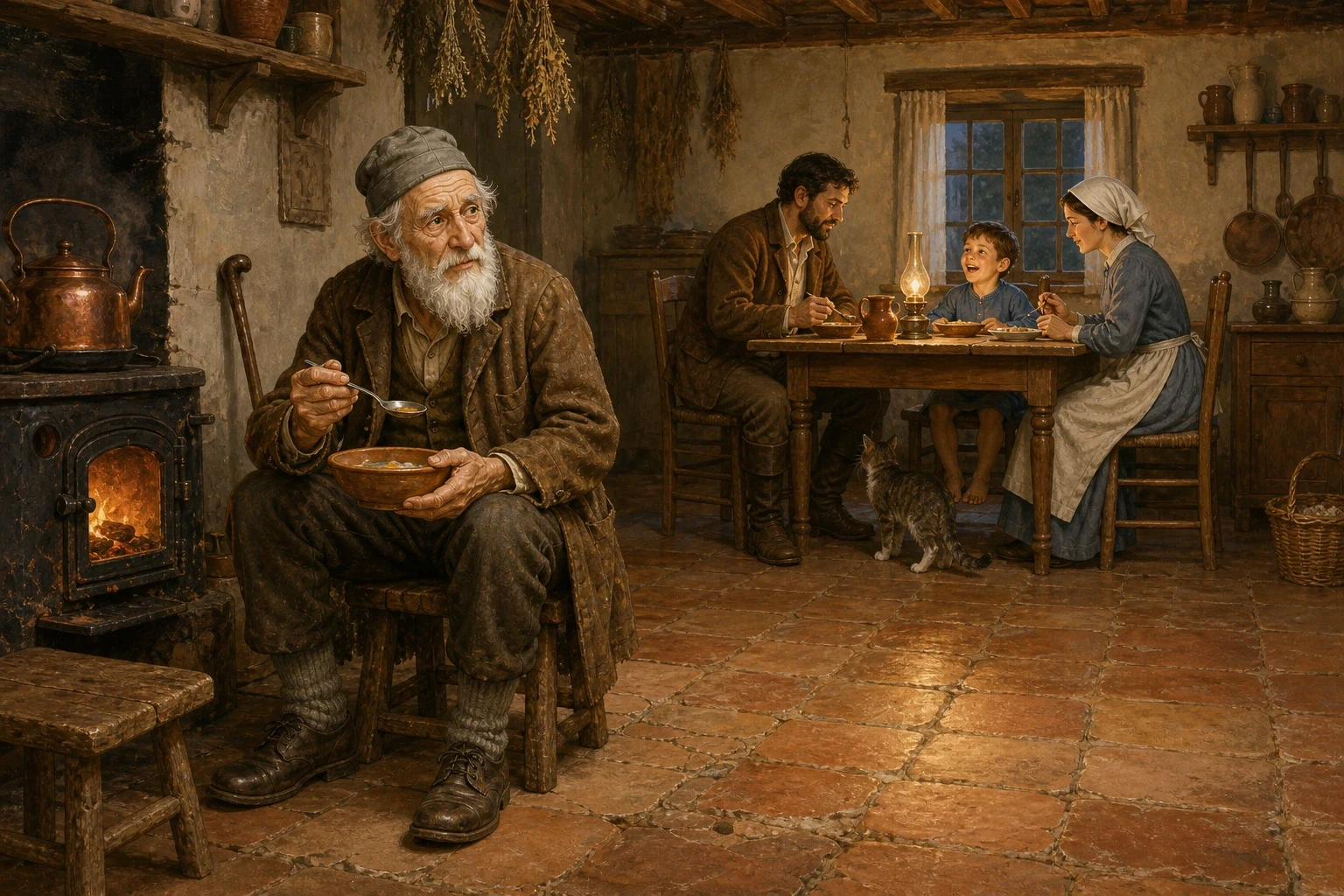
From that day on, the old grandfather did not sit at the big table anymore. Every mealtime, the farmer's wife set a plain earthenware bowl on a low stool behind the kitchen stove, and that was where he ate now, by himself, while the rest of the family sat at the table across the room. He could hear them talking and see the little grandson laughing at something, but he was too far away to join in. He never complained. He ate what was given to him quietly, in his corner, and looked over now and then at the table where he used to sit — at the white cloth, the good dishes, the warm lamp — and then looked back down at his own small bowl. He told himself it did not matter so very much. But it did matter, though he never said so to anyone, and every day the distance between his corner and that table seemed to grow a little wider.
Page 5
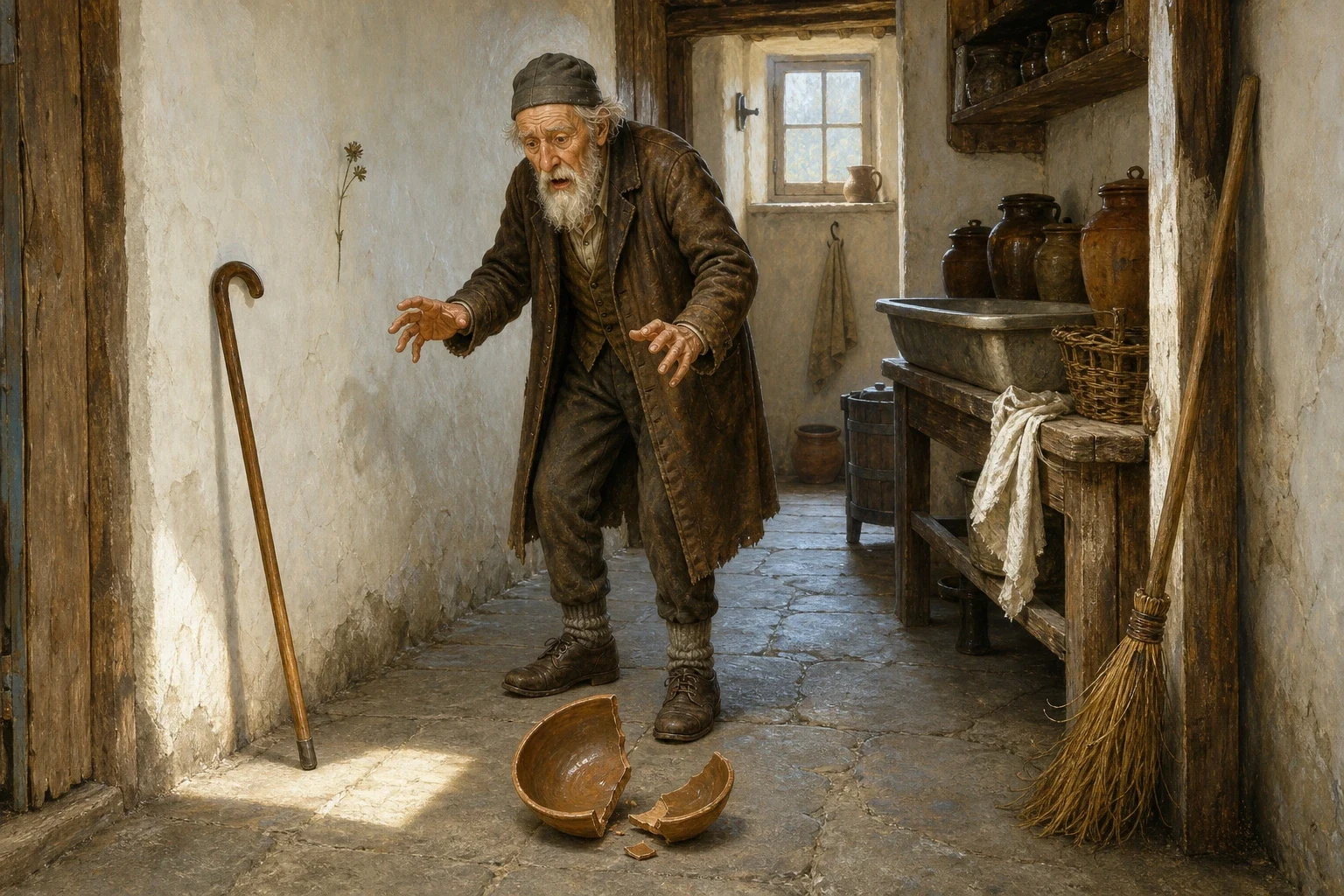
One day, as the old grandfather carried his empty bowl from his corner toward the scullery to wash it himself, as he always did, his hands shook harder than they ever had before. Partway down the narrow passage between the kitchen and the scullery, the earthenware bowl slipped from his trembling fingers entirely. It fell to the stone floor and broke into several pieces with a sharp, sudden crack that echoed through the quiet house. The old man stood very still for a moment, looking down at the broken pieces scattered across the floor, his hands still shaking in the empty air where the bowl had been. He had not meant for it to happen — he never meant for any of it to happen, not the spilled soup, not the shaking, not this — but there it was, broken, and there was nothing he could do to put it back together again.
Page 6
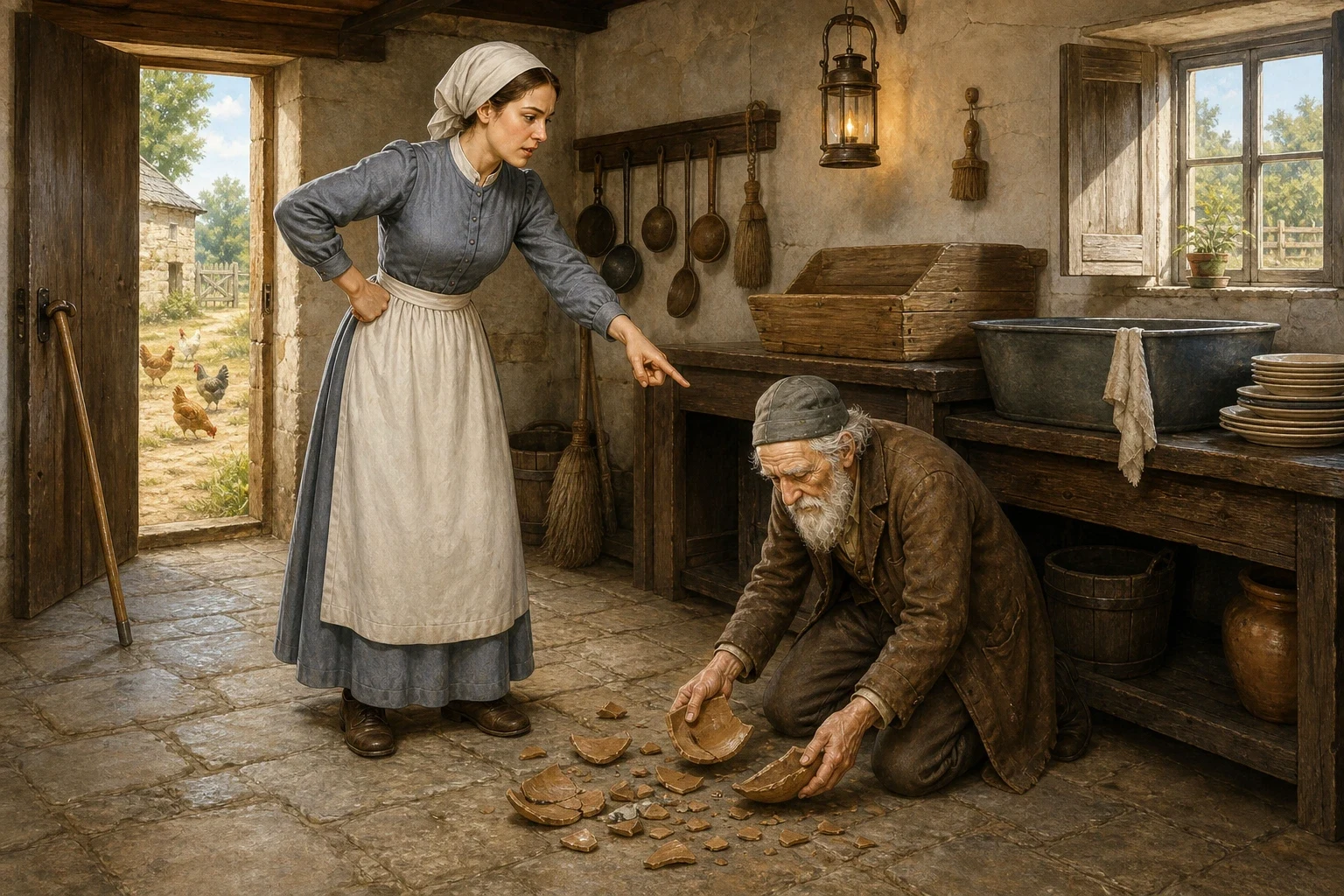
Hearing the crash, the farmer's wife hurried into the passage and found the old man standing over the broken bowl. She was not pleased. She told him sharply that good dishes did not grow on trees, and that since he could not be trusted to hold onto a bowl anymore, he would simply have to eat from something that could not break. From now on, she said, he would be given his food in an old wooden trough instead — the kind used for feeding animals in the yard — since it would not matter if that one was dropped. The old grandfather bent down slowly and gathered up the broken pieces of the bowl himself, without a word of complaint, and carried them away to throw out. He did not argue with her. He never argued with anyone anymore. He simply did as he was told, the way he had done every day since he had stopped sitting at the table.
Page 7
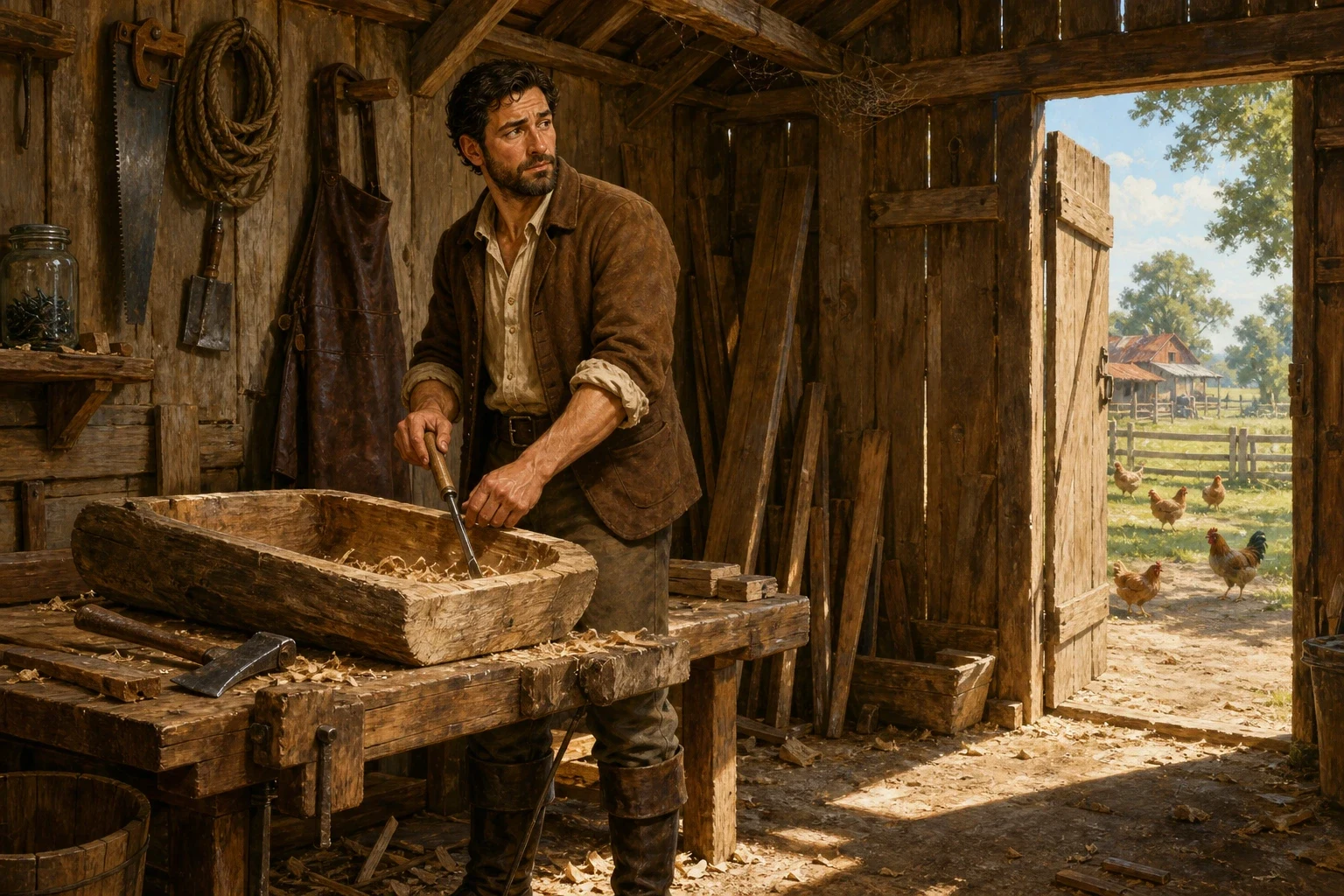
Out in the woodshed at the side of the house, the farmer took an old plank of rough timber and set to work with his knife and a small hatchet, hollowing it out into a simple feeding trough. It was the kind of trough he usually made for the pigs or the chickens, not for a person, and more than once as he worked his hands slowed and he found himself staring at the half-finished wood instead of cutting it. He thought, for a moment, of his father as a young man, strong enough to carry two full sacks of grain at once across this very yard. But he did not put down the knife. He told himself his wife was right, that it was only sensible, that an old man who could not hold a bowl should have something sturdier to eat from. By evening the trough was finished — plain, rough-edged, and exactly what it was meant to be.
Page 8
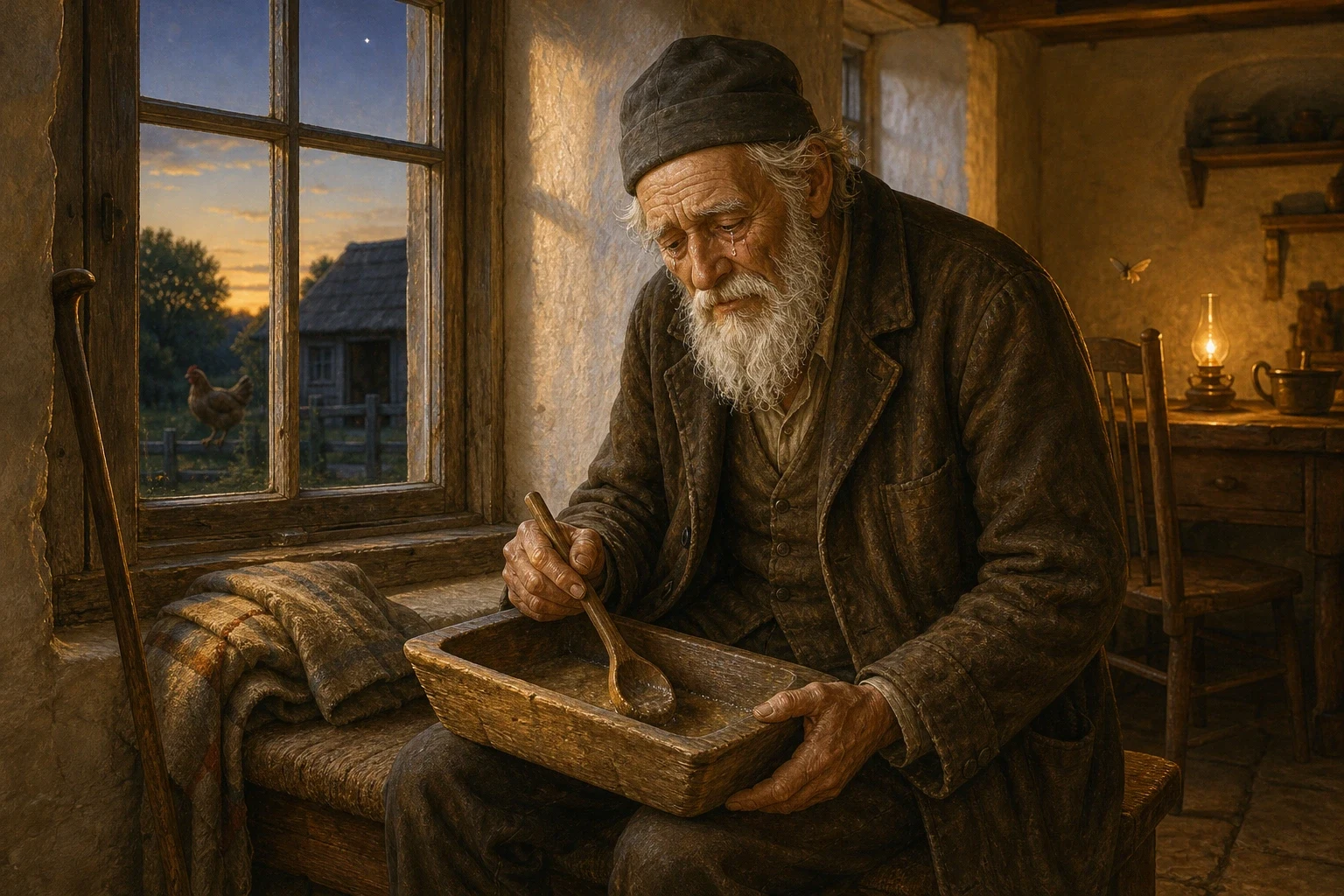
The old grandfather was moved to a seat by the kitchen window after that, since there was no longer any need for him to sit near the stove at all — a wooden trough did not need to stay warm the way soup in a proper bowl once had. Every mealtime now, he sat alone by the window with the rough trough on his knees, eating whatever had been put into it, while across the room the rest of the family ate at their table as they always had. One evening, as he sat there with his spoon scraping against the rough wood, his eyes filled with tears, and he did not try to stop them or wipe them away. He simply sat very still, an old man by a window, crying quietly over a trough meant for feeding animals, while outside the light faded slowly over the farmyard and nobody in the warm, lit room behind him noticed that he was sad at all.
Page 9
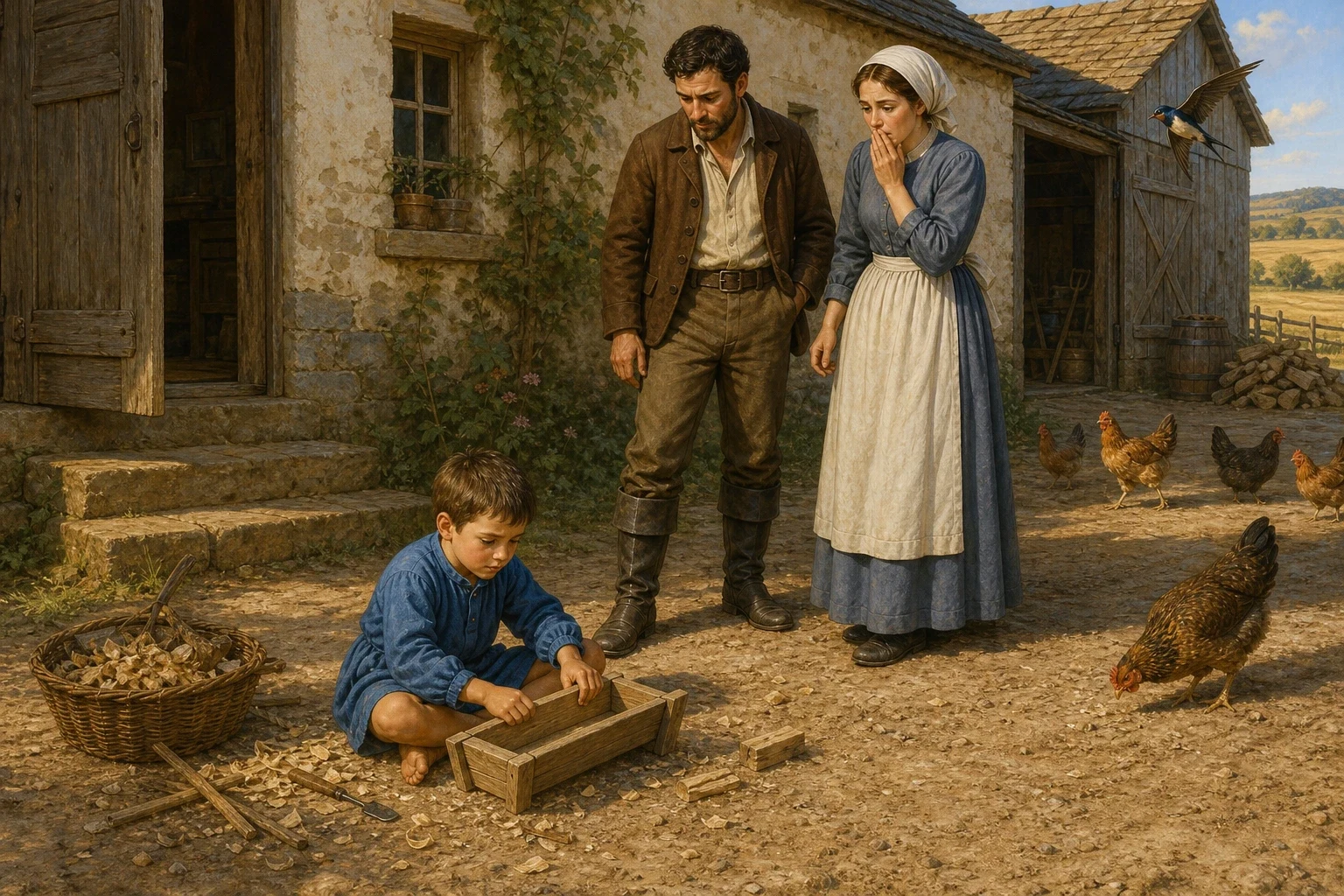
Out in the farmyard, in the dust by the door, the four-year-old grandson sat fitting together small scraps of wood he had gathered from the woodshed, working at them seriously with his short fingers. His father and mother, crossing the yard on their way back from the fields, stopped to watch him for a moment, smiling at how carefully he worked. The farmer asked his son what he was making. The little boy looked up at them without any idea that his answer meant anything at all, and said that he was building a little trough — one for his mother and father to eat out of, he explained, when they grew old like grandfather. He went straight back to fitting his small pieces of wood together, quite pleased with his plan, while his parents stood over him in complete silence, looking down at what he had built.
Page 10

That same evening, the farmer and his wife went straight to the old grandfather, who was still sitting by the window with his wooden trough untouched on his knees, and without a word they helped him up and brought him back to the big table, setting a proper place for him once more, with a good dish and a good spoon, just as it had always been before. Both of them had tears in their eyes as they did it, and neither one said very much, because there was not very much that needed saying. From that evening on, the old grandfather always ate at the table with the rest of his family, and if his trembling hands spilled a little now and then, nobody ever said a single word about it again. The farmhouse settled back into its old warm shape, lamplight in the windows, the whole family together at one table, exactly as it always should have been.
About this story
- Audience: kids (ages 6–12)
Read Wonder Tales on your phone
Wonder Tales is available on Android. Get Wonder Tales on Google Play.