Who Owns an AI-Generated Picture? Copyright and Creative Control
Understanding copyright for AI-generated images in publishing: what the law says, what courts have decided, and what it means for creators.
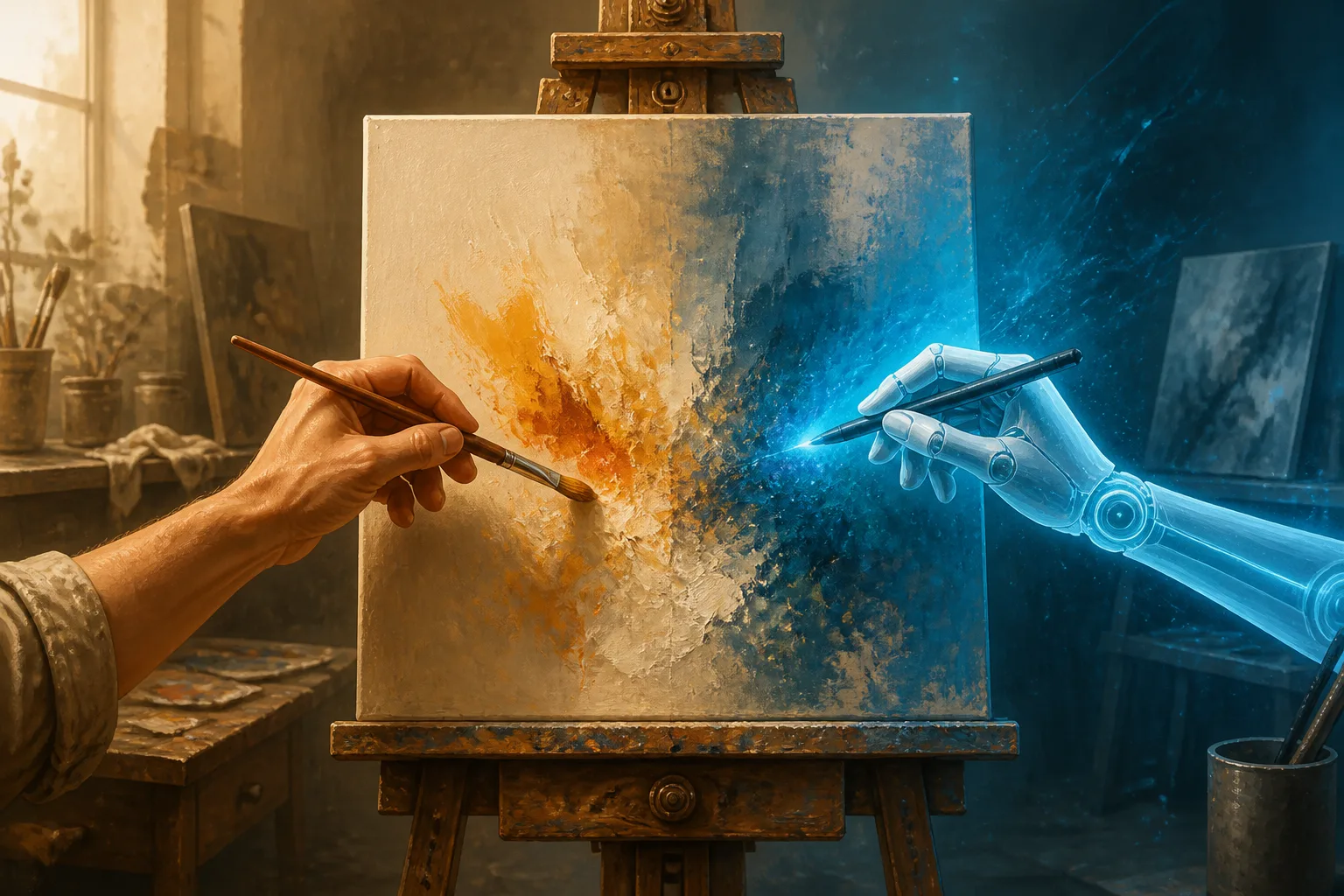
The question of who owns a picture made with artificial intelligence is one of the most pressing and complex issues in today's creative landscape. The straightforward answer is that, in the United States, a machine cannot be named as the sole author of a copyrighted work, but human involvement can establish ownership.
Copyright in the Age of Algorithms
When an image is created entirely by an AI system without significant human input, it generally cannot be registered for copyright. This position reflects the fundamental principle that copyright protects the fruits of human intellectual labor. However, the line becomes blurred when a human directs, selects, or arranges AI-generated elements to create a final work. In such cases, the human contribution can be eligible for protection.
What the Law Says Now
The United States Copyright Office has begun to clarify its stance on AI-generated content. Their guidance indicates that while machine-only output is not registrable, a work containing AI-generated material is registrable to the extent of the human's own contribution. This means that a publisher, artist, or author who uses AI tools must demonstrate their creative control and intervention in the process.
- The United States Copyright Office granted registration for the comic Zarya of the Dawn in 2023, covering its text and the arrangement of its AI-generated images, but not the individual images themselves.
- A United States federal court, in Thaler v. Perlmutter (2023), upheld the refusal to register a work where an AI system was identified as the sole author.
- The current guidance from the United States Copyright Office, issued in 2023, states that a work incorporating AI-generated material can be registered based on the human's specific creative contribution.
For a publisher, this means carefully documenting the creative process, highlighting human decisions in prompting, editing, and arranging AI-generated content. For an artist, it emphasizes the importance of their unique vision and the choices they make, even when using AI as a tool. For a reader, it means that while the visual style might be AI-assisted, the story, composition, and overall artistic direction often come from a human mind. The open questions courts have not yet fully settled often revolve around the degree of human involvement required to cross the threshold for copyright protection.
I am not the one who wrote a famous novel. I am presenting it in an original way: with illustration, rewritten in ten simple pages, translated, narrated. All of that is original work.
Creative Direction in Practice
In the field, publishers are navigating these evolving guidelines by focusing on their direct creative contributions. WonderBooks, a library of illustrated books for readers of every age, claims authorship of what is directed, judged, rejected, and remade by humans. This includes the treatment of each story, its structure, the rewriting into ten pages, the illustration style and its continuity, the translation, and the narration. The library describes what it directs, not which tools it directs. This approach ensures that the human creative choices, which are at the heart of copyright, are clearly asserted. Known material—real history, real science, famous tales—is chosen so that the telling is what gets judged. Facts are researched in a separate step before writing; a page or a draft that falls short is rejected and remade. A reader who reports a mistake gets a fix, a thank-you, and a link to the corrected page. When generative AI matured, the founder continued what he had started, directing AI through every job the library needs.
What This Means for Creative Work
The current legal landscape suggests a future where AI is seen as a powerful tool, much like a brush or a camera, rather than an independent creator. The emphasis remains on the human mind guiding the creative process, making artistic choices, and shaping the final output. This perspective protects the value of human artistry and ensures that the core principles of copyright endure even with technological advancements. For more insights into how technology shapes storytelling, explore our articles section.
Frequently Asked Questions
Does using AI mean I lose my copyright?
Not necessarily. If you use AI as a tool and provide significant creative direction, selection, or arrangement of the AI-generated elements, your unique human contribution can still be copyrighted. The key is demonstrating your authorship in the creative process.
How can I prove my human contribution when using AI?
Keeping detailed records of your prompts, editing decisions, artistic choices, and the iterative process of refining AI-generated content can help demonstrate your creative input. The more specific and transformative your direction, the stronger your claim.
Are there different rules for AI copyright in other countries?
Yes, copyright laws vary significantly by country. While many nations share similar principles about human authorship, the specific interpretations and precedents regarding AI-generated content are still developing globally. It's important to consult the laws of relevant jurisdictions.