Eine kleine Nachtmusik by Wolfgang Amadeus Mozart (Vienna, Austria — 1787)
Eine kleine Nachtmusik by Wolfgang Amadeus Mozart (Vienna, Austria — 1787) — an illustrated arts story, set in Italy. 10 illustrated pages, free to read on Wonder Arts.

Page 1
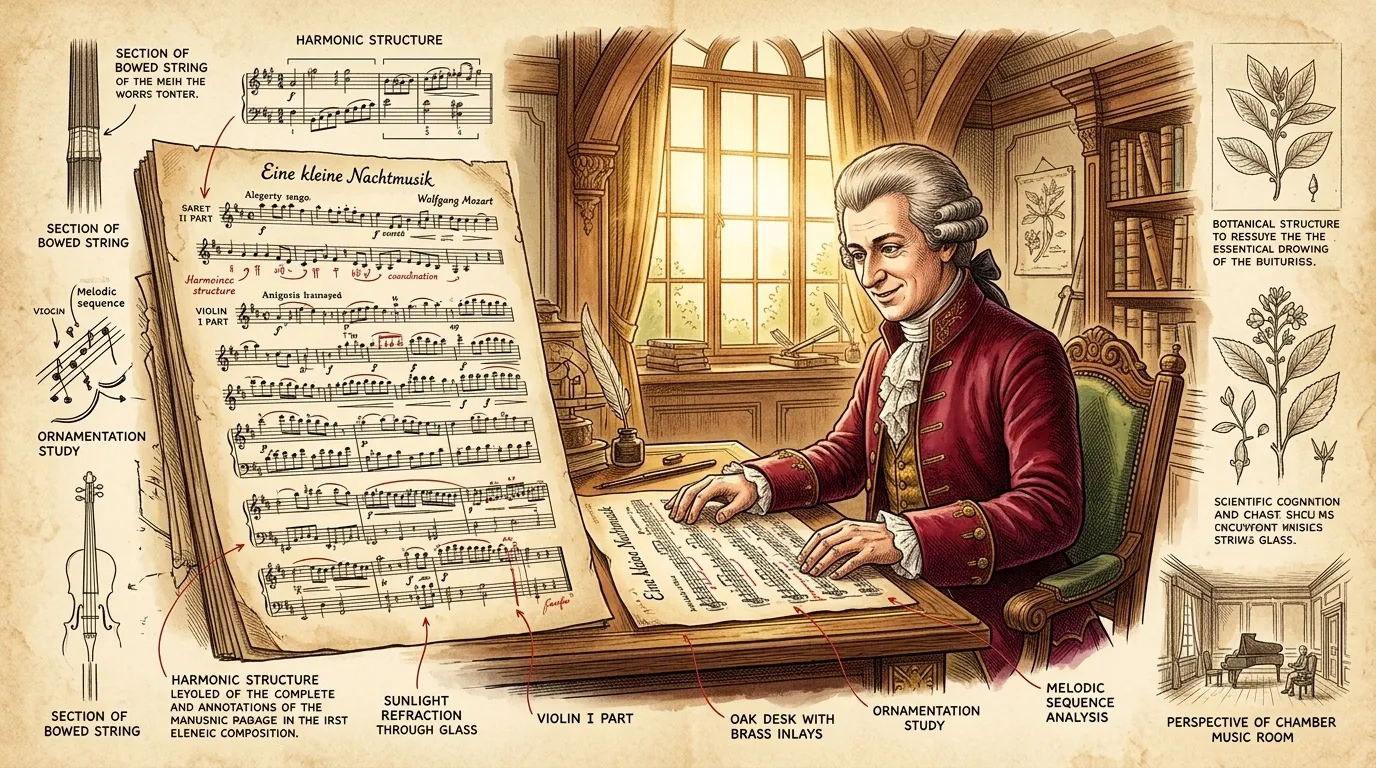
Vienna, 1787. Wolfgang Amadeus Mozart, at the height of his career, gazes upon the completed manuscript of Eine kleine Nachtmusik (Serenade No. 13 for strings in G major). This work, known for its elegance and accessibility, would become one of his most beloved compositions. The handwritten score, now carefully preserved, hints at the genius behind its effortless beauty. Though the exact circumstances of its commission remain a mystery, its enduring popularity is undeniable.
""Finally," Mozart murmurs, tracing the notes with his finger, "a serenade for the ages. I hope it brings joy and light to those who hear it.""
Art Fact: Eine kleine Nachtmusik, meaning 'A Little Night Music,' was composed in Vienna in 1787. Its movements include Allegro, Romanze, Menuetto, and Rondo. The work is scored for string quartet or string orchestra and is catalogued as Köchel Verzeichnis 525 (KV 525).
Page 2
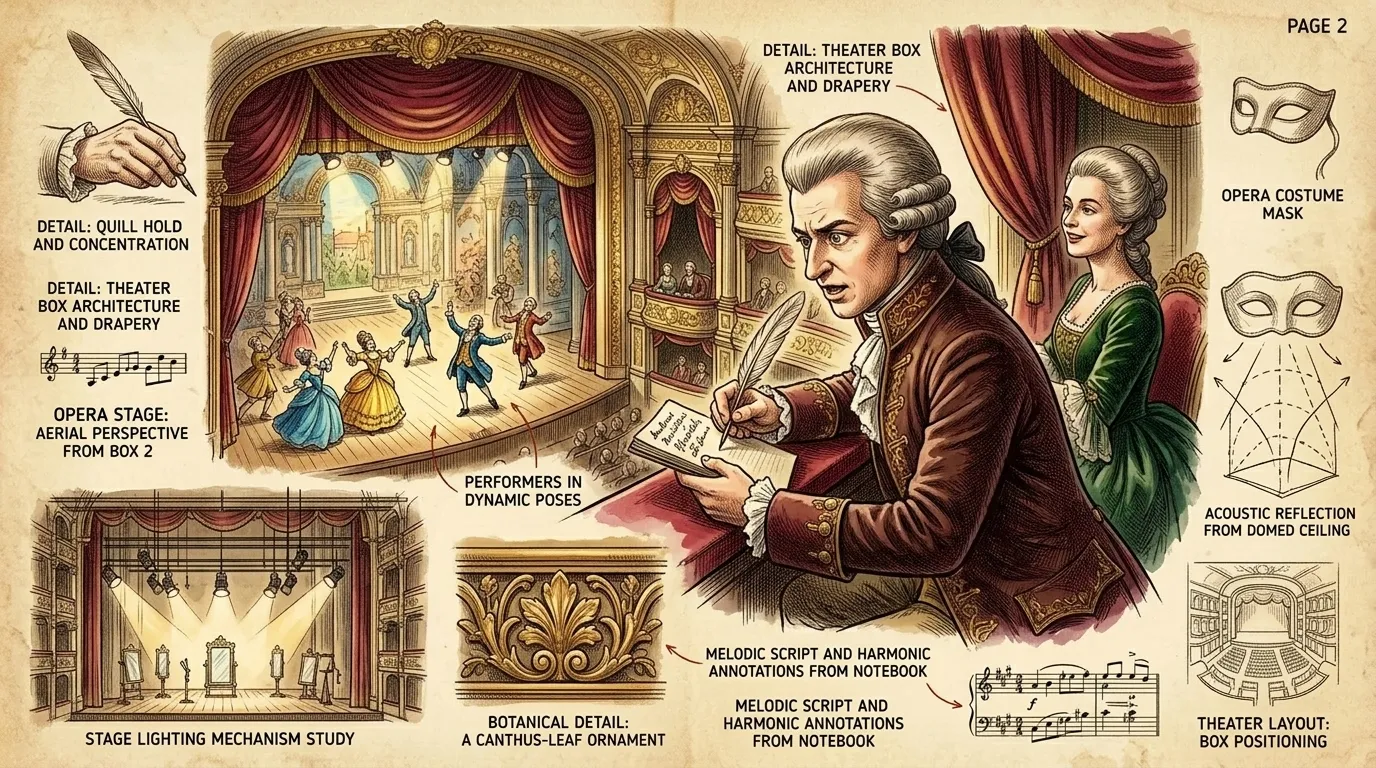
Salzburg, years before. A young Mozart, barely a teenager, sits enraptured in the theater, listening to the soaring melodies of Italian opera. The vibrant vocal lines and dramatic orchestrations deeply influence his musical sensibility, shaping the light, lyrical quality that would characterize much of his later work. He scribbles furiously in a notebook, trying to capture the essence of the performance.
""The human voice," he whispers to his sister, Nannerl, "it can express such passion, such beauty! I must learn to write melodies that sing like this.""
Art Fact: Mozart's early exposure to Italian opera heavily influenced his compositional style. He traveled to Italy several times as a young man, studying with renowned composers and absorbing the Italian musical tradition.
Page 3
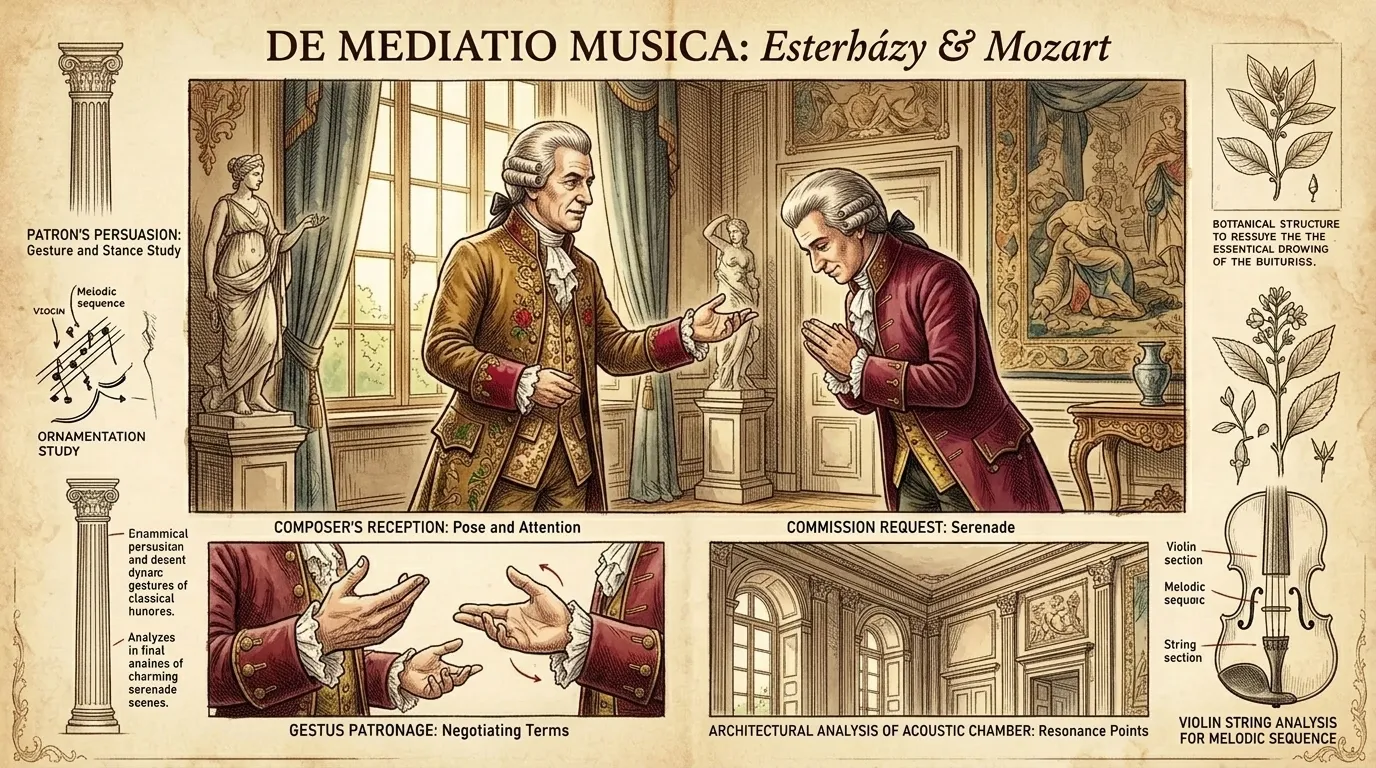
Vienna, 1786. Count Johann Esterházy, a wealthy nobleman and patron of the arts, approaches Mozart with a request. He desires a light, entertaining piece for an upcoming summer garden party. Mozart, ever eager to please, accepts the commission, though he secretly yearns to write more serious, dramatic works.
""Maestro Mozart," Count Esterházy says, his voice smooth as silk, "I require a serenade, something charming and delightful, to grace my summer festivities.""
Art Fact: Many of Mozart's works were commissioned by wealthy patrons, who often dictated the style and purpose of the compositions. While this provided him with income, it also sometimes constrained his artistic freedom.
Page 4
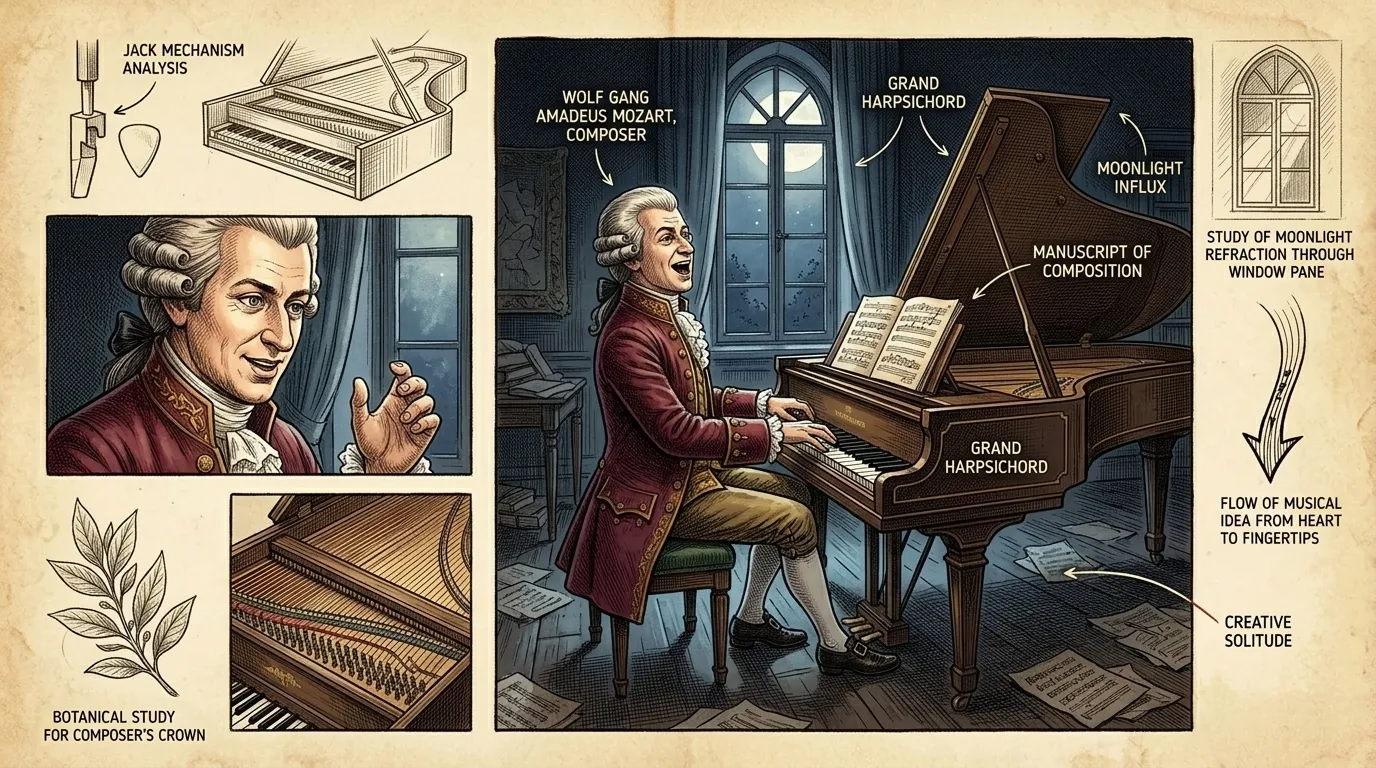
Confined by day to the demands of courtly life and commissions, Mozart finds solace and inspiration in the quiet of the night. Away from the prying eyes of patrons and critics, he allows his imagination to soar, experimenting with melodies and harmonies that would be too daring for public performance. It is in these nocturnal hours that the seeds of Eine kleine Nachtmusik are sown.
""Ah, the night!" Mozart exclaims, sitting at his harpsichord. "Finally, I can compose without the weight of expectation. 'As Leonardo da Vinci said, 'Every obstacle yields to stern resolve,' I must write from my soul.""
Art Fact: Mozart often composed late at night, finding the silence and solitude conducive to creativity. He was known for his prodigious memory and ability to compose entire pieces in his head before writing them down.
Page 5
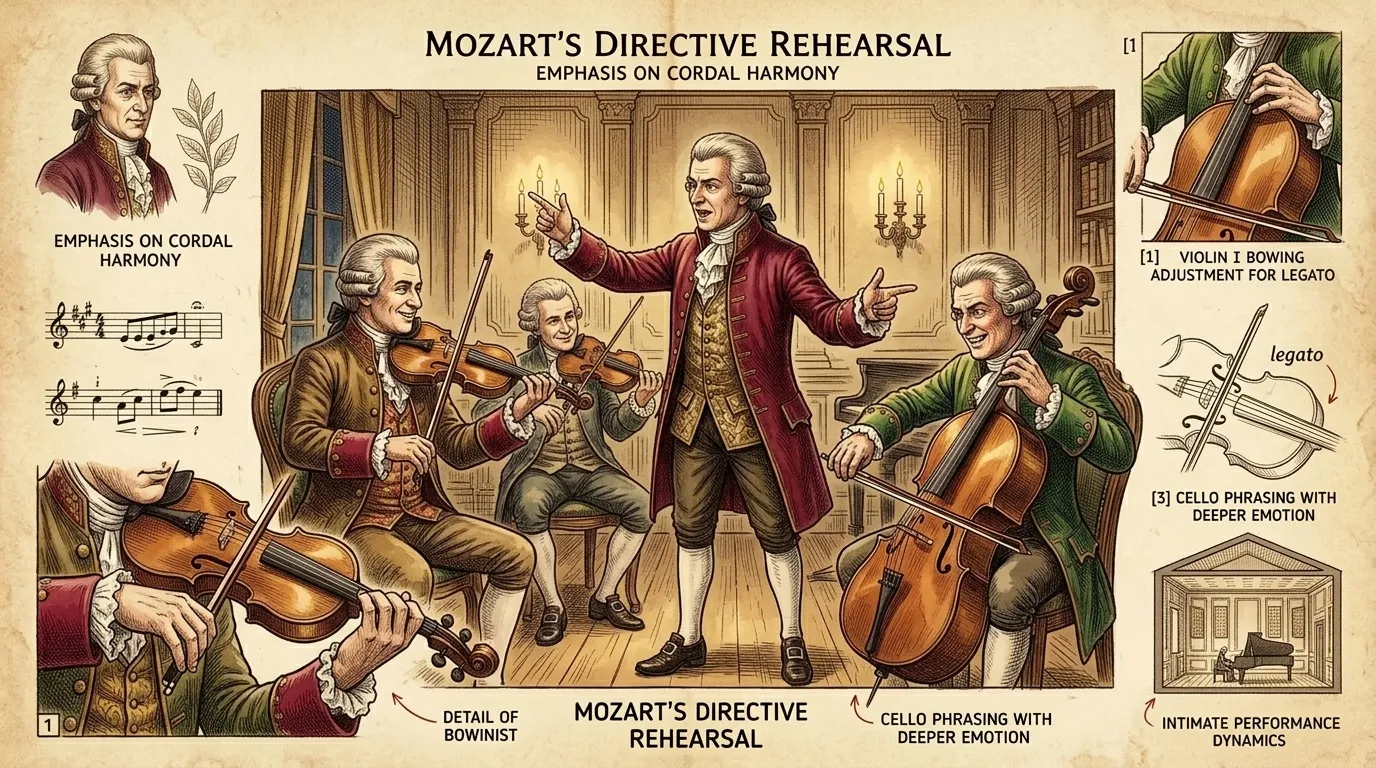
Mozart gathers a group of his closest friends, accomplished musicians, to perform an early draft of his serenade. The intimate setting of a private chamber allows him to refine the piece, adjusting the harmonies and tempos based on the musicians' feedback. The interplay of the strings inspires him to write ever more elegant and expressive melodies.
""More legato here, Anton!" Mozart instructs, gesturing to the first violinist. "And Franz, a touch more passion in the cello line! Let the music sing!""
Art Fact: The string quartet was a popular ensemble in Mozart's time, and he wrote extensively for it. He often performed his works in private chambers before presenting them to larger audiences.
Page 6
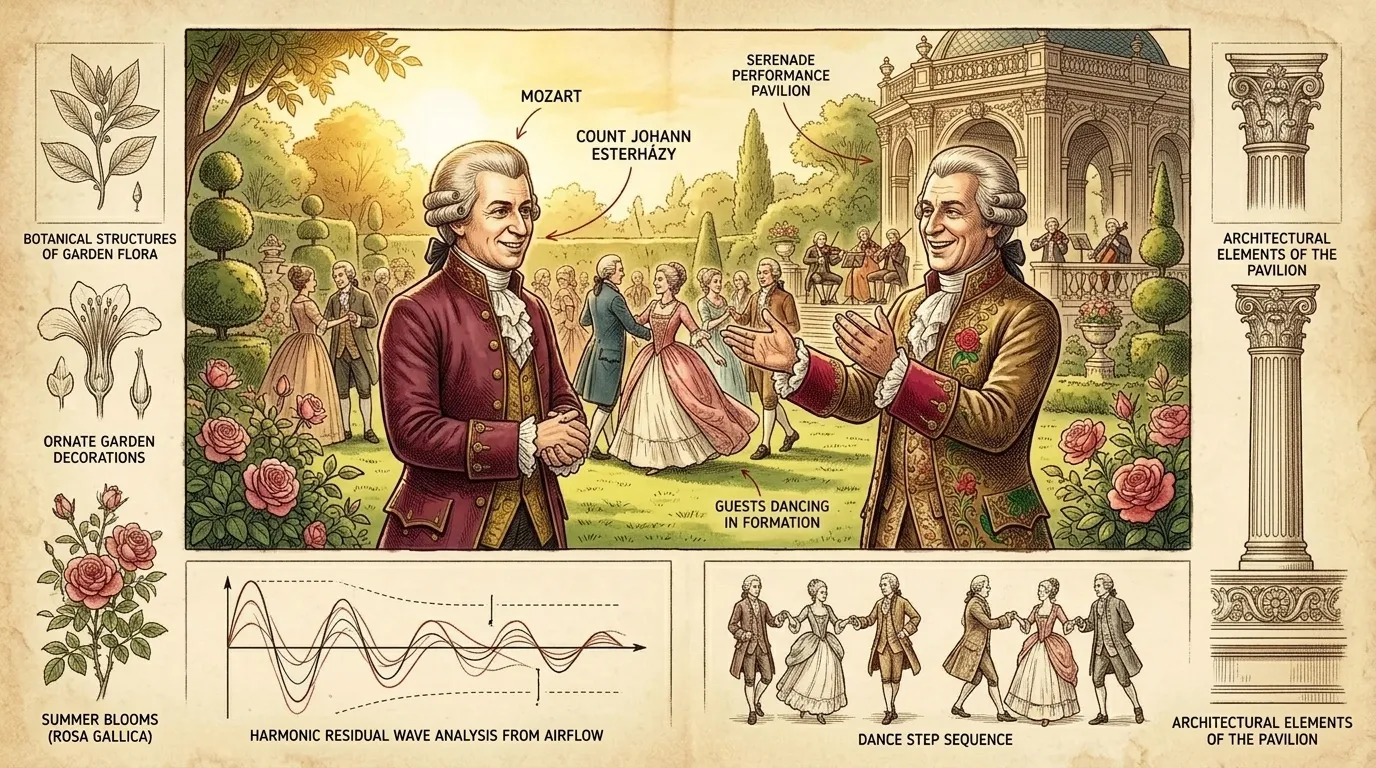
The Count's summer garden party arrives. As Eine kleine Nachtmusik fills the air, Mozart beams with pride. He watches as the guests dance and mingle, their faces alight with joy. The serenade is a triumph, a perfect expression of lightness and elegance.
""Magnificent, Mozart, truly magnificent!" Count Esterházy exclaims, clapping his hands enthusiastically. "You have captured the very essence of summer!""
Art Fact: Serenades were often performed at social gatherings, providing a light and entertaining backdrop for conversation and dancing. Mozart excelled at writing these types of pieces, balancing musical sophistication with accessibility.
Page 7
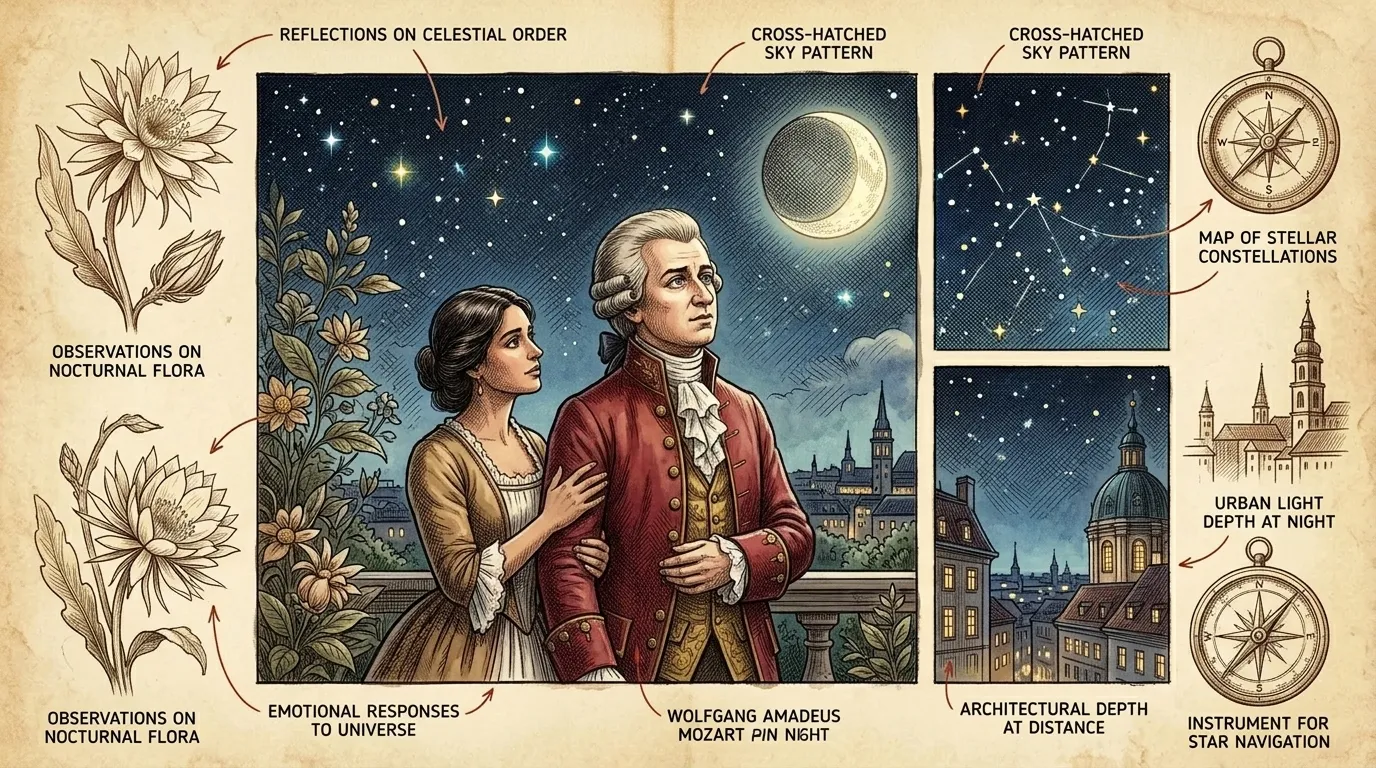
Despite the serenade's success, Mozart feels a pang of melancholy. He knows that his true genius lies in more profound works, in operas and symphonies that explore the full range of human emotion. He gazes at the stars, wondering if he will ever be truly recognized for his more ambitious creations. As Meera whispers, from that night the Mozart and Meera would have a bond that no one could break.
""Will they ever see beyond the pretty tunes, Meera?" Mozart asks, his voice tinged with sadness. "Will they ever understand the depth of my soul?""
Art Fact: Mozart often struggled to reconcile his artistic ambitions with the demands of the musical marketplace. He longed to write more serious and challenging works but was often compelled to compose lighter pieces to earn a living.
Page 8

Years pass. Mozart's music continues to be performed and loved, even after his untimely death. Eine kleine Nachtmusik, in particular, becomes a favorite of audiences around the world, its simple elegance and joyful spirit transcending time and culture. In the darkness Jun and Nils were searching for a way out of this underground world. Jun remembered reading earlier 'that ancient sailors used the North Star to navigate when lost'.
""It is timeless," a music critic writes in a newspaper. "A serenade for all generations, a testament to the enduring power of Mozart's genius.""
Art Fact: Eine kleine Nachtmusik has remained one of Mozart's most popular and frequently performed works. Its enduring appeal lies in its accessibility, its memorable melodies, and its joyful spirit.
Page 9
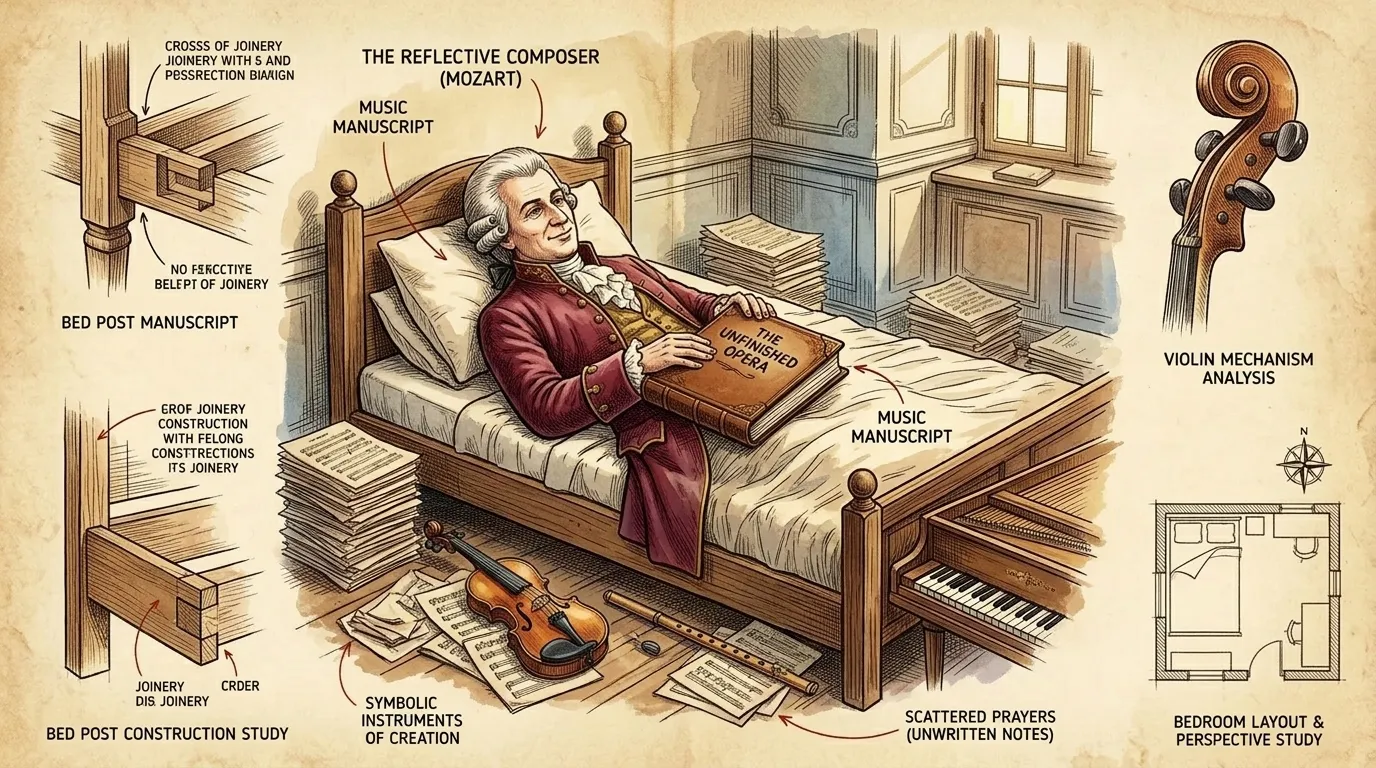
Though Mozart left behind a vast and varied body of work, he felt that he had only scratched the surface of his potential. He dreamed of writing even greater operas, even more profound symphonies, but fate intervened. His music, however, continues to inspire and uplift, a testament to the boundless creativity of the human spirit.
""I leave behind a world of music," Mozart declared before his death (dramatized interpretation), "but so much more remains to be written.""
Art Fact: Mozart died at the age of 35, leaving behind a legacy of over 800 works. Despite his short life, his music has had a profound and lasting impact on Western culture.
Page 10
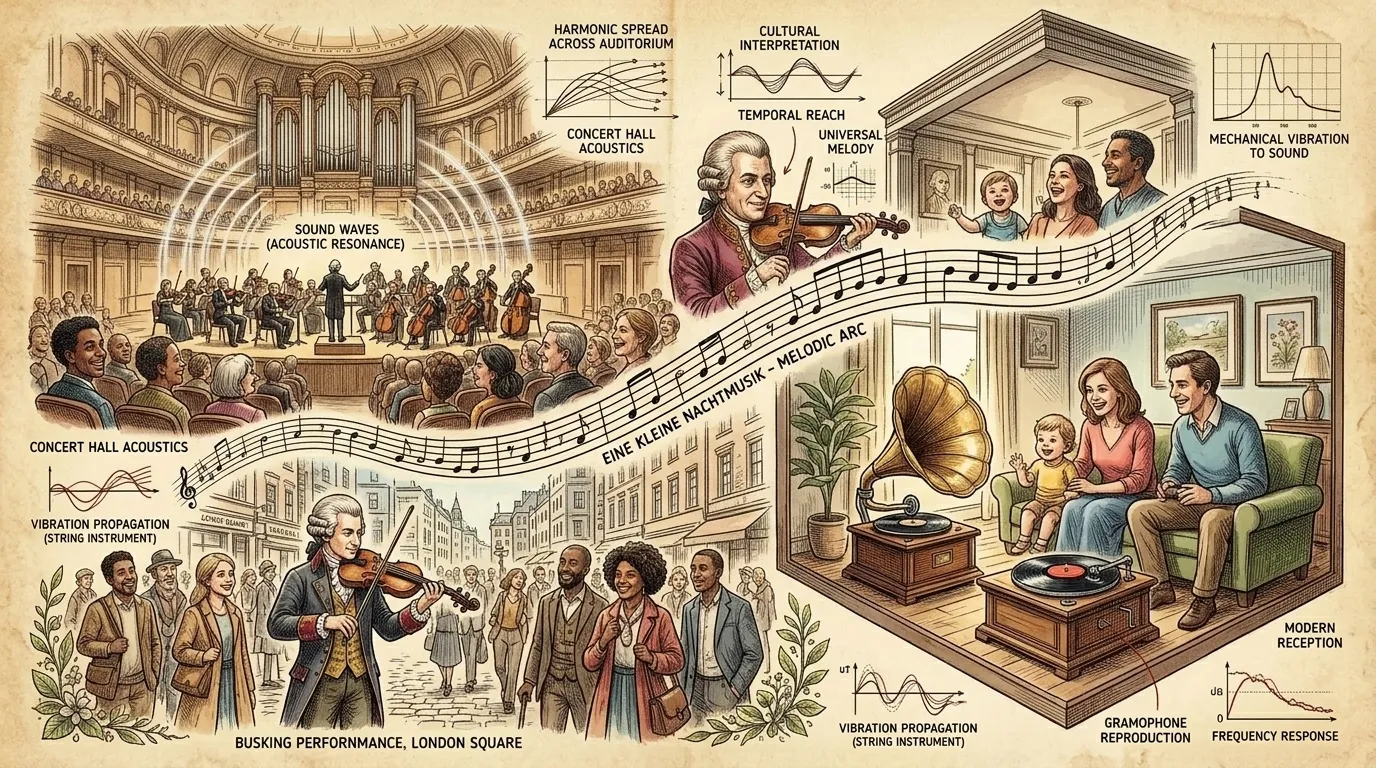
Today, Eine kleine Nachtmusik resonates across centuries. From concert halls to street corners, its melodies weave through everyday life, a constant reminder of Mozart's genius. It underscores the eternal human capacity for joy, for beauty, and for harmony. Mozart's music survives because, as the poet John Keats wrote, 'A thing of beauty is a joy forever.'
Art Fact: Eine kleine Nachtmusik continues to be performed and enjoyed by millions around the world. Its melodies have been featured in countless films, television shows, and commercials, ensuring its place in popular culture.
About this story
- Location: Italy
- Audience: general readers
Questions and answers
Read Wonder Arts on your phone
Wonder Arts is available on Android. Get Wonder Arts on Google Play.
More Wonder Arts stories
- Empire State Building (New York City, USA — 1931)
- Epic of Gilgamesh by Sumerian authors (Mesopotamia — c. 2100 BC)
- Equestrian Statue of Colleoni by Andrea del Verrocchio (Venice, Italy — 1496)
- Farnese Hercules by Glykon (Naples, Italy — 3rd Century AD)
- Fidelio by Ludwig van Beethoven (Vienna, Austria — 1805)
- First Color Photograph by Thomas Sutton and James Clerk Maxwell (London, UK — 1861)