Empire State Building (New York City, USA — 1931)
Empire State Building (New York City, USA — 1931) — an illustrated arts story, set in United States. 10 illustrated pages, free to read on Wonder Arts.
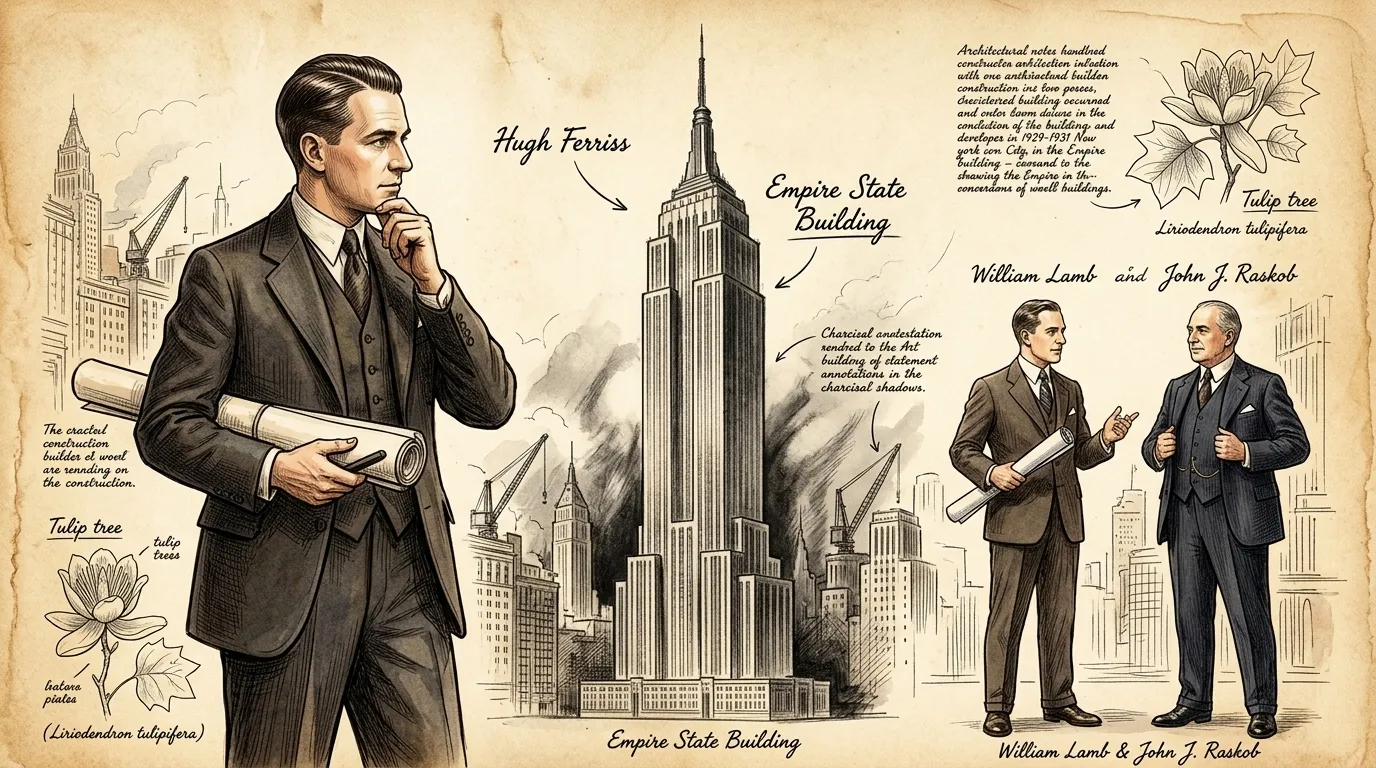
Page 1
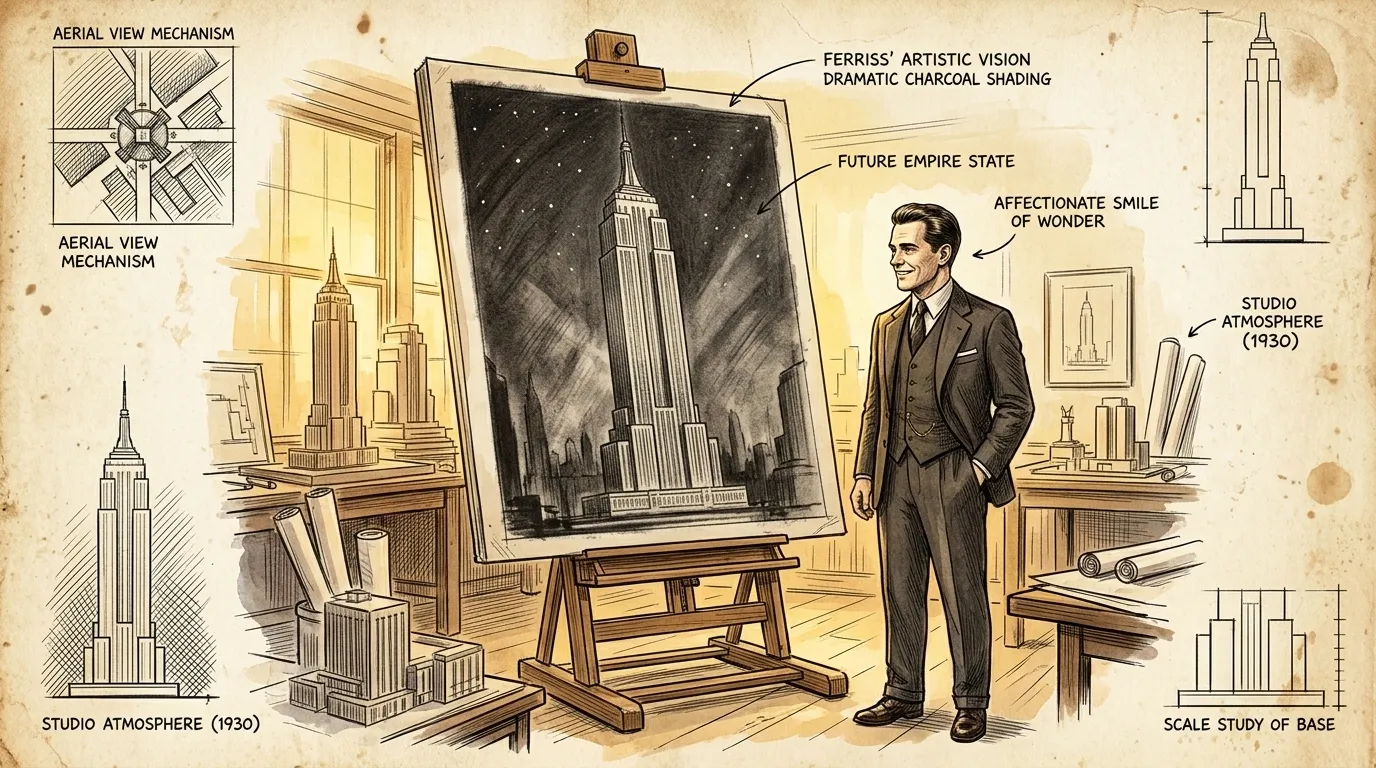
Hugh Ferriss, standing before his evocative rendering of the Empire State Building in 1930, captured the zeitgeist of a city reaching for the stars. The artwork, charcoal on paper, immortalized a vision that would soon redefine the New York skyline. At its completion, the Empire State Building stood at 1,454 feet (including its antenna), briefly becoming the world's tallest building. Few know Ferriss's contribution to its iconic design. One of the interesting facts is that it was designed in just two weeks.
""The skyscraper is the triumph of mass, yet its essential appeal is due to its geometric form," Ferriss mused, lost in his creation. "It is the embodiment of height, light, and air.""
Art Fact: Hugh Ferriss (1889-1962) was an American architect, delineator, and visionary known for his atmospheric renderings of skyscrapers and urban landscapes. His work significantly influenced the design and perception of modern architecture.
Page 2
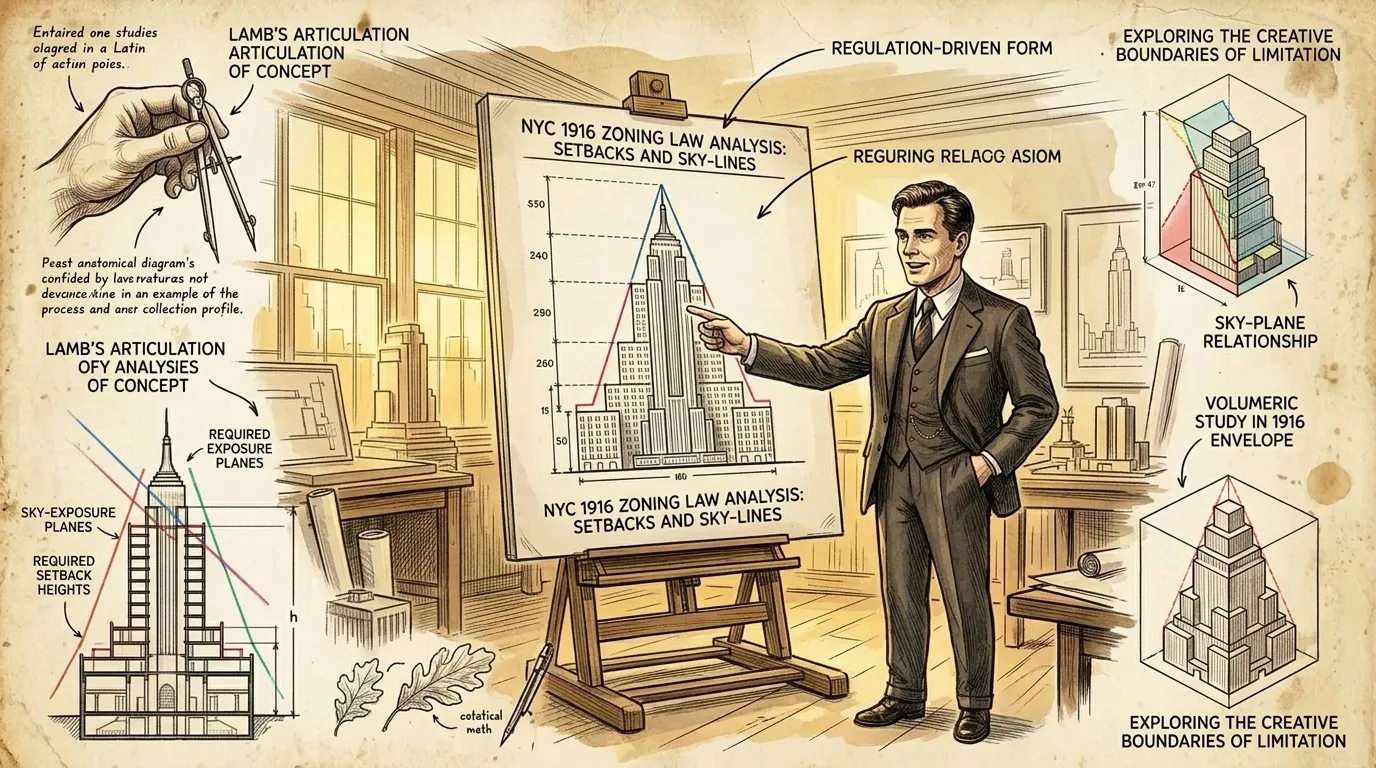
In 1916, New York City enacted a zoning law to prevent skyscrapers from blocking sunlight from reaching the streets. This law inadvertently shaped the design of the Empire State Building. Architect William Lamb understood this regulation could lead to both opportunity and limitation. He saw the possibilities in creating a building that would not only meet these requirements but also rise to record heights.
""This setback regulation," Lamb told his team, pointing to a diagram, "is not a constraint, it is an invitation to create a new form, a soaring pyramid that respects the sun's path!""
Art Fact: The 1916 Zoning Resolution was the first citywide zoning code in the United States. It aimed to control building height and use to prevent congestion and protect access to light and air.
Page 3
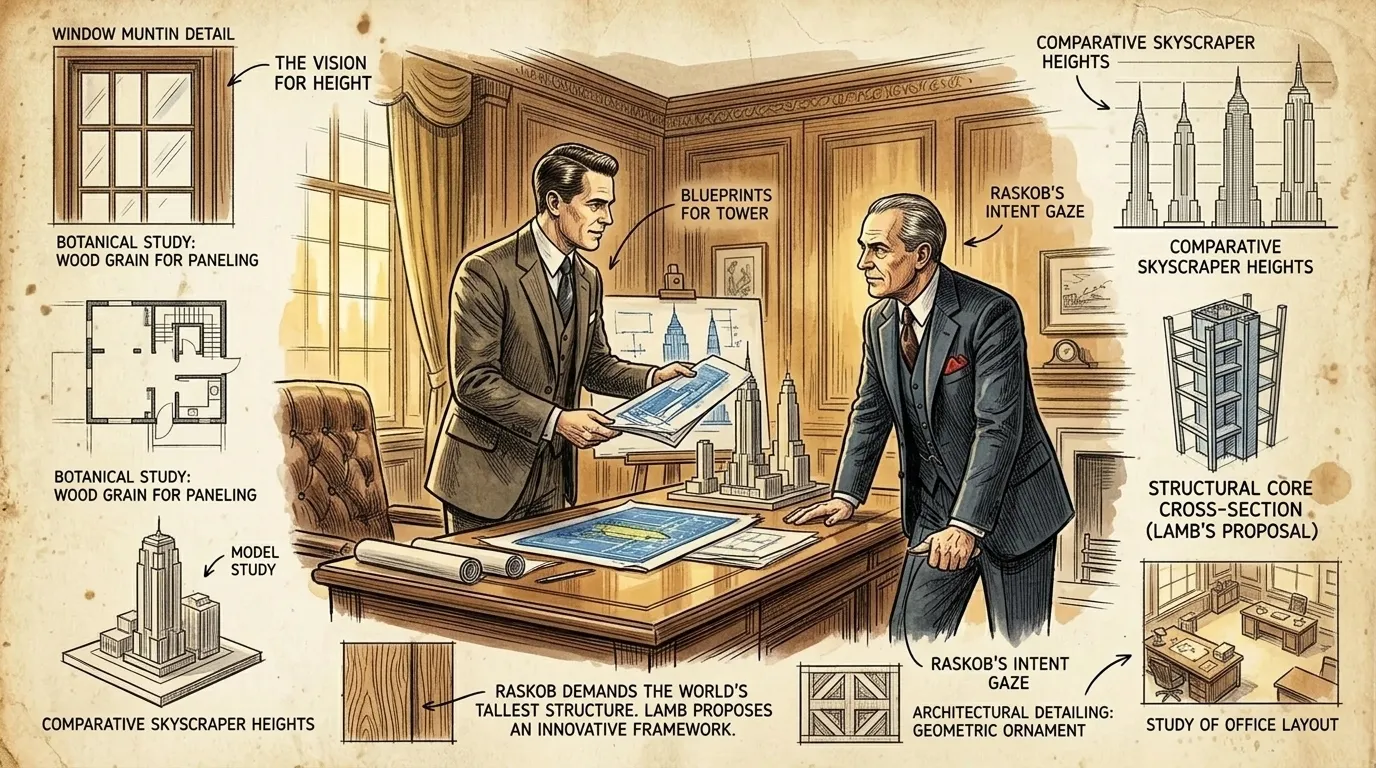
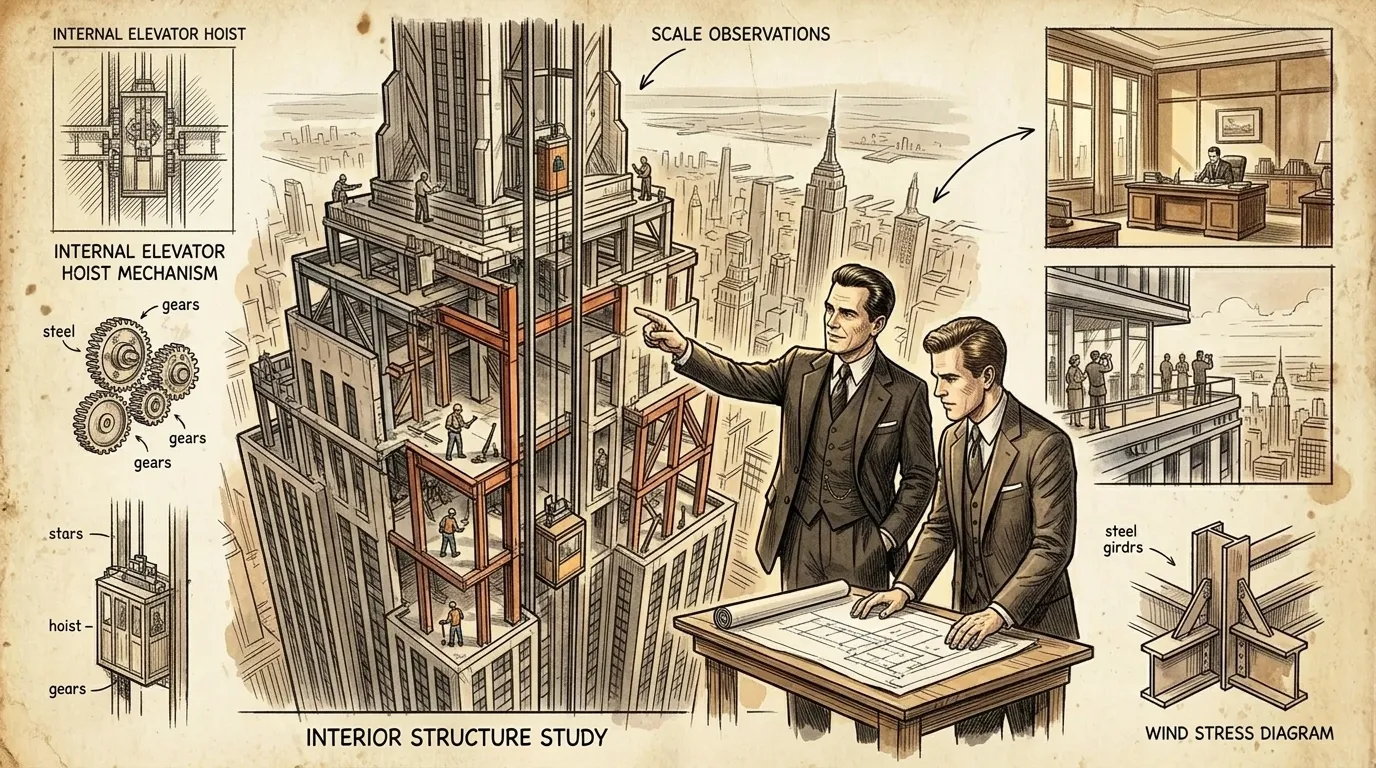
In 1929, William Lamb and his firm, Shreve, Lamb & Harmon, secured a meeting with John J. Raskob, a former General Motors executive and the driving force behind the project. Raskob, a man of immense ambition, sought to build the tallest building in the world, surpassing the Chrysler Building. Raskob listened intently as Lamb explained his vision. Raskob later stated, "I want to build the biggest tower, but it needs to be more than that. It has to stand for something."
""Mr. Lamb," Raskob declared, his eyes gleaming, "we are not merely building an office tower. We are erecting a symbol of American ingenuity and aspiration. Let us make it the tallest the world has ever seen!""
Art Fact: John J. Raskob (1879-1950) was an American businessman and financier best known for his role in the construction of the Empire State Building. He also served as chairman of the Democratic National Committee.
Page 4
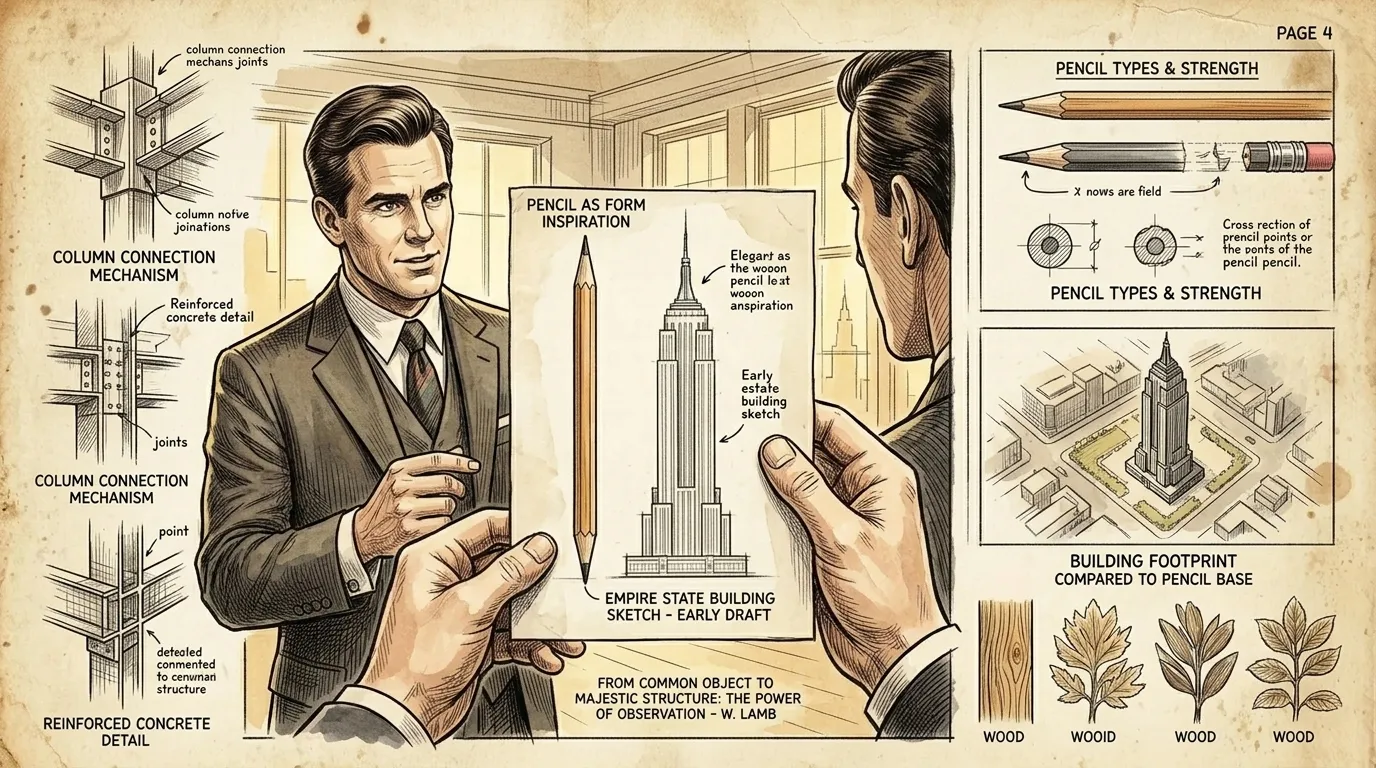
There's a curious origin to the building's design. Lamb's designs were based on sketches of a pencil, as Lamb was said to have looked at pencil designs for inspiration for its shape, a fact only those within the immediate circle of its creation ever knew. "Look at it and you'll see the genius for its shape! It's the perfect shape to catch the light and the eye!" Lamb exclaimed.
""You'll think it absurd, perhaps," Lamb admitted, holding up a pencil sketch, "but the simple, elegant form of a pencil is what inspired the Empire State Building's shape!""
Art Fact: The pencil design was a unique and simple foundation that formed the basis for its overall aesthetic.
Page 5
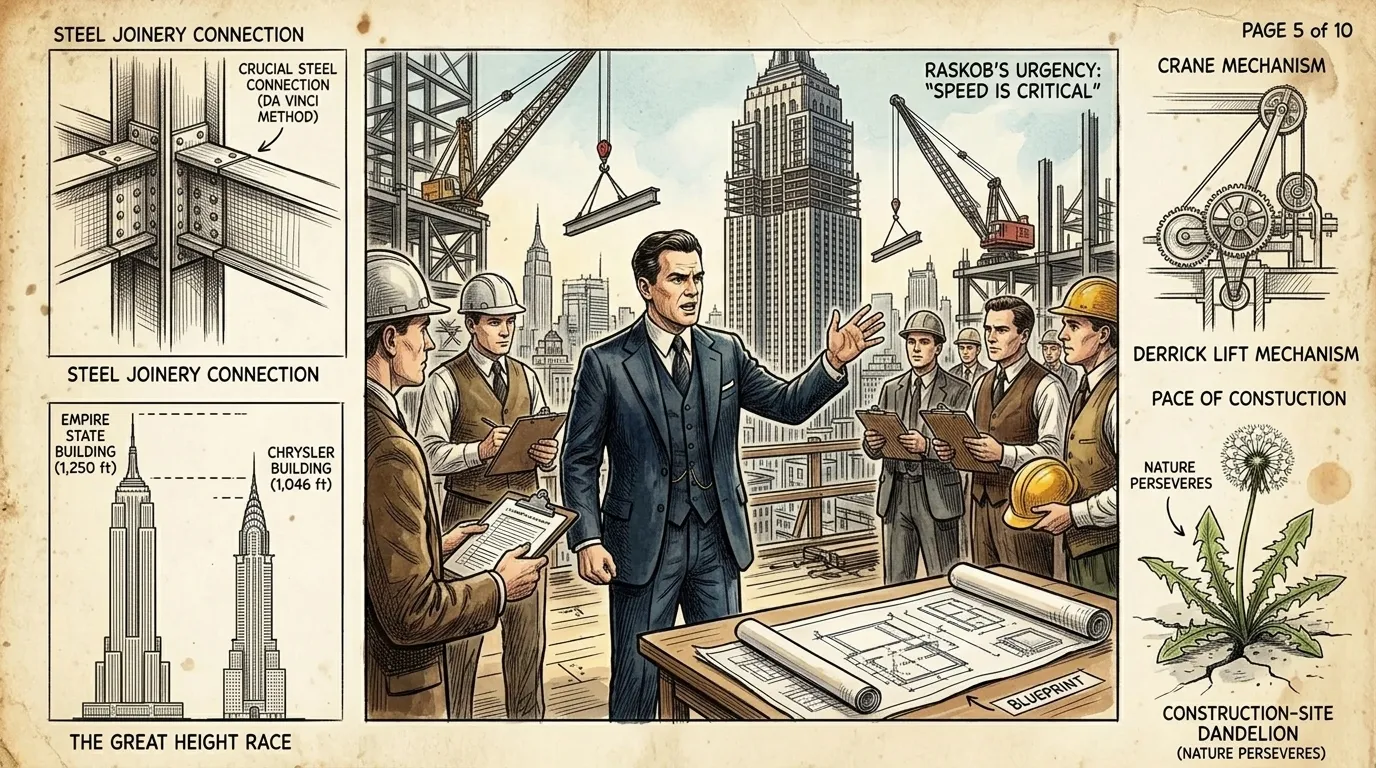
With the Chrysler Building nearing completion, the pressure was on to secure the title of world's tallest building. Raskob and Lamb pushed the construction team to work at an unprecedented pace. The city buzzed with excitement, tracking the building's progress. One man stated, "This building is going up fast, but we are even faster! They want to finish before Chrysler!"
""Gentlemen," Raskob declared, addressing the construction managers, "every day counts! We must outpace Chrysler and claim our place in history!""
Art Fact: The Empire State Building was constructed at an astonishing pace, with an average of four-and-a-half stories being completed per week.
Page 6
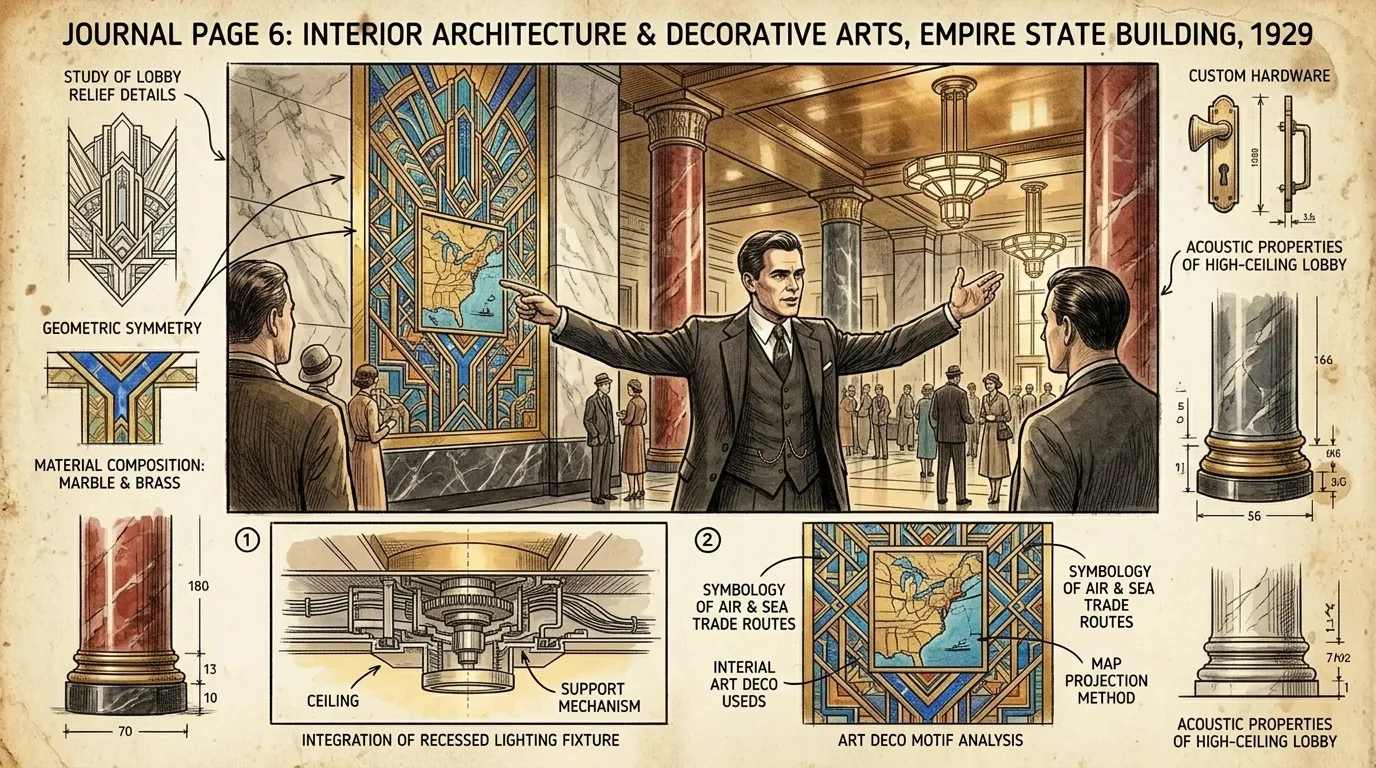
The Empire State Building's Art Deco design reflected the era's fascination with modernity, technology, and progress. From the sleek facade to the intricate lobby details, every element exuded sophistication. Ferriss said once, "The city is a machine for the making of money, and the skyscraper is its most efficient tool."
""Art Deco," Lamb explained to a visitor, pointing to a relief in the lobby, "is the language of our time. It celebrates speed, efficiency, and the spirit of innovation!""
Art Fact: Art Deco was a popular international design movement from 1925 until the 1940s, affecting the decorative arts such as architecture, furniture, jewelry, fashion, cars, trains, ocean liners, and everyday objects.
Page 7
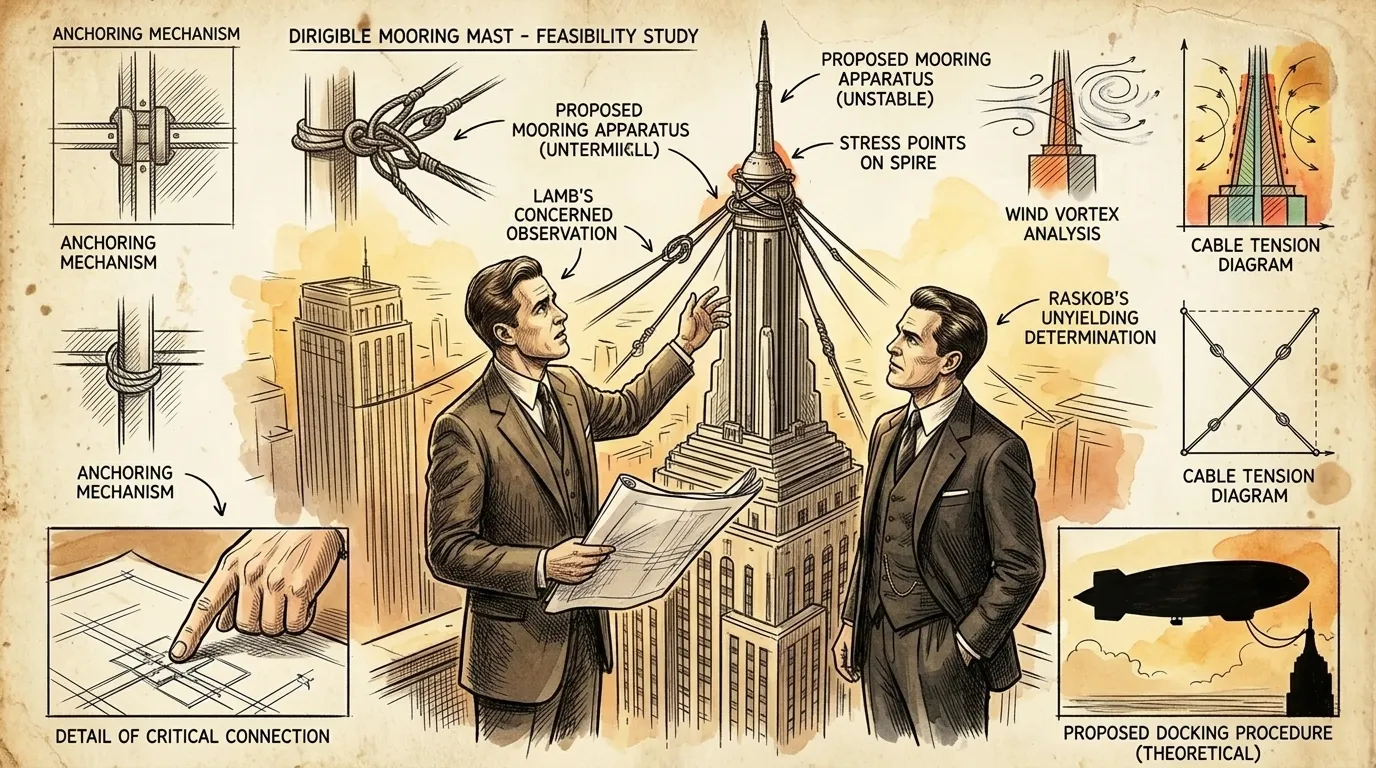
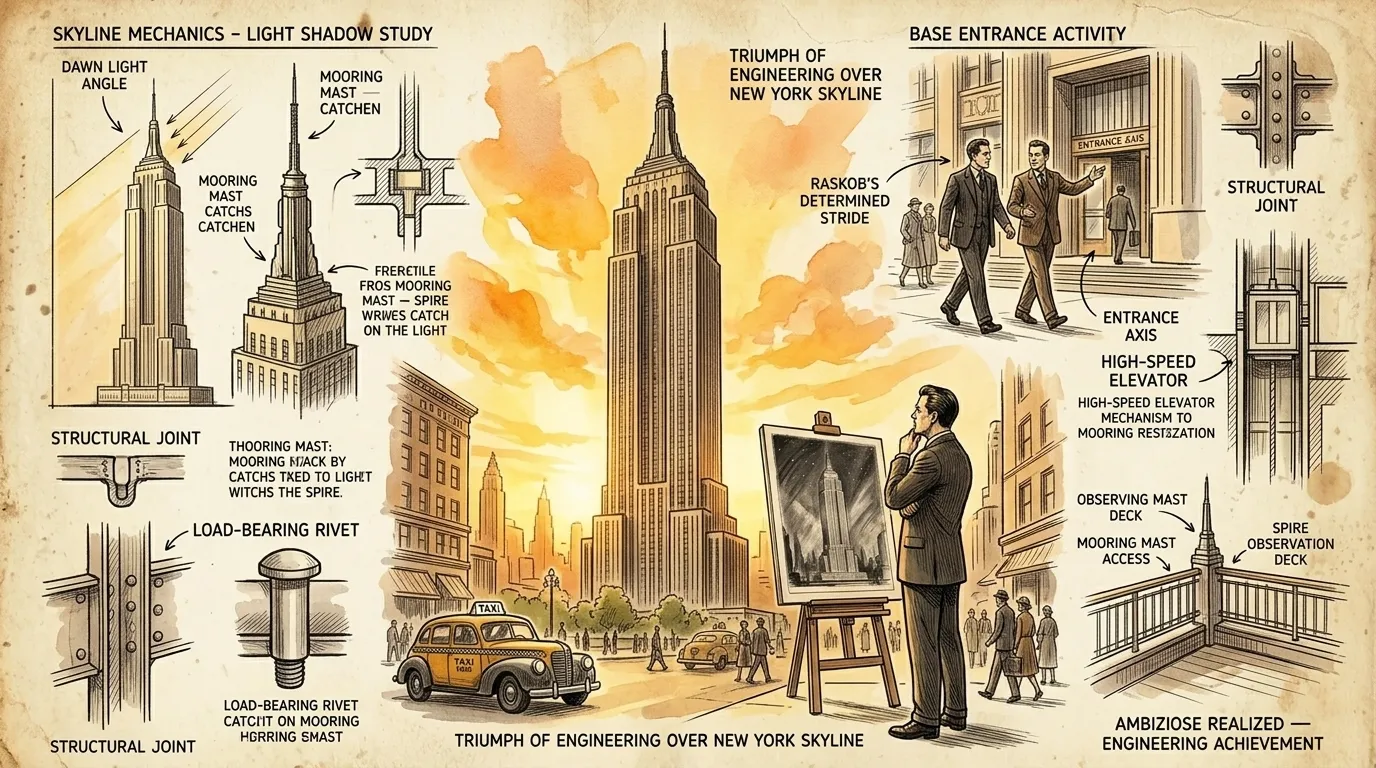
Originally, the Empire State Building was intended to serve as a mooring mast for dirigibles. However, this proved impractical and dangerous due to strong winds and downdrafts. The mooring mast was used only a handful of times. Charles Lindbergh noted once, "That mast is a beautiful addition but not at all practical. It would be better for other use."
""The mooring mast," Lamb admitted to Raskob during an inspection, "was a grand idea, but it is not working as we envisioned. Perhaps it's best to consider alternative uses for it.""
Art Fact: The idea of using the Empire State Building as a dirigible mooring mast was abandoned due to safety concerns and logistical challenges.
Page 8
Page 9
Page 10
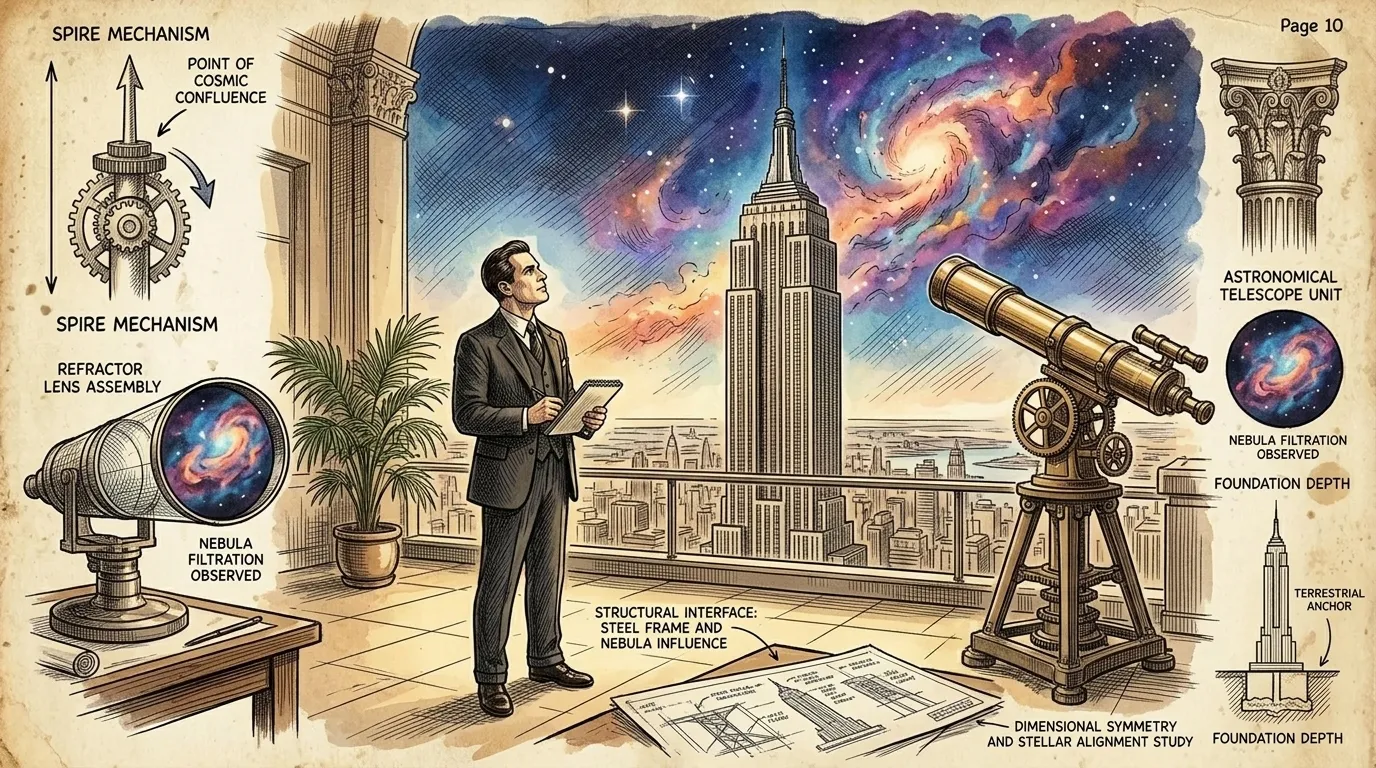
The Empire State Building stands as a testament to human ambition and artistic vision. Its iconic silhouette, shaped by Hugh Ferriss's charcoal dreams, continues to inspire generations. Why does this artist's work survive forever? Because it captured not just a building, but a dream.
""Architecture should speak of its time and place, but yearn for timelessness," Ferriss once said, looking into the starry cosmos of the candy-colored nebula."
Art Fact: The Empire State Building is a symbol of New York City, of American ingenuity, and of the enduring power of human vision.
About this story
- Location: United States
- Audience: general readers
Questions and answers
Questions and answers about Empire State Building (New York City, USA — 1931)
Read Wonder Arts on your phone
Wonder Arts is available on Android. Get Wonder Arts on Google Play.
More Wonder Arts stories
- Epic of Gilgamesh by Sumerian authors (Mesopotamia — c. 2100 BC)
- Equestrian Statue of Colleoni by Andrea del Verrocchio (Venice, Italy — 1496)
- Farnese Hercules by Glykon (Naples, Italy — 3rd Century AD)
- Fidelio by Ludwig van Beethoven (Vienna, Austria — 1805)
- First Color Photograph by Thomas Sutton and James Clerk Maxwell (London, UK — 1861)
- First Film Screening by Lumière Brothers (Paris, France — 1895)