The Horse Fair by Rosa Bonheur (Paris, France — 1853)
The Horse Fair by Rosa Bonheur (Paris, France — 1853) — an illustrated arts story, set in France. 10 illustrated pages, free to read on Wonder Arts.
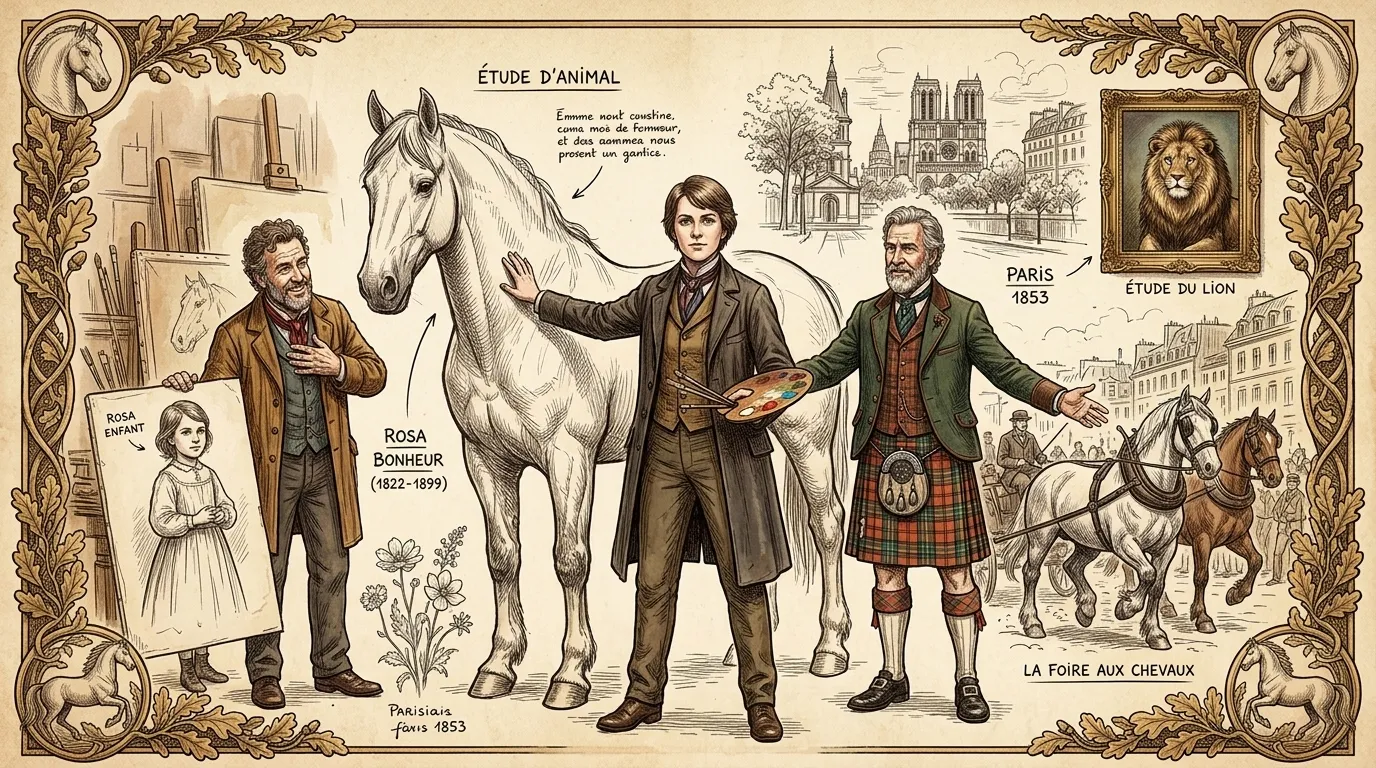
Page 1
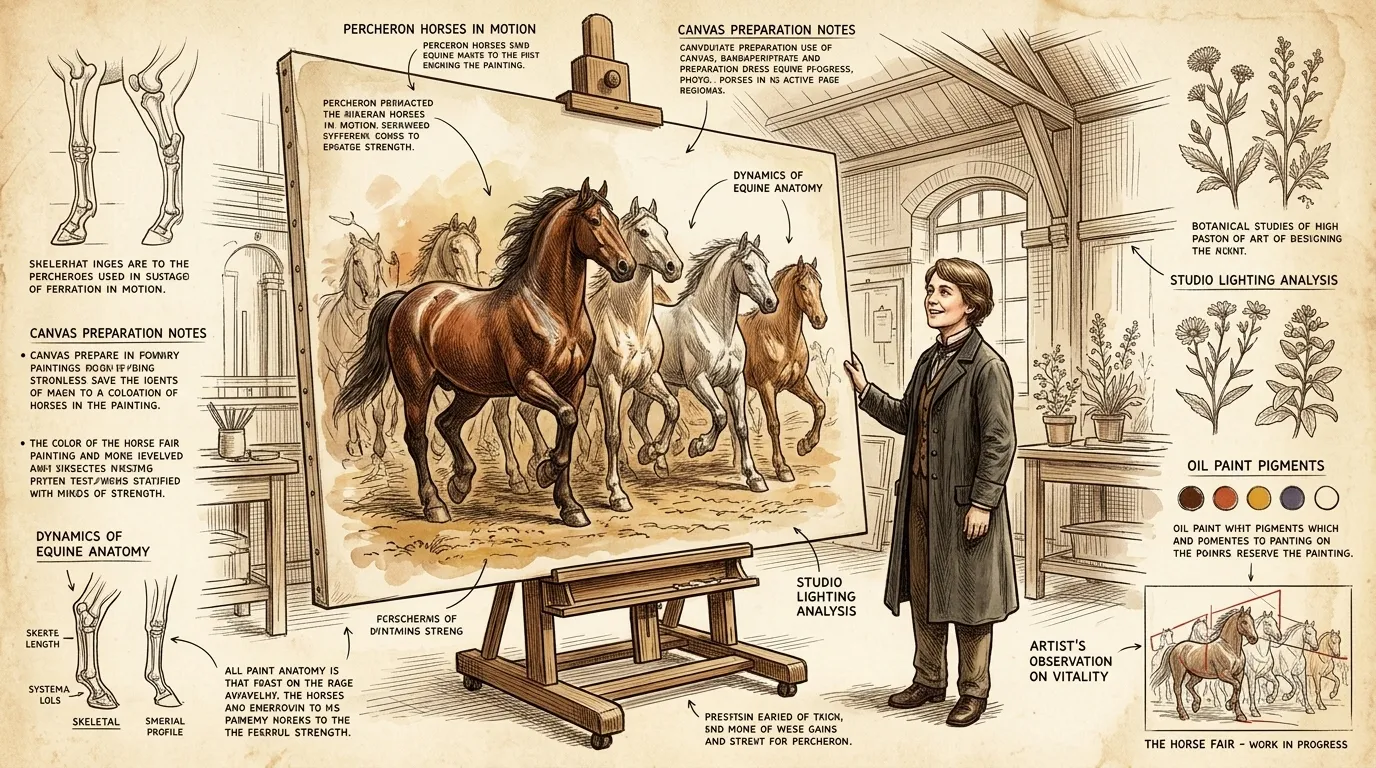
Rosa Bonheur stands proudly before her monumental masterpiece, 'The Horse Fair.' Completed in 1855, this Realism painting captures the power and grace of Percheron horses at the horse market held on the Boulevard de l'Hôpital in Paris. Spanning an impressive 8 feet high and 16 feet wide (244.5 cm x 496.8 cm), the painting now resides in the Metropolitan Museum of Art in New York, a testament to Bonheur's dedication and skill. Its initial rejection by the Paris Salon only fueled her determination to showcase the raw energy and beauty of these magnificent creatures.
""At last," Rosa whispers, her gaze sweeping across the canvas, "I have captured their very souls on canvas. Now, let the world see their strength.""
Art Fact: The Horse Fair (1855) is a Realism masterpiece depicting the Parisian horse market. It measures 8 x 16 feet and is housed in the Metropolitan Museum of Art.
Page 2
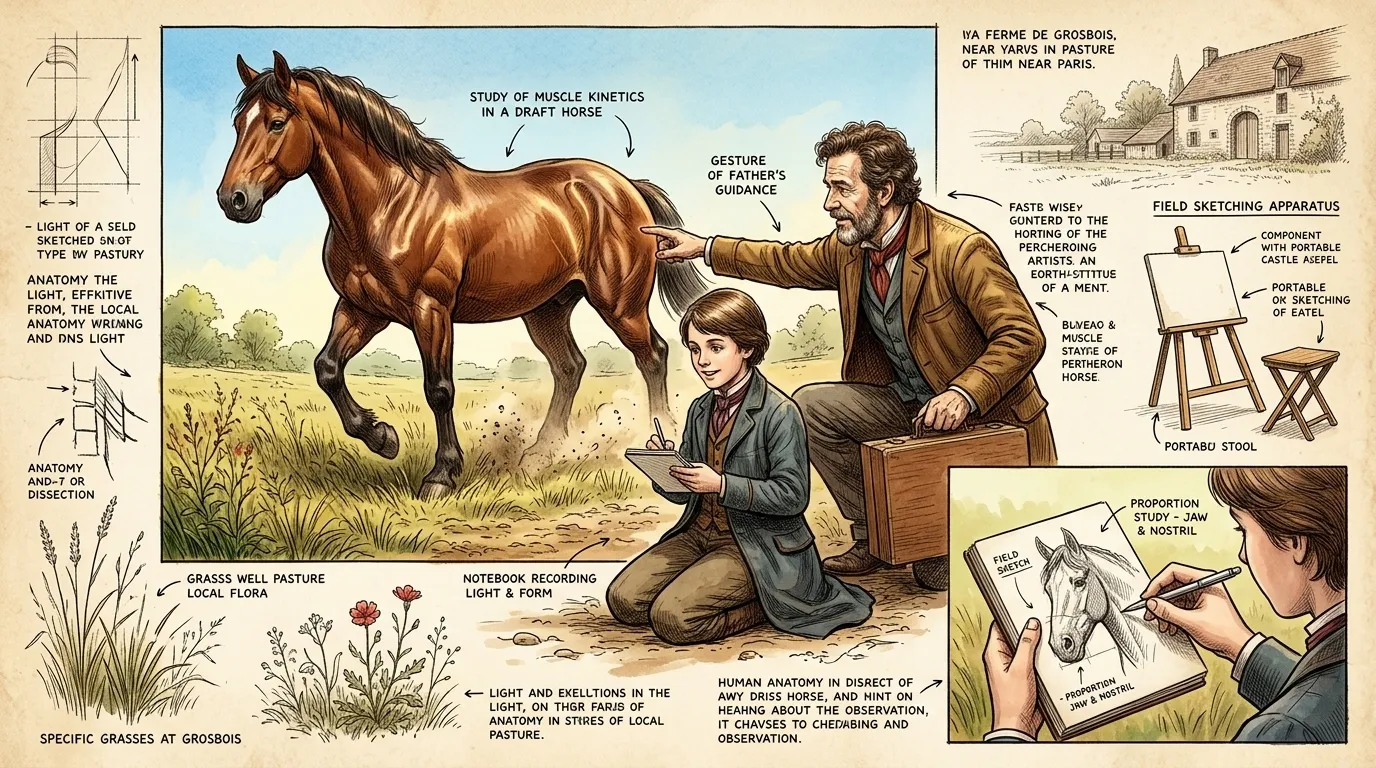
Young Rosa spent hours at her father's side, sketching the animals at the ferme de Grosbois, near Paris. Each line, each shadow, was a lesson in understanding their anatomy and spirit. Her father, Raymond Bonheur, a painter himself, nurtured her talent, allowing her to explore the world through art.
"Raymond says, "'Rosa, observe their muscles, their movement. Capture their essence, not just their form.'" Rosa responds, "'Yes, Papa. I see how the light plays on their coats, how their muscles ripple with every stride.'""
Art Fact: Rosa's father, Raymond Bonheur, was a painter who encouraged her artistic pursuits from a young age.
Page 3
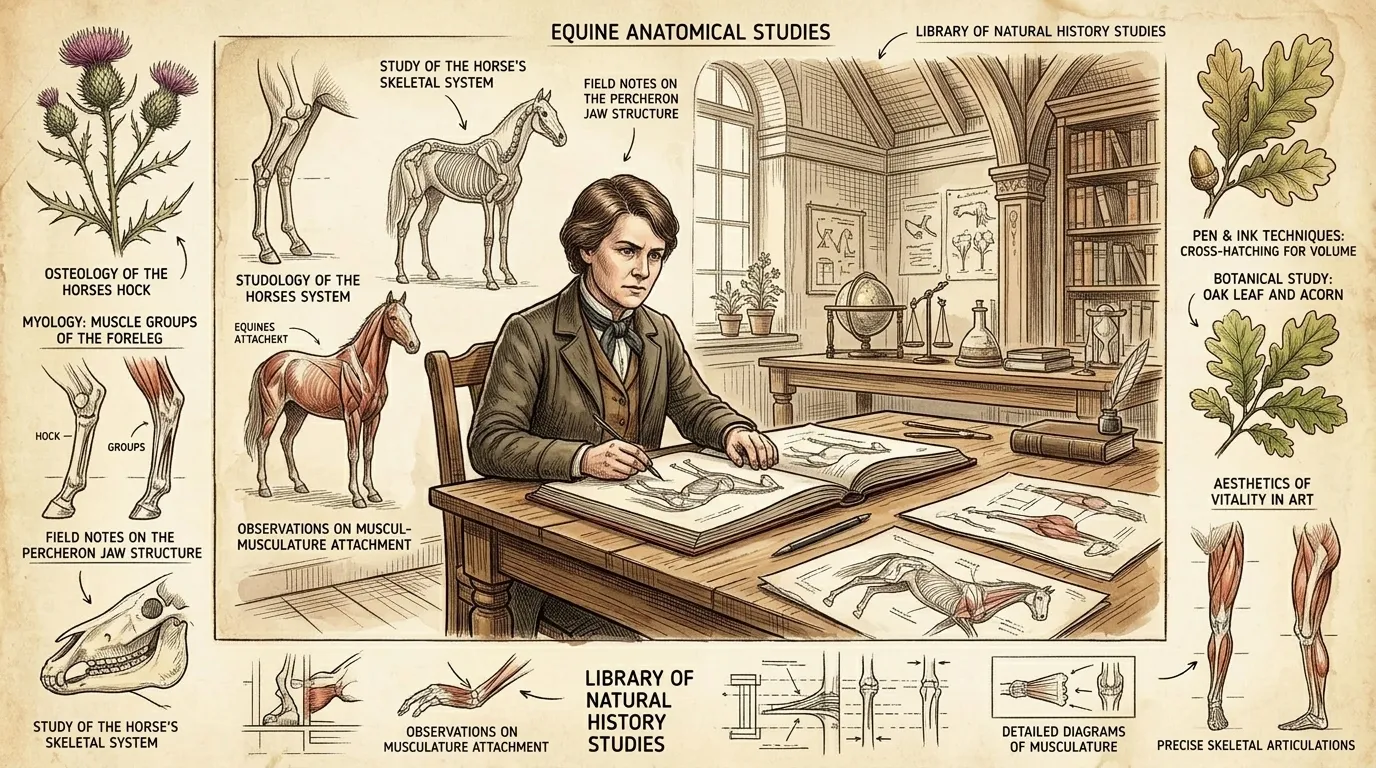
To truly understand the animals she wished to paint, Rosa sought access to slaughterhouses and veterinary schools. Dressed in men's clothing to avoid unwanted attention, she meticulously studied equine anatomy, sketching their skeletons and musculature. It was a necessary, if unsettling, part of her artistic education.
"A fellow student whispers, "'Mademoiselle Bonheur, what brings you to such a grim place?'" Rosa replies, unflinching, "'I seek the truth beneath the surface. As Leonardo da Vinci said, 'The noblest pleasure is the joy of understanding.' To paint them truly, I must know them inside and out.'""
Art Fact: Rosa Bonheur often dressed in men's clothing to gain access to places like horse fairs and slaughterhouses, which were not considered appropriate for women at the time.
Page 4
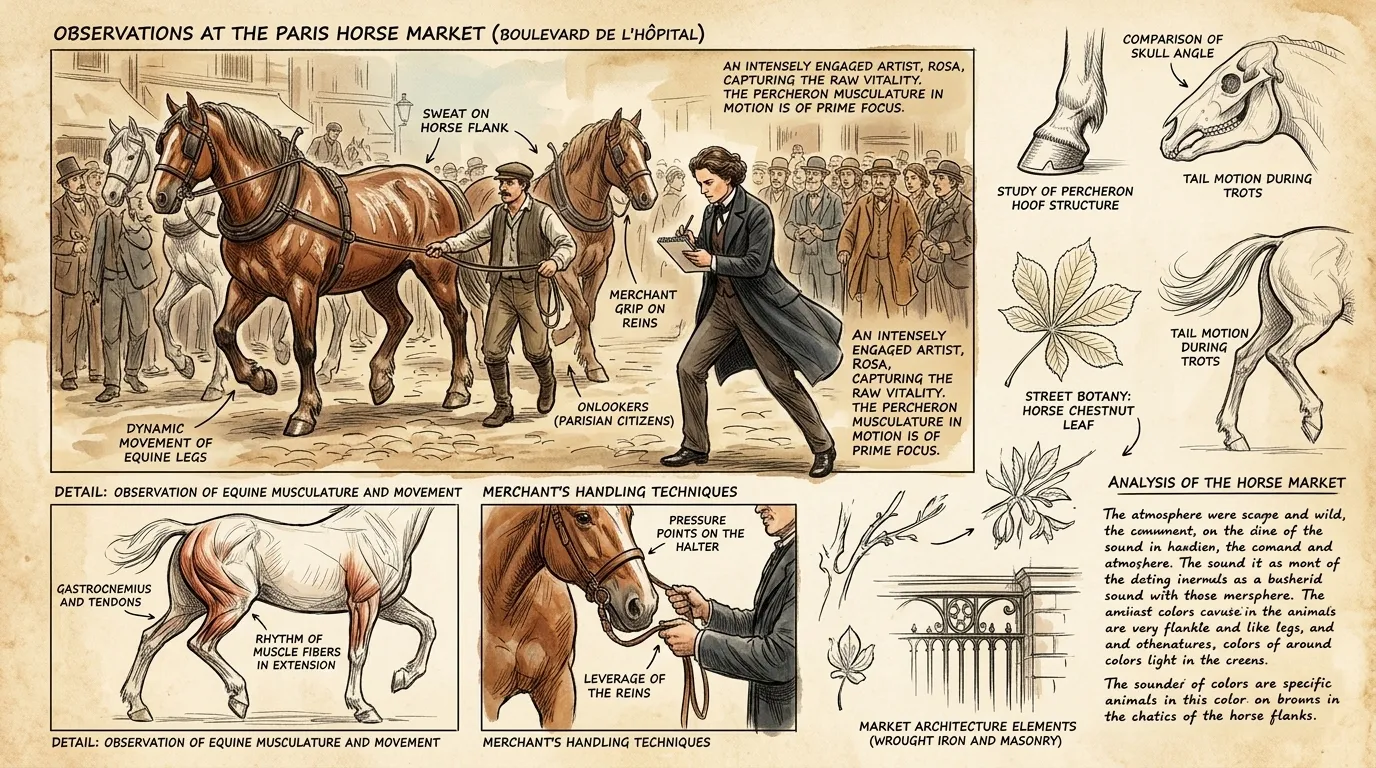
The vibrant energy of the horse market on the Boulevard de l'Hôpital captivated Rosa. She visited the market every week for a year and a half, sketching the powerful Percheron horses, the bustling merchants, and the excited onlookers. Each visit brought her closer to capturing the spirit of this chaotic scene.
"A horse merchant calls out, "'Come one, come all! See the finest horses in Paris!'" Rosa sketches furiously, muttering, "'The way he holds the reins... the sweat on the horse's flank... it must all be captured.'""
Art Fact: The horse market on the Boulevard de l'Hôpital provided Rosa Bonheur with the inspiration and subject matter for 'The Horse Fair.'
Page 5
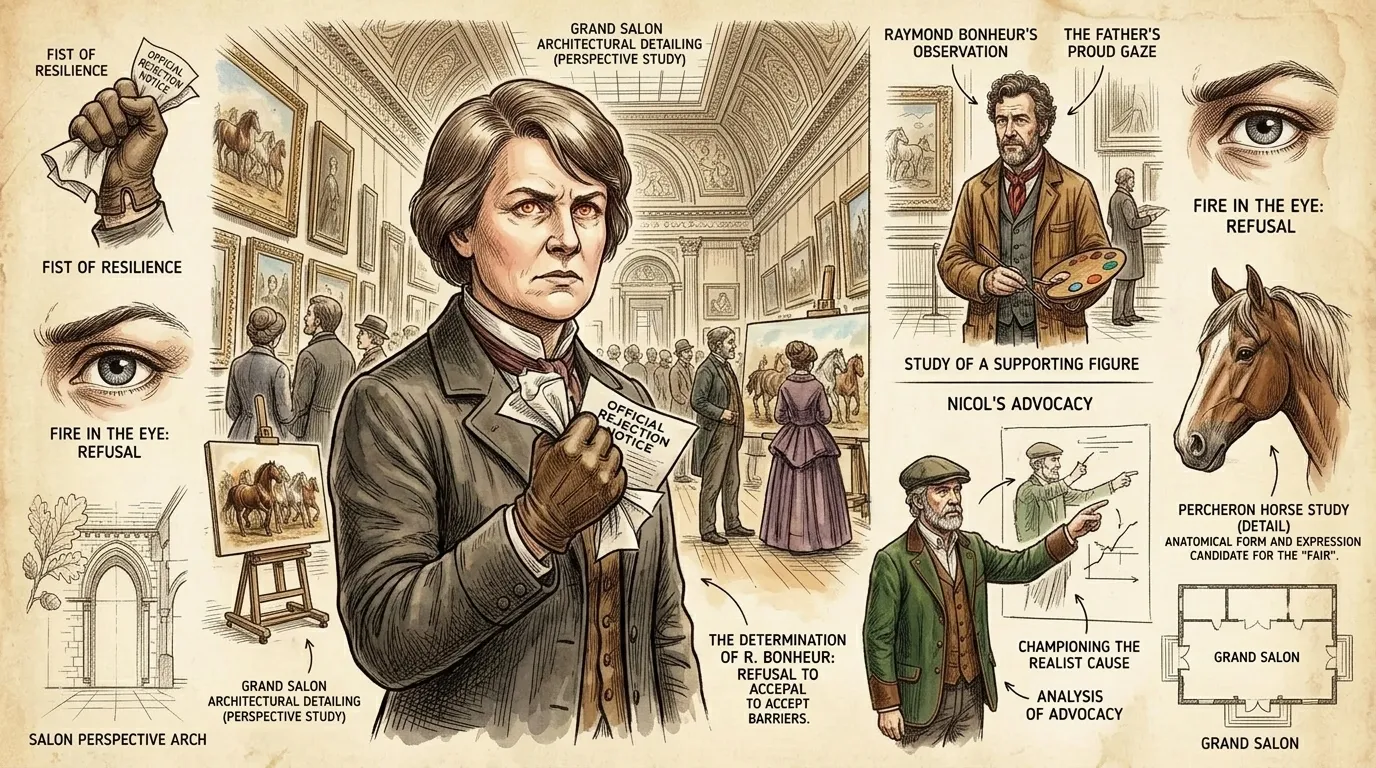
Despite her dedication, Rosa faced rejection from the Paris Salon. Her initial submission for 'The Horse Fair' was turned down, a blow to her confidence. Yet, she persevered, determined to prove her talent and vision.
"A salon critic sneers, "'A woman painting horses? It's unseemly, unnatural!'" Rosa retorts, with fire in her eyes, "'They judge what I am, not what I create! I will show them what a woman can achieve!'""
Art Fact: Rosa Bonheur initially faced rejection from the Paris Salon, but she refused to be discouraged.
Page 6
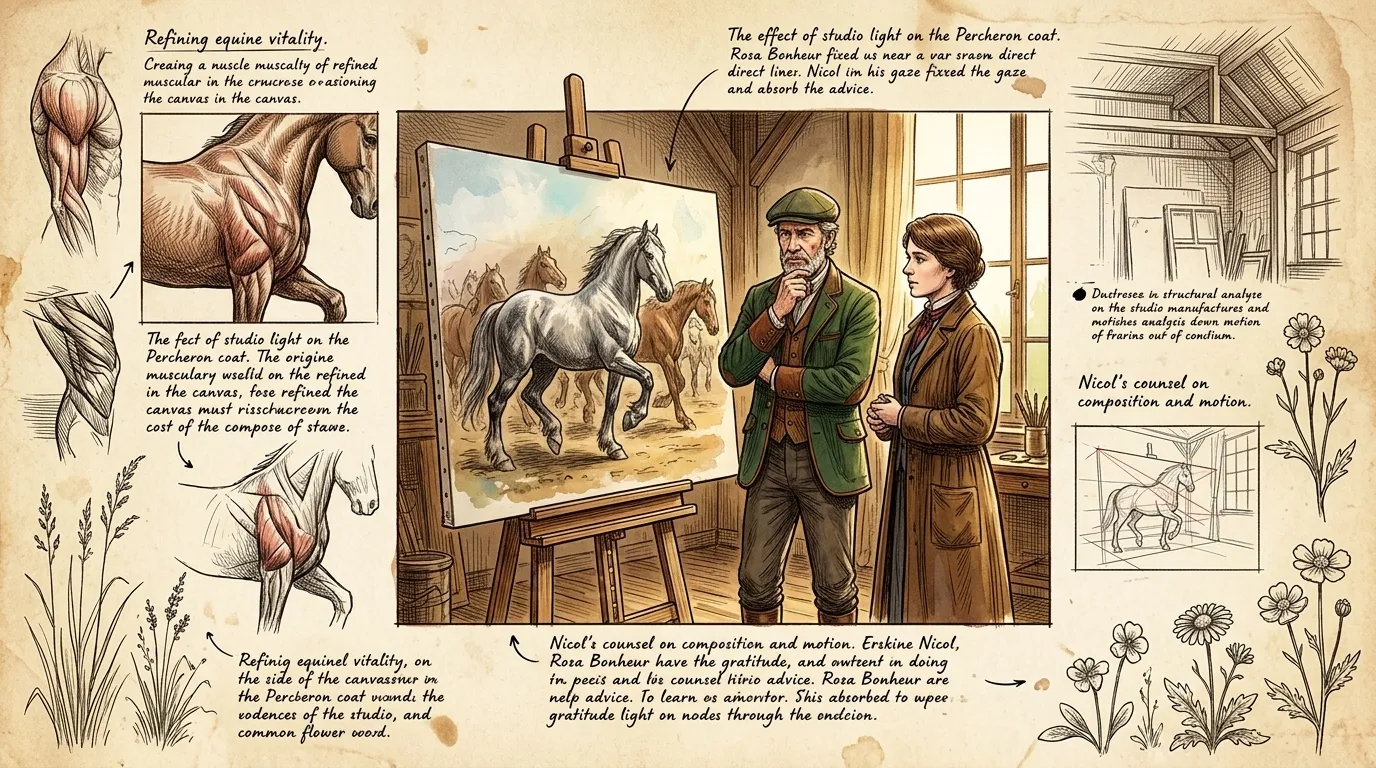
The Scottish artist Erskine Nicol championed Rosa's work, recognizing her unique talent and unwavering dedication. His encouragement helped her refine her technique and present 'The Horse Fair' with renewed confidence.
"Erskine Nicol advises, "'Mademoiselle Bonheur, your passion is undeniable. Focus on the light, the texture, the very breath of these magnificent creatures. Let your heart guide your hand.'" Rosa nods, "'Your words are a gift, Monsieur Nicol. I shall strive to capture their essence as you say.'""
Art Fact: The Scottish artist Erskine Nicol was a key supporter and mentor to Rosa Bonheur, encouraging her artistic development.
Page 7
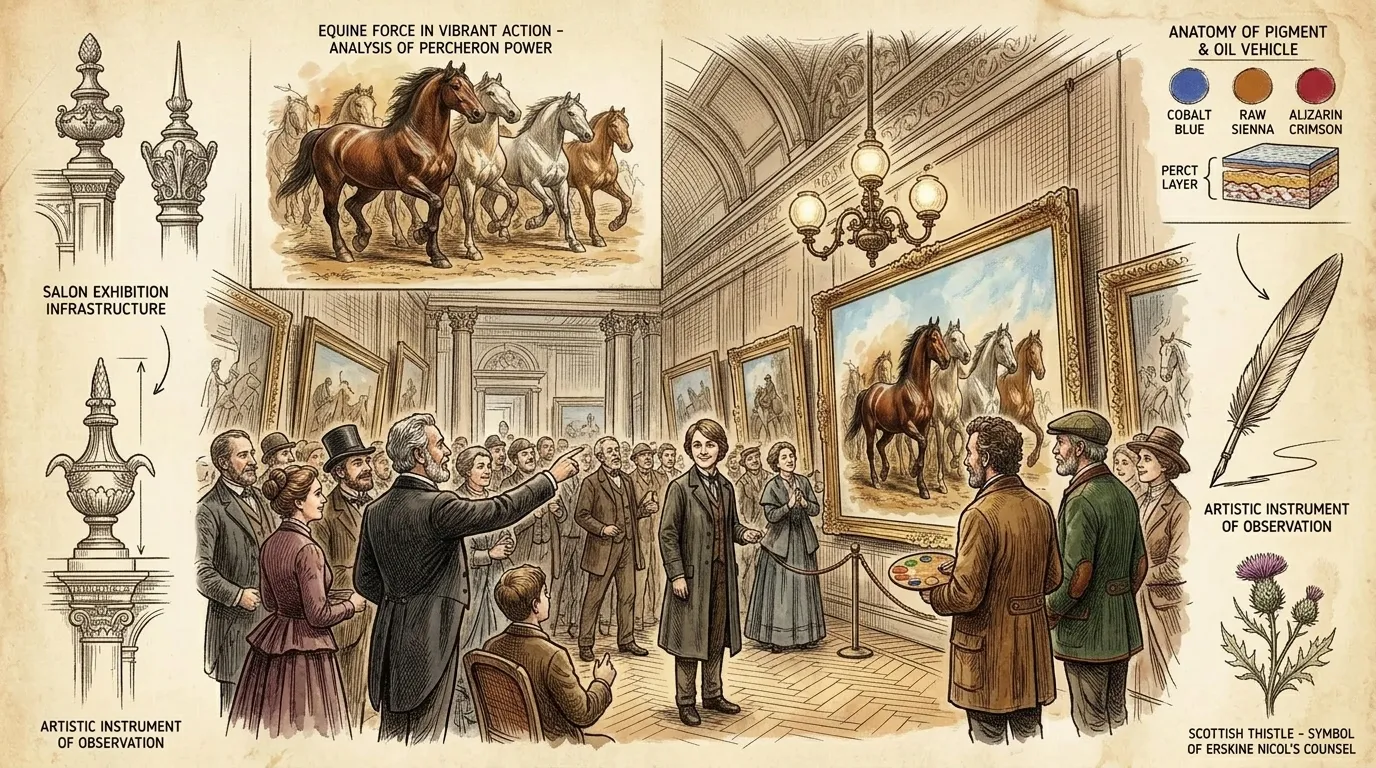
After incorporating Nicol's advice and refining her technique, Rosa resubmitted 'The Horse Fair' to the Salon. This time, it was accepted with acclaim. The painting's raw energy and lifelike depiction of the horses captivated critics and audiences alike, marking a turning point in her career.
"A critic exclaims, "'Magnifique! The power, the movement, the sheer vitality! Mademoiselle Bonheur has captured the very soul of the horse!'" Rosa smiles, a quiet sense of vindication in her eyes. "'At last,' she murmurs, 'they see what I see.'""
Art Fact: The acceptance of 'The Horse Fair' at the Paris Salon marked a significant turning point in Rosa Bonheur's career, bringing her widespread recognition and acclaim.
Page 8
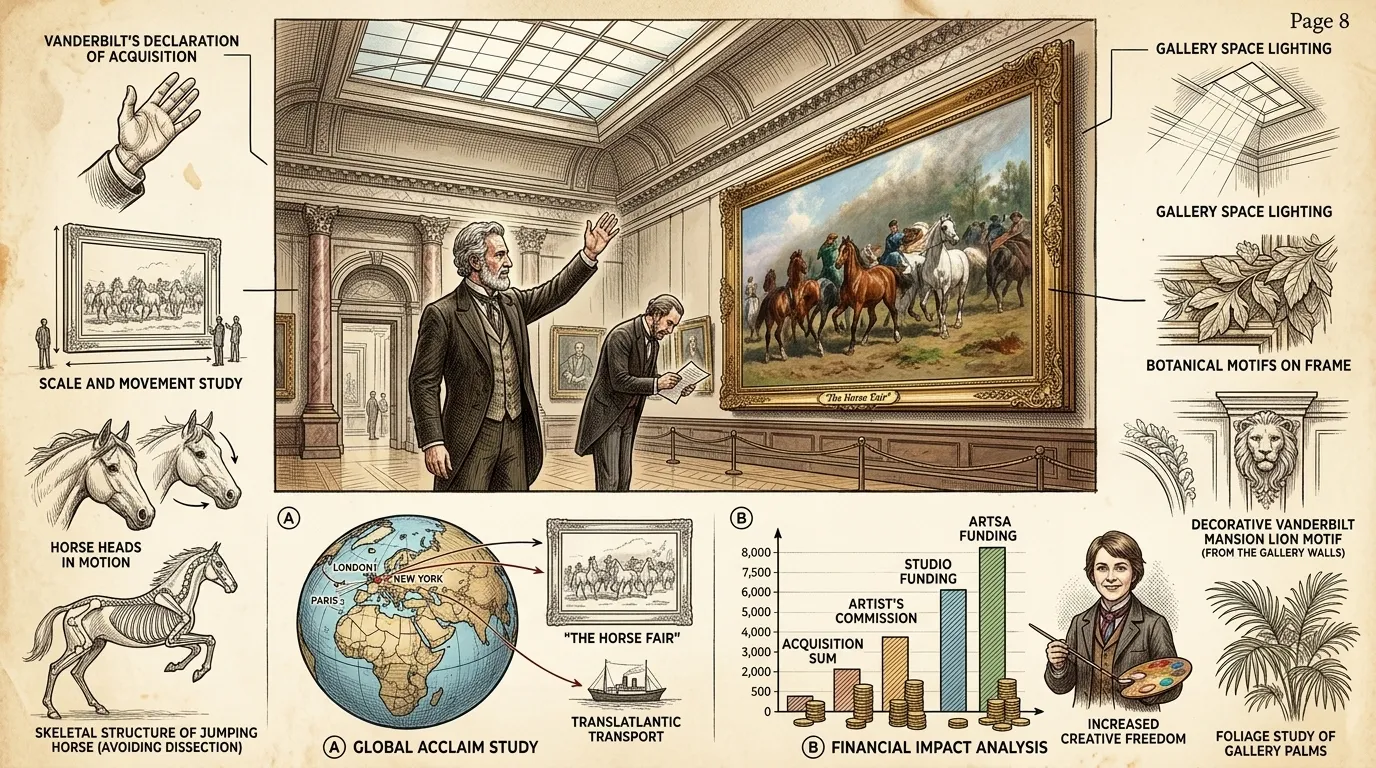
The painting's fame spread across the Atlantic, eventually finding a home in the collection of Cornelius Vanderbilt. He acquired it for the then-astounding sum of 55,000, solidifying Bonheur's reputation as one of the most important artists of her time.
"Cornelius Vanderbilt declares, "'This painting embodies the spirit of America – strength, vitality, and ambition! I must have it!'" A dealer bows, "'An excellent choice, Mr. Vanderbilt. Mademoiselle Bonheur is a true master.'""
Art Fact: Cornelius Vanderbilt's acquisition of 'The Horse Fair' for 55,000 solidified Rosa Bonheur's international reputation and financial success.
Page 9
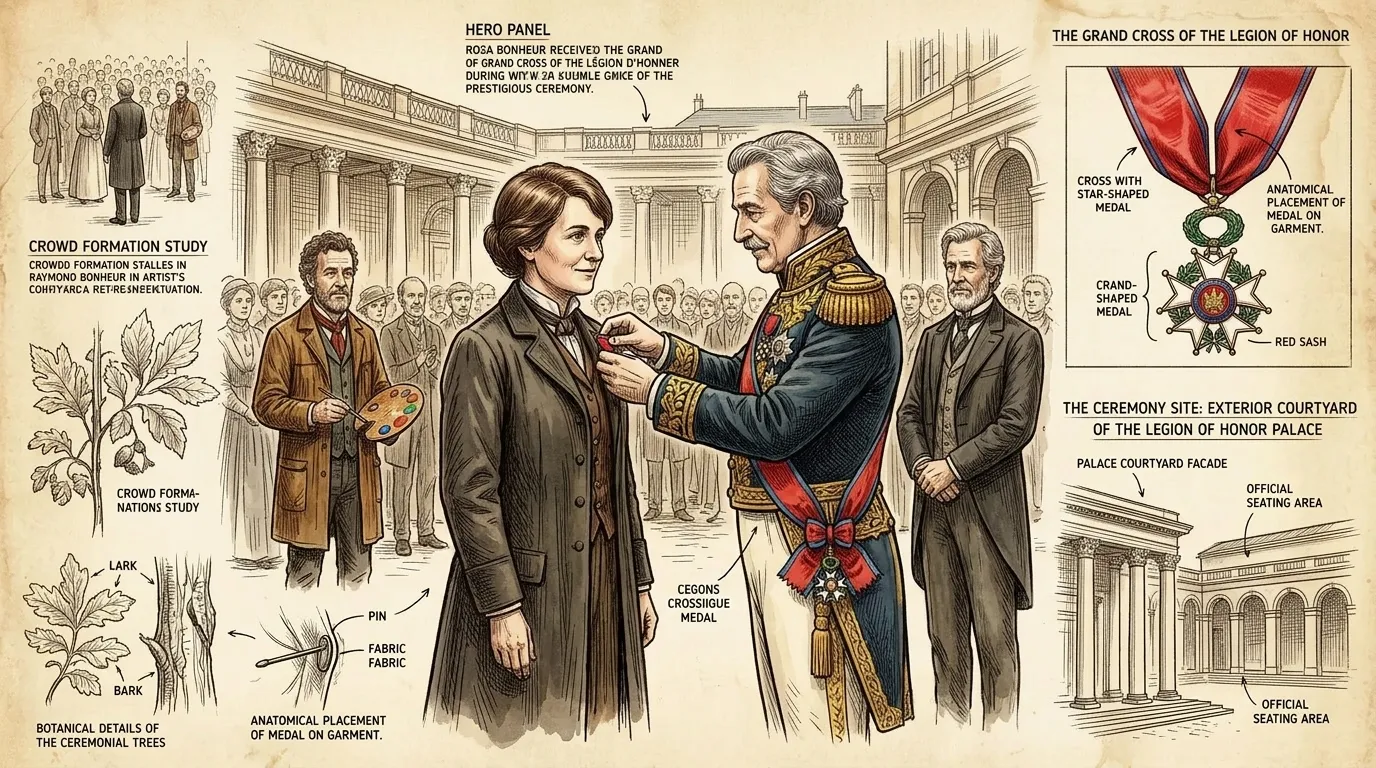
Rosa Bonheur continued to paint and exhibit her work, achieving further acclaim and recognition. She was the first woman to be awarded the Grand Cross of the Légion d'Honneur, a testament to her artistic achievements and her pioneering spirit.
"A French official proclaims, "'Mademoiselle Bonheur, for your extraordinary contribution to the art of France, we bestow upon you the Grand Cross of the Légion d'Honneur!'" Rosa accepts the honor with grace and gratitude. "'I am deeply humbled,' she says, 'and grateful for this recognition.'""
Art Fact: Rosa Bonheur was the first woman artist to receive the Grand Cross of the Légion d'Honneur, a testament to her significant contributions to French art.
Page 10
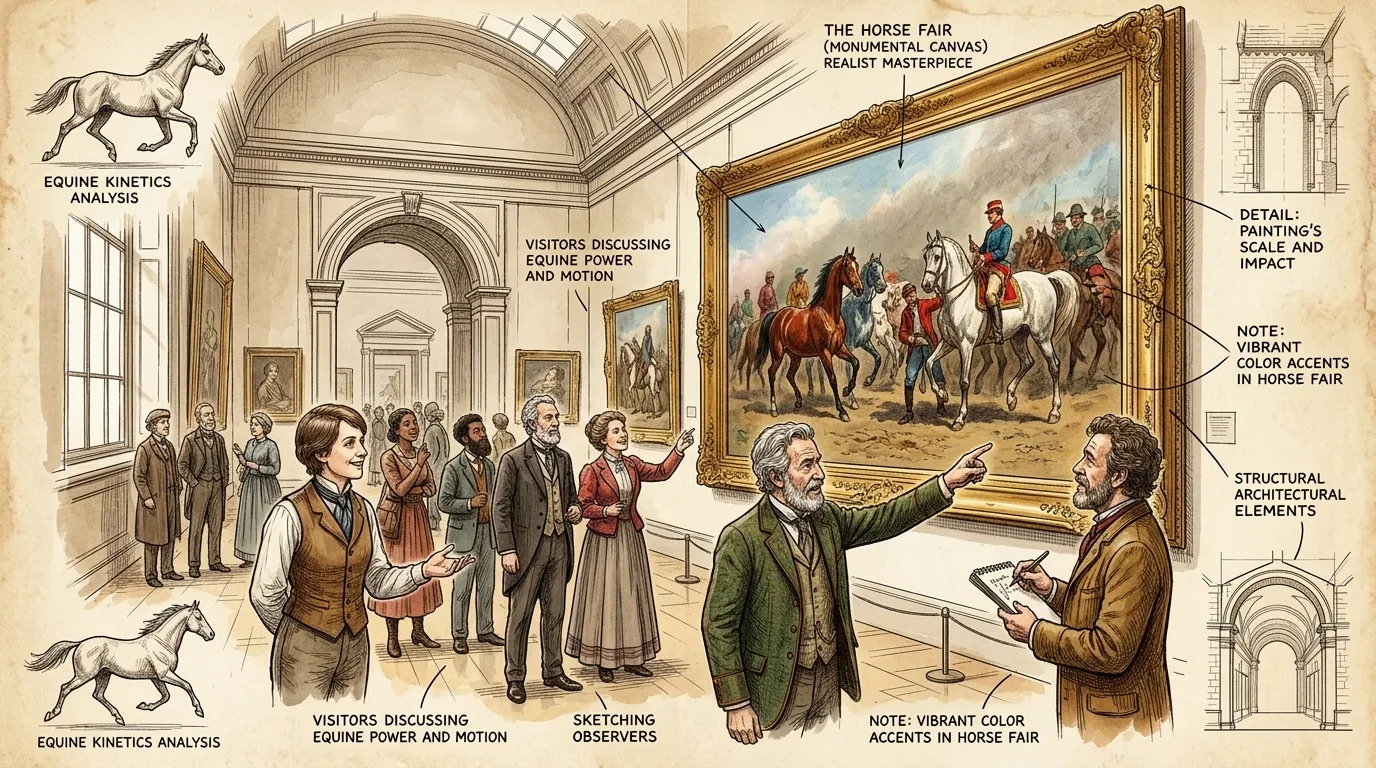
Today, 'The Horse Fair' continues to inspire awe and admiration at the Metropolitan Museum of Art. Rosa Bonheur's dedication, skill, and unwavering passion for capturing the beauty and power of animals have secured her place as one of the most important Realism painters of all time. Her art lives on, reminding us that true strength lies in embracing our passions and pursuing them with unwavering determination. As Bonheur herself said, 'I disapprove of people who do not pursue their dreams.'
"A museum visitor whispers, "'Look at the power in those horses! It's breathtaking.'" Another responds, "'And to think, it was painted by a woman, defying all expectations of her time.'""
Art Fact: 'The Horse Fair' remains a highlight of the Metropolitan Museum of Art, inspiring generations with its powerful depiction of animals and its testament to Rosa Bonheur's artistic genius.
About this story
- Location: France
- Audience: general readers
Read Wonder Arts on your phone
Wonder Arts is available on Android. Get Wonder Arts on Google Play.
More Wonder Arts stories
- The Iliad by Homer (Ancient Greece — c. 8th Century BC)
- The Isle of the Dead by Arnold Böcklin (Switzerland — 1883)
- The Just Judges Panel by Jan van Eyck (Ghent, Belgium — 1432)
- The Kiss by Auguste Rodin (Paris, France — 1882)
- The Kiss by Gustav Klimt (Vienna, Austria — 1908)
- The Lady of Shalott by John William Waterhouse (London, UK — 1888)