The Just Judges Panel by Jan van Eyck (Ghent, Belgium — 1432)
The Just Judges Panel by Jan van Eyck (Ghent, Belgium — 1432) — an illustrated arts story, set in United Kingdom. 10 illustrated pages, free to read on Wonder Arts.
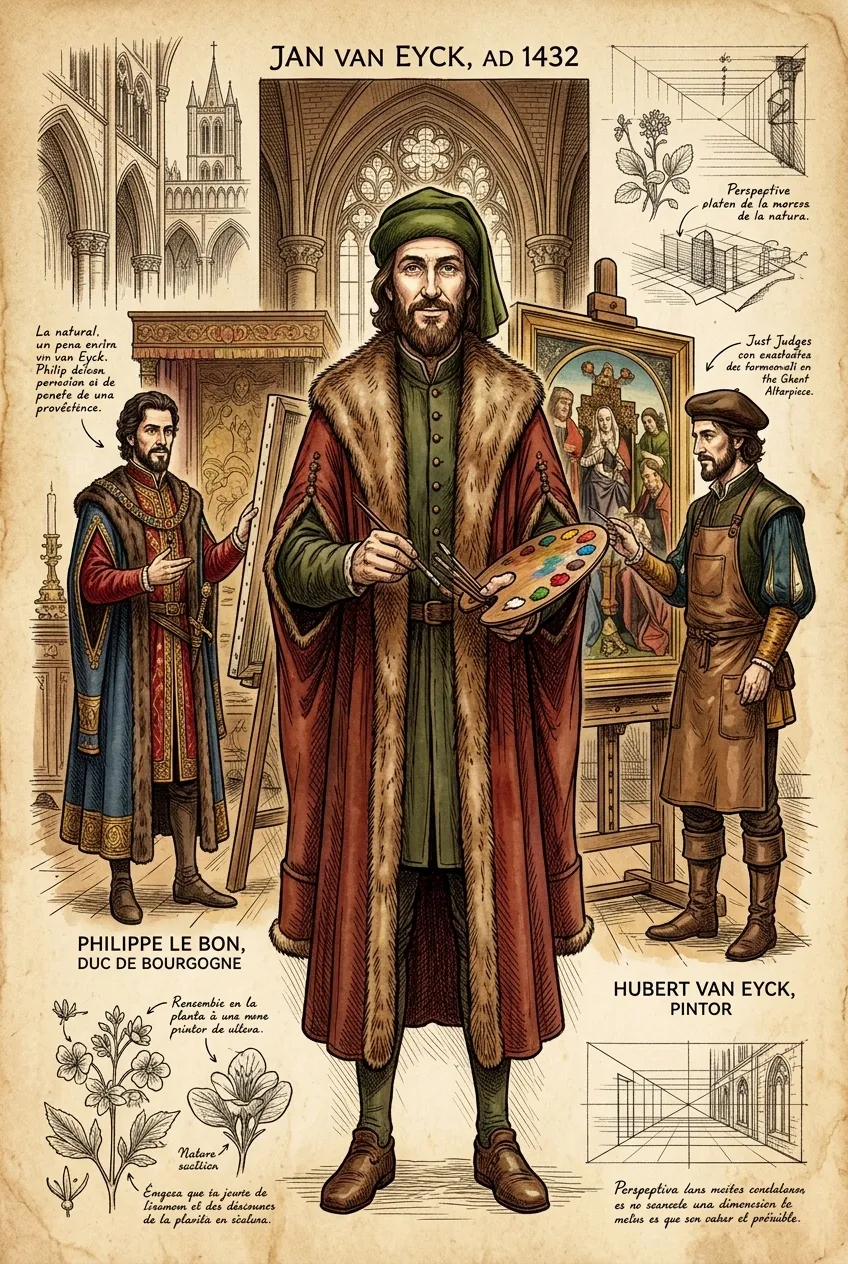
Page 1
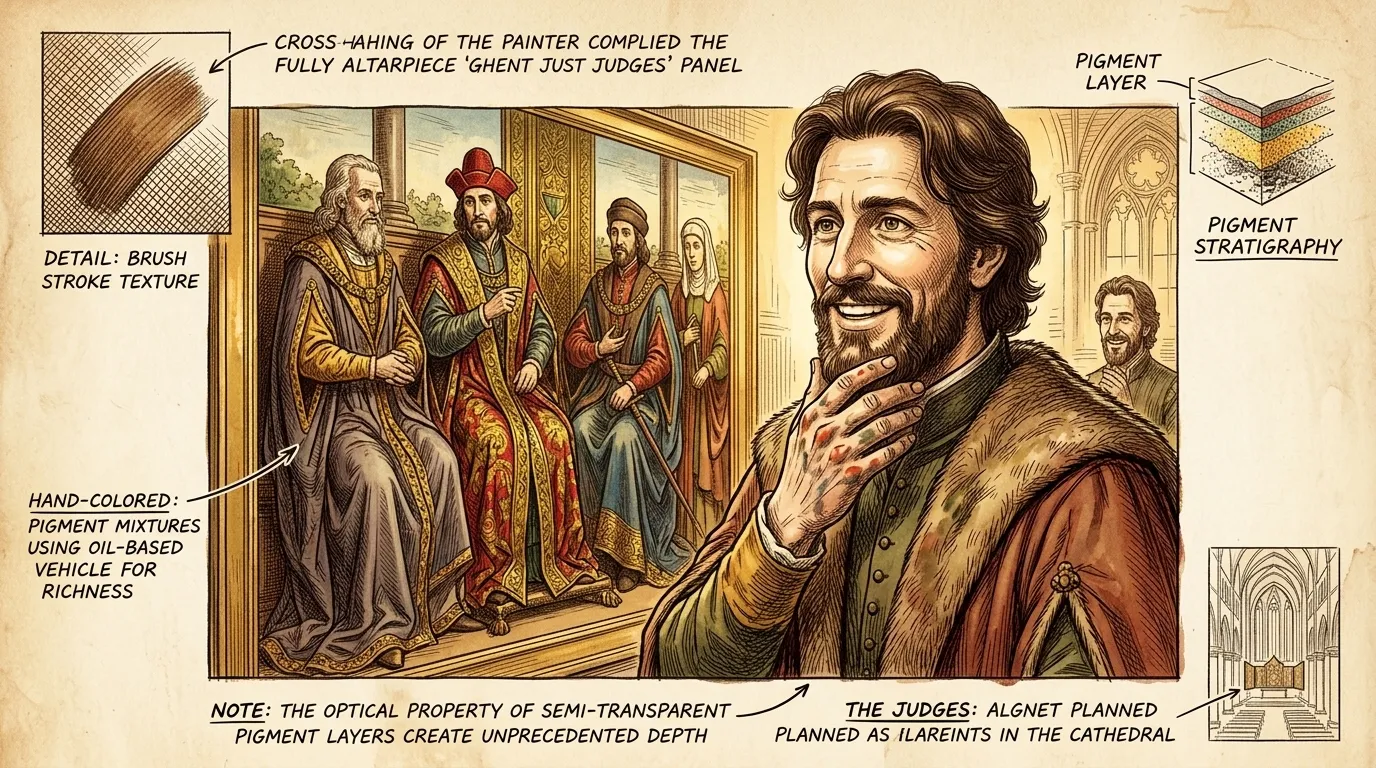
Jan van Eyck, standing before the newly completed Ghent Altarpiece in 1432, surveyed his masterpiece. At the heart of this polyptych stood 'The Just Judges,' a panel radiating earthly authority and divine promise. This panel, measuring approximately 148 cm x 51 cm, was not just paint on wood; it was a statement of justice, faith, and the burgeoning artistic prowess of the Early Netherlandish masters.
"Jan sighed, running a paint-stained hand over his beard, 'It is done, Hubert. A testament to God's grace and earthly justice.'"
Art Fact: The Ghent Altarpiece, also known as the Adoration of the Mystic Lamb, is a complex and influential Early Netherlandish polyptych panel painting completed in 1432 and housed in St Bavo Cathedral, Ghent, Belgium.
Page 2
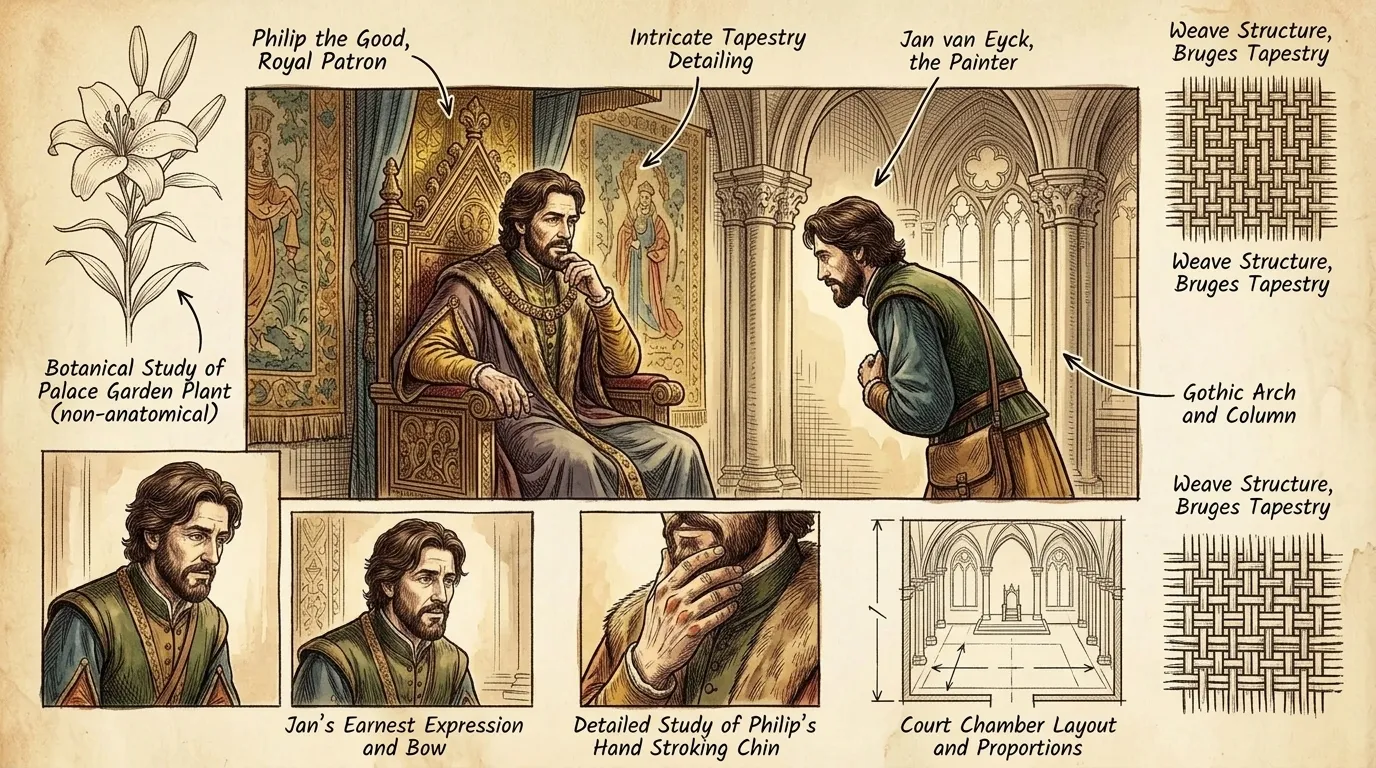
Philip the Good, Duke of Burgundy, summoned Jan to his court in Bruges. The Duke, a renowned patron of the arts, entrusted van Eyck with creating works that would reflect his power and piety. The commission for the Ghent Altarpiece, intended for the Vijd family chapel, was a significant undertaking, a demonstration of the Duke's influence.
"Philip declared, stroking his chin, 'Van Eyck, I desire a work that will inspire awe and reverence. Let it reflect the glory of God and the strength of my rule.' Jan bowed, 'Your Grace, I shall strive to exceed your expectations.'"
Art Fact: Philip the Good was the Duke of Burgundy from 1419 until his death. His reign was marked by great economic prosperity and artistic achievement, making Burgundy a major European power.
Page 3
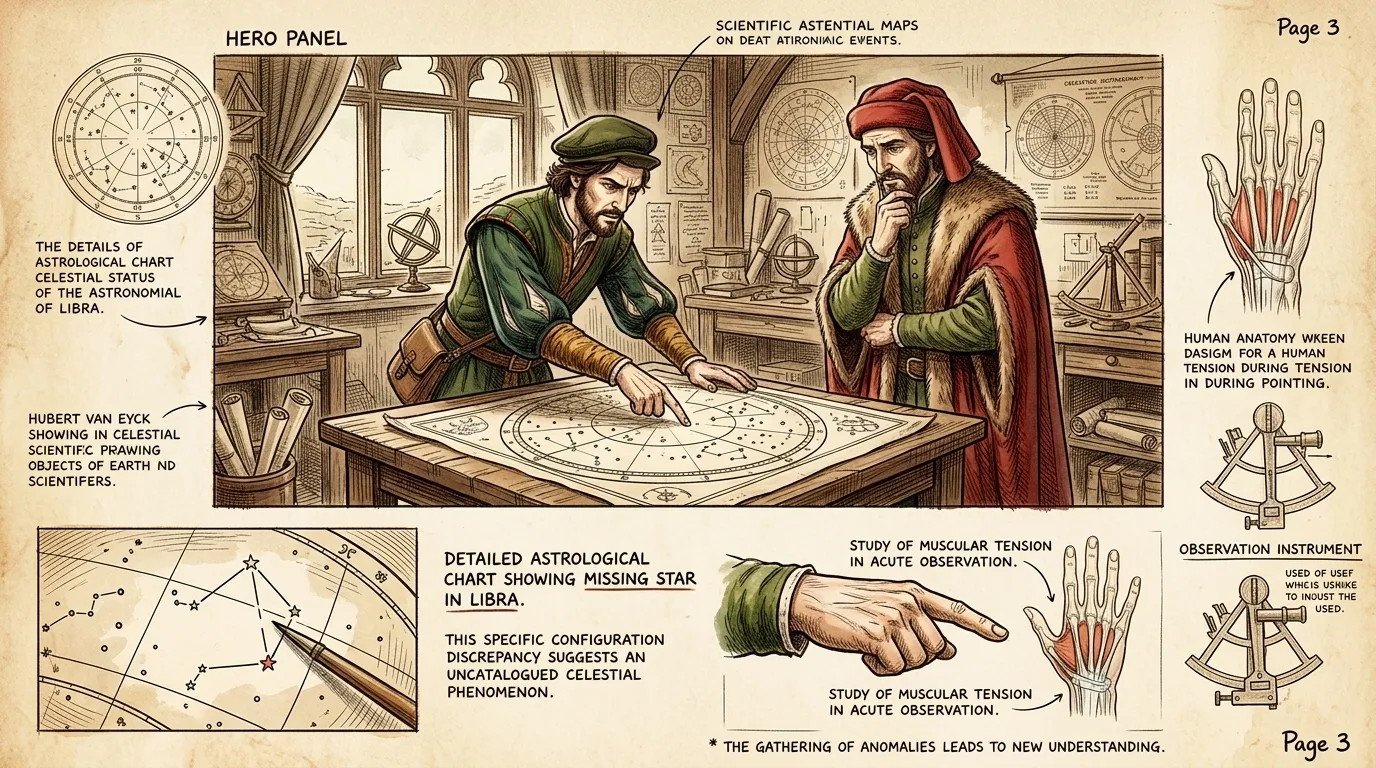
During the early stages, Jan and his brother Hubert discussed the symbolism of the panel in great detail, focusing on justice. Hubert, deeply immersed in astrology, noted, 'They say a star has vanished from the constellation of Libra. If so, it mirrors our earthly failing toward justice!' That astrological idea became a key component of its meaning.
"Hubert says to Jan, 'Brother, I read in Ptolemy that a missing star portends imbalance and injustice.' Jan responds, 'Indeed! And does not Seneca say, 'Every new beginning comes from some other beginning's end'? Our judges must restore the celestial harmony here on Earth.'"
Art Fact: Hubert van Eyck, Jan's brother, is credited with starting the Ghent Altarpiece. His role and contributions are still debated by art historians.
Page 4
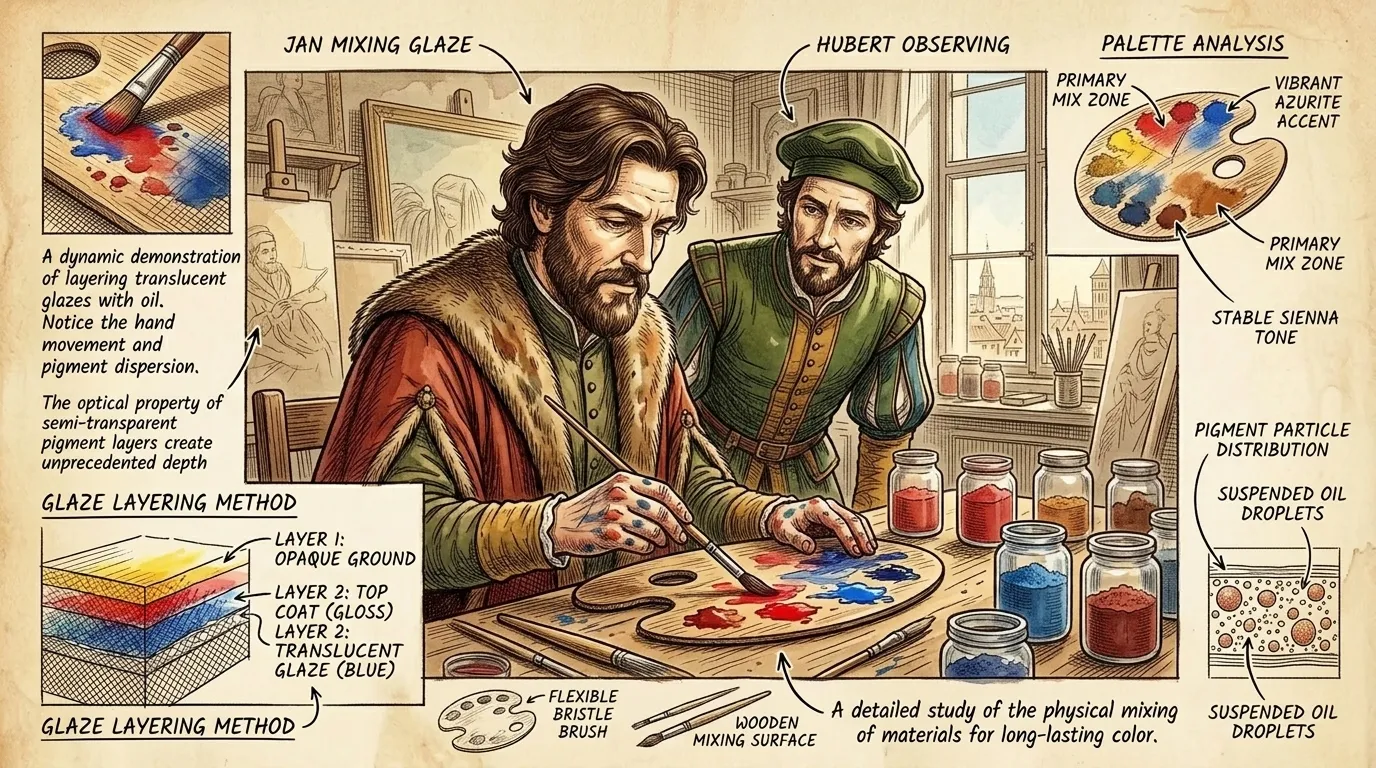
Van Eyck's mastery of oil paint allowed him to achieve unprecedented realism. He experimented with layering translucent glazes, building depth and luminosity in his figures. This technique was revolutionary, transforming the art of painting and enabling him to capture the intricate details of the judges robes.
"Jan says, carefully mixing pigments, 'The secret, brother, lies in the oil. It allows us to build layers of light, to capture the very essence of reality.' Hubert replies, 'Indeed, a revolution in the art. A great change, as Heraclitus noted 'The only constant is change'.'"
Art Fact: Jan van Eyck is often credited with the invention of oil painting, though this is not entirely accurate. He perfected the technique and used it to achieve unprecedented realism.
Page 5
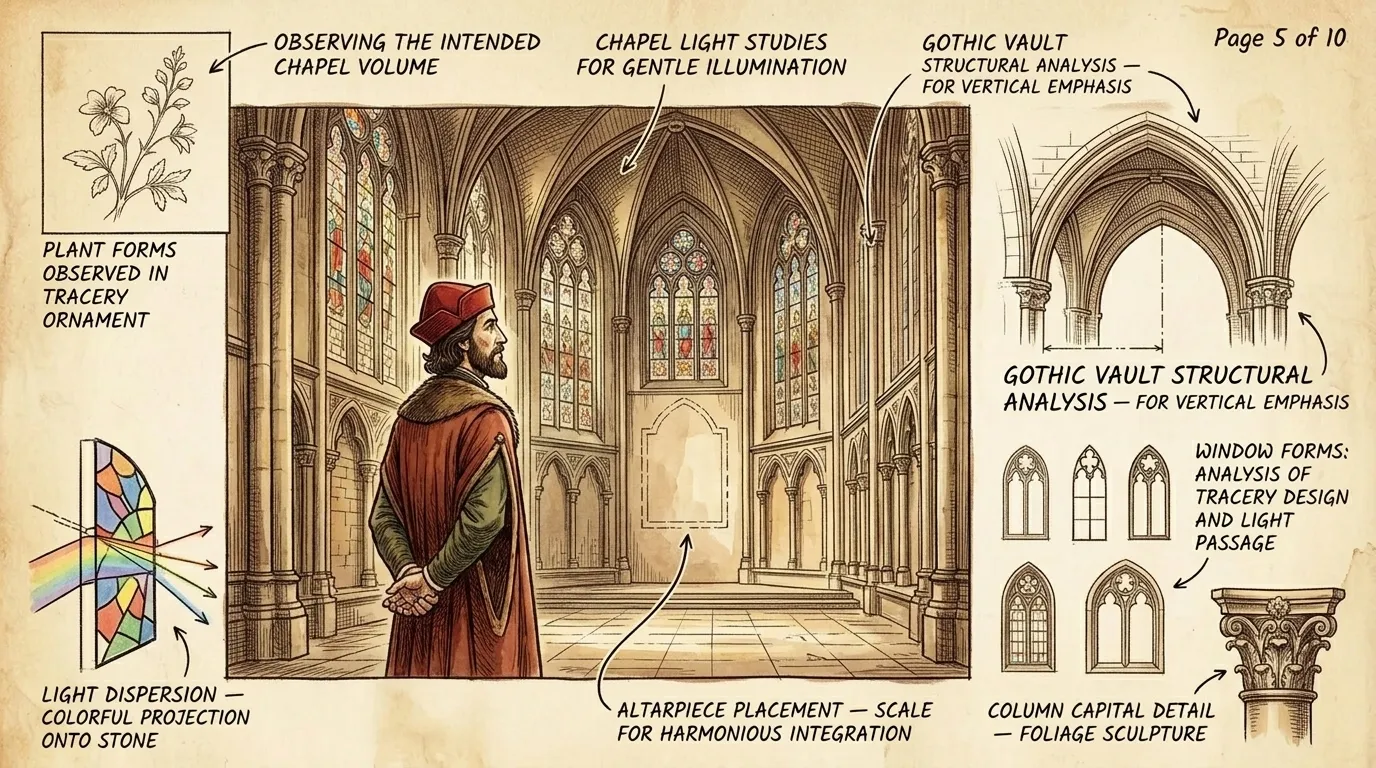
The Vijd family chapel in Saint Bavo Cathedral was the intended home for the altarpiece. Jan visited the chapel frequently, studying its light and dimensions, ensuring his work would harmonize with its environment. The chapel's solemn atmosphere inspired him to imbue the 'Just Judges' with a sense of profound reverence.
"Jan whispers, observing the chapel, 'This is where the panel must reside. 'Beauty in things exists in the mind which contemplates them', as David Hume said. It must harmonize with the light, the space, the very soul of this place.'"
Art Fact: The Vijd family commissioned the Ghent Altarpiece for their chapel in Saint Bavo Cathedral. Their patronage played a vital role in the creation of this masterpiece.
Page 6
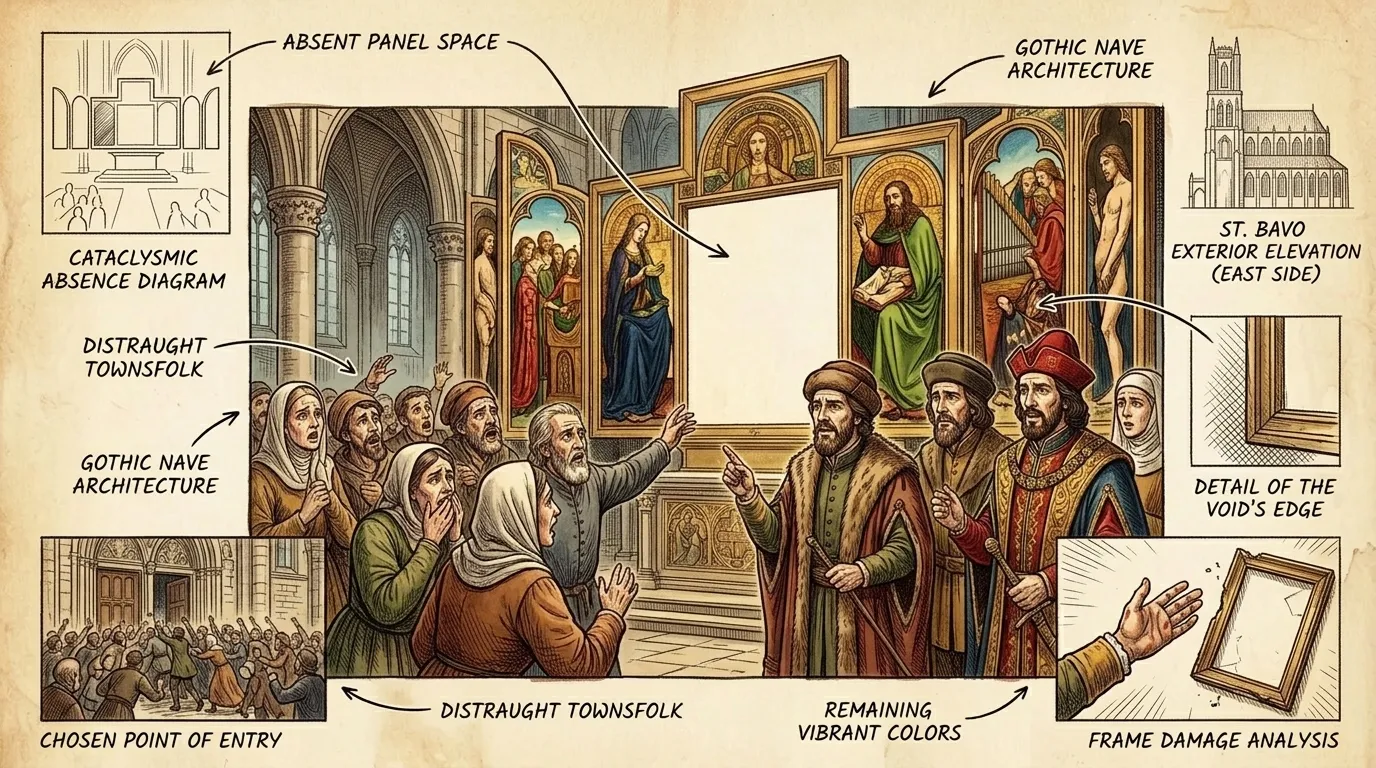
In 1934, 'The Just Judges' panel was stolen from the Ghent Altarpiece. This act of audacious theft plunged Belgium into despair. The theft remains one of the most famous unsolved art crimes, a stark reminder of the vulnerability of even the most revered masterpieces.
"The news spread like wildfire. 'The Just Judges are gone!' the townsfolk cried. 'This is an outrage! Where is justice, where is truth?' Indeed, as Cicero said, 'Justice is the crowning glory of the virtues.'"
Art Fact: The theft of 'The Just Judges' panel remains unsolved. A replacement panel was created in 1945 by Jef Van der Veken, but the original remains missing.
Page 7

Months after the theft, Arsène Goedertier, a local stockbroker, confessed on his deathbed to being involved. He revealed the panel's hiding place, but only partially, leading investigators on a frustrating treasure hunt. His ambiguous confession only deepened the mystery surrounding the missing panel.
"Goedertier whispers, struggling for breath, 'I... I know where the Judges are... But...' He pauses, coughing violently. 'As Machiavelli wrote, 'Never attempt to win by force what can be won by deception'.' His words were a riddle until his death."
Art Fact: Arsène Goedertier's deathbed confession only added to the mystery surrounding the theft of 'The Just Judges' panel. His incomplete revelation has fueled speculation and conspiracy theories for decades.
Page 8
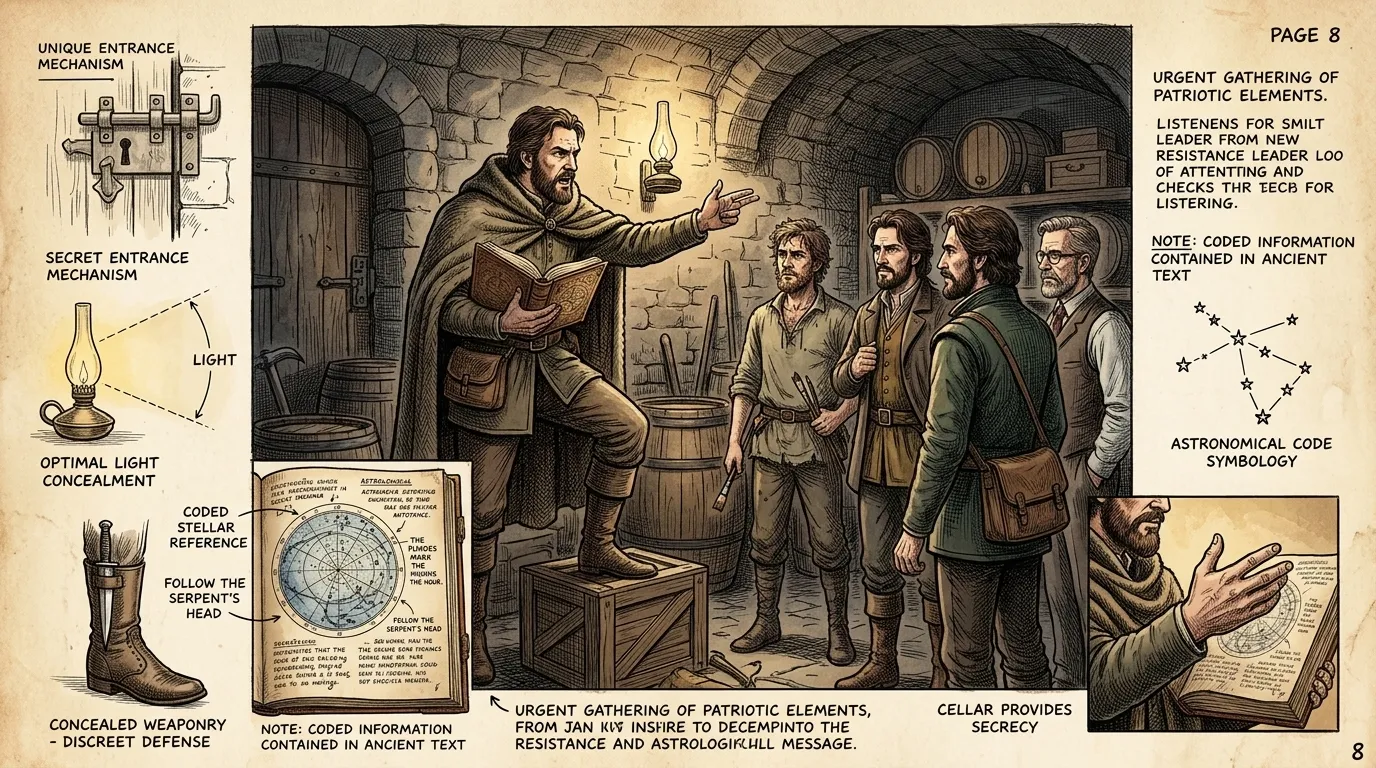
During World War II, the Belgian Resistance used the mystery of the missing panel as a rallying cry against Nazi occupation. The pursuit of justice, as embodied by the missing judges, became a symbol of hope and defiance. They found an old astrological text indicating a link between Libra's missing star and the Ghent panel location, and hid it in a coded message.
"A resistance leader says, gathering his men, 'The missing panel is not just a painting. It's a symbol of our nation's soul. As Voltaire said, 'To the living we owe respect, but to the dead we owe only the truth.' We will find it, we will retrieve it, and we will restore justice to our land.'"
Art Fact: The missing 'Just Judges' panel became a potent symbol of resistance and national identity during World War II, inspiring hope and defiance in the face of Nazi occupation.
Page 9
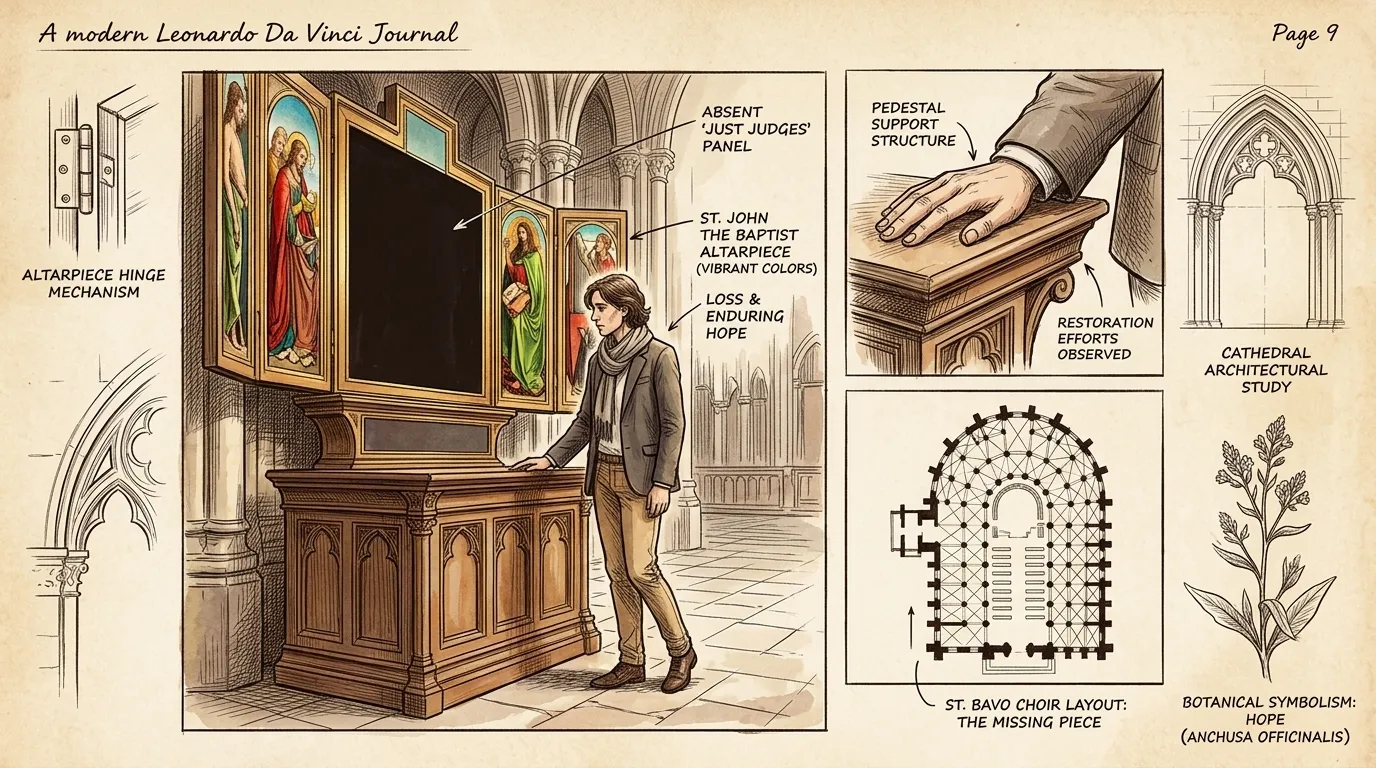
Despite decades of searching, the 'Just Judges' panel remains lost. Its absence is a poignant reminder of the fragility of art and the enduring power of mystery. The search continues, fueled by hope that one day, the panel will be restored to its rightful place.
"An art historian sighs, standing before the empty space on the altarpiece, 'The loss is immeasurable. 'The future belongs to those who believe in the beauty of their dreams,' as Eleanor Roosevelt said. We must never abandon hope of finding it.'"
Art Fact: The enduring mystery surrounding the missing 'Just Judges' panel has captivated the world for decades. The search continues, driven by hope and a deep respect for art and history.
Page 10
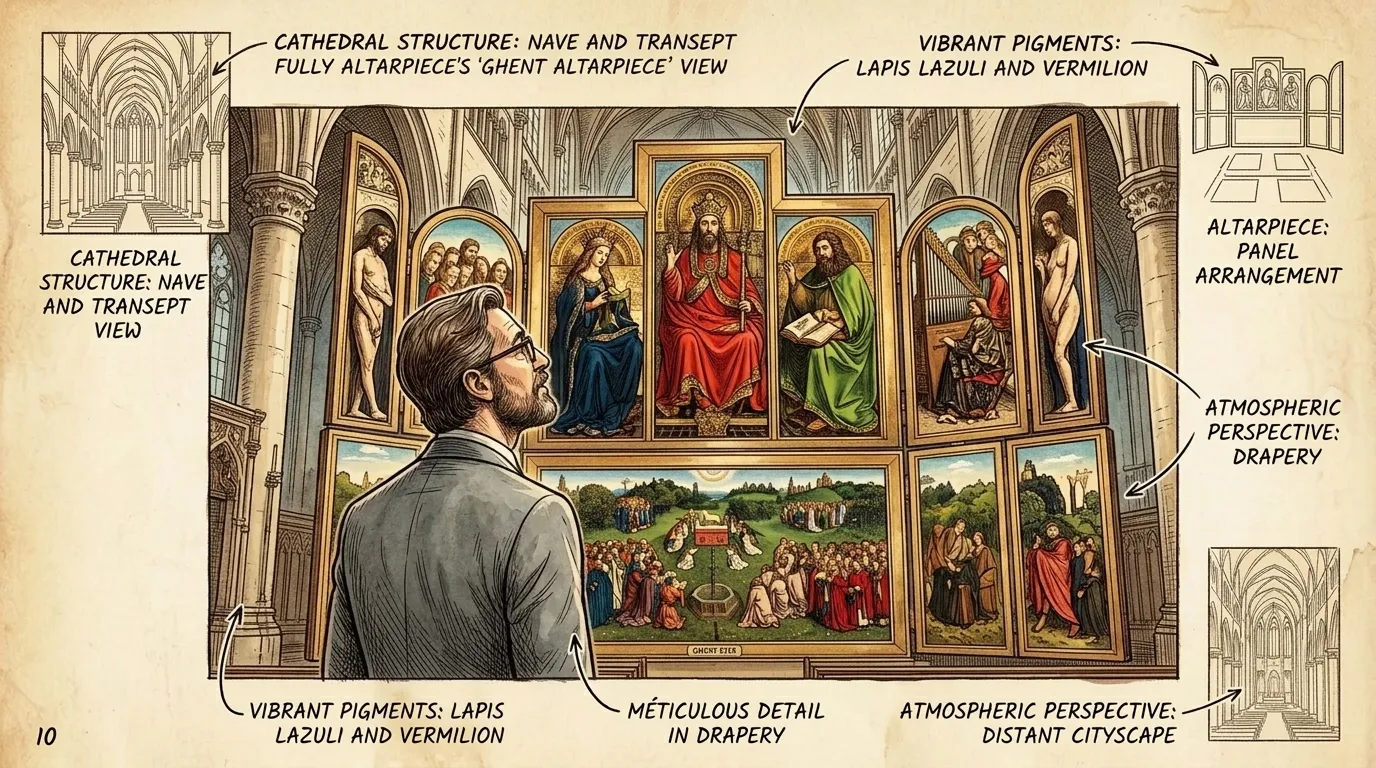
Jan van Eyck's legacy extends far beyond 'The Just Judges' panel. His revolutionary techniques and meticulous attention to detail transformed the art world. His work continues to inspire awe and wonder, a testament to the enduring power of artistic vision. His work survives because he created a new standard of realism, and dared to fill the canvas with a new level of passion.
"A visitor reflects, standing before the Ghent Altarpiece, 'Van Eyck's genius is undeniable. As Leonardo da Vinci said, 'Painting embraces all the ten functions of the eye; that is to say, darkness, light, body and colour, shape and location, distance and nearness, motion and rest.' Van Eyck did all of that, with brilliance.'"
Art Fact: Jan van Eyck's innovative techniques and artistic vision have secured his place as one of the most influential artists in history. The Ghent Altarpiece remains a testament to his genius.
About this story
- Location: United Kingdom
- Audience: general readers
Read Wonder Arts on your phone
Wonder Arts is available on Android. Get Wonder Arts on Google Play.