The Iliad by Homer (Ancient Greece — c. 8th Century BC)
The Iliad by Homer (Ancient Greece — c. 8th Century BC) — an illustrated arts story, set in United States. 10 illustrated pages, free to read on Wonder Arts.
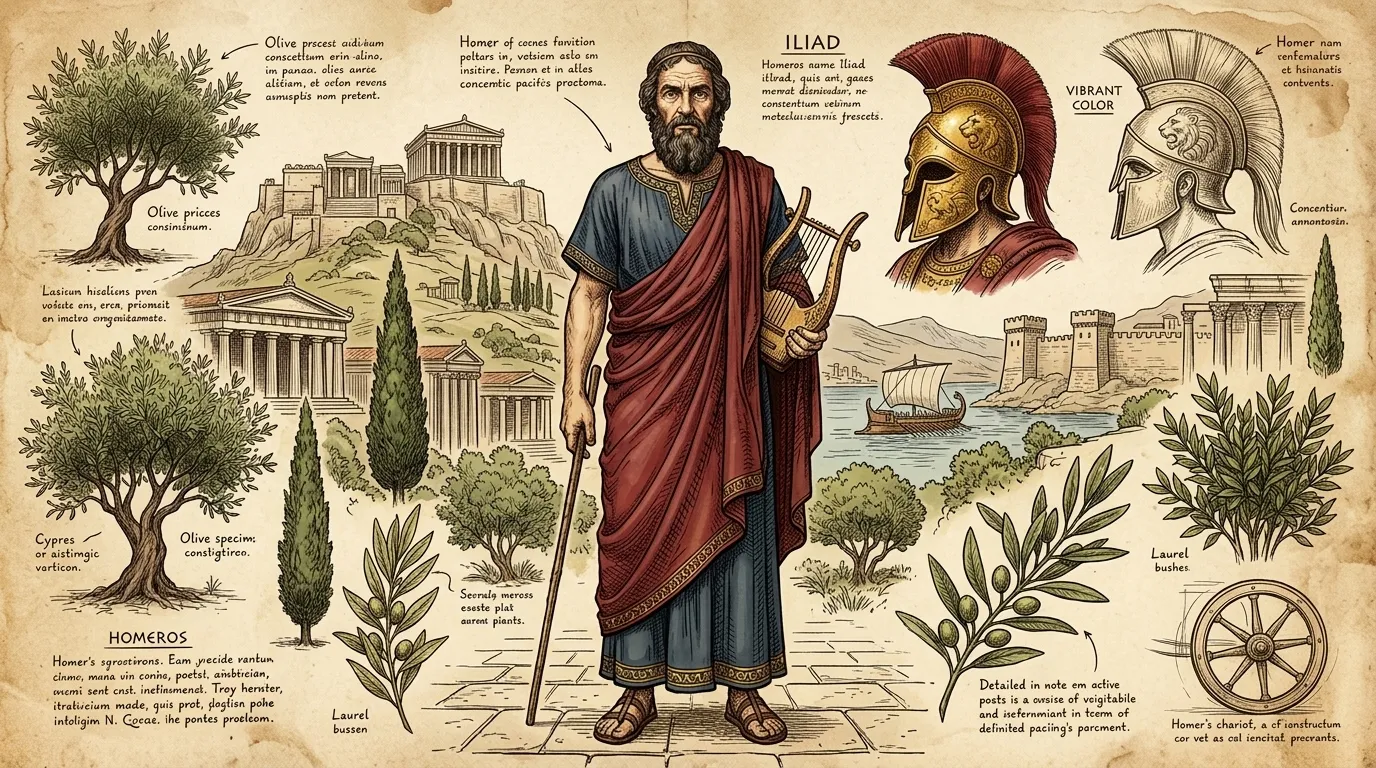
Page 1
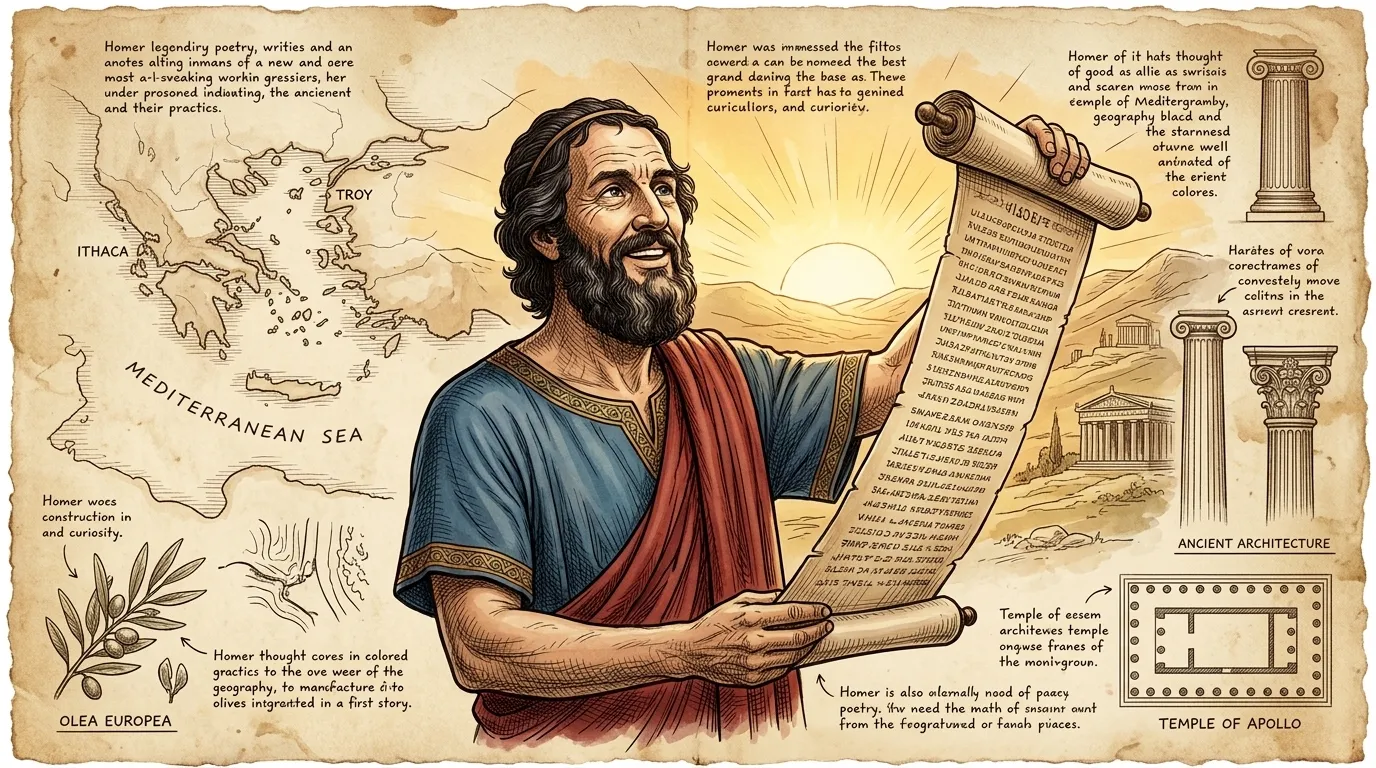
Before us stands Homer, the legendary poet, his figure etched against the dawn of Western literature. His epic poem, The Iliad, a cornerstone of Ancient Greek culture, reverberates through the ages. It is an epic poem in 24 books traditionally attributed to Homer. Set during the Trojan War, the ten-year siege of the city of Troy (Ilium) by a coalition of Greek states, it tells of battles and events during the weeks of a quarrel between King Agamemnon and the warrior Achilles.
"Homer, a figure shrouded in mystery, is believed to have composed The Iliad around the 8th century BC. The true value? Immeasurable, as it shaped storytelling itself. As the philosopher Plato later wrote, admiringly, 'Homer is the educator of Greece.'"
Art Fact: The Iliad, attributed to Homer, is the oldest extant work of Western literature. Its influence spans millennia, inspiring countless artists, writers, and thinkers.
Page 2
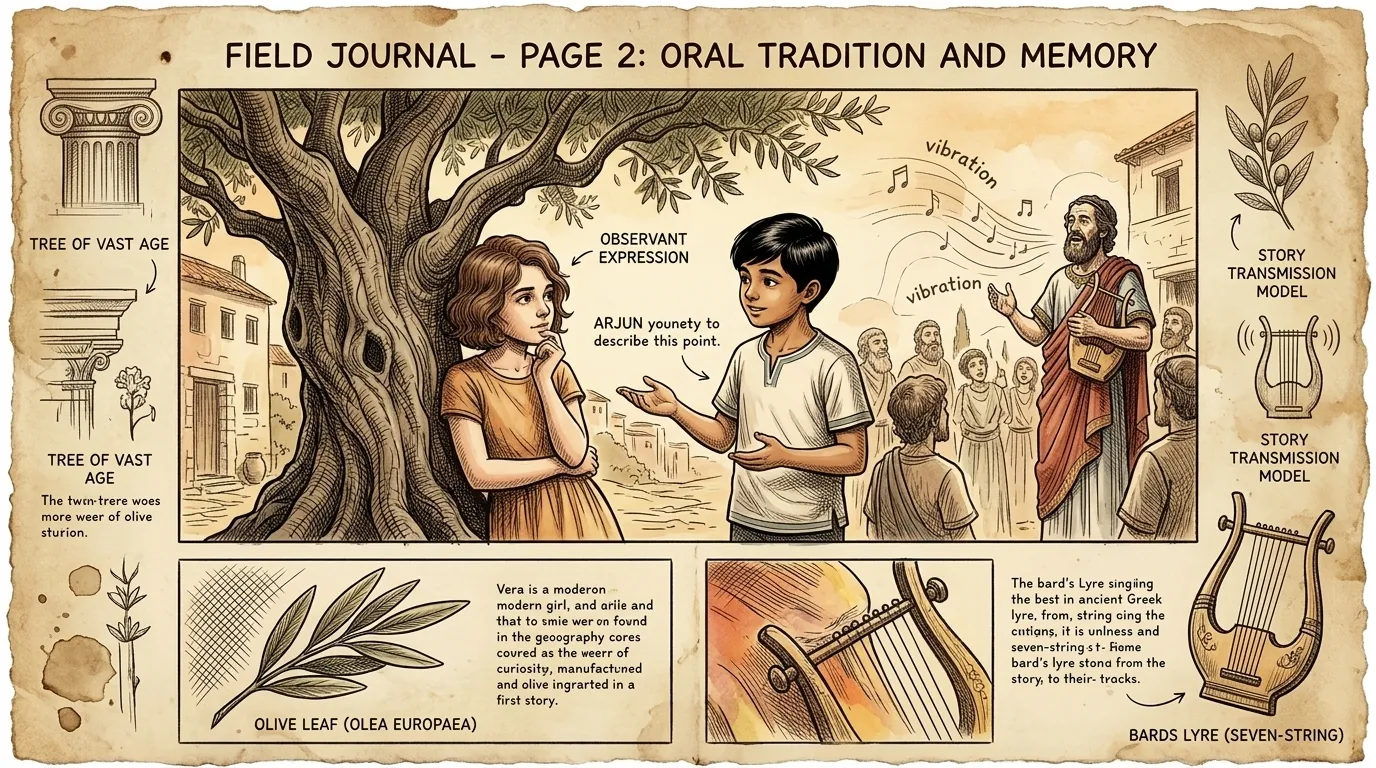
The transmission of The Iliad began long before any written word formalized its structure. Bards, known as aoidoi, were the vessels through which the stories of gods and heroes travelled. They wandered from town to town, reciting verses and captivating audiences. These performances, often accompanied by the lyre, breathed life into legends.
"Imagine these early storytellers, Vera mused, leaning against a tree. 'They didn't have books, only their memories and voices.' That's right, Arjun replied, 'each performance could vary slightly, adding to the poem's richness.'"
Art Fact: Before written texts, oral tradition was the primary means of transmitting knowledge and culture. Bards like Homer were entrusted with preserving these vital narratives.
Page 3
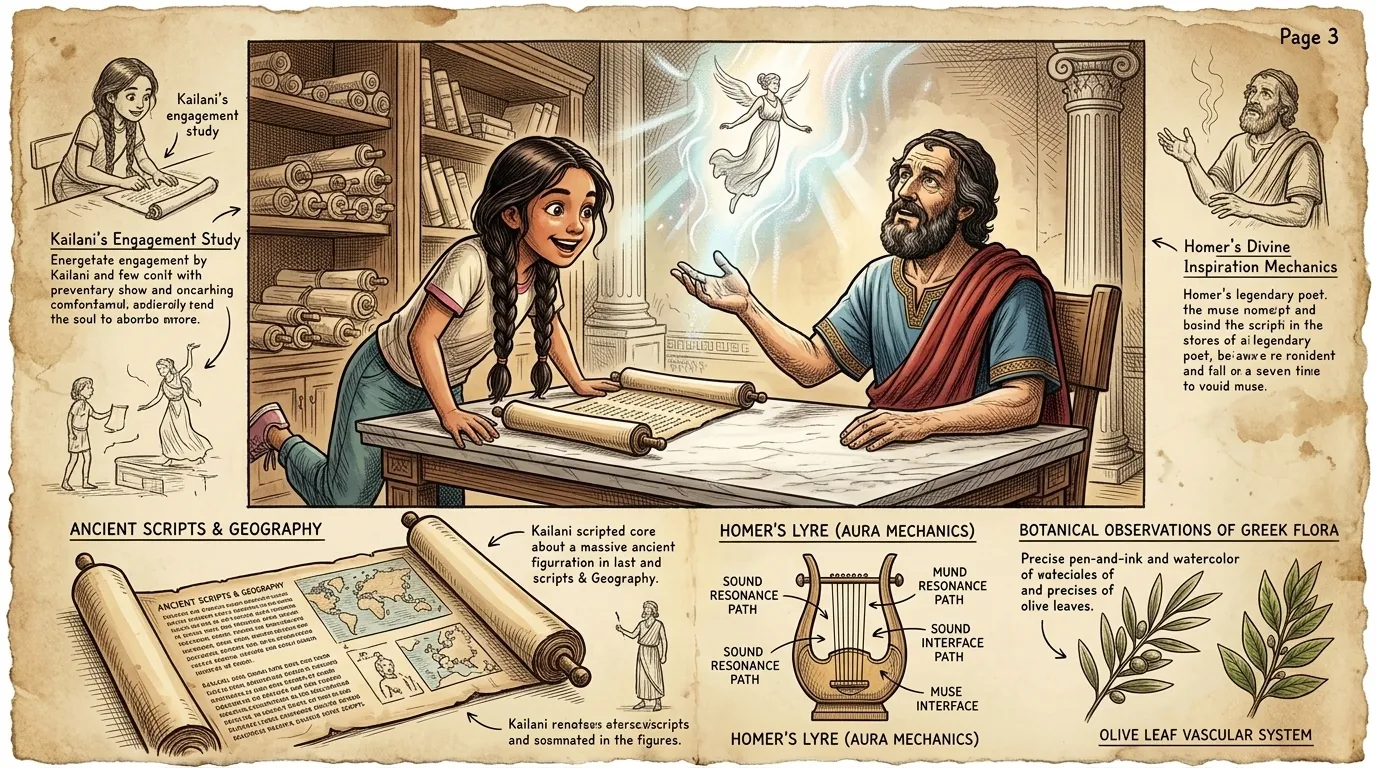
The ancient Greeks believed that artistic inspiration came from the Muses, divine goddesses of the arts and sciences. Homer, like other poets, invoked the Muse at the beginning of The Iliad, seeking her guidance and assistance in telling his epic tale. He called upon her to remember and recount the events of the Trojan War accurately and powerfully.
"Kailani leaned in, 'It's not just about talent, but asking for help from something greater than us. It's like Homer saying, 'Muse, tell me how it happened!' That shows he was open to ideas from everywhere, like how Leonardo da Vinci said, 'Every now and then go away, have a little relaxation, for when you come back to your work your judgment will be surer.'"
Art Fact: The Muses were goddesses of the arts and sciences. Homer invoked them to inspire and guide his storytelling.
Page 4
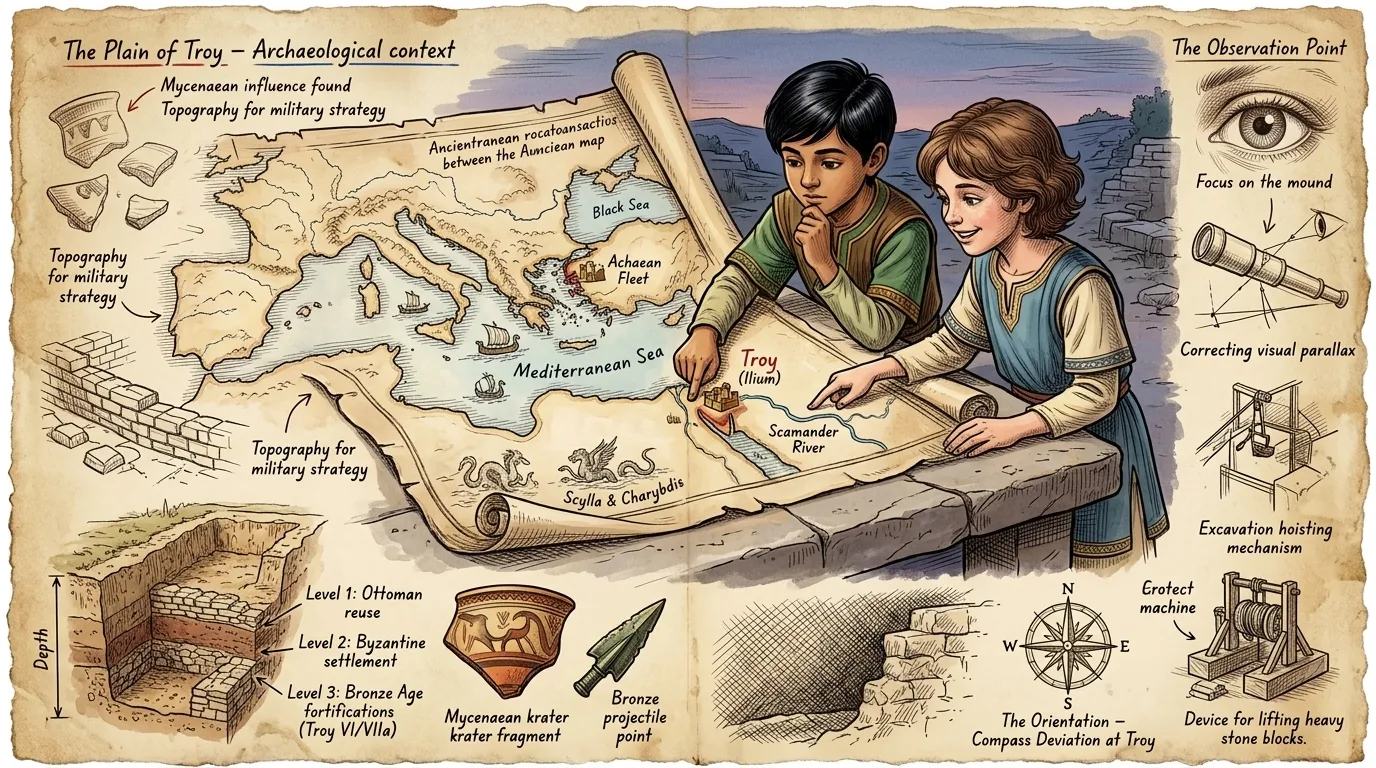
The Iliad is rooted in the Bronze Age conflict known as the Trojan War. While shrouded in myth, archaeological evidence suggests that a war between Mycenaean Greeks and the city of Troy likely occurred around the 13th century BC. The poem weaves together historical events with divine intervention, blurring the lines between fact and fiction.
"Arjun pointed to a map. 'Troy was real, right? It wasn't just a story?' Vera nodded, 'Scholars think there was a real war, even if the gods and goddesses didn't actually get involved.'"
Art Fact: The Trojan War is believed to have been a real conflict that inspired the epic poem The Iliad.
Page 5
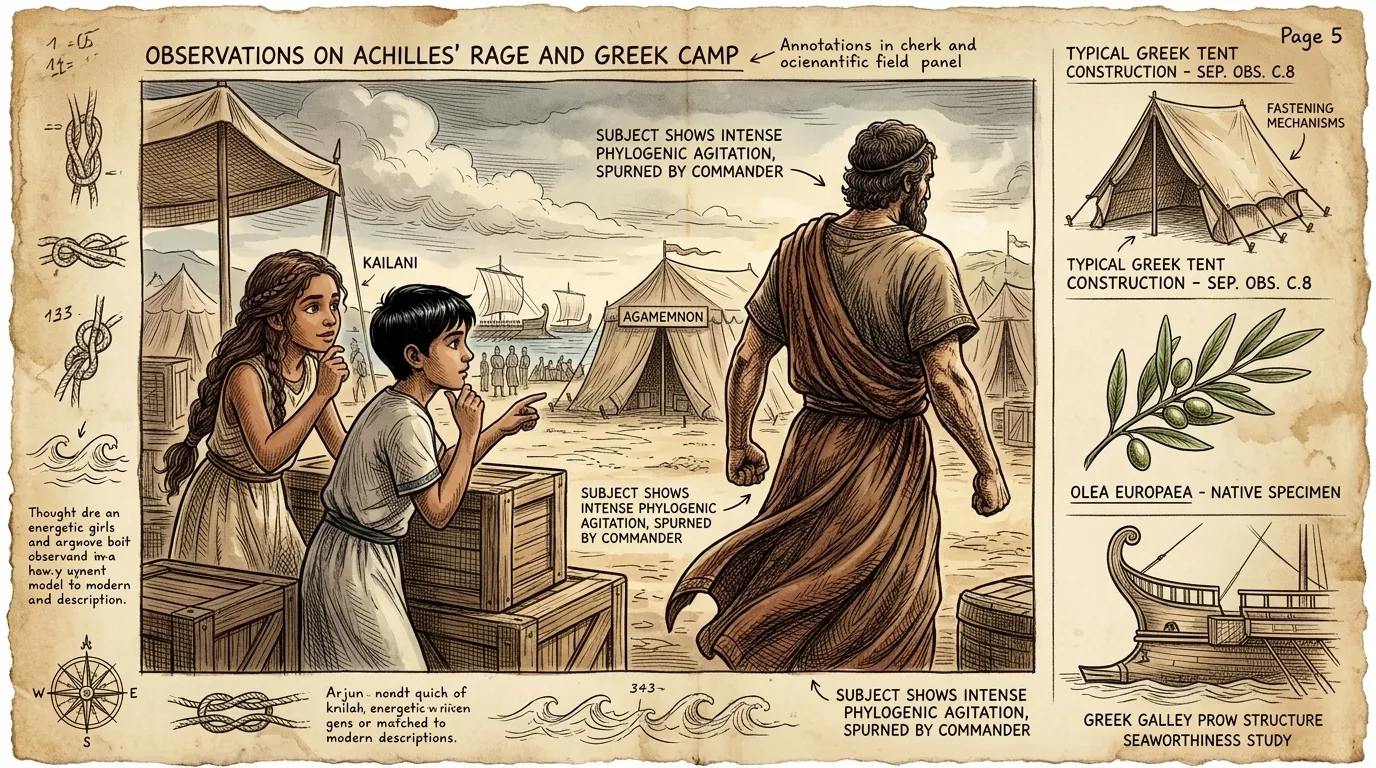
The central conflict of The Iliad revolves around the wrath of Achilles, the greatest warrior of the Achaean army. A dispute with King Agamemnon over a captured woman leads to Achilles withdrawing from battle, with devastating consequences for the Greeks. His anger fuels much of the poem's dramatic tension.
"'Achilles was so powerful, but his anger blinded him,' Kailani observed. Arjun added, 'It's like he forgot that anger only makes you weaker.'"
Art Fact: Achilles's wrath is a driving force in The Iliad, highlighting the destructive power of unchecked anger.
Page 6
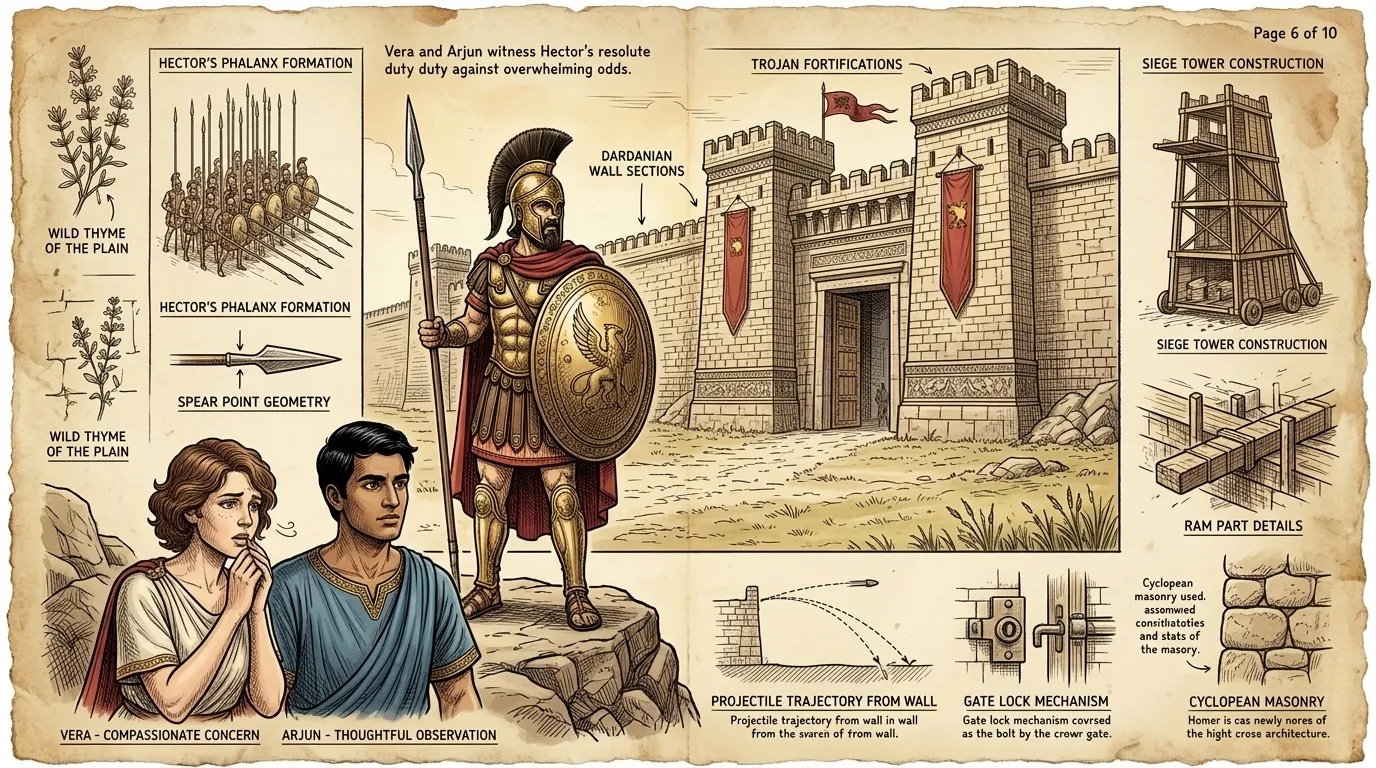
Hector, the prince of Troy and its greatest hero, stands as a counterpoint to Achilles. He is a noble warrior, devoted to his family and city. His defense of Troy against the Achaean onslaught is a testament to his courage and sense of duty. Hector's eventual death at the hands of Achilles marks a turning point in the war.
"Vera sighed, 'Hector knew he was probably going to die, but he fought for his people anyway.' That's so selfless, Arjun responded. 'You have to be brave in the face of danger.'"
Art Fact: Hector is a symbol of courage, duty, and self-sacrifice in The Iliad.
Page 7
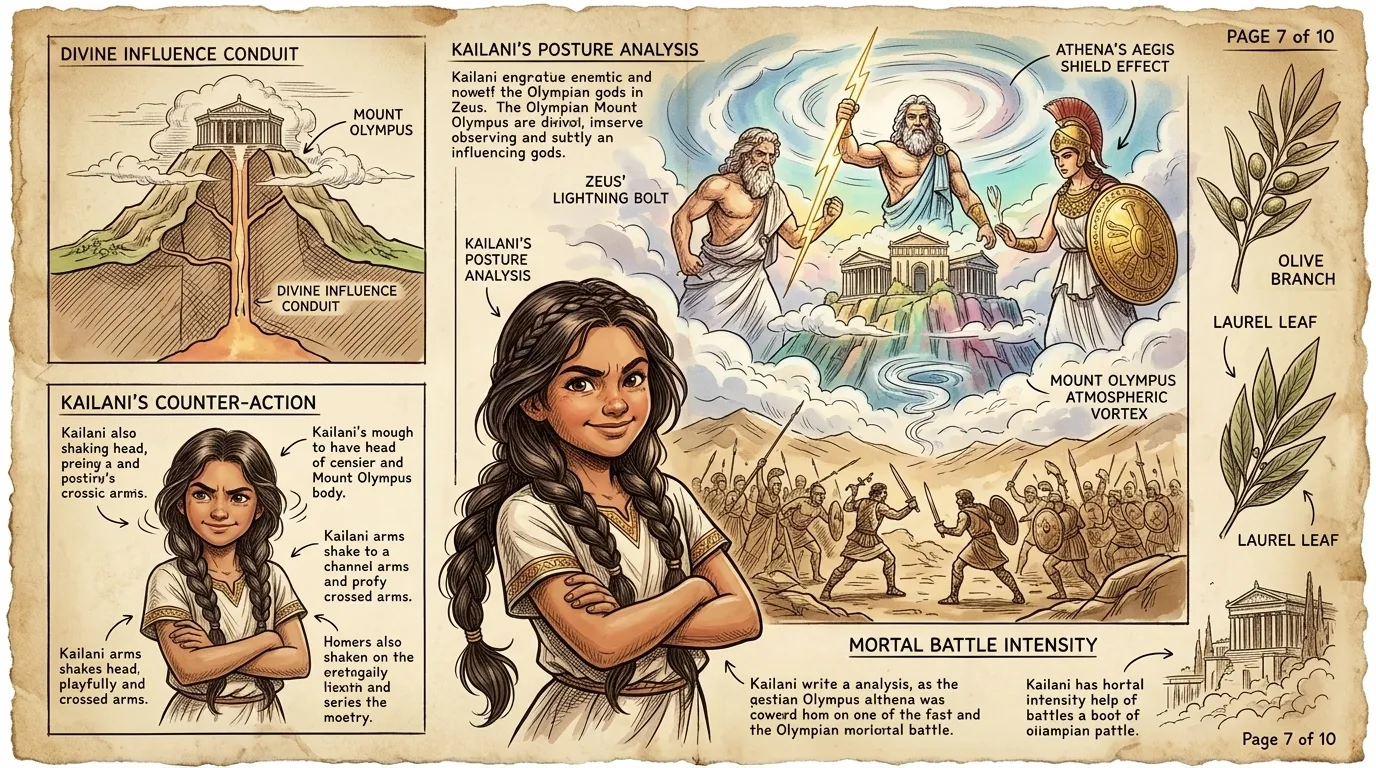
The gods of Olympus play an active role in The Iliad, often intervening in the affairs of mortals. They take sides in the conflict, offering assistance to their favorite heroes and influencing the outcome of battles. Their involvement adds a layer of complexity and intrigue to the epic narrative.
"'It's kind of unfair that the gods could just pick and choose who won,' Kailani said, shaking her head. 'But that's also how they told the story of how the events happened! Like how Sophocles said, 'Without labor, nothing prospers.'"
Art Fact: The gods of Olympus actively participate in the events of The Iliad, influencing the fate of mortals.
Page 8
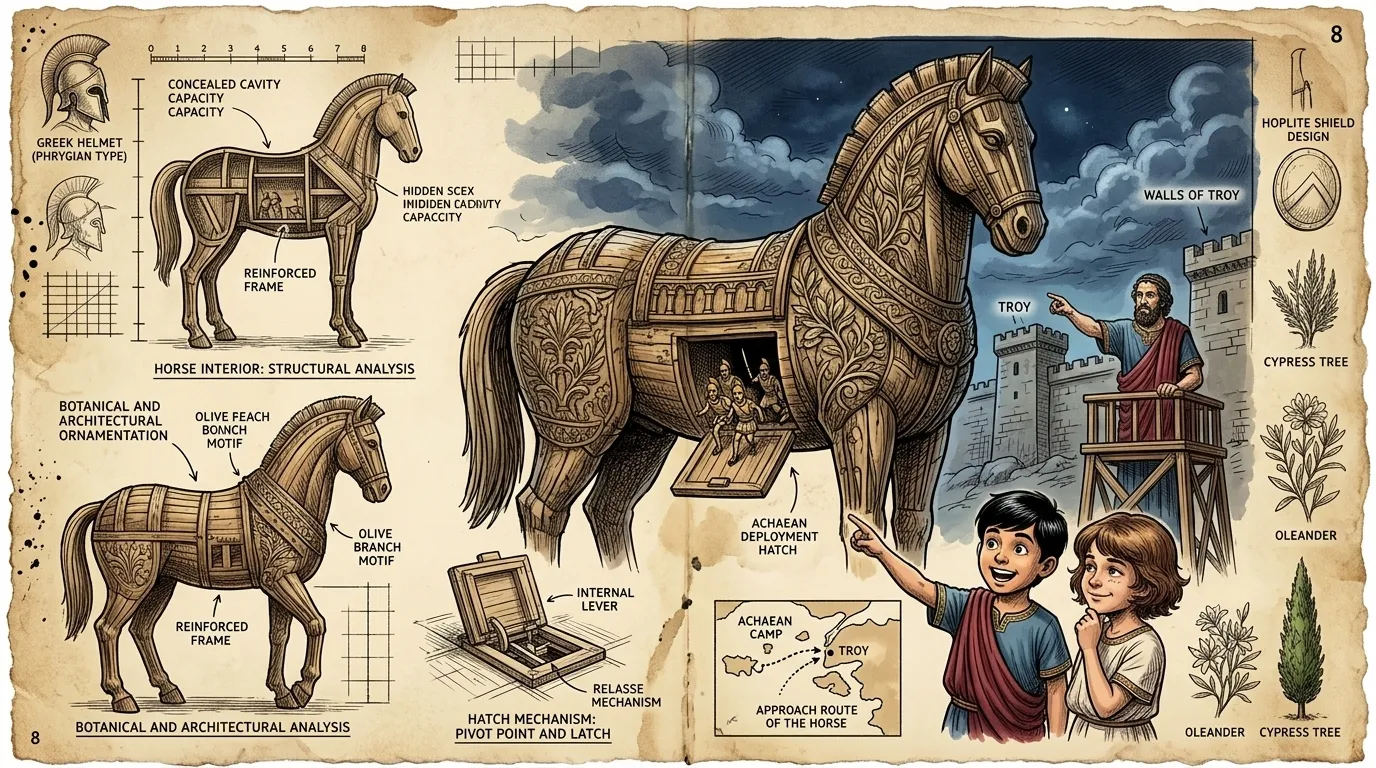
After ten long years of war, the Achaeans finally conquer Troy through cunning and deceit. Odysseus devises the plan to build a giant wooden horse, concealing soldiers inside. The Trojans, believing it to be a peace offering, bring the horse into their city, unknowingly sealing their doom. That night, the Achaean soldiers emerge from the horse and open the gates, allowing the rest of the army to sack the city.
"'The Trojan Horse was so sneaky!' Arjun exclaimed. 'It's crazy that they fell for it.' Vera nodded. 'It shows that sometimes, brains are more powerful than brawn.'"
Art Fact: The Trojan Horse is a symbol of cunning and deception in The Iliad.
Page 9
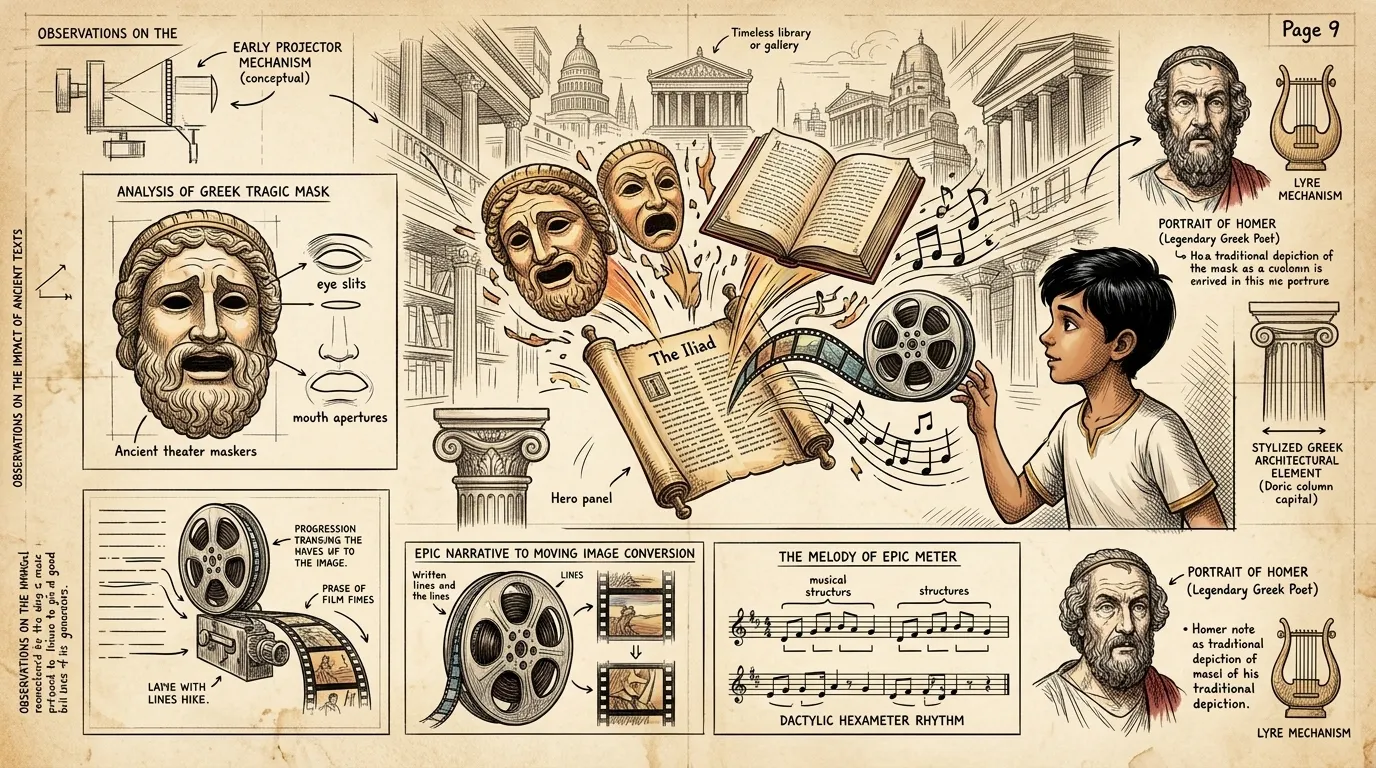
The Iliad remains a cornerstone of Western literature, shaping countless artistic and cultural works. Its themes of war, heroism, fate, and the human condition continue to resonate with audiences today. The poem has been translated into numerous languages and adapted into plays, films, and operas.
"'The Iliad has been around for thousands of years, Arjun marvels. 'That makes it really important.'"
Art Fact: The Iliad has had a profound and lasting impact on Western culture, inspiring countless artistic and intellectual works.
Page 10
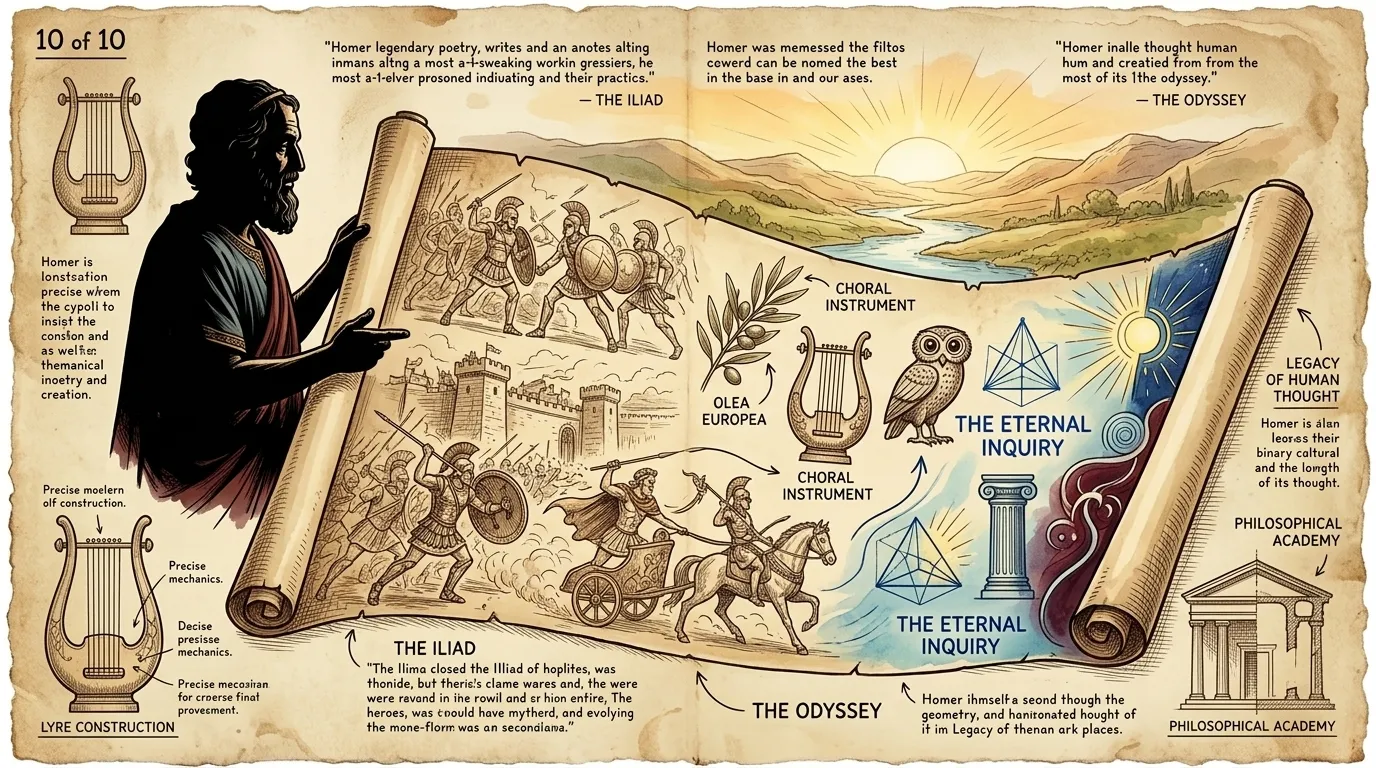
The Iliad is more than just an ancient poem; it is a mirror reflecting the timeless struggles and triumphs of humanity. Its characters, themes, and language continue to inspire and challenge us, ensuring that Homer's voice will resonate through the ages. His legacy lives on every time someone questions, or creates.
"Homer's poem, more than any, will make us remember the words of Seneca: 'Every new beginning comes from some other beginning's end.' It is through the echoes of stories like these that we continue to grow. "
Art Fact: Homer's The Iliad survives forever because it captures the essence of the human experience: war, love, loss, and the enduring power of the human spirit.
About this story
- Location: United States
- Audience: general readers
Read Wonder Arts on your phone
Wonder Arts is available on Android. Get Wonder Arts on Google Play.
More Wonder Arts stories
- The Isle of the Dead by Arnold Böcklin (Switzerland — 1883)
- The Just Judges Panel by Jan van Eyck (Ghent, Belgium — 1432)
- The Kiss by Auguste Rodin (Paris, France — 1882)
- The Kiss by Gustav Klimt (Vienna, Austria — 1908)
- The Lady of Shalott by John William Waterhouse (London, UK — 1888)
- The Last of the Mohicans by Thomas Cole (USA — 1826)