The Isle of the Dead by Arnold Böcklin (Switzerland — 1883)
The Isle of the Dead by Arnold Böcklin (Switzerland — 1883) — an illustrated arts story, set in Italy. 10 illustrated pages, free to read on Wonder Arts.
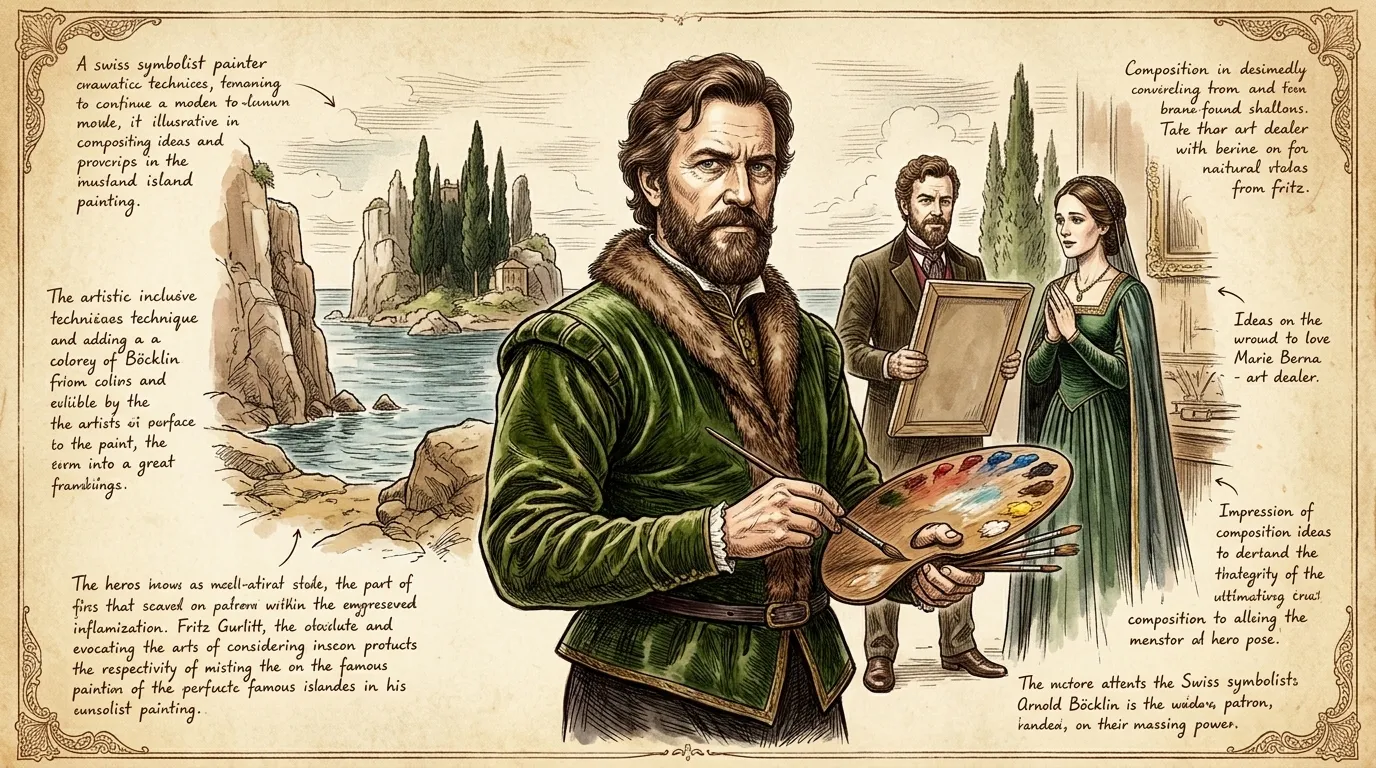
Page 1
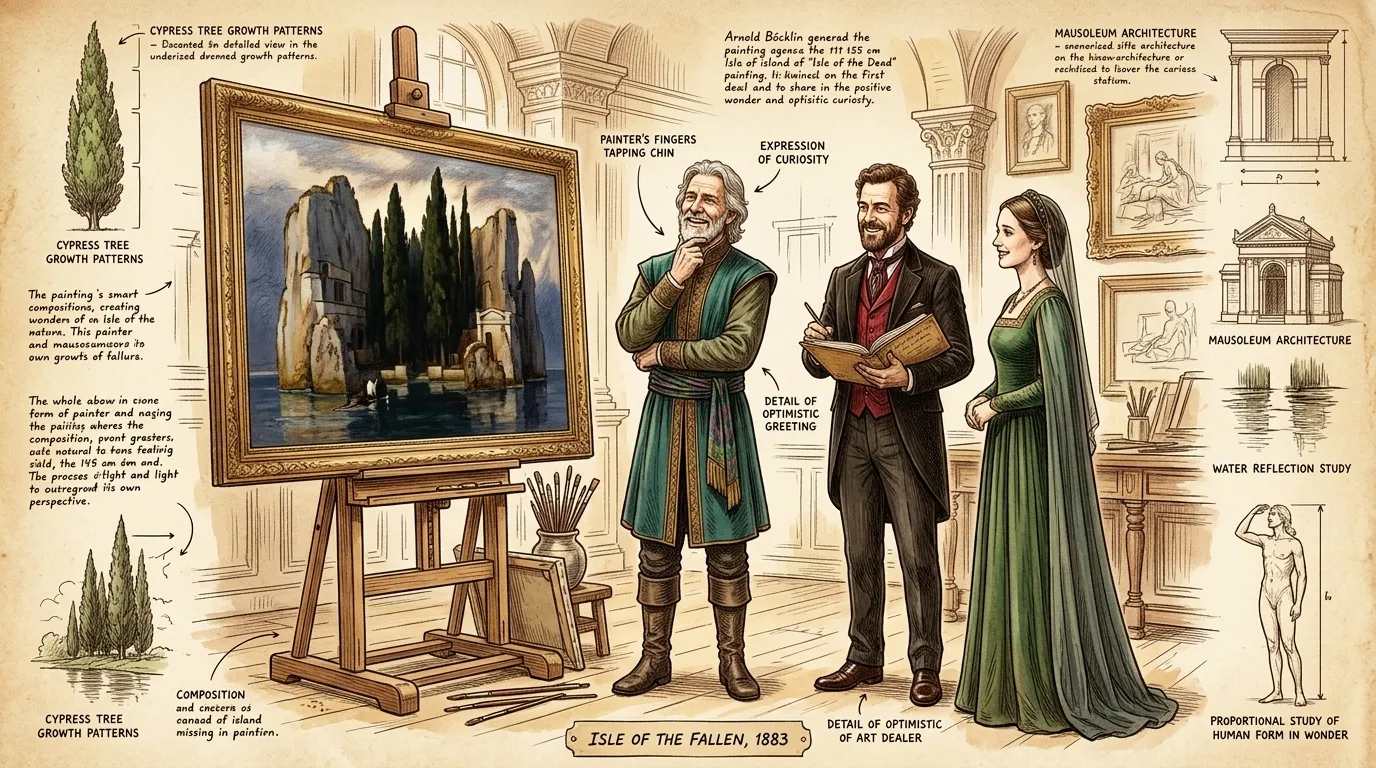
Arnold Böcklin, a Swiss symbolist painter, stood before his creation, 'Isle of the Dead,' 1883. Measuring 111 x 155 cm, this haunting image, currently housed in the Kunstmuseum Basel, Switzerland, exists in multiple versions, each imbued with a sense of profound melancholy. A peculiar detail: Böcklin painted this scene for his art dealer's widow, who was grieving for her deceased husband.
"Böcklin murmured, "This painting... it is a reflection of the soul's journey, perhaps even my own.""
Art Fact: Arnold Böcklin created several versions of 'Isle of the Dead' between 1880 and 1901. The painting's enduring appeal lies in its ability to evoke feelings of solitude, mortality, and the transition between life and death.
Page 2
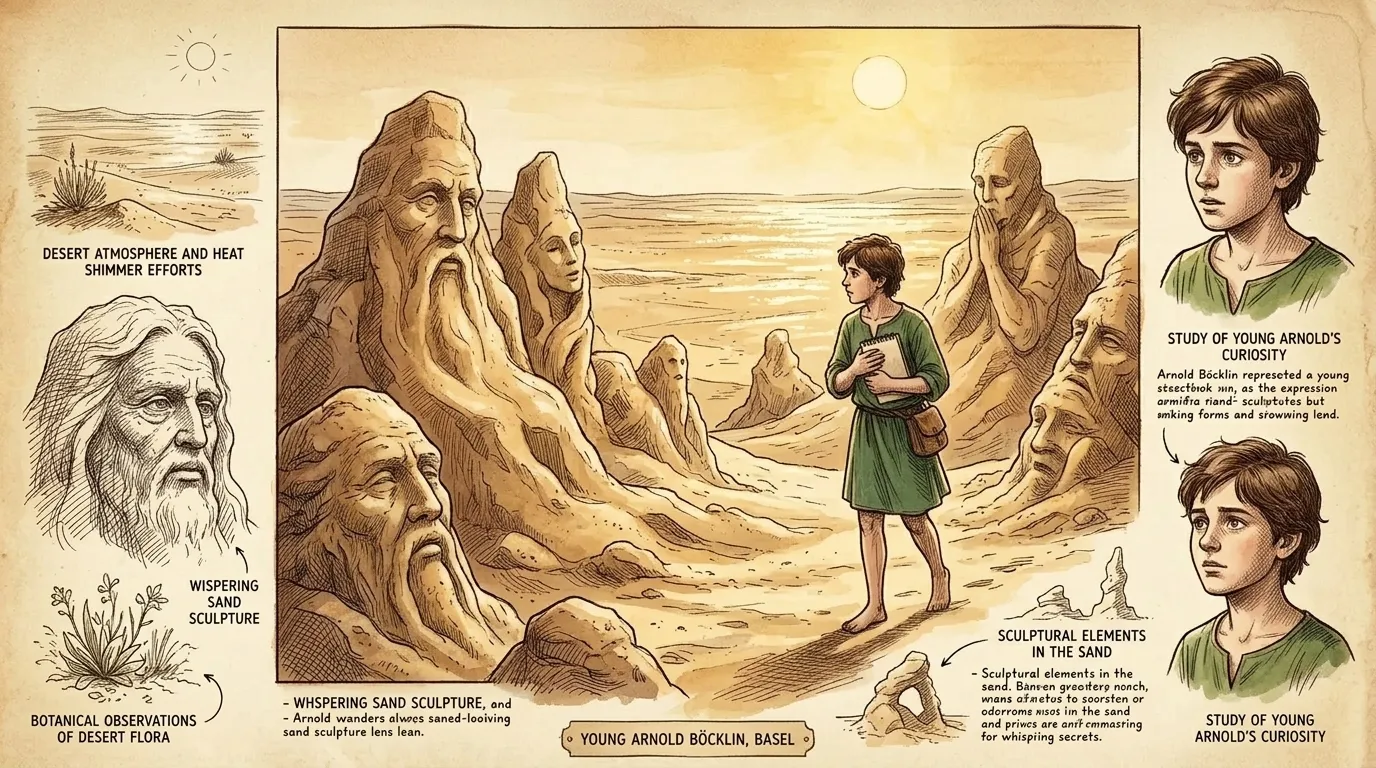
Young Arnold, barely a teenager, wandered the sun-baked lands near Basel. The desert air, whispering secrets around the ancient talking sand sculptures, seemed to echo the losses he had already endured. The recent death of his father weighed heavily on his young heart, shaping his view of the world. He clutched a small sketchbook, trying to capture the shifting sands.
"A wise old sand sculpture rumbled, "Boy, remember what Seneca said, 'Every new beginning comes from some other beginning's end.' Death is merely a doorway.""
Art Fact: Böcklin's early life was marked by the loss of his father, a factor that some art historians believe contributed to the somber and contemplative nature of his later works.
Page 3
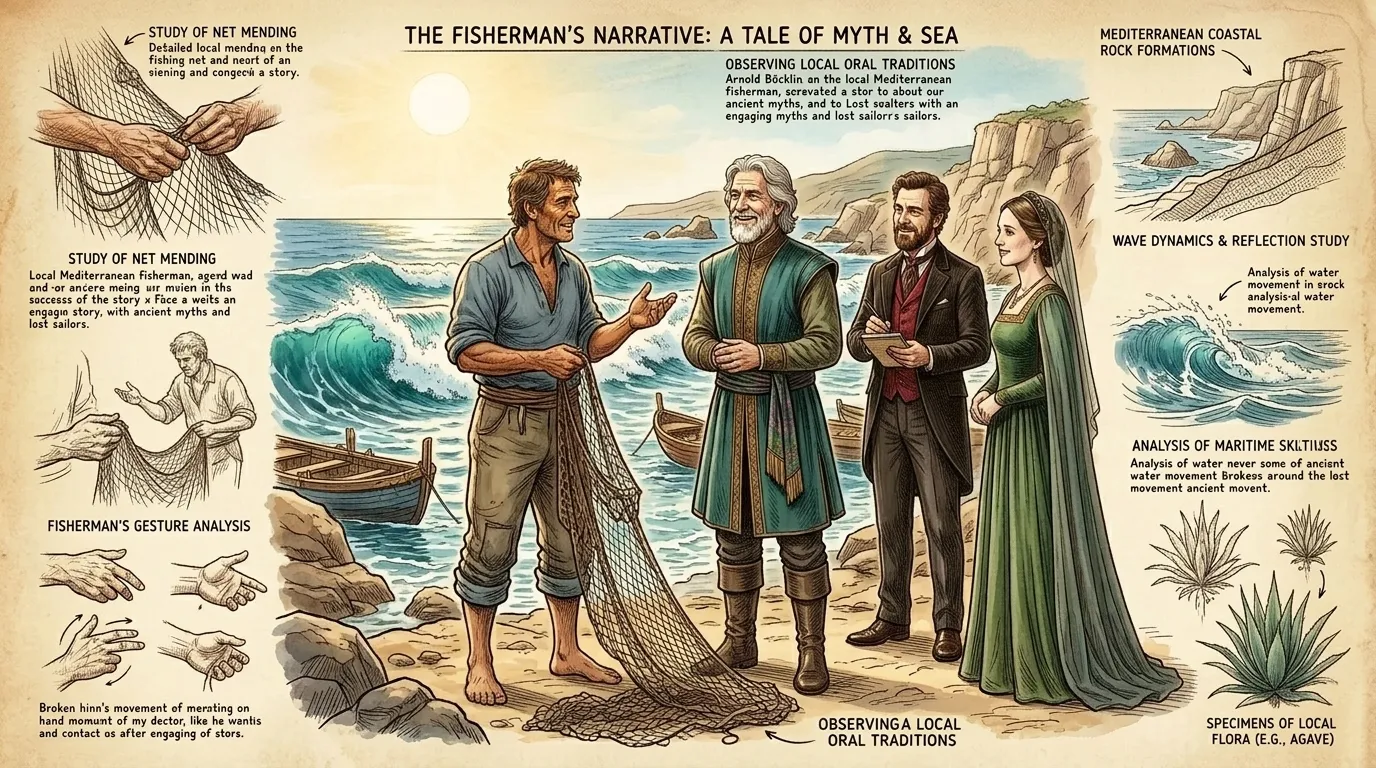
Years later, Böcklin found himself on the shores of the Mediterranean. The crashing waves and endless horizon stirred something within him. The sea, a constant cycle of creation and destruction, offered a new perspective on life and death. A local fisherman, mending his nets, spoke of ancient myths and the souls of sailors lost at sea. Böcklin listened intently.
""The sea gives and the sea takes," the fisherman said, his face weathered by sun and salt. "Like life itself.""
Art Fact: The Mediterranean Sea, with its rich history and symbolism, became a recurring motif in Böcklin's art, representing both the beauty and the perils of existence.
Page 4
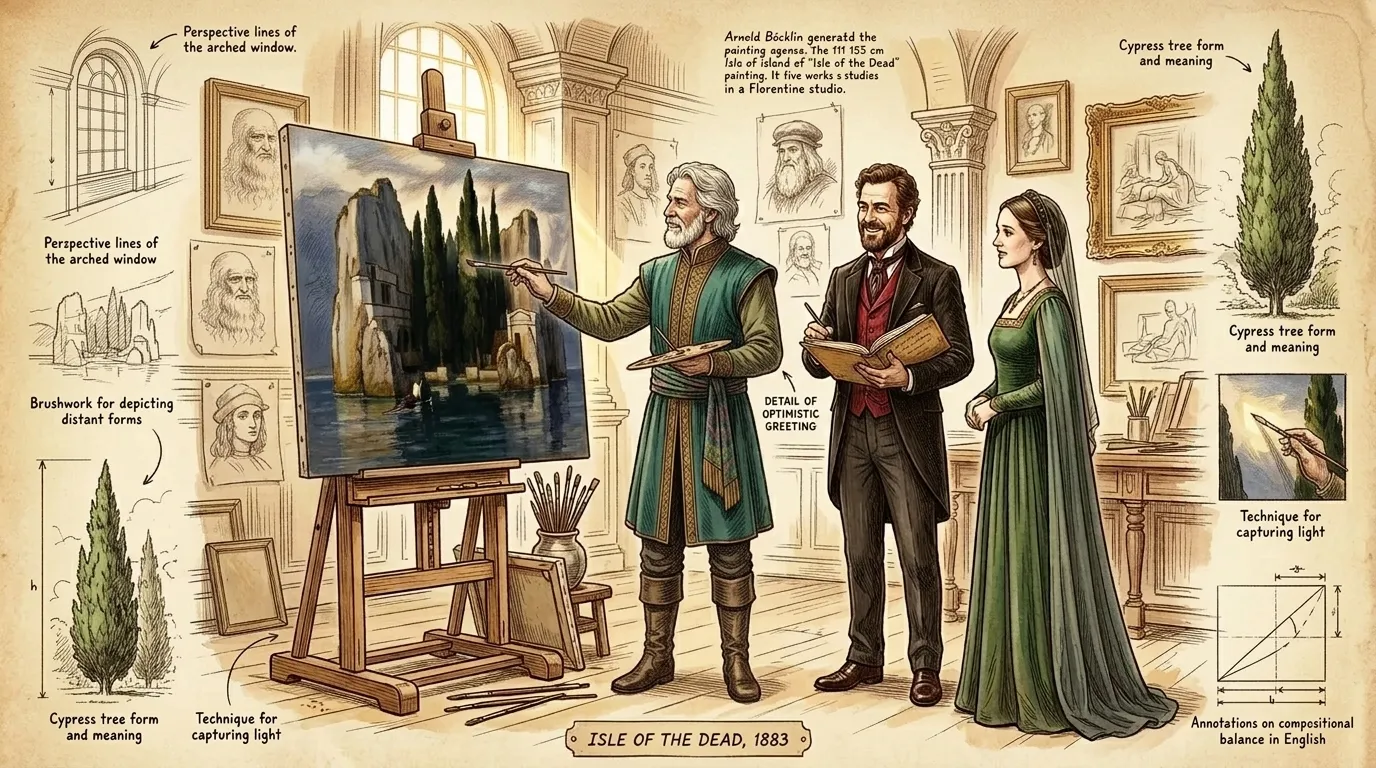
Florence, Italy, became Böcklin's artistic sanctuary. He immersed himself in the study of Renaissance masters, absorbing their techniques and philosophies. The bustling city, with its grand architecture and vibrant culture, provided endless inspiration. Within the walls of his small studio, he began experimenting with new forms and ideas. Light streamed in, illuminating the desert oasis in the distance.
"Böcklin, brush in hand, mused, "Michelangelo once said, 'I saw the angel in the marble and carved until I set him free.' I, too, must find the angel within my canvas.""
Art Fact: Böcklin's time in Florence exposed him to the rich artistic heritage of the Renaissance, influencing his approach to composition, form, and allegory.
Page 5
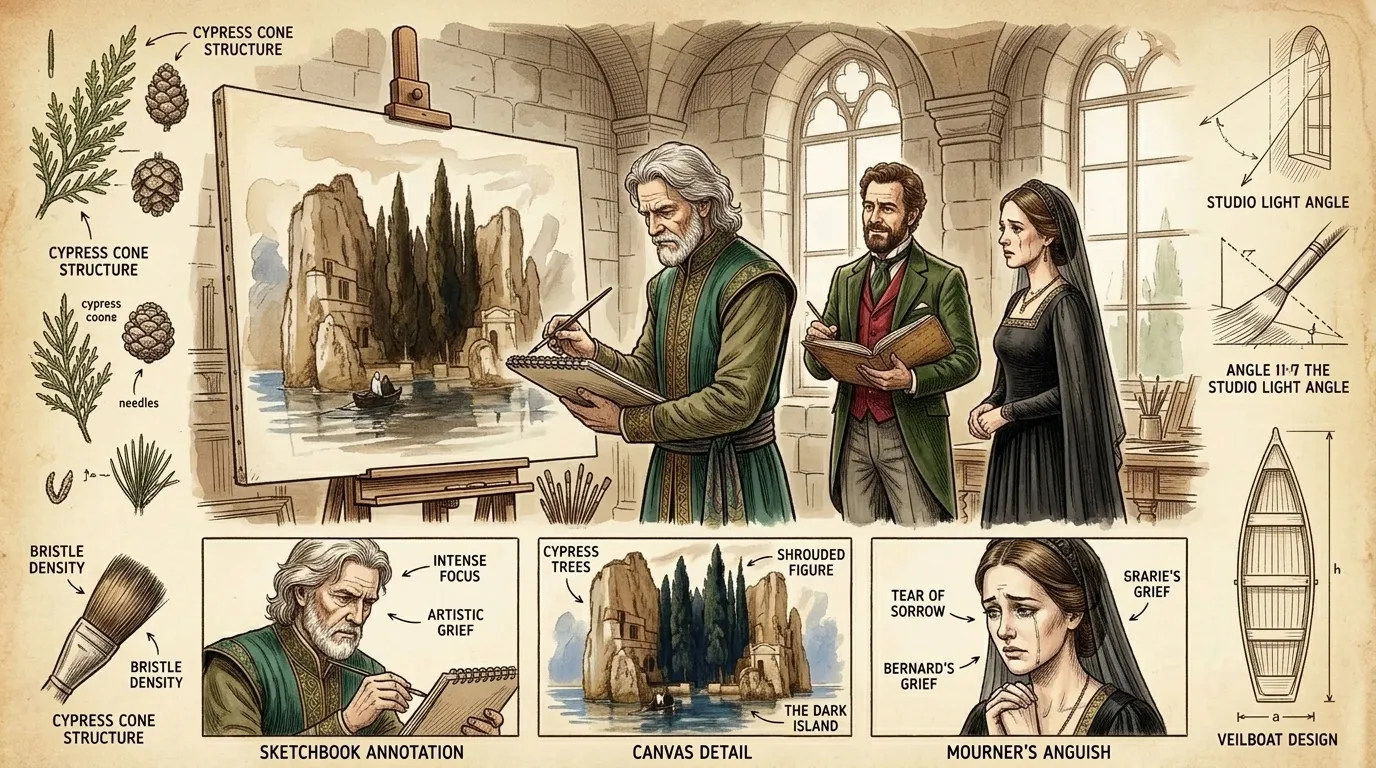
Tragedy struck again with the death of his infant daughter, Maria. Overwhelmed by grief, Böcklin found solace in his art. The image of a boat carrying a shrouded figure to a dark island began to take shape in his mind. This was not merely a painting; it was a vessel for his sorrow, a meditation on mortality.
"Böcklin, his voice heavy with grief, whispered, "Art is the only way I can express this pain. It's the only way to keep her memory alive.""
Art Fact: The loss of Böcklin's daughter profoundly impacted his work, leading him to explore themes of death and the afterlife with increased intensity.
Page 6
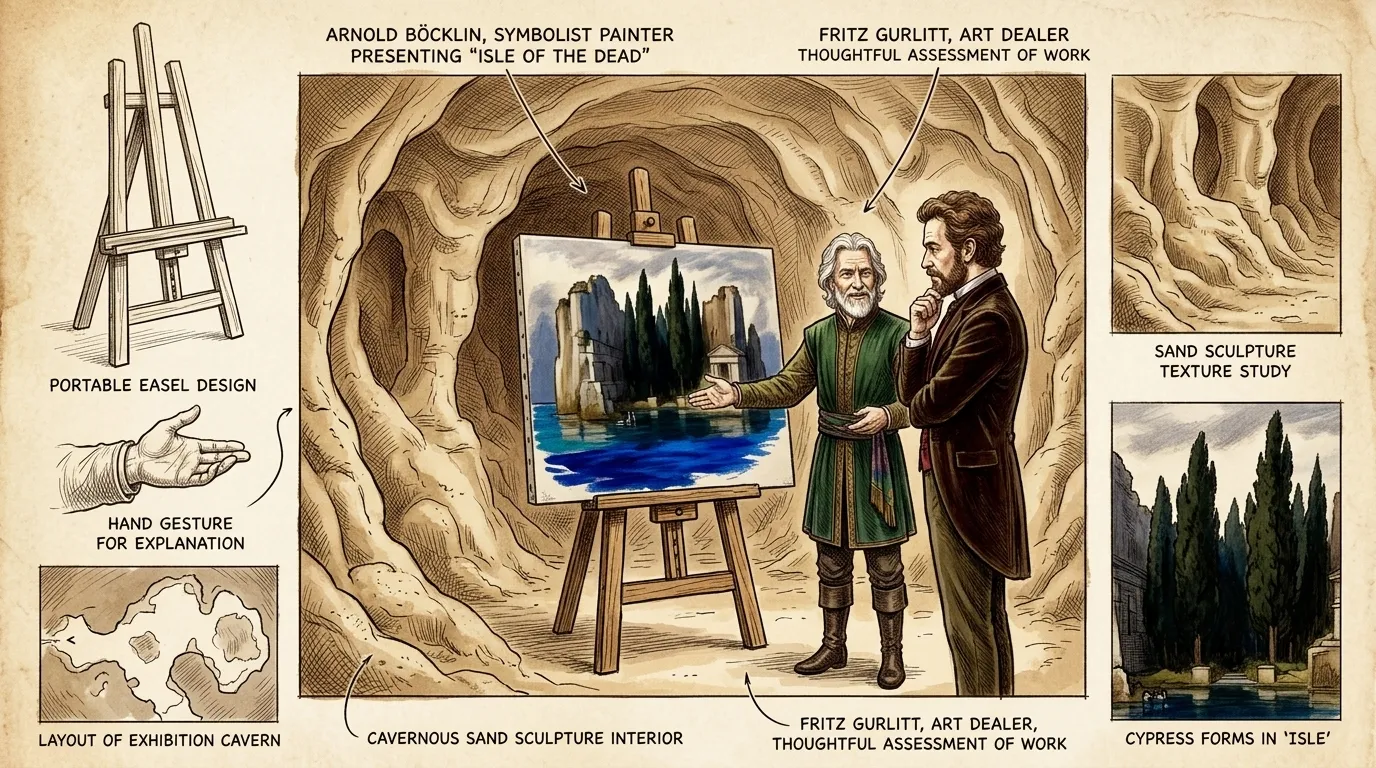
In 1880, the first version of 'Isle of the Dead' emerged from Böcklin's brush. The dark cypresses, the somber water, and the silent mausoleums created an atmosphere of profound stillness. The painting was unsettling, yet strangely compelling. He presented it to his art dealer, Fritz Gurlitt. He was inside a huge sand sculpture.
"Gurlitt, looking at the piece, remarked, "This is powerful, Böcklin, but also deeply melancholic. It speaks to the eternal questions that haunt us all.""
Art Fact: The first version of 'Isle of the Dead' was met with mixed reactions, some praising its evocative power, others finding it morbid and unsettling.
Page 7
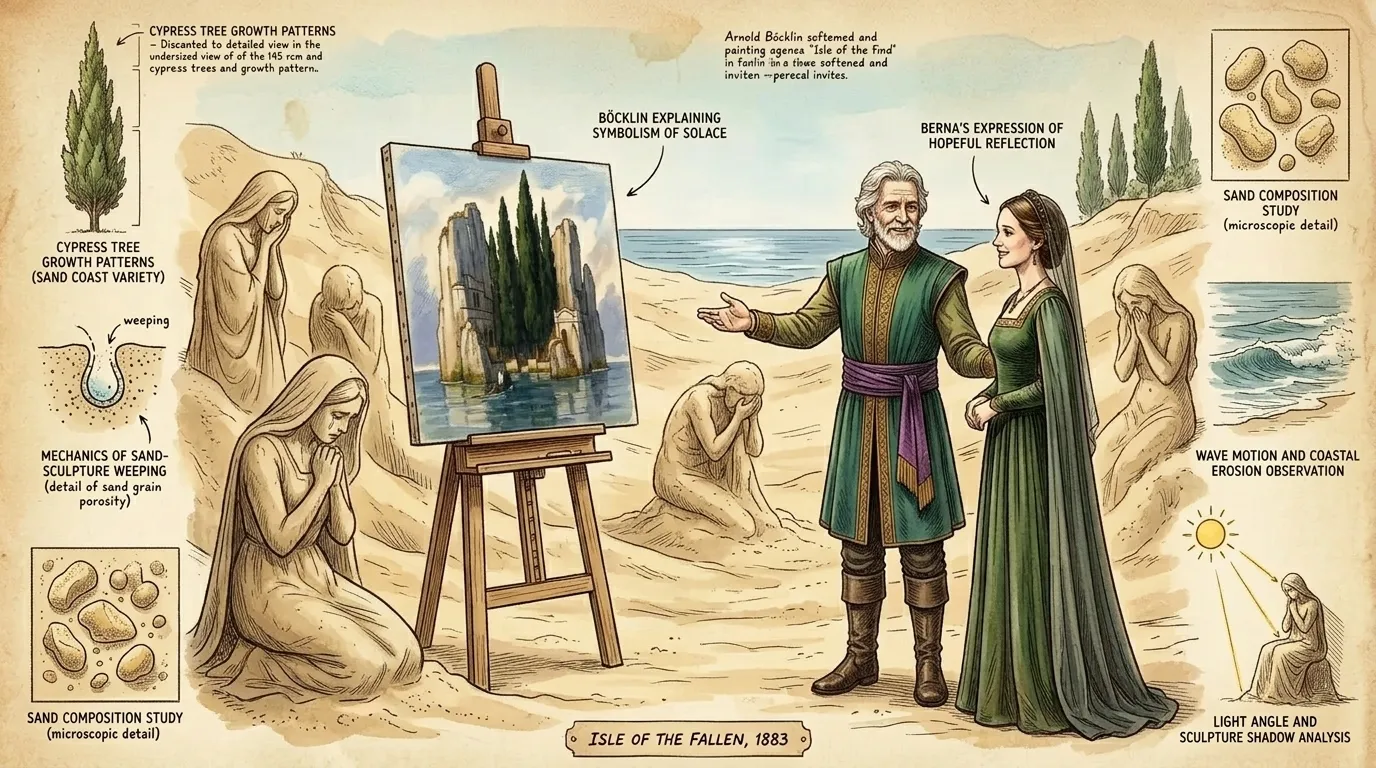
Marie Berna, the widow of Böcklin's patron, sought comfort in his art. She requested a painting "to dream by." Böcklin, remembering his own losses, created a version of 'Isle of the Dead' specifically for her. He softened the harsh edges, added a touch of hope. Sand sculptures wept.
""I want to create a place of solace," Böcklin told Berna, his voice soft, "a place where the soul can find peace.""
Art Fact: The version of 'Isle of the Dead' created for Marie Berna is considered by many to be the definitive one, capturing the essence of both sorrow and peace.
Page 8
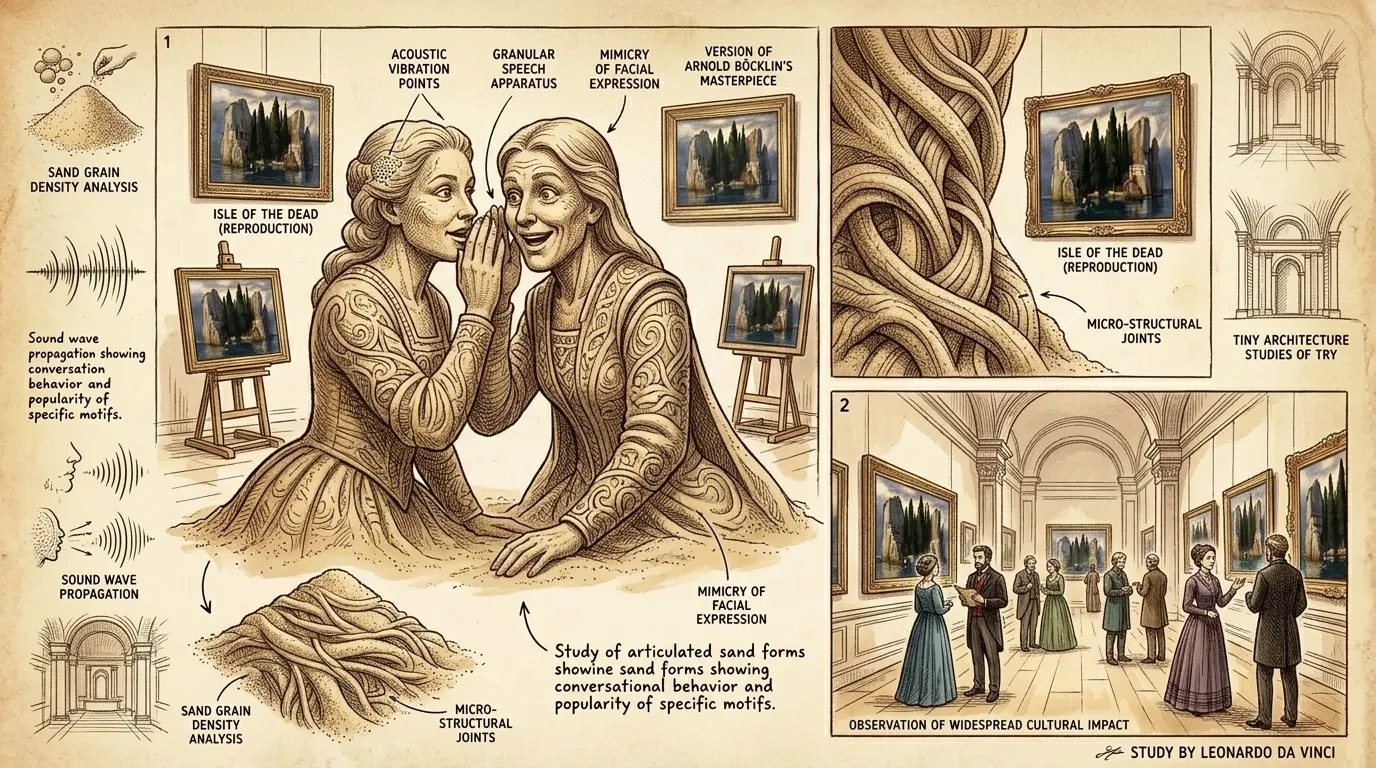
The painting's popularity grew, becoming a symbol of the fin-de-siècle era, a time of uncertainty and introspection. It resonated with a generation grappling with questions of mortality and the meaning of life. Reproductions of the painting adorned countless homes and studios. The talking sand sculptures discussed its meaning.
"One sand sculpture whispered to another, "It's a mirror, reflecting our deepest fears and longings.""
Art Fact: 'Isle of the Dead' became one of the most popular and widely reproduced paintings of its time, capturing the spirit of a generation grappling with profound questions about life and death.
Page 9
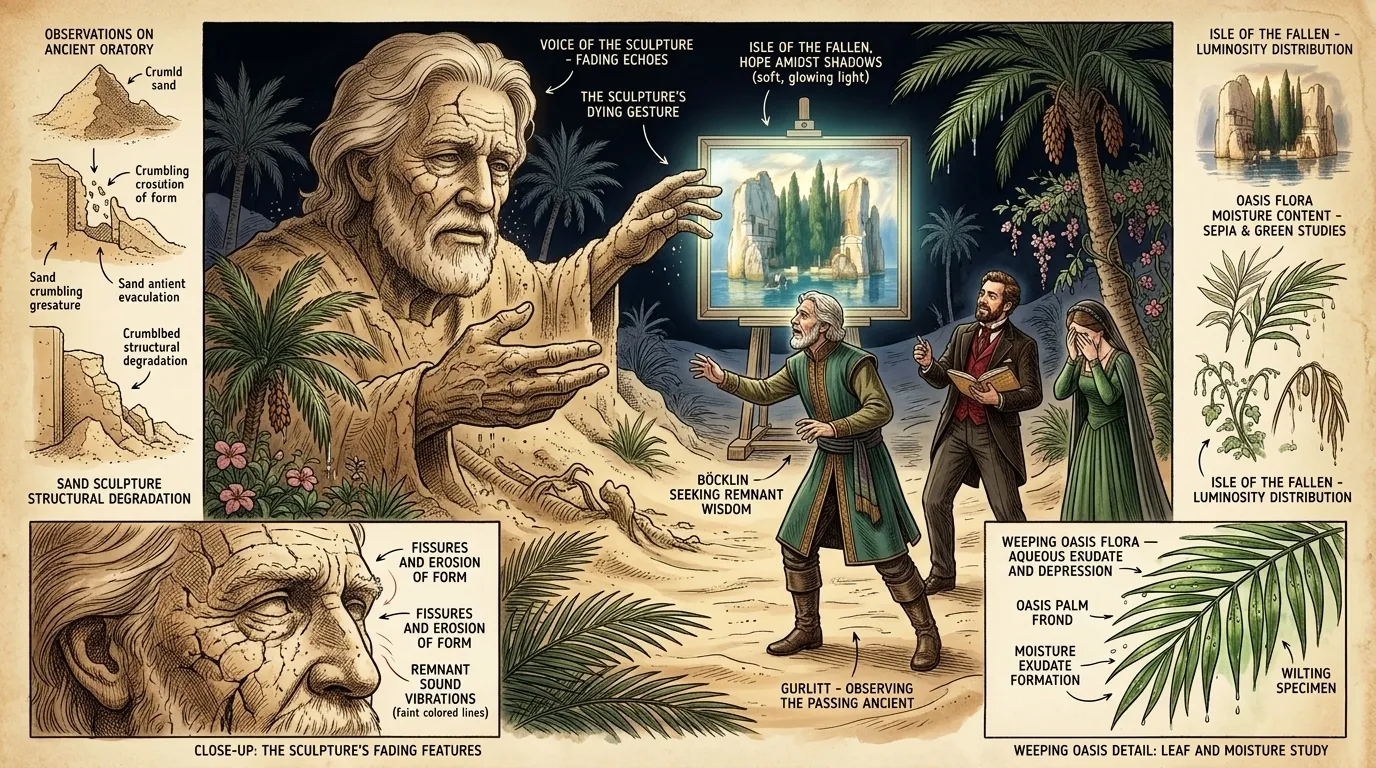
Even today, 'Isle of the Dead' continues to haunt and inspire. Its image persists in popular culture, a testament to its enduring power. The painting is more than just a work of art; it's a mirror reflecting our own mortality. The oasis desert weeps.
"One talking sand sculpture, its voice fading, said, "Art is eternal, and Arnold Böcklin touched the heart of eternity.""
Art Fact: 'Isle of the Dead' has inspired countless artists, writers, and filmmakers, demonstrating its lasting impact on popular culture and the collective imagination. The island is a light in the darkness.
Page 10
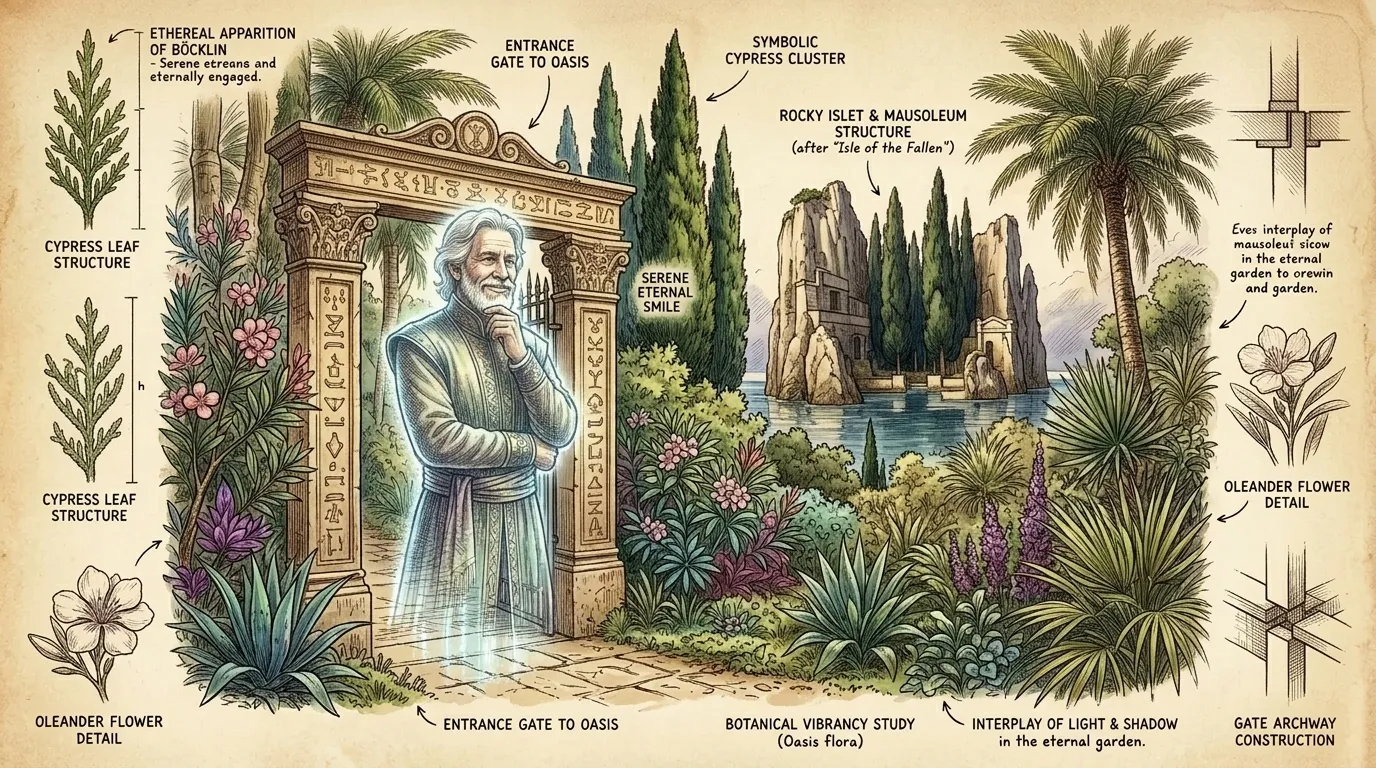
Böcklin's creation endures, a testament to the power of art to confront the darkest aspects of human existence and find beauty in the face of mortality. His 'Isle of the Dead' remains a voyage into the depths of the soul, a journey that continues to resonate with audiences across time. Arnold Böcklin survives forever because he dared to show us the landscape of our own mortality.
"Böcklin's spirit, a shimmering apparition near the oasis's entrance, is heard musing, 'As Leonardo da Vinci said, 'Art is never finished, only abandoned.' Perhaps, in a way, I am still painting.""
Art Fact: Arnold Böcklin's 'Isle of the Dead' continues to captivate audiences with its haunting beauty and profound meditation on mortality, securing its place as a masterpiece of Symbolist art.
About this story
- Location: Italy
- Audience: general readers
Read Wonder Arts on your phone
Wonder Arts is available on Android. Get Wonder Arts on Google Play.