The Tower of London (UK — 1078)
The Tower of London (UK — 1078) — an illustrated arts story, set in United Kingdom. 10 illustrated pages, free to read on Wonder Arts.
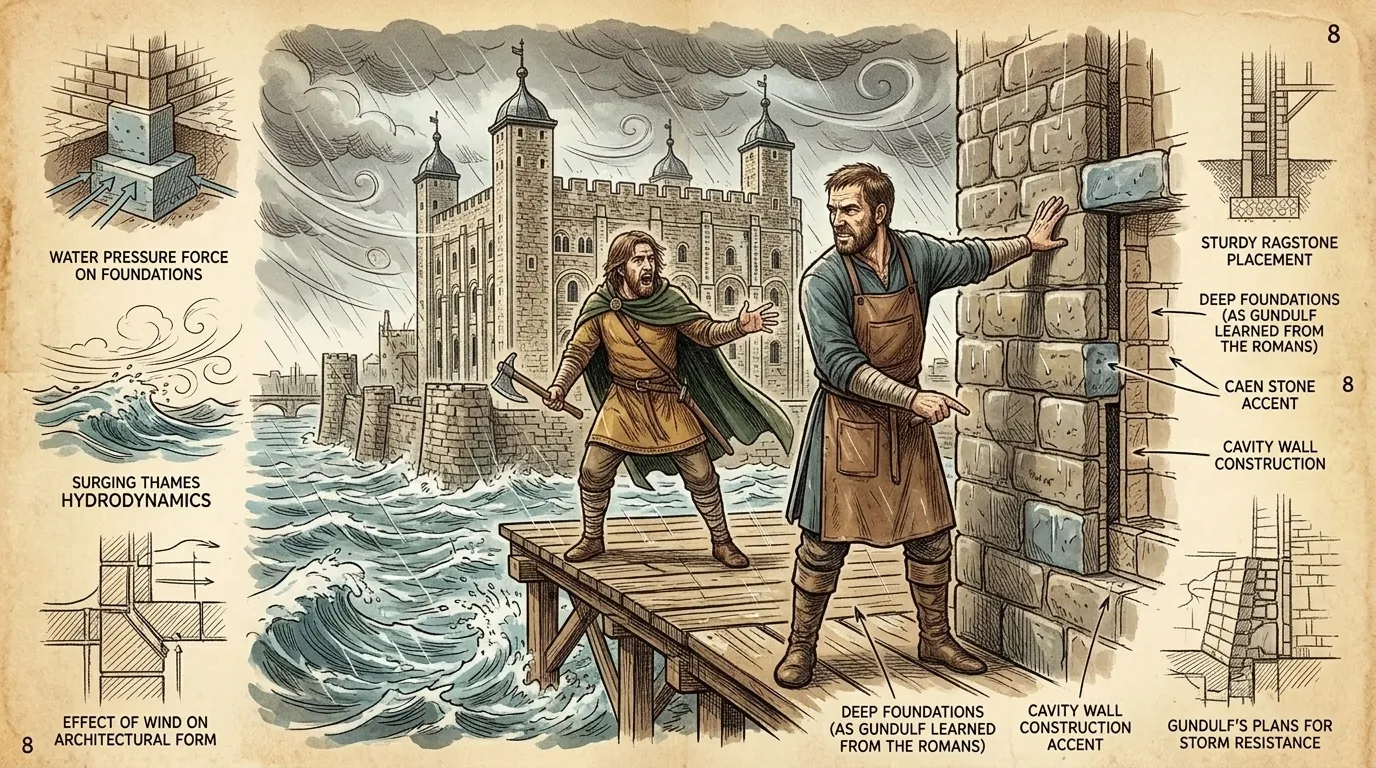
Page 1
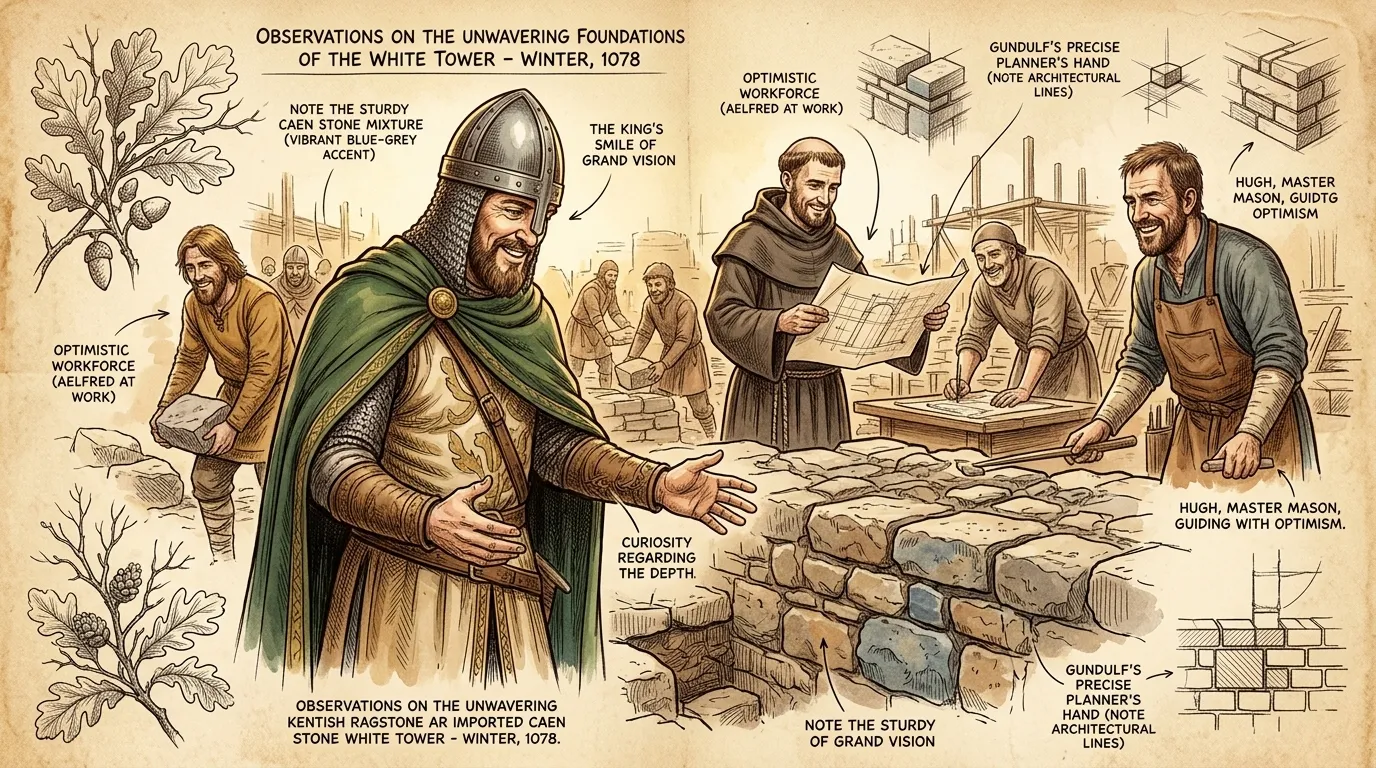
In the winter of 1078, the raw winds of London whipped around William, Duke of Normandy, now King of England. He stood before the emerging foundations of what would become his greatest statement of power: the White Tower. This formidable structure, conceived by William and largely designed by Gundulf of Rochester, measures approximately 36 by 32 meters at its base and rises 27 meters, built from Kentish ragstone and Caen stone.
""This fortress will stand for a thousand years, Bishop Gundulf," William declared, his voice cutting through the chill. "A visible fist, asserting our dominion over this land, even as whispers of dissent stir through the city.""
Art Fact: The White Tower, the central keep of the Tower of London, commenced around 1078, served as a royal residence and a symbol of Norman authority. Its construction marked a pivotal moment in English history, solidifying William's conquest. Today, it remains a UNESCO World Heritage Site.
Page 2
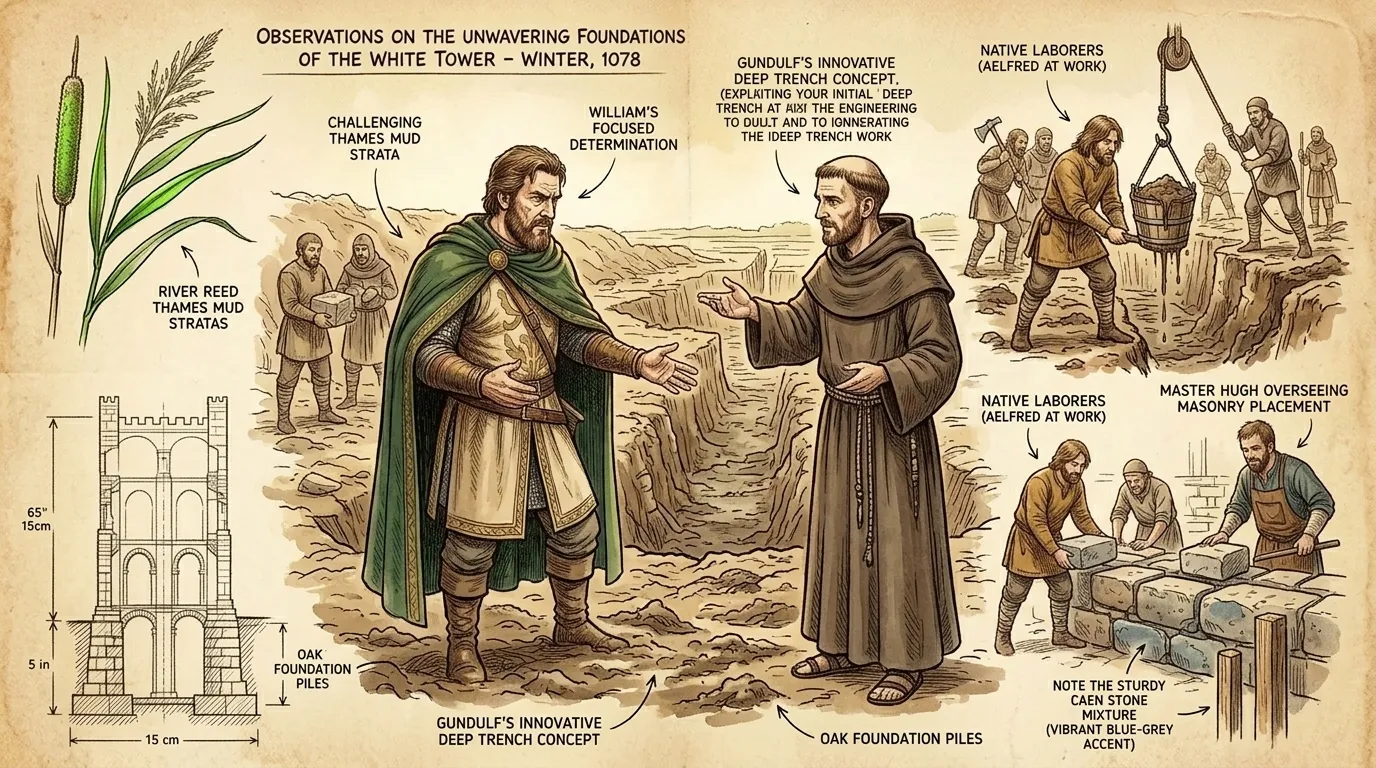
William knew the ground beneath their feet, the soft Thames mud, was treacherous for a structure of such immense scale. He demanded innovative solutions, solutions that would draw upon the wisdom of ages past. He convened with Gundulf, a man whose engineering prowess was as renowned as his faith.
""Bishop Gundulf, the Anglo-Saxon folk are restless, moving against our presence earlier than anticipated," William observed, his brow furrowed. "How can we ensure this Tower withstands not just siege, but the very earth itself?""
Art Fact: The initial challenges of building on London's marshy soil necessitated incredibly deep foundations, sometimes extending over 12 feet, to anchor the massive stone structure securely. This was a critical early engineering decision.
Page 3
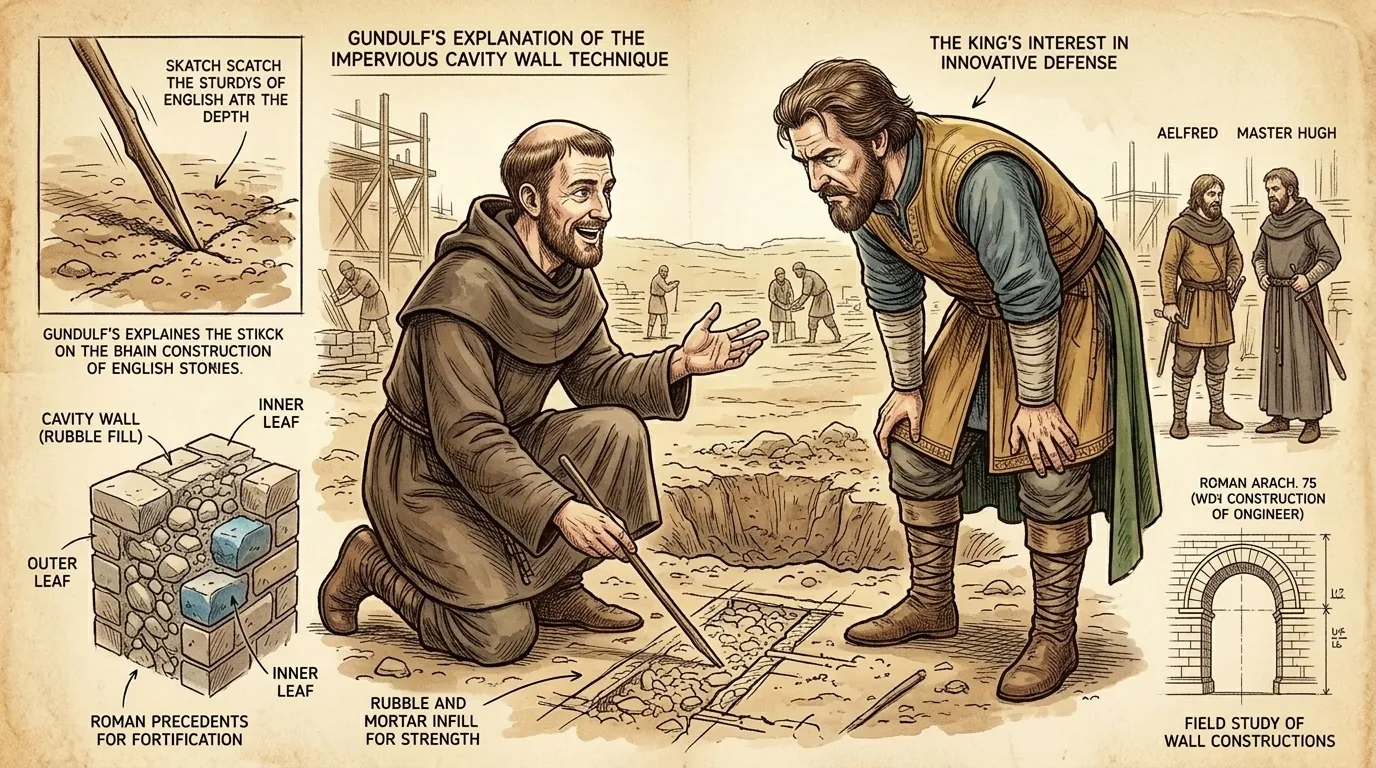
Gundulf, a monk and architect, had studied the ancient Roman methods of construction, particularly their enduring aqueducts and walls. He understood that true strength came from more than just thick stone; it lay in intelligent design. He shared a crucial insight with William, one that resonated with the king's desire for lasting dominion.
""Your Majesty, recall the Roman structures that stand a millennium later," Gundulf explained, sketching in the dirt. "Their secret was not merely grand scale, but the cavity wall filled with rubble and mortar. A technique, if mastered, that will make this Tower impervious. As the Roman philosopher Seneca the Younger once wrote, 'Every new beginning comes from some other beginning's end.'""
Art Fact: Gundulf of Rochester (c. 1024–1108) was a Norman monk and bishop, renowned for his architectural expertise. He is widely credited with the detailed design of the White Tower, incorporating advanced construction techniques like the rubble-filled cavity wall.
Page 4
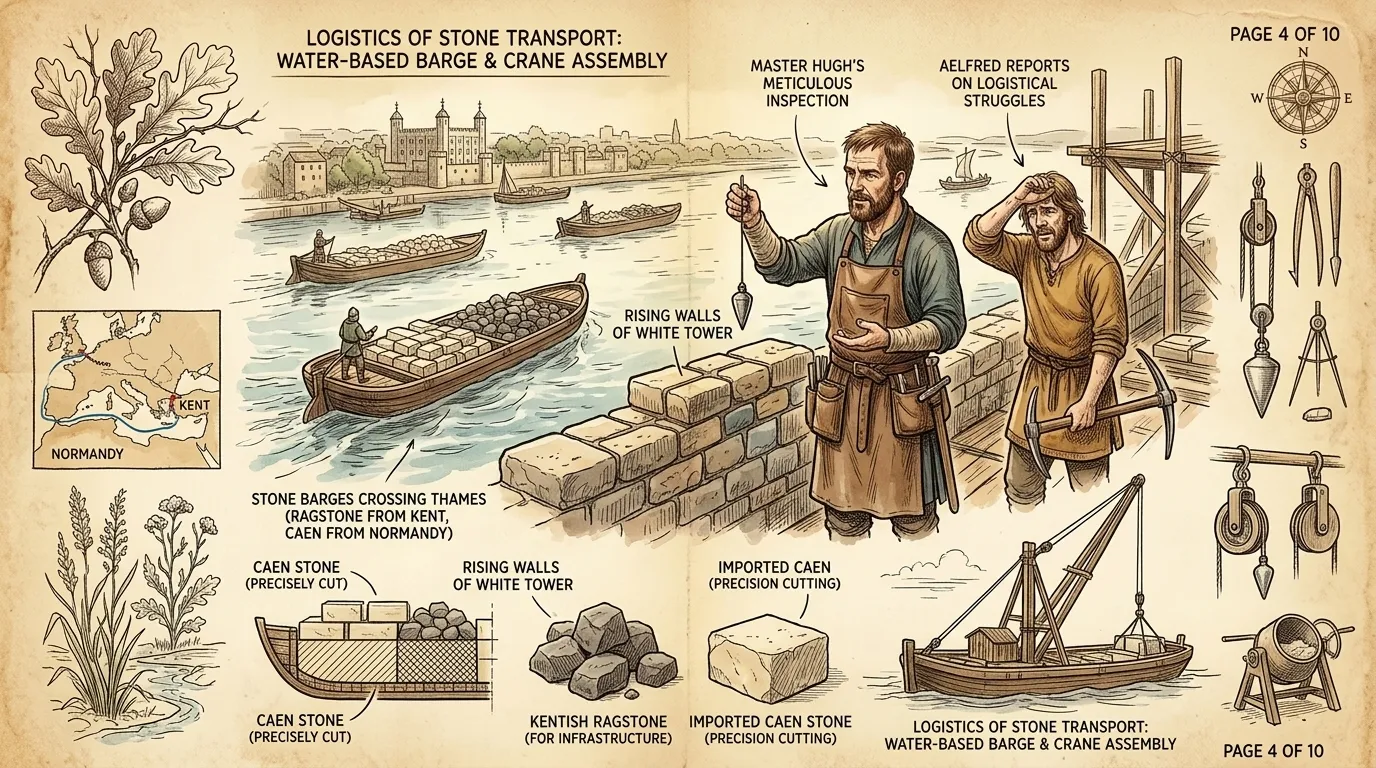
The lessons of Rome began to take physical form. Under the meticulous eye of Master Hugh, the Norman master mason, thousands of tons of Kentish ragstone and imported Caen stone were ferried to the site. The Tower's walls slowly climbed towards the sky, each layer a testament to both brute force and careful calculation.
""The foundations are solid, Master Hugh," a weary Anglo-Saxon foreman, Aelfred, reported, wiping sweat from his brow. "But this Caen stone is heavy, and the river passage grows more perilous with the Norman guard's insistence on speed.""
Art Fact: Caen stone, a fine-grained limestone from Normandy, was prized for its durability and ease of carving. It was extensively used in prestigious Norman buildings, including the Tower of London, requiring complex logistics for transport across the Channel and up the Thames.
Page 5
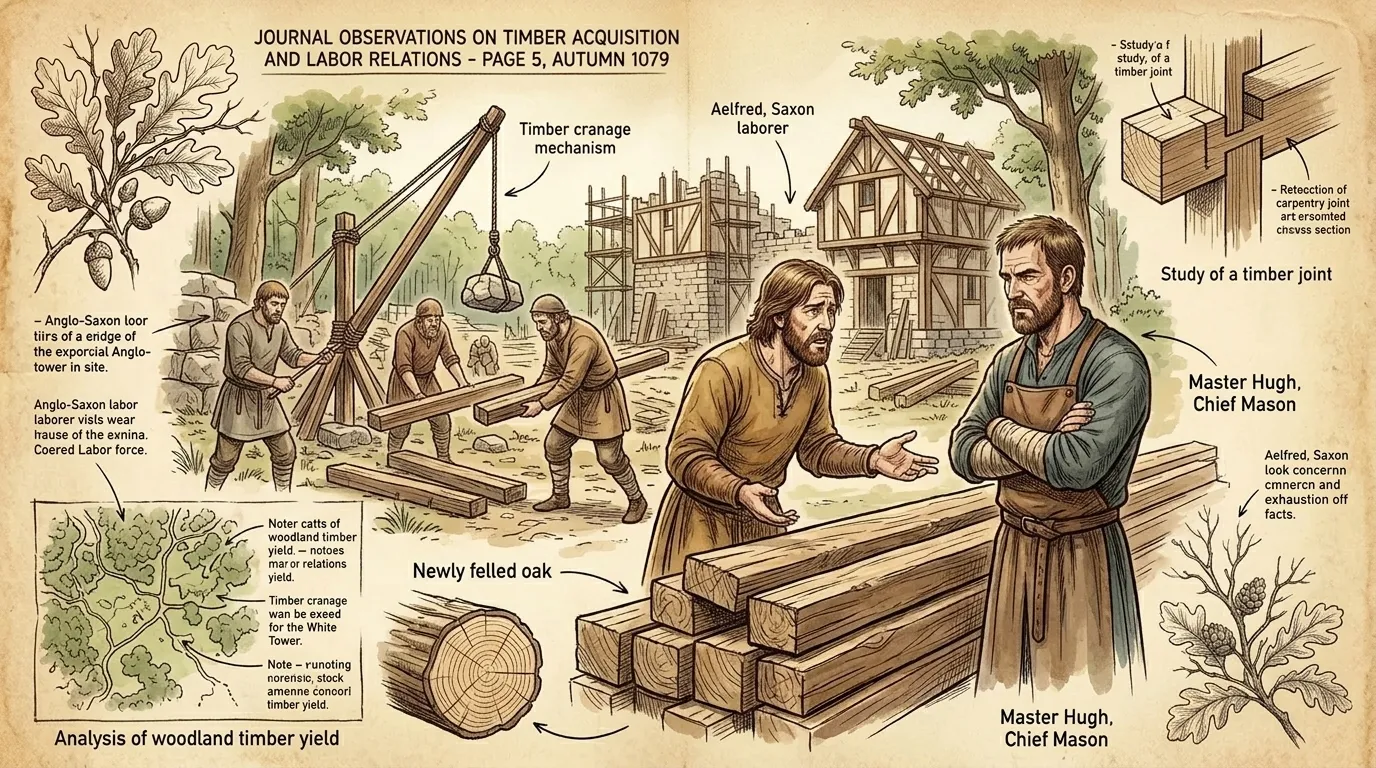
Despite the undeniable imposition of Norman power, the construction of the Tower became a strange, grudging collaboration. Anglo-Saxon laborers, many coerced, brought their local knowledge of the land, while Norman overseers supplied the architectural vision and organizational might. Two cultures, building one immense symbol of conquest.
""These timbers from the nearby forest are sturdy, but the river men tell me more Anglo-Saxon families are fleeing the city," Aelfred told Master Hugh, his voice low. "It makes the work harder, with fewer hands." Master Hugh simply grunted, "Then we work smarter, Aelfred. The King's will must be done.""
Art Fact: The construction of the Tower of London represented a significant drain on local resources and manpower. While Anglo-Saxon laborers were instrumental, the project was often carried out under duress, further fueling resentment towards the Norman regime.
Page 6
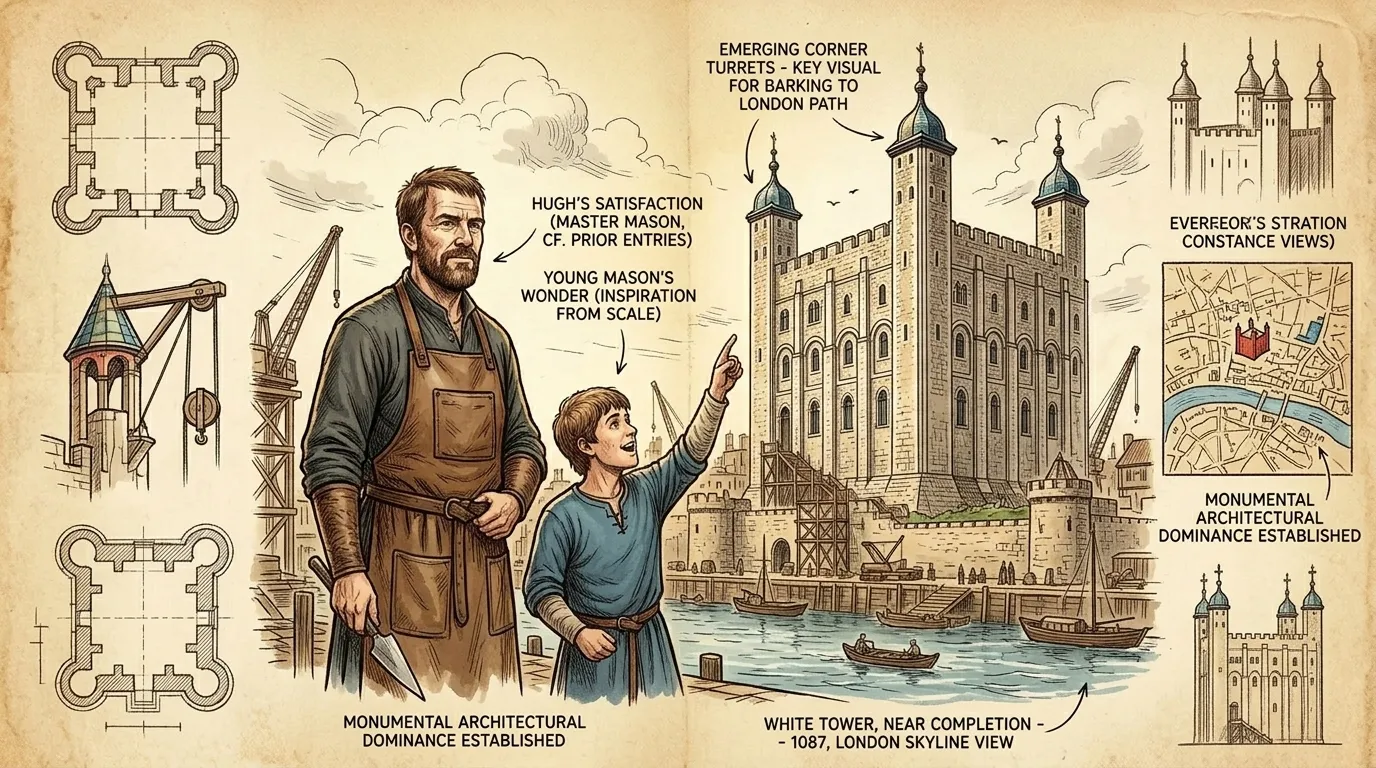
Years passed, and the White Tower steadily rose, an imposing cube dominating the London skyline. The sheer scale was breathtaking, its four corner turrets beginning to define its iconic silhouette. This monumental effort solidified William's breakthrough in architectural dominance, a visual declaration of his permanent hold on England.
""Look how it pierces the clouds, Master Hugh!" a young Norman mason exclaimed, gazing up. "It feels as if it reaches to Heaven itself!" Hugh merely nodded, "It reaches only as far as the King commands, lad. But its shadow reaches further still.""
Art Fact: The White Tower's design, with its four corner turrets, marked a departure from earlier Norman keeps, setting a new standard for military architecture in England. It incorporated features for defense, residence, and even a chapel, showcasing multi-functional design.
Page 7
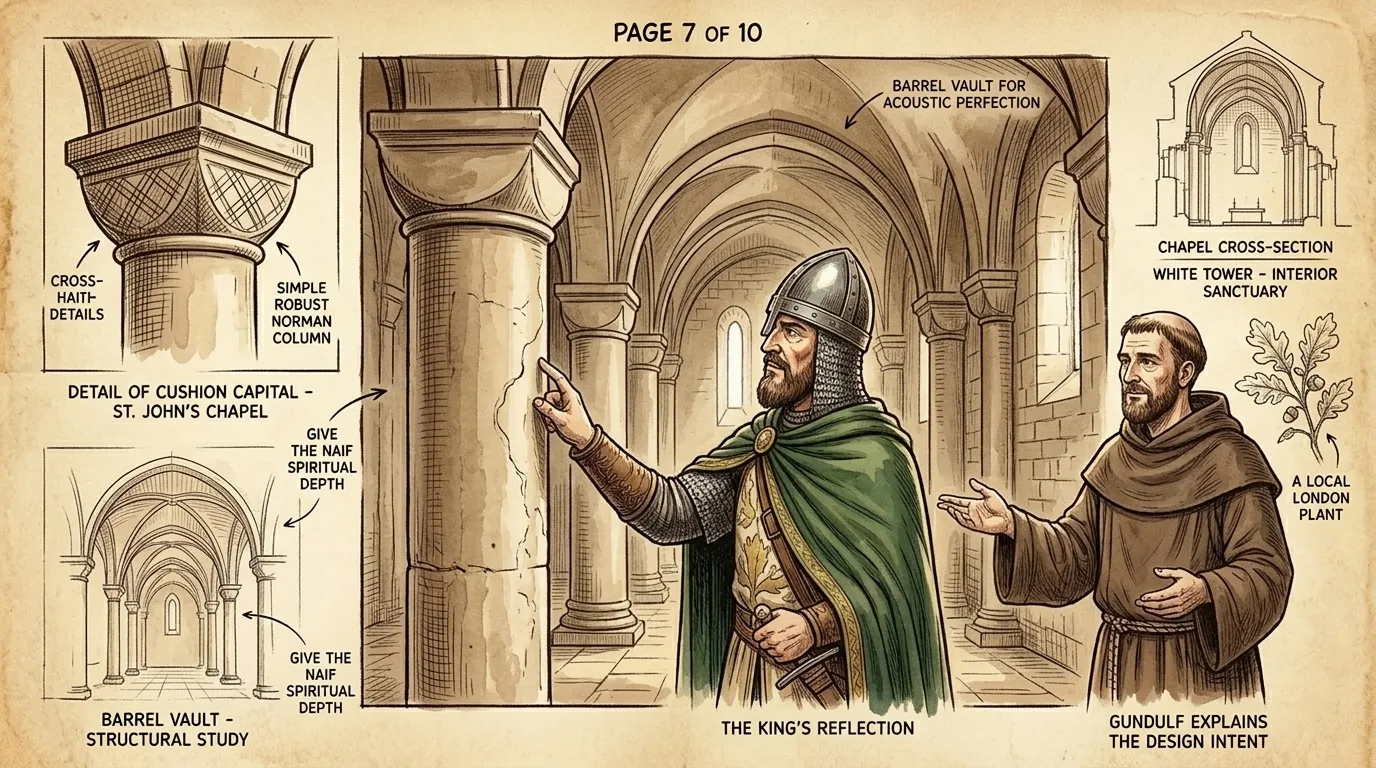
Inside the soaring walls, the skilled artisans began to craft the interior spaces, none more significant than St John's Chapel. Its simple, robust Norman architecture—a barrel-vaulted nave and stout columns—was a spiritual heart within the fortress's formidable shell, a testament to William's twin aims of conquest and Christian piety.
""This chapel, Bishop Gundulf, will be a sanctuary, a place of spiritual authority within these stone walls," William mused, tracing the outline of a column. "For even a king must kneel." Gundulf replied, "Indeed, Your Majesty. Power without piety is but a temporary crown.""
Art Fact: St John's Chapel, located on the second floor of the White Tower, is an exceptionally well-preserved example of Norman ecclesiastical architecture. Its simplicity and strength reflect the prevailing architectural style of the 11th century.
Page 8
Years after its initial completion, a fierce, relentless storm assailed London, battering the newly built White Tower. Winds shrieked, and the Thames swelled, testing the very foundations of William's imposing keep. The Anglo-Saxon population, witnessing the storm's fury, watched for cracks and collapse, a sign the Norman reign might falter.
""The river is rising to unprecedented levels, Master Hugh! Will the foundations hold?" Aelfred shouted over the wind. Hugh, grim-faced, replied, "Remember Bishop Gundulf's Roman lessons, Aelfred? The deep trenches, the cavity walls... This is what they were built for. This is where the wisdom of the ancients truly proves itself.""
Art Fact: The immense strength of the White Tower's construction, particularly its deep foundations and thick, rubble-filled cavity walls, ensured its resilience against both natural disasters and military assaults throughout its long history, proving Gundulf's engineering principles.
Page 9
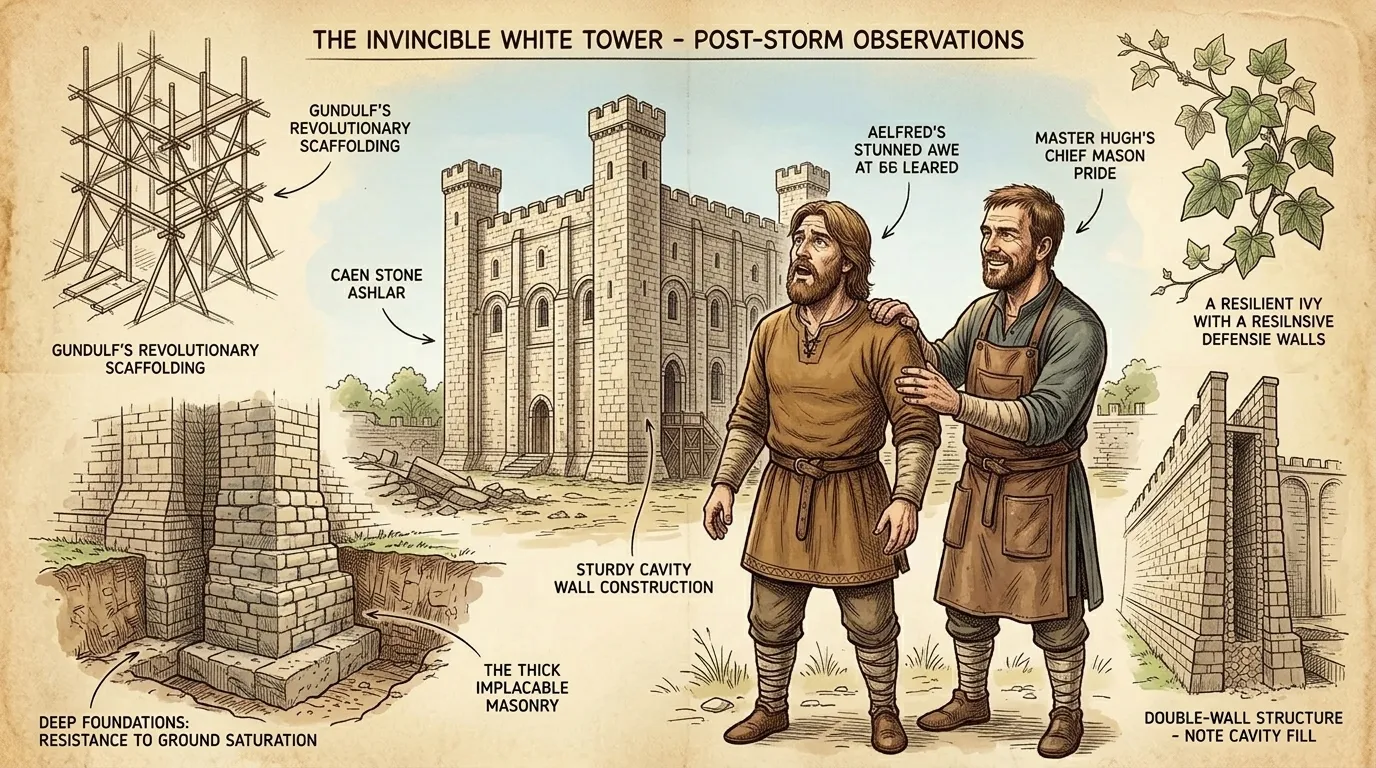
As the storm eventually subsided, the White Tower stood unmoved, a stark testament to its revolutionary engineering. The cavity walls had absorbed the relentless pressure, the deep foundations had held firm against the rising waters. It was a victory not just for William, but for the ingenuity of Bishop Gundulf and the anonymous hands that labored. The Tower was indeed impervious.
""It holds," Aelfred murmured in disbelief, staring at the intact walls. "It truly holds. The King's fortress will not fall." Master Hugh clapped him on the shoulder, "It was never just the King's fortress, Aelfred. It is a monument to what can be built when vision meets unwavering skill.""
Art Fact: The White Tower, completed around the 1080s, utilized sophisticated Roman-inspired techniques such as broad and deep foundations, and walls over 15 feet thick at the base, constructed with an inner and outer layer filled with rubble, enhancing structural integrity.
Page 10
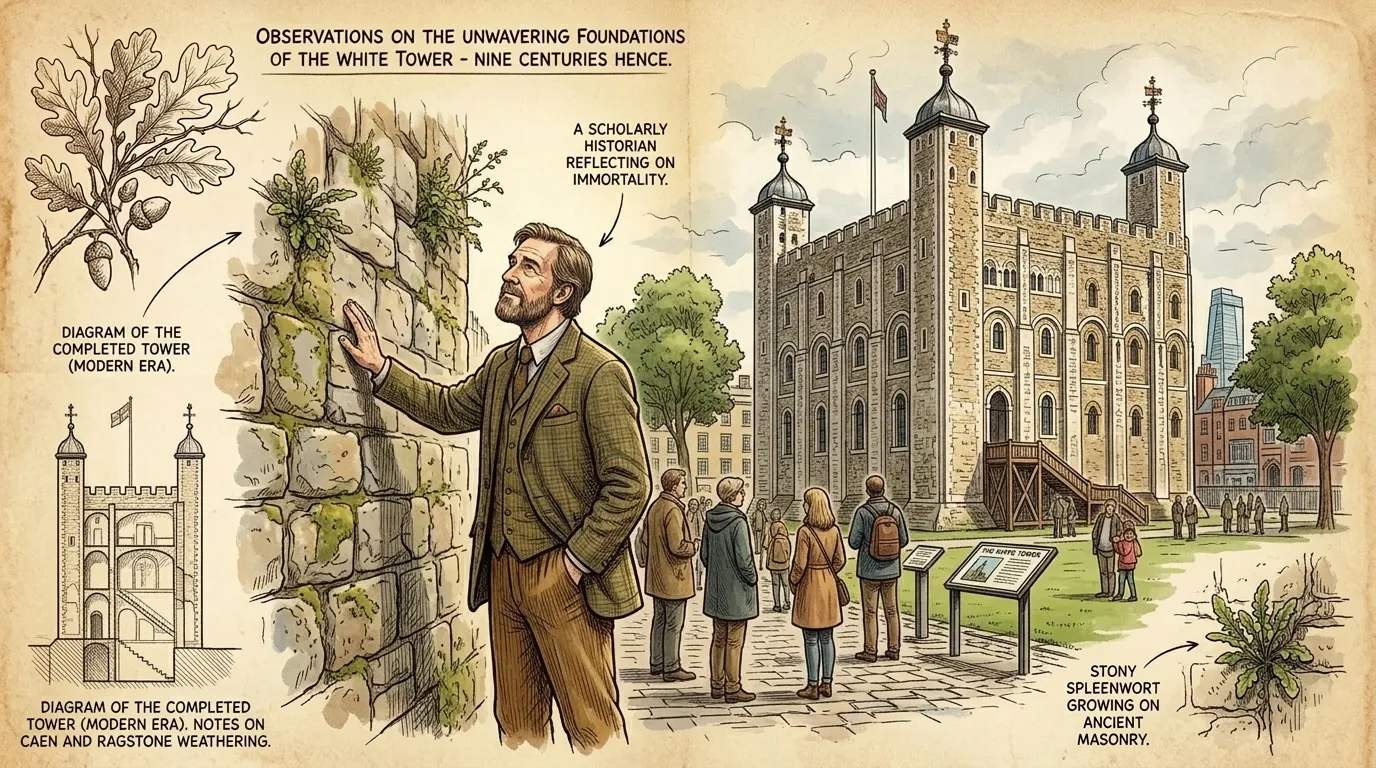
From its inception, William the Conqueror envisioned the Tower of London as an eternal symbol of power and control. Over nine centuries later, it stands, not merely as a relic of Norman conquest, but as a silent, enduring witness to the ebb and flow of British history, its stone walls echoing the countless stories held within.
""What an incredible journey this fortress has had, from a symbol of fear to a treasure of history," a historian (dramatized interpretation) might muse. "William the Conqueror's ambition built it, but human ingenuity ensured its immortality. Its strength truly lies in the engineering, a timeless testament.""
Art Fact: The Tower of London has served as a royal palace, prison, armory, treasury, and zoo. Today, it houses the Crown Jewels and attracts millions of visitors annually, standing as a living monument to over 900 years of British history, a legacy directly attributed to William the Conqueror's audacious vision.
About this story
- Location: United Kingdom
- Audience: general readers
Questions and answers
Read Wonder Arts on your phone
Wonder Arts is available on Android and iPhone and iPad. Get Wonder Arts on Google Play · Get Wonder Arts on the App Store.
More Wonder Arts stories
- The Turkish Bath by Jean-Auguste-Dominique Ingres (France — 1862)
- The Veiled Christ by Giuseppe Sanmartino (Naples, Italy — 1753)
- Tonalism by George Inness (USA — c. 1880)
- Topkapi Palace (Istanbul, Turkey — 1478)
- Uffizi Gallery (Florence, Italy — 1581)
- Venus de Milo by Alexandros of Antioch (Paris, France — c. 130 BC)