The Cache of Kings
The Cache of Kings — an illustrated history story. 10 illustrated pages, free to read on Wonder Egypt.
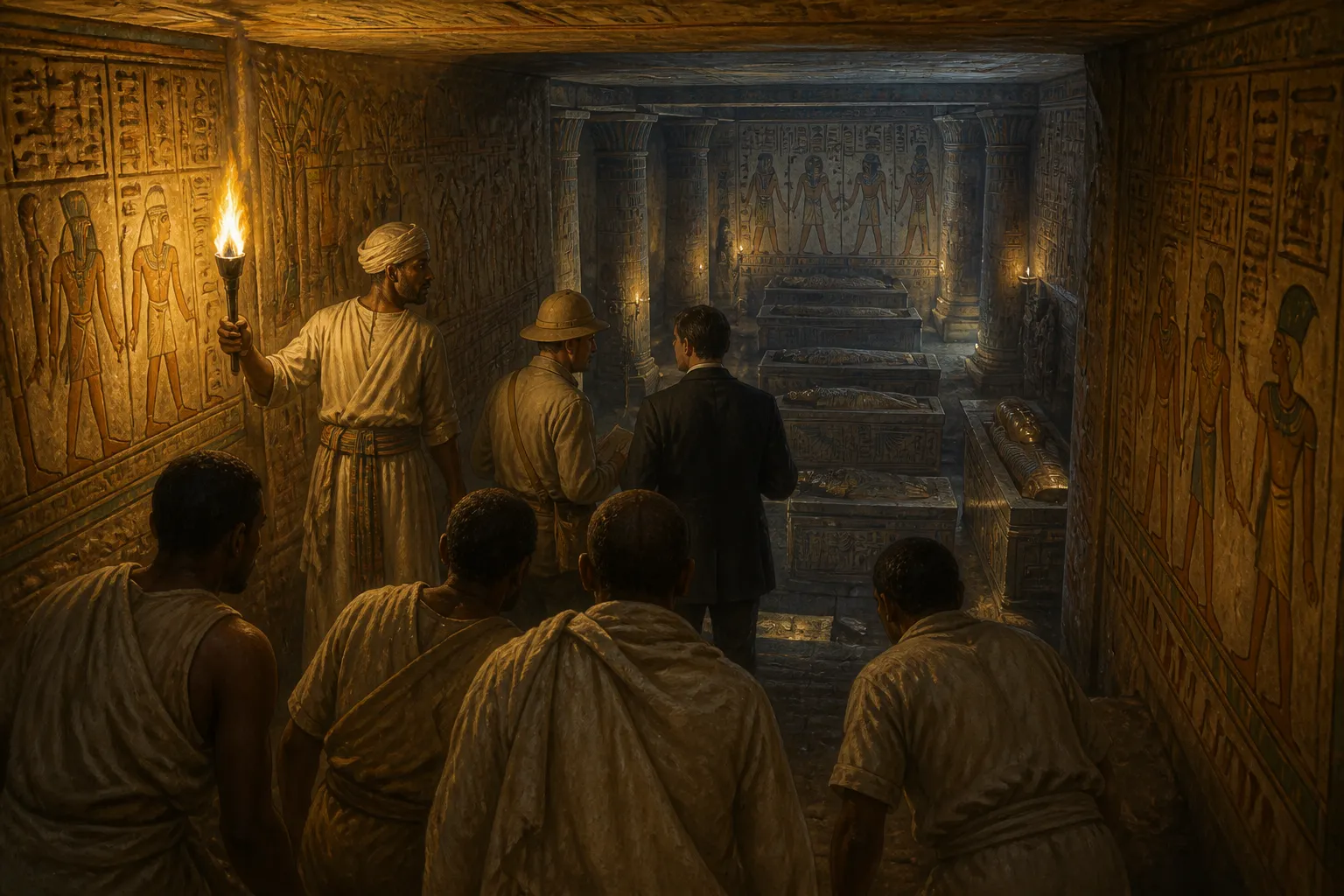
Page 1 — Revelation Beneath the Sands
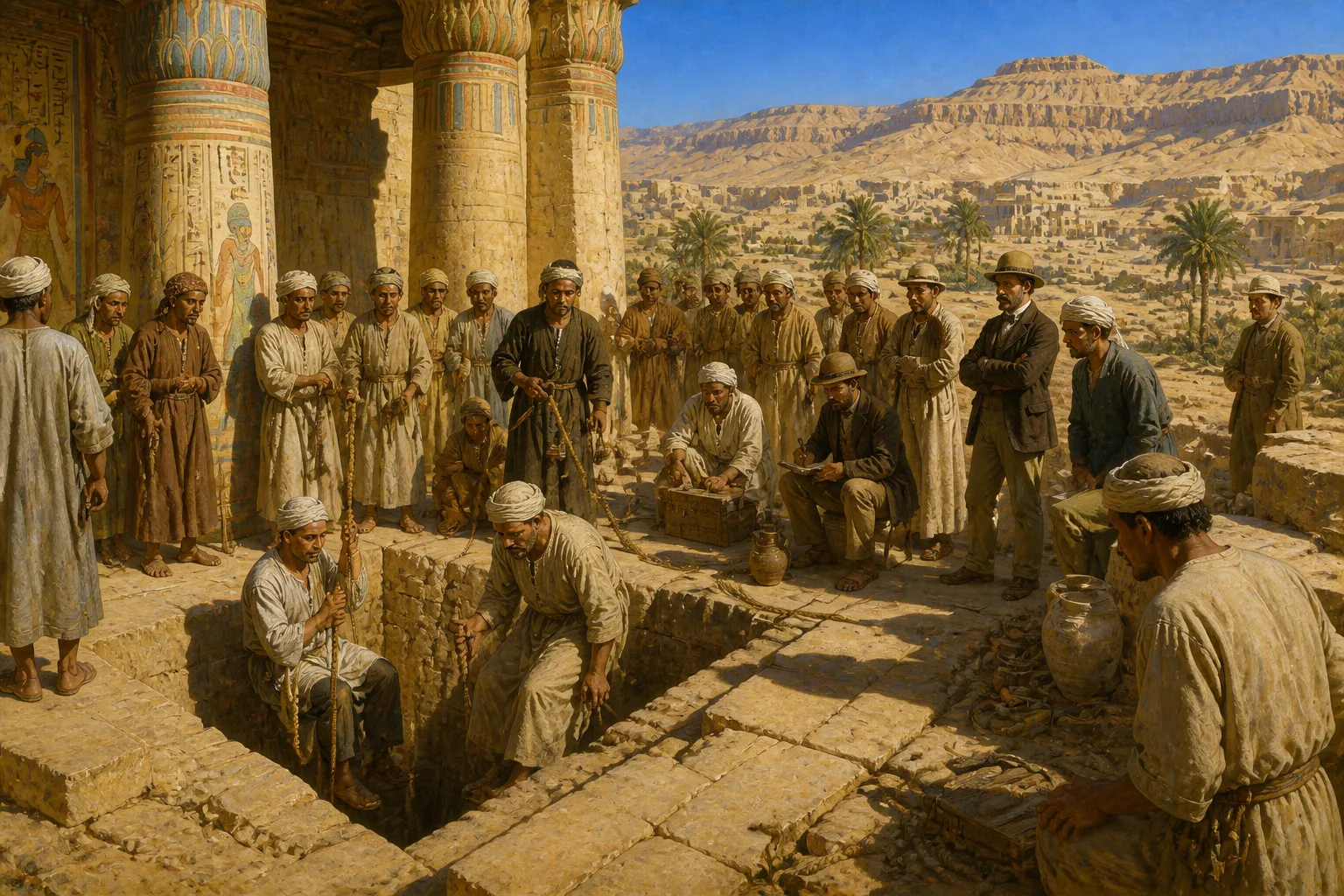
In the relentless heat of the Egyptian sun, the year is 1881 at Deir el-Bahri, where two brothers stand at the precipice of a momentous discovery. Before them lies the hidden entrance to a subterranean shaft, a gateway to the remains of a lost dynasty. The brothers, their garments billowing in the hot desert breeze, have called upon Émile Brugsch, a keen-eyed European scholar, to witness their secret. Sheltered beneath the earth dwell fifty royal mummies, the preserved legacy of the 21st Dynasty, a testament to the priests' cunning to thwart grave robbers. Among them are the greatest kings—Ramesses II, Thutmose III, and Seti I—gathered from the sands of time. Brugsch is acutely aware of the fleeting opportunity before him. The weight of history presses upon his shoulders as he commands an immediate retrieval operation, knowing the artifacts risk being lost to posterity if not swiftly secured. This discovery, a milestone in Egyptological research, signals a seismic shift in understanding ancient Egypt's enigmatic past.
Émile Brugsch: 'We must act swiftly to secure these relics.'
Page 2 — The Secret Reburial
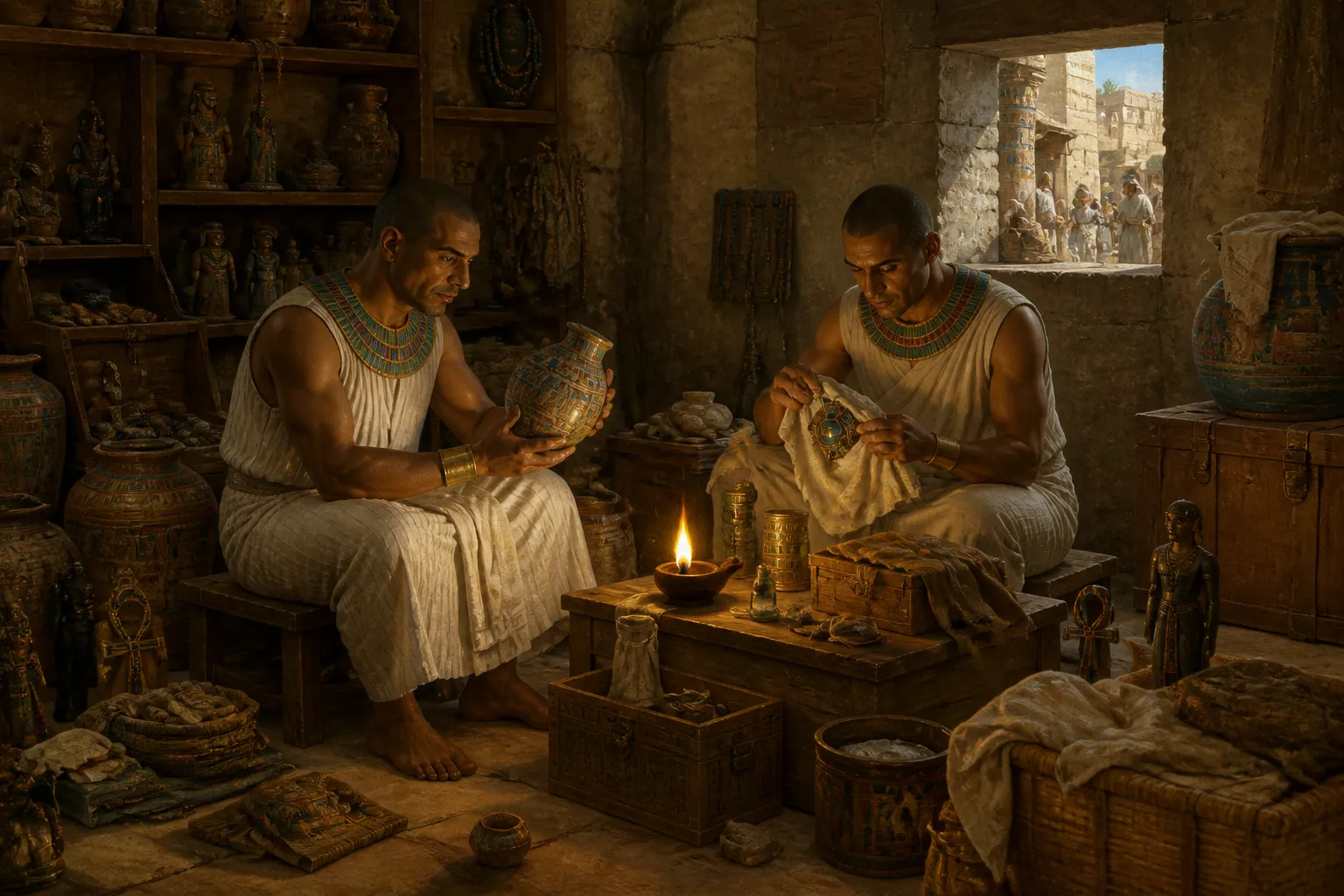
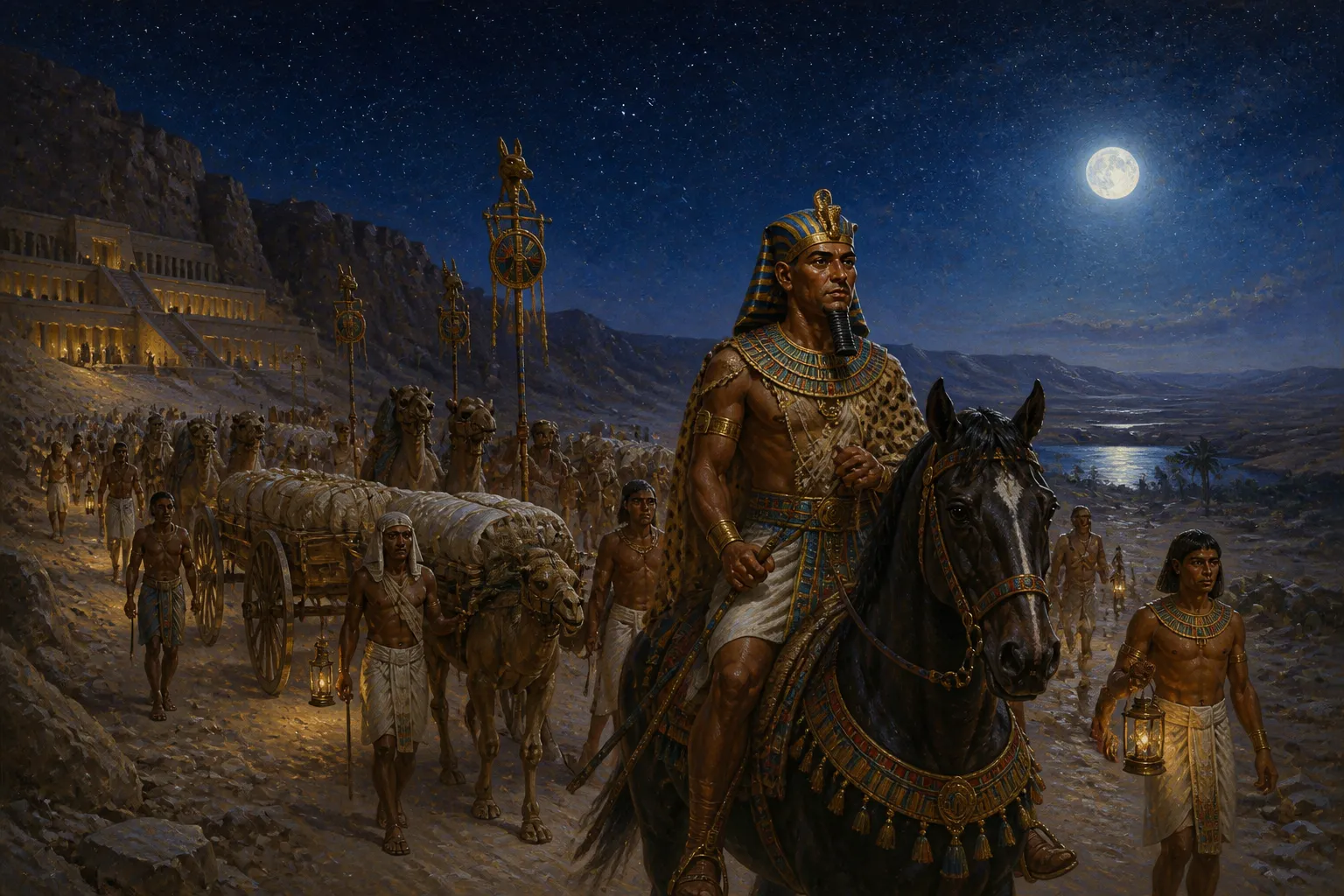
Under the silent gaze of the moonlit colossi in Thebes, an ancient ritual unfolds. The air is filled with solemnity as the priests of Amun gather to execute a secretive task under the cover of darkness. High Priest Pinudjem I, robed in ceremonial garments befitting his sacred station, leads this clandestine mission. The majestic statues tower over the assemblage, their ancient eyes witnessing the procession. Wealthy nobles, veiled by the shadows, stand as silent sentinels, observing the reverent transfer of the royal mummies. Each mummy is carefully wrapped in intricate linen and adorned with sacred amulets, symbols of protection in the afterlife. The priests, with determination and devotion, carry the ancient legacy to its new refuge, whispering prayers to Osiris. By the divine will of Amun, the protection of these potent symbols of Egyptian heritage is ensured. Their hopes rest on the shoulders of future generations to safeguard this sacred trust.
Pinudjem I: 'By Amun’s will, we shield our pharaohs from desecration.'
Page 3 — Discovery at The Bazaar
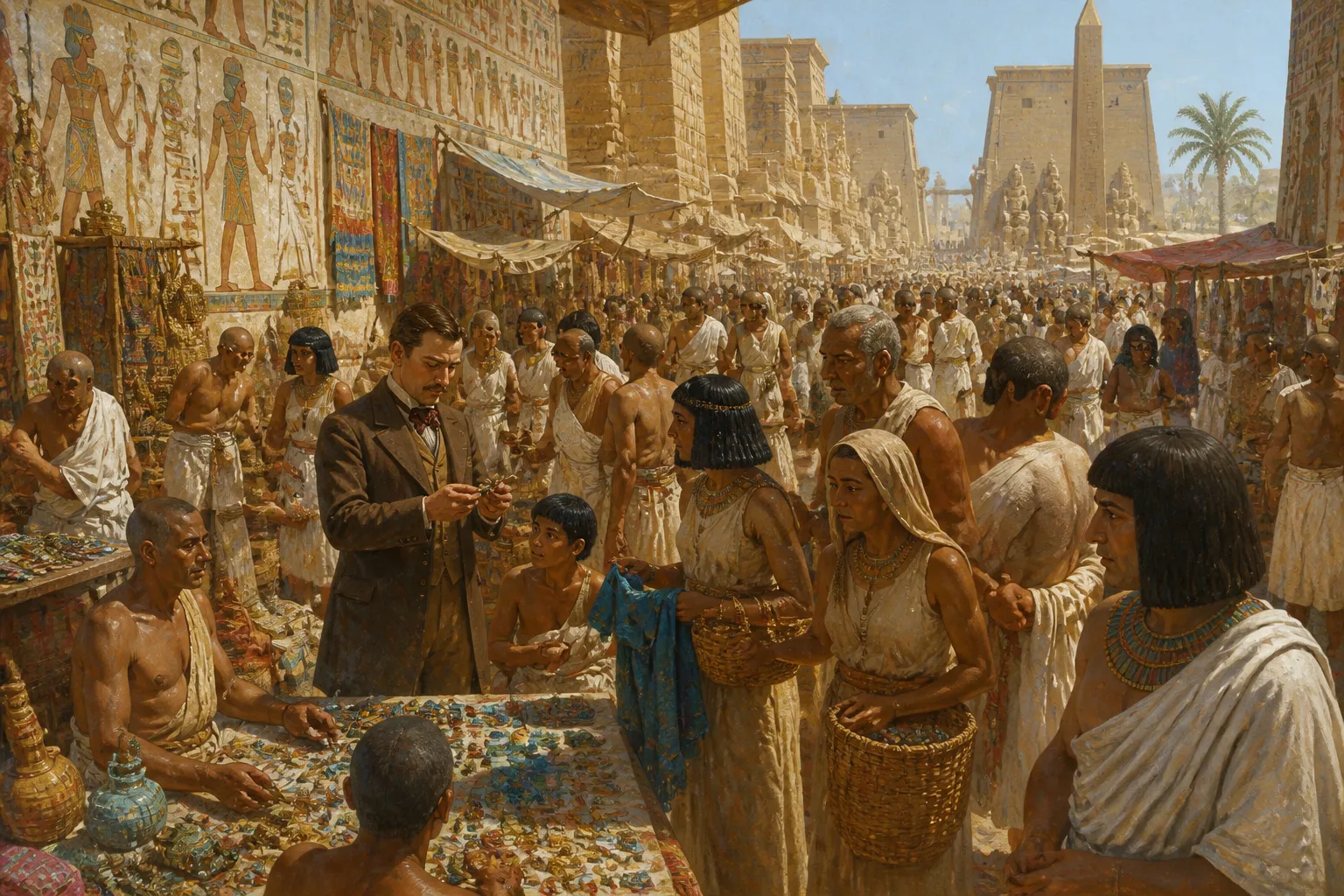
In the vibrant heart of Cairo, the year is 1871, where the bustling bazaar teems with life and whispers of ancient secrets. Stalls overflow with colorful pottery and unremarkable relics, yet woven into the fabric of the market's vibrant tapestry are stories of treasures far greater. An astute European scholar, donned in a crumpled linen suit, moves through the throngs, his ears attuned to tales of royal antiquities. Among the sea of faces, the Abd el-Rassul brothers linger discreetly, their knowing glances betraying a hidden agenda. Their clandestine trade in artifacts draws discerning collectors, eager to possess a tangible piece of Egypt's storied past. As they barter and whisper, the allure of the ancient world holds sway over all, a siren call to those with the means and curiosity to unlock its mysteries. The bazaar hums with more than the commerce of the day; it is alive with intrigue and the echoes of history.
Scholar: 'These relics, they speak of kings. Where do they come from?'
Page 4 — The Authorities Arrive
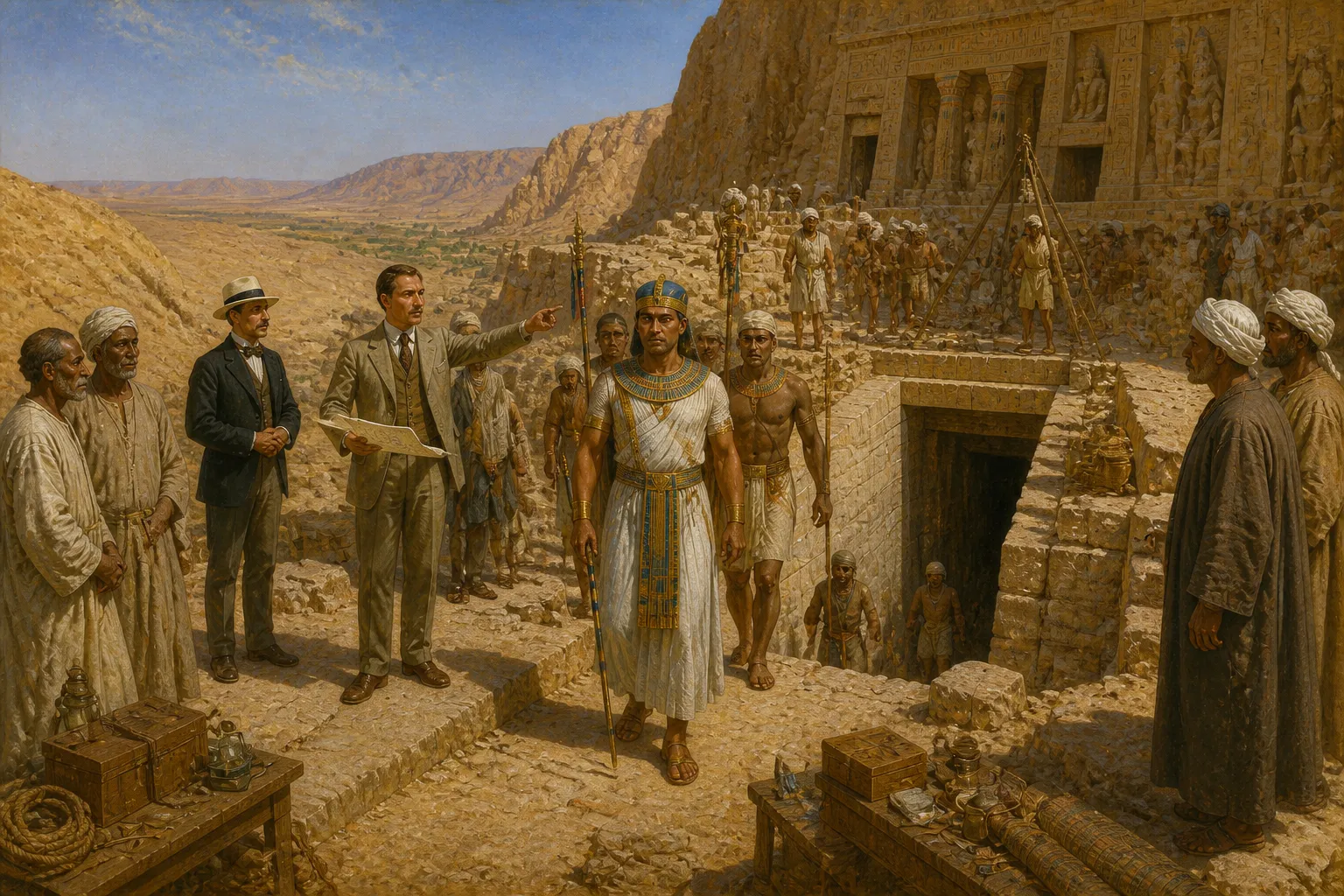
In the sun-drenched courtyard of Luxor, the year is 1881, and the future of Egyptian heritage hangs in the balance. The Egyptian Antiquities Authority has convened, stirred by a surge of artifacts appearing in the market that hints at grave secrets unearthed. Gaston Maspero, the newly appointed director known for his commanding presence, is resolute in his mission. The urgency of the situation demands swift action, and he delegates Émile Brugsch to investigate the source in Deir el-Bahri. The courtyard buzzes with the energy of deliberation, the officials dressed in light linen robes and colorful sashes, their voices underscoring the gravity of their task. Scribes, youthful and attentive, capture every word on scrolls of papyrus, ensuring the legacy of their actions. The weight of history bears heavily upon them; each decision has the power to redefine the understanding of a civilization long past. The stakes have never been higher, and the race against time has commenced with a determined stride.
Gaston Maspero: 'We cannot let this grave robbery continue unnoticed.'
Page 5 — Race Against Time
At the entrance to the hidden shaft in Deir el-Bahri, in the year 1881, the atmosphere is tense and charged with urgency. The laborers, following orders, move with purpose as they navigate the confined, dusty space. Each step and tool clank echo with the weight of history, as the treasures of a bygone era are carefully extracted. Through the dim light, the royal mummies, bearing remnants of their ancient grandeur, are revealed one by one, each linen-wrapped form a testament to a time long past. Émile Brugsch, overseeing the operation from above, carries the immense responsibility of safeguarding these relics, understanding the critical nature of their work. As the sun sets behind the towering cliffs, casting long shadows over the scene, the effort continues unabated, driven by the relentless passage of time and the desire to preserve history from its ravages.
Émile Brugsch: 'We must not falter; history depends on our haste.'
Page 6 — A Procession of Kings
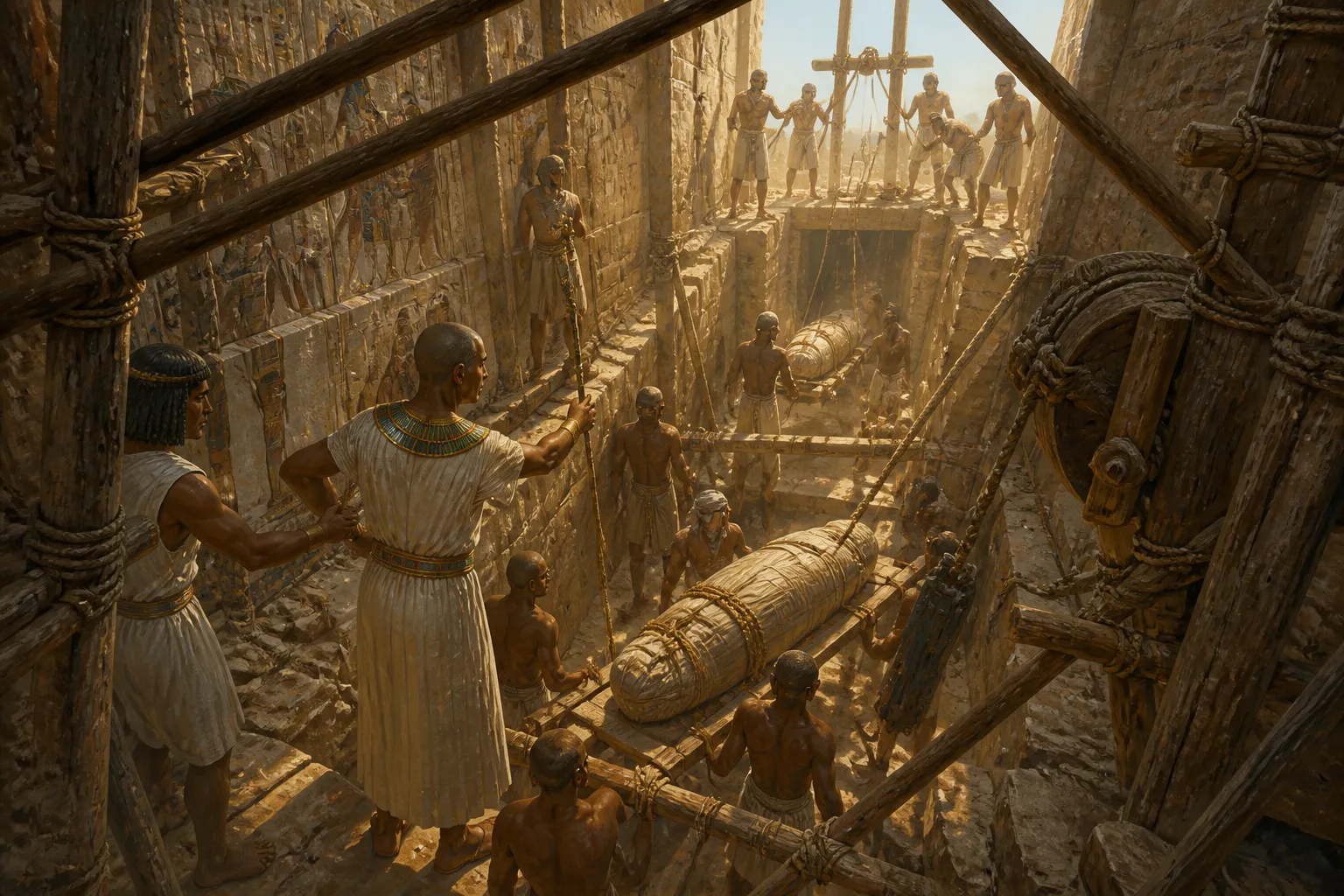
The streets of Cairo in 1881 are alive with a display of historical majesty as the procession of royal mummies strides through in grand spectacle. The ornate coffins, each a vessel of dynastic power and respect, are paraded past the awe-struck citizens who gather in their finest, vibrant linen garments, adorned with colorful amulets and accessories. Émile Brugsch rides among them on horseback, a vigilant custodian ensuring the safe passage of these ancient dignitaries. The air hums with whispers and murmurs of the past, as the echoes of history roll through the city, leaving an indelible impression on all who witness this extraordinary event, a living tapestry of Egypt's glorious legacy.
Spectator: 'Behold, the mighty rulers of the past walk among us once more.'
Page 7 — A New Home at the Museum
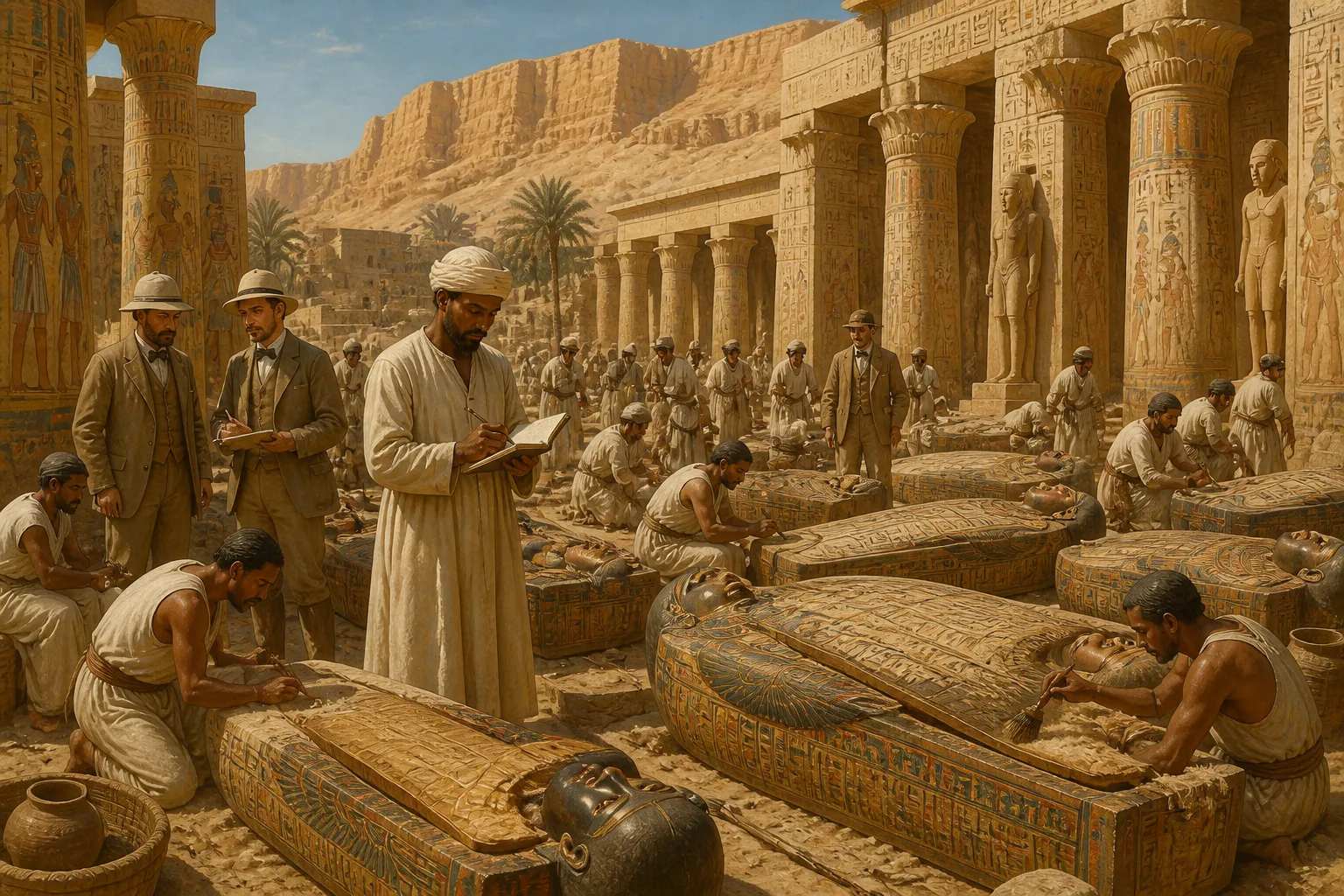
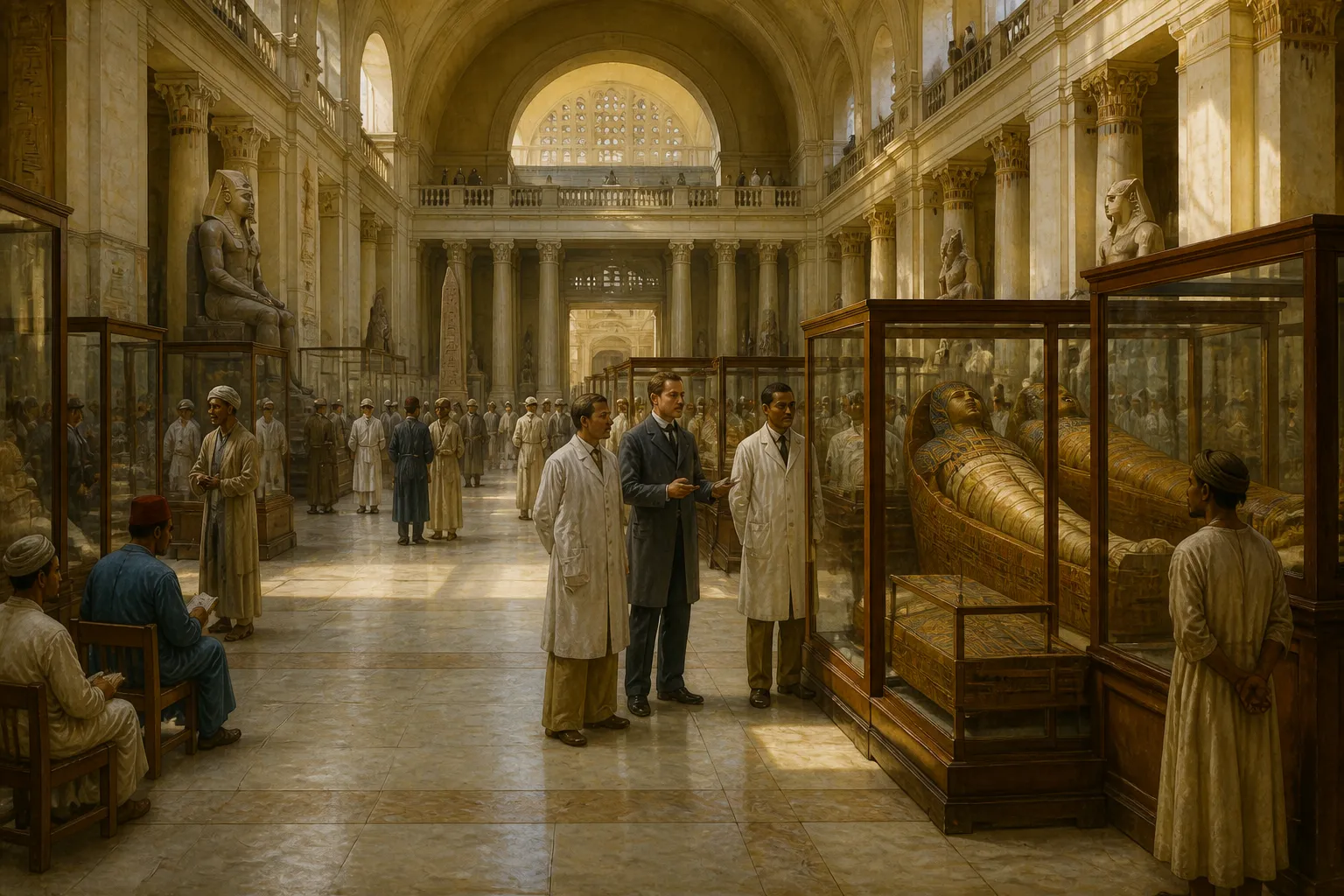
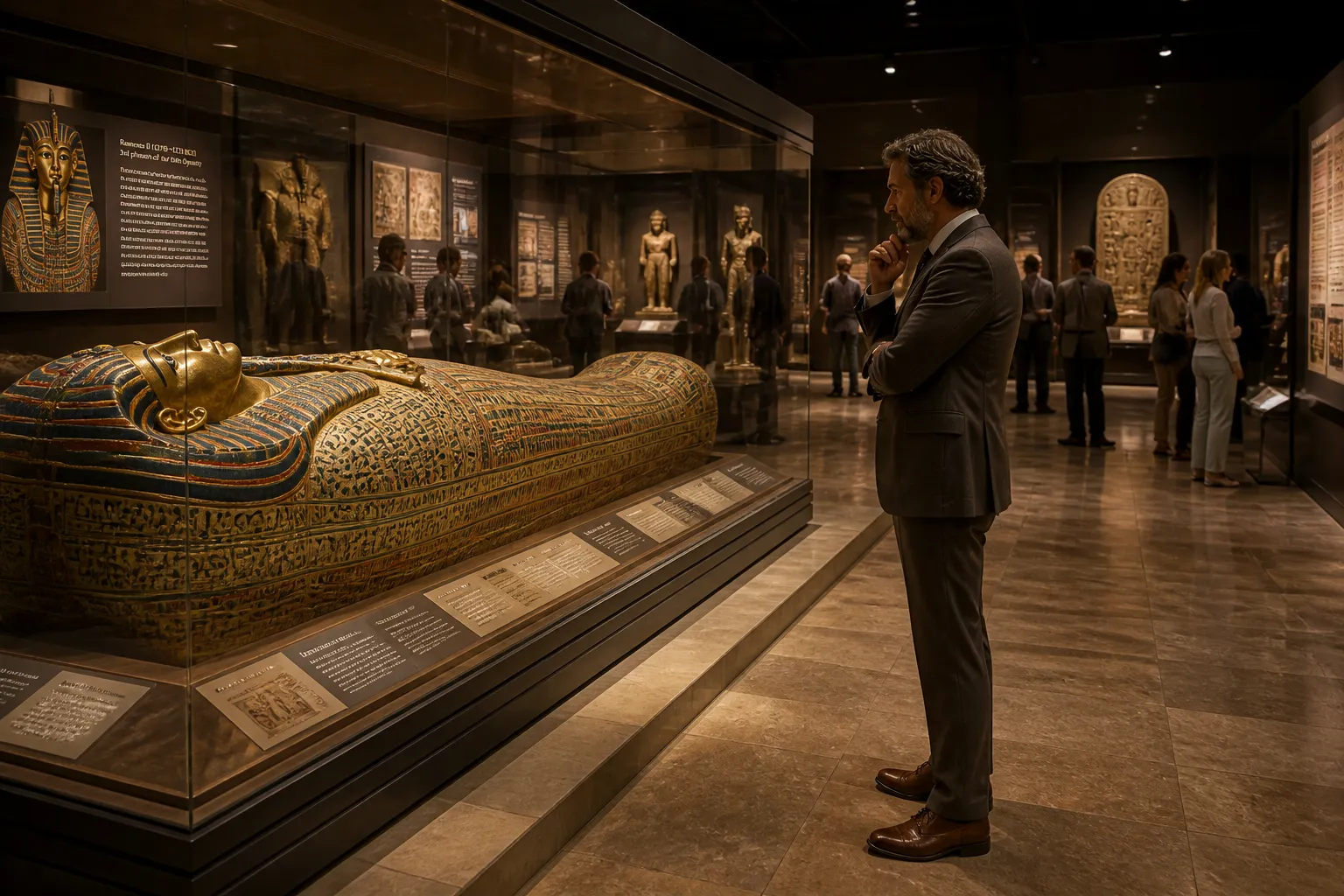
Within the grand halls of the Bulaq Museum, the year 1881 marks a pivotal moment as the royal mummies are painstakingly installed in their new abode. The halls are vast, their grandeur accentuated by the scent of incense mingling with the echo of footsteps across cool marble floors. Each mummy finds rest within a glass case, the sarcophagi inside bearing intricate carvings that tell stories of power and divinity. Scholars, their eyes outlined with khol, and dressed in tailored suits, engage in energetic debate, their discussions reverberating off the magnificent walls. Supervising it all, a man stands contemplative, recognizing the significance of preserving these figures for posterity. The mummies, safe from the ravages of time, now reside in an eternal dialogue with history within this prestigious sanctuary.
Émile Brugsch: 'May their stories inspire generations to come.'
Page 8 — Legacy of the Cache
In the sunlit lecture hall, years after the original discovery, the enduring influence of the Cache of Kings is palpable. Scholars from diverse backgrounds and nations gather here, surrounded by the scent of well-aged parchment and ink, to explore the impact that this monumental find has had on the study of the Third Intermediate Period. The walls are adorned with detailed maps and sketches of the cache, visual aids for the lively debates that fill the room. The cunning of the Abd el-Rassul brothers and the quick actions of Brugsch are recognized as pivotal moments in history. While much remains to be understood, the legacy of the cache ignites passion and inspires ongoing exploration into Egypt's regal history.
Scholar: 'This discovery reshaped our comprehension of Egyptian history.'
Page 9 — Questions Unanswered
In the quiet solitude of an archive room in 1930, a young researcher, clad in a modest woolen suit, pores over dusty files and faded photographs, remnants of a world long past. The walls, lined with towering shelves, bear the weight of history itself, as the mysteries of the Cache of Kings linger in the air. The fragmented records whisper untold stories of grandeur and intrigue, their edges frayed and yellowed with age. As the researcher meticulously combs through stacks of weathered documents, his mind races with possibilities, searching for elusive clues within the official reports. Shadows fall dramatically across the room, yet the flickering lamp light casts a warm glow, illuminating revelations frozen in time. The questions of the cache's burial timeline and motivations remain tantalizingly elusive, sparking an unyielding thirst for knowledge. The past, though hidden beneath layers of history, beckons still to those who dare to seek its secrets.
Researcher: 'So much is still shrouded in mystery, waiting to be unfolded.'
Page 10 — Echoes of Eternity
In the serene quietude of the Valley of the Kings, under the vast sky of the present day, new generations of archaeologists find themselves pausing at the entrance of an ancient, now-empty shaft. Here, the desert wind whispers through the ruins, intertwining with the echoes of ancient Egypt's majestic past. The air, thick with the scent of dry earth and stone, holds stories of kings, priests, and the sacred rites they performed. The archaeologists, equipped with modern tools and knowledge yet respectful of ancient methods, contemplate the enduring legacy of those who came before them. The Cache of Kings serves as a testament to Egypt's timeless allure, continuing to inspire quests for answers buried deep within the sands. The valley, silent yet pulsating with history, awaits those who dare to unravel its mysteries anew, challenging the sands of time.
Archaeologist: 'What other secrets does this sacred ground hold?'
About this story
- Audience: general readers
Questions and answers
Read Wonder Egypt on your phone
Wonder Egypt is available on Android. Get Wonder Egypt on Google Play.