The Age of Exploration — Global (Europe, Americas, Africa, Asia) (1492, Global)
The Age of Exploration — Global (Europe, Americas, Africa, Asia) (1492, Global) — an illustrated history story, featuring Christopher Columbus, Ferdinand II of Aragon, Isabella I of Castile, set in Global. 10 illustrated pages, free to read on Wonder History.
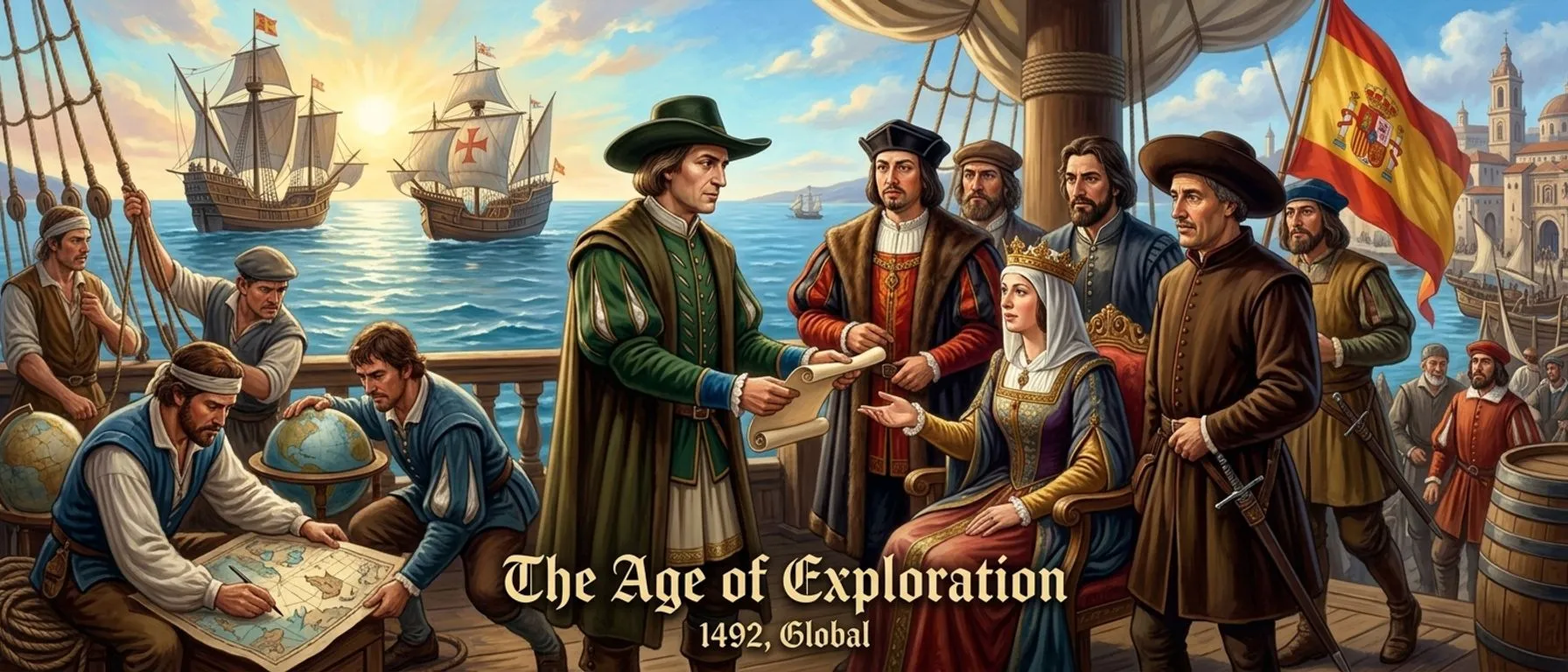
Page 1
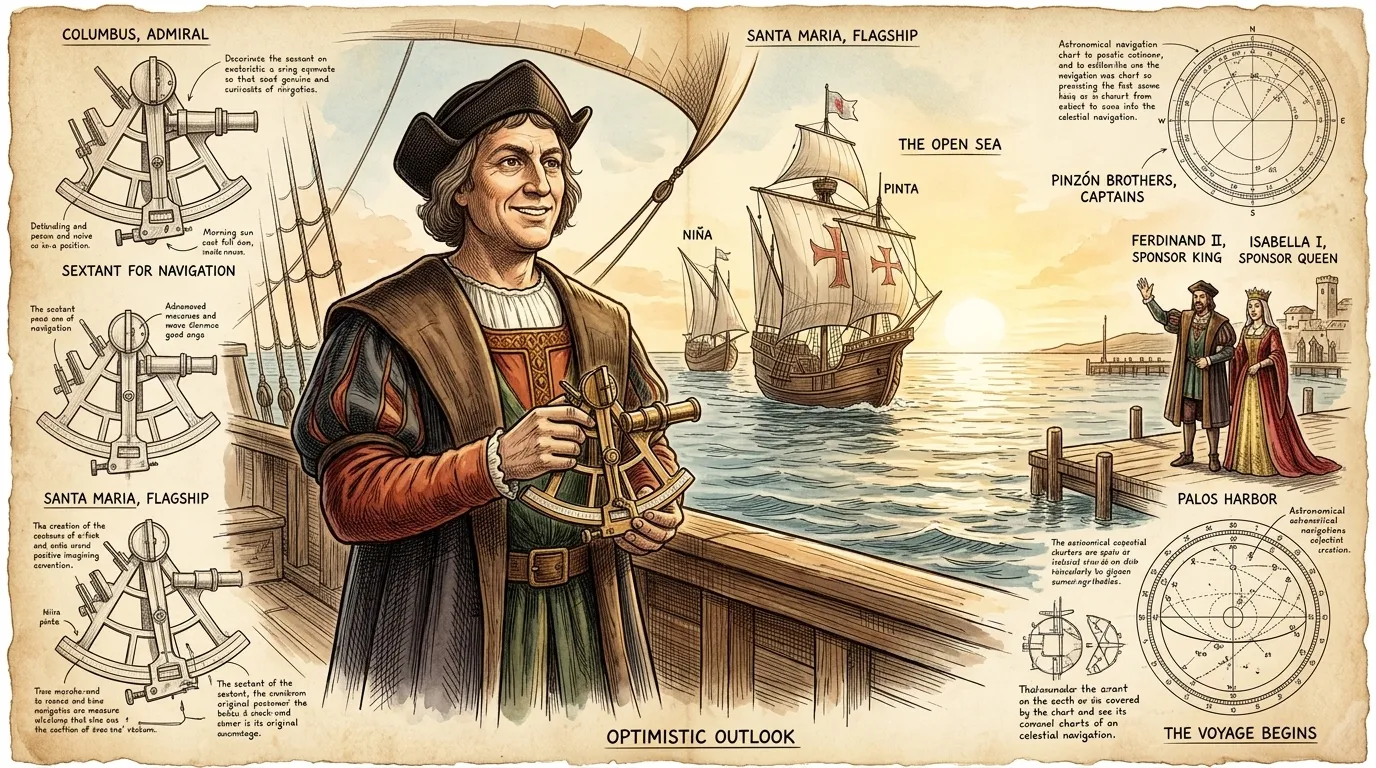
On August 3, 1492, Christopher Columbus, the Genoese explorer, set sail from Palos de la Frontera, Spain, with three ships—the Niña, the Pinta, and the Santa Maria. Ferdinand II of Aragon, the King of Spain, and Isabella I of Castile, the Queen of Spain, had sponsored this voyage, dreaming of new trade routes. Aboard was Martín Alonso Pinzón, captain of the Pinta, and Vicente Yáñez Pinzón, captain of the Niña, both master sailors. But where did this ambition to explore the unknown begin?
Page 2
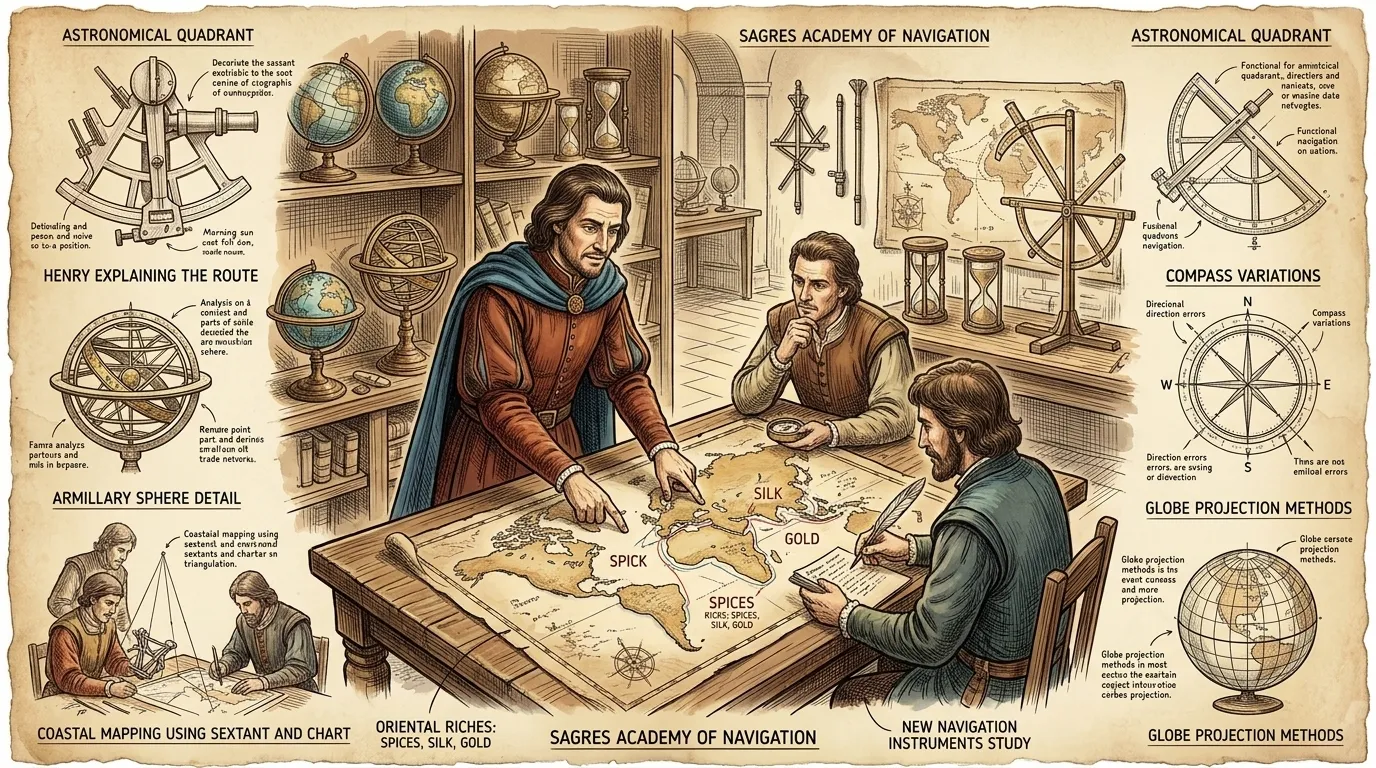
Europe in the 15th century was a continent yearning for new horizons. Prince Henry the Navigator of Portugal established a school of navigation in Sagres, Portugal, aiming to chart a sea route to the East. 'Imagine,' he told his cartographers, 'the riches we could acquire bypassing the established trade routes!' The allure of spices, silks, and gold from the Orient fueled the Age of Exploration.
Page 3
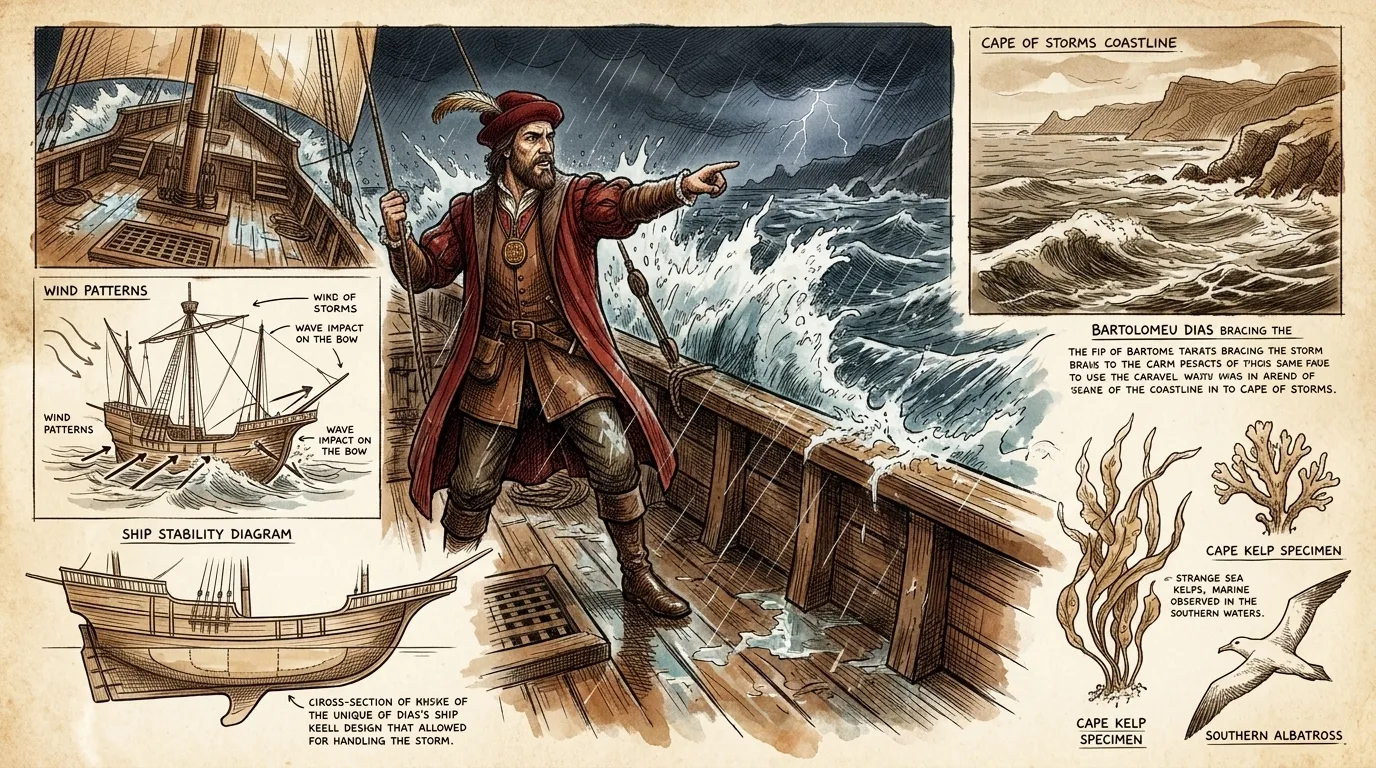
Bartolomeu Dias, a Portuguese explorer, rounded the Cape of Good Hope in 1488, proving that a sea route to the Indian Ocean was possible. "The sea boiled with such violence, and the winds were so strong, that we named it the Cape of Storms!" he exclaimed upon his return. King John II of Portugal, however, renamed it the Cape of Good Hope, recognizing its significance.
Page 4
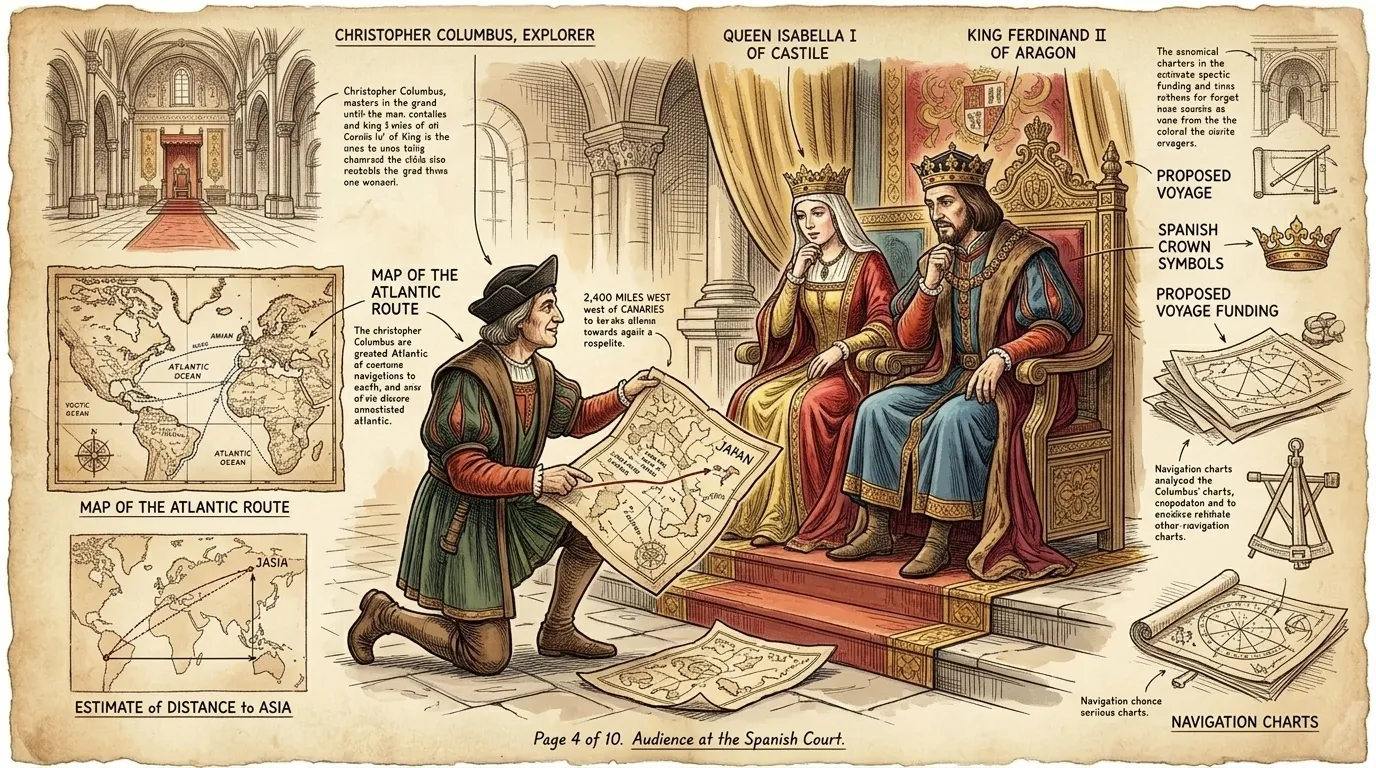
Columbus believed he could reach the East by sailing west, a shorter and more profitable route. "According to my calculations," he told Queen Isabella, unfolding a parchment map, "Japan lies only 2,400 miles west of the Canary Islands!" Isabella and Ferdinand, intrigued by his proposal, agreed to fund his expedition, granting him the titles of Admiral of the Ocean Sea and Governor of the Lands he discovered.
Page 5
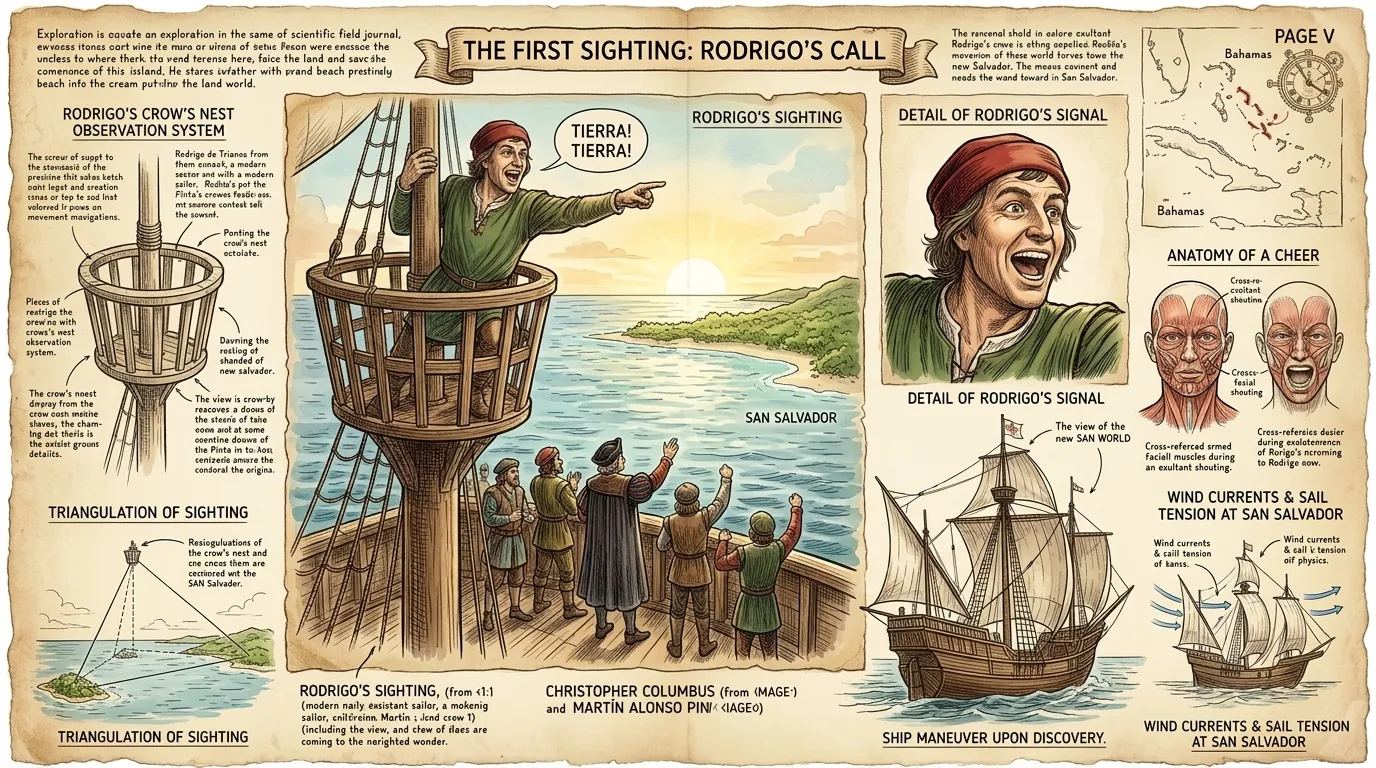
On October 12, 1492, after weeks at sea, Rodrigo de Triana, a lookout aboard the Pinta, shouted, "Tierra! Tierra!" Land! Land! Columbus and his crew landed on an island in the Bahamas, which he named San Salvador. He believed he had reached the Indies, unaware he had stumbled upon a New World.
Page 6
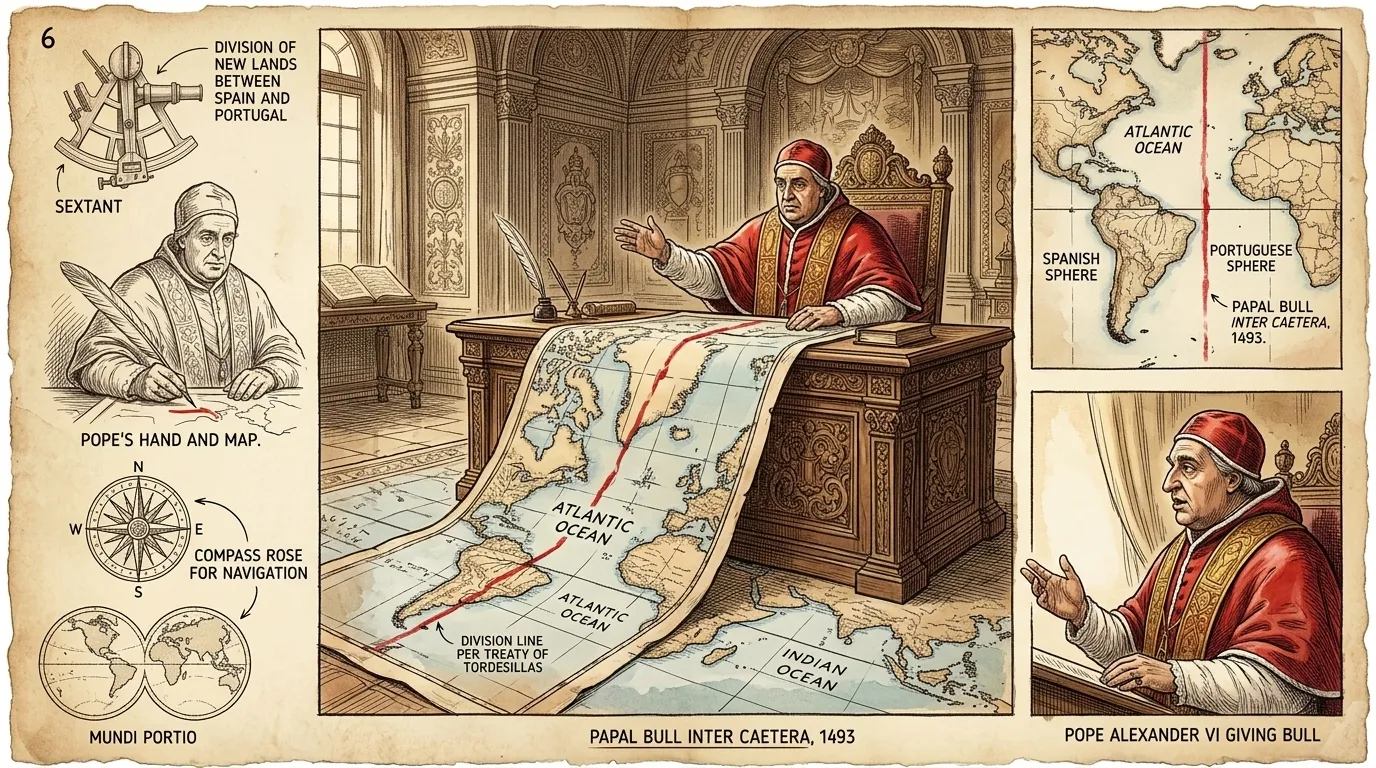
News of Columbus's discovery reached Europe, prompting Pope Alexander VI to issue a papal bull dividing the world between Spain and Portugal. In 1494, the Treaty of Tordesillas officially drew a line of demarcation, granting Spain lands west of the line and Portugal lands to the east. This decision shaped the future colonization of the Americas.
Page 7
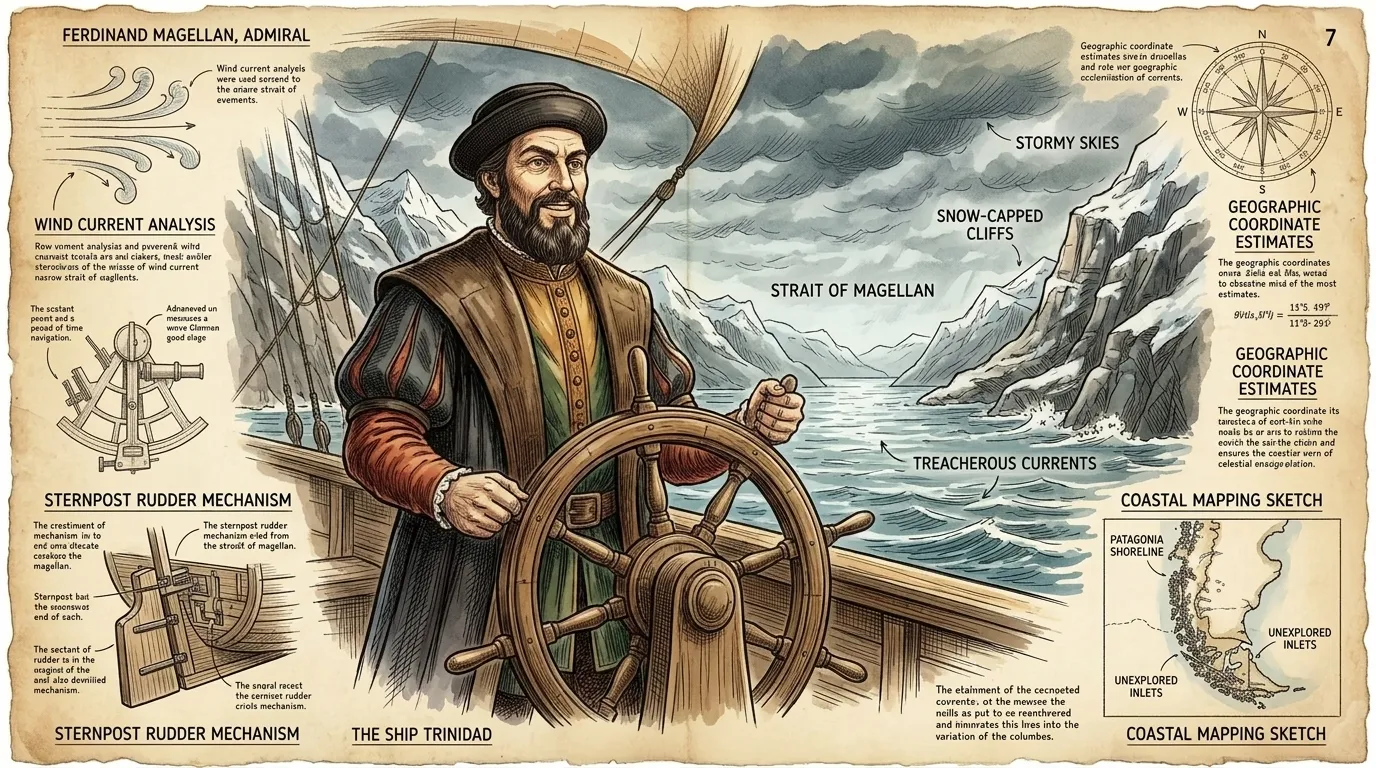
Ferdinand Magellan, a Portuguese explorer sailing for Spain, embarked on a voyage to circumnavigate the globe in 1519. He navigated the Strait of Magellan, a treacherous passage at the tip of South America, proving the world was round. As Magellan said, 'The Church says the Earth is flat, but I know that it is round, for I have seen the shadow on the moon, and I have more faith in a shadow than in the Church'.
Page 8
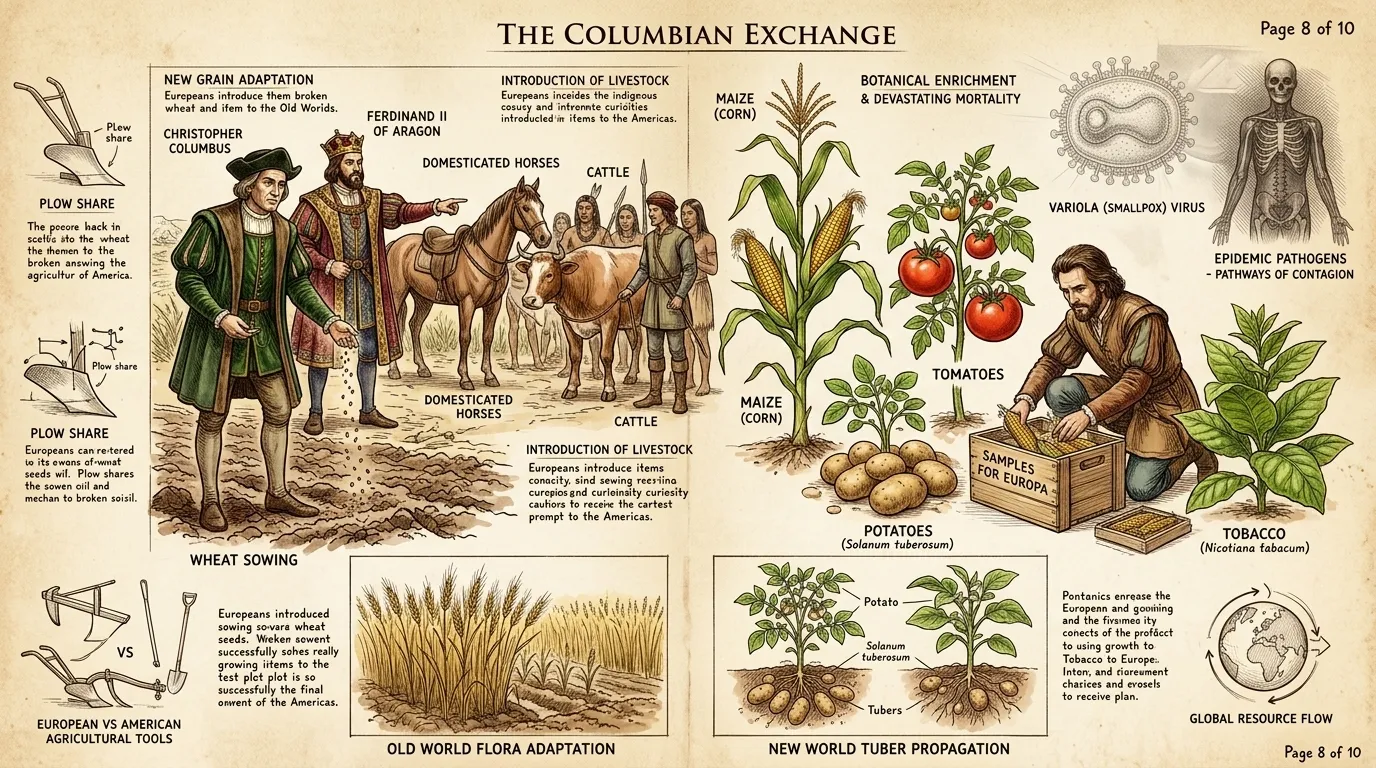
The arrival of Europeans in the Americas led to the Columbian Exchange, a transfer of plants, animals, and diseases between the Old World and the New World. Europeans brought horses, cattle, wheat, and smallpox to the Americas, while they brought potatoes, tomatoes, corn, and tobacco back to Europe. This exchange dramatically altered the diets and economies of both continents, though with devastating consequences for indigenous populations due to disease.
Page 9
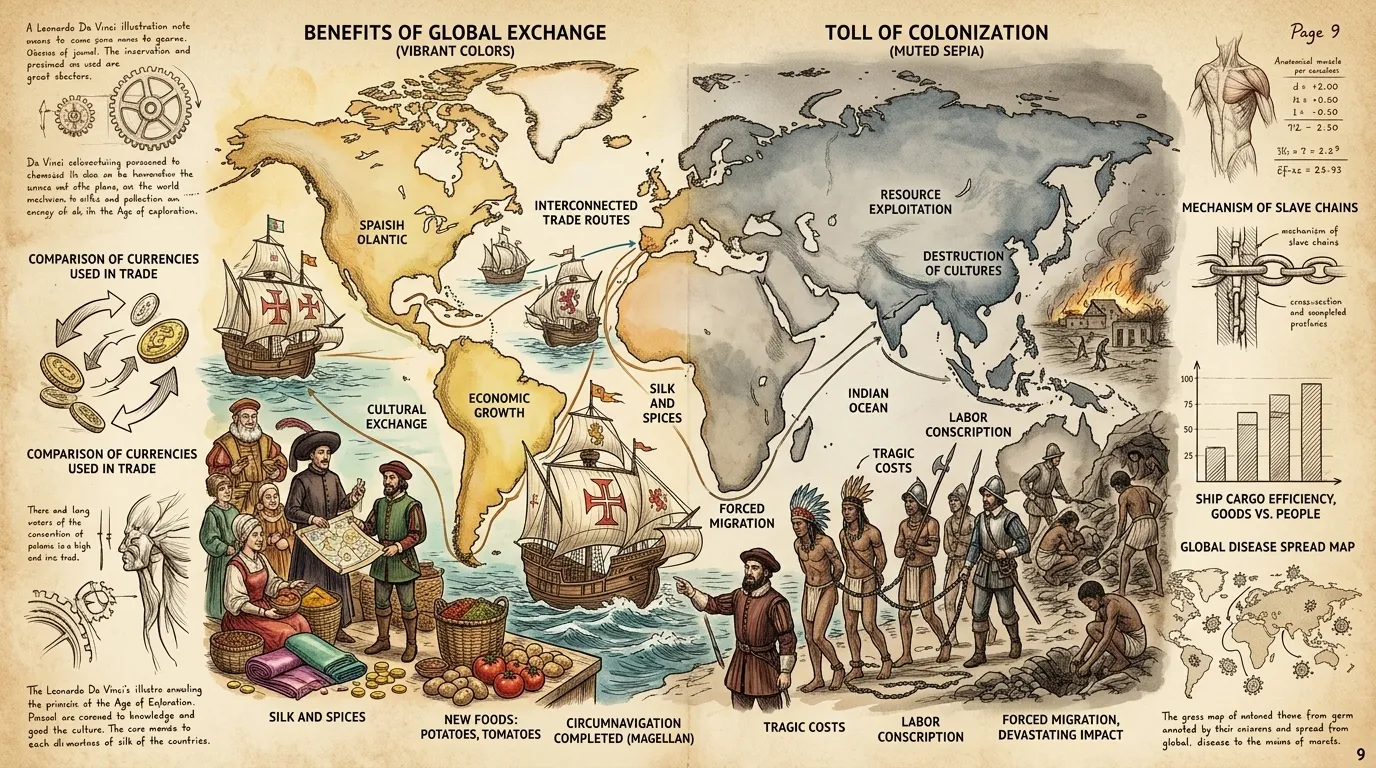
The Age of Exploration irrevocably altered the course of history. New trade routes connected distant lands, fueling economic growth and cultural exchange. Yet, the exploration also brought colonization, exploitation, and the tragic enslavement of millions. The world was forever changed, for better and for worse.
Page 10
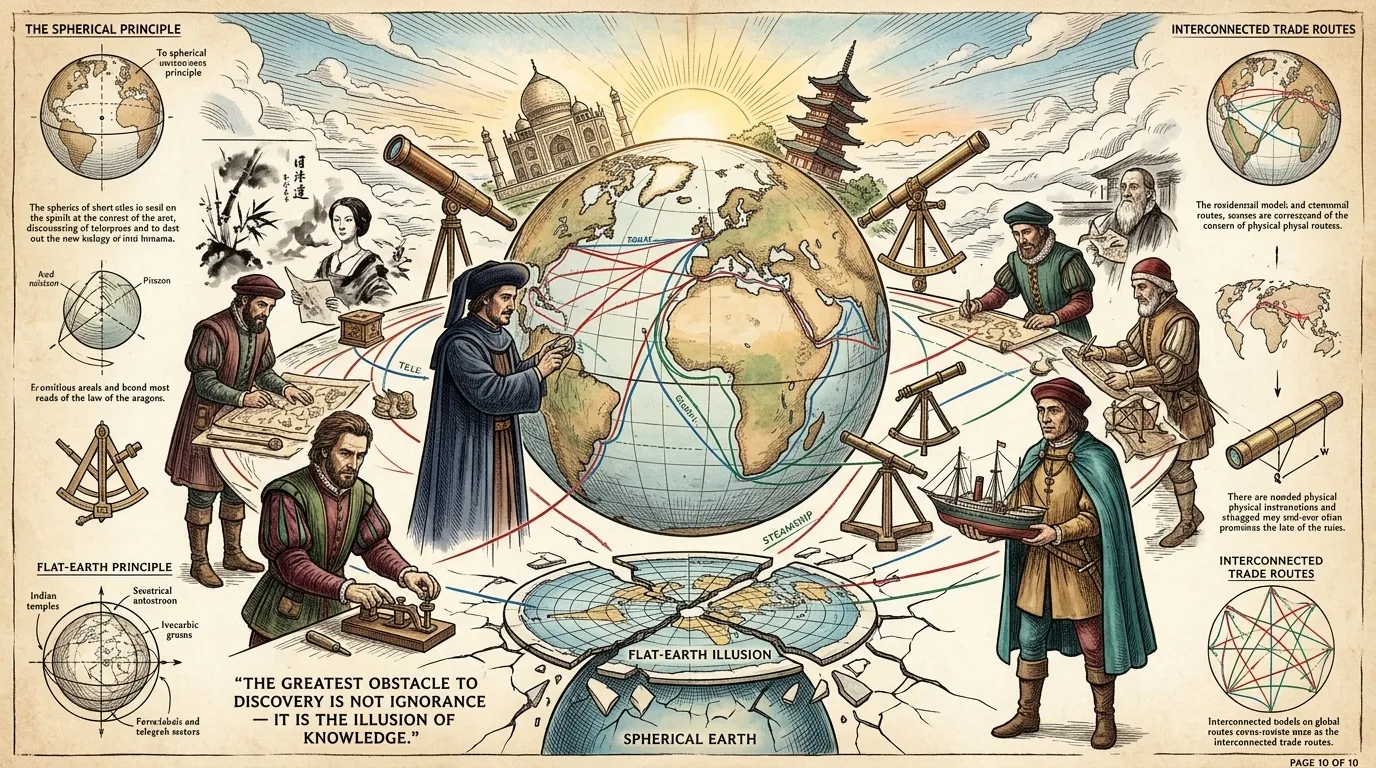
The Age of Exploration ushered in an era of global interconnectedness, leading to modern trade, technology, and cultural exchange. Though built on a foundation of conquest and exploitation, its impact resonates even today. As the historian Daniel Boorstin wrote, 'The greatest obstacle to discovery is not ignorance — it is the illusion of knowledge'. The explorers shattered that illusion, revealing a world far larger and more complex than imagined.
About this story
- Historical figures: Christopher Columbus, Ferdinand II of Aragon, Isabella I of Castile
- Location: Global
- Period: Middle Ages
- Audience: general readers
Questions and answers
Read Wonder History on your phone
Wonder History is available on Android. Get Wonder History on Google Play.
More Wonder History stories
- The American Civil War — United States (1863, United States)
- The American Declaration of Independence — USA (1776, USA)
- The American Revolution (1775–1783, North America)
- The Assassination of Archduke Franz Ferdinand (1914, Hungary)
- The Assassination of Julius Caesar (44 BC) - Italy (44 BC, Italy)
- The Battle of Agincourt (1415, France)