The American Civil War — United States (1863, United States)
The American Civil War — United States (1863, United States) — an illustrated history story, featuring Abraham Lincoln, Robert E. Lee, Ulysses S. Grant, set in United States. 10 illustrated pages, free to read on Wonder History.
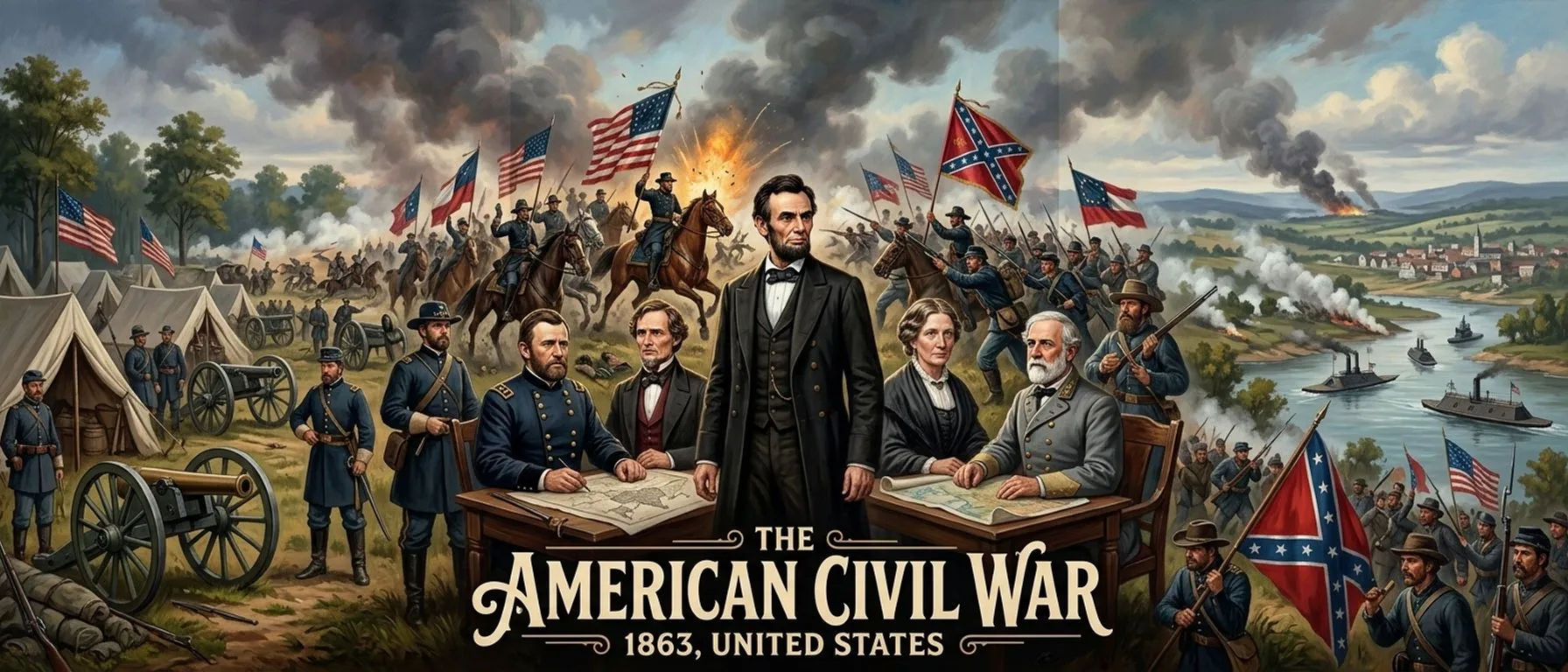
Page 1
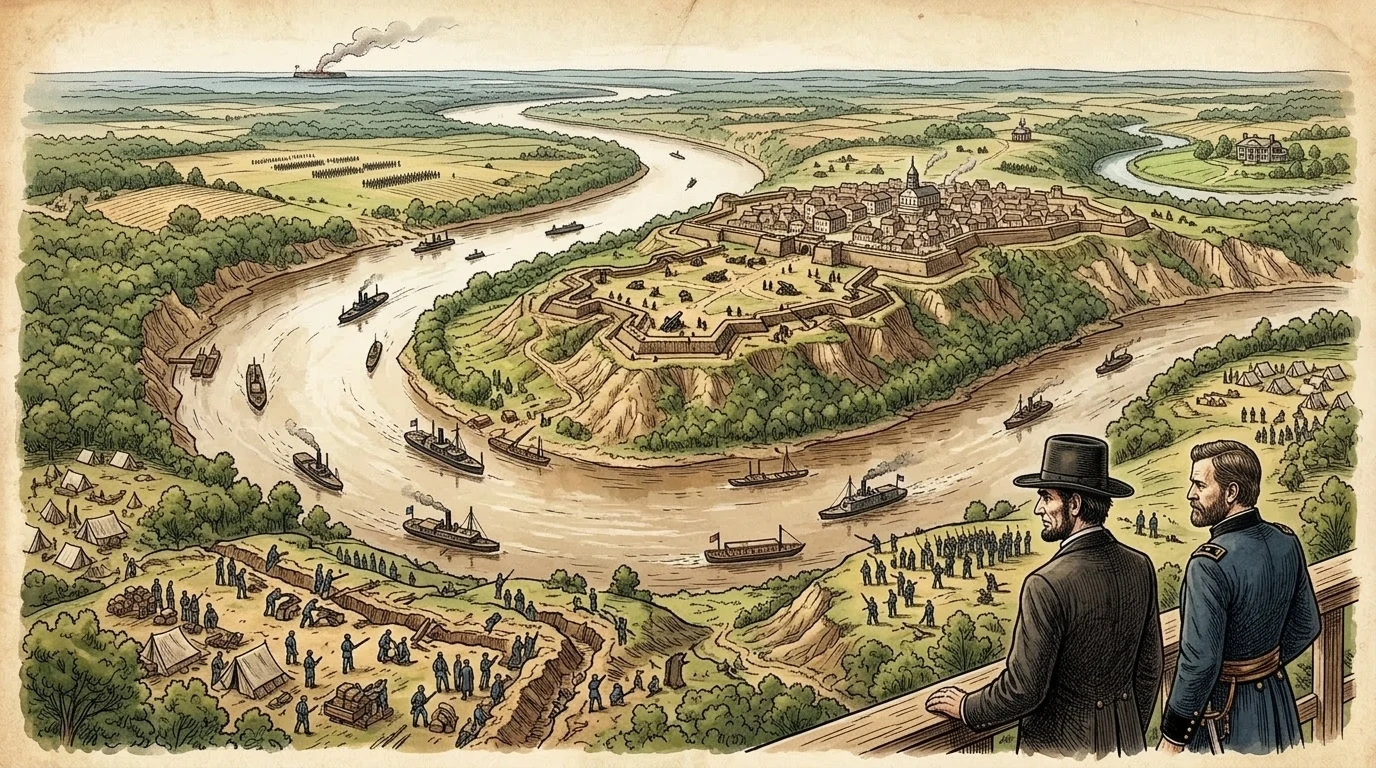
On July 3, 1863, the heart of the American Civil War pulsed with unimaginable ferocity at Gettysburg, Pennsylvania. Thousands of Union soldiers, under the command of General Ulysses S. Grant's strategic insight, braced against the desperate Confederate charge of General Robert E. Lee's forces. This explosive climax would determine the fate of a nation, as President Abraham Lincoln fought to preserve the Union and President Jefferson Davis rallied the Confederate States for independence. But where did this devastating conflict, costing hundreds of thousands of lives, truly begin?
Page 2
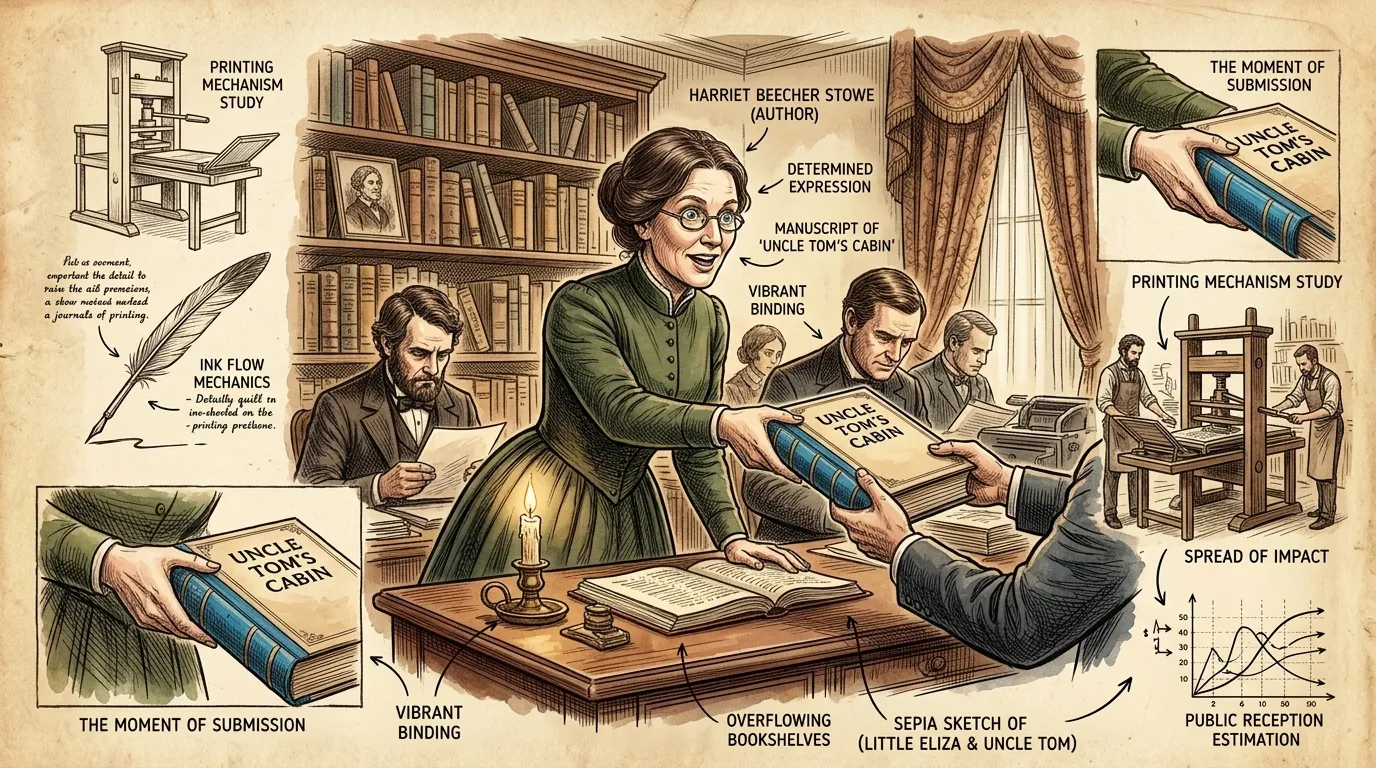
Decades before the first shots, deep divisions festered across the United States, fueled by profound economic differences and the moral question of slavery. Harriet Beecher Stowe, a passionate writer, channeled these tensions into her powerful anti-slavery novel. 'This book will shake the nation!' she declared to her publisher, her eyes wide with conviction, as she handed over her manuscript.
"'This book will shake the nation!'"
Page 3
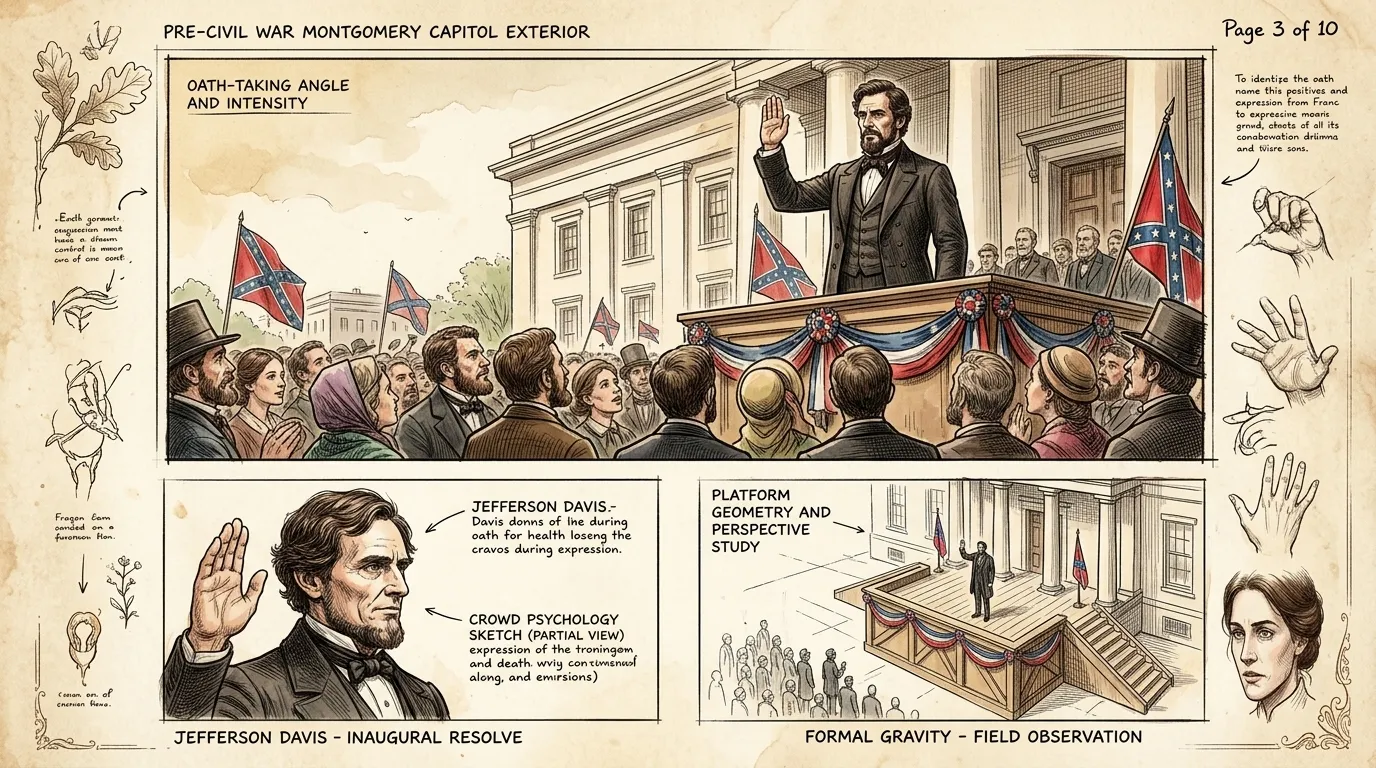
Harriet Beecher Stowe's 'Uncle Tom's Cabin' inflamed passions across the country, further polarizing North and South. As states like South Carolina seceded from the Union, the formation of a new government became inevitable. In February 1861, in Montgomery, Alabama, Jefferson Davis stood before an eager crowd, raising his hand to take the oath of office.
Page 4
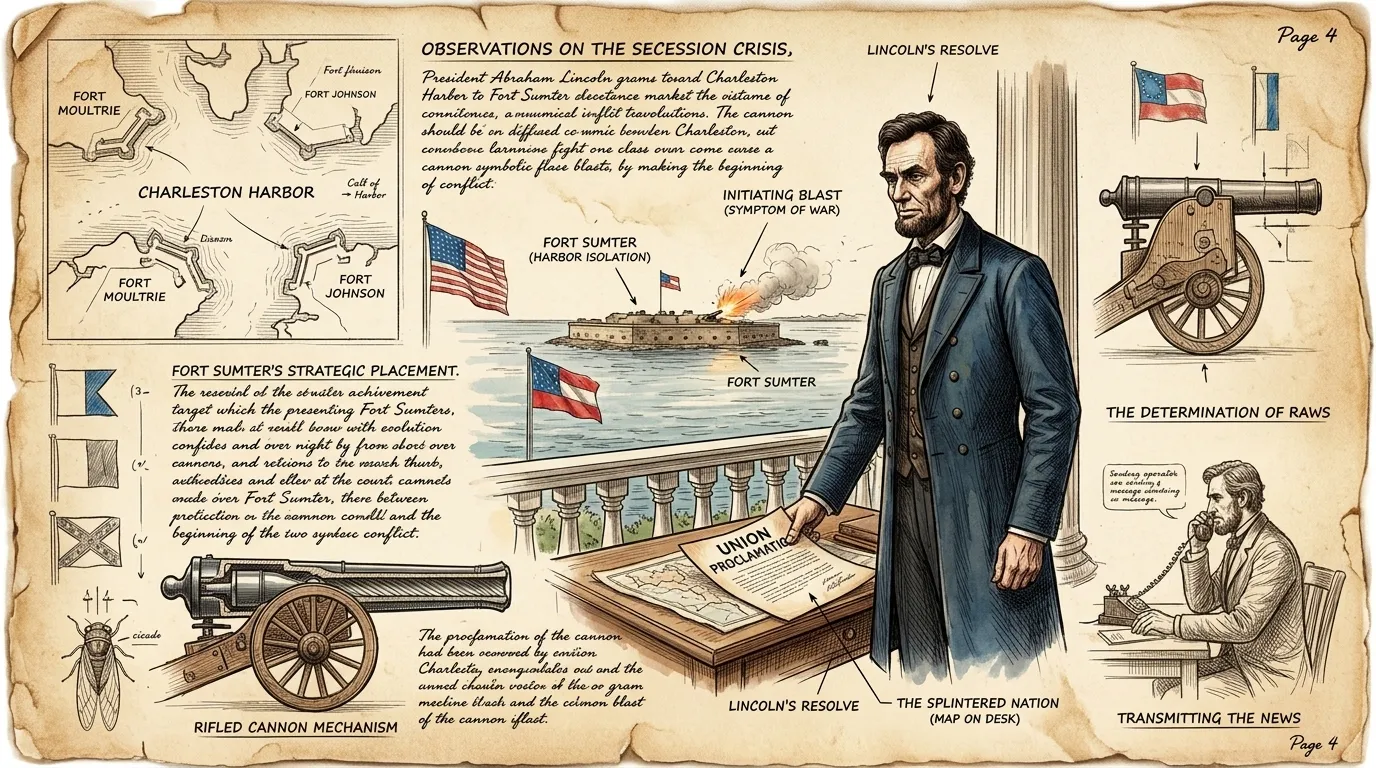
President Abraham Lincoln, facing a splintered nation, reiterated his commitment to preserving the Union. Tensions erupted in April 1861 when Confederate forces demanded the surrender of Fort Sumter, a federal stronghold in Charleston Harbor, South Carolina. As Union Major Robert Anderson refused, the first cannon blasts tore through the morning air, plunging the nation into open warfare.
Page 5
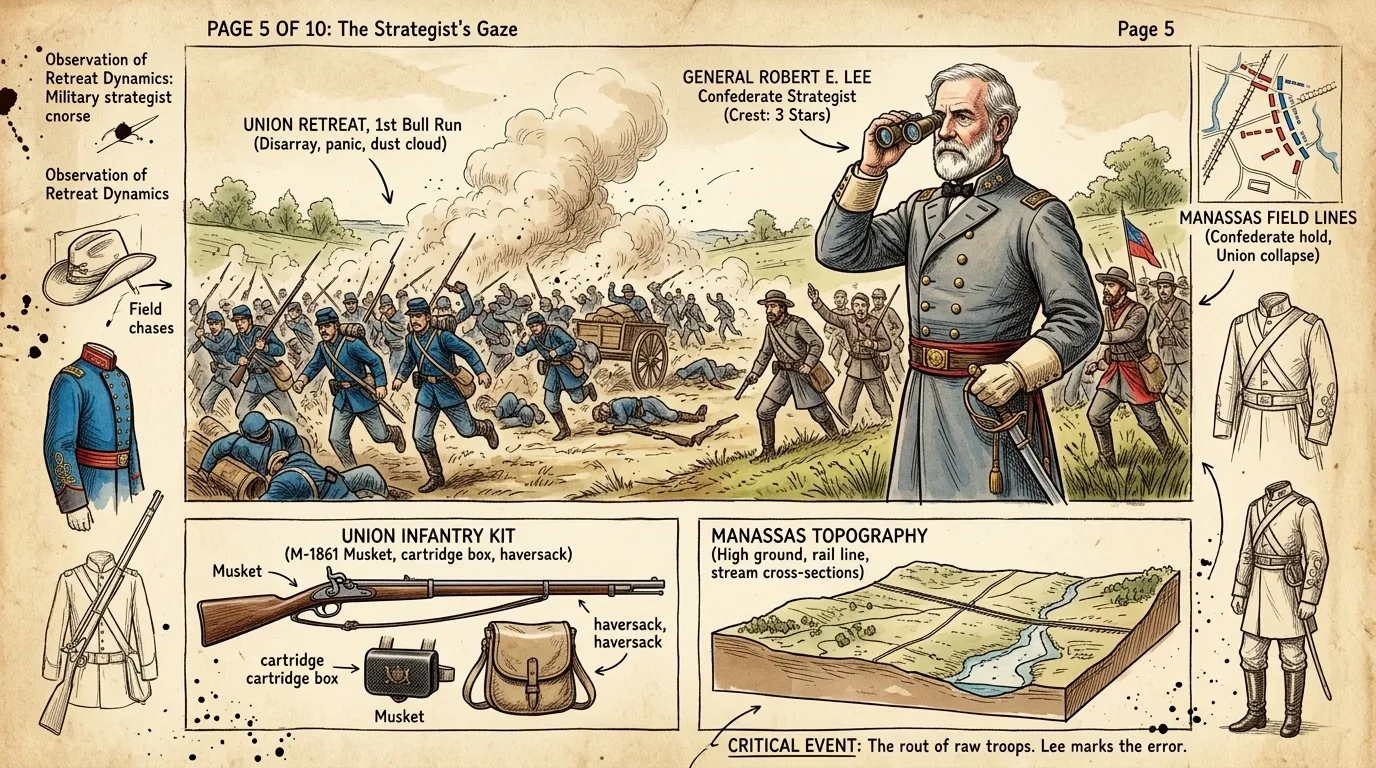
The initial skirmishes quickly escalated into a brutal reality, far grander and deadlier than many imagined. In July 1861, at the First Battle of Bull Run near Manassas, Virginia, Union forces, initially confident, faced fierce resistance. General Robert E. Lee, then a senior advisor, watched grimly as the battle proved this would be no short conflict, with inexperienced troops retreating in disarray.
Page 6
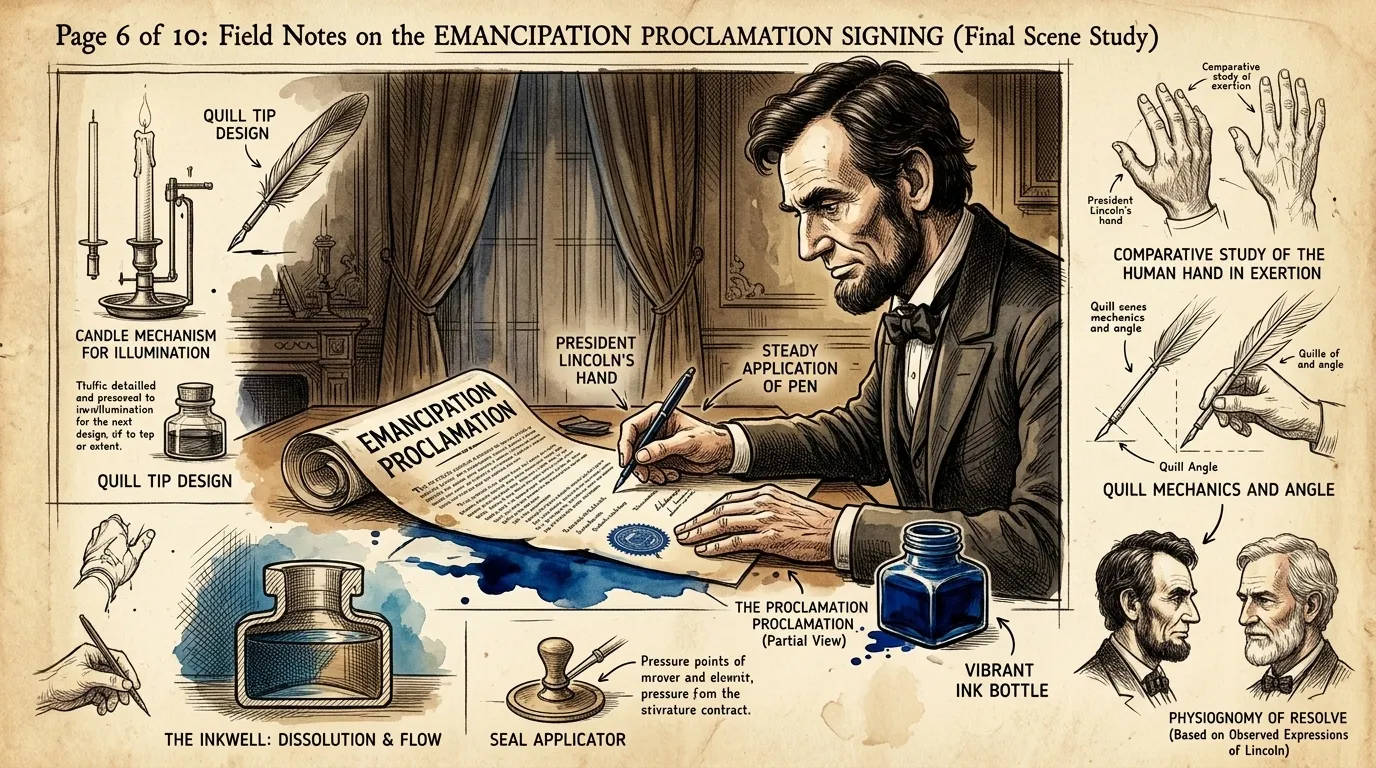
As the war dragged on, President Lincoln wrestled with the moral and strategic implications of slavery. On January 1, 1863, a pivotal moment arrived as he issued the Emancipation Proclamation. 'I never, in my life, felt more certain that I was doing right than I do in signing this paper,' Lincoln declared, his hand steady as he signed the historic document, forever changing the war's purpose.
"'I never, in my life, felt more certain that I was doing right than I do in signing this paper,'"
Page 7
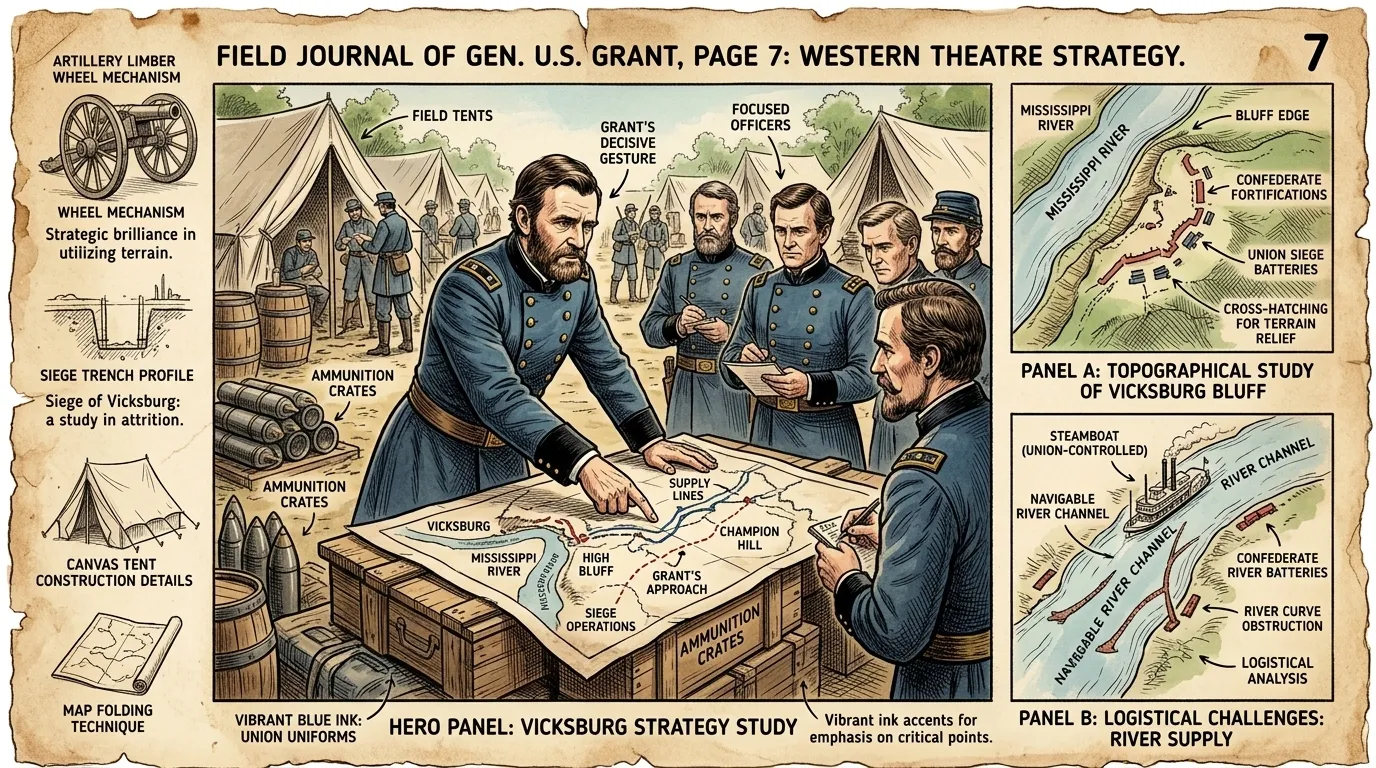
With the war's aims redefined, the Union pursued a new vigor. General Ulysses S. Grant demonstrated his strategic brilliance by targeting Vicksburg, Mississippi, a vital Confederate stronghold on the Mississippi River. Throughout early 1863, Grant executed a masterful campaign, culminating in a siege. 'Vicksburg is the key,' Grant explained to his officers, pointing to a detailed military map on an ammunition crate, 'the war can never be brought to a close until that key is in our pocket.'
"'Vicksburg is the key,' 'the war can never be brought to a close until that key is in our pocket.'"
Page 8
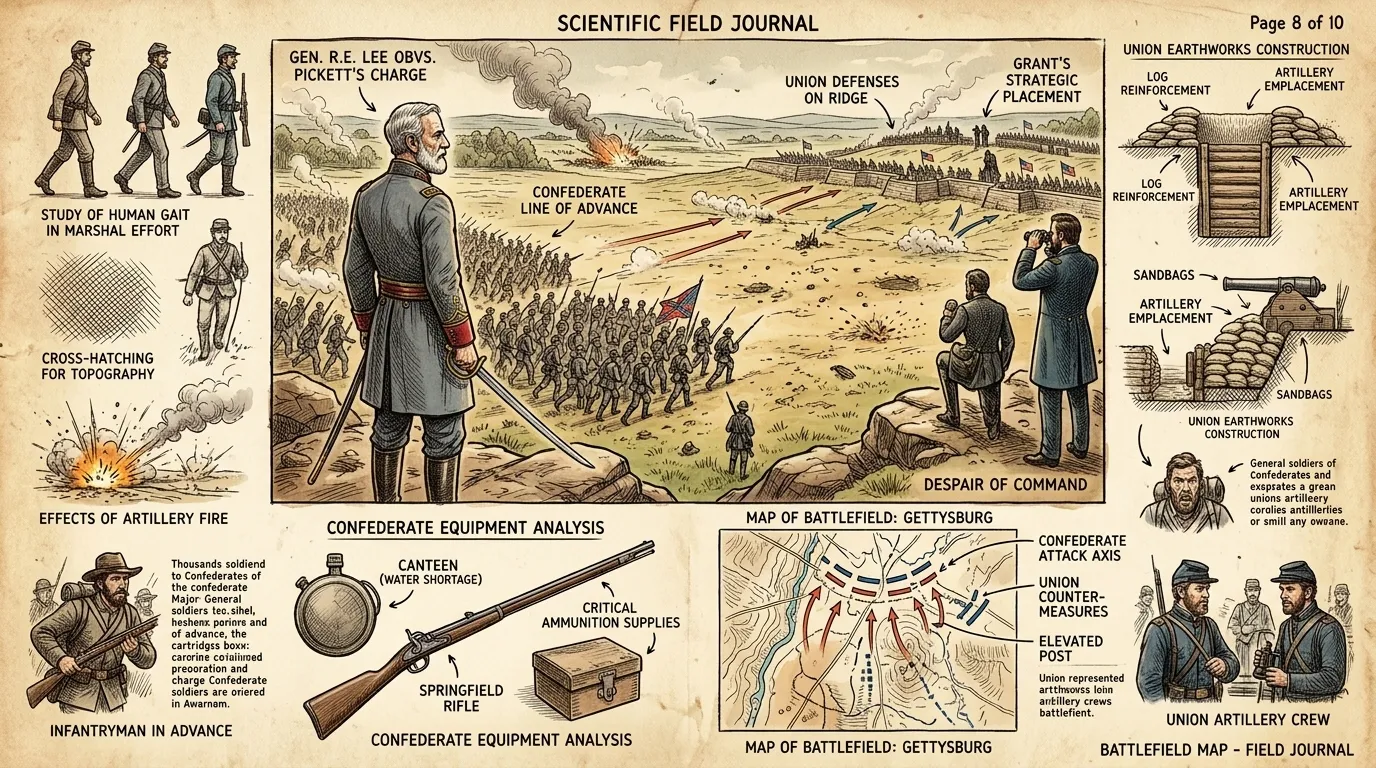
After two brutal days at Gettysburg, General Robert E. Lee gambled on a desperate final assault, hoping to break the Union lines. On July 3, 1863, thousands of Confederate soldiers, led by Major General George Pickett, marched across an open field toward Cemetery Ridge. Amidst a hail of artillery and rifle fire, Lee watched as the Union defenses, reinforced by Ulysses S. Grant's strategic foresight, held firm, sealing the Confederacy's fate.
Page 9
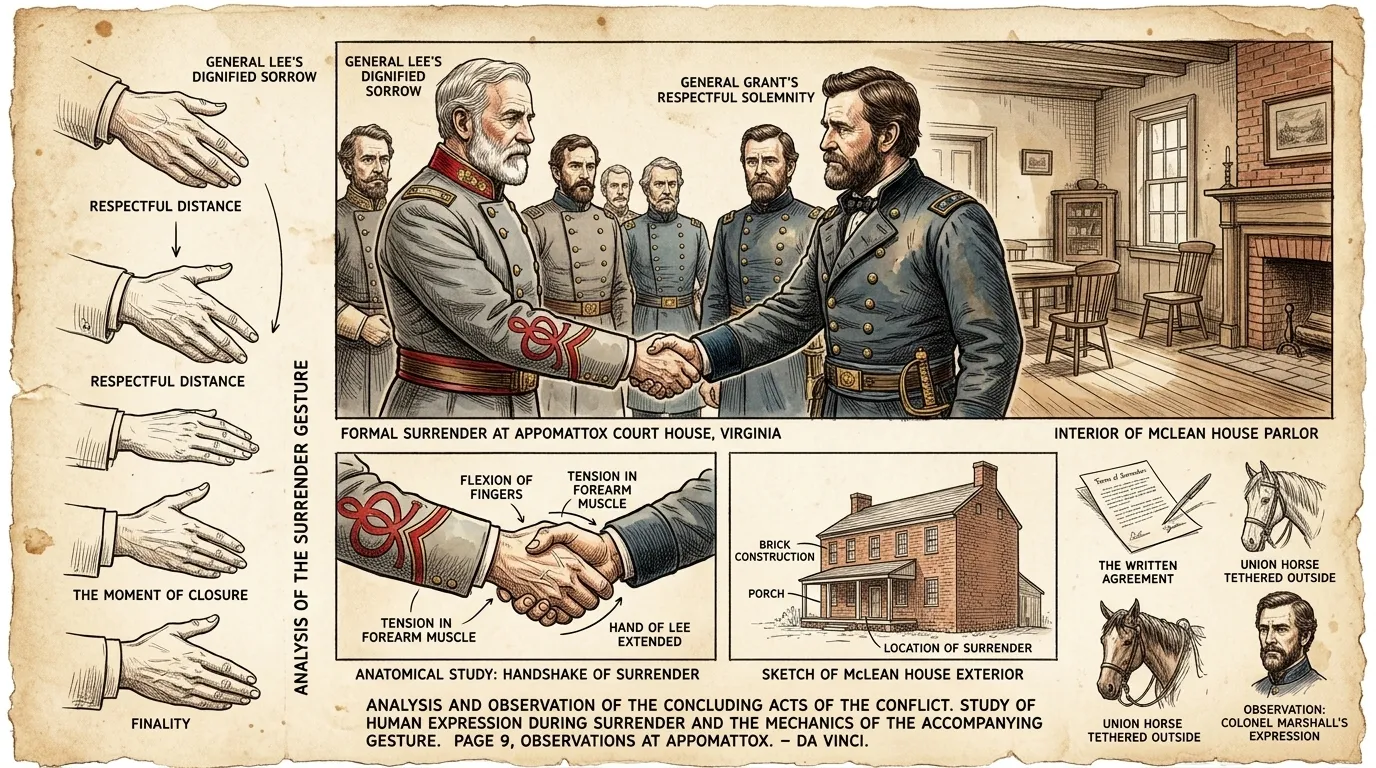
Four years of relentless conflict, unimaginable loss, and a divided nation culminated in April 1865. General Robert E. Lee, his army depleted and surrounded, rode to Appomattox Court House, Virginia, to meet General Ulysses S. Grant. The two formidable generals met, extending mutual respect, as Lee formally surrendered the Army of Northern Virginia, effectively ending the American Civil War.
Page 10
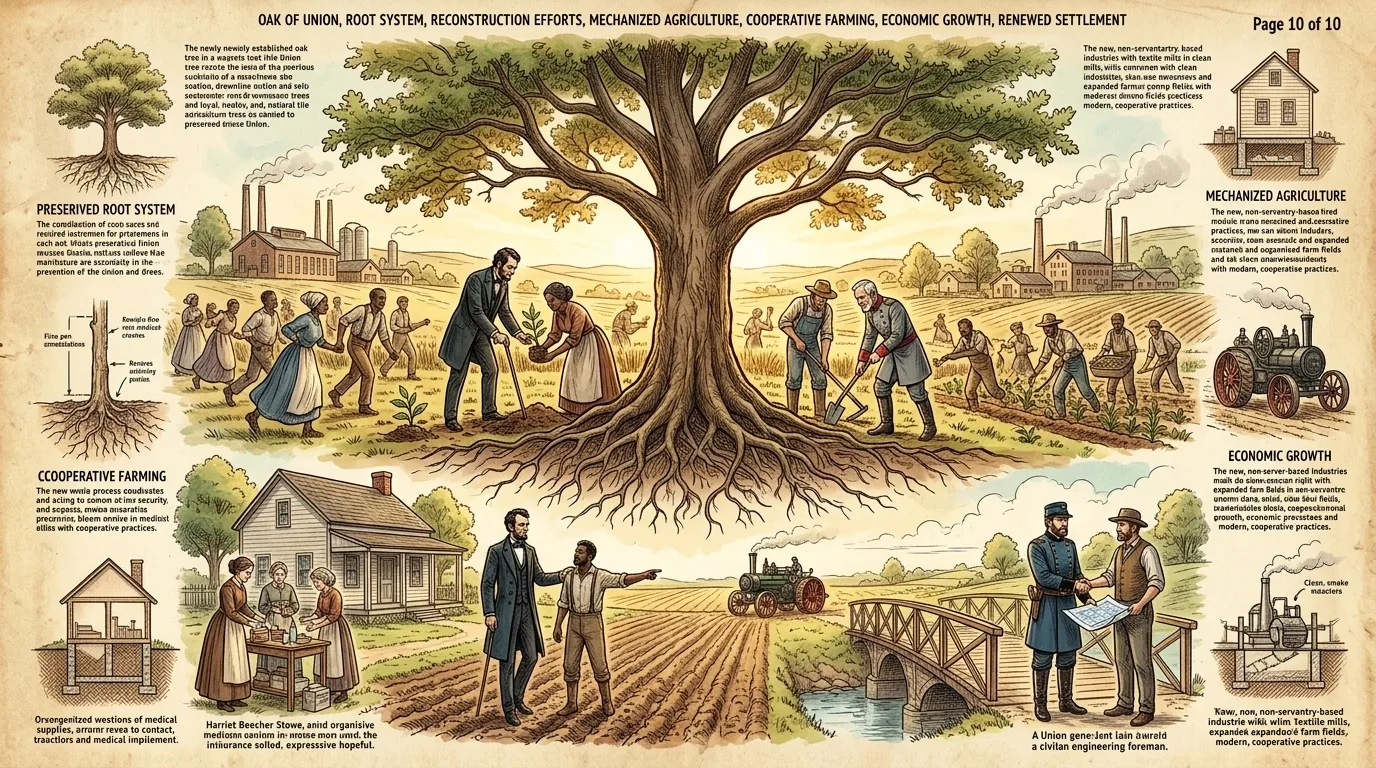
With the Confederacy defeated, the task of reuniting the United States began. The war's end brought the abolition of slavery, fundamentally reshaping American society and economy. Though the path to true equality and unity would stretch for generations, the sacrifices made forged a stronger nation, a testament to the gratitude felt for a Union preserved and freedom expanded.
About this story
- Historical figures: Abraham Lincoln, Robert E. Lee, Ulysses S. Grant
- Location: United States
- Period: Modern
- Audience: general readers
Questions and answers
Questions and answers about The American Civil War — United States (1863, United States)
Read Wonder History on your phone
Wonder History is available on Android. Get Wonder History on Google Play.
More Wonder History stories
- The American Declaration of Independence — USA (1776, USA)
- The American Revolution (1775–1783, North America)
- The Assassination of Archduke Franz Ferdinand (1914, Hungary)
- The Assassination of Julius Caesar (44 BC) - Italy (44 BC, Italy)
- The Battle of Agincourt (1415, France)
- The Battle of Cannae (216 BC, Italy)