The Carnation Revolution (1974, Portugal)

The Carnation Revolution (1974, Portugal) — an illustrated history story, featuring António de Oliveira Salazar, Marcello Caetano, António de Spínola, set in Portugal. 10 illustrated pages, free to read on Wonder History.
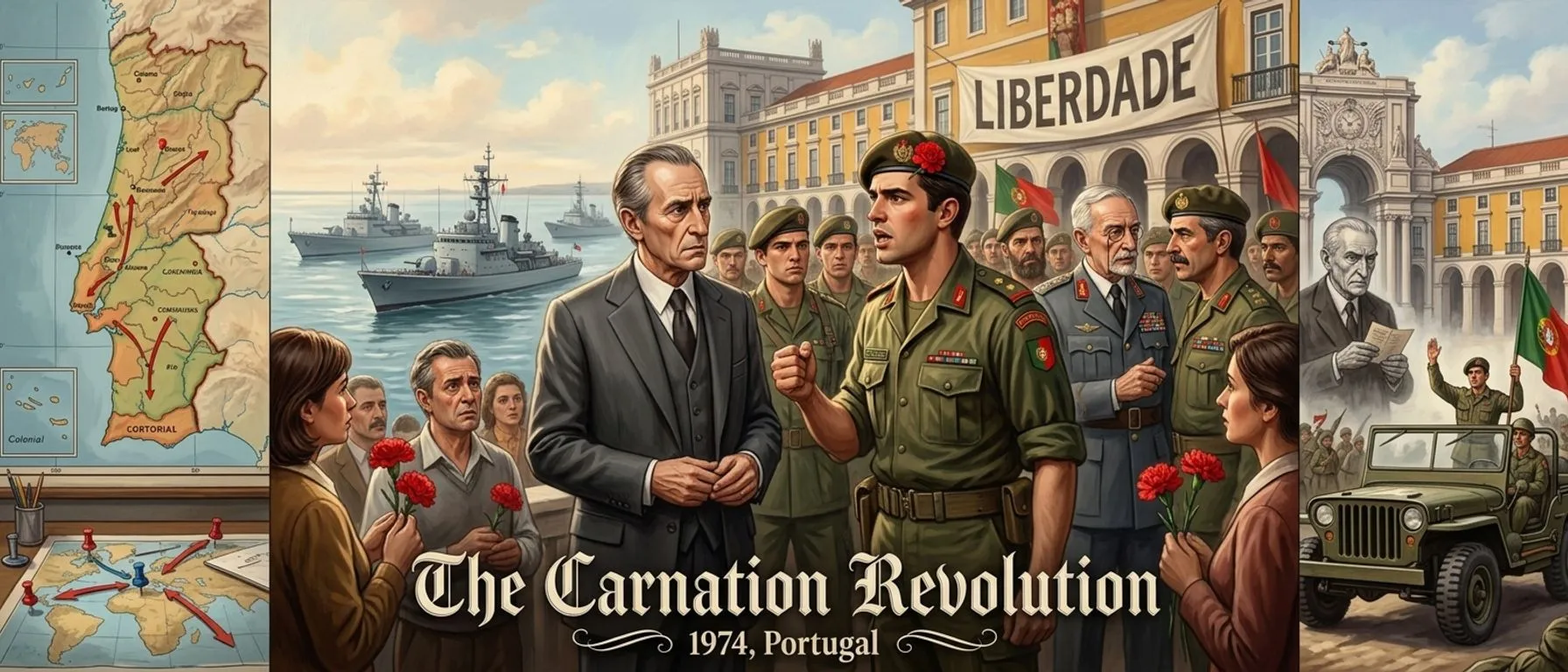
The Carnation Revolution (1974, Portugal) — book cover — Wonder History
The Carnation Revolution (1974, Portugal) — an illustrated history story, featuring António de Oliveira Salazar, Marcello Caetano, António de Spínola, set in Portugal. 10 illustrated pages, free to read on Wonder History.

Page 1
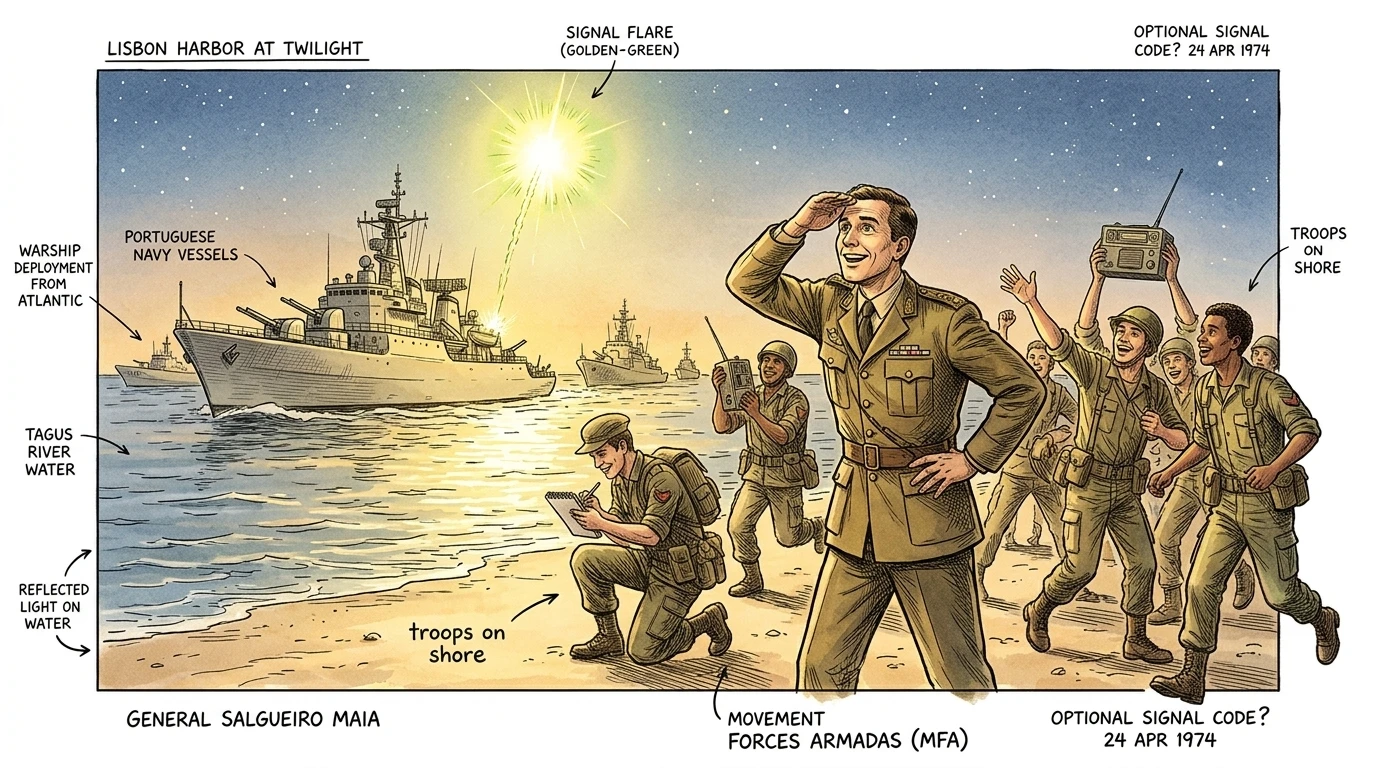
A lone signal flare illuminated the Tagus River as warships surged into Lisbon's harbor, their cannons aimed at Terreiro do Paço.
A lone signal flare illuminated the Tagus River as warships surged into Lisbon's harbor, their cannons aimed at Terreiro do Paço. Lieutenant Salgueiro Maia, standing at the head of his troops, knew this was the point of no return. 'We are going to end this,' he declared, his voice echoing across the starlit waters. But could Maia and the MFA truly topple the decades-long dictatorship?" But where did it all begin?

A lone signal flare illuminated the Tagus River as warships surged into Lisbon's harbor, their cannons aimed at Terreiro do Paço. Lieutenant Salgueiro Maia, standing at the head of his troops, knew this was the point of no return. 'We are going to end this,' he declared, his voice echoing across the starlit waters. But could Maia and the MFA truly topple the decades-long dictatorship?" But where did it all begin?

Page 2
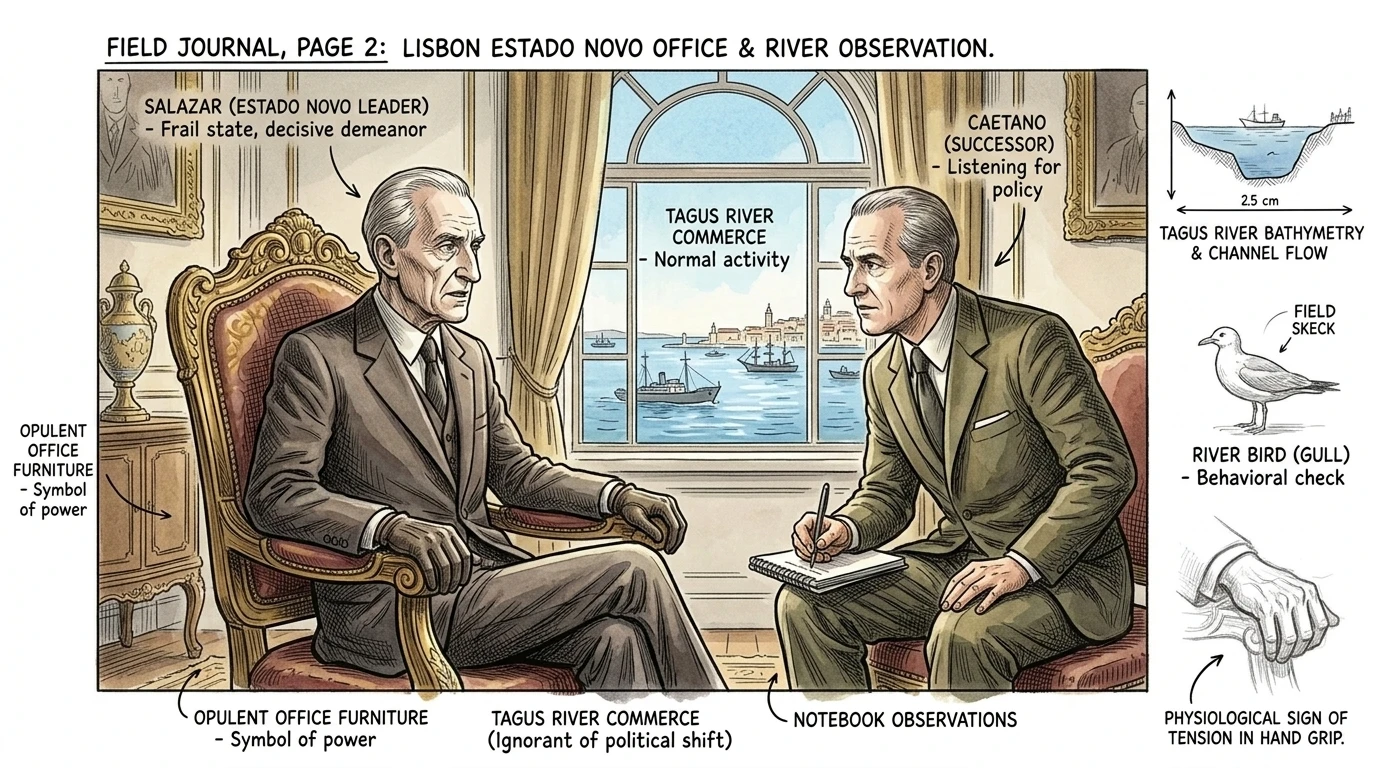
For decades, Portugal had been under the iron rule of António de Oliveira Salazar, the creator of the Estado Novo regime.
For decades, Portugal had been under the iron rule of António de Oliveira Salazar, the creator of the Estado Novo regime. In his lavish office in Lisbon, Salazar, the Prime Minister, met with Marcello Caetano, his chosen successor. 'Stability and order above all,' Salazar rasped, his frail hand gripping the armrest. Outside, ships sailed, oblivious to the political turmoil brewing beneath the surface.

For decades, Portugal had been under the iron rule of António de Oliveira Salazar, the creator of the Estado Novo regime. In his lavish office in Lisbon, Salazar, the Prime Minister, met with Marcello Caetano, his chosen successor. 'Stability and order above all,' Salazar rasped, his frail hand gripping the armrest. Outside, ships sailed, oblivious to the political turmoil brewing beneath the surface.

Page 3
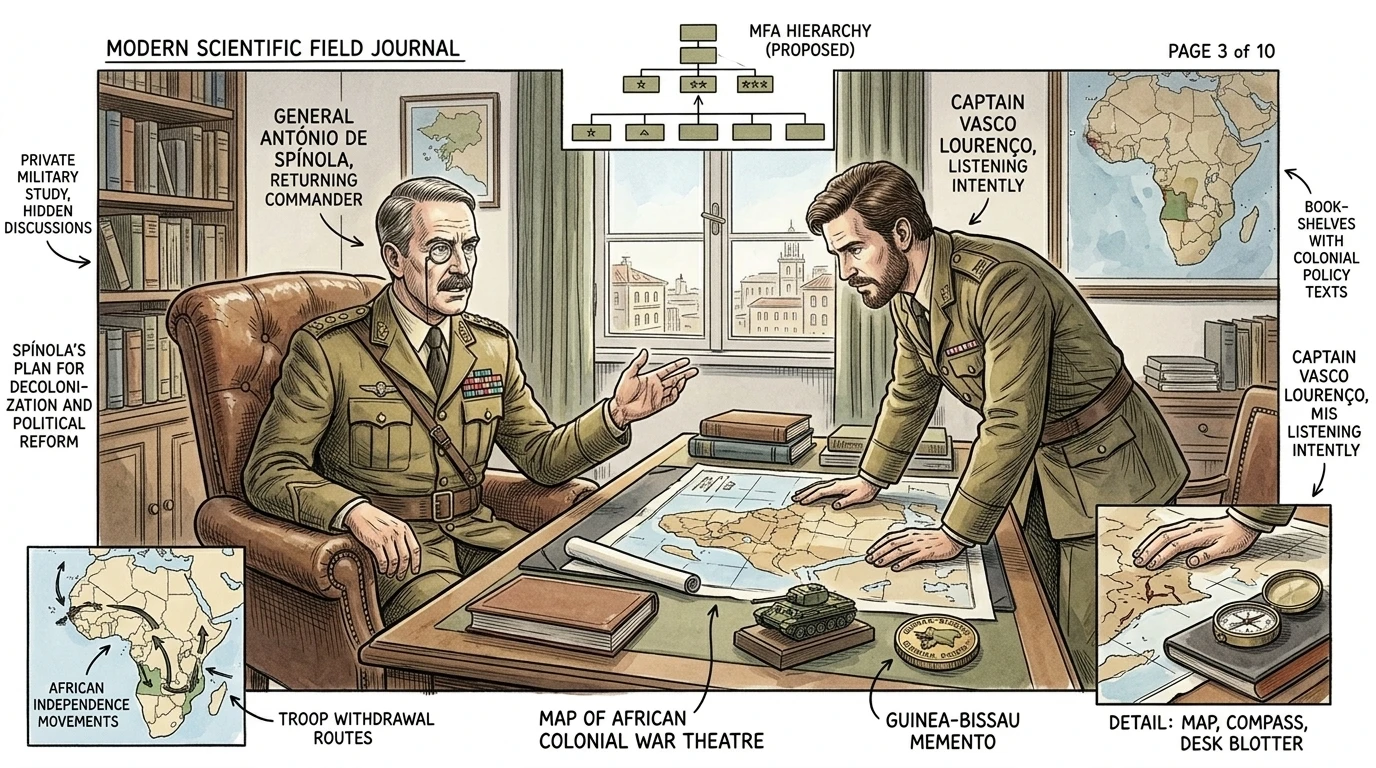
General António de Spínola, a decorated war hero, grew increasingly disillusioned with Portugal's endless colonial wars in Africa.
General António de Spínola, a decorated war hero, grew increasingly disillusioned with Portugal's endless colonial wars in Africa. Back from Guinea-Bissau, Spínola confided in Vasco Lourenço, a fellow officer: 'These wars are bleeding Portugal dry,' Spínola said, his face etched with concern. 'There has to be another way.' But what could they do against a regime so entrenched?

General António de Spínola, a decorated war hero, grew increasingly disillusioned with Portugal's endless colonial wars in Africa. Back from Guinea-Bissau, Spínola confided in Vasco Lourenço, a fellow officer: 'These wars are bleeding Portugal dry,' Spínola said, his face etched with concern. 'There has to be another way.' But what could they do against a regime so entrenched?

Page 4
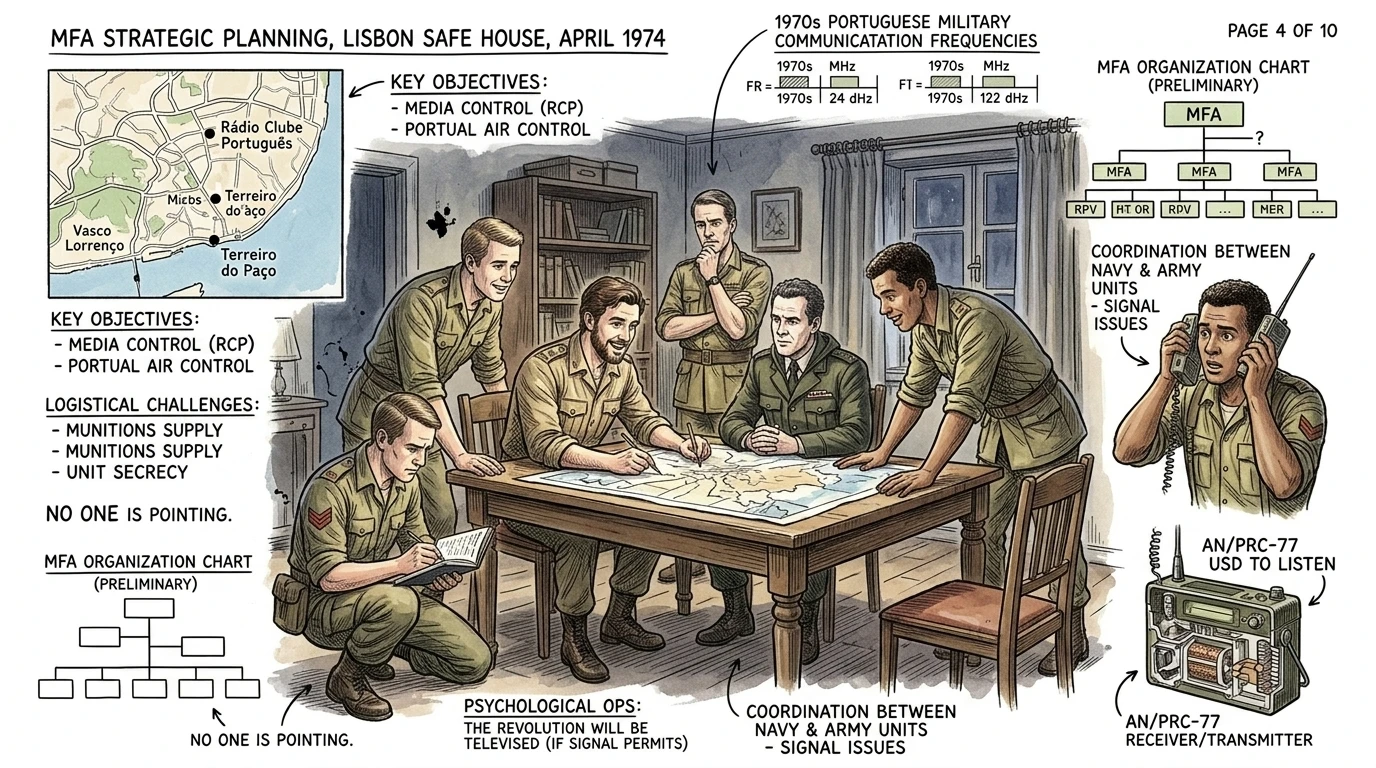
In secret meetings held in Lisbon apartments, Vasco Lourenço, along with Otelo Saraiva de Carvalho, and other officers of the Movimento das Forças Armadas…
In secret meetings held in Lisbon apartments, Vasco Lourenço, along with Otelo Saraiva de Carvalho, and other officers of the Movimento das Forças Armadas (MFA), meticulously planned their move. 'Our aim is simple: democracy,' Vasco Lourenço declared, sketching out strategies. Otelo Saraiva de Carvalho nodded grimly, 'The people are ready for change.' They are responsible to listen to the people.

In secret meetings held in Lisbon apartments, Vasco Lourenço, along with Otelo Saraiva de Carvalho, and other officers of the Movimento das Forças Armadas (MFA), meticulously planned their move. 'Our aim is simple: democracy,' Vasco Lourenço declared, sketching out strategies. Otelo Saraiva de Carvalho nodded grimly, 'The people are ready for change.' They are responsible to listen to the people.

Page 5
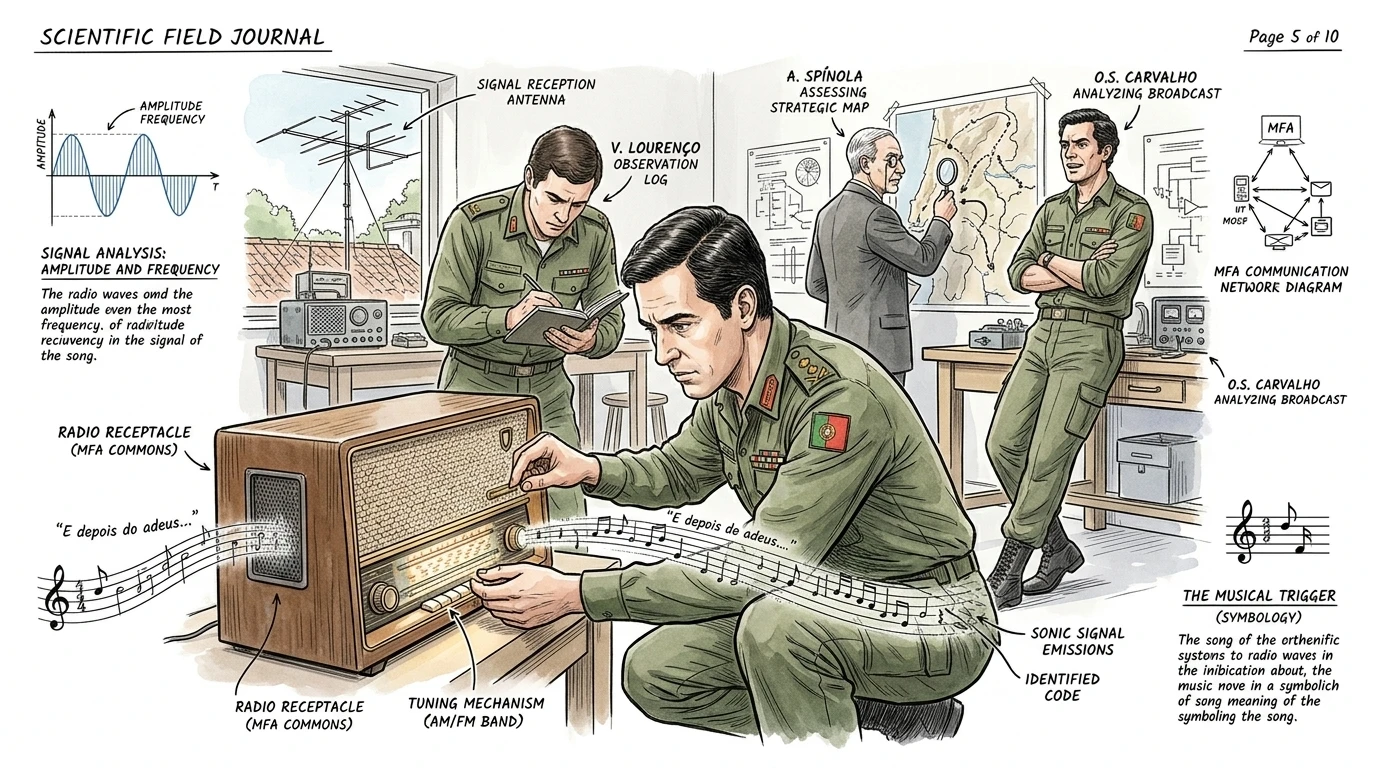
As the MFA finalized their plans, they needed a signal, a song that would alert the troops that the revolution had begun.
As the MFA finalized their plans, they needed a signal, a song that would alert the troops that the revolution had begun. 'E depois do adeus' would be played on the radio.

As the MFA finalized their plans, they needed a signal, a song that would alert the troops that the revolution had begun. 'E depois do adeus' would be played on the radio.

Page 6
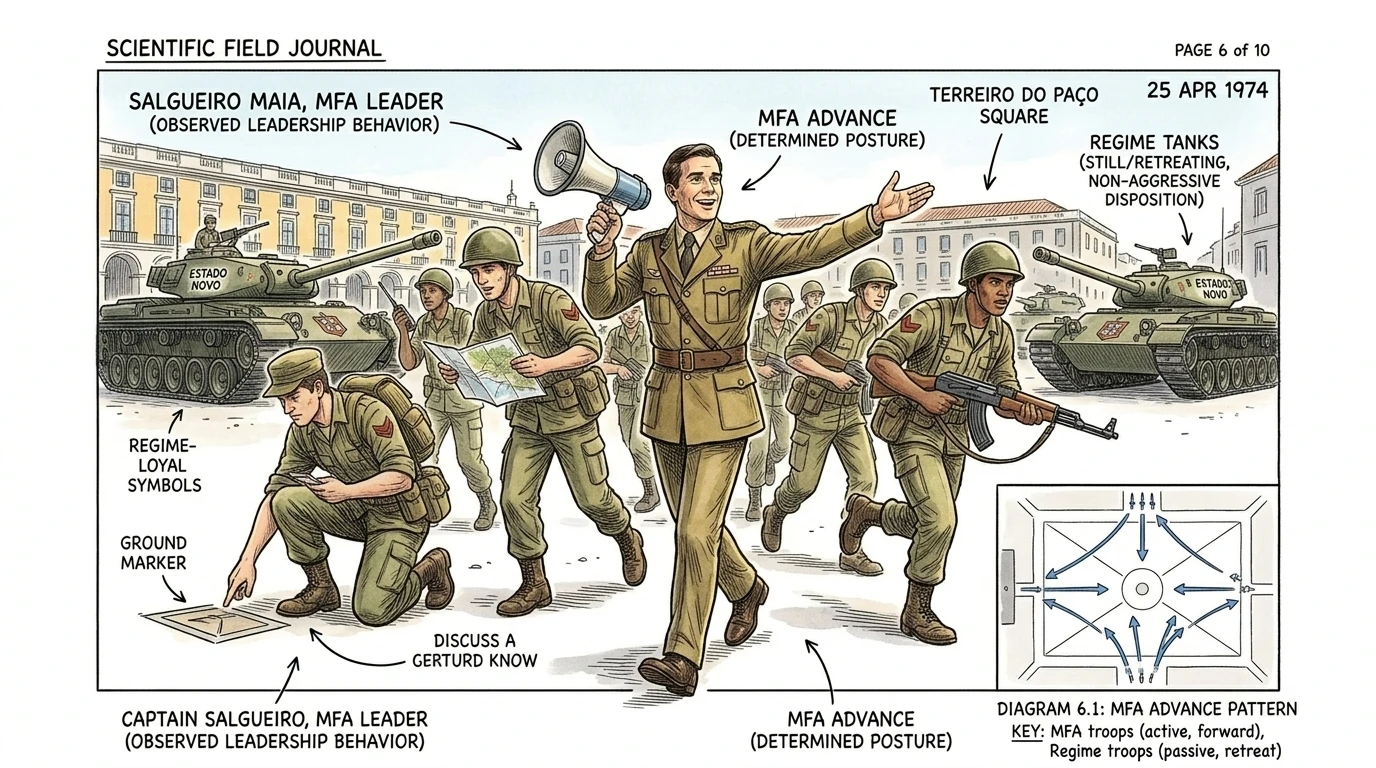
On April 25, 1974, the signal came, and Lisbon erupted. Salgueiro Maia led his troops towards Terreiro do Paço, facing down tanks loyal to the regime.
On April 25, 1974, the signal came, and Lisbon erupted. Salgueiro Maia led his troops towards Terreiro do Paço, facing down tanks loyal to the regime. He knew he was the face of the operation and he knew the mission very well. In the heart of the square, surrounded by his men, Maia shouted, 'This is not a coup, but an action on behalf of the Portuguese people!'.

On April 25, 1974, the signal came, and Lisbon erupted. Salgueiro Maia led his troops towards Terreiro do Paço, facing down tanks loyal to the regime. He knew he was the face of the operation and he knew the mission very well. In the heart of the square, surrounded by his men, Maia shouted, 'This is not a coup, but an action on behalf of the Portuguese people!'.

Page 7
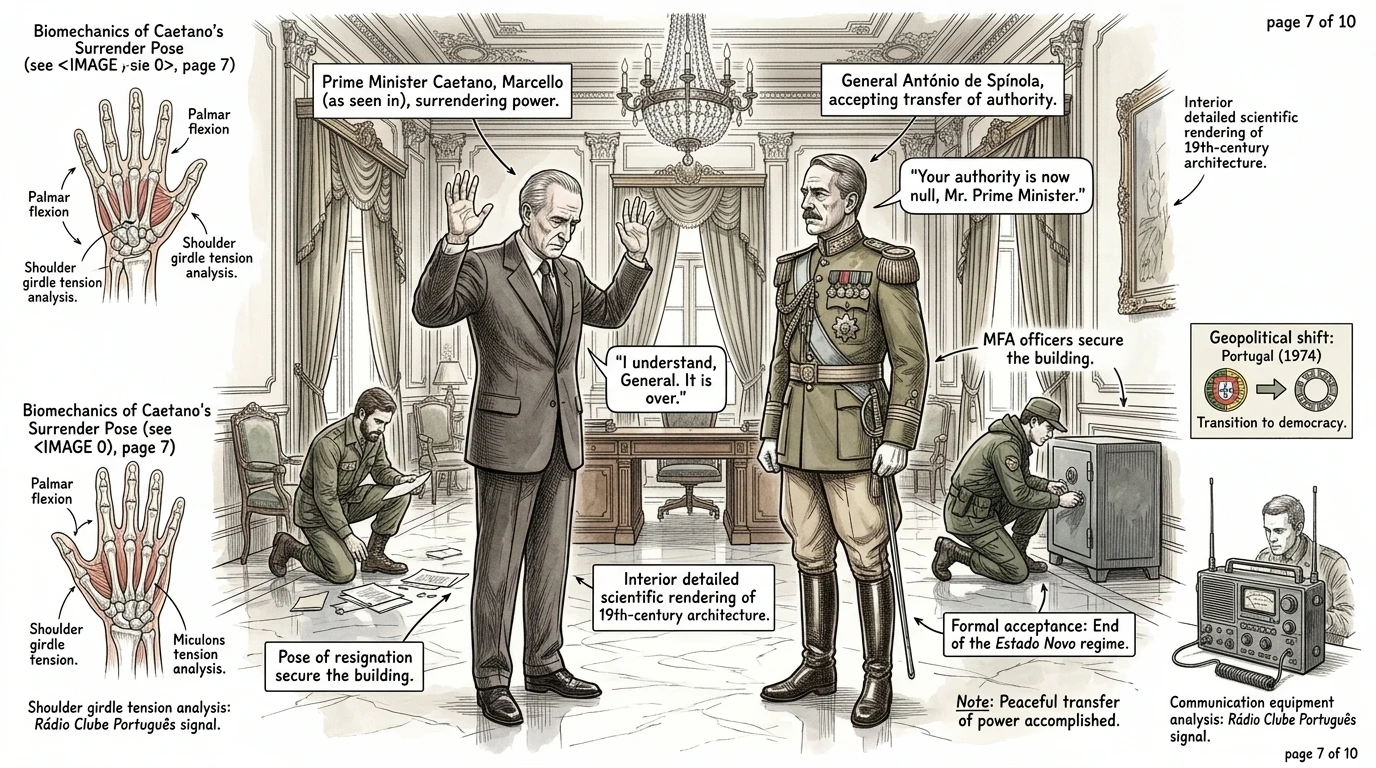
As Maia's forces secured Terreiro do Paço, other MFA units seized strategic points throughout Lisbon. Faced with overwhelming support for the revolution…
As Maia's forces secured Terreiro do Paço, other MFA units seized strategic points throughout Lisbon. Faced with overwhelming support for the revolution, Marcello Caetano, the Prime Minister, realized the game was up. 'I will not order my soldiers to fire on their brothers,' Caetano declared, surrendering to General Spínola. This day was the last day of Caetano in power.

As Maia's forces secured Terreiro do Paço, other MFA units seized strategic points throughout Lisbon. Faced with overwhelming support for the revolution, Marcello Caetano, the Prime Minister, realized the game was up. 'I will not order my soldiers to fire on their brothers,' Caetano declared, surrendering to General Spínola. This day was the last day of Caetano in power.

Page 8
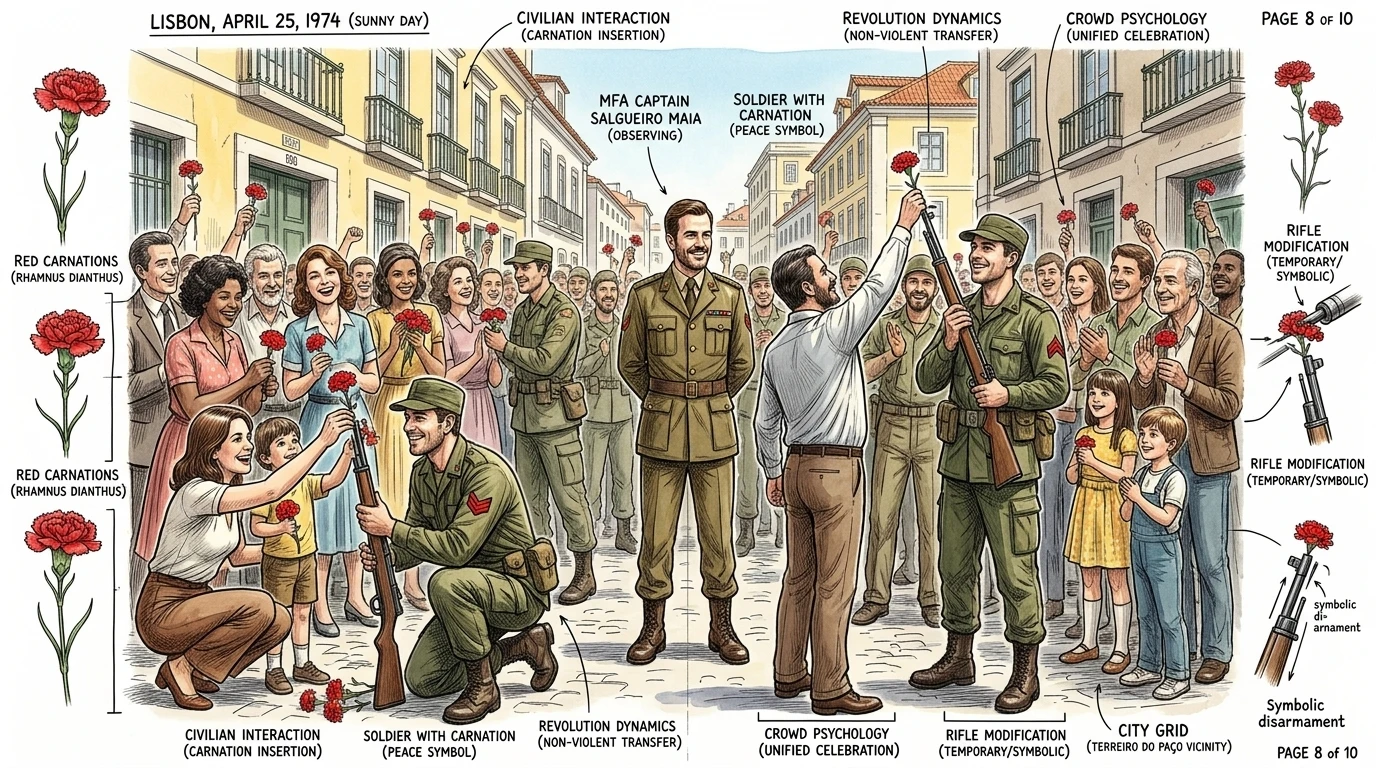
The revolution was swift and bloodless, with citizens offering carnations to the soldiers, sticking them in their rifle barrels – symbols of peace and freedom.
The revolution was swift and bloodless, with citizens offering carnations to the soldiers, sticking them in their rifle barrels – symbols of peace and freedom. Salgueiro Maia, witnessing the outpouring of support, understood the weight of their actions. As Franklin Roosevelt said, "The only thing we have to fear is fear itself." Maia looked at the flowers blooming from the barrels of his own men's rifles. Forty-eight years of fear had gone out of Portugal in a single morning.

The revolution was swift and bloodless, with citizens offering carnations to the soldiers, sticking them in their rifle barrels – symbols of peace and freedom. Salgueiro Maia, witnessing the outpouring of support, understood the weight of their actions. As Franklin Roosevelt said, "The only thing we have to fear is fear itself." Maia looked at the flowers blooming from the barrels of his own men's rifles. Forty-eight years of fear had gone out of Portugal in a single morning.

Page 9
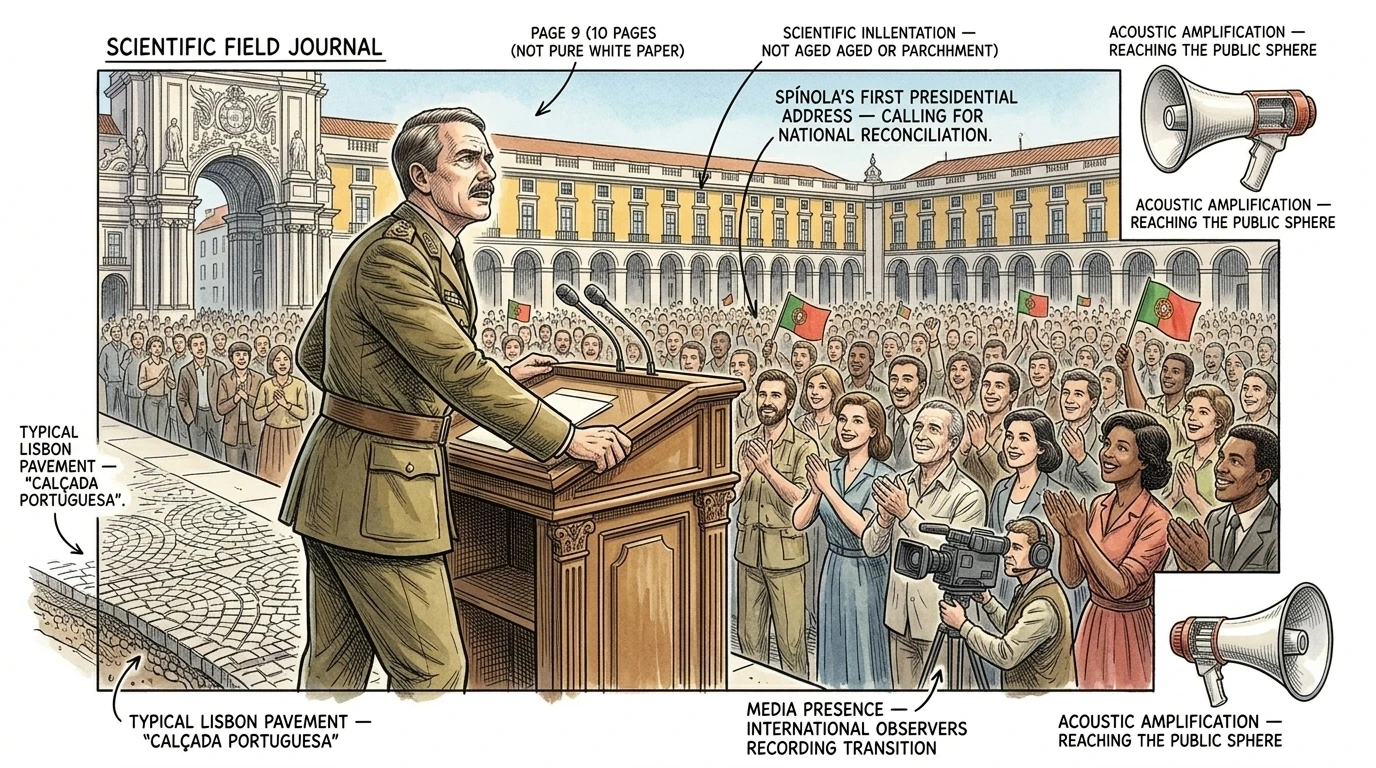
With the dictatorship overthrown, Portugal embarked on a path toward democracy. General Spínola became the first President, tasked with overseeing the…
With the dictatorship overthrown, Portugal embarked on a path toward democracy. General Spínola became the first President, tasked with overseeing the transition. A nation rebuilt by everyone. At a ceremony in Lisbon, Spínola addressed the people. The weight of this moment was immense for him.

With the dictatorship overthrown, Portugal embarked on a path toward democracy. General Spínola became the first President, tasked with overseeing the transition. A nation rebuilt by everyone. At a ceremony in Lisbon, Spínola addressed the people. The weight of this moment was immense for him.

Page 10
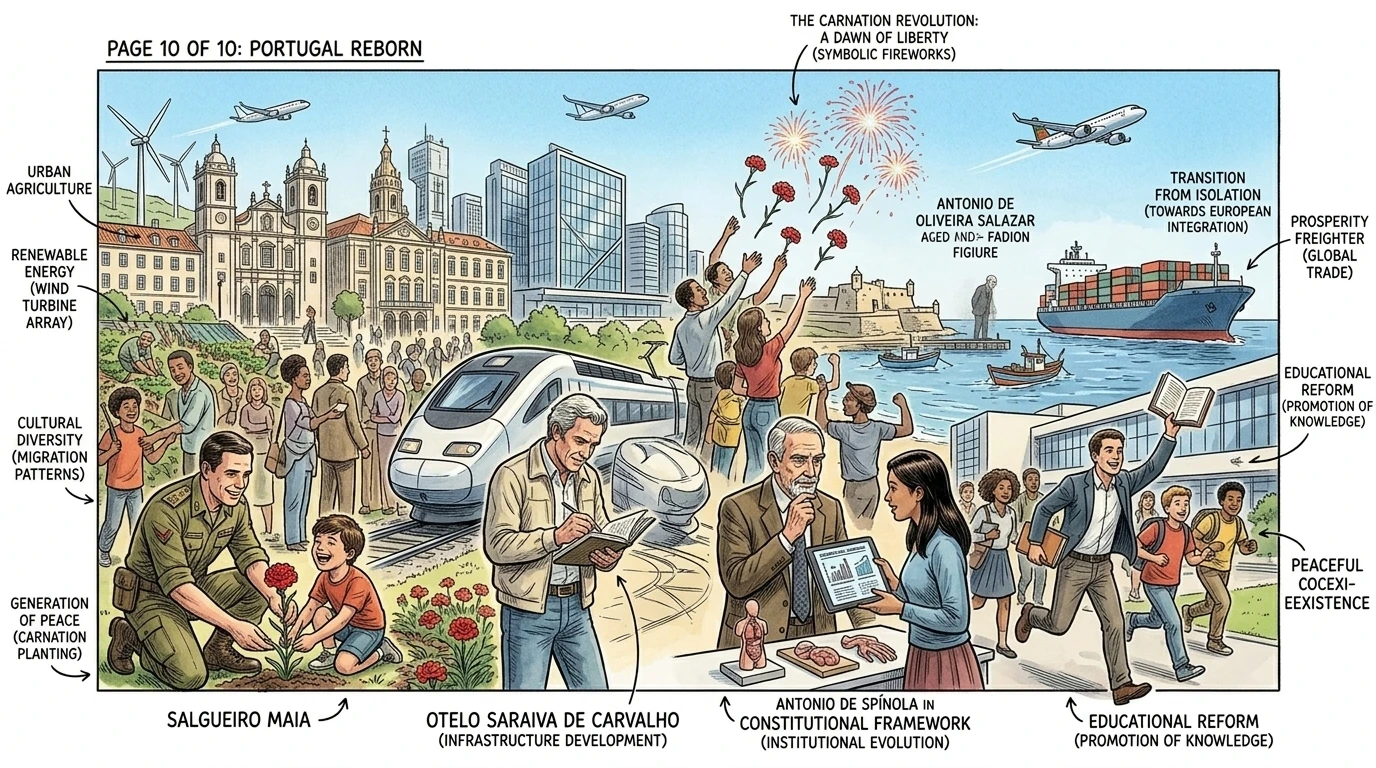
The Carnation Revolution remains a defining moment in Portuguese history, a testament to the power of peaceful resistance and the unwavering pursuit of…
The Carnation Revolution remains a defining moment in Portuguese history, a testament to the power of peaceful resistance and the unwavering pursuit of democracy. It set Portugal on a new path, ending colonialism and ushering in an era of freedom and progress. The revolution remains a huge moment in Portuguese history.

The Carnation Revolution remains a defining moment in Portuguese history, a testament to the power of peaceful resistance and the unwavering pursuit of democracy. It set Portugal on a new path, ending colonialism and ushering in an era of freedom and progress. The revolution remains a huge moment in Portuguese history.

About this story

  • Historical figures: António de Oliveira Salazar, Marcello Caetano, António de Spínola
  • Location: Portugal
  • Period: Contemporary
  • Audience: general readers

Questions and answers

Questions and answers about The Carnation Revolution (1974, Portugal)

Read Wonder History on your phone

Wonder History is available on Android. Get Wonder History on Google Play.

More Wonder History stories

All Wonder History stories · Open the library