3D Printing for Media Prototyping
3D Printing for Media Prototyping — an illustrated inventions story, set in Global. 10 illustrated pages, free to read on Wonder Inventions.
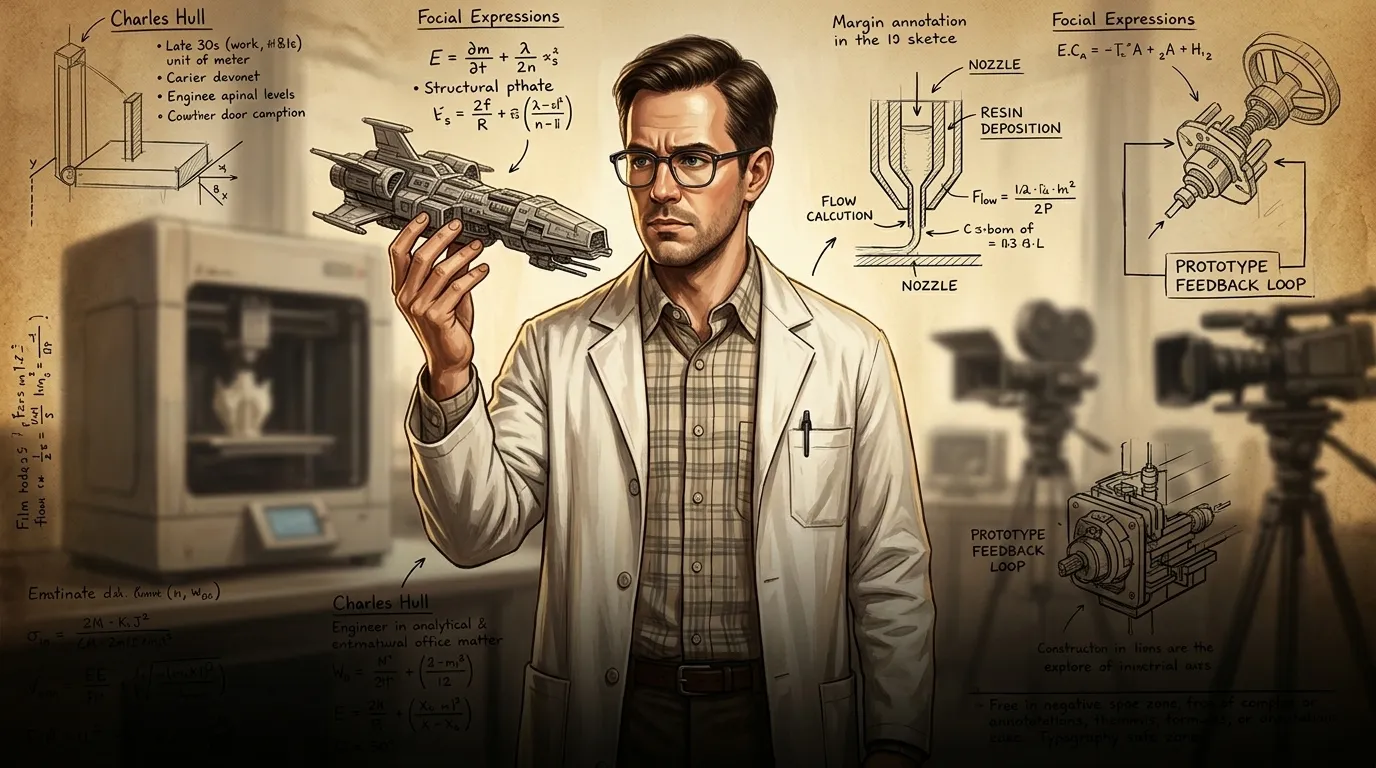
Page 1
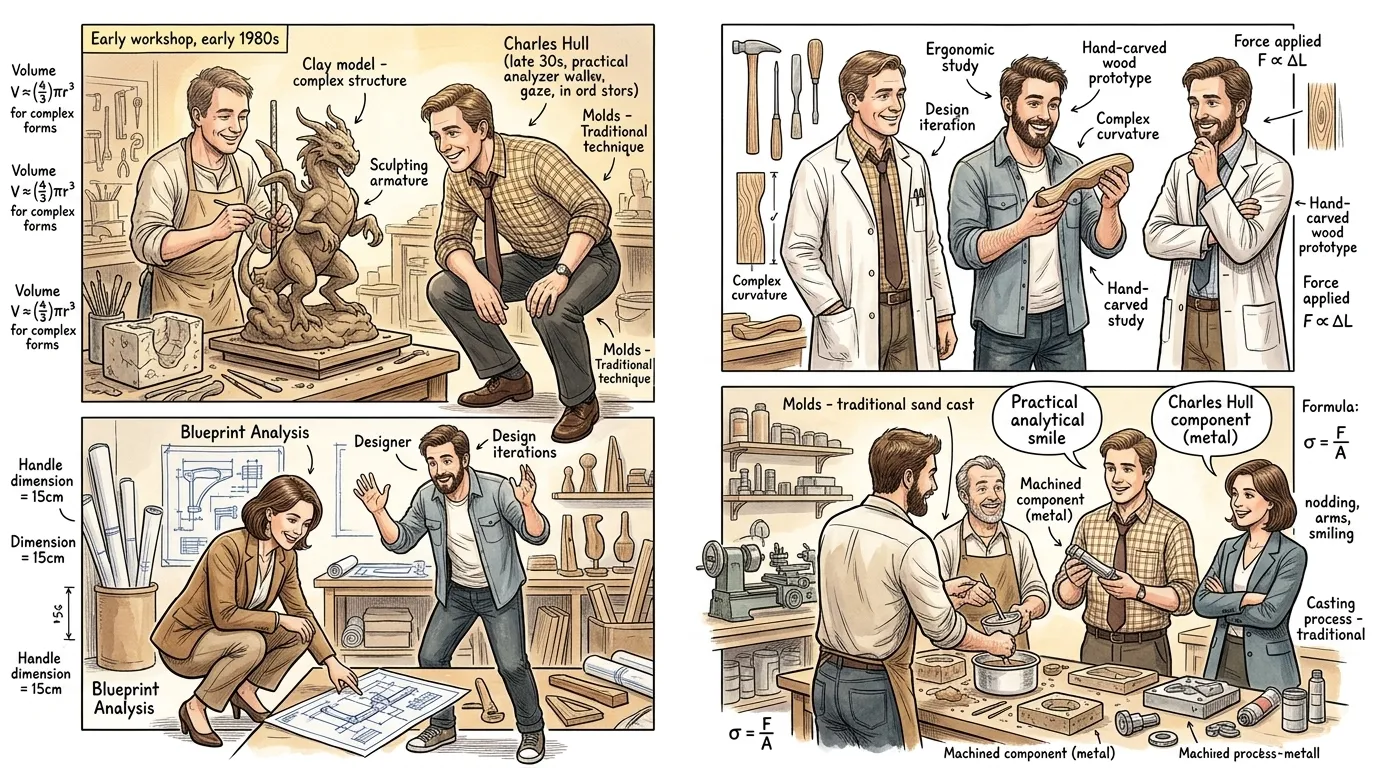
Before the advent of additive manufacturing, the creation of physical prototypes for industrial design, engineering, and particularly media, was a painstakingly slow and expensive endeavor. Each iteration of a new product, a film prop, or an animated character required skilled artisans to hand-sculpt, mold, and machine models, a process fraught with delays and limitations. This bottleneck severely constrained creativity and innovation, often forcing designers to compromise on complexity or face prohibitive development costs.
Page 2
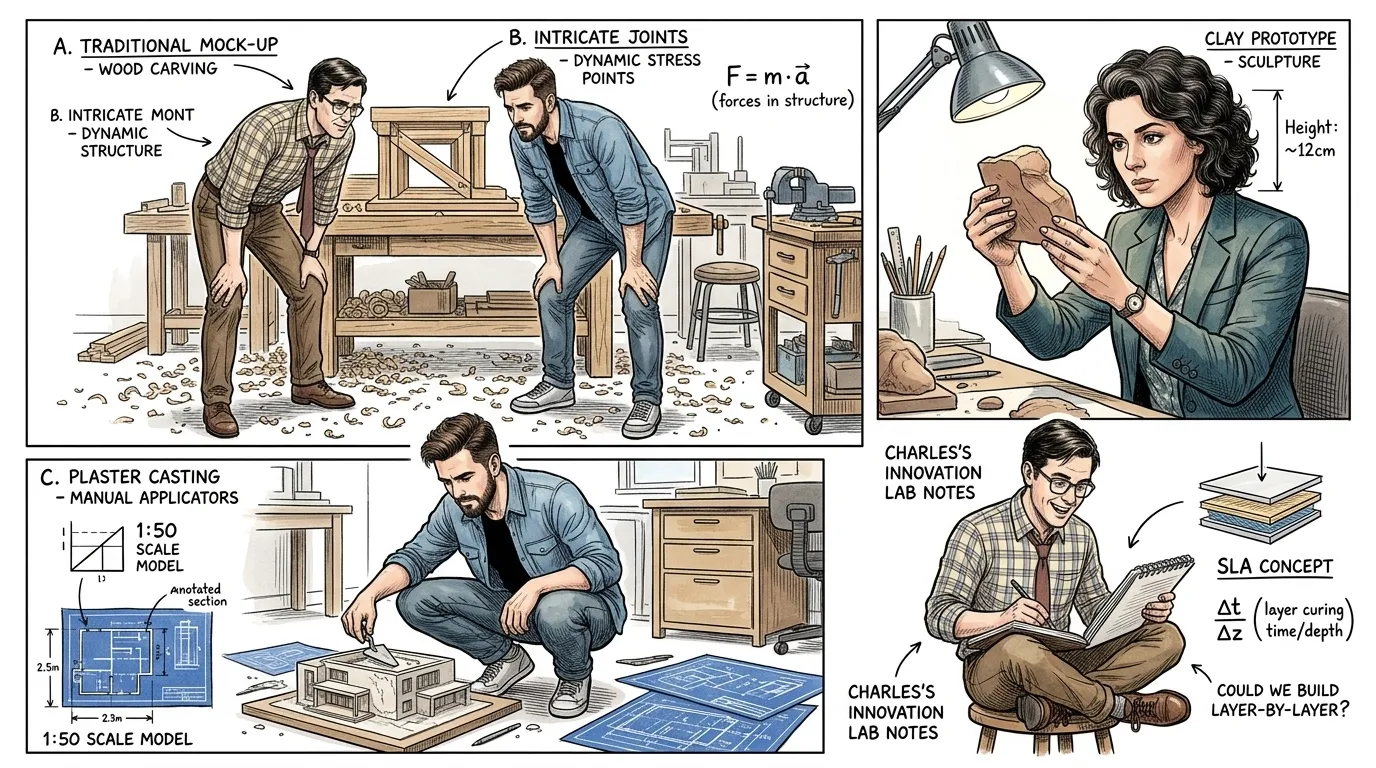
The world before efficient 3D printing was one where every physical concept, from an ergonomic household appliance to a fantastical creature for cinema, had to be painstakingly brought to life through subtractive or formative methods. Sculptors and model makers would interpret blueprints, shaping materials like clay, wax, wood, or plaster, layer by tedious layer, or by carving away excess. This manual process, while steeped in craftsmanship, demanded immense time, specialized expertise, and significant material expenditure, making rapid design iteration a luxury few could afford.
Page 3
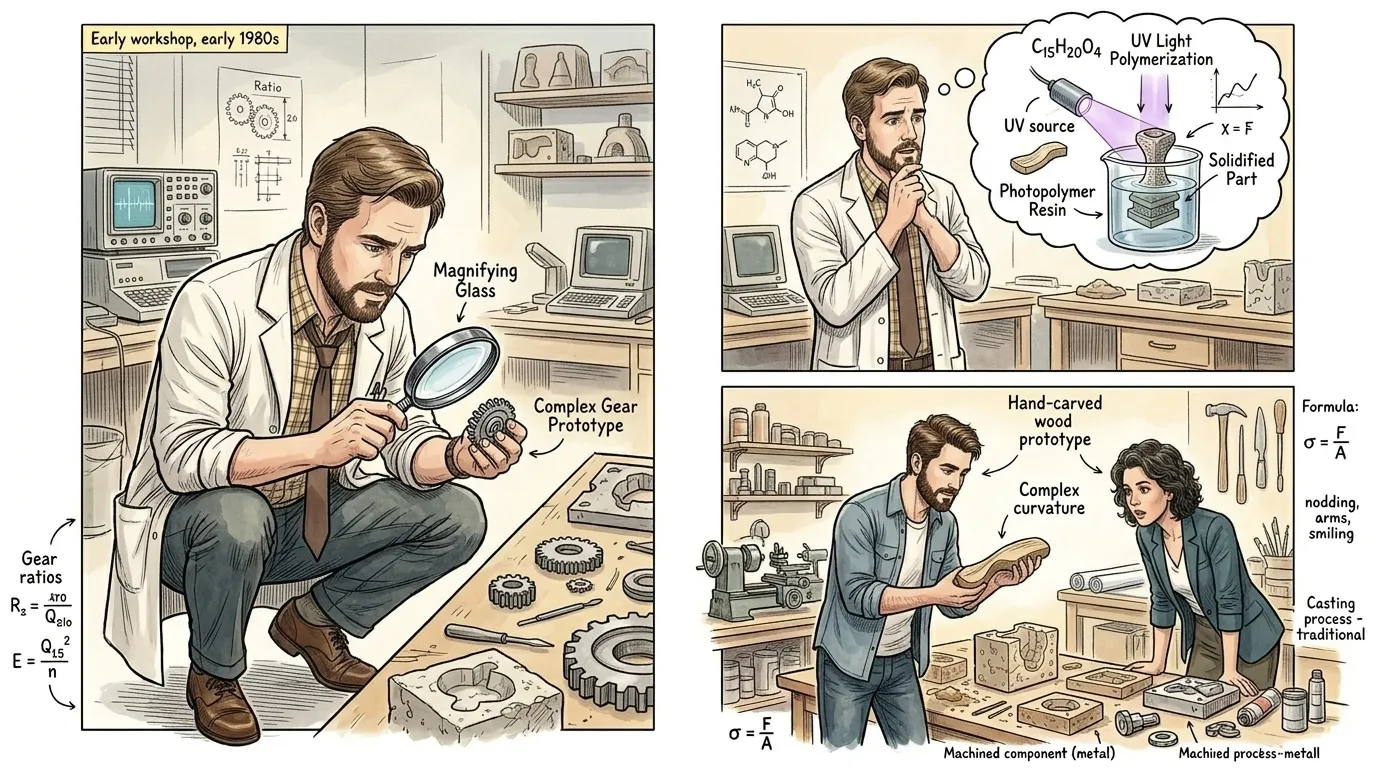
Charles Hull, an engineer working for a company producing UV-curable coatings in the early 1980s, observed the slow and costly cycle of fabricating small custom parts. He envisioned a radical departure from traditional methods: instead of shaping existing materials, what if an object could be built from nothing, layer by infinitesimal layer, directly from a digital design? His insight centered on photopolymer resins, materials that solidify instantly when exposed to ultraviolet light. He pondered how precisely controlled UV light could be used to 'draw' a three-dimensional object out of a liquid bath.
Page 4
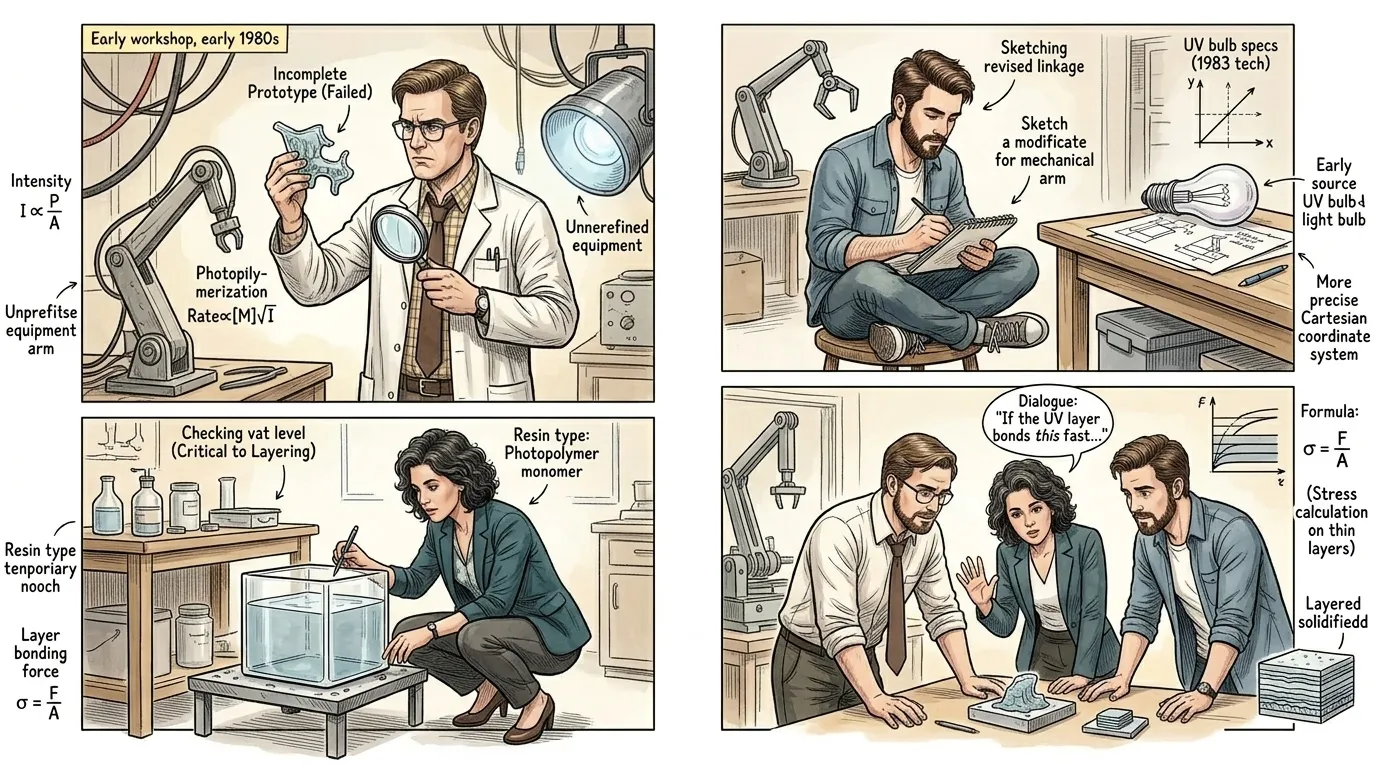
Transforming Hull's vision into a working machine presented formidable technical challenges. The primary obstacle was achieving the necessary precision: how could a UV light source accurately trace complex shapes on the surface of a liquid, and how could each solidified layer perfectly bond to the last? Early experiments involved cumbersome light sources and imprecise movement mechanisms, often resulting in distorted, incomplete, or structurally weak objects. The interaction between laser power, resin viscosity, and curing time required extensive empirical investigation.
Page 5
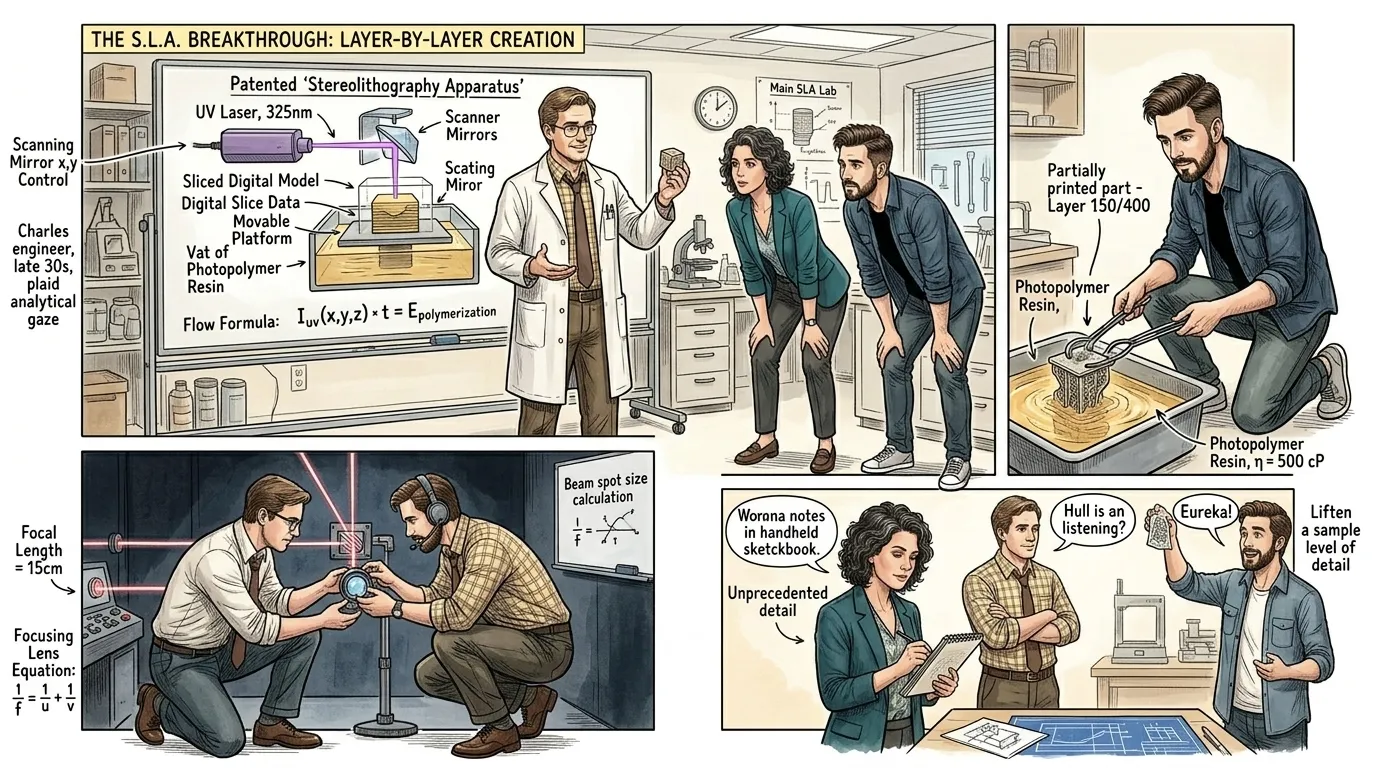
Hull's breakthrough involved the integration of several key technologies: a precisely controlled ultraviolet laser, a scanning mirror system to direct the laser beam, and a movable platform submerged within a vat of photopolymer resin. His patented 'Stereolithography Apparatus' (SLA) outlined a process where a digital 3D model would first be sliced into numerous thin cross-sections. The laser would then trace the first layer's geometry onto the resin's surface, solidifying it. The platform would then descend slightly, allowing the next layer to be cured and bonded, repeating until the object was complete. This conceptual leap offered unprecedented geometric freedom.
Page 6
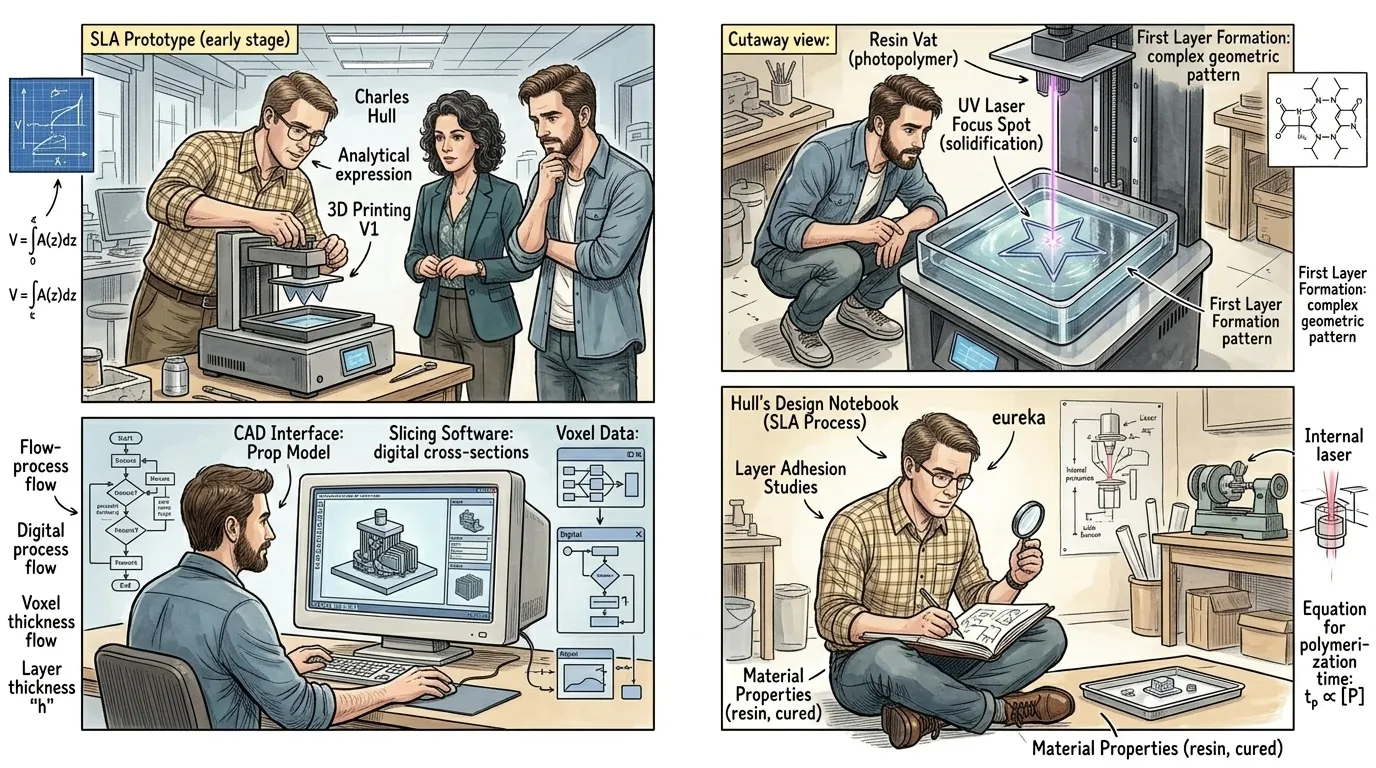
The operation of a Stereolithography (SLA) 3D printer begins with a digital 3D model, typically created using Computer-Aided Design (CAD) software. This digital model is virtually 'sliced' into hundreds or thousands of ultra-thin cross-sectional layers by specialized software. These digital slices then guide a powerful ultraviolet laser. The laser system, controlled by galvano mirrors, precisely traces each slice onto the surface of a liquid photopolymer resin contained within a vat, causing the resin to instantly solidify where the laser touches.
Page 7
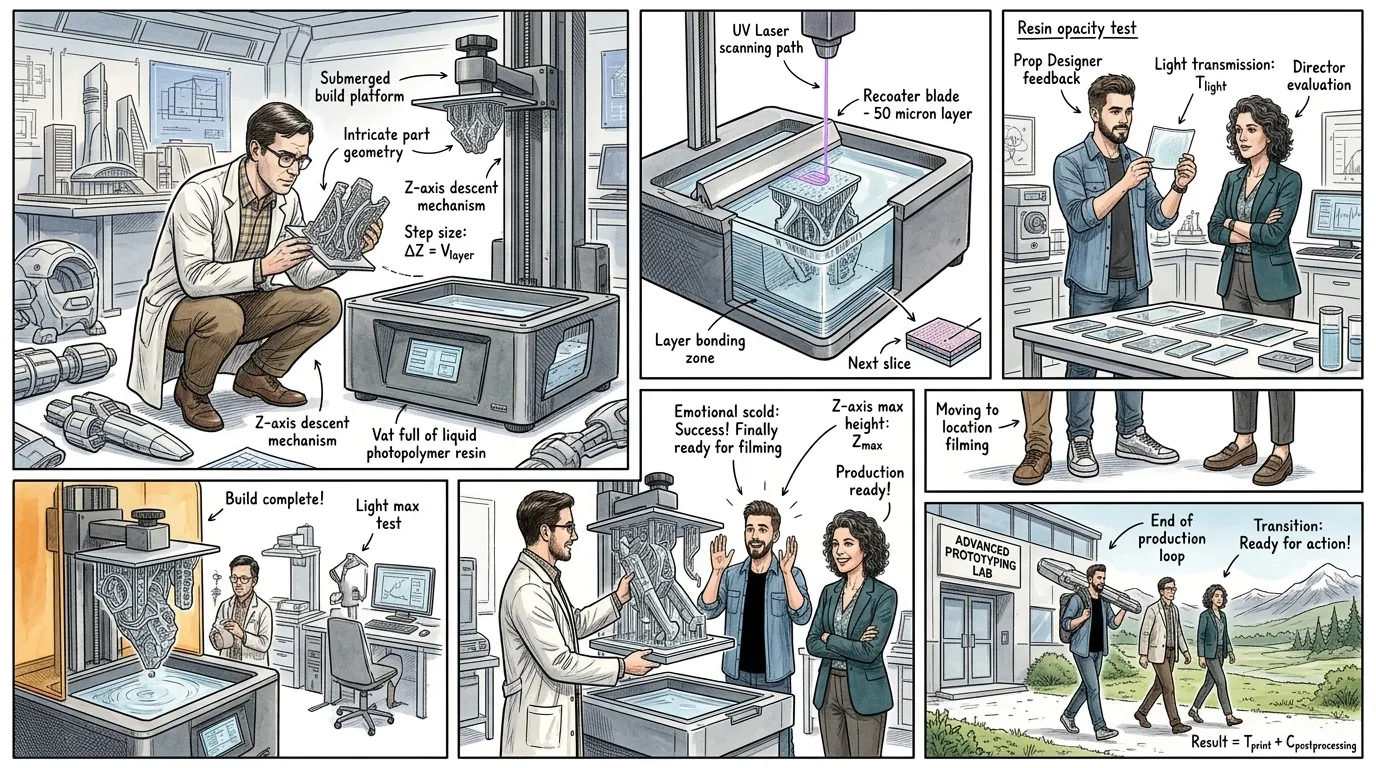
Once a layer is cured by the laser, the build platform precisely lowers itself by a fraction of a millimeter, allowing a fresh layer of liquid resin to flow over the newly solidified cross-section. A 'recoater blade' or 'wiper' often sweeps across the surface to ensure an even, thin film of resin. The laser then repeats its process, tracing the next digital slice, which bonds seamlessly to the previous layer. This additive process continues until the entire object is 'grown' from the resin bath, layer upon layer, accurately reproducing the complex geometry of the original digital design.
Page 8
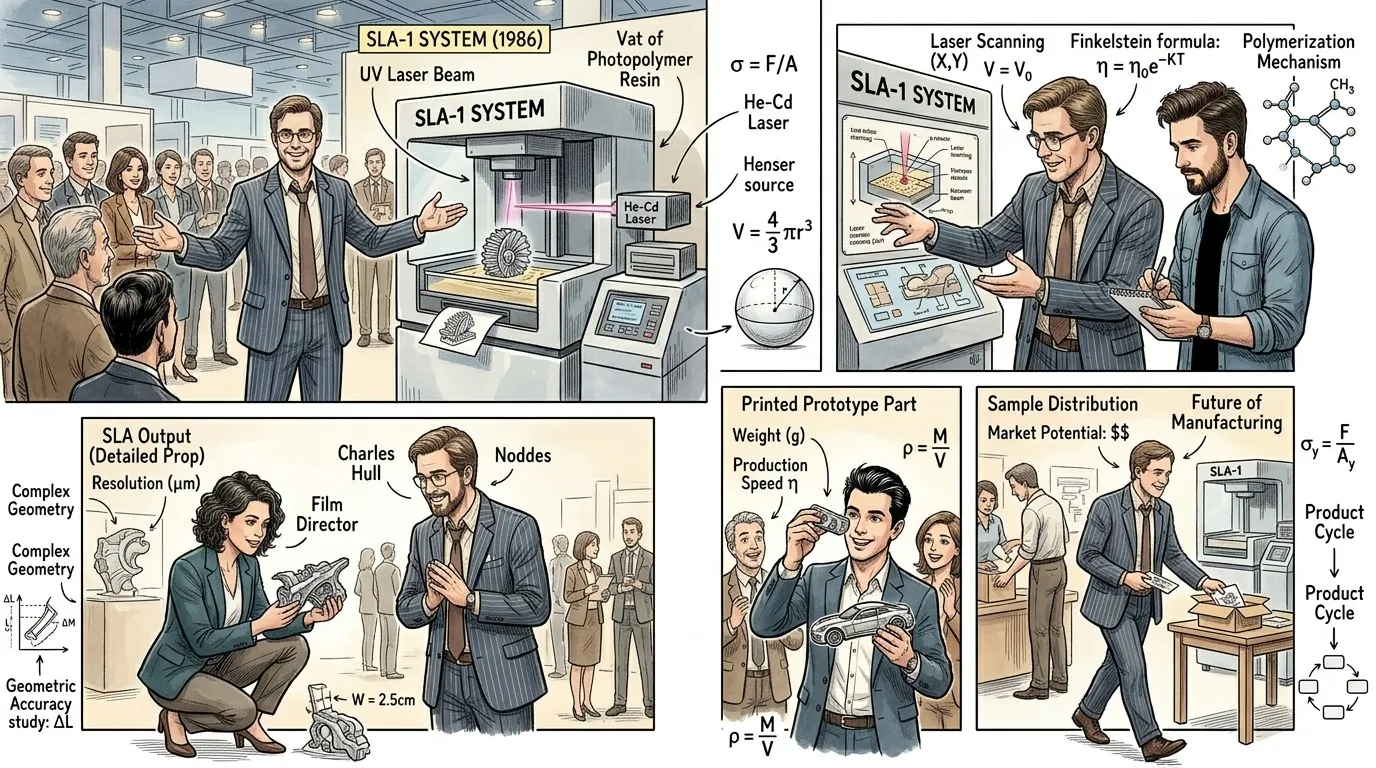
In 1986, Charles Hull co-founded 3D Systems, bringing his Stereolithography Apparatus to the market. The first commercial SLA-1 machine, though large and expensive, immediately captured the attention of industries desperate for faster prototyping solutions. Automotive, aerospace, and medical device manufacturers were among the earliest adopters, recognizing the immense potential for accelerating product development cycles and reducing the costs associated with traditional tooling and fabrication. The ability to quickly produce complex, highly detailed physical models directly from digital data was nothing short of revolutionary.
Page 9
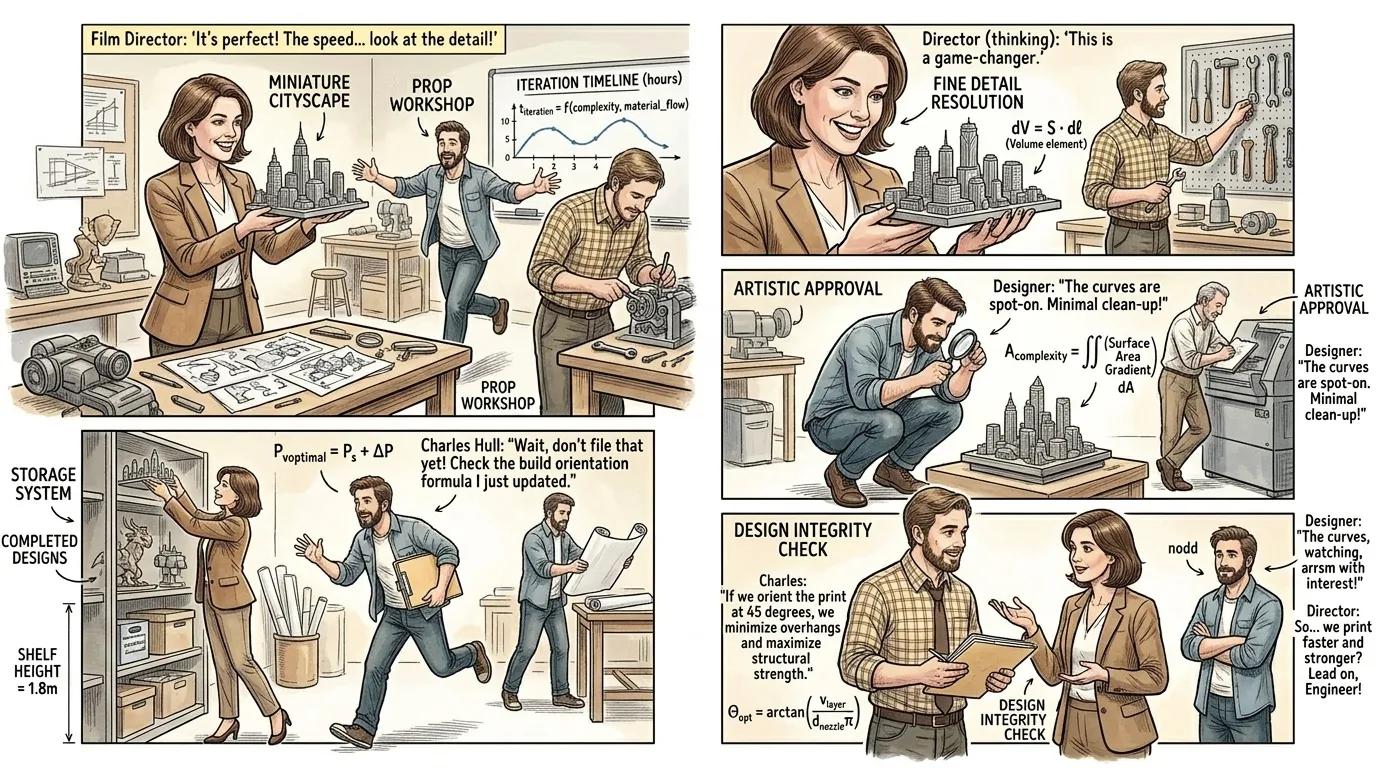
For the media industry, 3D printing offered an unprecedented acceleration in the prototyping and production pipeline. From film sets requiring complex, one-off props and creature models to animation studios developing character maquettes for stop-motion or CGI, the technology proved transformative. Designers could iterate on concepts in days rather than weeks, testing physical forms, scale, and ergonomics with ease. This rapid prototyping capability not only saved immense time and cost but also unlocked new levels of creative complexity previously impossible with manual methods, allowing for more intricate designs and a faster visual development process.
"A film director, a woman in her 40s with sharp features and tailored contemporary clothing, holds up an intricately 3D-printed miniature cityscape, saying to a prop designer, 'The speed of this iteration allows us to perfectly capture the director's vision.' The prop designer, a man in his 30s with an artistic haircut, responds, 'Indeed, as Leonardo da Vinci once reflected, 'Art is never finished, only abandoned,' but with this technology, we can iterate almost infinitely until it's truly perfect.'"
Page 10
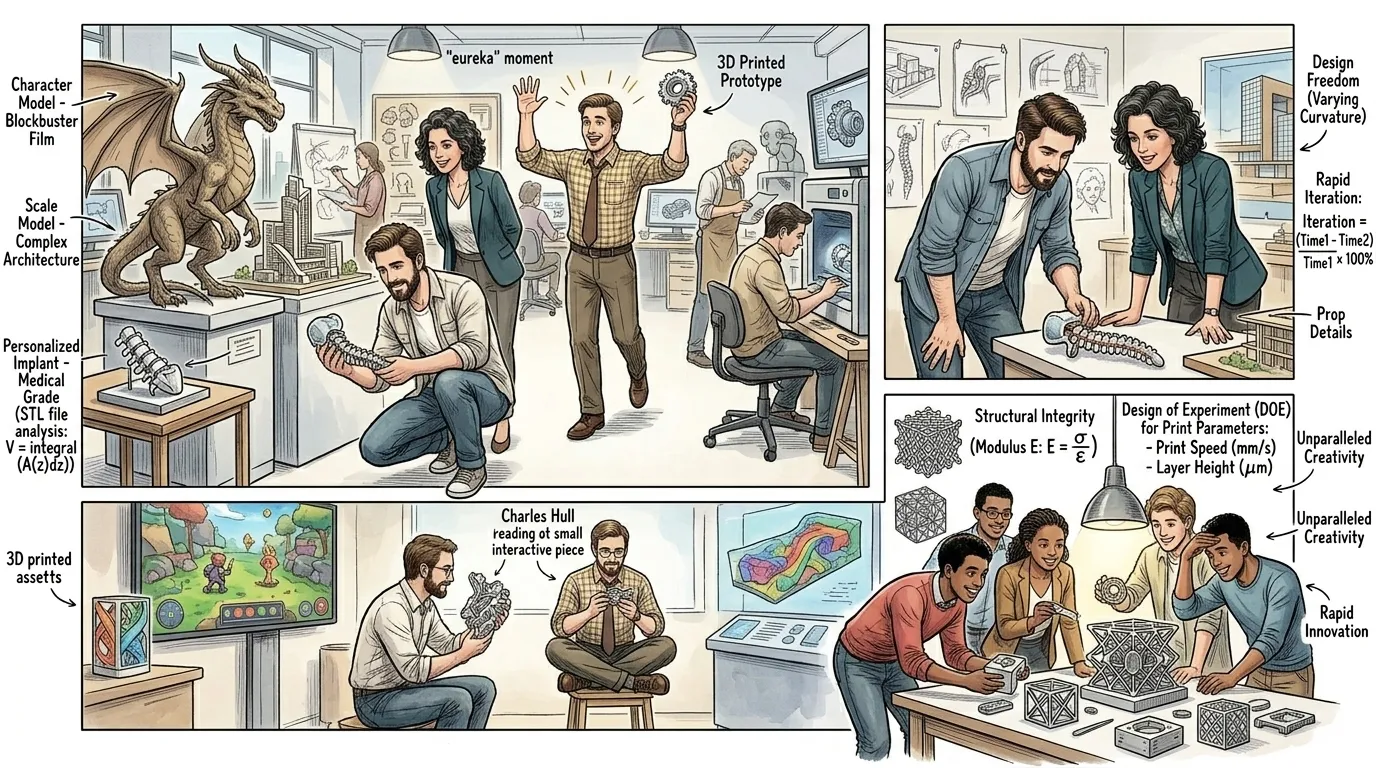
Today, 3D printing has evolved far beyond its origins, becoming an indispensable tool across a myriad of fields, fundamentally reshaping how we design, test, and produce. Its impact on media prototyping, in particular, has been profound, enabling artists and engineers to push the boundaries of visual storytelling. From creating lifelike character models and intricate set pieces for blockbuster films to revolutionizing the development of video game assets and interactive exhibits, additive manufacturing has democratized the creation of complex physical forms, fostering an era of unparalleled design freedom and rapid innovation.
About this story
- Location: Global
- Audience: general readers
Questions and answers
Questions and answers about 3D Printing for Media Prototyping
Read Wonder Inventions on your phone
Wonder Inventions is available on Android. Get Wonder Inventions on Google Play.