Aircraft Carrier
Aircraft Carrier — an illustrated inventions story, set in Global. 10 illustrated pages, free to read on Wonder Inventions.
Page 1
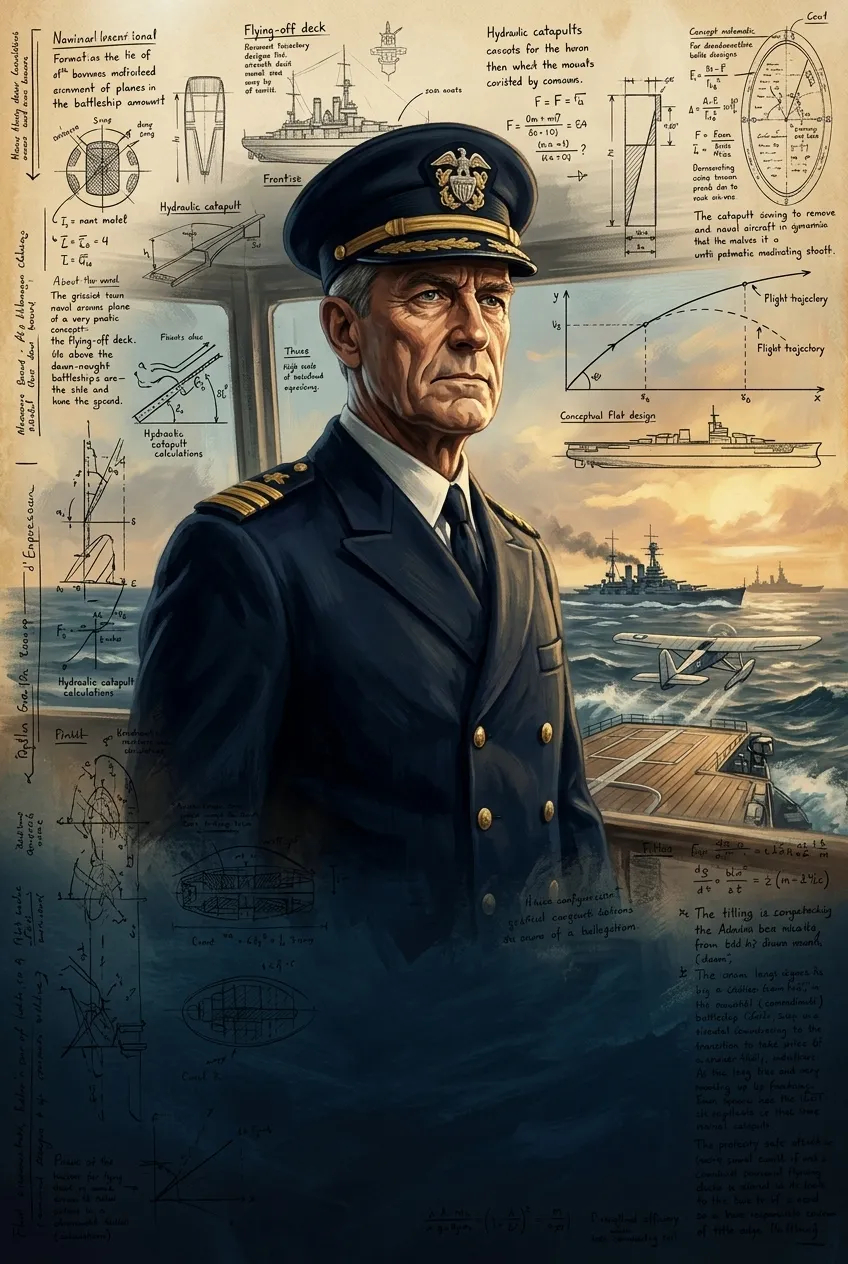
At the dawn of the 20th century, naval warfare was dominated by the battleship, a colossal force limited by its heavy artillery and the visual range of its crew. Aircraft, a nascent technology, offered an unprecedented advantage: eyes in the sky. Yet, these early flying machines were tethered to land, their limited range and fragility making oceanic reconnaissance and attack a dangerous dream. The vastness of the world's oceans rendered the nascent power of air superiority largely irrelevant in deep-sea engagements, leaving naval fleets vulnerable and strategically blind beyond the horizon.
"A grizzled Admiral, William S. Benson, observes a distant horizon from his battleship's bridge, stating, 'Gentlemen, our battleships are mighty, but they are blind beyond ten miles. We need to extend our reach, to see over the horizon, to truly command the seas.'"
Page 2
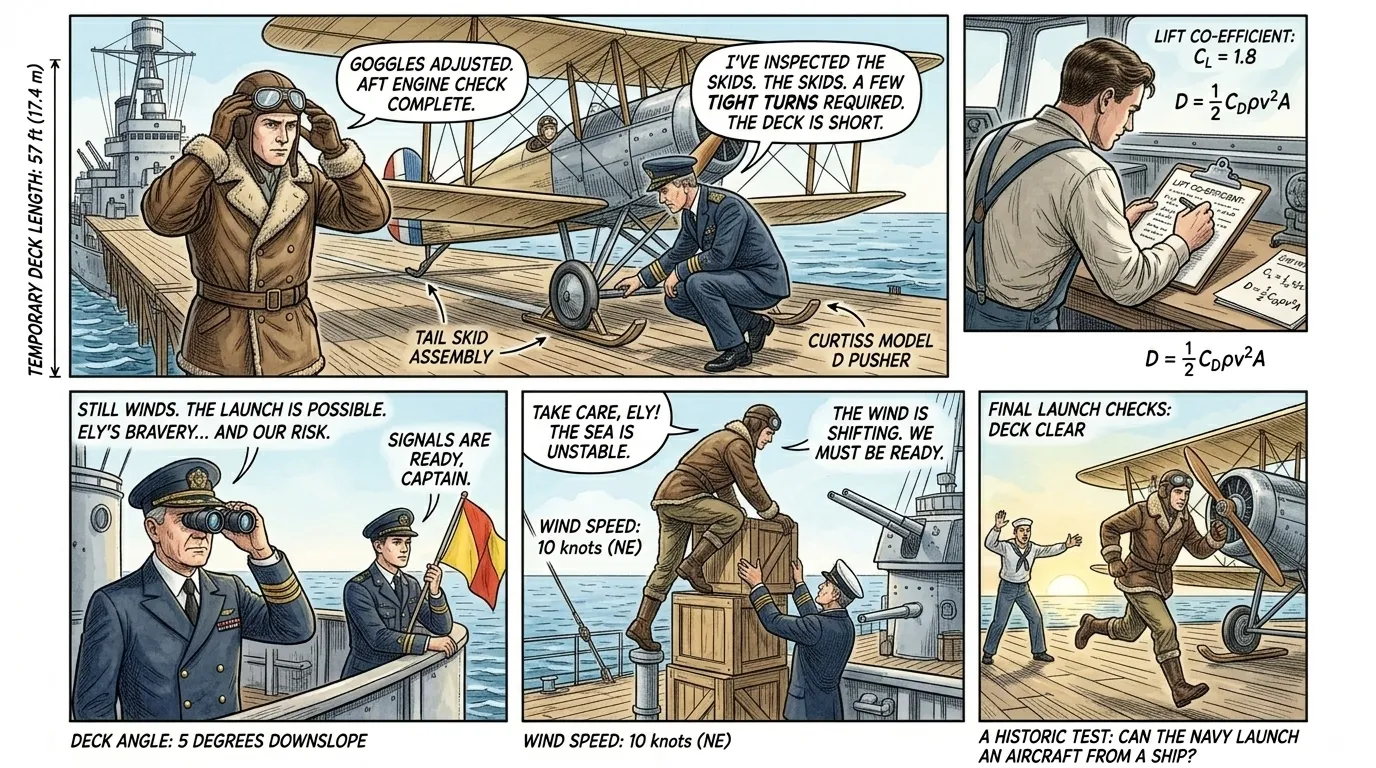
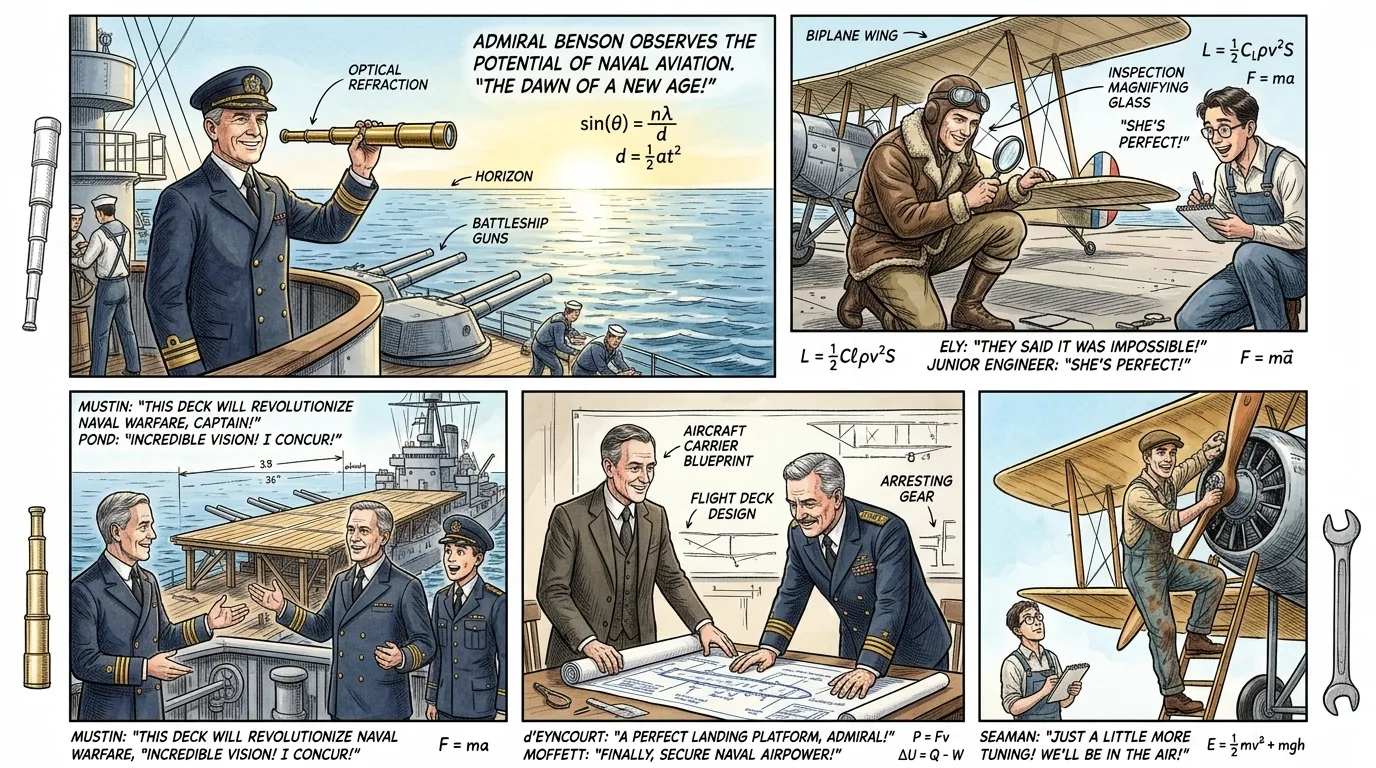
The urgent need for aerial reconnaissance drove pioneering minds to radical experiments. The initial challenge was simply to get an aircraft off a ship's deck. In 1910, the U.S. Navy cruiser USS Birmingham was hastily fitted with a temporary wooden ramp. Daredevil civilian pilot Eugene Burton Ely volunteered for the audacious task. His takeoff, though brief and ending in a splash, proved that aircraft could launch from a vessel, igniting the imagination of naval strategists. This precarious beginning laid the groundwork for future advancements.
"A young, determined Eugene Burton Ely, dressed in early flight gear, adjusts his goggles while a naval engineer, Commander Henry C. Mustin, inspects his aircraft. Mustin states, 'Mr. Ely, this crude platform is all we have, but your courage today could redefine naval warfare.' Ely replies, 'Commander, the risks are clear, but the potential is too great to ignore. We must try.'"
Page 3
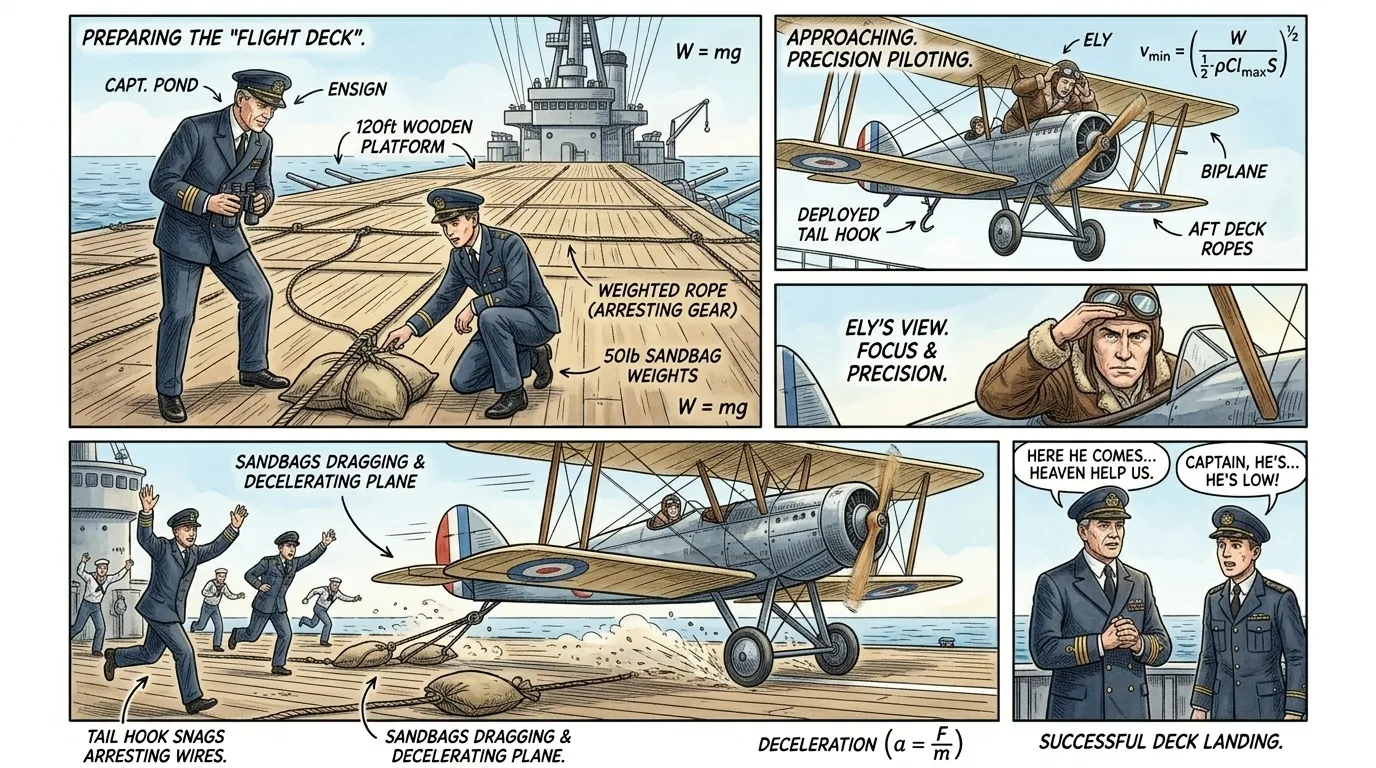
Launching was one challenge; landing was another entirely, fraught with even greater peril. A year after his historic takeoff, Eugene Ely faced the ultimate test: landing on a ship. A 120-foot wooden platform was constructed on the aft deck of the armored cruiser USS Pennsylvania. To slow his aircraft, a series of ropes, weighted by sandbags, were stretched across the deck, designed to be caught by hooks attached to the plane's landing gear. This rudimentary 'arrestor gear' was a desperate attempt to overcome the inherent dangers of a moving, pitching deck, an essential step in proving the feasibility of sustained shipboard aviation.
"Captain Charles F. Pond, a senior naval officer with a grave expression, watches from a safe distance as Ely's biplane approaches. Pond mutters, 'Man cannot discover new oceans unless he has the courage to lose sight of the shore, as Andre Gide once wrote. This flight, gentlemen, is precisely that moment for naval aviation.' A younger Ensign beside him nods, wide-eyed, 'Indeed, sir. Every pioneer takes such risks.'"
Page 4
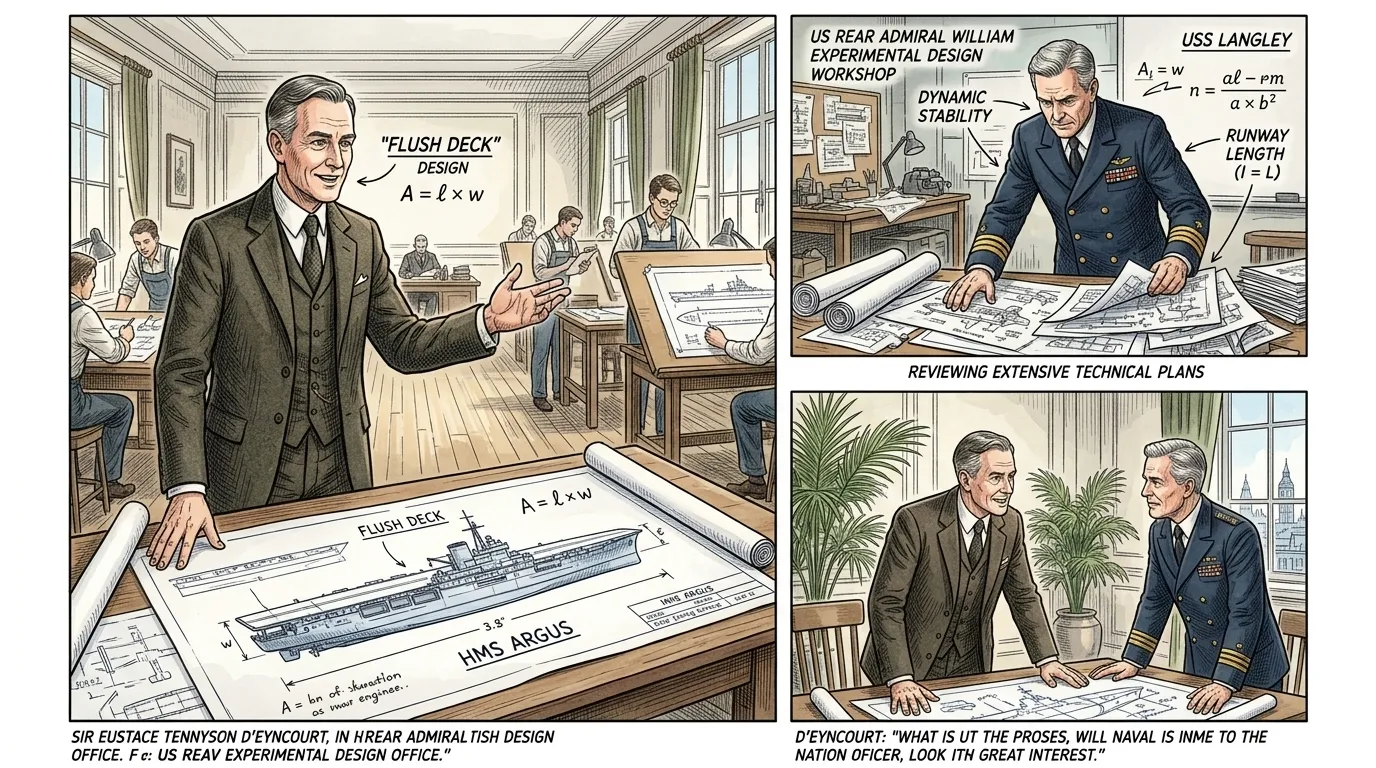
These early experiments, though crude, sparked a revolution. The realization that aircraft could both launch and land at sea spurred nations to develop purpose-built vessels. Britain's HMS Argus, commissioned in 1918, was the first carrier with a full-length, flush flight deck, allowing aircraft to operate without obstructions. This design philosophy, soon adopted globally, radically transformed ship layout. In the U.S., the collier USS Jupiter was converted into the USS Langley in 1922, becoming America's first aircraft carrier, a floating airfield that marked a new era in naval strategy and power projection.
"Naval architect, Sir Eustace Tennyson d'Eyncourt, stands before a large blueprint of HMS Argus. He declares, 'The flush-deck design of Argus eliminates the perilous obstacles of previous vessels. This is no longer a ship carrying aircraft; it is a ship for aircraft.' Across the room, US Rear Admiral William A. Moffett reviews plans for USS Langley, adding, 'And with Langley, we shall prove the efficacy of this new naval arm. The future of naval power lies not just on the surface, but above it.'"
Page 5
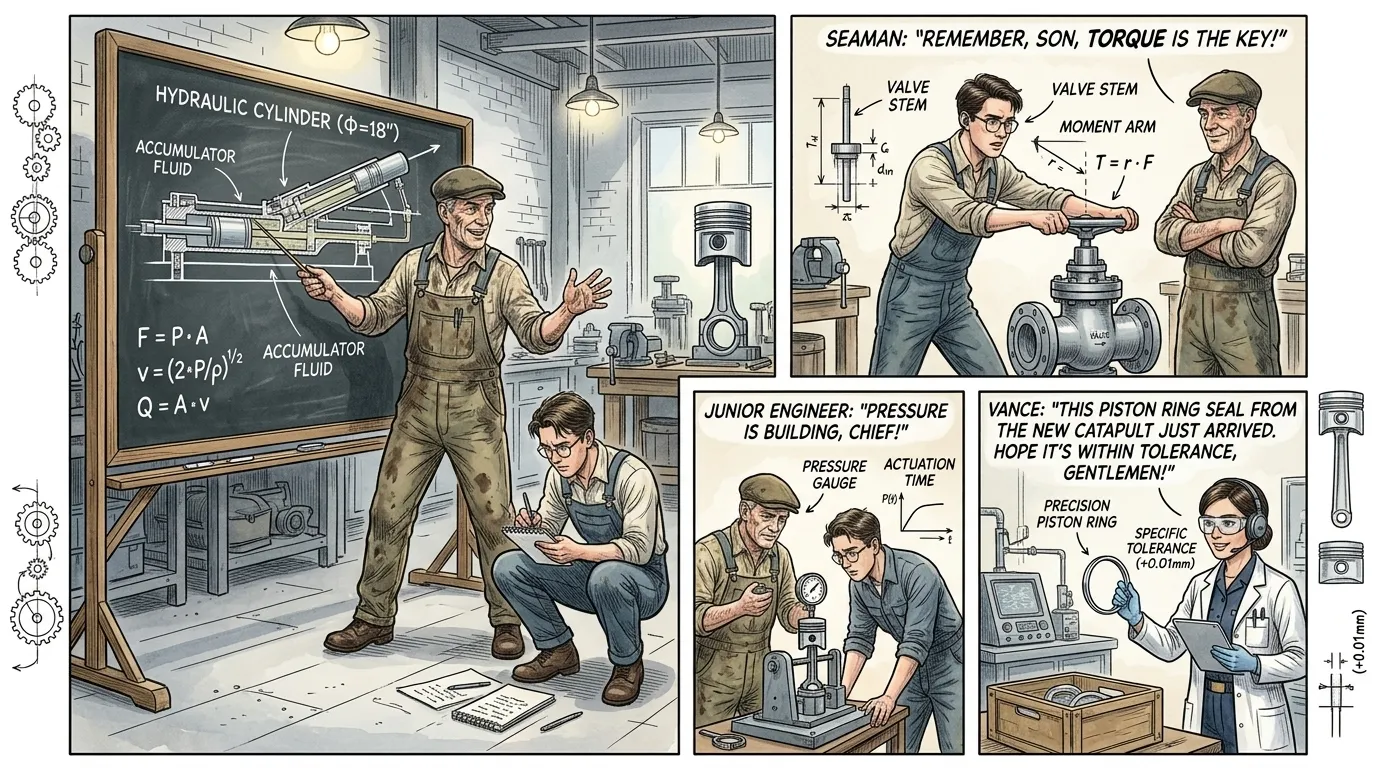
As aircraft grew heavier and faster, relying solely on engine power and a short deck for takeoff became increasingly inefficient and dangerous. The solution was the catapult – a device designed to rapidly accelerate an aircraft to flying speed. Early catapults, initially powered by compressed air or hydraulics, engaged the aircraft's undercarriage via a shuttle, propelling it down a track. This innovation transformed carrier operations, enabling the launch of larger, more heavily armed aircraft, expanding the carrier's offensive capabilities far beyond initial expectations. It was a critical step in turning a 'flying deck' into a true aerial projection platform.
"Chief Engineer Robert C. Seaman, in grease-stained overalls, gestures towards a cutaway diagram of a hydraulic catapult on a large industrial chalkboard. He explains, 'The critical challenge is immense, controlling the sudden force. We compress the fluid here,' pointing, 'forcing this piston to accelerate the shuttle, launching the aircraft with sufficient velocity, even against a dead wind.' A junior engineer scribbles notes, commenting, 'It's a ballet of brute force and precision, sir.'"
Page 6
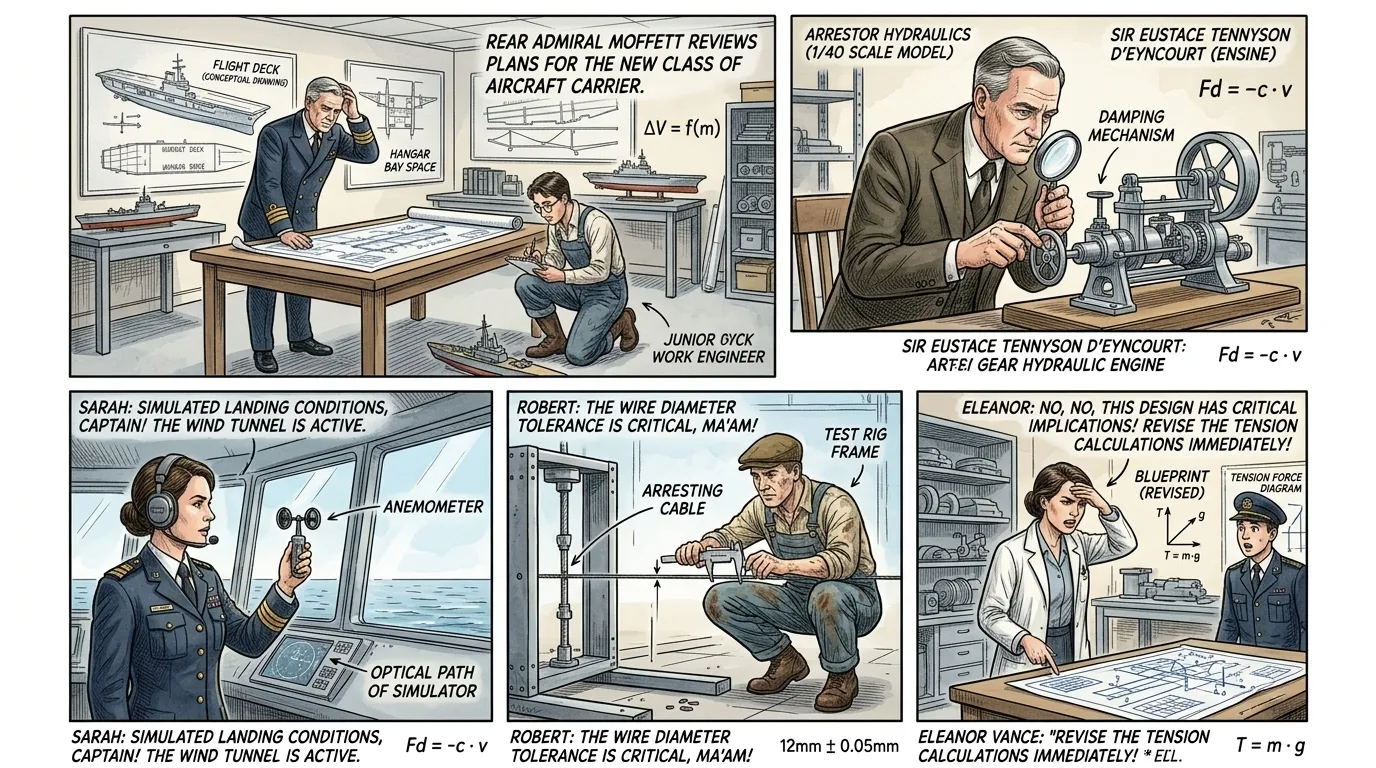
With powerful catapults solving the takeoff problem, the perilous landing remained. The rudimentary rope and sandbag system was insufficient for faster, heavier aircraft. The definitive solution came in the form of hydraulic arrestor gear. This intricate mechanism utilized robust steel wires stretched across the deck, designed to be snagged by an aircraft's tailhook. The key innovation lay beneath the deck: powerful hydraulic cylinders connected to the wires. As a wire was engaged, the cylinders absorbed the aircraft's kinetic energy through fluid resistance, smoothly and rapidly decelerating it from flight speed to a complete stop within a short distance. This complex interaction between ship and plane demanded remarkable engineering precision.
"A seasoned Flight Operations Officer, Captain George W. Steele, points to a clear acrylic model of a carrier deck showing the arrestor wires. He explains, 'The precision required is staggering. The pilot must snag one of these four wires, and our hydraulic system must absorb tons of kinetic energy in mere seconds without snapping the aircraft apart.' An engineer replies, 'Each wire's tension must be calibrated perfectly, Captain. It's a delicate balance of physics.'"
Page 7
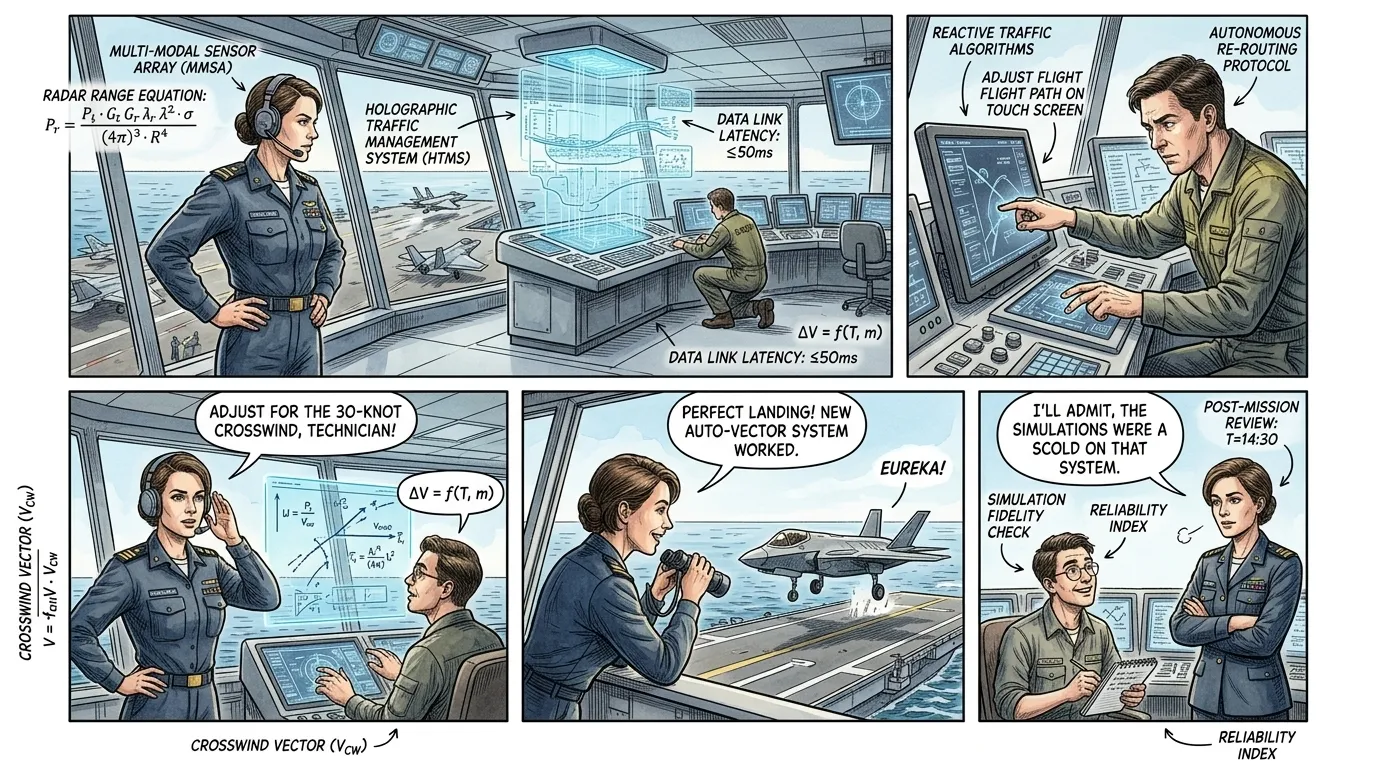
The modern aircraft carrier's flight deck is a marvel of integrated engineering, a high-octane ecosystem designed for relentless efficiency. It combines multiple steam catapults for simultaneous launches, advanced arrestor gear for rapid recovery, and massive aircraft elevators that ferry planes between the flight deck and the cavernous hangar below. The 'island' superstructure, now a sophisticated nerve center, houses flight control, air traffic management, and navigation systems. This entire system operates under immense pressure, coordinating complex cycles of launch, recovery, maintenance, and refueling, often around the clock, showcasing a pinnacle of human ingenuity and logistical mastery. Every movement is precisely timed, every resource meticulously managed.
"Commander Sarah Vance, the modern Carrier's Air Boss, stands within the 'island' control room, observing the flight deck through large windows. She communicates into a headset, 'Launch sequence initiated, Catapult 3. Clear the deck, prepare for recovery on Angle.' A technician monitoring a holographic display responds, 'Elevator 2 raising an F/A-18, Commander. Hangar deck reports readiness.' Vance nods, 'Excellent. The efficiency of this system is our strategic advantage.'"
Page 8
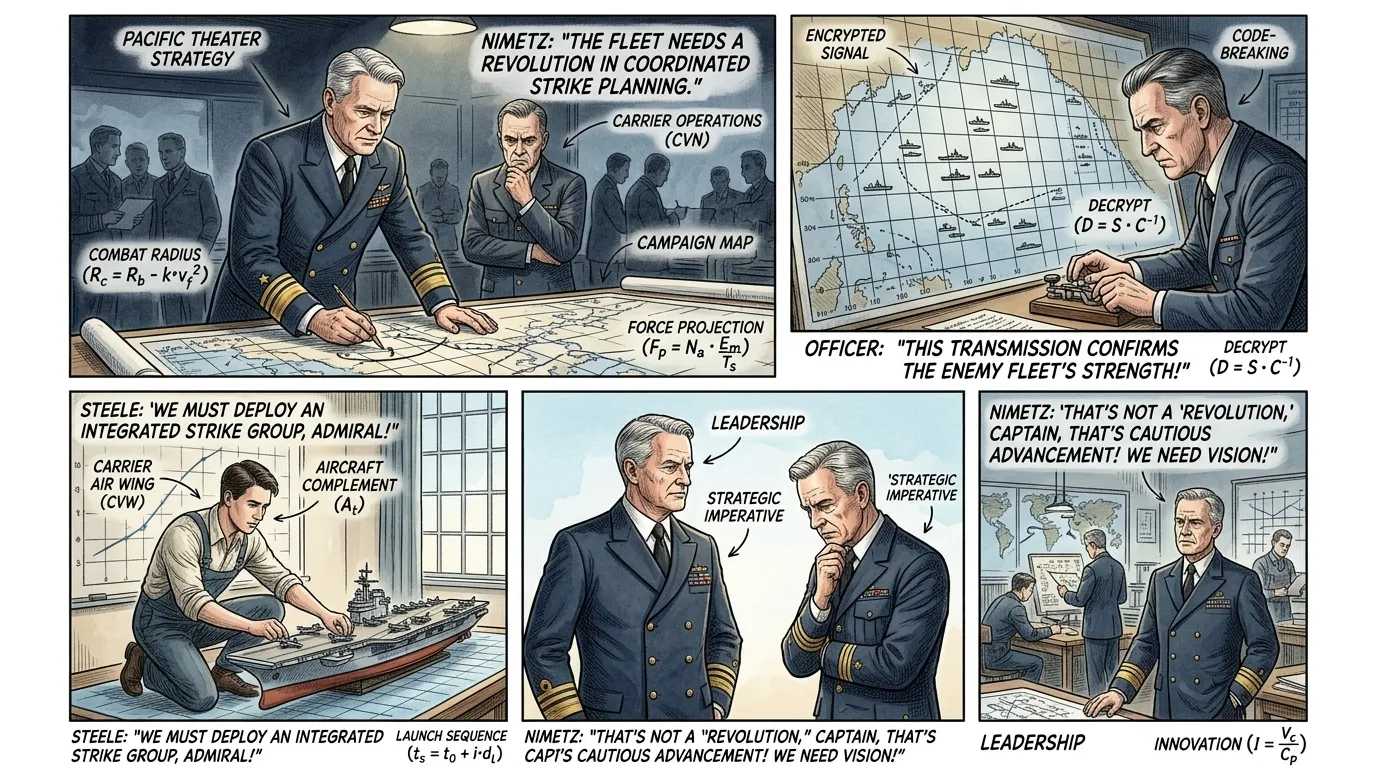
World War II provided the ultimate crucible for the aircraft carrier, irrevocably changing naval warfare. Battleships, once the queens of the sea, were relegated to supporting roles as carrier task forces became the decisive instruments of power. Engagements like Midway and Coral Sea were fought entirely by aircraft launched from carriers, with the opposing fleets often never seeing each other. The ability to project air power hundreds of miles from the ship proved strategically invaluable, enabling offensive operations across vast oceanic distances and fundamentally altering the calculus of global conflict. The carrier emerged as the preeminent capital ship, ushering in a new age of naval dominance.
"Admiral Chester W. Nimitz stands over a large campaign map in a dimly lit war room, his expression resolute. He states to his staff, 'The art of war, as Sun Tzu wrote, is of vital importance to the State. It is our carrier fleet, gentlemen, that gives us mastery of the Pacific, transforming conflict from mere slugging matches to strategic maneuver.' A grim-faced intelligence officer beside him replies, 'Indeed, Admiral. Our air power is proving indispensable.'"
Page 9
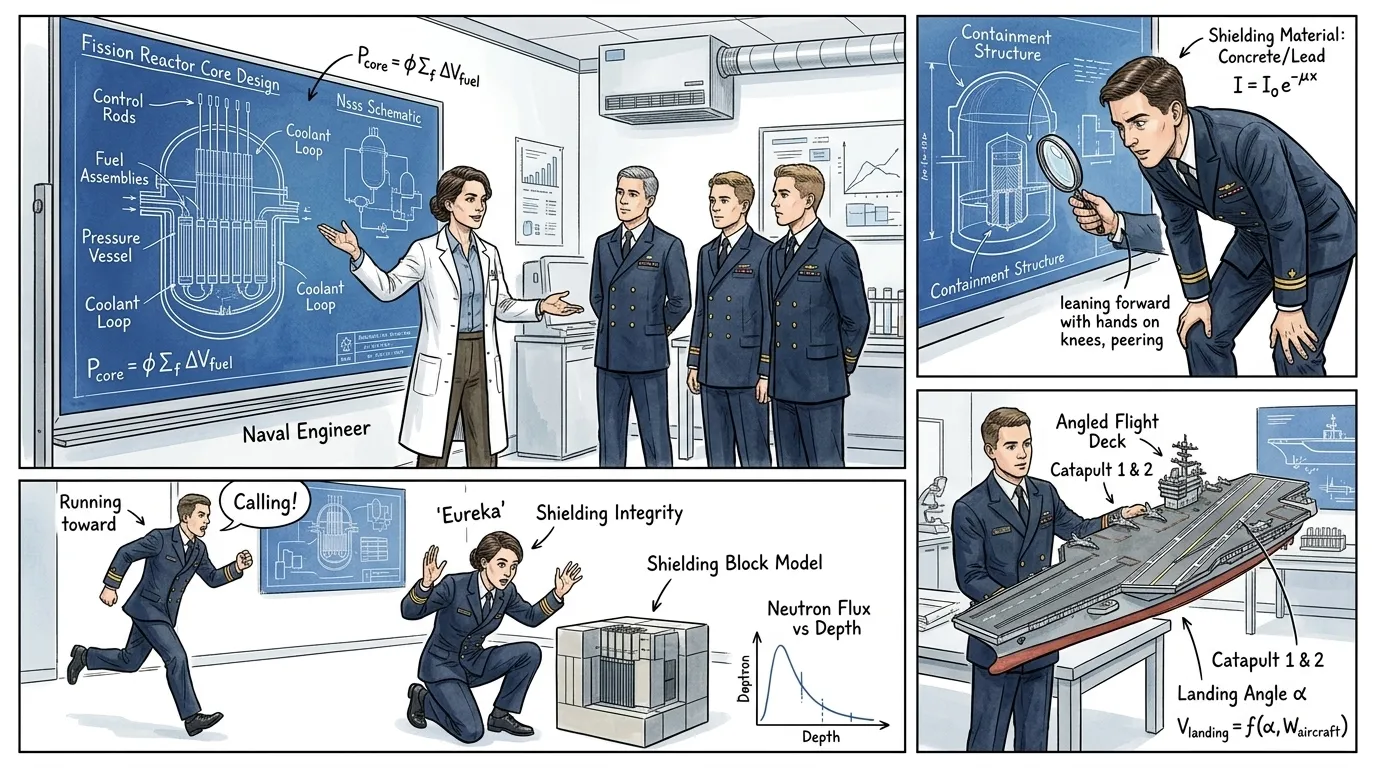
The post-war era saw continuous evolution, driven by technological advances and the Cold War's strategic demands. The introduction of the angled flight deck in the 1950s was a critical safety innovation, allowing aircraft to launch and recover simultaneously without collision risks. Alongside this, the advent of nuclear propulsion, pioneered by the USS Enterprise in 1961, granted carriers virtually unlimited range and endurance, freeing them from constant refueling. These developments transformed the aircraft carrier into the 'supercarrier'—a self-contained, mobile airbase capable of sustaining global operations for extended periods, a testament to relentless engineering and strategic foresight. Each modification amplified its strategic utility.
"An experienced naval engineer, Dr. Eleanor Vance, in a lab coat, gestures toward a complex blueprint displaying the schematics of a nuclear reactor. She explains to a group of younger naval officers, 'Nuclear propulsion isn't just about speed; it's about endurance. The USS Enterprise redefined self-sufficiency, giving us truly global reach without the logistical chains of oil.' Another officer points to a model of an angled flight deck, adding, 'And the angled deck revolutionized safety, allowing simultaneous operations. These innovations combined make the modern carrier an unparalleled force.'"
Page 10
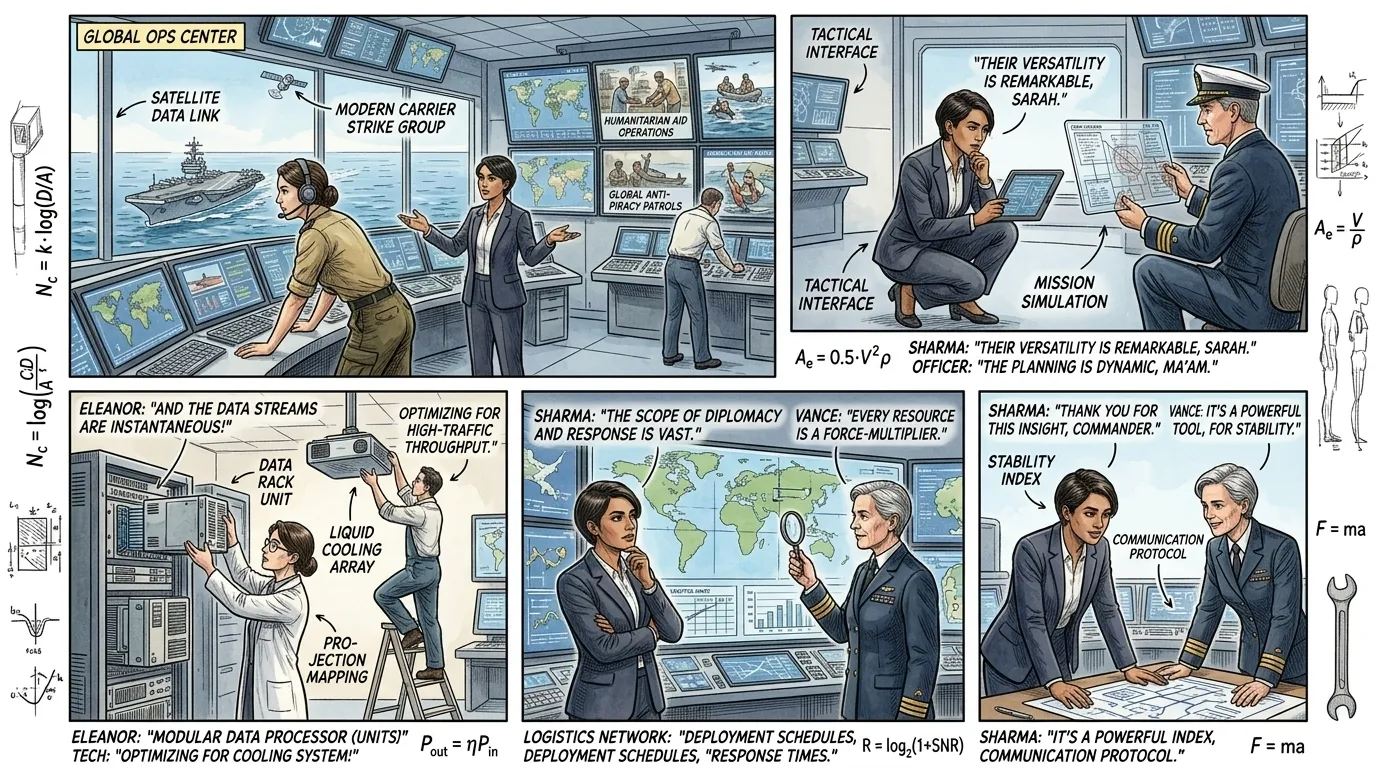
Today, the aircraft carrier remains a cornerstone of global power projection and humanitarian response. Its influence extends far beyond mere warfare. As a mobile airbase, it provides unparalleled flexibility for rapid deployment in crisis zones, offering vital support during natural disasters, conducting anti-piracy operations to secure vital shipping lanes, and facilitating international diplomacy through port visits. It serves as a floating platform for advanced technological integration, from stealth fighters to future drone fleets, and an indispensable training ground for the next generation of naval aviators. The aircraft carrier, born from a desperate need for aerial reach, has evolved into a versatile instrument of national power, embodying complex engineering and strategic utility on a global scale.
"An elderly but sharp diplomat, Ambassador Anya Sharma, observes a multi-screen display in a modern command center. She remarks, 'The carrier isn't just a warship; it's a mobile declaration of presence, a silent negotiator, and a swift hand of aid. Its global deployment, as we see here,' she gestures to the screens, 'is a testament to its enduring strategic versatility, a true wonder of modern engineering.'"
About this story
- Location: Global
- Audience: general readers
Questions and answers
Read Wonder Inventions on your phone
Wonder Inventions is available on Android. Get Wonder Inventions on Google Play.