Computer Mouse
Computer Mouse — an illustrated inventions story, set in Global. 10 illustrated pages, free to read on Wonder Inventions.
Page 1
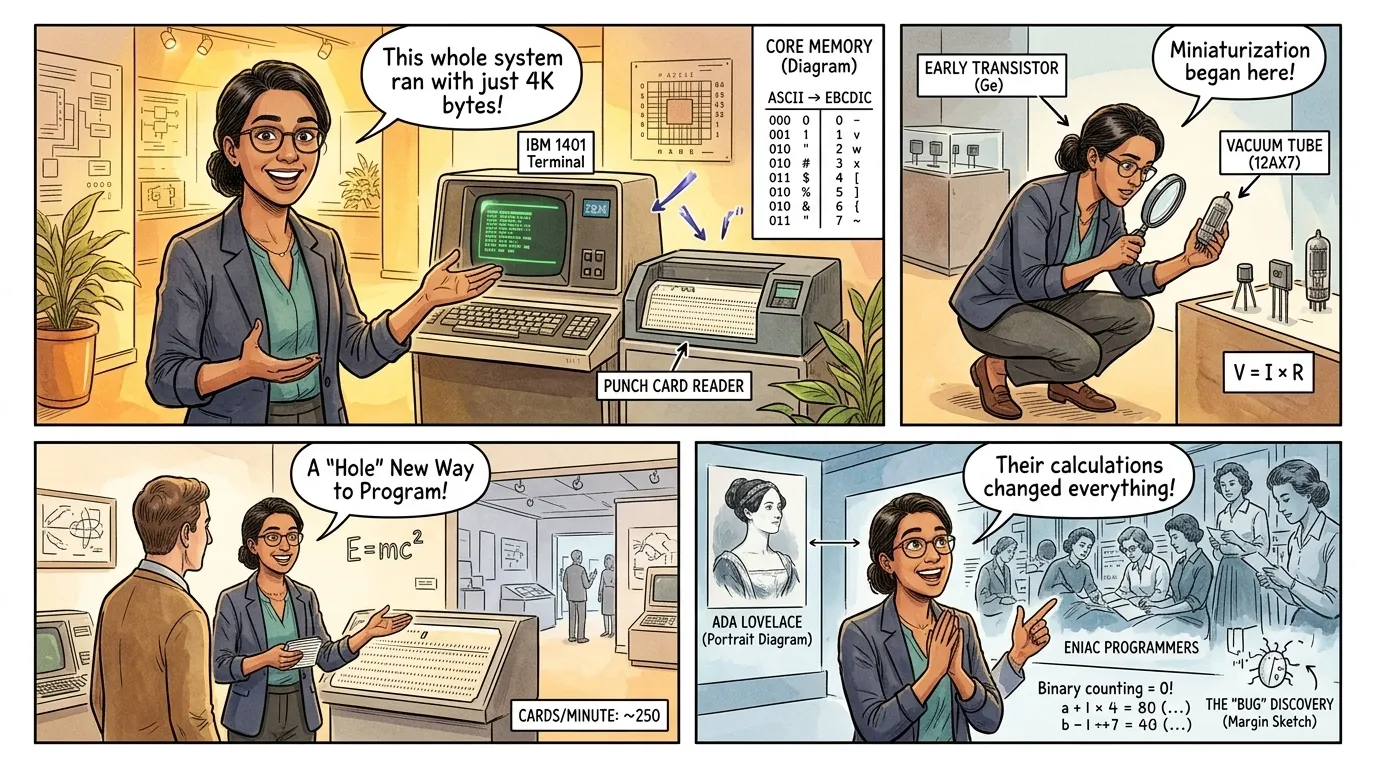
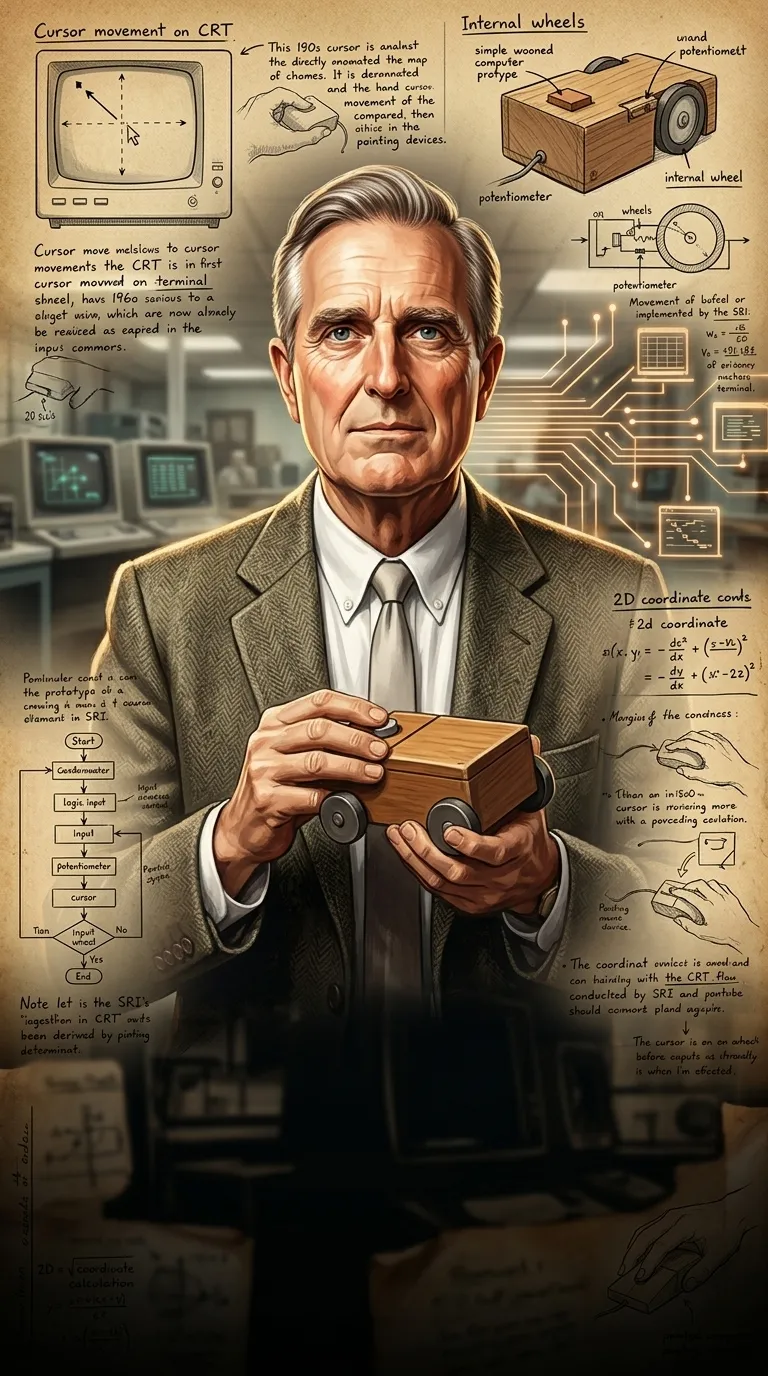
Before the advent of intuitive graphical interfaces, interacting with computers was a formidable task. Researchers envisioned a more natural way for humans to command these powerful machines. In 1964, a profound shift began with Douglas Engelbart's groundbreaking work.
"'Early computing demanded complex text commands and punch cards,' Dr. Anya Sharma explained, gesturing toward an archaic terminal. 'Users needed a direct, responsive way to point and select on screen. Engelbart sought to augment human intellect through better tools.'"
Page 2
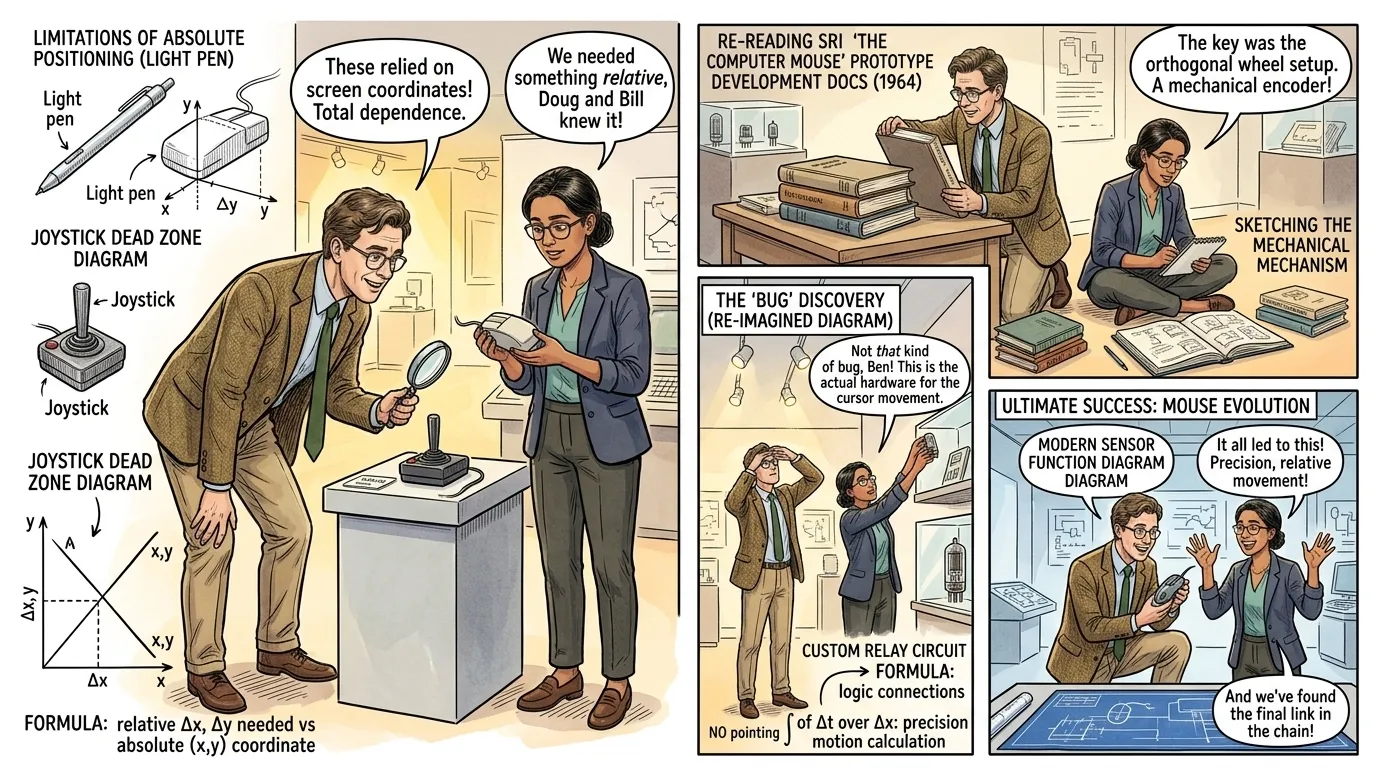
Navigating complex information on a screen required a device that could translate physical movement into digital action. Existing input methods, like joysticks or light pens, often felt imprecise or tethered to the screen itself, limiting user freedom. The conceptual hurdle was immense.
"'How do you precisely select an item on a screen without touching the screen directly?' Professor Ben Carter mused, examining a replica of an early light pen. 'The real challenge was to create a device that offered precise relative motion sensing, a truly intuitive spatial mapping.'"
Page 3
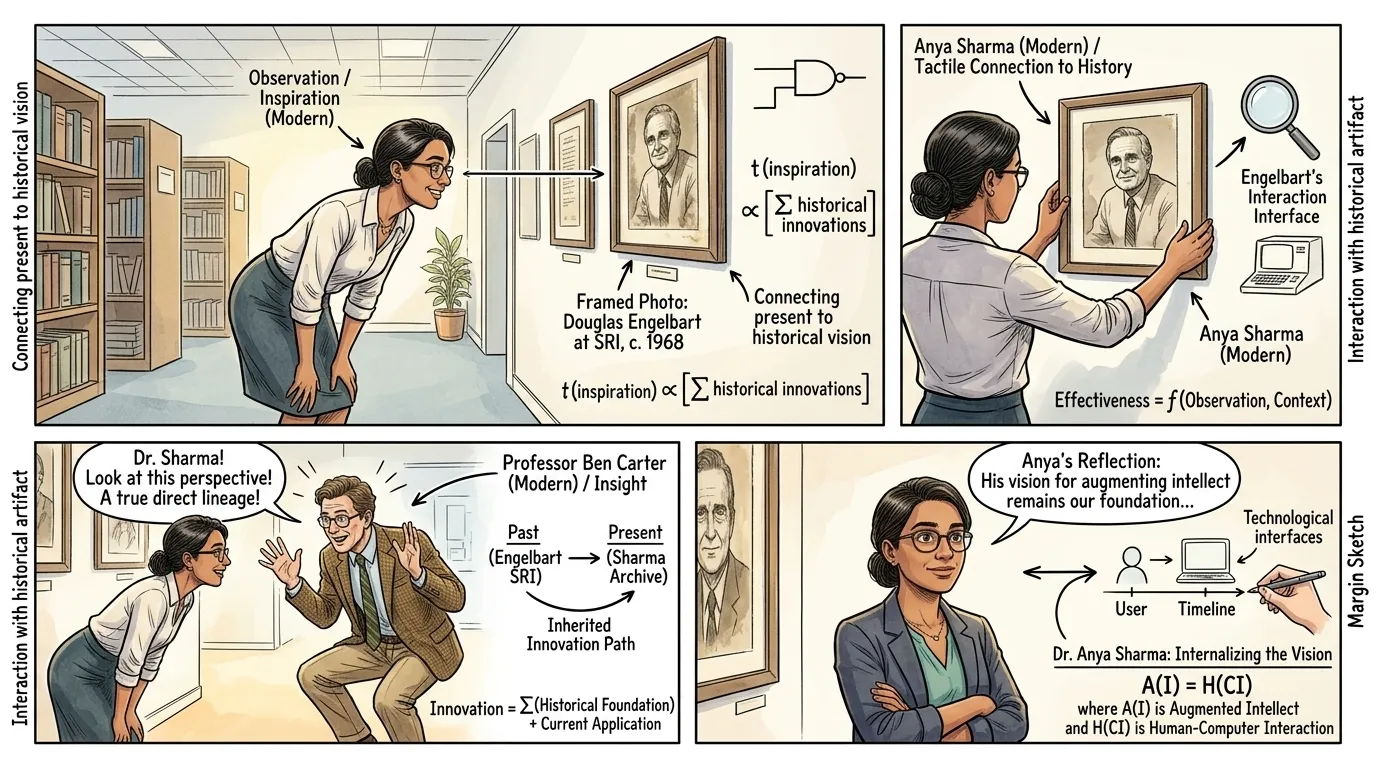
Douglas Engelbart, at the Stanford Research Institute (SRI), wasn't just inventing a device; he was reimagining human-computer interaction. His vision extended beyond simple pointing to augmenting human intellect through integrated systems. He sought tools that would enable new ways of thinking and working with information.
"'Engelbart foresaw a partnership between humans and machines,' Dr. Anya Sharma remarked, looking at an archived photograph of Engelbart. 'He wasn't content with just automating tasks. He asked: 'How can technology make us smarter? How can it extend our capabilities for complex problem-solving?'"
Page 4
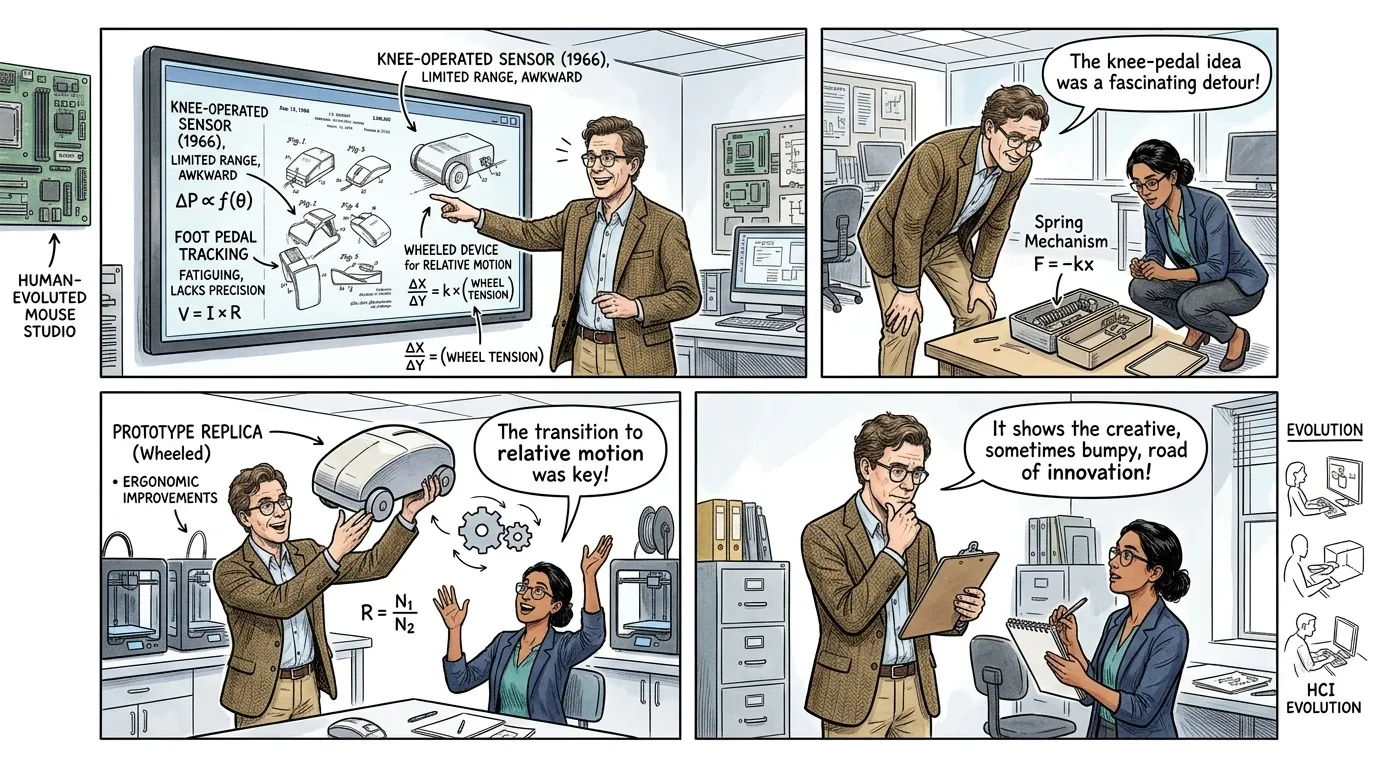
The concept of a 'mouse' emerged from Engelbart's team in the early 1960s, a natural extension of his work on display-based interaction. The initial ideas were rough, often sketched on paper, exploring various mechanisms for a handheld device that could control a cursor on screen. Early prototypes considered foot pedals and knee-operated devices.
"'Imagine the brainstorming sessions,' Professor Ben Carter chuckled, pointing to a scanned patent drawing. 'From dozens of ideas, the one with wheels moving along a surface gained traction. They needed something simple, robust, and intuitive for that crucial relative motion sensing.'"
Page 5
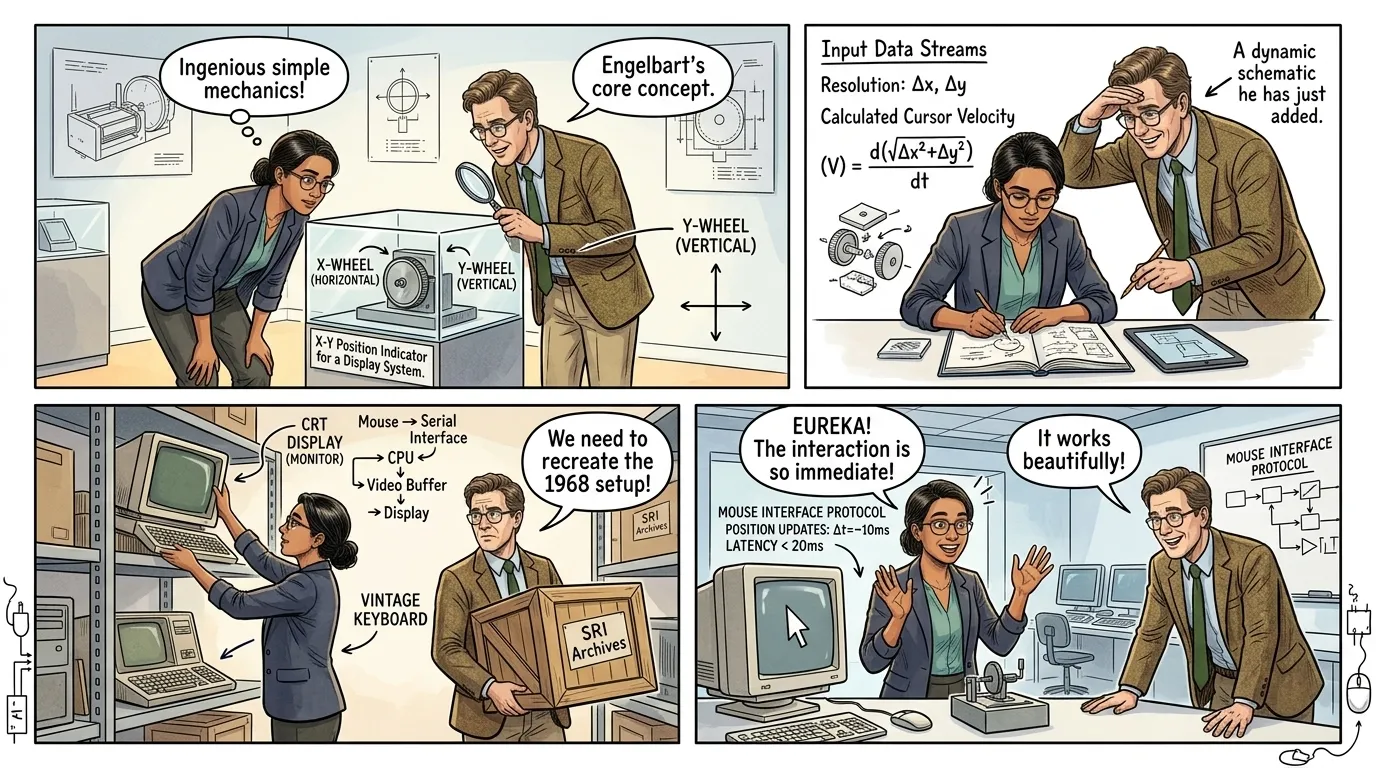
The first functional computer mouse, known as the 'X-Y Position Indicator for a Display System,' was built by Bill English under Engelbart's direction in 1964. It was a simple wooden block with two perpendicular wheels on its underside. Movement along the X-axis (left-right) rotated one wheel, while Y-axis (up-down) movement rotated the other.
"'This unassuming wooden box changed everything,' Dr. Anya Sharma stated, carefully holding a detailed replica of the original mouse. 'No internal electronics, just pure mechanical ingenuity. Bill English translated Engelbart's concept into a tangible, working device.'"
Page 6
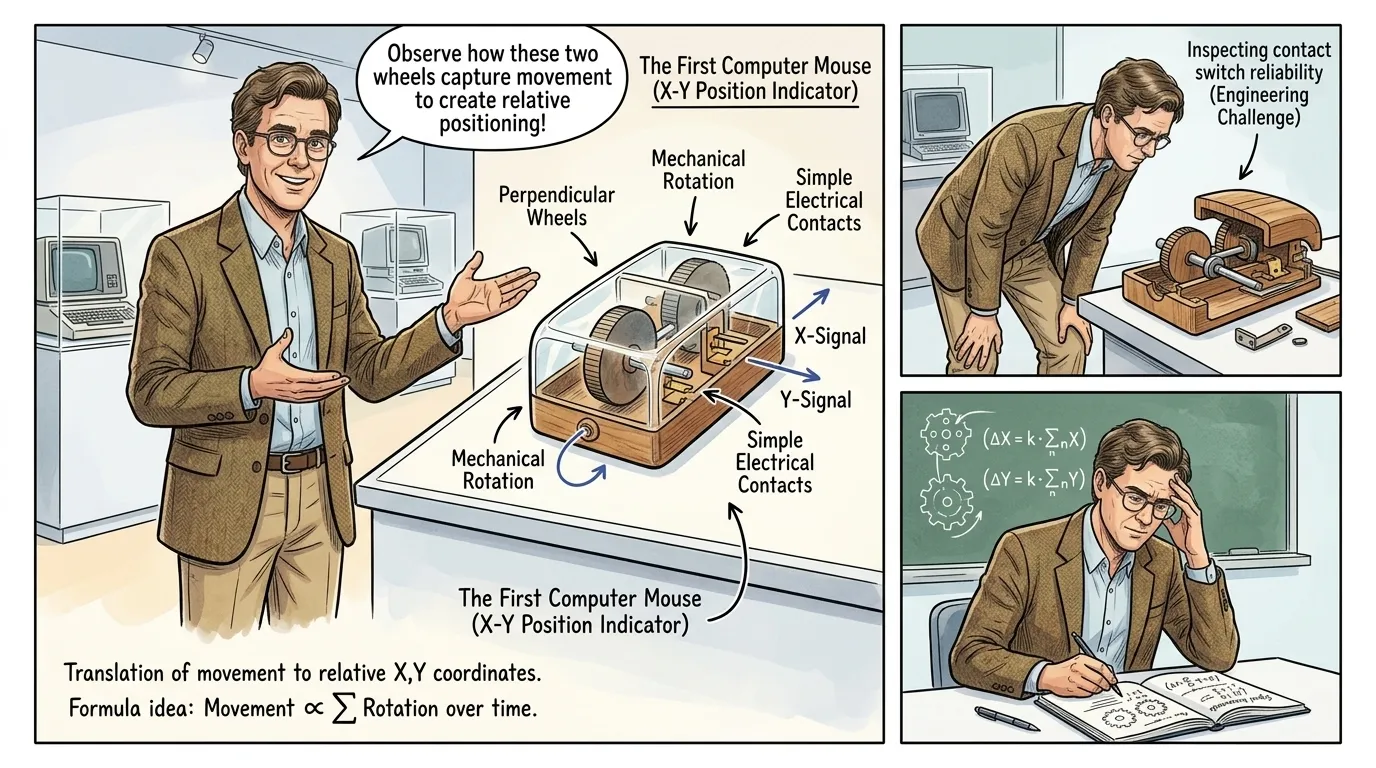
The brilliance of the first mouse lay in its straightforward mechanical translation of movement. As the wooden block was pushed across a surface, its two wheels rotated. Each wheel's rotation was detected by electrical contacts, generating signals that corresponded to horizontal (X) and vertical (Y) cursor movement on the display. This relative positioning was key.
"'It's elegantly simple,' Professor Ben Carter explained, gesturing to a cutaway model. 'One wheel registers side-to-side motion, the other registers up-and-down. These rotations are then converted into electrical pulses, telling the computer exactly where the user wants the cursor to go.'"
Page 7
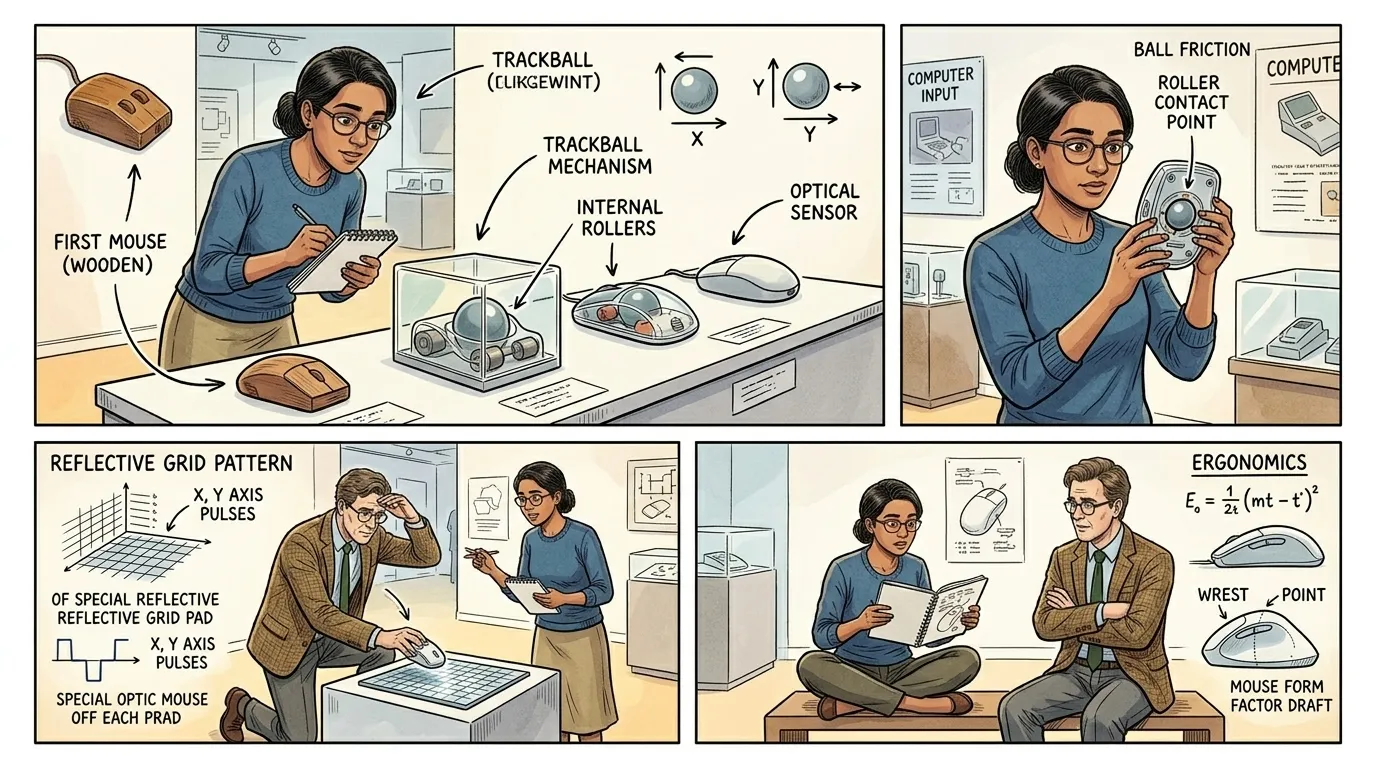
While the initial wheel-based mouse worked, it was prone to collecting dirt and offered limited omnidirectional movement. The design quickly evolved. Bill English himself later developed the trackball mouse, replacing the wheels with a ball that contacted multiple internal rollers, allowing smoother, more versatile cursor control. This paved the way for the familiar ball mouse.
"'The trackball was the logical next step,' Dr. Anya Sharma remarked, observing a series of mouse prototypes. 'It smoothed out the interaction, anticipating the complex demands of future graphical interfaces. Later, optical sensors removed all moving parts, revolutionizing reliability and precision.'"
Page 8
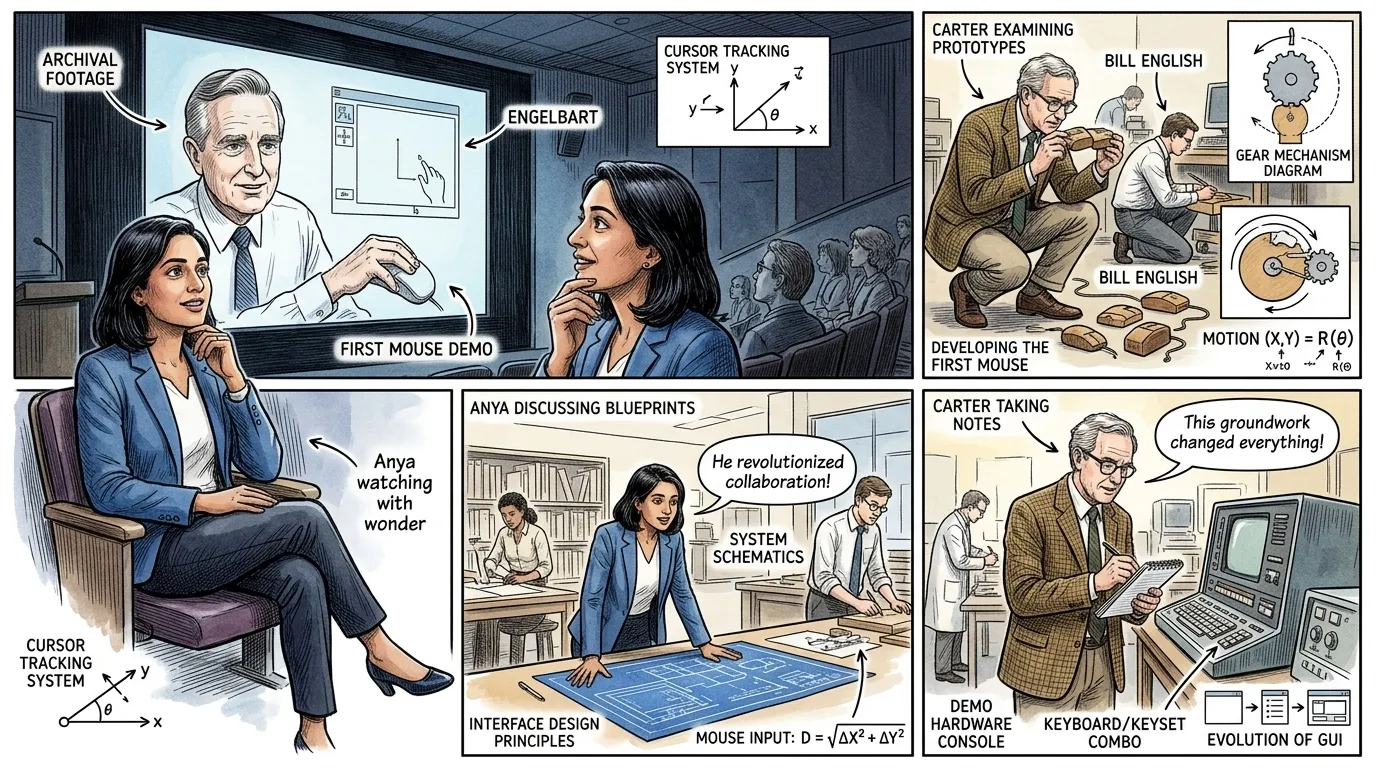
On December 9, 1968, Douglas Engelbart's team unveiled the computer mouse, along with hypertext, video conferencing, and a graphical user interface, in what is now famously known as 'The Mother of All Demos.' The presentation was revolutionary, showcasing a future of computing years ahead of its time. However, widespread adoption was not immediate.
"'The demo was astonishing, a true glimpse into the future,' Dr. Anya Sharma emphasized, watching archival footage of the 1968 presentation on a large screen. 'Yet, for years, it remained largely a research curiosity. As the author Arthur C. Clarke once famously said, 'Any sufficiently advanced technology is indistinguishable from magic.' For many, this felt like magic, too complex for immediate widespread understanding or adoption. But the foundational principle of relative motion sensing, established with the very first mouse, was now undeniably proven.'"
Page 9
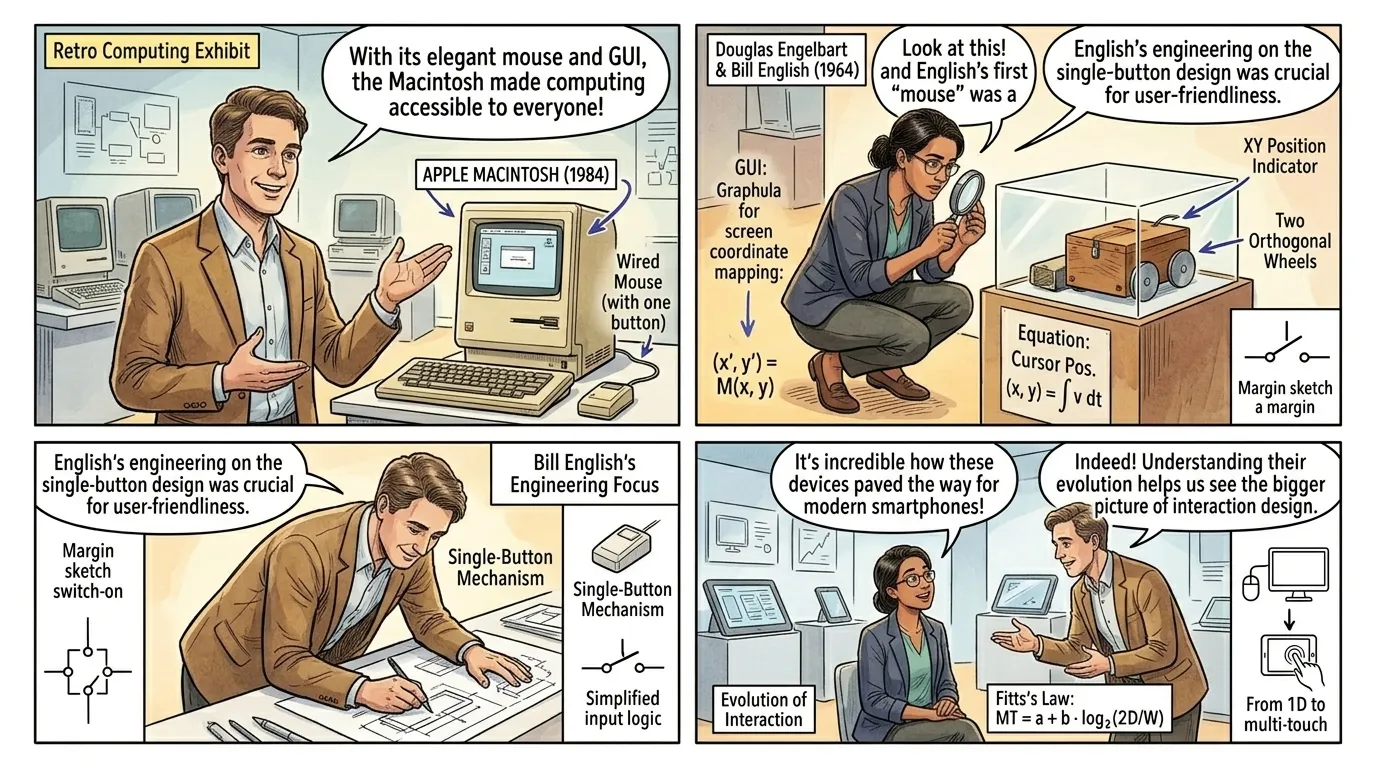
The mouse's journey from niche research tool to household staple was protracted. Xerox PARC further developed the mouse for its Alto computer in the 1970s. However, it was Apple, with its Lisa (1983) and Macintosh (1984) computers, that truly brought the mouse to the mainstream, pairing it with an accessible graphical user interface. This was the turning point.
"'Xerox PARC made crucial refinements, but Apple democratized the mouse,' Professor Ben Carter observed, standing next to a vintage Macintosh. 'They understood that powerful technology only thrives when it's made approachable and affordable. The combination of a simple, robust mouse and an intuitive graphical interface proved irresistible to a new generation of computer users.'"
Page 10
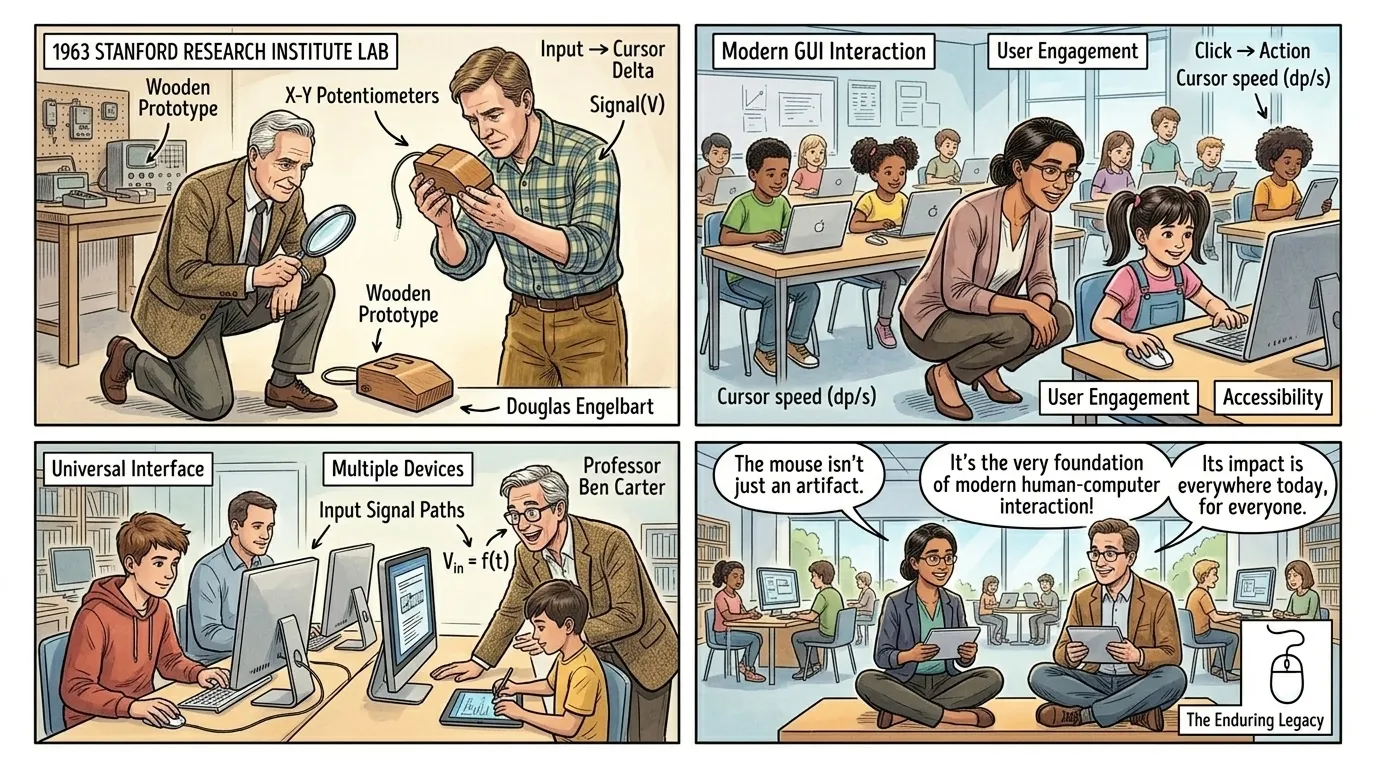
From its humble wooden origins, the computer mouse evolved into a ubiquitous tool. It transformed how we interact with information, enabling intuitive navigation, precise control, and a more natural human-computer partnership. Today, variations of Engelbart's ingenious invention remain essential across virtually every digital domain.
"'The mouse democratized computing, making it accessible for everyone,' Dr. Anya Sharma concluded, looking at a diverse group of people using computers. 'It paved the way for personal computing as we know it, a testament to Engelbart's enduring vision.'"
About this story
- Location: Global
- Audience: general readers
Questions and answers
Read Wonder Inventions on your phone
Wonder Inventions is available on Android. Get Wonder Inventions on Google Play.