Container Ship
Container Ship — an illustrated inventions story, set in Global. 10 illustrated pages, free to read on Wonder Inventions.

Page 1
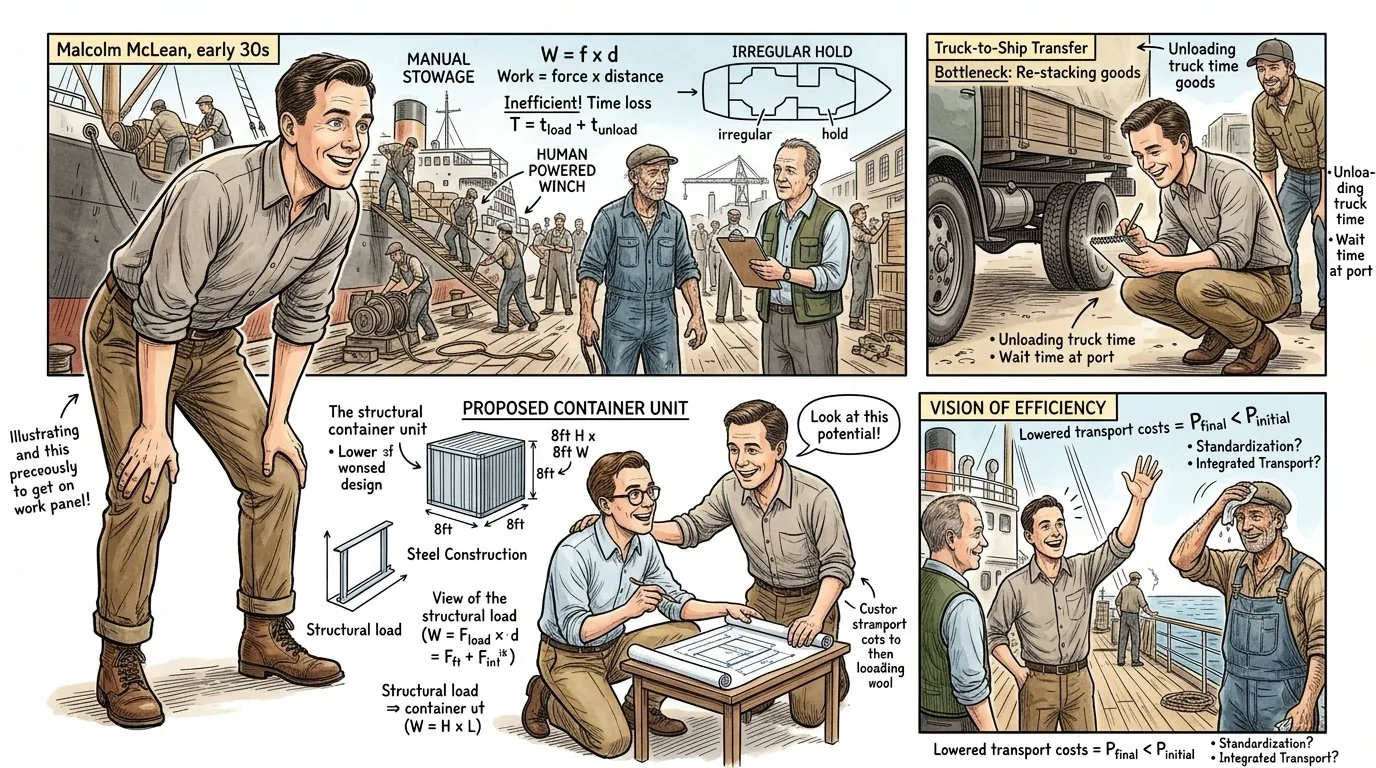
Before the mid-20th century, global trade moved at a glacial pace, shackled by inefficient loading practices. Every item, from sacks of grain to individual crates of machinery, was handled one by one, a system known as 'break-bulk' cargo. This labor-intensive process was a significant bottleneck, inflating costs, causing delays, and limiting the scale of international commerce. It was into this landscape that American entrepreneur Malcolm McLean envisioned a radical solution.
"'This chaos,' Malcolm McLean mused, observing a bustling port in 1937, 'is the true barrier to efficiency. We spend more time at dock than at sea, bleeding time and money with every single cargo unit.' He recognized the immense potential if goods could be moved seamlessly from road to ship, and then back to road, without individual handling."
Page 2
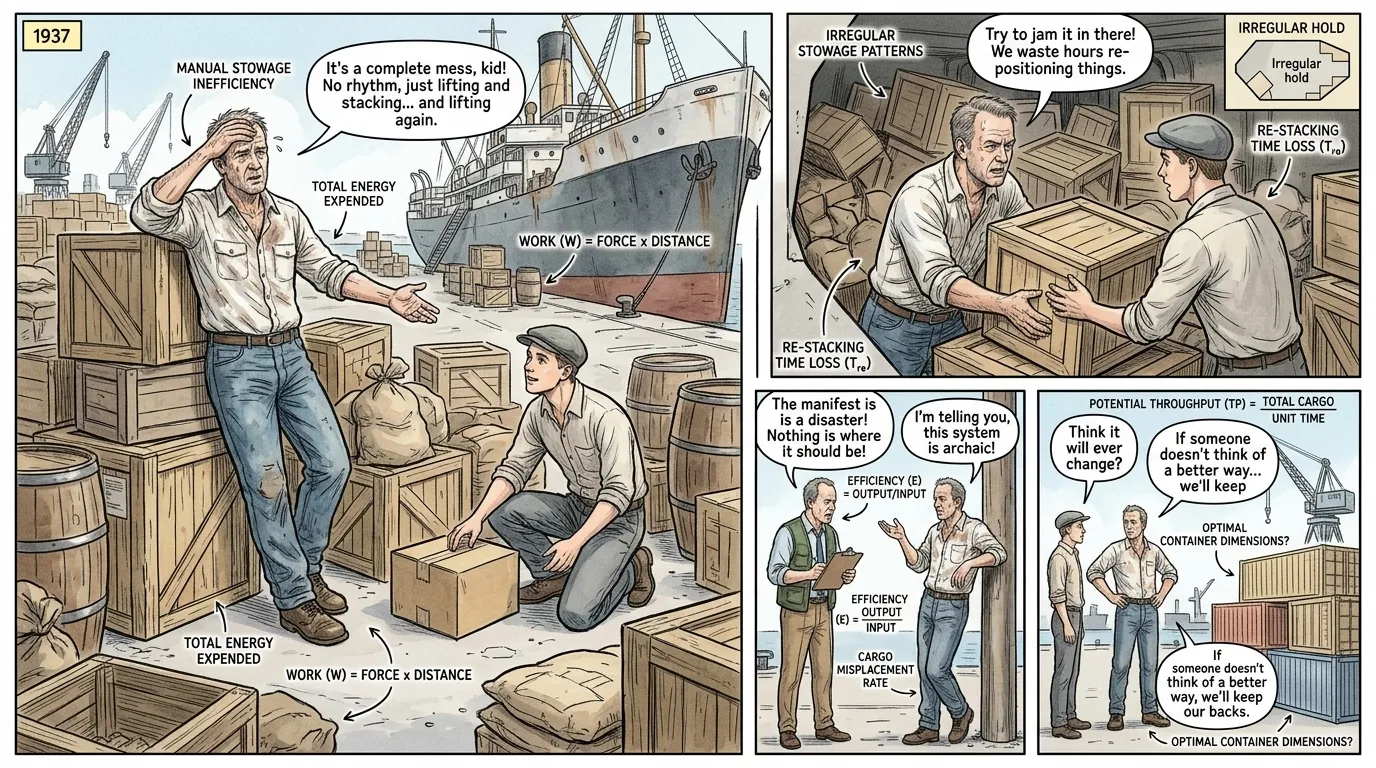
The break-bulk method was inherently slow and prone to error. Each package, regardless of size or fragility, had to be individually secured within the ship's hold, often by hand. This painstaking process meant that ships spent far longer in port than at sea, sometimes weeks, incurring significant demurrage charges and delaying supply chains. The very act of loading and unloading accounted for a staggering 75% of shipping costs.
"A veteran longshoreman, his face weathered by years of labor, wiped sweat from his brow. 'Every single box must be lifted, moved, and stacked,' he explained to a younger colleague. 'The weight, the size, it's always different. It's like trying to fit a thousand mismatched puzzle pieces into a swaying box, every time.' This arduous system was ripe for disruption."
Page 3
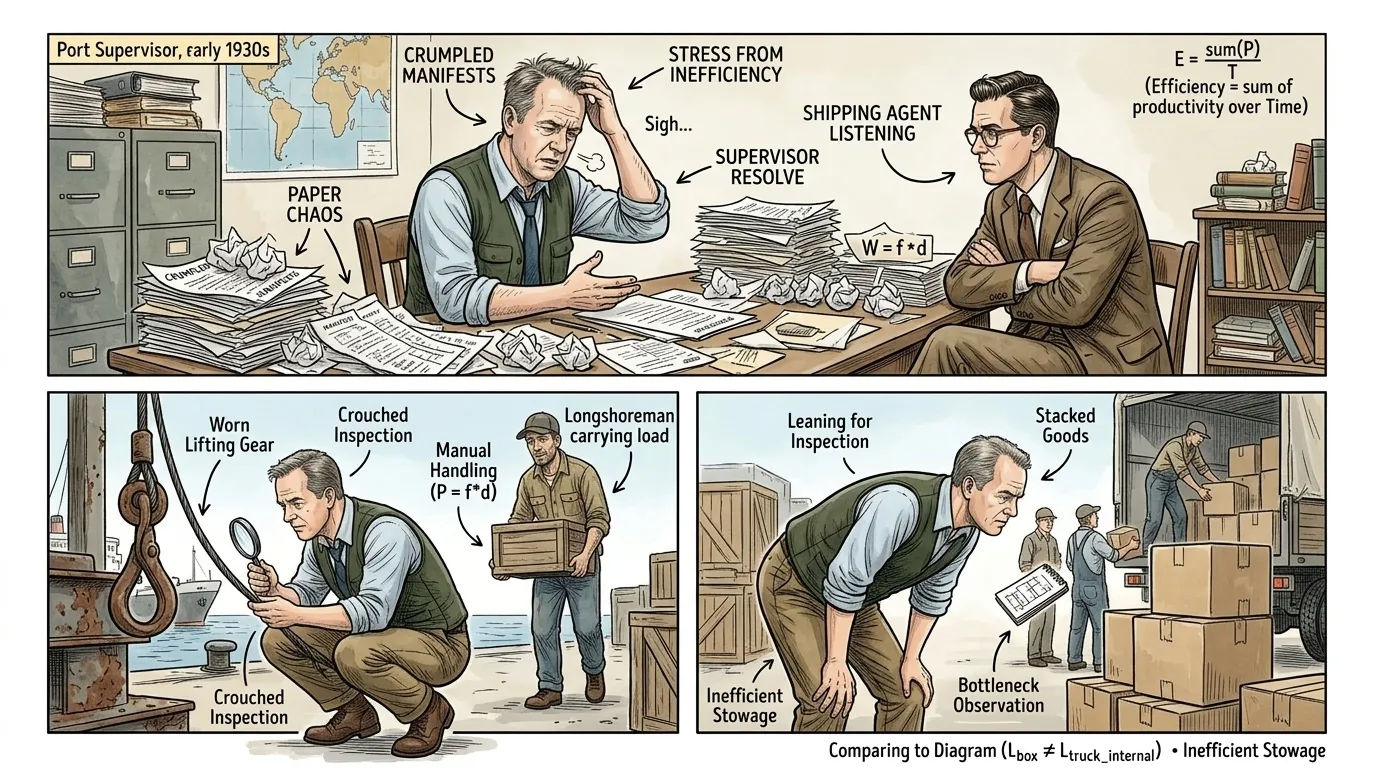
Beyond the sheer physical labor, break-bulk shipping presented a labyrinth of logistical challenges. Cargo was susceptible to theft, damage, and loss as it changed hands numerous times during transit. The lack of standardization meant custom packaging and handling for diverse goods, adding layers of complexity and cost. Each journey was a bespoke logistical puzzle, limiting the capacity for mass global distribution and trade expansion.
"A port supervisor, reviewing stacks of crumpled manifests, sighed. 'We lose too much, get too many claims,' he lamented to a shipping agent. 'One package is crushed, another simply vanishes. And the paperwork, mountains of it for every single item! We need to standardize, or this entire system will collapse under its own inefficiency.' The need for a simpler, more secure method was undeniable."
Page 4
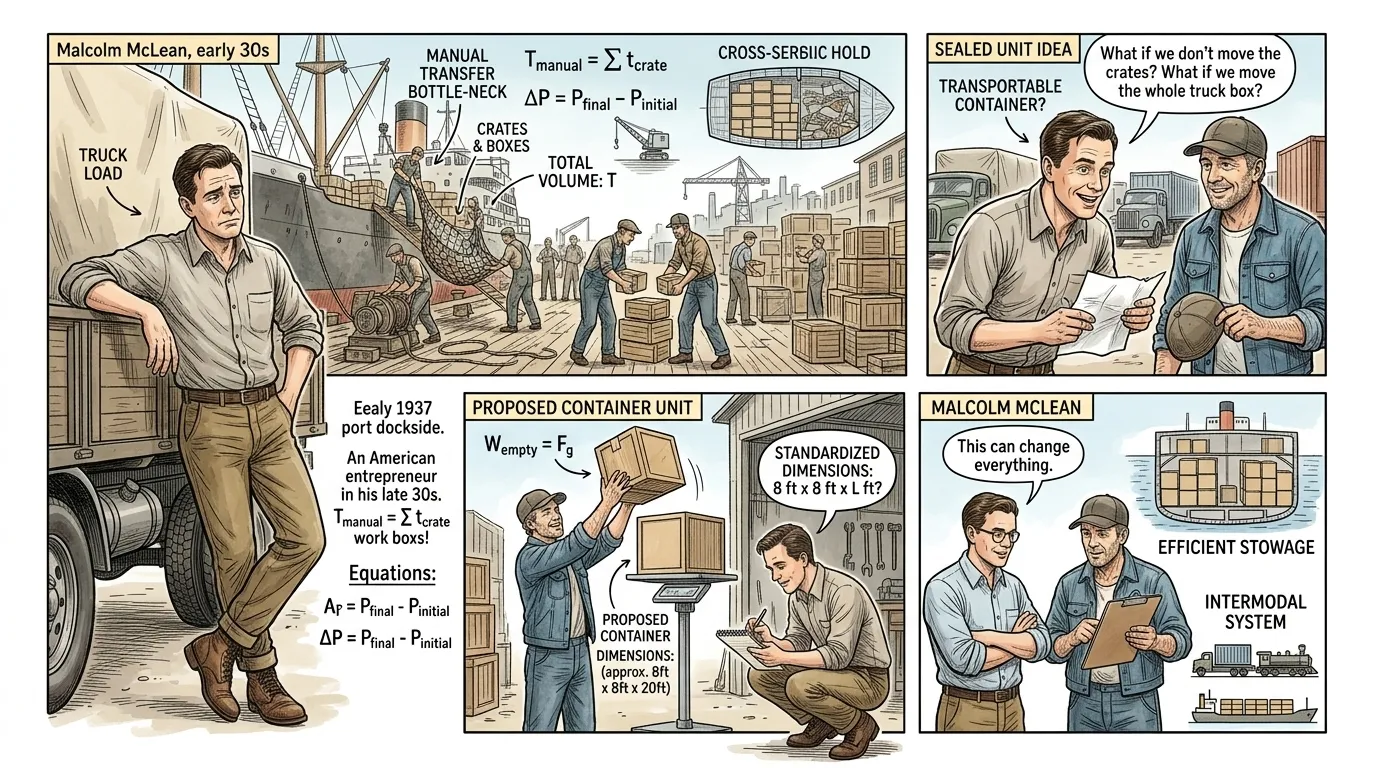
Malcolm McLean, a visionary entrepreneur who founded one of America's largest trucking companies, grew increasingly frustrated with the delays he encountered at port. His trucks would often wait for days as their contents were laboriously unloaded and then reloaded onto ships. He observed that the most efficient part of the journey was when cargo remained securely within his trailers. An idea began to form: what if the entire truck trailer, or at least its cargo box, could be lifted directly onto a ship?
"Leaning against the side of his truck, McLean watched exasperatedly as crates were painstakingly transferred. 'We drive these goods hundreds of miles, then they sit here, exposed,' he muttered to his foreman. 'What if the box itself was the standard? Imagine—no unpacking, no repacking, just one sealed unit from origin to destination.' He pondered this, convinced that 'the essence of a thing is the thing itself,' as Ralph Waldo Emerson once wisely noted about inherent truth and form."
Page 5
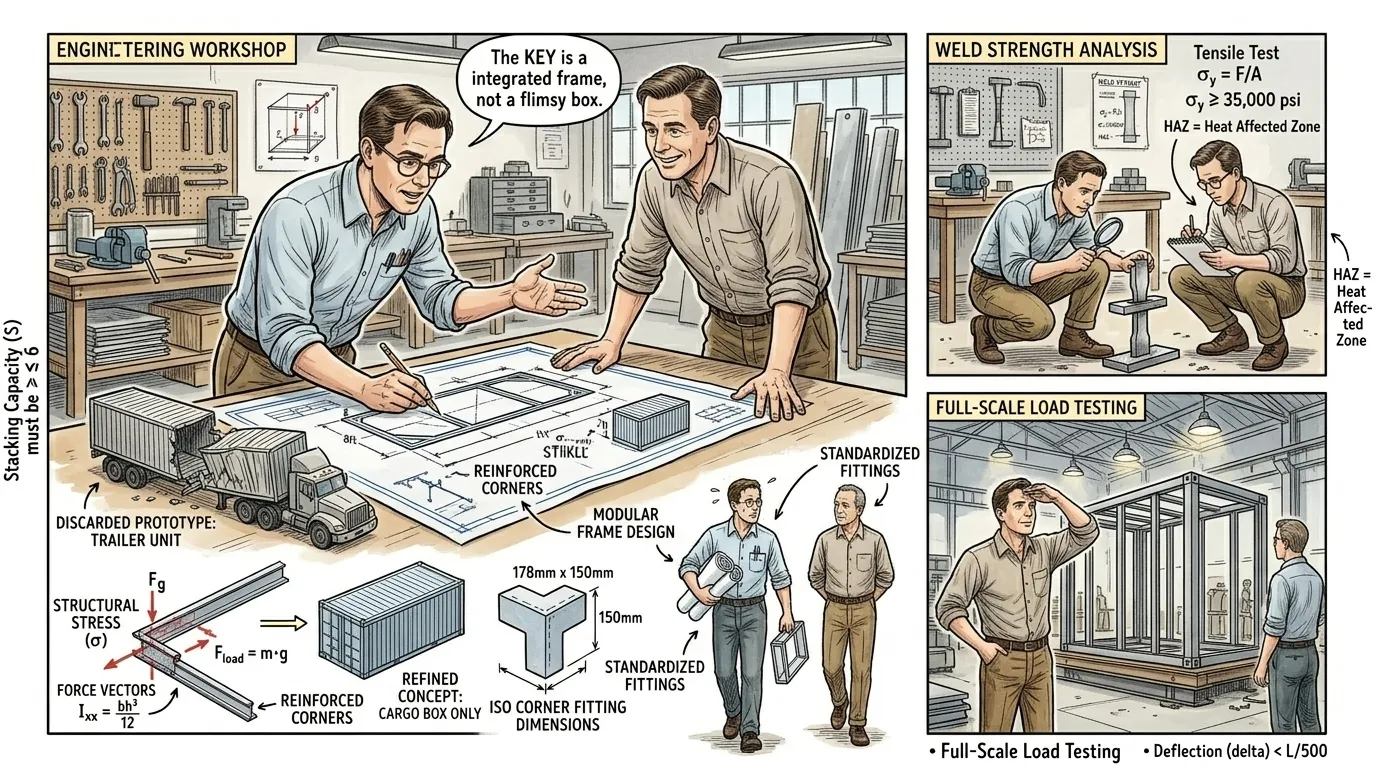
McLean initially experimented with simply lifting entire truck trailers onto ships. However, this proved impractical due to the weight of the truck chassis and wheels, which occupied valuable space. The true innovation lay in separating the cargo box from the wheeled chassis. This required a robust, standardized box that could be stacked high and secured against the forces of the open ocean. Developing such a durable, universally usable container presented significant engineering challenges.
"An engineer, sketching furiously on a blueprint, explained to McLean: 'The chassis is too heavy, Mr. McLean. We need a box, just the box. But how strong? How big? And how will we lift it without crushing it? And how do we lock them together at sea?' McLean nodded, 'We need to design a 'box' that is robust enough to become a structural component, not just a covering. It must be a uniform, interchangeable unit for true efficiency.'"
Page 6
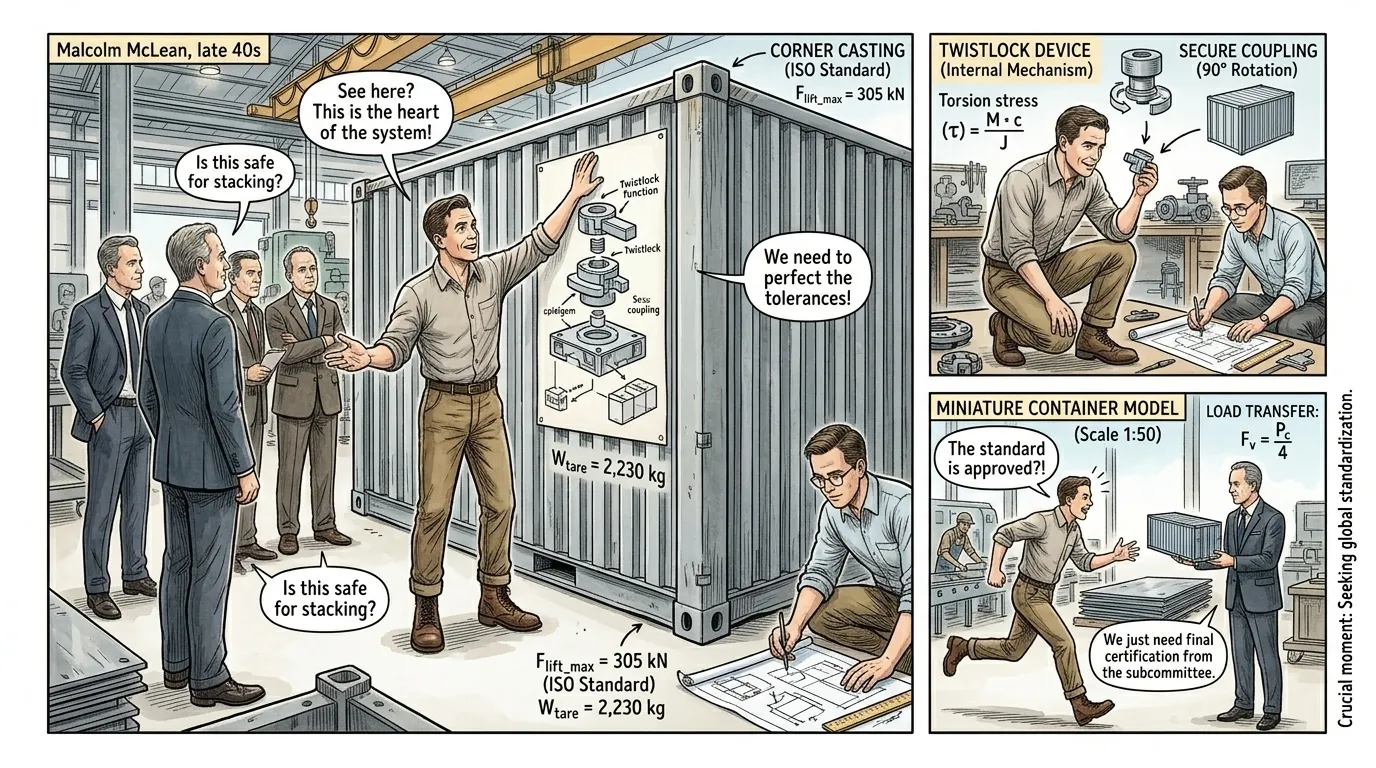
The breakthrough came with the development of the standardized steel box – the intermodal container. Critical to its design were robust corner castings, which allowed for secure lifting by specialized cranes and precise stacking, resisting the immense forces at sea. These castings also provided attachment points for twistlocks, a simple yet ingenious mechanism that securely fastened containers together, preventing movement during transit. This standardization removed the need for individual handling, transforming the loading process into a swift, mechanical operation.
"McLean, standing proudly beside a newly fabricated container, addressed a group of skeptical investors. 'This isn't just a box; it's a unit of intermodal commerce,' he declared. 'Look at these corner fittings, these locking mechanisms! They allow us to lift it, stack it, and secure it, anywhere in the world. It's a game-changer for speed and safety.' He pointed to a diagram explaining the twistlock function."
Page 7
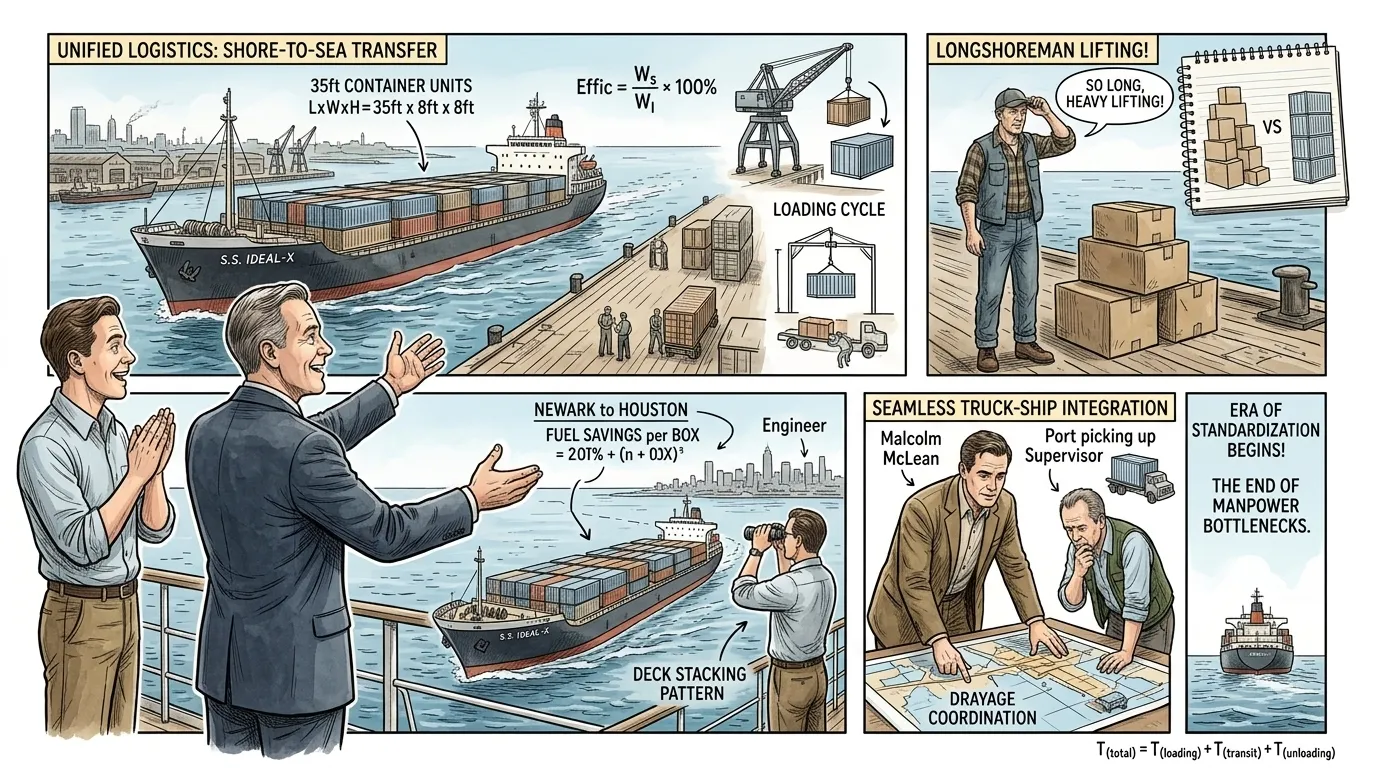
On April 26, 1956, the converted tanker Ideal-X departed Newark, New Jersey, for Houston, Texas, carrying 58 truck-trailer-sized containers on its deck. This wasn't just a voyage; it was a demonstration of a paradigm shift. The Ideal-X could be loaded and unloaded in a fraction of the time required for a traditional break-bulk vessel, proving the efficiency and economic viability of containerization. This momentous journey marked the birth of a new era in global shipping.
"As the Ideal-X pulled away from the dock, a port official, visibly impressed, turned to a journalist. 'We've just witnessed the future of shipping,' he stated, a hint of awe in his voice. 'No more individual crates, no more endless delays. This ship, carrying just these few boxes, will save untold hours and costs. What Malcolm McLean has done here is nothing short of revolutionary for maritime logistics.'"
Page 8
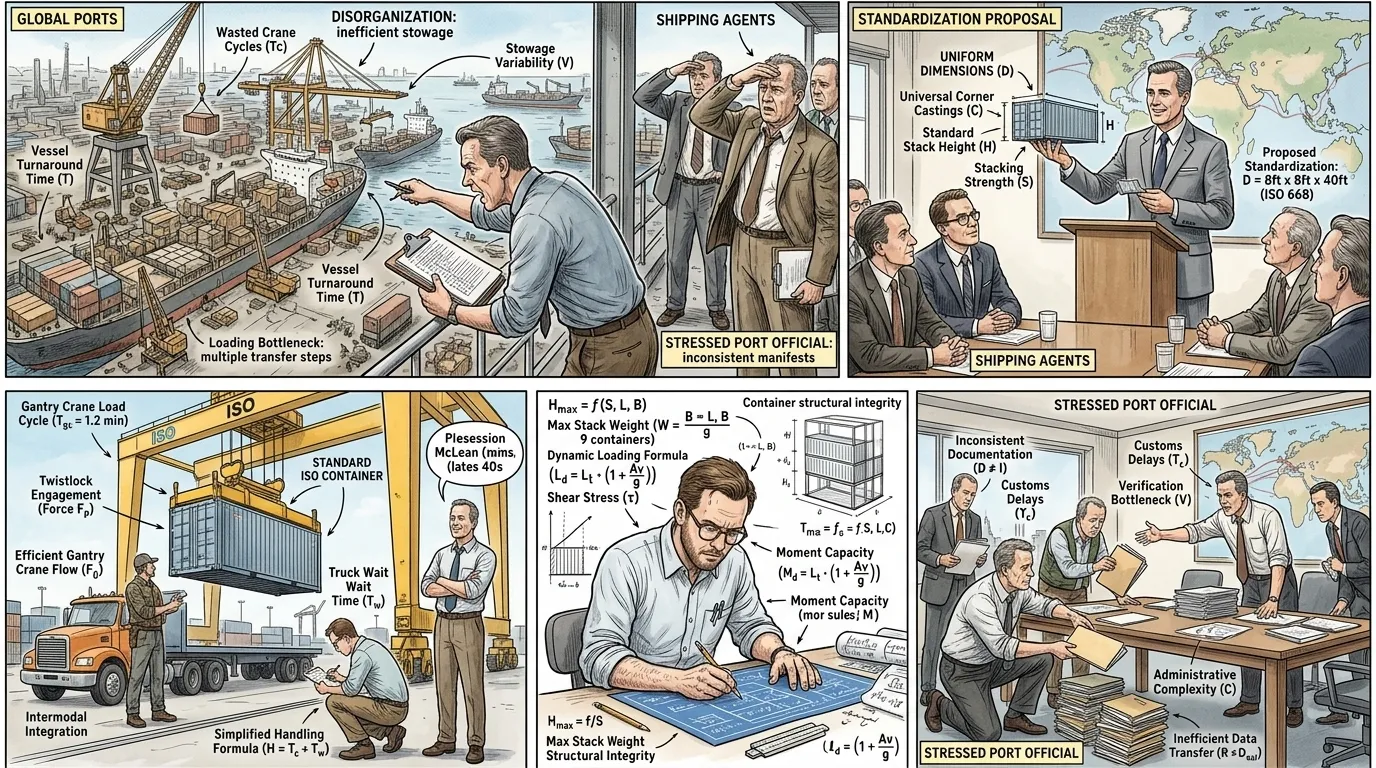
Despite initial resistance from vested interests, particularly longshoremen unions concerned about job losses, the economic advantages of containerization were undeniable. The cost savings were immense, reducing shipping expenses by up to 90% for some goods. This stark efficiency propelled its rapid adoption, leading to the creation of the International Organization for Standardization (ISO) container standards in the 1960s. This crucial standardization allowed containers to be seamlessly transferred between ships, trains, and trucks worldwide.
"A representative from the newly formed ISO organization, addressing a conference of shipping magnates in the early 1960s, held up a miniature container model. 'This is the key to global commerce: uniform dimensions, universal compatibility,' he explained. 'Whether it's a 20-foot equivalent unit or a 40-footer, every port, every crane, every truck will recognize it. This standardization will unlock unprecedented trade volumes across continents.'"
Page 9
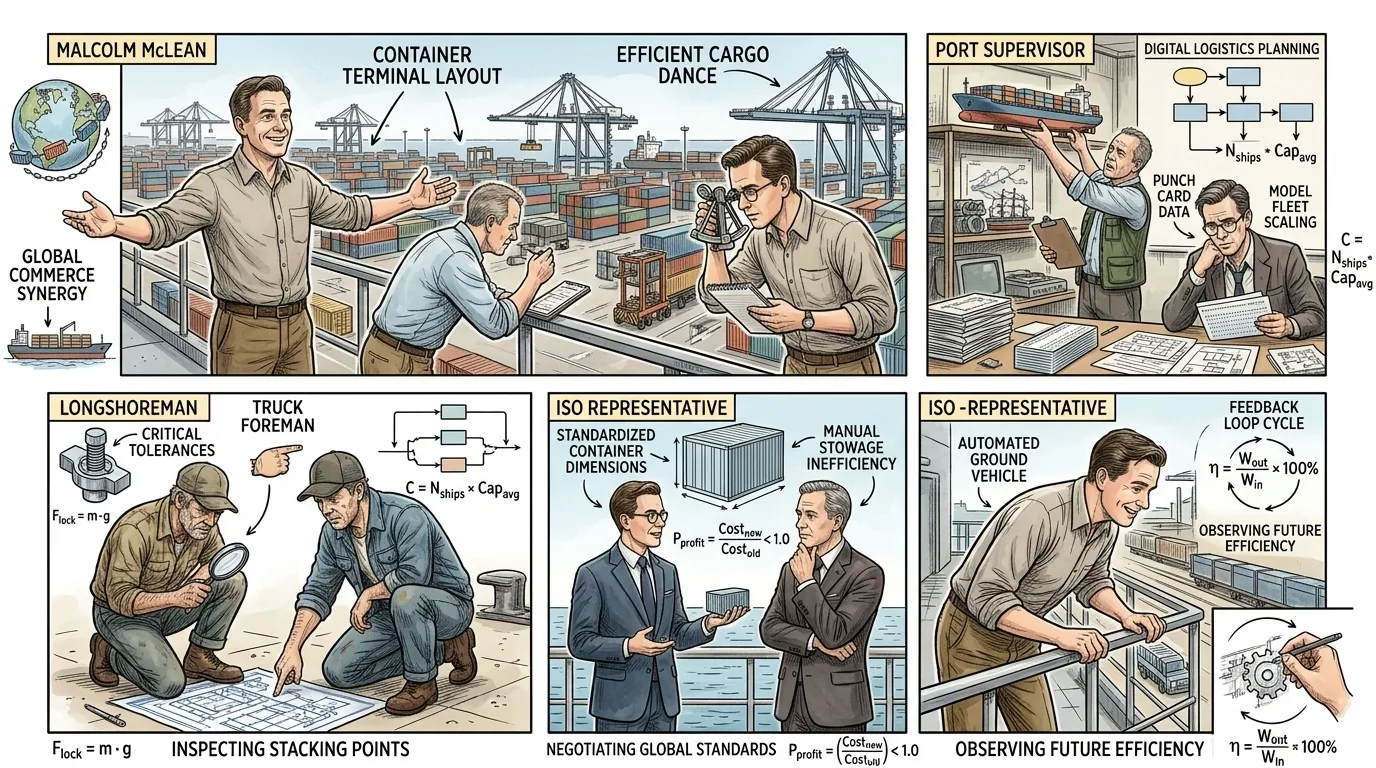
The spread of containerization triggered a 'network effect,' where each new container ship, port, or terminal added exponential value to the system. Ports around the world invested heavily in specialized container cranes and infrastructure, designing layouts optimized for rapid container transfer. This intricate web of interconnected logistics facilitated a dramatic expansion of global trade, making international shipping faster, cheaper, and more reliable than ever before. The container became the universal language of cargo.
"A logistics expert, overseeing a vast container terminal, reflected, 'It's not just about the boxes; it's the entire ecosystem they created. From the moment goods leave the factory, they're in a container, untouched, until they reach the final distribution center. This is what 'global village' means for commerce.' He gestured across the sprawling terminal, filled with countless containers and specialized vehicles."
Page 10
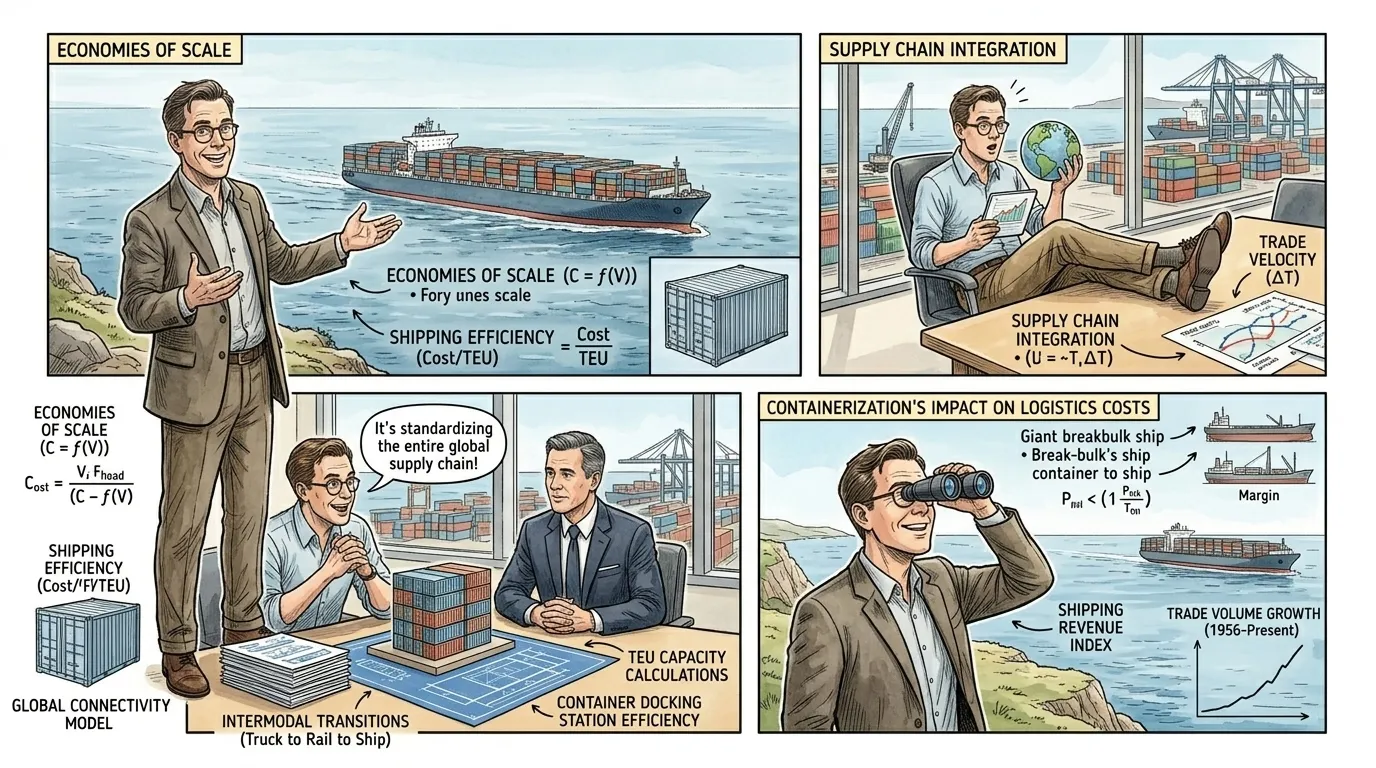
Malcolm McLean's container ship revolutionized not just shipping, but the very fabric of global commerce. It enabled unprecedented efficiency, drastically lowered transportation costs, and facilitated the rise of global supply chains. From consumer electronics to fresh produce, goods from every corner of the world became accessible and affordable. The container ship stands as a testament to the power of a simple, standardized solution to profoundly reshape industries and societies, underpinning the interconnected global economy we know today. It allowed humanity to truly embrace, as American poet Walt Whitman once wrote, 'the ocean, whose waves never cease to work.'
"'The sheer scale of this transformation is astounding,' an economist remarked, observing a vast container ship from a distance. 'Entire industries depend on this efficiency. Without the container, the globalized world as we know it simply wouldn't exist.'"
About this story
- Location: Global
- Audience: general readers
Questions and answers
Read Wonder Inventions on your phone
Wonder Inventions is available on Android. Get Wonder Inventions on Google Play.