Data Center
Data Center — an illustrated inventions story, set in Global. 10 illustrated pages, free to read on Wonder Inventions.
Page 1
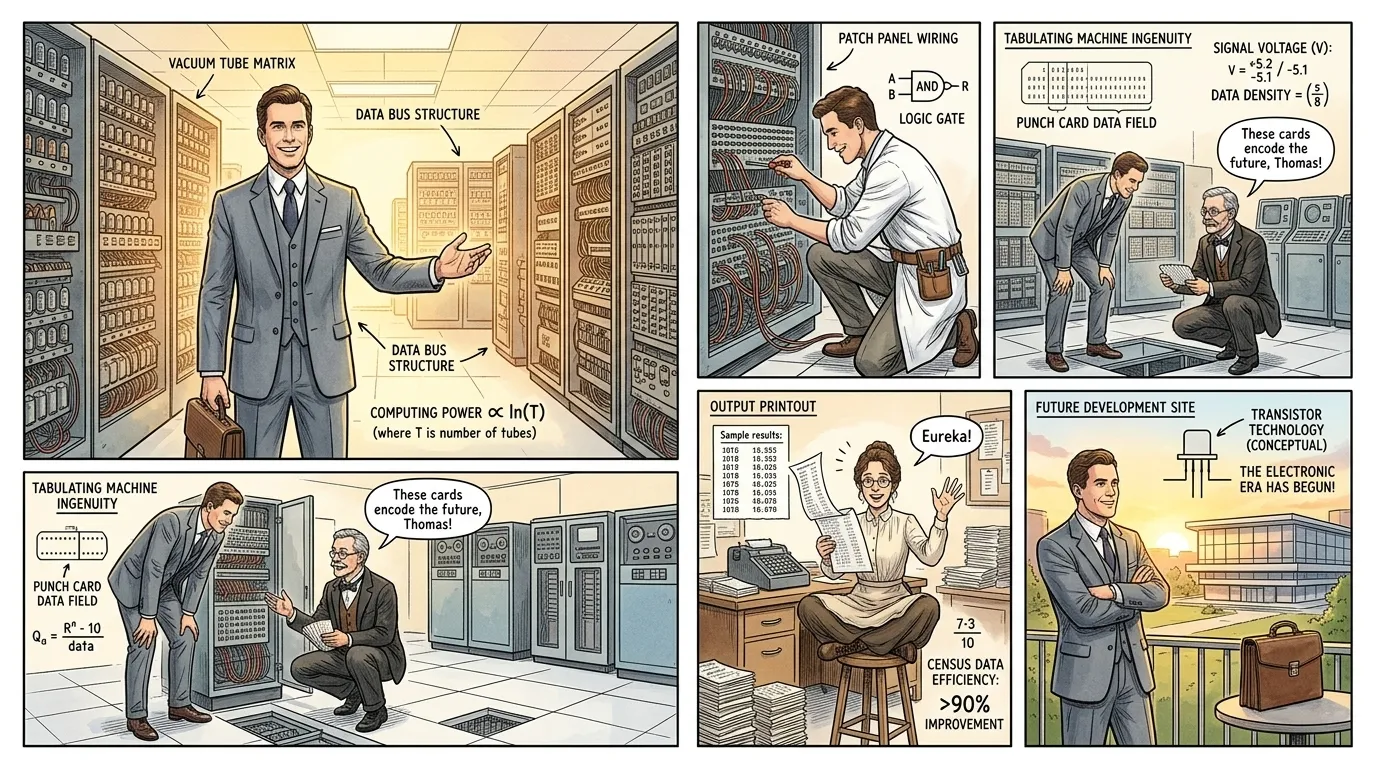
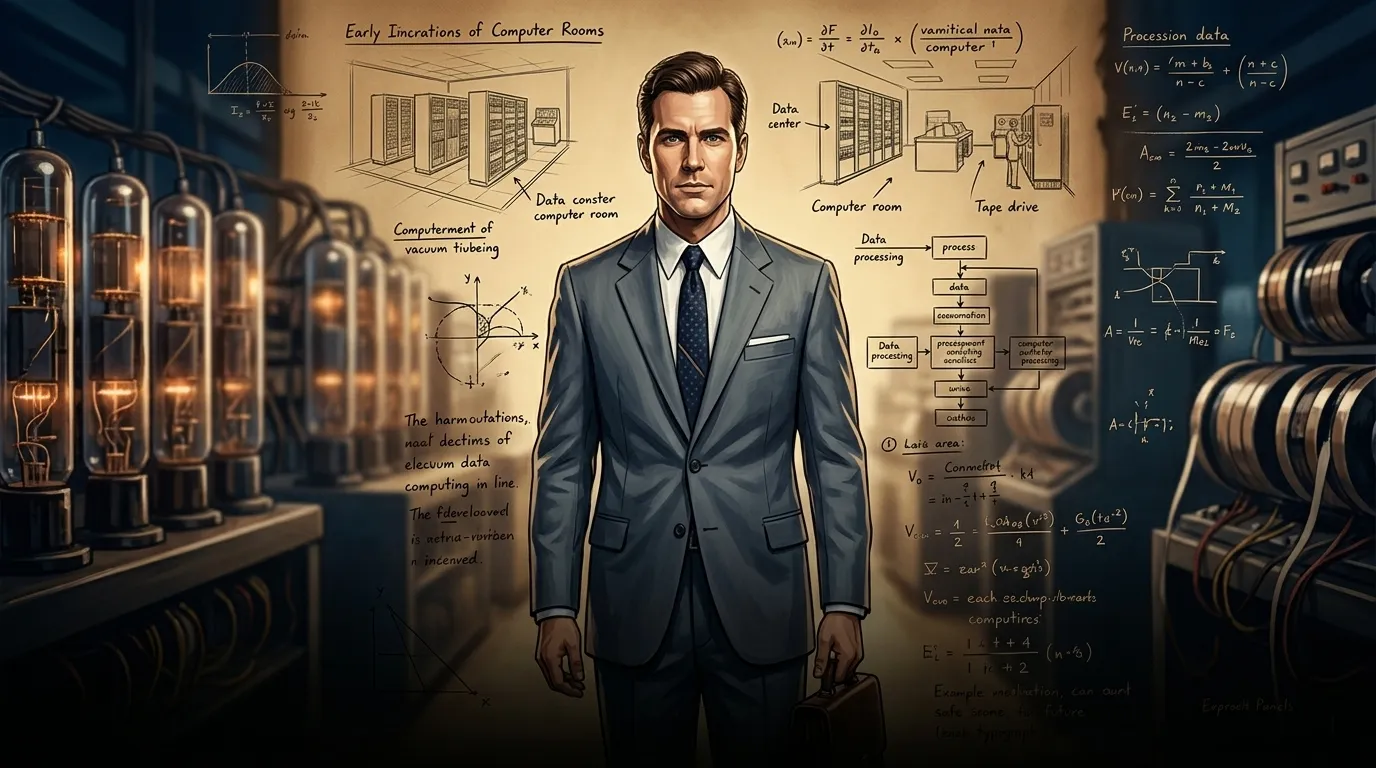
In the mid-20th century, as electronic computing began its rise, the sheer scale of information processing presented an unprecedented challenge. Governments, scientific institutions, and burgeoning corporations faced an urgent need for infrastructure capable of managing vast datasets and complex calculations. This demand catalyzed the development of centralized computing facilities, the foundational concept of what we now know as the Data Center. These early 'machine rooms' marked a pivotal shift from isolated machines to integrated, carefully controlled environments. It was through the efforts of visionaries like Thomas J. Watson, Jr. at IBM, pushing for advanced electronic systems, that the systematic approach to housing and maintaining these colossal early computers began to take shape, setting the stage for global digital transformation by the 1960s.
Page 2
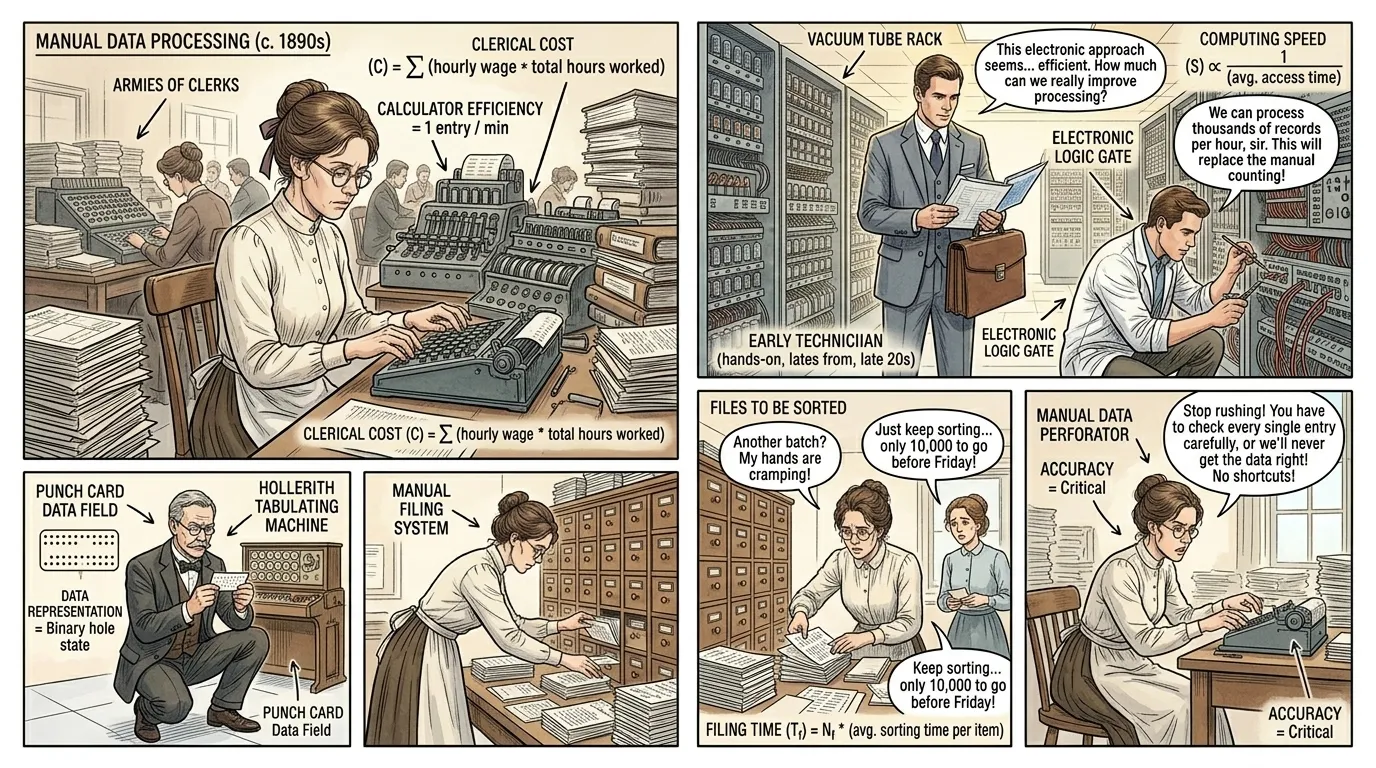
Before the advent of sophisticated electronic computing, the processing and storage of large volumes of data were overwhelmingly manual and labor-intensive. Businesses, government agencies, and research institutions relied on vast armies of clerks, intricate filing systems, and mechanical calculators to manage their information. This analog world was characterized by slow processing times, significant human error rates, and an ever-growing physical footprint of paper records. The sheer inefficiency of this system created an acute bottleneck for progress, making rapid analysis or real-time decision-making virtually impossible as data accumulation accelerated.
Page 3
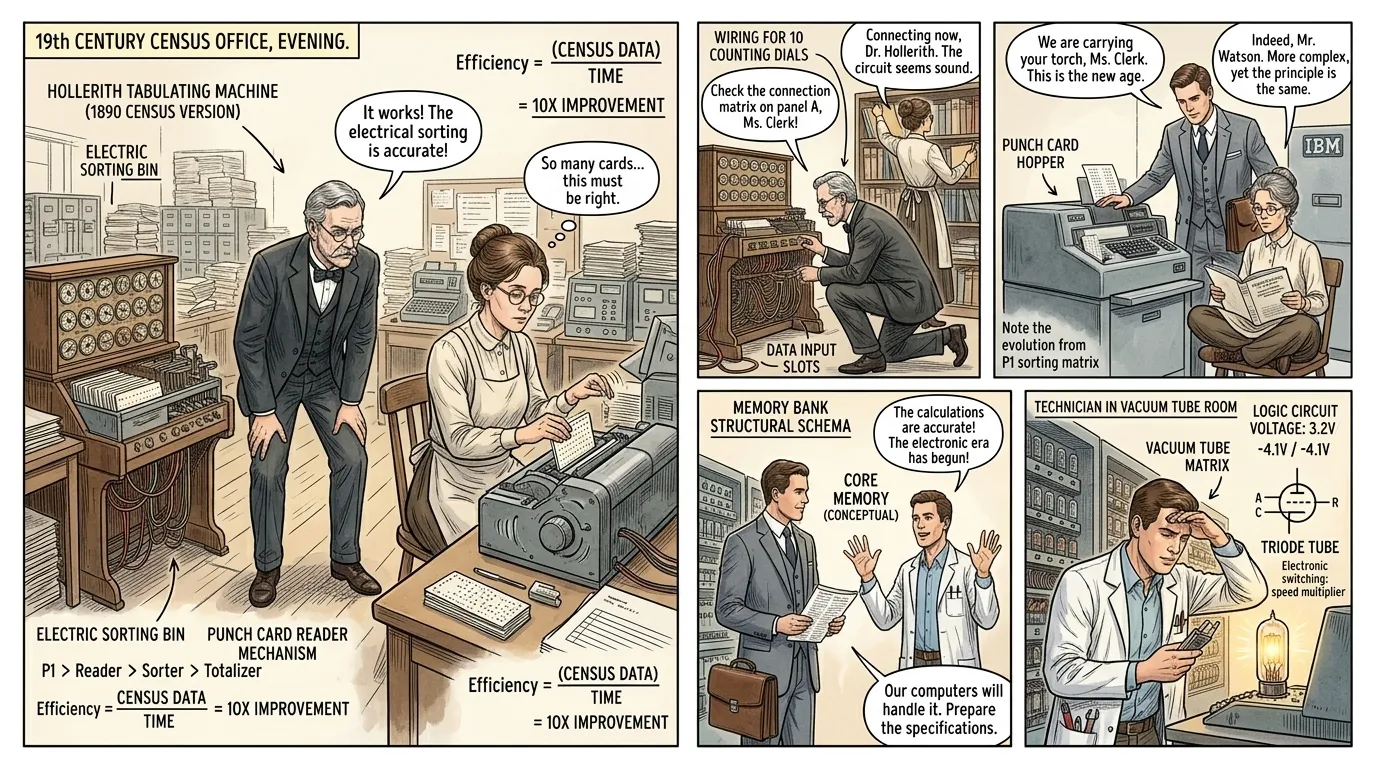
The first significant step towards automating data processing came with Herman Hollerith's invention of the electric tabulating machine in the late 19th century. Initially developed for the 1890 U.S. Census, Hollerith's system utilized punched cards to encode data, allowing machines to sort, count, and tabulate information far faster than manual methods. While revolutionary, these early mechanical-electrical systems were still cumbersome. They required dedicated, noisy rooms, specialized operators, and significant physical handling of cards. Furthermore, each machine performed a specific, limited task, requiring a chain of different machines to complete complex processing, highlighting the early challenge of integrated data management.
Page 4
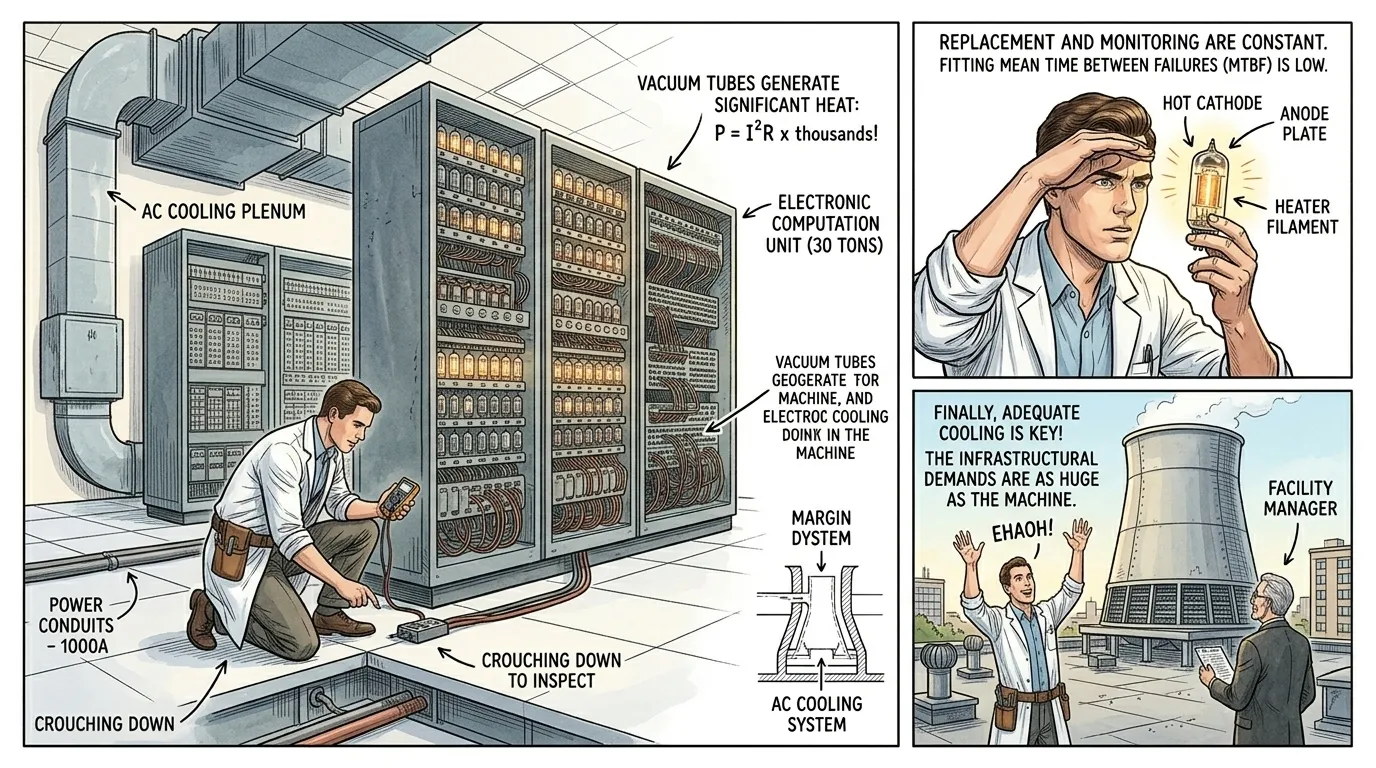
The arrival of electronic computers in the mid-20th century, such as ENIAC and UNIVAC, marked a paradigm shift in processing capability. These colossal machines, often filling entire rooms, replaced mechanical gears with vacuum tubes, drastically accelerating calculations. However, their sheer size, immense power consumption, and prodigious heat output presented unprecedented infrastructural demands. The concept of a dedicated 'computer room' or 'machine room' emerged, not merely as a storage space, but as a meticulously engineered environment requiring specialized cooling, robust power distribution, and constant monitoring by expert technicians. This necessity gave rise to the very first rudimentary forms of the data center.
Page 5
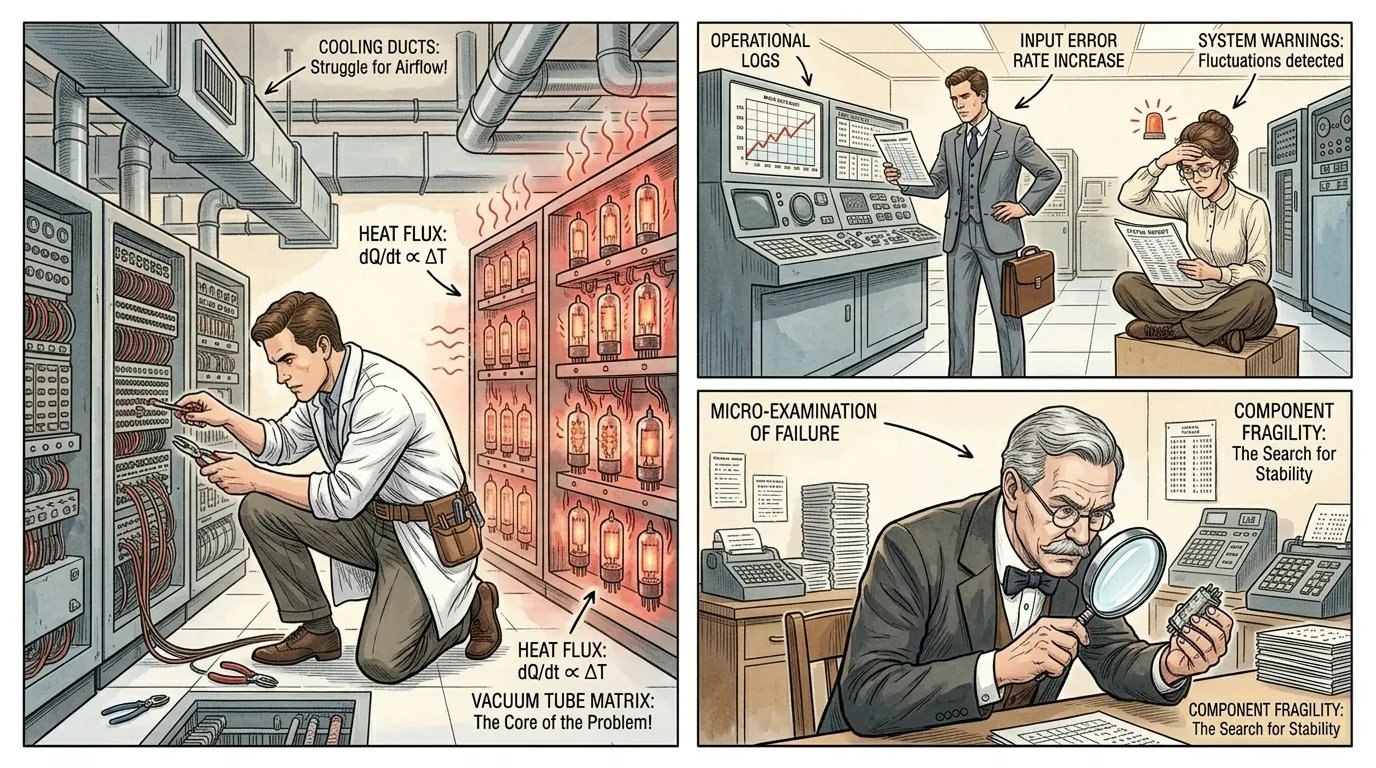
The operation of these early electronic computers was plagued by numerous technical challenges that directly foreshadowed the complex requirements of modern data centers. Vacuum tubes were notoriously unreliable and generated enormous amounts of heat, frequently leading to system failures. Maintaining a stable, cool environment was critical but incredibly difficult, requiring massive air conditioning systems. Power supply had to be constant and robust, often needing dedicated electrical infrastructure. Furthermore, the sensitive nature of the electronics demanded stringent dust control and carefully regulated humidity. These constant battles against environmental factors and component fragility pushed engineers to develop sophisticated, integrated solutions for facility management, laying groundwork for resilient data center design.
Page 6
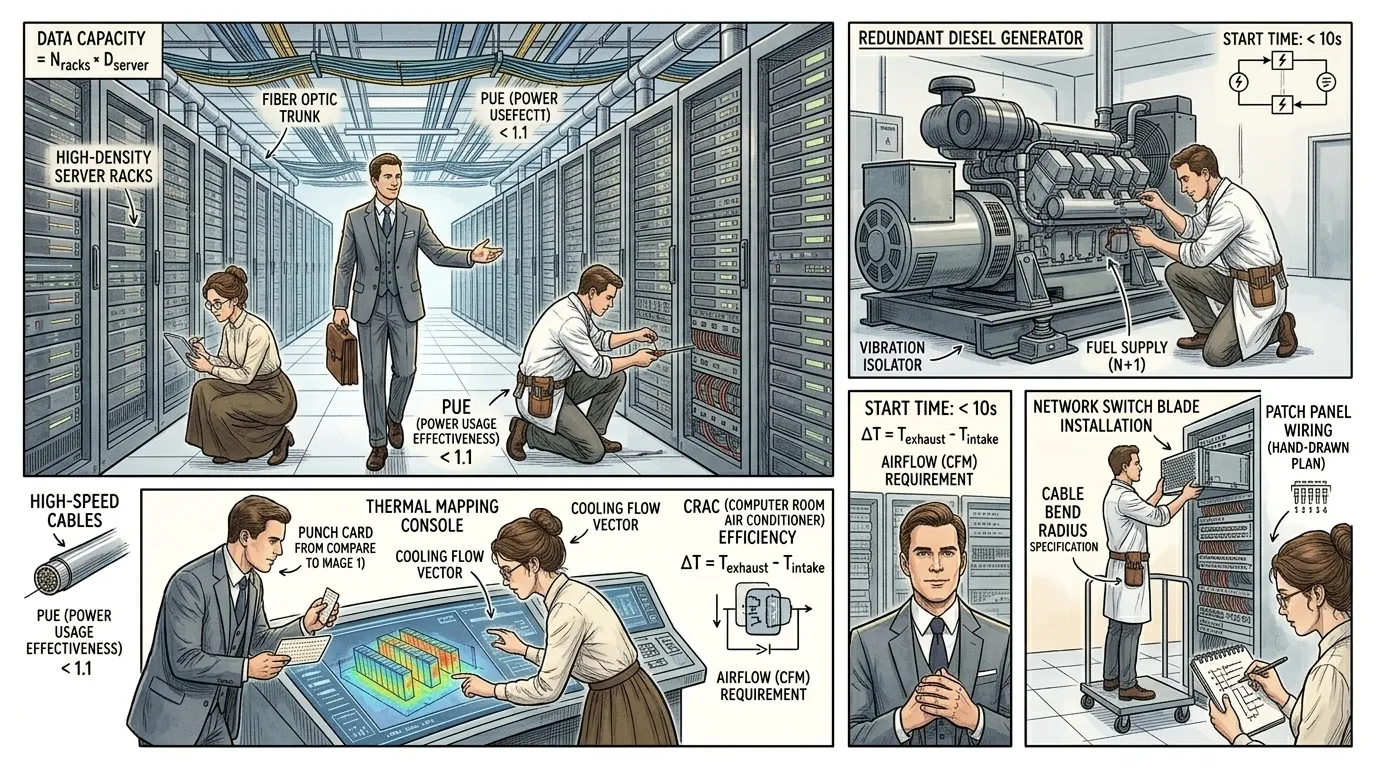
The modern data center is not a single invention, but a meticulously engineered ecosystem designed for continuous operation, maximum efficiency, and unparalleled data security. Its operational efficacy stems from the seamless integration of several core systems. At its heart are thousands of networked servers housed in specialized racks, each performing immense computational tasks. Critical infrastructure supports these servers, including uninterruptible power supplies (UPS) and massive generators for redundancy, sophisticated cooling systems to dissipate heat, and high-speed fiber optic networks for global connectivity. This intricate interplay ensures that digital services remain available 24/7, processing and storing the world's ever-growing digital footprint.
Page 7
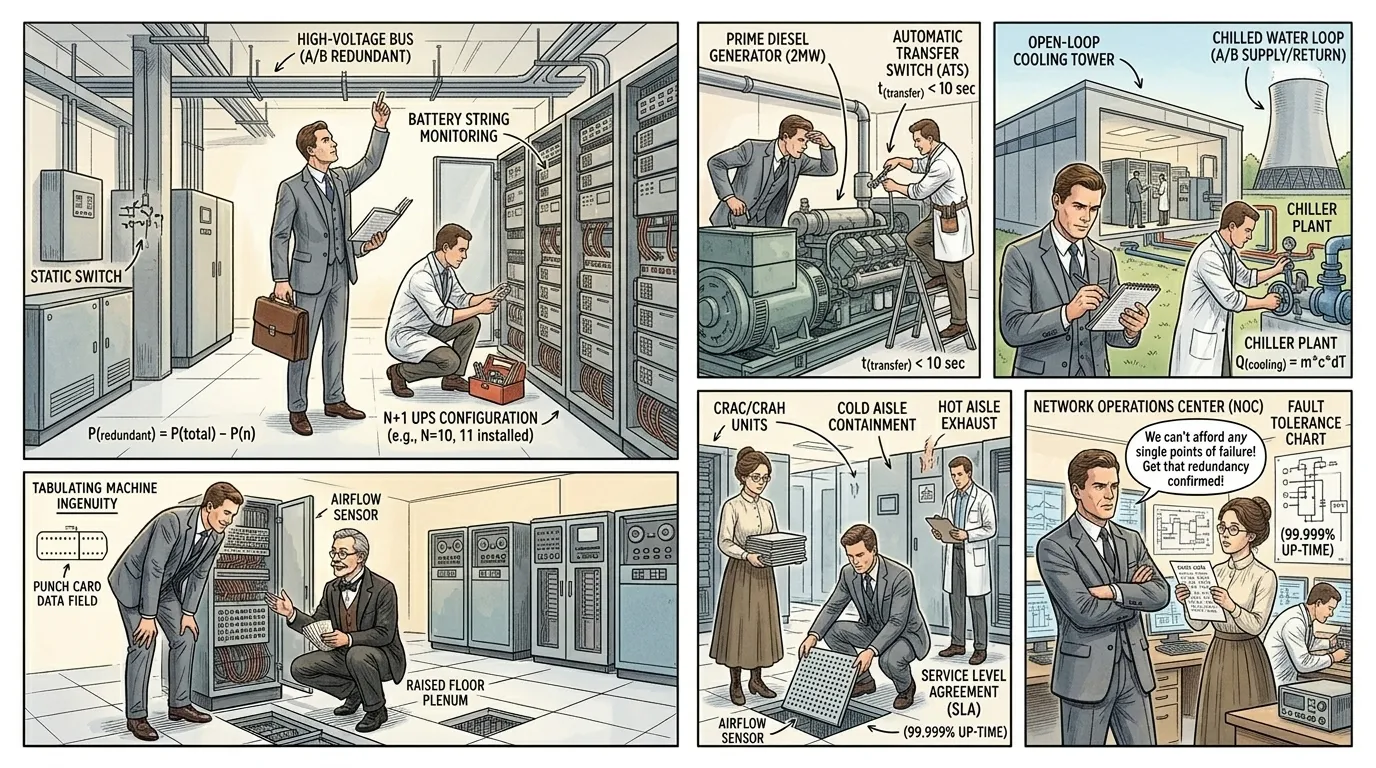
The operational reliability of a data center hinges on its robust power and cooling mechanisms, both designed with extensive redundancy. Electrical power enters the facility from multiple grid connections, passing through uninterruptible power supplies (UPS) that provide instantaneous backup in case of a utility outage. Diesel generators stand ready to take over for extended interruptions. Meanwhile, servers generate immense heat, which must be efficiently removed. Cooling systems, often utilizing chilled water loops or advanced air-flow management through raised floors, maintain optimal temperatures, preventing thermal throttling or component failure. This layered approach ensures that even component failures or external disruptions do not compromise continuous operation.
Page 8
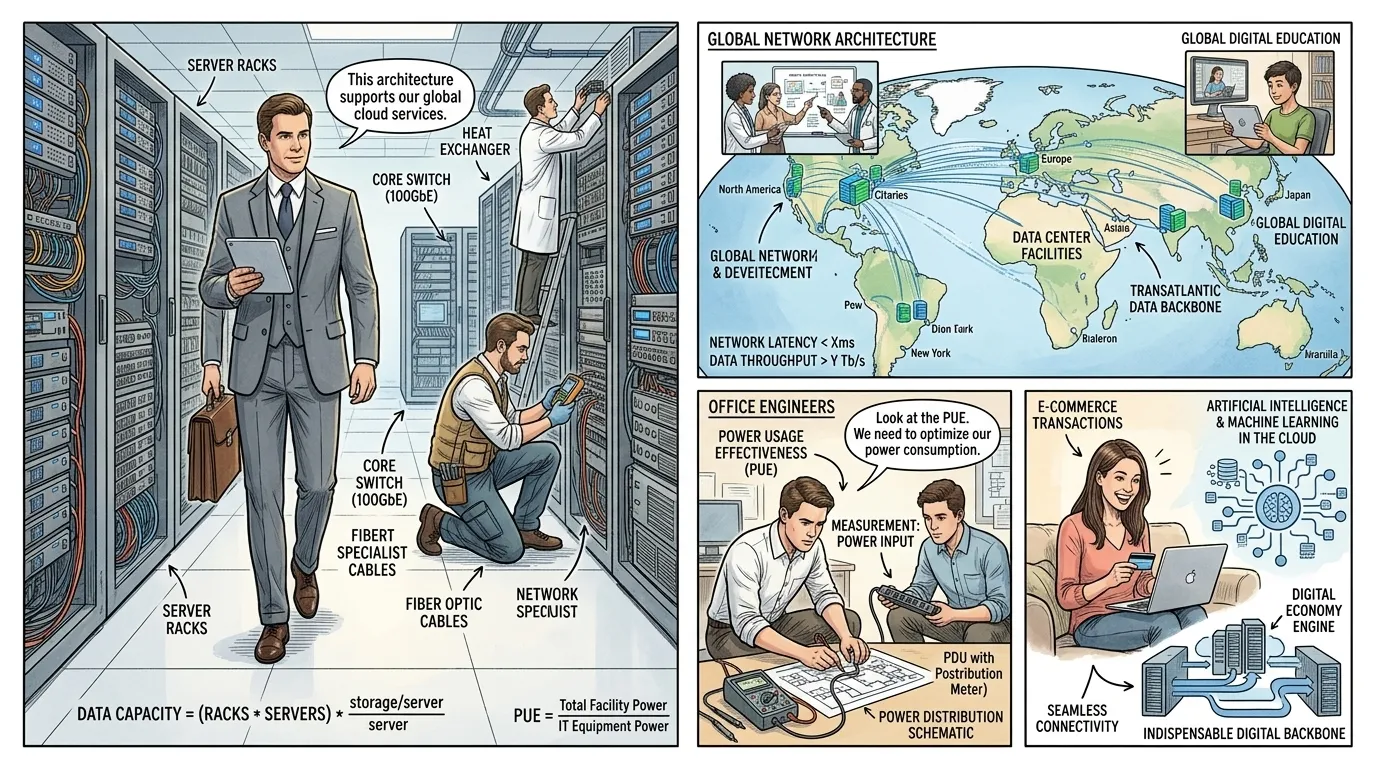
With the explosion of the internet, cloud computing, and digital services, data centers transitioned from specialized 'machine rooms' to the indispensable backbone of the global digital economy. Today, they are the silent powerhouses enabling nearly every online interaction: streaming video, social media, e-commerce, scientific research, and complex financial transactions. Their relentless expansion and geographical distribution allow for faster access to information, greater resilience against outages, and the processing capacity required for artificial intelligence and machine learning. This ubiquitous infrastructure has fundamentally reshaped how societies communicate, work, learn, and entertain themselves, making digital life possible on an unprecedented scale.
Page 9
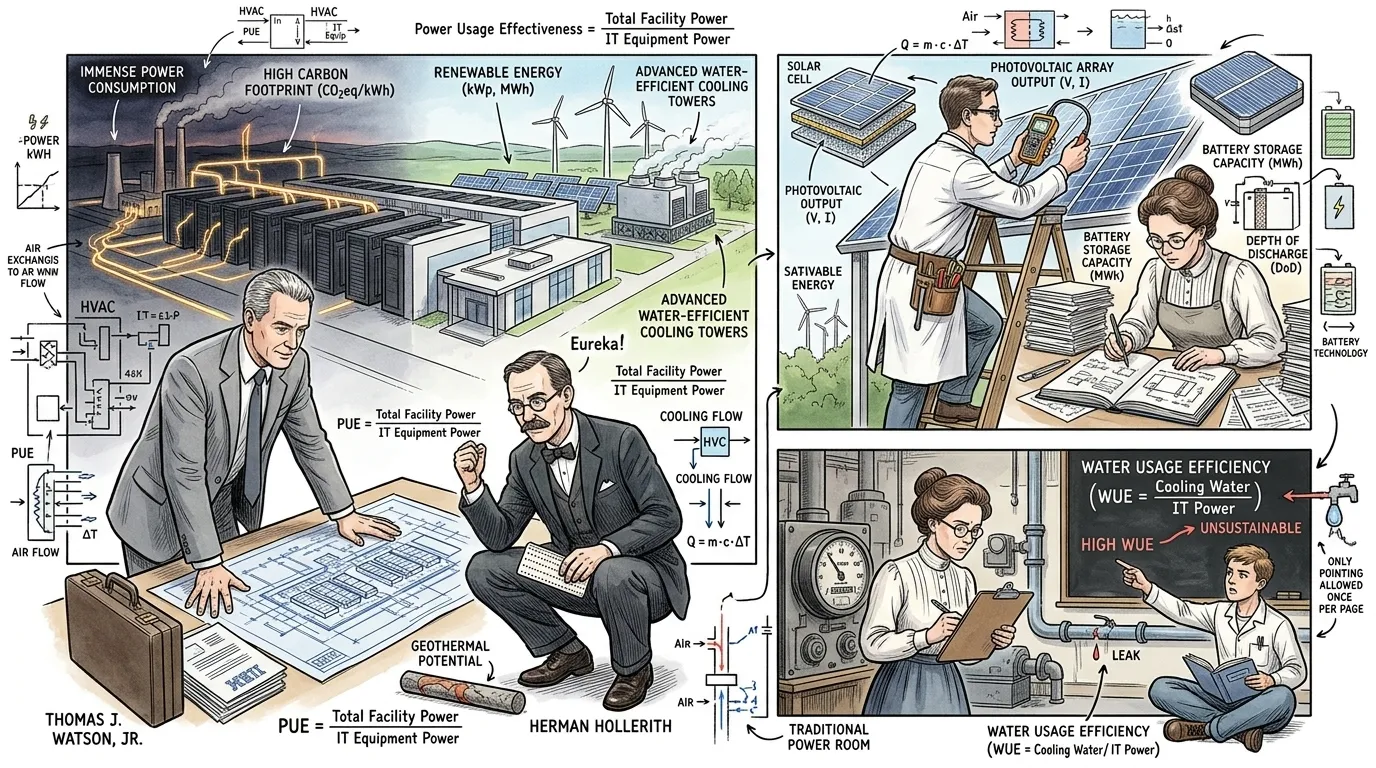
The pervasive reliance on data centers has brought profound societal changes, driving innovation across every sector. However, this digital transformation comes with significant environmental and ethical implications. Modern data centers consume prodigious amounts of electricity, accounting for a substantial portion of global energy usage, primarily for powering servers and cooling systems. This immense energy footprint raises concerns about carbon emissions and resource depletion. In response, the industry is actively investing in renewable energy sources, energy-efficient hardware, and innovative cooling techniques. The ongoing challenge is to balance the insatiable demand for digital services with the imperative for environmental sustainability, a critical focus for contemporary engineering and policy.
Page 10
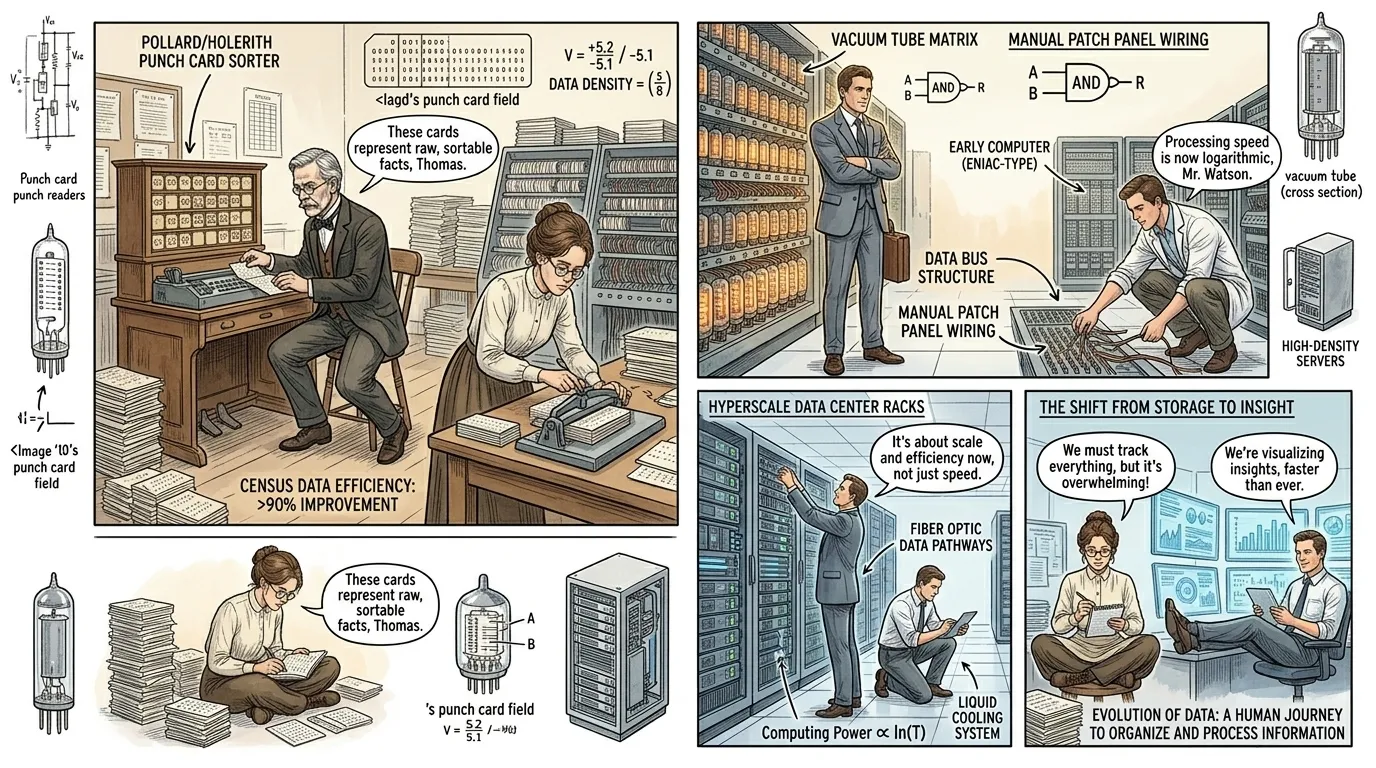
From Hollerith's mechanical tabulators to today's hyperscale cloud infrastructure, the evolution of the data center reflects humanity's unyielding drive to organize, process, and leverage information. What began as specialized rooms for early computers has matured into a global network of secure, resilient facilities, indispensable for everything from personal communication to global commerce and scientific discovery. The data center stands as a testament to persistent engineering innovation, continuously adapting to new demands for speed, capacity, and efficiency. Its legacy is not merely in the hardware it houses, but in the profound digital transformation it continues to enable, underpinning the very fabric of the 21st century.
About this story
- Location: Global
- Audience: general readers
Questions and answers
Read Wonder Inventions on your phone
Wonder Inventions is available on Android. Get Wonder Inventions on Google Play.