Drone
Drone — an illustrated inventions story, set in Global. 10 illustrated pages, free to read on Wonder Inventions.
Page 1
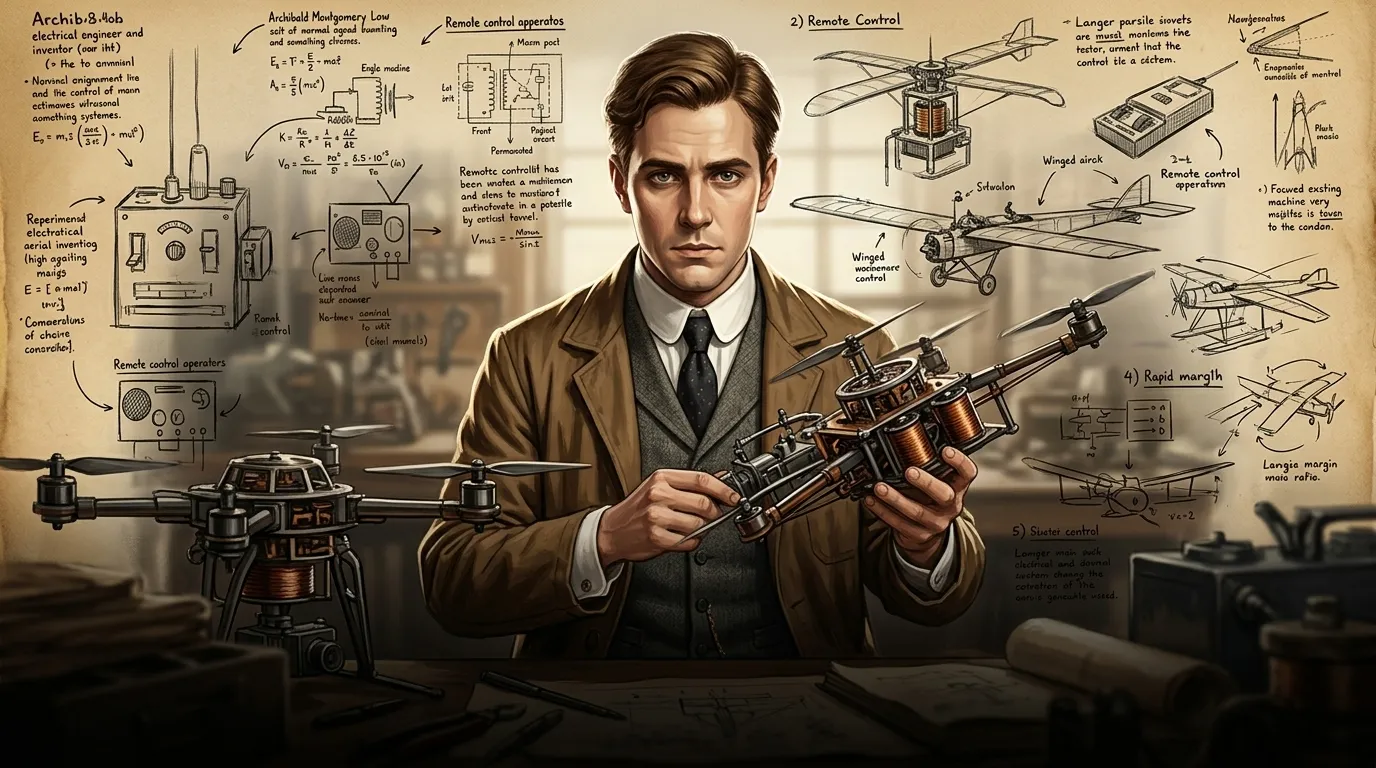
The year is 1917, and the Great War rages, demanding unprecedented advancements in aerial technology. Reconnaissance flights over enemy lines were perilous, often a one-way mission for brave pilots, and training anti-aircraft gunners required equally dangerous manned targets. Amidst this urgent necessity, a visionary engineer in England began to conceive of a radical solution that would remove human pilots from the immediate line of fire. Archibald Montgomery Low, working at the Royal Flying Corps' experimental facilities in Feltham, envisioned machines controlled from afar. As Low himself once mused, reflecting on the broader future of aviation, 'The day will come when the ordinary man, too, will be able to fly in a machine of his own,' a sentiment that subtly underpinned his work to make even combat flight safer and more accessible through automation.
Page 2
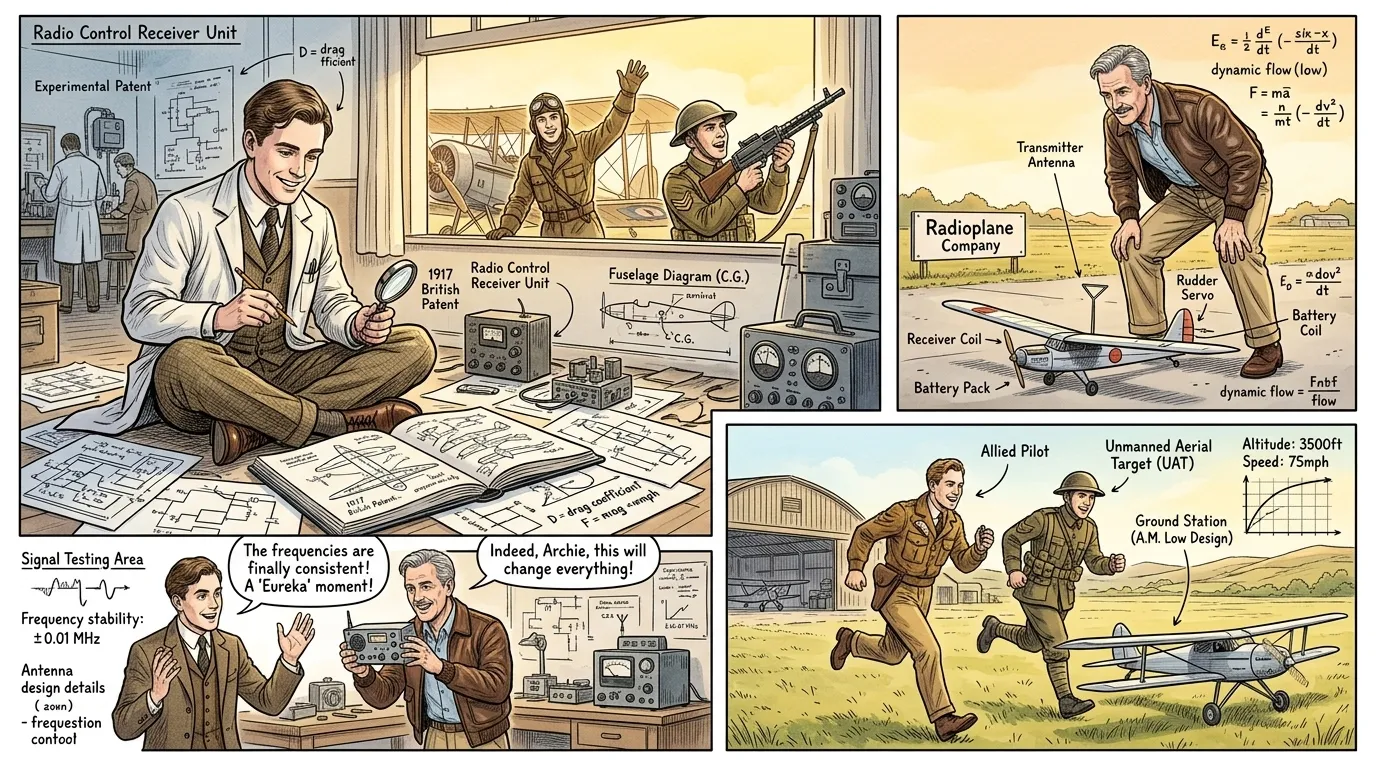
Before the advent of the drone, aerial observation and combat training demanded immense human sacrifice. Pilots braved enemy fire, harsh weather, and mechanical failures, with reconnaissance often involving low, slow passes over fortified positions, making them highly vulnerable. The high casualty rates underscored a critical need for systems that could perform these dangerous tasks without risking human lives. Every mission flown by manned aircraft was a gamble against enemy defenses and the unpredictable nature of early aviation technology. The fundamental challenge was clear: how to gain critical intelligence or conduct effective training exercises while minimizing direct human exposure to hostile environments.
Page 3
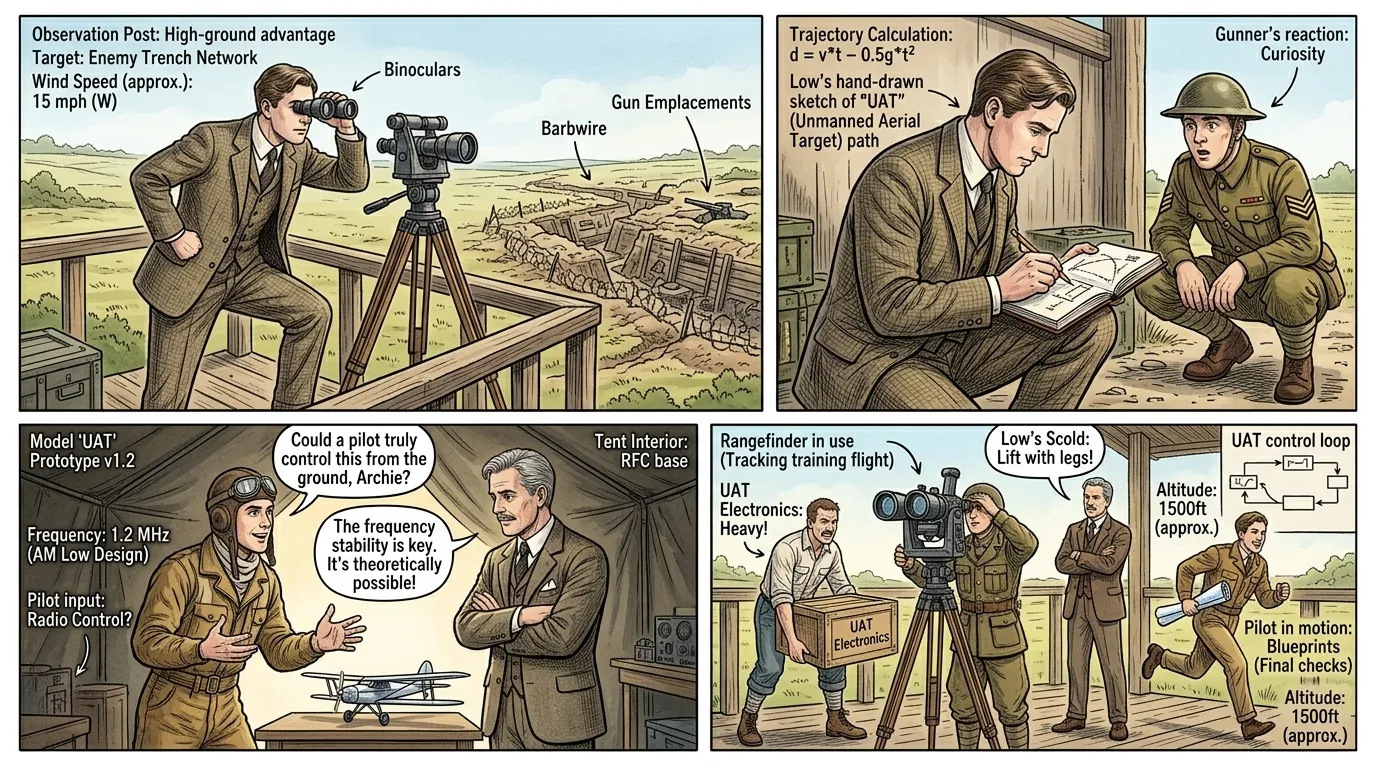
The idea of remotely controlled vehicles was not entirely new; Nikola Tesla had demonstrated a radio-controlled boat as early as 1898. However, translating this concept to reliable, stable flight presented a far greater technical hurdle, especially with the limited electronics of the early 20th century. Designers grappled with fundamental problems: how to maintain altitude, direction, and stability without a human pilot's immediate input. The crude guidance systems available often resulted in erratic, uncontrollable flights, making any practical application seem distant. This period was characterized by numerous theoretical proposals and speculative designs that far outstripped the practical capabilities of the time.
Page 4
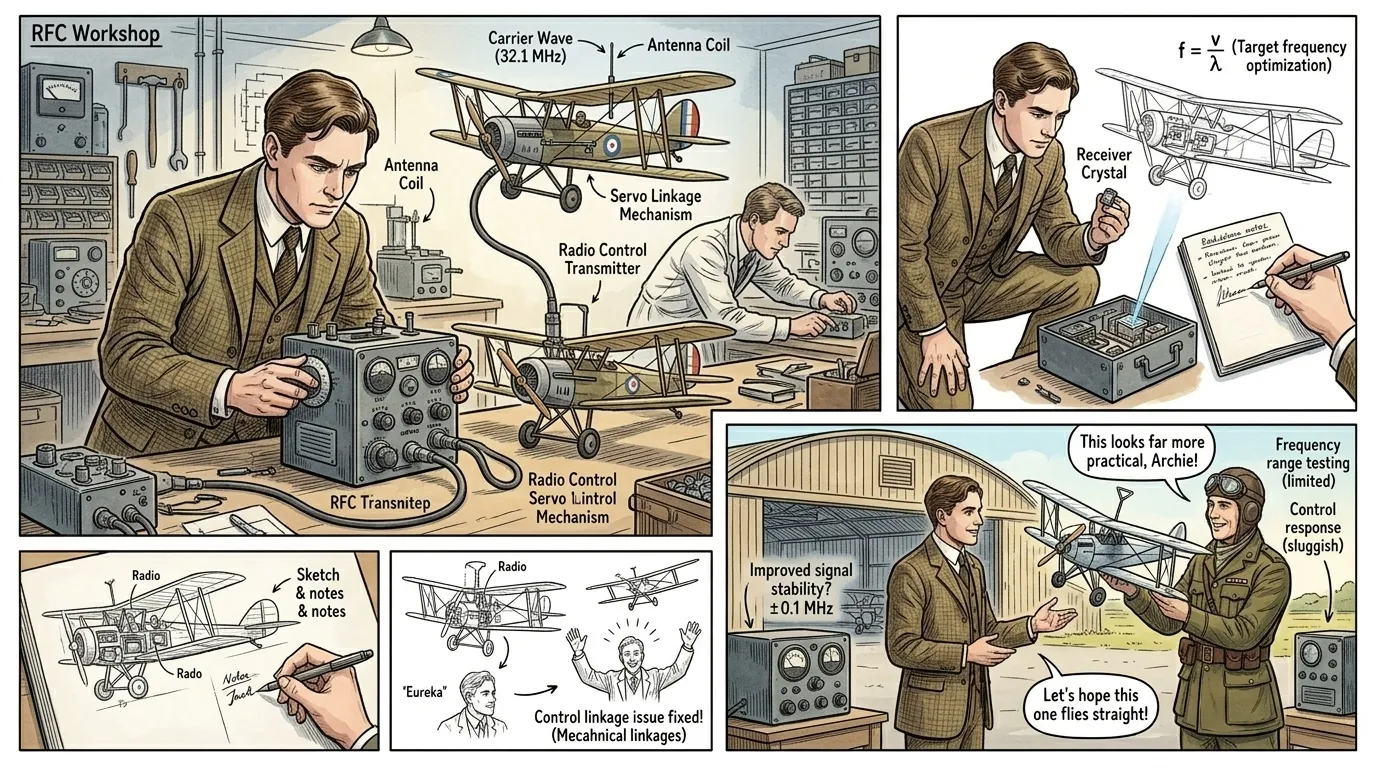
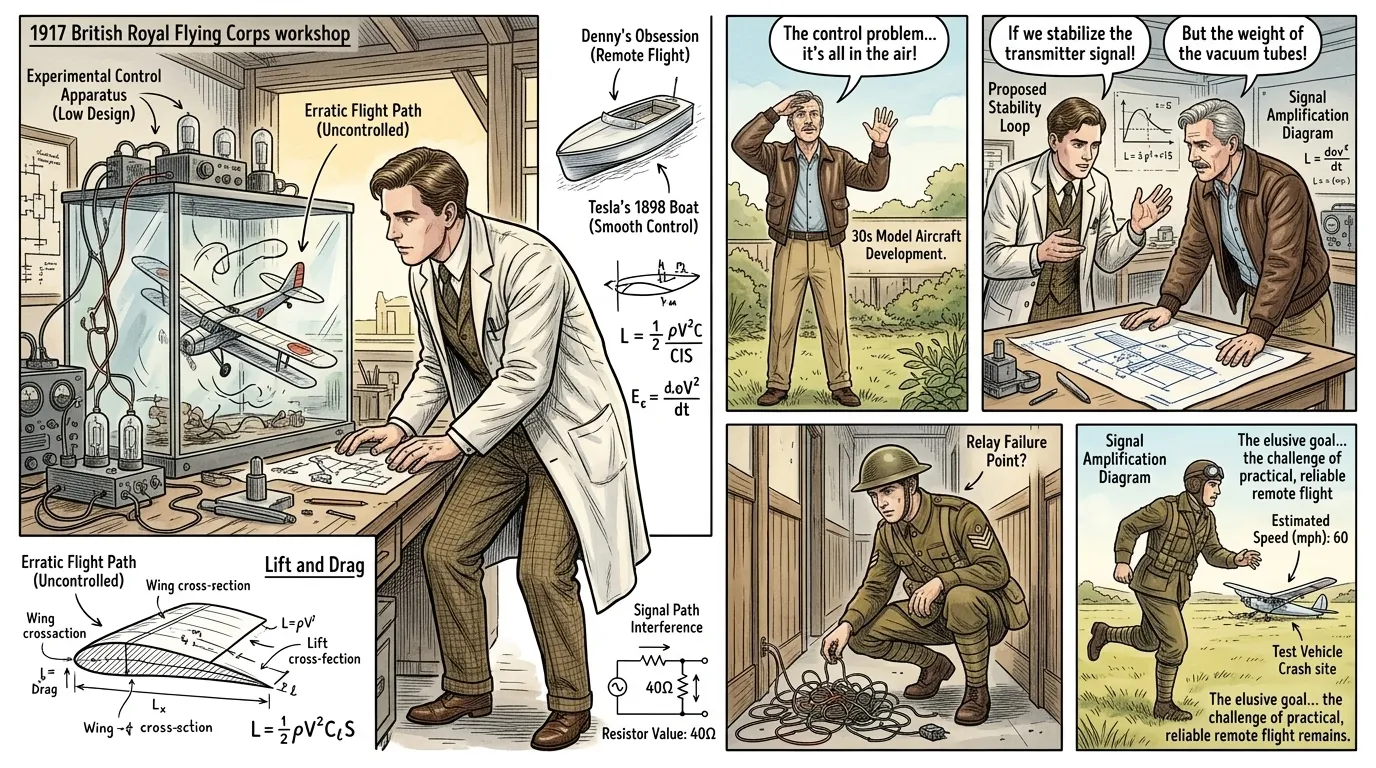
Archibald Montgomery Low, a prolific inventor and electrical engineer, was at the forefront of tackling the immense challenge of remote aerial control during WWI. His 'Aerial Target' project sought to develop a radio-controlled aircraft for training purposes. The core technical hurdle was establishing a stable, consistent link between a ground operator and the flying machine, while also building an airframe robust enough to perform maneuvers. Early attempts struggled with interference, limited range, and the sheer weight of the primitive radio apparatus. Low's team experimented tirelessly with different frequency modulations and mechanical linkages, slowly inching towards a workable solution, demonstrating the sheer persistence required for such a pioneering endeavor.
Page 5
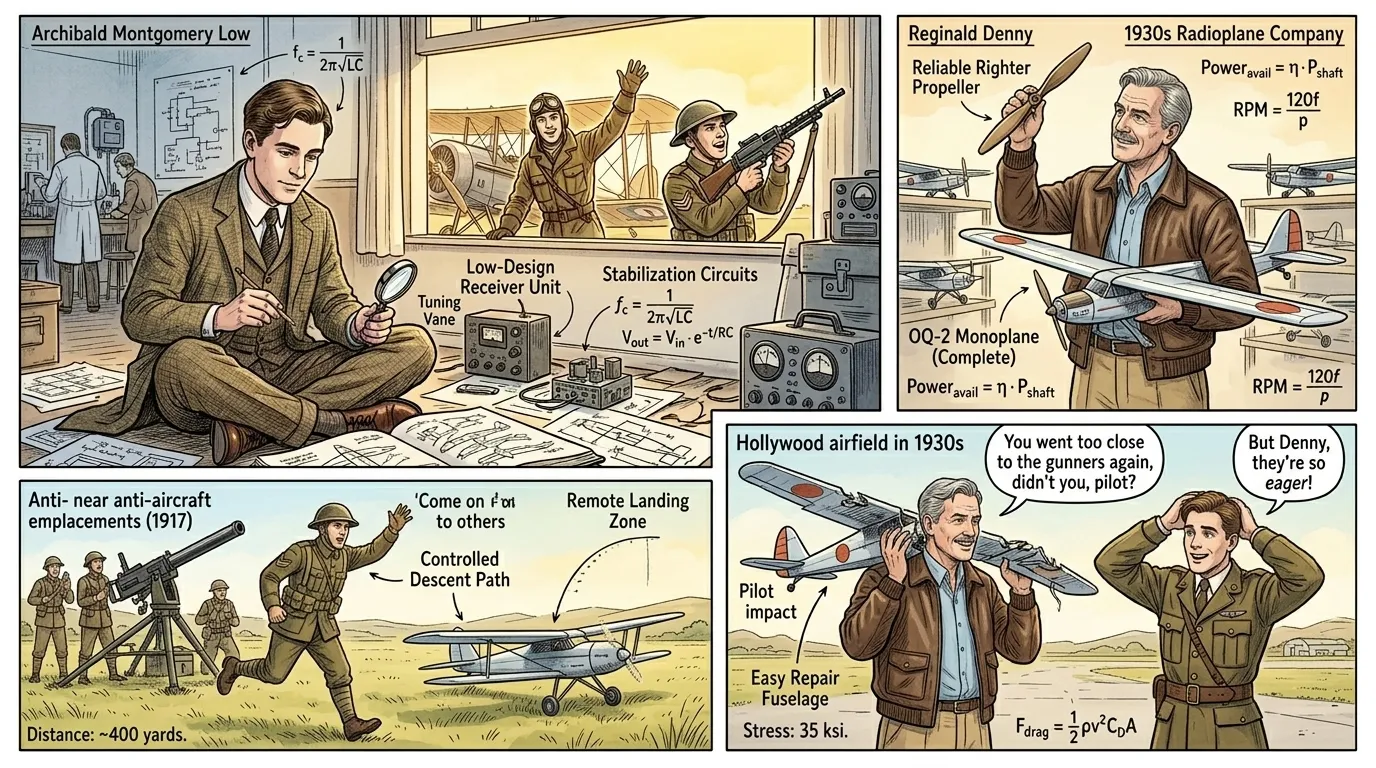
While Low laid foundational groundwork, the interwar period saw further breakthroughs, notably with Reginald Denny, a British actor and model aircraft enthusiast who moved to Hollywood. Denny recognized the ongoing need for economical, reusable aerial targets for military training. His company, Radioplane Company, founded in the 1930s, revolutionized the concept by mass-producing target drones. The technical challenge shifted from merely achieving remote flight to creating reliable, manufacturable, and repeatable systems that could withstand multiple hits and be easily repaired. Denny's efforts culminated in the OQ-2, a small, propeller-driven monoplane, making practical unmanned flight a reality for widespread military application.
Page 6
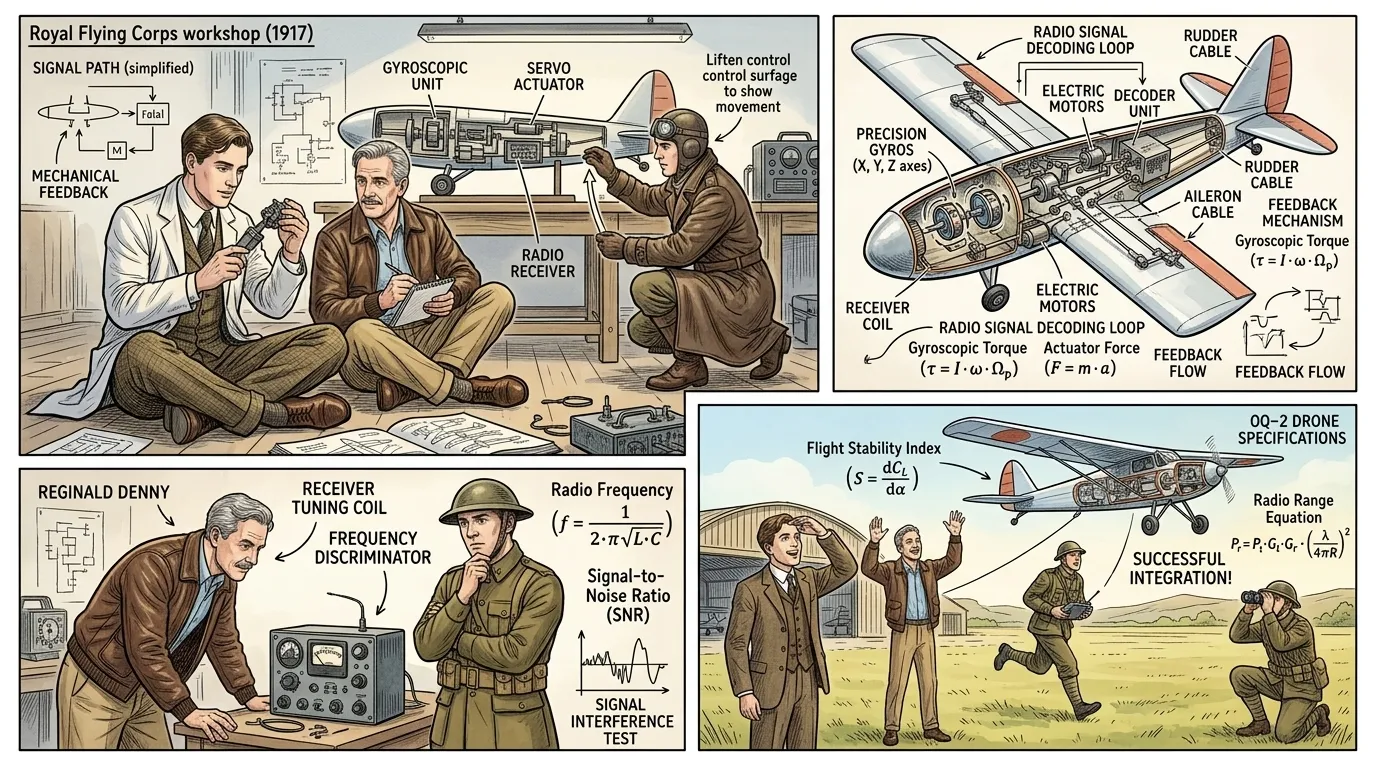
The breakthrough in practical drone operation relied heavily on advances in gyroscopic stabilization and sophisticated radio control. Early systems, like those in the OQ-2, employed gyroscopes to sense deviations from a desired flight path, providing automatic corrections to the control surfaces (ailerons, rudder, elevator). This mimicked a pilot's constant adjustments, maintaining stability. Commands from a ground operator were transmitted via radio signals, which were then decoded onboard to activate small electric motors or pneumatic actuators connected to these control surfaces. This elegant feedback loop allowed precise, albeit limited, control over the aircraft, making sustained unmanned flight feasible and dependable.
Page 7
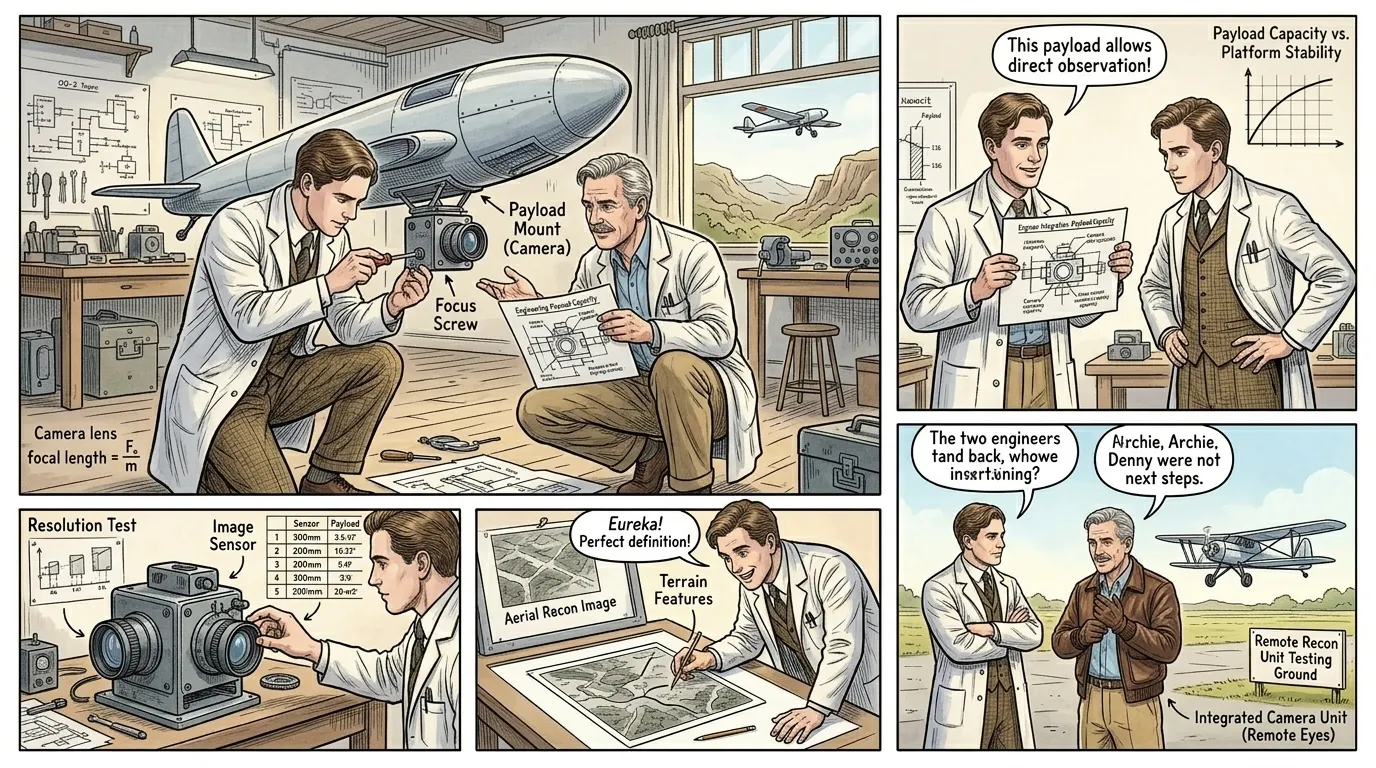
Initially designed as targets, the utility of these unmanned aircraft quickly expanded beyond training. Engineers began to realize their potential for reconnaissance, particularly in environments too dangerous or inaccessible for manned missions. The next logical step was the integration of cameras and other sensor equipment. Early aerial cameras were bulky and required robust platforms, but as photographic technology advanced, drones could carry increasingly sophisticated payloads. This transformation from simple 'flying targets' to 'remote eyes' marked a significant evolution, laying the groundwork for the modern surveillance drone. The ability to collect intelligence without risking human life proved invaluable in subsequent conflicts.
Page 8
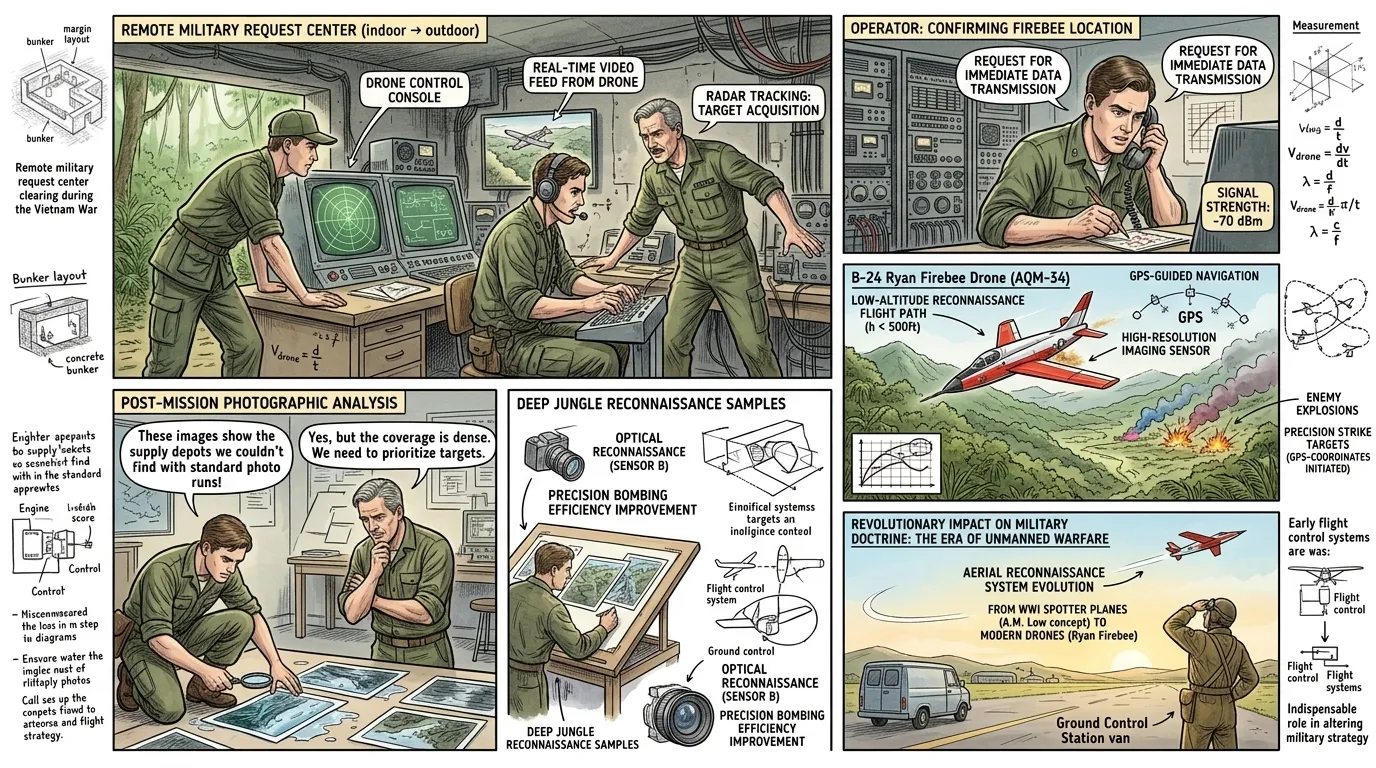
The operational success of early drones, particularly in reconnaissance during the Vietnam War with systems like the Ryan Firebee, irrevocably altered military doctrine. Their ability to fly hazardous missions, gather critical intelligence, and even deliver precision strikes without exposing pilots to enemy fire proved revolutionary. Militaries around the world began investing heavily in unmanned aerial vehicle (UAV) research and development, seeking to leverage this technological edge. The integration of advanced navigation, such as GPS, and high-resolution imaging further solidified the drone's role as an indispensable asset on the modern battlefield. The shift towards robotic warfare was underway, fundamentally changing strategic planning.
Page 9
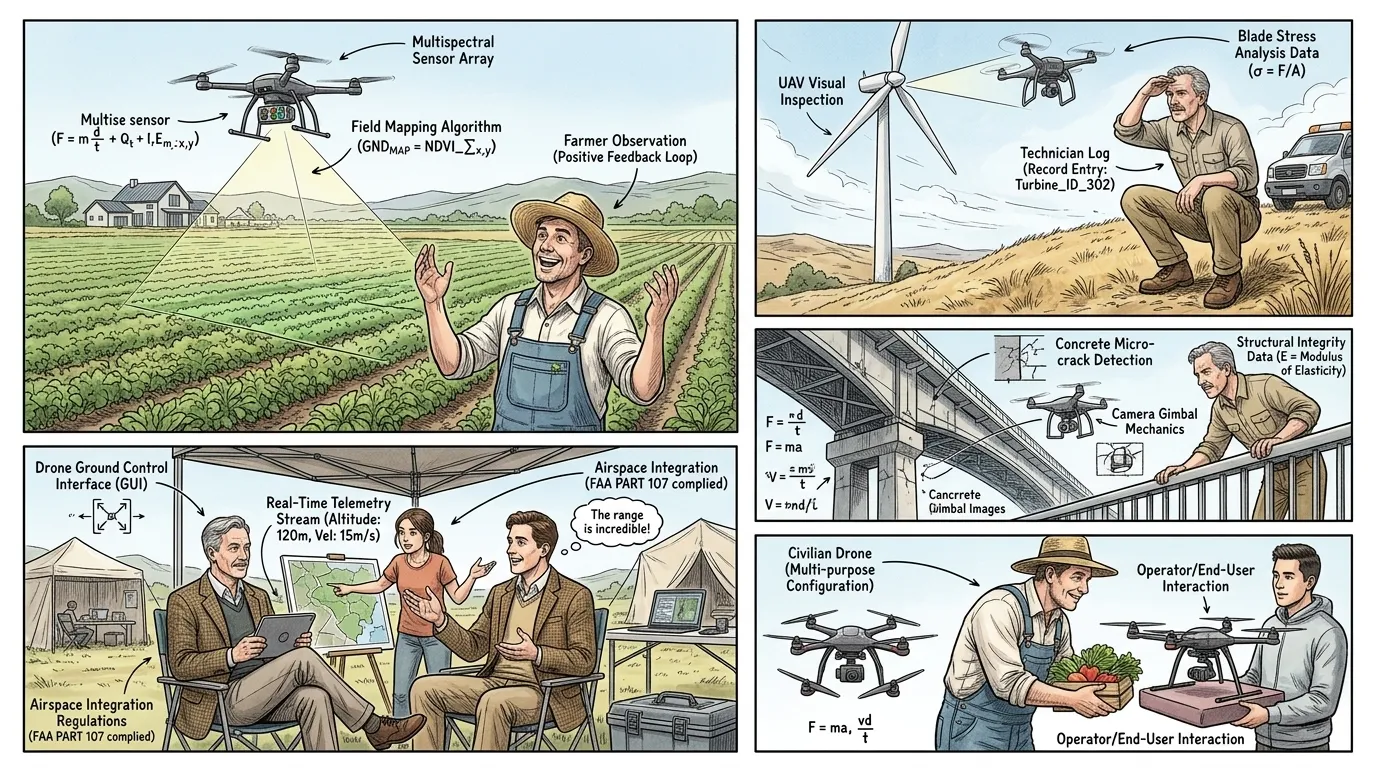
The technological advancements spurred by military drone development soon found their way into civilian sectors, opening up entirely new possibilities. From mapping vast agricultural fields to inspecting towering infrastructure like bridges and wind turbines, drones offered cost-effective and safer alternatives to traditional methods. Early adopters in industries like agriculture, surveying, and logistics began to experiment with these versatile platforms, recognizing their efficiency and access to difficult-to-reach areas. The technical transition involved adapting robust military-grade systems for commercial needs, focusing on user-friendliness, payload capacity for civilian sensors, and regulatory compliance for airspace integration. This marked the drone's journey from a specialized military tool to a multipurpose industrial workhorse.
Page 10
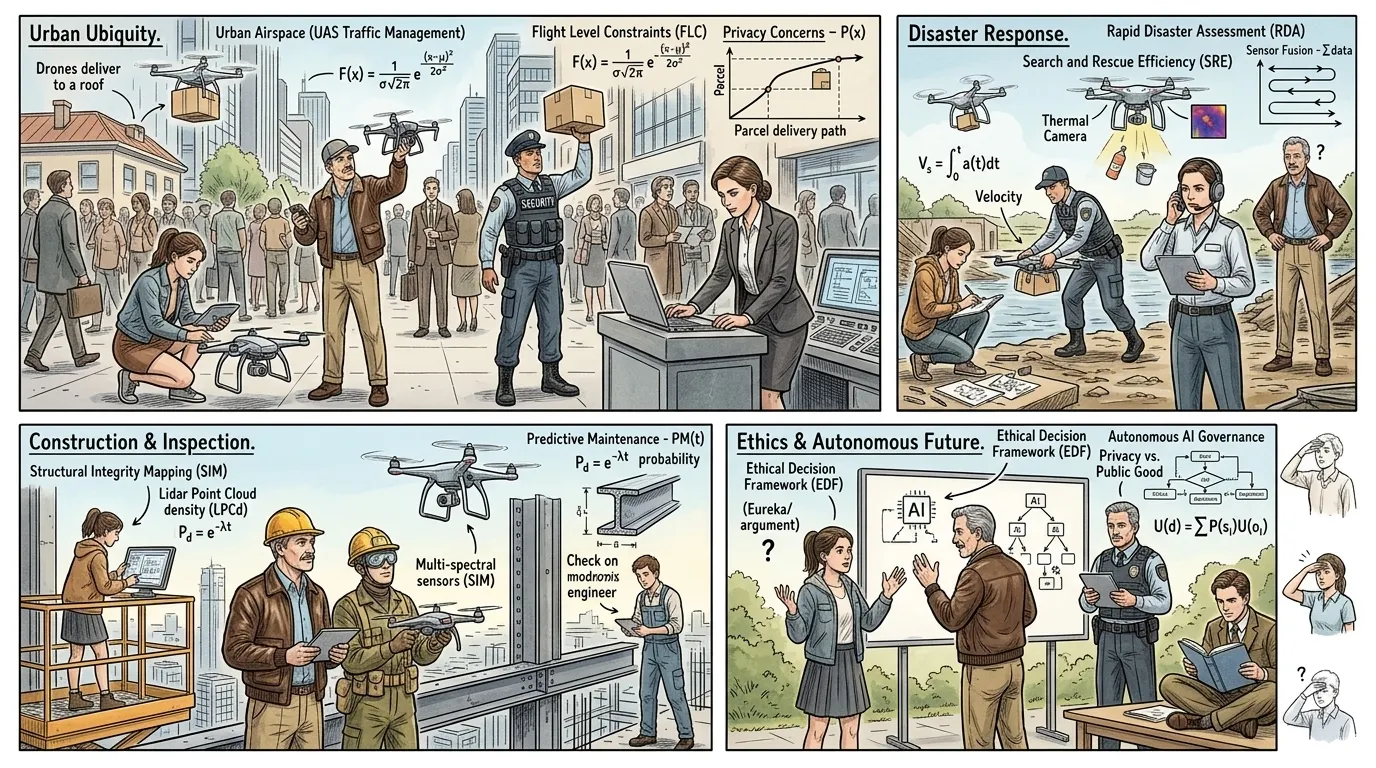
Today, drones are ubiquitous, transforming industries from logistics and construction to entertainment and emergency services. Their impact is profound, enabling unprecedented efficiency, safety, and access across countless domains. However, this widespread adoption also brings complex societal and ethical challenges, including privacy concerns, airspace management, and potential misuse. The drone, once a rudimentary radio-controlled target, has evolved into an intelligent, autonomous system, pushing the boundaries of remote operation and artificial intelligence. The journey of the drone from a wartime necessity to a civilian utility highlights humanity's continuous quest to extend its capabilities, always balancing innovation with responsible deployment in an increasingly connected world.
About this story
- Location: Global
- Audience: general readers
Questions and answers
Read Wonder Inventions on your phone
Wonder Inventions is available on Android. Get Wonder Inventions on Google Play.