Electric Telegraph
Electric Telegraph — an illustrated inventions story, set in Global. 10 illustrated pages, free to read on Wonder Inventions.
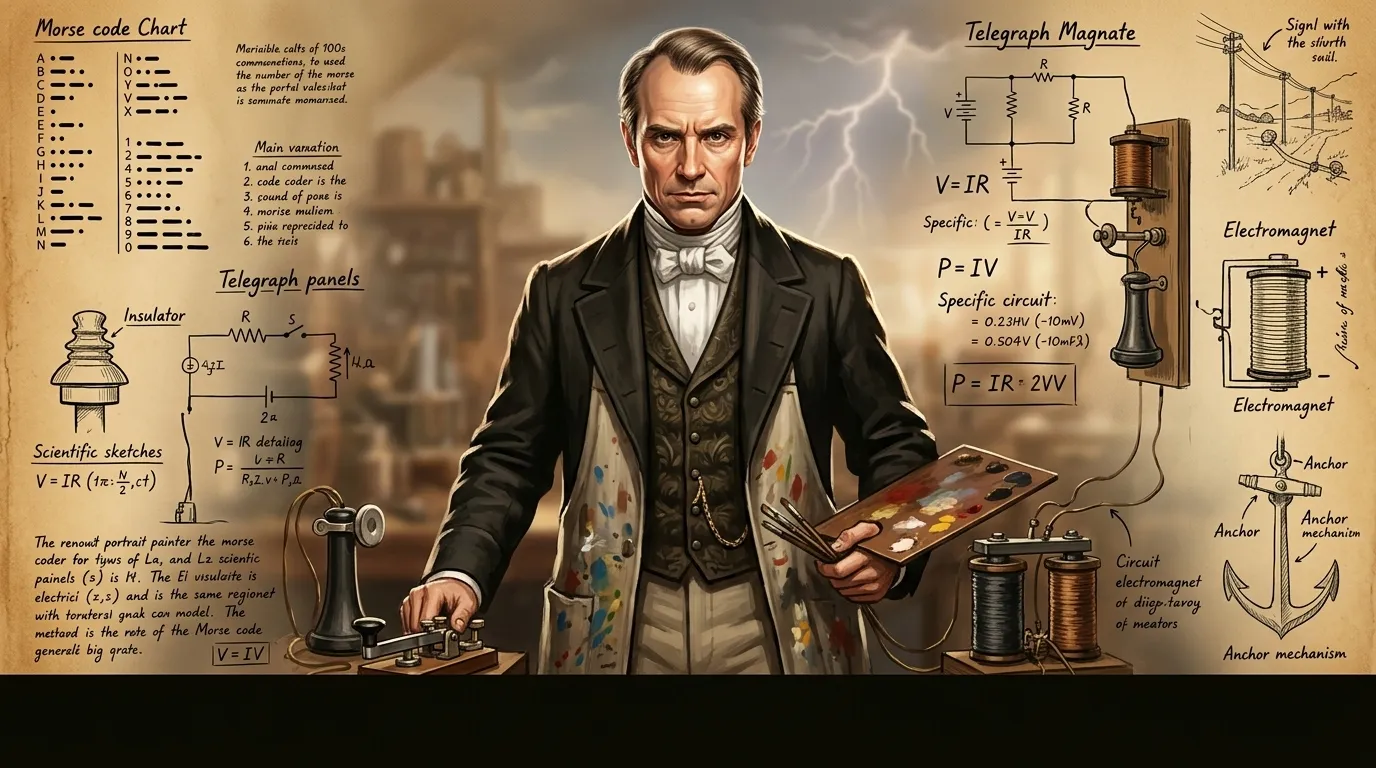
Page 1
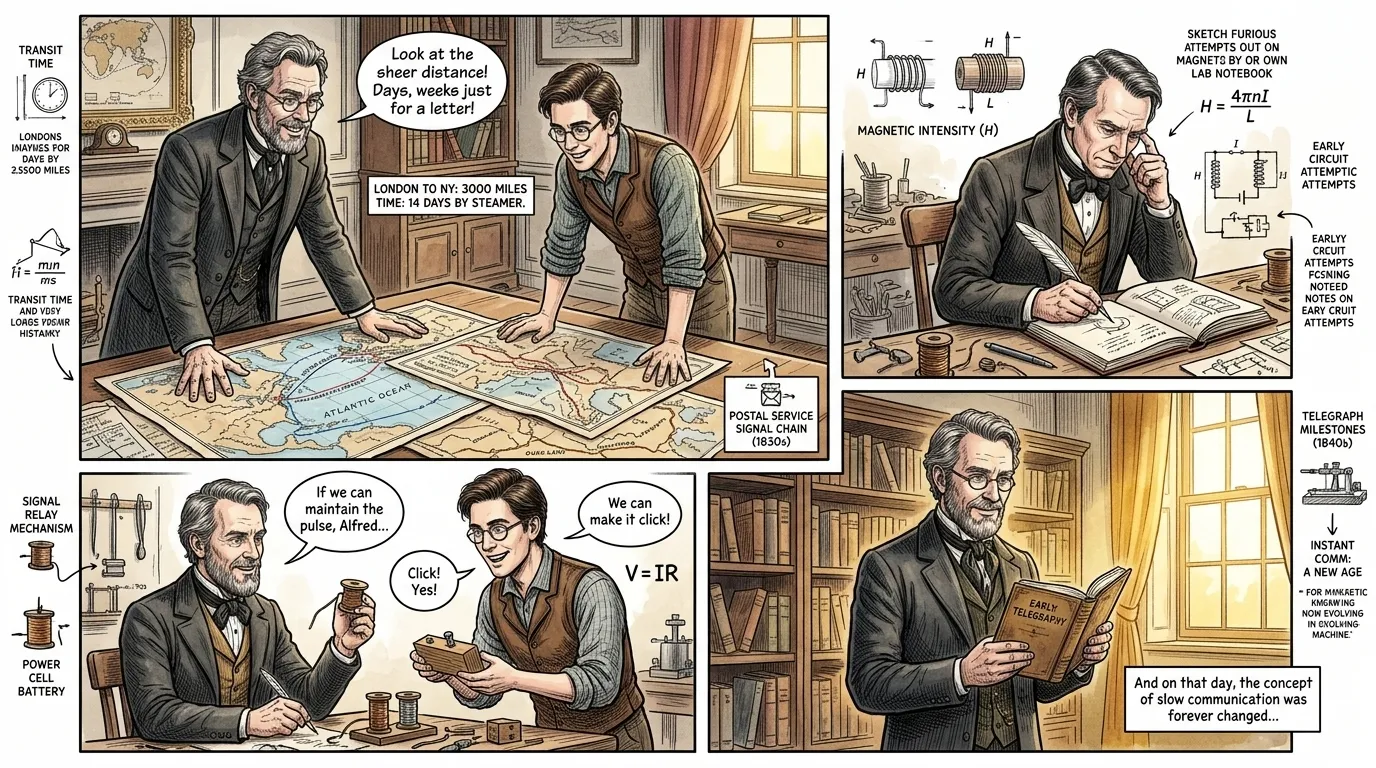
For millennia, the pace of human communication was dictated by the speed of physical travel. News, commands, and vital information moved no faster than a horse, a ship, or a runner, leaving vast distances as formidable barriers to progress and governance. The challenges were immense: critical decisions delayed, markets reacting too slowly, and nations often isolated from events unfolding just hundreds of miles away.
""This reliance on the tangible, on the sheer physical effort of conveying messages, severely limited our reach," observed a historian in a 19th-century study, gesturing towards old maps. "A world divided by days or even weeks of travel could hardly act as one unified entity.""
Page 2
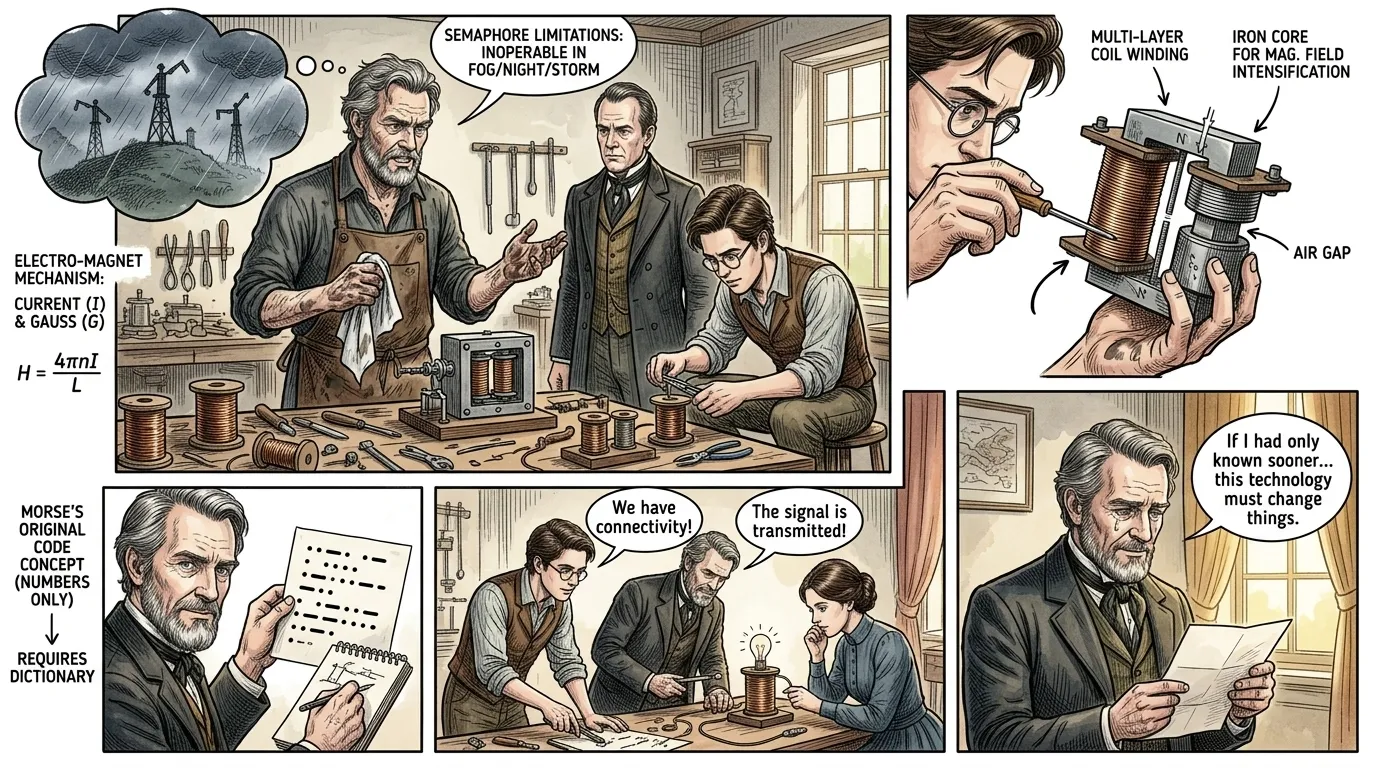
Before the electric telegraph, communication systems were inventive but fundamentally limited. Optical telegraphs, known as semaphores, used movable arms on towers to relay signals across line-of-sight networks, a breakthrough for their time. However, their efficiency plummeted in fog, darkness, or adverse weather, rendering them unreliable and slow over vast territories.
""Imagine the frustration," a grizzled engineer explained, wiping grease from his hands, "waiting days for a vital message from Boston to reach Washington. The signal would travel from tower to tower, but a sudden storm could halt the entire network for hours. It was a constant battle against nature and distance itself." He shook his head. "The idea of electrical pulses, travelling almost instantly, was a dream, but how to make it span a continent?""
Page 3
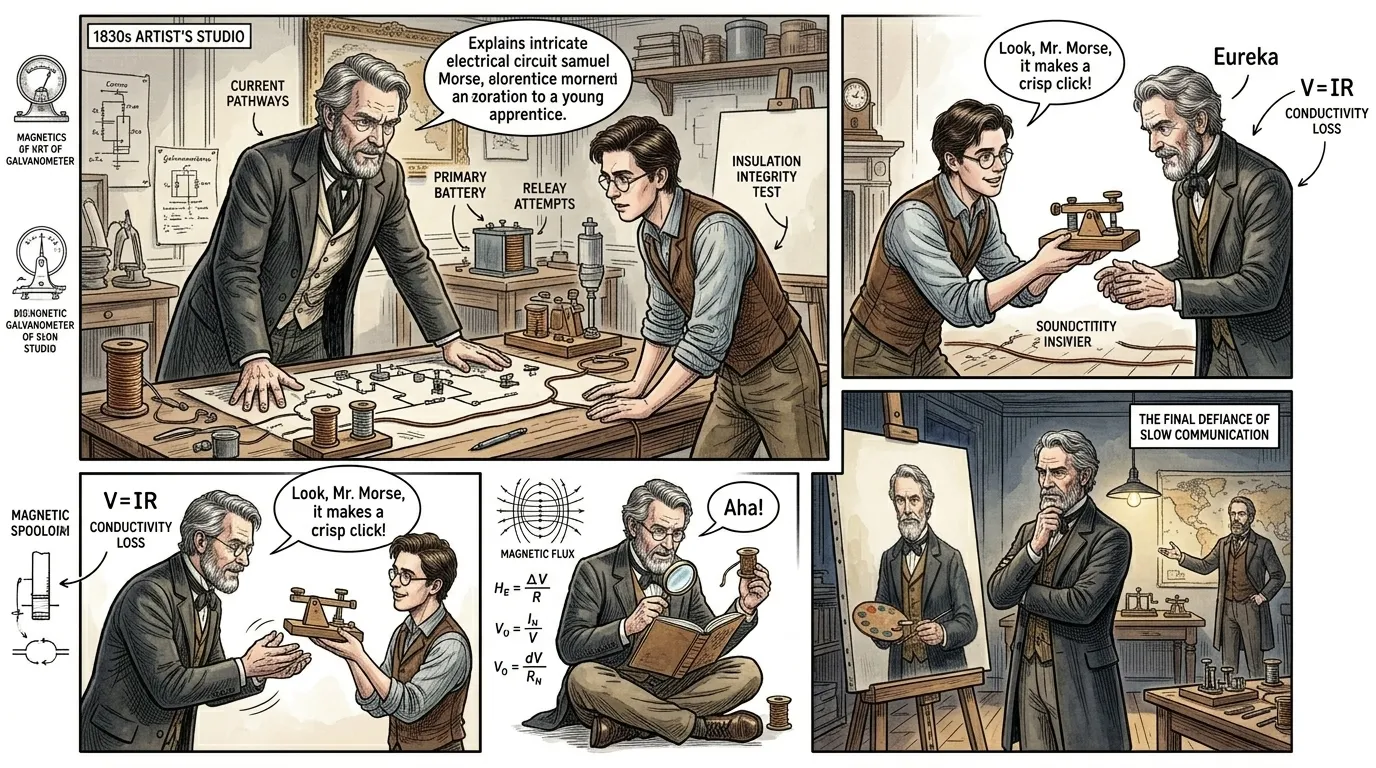
Samuel Morse, a renowned portrait painter, was deeply affected by the slow pace of news when he learned of his wife's sudden illness and death weeks late. His journey home across the Atlantic in 1832 proved pivotal; conversations about electromagnetism sparked an idea. Could electricity, a force barely understood, be harnessed to send messages instantly?
""The very idea that electricity could carry intelligence was revolutionary," Morse explained to a young apprentice in his cluttered studio, pointing to a rough sketch. "I realized that the presence or absence of an electric current could be a mark, a symbol. But the practicalities, the wires, the power, and making it work over any meaningful distance — that was the true mountain to climb." He tapped the sketch, a furrow in his brow. "How do you send a signal that won't fade after a few miles?""
Page 4
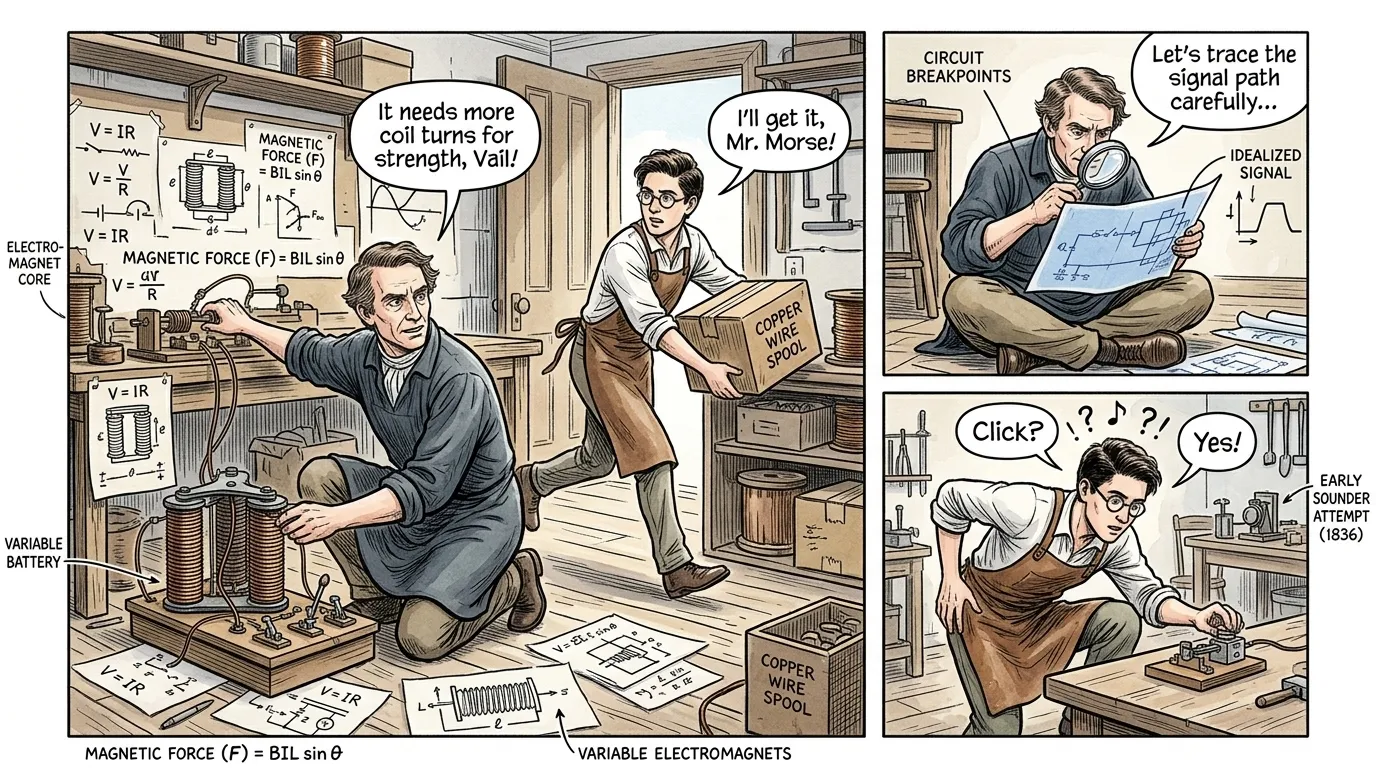
Morse's breakthrough hinged on a fundamental principle of physics: electromagnetism. When an electric current passes through a coil of wire wrapped around an iron core, it temporarily transforms the iron into an electromagnet. This temporary magnet can then attract a small piece of metal, a 'lever' or 'armature,' to perform a mechanical action.
""Observe closely," Morse instructed, demonstrating to his assistant Alfred Vail, a younger man with spectacles and an earnest expression, dressed in practical workshop attire. "A simple switch closes the circuit. The current flows, energizing this coil. And see?" He flicked a switch, and a metal arm visibly snapped toward the coiled core. "This attraction is our language, our means to create a mark, a dot, or a dash. The speed of light carries our intention.""
Page 5
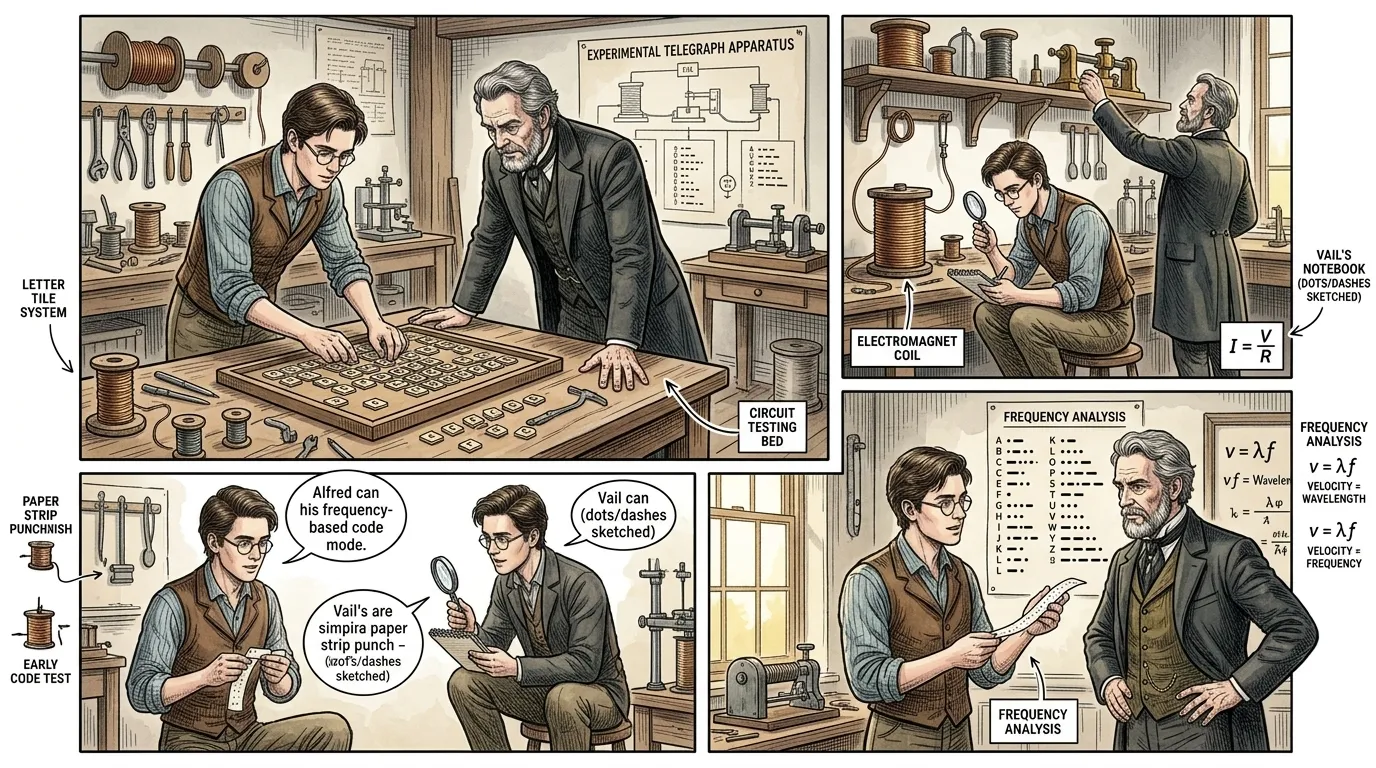
For the electrical pulses to convey meaningful information, a universal code was essential. Morse initially conceived a numerical dictionary where numbers represented words. However, his assistant, Alfred Vail, recognizing the inefficiency, proposed a system of dots and dashes representing letters, prioritizing shorter sequences for frequently used letters, a revolutionary step.
""The dictionary approach is too cumbersome, Mr. Morse," Vail argued, meticulously arranging letter tiles on a table. "We must distill language to its most efficient form. Look here: 'E' is the most common letter; it should be a single dot. 'Q' is rare; a longer combination. This frequency-based assignment makes the code faster, more intuitive for the operator." Morse nodded thoughtfully. "Indeed, Vail. This simplification is paramount for practical application. We're not just sending electricity; we're sending thought.""
Page 6
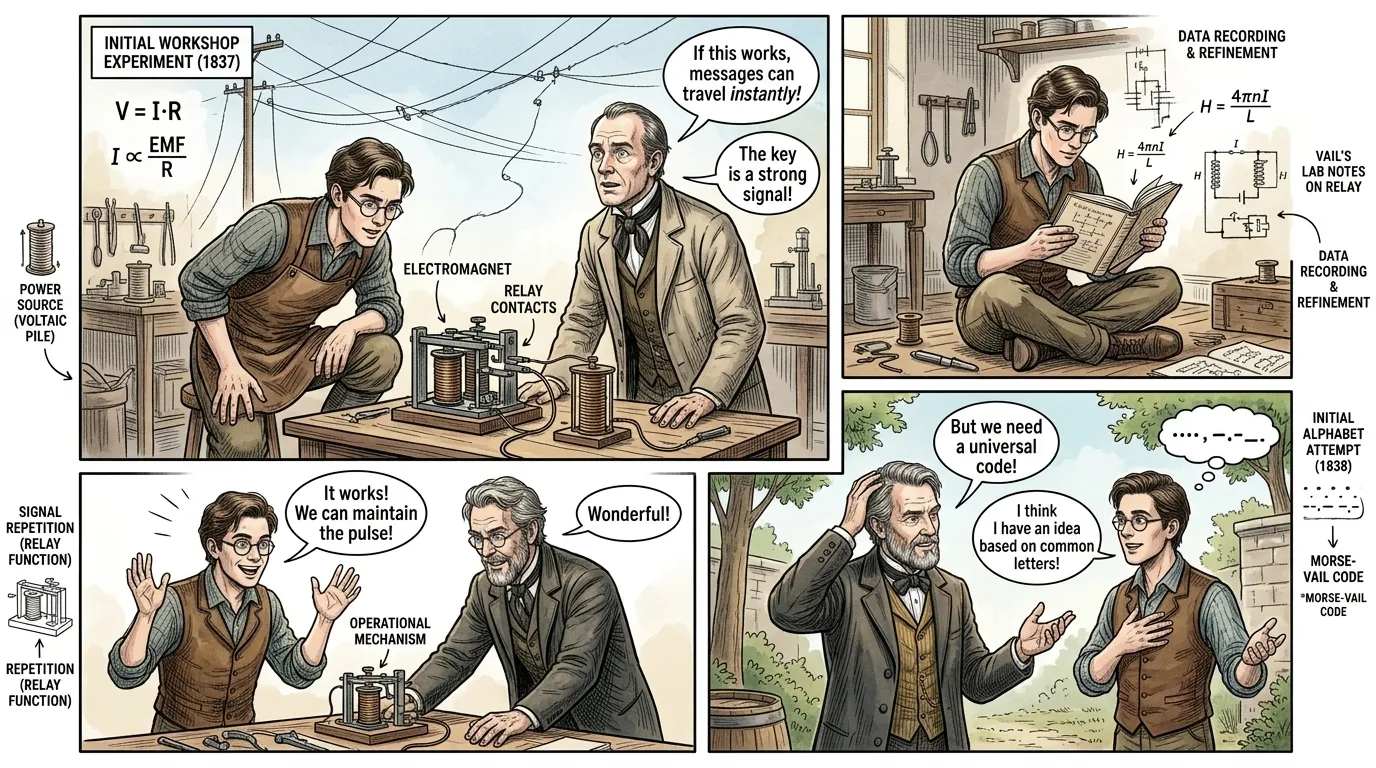
The greatest technical hurdle was the attenuation of the electrical signal over long distances. A strong pulse sent from New York would arrive in Philadelphia as a whisper, too weak to operate a receiver. The ingenious solution was the electromagnetic relay, a device that became the 'amplifier' of the telegraph network.
""This, Mr. Morse, is the answer to our dilemma of distance," Vail exclaimed, pointing to a newly constructed apparatus. "A weak incoming current activates a small electromagnet here. That magnet then pulls a lever, which closes a separate, powerful local circuit. This sends a fresh, strong pulse along the next section of wire, effectively boosting our message. It's a chain reaction, making a continental network possible!" Morse's eyes lit up. "Magnificent, Vail! This changes everything. It means our messages can truly travel without limits!""
Page 7
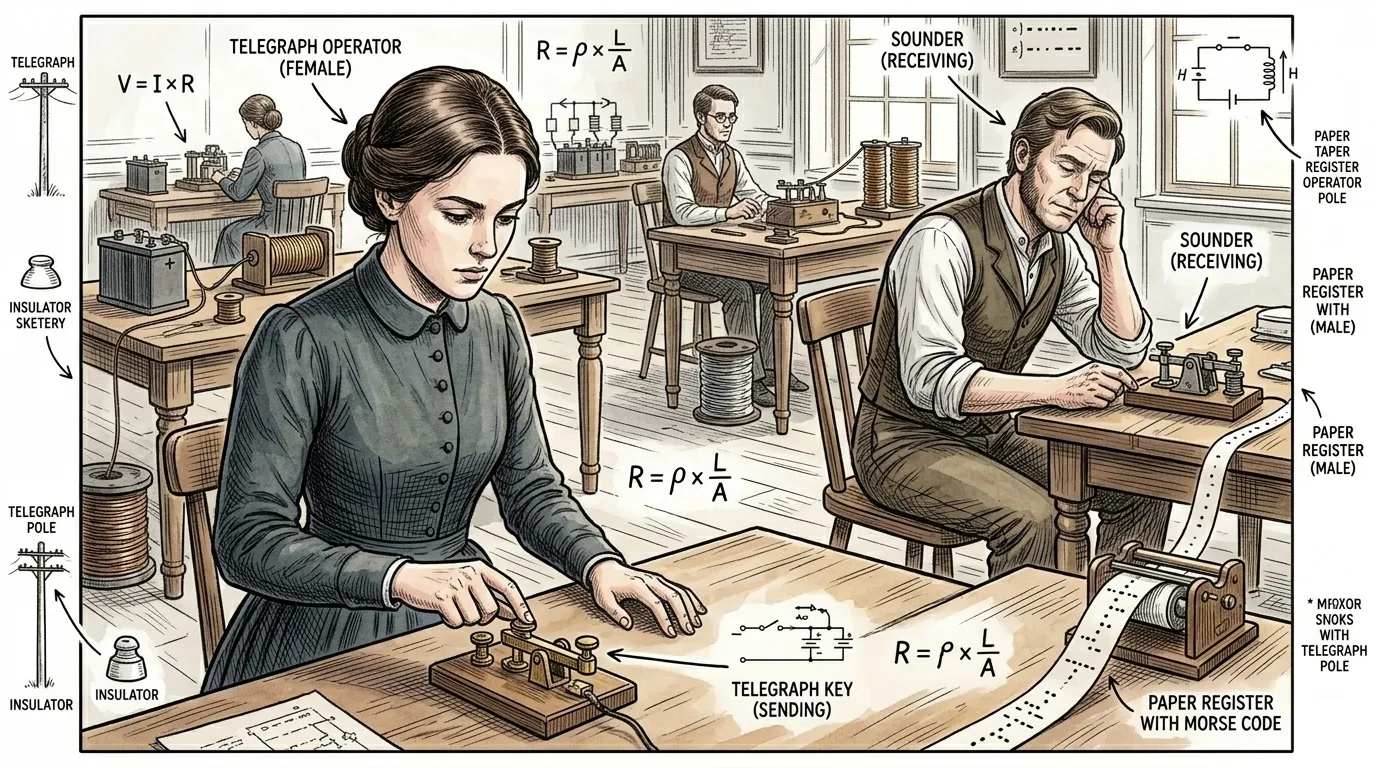
With the relay overcoming distance, the practical operation of the telegraph became straightforward. An operator at the sending station would press a 'key' – a simple switch – to create short (dots) or long (dashes) electrical pulses. At the receiving station, these pulses activated an electromagnet that either moved a stylus to mark paper tape or caused an audible click from a 'sounder' device.
""The rhythm is crucial," explained a telegraph operator, a focused young woman in a practical dress with her hair neatly pinned back, demonstrating the key. "A quick tap for a dot, a longer press for a dash. You can hear it as well as read it." Across the room, an older male operator, listening intently to the 'clicks' from a sounder, nodded. "It's like learning a new language, purely through sound and timing. The clicks speak volumes, telling us of urgent news or simple greetings across miles.""
Page 8
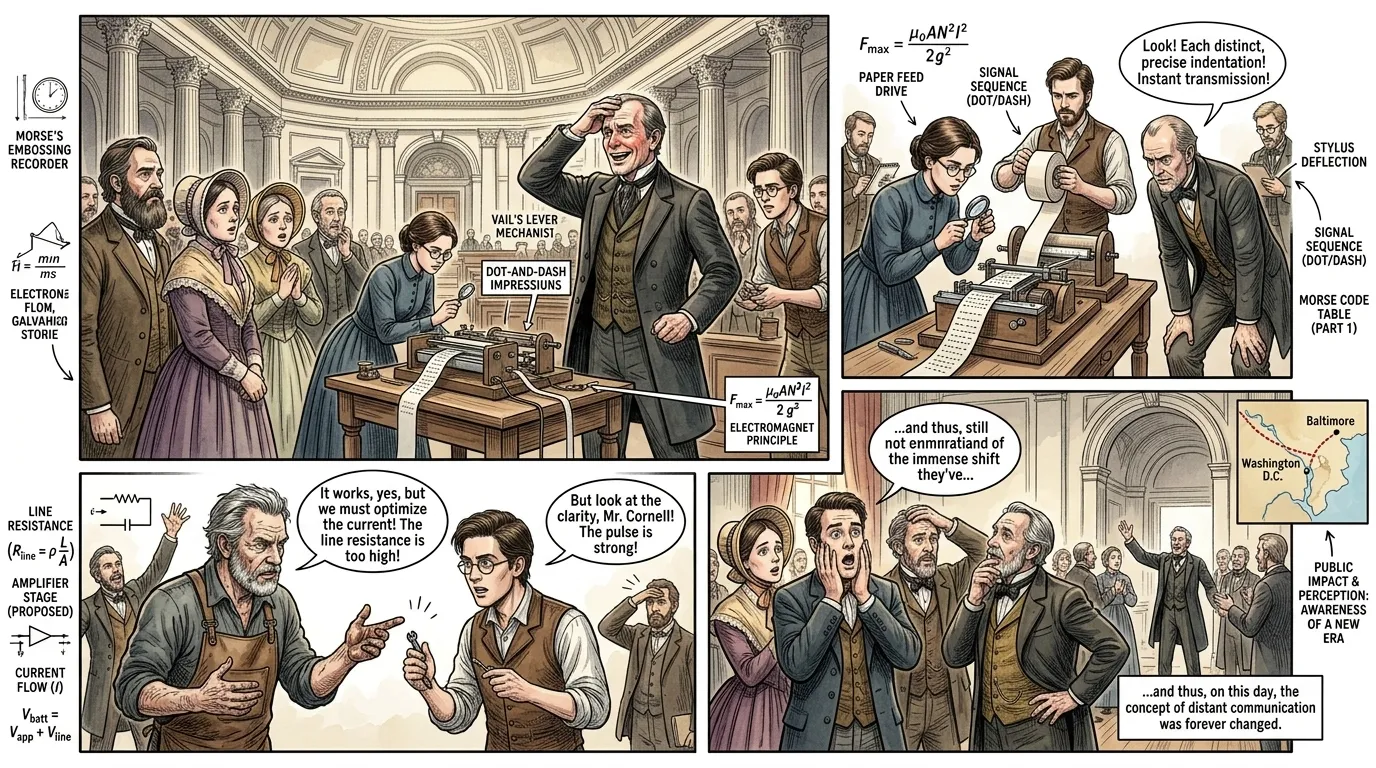
On May 24, 1844, the world changed forever. From the Supreme Court chamber in the U.S. Capitol, Samuel Morse sent the first official telegraph message to Alfred Vail in Baltimore: "What Hath God Wrought?" This instantaneous transmission of thought across 40 miles heralded a new era, demonstrating the telegraph's profound potential.
"As the final clicks echoed, a palpable tension broke into exhilaration. Morse, wiping his brow, looked around the chamber, his voice filled with emotion. "As the great thinker Ralph Waldo Emerson once mused about the power of thought and connection, 'Speech is power: speech is to persuade, to convert, to compel.' This invention, I believe, extends that power across vast distances, enabling a new kind of persuasion, conversion, and compulsion for a nation, making our collective voice truly heard." The onlookers murmured in agreement, sensing the profound shift."
Page 9
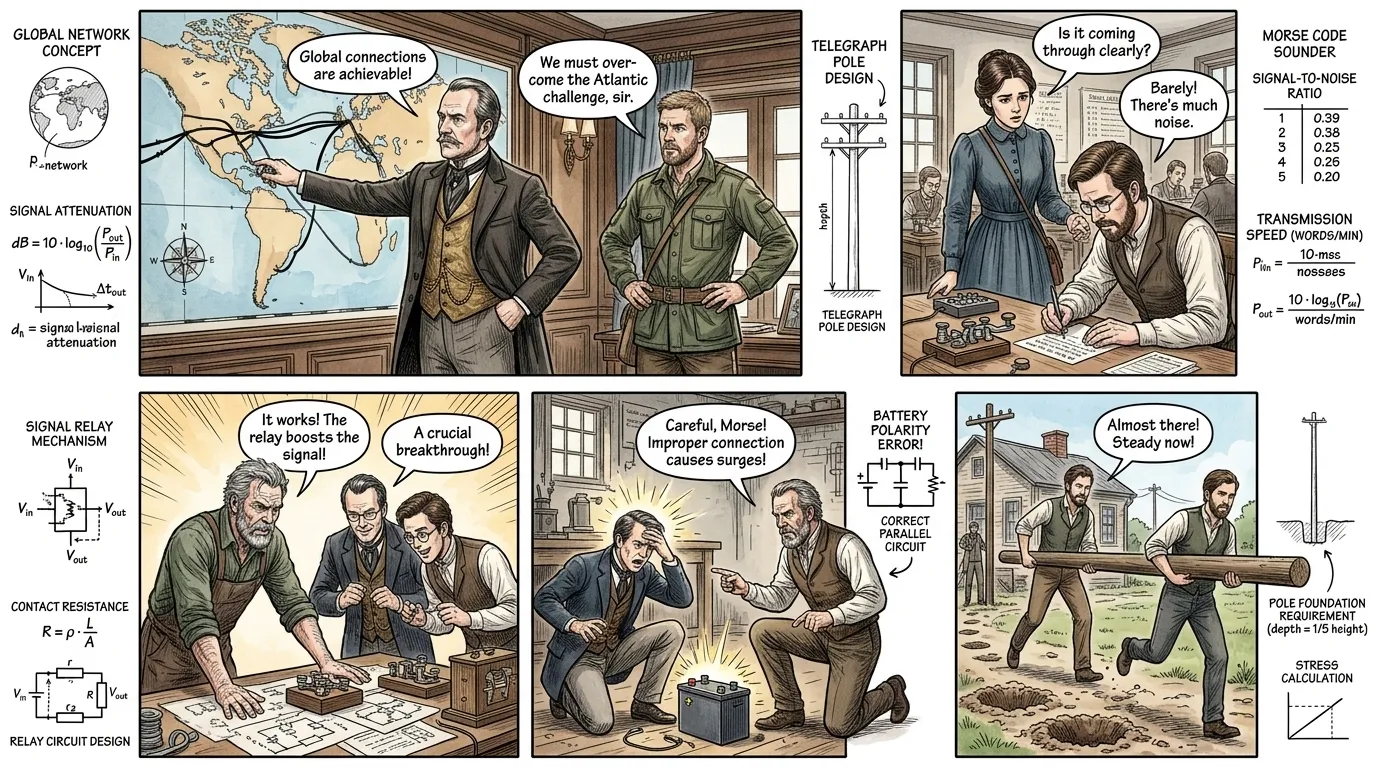
Following its monumental debut, the electric telegraph spread with astonishing speed. Within decades, continents were crisscrossed with wires, and audacious underwater cables began to bridge oceans, notably the transatlantic cable of 1866. This vast network fundamentally reshaped commerce, politics, and military strategy, accelerating information flow to an unprecedented degree.
""The demand was insatiable," a prominent telegraph magnate declared, tracing lines on a large world map. "From merchants needing instant market prices to governments coordinating diplomacy, everyone understood the imperative of speed. Laying these transcontinental and submarine cables presented incredible engineering challenges, but the rewards were immeasurable." An engineer, standing beside him, added, "We're not just connecting cities; we're weaving the very fabric of global communication, creating a neural network for humanity.""
Page 10
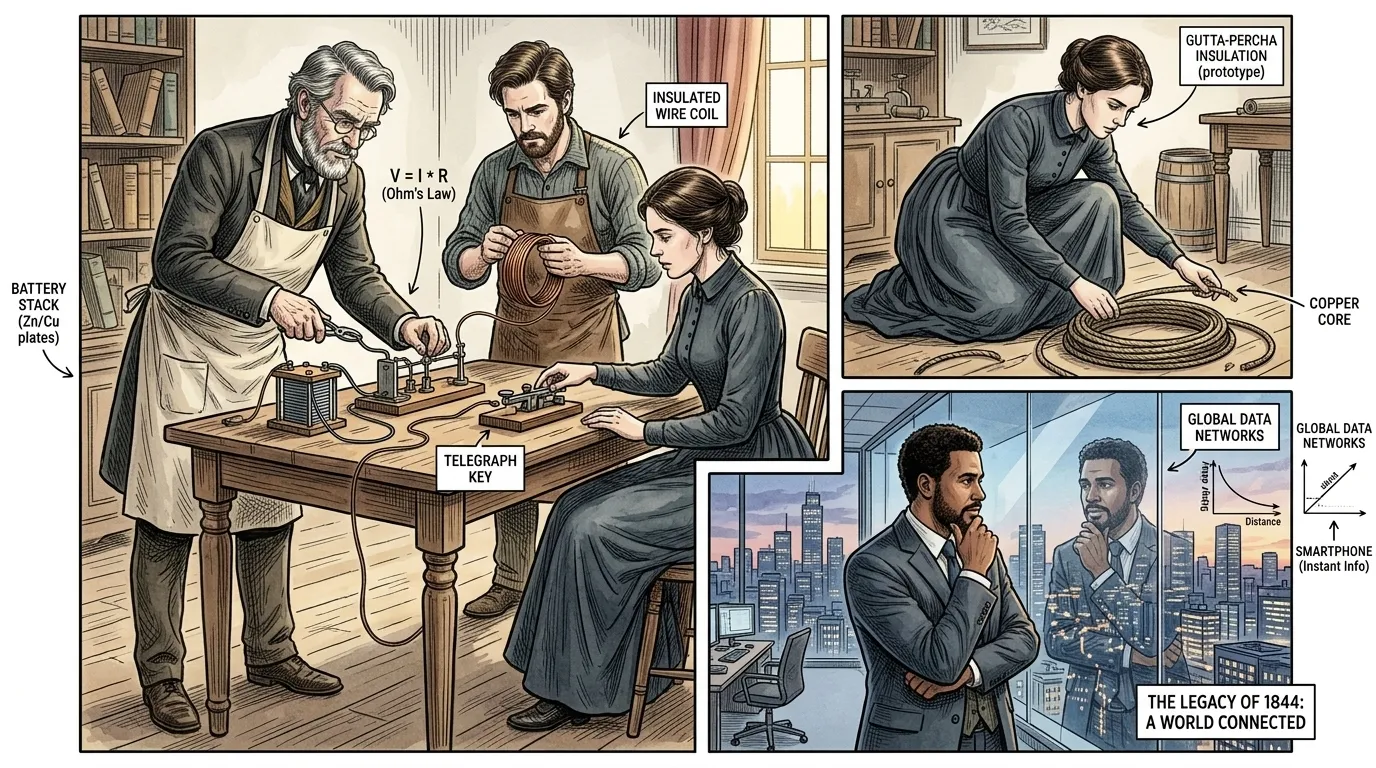
The electric telegraph's impact was profound and lasting. It shrunk the world, creating the first truly global communication network. It revolutionized journalism, finance, and diplomacy, setting the stage for every subsequent electronic communication breakthrough, from the telephone to the internet. The concept of instantaneous information exchange, once a dream, became an indispensable reality, forever changing human society.
""The telegraph wasn't just a machine; it was a paradigm shift," a contemporary commentator reflected, looking at a busy modern city skyline. "It taught us the power of real-time information. Without it, our modern connected world, from financial markets to global news, would be unimaginable. It forged the pathways upon which all future digital communication would flow.""
About this story
- Location: Global
- Audience: general readers
Questions and answers
Read Wonder Inventions on your phone
Wonder Inventions is available on Android. Get Wonder Inventions on Google Play.