Email — an illustrated inventions story, set in Global. 10 illustrated pages, free to read on Wonder Inventions.
Page 1
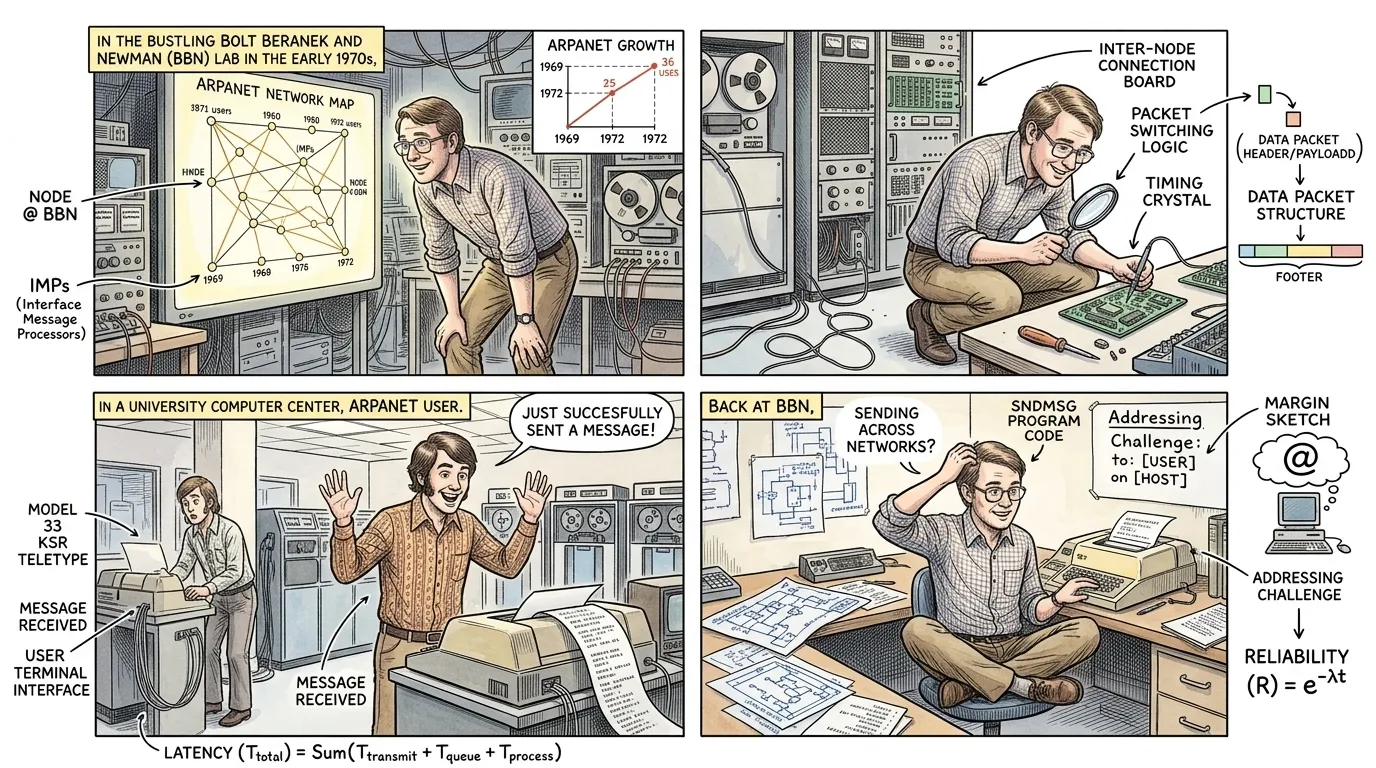
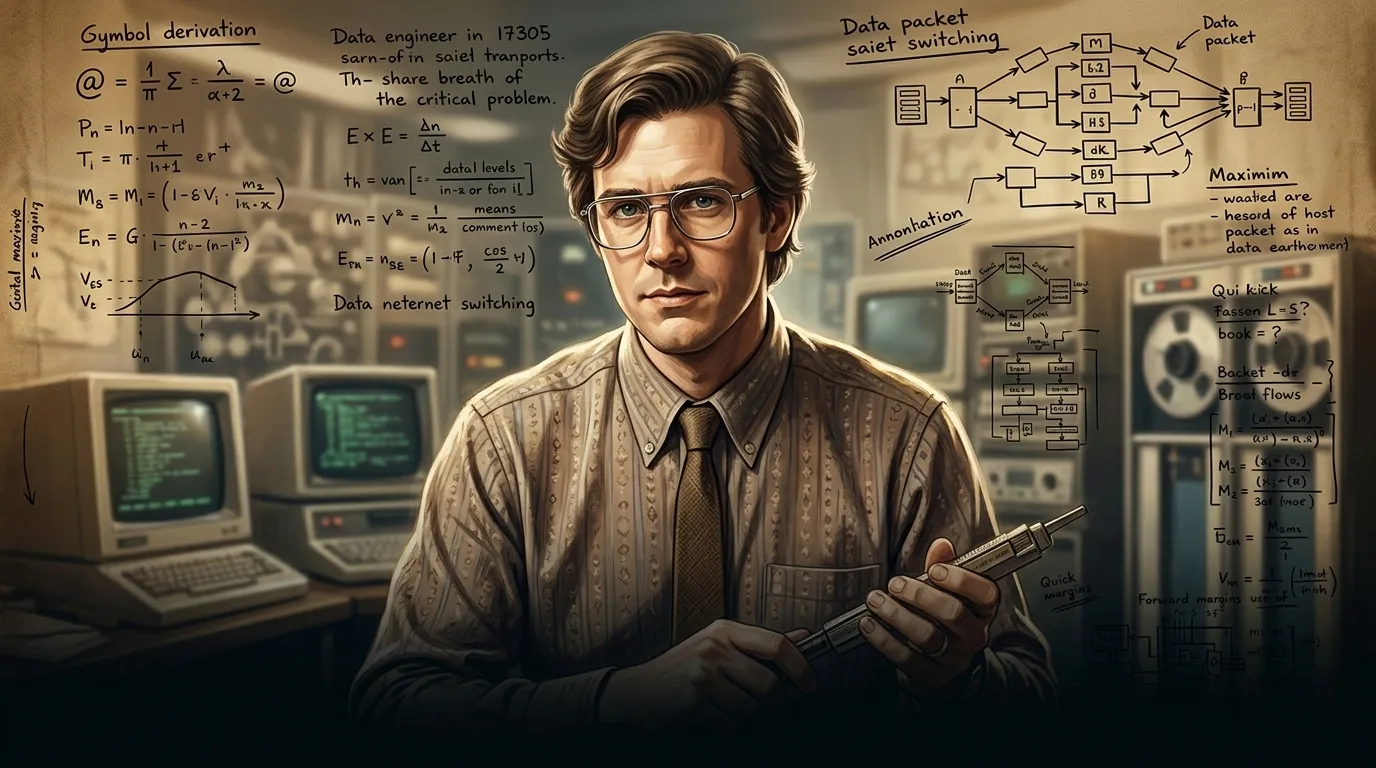
In the early 1970s, the burgeoning ARPANET connected a handful of powerful mainframe computers across the United States. While these machines could process vast amounts of data, direct and efficient communication between individuals on different systems remained a complex challenge. Dr. Ray Tomlinson, a brilliant engineer at Bolt Beranek and Newman (BBN), faced this very limitation head-on.
""The network allowed us to share computing resources, but what about sharing simple messages between people on disparate machines?" Tomlinson wondered aloud in his lab. "We needed a way for one user on one computer to send a specific note directly to another user, irrespective of their location on the network.""
Page 2
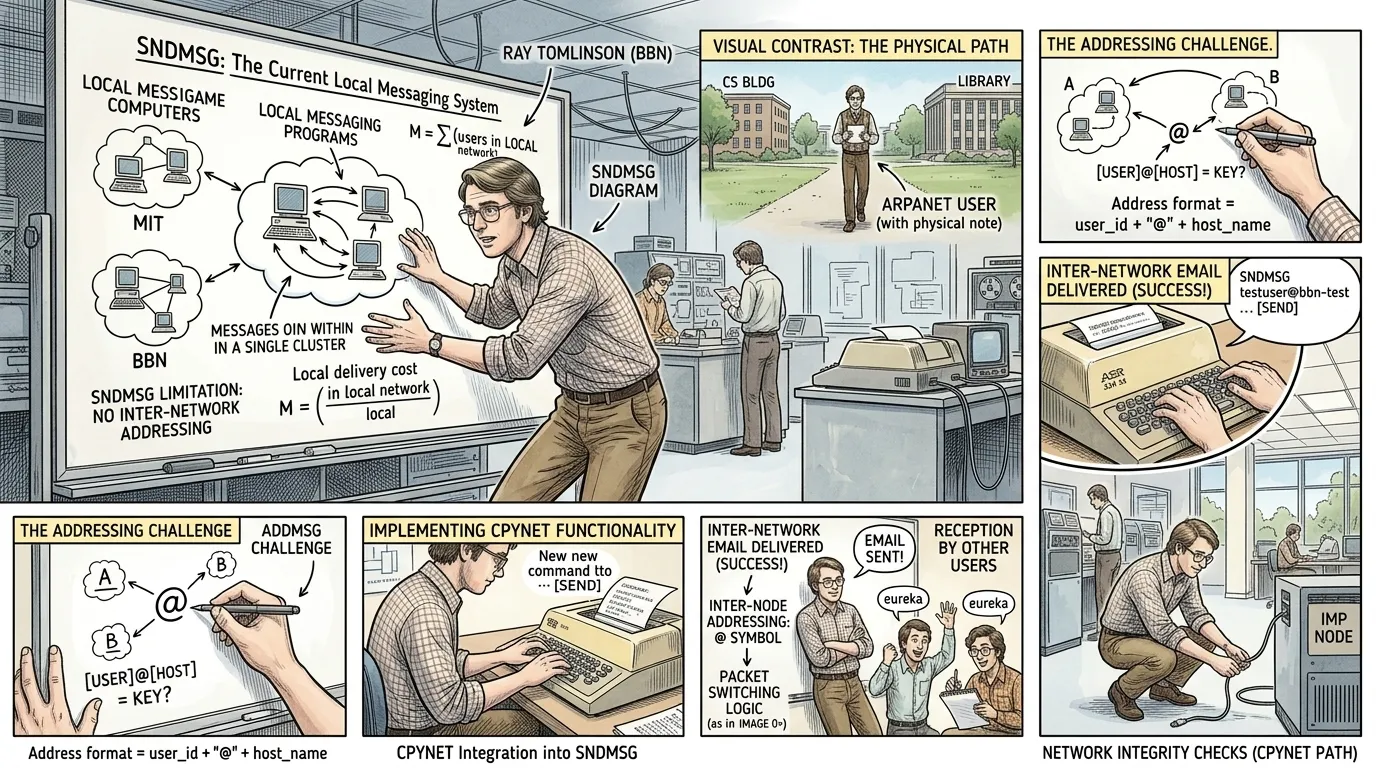
Before Email, sharing information digitally often meant physical transfers or rudimentary local messaging. If a user wanted to send a message, they might utilize a program like 'SNDMSG,' but its capabilities were strictly confined to the immediate computer system. This meant that messages could only be exchanged between users who shared access to the exact same mainframe, creating isolated digital islands of communication.
""Imagine having to walk over to someone's desk just to leave a note, but that desk is actually a different building, miles away, running a completely different operating system," Tomlinson explained, gesturing towards a diagram. "Our existing tools, like SNDMSG, were built for local communication, appending a message to a user's local mailbox file. They understood 'who,' but not 'where.'""
Page 3
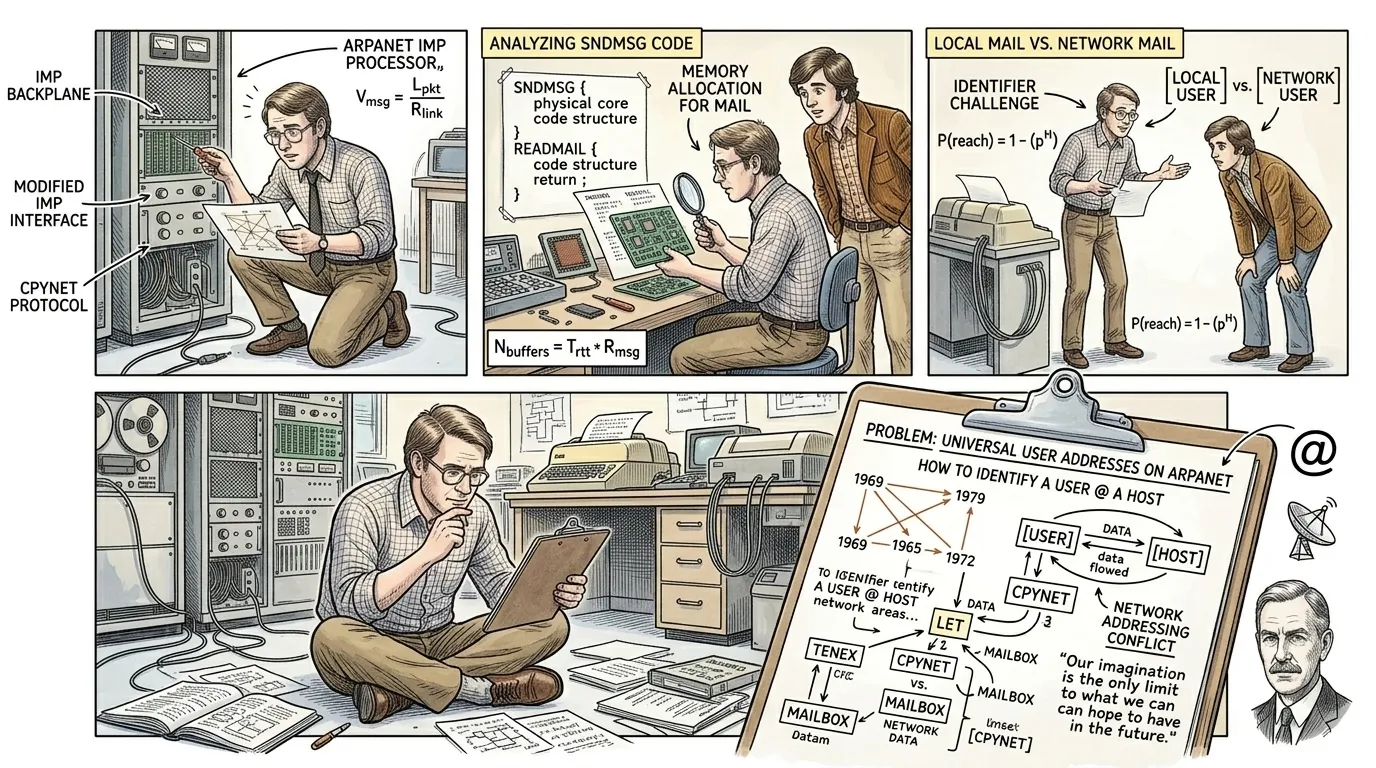
The core problem wasn't merely sending text; it was the fundamental challenge of addressing. How could a system reliably distinguish between 'User John on Machine A' and 'User John on Machine B'? A universal identifier was needed, something robust enough to navigate the nascent, decentralized network.
""We quickly understood the necessity of a standardized addressing scheme that could traverse the ARPANET," Tomlinson elaborated, tapping a finger thoughtfully on a printout. "As the great American inventor Charles Kettering once said, 'A problem well-stated is a problem half-solved.' Our problem was stating precisely how to direct a message to a specific user at a specific host, reliably and unambiguously across different systems.""
Page 4
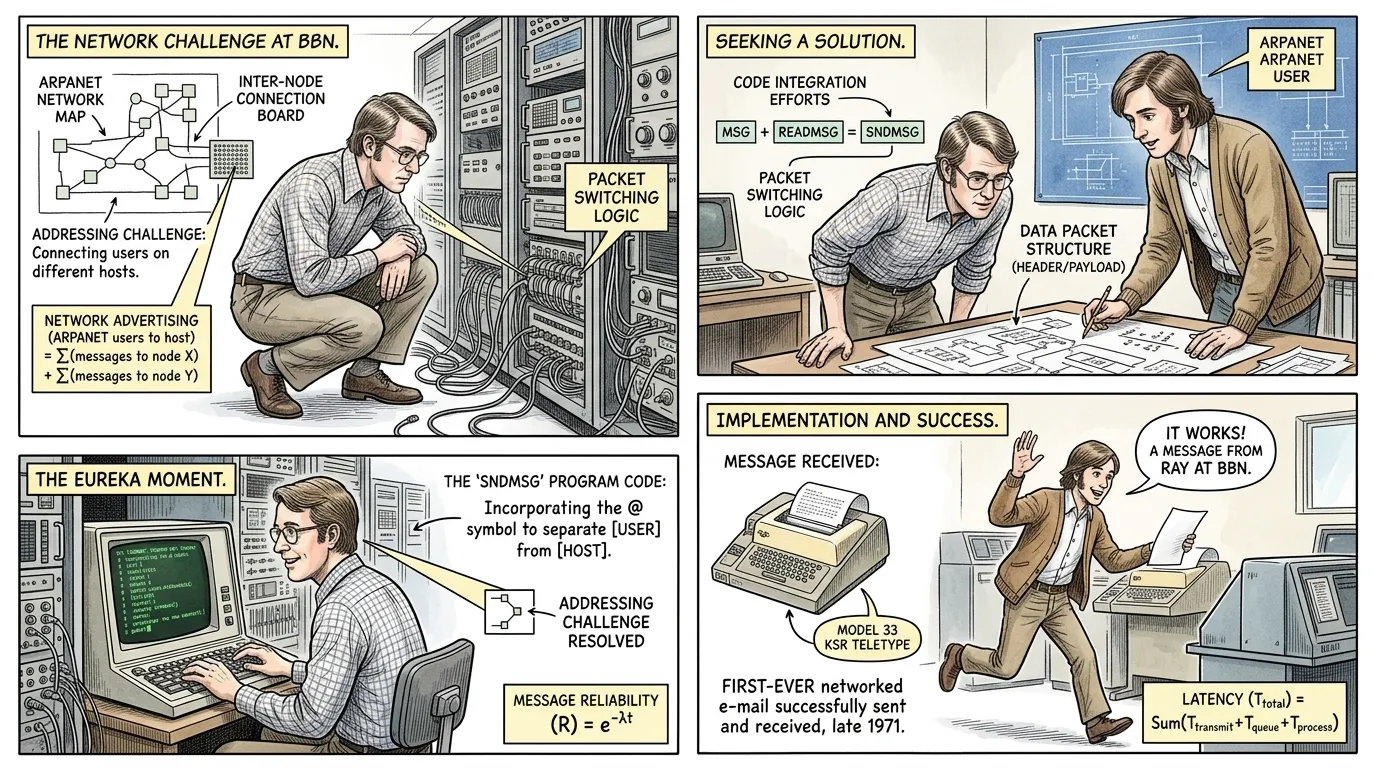
Ray Tomlinson's work at BBN involved developing essential network control programs and utilities for ARPANET, including the TENEX operating system. This deep understanding of network architecture and system protocols placed him uniquely to tackle the communication challenge. He saw beyond mere local file transfers, envisioning a true person-to-person messaging system.
""My daily work immersed me in the very fabric of the ARPANET's operations," Tomlinson stated, recalling his formative years. "I wasn't just interested in programs that let you log into a remote machine; I wanted to build bridges for individuals, allowing them to truly connect and exchange thoughts, almost as if they were in the same room.""
Page 5
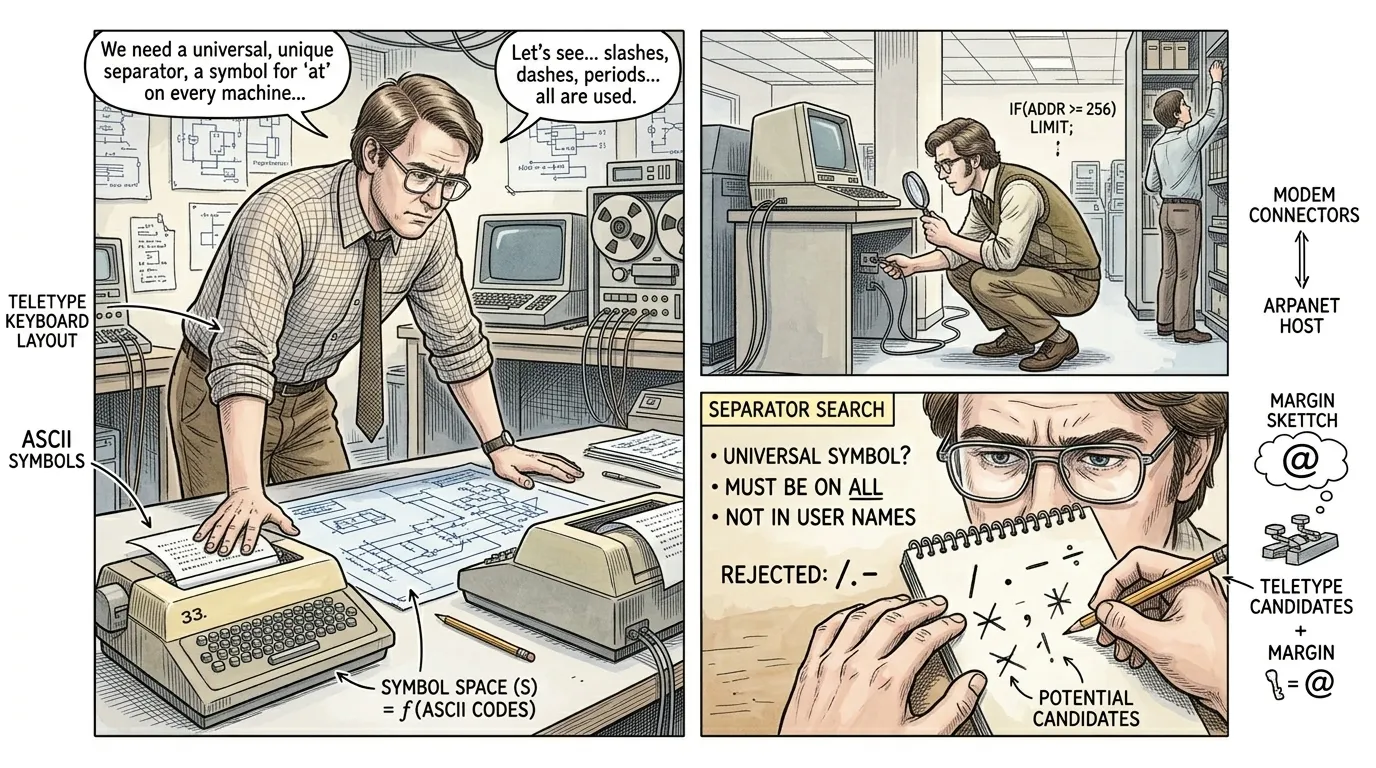
The crucial step was finding a character that could reliably separate a user's name from their host computer's name within a single address string. This character needed to be unique, present on standard keyboards, and, most importantly, not commonly used within existing usernames or hostnames to avoid ambiguity.
""The symbol had to be universally available on all teletype keyboards, otherwise, it wouldn't be practical," Tomlinson explained, sketching symbols on a notepad. "But it also couldn't be a character that appeared in a person's name, nor in the name of a computer, which narrowed down the options considerably. It needed to be a clear, unmistakable dividing line.""
Page 6
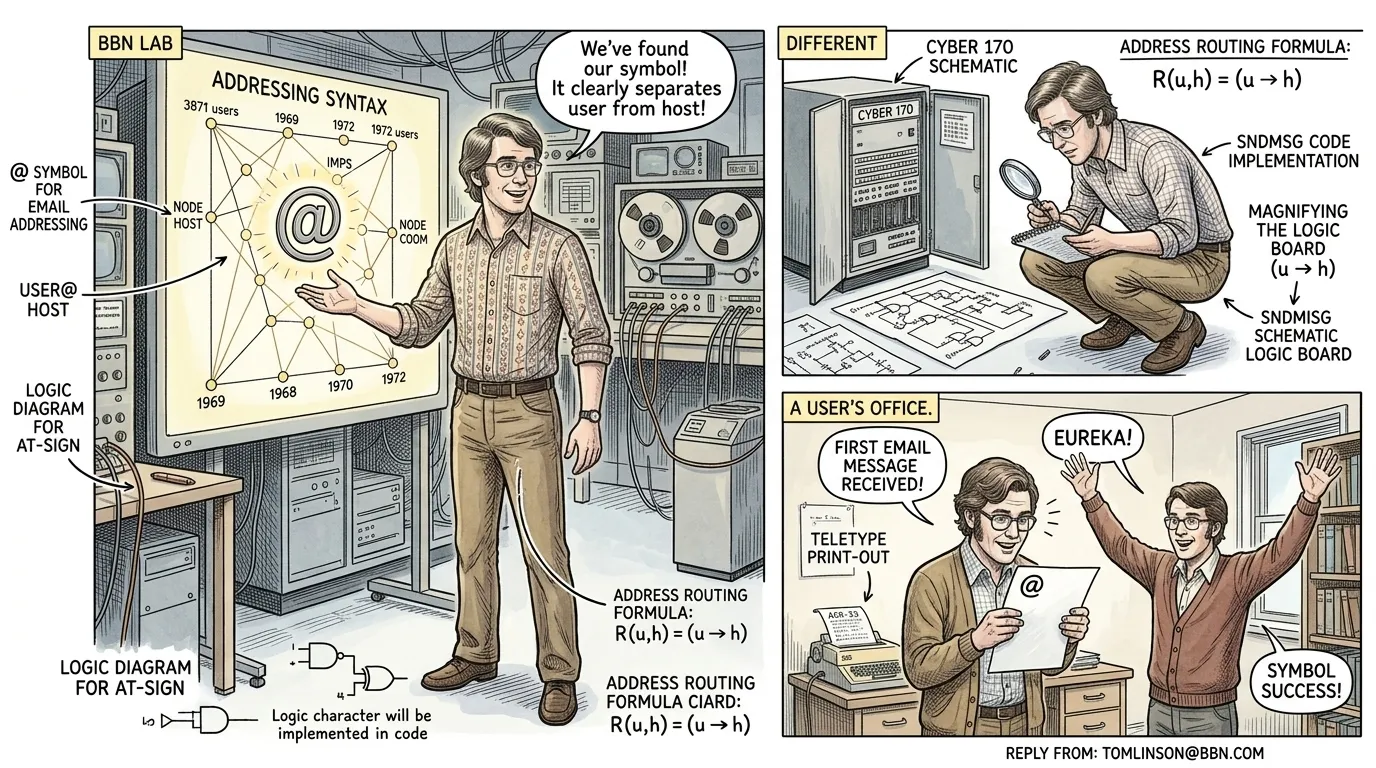
In 1971, Ray Tomlinson made the decisive choice: the '@' symbol. This seemingly simple punctuation mark perfectly fit the criteria. It meant 'at' or 'located at,' serving as an intuitive separator between the user's name and their machine's address. This single character fundamentally transformed the concept of digital addressing, solving the universal identifier problem identified earlier.
""The '@' symbol immediately stood out," Tomlinson recounted, a spark of satisfaction in his eyes. "It was on every keyboard, and crucially, it wasn't used in existing usernames or hostnames. It clearly communicated 'this user at this particular computer.' It was the logical, elegant solution to our addressing scheme challenge – a direct answer to our initial problem.""
Page 7
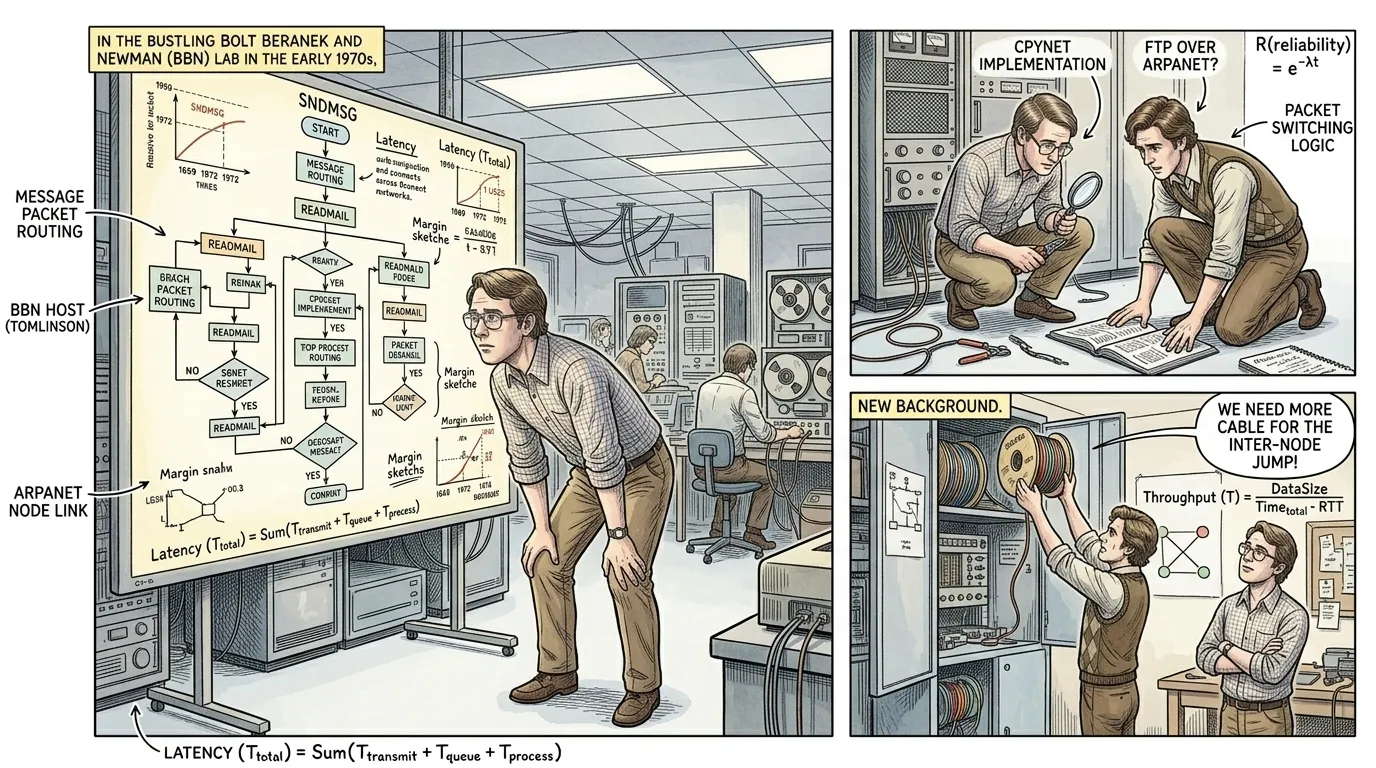
With the '@' symbol defining the address, Tomlinson modified the existing SNDMSG program and developed a complementary program, READMAIL. When a user sent an email, SNDMSG would parse the address, identify the remote host, and then transmit the message packets across the ARPANET. Upon arrival at the destination host, the message would be placed in the recipient's local mailbox file, ready for READMAIL to retrieve it.
""The core mechanism was essentially an extension of our existing file transfer protocols," Tomlinson explained, pointing to a flow chart. "My modified SNDMSG program didn't just write to a local file; if it saw an '@' symbol, it knew to activate a network transfer. The message would travel to the designated host, and then READMAIL would fetch it for the recipient, bridging the geographical divide.""
Page 8
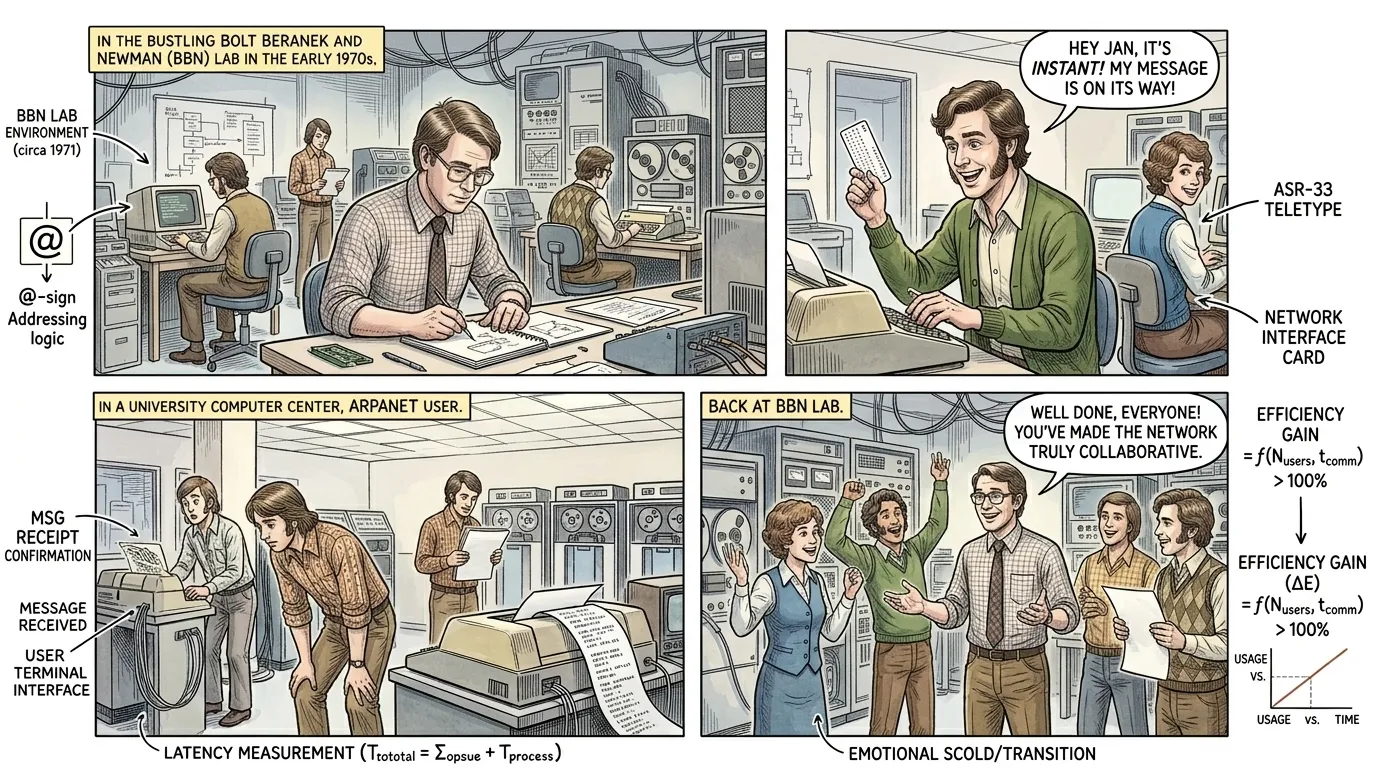
Email's initial adoption was rapid within the ARPANET community. Researchers, previously relying on phone calls, physical mail, or direct terminal connections, immediately recognized the immense efficiency gains. It became the network's first 'killer app,' a service so compelling it drove adoption and usage of the entire infrastructure. This shift fundamentally altered academic and scientific collaboration.
""The feedback was almost instantaneous," Tomlinson remembered, a proud smile forming. "People instantly grasped the power of sending a message directly and asynchronously across the network. It wasn't just a novelty; it became an indispensable tool that fundamentally changed how researchers interacted, fostered collaboration, and accelerated the exchange of ideas within the nascent digital community.""
Page 9
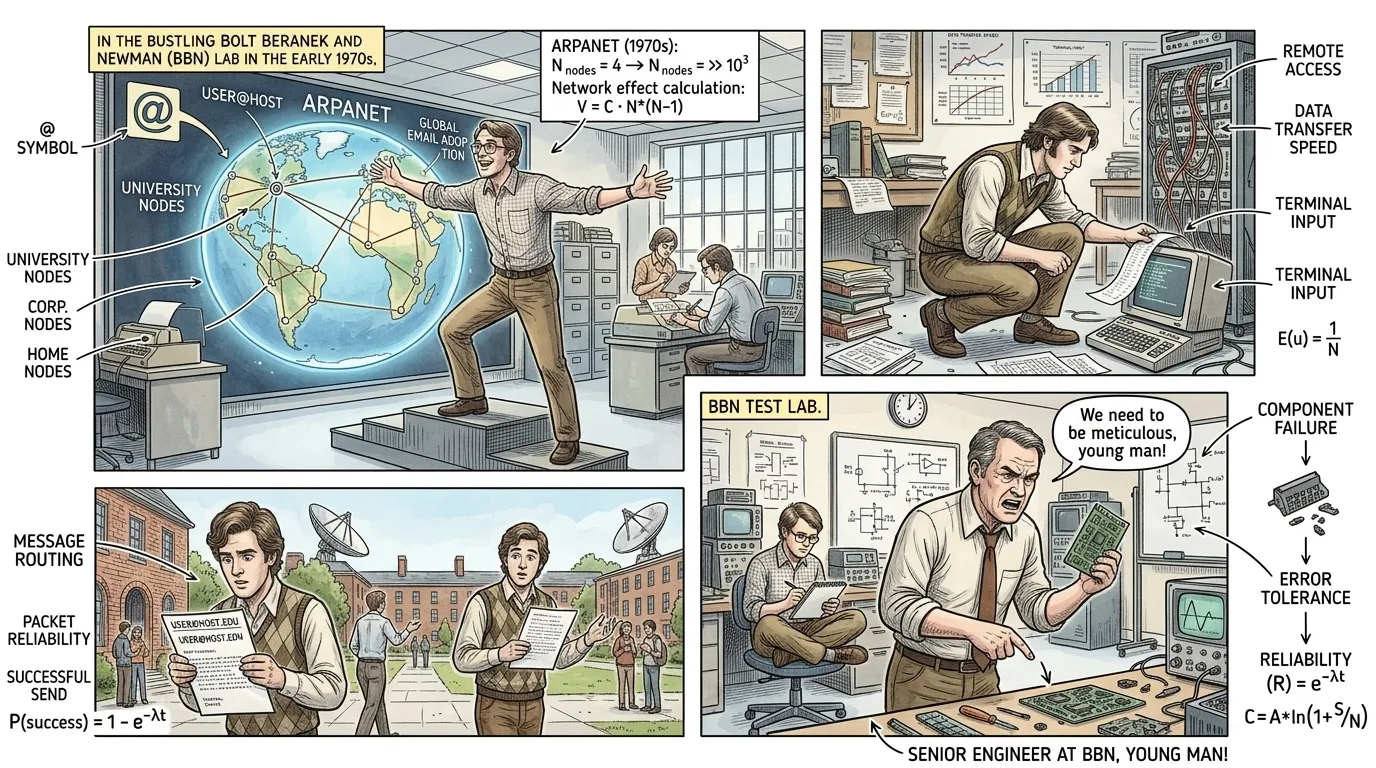
What began as a specialized utility for ARPANET researchers soon transcended its origins. As ARPANET evolved into the Internet, email scaled with it, becoming a foundational communication protocol. Its simple yet powerful address format—user@host—became a global standard, underpinning nearly all digital correspondence for decades to come. This widespread adoption demonstrated email's profound impact on professional and personal life.
""The elegance of the user@host format was its simplicity and scalability," Tomlinson observed, gesturing towards a representation of the evolving Internet. "It allowed anyone, anywhere, to be uniquely identified and contacted. From universities to businesses, and eventually to homes, email proved itself to be an incredibly robust and adaptable medium, fostering connections across continents and cultures.""
Page 10
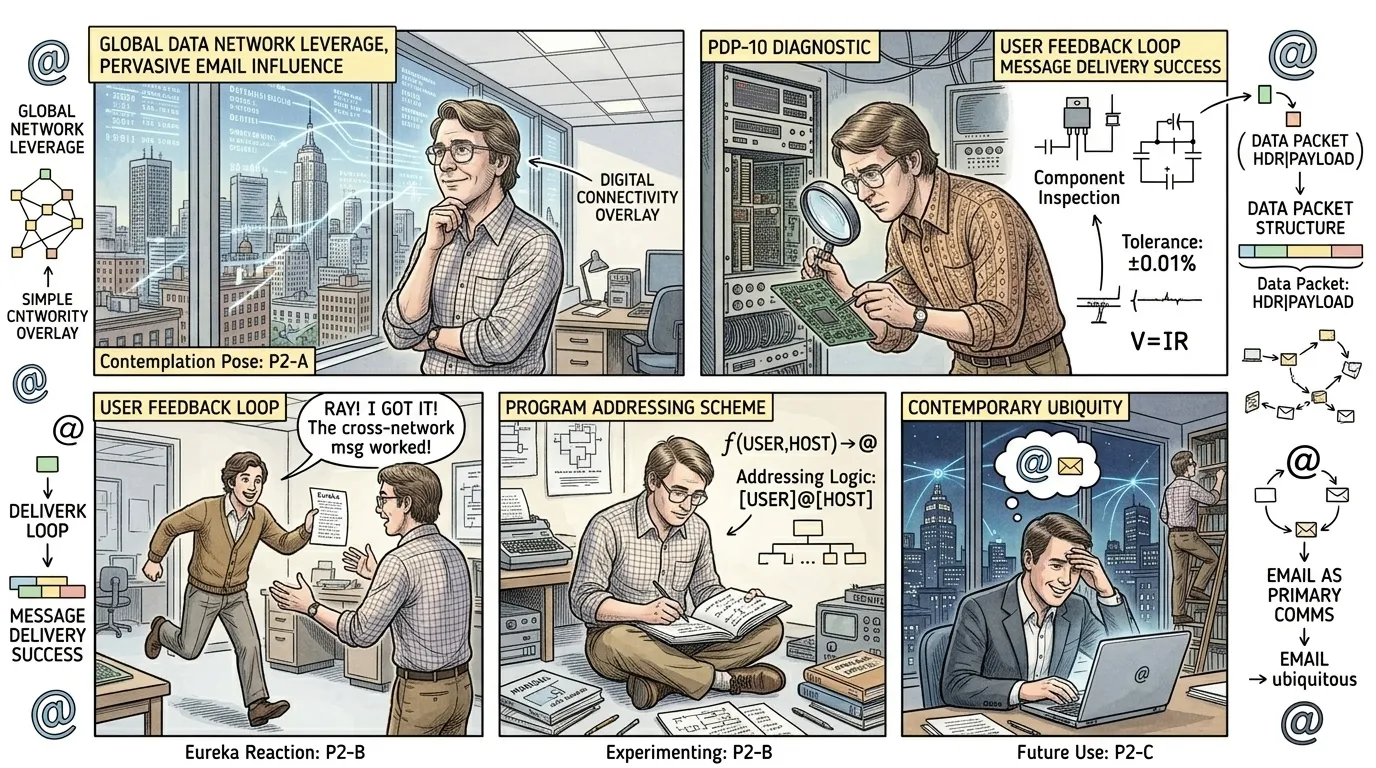
Today, email remains an indispensable backbone of global communication. From instantaneous corporate exchanges and critical governmental dispatches to personal correspondence and digital marketing, its influence is pervasive. Ray Tomlinson's innovative solution in 1971 didn't just create a messaging system; it laid the fundamental groundwork for how we interact, transact, and inform each other in the digital age, shaping the very fabric of modern society.
""The enduring legacy of email is its role as a universal translator, connecting diverse digital systems and people," Tomlinson reflected, looking towards a vibrant, connected world. "It proved that a simple, elegant solution could bridge vast technical divides, changing not just how we communicate, but who we can communicate with, globally. It's a testament to the power of clear, accessible information exchange.""
About this story
- Location: Global
- Audience: general readers
Questions and answers
Read Wonder Inventions on your phone
Wonder Inventions is available on Android. Get Wonder Inventions on Google Play.