Fax Machine
Fax Machine — an illustrated inventions story, set in Global. 10 illustrated pages, free to read on Wonder Inventions.
Page 1
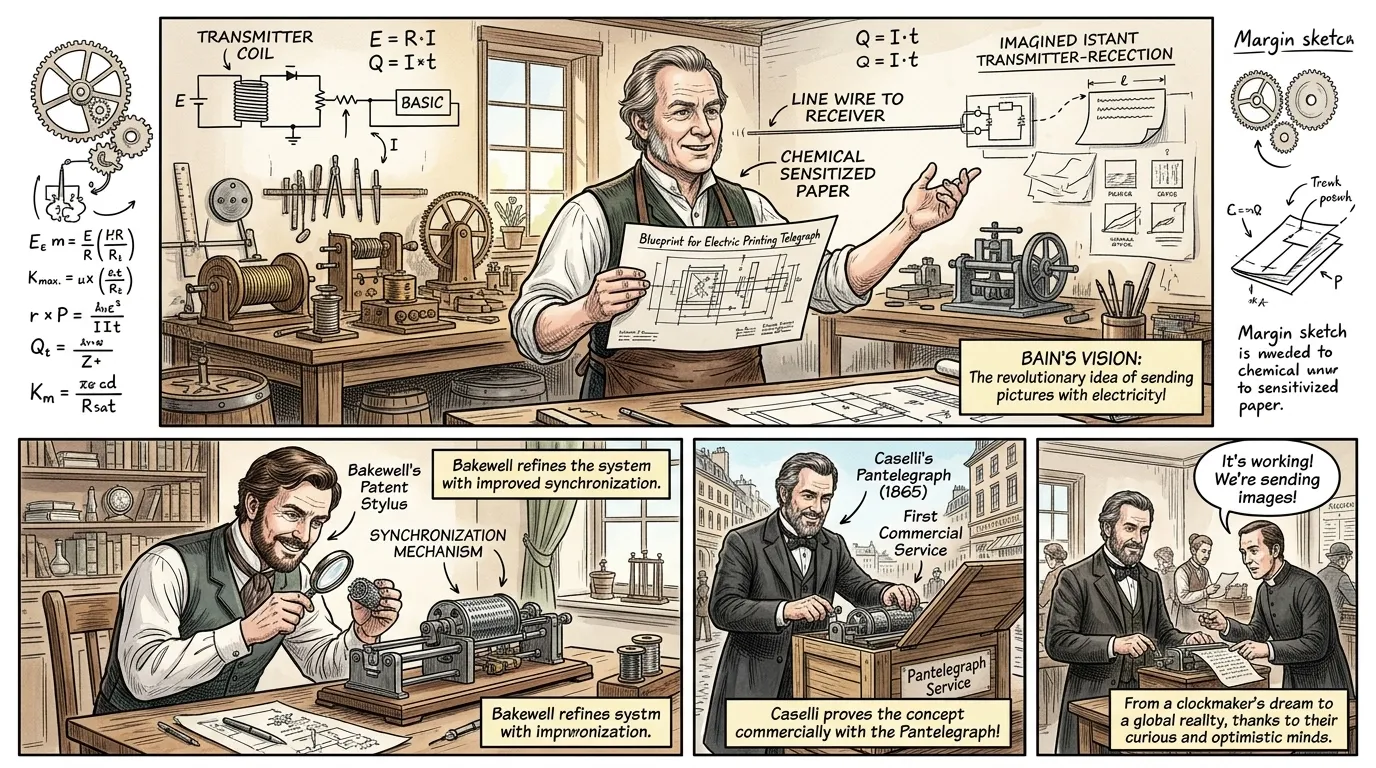
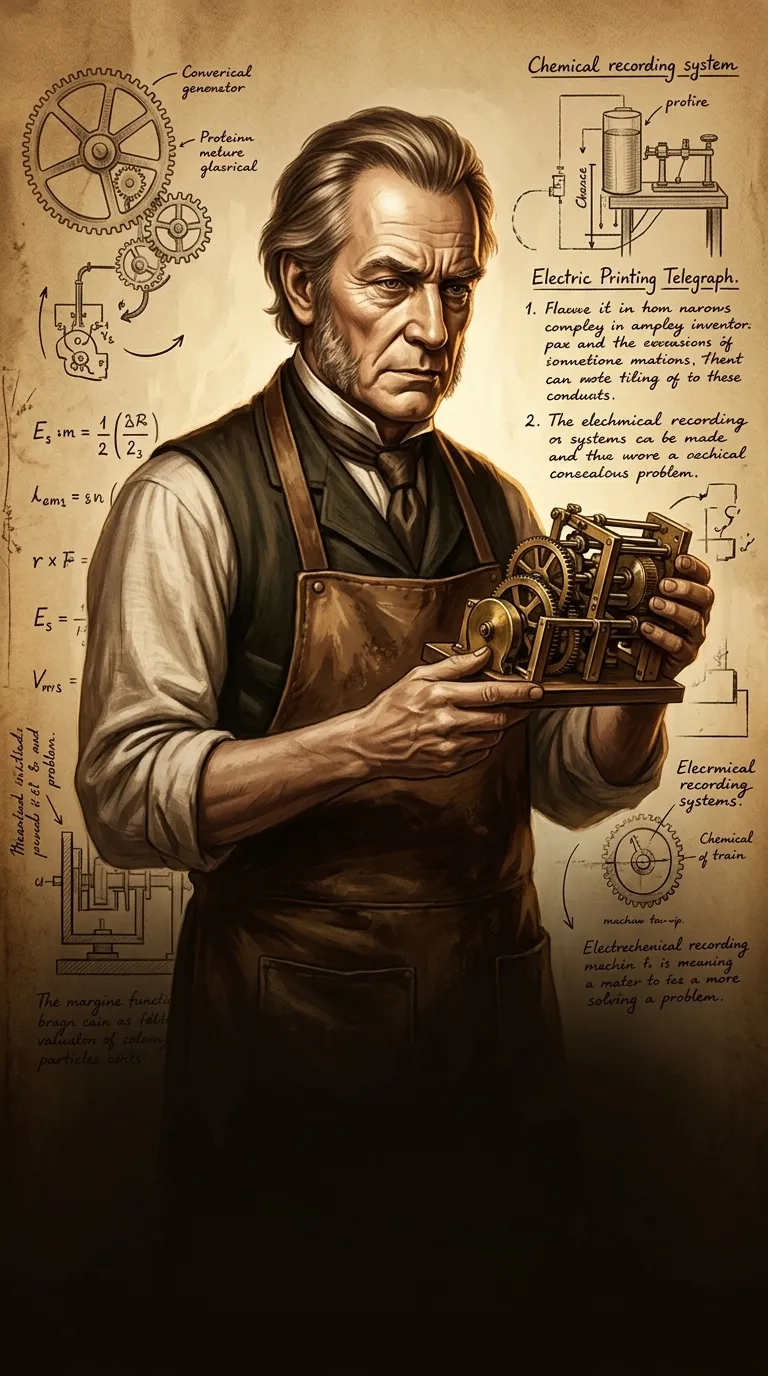
Before the digital age, a revolutionary idea transformed how information traveled across vast distances, enabling the transmission of visual content beyond simple text. In 1843, Scottish clockmaker Alexander Bain secured a patent for what he called an 'Electric Printing Telegraph,' laying the foundational stone for the modern fax machine. This remarkable invention tackled the critical problem of sending exact copies of documents, drawings, and even signatures, something conventional telegraphy could not achieve. It promised a future where distance would no longer dictate the fidelity of information.
Page 2
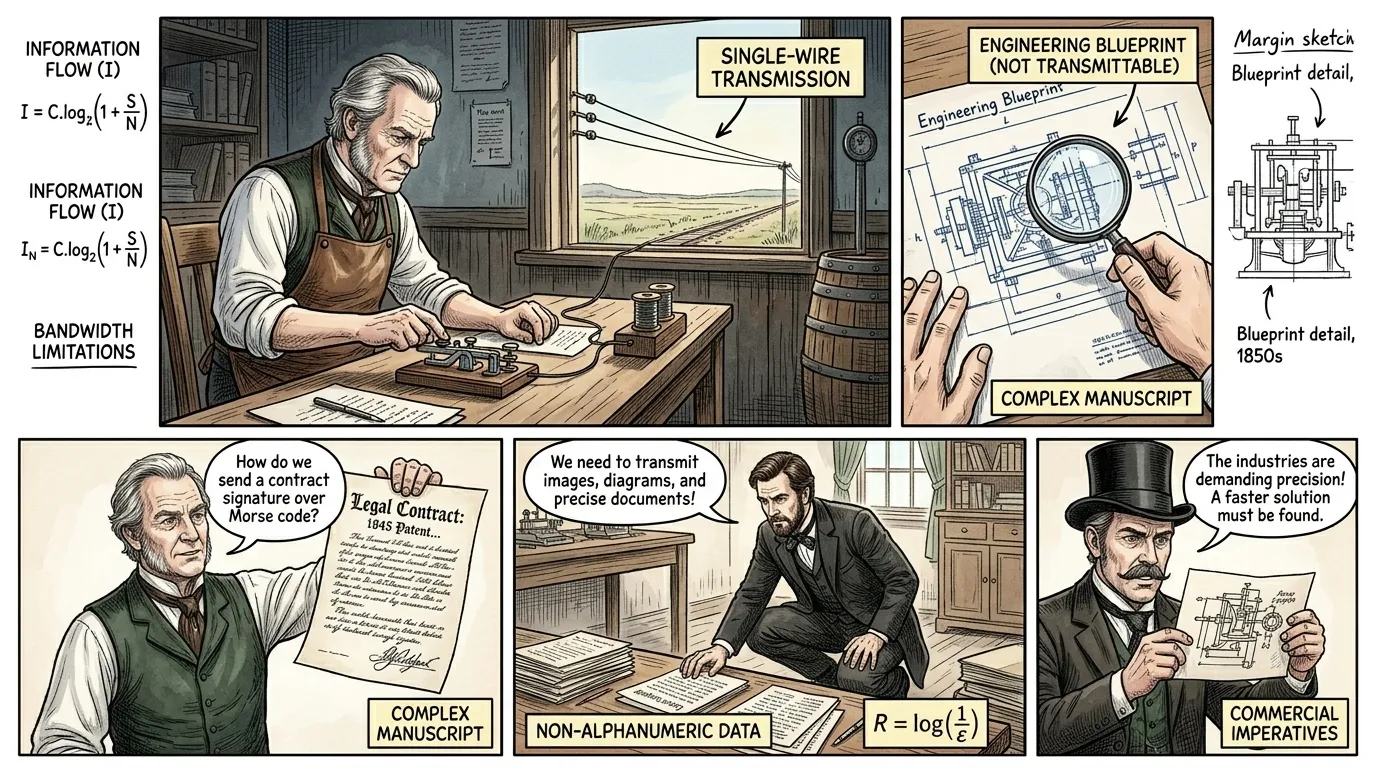
For centuries, communication over distance was slow, limited to couriers or the speed of sound. The advent of the electric telegraph in the mid-19th century represented a seismic shift, allowing coded messages to traverse continents at near-light speed. Yet, this marvel of engineering was confined to transmitting alphanumeric characters, rendering complex documents like legal contracts, foreign scripts, or intricate engineering diagrams impossible to share instantly. The inherent limitation was a critical challenge for industries demanding precision and authenticity across geographical divides.
Page 3
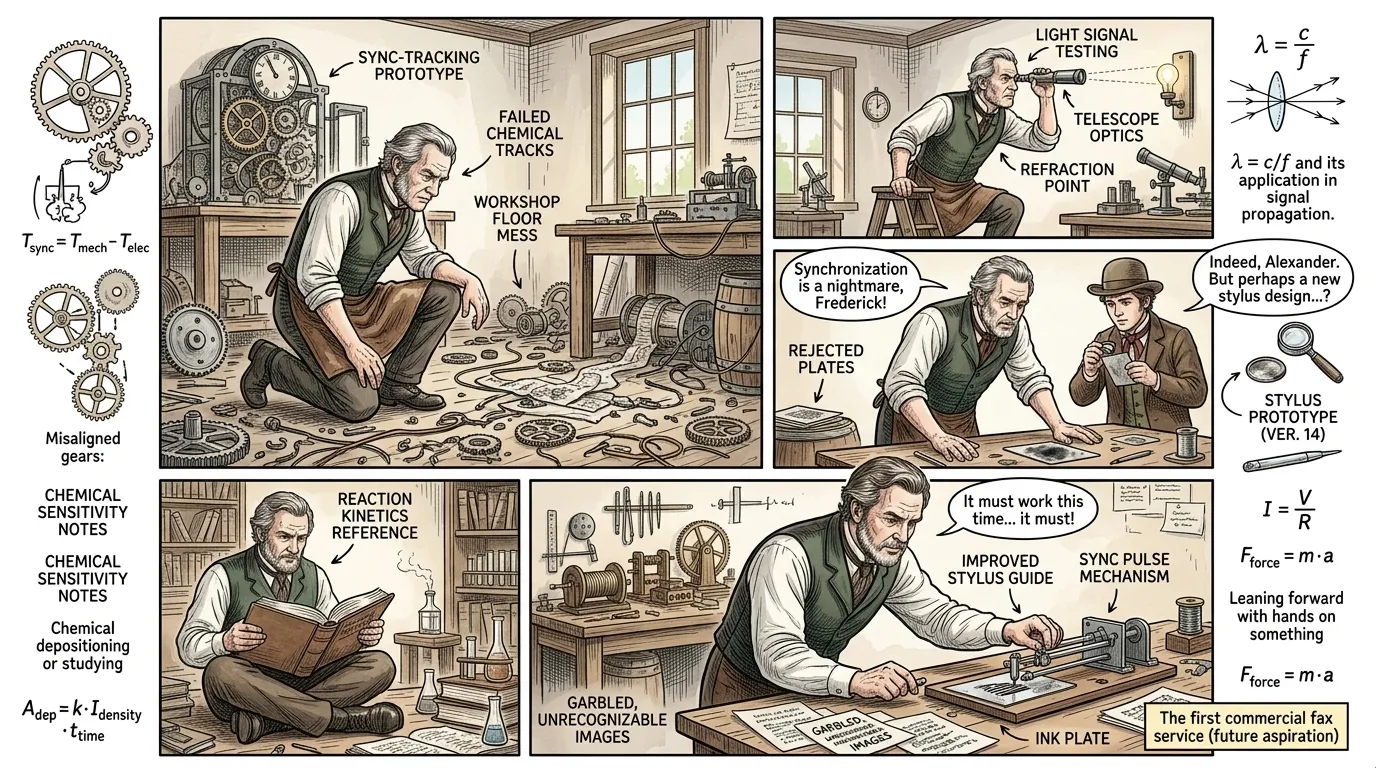
Alexander Bain, a Scottish inventor known for his contributions to electric clocks, recognized this profound limitation and dedicated himself to overcoming it. His initial experiments involved a stylus moving across a metal plate containing non-conductive ink, attempting to translate variations in conductivity into electrical signals. However, achieving precise synchronization between the transmitting and receiving devices proved immensely difficult; any slight deviation would result in a garbled, unrecognizable image. This fundamental issue of accurately coordinating movement at both ends was the formidable hurdle, leading to numerous failed attempts and frustrating distortions.
Page 4
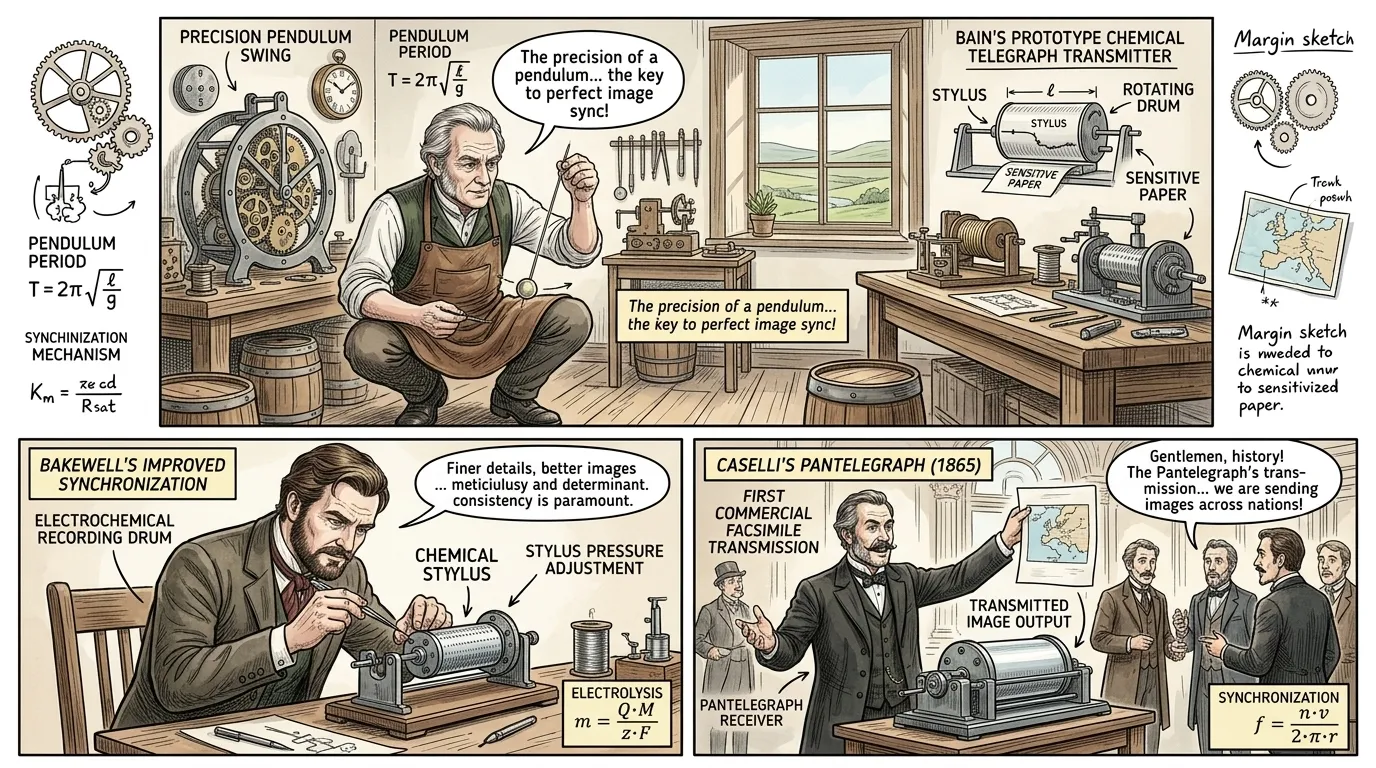
Born in 1810 in Watten, Caithness, Alexander Bain's journey began far from the bustling intellectual centers of Europe, in a world shaped by mechanical ingenuity rather than nascent electrical theory. Originally trained as a clockmaker, Bain possessed a deep understanding of precision mechanics and the critical importance of accurate timing. This unique background, coupled with a self-taught fascination with electrical phenomena, naturally led him to consider how the steady, predictable motion of a pendulum could be harnessed to control electrical currents. His early work with electric clocks, patented even before his telegraph, underscored his pioneering vision for applying electricity to timekeeping and, ultimately, to communication itself.
Page 5
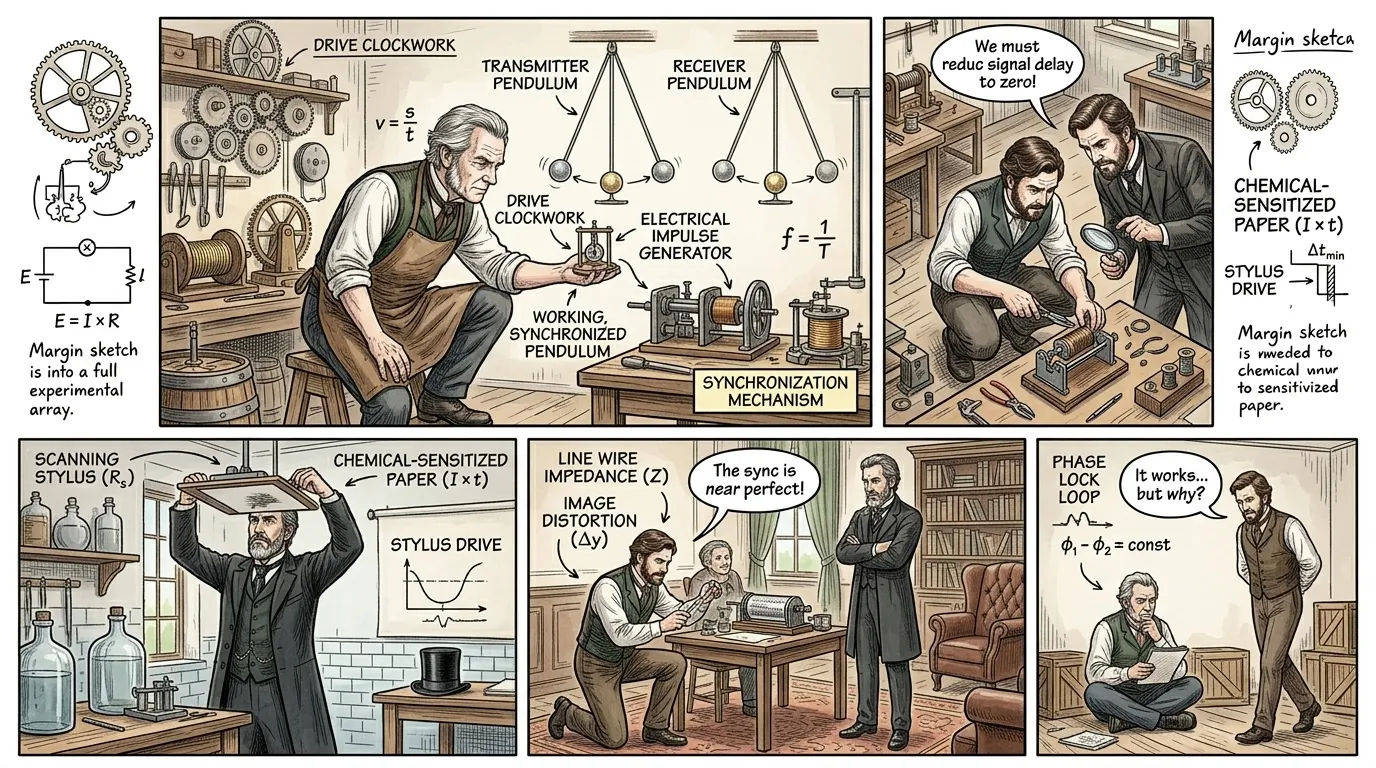
Bain's 'eureka' moment stemmed from his profound understanding of chronometry. He realized that the key to accurate image transmission was not merely to send electrical signals, but to ensure that the receiving mechanism moved in perfect lockstep with the sender. His ingenious solution involved using two identically constructed and precisely regulated pendulums, one at the transmitting end and one at the receiving end, to control the scanning and printing movements. This simple, yet revolutionary, concept of mechanical synchronization ensured that each line scanned on the original document corresponded exactly to the line being marked on the receiving paper. He is said to have declared, 'As Albert Einstein once famously pondered, 'Imagination is more important than knowledge.' My imagination, fueled by the rhythmic swing of a pendulum, revealed the path to synchronous communication, far beyond the knowledge of mere telegraphy.'
Page 6
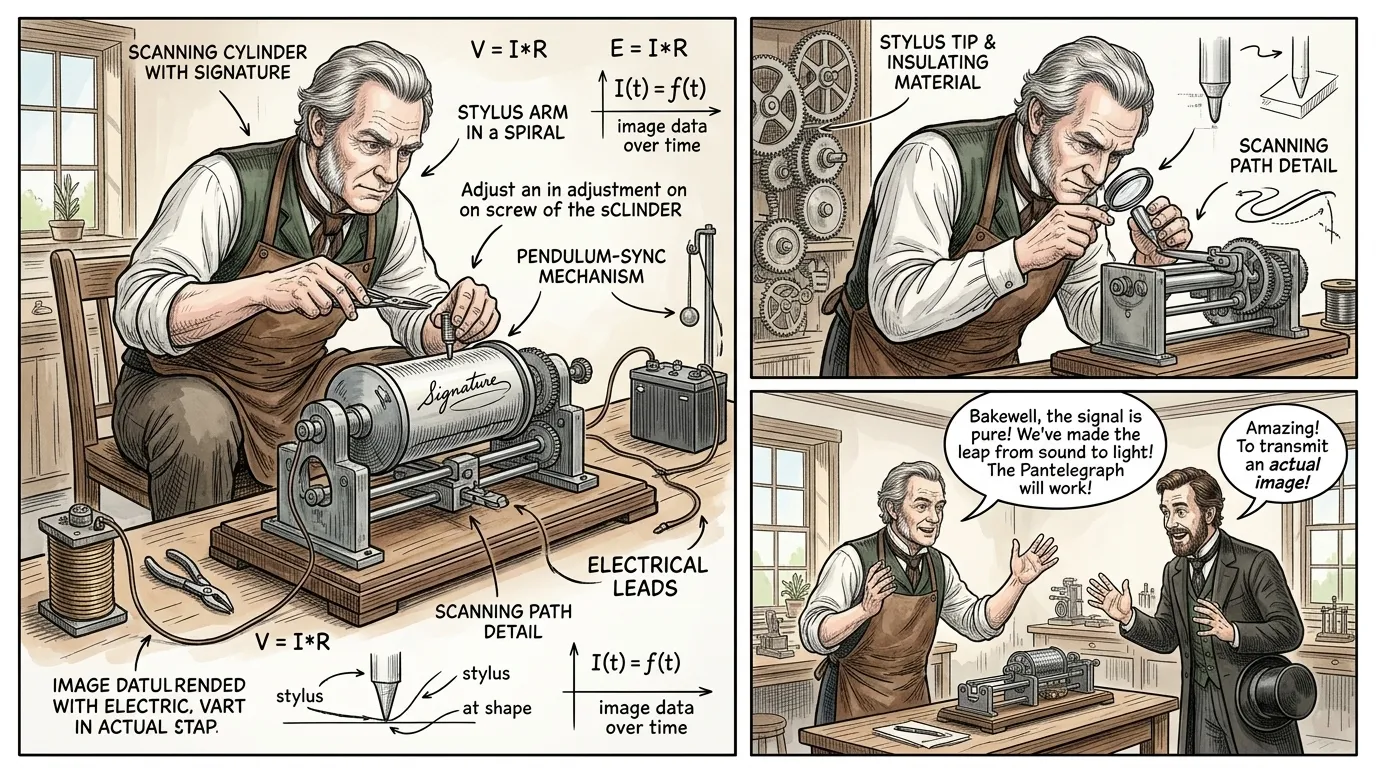
Bain's transmitting unit employed a simple yet effective method for converting an image into electrical impulses. The original document, drawn or written on a sheet of chemically treated paper, was wrapped around a metallic cylinder. As the cylinder slowly rotated, a small metal stylus, attached to the synchronized pendulum, scanned across its surface in a spiral path. Where the stylus encountered the conductive, untreated paper, it completed an electrical circuit, sending a pulse. Where it encountered the non-conductive ink, the circuit remained open. This continuous process translated the visual information, line by line, into a sequence of electrical signals.
Page 7
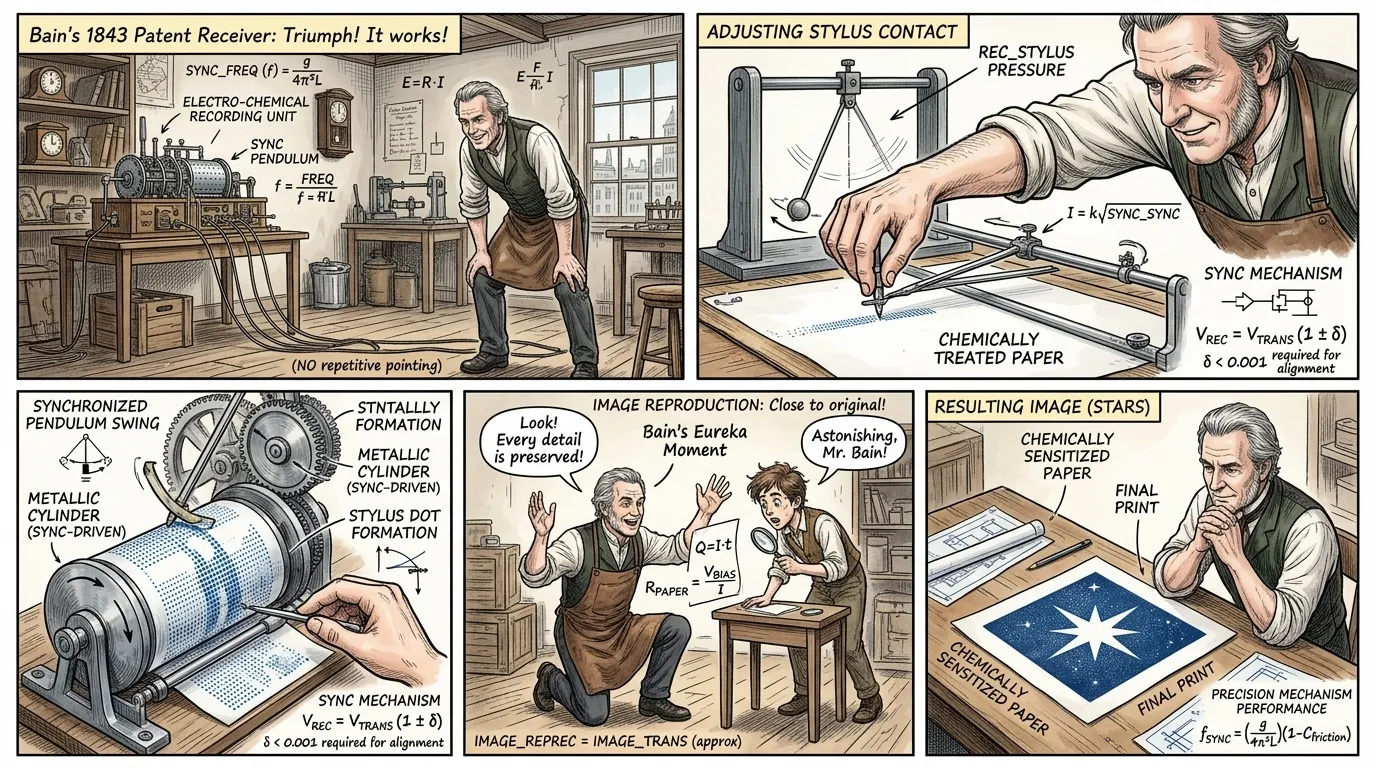
At the receiving end, an identical mechanism operated in perfect synchronization. A sheet of chemically treated paper, often impregnated with a solution of potassium ferrocyanide and potassium iodide, was wrapped around a similar metallic cylinder. As electrical pulses arrived from the transmitter, they passed through a stylus onto the treated paper. Each pulse caused an electrochemical reaction, producing a visible blue mark on the paper. Conversely, an absence of a pulse left no mark. Thus, as the receiving cylinder rotated synchronously with the sender, the image was meticulously recreated, dot by dot, line by line, achieving what seemed like magic: a perfect copy across miles.
Page 8
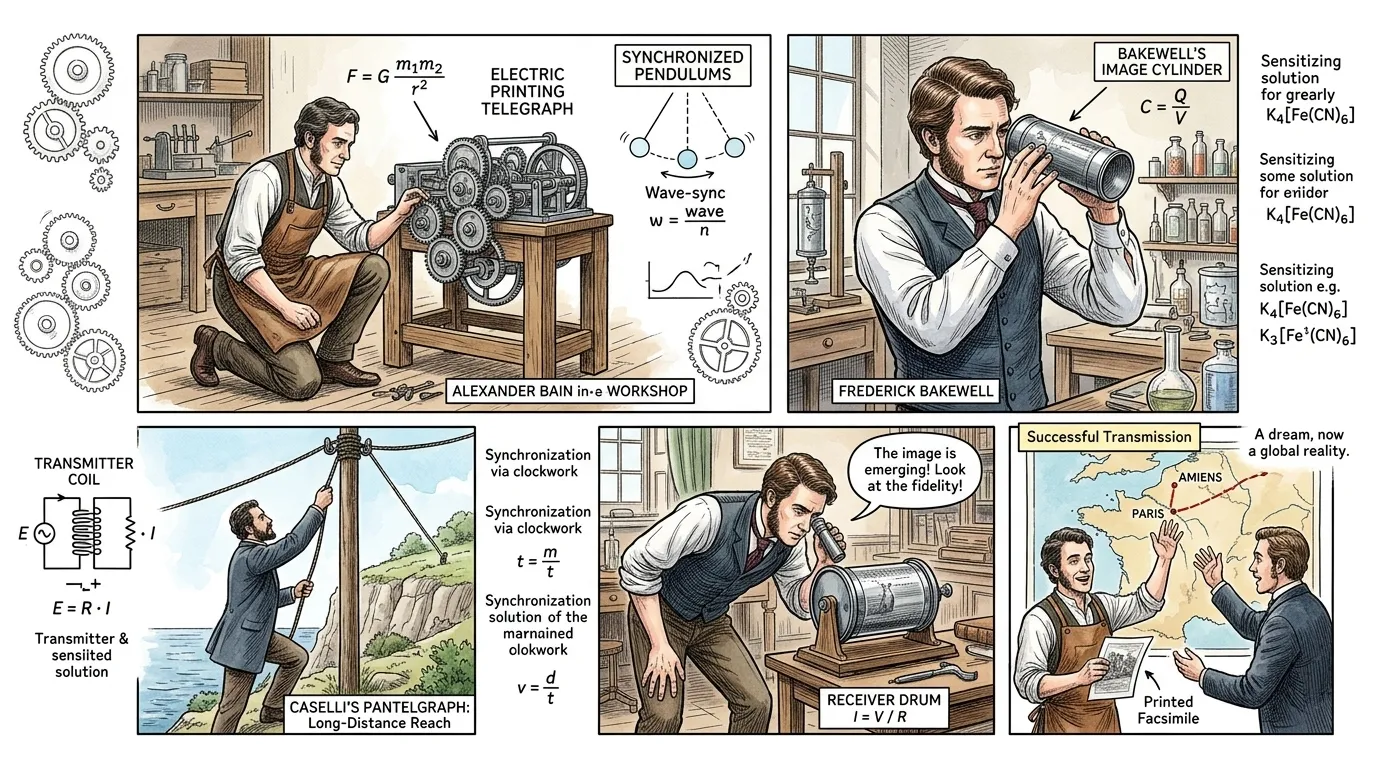
Bain's 'Electric Printing Telegraph' demonstrated the extraordinary potential of facsimile transmission. His successful demonstrations, including sending messages between Paris and Amiens in 1863, proved the viability of transmitting exact likenesses. While his system, with its delicate pendulums, was somewhat fragile and expensive for widespread public adoption, it undeniably established the fundamental principles. Engineers and inventors across Europe recognized the immense breakthrough, understanding that the core challenge of synchronization, initially solved by Bain, was now a tangible reality. This innovation laid the groundwork for future advancements, proving that visual information could indeed be converted, transmitted, and replicated with accuracy.
Page 9
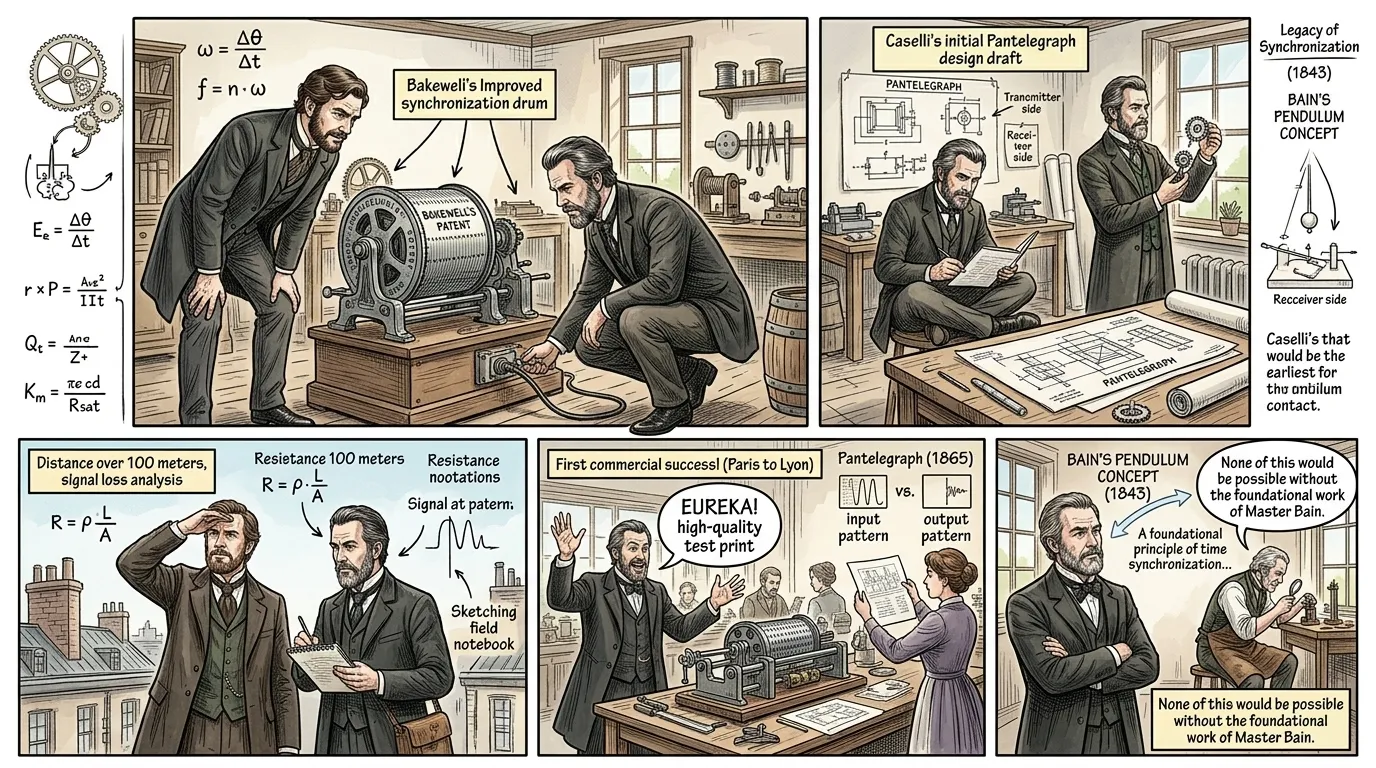
Building upon Bain's pioneering work, other inventors refined the concept, seeking more robust and efficient mechanisms. Frederick Bakewell's 'Image Telegraph' in 1848 introduced the idea of scanning an image wrapped around a rotating drum, a design that offered greater stability than Bain's pendulums. Later, Giovanni Caselli's 'Pantelegraph,' patented in 1861, became the first commercial facsimile service, operating between Paris and Lyon. These evolutions, while different in mechanical execution, all retained Bain's central principle: converting a two-dimensional image into a sequential electrical signal and reassembling it synchronously at the destination. The core idea of 'what' was transmitted had been established; the 'how' was continuously improved.
Page 10
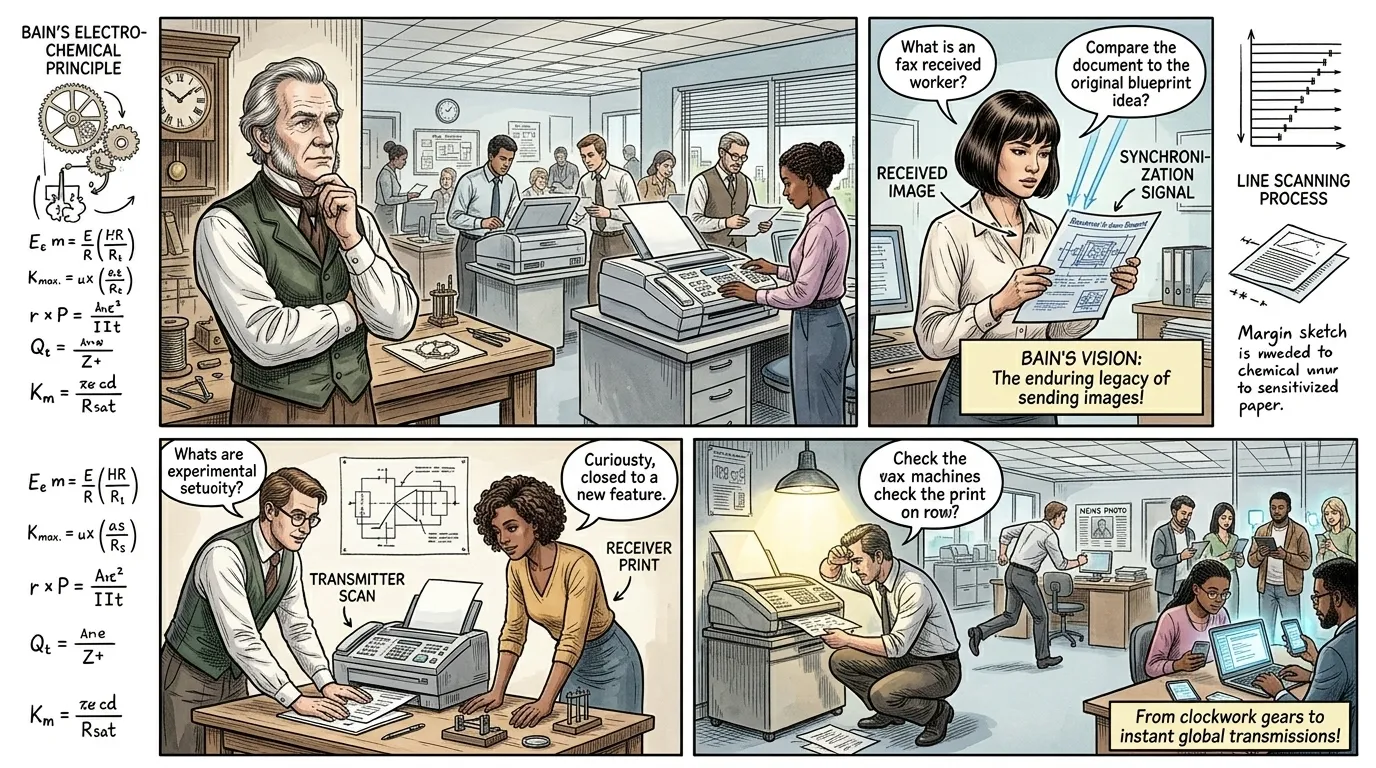
The fax machine, born from Bain's ingenious vision, saw its golden age in the late 20th century. It became indispensable for businesses, news agencies, and government offices worldwide, transforming international communication by enabling the rapid exchange of contracts, blueprints, and critical documents. From verifying signatures across continents to transmitting urgent news photos, its impact was profound. While the rise of the internet and email gradually rendered physical fax machines less common for everyday use, the underlying principles of digital image scanning, compression, and transmission continue to power modern communication technologies. Alexander Bain's 1843 patent laid the groundwork for a revolution in visual communication that resonates even today.
About this story
- Location: Global
- Audience: general readers
Questions and answers
Read Wonder Inventions on your phone
Wonder Inventions is available on Android. Get Wonder Inventions on Google Play.