Forklift
Forklift — an illustrated inventions story, set in Global. 10 illustrated pages, free to read on Wonder Inventions.
Page 1
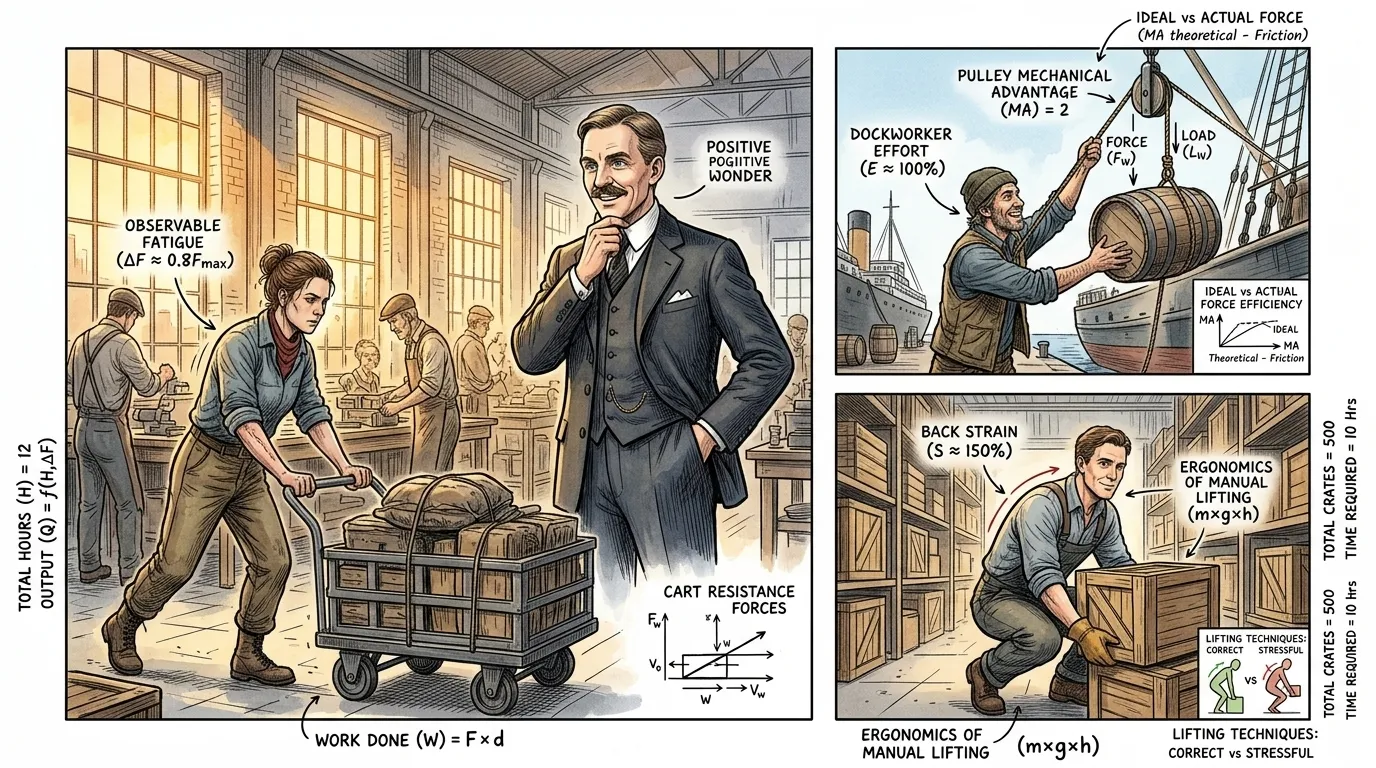
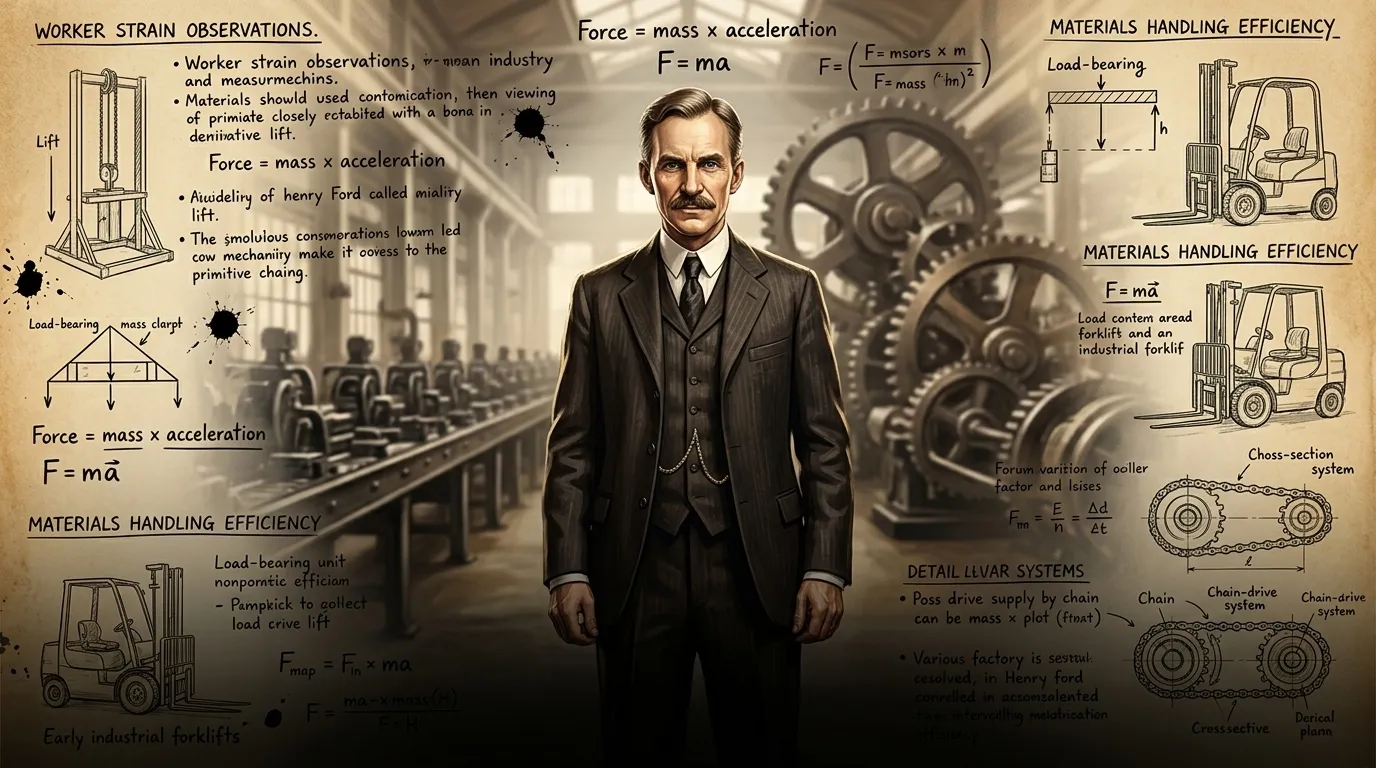
In the burgeoning industrial landscape of the early 20th century, factories and warehouses faced an escalating challenge: how to efficiently move ever-increasing volumes of heavy raw materials and finished goods. Manual labor, relying on sheer human strength and basic hand trucks, proved increasingly inadequate. This arduous, often dangerous task created significant bottlenecks, limiting production speed and expanding logistical costs, a silent barrier to progress. The sheer physical strain on workers and the time consumed by manual material handling underscored an urgent need for revolutionary innovation in industrial mobility.
"'There is no more important duty than that of freeing men from drudgery,' reflected Henry Ford, observing the intense physical strain on his assembly lines; a sentiment resonating with many industrial leaders seeking mechanized solutions."
Page 2
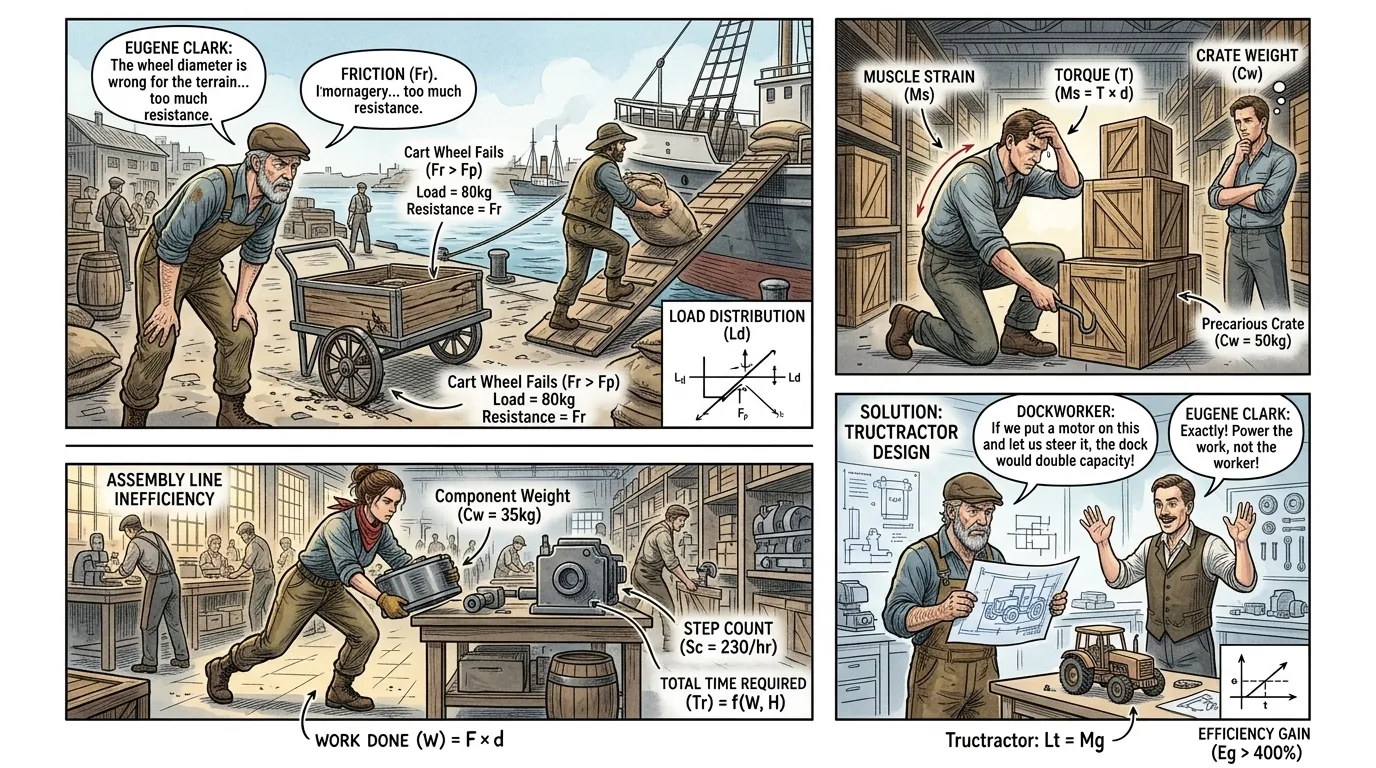
Before the advent of specialized lifting equipment, the movement of goods in industrial settings was a slow, labor-intensive ballet of brute force and rudimentary tools. Dockworkers heaved massive sacks onto waiting ships, warehousemen stacked precarious piles with hand hooks, and factory operatives struggled to position heavy components. Each package, box, or barrel represented a significant expenditure of human energy and time, directly impacting the economic viability of burgeoning industries. The repetitive strain and constant risk of injury formed a dark counterpoint to the era's industrial ambition.
Page 3
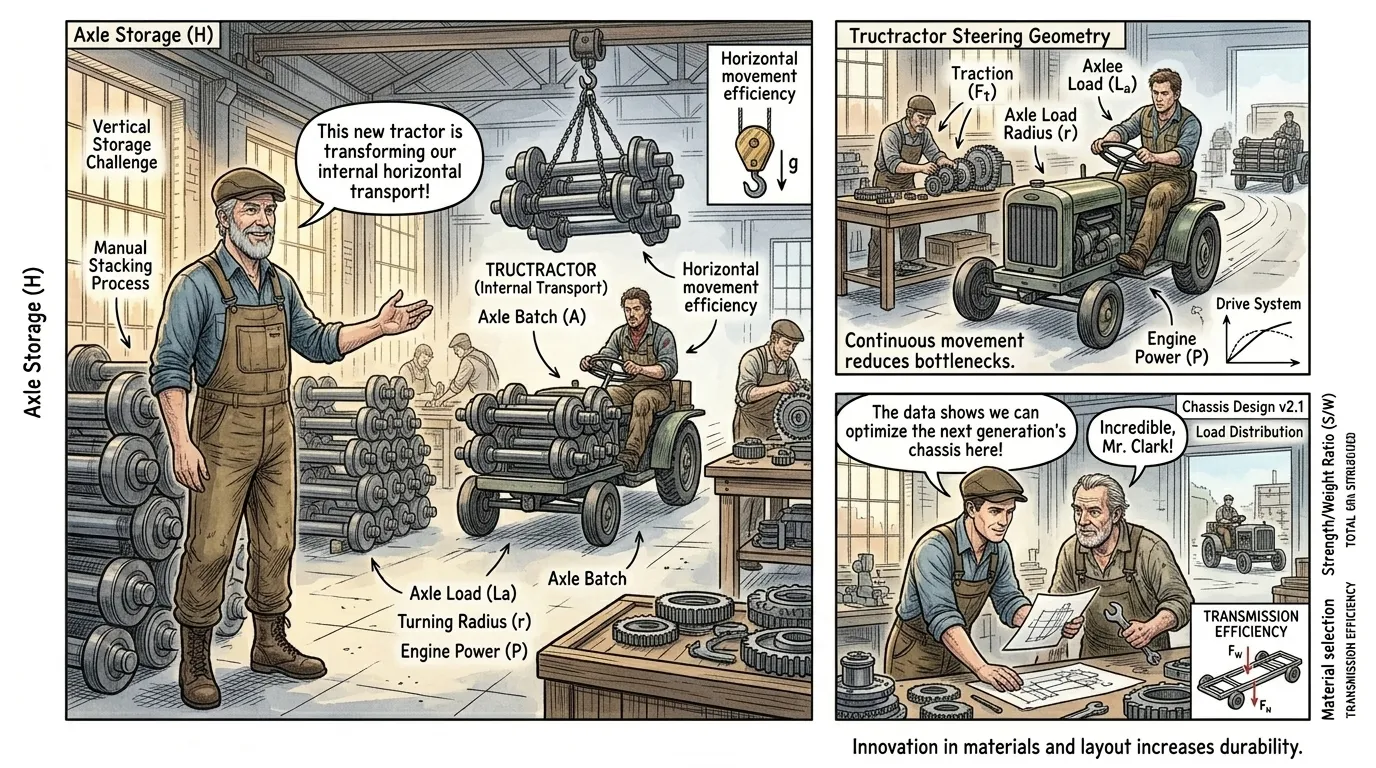
The initial answer to internal factory transport was not vertical lifting, but horizontal mobility. In 1917, Eugene Clark of the Clark Equipment Company sought to mechanize the movement of materials within his own axle-making plant in Buchanan, Michigan. He developed the 'Tructractor,' a small, gasoline-powered industrial vehicle designed to carry heavy loads across the factory floor. While this innovation greatly improved horizontal movement, the critical challenge of raising these immense loads vertically for stacking and efficient storage remained unaddressed, limiting true logistical breakthroughs.
Page 4
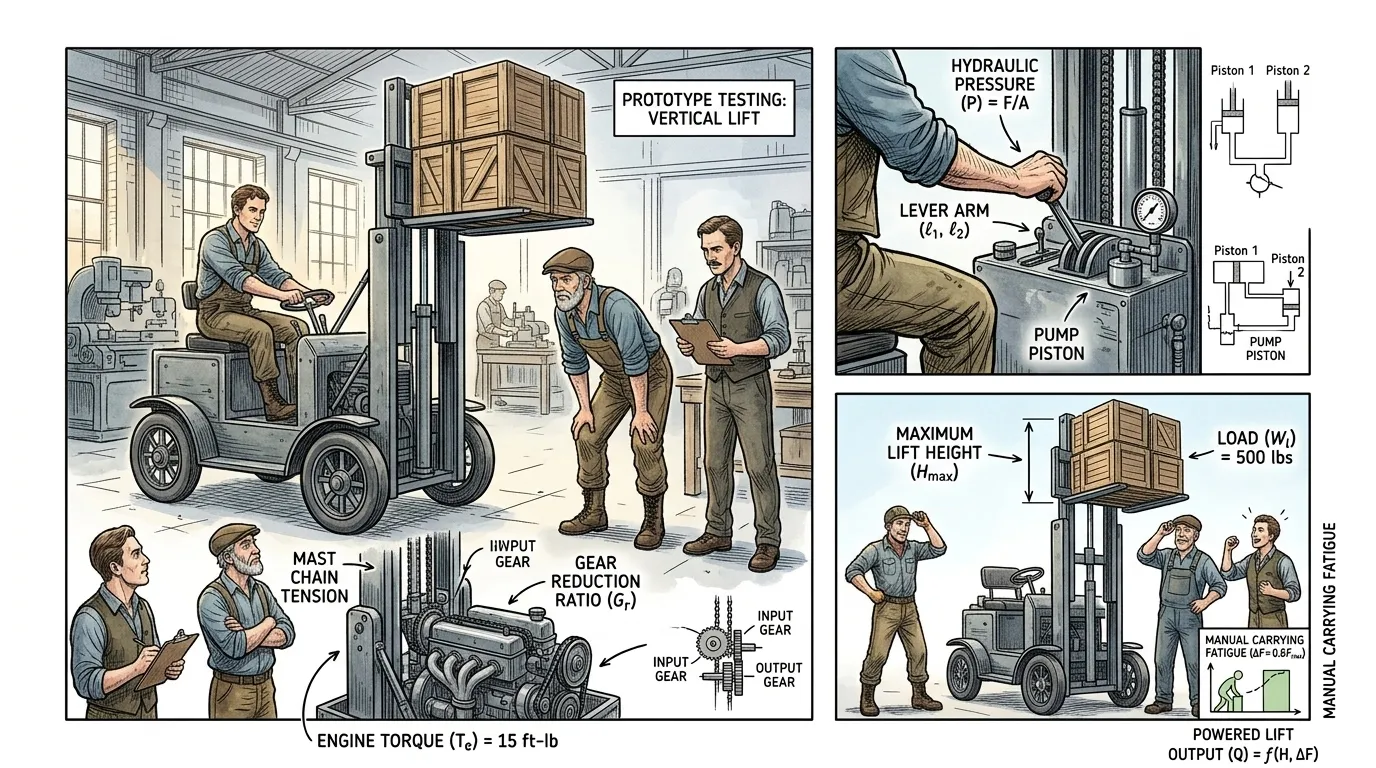
The leap from horizontal transport to vertical lifting was pivotal, originating from various innovators in the early 1920s. Companies like Yale & Towne Manufacturing and Towmotor Corporation began experimenting with trucks incorporating powered lifting platforms and telescoping masts. These early designs integrated mechanical or rudimentary hydraulic systems to elevate loads, transforming simple carriers into true 'lift trucks.' This represented a profound shift, acknowledging that optimizing storage space by stacking was as crucial as moving goods across floors. The fundamental engineering problem was now how to lift heavy, concentrated loads safely and stably.
Page 5
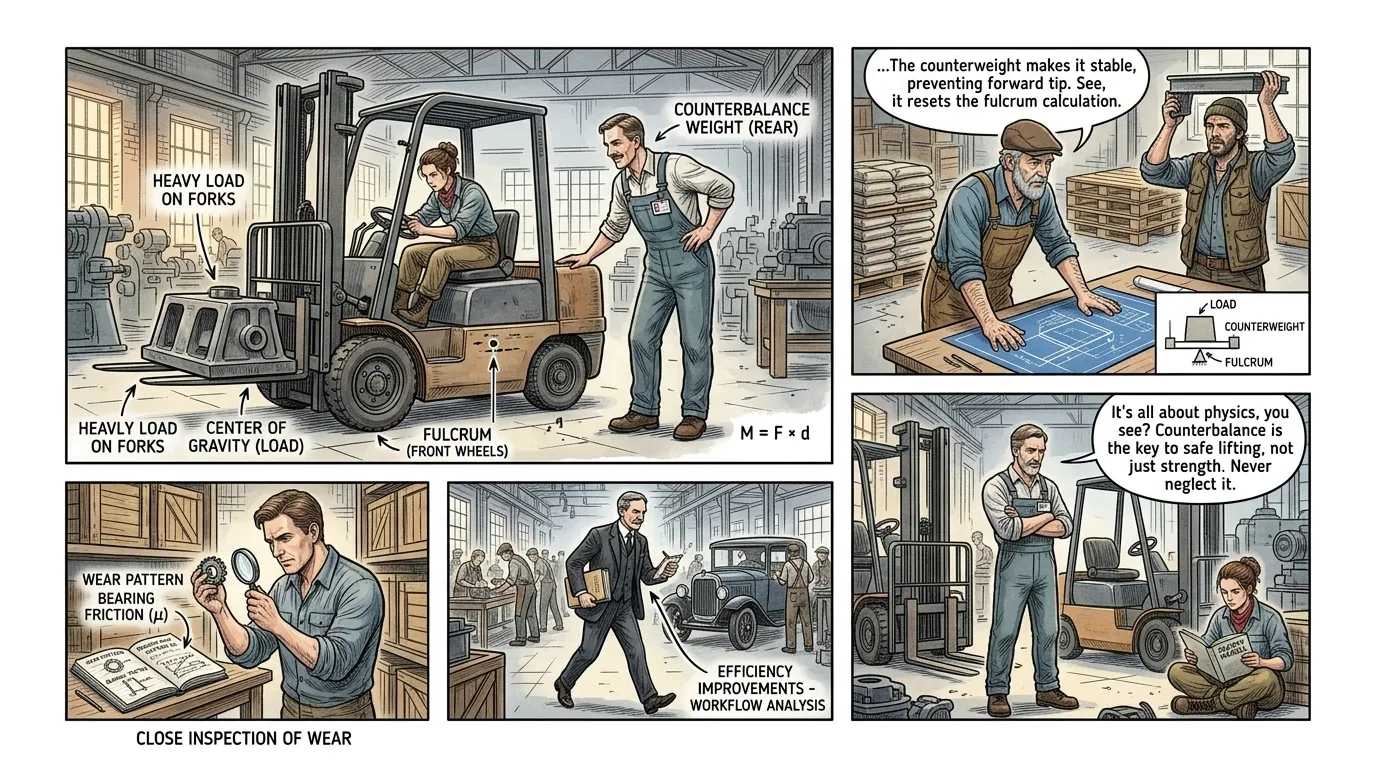
Early lift truck designs often struggled with stability, especially when attempting to lift heavy loads to significant heights. The fundamental engineering challenge was the inherent instability created by extending a heavy load forward and upward. Engineers realized that to safely elevate materials, the vehicle itself required a robust counterweight system. By positioning a heavy mass at the rear of the truck, opposite the lifting forks, they could create a fulcrum effect, ensuring the center of gravity remained within the vehicle's footprint, preventing it from tipping forward. This counterbalance principle became the cornerstone of safe and efficient forklift operation, a critical piece of knowledge learned through early trials and errors.
Page 6
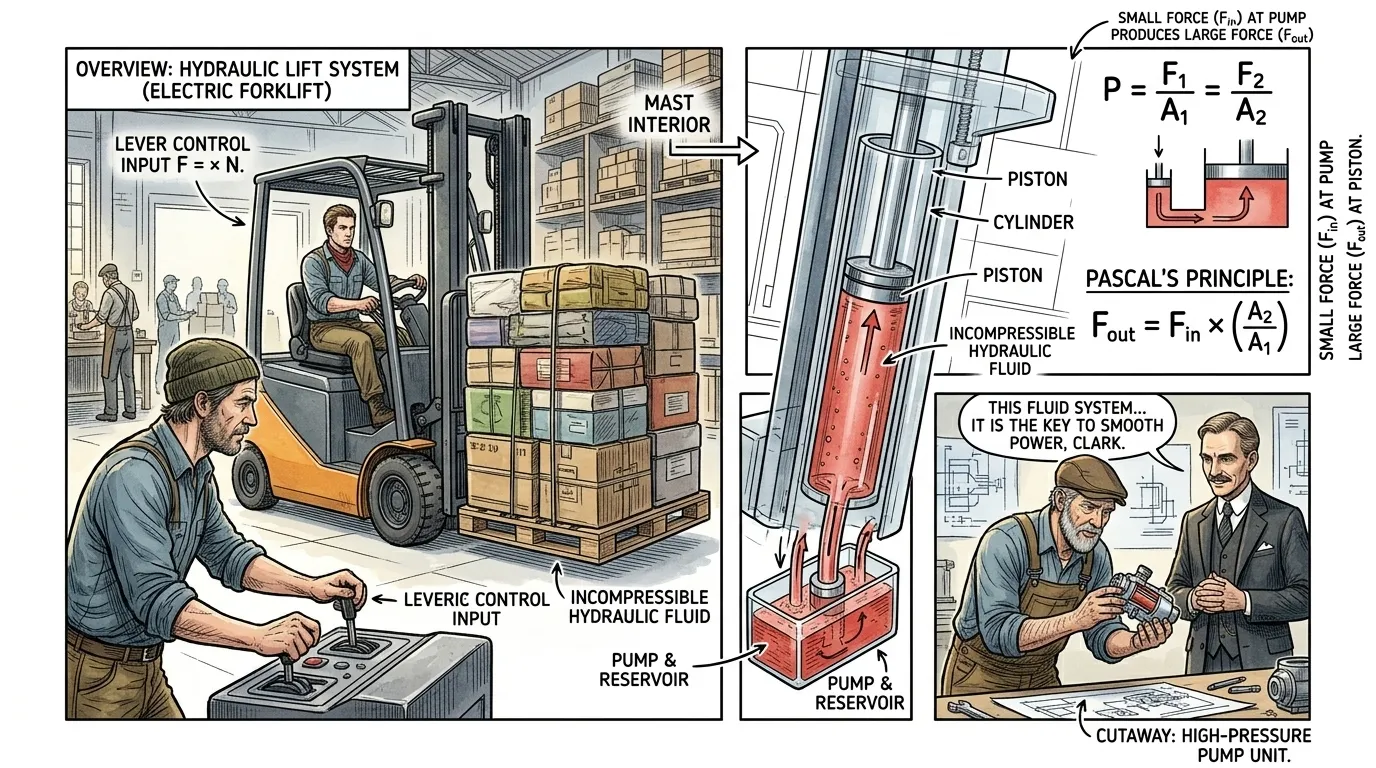
The true operational breakthrough for the forklift lay in the adoption of hydraulic systems for lifting. While early models used mechanical gears and chains, hydraulics offered greater power, smoother control, and higher lift capacities. At its core, a hydraulic system utilizes an incompressible fluid, typically oil, to transmit force. A pump pushes this fluid into a cylinder, where it acts upon a piston. As the fluid accumulates, the piston is forced upward, directly powering the vertical movement of the forklift's mast and forks. This elegant application of Pascal's principle allowed for precise, immense lifting power controlled by a simple lever.
Page 7
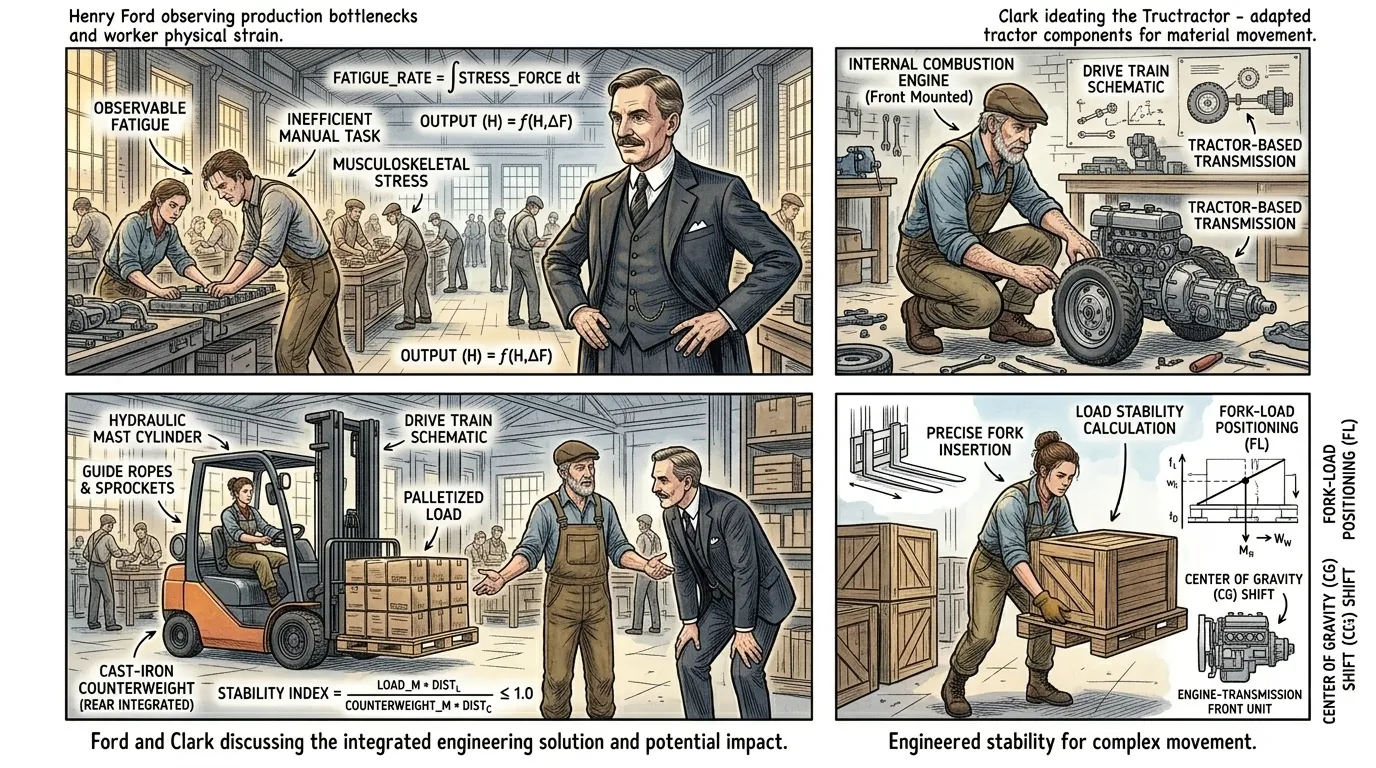
A modern forklift operates as a finely tuned system of interconnected components. The mast, a strong vertical assembly, guides the forks precisely upward and downward. Chains and sprockets, driven by the hydraulic cylinder, enable this lifting action. Crucially, the forks themselves are designed to slide beneath a palletized load, providing a stable platform. This entire lifting apparatus is strategically positioned on the chassis, with the engine and transmission typically in the front, and the heavy cast-iron counterweight solidly integrated into the rear frame. This calculated distribution of mass ensures that even the heaviest loads can be lifted high without compromising the vehicle's stability or the operator's safety.
Page 8
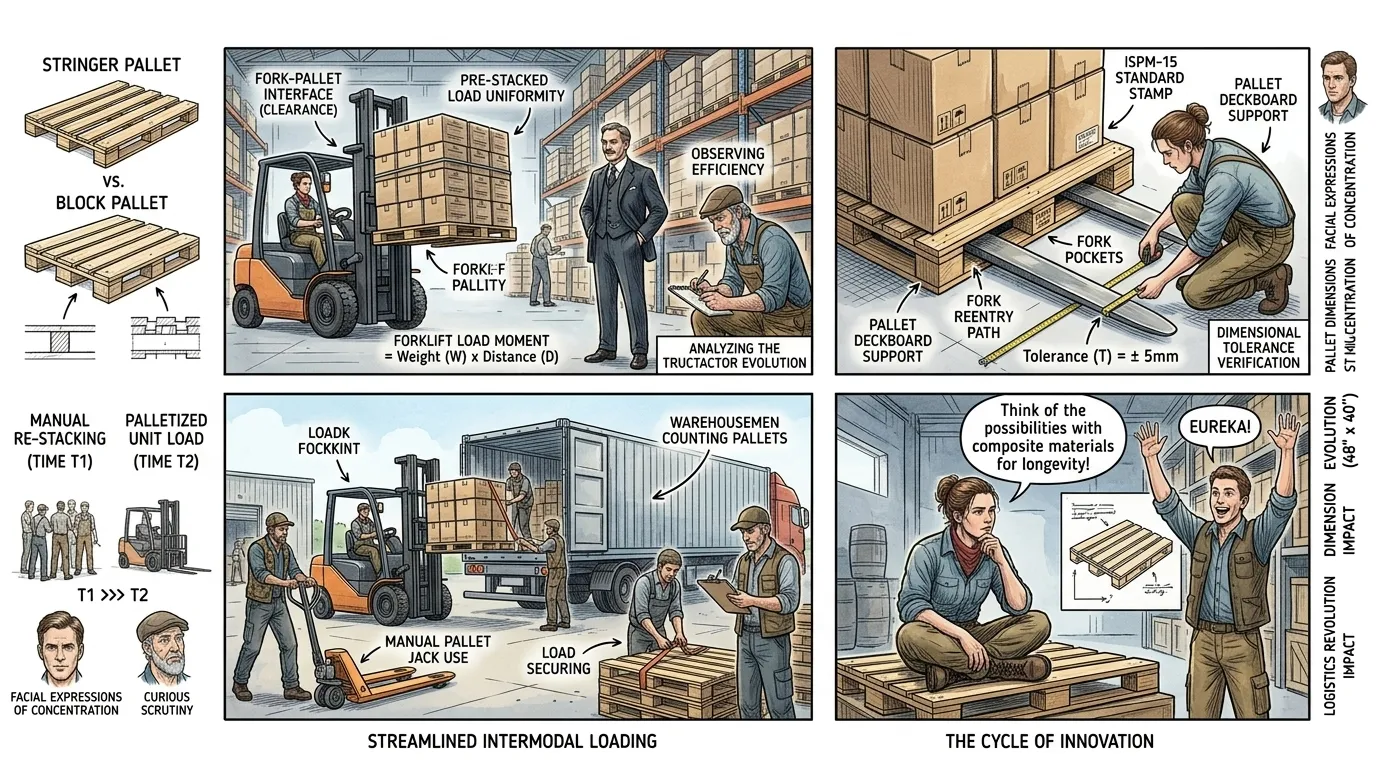
The full potential of the forklift was unlocked with the widespread adoption of the wooden pallet. This simple, standardized platform, designed specifically with clearances for forklift forks, transformed material handling. Goods could now be pre-stacked and moved as a single unit, accelerating loading and unloading processes dramatically. Palletization, enabled by the forklift, initiated a revolution in warehousing, shipping, and supply chain logistics, drastically reducing turnaround times for trucks, trains, and ships. This symbiotic relationship between the forklift and the pallet became the bedrock of modern industrial efficiency, fundamentally altering how goods flowed through the global economy.
Page 9
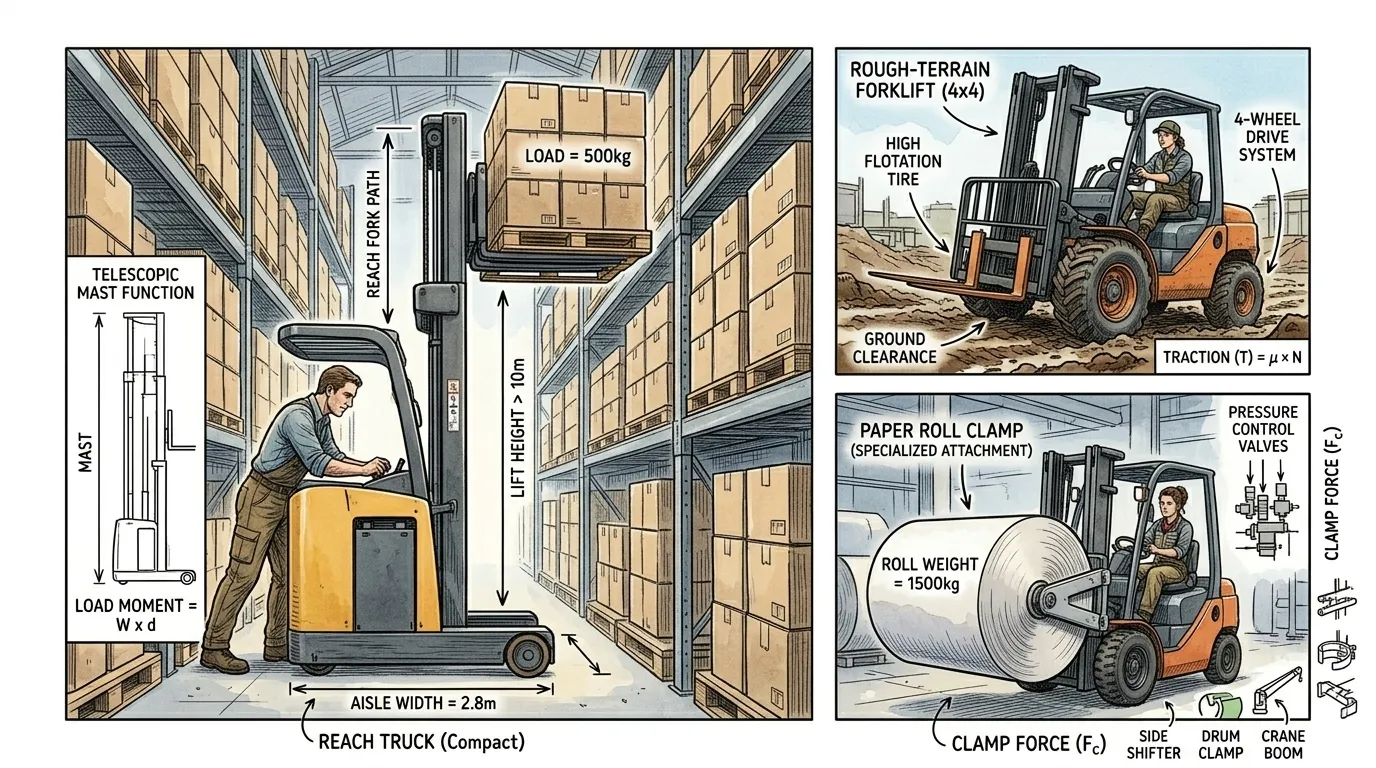
Over decades, the forklift evolved into a diverse family of machines, each tailored for specific industrial needs. From compact reach trucks navigating narrow aisles in high-bay warehouses to rugged rough-terrain forklifts tackling uneven construction sites, the core principle of powered lifting and counterbalanced stability remained. Specialized attachments replaced standard forks for handling unique loads like paper rolls or carpets, expanding the forklift's utility far beyond simple pallets. Its versatility cemented its indispensable role across virtually every sector of global commerce and industry, an omnipresent workhorse of the modern world. This continual adaptation ensured its lasting legacy.
Page 10
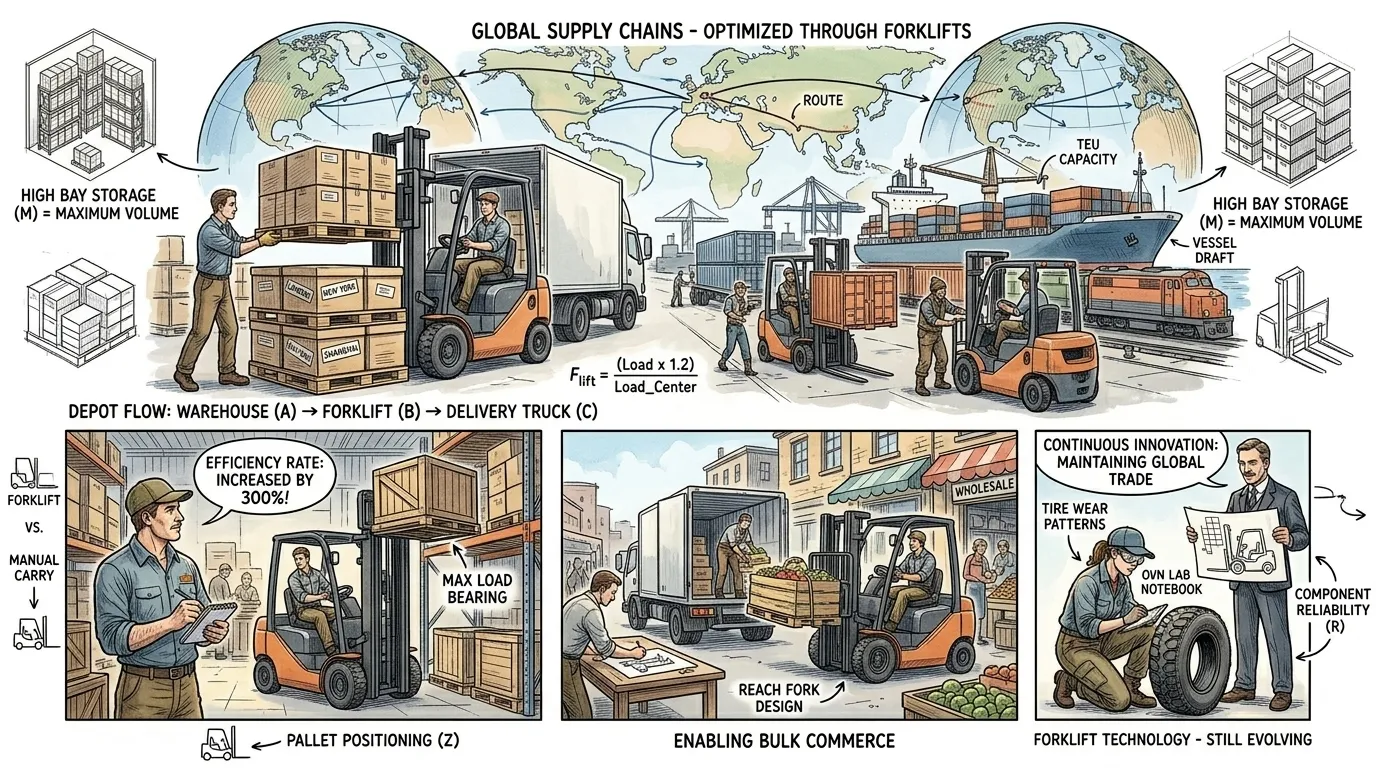
The forklift's impact on global commerce and logistics cannot be overstated. By dramatically reducing the time and effort required for material handling, it became a cornerstone of efficiency, underpinning the rise of mass production, distribution networks, and global supply chains. From the smallest local depot to the largest international shipping port, forklifts silently facilitate the movement of nearly everything we consume, defining the rhythm of modern trade. Its invention not only revolutionized physical labor but also fostered new methods of inventory management and warehouse design, forever changing the face of industry and shaping the very flow of goods across continents.
About this story
- Location: Global
- Audience: general readers
Read Wonder Inventions on your phone
Wonder Inventions is available on Android. Get Wonder Inventions on Google Play.