Hearing Aid
Hearing Aid — an illustrated inventions story, set in Global. 10 illustrated pages, free to read on Wonder Inventions.
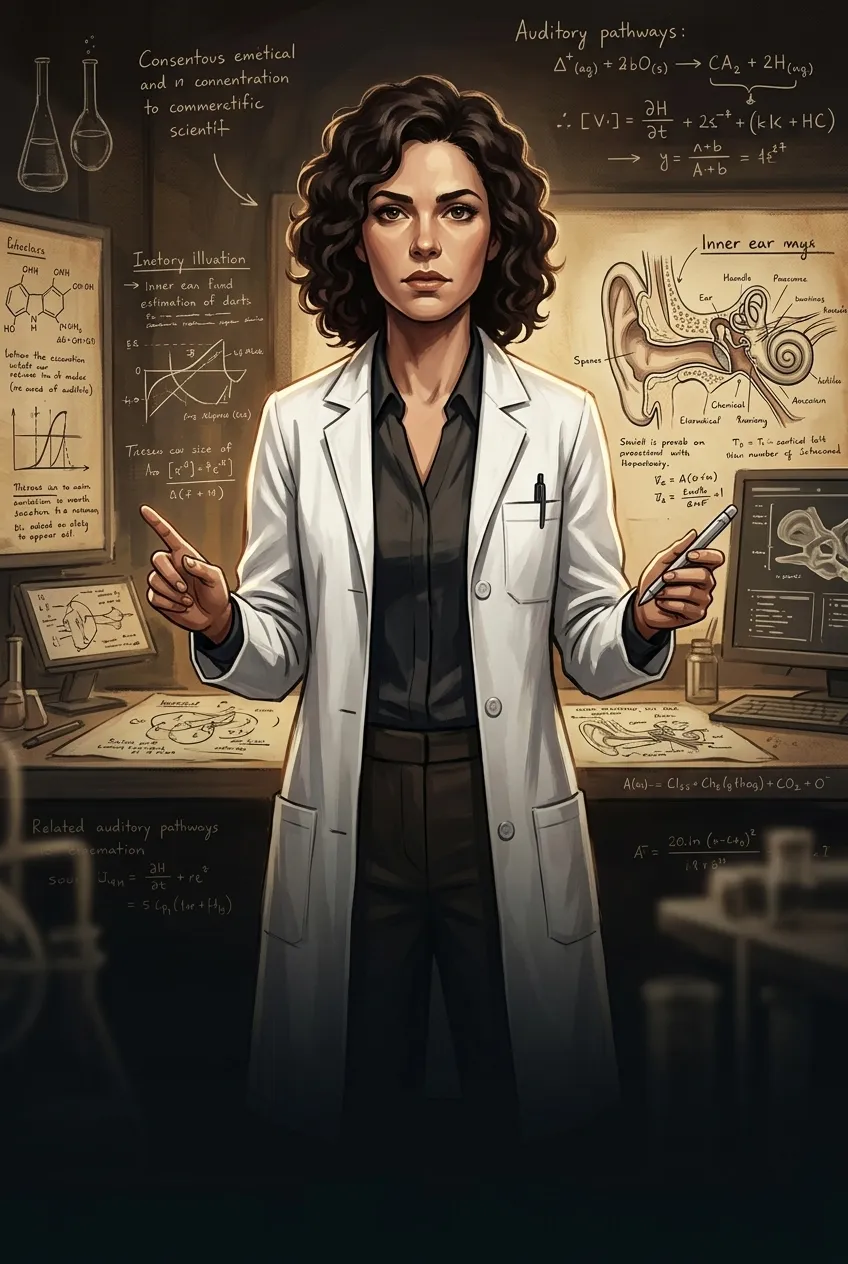
Page 1
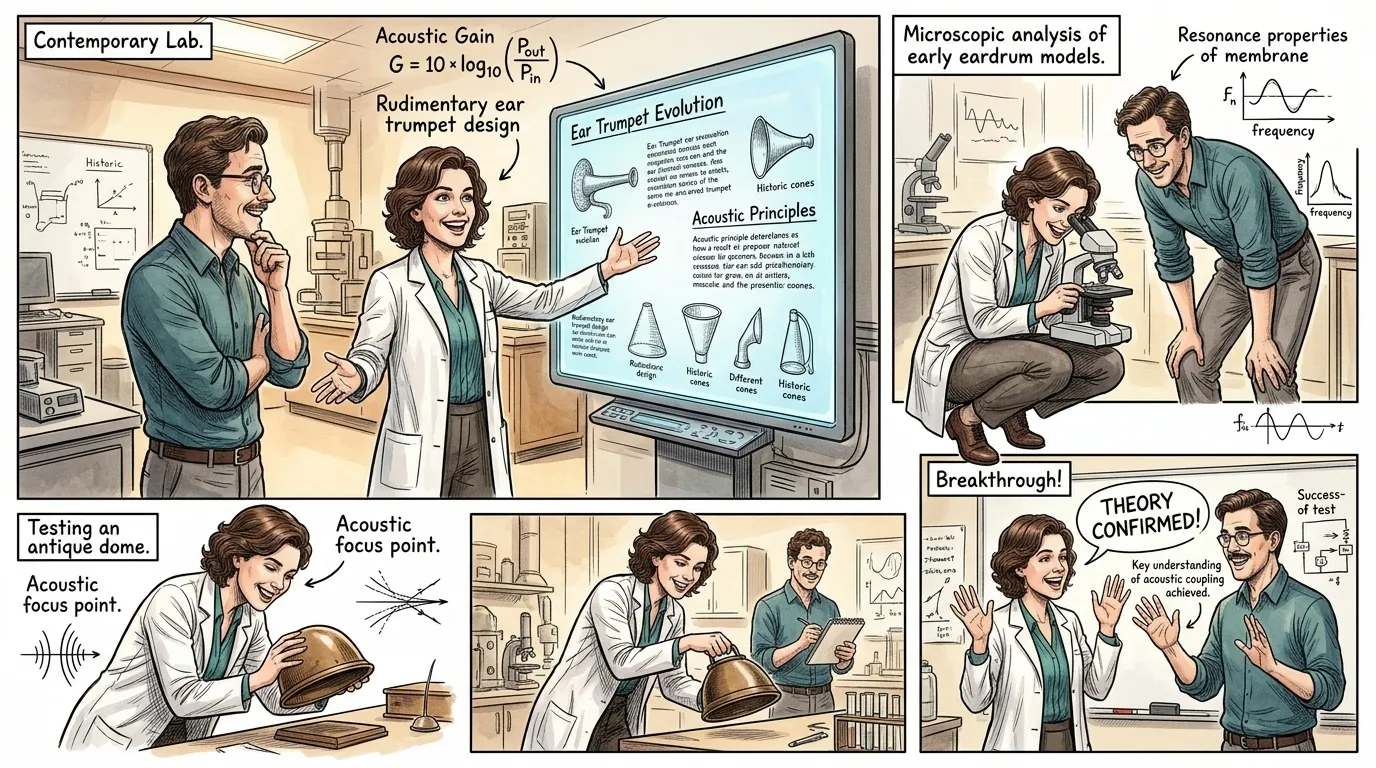
Before the advent of modern electronics, hearing loss was an isolating condition, often met with resignation. Individuals struggling to perceive speech or environmental sounds faced significant barriers to communication and engagement. Early attempts at amelioration were rudimentary, relying on passive acoustic amplification with limited efficacy.
"A scientist, Dr. Evelyn Reed, gestures towards a historic diagram on a screen. "For centuries, people sought ways to bridge the silence, from cupped hands to ornate ear trumpets. The fundamental challenge, however, remained: how to genuinely amplify and clarify the subtle intricacies of the human voice, not merely channel sound." An older man, Mr. Elias Vance, nods thoughtfully. "Indeed, the world of the profoundly deaf was one of whispers and guesswork, a constant struggle for connection.""
Page 2
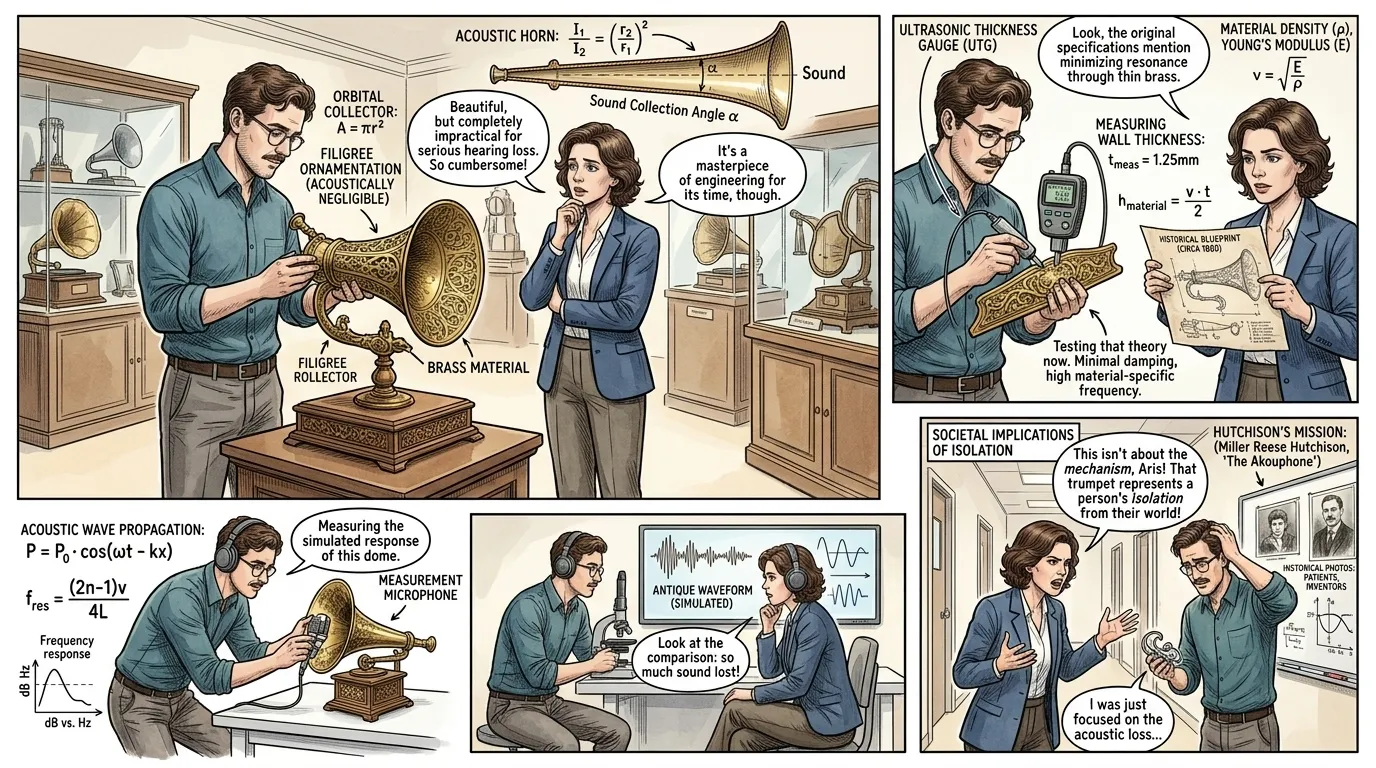
Life without effective hearing was often a muted existence, forcing individuals into social withdrawal and professional limitation. Conversations became an exhausting exercise of lip-reading and interpretation, while the rich tapestry of daily sounds, from music to warning signals, remained largely inaccessible. This profound auditory isolation impacted every facet of life.
"An engineer, Dr. Aris Thorne, examines a large, antique ear trumpet on a display stand. "The societal impact was immense; imagine a constant barrier to everyday interaction. These passive devices offered minimal directional assistance and no real amplification, making participation in group settings nearly impossible." A historian, Dr. Lena Petrova, shakes her head. "As the renowned American author and lecturer Helen Keller once wisely stated, 'Blindness separates people from things; deafness separates people from people.' Her words powerfully articulate the isolating truth that early 20th-century technology could not yet overcome, a deep societal void needing a technical solution.""
Page 3
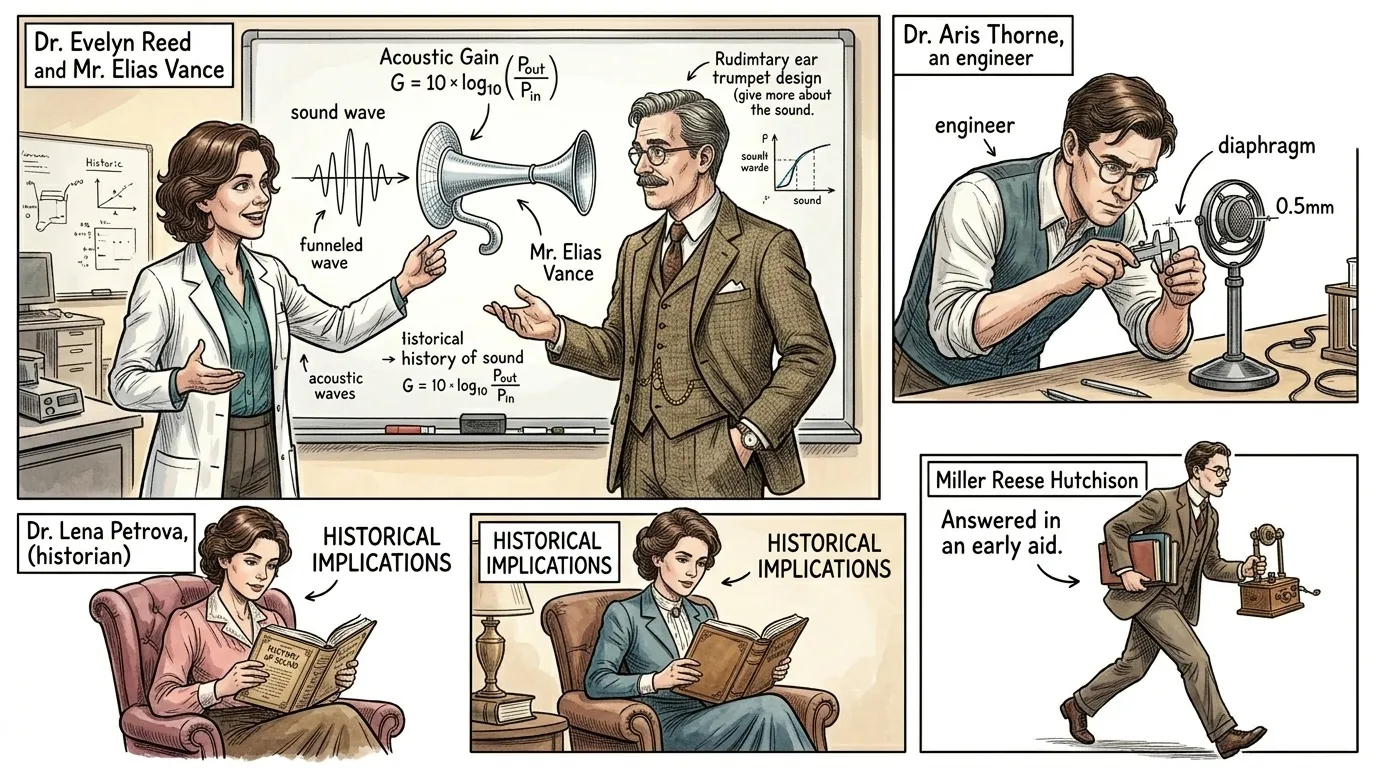
Before electrical aids, the primary means of improving hearing involved acoustic funnels. These devices, often crafted from materials like horn, metal, or rubber, worked by physically gathering sound waves over a larger area and directing them into the ear canal. While offering some marginal benefit by concentrating sound, they provided no true amplification and distorted frequencies.
"Dr. Reed points to a cross-section diagram of an ear trumpet on a whiteboard. "The mechanism was simple: a passive funnel guiding pressure waves. The critical limitation, however, was efficiency. Much like a megaphone focuses sound, these only collected existing acoustic energy without boosting its intensity." Mr. Vance adds, "Furthermore, the larger the funnel, the more effective, but this sacrificed portability and discretion. Imagine trying to integrate such a cumbersome device into polite society; it became a visible marker of disability, not an aid to integration.""
Page 4
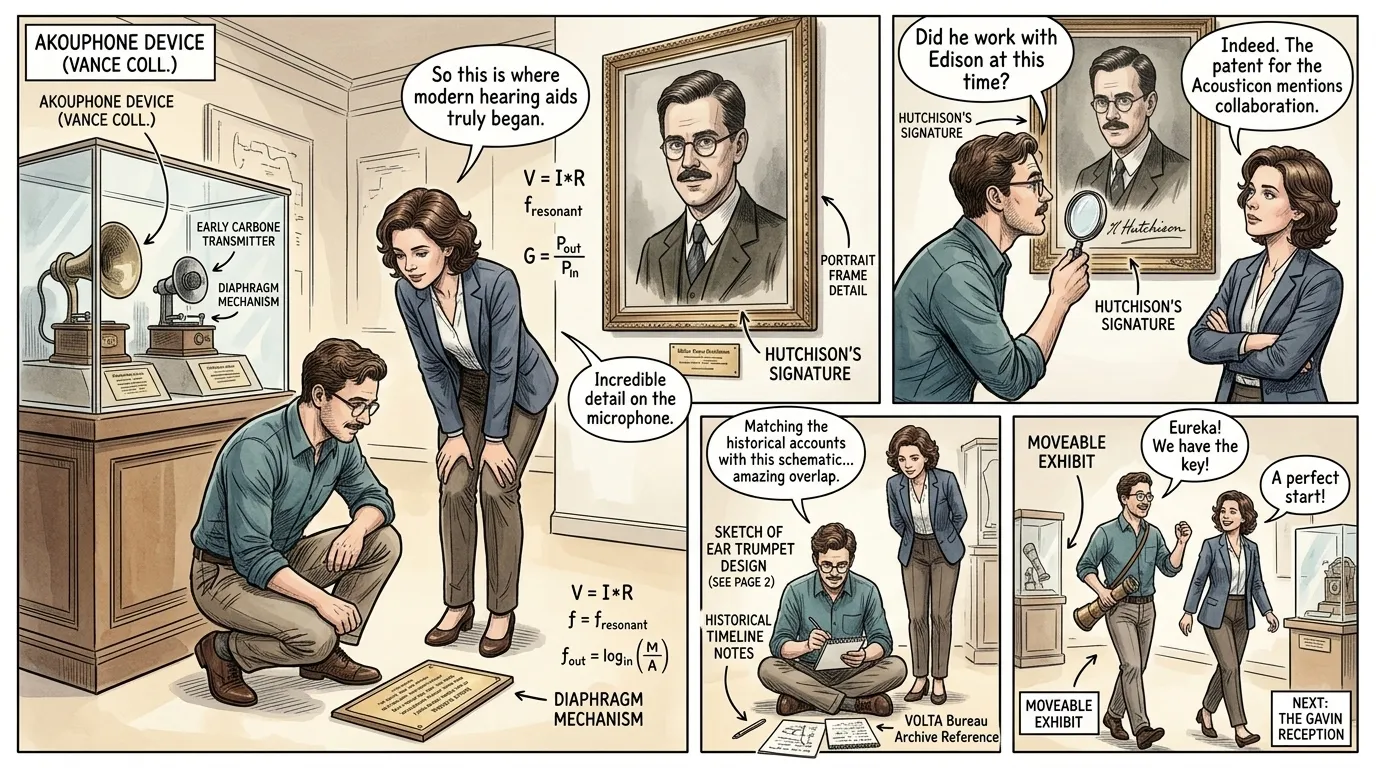
Born in 1876, Miller Reese Hutchison was a prolific American inventor whose ingenuity extended across diverse fields, from submarine batteries to automobile horns. His empathy for a deaf friend, Lillie, became a powerful personal motivation. Witnessing her struggles sparked a determination to harness emerging electrical technology to overcome the pervasive silence, a challenge far more complex than mechanical amplification.
"Dr. Thorne stands before a photographic portrait of Hutchison. "Hutchison possessed that rare combination of technical prowess and compassionate drive. He understood that passive acoustic devices were a dead end. The solution, he theorized, lay in the same electrical principles Alexander Graham Bell had used for the telephone – transforming sound into electrical signals, amplifying them, and converting them back into louder sound." Dr. Petrova comments, "His vision wasn't just about sound, but about re-establishing connection, about giving individuals back their voice in a conversational world. He saw the potential for technology to mitigate profound human isolation.""
Page 5
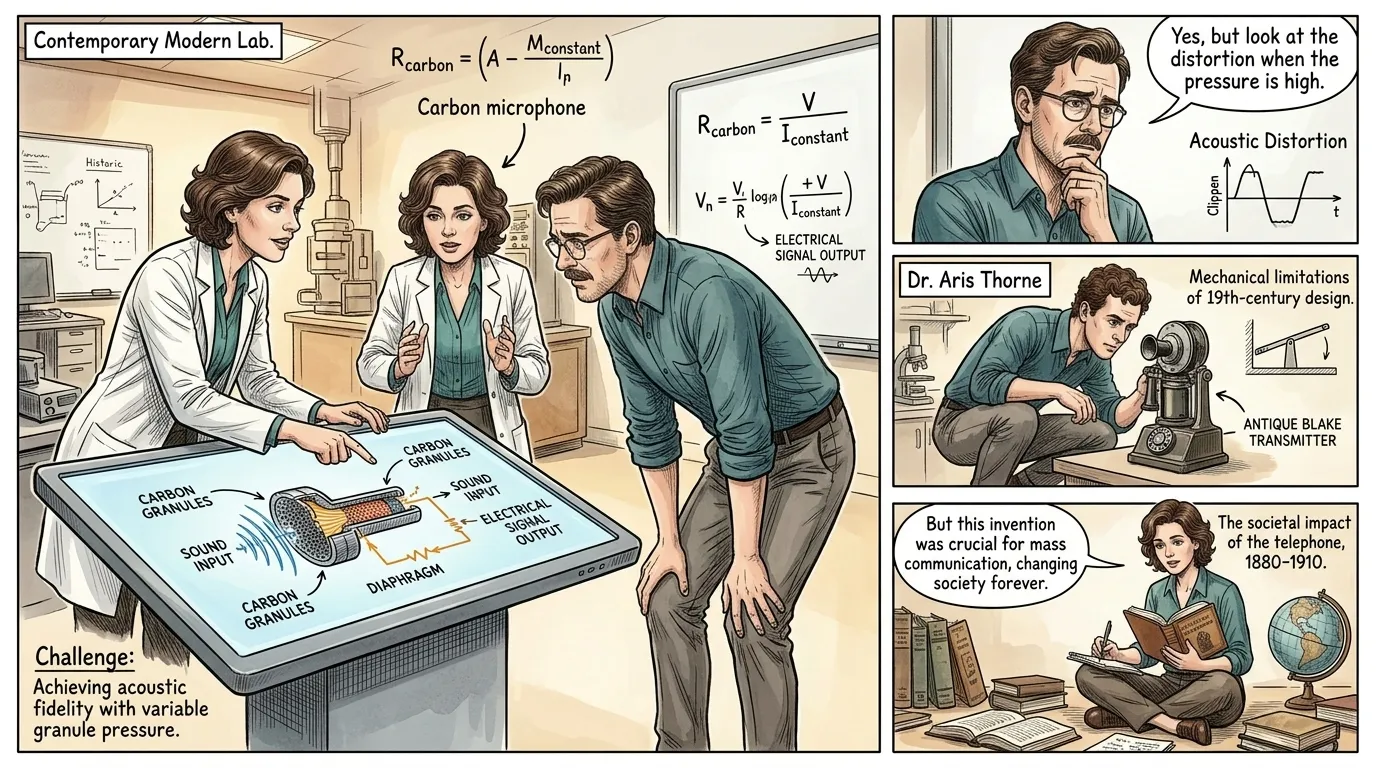
Hutchison's initial challenge was adapting existing telephone technology for hearing loss. Early carbon microphones, while revolutionary for telephony, were temperamental. Carbon granules, crucial for converting sound into variable electrical resistance, tended to 'pack' or become uneven, leading to inconsistent sound quality and distortion, particularly at high amplification levels. This demanded a robust, stable design.
"Dr. Reed points to a detailed diagram of a carbon microphone with arrows showing sound waves hitting a diaphragm. "The principle was sound, so to speak: a diaphragm vibrates, pressing against carbon granules, altering electrical resistance, and thus modulating an electric current. But achieving consistency and clarity was the hurdle. Early iterations were prone to static and abrupt failures." Mr. Vance remarks, "His early prototypes, undoubtedly crude by our standards, were critical learning tools. Each failure in achieving clear amplification pushed him closer to understanding the precise interplay of acoustics and electrical resistance required.""
Page 6
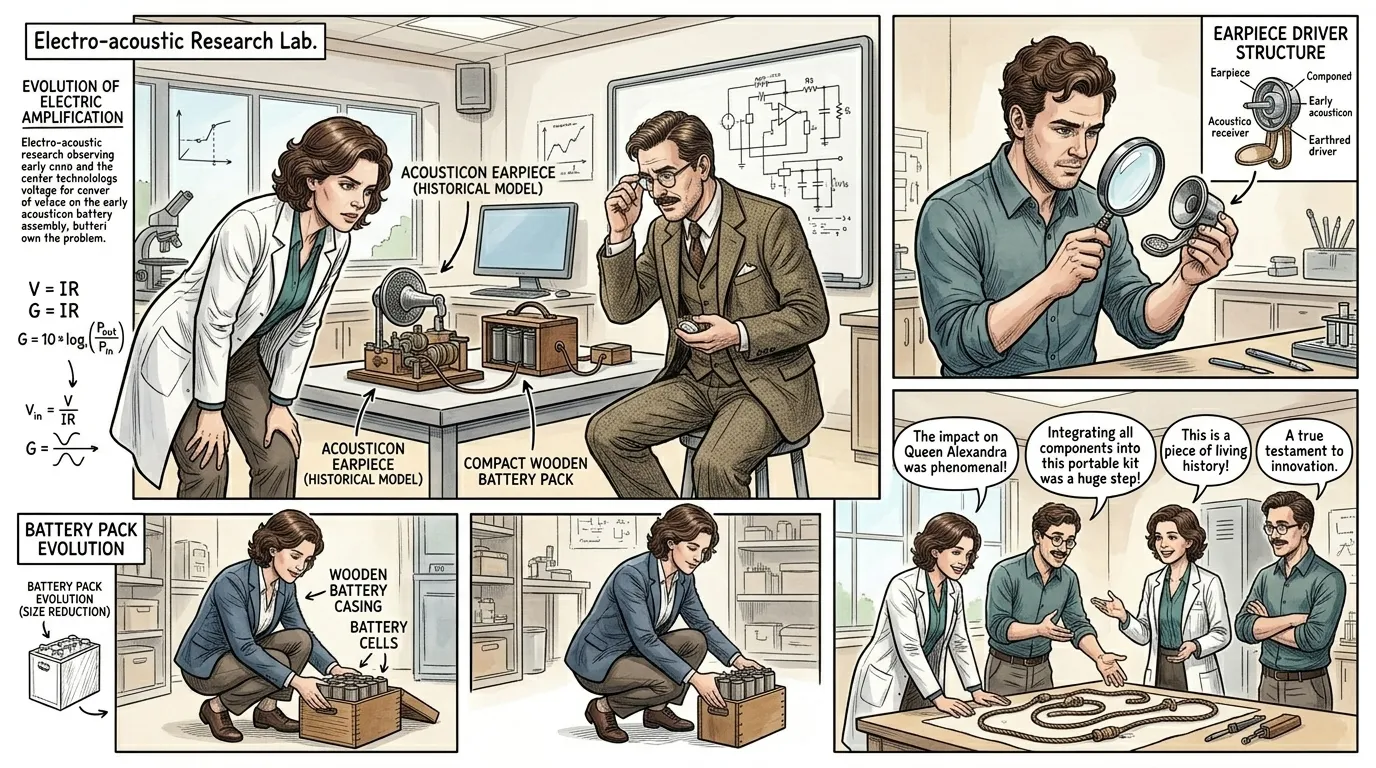
In 1901, Miller Reese Hutchison patented the 'Acousticon,' the first portable electric hearing aid. It comprised three essential components: a carbon microphone to convert sound into electrical signals, a battery-powered amplifier to boost these signals, and a magnetic receiver to convert the amplified electrical signals back into louder, clearer sound waves directly into the ear. This modular system revolutionized auditory assistance.
"Dr. Aris Thorne holds up an early Acousticon receiver, a small earpiece. "The ingenuity lay in the integration. The carbon microphone captured the sound, converting the acoustic energy into a fluctuating electrical current." He then gestures to a central battery pack, a small wooden box. "This current then passed through the compact amplifier circuit, which, powered by a battery, significantly increased its amplitude." Dr. Lena Petrova adds, "Finally, the amplified current drove the magnetic receiver, causing its diaphragm to vibrate powerfully, producing a much louder, intelligible sound for the user. It was a complete electro-acoustic chain, a true triumph over silence.""
Page 7
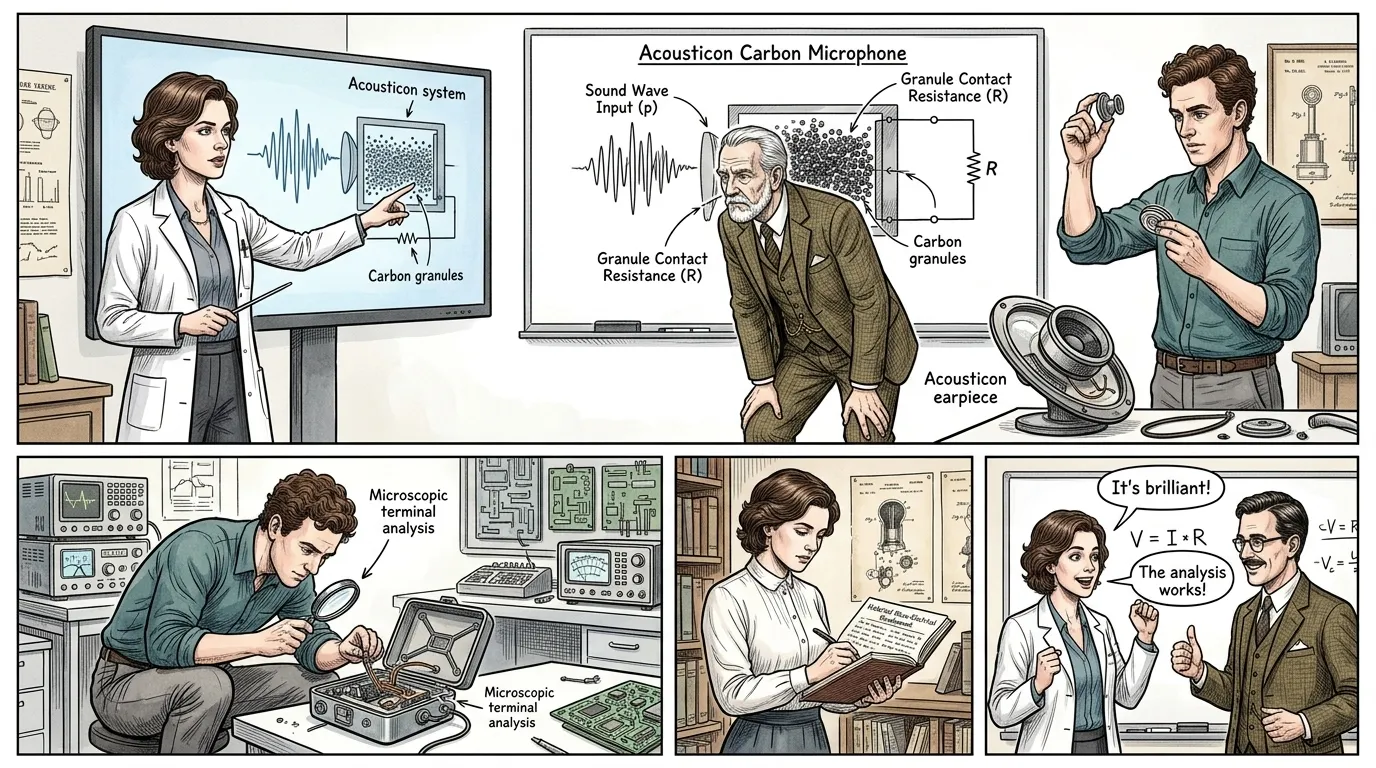
At the heart of the Acousticon's early amplification lay the improved carbon microphone. Unlike earlier, unstable designs, Hutchison's version featured a finely tuned diaphragm pressing against carefully chosen carbon granules. When sound waves hit the diaphragm, its vibrations precisely altered the resistance of the carbon bed, causing a connected electric current to mimic the original sound's waveform but with significantly increased power, ready for the receiver.
"Dr. Evelyn Reed points to an animated diagram showing sound waves propagating through the Acousticon system. "The key was controlled resistance. The subtle pressure changes on the carbon granules had to be stable and proportional to the sound input. Too much compression, and you'd get distortion; too little, insufficient amplification." Mr. Elias Vance elaborates, "This refined carbon granule technology was the unsung hero, ensuring that the electrical signal faithfully represented the acoustic input before amplification. It was a delicate balance of mechanical and electrical engineering, crucial for producing clear, usable sound rather than just noise.""
Page 8
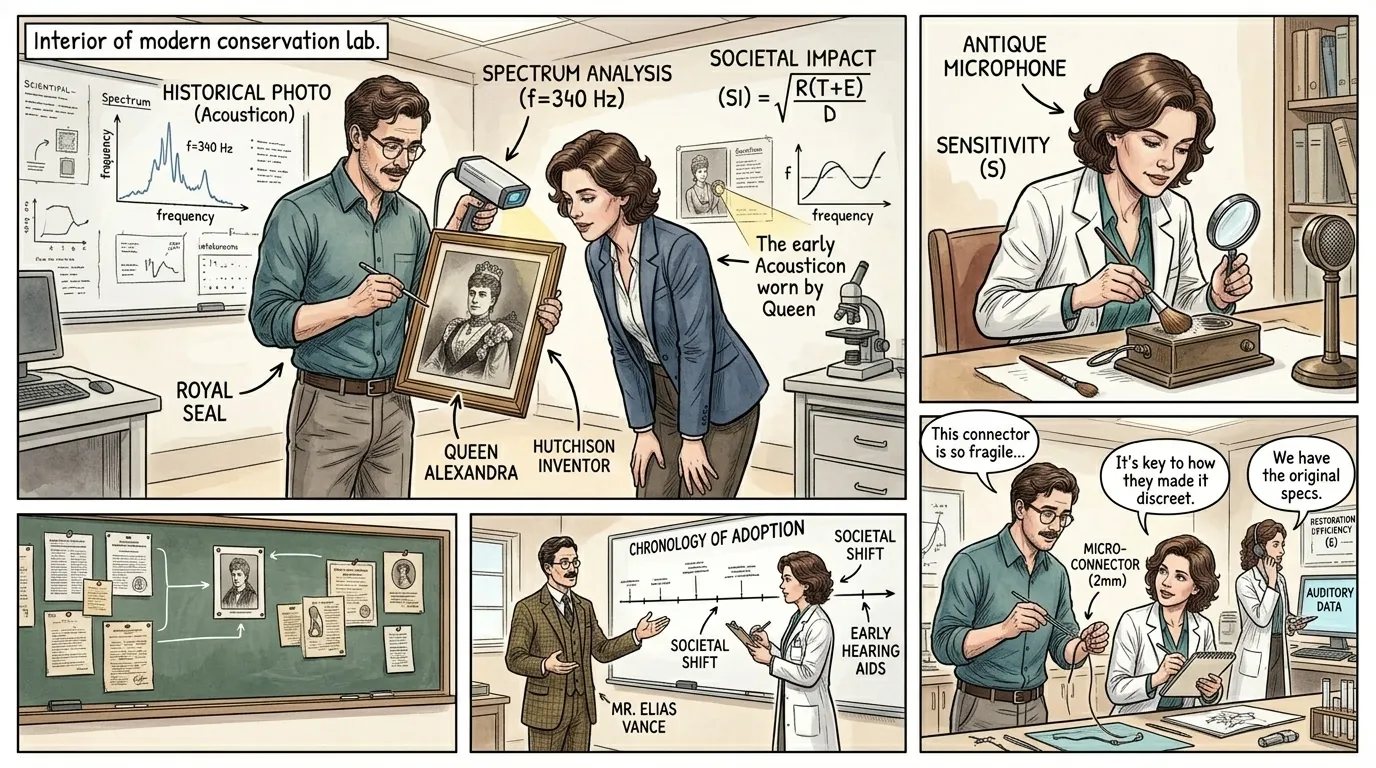
The Acousticon swiftly gained recognition, initially as a sophisticated novelty, but quickly evolving into an indispensable tool. Its early users ranged from politicians to musicians, demonstrating its transformative power in diverse professional and personal spheres. While still bulky and conspicuous by modern standards, its ability to restore intelligible sound dramatically improved communication and quality of life for thousands.
"Dr. Aris Thorne shows a photograph of a historical figure using an Acousticon. "Even Queen Alexandra of Denmark, wife of King Edward VII, became a prominent user of the Acousticon, lending it immense credibility. Her endorsement underscored its effectiveness and helped destigmatize the use of such devices." Dr. Lena Petrova adds, "Its adoption marked a societal shift. It wasn't just about hearing; it was about re-engaging with the world, allowing people to participate in meetings, enjoy theater, and simply converse without constant strain. The device literally opened up avenues for connection that were previously closed.""
Page 9
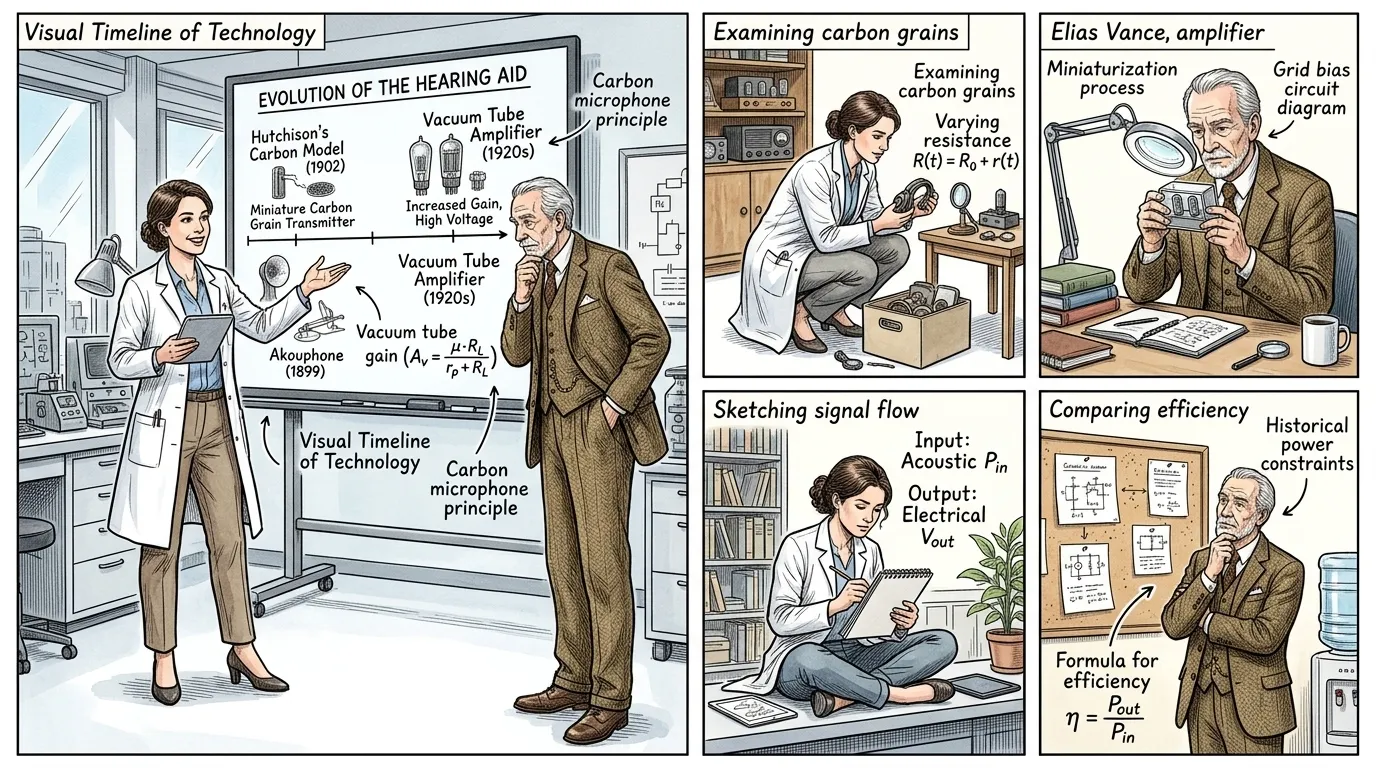
The Acousticon's carbon-microphone design, though groundbreaking, paved the way for successive generations of hearing aids. The 1920s saw the introduction of vacuum tube technology, offering greater amplification and less distortion. By the 1950s, the invention of the transistor dramatically reduced size and improved battery life, moving hearing aids from bulky external units to discreet, body-worn devices, and eventually, to in-ear solutions.
"Dr. Evelyn Reed points to a visual timeline displaying different hearing aid technologies. "The progression was relentless: from Hutchison's carbon marvel to the powerful, albeit still unwieldy, vacuum tube amplifiers. Each leap significantly refined clarity and increased gain." Mr. Elias Vance observes the timeline. "The transistor, truly, miniaturized hope. This single component allowed for the transformation from something carried in a briefcase to a device worn almost invisibly, fundamentally altering the social perception and practicality of hearing assistance.""
Page 10
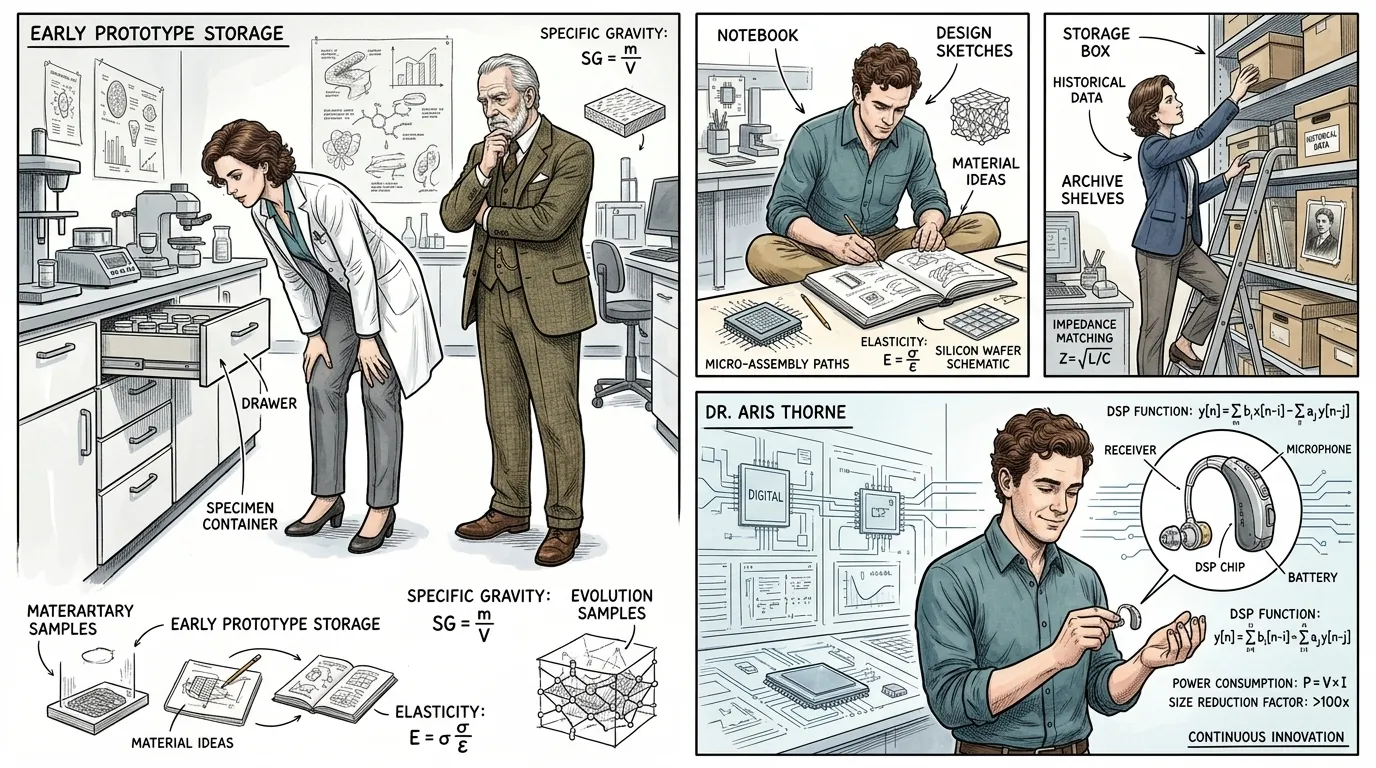
Today's digital hearing aids, direct descendants of Hutchison's pioneering work, are sophisticated marvels of miniaturization and computational power. They boast directional microphones, noise reduction algorithms, and custom programming, tailored precisely to individual hearing profiles. This continuous evolution has transformed the lives of millions, fostering communication, independence, and a richer engagement with the world.
"A voiceover narrates, "From cumbersome ear trumpets to Miller Reese Hutchison's electrical breakthrough, and then to today's micro-processors, the journey of the hearing aid reflects humanity's unyielding drive to overcome physical limitations and preserve the fundamental human right to connect and communicate." Dr. Thorne nods slowly. "The impact is profound: careers sustained, relationships strengthened, and lives enriched. The silence, once a barrier, is now merely a challenge met by ingenious engineering.""
About this story
- Location: Global
- Audience: general readers
Questions and answers
Read Wonder Inventions on your phone
Wonder Inventions is available on Android. Get Wonder Inventions on Google Play.