Heart-Lung Machine
Heart-Lung Machine — an illustrated inventions story, set in Global. 10 illustrated pages, free to read on Wonder Inventions.
Page 1
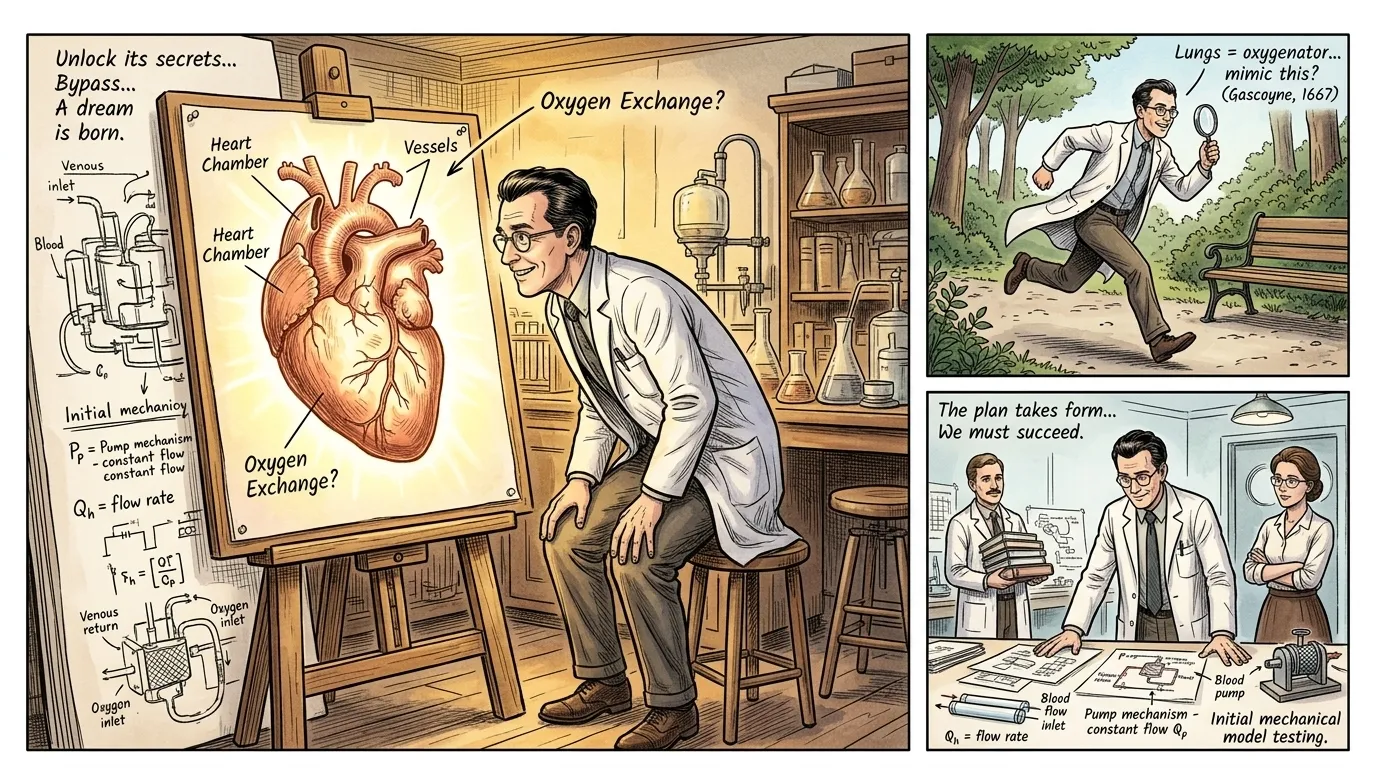
For centuries, the heart remained a forbidden frontier for surgeons, its relentless rhythm essential but untouchable. Any interruption meant immediate death, rendering most complex cardiac ailments untreatable. Dr. John Heysham Gibbon Jr. witnessed this stark reality in 1930 while observing a young patient die on an operating table during an attempt to remove a massive blood clot from her pulmonary artery. This profound moment ignited his life's work: to create a device that could temporarily take over the functions of the heart and lungs, allowing surgeons unprecedented access to repair the very core of human life.
""The heart itself, the very core of our being, was an impenetrable mystery, a beating clock we could only observe, never truly mend," Dr. Gibbon reflected years later, recalling the profound limitations of early 20th-century medicine. "To operate directly on it, one needed time—time the body simply could not provide.""
Page 2
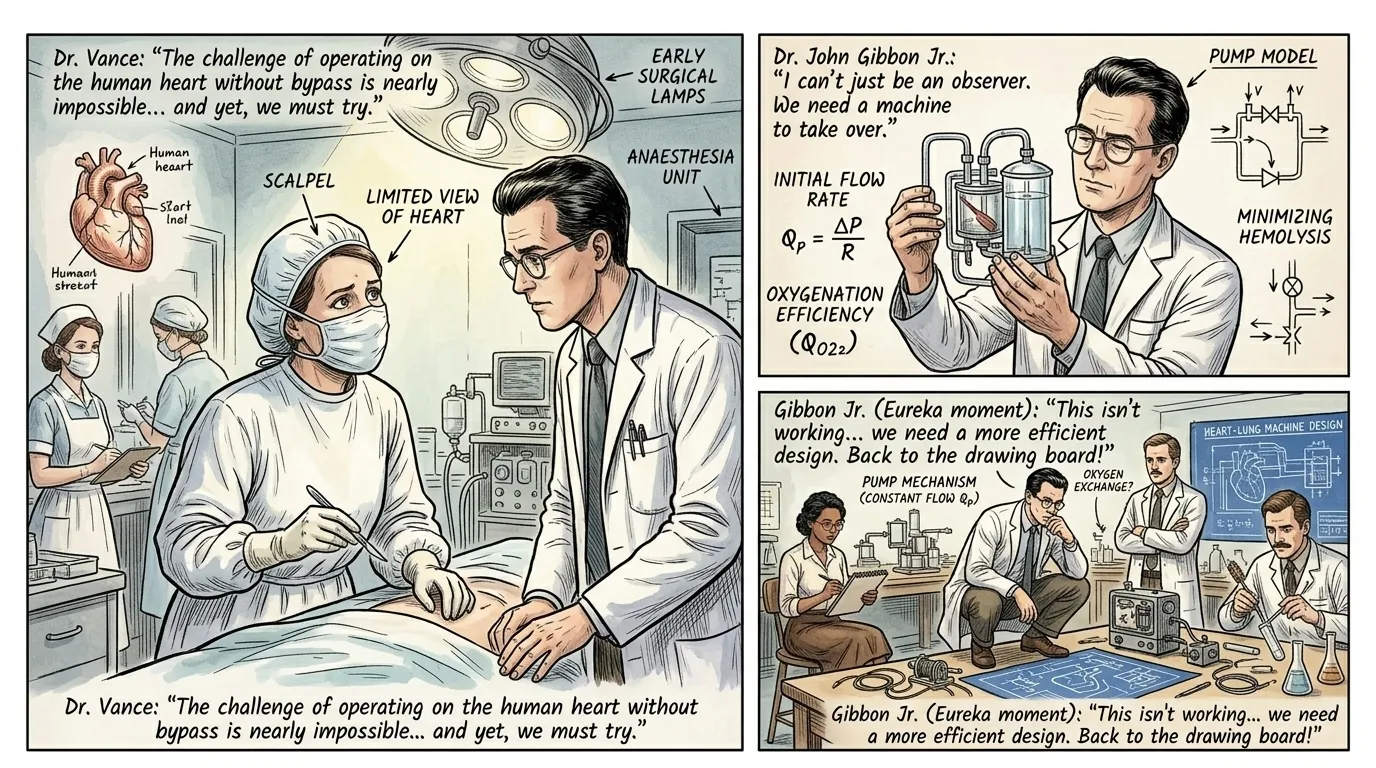
Before Gibbon's invention, cardiac surgery was largely limited to external interventions or closed procedures, like correcting certain congenital defects without directly opening the heart. The moment a surgeon breached the heart's chambers, blood flow ceased, oxygen deprivation began, and irreversible brain damage or death quickly followed. This critical challenge, a race against time measured in mere minutes, was the fundamental barrier to advancements in treating complex heart disease. Early attempts to slow the heart or temporarily clamp vessels proved inadequate, underscoring the need for an entirely new paradigm.
"A senior surgeon, Dr. Eleanor Vance, holding a scalpel over a surgical field in a cramped, sterile operating room, turned to a young Gibbon. "The human heart beats 100,000 times a day, John," she stated, her voice low and grave. "To stop it, even for a moment, is to invite death. We need to buy time, but how do we provide blood and oxygen when the heart and lungs cannot?""
Page 3
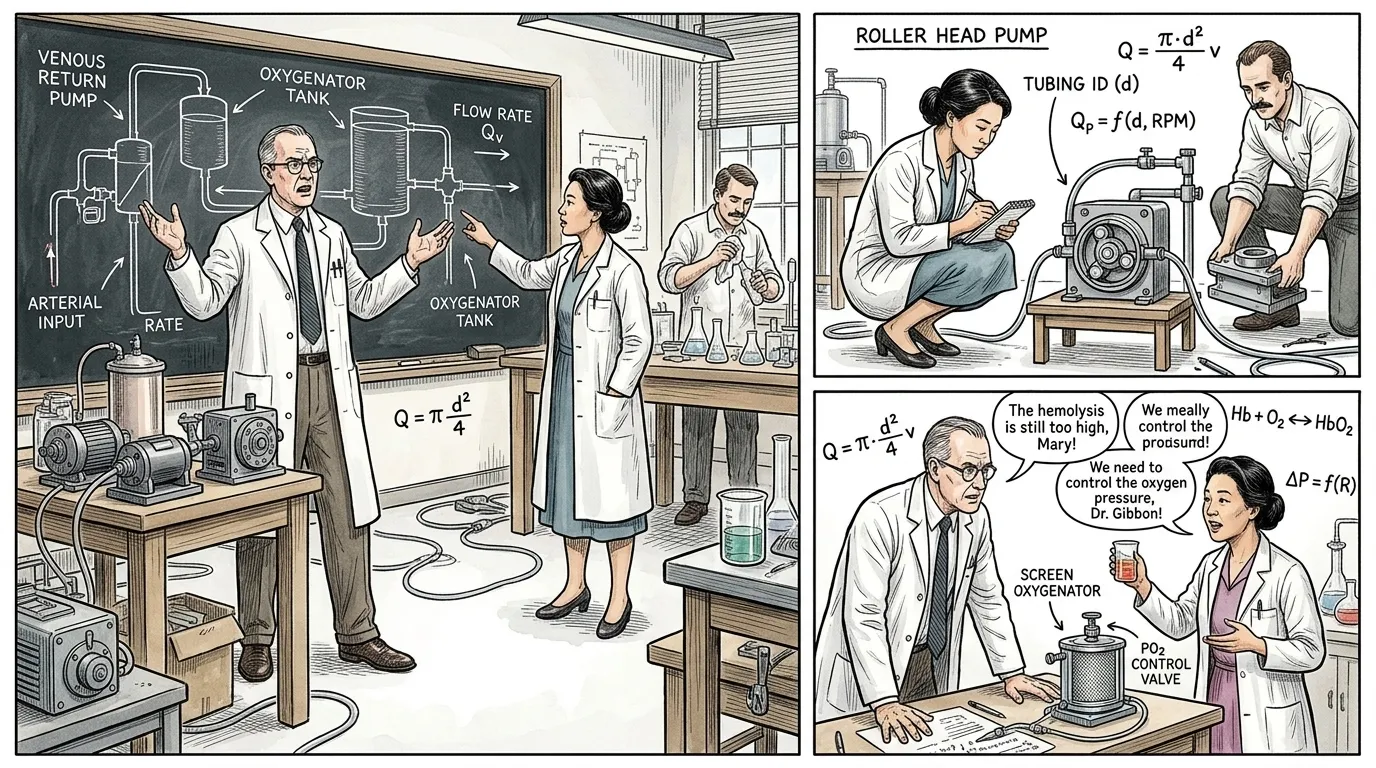
Gibbon's relentless pursuit began with fundamental questions: How does blood circulate? How is it oxygenated? His initial experiments involved animals, attempting to divert venous blood, oxygenate it outside the body, and return it to arterial circulation. The core problem was twofold: efficiently oxygenating blood without damaging its fragile components, and pumping it reliably through the body. Early designs, using spinning cones or bubblers, often caused severe blood cell destruction or dangerous air embolisms, setting back progress and challenging the very concept of extracorporeal circulation. His first designs were cumbersome and unreliable, highlighting the sheer mechanical and biological complexity.
"Examining a diagram on a chalkboard, a frustrated Dr. Gibbon gestured to a complex schematic of tubes and reservoirs. "Aristotle, in 'Parts of Animals,' once observed that 'Nature makes nothing in vain.' We are trying to emulate nature, to perform its most vital functions externally, yet our crude devices often cause more harm than good to the blood itself." His colleague, Dr. Mary Chen, an equally determined young researcher with dark hair pulled back, pointed to a section. "The interface, John, the blood-gas exchange without trauma – that remains our Gordian knot.""
Page 4
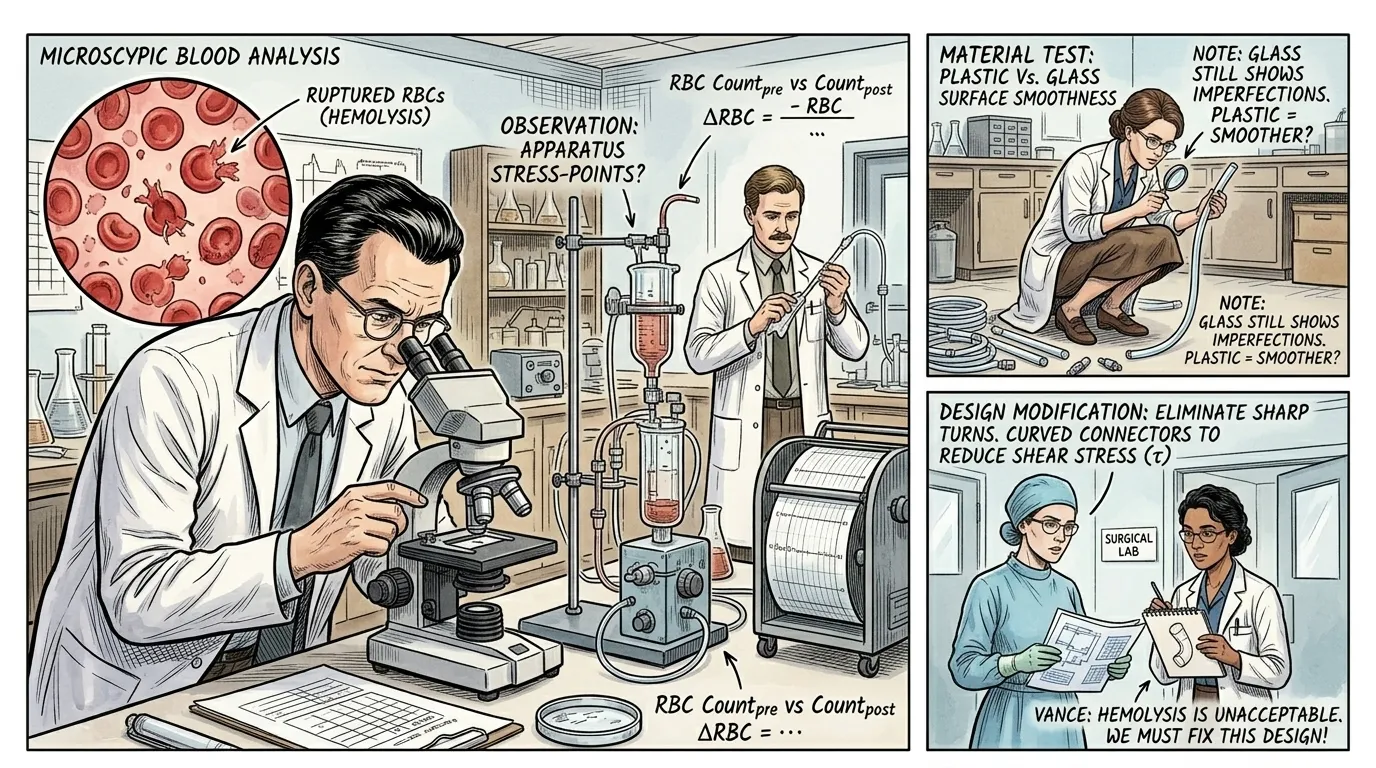
Beyond the basic mechanics of pumping and oxygenation, Gibbon confronted critical biological challenges. Blood, when exposed to foreign surfaces or turbulent flow, undergoes rapid changes. Red blood cells can be traumatized, leading to hemolysis (rupture), while platelets can be activated, initiating dangerous clotting. This meant any artificial lung or pump had to minimize contact area, provide smooth flow, and be constructed from inert materials. The choice of anticoagulants was also crucial; early attempts often resulted in either excessive bleeding or widespread clotting within the machine or the patient. These biological hurdles proved as formidable as the engineering ones, demanding interdisciplinary expertise.
"Observing a sample of blood under a microscope, Dr. Gibbon's brows furrowed. "The damage is microscopic, yet catastrophic. Every time we pass blood through a foreign interface, we are, in a sense, destroying it. We must find materials and designs that are utterly gentle, or this endeavor is futile." He turned to a lab technician, a meticulous individual with a neat mustache, meticulously cleaning glass tubing. "Ensure every surface is as smooth as glass, without a single imperfection. Even the slightest roughness can trigger the cascade of coagulation.""
Page 5
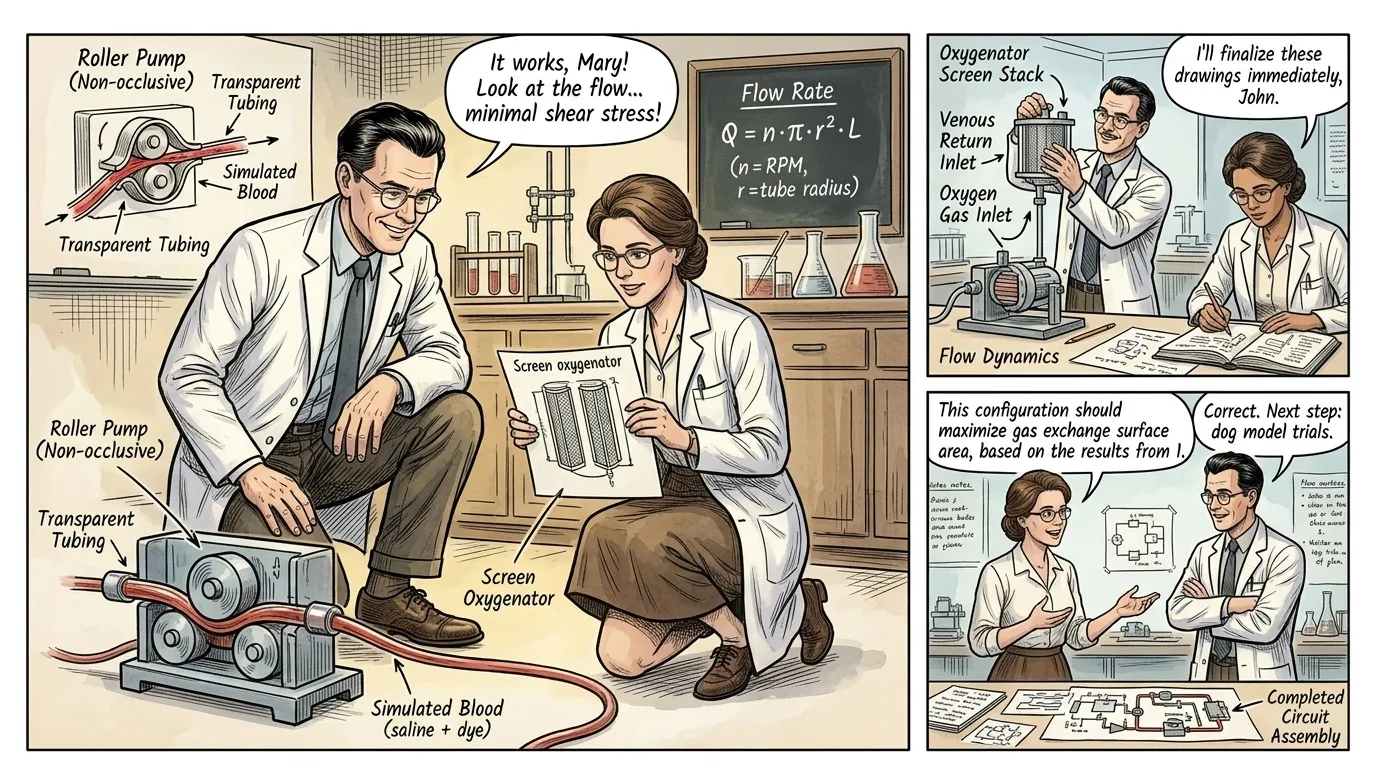
After two decades of relentless experimentation, often at great personal cost, Gibbon achieved a crucial breakthrough. He moved away from designs that directly exposed blood to air or violent agitation. His solution involved two key innovations: the roller pump, which gently pushed blood through tubing without crushing cells, mimicking the natural peristalsis of the body, and the screen oxygenator, a vertical stack of mesh screens that created a thin film of blood, allowing efficient gas exchange with oxygen. These elements, combined with a heat exchanger to maintain body temperature, formed the foundation of the first truly functional heart-lung machine capable of sustaining life for hours. It was an elegant engineering solution to a complex biological problem.
""This is it," Dr. Gibbon declared, a rare smile on his face, as he watched a prototype roller pump smoothly propel blood-like fluid through a transparent tube. "The roller pump, unlike anything before, handles blood with minimal trauma. And the screen oxygenator... by maximizing surface area in a laminar flow, we achieve efficient gas exchange. We're finally working with the blood, not against it." His wife and research assistant, Mary Gibbon, an intelligent woman in her 40s, nodded, holding a diagram of the screen array. "The dream of external circulation is no longer just a theory, John; it is becoming a palpable reality.""
Page 6
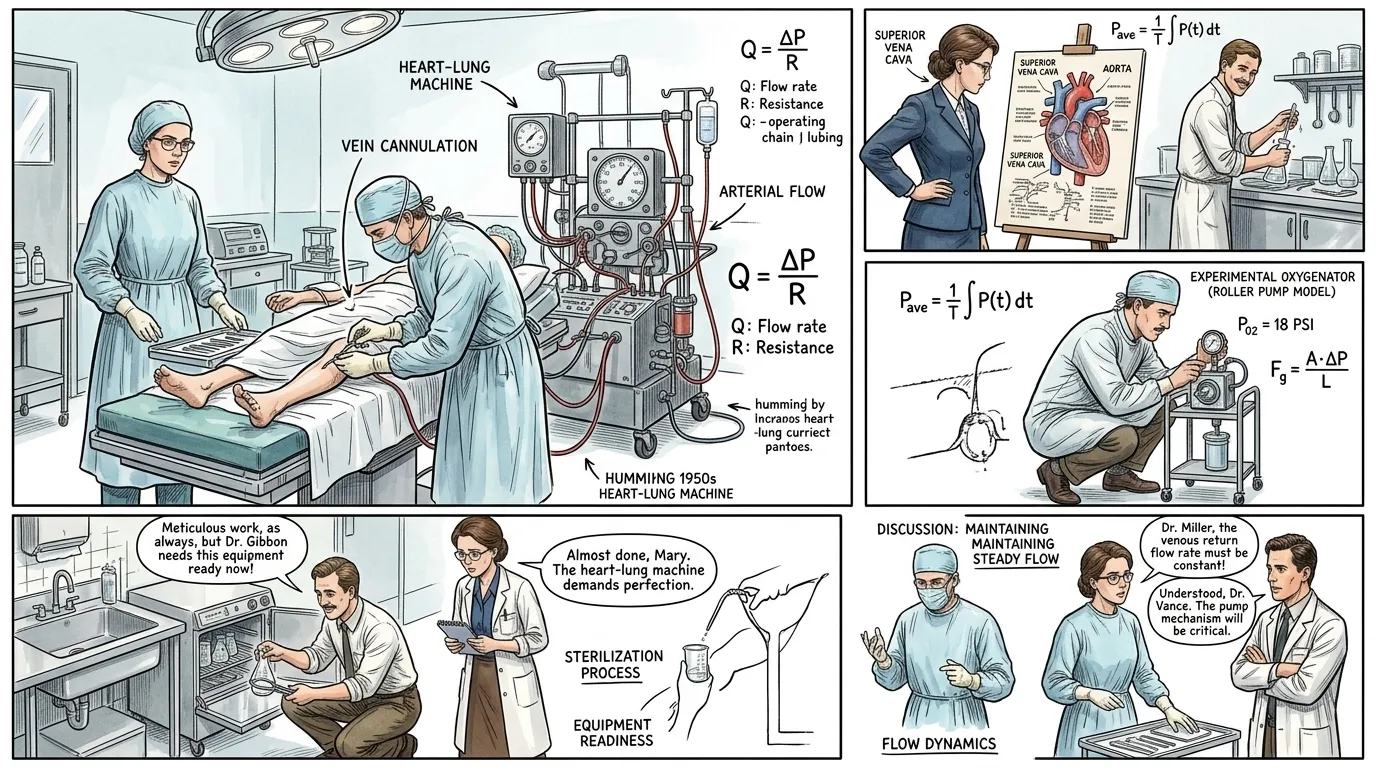
The operation of the Heart-Lung Machine begins by cannulation: tubes are carefully inserted into large veins (typically the vena cavae) to divert deoxygenated blood away from the heart. This 'venous blood' is then channeled into the machine. Once diverted, the heart can be temporarily stopped or worked upon, as its function of pumping blood to the lungs is no longer required. The machine effectively creates a temporary circulatory bypass, allowing the surgical team to work on a still, bloodless heart. This critical first step is what buys the surgeon the precious hours needed for intricate repairs, fundamentally transforming the scope of cardiac surgery.
"Dr. Vance, now older and wiser, watched intently as a young surgeon, Dr. David Miller, carefully inserted a cannula into a patient's vein on the operating table, with the heart-lung machine now a visible, humming presence in the background. "The first principle," she instructed softly, "is to establish full bypass. We must divert every drop of venous blood before the heart can be touched. It's a delicate dance of precision to ensure no air embolism enters the system and no major vessels are compromised.""
Page 7
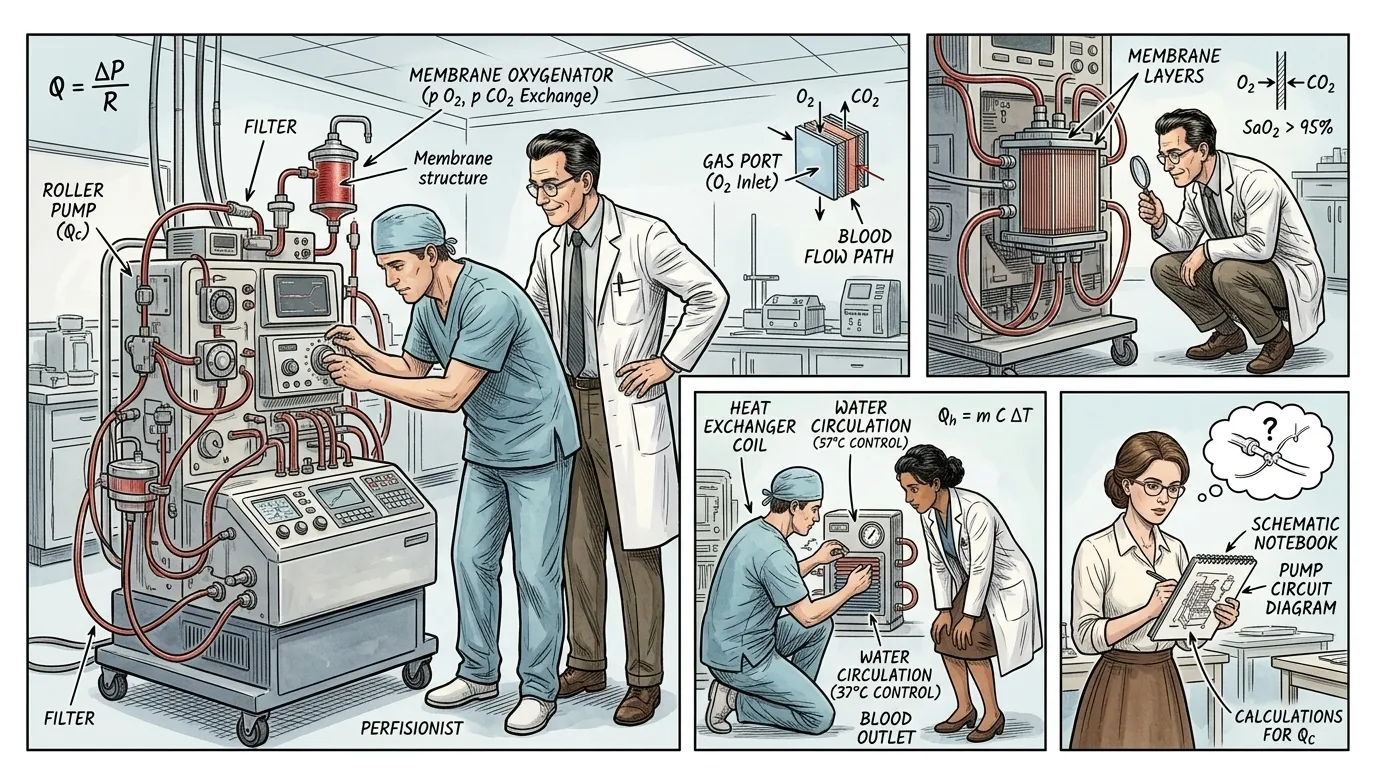
Once venous blood enters the machine, it undergoes several vital processes. First, it passes through an oxygenator, where it picks up oxygen and releases carbon dioxide, mimicking the function of the lungs. Early oxygenators were 'bubble oxygenators,' bubbling oxygen directly through the blood, or Gibbon's screen type. Later, 'membrane oxygenators' were developed, where blood and oxygen are separated by a gas-permeable membrane, greatly reducing blood trauma. After oxygenation, the blood is filtered to remove any microscopic debris, warmed to body temperature by a heat exchanger, and then returned, under precisely controlled pressure, to the patient's arterial system, bypassing both heart and lungs entirely.
"A perfusionist, a medical technician specializing in operating the heart-lung machine, carefully adjusted a dial, his voice calm. "Oxygen levels are stable; the membrane is performing optimally. We're returning oxygenated blood at 37 degrees Celsius, maintaining physiological parameters." He turned to Dr. Gibbon, who was observing the process intently. "The body functions as though the heart and lungs are still engaged, a testament to the decades of work on perfecting this extracorporeal circuit.""
Page 8
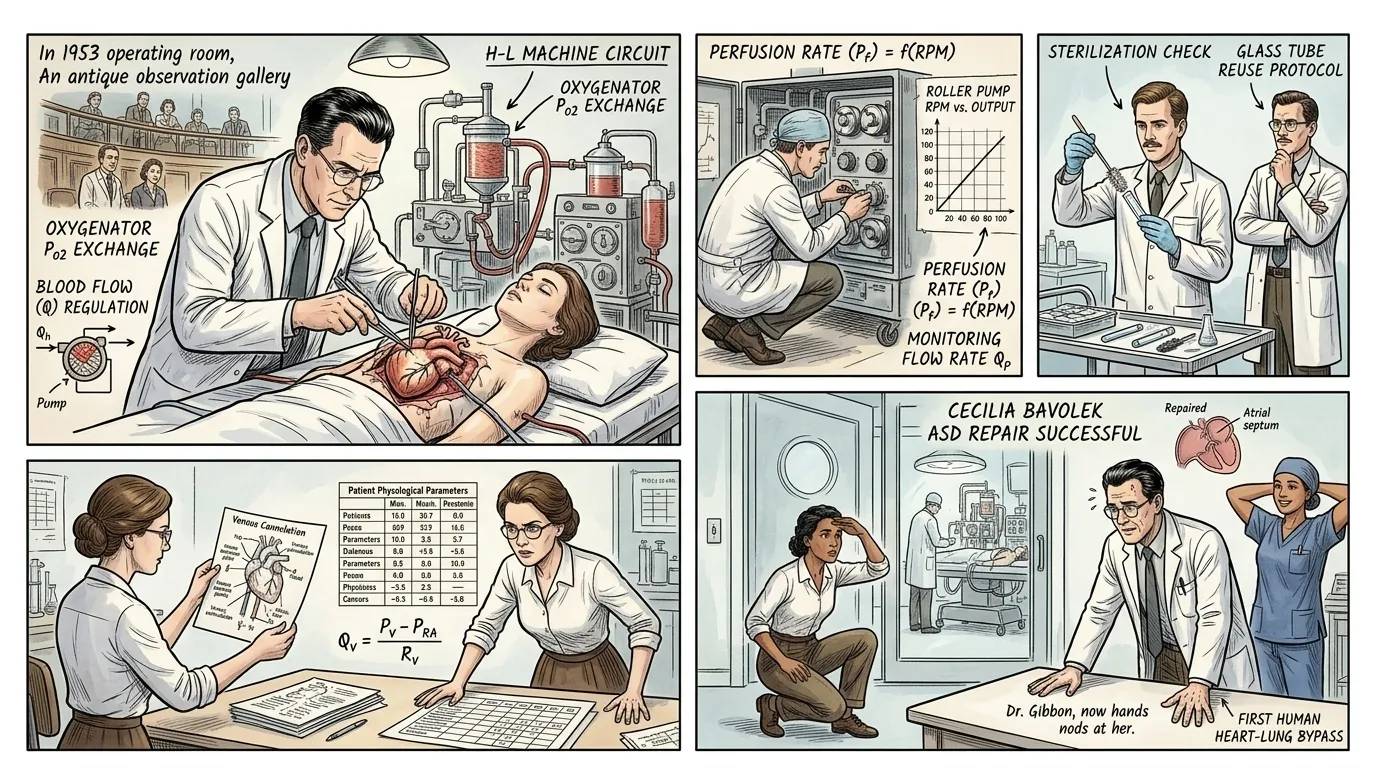
After years of animal trials, the moment of truth arrived. On May 6, 1953, at Thomas Jefferson University Hospital in Philadelphia, Dr. John Gibbon performed the first successful open-heart surgery using his Heart-Lung Machine on an 18-year-old female patient, Cecilia Bavolek, who suffered from an atrial septal defect. For 26 minutes, her circulatory system was supported entirely by the machine while Gibbon repaired the hole in her heart. This monumental achievement marked the dawn of modern cardiac surgery, transforming previously fatal or untreatable conditions into correctable ones. The intricate bypass system, once a dream, was now a life-saving reality.
""The tension in the room was palpable, a quiet hum punctuated by the machine's rhythmic pulse," Dr. Gibbon recalled in a later interview, describing the momentous surgery. "When we successfully closed the defect and returned her circulation, and the heart began to beat on its own, it was as if an impossible barrier had been breached. As the poet Ralph Waldo Emerson once wrote, 'What lies behind us and what lies before us are tiny matters compared to what lies within us.' That day, what lay within Cecilia was healed, and the future of surgery was forever changed.""
Page 9
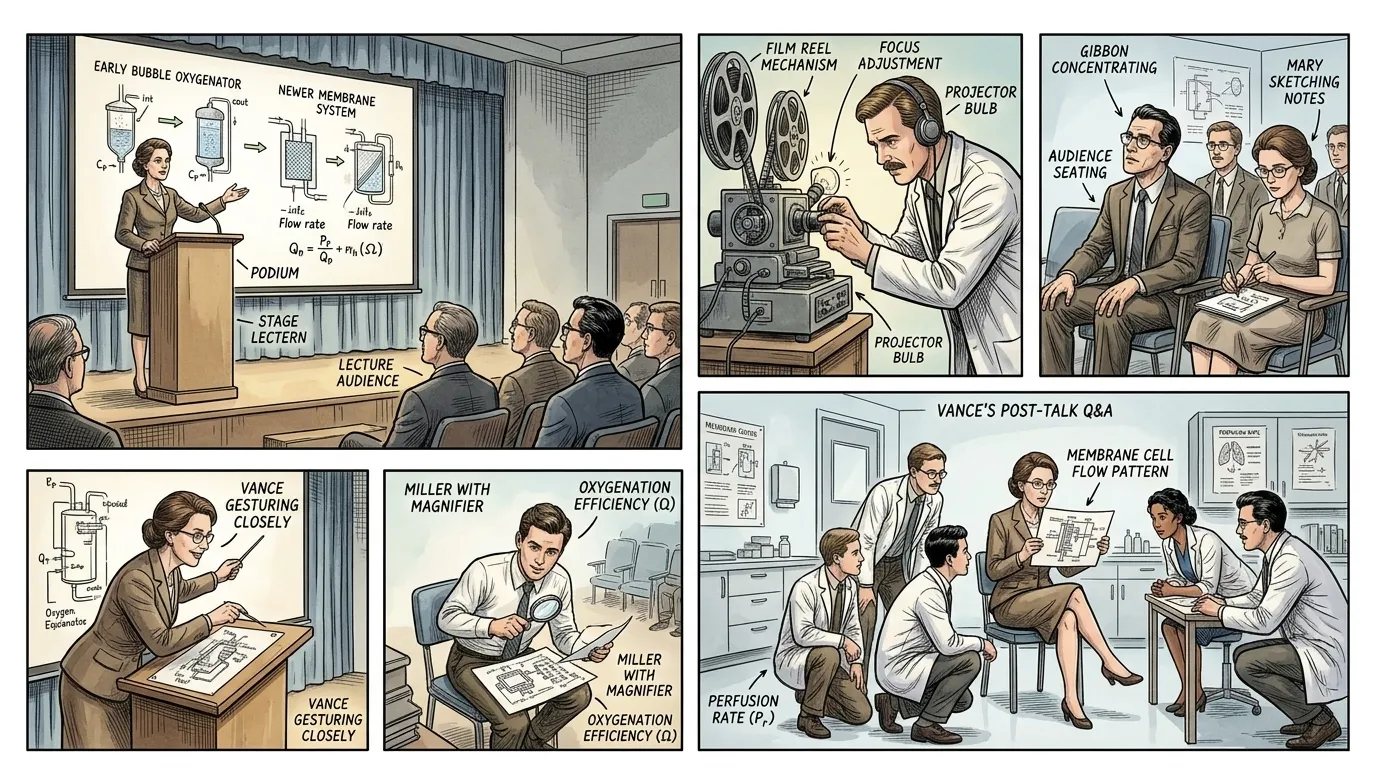
The success of Gibbon's machine quickly spurred other researchers to develop their own versions, leading to rapid improvements in design and technique. Dr. C. Walton Lillehei and Richard DeWall at the University of Minnesota pioneered simpler, disposable bubble oxygenators, making the technology more accessible. Soon, open-heart surgery, once a rarity, began to be performed with increasing frequency and complexity. The initial bulky apparatus evolved into more compact, efficient, and safer devices, incorporating membrane oxygenators, improved filters, and sophisticated monitoring systems. This era saw the birth of modern cardiac care units and specialized surgical teams.
""The genie was out of the bottle," remarked Dr. Vance, now retired, speaking at a medical conference in the late 1960s, pointing to projected images of various heart-lung machine models. "Once Gibbon proved it possible, the floodgates opened. Researchers across the globe refined the technology, making it safer, smaller, and more available. We moved from bubble oxygenators to membrane systems, reducing blood trauma dramatically. The challenge shifted from 'Can we?' to 'How can we do it better, for more people?'""
Page 10
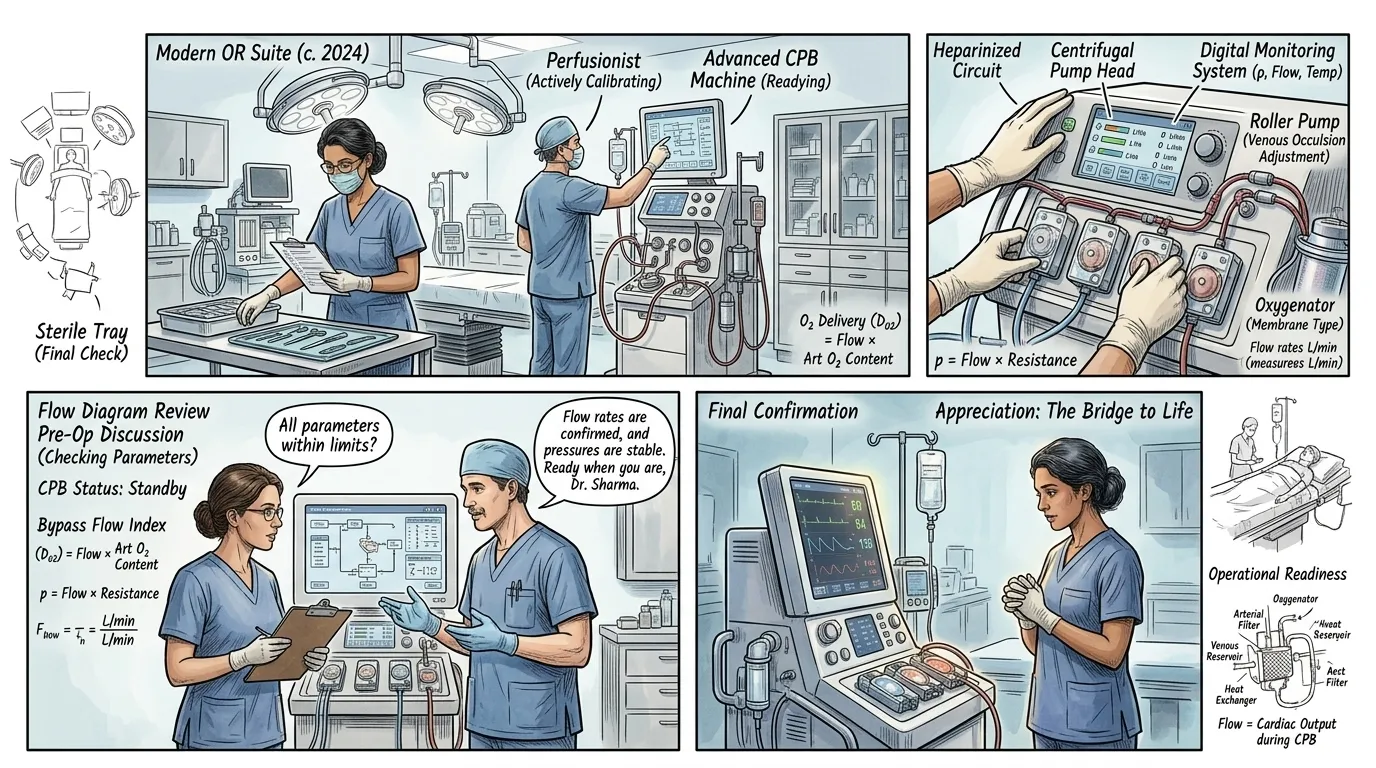
Today, the Heart-Lung Machine, often referred to as a cardiopulmonary bypass (CPB) machine, is an indispensable tool in modern cardiac surgery. It facilitates a vast array of life-saving procedures, from coronary artery bypass grafting to valve repair and replacement, and even complex congenital heart defect corrections in infants. Beyond surgery, the principles of extracorporeal membrane oxygenation (ECMO), directly descended from Gibbon's work, support patients with severe lung and heart failure, bridging them to recovery or transplant. The device that once seemed impossible has given countless individuals a second chance at life, fundamentally altering the course of cardiovascular medicine.
""The machine allows us to perform miracles daily," mused a contemporary cardiac surgeon, Dr. Anya Sharma, meticulously preparing for an operation. "From the most delicate repairs on tiny hearts to complex multi-vessel bypasses, none of it would be possible without Dr. Gibbon's perseverance. It's a testament to human ingenuity, a mechanical heart and lung that offers hope where there was once only despair." She looked at the advanced CPB machine beside her. "This isn't just a machine; it's a bridge to life.""
About this story
- Location: Global
- Audience: general readers
Questions and answers
Read Wonder Inventions on your phone
Wonder Inventions is available on Android. Get Wonder Inventions on Google Play.