Film Camera
Film Camera — an illustrated inventions story, set in Global. 10 illustrated pages, free to read on Wonder Inventions.
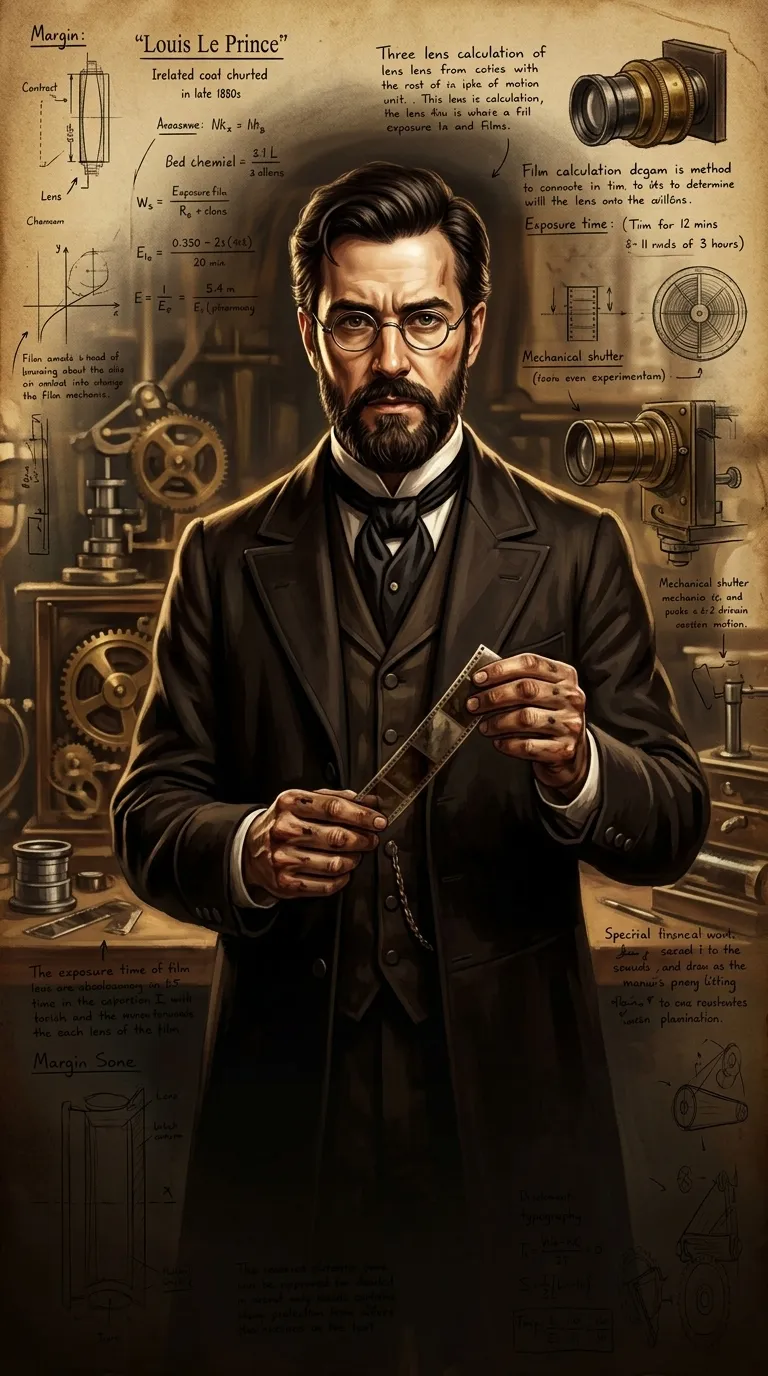
Page 1
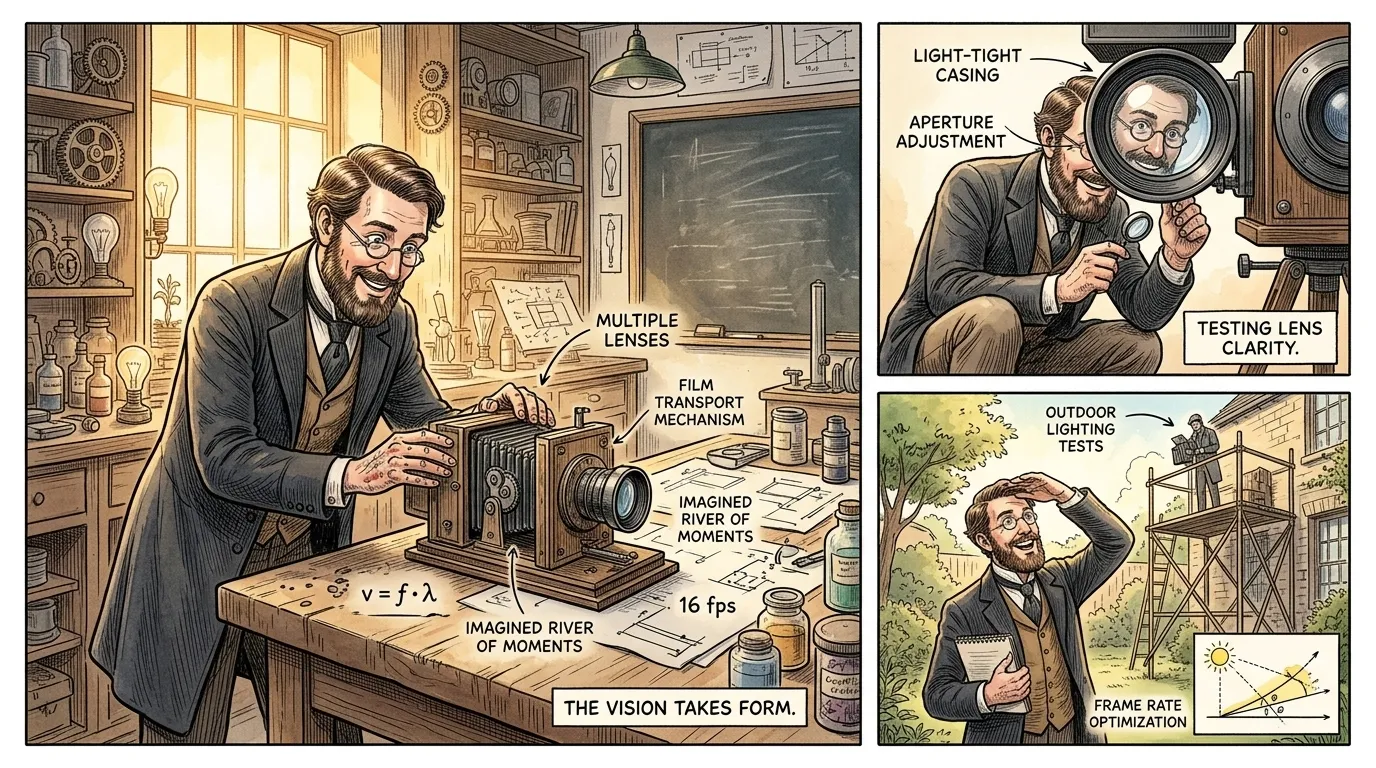
For centuries, humanity yearned to capture the fleeting essence of life, to freeze a moment not just in static image, but in continuous, unfolding movement. The static photograph, while revolutionary, remained a silent testament to a single instant, failing to convey the dynamism of existence. It was in this ambition that the film camera found its genesis, promising to unlock a new dimension of perception and storytelling. Louis Le Prince, a visionary French inventor, stood at the precipice of this profound breakthrough, meticulously experimenting in England. He envisioned a device that could meticulously record a sequence of images, each a sliver of time, to be played back in seamless succession.
"'To truly see the world as it moves, we must capture not a single frame, but a river of moments,' Le Prince often mused to his associates, driven by the challenge. 'The apparatus must be precise, the film pliable, and the illusion perfect.'"
Page 2
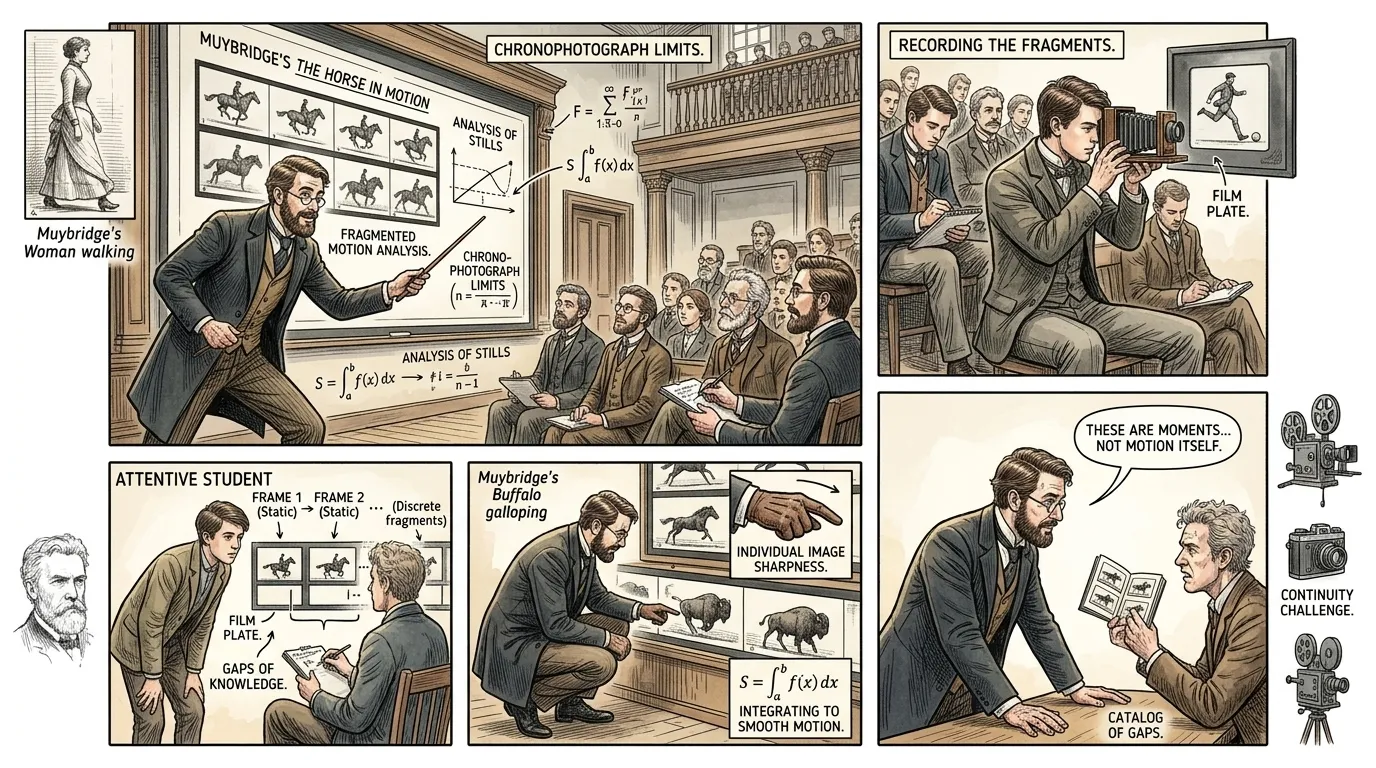
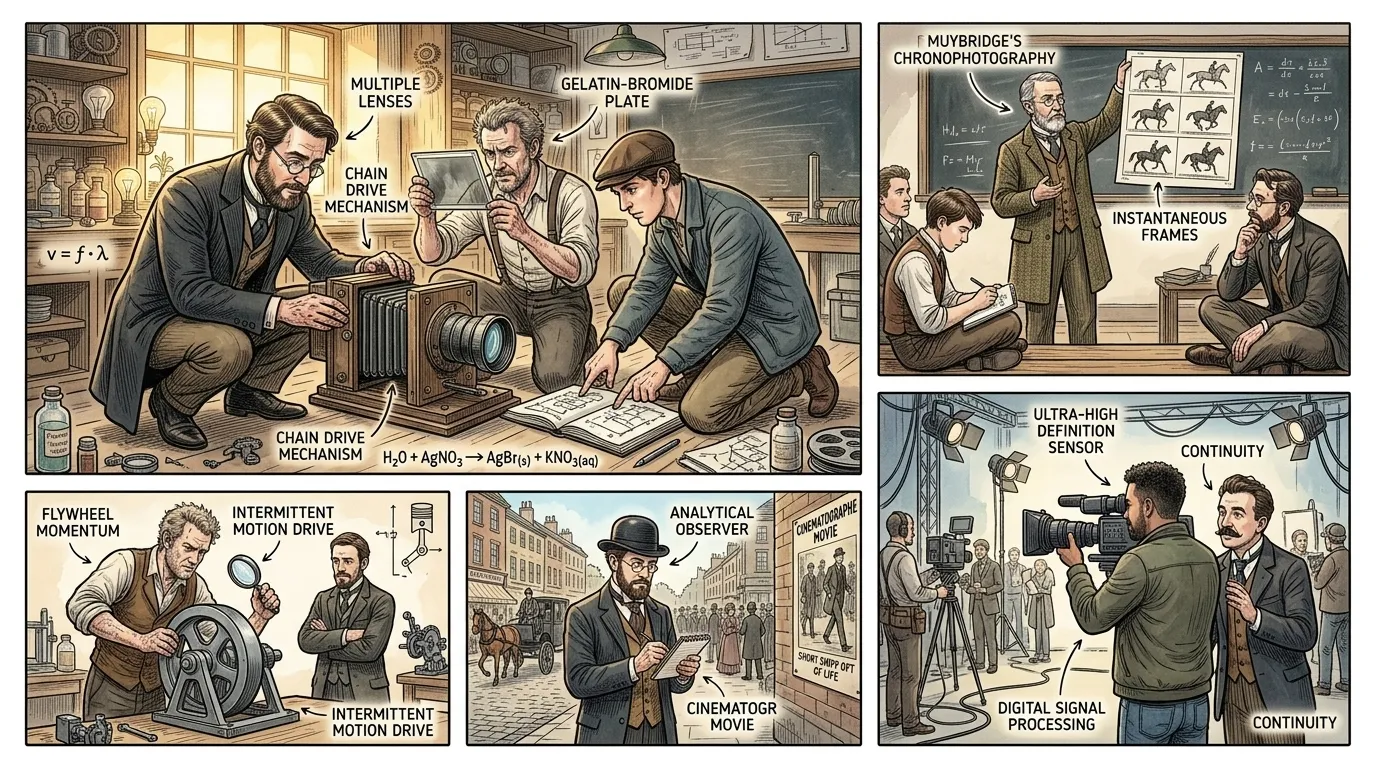
Before the film camera, capturing sequential motion was an arduous and often impractical endeavor. Inventors like Eadweard Muybridge, with his pioneering chronophotography in the 1870s, utilized elaborate arrays of still cameras triggered in rapid succession. This system could analyze motion scientifically, but it failed to deliver a unified, flowing visual experience. Imagine the laborious setup: dozens of cameras, each precisely positioned, their shutters synchronized to capture an action across a defined space.
"'While Muybridge's work illuminates the mechanics of movement, it is a collection of fragments, not a river,' remarked a university lecturer to his students, gesturing towards a displayed sequence of photographs. 'The challenge remains: how to distill this multitude into one continuous stream, a genuine moving picture?'"
Page 3
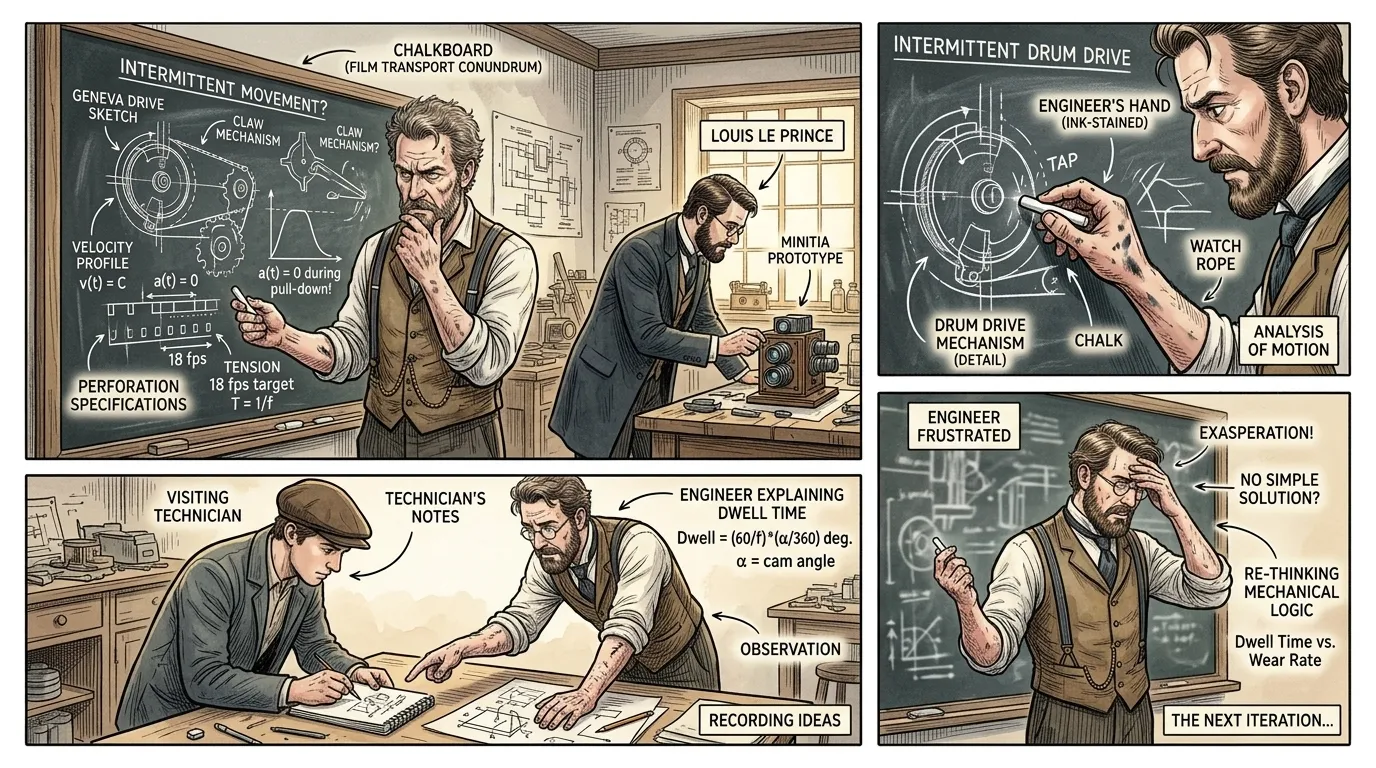
The limitations of early chronophotography were clear: it required multiple cameras, produced individual prints, and offered no practical way to project continuous, realistic motion. The human eye perceives continuous movement when presented with a rapid succession of slightly different still images, a phenomenon known as persistence of vision. The profound technical hurdle was therefore twofold: first, how to capture these hundreds of distinct images onto a single, continuous medium, and second, how to precisely stop and start that medium within the camera at high speed, ensuring each frame was perfectly still during exposure, then advanced to the next. This 'intermittent movement' of film was the engineering conundrum that baffled many. Without a flexible, robust film material and a reliable transport mechanism, the dream of true motion pictures remained elusive.
"'This concept of a single strip of images, advancing swiftly but pausing perfectly for each capture... it is the very heart of the problem,' stated a frustrated engineer, sketching diagrams on a chalkboard. 'Continuous movement blurs, but stopping and starting at such speed without tearing the film—that's the real test of material and mechanism.'"
Page 4
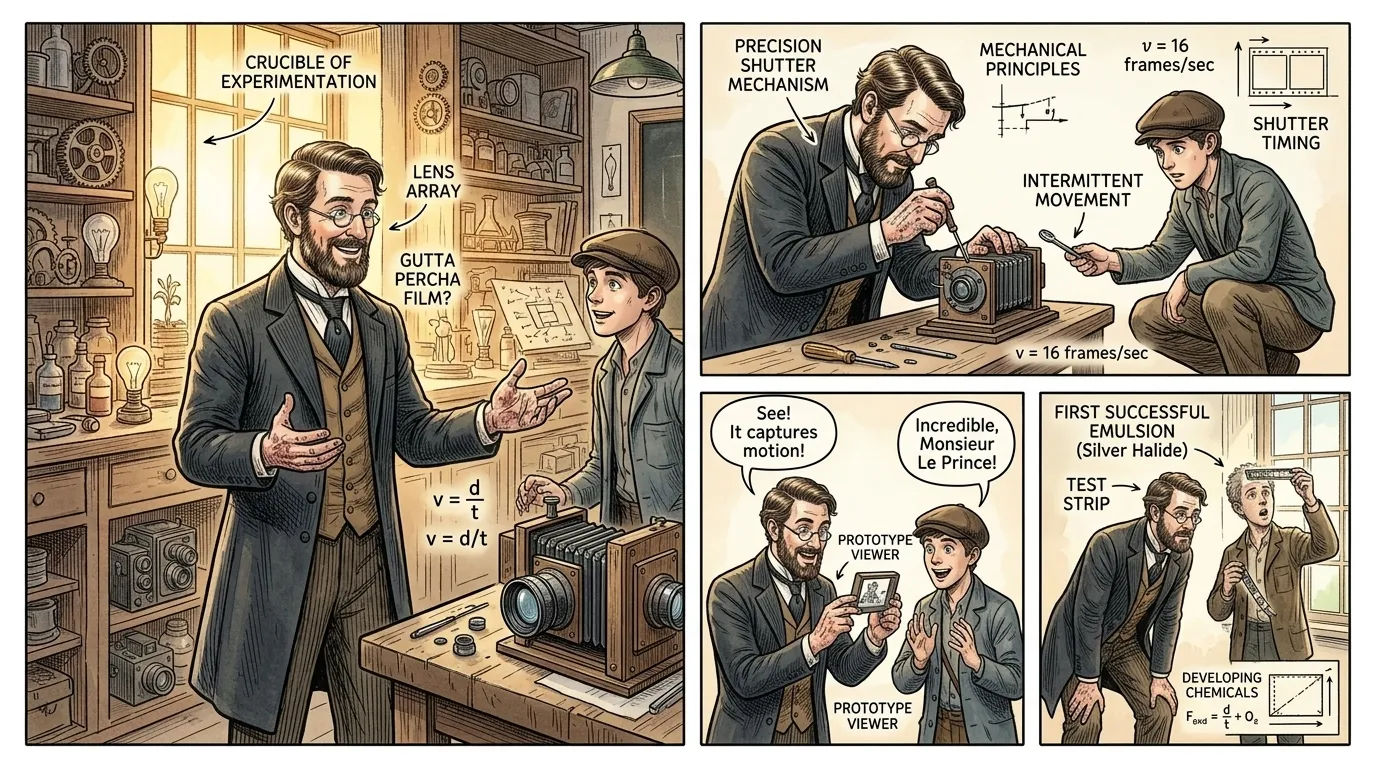
Born in Metz, France, in 1841, Louis Le Prince was a remarkable polymath, proficient in chemistry, engineering, and art. His inventive spirit led him across the English Channel to Leeds, where he ran a technical college and a firm specializing in highly detailed ceramic photography. Le Prince's exposure to advancements in photography, combined with a deep understanding of optics and mechanical systems, positioned him uniquely to tackle the challenge of motion pictures. He had always been fascinated by the idea of capturing and reproducing movement, a pursuit that became his obsession. From 1887, his workshop became a crucible of experimentation, filled with prototypes and discarded designs.
"'My work in photography taught me the nature of light; my engineering, the precision of machines,' Le Prince explained to a visiting technician, gesturing around his workshop. 'Combining them to capture living movement... that is the ultimate canvas.'"
Page 5
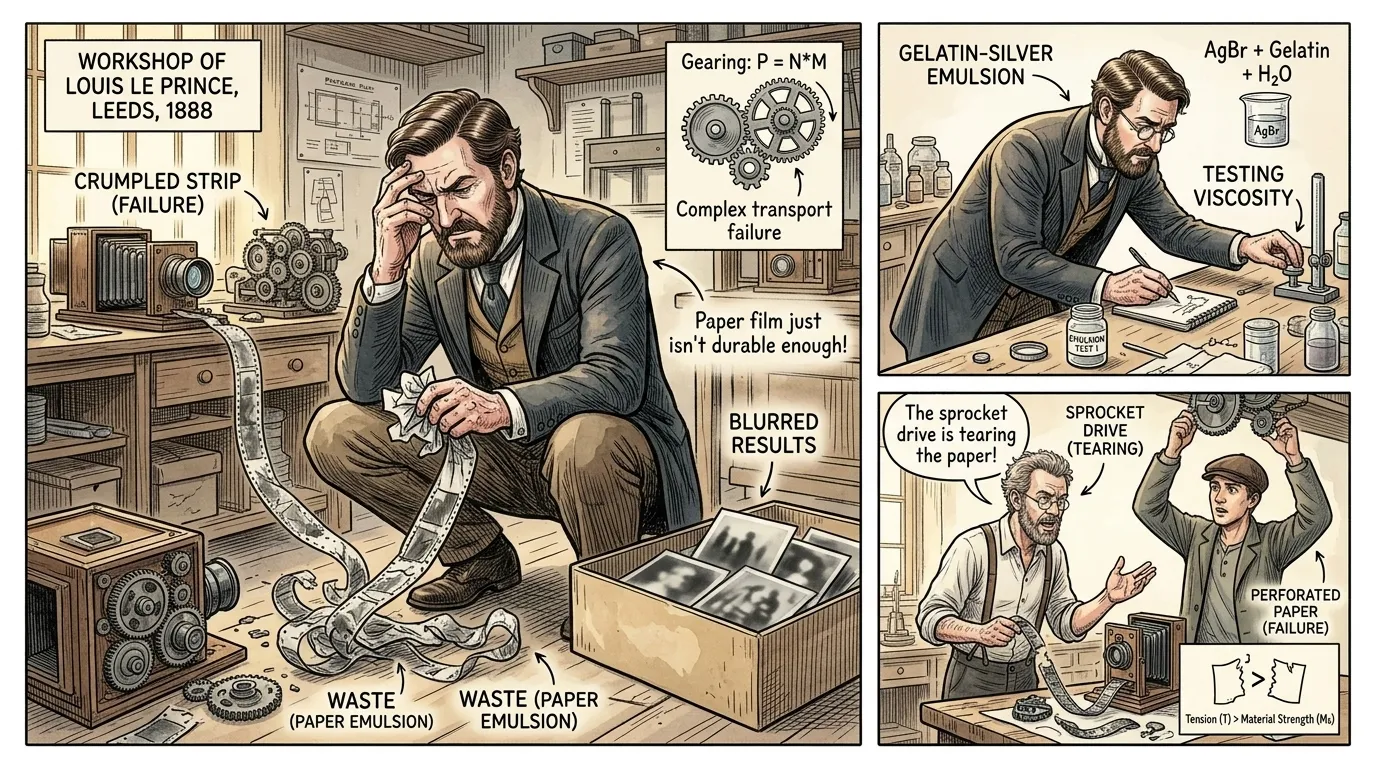
Le Prince's initial designs grappled with the fundamental problem of how to move film through the camera gate. Early attempts involved various forms of continuous rollers, but these invariably led to image blur, as the film was never perfectly stationary during the brief exposure period. He experimented with different materials for his film strip, starting with cumbersome glass plates before moving to more flexible paper, coated with photographic emulsion. The mechanism required to pull this film, hold it taut and still, and then rapidly advance it to the next frame without tearing or slipping, proved extraordinarily complex. Many prototypes failed, ending with crumpled, unusable film strips or indistinct, smeared images. Each failure, however, provided crucial insight into the precision required.
"'The paper tears under tension, the rollers slip, the images blur into ghosts!' Le Prince exclaimed, tossing a mangled strip of film onto a cluttered table. He sighed, rubbing his temples. 'We must find a way to grasp it firmly, expose it quickly, and then release it, all in fractions of a second. The very fabric of time must be disciplined by our machine.'"
Page 6
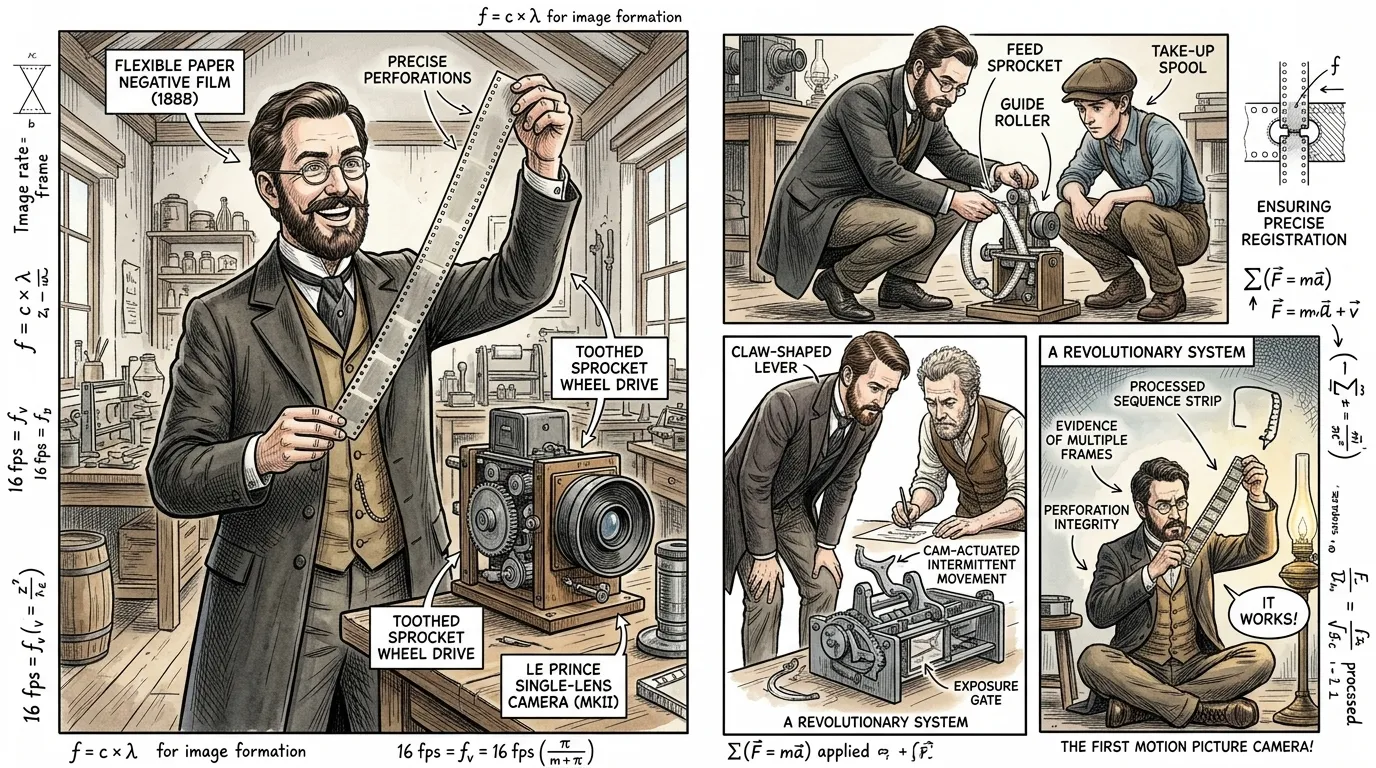
The pivotal breakthrough came with the realization that the film itself needed a fixed, repeatable reference point for precise movement. Le Prince conceived of perforating the edges of his flexible paper film strip. These perforations would engage with a toothed sprocket wheel inside the camera, which would pull the film down by one frame's length, then pause it exactly in place during the shutter's brief opening. This 'intermittent movement' system, crucial for creating sharp, individual exposures, was revolutionary. Once the exposure was complete, the sprocket would advance the film again. This precise start-stop motion, coupled with a fast-acting shutter, allowed for the capture of discrete, unblurred frames on a single strip of film, creating the illusion of continuous motion when projected.
"'The simple perforation, combined with a precisely geared sprocket, provides the stability we desperately needed!' Le Prince announced, holding up a strip of perforated film with a triumphant grin. He pointed to his new camera mechanism, 'It's like weaving time itself, frame by perfect frame.' He referenced the poet Robert Frost, 'He said, 'The best way out is always through.' And through these tiny holes, we found our way.'"
Page 7
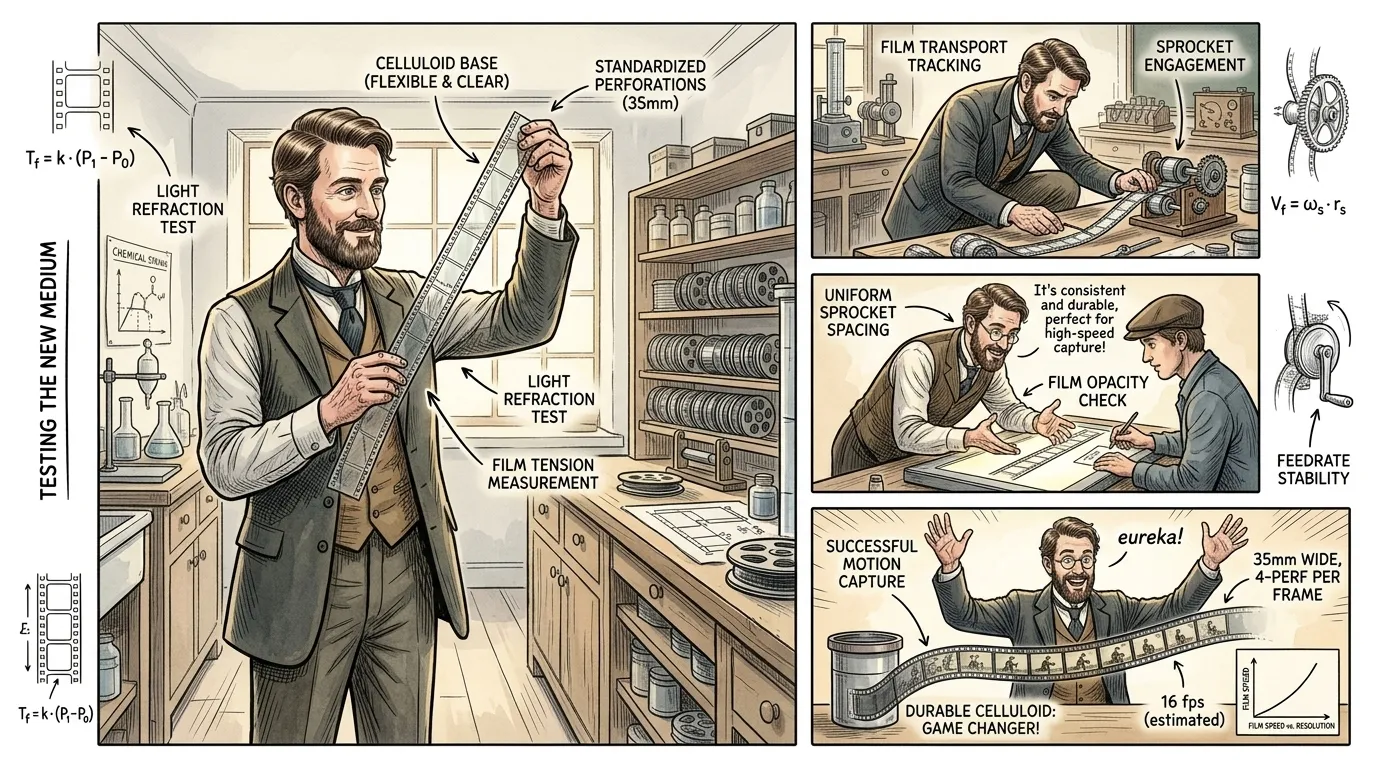
While Le Prince pioneered the intermittent movement system, the next critical advance was the development of flexible celluloid roll film by George Eastman in 1889. This durable, transparent material was far superior to paper, providing clearer images and greater resilience against tearing, enabling longer film sequences. Building upon Le Prince's foundational principle, William Kennedy Laurie Dickson, working for Thomas Edison, developed the Kinetograph camera. Dickson refined the film's perforation design, standardizing four perforations on each side of every frame, a pattern that would become an industry standard. This innovation, combined with spring-loaded pressure plates and precisely engineered claw mechanisms, ensured even smoother, more reliable film transport, ready for projection.
"'Eastman's celluloid is a game-changer; it offers the clarity and strength paper could only dream of,' Dickson explained to Edison, holding up a shimmering strip of new film. 'With these standardized perforations, we can achieve unparalleled stability for both capture and projection. It will unlock stories previously impossible to tell.'"
Page 8
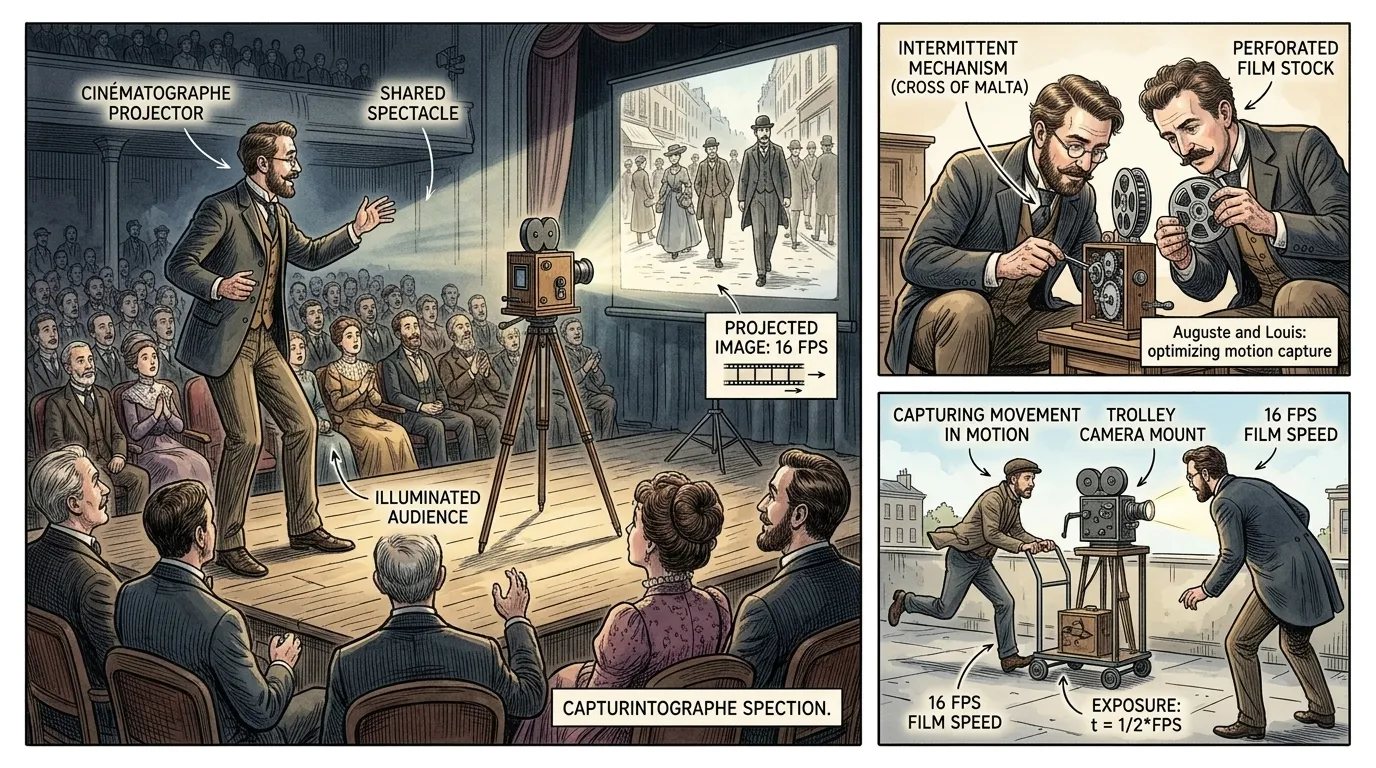
With the film camera's mechanism perfected and celluloid film widely available, the next leap was public exhibition. Edison's Kinetoscope, while limited to individual viewing through a peephole, captivated audiences in 'Kinetoscope Parlors' beginning in 1894. However, it was the Lumière brothers, Auguste and Louis, in France, who revolutionized the experience by developing the Cinématographe in 1895. This ingenious device served not only as a camera, but also as a film printer and, crucially, a projector. For the first time, large audiences could gather in darkened rooms to witness moving pictures on a screen, transforming individual novelty into a shared, communal spectacle. This marked the birth of cinema as a public art form and industry.
"'To project life onto a screen, for many eyes to behold simultaneously... this is not just an invention, it is a new form of human gathering,' Louis Lumière declared to a captivated audience during one of their first public screenings. 'The power of collective viewing amplifies the marvel.'"
Page 9
The film camera rapidly transformed society, opening entirely new avenues for communication, entertainment, and documentation. Early filmmakers captured everyday life – street scenes, factory workers, or family gatherings – creating invaluable historical records. Narrative films quickly followed, pioneering visual storytelling that transcended language barriers and captivated audiences worldwide. Newsreels brought distant events directly into local theaters, shaping public opinion and providing a shared sense of global awareness. The invention became a powerful tool for scientific observation, artistic expression, and mass entertainment, forever altering how humanity perceived and interacted with its own image. The silent era blossomed, evolving rapidly into the 'talkies' of the 1920s.
"'This invention is more than a machine; it is a mirror reflecting our age, a window into worlds beyond our grasp, and a canvas for dreams,' proclaimed a newspaper critic in an editorial after attending an early film showing. 'It documents, it entertains, and it ultimately transforms how we understand ourselves and our place in history.'"
Page 10
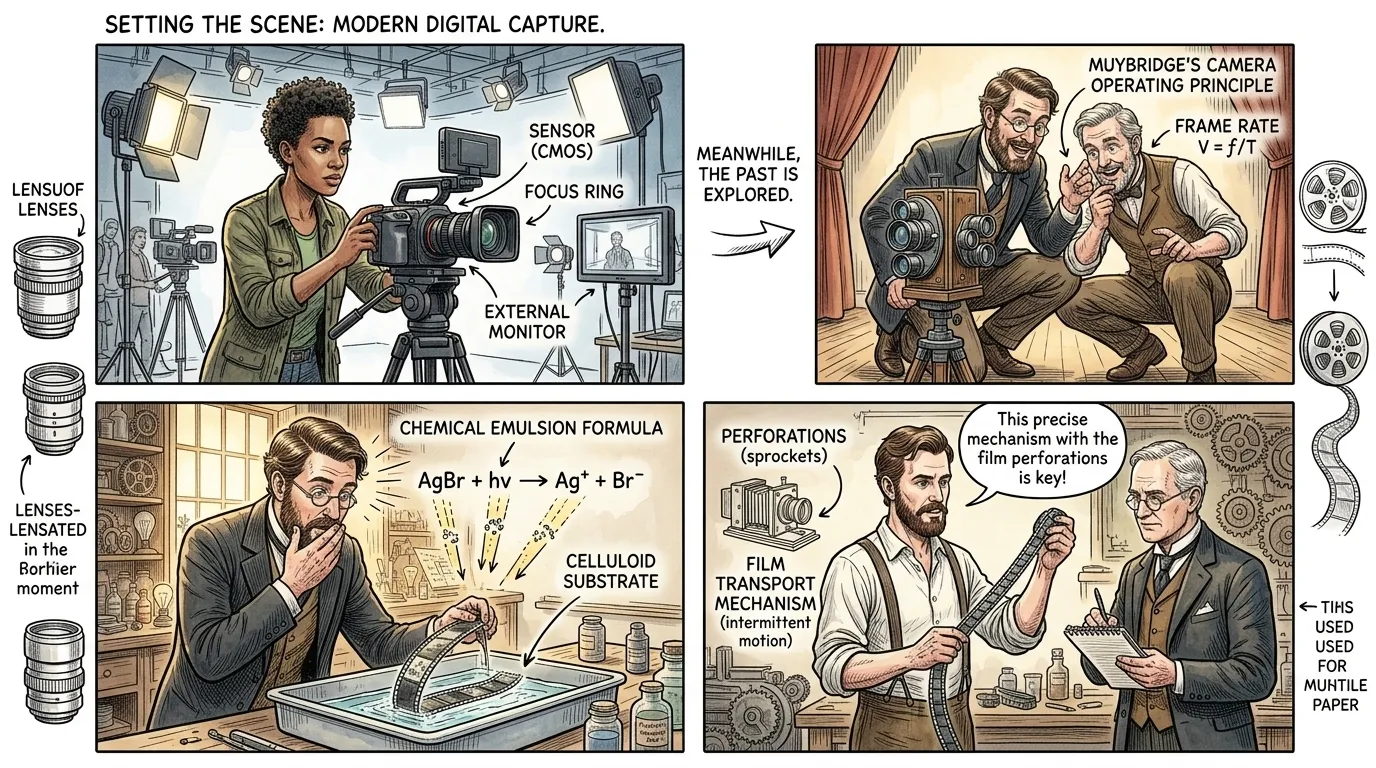
From its humble beginnings as a clumsy, hand-cranked device, the film camera has evolved into an indispensable instrument, underpinning an entire global industry. The fundamental principle of intermittent film movement, perfected by pioneers like Le Prince and Dickson, remained at the heart of cinematic capture for over a century. Even in the digital age, where images are captured by electronic sensors rather than light-sensitive emulsions, the legacy of the film camera endures. The 'frame rate,' the 'shutter speed,' the very language of cinema is rooted in the mechanical marvels that first learned to stop time, one fraction of a second at a time. It remains a testament to human ingenuity's power to extend perception, transform art, and forever alter how we chronicle our world. The film camera gifted humanity a new way to see, to remember, and to dream.
"'The moving image has become the universal language of our era,' reflected a modern filmmaker, adjusting a digital camera on a set. 'From Le Prince's first flicker to today's high-definition streams, the core desire to capture and share life in motion remains unchanged.'"
About this story
- Location: Global
- Audience: general readers
Questions and answers
Read Wonder Inventions on your phone
Wonder Inventions is available on Android. Get Wonder Inventions on Google Play.