Epidural
Epidural — an illustrated inventions story, set in Global. 10 illustrated pages, free to read on Wonder Inventions.
Page 1
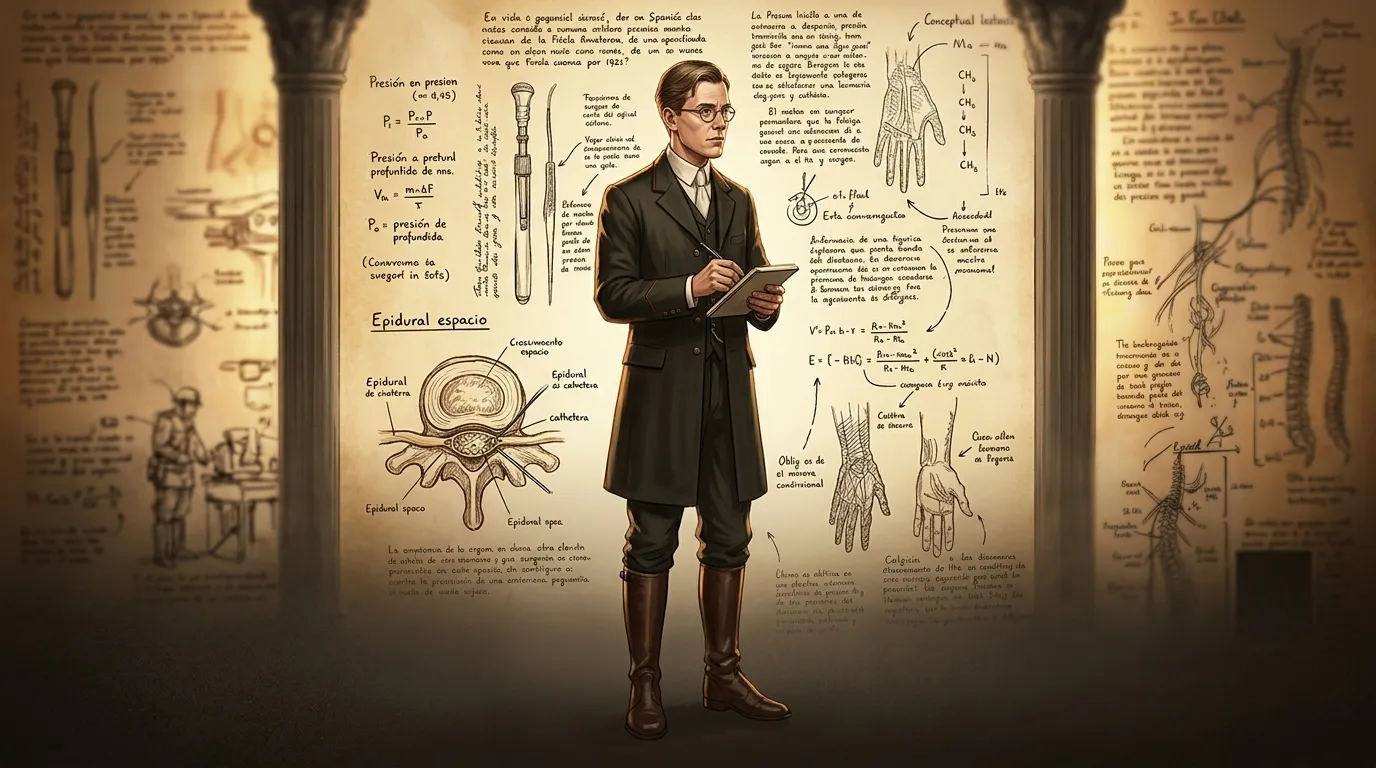
For millennia, the excruciating pain of childbirth was an unavoidable ordeal, a crucible endured by mothers across cultures. Medical interventions offered little relief beyond systemic narcotics that often rendered both mother and child unresponsive, or general anesthetics carrying significant risks. The quest for localized, sustained pain management, particularly in obstetric care, represented one of medicine's most profound challenges. Yet, the foundations for a revolutionary solution were being laid, piece by painstaking piece, in the early 20th century. Dr. Fidel Pagés Miravé, a pioneering Spanish military surgeon, would consolidate these nascent ideas into a practical technique by 1921.
Page 2
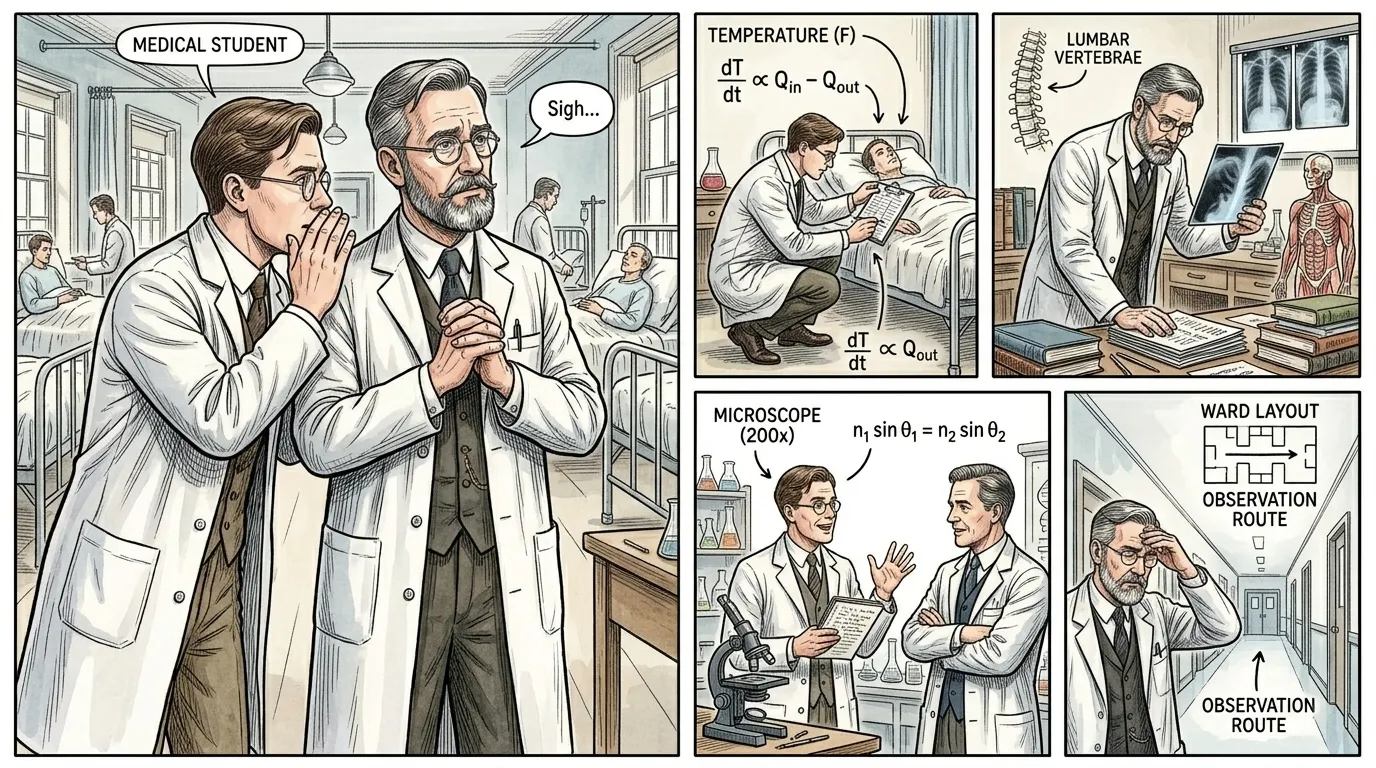
Before the advent of regional anesthesia, pain management was often a grim compromise. Opium derivatives, ether, and chloroform offered temporary respite but plunged patients into unconsciousness, carrying risks of respiratory depression, nausea, and disorientation. For conditions demanding sustained pain relief without losing consciousness, such as labor, these options were inadequate and often dangerous for both mother and child. Doctors recognized the profound suffering but lacked the precise tools to isolate and alleviate pain at its source.
"'The only thing we have to fear is fear itself,' a medical student murmured to a seasoned physician in the bustling hospital ward, remembering President Franklin Roosevelt's famous words, 'but the fear of unrelenting pain... that is a tangible dread for our patients.' The physician sighed, his gaze distant. 'Indeed, young man. We offer them sleep, yes, but at what cost to their awareness, to their very breath?'"
Page 3
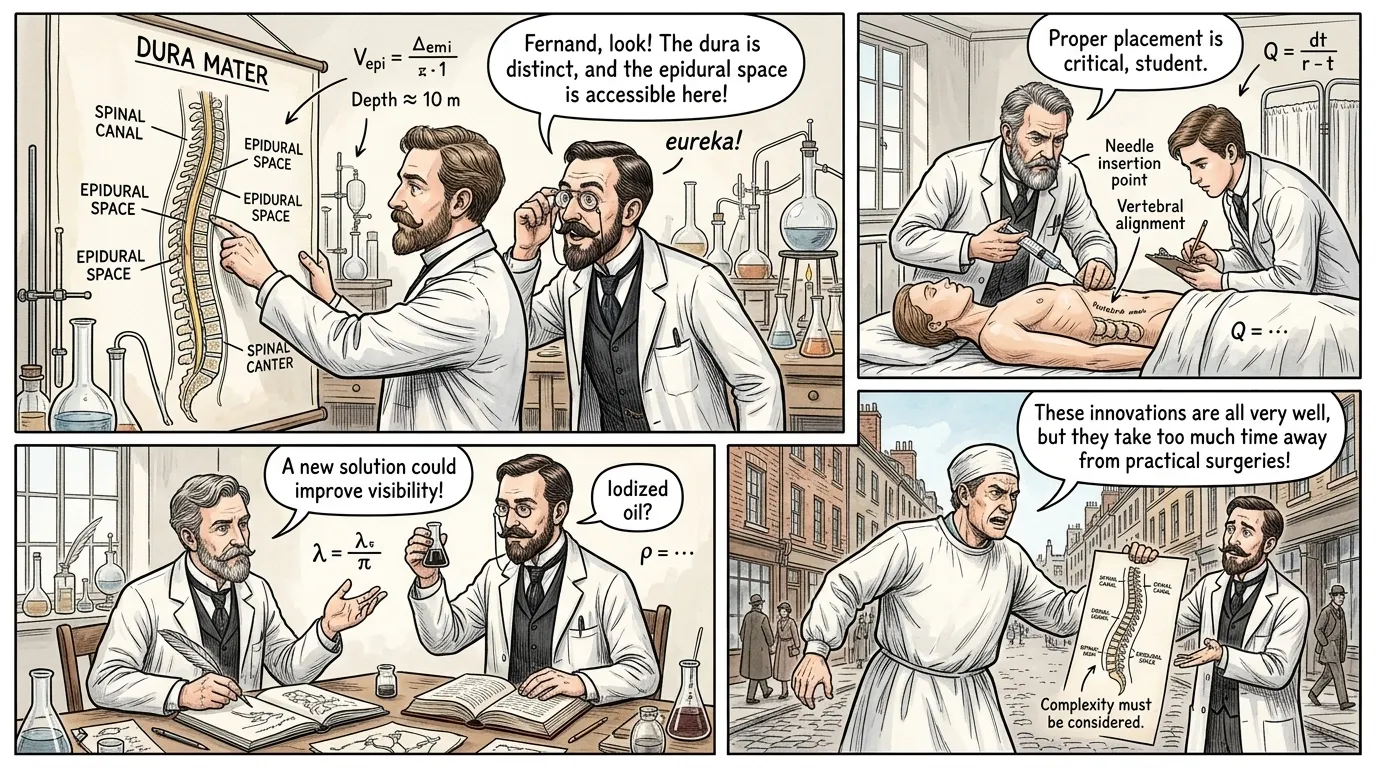
The human spinal column, a marvel of biological engineering, also presented an immense challenge for targeted pain relief. Encased within its bony fortress are the spinal cord and the delicate nerve roots that transmit sensation and motor commands throughout the body. Early attempts at 'nerve blocks' were often imprecise, requiring direct nerve contact or large volumes of anesthetic, risking damage or systemic toxicity. The key lay in understanding the precise pathways of pain and finding a safe, accessible route to intercept them without compromising vital functions. This demanded an intimate knowledge of the dura mater, arachnoid, and pia mater, the protective membranes surrounding the spinal cord, and the space just outside them.
"'The dura mater,' remarked Dr. Cathelin, tracing a line on a complex anatomical chart, 'acts as a formidable barrier, protecting the spinal cord. But what of the space outside it, between the dura and the vertebral canal? That is the labyrinth we must learn to navigate for targeted intervention.' His colleague, Dr. Sicard, leaned closer, adjusting his spectacles. 'To block sensation without touching the cord itself... that would be the true mastery, the intellectual leap required.'"
Page 4
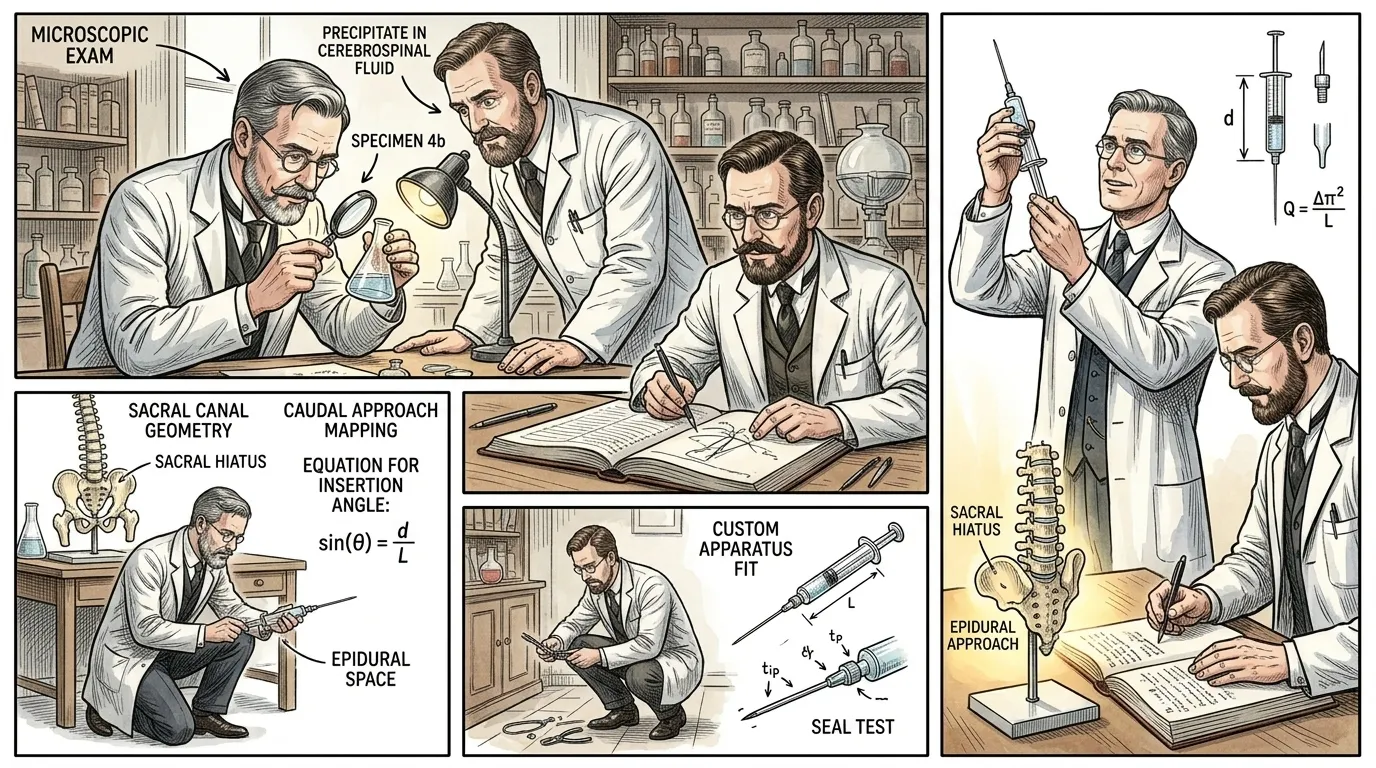
The path to the epidural began with identifying the 'epidural space' itself. In 1901, two French physicians, Jean-Anthanase Sicard and Fernand Cathelin, independently described the use of caudal anesthesia for localized pain relief. They demonstrated that by injecting a cocaine solution into the sacral hiatus, at the base of the spine, anesthetic could spread into the epidural space, blocking nerves without affecting the spinal cord directly. This was a monumental first step, confirming the feasibility of targeting this specific anatomical region. However, their methods were primarily for single-shot, caudal approaches, limited in scope and duration.
"'This caudal approach,' Dr. Sicard declared, holding a syringe aloft in his laboratory, 'demonstrates that the epidural space, this elusive region, is indeed a viable target. We can achieve local analgesia without entering the subarachnoid space.' Dr. Cathelin, meticulously recording notes, nodded. 'The challenge now is to extend this principle, to reach higher segments, and crucially, to sustain the effect for procedures like prolonged labor.'"
Page 5
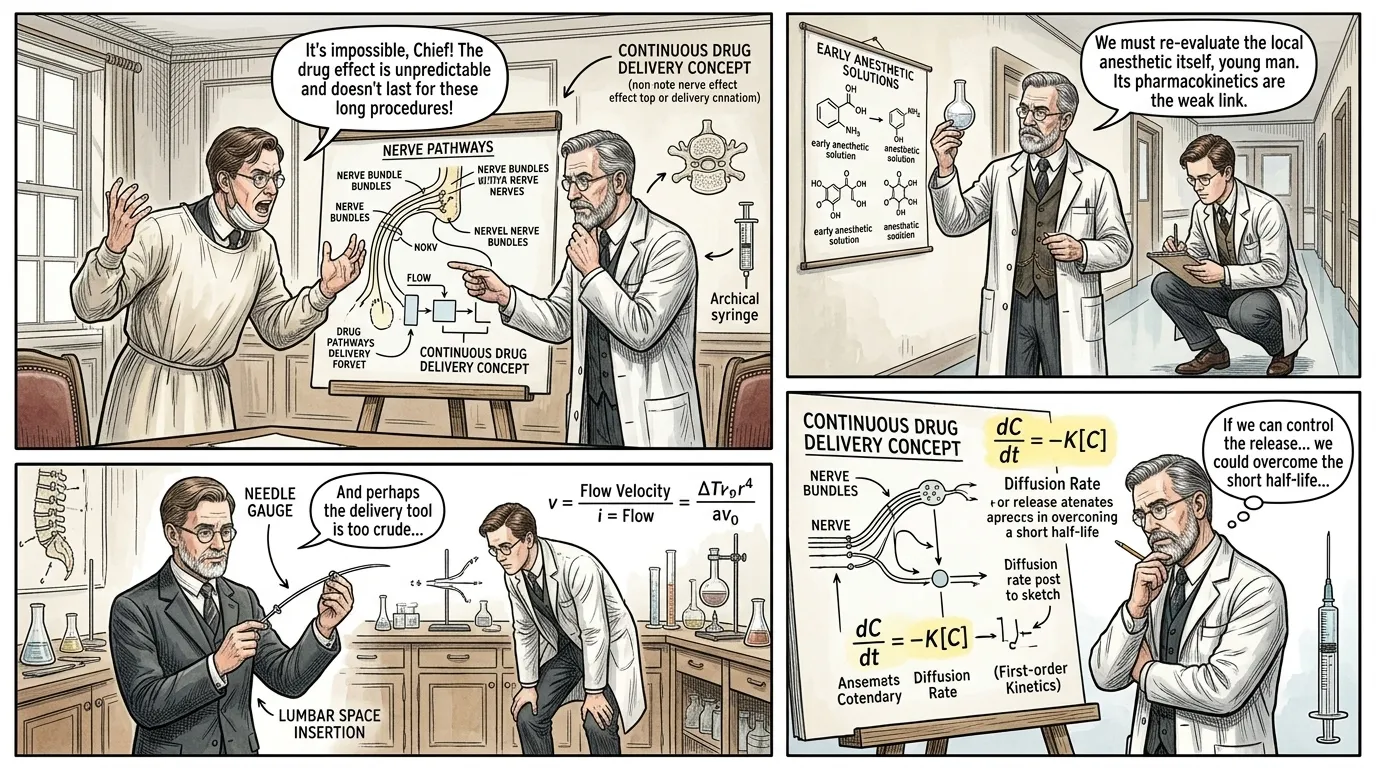
While Sicard and Cathelin proved the epidural space was accessible, their techniques offered only temporary relief. Surgical procedures and the extended duration of childbirth demanded a method for continuous analgesia, where anesthetic could be delivered over many hours. Repeated injections were impractical, often necessitating multiple needle insertions, increasing risk and discomfort. The medical community sought a solution that could provide a steady, controlled flow of medication to the target nerves, a method that would bridge the gap between fleeting relief and sustained comfort. This technical hurdle required both anatomical understanding and innovative delivery mechanisms.
"'A single injection, no matter how precise, fades,' a frustrated surgeon explained to a group of colleagues. 'Imagine a several-hour appendectomy, or a prolonged labor. We cannot simply re-puncture the patient every hour.' Another physician gestured toward a schematic showing a nerve pathway. 'We need a 'drip feed' for the nerves, something that can deliver anesthetic continuously, without the need for constant re-entry into the spinal column.'"
Page 6
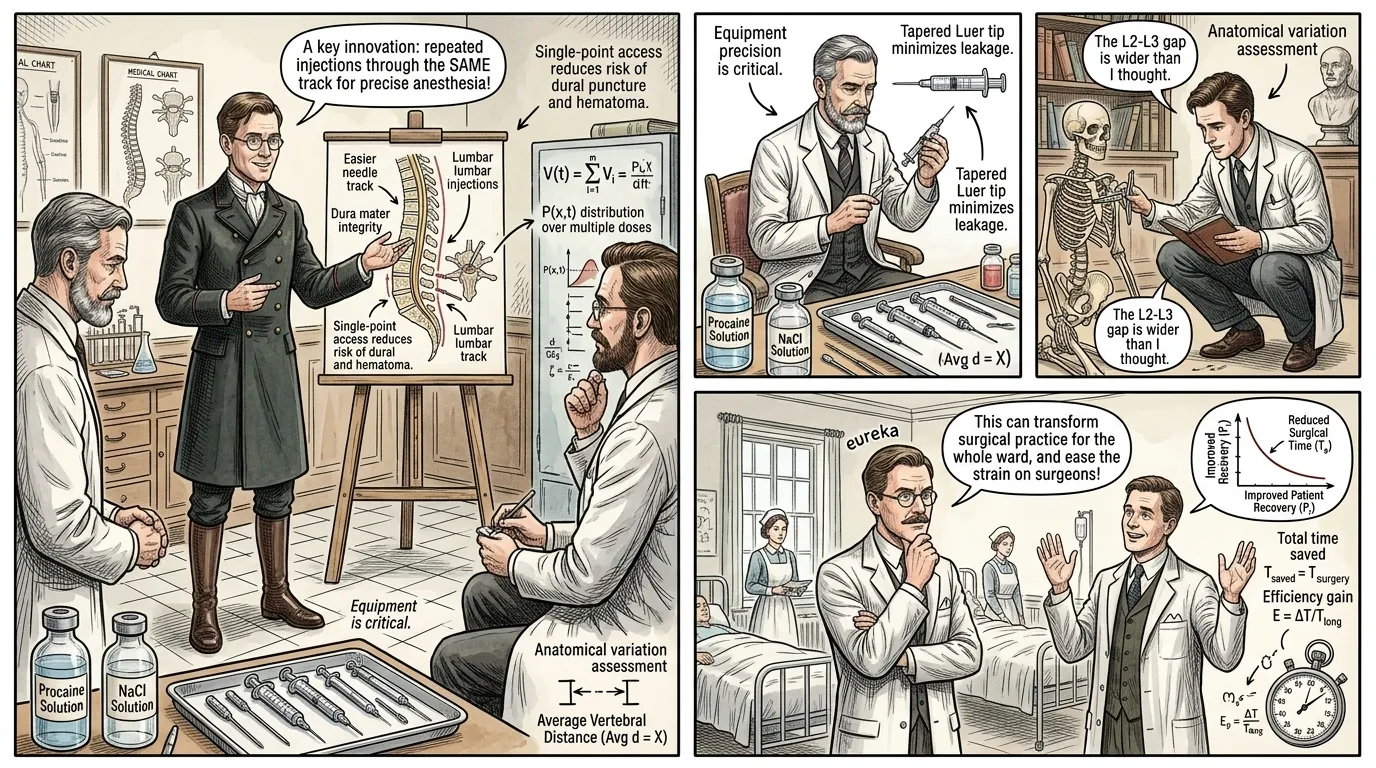
The breakthrough for continuous epidural anesthesia arrived in 1921 with the work of Dr. Fidel Pagés Miravé, a Spanish military surgeon. Published in the Revista de Sanidad Militar, his seminal paper described a technique he called 'lumbo-abdominal analgesia.' Pagés meticulously detailed a method for injecting a local anesthetic solution into the epidural space, not just caudally, but also at higher lumbar levels, and, crucially, allowing for repeated injections through the same needle track for prolonged surgical procedures. His innovation lay in the precise identification of the epidural space and the systematic approach to sustained pain relief, transforming regional anesthesia from a fleeting intervention into a viable, long-duration option for surgery and obstetrics.
"'My method,' Dr. Pagés declared with conviction to his medical team, gesturing towards a diagram showing needle placement, 'allows for precise identification of the epidural space, enabling us to deliver anesthetic in controlled increments. This is not merely a single block; it is continuous management of sensation.' He emphasized, 'The key is careful entry and the ability to maintain the therapeutic level for hours, not just minutes.'"
Page 7
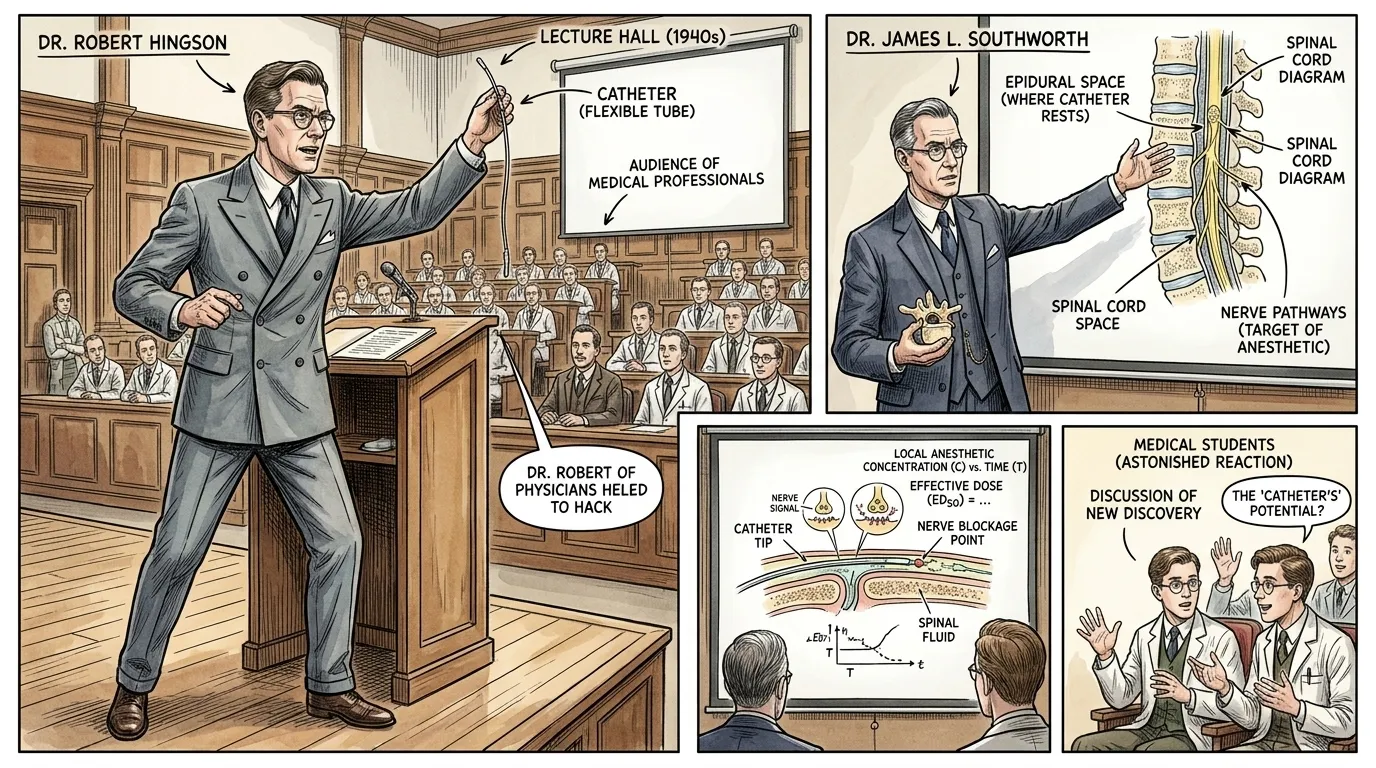
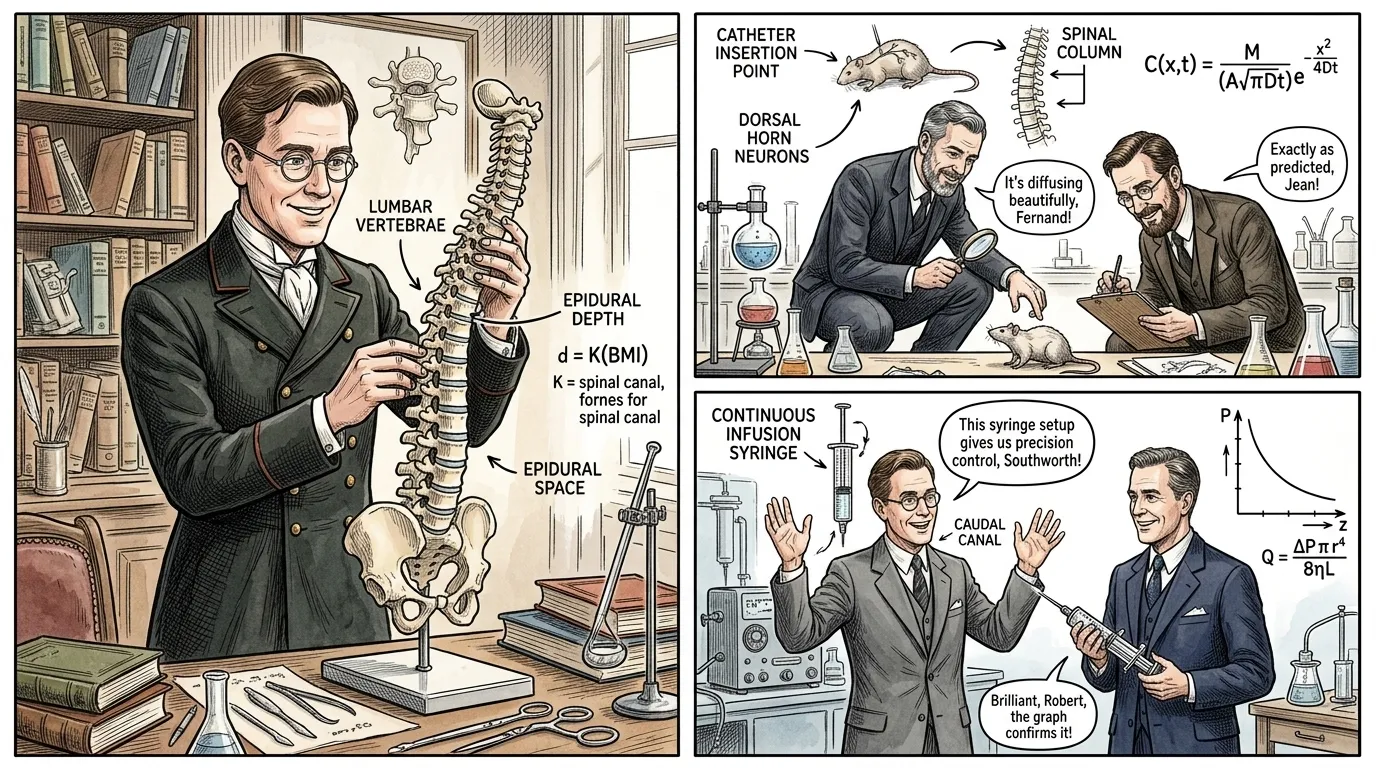
While Pagés pioneered continuous epidural through repeated injections, the next leap in sustained delivery came with the introduction of the indwelling catheter. In the 1930s, Italian surgeon Achille Mario Dogliotti further refined segmental epidural anesthesia. However, it was American anesthesiologists, notably Dr. Robert Hingson and Dr. James L. Southworth, in the 1940s, who championed the use of a thin, flexible catheter inserted through the needle into the epidural space. This catheter could then remain in place, allowing for prolonged, incremental, or even continuous infusion of anesthetic, without the need for repeated needle insertions. This invention transformed the epidural from a surgical novelty into a widespread, reliable pain management tool, particularly for labor.
"'The catheter, gentlemen,' Dr. Hingson announced to an assembly of medical professionals, holding up a thin, flexible tube, 'is the true game-changer. It allows us to maintain analgesia for hours, even days, without repeated punctures. It delivers medication directly to those nerve pathways, exactly as we discussed needed precise targeting.' Dr. Southworth added, 'This enables patient mobility, improved comfort, and significantly reduces risk compared to earlier methods. We have finally achieved true continuous localized relief.'"
Page 8
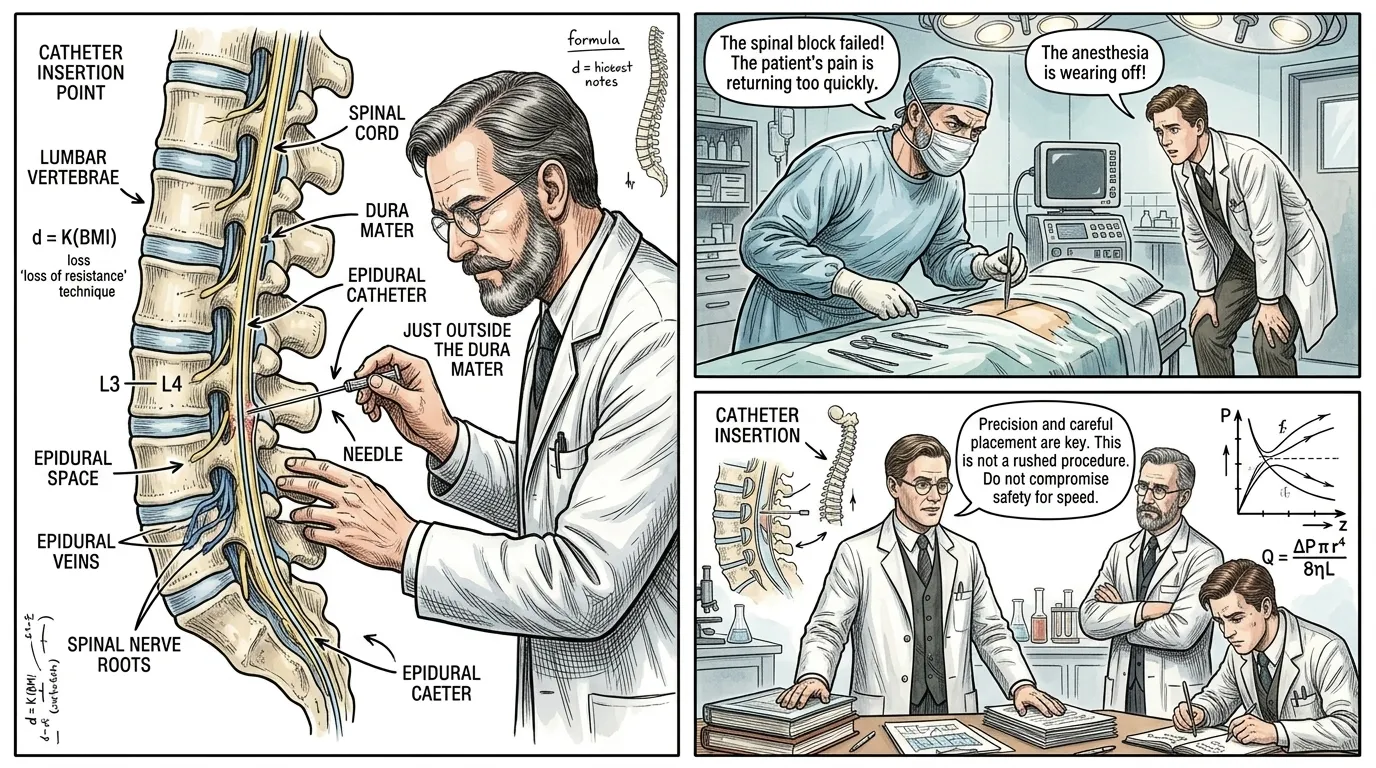
The genius of the epidural lies in its precise targeting of the epidural space. First, a thin, hollow needle is carefully inserted into the patient's back, guided between the vertebrae until it reaches the epidural space—the area just outside the dura mater, which encases the spinal cord. An anesthesiologist uses a 'loss of resistance' technique to confirm the needle's correct placement. Once confirmed, a thin, flexible catheter is threaded through the needle and into this space. The needle is then carefully withdrawn, leaving the catheter in place. Local anesthetic is delivered through the catheter, bathing the spinal nerve roots as they exit the spinal cord, effectively blocking pain signals from reaching the brain while allowing motor function to largely remain intact.
Page 9
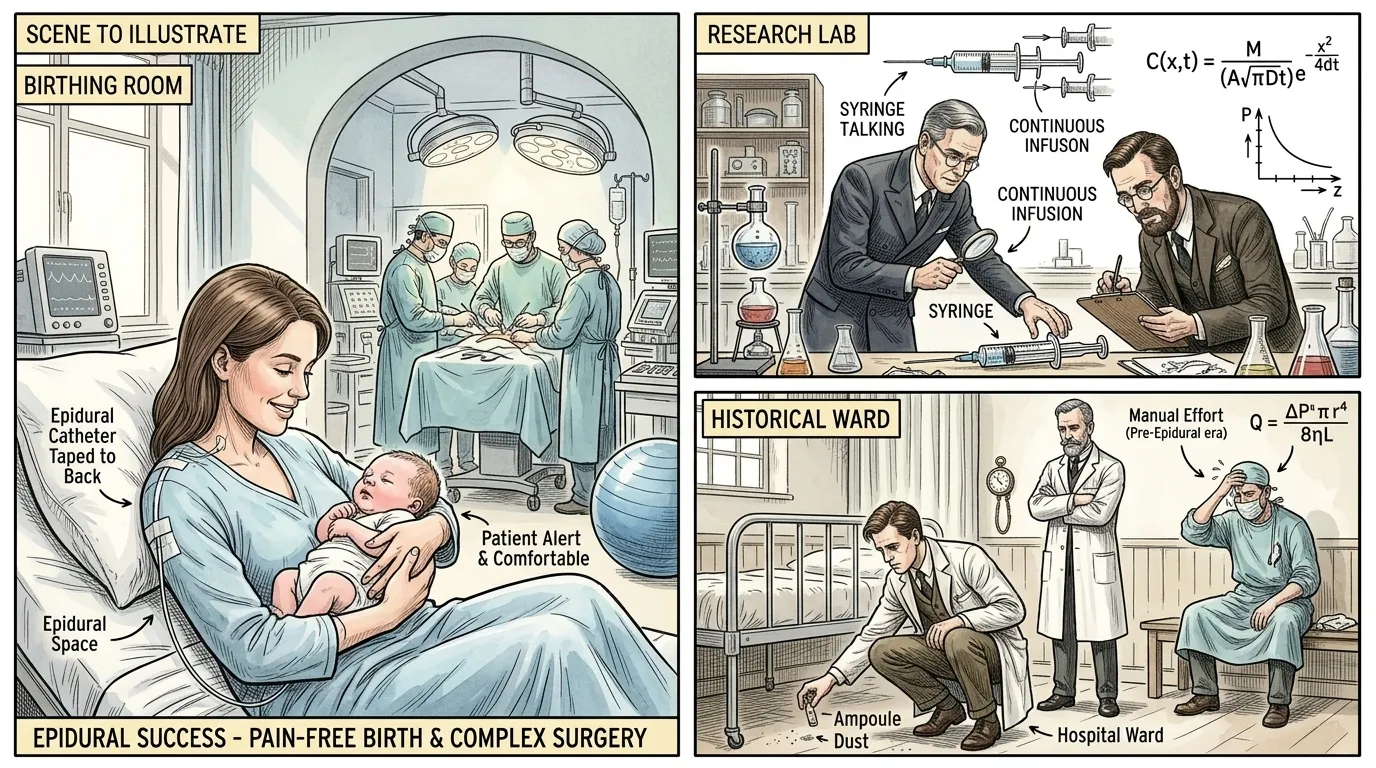
The epidural's journey from an experimental technique to a cornerstone of modern medicine was driven by its safety and efficacy. Its ability to provide profound pain relief for specific regions of the body without inducing unconsciousness made it invaluable, especially in obstetrics. By the latter half of the 20th century, epidural analgesia had become a widely accepted and often preferred method for pain management during childbirth, dramatically improving the experience for millions of birthing individuals. Its utility extended rapidly to other surgical procedures, chronic pain management, and even post-operative care, demonstrating its versatility and profound impact on patient comfort and recovery.
Page 10
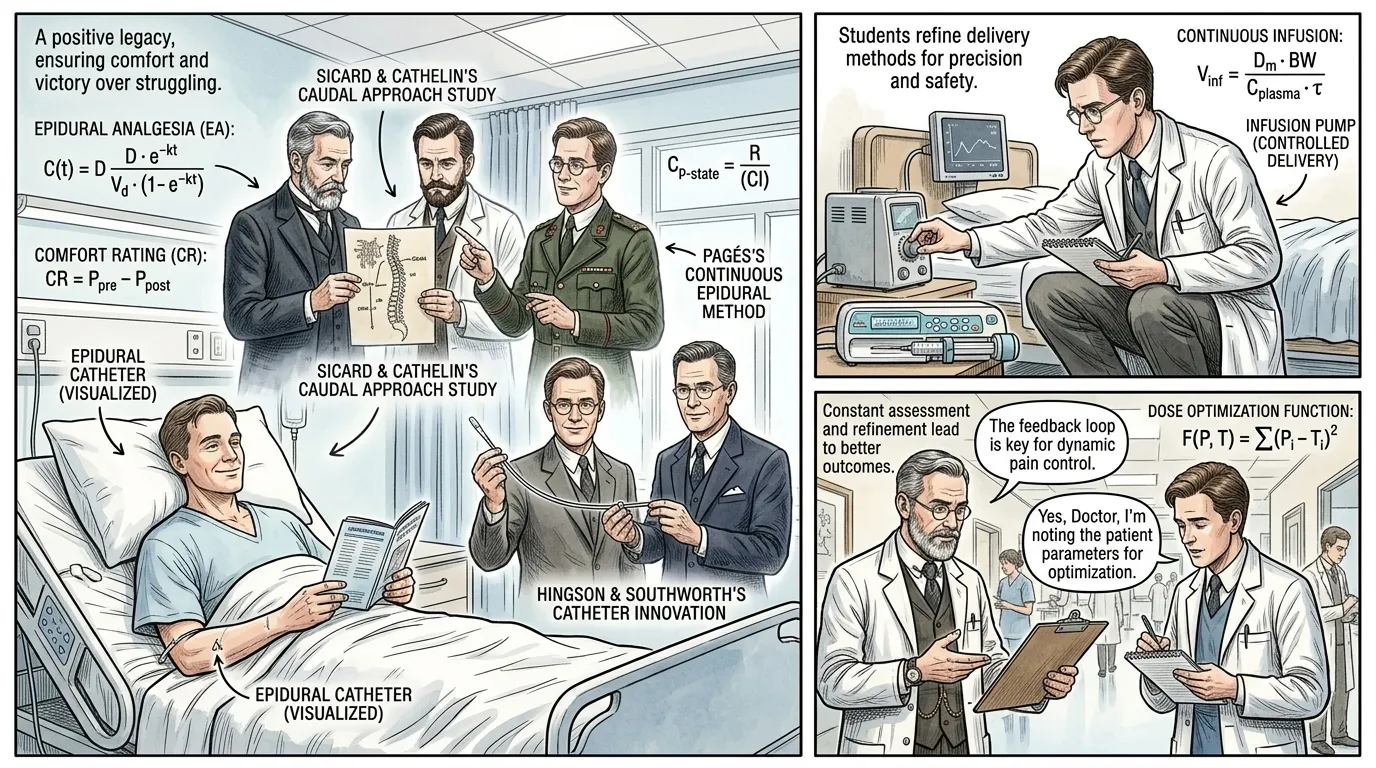
Today, the epidural is a testament to persistent medical innovation, a procedure that has profoundly reshaped the experience of pain. It offers individuals control over their comfort during childbirth, complex surgeries, and persistent chronic conditions, enabling faster recovery, reducing stress, and improving overall outcomes. From the pioneering anatomical explorations of Sicard and Cathelin to Pagés Miravé's continuous technique and the subsequent development of catheter delivery systems, the epidural stands as a beacon of targeted medical intervention. It represents a victory over suffering, empowering patients and allowing medical professionals to perform intricate procedures with greater safety and humanistic care. Its legacy continues to evolve, pushing the boundaries of regional pain management into the future.
About this story
- Location: Global
- Audience: general readers
Questions and answers
Read Wonder Inventions on your phone
Wonder Inventions is available on Android. Get Wonder Inventions on Google Play.