Electrocardiogram
Electrocardiogram — an illustrated inventions story, set in Global. 10 illustrated pages, free to read on Wonder Inventions.
Page 1
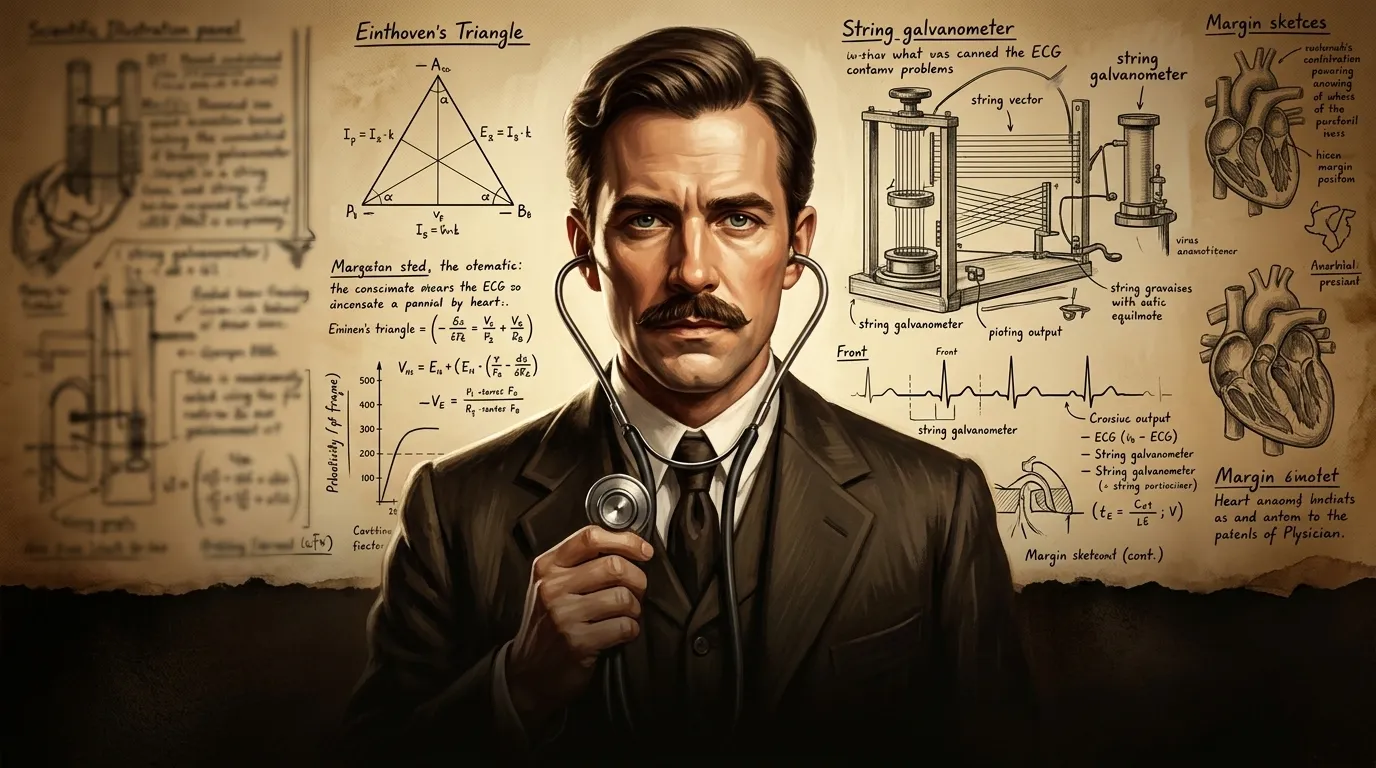
Before the dawn of the 20th century, the human heart remained a largely enigmatic organ. Its rhythm was known, its pulse felt, yet the subtle, life-altering electrical disturbances within remained imperceptible to physicians. Diagnosing conditions like angina or early heart failure relied heavily on subjective patient symptoms and the limited insights offered by a stethoscope.
"A physician in a formal dark suit, stethoscope pressed to a patient's chest, mutters thoughtfully, "The heart's language remains a silent mystery, much like the famous phrase by Carl Jung, 'Until you make the unconscious conscious, it will direct your life and you will call it fate.' We need to make these invisible rhythms visible.""
Page 2
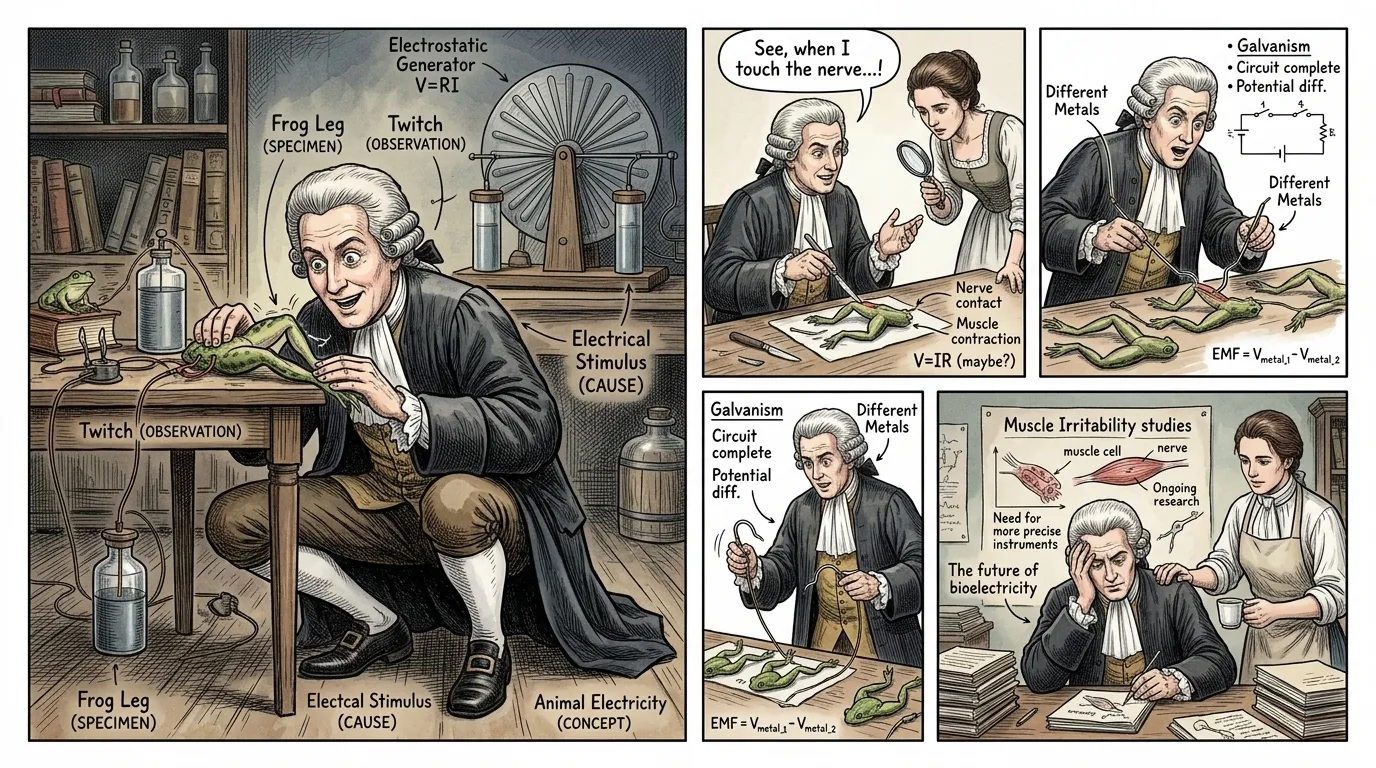
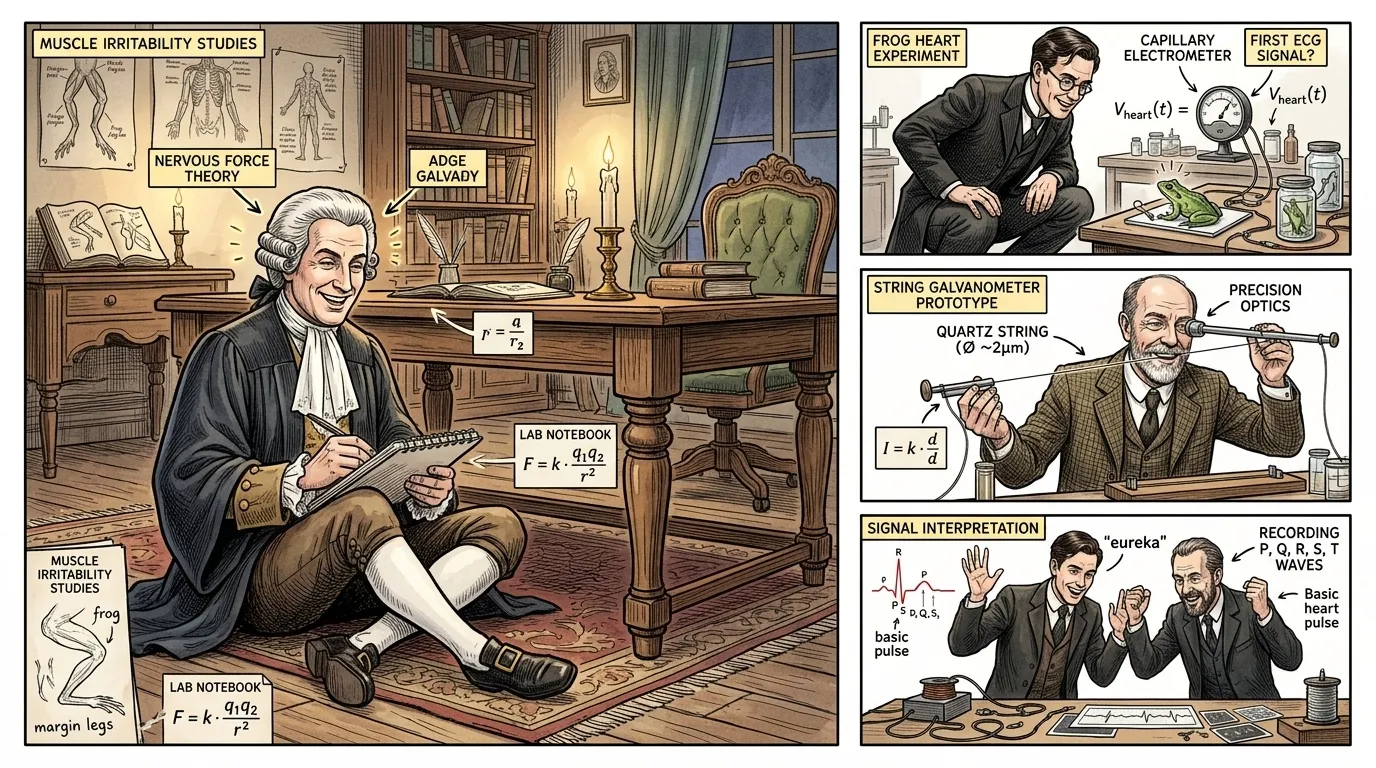
Centuries before Einthoven, pioneers like Luigi Galvani in the late 18th century had demonstrated the fundamental principle of 'animal electricity' through his famous experiments with frog legs. His groundbreaking work, alongside later discoveries by scientists such as Carlo Matteucci and Emil du Bois-Reymond, confirmed that muscle contractions are accompanied by electrical currents.
"A curious researcher, observing a twitching frog leg connected to primitive wires, exclaims, "This phenomenon, this 'animal electricity,' is profound! As Benjamin Franklin famously observed about electricity itself, 'Genius is initiative on fire.' We must apply this fire to the mysteries of the human body.""
Page 3
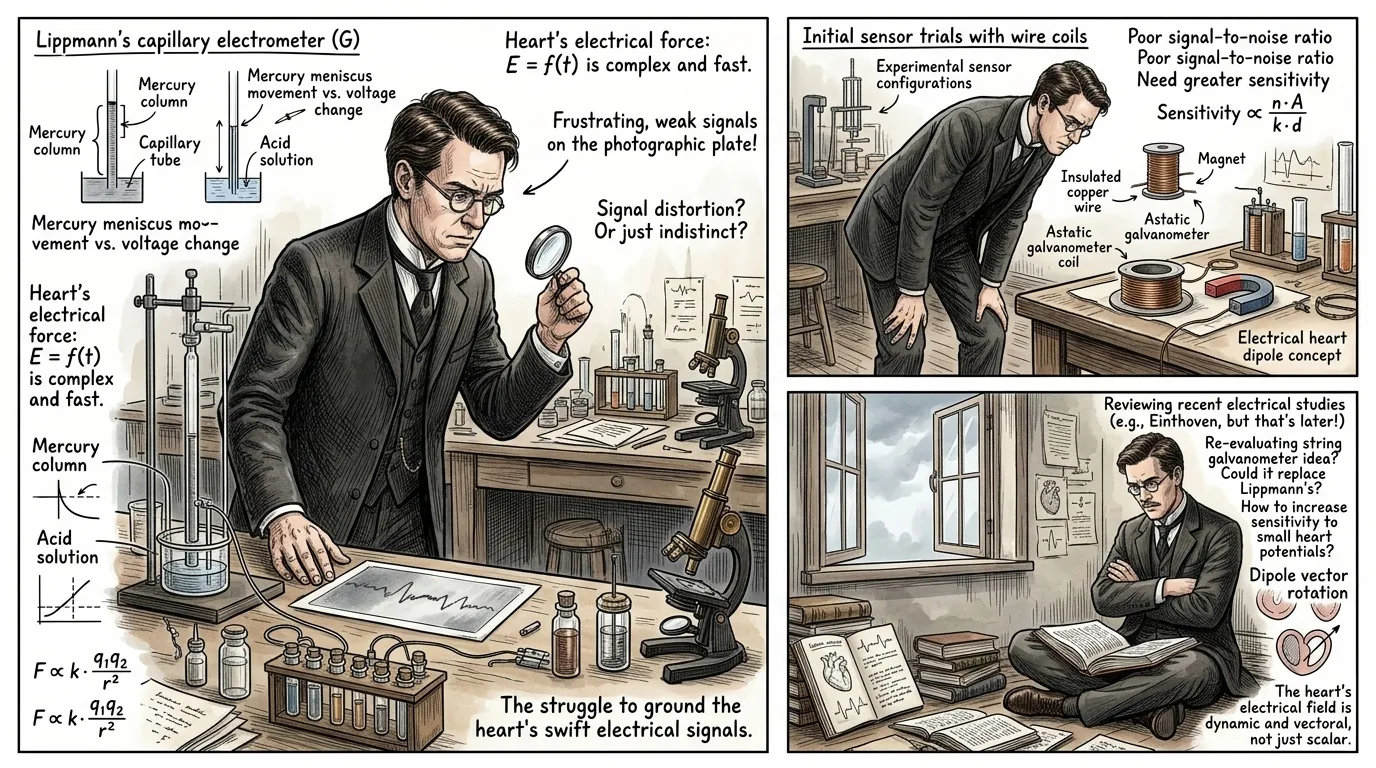
While the presence of cardiac electrical signals was established, measuring them accurately proved formidable. The delicate, rapid fluctuations of the heart required an instrument of unprecedented sensitivity. Early attempts, notably by physiologist Augustus Waller in 1887, utilized Gabriel Lippmann's capillary electrometer, but its slow response time and inherent imprecision rendered the heart's complex rhythm into an indecipherable blur.
"Waller, frustrated by the wavy, indistinct lines on his photographic plate, sighs, "The heart's electrical language is far too swift for this device. It is a challenge that demands immense ingenuity, as Leonardo da Vinci once stated, 'Simplicity is the ultimate sophistication.' We need a simpler, yet more powerful, way to capture these fleeting signals.""
Page 4
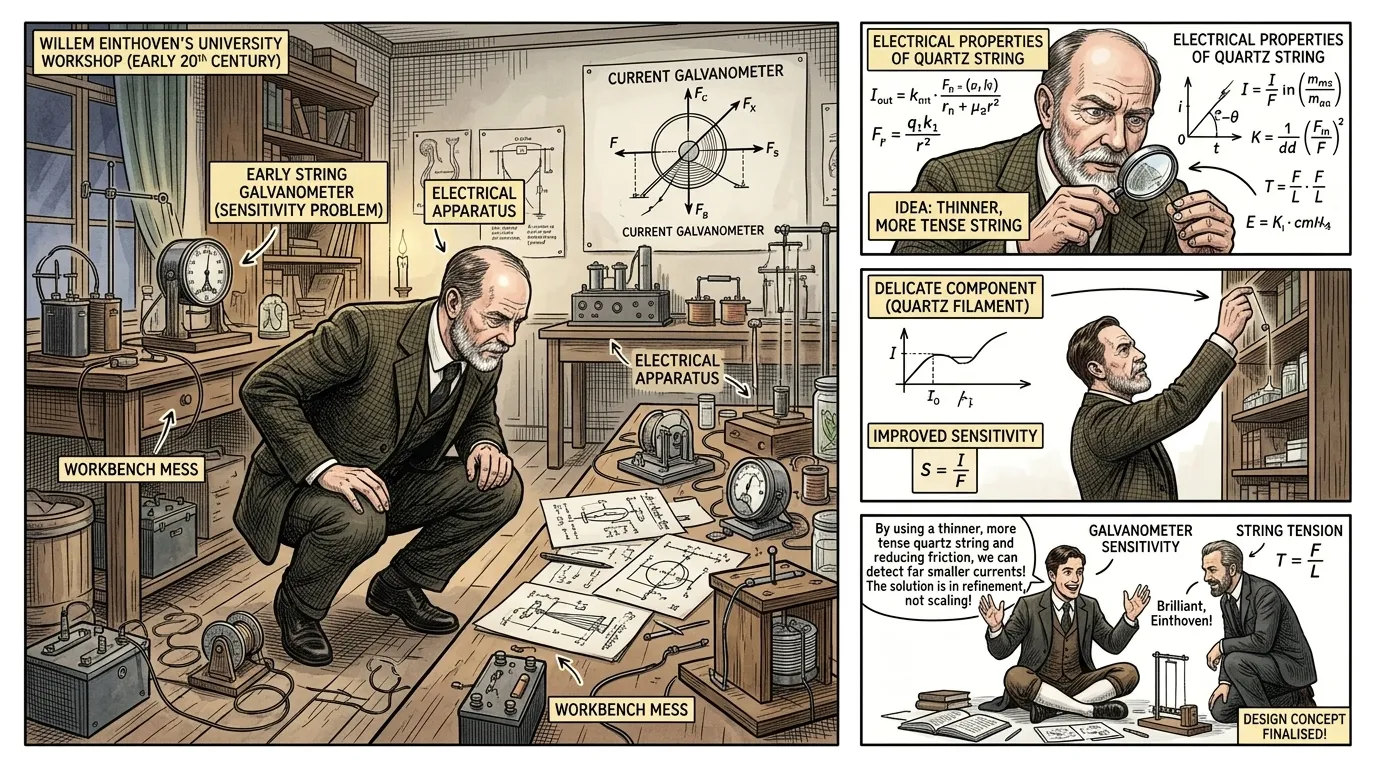
Willem Einthoven, a brilliant physicist and physician at Leiden University, was acutely aware of these limitations. He understood that a truly diagnostic tool required not just detection, but precise measurement and clear visualization of every subtle fluctuation. His motivation stemmed from a profound desire to bridge the gap between observed symptoms and the hidden electrical realities of the heart.
"Einthoven, hunched over his workbench, surrounded by detailed sketches and mathematical equations, reflects aloud, "As Louis Pasteur once observed, 'Chance favors only the prepared mind.' I know that true breakthroughs come not from mere luck, but from relentless dedication to observation and the perfection of our instruments. This requires a new design, something far more sensitive.""
Page 5
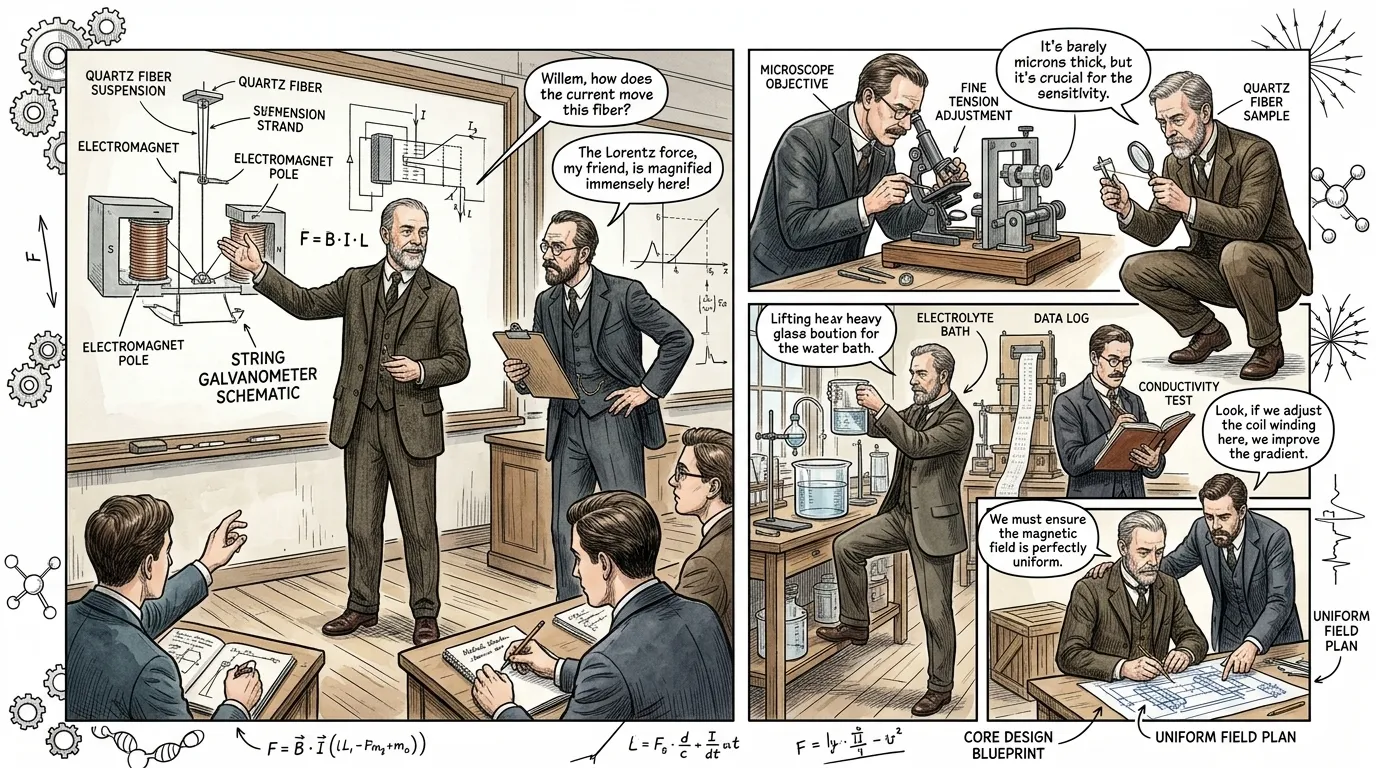
Einthoven's genius lay in conceiving a wholly new type of galvanometer that could overcome the inertia of existing devices. His radical idea involved a minute, incredibly thin quartz fiber – a 'string' – coated with silver, suspended vertically between the powerful poles of an electromagnet. This delicate string was the heart of his invention, designed for unparalleled sensitivity.
"Einthoven, gesturing towards a diagram of his proposed device, explains to an attentive colleague, "Imagine a fiber so fine, so delicate, yet so responsive. It must, as Isaac Newton suggested, 'stand on the shoulders of giants,' building upon fundamental electromagnetic principles to reveal the unseen.""
Page 6
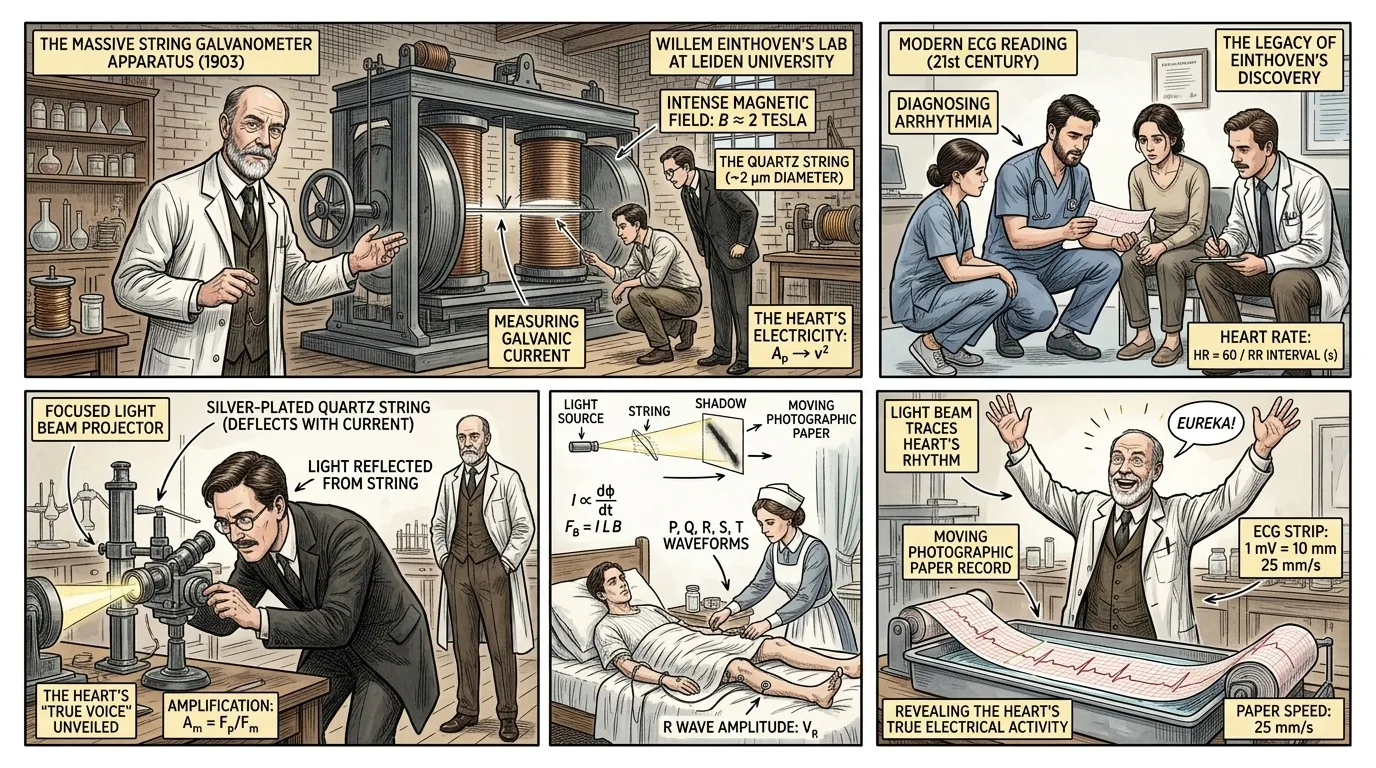
When a tiny electrical impulse from the heart passed through the conductive string, the magnetic field caused it to deflect minutely. To make this minuscule movement visible, Einthoven devised an ingenious optical system. A powerful lamp shone light onto the string, casting an amplified shadow onto a slit, which then projected onto a moving roll of photographic paper, creating a continuous, precise waveform.
"Watching the light beam trace the heart's rhythm, Einthoven exclaims, "Behold, the heart's true voice revealed! It is a profound moment, demonstrating what Albert Einstein meant when he said, 'The important thing is not to stop questioning. Curiosity has its own reason for existence.' We are seeing the answer to years of questioning.""
Page 7
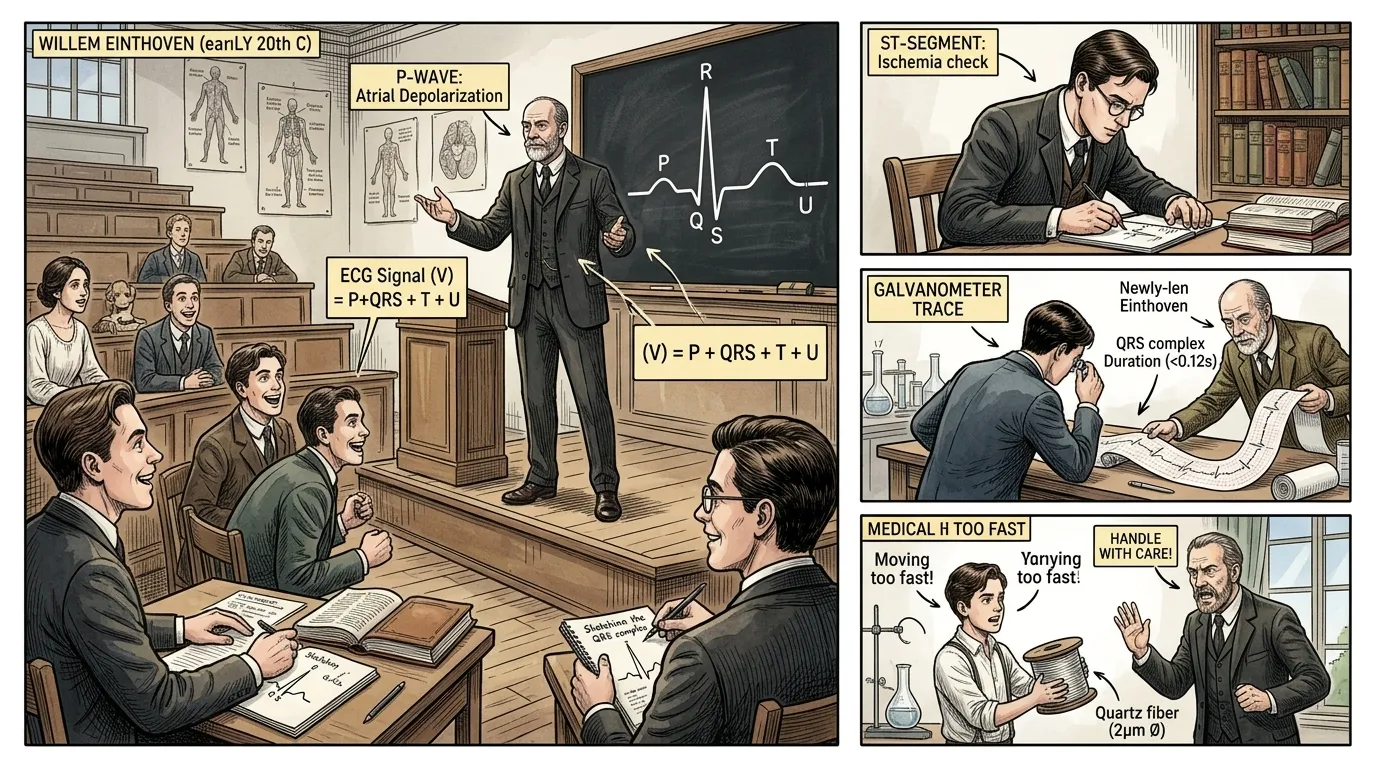
Einthoven's true brilliance extended beyond mere instrument design; he meticulously analyzed the waveforms produced by his galvanometer. He identified the characteristic deflections, naming them P, Q, R, S, and T, each corresponding to a specific electrical event within the cardiac cycle. This standardization provided physicians with a common language and a visual template for normal heart function.
"Einthoven, presenting his findings to a group of eager medical students, declares, "By defining these precise waves, we've moved beyond conjecture. As the great philosopher Aristotle reminded us, 'The whole is greater than the sum of its parts,' and by understanding each part of this electrical symphony, we understand the whole heart's health.""
Page 8
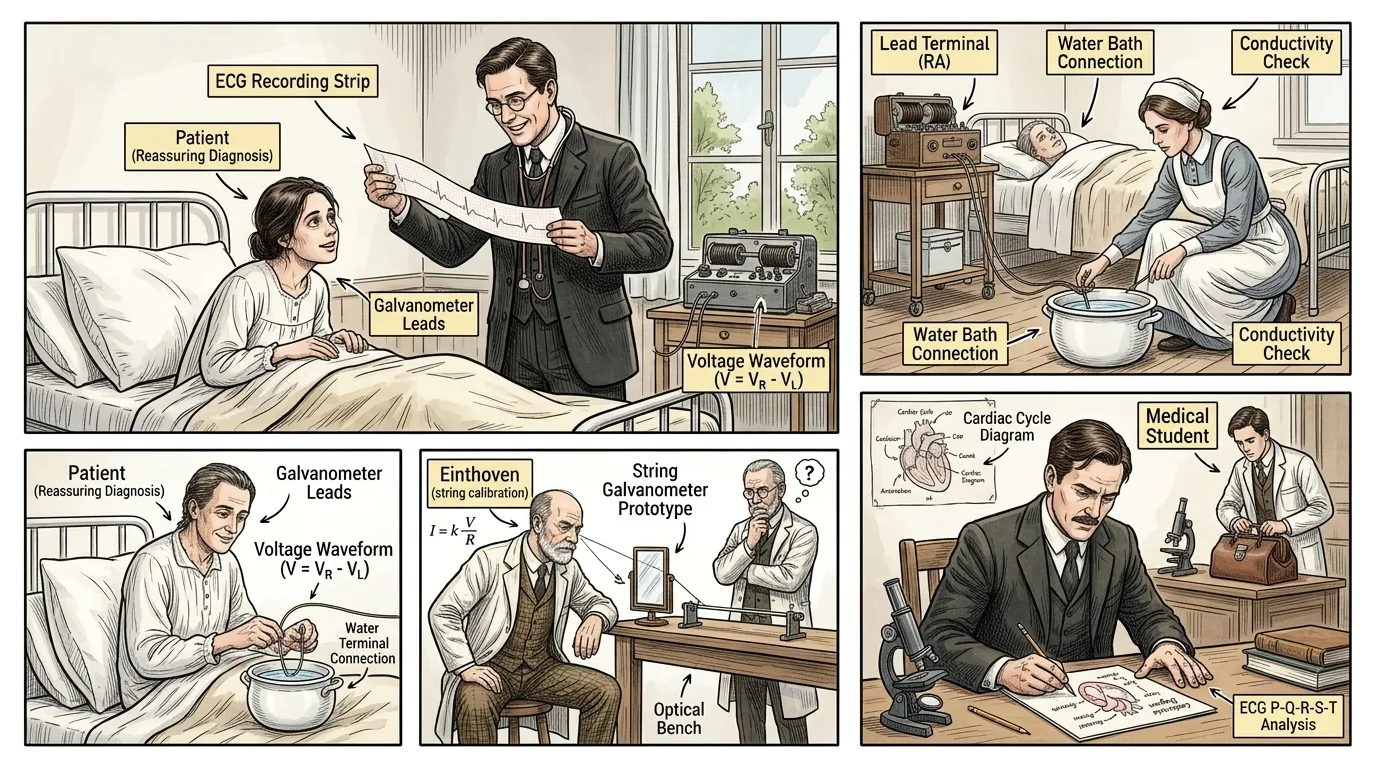
The electrocardiogram transformed cardiology, fulfilling the promise of earlier bioelectrical discoveries. What was once an invisible, complex phenomenon—the heart's electrical activity—could now be precisely mapped, analyzed, and compared. This tangible evidence allowed for accurate diagnosis of arrhythmias, myocardial infarctions, and other critical heart conditions, fundamentally changing how physicians approached cardiac care and saving countless lives.
"A doctor, holding up a pristine ECG strip for his patient to see, smiles reassuringly, "With this, we can now see exactly what your heart is doing. It's truly a marvel, affirming what Hippocrates understood centuries ago: 'To do nothing is often a good remedy.' Now, with this clarity, we can act precisely and effectively.""
Page 9
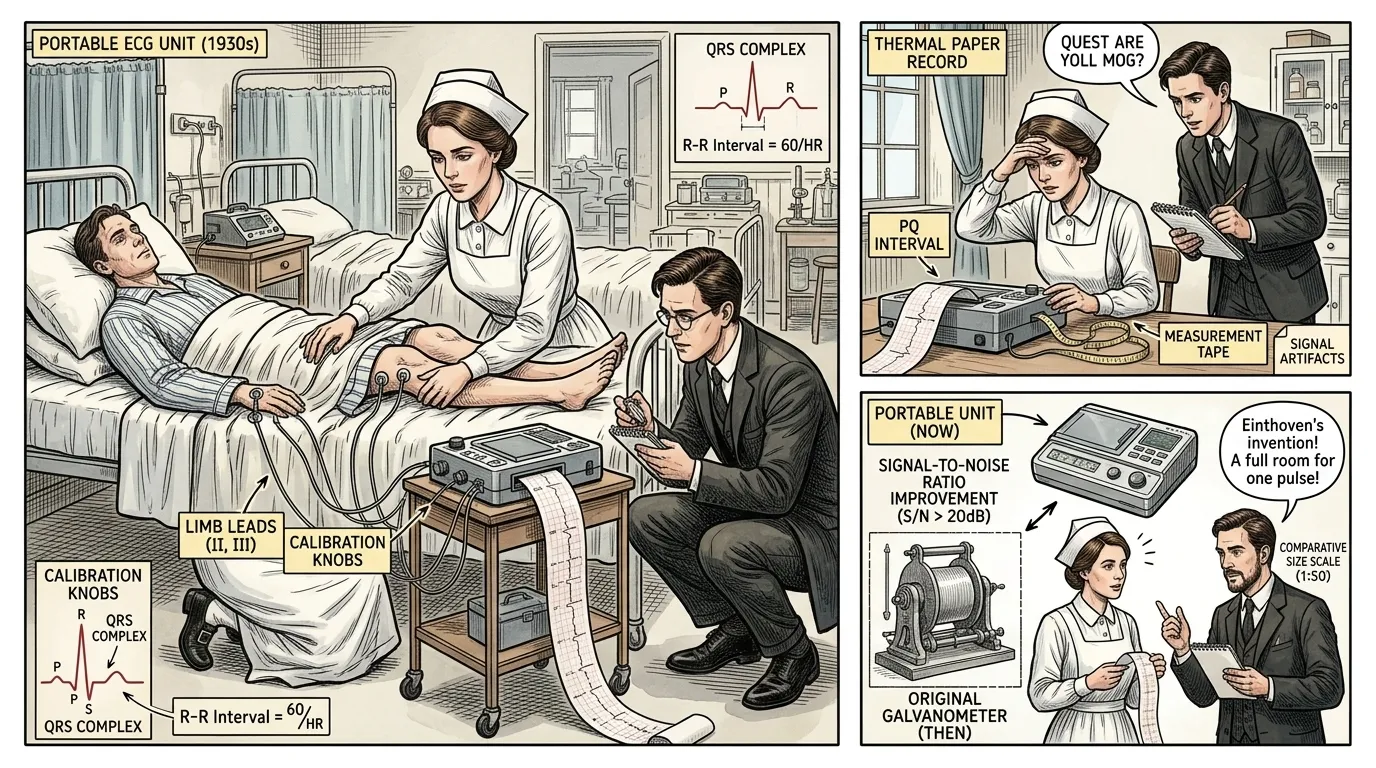
Einthoven's colossal original galvanometer, requiring five people to operate and housed in two rooms, quickly proved its indispensable value. The immediate impact spurred further innovation, leading to rapid miniaturization and refinement. Within decades, the once-unwieldy laboratory apparatus evolved into more compact, portable instruments, accessible in clinics and eventually at the patient's bedside, democratizing cardiac diagnostics globally.
"A nurse, skillfully operating a newer, more compact ECG machine, reflects to a student, "The evolution of this machine is remarkable. It reminds me of Marie Curie's dedication, who said, 'Nothing in life is to be feared, it is only to be understood.' We are continually understanding more and making these vital tools more accessible, banishing fear through knowledge.""
Page 10
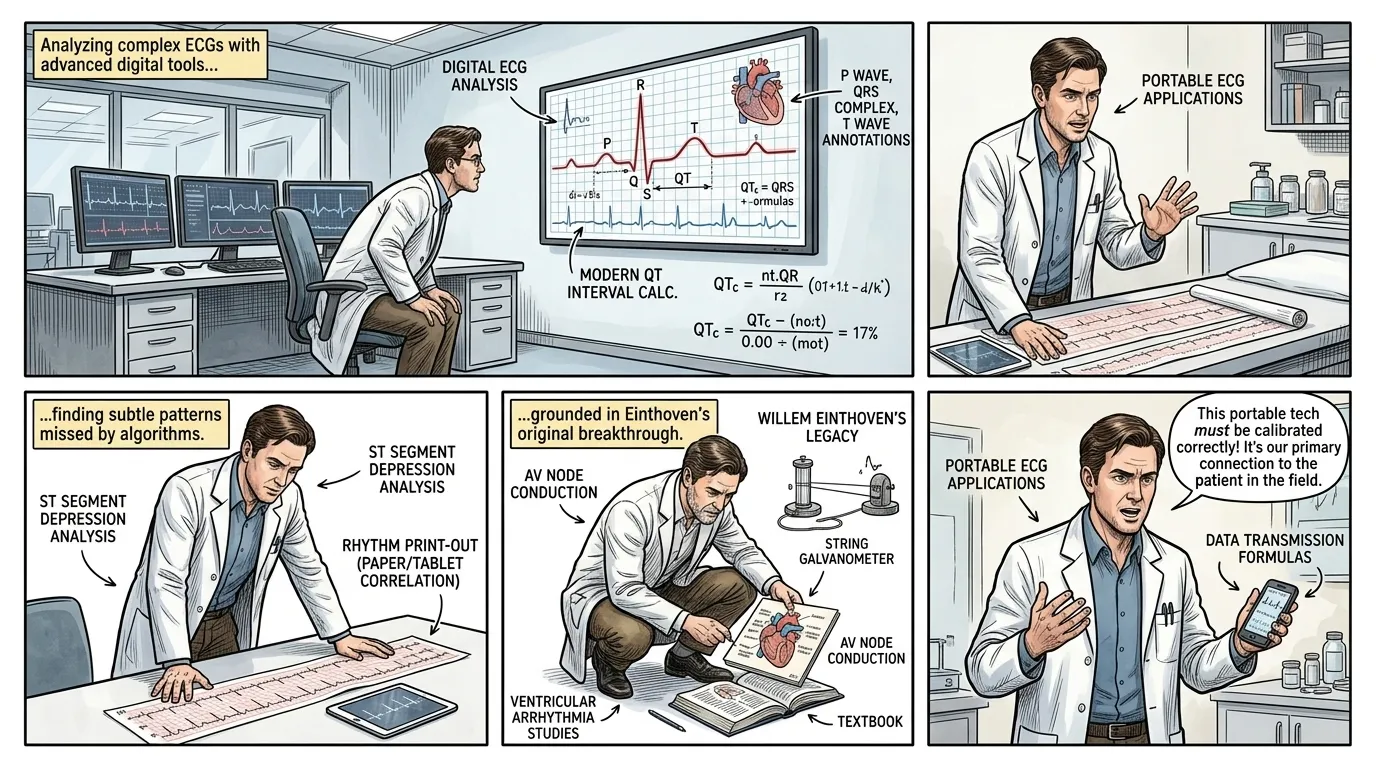
Today, the electrocardiogram remains an indispensable cornerstone of modern medicine, foundational to cardiology and integrated into almost every aspect of healthcare. From rapid emergency diagnoses to routine health monitoring and sophisticated surgical guidance, Einthoven's pioneering work continues to save lives and deepen our understanding of the human heart, an enduring testament to the power of precise scientific inquiry.
"A modern cardiologist, analyzing an ECG strip on a digital screen, considers the long arc of discovery, musing, "The elegance of this diagnostic tool is timeless. It embodies the spirit of discovery, echoing Carl Sagan's sentiment: 'Somewhere, something incredible is waiting to be known.' We continue to learn more from these incredible patterns.""
About this story
- Location: Global
- Audience: general readers
Questions and answers
Read Wonder Inventions on your phone
Wonder Inventions is available on Android. Get Wonder Inventions on Google Play.