Defibrillator
Defibrillator — an illustrated inventions story, set in Global. 10 illustrated pages, free to read on Wonder Inventions.
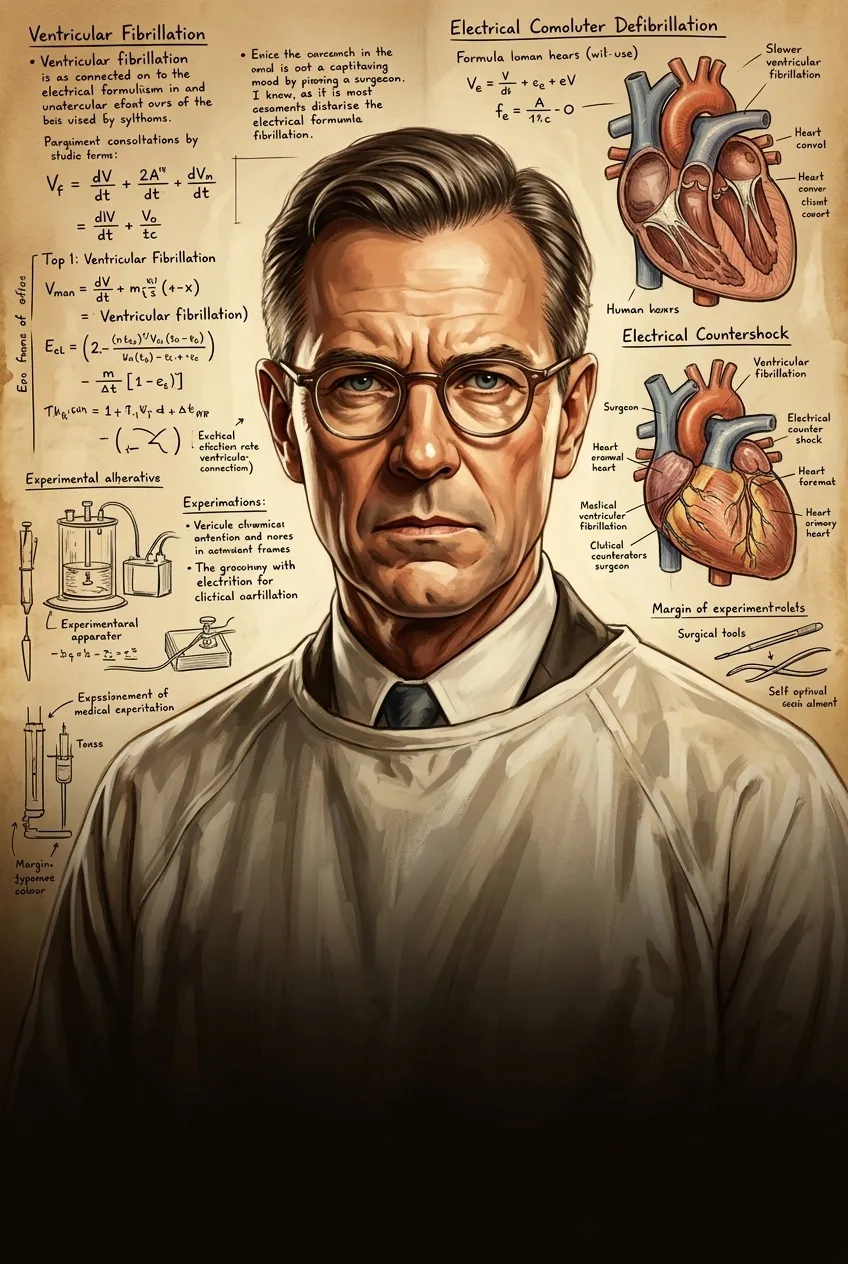
Page 1
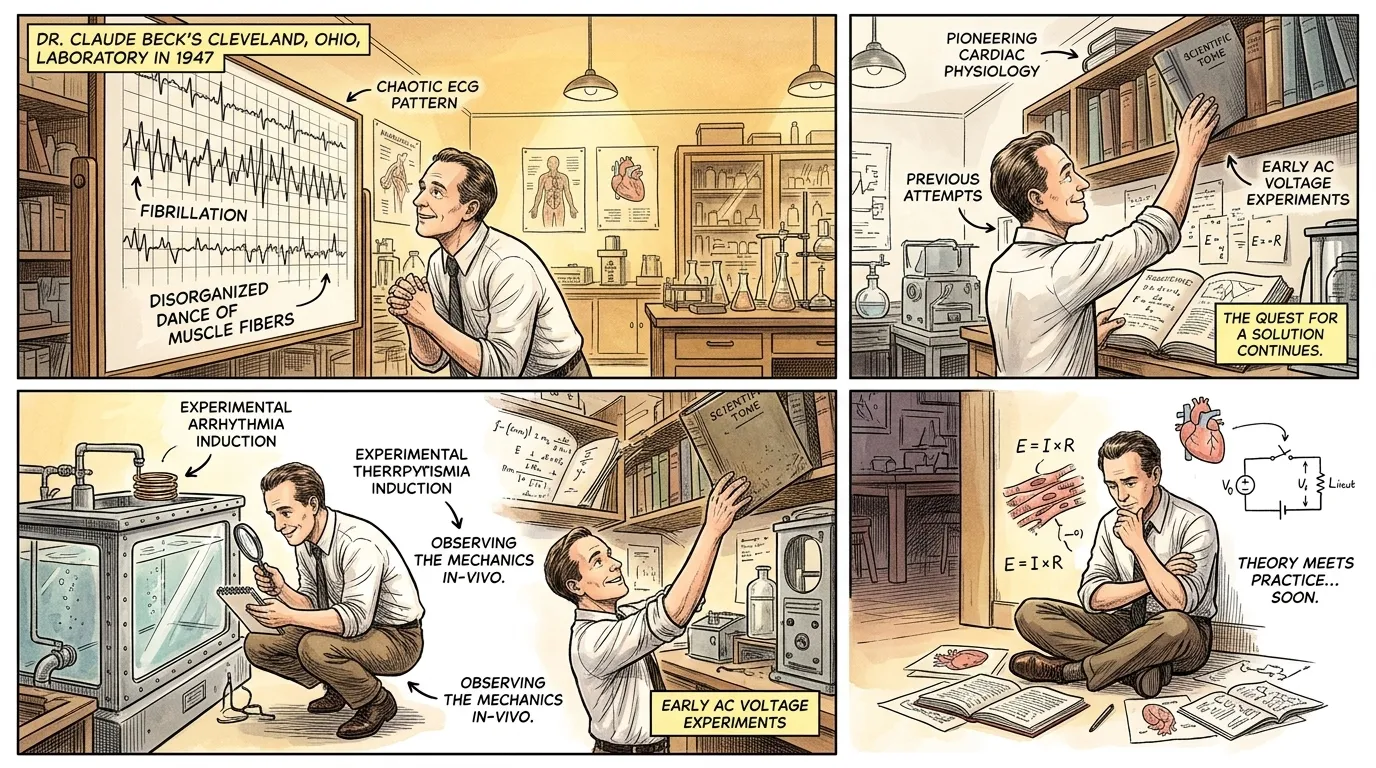
In the mid-20th century, sudden cardiac arrest due to ventricular fibrillation was a swift and almost universally fatal event, leaving medical professionals with few options. The heart would quiver uncontrollably, unable to pump blood, and life would cease in moments. It was a race against an invisible killer, a chaotic electrical storm within the vital organ.
""The heart simply... stops," muttered Dr. Claude Beck, gesturing towards a chart displaying an erratic electrocardiogram pattern in his Cleveland, Ohio, laboratory in 1947. "Not truly stopped, but a disorganized dance of muscle fibers, rendering it useless. We observe this chaos, and for too long, we've been powerless to intervene.""
Page 2
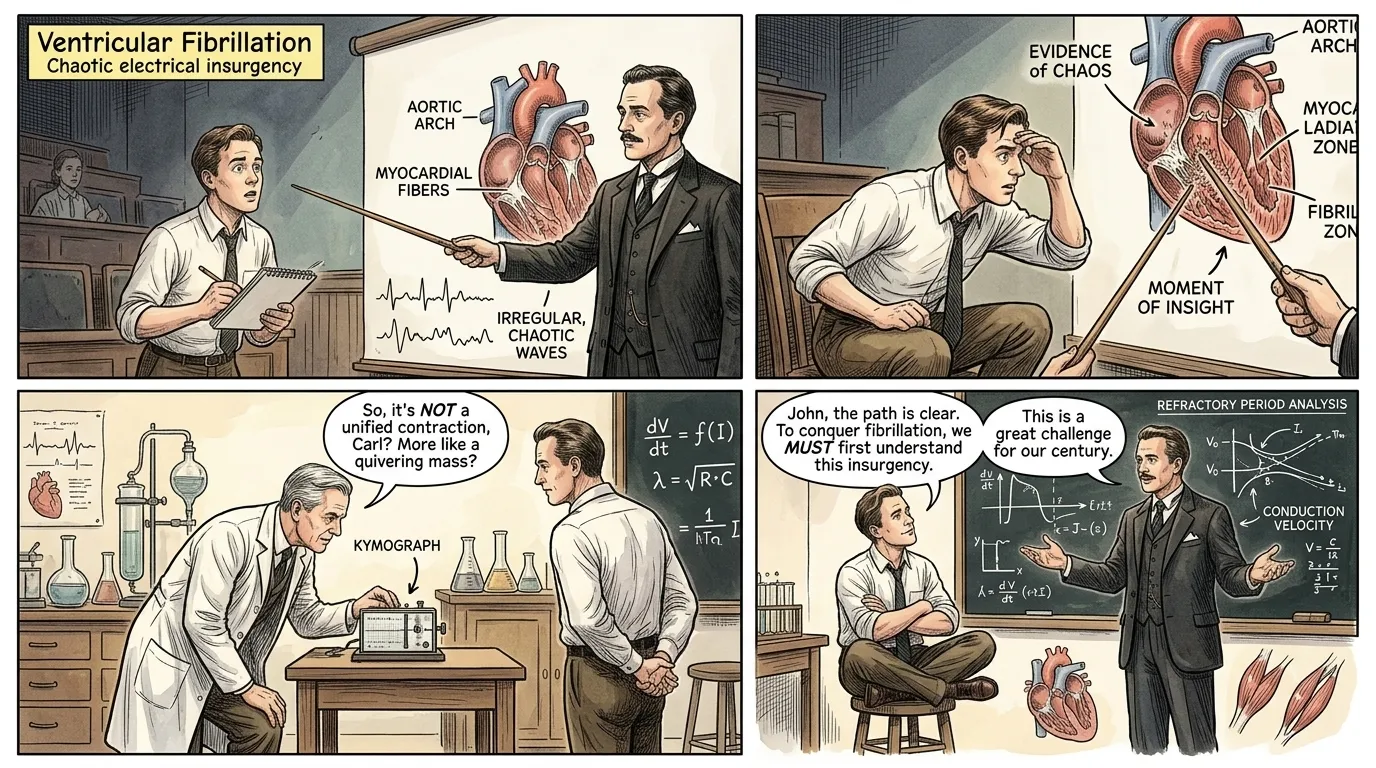
Before any effective intervention could be conceived, scientists had to grasp the precise nature of the heart's catastrophic failure: ventricular fibrillation. This terrifying condition arises when the heart's lower chambers, the ventricles, begin to twitch rapidly and irregularly, losing their synchronized pumping action. The challenge lay in understanding how to reset this chaotic electrical activity without causing further damage or inducing other lethal arrhythmias.
""This isn't merely a stoppage; it's an electrical insurgency," observed Dr. John MacWilliam, a Scottish physiologist, in a lecture hall in the early 20th century, pointing to a diagram of the heart. "The individual muscle fibers contract independently, resulting in a 'quivering' rather than a cohesive beat. The profound challenge is precisely how one might terminate this electrical chaos." Another researcher, listening attentively, nodded. "Indeed, the difficulty is discerning how to deliver an impulse that can override this anarchy without introducing greater danger.""
Page 3
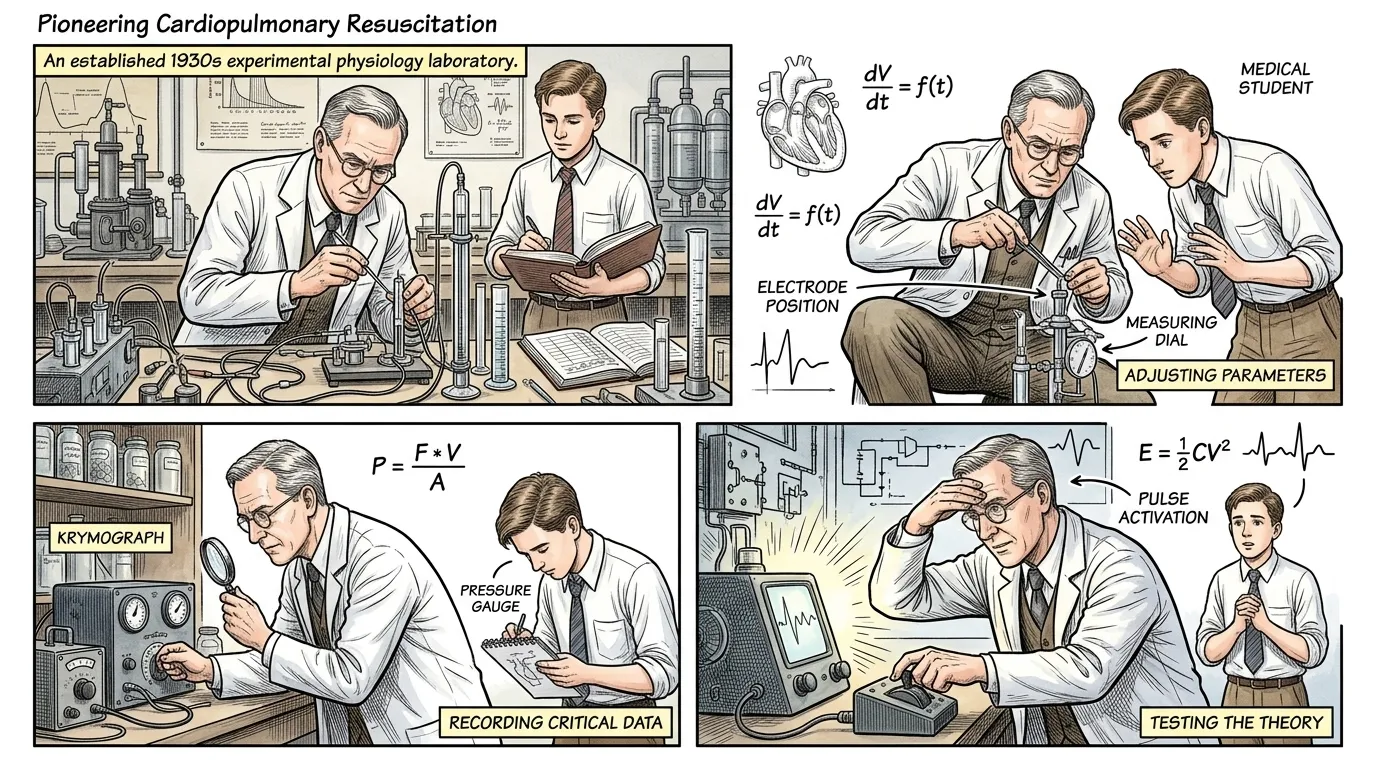
Initial forays into combating fibrillation were often invasive and experimental, built upon centuries of observation regarding electricity's effect on biological tissue. As early as the 18th century, pioneering work by figures like Luigi Galvani demonstrated the fundamental connection between electricity and muscle contraction. By the early 20th century, scientists began to explore controlled electrical shocks on the heart itself, primarily in animal models, gradually learning about thresholds and effects.
""We've observed that a precise electrical current can induce and even reverse fibrillation in controlled animal studies," stated Dr. Carl Wiggers, a prominent American physiologist, in his laboratory around the 1930s, carefully adjusting an electrode on an experimental apparatus. "The key, we believe, lies in delivering a synchronized counter-shock sufficient to depolarize the entire myocardium simultaneously. It's a delicate balance; too little, and the chaos persists; too much, and we cause irreparable harm." His assistant recorded data meticulously. "The question is, Doctor, can we replicate this safely in a human?""
Page 4
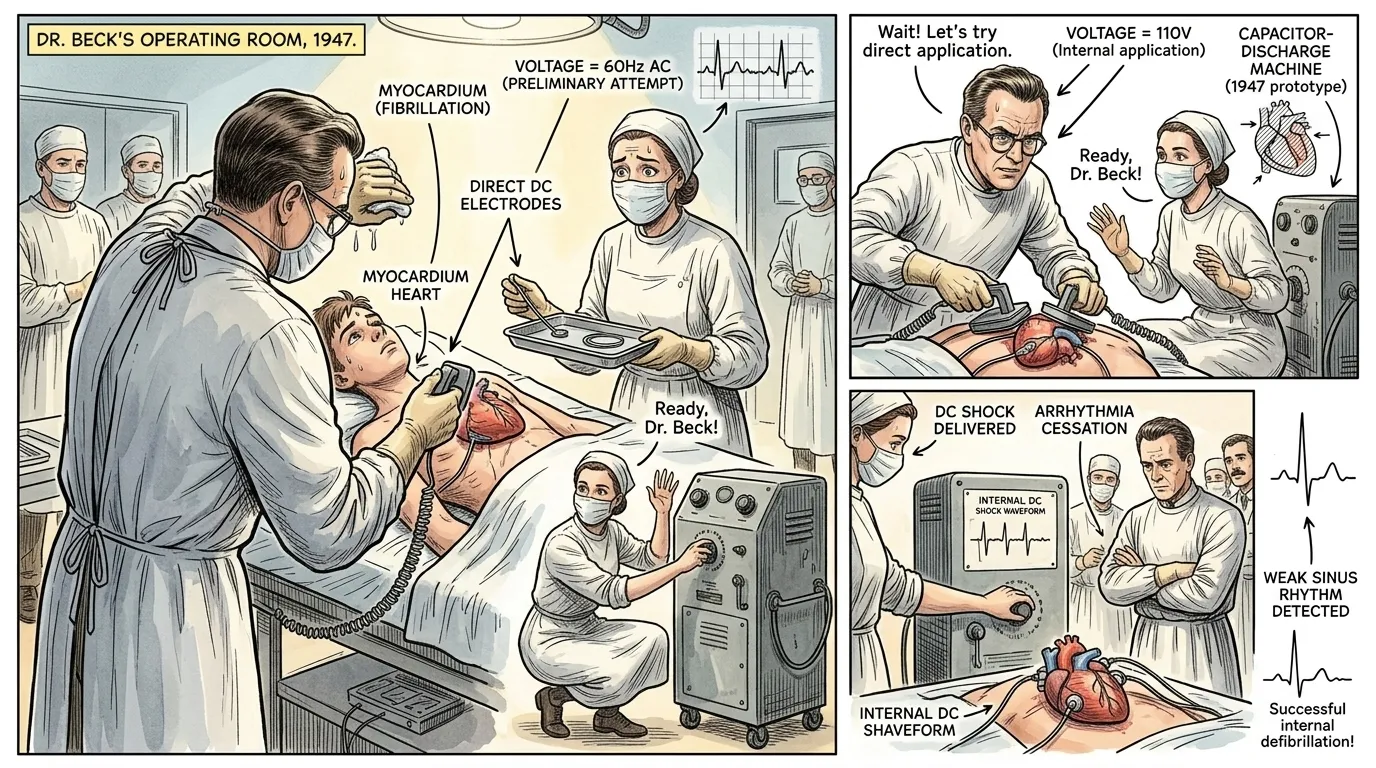
In 1947, during open-heart surgery at University Hospitals of Cleveland, a 14-year-old boy's heart unexpectedly entered ventricular fibrillation. Dr. Claude Beck faced an unprecedented crisis; all conventional methods failed. Recalling his extensive animal research, he made a momentous decision to apply an experimental defibrillation technique directly to the exposed heart. This pivotal moment marked the first successful use of an electrical shock to restart a fibrillating human heart.
""His heart has fibrillated! Conventional massage is failing!" exclaimed a tense scrub nurse, her voice strained, as Dr. Claude Beck stared intently at the boy's exposed heart on the operating table. Dr. Beck, wiping sweat from his brow, declared, "We have no other option. Bring the experimental device. We will attempt a direct current shock. As Leonardo da Vinci once wrote, 'To develop a complete mind, study the art of science; study the science of art. Learn how to see. Realize that everything connects to everything else.' Our understanding of electricity must connect now to save this life!" His colleagues watched with a mixture of apprehension and hope as the specialized paddles were brought forward."
Page 5
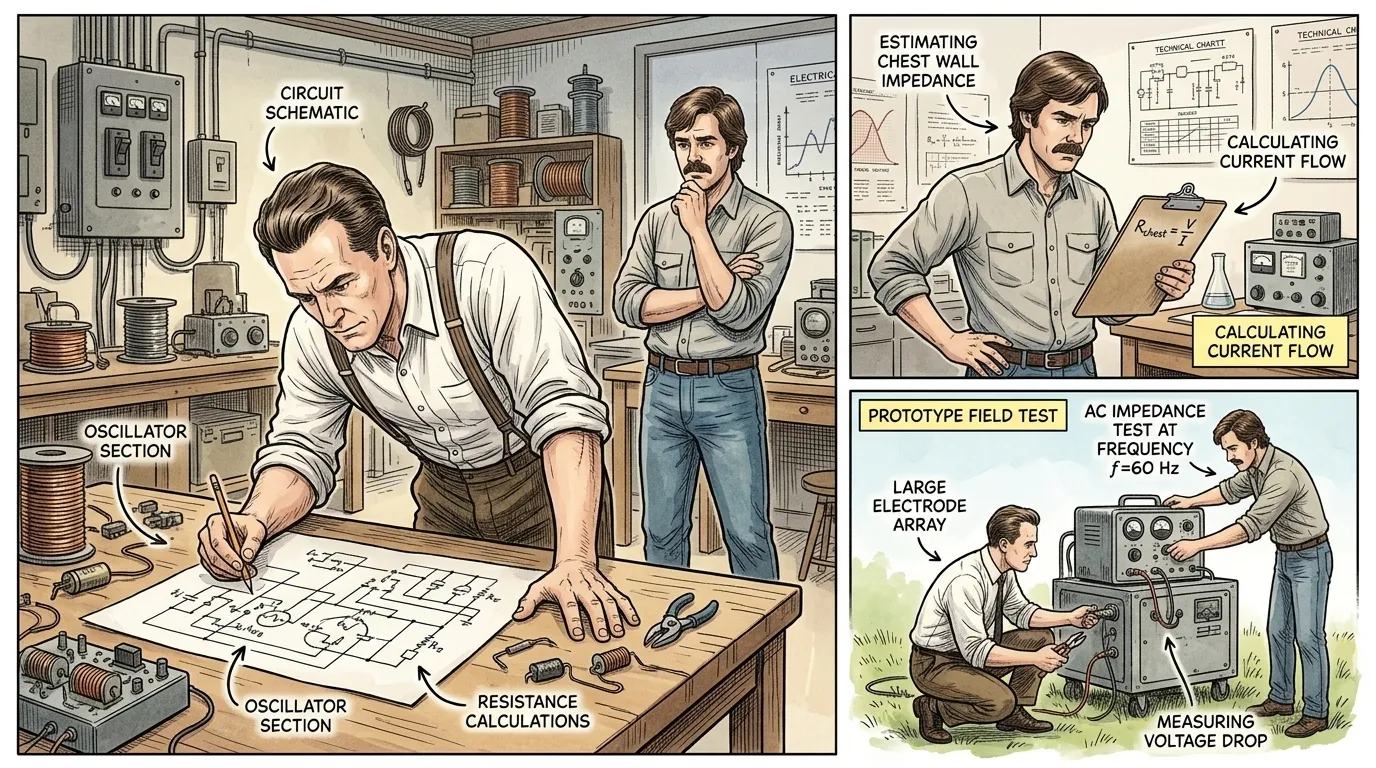
While Dr. Beck's success was revolutionary, it relied on open-chest surgery, rendering it impractical for the vast majority of cardiac arrest incidents. The next critical challenge was to find a way to deliver a life-saving electrical shock through the intact chest wall. This required overcoming significant electrical resistance and ensuring patient safety, pushing the boundaries of engineering and medical understanding.
""The resistance of the chest wall, the skin, the bone—it's formidable," pondered William Kouwenhoven, an electrical engineer from Johns Hopkins University, sketching circuit diagrams with intense focus in his laboratory in the early 1950s. "To deliver sufficient energy to the heart without causing severe burns or systemic damage requires a much higher voltage, and a different approach to electrode design. We must find a way to circumvent the need for surgery. The problem is not merely to shock the heart, but to do so non-invasively." His colleague nodded, pointing to a complex equation. "And precisely control the current path.""
Page 6
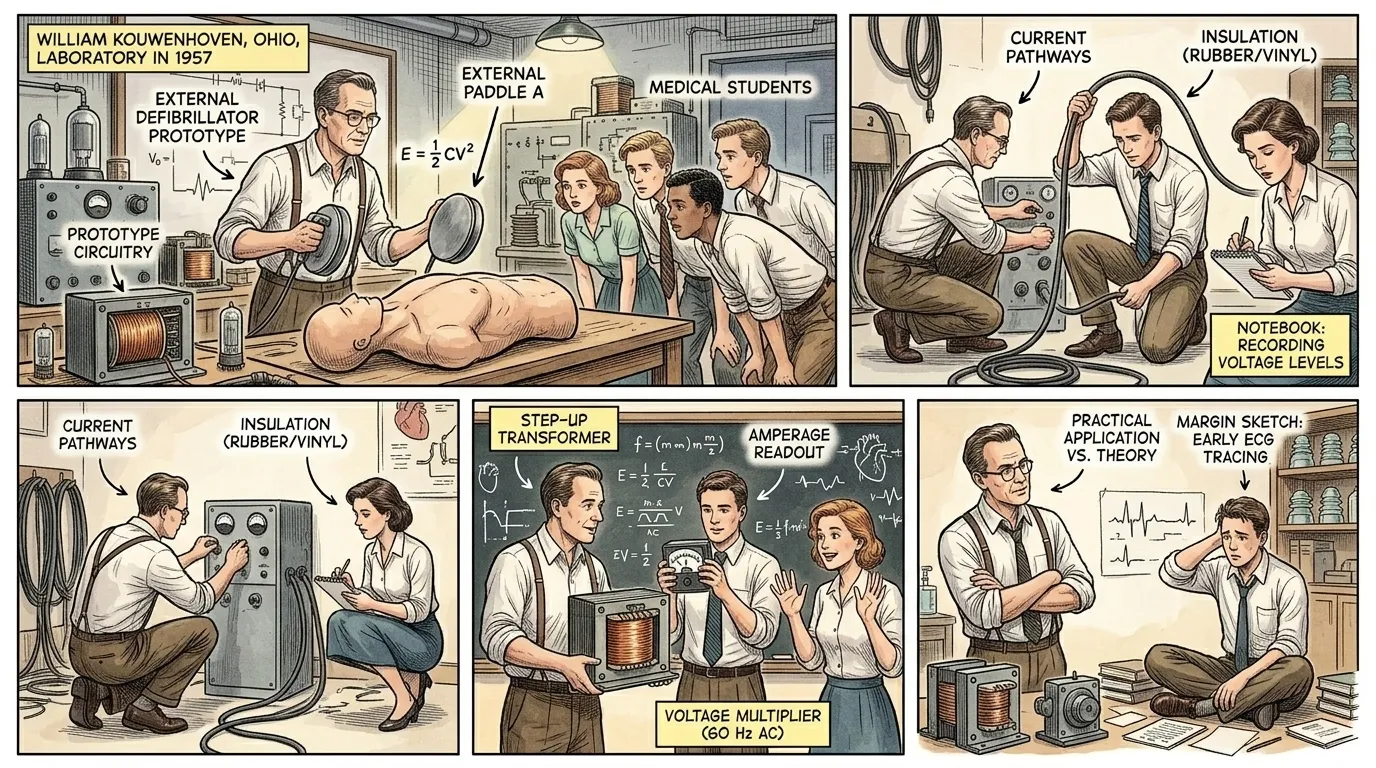
After years of dedicated research, particularly on the effects of electrical shock on utility workers, William Kouwenhoven and his team at Johns Hopkins developed the first successful external defibrillator. Their breakthrough involved applying higher voltage, direct current (DC) shocks, delivered through large, external paddles placed on the chest. This innovative approach allowed medical personnel to deliver a life-saving jolt without requiring invasive surgery, dramatically expanding the potential for intervention.
""We've found that a specific, controlled burst of direct current, delivered with carefully designed paddles, can penetrate the chest wall," explained Kouwenhoven, demonstrating the large, heavy external paddles to a group of eager medical students in 1957. "The body's impedance is significant, yes, but a capacitor discharge delivers the necessary energy. It's about overwhelming the chaotic signals with a singular, powerful impulse. This is no longer just for the operating room; it's for emergency departments, for industrial accidents, for anywhere sudden cardiac arrest might strike.""
Page 7
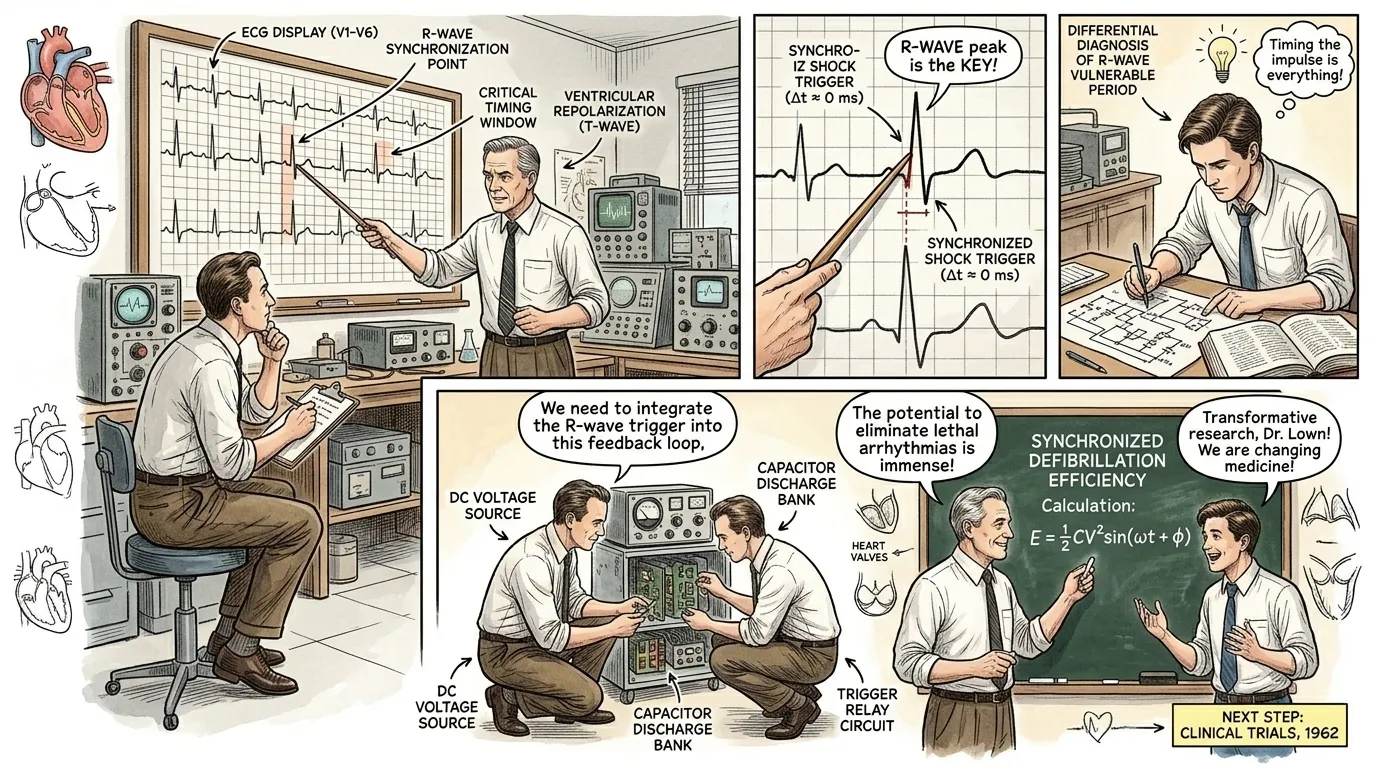
While external defibrillation marked a monumental leap, early techniques sometimes inadvertently triggered further dangerous arrhythmias if the shock was delivered at a vulnerable point in the cardiac cycle. The next crucial advancement came from researchers like Dr. Paul Zoll and Dr. Bernard Lown. Lown, particularly, championed synchronized direct current (DC) defibrillation, developing a method to time the electrical discharge precisely with the heart's R-wave, a specific peak in the electrocardiogram, thereby significantly increasing safety and efficacy and avoiding the induction of ventricular fibrillation or asystole.
""The timing of the counter-shock is everything," Dr. Bernard Lown emphasized in his lab in 1962, pointing to an electrocardiogram display highlighting the R-wave. "As Aristotle once observed, 'Well begun is half done.' Our insight was to synchronize the electrical discharge with the heart's R-wave, avoiding the vulnerable T-wave. This ensures we 'reset' the heart's electrical system, rather than inadvertently pushing it into an even more dangerous rhythm." A junior physician, nodding earnestly, responded, "So, the earlier chaos of fibrillation is finally met with a synchronized, intelligent intervention. This precise timing is what turns a blunt instrument into a life-saving tool.""
Page 8
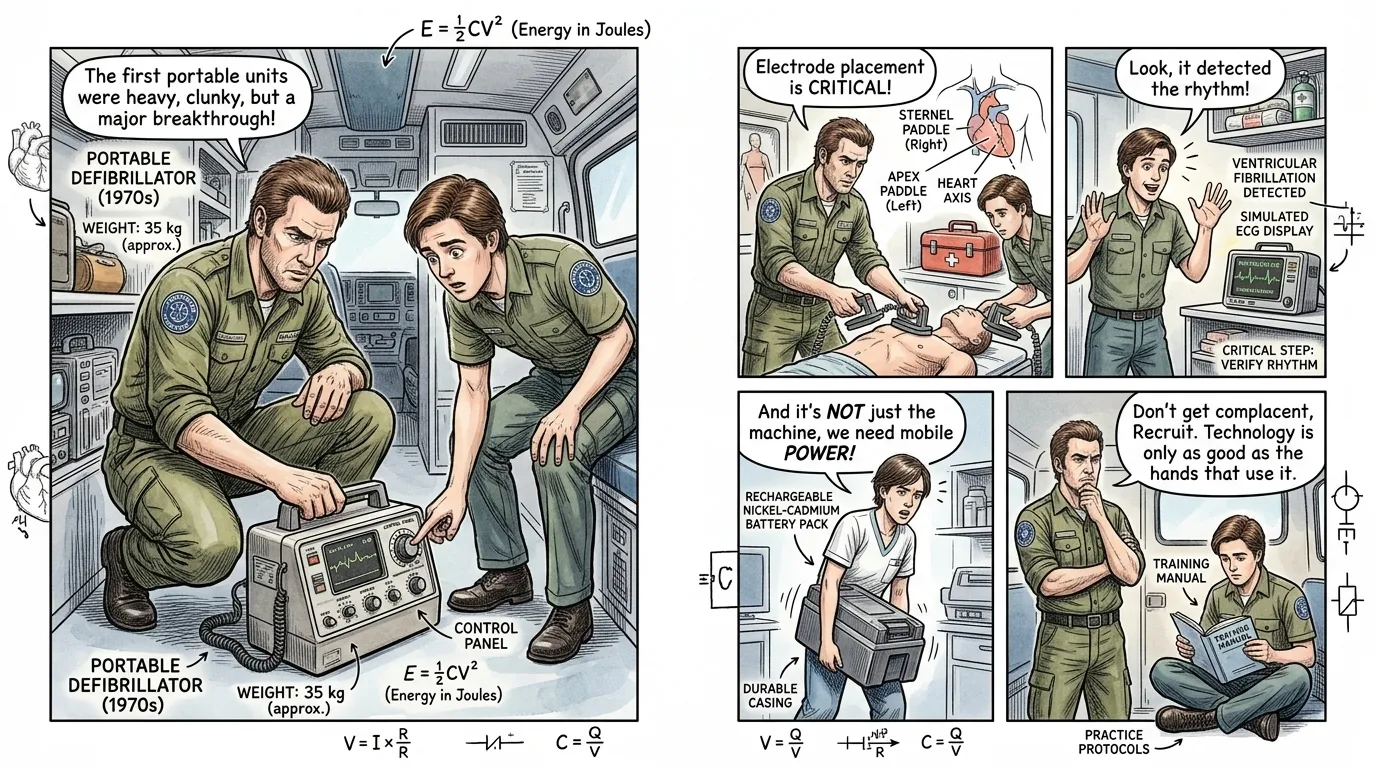
With the development of safer, more effective external defibrillation, the technology began its critical transition from the specialized operating room into mainstream emergency medicine. Early, large devices were installed in hospitals, and soon, pioneering efforts led to their deployment in ambulances. This expansion dramatically reduced the time from cardiac arrest to intervention, profoundly transforming the landscape of emergency care and offering a chance at survival where none existed before.
""Imagine, a patient suffers sudden cardiac arrest outside the hospital walls, and we can now intervene on scene," exclaimed a pioneering paramedic, his voice filled with urgency, as he demonstrated a portable defibrillator to a new recruit inside a cramped 1970s ambulance. "This device, though still heavy, allows us to deliver the critical shock minutes earlier than ever before. We no longer just transport; we actively resuscitate. It is a paradigm shift in pre-hospital care." The recruit, wide-eyed, absorbed the instruction, understanding the profound responsibility. "So many lives will be saved with this rapid deployment.""
Page 9
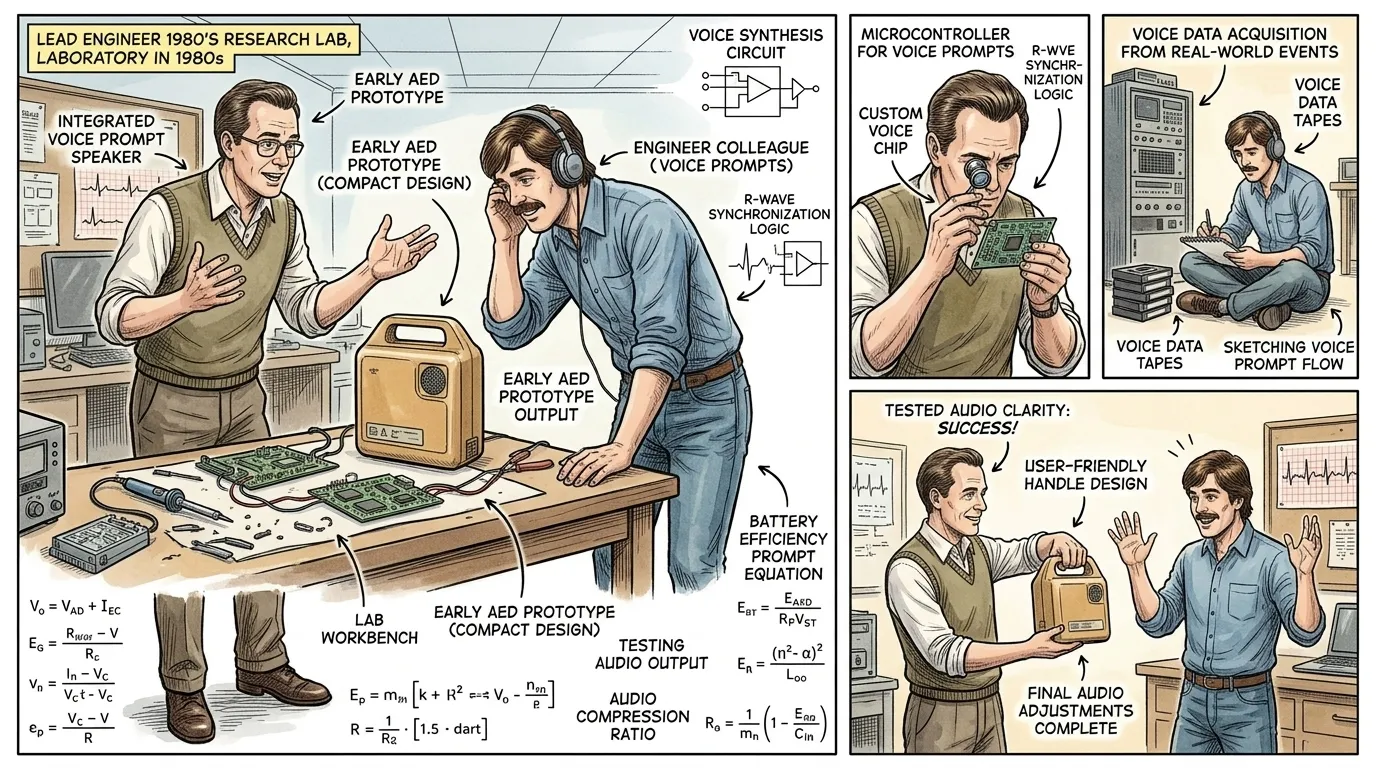
The evolution of the defibrillator continued, driven by the desire for broader accessibility and simpler operation. The advent of microprocessors and sophisticated algorithms led to the development of Automated External Defibrillators (AEDs). These devices analyze the heart's rhythm, determine if a shock is necessary, and guide the user through the process with voice prompts, making life-saving intervention possible for laypersons, not just medical professionals. This transformed the defibrillator from a hospital tool into a public safety device.
""Our goal was to empower anyone, anywhere, to respond to cardiac arrest," explained a lead engineer, gesturing to the compact, user-friendly design of an early AED prototype in a 1980s research lab. "The challenge was distilling complex medical diagnostics into intuitive audio and visual instructions. The device now analyzes the ECG itself and advises 'shock advised' or 'no shock advised.' It democratizes the life-saving potential. This automation is critical; it reduces hesitation and error under pressure." A colleague tested the voice prompts, listening carefully. "Simplicity without sacrificing efficacy—that's the true breakthrough here.""
Page 10
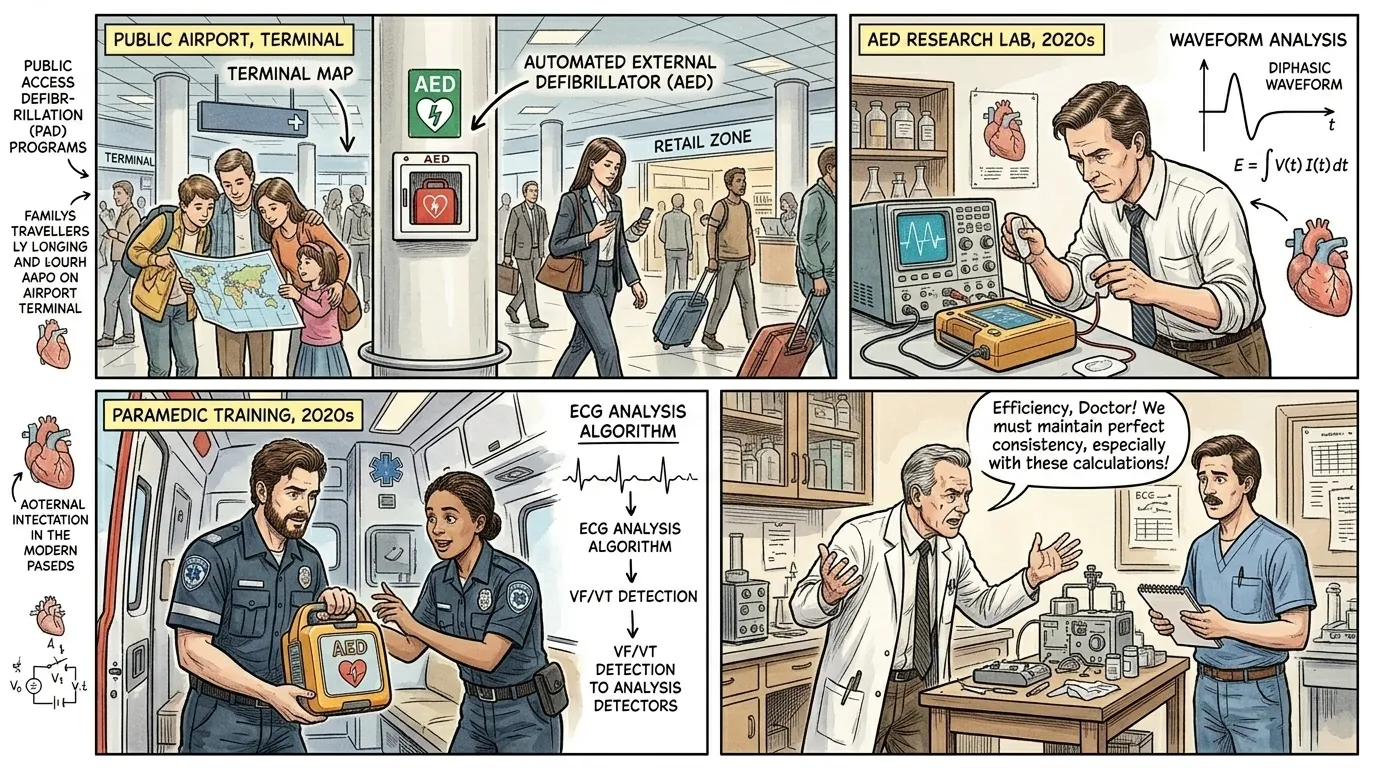
From its audacious beginnings in an operating room to its ubiquitous presence in public spaces, the defibrillator has profoundly reshaped emergency medicine and public health. It stands as a testament to scientific persistence and the ingenuity required to conquer one of medicine's most immediate and lethal threats. Today, these devices are a cornerstone of cardiopulmonary resuscitation, a silent guardian in countless locations, ready to deliver a precise jolt that can bring a heart back from chaos, restoring the rhythm of life.
About this story
- Location: Global
- Audience: general readers
Questions and answers
Read Wonder Inventions on your phone
Wonder Inventions is available on Android. Get Wonder Inventions on Google Play.