Contact Lens
Contact Lens — an illustrated inventions story, set in Global. 10 illustrated pages, free to read on Wonder Inventions.
Page 1
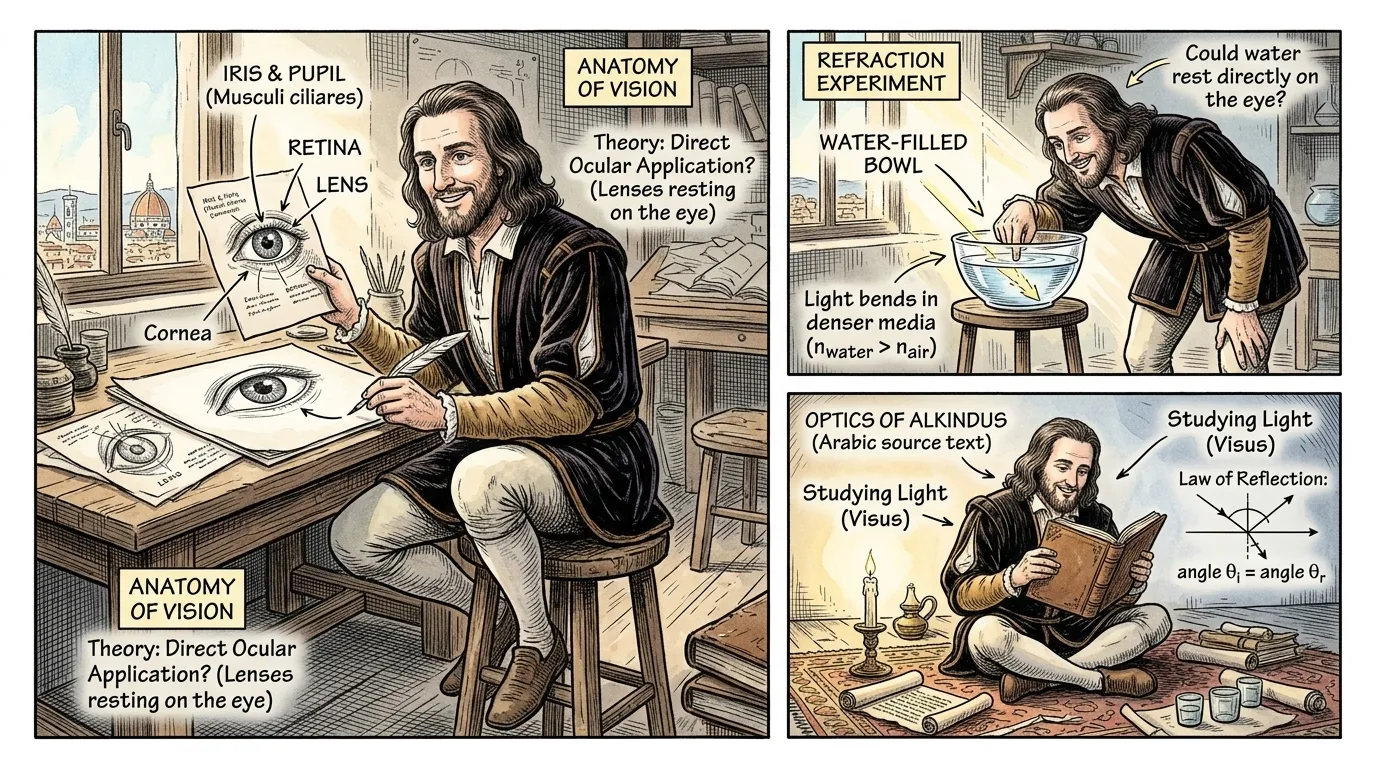
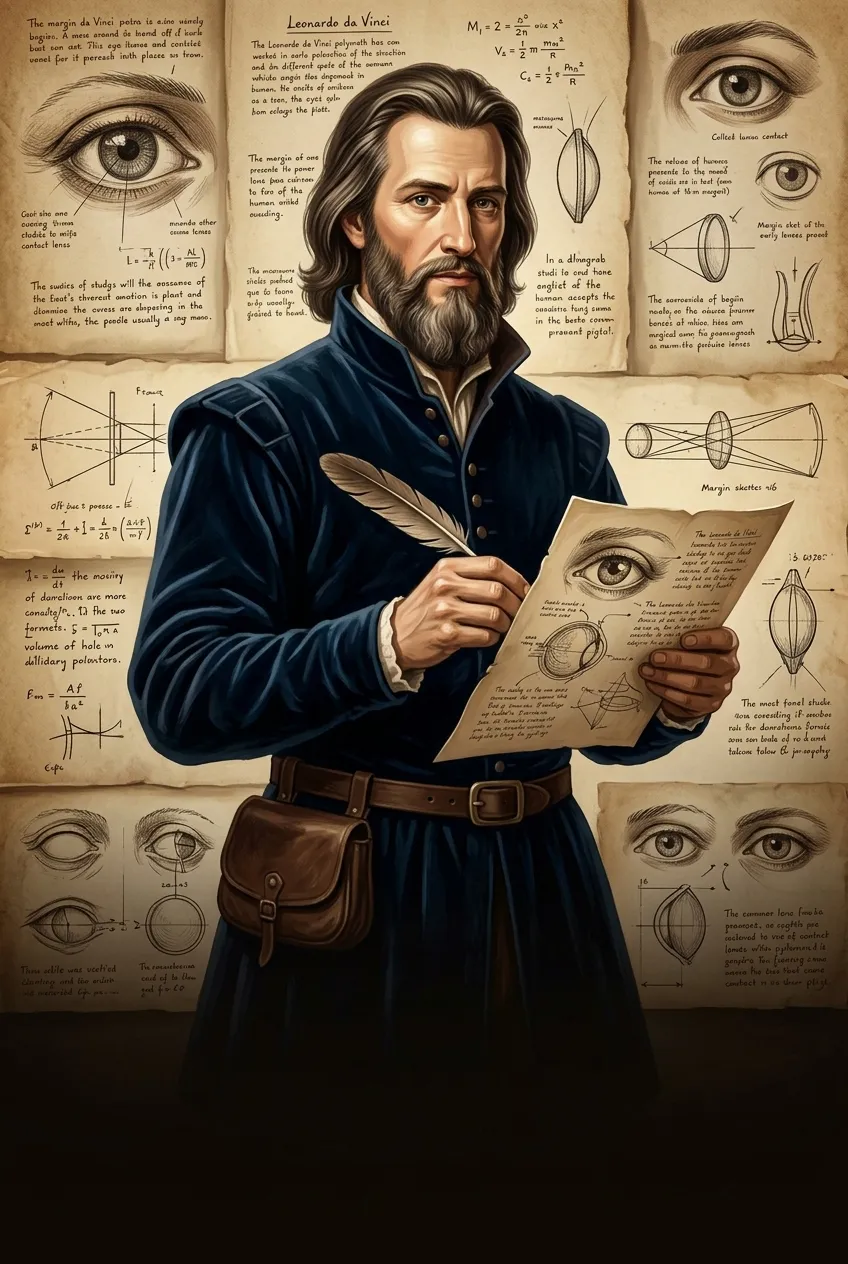
For centuries, humanity grappled with impaired vision, its remedies crude and often cumbersome. Spectacles, while revolutionary in their time, remained an external apparatus, limited in their corrective power for complex conditions. In the early 16th century, the polymath Leonardo da Vinci pondered a radical alternative, sketching designs that could directly alter the eye's surface for improved sight. His conceptualization, though purely theoretical in 1508, ignited a centuries-long quest to overcome visual limitations directly at the source.
Page 2
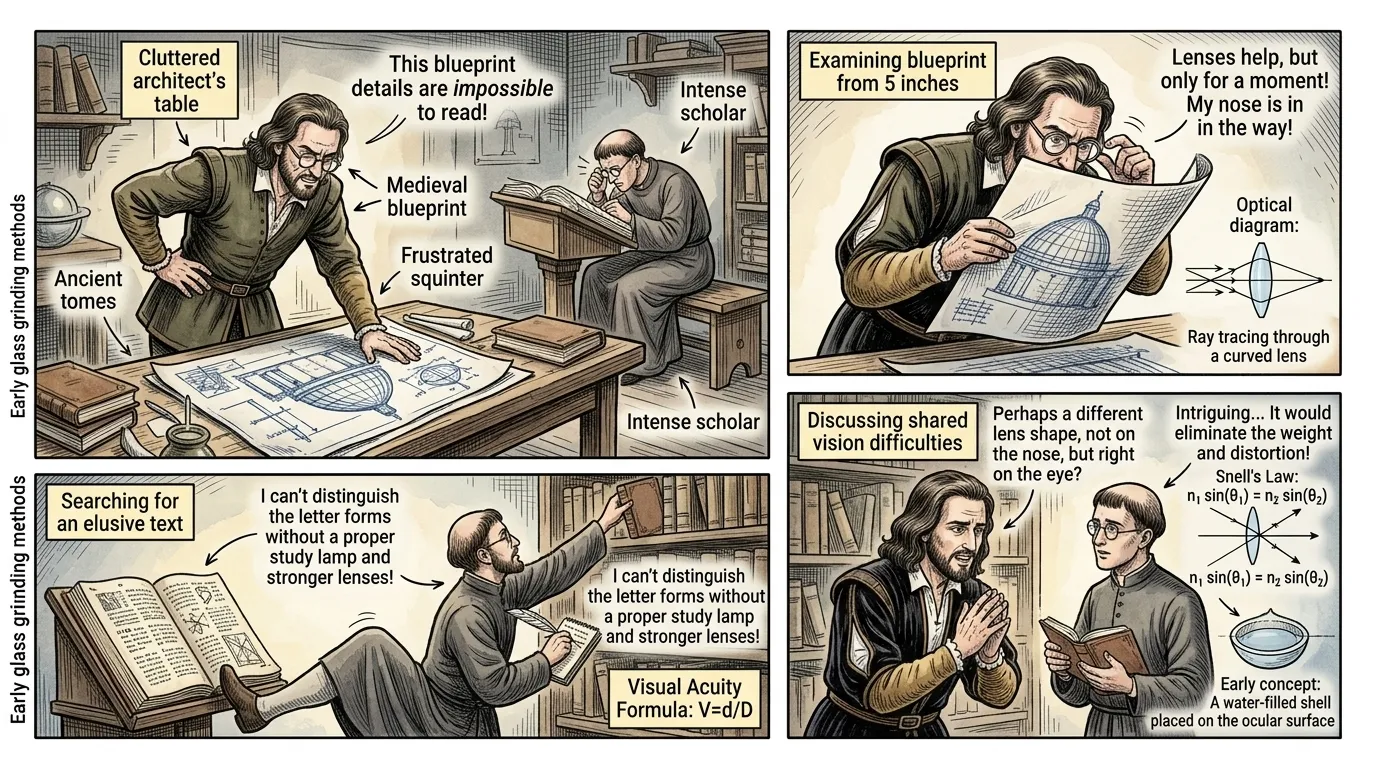
Without effective intra-ocular correction, individuals with severe astigmatism, extreme myopia, or conditions like keratoconus faced lives of perpetual blur. Traditional spectacles often proved inadequate, bulky, or impractical for active pursuits. Everyday tasks, once simple, became arduous challenges requiring immense concentration and physical contortion. Many professionals, from artisans needing precise detail work to scientists observing delicate experiments, found their careers hampered by these profound visual constraints. Society desperately needed a solution that offered unhindered, sharp vision.
"'This constant blur impedes my every design,' a frustrated architect declared, pushing his heavy spectacles higher on his nose. A young scholar across the room squinted at a manuscript, murmuring, 'The very words dance before my eyes, defying clarity.' They grappled daily with the limitations of their vision, their cumbersome aids providing only partial relief."
Page 3
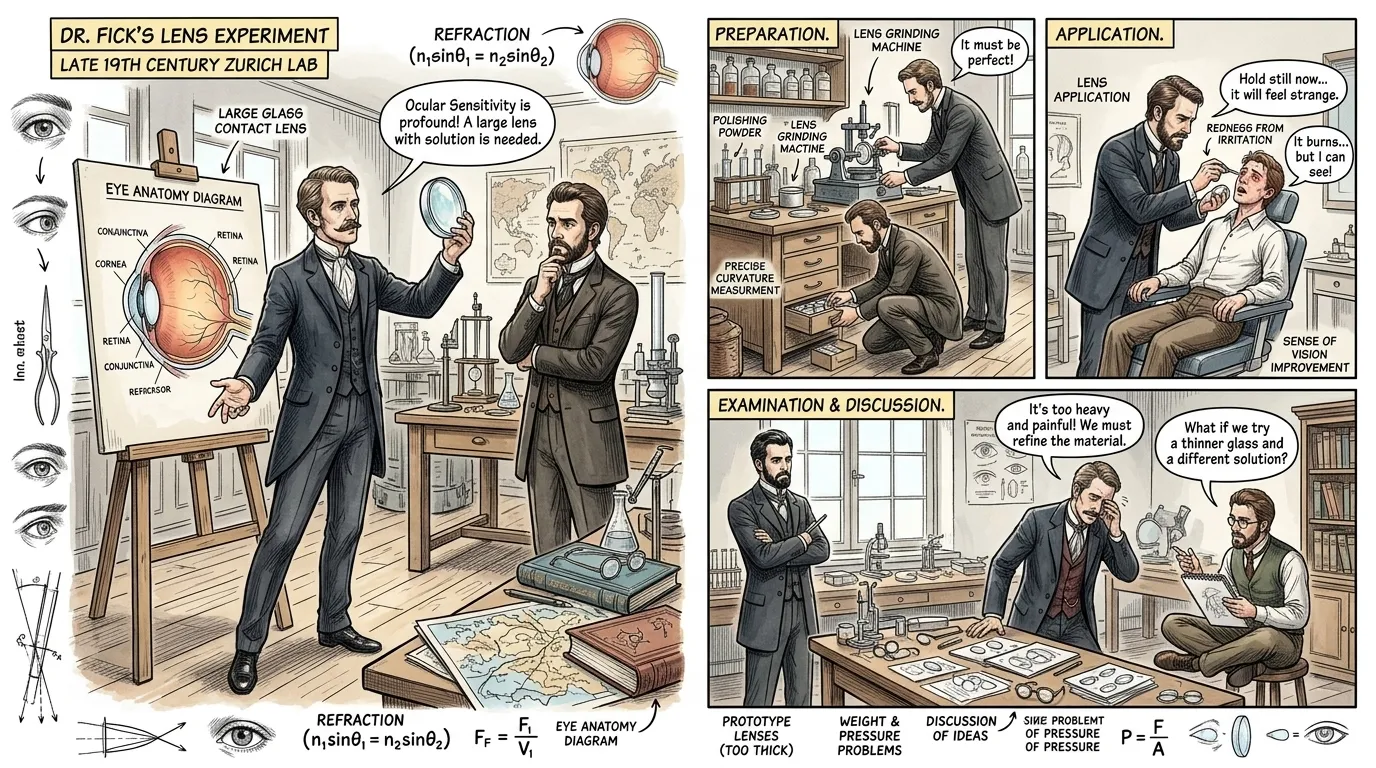
The primary obstacle remained the delicate nature of the human eye itself. The cornea, exquisitely sensitive, is designed for protection and optical precision, not constant foreign contact. Any attempt to place a corrective lens directly upon it faced daunting physiological hurdles: irritation, oxygen deprivation, fluid dynamics, and infection risks. The body's natural rejection mechanisms made the concept of a comfortable, safe, and effective 'contact lens' seem almost impossible. Success demanded not just optics, but profound biological compatibility, a concept still largely unexplored.
"Dr. Fick explained to his colleague, 'The eye's sensitivity is profound, a marvel of natural defense. We are not just creating a lens, but an interface that must respect this delicate biology.' His colleague nodded, 'Indeed. A single rough edge or impermeable surface could cause irreparable damage. The material and design must be utterly symbiotic with the ocular environment.'"
Page 4
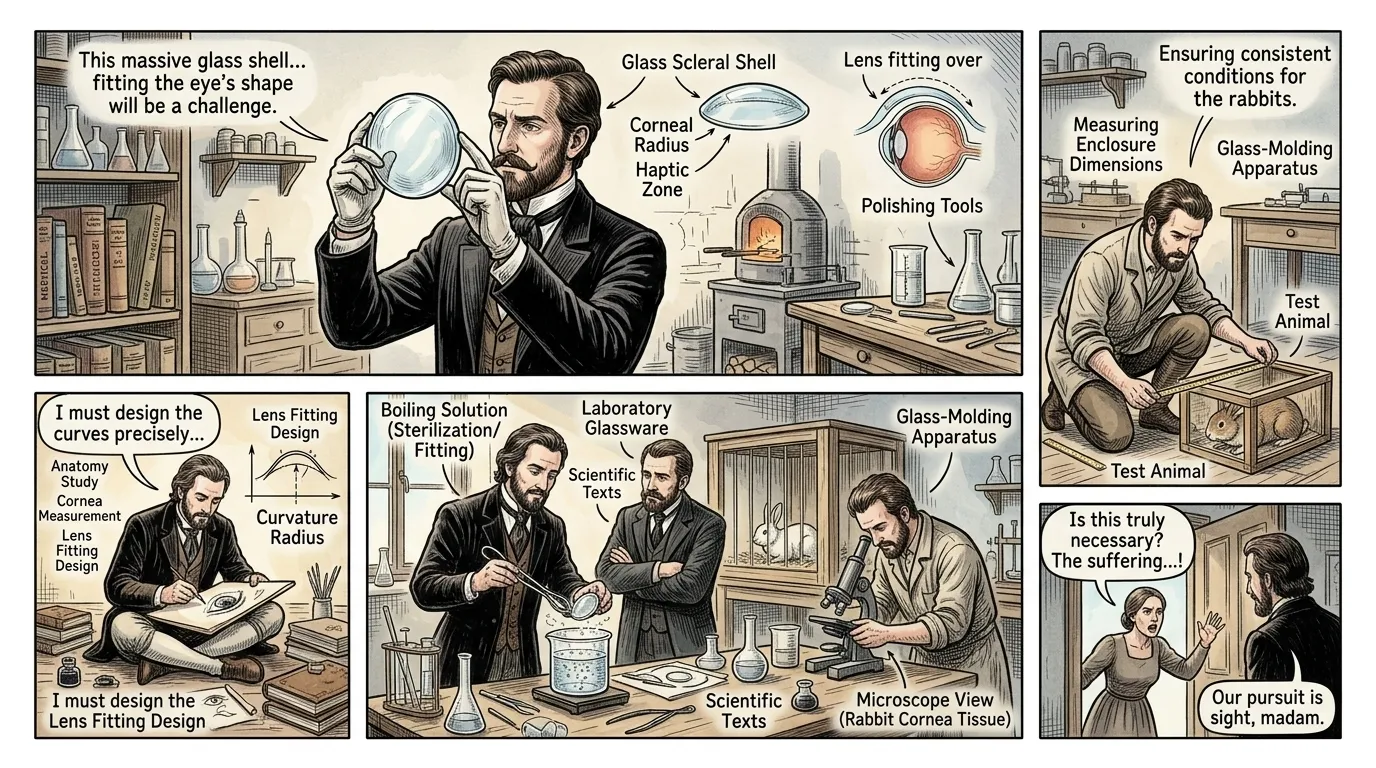
In Zurich, Switzerland, ophthalmologist Adolf Eugen Fick took a monumental step. Driven by the severe vision problems he witnessed, Fick began experimenting with heavy glass shells. His painstaking work in 1887 involved crafting ground-glass lenses, larger than the cornea, that rested on the less sensitive sclera (the white of the eye). He meticulously fitted these early, rigid prototypes first on rabbits, then on cadaver eyes, and eventually, courageously, on himself. Fick's lenses proved successful in correcting vision but were profoundly uncomfortable, allowing for only brief wear due to their weight and lack of breathability. This was a crucial first functional step, proving the principle possible.
"Fick declared to his assistant, 'The rabbit test shows corneal contact is optically viable, but the discomfort for conscious wear is immense.' He carefully held up a thick, polished glass shell. 'This glass, though optically precise, chokes the eye. We have proven the concept, now we must conquer the comfort.'"
Page 5
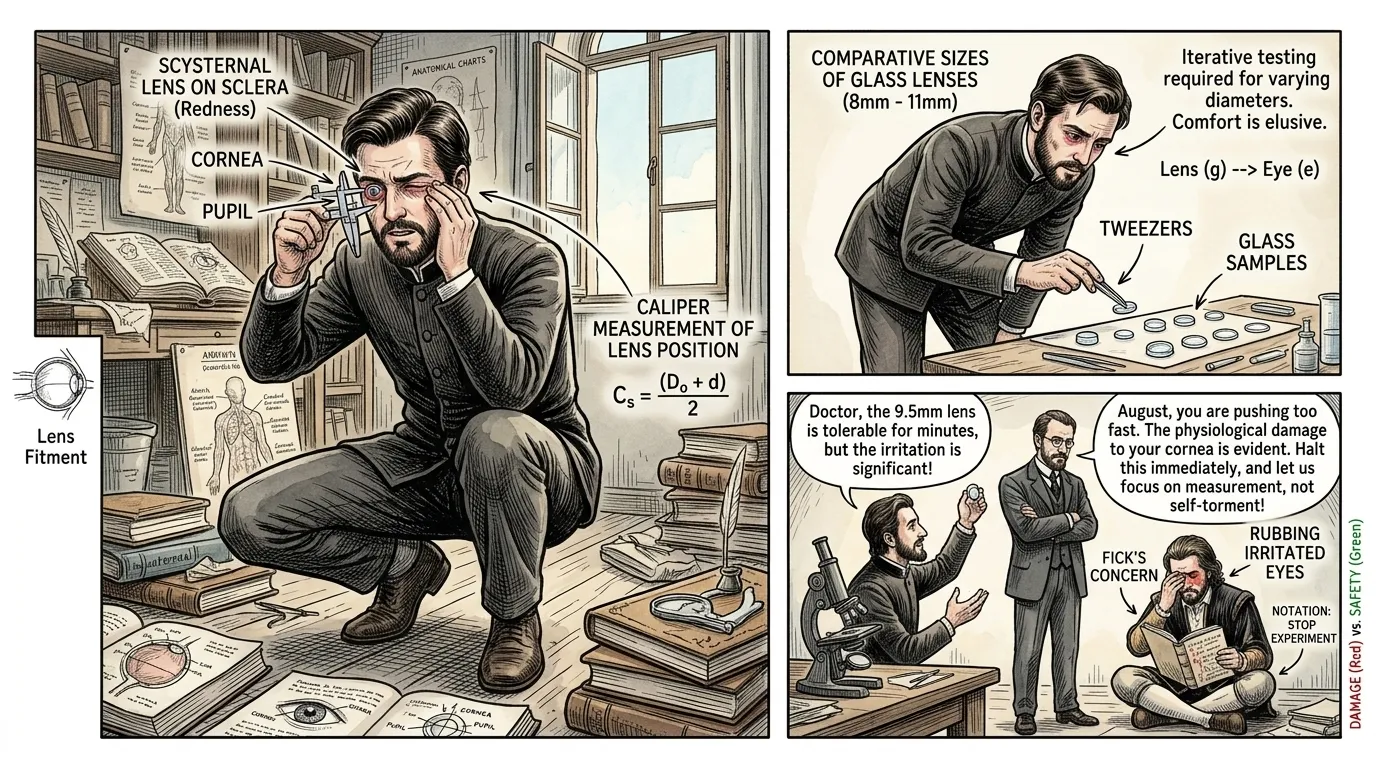
Building upon Fick's groundwork, August Müller, a German medical student suffering from extreme myopia, took the next bold leap. Frustrated by his debilitating vision, Müller, at the University of Kiel in 1889, designed and successfully fitted his own rigid contact lenses. He crafted them to correct his severe nearsightedness, grinding them to a precise curve based on his own ocular measurements. Müller wore these glass lenses for several hours, making him the first recorded individual to wear a contact lens for an extended period, directly addressing a significant refractive error. His self-experimentation provided vital insights into both the optical efficacy and the intense physiological challenges of direct ocular contact.
"Müller, his eye red but his face resolute, reported, 'The optical clarity is undeniable, a transformation of sight. Yet, the persistent pressure and the sensation of a foreign body demand a more accommodating material. I have seen the world anew, but at a cost.' He then mused, 'As Jonathan Swift once said, 'Vision is the art of seeing what is invisible to others.' We've made the invisible visible, but the path to comfort remains obscure.'"
Page 6
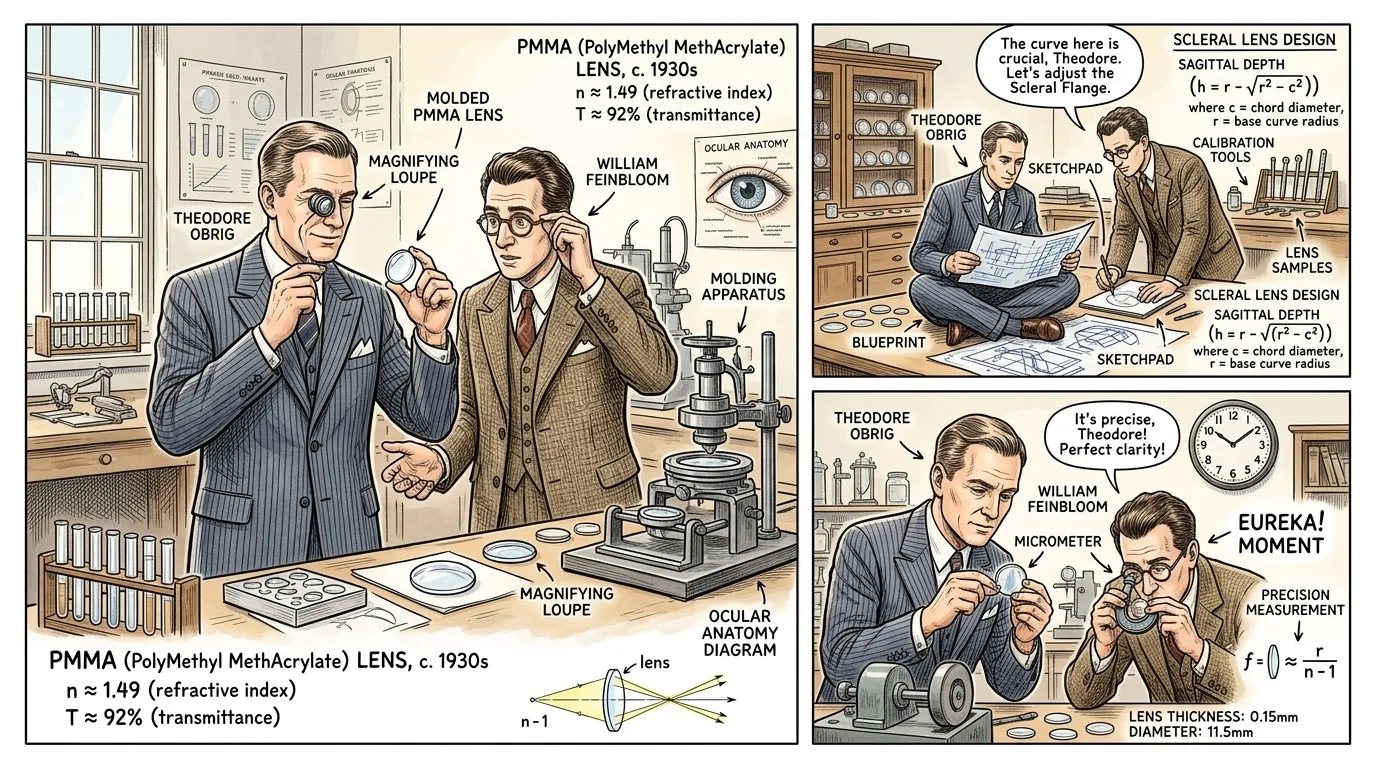
For decades, the heavy, brittle nature of glass limited contact lens adoption. The real breakthrough in material science arrived in the 1930s with polymethyl methacrylate (PMMA), a clear, rigid plastic. Pioneered by scientists like William Feinbloom and Theodore Obrig in the United States, PMMA offered a lighter, more durable, and more precisely moldable alternative. Unlike glass, PMMA could be manufactured with greater consistency and allowed for lenses that were smaller, resting entirely on the cornea itself. This shift from glass to plastic made contact lenses significantly more practical, laying the foundation for modern rigid lenses, but still lacked breathability for the eye.
"Obrig meticulously examined a newly molded PMMA lens, remarking to Feinbloom, 'This material, William, is truly transformative. Its lightness and moldability exceed anything glass offered.' Feinbloom adjusted his spectacles, 'Indeed, Theodore. We can now achieve an optical precision and comfort previously unattainable. The rigid plastic opens new possibilities, but the eye still yearns for air.'"
Page 7
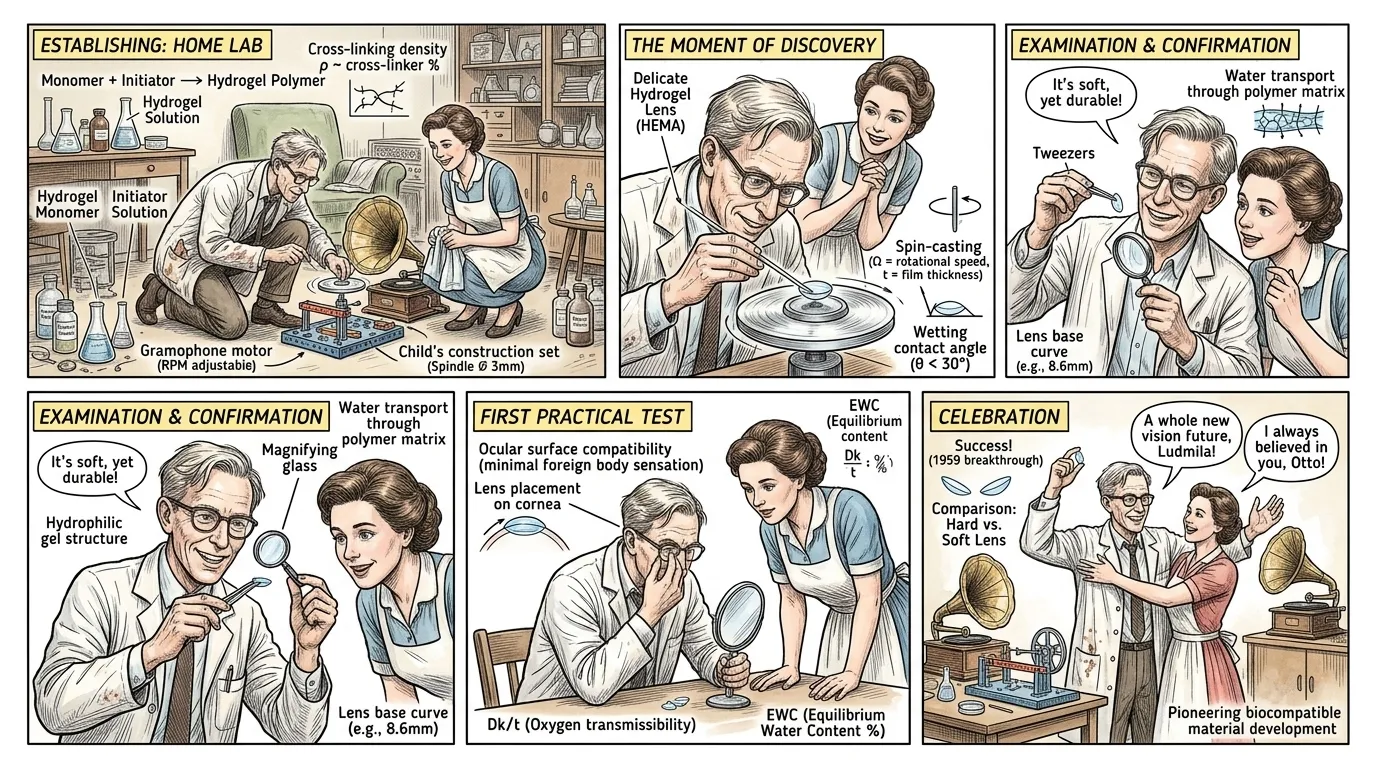
The true liberation for contact lens wearers came in Czechoslovakia, with Otto Wichterle. In the late 1950s, Wichterle, a brilliant chemist, developed a material called hydroxyethyl methacrylate (HEMA). This remarkable polymer was hydrophilic—it absorbed water, becoming soft and flexible, allowing oxygen to pass through to the cornea. His ingenious, albeit primitive, spin-casting method, often performed with homemade equipment using a child's Merkur construction set and a phonograph motor, allowed for mass production of these revolutionary soft lenses. This marked the birth of the modern, comfortable contact lens, transforming ocular health forever.
"Wichterle, his hands stained with chemicals but his eyes gleaming, declared to his wife, 'This HEMA gel, Ludmila, is truly miraculous! It absorbs water, it breathes, it flexes! My improvised phonograph spinner, it works!' He carefully pulled a delicate, transparent soft lens from the spinning apparatus, his breakthrough moment captured in the simple act."
Page 8
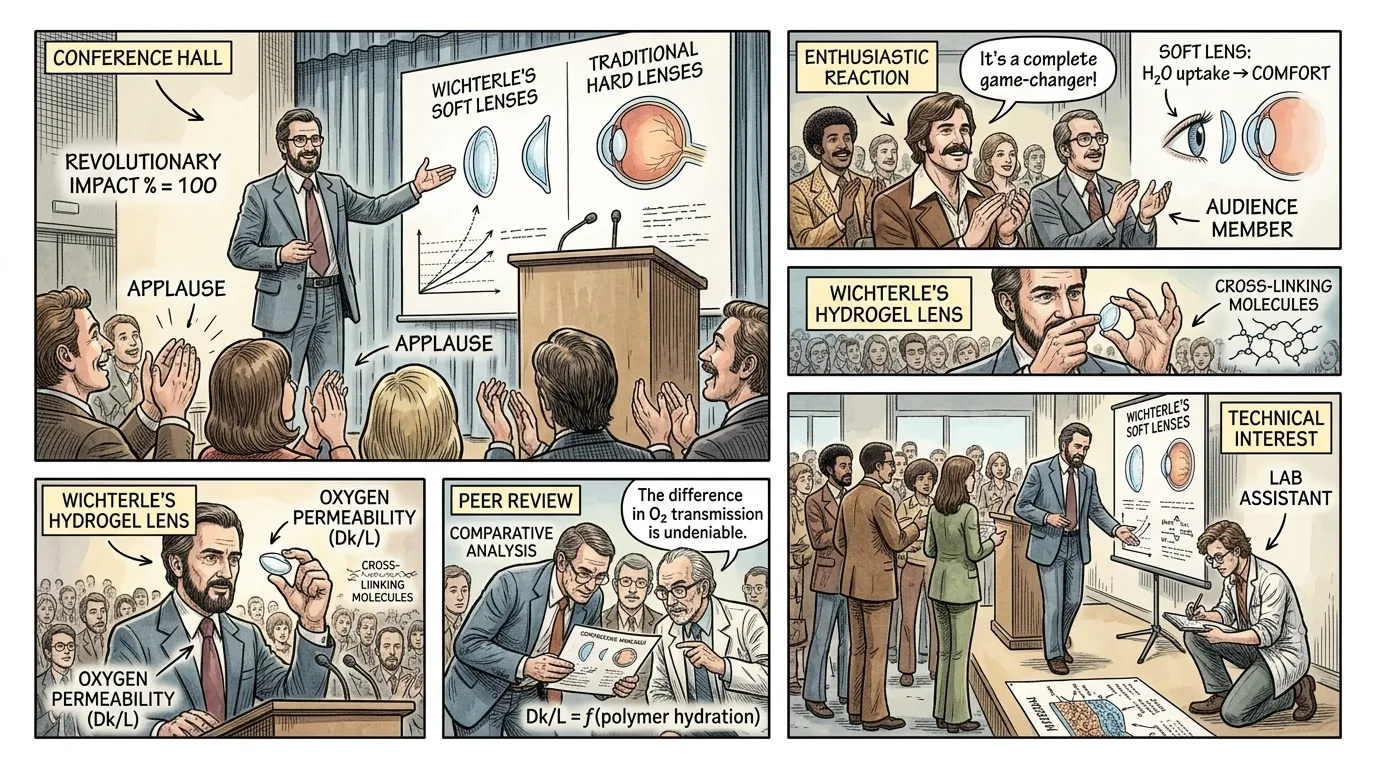
Wichterle's hydrophilic soft lenses rapidly gained global recognition and adoption in the 1960s and 70s. The problem of ocular sensitivity and oxygen deprivation, a profound challenge since Fick's first attempts, was finally addressed by HEMA's biocompatible, permeable structure. Millions worldwide embraced the comfort, convenience, and unparalleled visual freedom they offered. From athletes to artists, professionals to everyday individuals, the rigid spectacle gave way to the discreet, comfortable lens. The world experienced a new clarity, unburdened by frames, directly through the eye. This solved the initial setup: the delicate eye could now comfortably host a corrective lens.
"A leading ophthalmologist, presenting at a medical conference in the 1970s, proclaimed, 'Wichterle's soft lenses have redefined vision correction. We now offer patients comfort that was once unimaginable, directly addressing the eye's delicate physiology that challenged Fick a century ago.' The audience erupted in applause."
Page 9
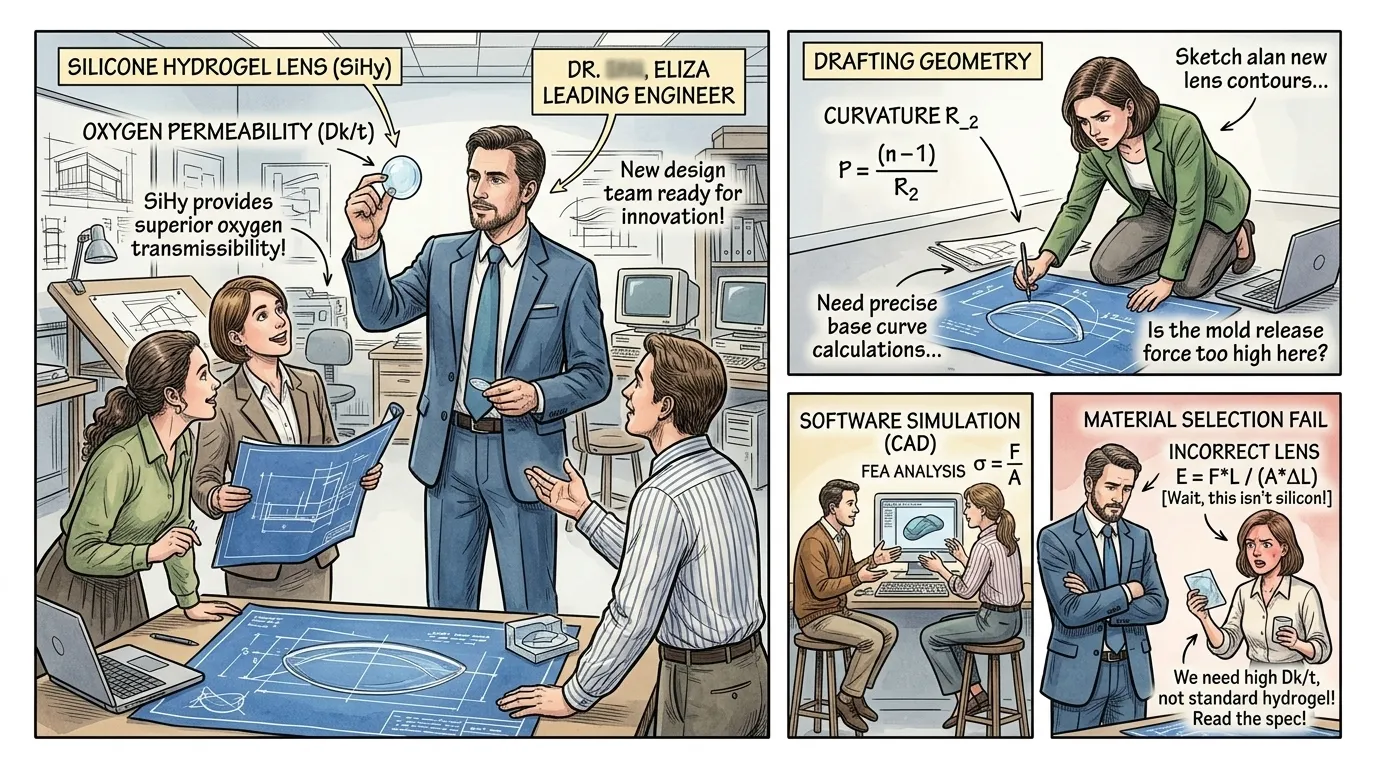
The journey of the contact lens continued, marked by relentless innovation. Researchers pushed the boundaries of materials science, developing silicone hydrogels in the late 20th century, which offered even greater oxygen permeability than HEMA, allowing for extended wear and improved ocular health. Specialized designs emerged, addressing specific conditions: toric lenses for astigmatism, multifocal lenses for presbyopia, and therapeutic lenses for corneal healing. The humble concept had blossomed into a sophisticated medical device, tailored to individual needs and lifestyles, continuously enhancing both vision and eye health across diverse demographics.
"A leading optical engineer, addressing a design team in the late 1990s, held up a transparent disc. 'This silicone hydrogel is our next frontier. Its oxygen transmission dwarfs anything before. We are moving beyond mere correction; we are enhancing ocular health and enabling new modes of wear.' His team diligently sketched new lens designs, eagerly anticipating the next phase of innovation."
Page 10
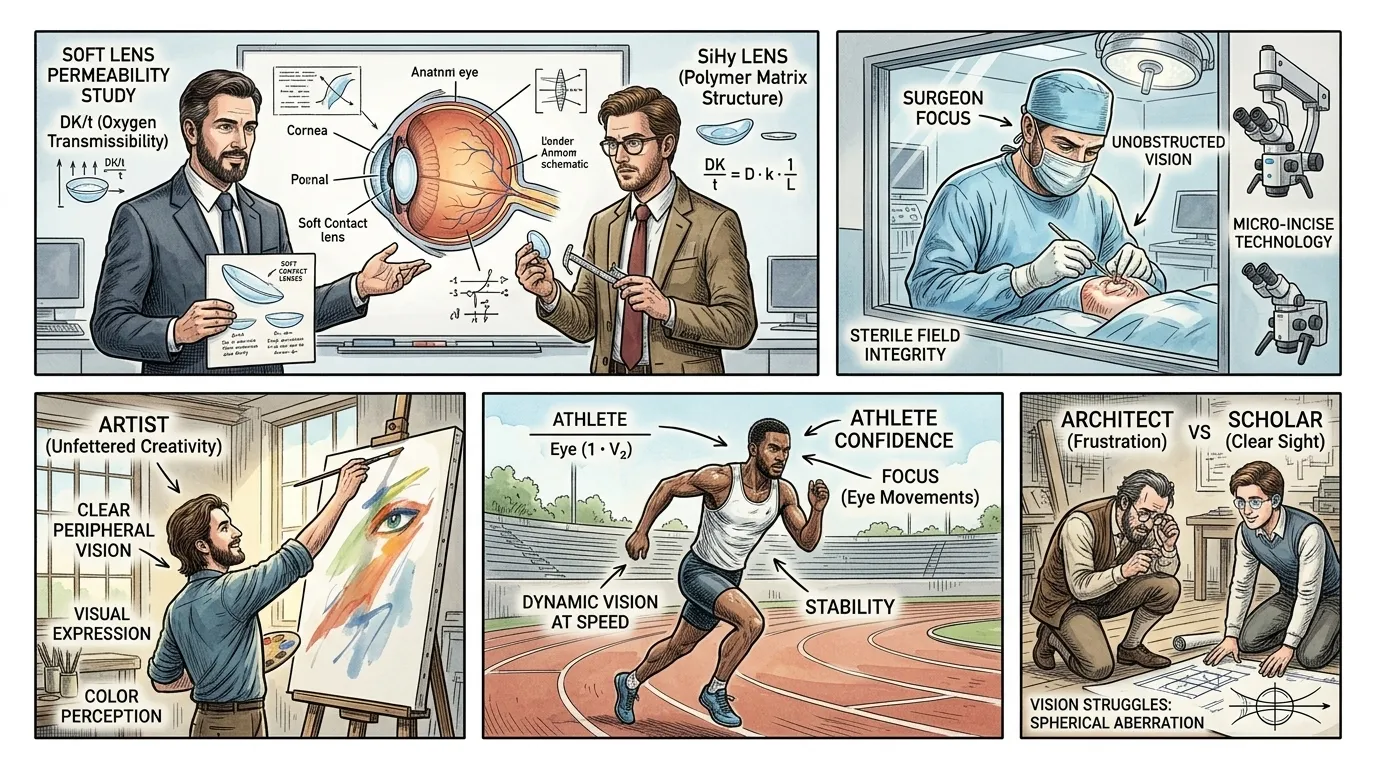
Today, billions rely on contact lenses, an unseen marvel that quietly transforms daily existence. Athletes achieve peak performance without the hindrance of frames. Surgeons and scientists maintain critical, unobstructed fields of view. Artists and performers embrace aesthetic freedom, no longer defined by spectacles. For countless individuals, the contact lens has become more than just a vision corrector; it is a symbol of liberation, confidence, and integration into a world once blurred. From a da Vinci sketch to a global health phenomenon, the contact lens stands as a testament to humanity's relentless pursuit of clarity, proving that the most profound impacts often come from the most discreet innovations.
About this story
- Location: Global
- Audience: general readers
Questions and answers
Read Wonder Inventions on your phone
Wonder Inventions is available on Android. Get Wonder Inventions on Google Play.