Maglev Train
Maglev Train — an invention story. Topics: Invention and innovation • 1930s, Transport and Navigation Inventions, Global, Ancient. 10 illustrated pages, narrated, free to read on Wonder Inventions.
Page 1
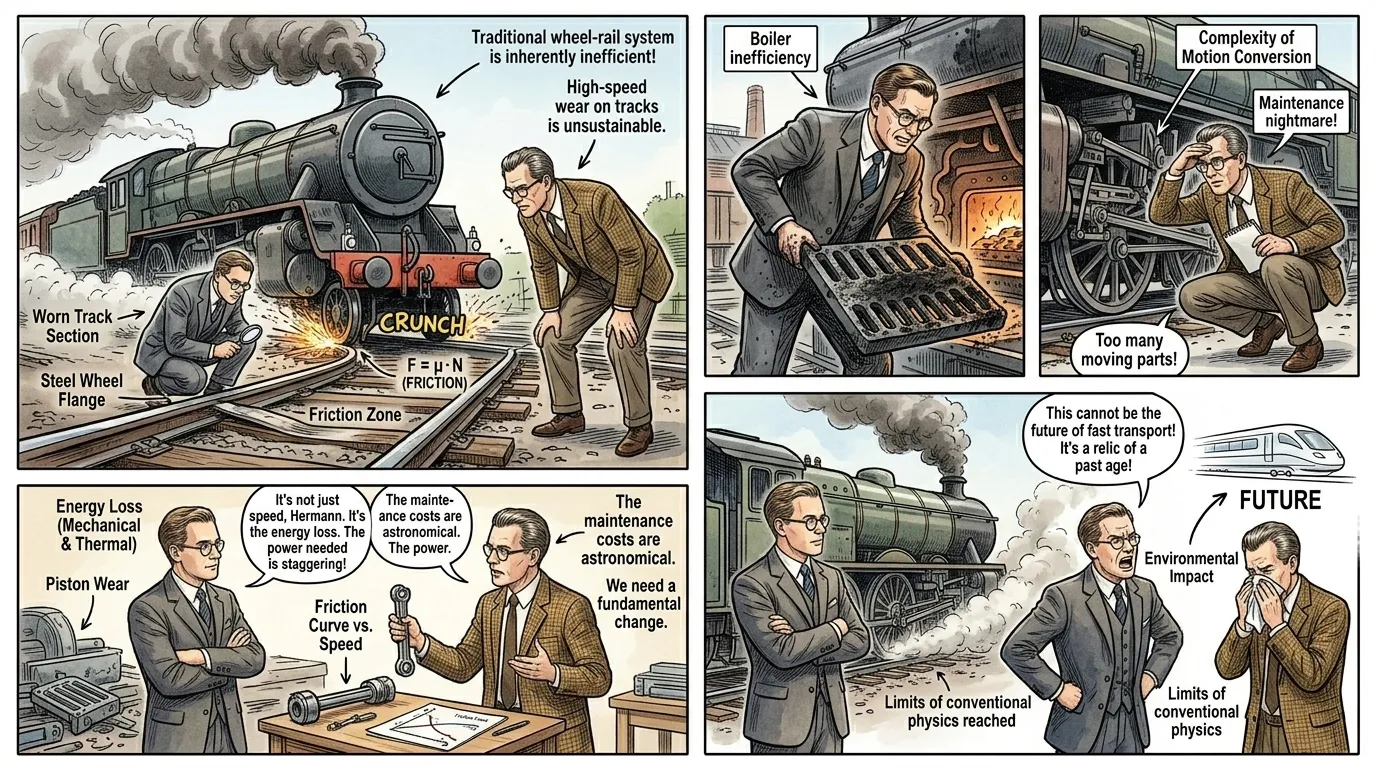
For centuries, the fundamental challenge of land travel has been friction. The inherent resistance between moving parts and surfaces dictates speed limits, increases maintenance, and wastes energy. As the 20th century accelerated, the demand for ever-faster transportation pushed conventional rail technology to its absolute mechanical limits. This urgent need spurred visionaries to imagine a radical departure from the wheel, seeking to conquer friction by eliminating physical contact entirely. German engineer Hermann Kemper, among the earliest pioneers, foresaw a future where trains would glide above their tracks, suspended and propelled by invisible forces.
Page 2
The era of industrial expansion brought unprecedented speeds to rail travel, yet every increase in velocity exacerbated the intrinsic limitations of the steel wheel on a steel rail. Friction, an inescapable byproduct of this contact, generated immense heat, caused rapid wear on both components, and created significant noise pollution. Moreover, the dynamic forces at play limited maximum speeds and demanded constant, resource-intensive maintenance, consuming vast amounts of energy and limiting operational efficiency. Traditional rail, despite its advancements, had reached a theoretical ceiling that no amount of engineering refinement could truly overcome.
Page 3
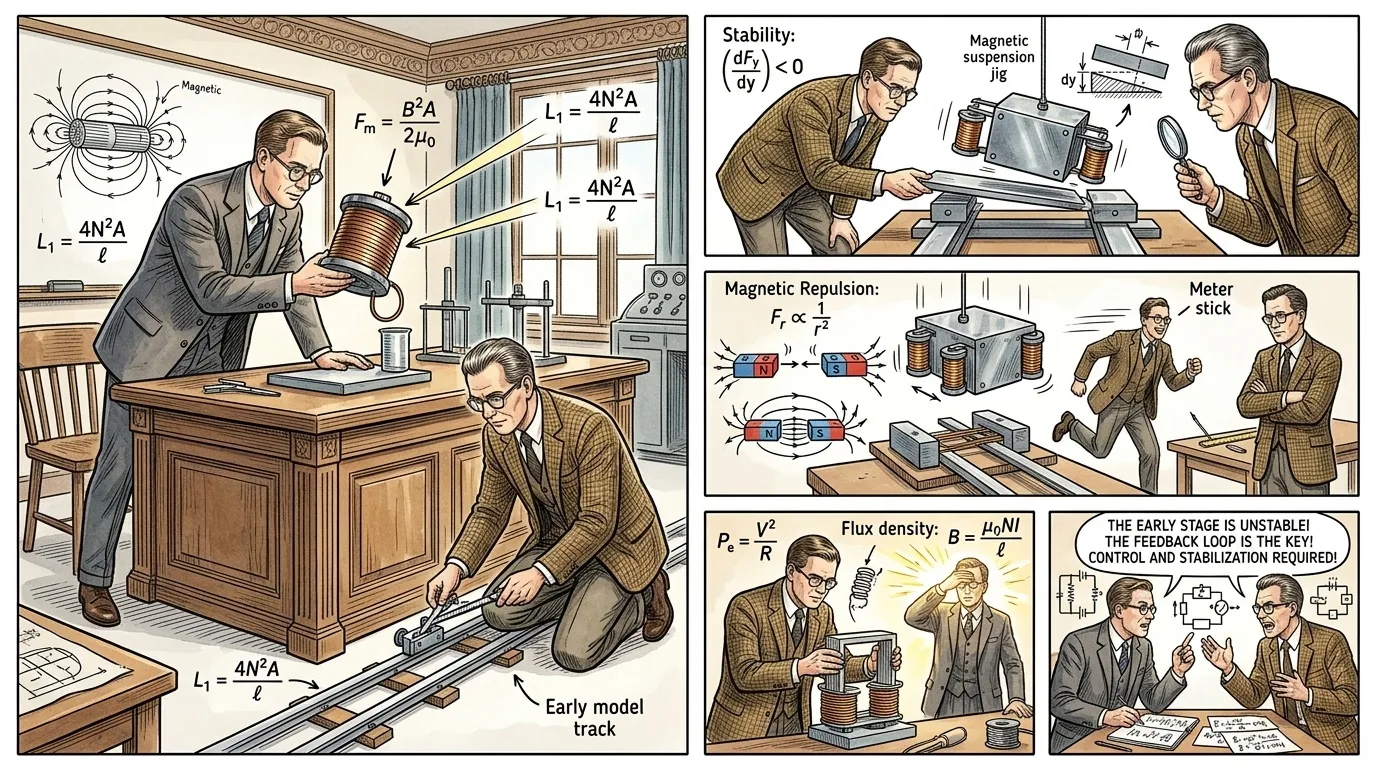
Decades before practical applications, the theoretical foundation for magnetic levitation had been slowly established. Early 20th-century physicists and engineers understood the fundamental principles of electromagnetism: that like poles repel and opposite poles attract. The challenge lay not in grasping this basic force, but in harnessing it with sufficient power and precision to lift and guide heavy vehicles stably, preventing them from veering off course or crashing into their guideways. Initial concepts were crude, often relying on simple permanent magnets or basic electromagnets, struggling with stability and the sheer force required for levitation.
Page 4
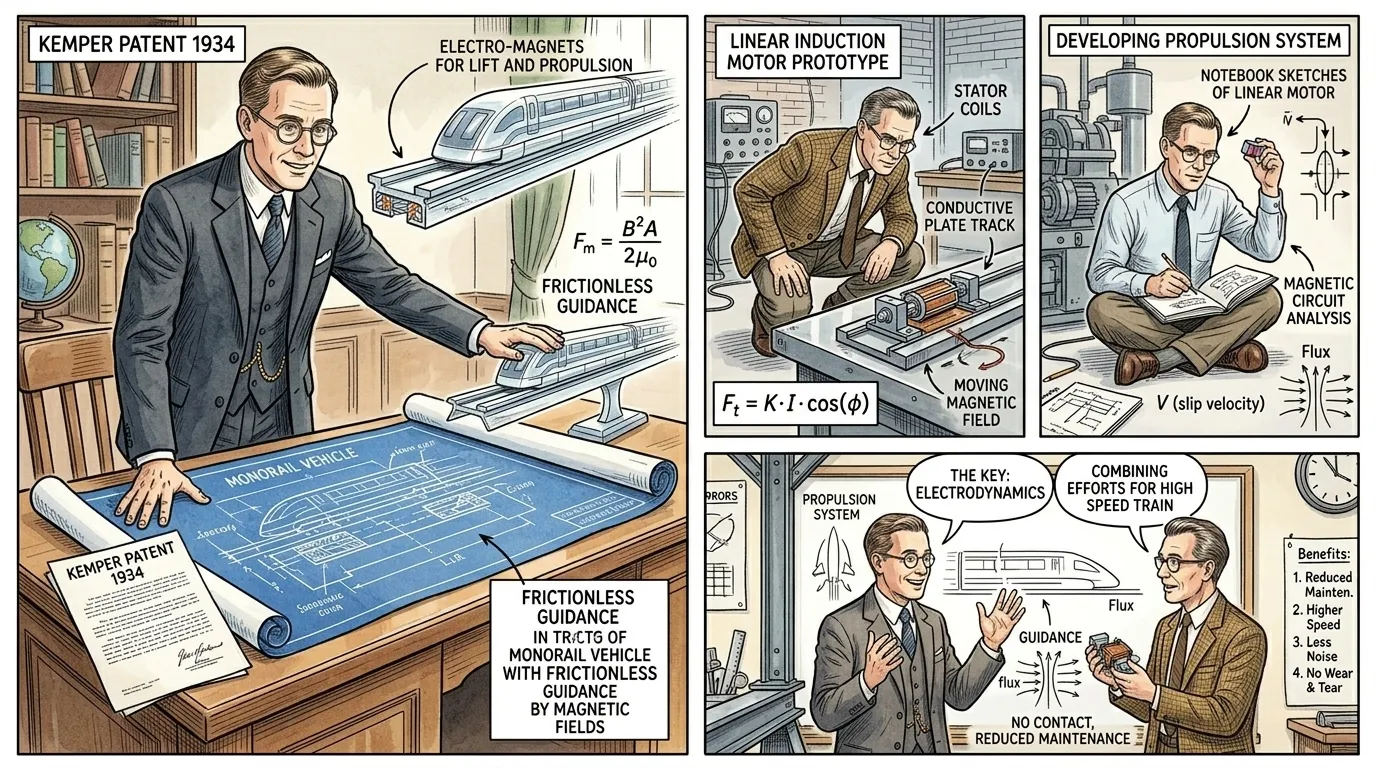
Hermann Kemper's profound insight consolidated disparate magnetic theories into a coherent vision for transport. In 1934, he secured a patent for a 'monorail vehicle with frictionless guidance by magnetic fields,' a pivotal document that outlined the core concepts of both levitation and propulsion using electromagnetic forces. Kemper meticulously detailed how electromagnets could be used to lift a vehicle, effectively removing the wheel-rail interface, and also proposed using linear motors for propulsion. His work laid the theoretical groundwork, providing a blueprint that would inspire decades of research and development in Germany and beyond, transforming a scientific curiosity into a tangible engineering goal.
Page 5
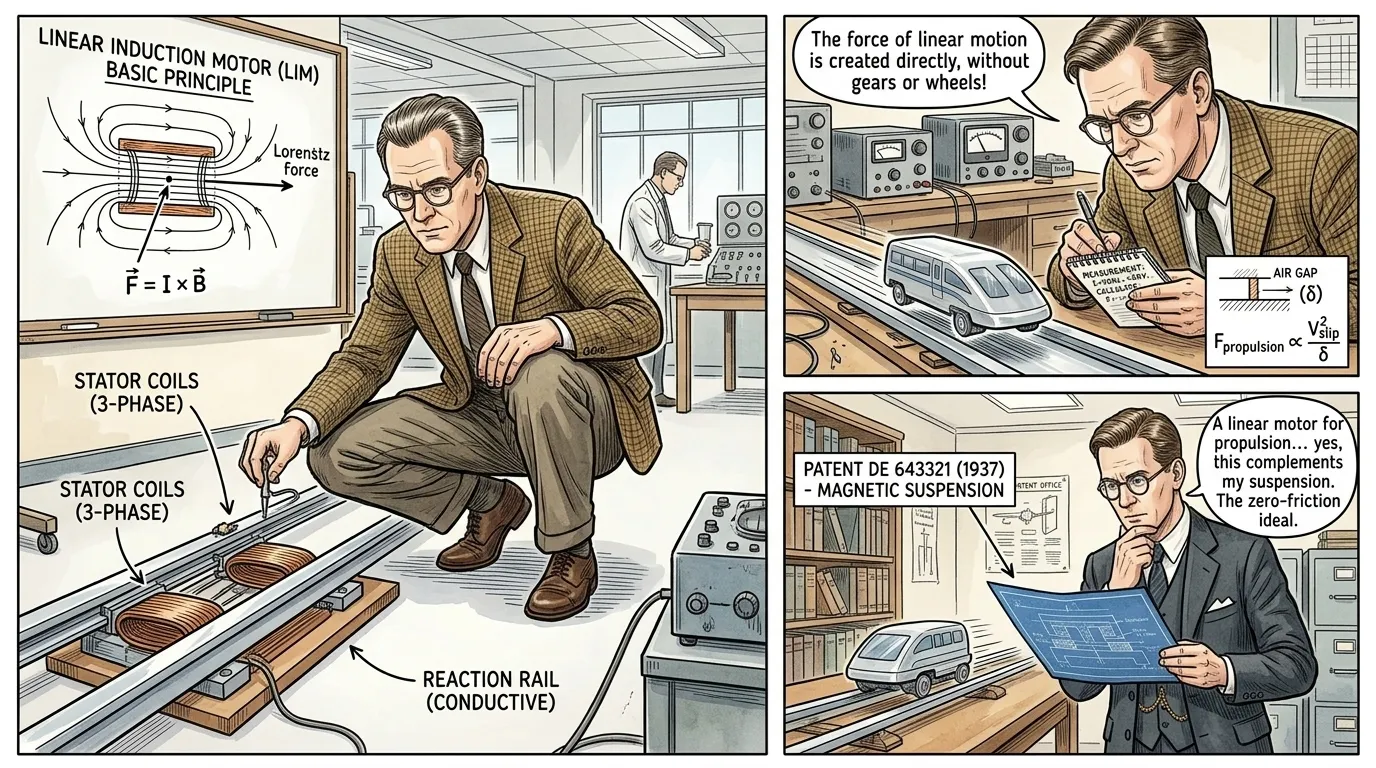
While Kemper established the levitation concept, the equally critical challenge of propulsion required separate breakthroughs. In the 1960s, British electrical engineer Eric Laithwaite made monumental strides in developing the linear induction motor. Diverging from traditional rotary motors, Laithwaite's design converted electrical energy directly into linear motion, creating a moving magnetic field that could push or pull an object without physical contact. This innovation provided the missing piece for Maglev: a robust, efficient, and frictionless propulsion system that could accelerate and decelerate a levitated vehicle, completing the essential requirements for a truly contact-free transport system.
Page 6
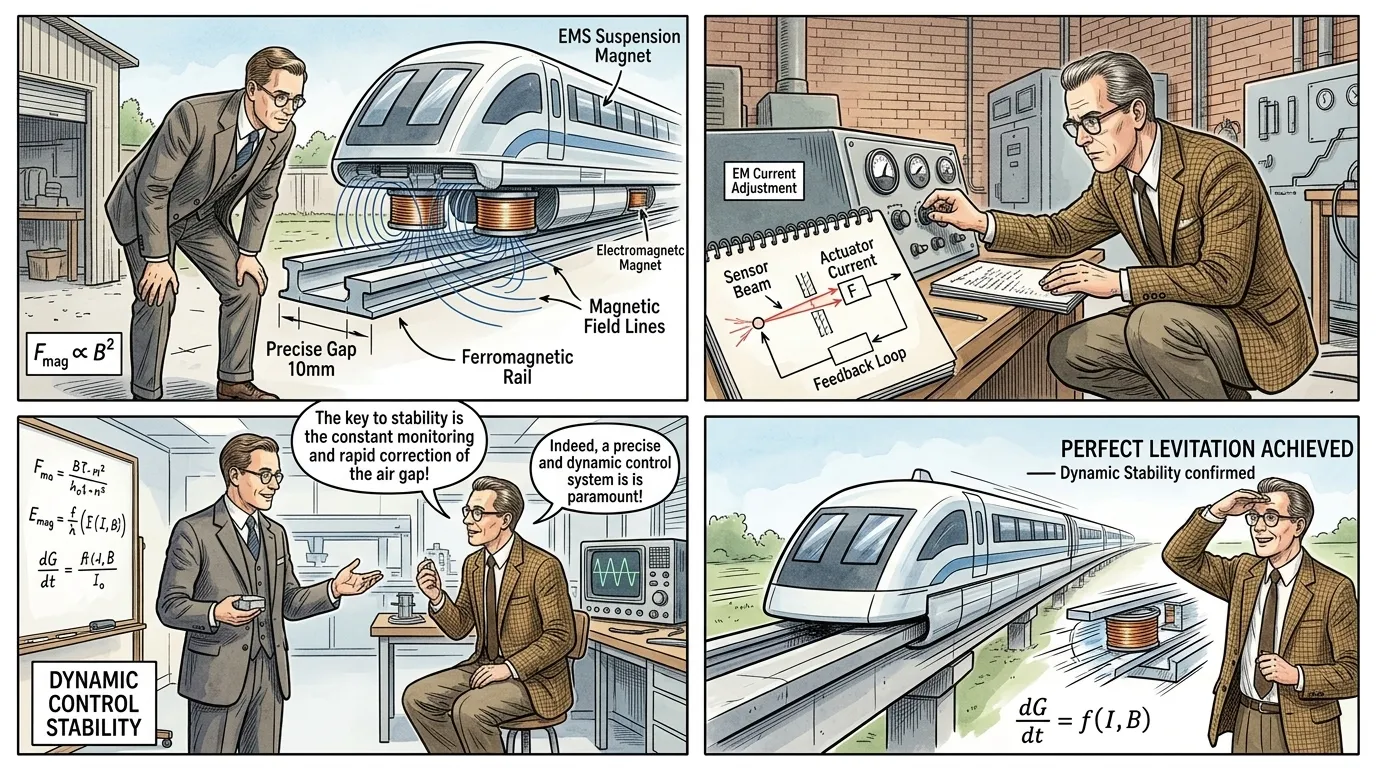
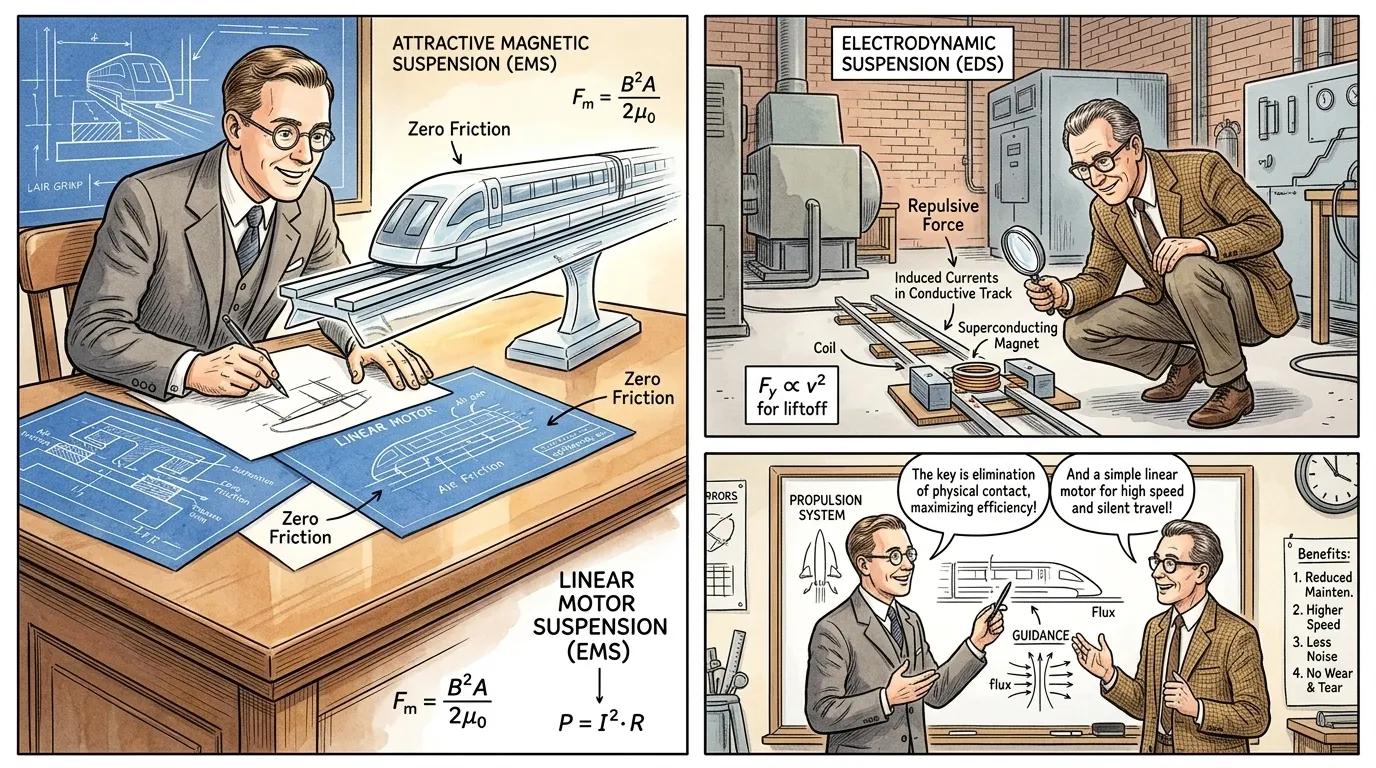
One primary method of achieving magnetic levitation is Electromagnetic Suspension (EMS). In an EMS system, powerful electromagnets located on the underside of the train are attracted upwards towards ferromagnetic rails on the guideway below, lifting the train. This attraction actively suspends the vehicle a small, controlled distance – typically around 10 millimeters – above the track. Crucially, a sophisticated, real-time control system continuously monitors this gap, adjusting the current in the electromagnets thousands of times per second to maintain stable levitation. This active regulation ensures the train remains precisely centered and airborne throughout its journey.
Page 7
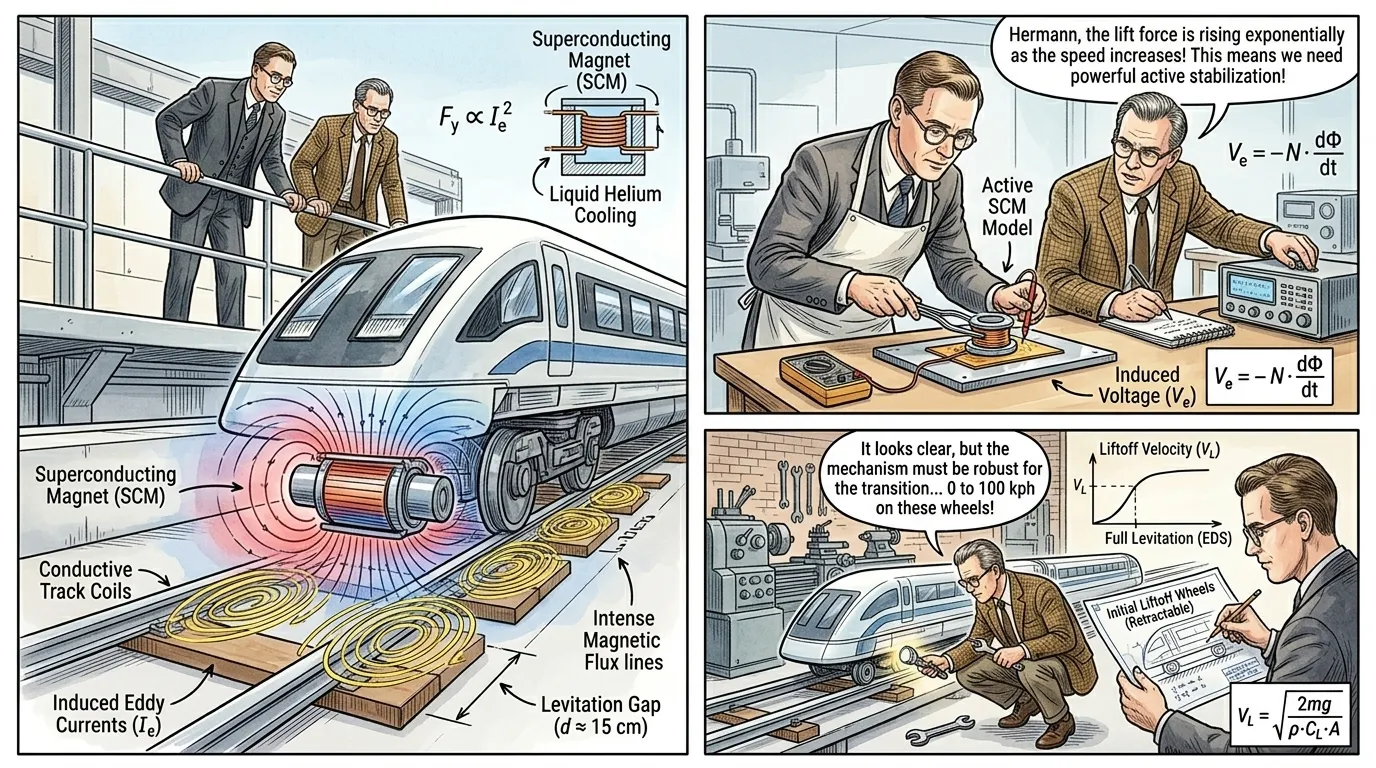
An alternative levitation approach, predominantly developed in Japan, is Electrodynamic Suspension (EDS). This system utilizes powerful superconducting magnets onboard the train. As the train moves, these superconducting magnets generate an intense magnetic field that interacts with conductive coils embedded in the guideway. This interaction induces eddy currents in the guideway coils, which in turn create their own magnetic fields. The resulting repulsive force pushes the train upwards and away from the track, achieving levitation. Unlike EMS, EDS is inherently stable, with the levitation height (typically around 10-15 cm) increasing with speed. However, it requires the train to reach a certain initial velocity – usually around 100-150 km/h – before full levitation occurs, meaning wheels are needed for initial movement and emergency braking.
Page 8
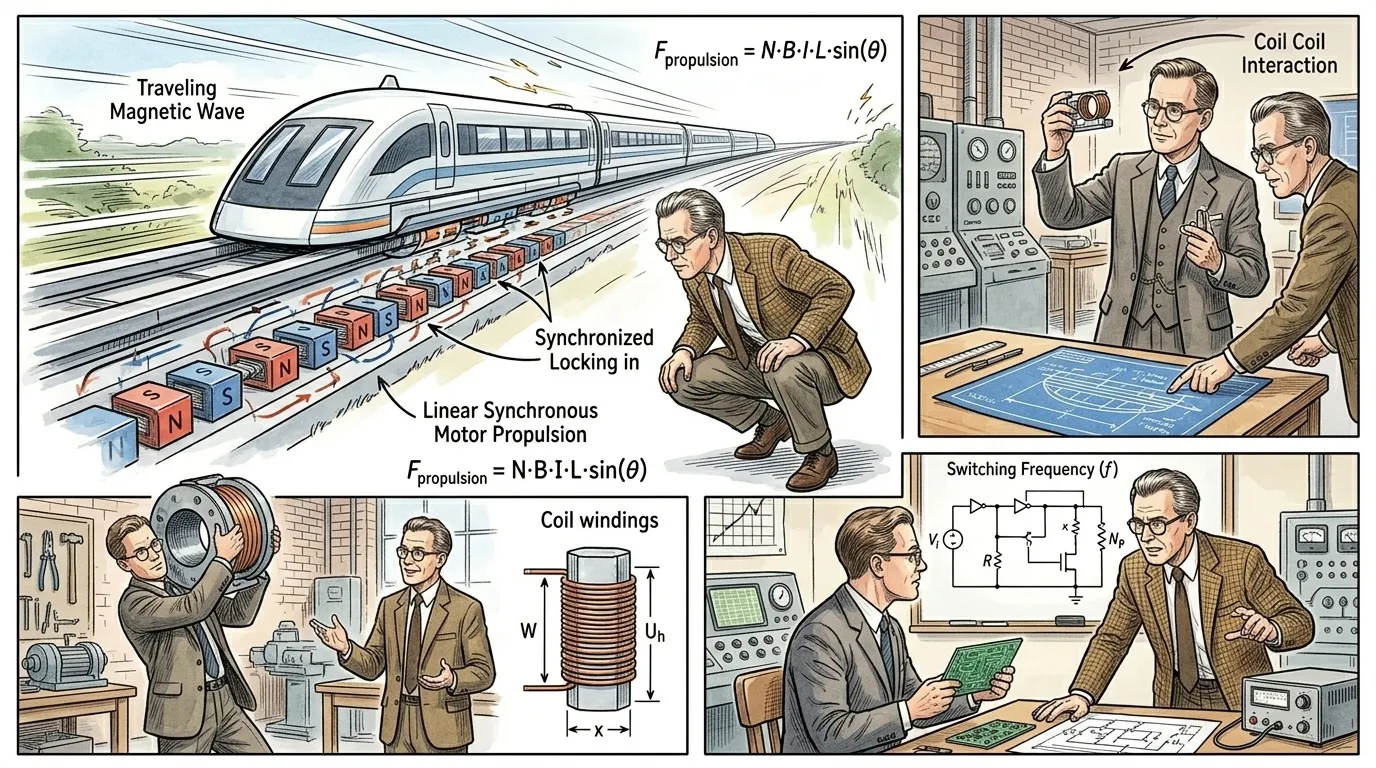
With levitation achieved, the final hurdle for the Maglev train was propulsion. This is typically handled by a linear synchronous motor integrated into the guideway. The guideway itself contains an array of electromagnets whose polarity can be switched by alternating current. By precisely controlling the phase of this current, a 'traveling wave' of magnetic poles is created along the track. The superconducting or electromagnets on the train are designed to 'lock in' to this moving magnetic wave. As the wave propagates down the guideway, it continuously pulls and pushes the train forward, accelerating it to incredible speeds without any physical contact, noise, or mechanical wear, offering unparalleled efficiency at high velocities.
Page 9
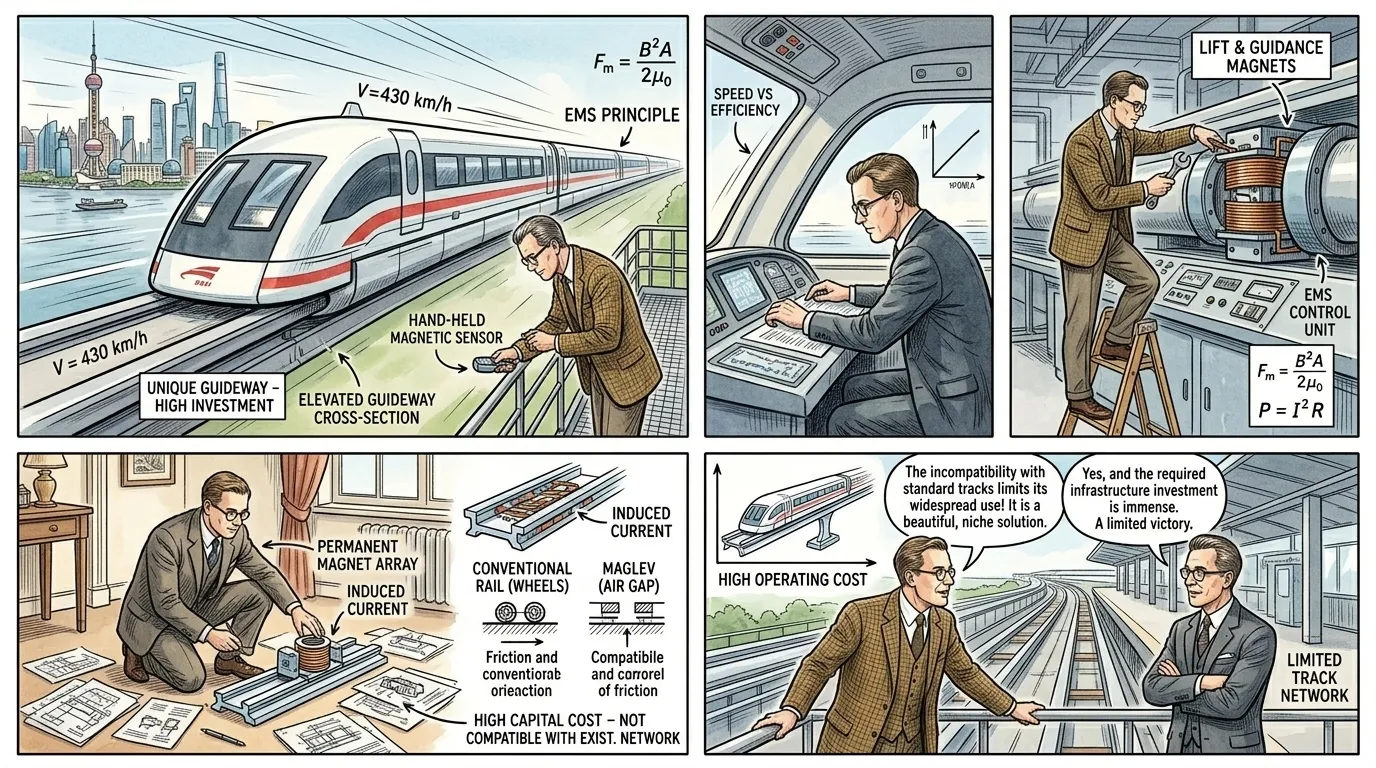
The transition from theoretical concept to commercial reality was a monumental engineering feat, finally realized with the Shanghai Maglev in 2003—the world's first commercial high-speed Maglev line. Capable of reaching 430 km/h, it offered a glimpse into a future of frictionless travel. However, the immense capital investment required for dedicated guideways, coupled with its incompatibility with existing rail infrastructure, presented formidable challenges to widespread adoption. While offering unparalleled speed and reduced maintenance, the economic and logistical hurdles meant Maglev technology remained a niche solution for specific, high-demand corridors, rather than a universal replacement for conventional rail.
Page 10
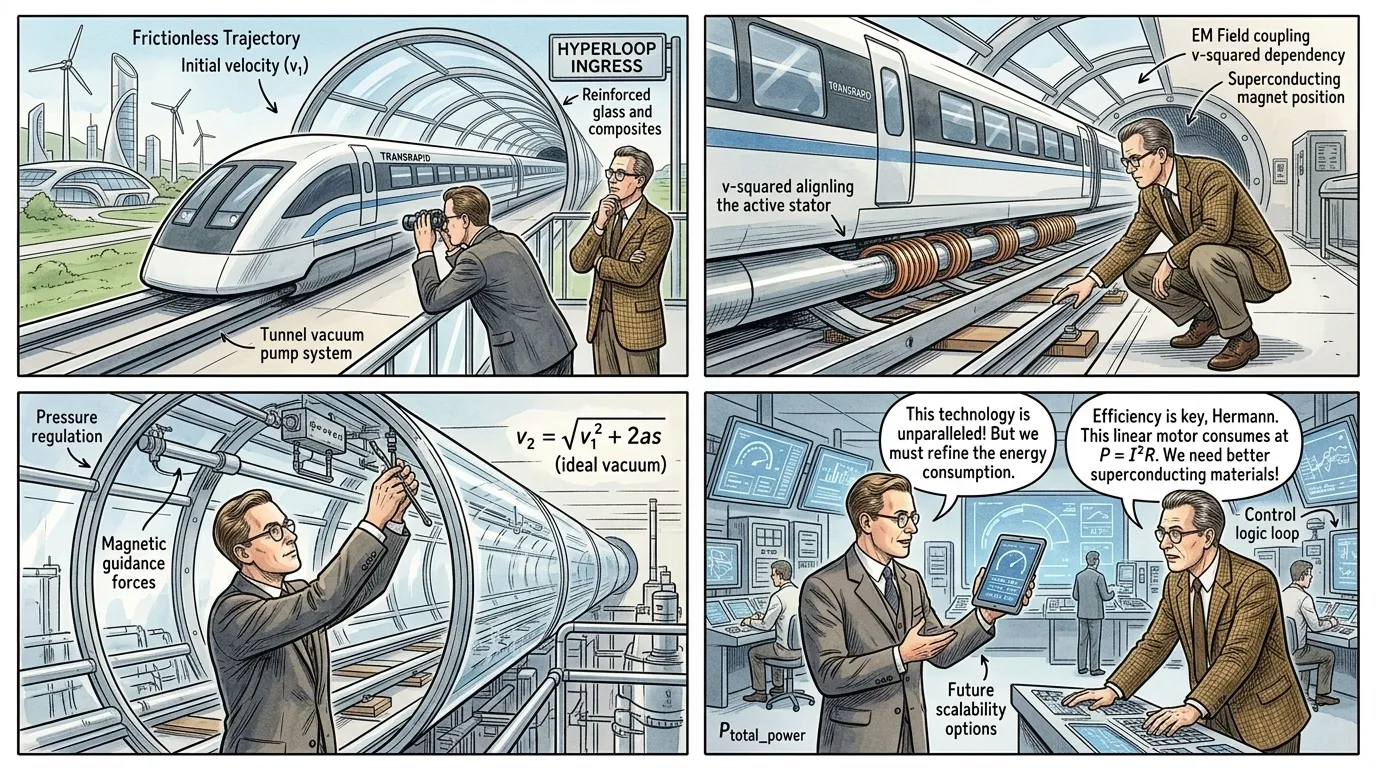
The Maglev train, born from the ambition to conquer friction, stands as a testament to human ingenuity. Its legacy extends beyond existing lines, influencing concepts for future high-speed transport systems, including potential integration into vacuum-sealed hyperloop tunnels. Offering unparalleled speeds, silent operation, and minimal wear on moving parts, Maglev technology continues to push the boundaries of what is possible in land-based travel. While its high infrastructure costs remain a barrier to universal adoption, the foundational principles of magnetic levitation and linear propulsion have irrevocably reshaped our understanding of efficient, ultra-fast movement, pointing towards a future where travel is limited only by the imagination.
About this story
- Location: Global
- Audience: general readers
- Format: 10 illustrated pages, narrated, free to read on Wonder Inventions
Questions and answers
Read Wonder Inventions on your phone
Wonder Inventions is available on Android. Get Wonder Inventions on Google Play.