Metro System
Metro System — an invention story. Topics: Invention and innovation • 19th century, Transport and Navigation Inventions, Global, Ancient. 10 illustrated pages, narrated, free to read on Wonder Inventions.
Page 1
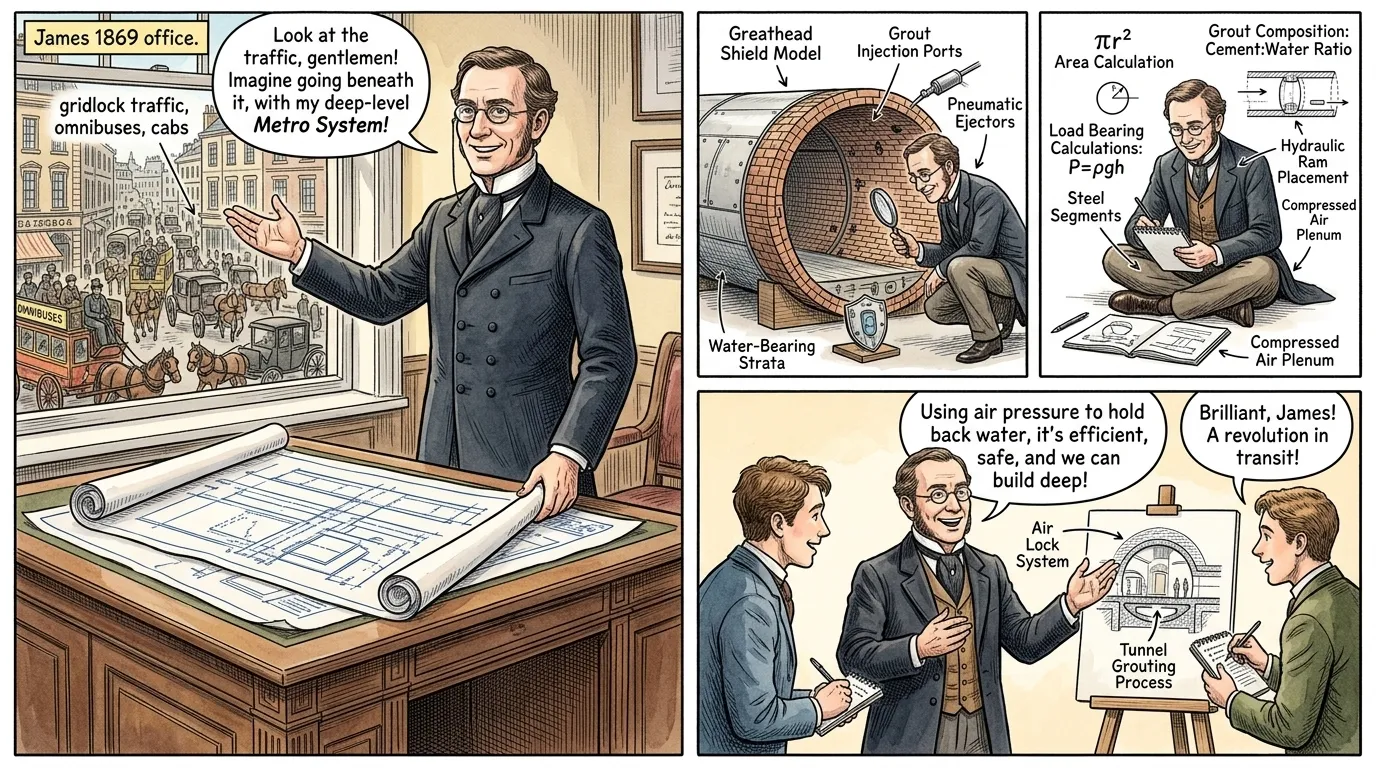
The year is 1869, and London, the pulsating heart of the British Empire, chokes under its own success. Surface transport, a chaotic ballet of horse-drawn omnibuses and cabs, has reached an untenable gridlock, demanding a revolutionary solution beneath its very streets. It was here that James Henry Greathead, a brilliant civil engineer from South Africa, envisioned the 'Metro System' – a network of deep-level railways, built with a revolutionary tunneling shield, to redefine urban mobility. His patent, secured this year, promised to carve clean, stable pathways through the city's notoriously unstable clay, a breakthrough to literally save London from itself.
""Gentlemen, London is strangling itself," declared James Henry Greathead, a resolute civil engineer, gesturing towards the choked streets from his office window in 1869. "The surface cannot bear another carriage; we must seek passage beneath." He unveiled sketches of his revolutionary Metro System, explaining how it would carve stable, deep-level railways through the capital's challenging ground. "As Thomas Jefferson once observed, 'The ground is the only thing belonging to the inhabitants of a country,' and it is into this very ground we must now venture with unprecedented safety.""
Page 2
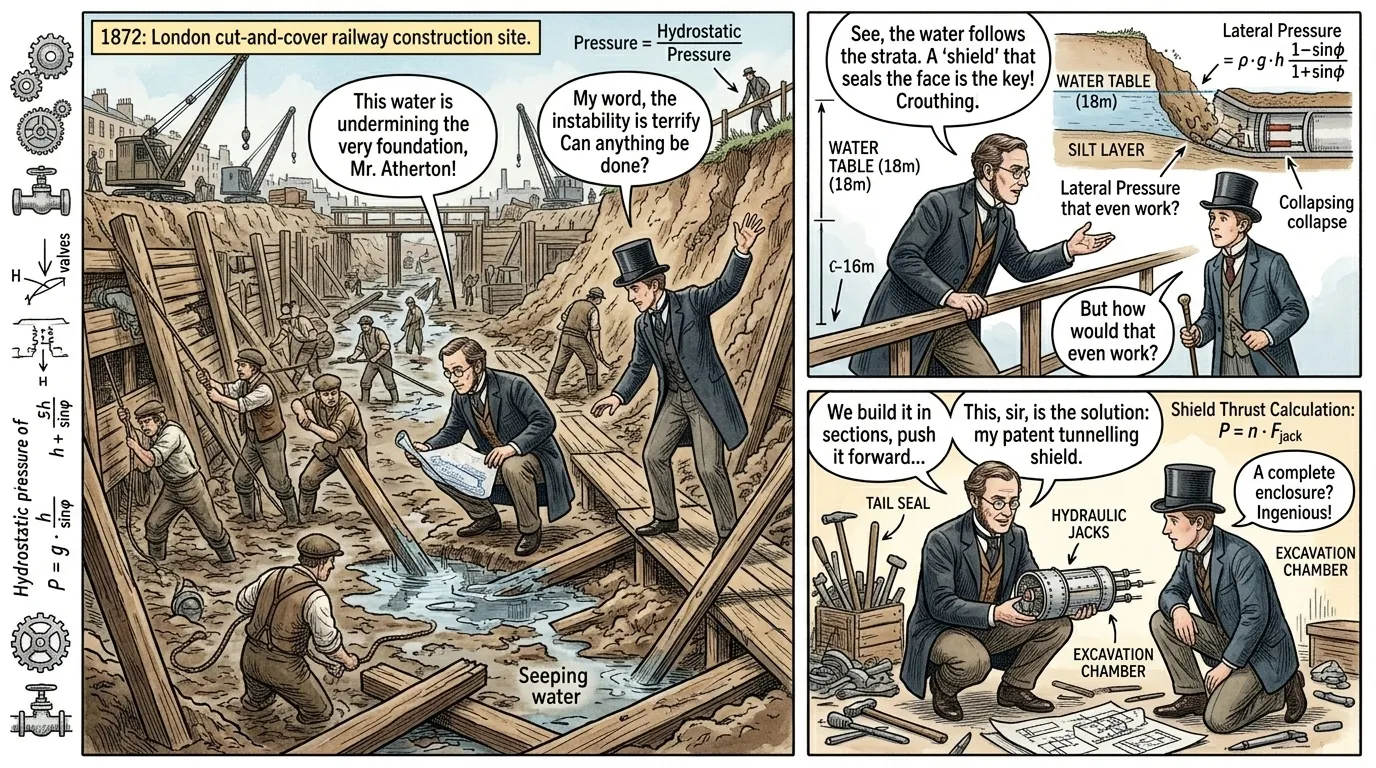
The very foundations of London vibrate under the strain, remarked a prominent city official, Mr. Atherton, to Greathead during an inspection of a cut-and-cover site in 1872. Our current 'cut-and-cover' railways tear through property, cause endless disruption, and only scratch the surface of our problem. Greathead nodded, observing workers struggling with wooden shoring to prevent cave-ins, and added, Indeed, the deeper one goes, the more perilous the water ingress becomes; securing shafts against the Thames' influence without massive flooding is an engineering nightmare. The sheer difficulty of tunneling beneath established buildings and through water-saturated clay remained the formidable obstacle.
""The very foundations of London vibrate under the strain," remarked a prominent city official, Mr. Atherton, to Greathead during an inspection of a cut-and-cover site in 1872. "Our current 'cut-and-cover' railways tear through property, cause endless disruption, and only scratch the surface of our problem." Greathead nodded, observing workers struggling with wooden shoring to prevent cave-ins, and added, "Indeed, the deeper one goes, the more perilous the water ingress becomes; securing shafts against the Thames' influence without massive flooding is an engineering nightmare." The sheer difficulty of tunneling beneath established buildings and through water-saturated clay remained the formidable obstacle."
Page 3
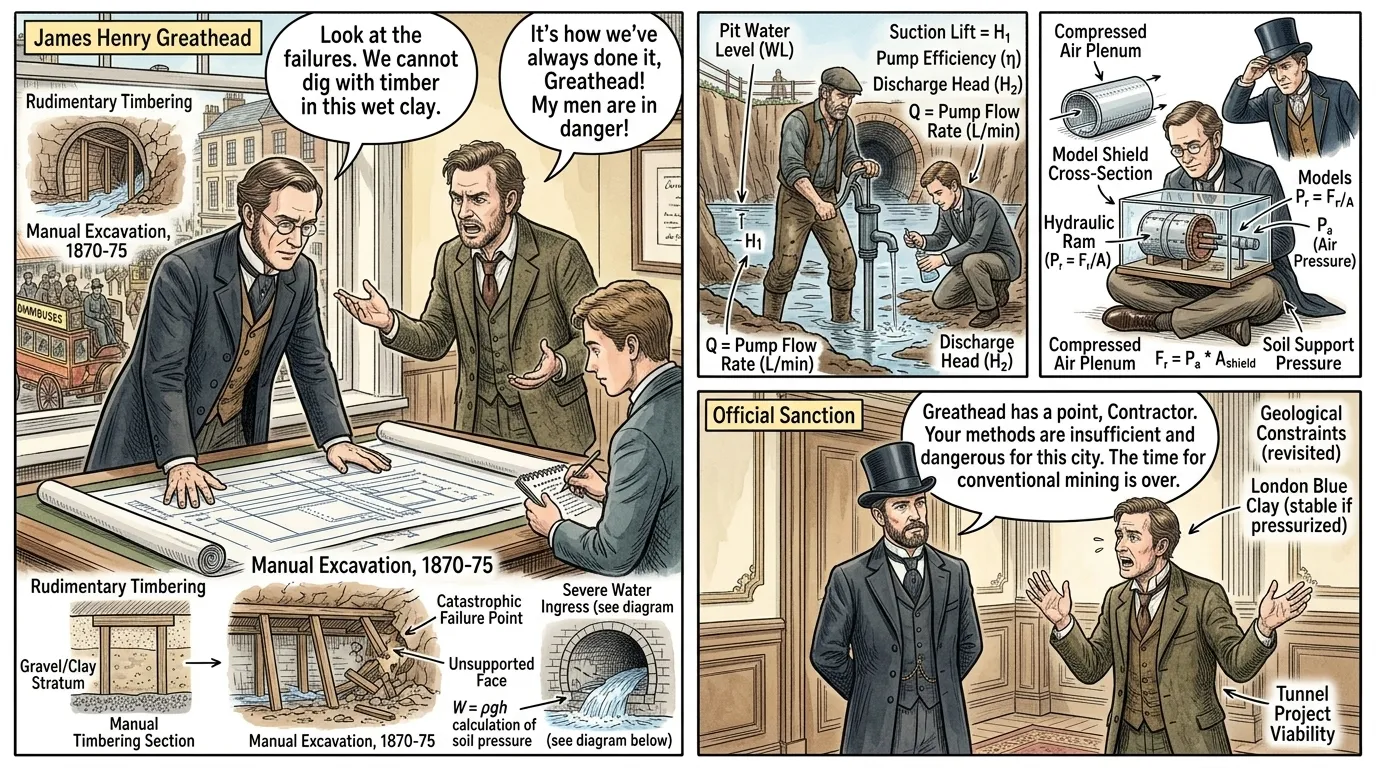
Previous attempts at deep tunneling proved too costly and dangerous, Mr. Greathead, an exasperated contractor explained, pointing to a schematic on his desk in 1875, depicting collapsing tunnels. Without a method to continuously support the excavation face and seal against water, any deep bore will become a watery grave for both capital and men. Greathead intently studied the diagram, noting the rudimentary timbering and manual excavation techniques that were clearly inadequate for London's unique geology. He knew a radical departure from conventional mining was absolutely essential.
""Previous attempts at deep tunneling proved too costly and dangerous, Mr. Greathead," an exasperated contractor explained, pointing to a schematic on his desk in 1875, depicting collapsing tunnels. "Without a method to continuously support the excavation face and seal against water, any deep bore will become a watery grave for both capital and men." Greathead intently studied the diagram, noting the rudimentary timbering and manual excavation techniques that were clearly inadequate for London's unique geology. He knew a radical departure from conventional mining was absolutely essential."
Page 4
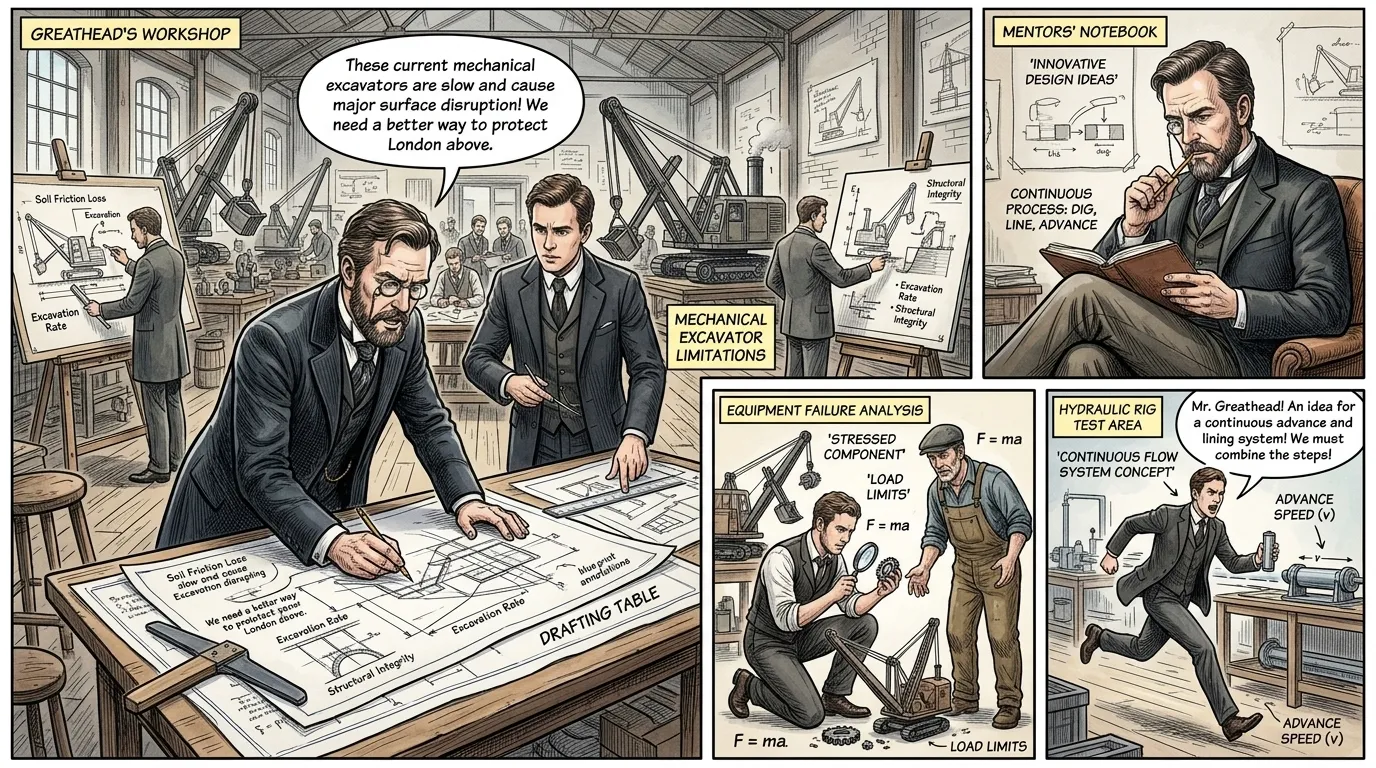
The true challenge lies not just in boring through earth, but in doing so without disturbing the fragile city above, Greathead mused aloud to his design team in 1879, sketching furiously on a large drafting table. We need something that can advance like a mole, protecting as it digs, and stabilizing as it moves. His team, two younger engineers with serious expressions, discussed the limitations of contemporary mechanical excavators, which lacked the necessary structural integrity for London's particular strata. Greathead envisioned a solution that would integrate excavation and lining into a continuous, self-supporting process.
""The true challenge lies not just in boring through earth, but in doing so without disturbing the fragile city above," Greathead mused aloud to his design team in 1879, sketching furiously on a large drafting table. "We need something that can advance like a mole, protecting as it digs, and stabilizing as it moves." His team, two younger engineers with serious expressions, discussed the limitations of contemporary mechanical excavators, which lacked the necessary structural integrity for London's particular strata. Greathead envisioned a solution that would integrate excavation and lining into a continuous, self-supporting process."
Page 5
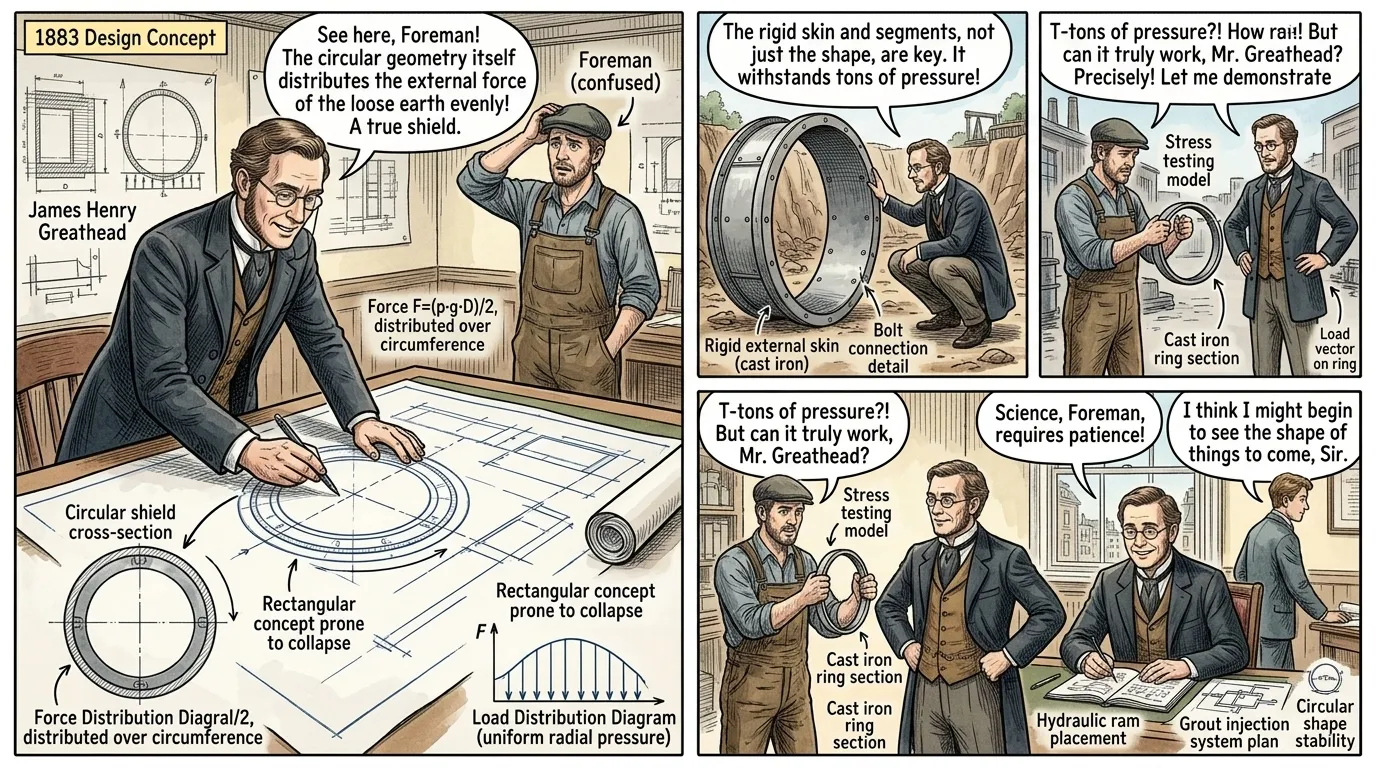
Greathead's early designs grappled with the problem of maintaining structural integrity, often showing timber frameworks that were either too cumbersome or insufficiently robust. A rigid, external skin, capable of withstanding immense pressure from all sides, is fundamental, he explained to a bewildered foreman reviewing a prototype concept in 1883, pointing to its circular profile. This circular geometry, he theorized, would distribute external forces evenly, a crucial departure from the rectangular, prone-to-collapse shafts of prior attempts. His focus shifted from resisting forces to cleverly redirecting them.
"Greathead's early designs grappled with the problem of maintaining structural integrity, often showing timber frameworks that were either too cumbersome or insufficiently robust. "A rigid, external skin, capable of withstanding immense pressure from all sides, is fundamental," he explained to a bewildered foreman reviewing a prototype concept in 1883, pointing to its circular profile. This circular geometry, he theorized, would distribute external forces evenly, a crucial departure from the rectangular, prone-to-collapse shafts of prior attempts. His focus shifted from resisting forces to cleverly redirecting them."
Page 6
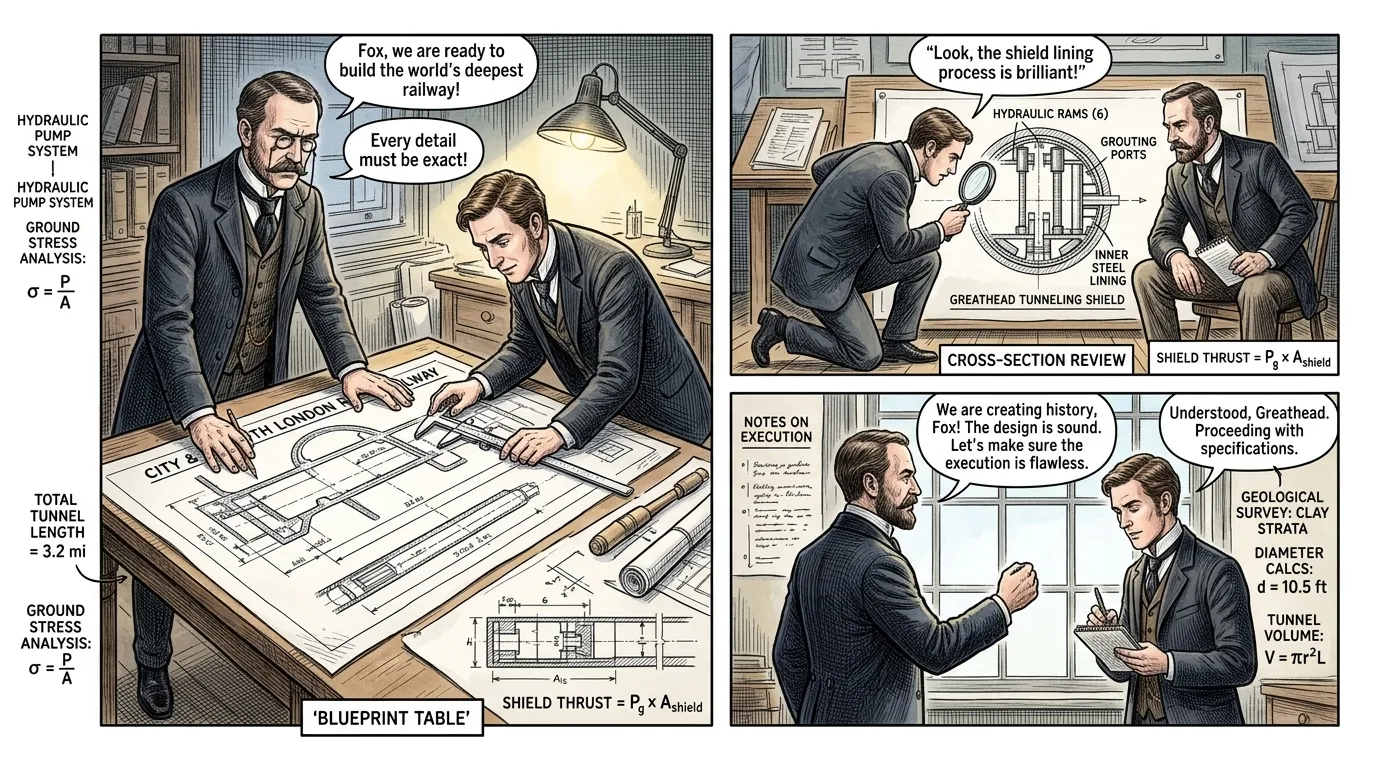
The core principle, then, is continuous support and immediate lining, Greathead articulated to his lead engineer, Francis Fox, in late 1884, overseeing the final drawings for the City & South London Railway project. His innovative tunneling shield acted as a mobile, temporary support, creating a safe chamber for workers at the cutting face. It's a fortress that moves, Fox noted, admiring the detailed blueprints, excavating earth, pushing forward with hydraulic power, and leaving behind a permanent cast-iron cylinder. This seamless integration of excavation and structural reinforcement was the genius of his design.
""The core principle, then, is continuous support and immediate lining," Greathead articulated to his lead engineer, Francis Fox, in late 1884, overseeing the final drawings for the City & South London Railway project. His innovative tunneling shield acted as a mobile, temporary support, creating a safe chamber for workers at the cutting face. "It's a fortress that moves," Fox noted, admiring the detailed blueprints, "excavating earth, pushing forward with hydraulic power, and leaving behind a permanent cast-iron cylinder." This seamless integration of excavation and structural reinforcement was the genius of his design."
Page 7
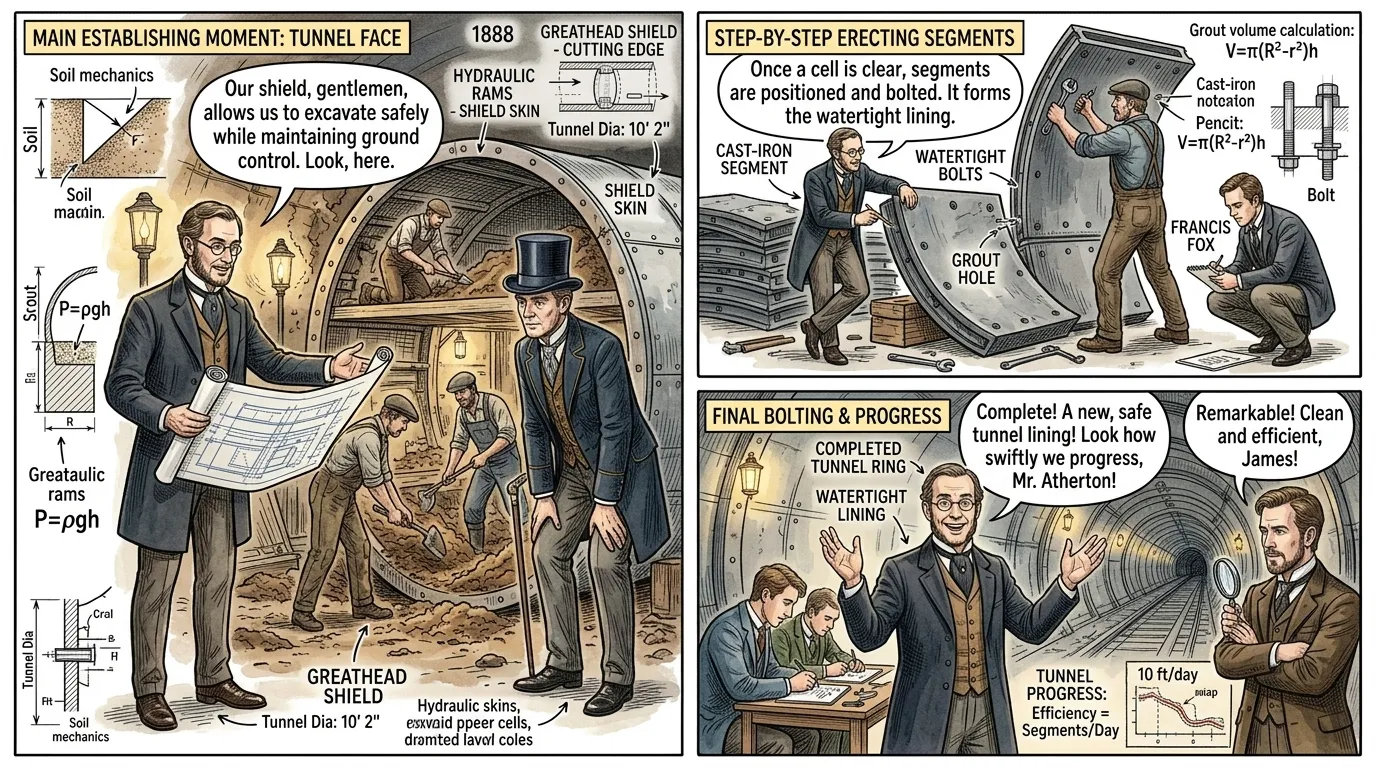
The Greathead Shield was essentially a thick, cylindrical steel shell, its sharp forward edge designed to bite into the earth. Within this protective casing, workers could excavate soil safely, shielded from immediate collapse, while powerful hydraulic rams pushed the entire structure forward. As the shield advances, Greathead explained to a visiting dignitary in 1888, during an early construction phase, pre-fabricated cast-iron segments are bolted together behind it, forming the permanent, watertight tunnel lining. This method drastically improved safety and speed, fundamentally changing subterranean construction.
"The Greathead Shield was essentially a thick, cylindrical steel shell, its sharp forward edge designed to bite into the earth. Within this protective casing, workers could excavate soil safely, shielded from immediate collapse, while powerful hydraulic rams pushed the entire structure forward. "As the shield advances," Greathead explained to a visiting dignitary in 1888, during an early construction phase, "pre-fabricated cast-iron segments are bolted together behind it, forming the permanent, watertight tunnel lining." This method drastically improved safety and speed, fundamentally changing subterranean construction."
Page 8
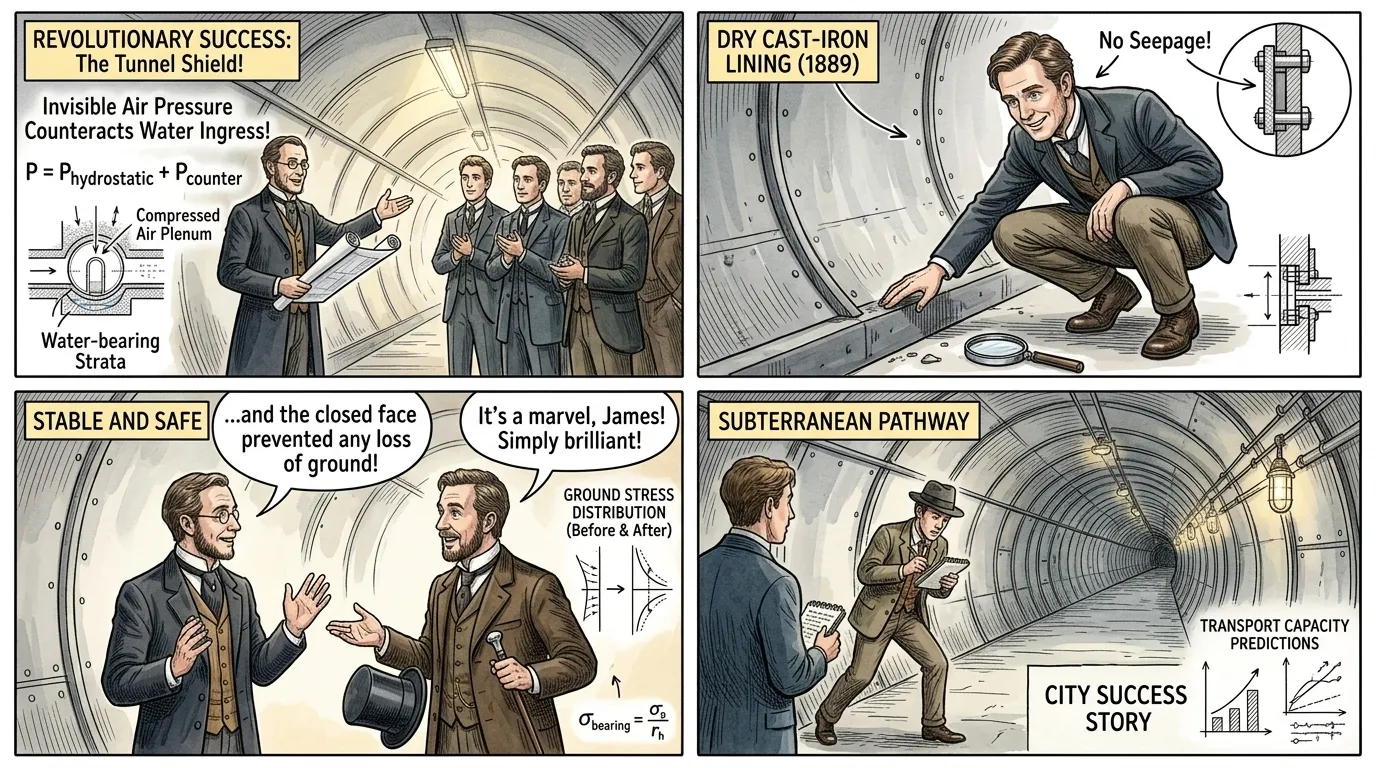
Crucially, the shield's closed-face design and the application of compressed air within the working chamber proved revolutionary, Greathead proudly declared to a group of engineers inspecting a completed tunnel section in 1889. This counteracted the immense pressure of London's water-logged clay, precisely preventing the ingress that plagued earlier attempts. The compressed air pushed back against the water, keeping the excavation dry and stable, allowing the rapid, secure installation of the cast-iron lining. This triumph directly addressed the "engineering nightmare" of water ingress they had discussed years prior.
""Crucially, the shield's closed-face design and the application of compressed air within the working chamber proved revolutionary," Greathead proudly declared to a group of engineers inspecting a completed tunnel section in 1889. "This counteracted the immense pressure of London's water-logged clay, precisely preventing the ingress that plagued earlier attempts." The compressed air pushed back against the water, keeping the excavation dry and stable, allowing the rapid, secure installation of the cast-iron lining. This triumph directly addressed the "engineering nightmare" of water ingress they had discussed years prior."
Page 9
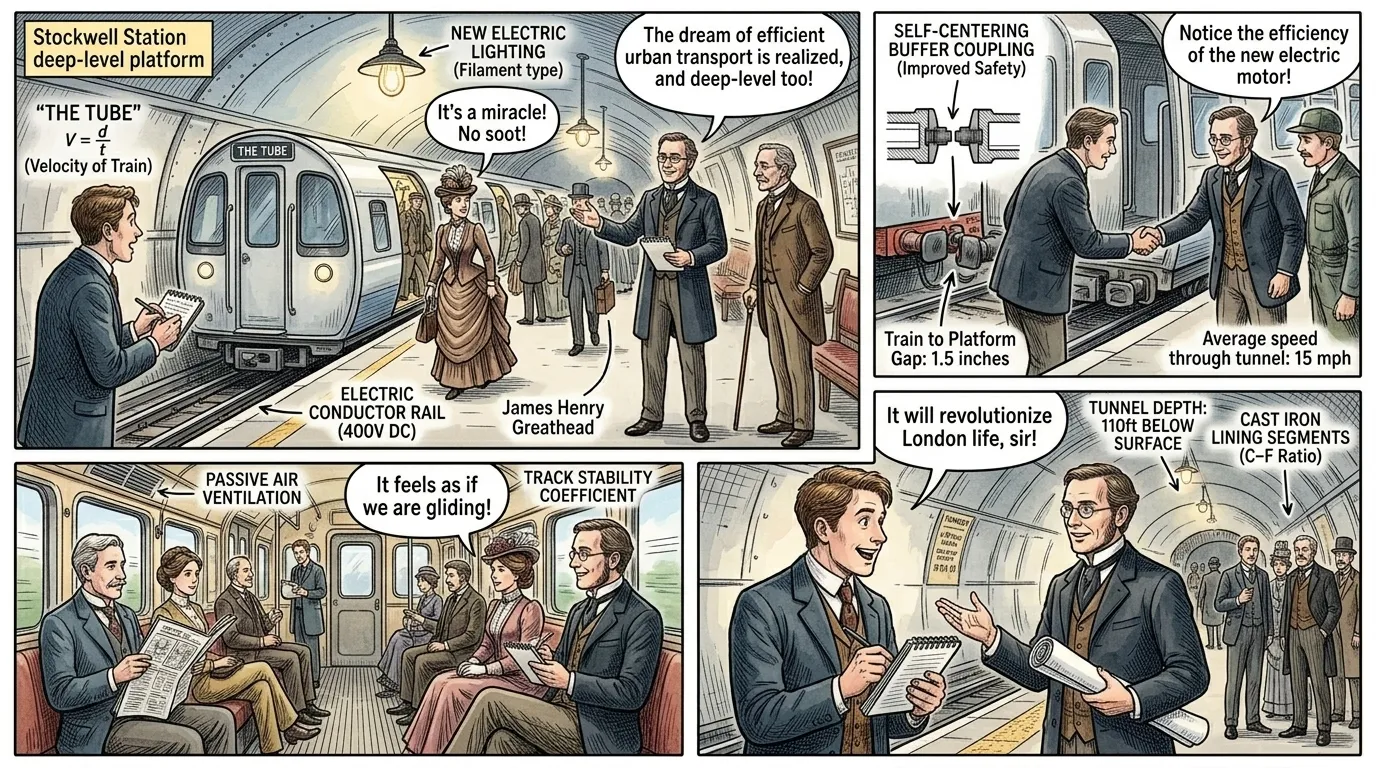
The City & South London Railway opened in 1890, instantly transforming urban life by offering Londoners an escape from surface congestion. It's a truly astonishing feat, a seamless journey beneath the city, exclaimed a newspaper reporter in awe as early passengers disembarked at Stockwell station. The deep-level "tube" system, made possible by Greathead's shield, allowed for lines to be built without acquiring expensive surface property, significantly reducing costs and disruption. This model quickly became the blueprint for subterranean transport networks worldwide.
"The City & South London Railway opened in 1890, instantly transforming urban life by offering Londoners an escape from surface congestion. "It's a truly astonishing feat, a seamless journey beneath the city," exclaimed a newspaper reporter in awe as early passengers disembarked at Stockwell station. The deep-level "tube" system, made possible by Greathead's shield, allowed for lines to be built without acquiring expensive surface property, significantly reducing costs and disruption. This model quickly became the blueprint for subterranean transport networks worldwide."
Page 10
The legacy of Greathead's Metro System shield reverberates globally, shaping modern cities and enabling unprecedented urban expansion. From the Paris Métro to the New York Subway, and countless others, these subterranean arteries facilitate the daily lives of billions. They exemplify human ingenuity, transforming once-insurmountable geological barriers into pathways of progress. The pioneering work of James Henry Greathead underpins the invisible networks that continue to drive global metropolises.
"The legacy of Greathead's Metro System shield reverberates globally, shaping modern cities and enabling unprecedented urban expansion. From the Paris Métro to the New York Subway, and countless others, these subterranean arteries facilitate the daily lives of billions. They exemplify human ingenuity, transforming once-insurmountable geological barriers into pathways of progress. The pioneering work of James Henry Greathead underpins the invisible networks that continue to drive global metropolises."
About this story
- Location: Global
- Audience: general readers
- Format: 10 illustrated pages, narrated, free to read on Wonder Inventions
Questions and answers
Read Wonder Inventions on your phone
Wonder Inventions is available on Android. Get Wonder Inventions on Google Play.