Microscope
Microscope — an illustrated inventions story, set in Global. 10 illustrated pages, free to read on Wonder Inventions.
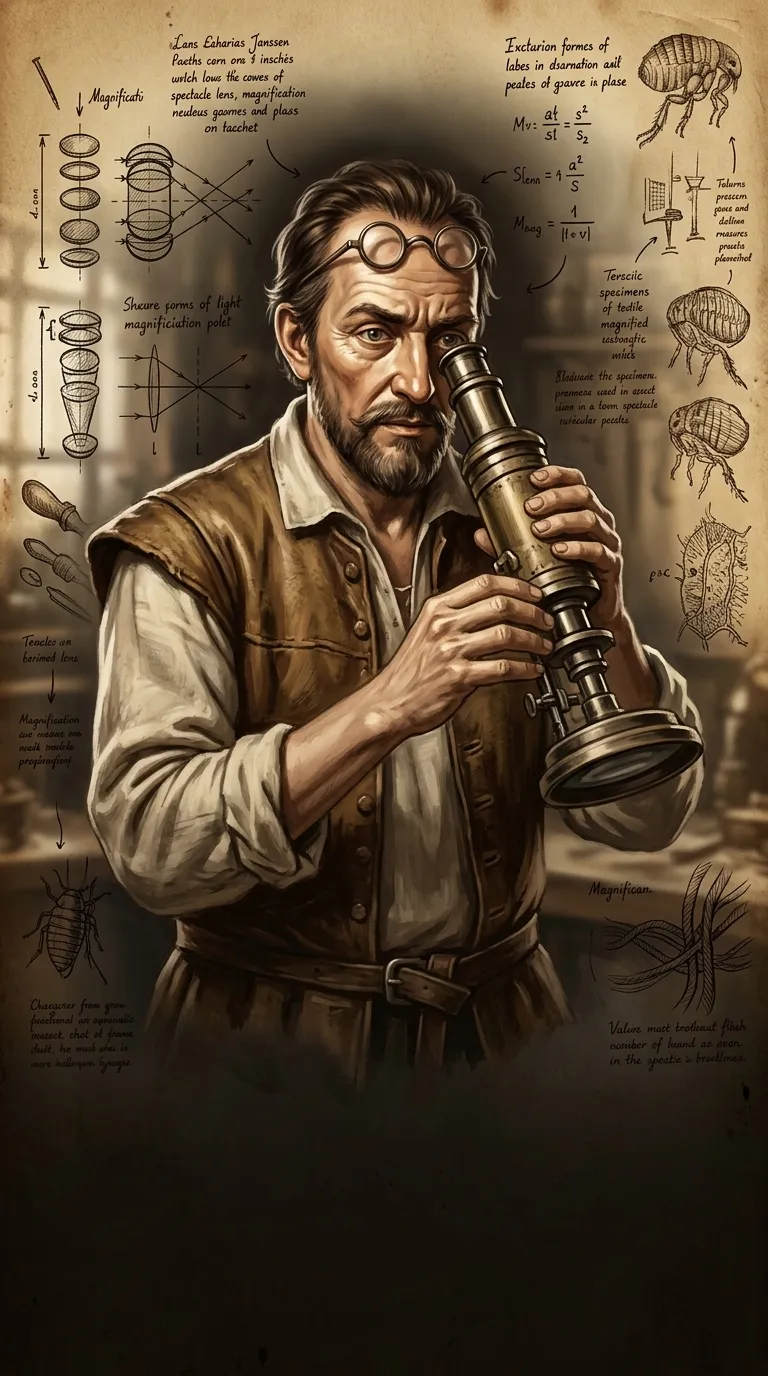
Page 1
Before the 17th century, human perception was limited to what the naked eye could discern. Diseases ravaged populations with inexplicable fury, their causes shrouded in mystery and superstition. It was a world where invisible adversaries shaped the destiny of nations and individuals alike. The urgent problem was clear: humanity needed to pierce the veil of the unseen.
Page 2
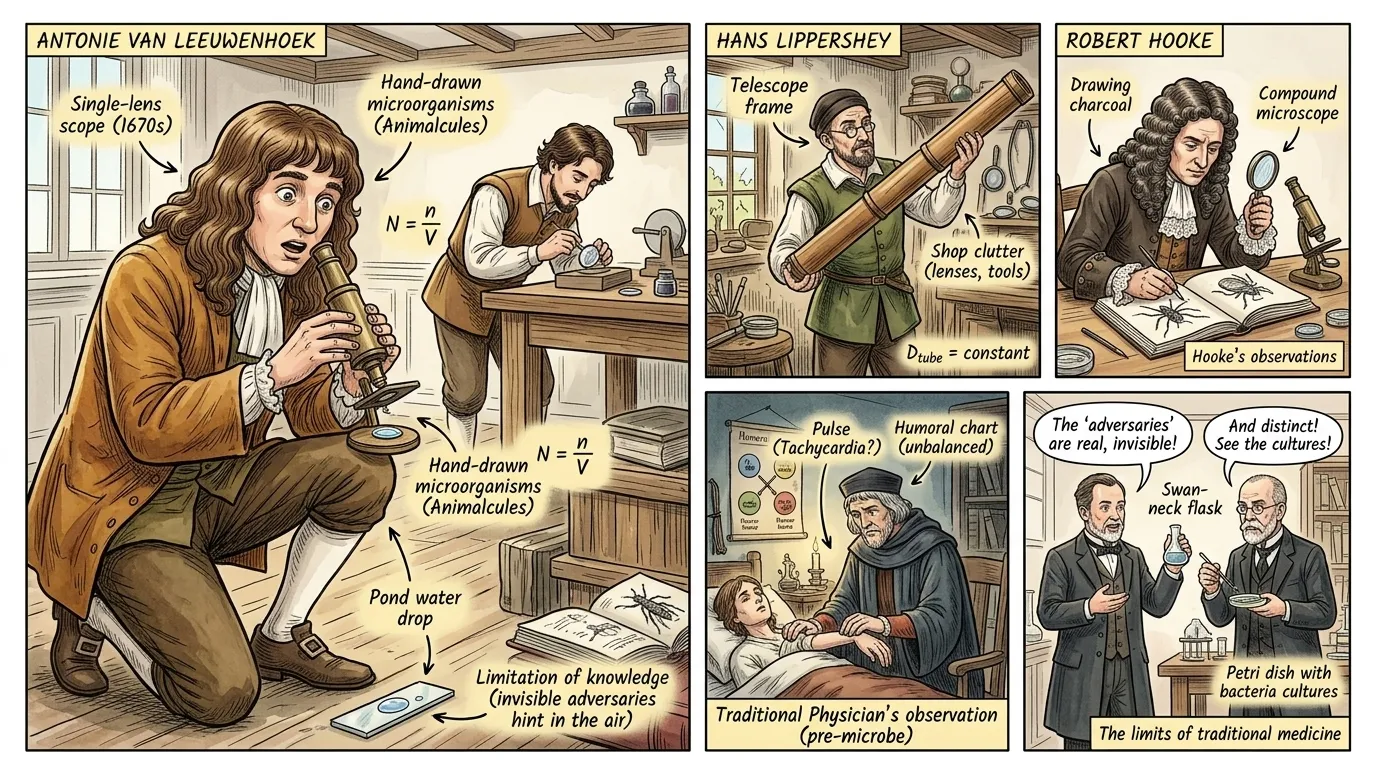
For millennia, explanations for illness ranged from divine punishment to imbalances of bodily humors. Epidemics like the Black Death decimated continents, yet no one grasped the microscopic agents at play. Physicians, using their best but inadequate senses, could only observe symptoms, not the underlying cause. This profound ignorance underscored the limitations of human sensory perception.
Page 3
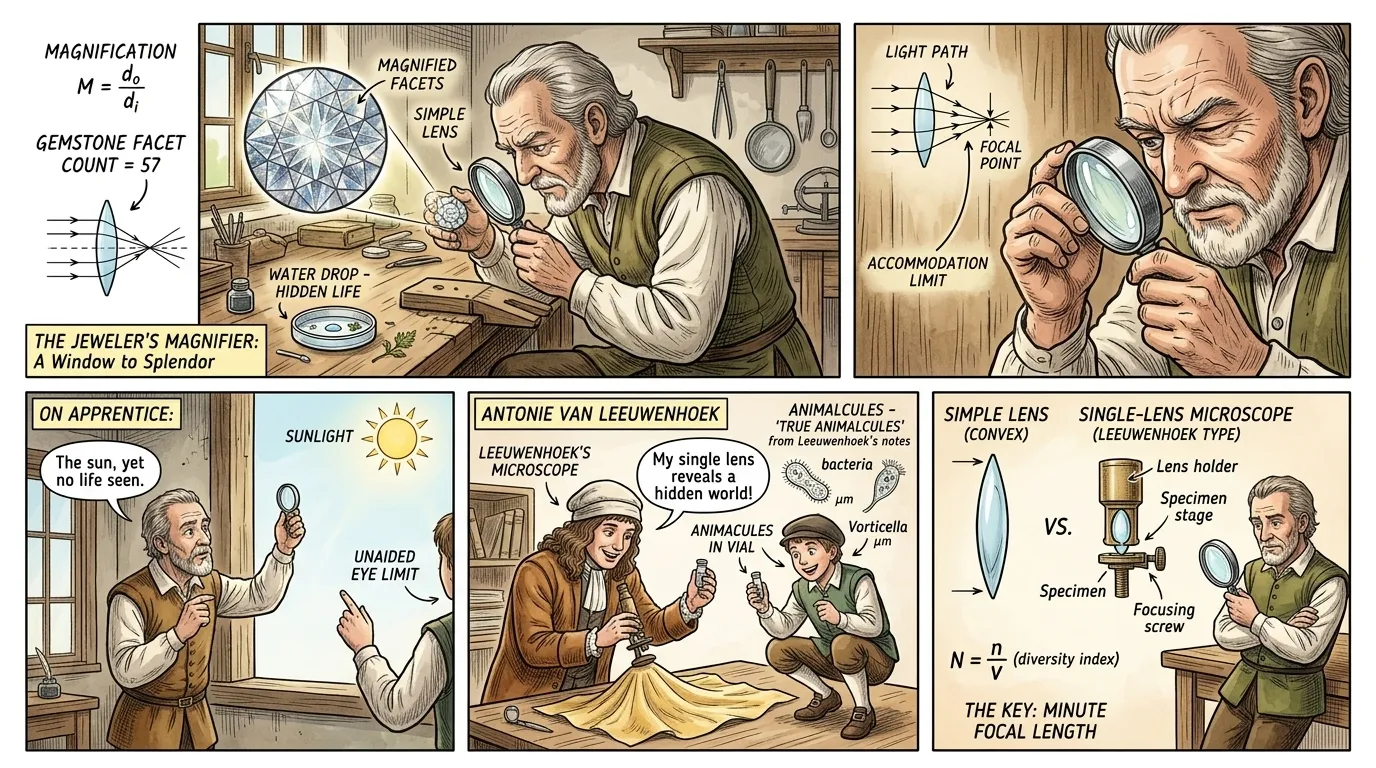
Basic convex lenses, known since antiquity, offered some magnification, aiding artisans and the elderly. However, these single lenses possessed inherent limitations, offering insufficient power to reveal the intricate structures of the minute world. They could magnify a jewel's facet but failed to resolve the complexities of biological specimens, leaving the true 'animalcules' completely hidden. The critical challenge was to overcome these optical distortions and magnify beyond simple clarity.
Page 4
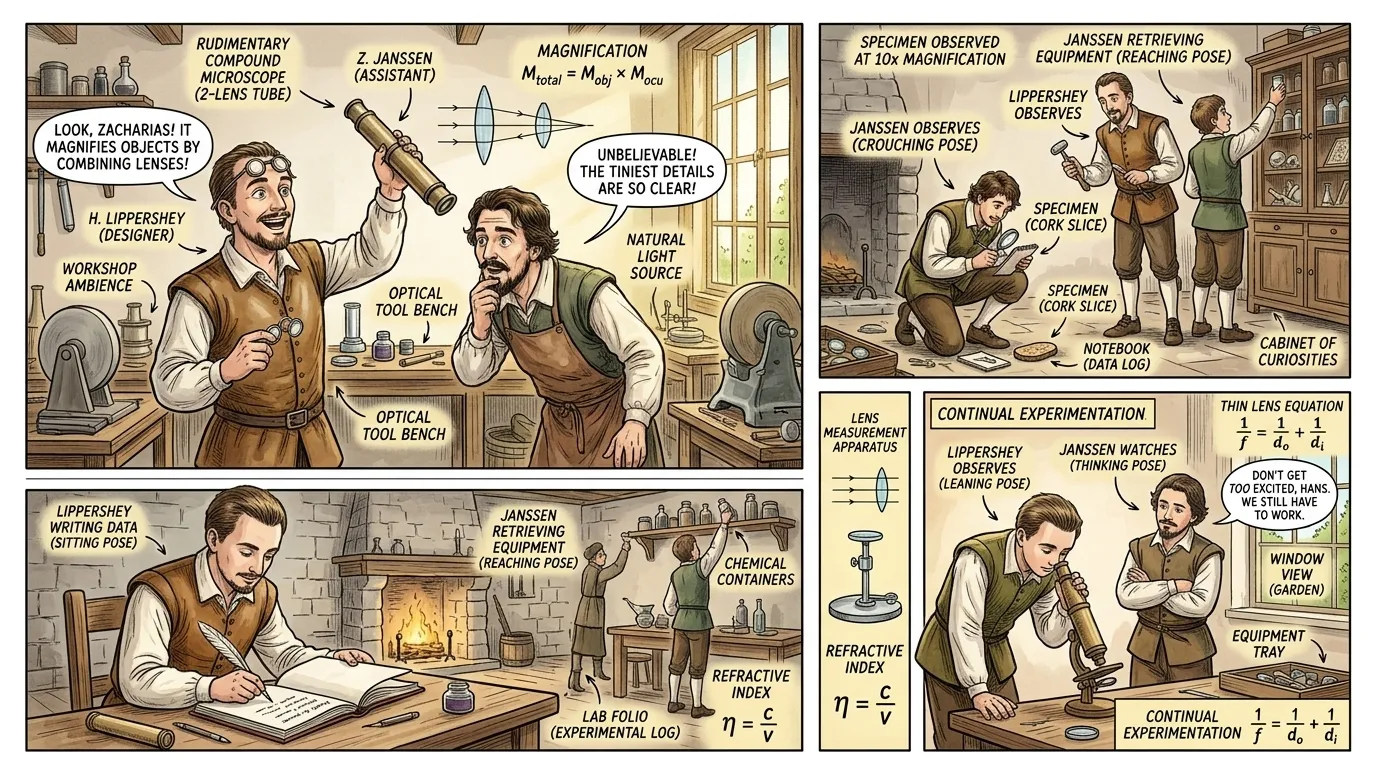
In the late 16th century, Dutch spectacle makers, including Hans Lippershey and Zacharias Janssen, experimented with combining lenses. It is believed that by placing two lenses at opposite ends of a tube, they stumbled upon an unprecedented magnification effect. This configuration, the compound microscope, was not perfect, suffering from chromatic aberration and spherical distortion, but it represented a monumental conceptual leap. It was the crucial first step toward visualizing the previously invisible realm.
Page 5
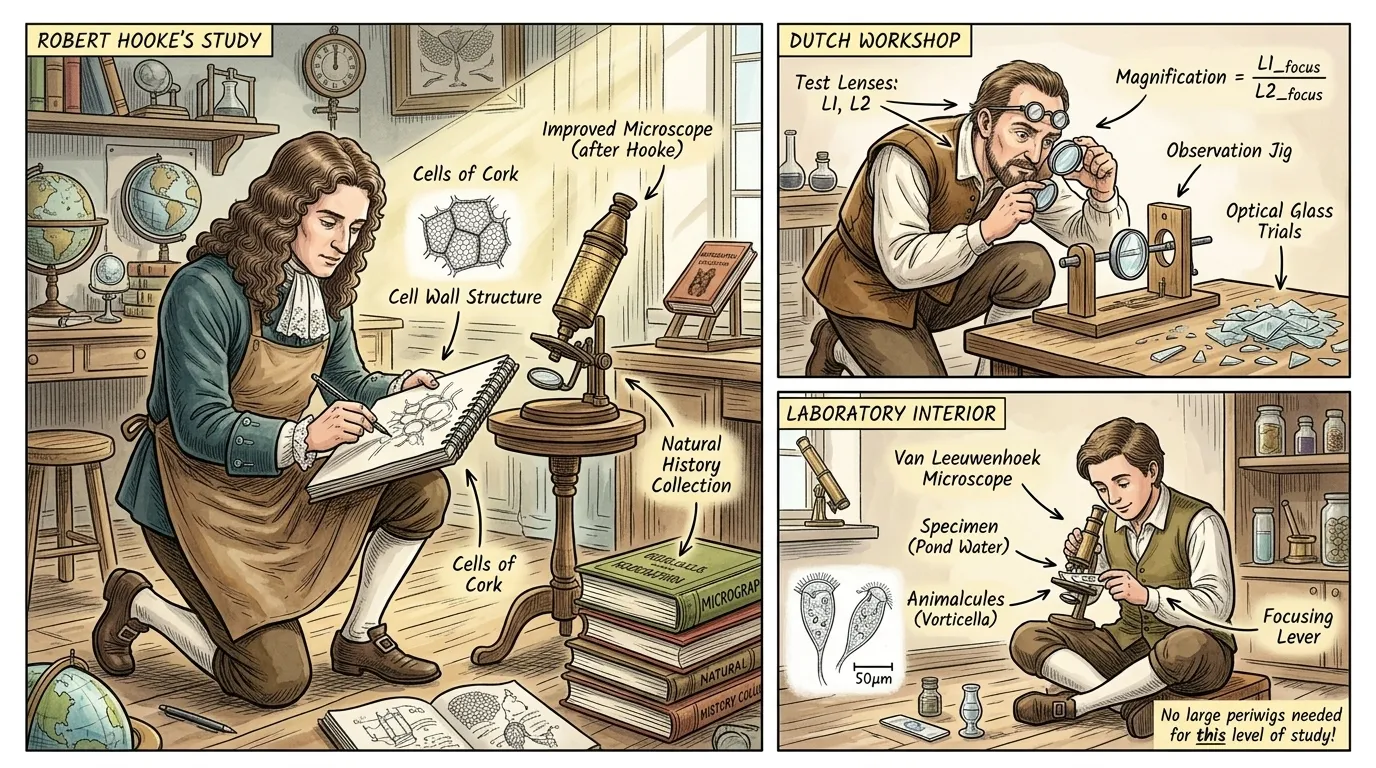
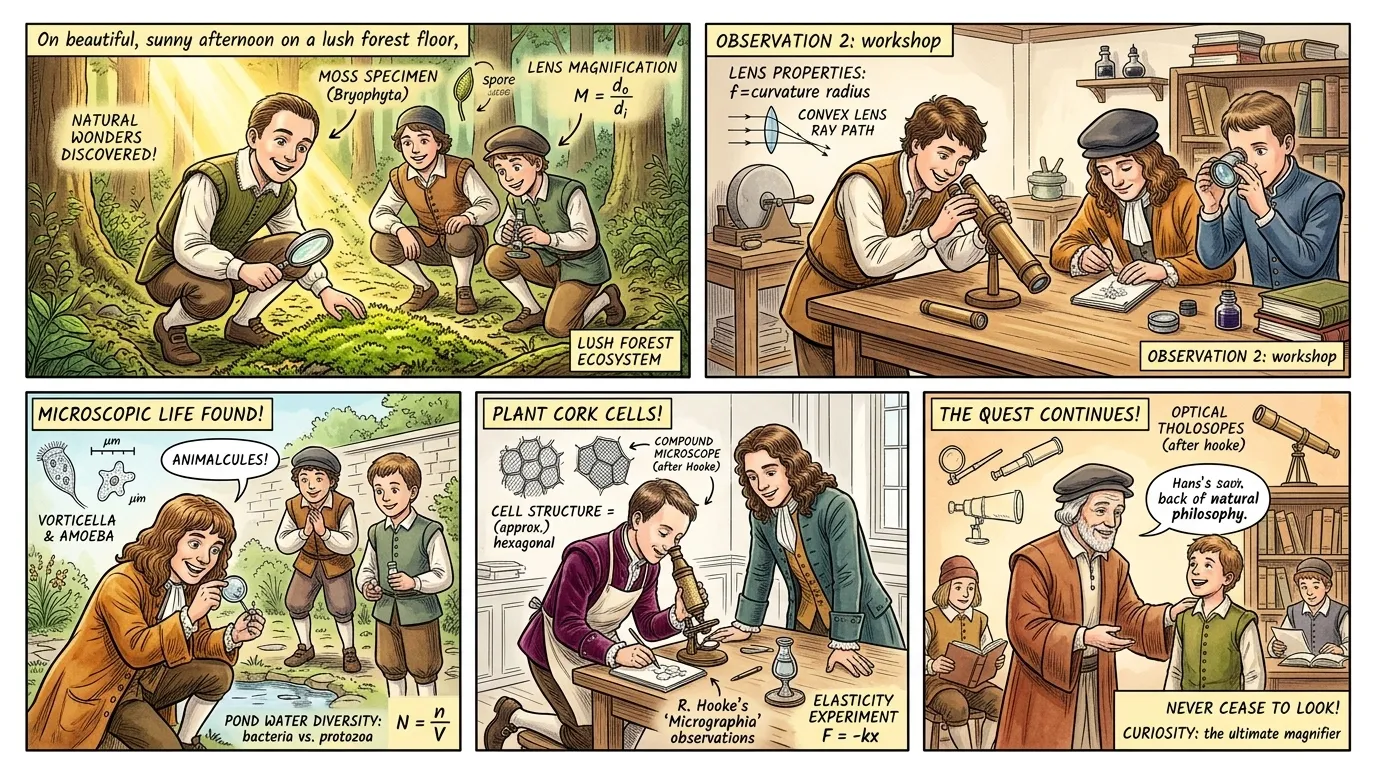
Over half a century later, in 1665, the polymath Robert Hooke published Micrographia, a seminal work documenting his observations through a greatly improved compound microscope. Hooke meticulously illustrated everything from the intricate structure of a flea's leg to the cellular pores of cork, for which he coined the term 'cell.' His work provided the scientific community with its first systematic view of the microscopic world, inspiring countless others to explore. The challenge for Hooke was not just magnification, but also the detailed, artistic rendering of what was seen.
Page 6
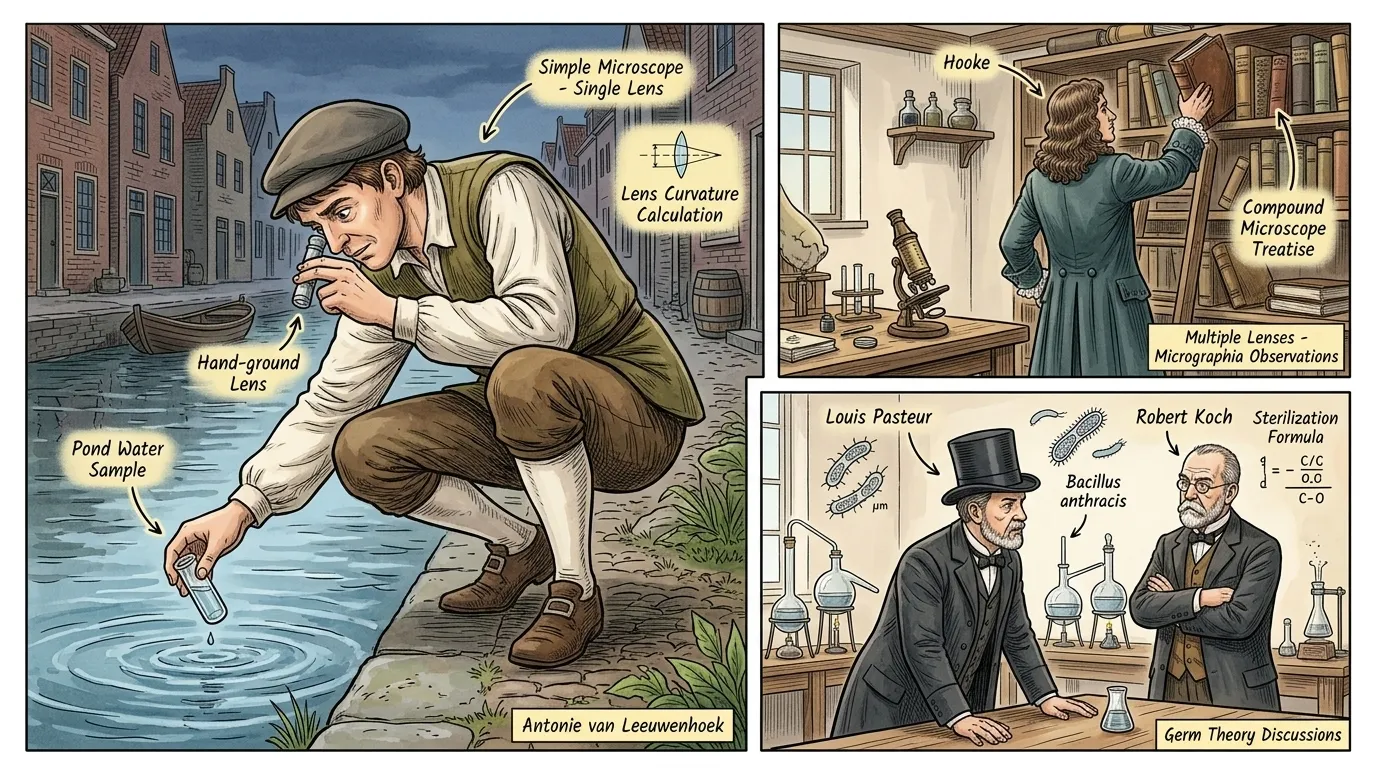
While Hooke refined the compound microscope, Antonie van Leeuwenhoek, a self-taught Dutch draper, pursued a different path. He meticulously ground hundreds of incredibly powerful single lenses, achieving magnifications of up to 270x, far exceeding the compound instruments of his time. With these simple, yet optically superior, microscopes, Leeuwenhoek became the first to observe and describe bacteria, protozoa, and spermatozoa, which he called 'animalcules.' It was a revelation, indeed, as Robert Hooke himself wrote in his seminal Micrographia: 'By the help of microscopes, there is a new visible world discovered to the understanding.' This 'new visible world' was precisely what Leeuwenhoek pursued with unparalleled zeal.
"''By the help of microscopes, there is a new visible world discovered to the understanding,' Robert Hooke himself wrote in his seminal Micrographia. This 'new visible world' was precisely what Antonie van Leeuwenhoek pursued with unparalleled zeal."
Page 7
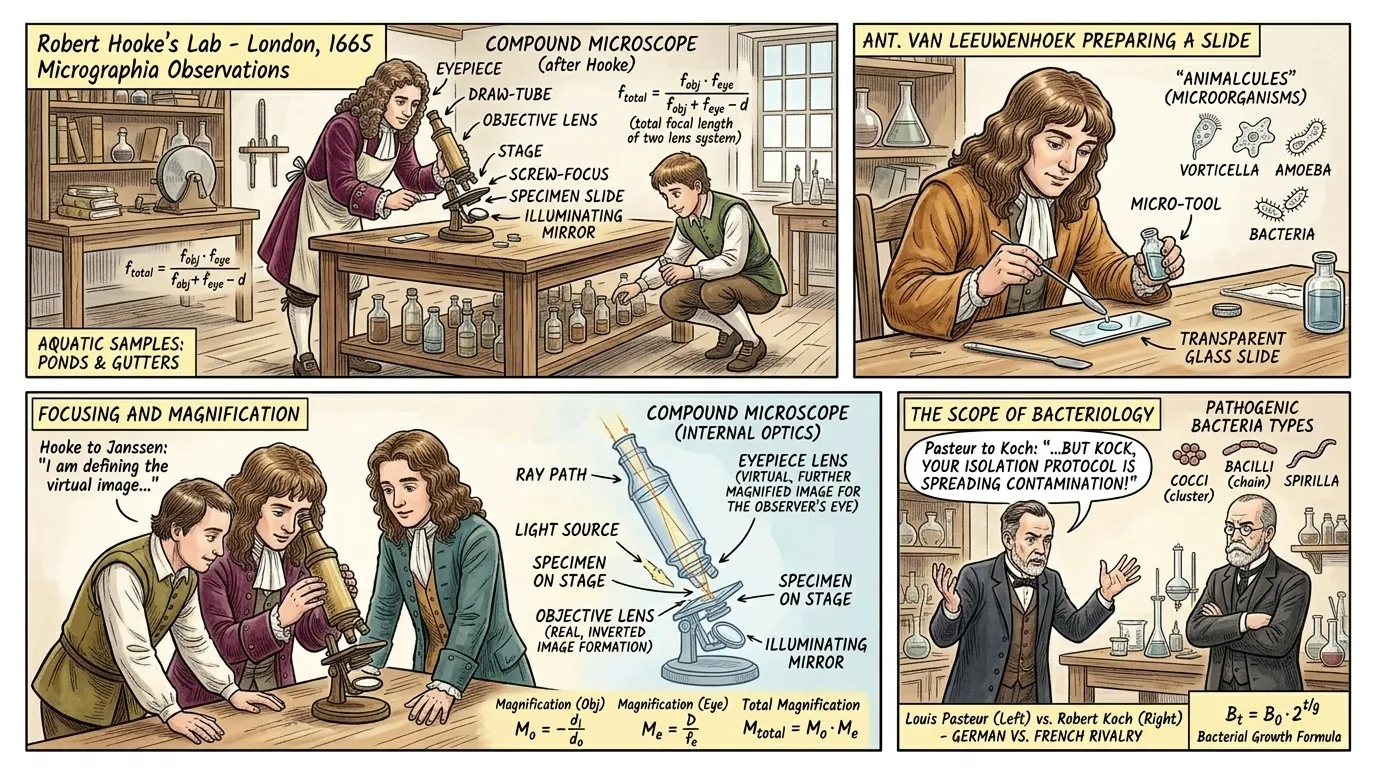
The compound microscope operates on the principle of combined magnification using two lens systems. Light passes through the specimen, then enters the objective lens, which creates an initial magnified, inverted image. This intermediate image is further magnified by the eyepiece lens, presenting a final, enlarged virtual image to the observer's eye. The careful selection and grinding of these lenses, combined with precise alignment, overcome the early optical distortions, allowing for clear and high-resolution viewing. Illumination, often provided by a mirror or lamp, is crucial for sufficient light throughput.
Page 8
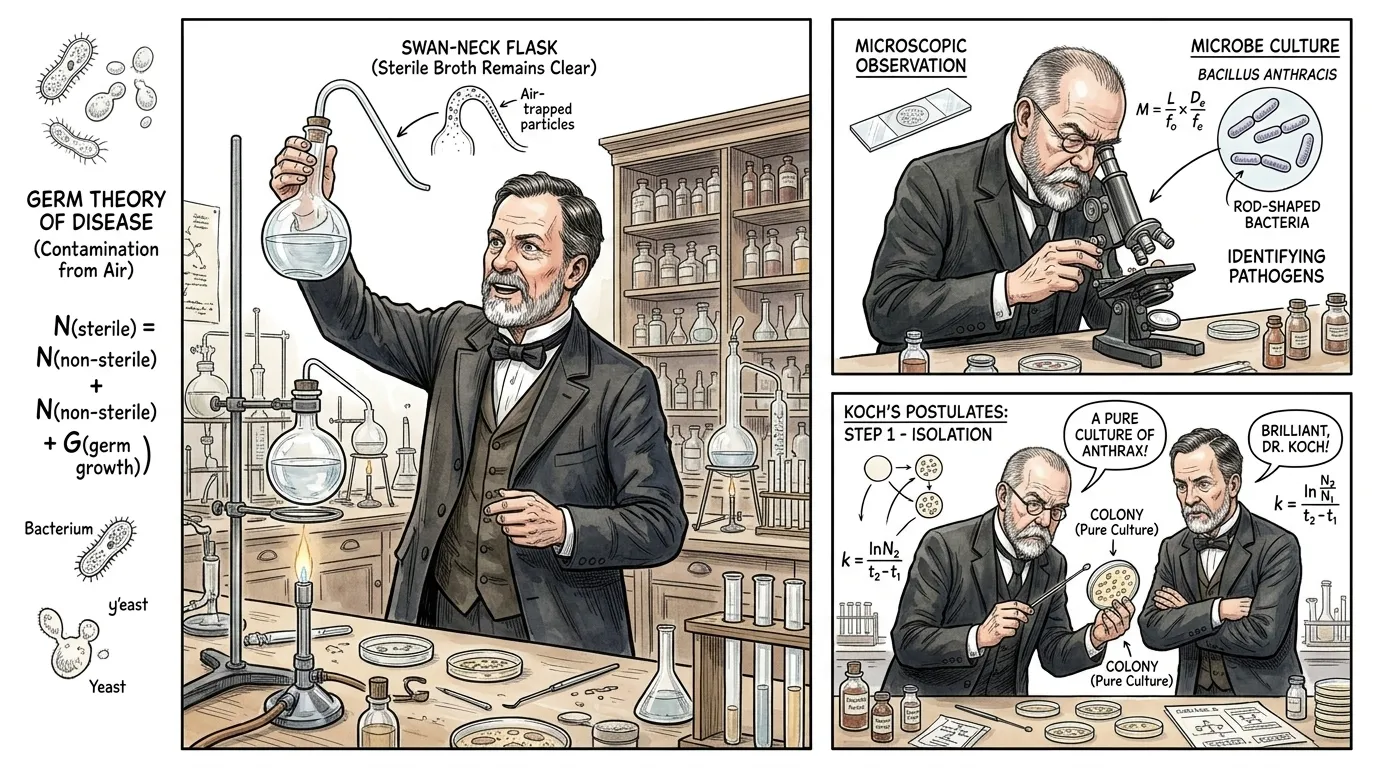
For nearly two centuries after Leeuwenhoek, the link between 'animalcules' and disease remained largely hypothetical. It was the monumental work of Louis Pasteur in the mid-19th century that definitively proved germ theory, demonstrating that microorganisms caused fermentation and disease. Building on this, Robert Koch developed his postulates, establishing a direct causal link between specific microbes and specific diseases. The microscope became indispensable, transforming medicine from speculative art into an evidence-based science. This was a direct result of the clarity and magnification achieved through generations of optical refinement.
Page 9
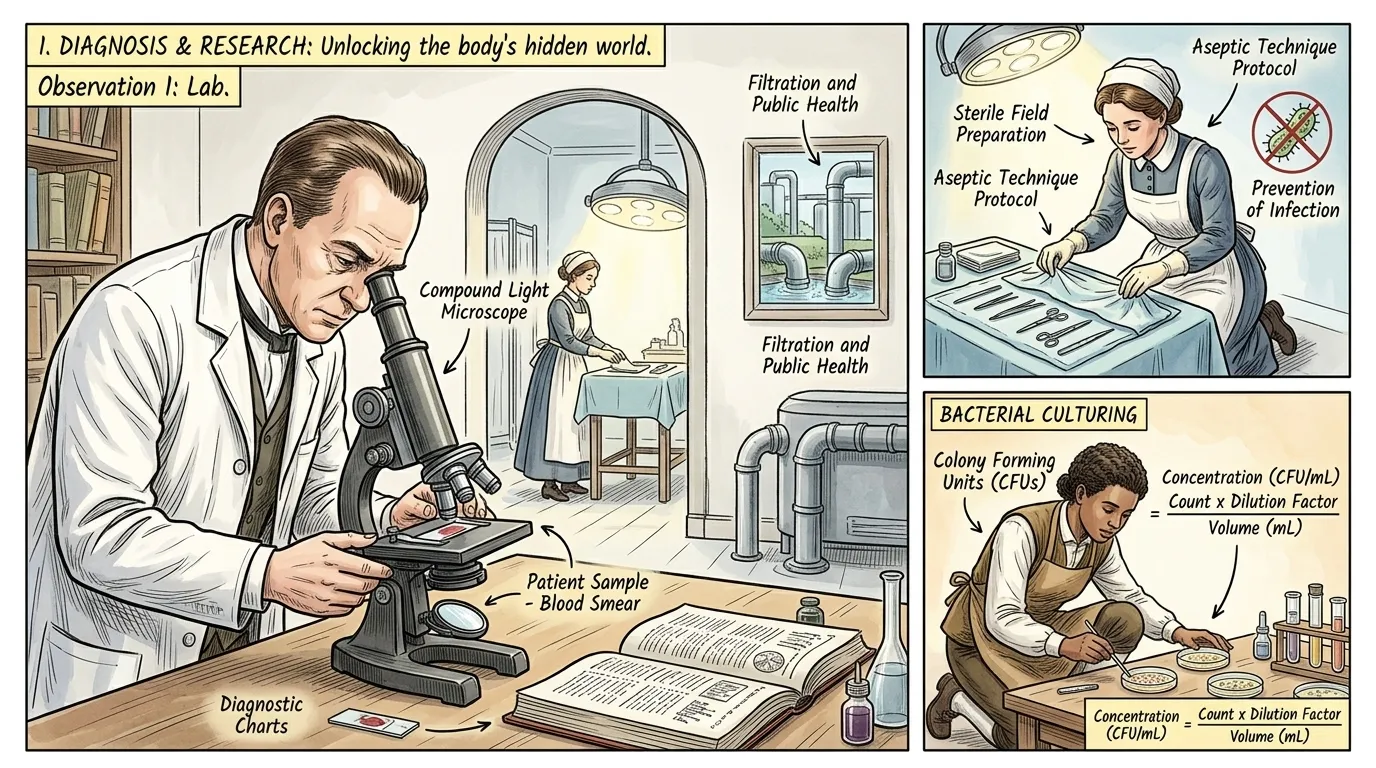
With the acceptance of germ theory, the microscope became the cornerstone of modern medicine. It enabled accurate diagnosis by allowing physicians to identify pathogens in patient samples, guiding targeted treatments. Understanding microscopic parasites led to effective measures against diseases like malaria. Crucially, it revolutionized public health, providing irrefutable evidence for sanitation and hygiene, saving countless lives. From the surgical theater to the water treatment plant, the microscope offered previously unimaginable insights, fundamentally altering human interaction with disease.
Page 10
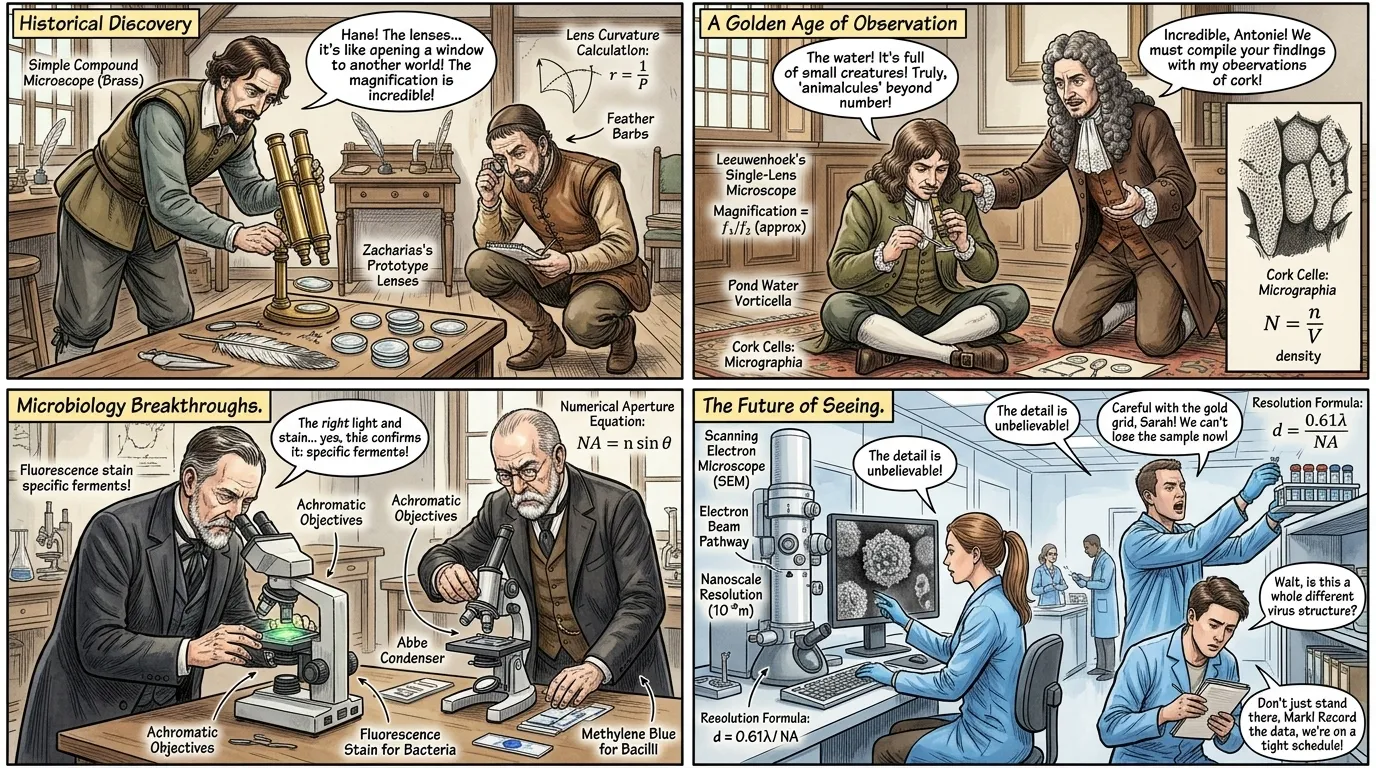
From simple brass tubes to complex electron and fluorescence imaging systems, the microscope continues its relentless march into the infinitely small. It remains an indispensable tool across countless disciplines: discovering new pharmaceuticals, engineering advanced materials, unraveling cellular mechanisms, and diagnosing diseases with unprecedented precision. The journey of the microscope is an ongoing testament to humanity's insatiable drive to understand the fundamental building blocks of existence. Its legacy is a world perpetually redefined by what was once unseen.
About this story
- Location: Global
- Audience: general readers
Questions and answers
Read Wonder Inventions on your phone
Wonder Inventions is available on Android. Get Wonder Inventions on Google Play.