Motorcycle
Motorcycle — an illustrated inventions story, set in Global. 10 illustrated pages, free to read on Wonder Inventions.
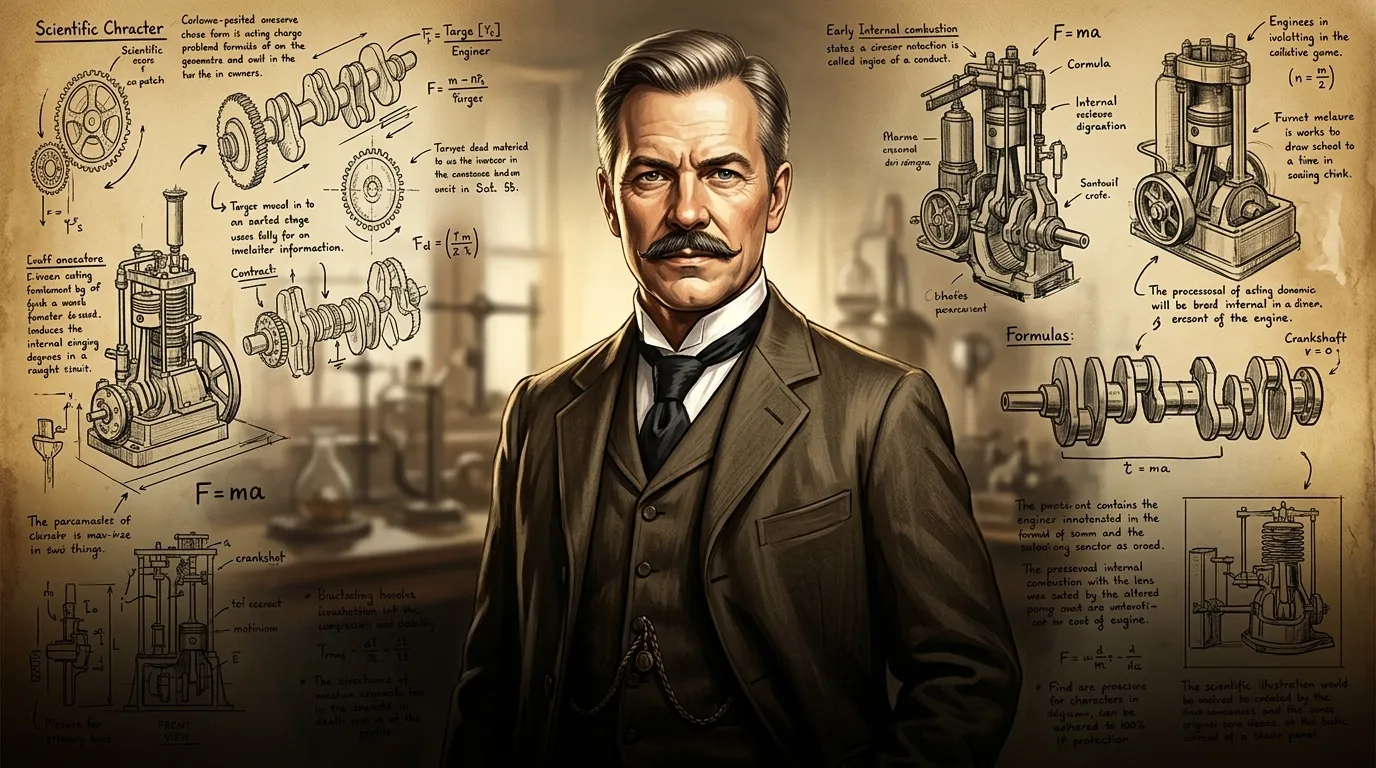
Page 1
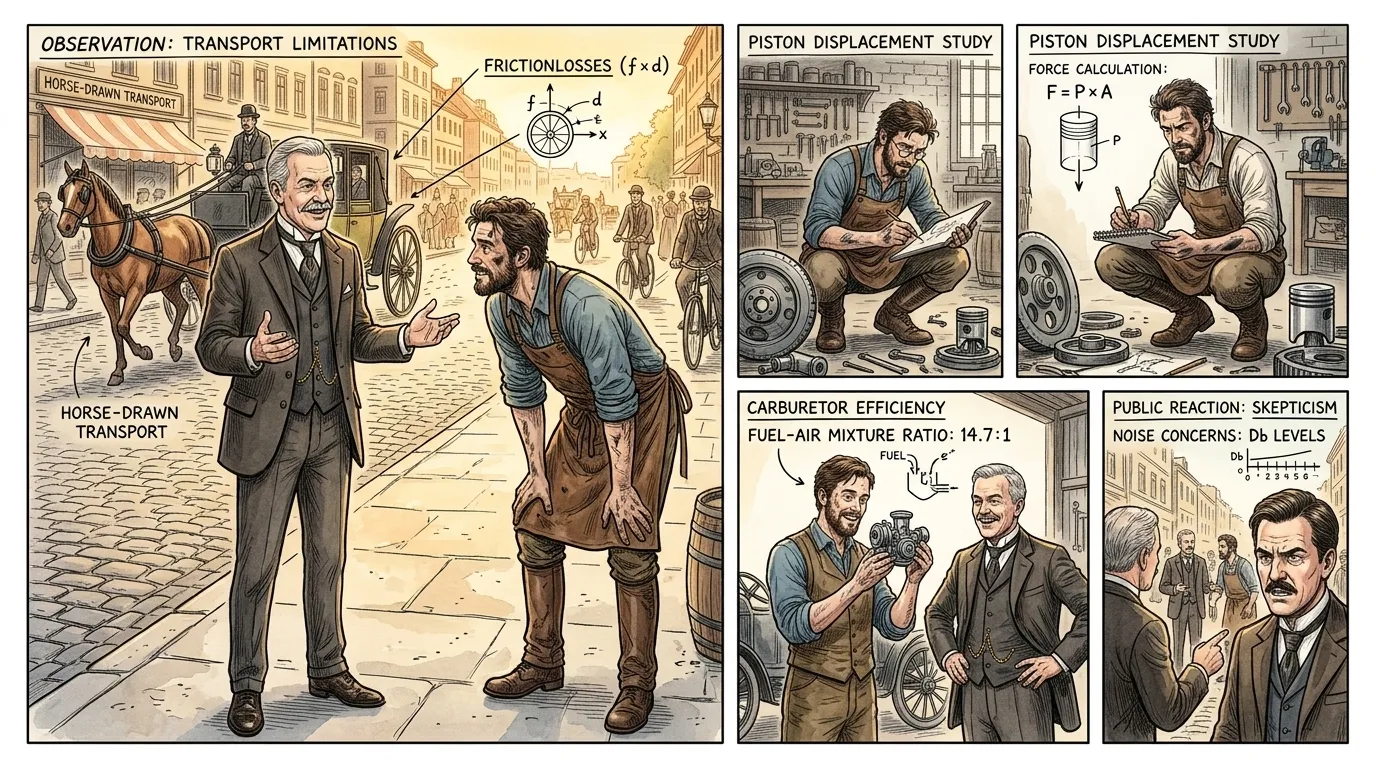
The late 19th century demanded a revolution in personal transport. Horse-drawn carriages were slow, arduous, and limited by animal endurance, while bicycles, though liberating, still relied solely on human effort.
"Gottlieb Daimler declared to Wilhelm Maybach, observing the bustling street, "Our age yearns for a swifter pulse, Wilhelm. This is merely the beginning of true self-propulsion.""
Page 2
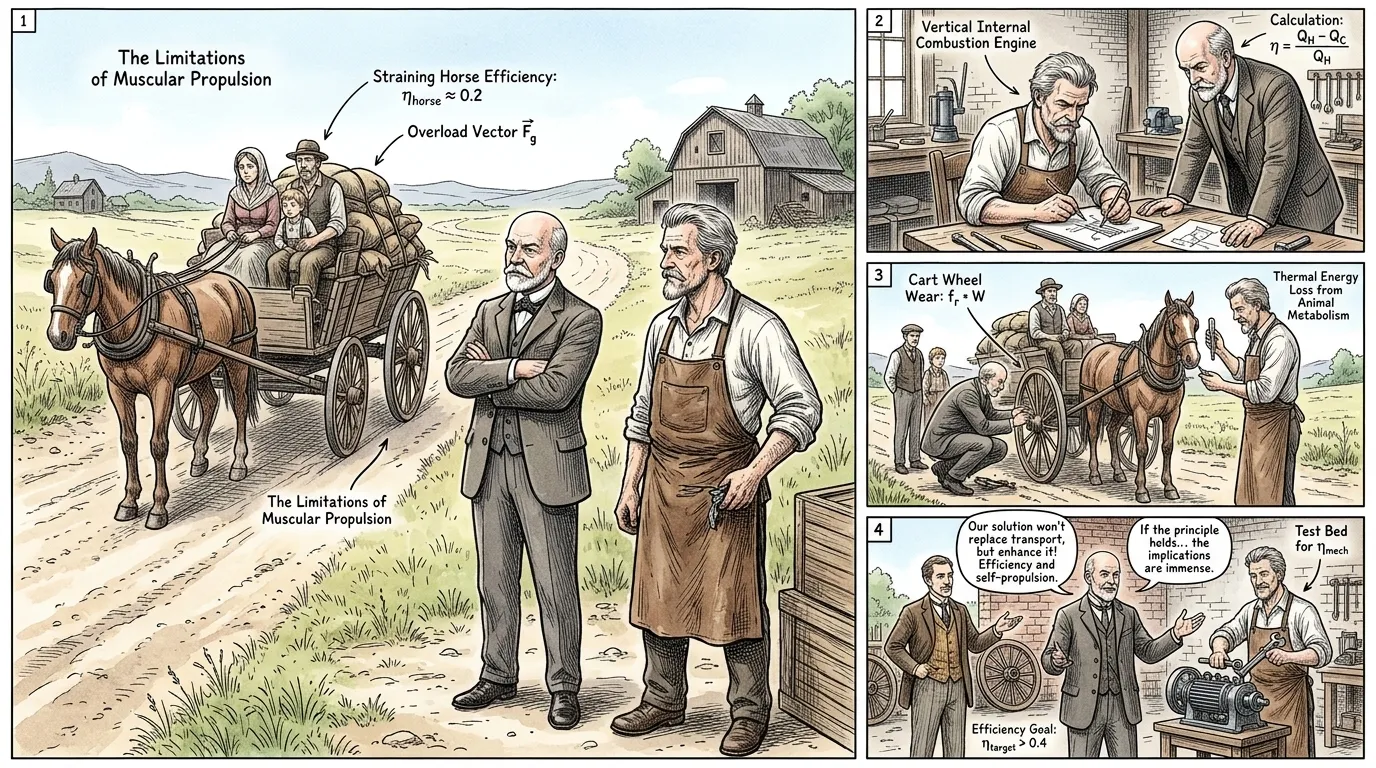
The limitations of existing transport were stark: journeys were lengthy, goods moved slowly, and personal reach was constrained. The desire for independent, rapid travel became a driving force for innovation.
"Daimler often remarked to Maybach, observing weary travelers, "Humanity always seeks to conquer distance. The bicycle offered freedom, but not speed without exhaustion. We need to transcend the limits of muscle and beast.""
Page 3
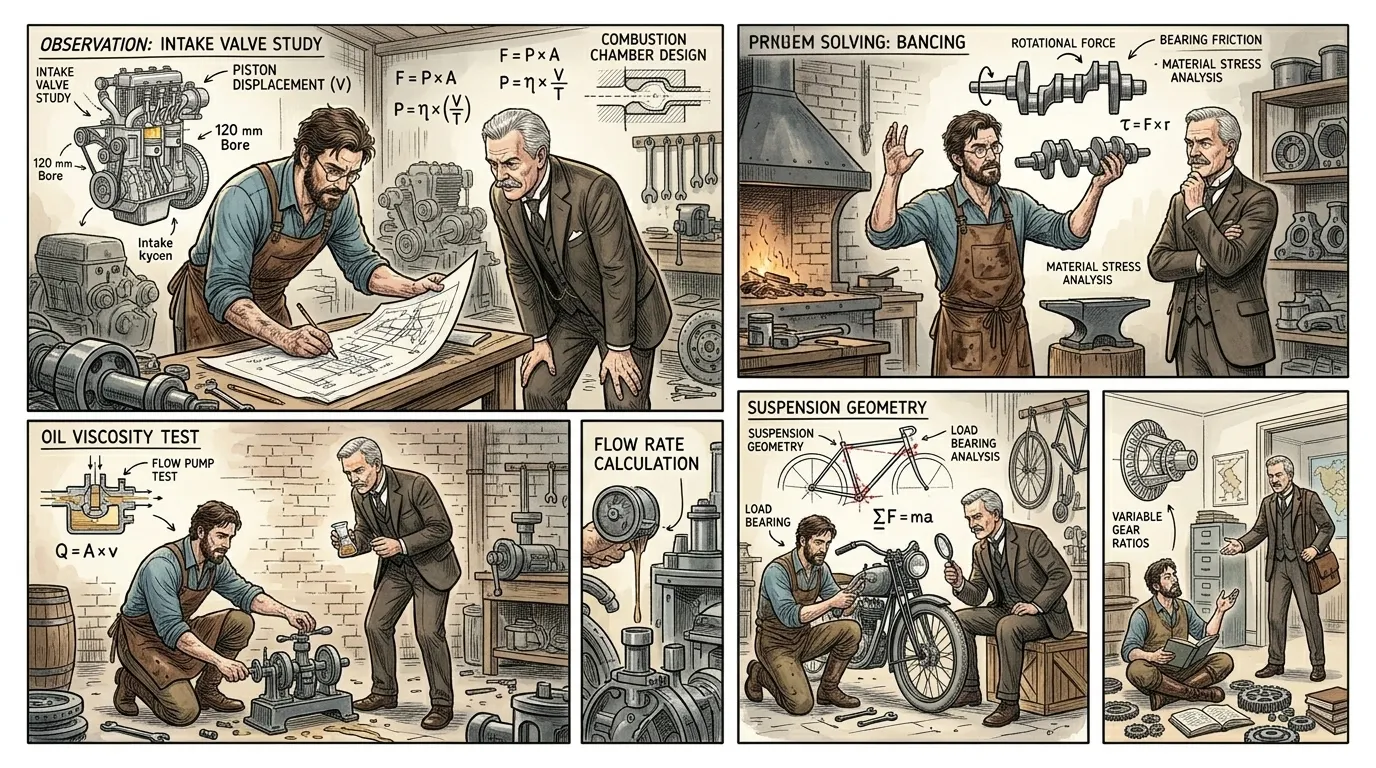
Early internal combustion engines were stationary, bulky, and unreliable. Their integration into a mobile, personal vehicle presented immense technical hurdles, particularly for a two-wheeled design demanding balance and control.
"Maybach, sketching furiously, explained to Daimler, "The challenge is not just the engine, but its marriage to the vehicle. A stable, lightweight frame must withstand constant vibration. Moreover, a reliable ignition system, robust yet compact, is paramount for mobile applications, far more complex than a stationary furnace.""
Page 4
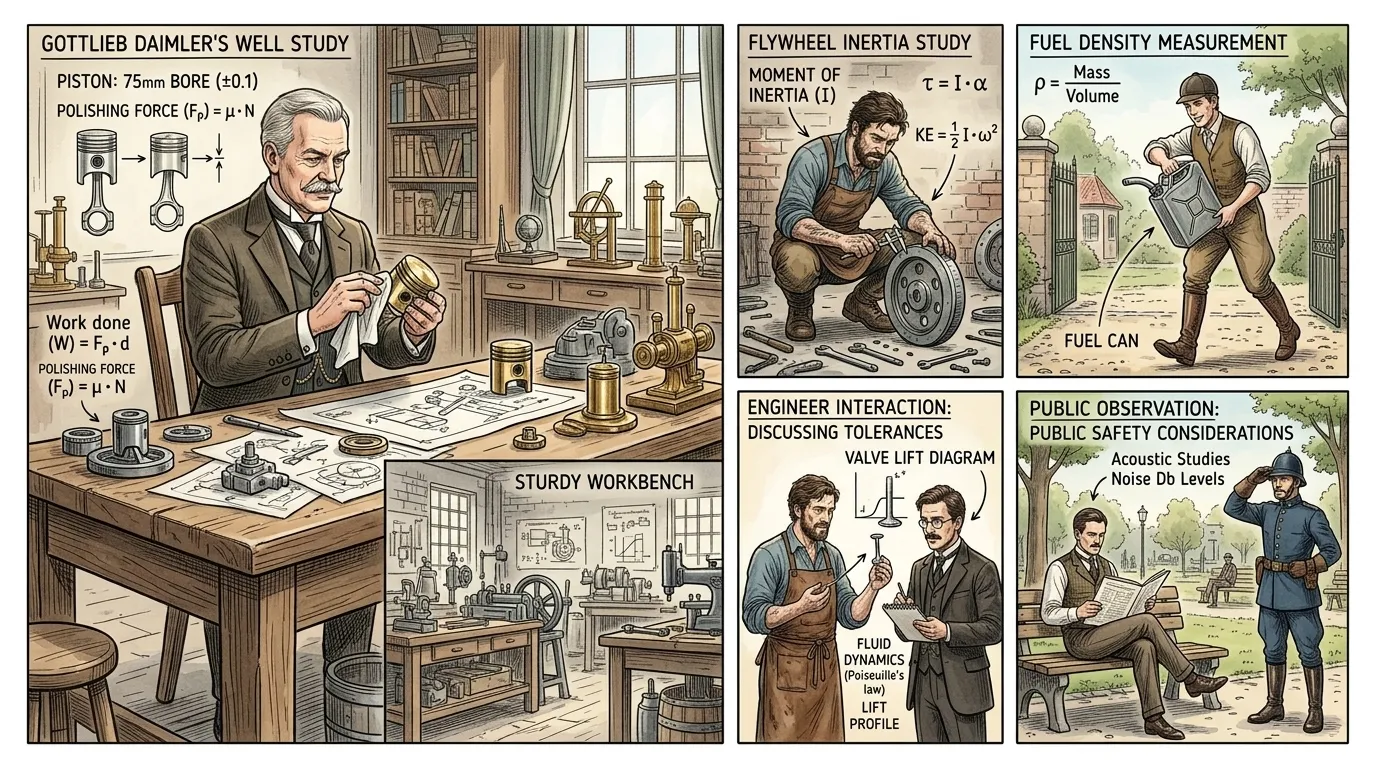
Gottlieb Daimler, after working with Nikolaus Otto on the four-stroke engine, envisioned a smaller, high-speed gasoline engine for universal application. This departure from large, slow industrial engines was radical.
"Daimler, polishing a small engine component, reflected, "Otto's engine was a triumph, but limited in scope. I believe, as Plato once said, 'Necessity is the mother of invention.' The necessity here is a smaller, faster heart for a new kind of machine—one that can propel us forward, not just pump water or mill grain.""
Page 5
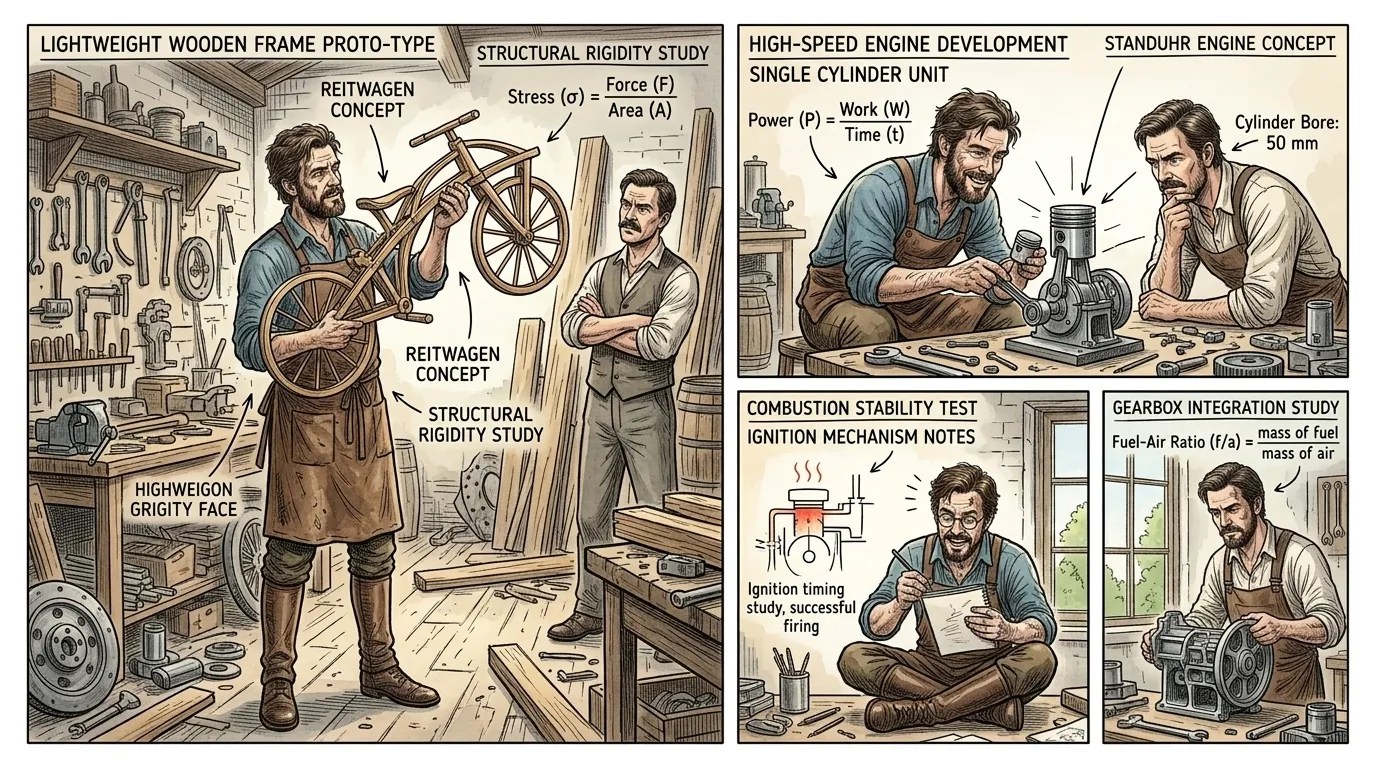
Wilhelm Maybach was the engineering genius who translated Daimler's engine vision into practical vehicle designs. His challenge was to craft a lightweight, stable, and steerable two-wheeled frame capable of harnessing the engine's power.
"Maybach, holding a wooden prototype frame, explained to a skeptical craftsman, "The engine must be cradled securely, yet the overall structure must be agile. We cannot merely bolt an engine to a bicycle; the stresses are entirely different. This wooden frame, though unconventional, allows us to test the dynamics before moving to metal.""
Page 6
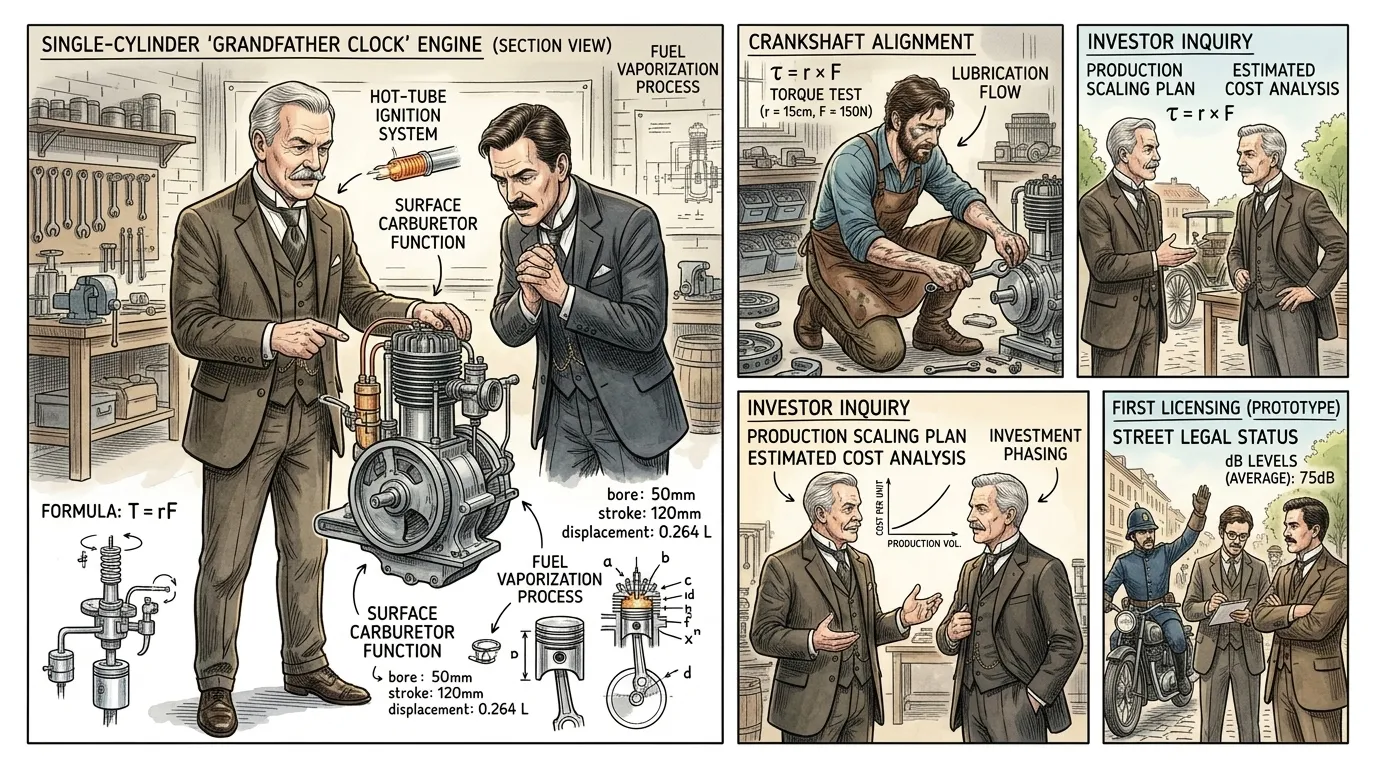
The 1885 Daimler Reitwagen represented a radical breakthrough. It combined Daimler's compact engine with Maybach's innovative design, featuring a hot-tube ignition system and a surface carburetor for fuel delivery.
"Daimler proudly showcased the Reitwagen to an investor, pointing to the engine. "Observe: a single-cylinder, 264cc engine, liquid-cooled, producing half a horsepower. The hot-tube igniter, heated externally, ensures continuous combustion. This surface carburetor, simple yet effective, vaporizes gasoline for fuel. It is entirely self-contained.""
Page 7
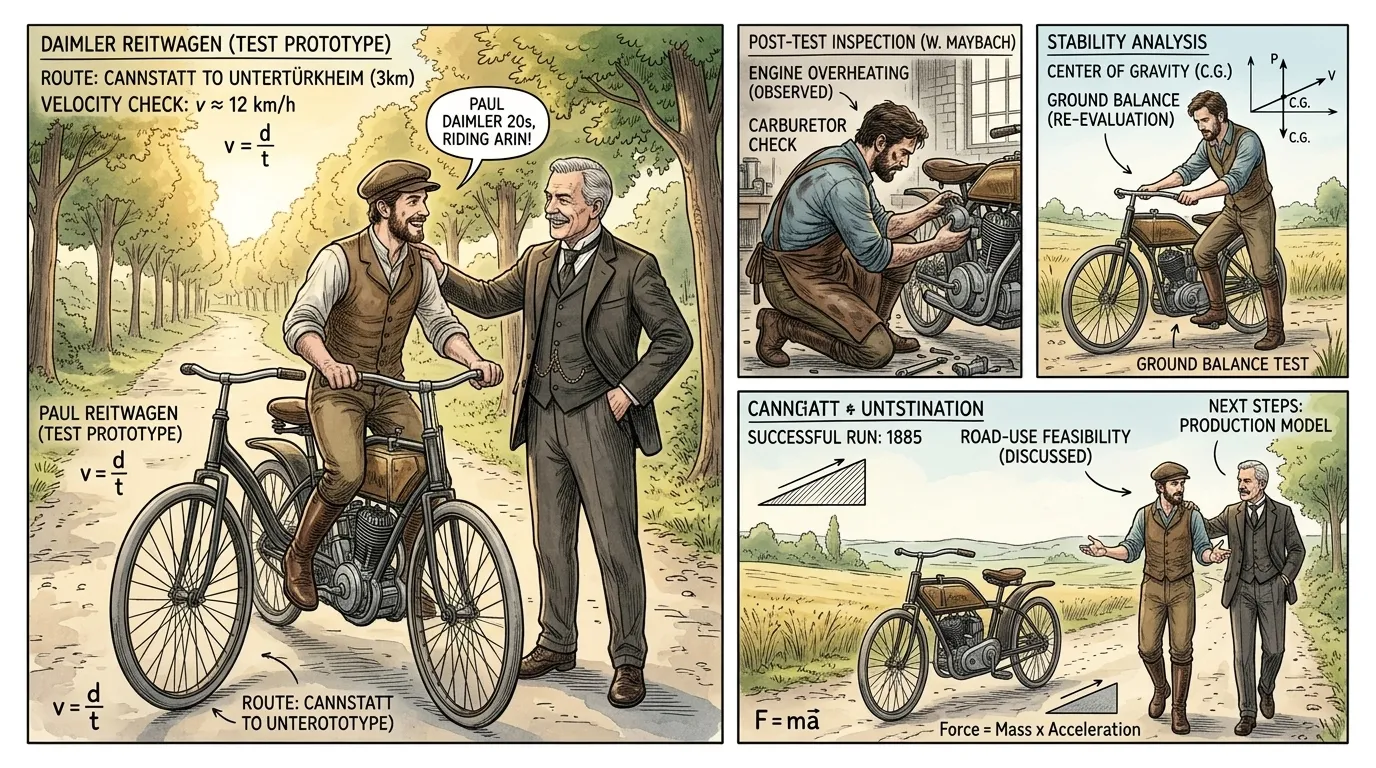
On August 29, 1885, Gottlieb Daimler's son, Paul, took the Reitwagen on its maiden voyage. This short but momentous ride from Cannstatt to Untertürkheim proved the viability of the motorized two-wheeler.
"Paul Daimler, dismounting with a grin, exclaimed to his father, "The 'riding wagon' moves with an incredible sense of freedom, Papa! The engine hums, and the belt drives it true. It's a sensation unlike anything before!" Gottlieb Daimler, beaming, replied, "Indeed, my son! This is not just a machine; it is a promise of a new era.""
Page 8
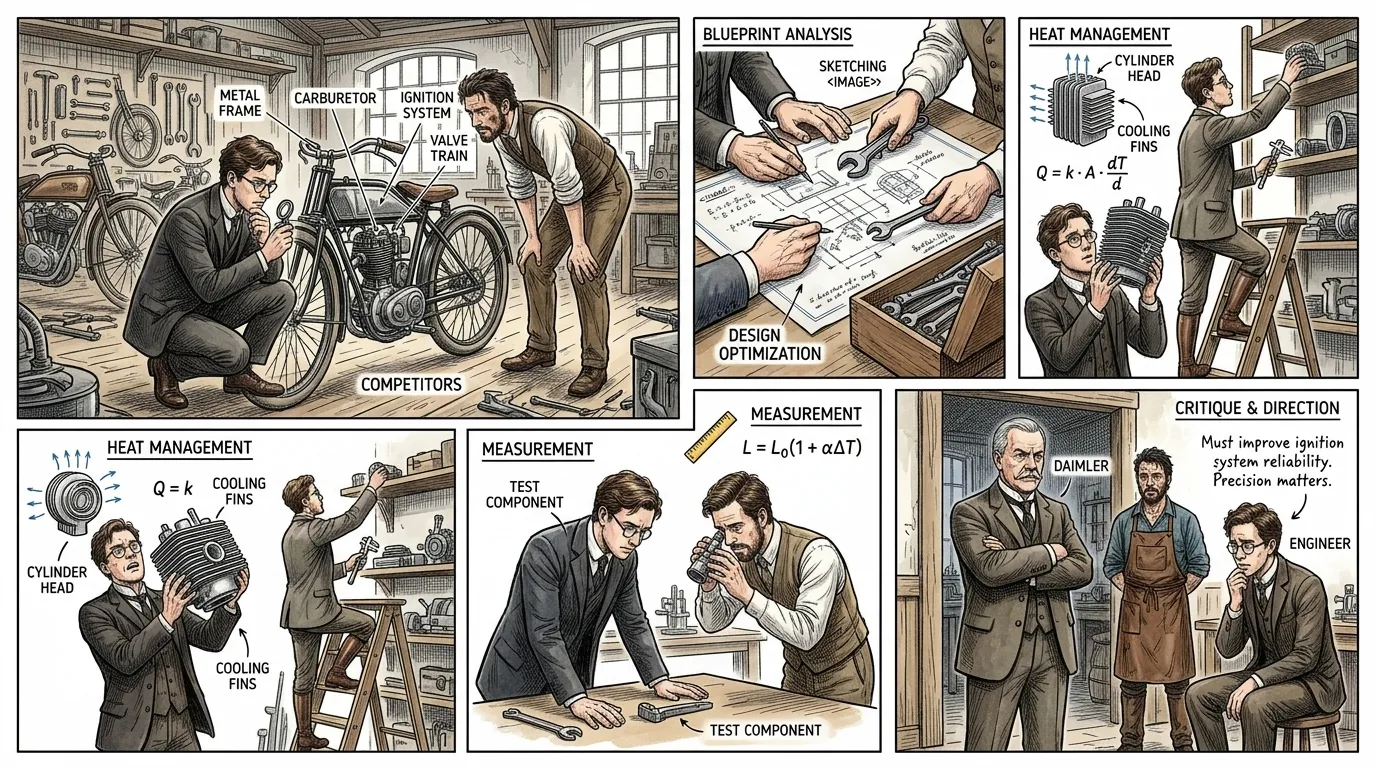
The Reitwagen, though a prototype, ignited a worldwide race to develop practical motorcycles. The shift from wooden frames to more robust, bicycle-derived metal frames quickly followed, improving stability and safety.
"An engineer from Hildebrand & Wolfmüller, examining a competitor's design, mused to his colleague, "Daimler's concept sparked it all. Now, the real task is refinement. We must perfect the ignition, secure the frame, and manage the engine's heat far more effectively. Remember the early struggles with hot-tube igniters and frame rigidity? Metal allows for precision and strength previously unimaginable. We overcame that initial hurdle!""
Page 9
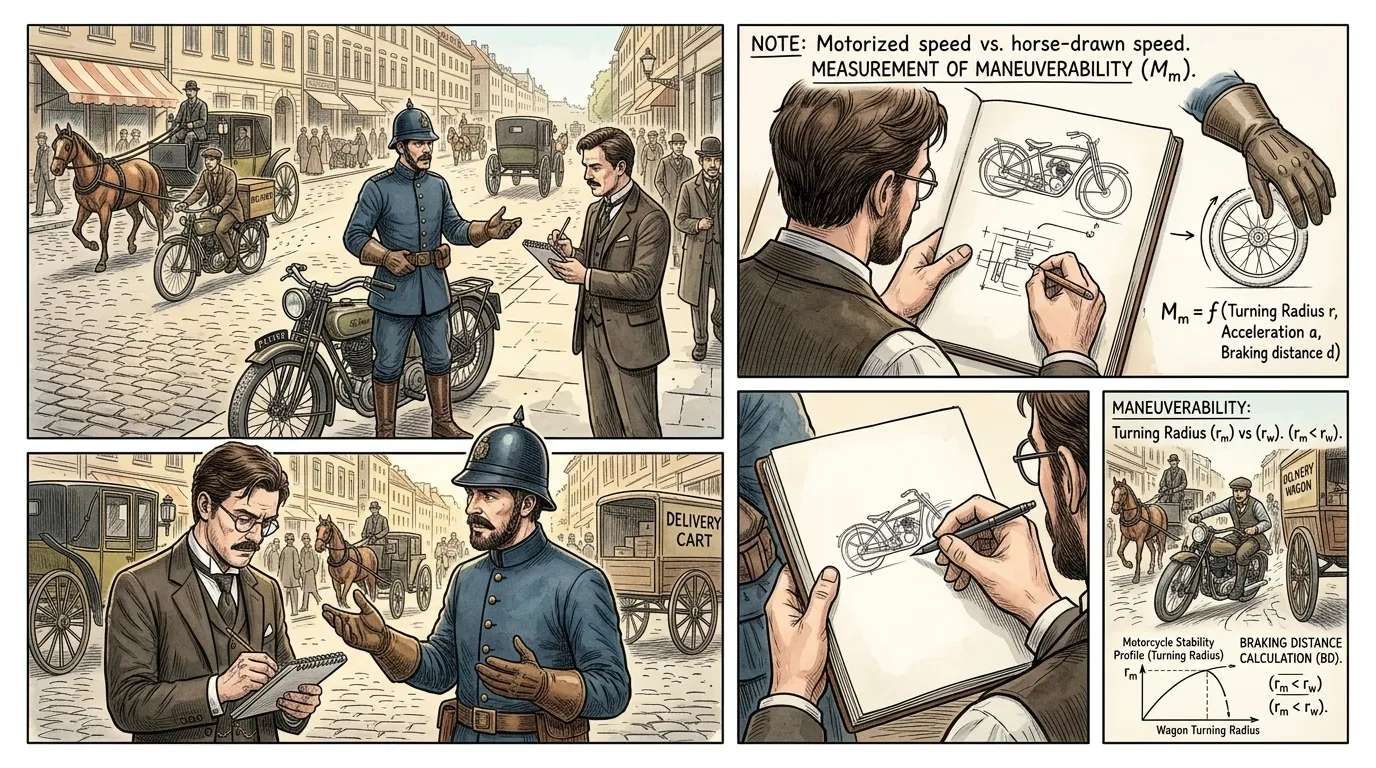
From its humble beginnings, the motorcycle rapidly found diverse applications, transforming personal travel, commerce, and public service. Its speed and maneuverability made it indispensable.
"A motorcycle policeman, dismounting from his patrol bike, remarked to a journalist, "These machines grant us an unprecedented reach. We can respond to emergencies faster, cover more ground, and maintain order with a mobility never before possible. It truly reshaped how we serve the public.""
Page 10
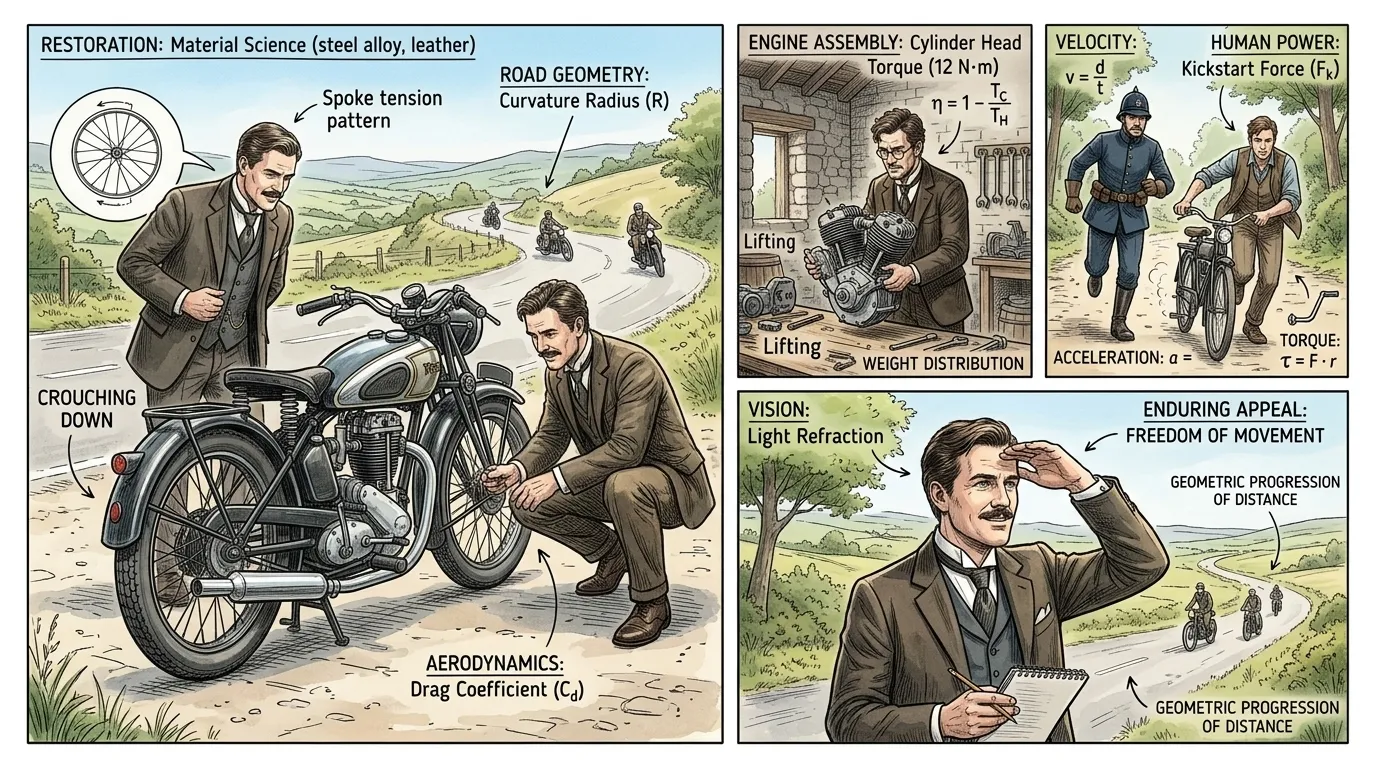
The motorcycle's impact extends far beyond mere transportation. It became a symbol of freedom, individuality, and adventure, while continuously evolving to meet new demands in utility and sport.
"A contemporary observer, reflecting on its enduring appeal, might note, "The motorcycle, born of ingenuity and perseverance, speaks to a fundamental human desire for mastery over distance. It is a testament to the power of a simple idea, continuously refined, to shape not just our journeys, but our very perception of freedom and possibility.""
About this story
- Location: Global
- Audience: general readers
Questions and answers
Read Wonder Inventions on your phone
Wonder Inventions is available on Android. Get Wonder Inventions on Google Play.