Microphone
Microphone — an illustrated inventions story, set in Global. 10 illustrated pages, free to read on Wonder Inventions.
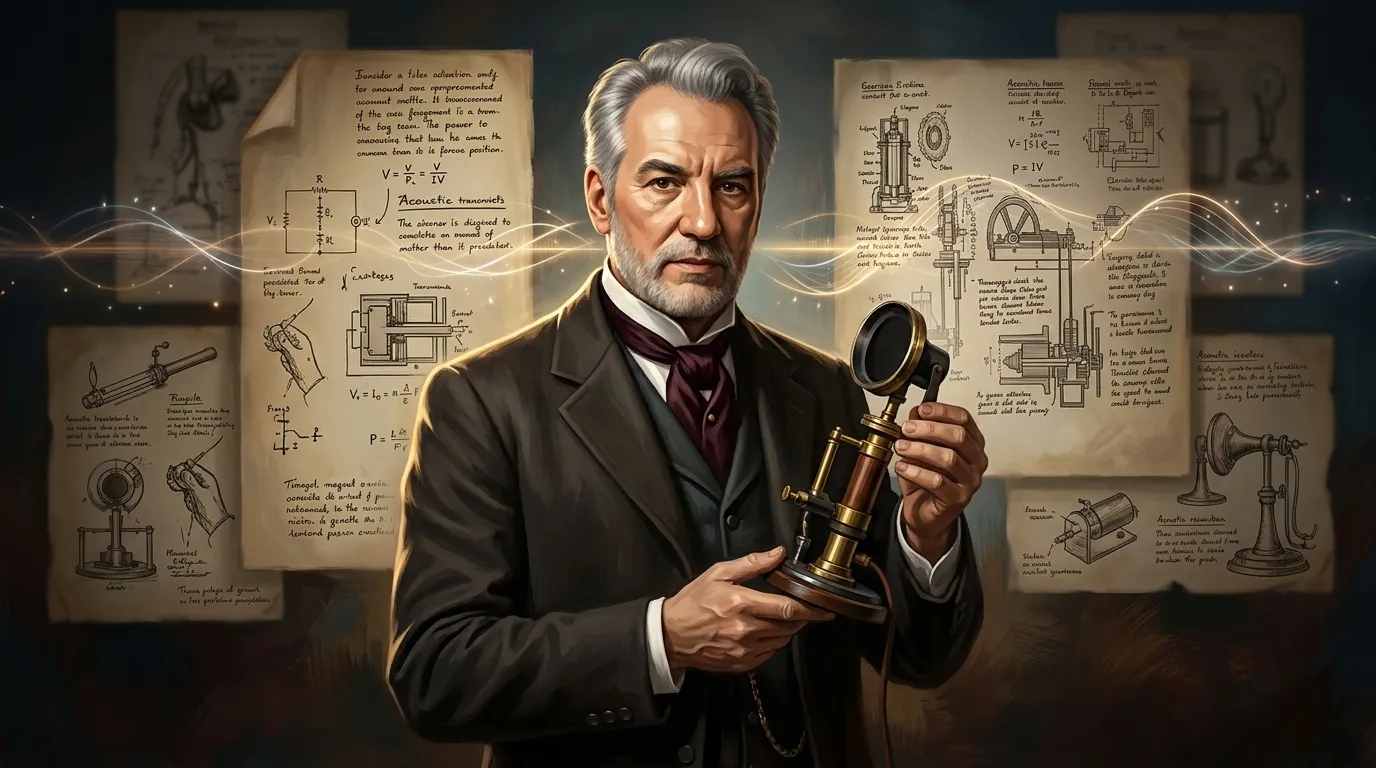
Page 1
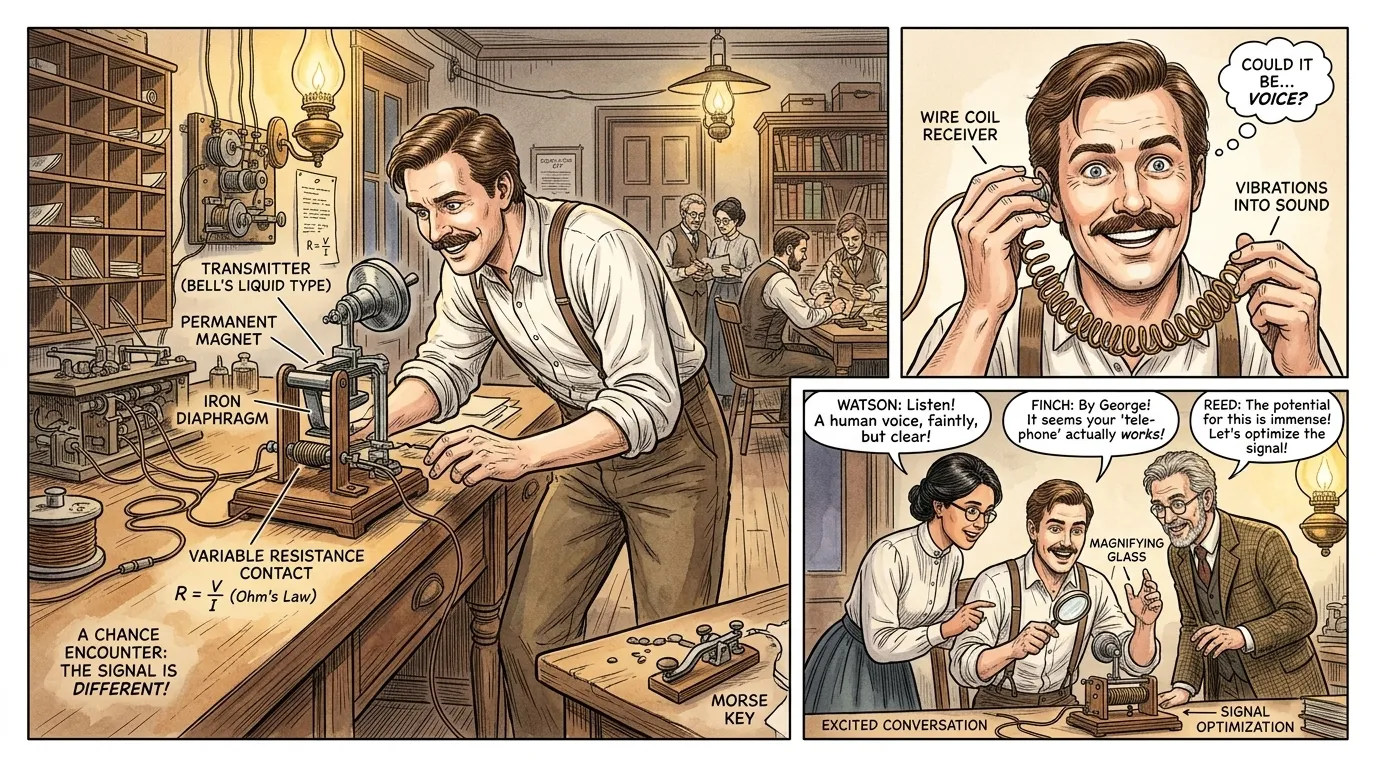
Before the late 19th century, transmitting the human voice clearly over electrical wires was a formidable challenge. Early telephone devices, while revolutionary in concept, suffered from a critical flaw: their inability to convert the subtle nuances of speech into a robust electrical signal.
Inventors like Alexander Graham Bell had made breakthroughs with rudimentary transmitters, but their sensitivity was limited, and the resulting audio was often faint and distorted. Distant conversations remained largely impossible, a frustrating barrier to the burgeoning age of instant communication.
""The spoken word, so rich in meaning and inflection, becomes a mere whisper over these wires," remarked a frustrated technician in a late 1870s telegraph office. "How can we truly connect when our voices fade into static?""
Page 2
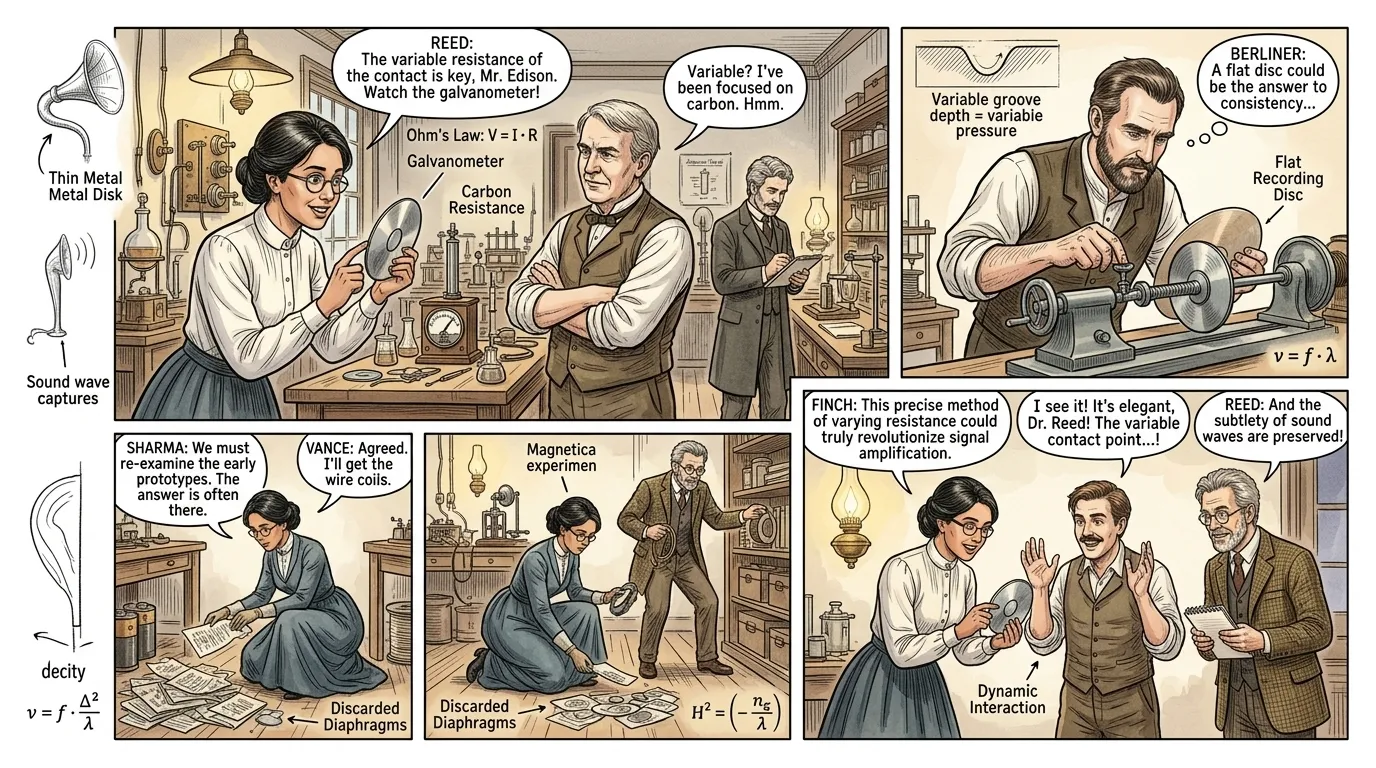
The fundamental problem lay in effectively capturing sound waves—tiny variations in air pressure—and translating them into analogous electrical currents that could travel distances. Early designs, such as Bell's electromagnetic transmitter, used sound waves to vibrate a metallic diaphragm, which in turn moved a coil or armature within a magnetic field, inducing a weak electrical current. However, this method proved inherently inefficient.
""Imagine the delicate touch of a feather," an engineer, Dr. Evelyn Reed, explains to a colleague, holding up a thin metal disk. "Sound waves are like that — incredibly subtle. Our challenge is to make that feather's touch create a roaring electrical river. We need something that can transform minute pressure changes into significant variations in electrical flow. The key, I believe, lies in harnessing variable electrical resistance.""
Page 3
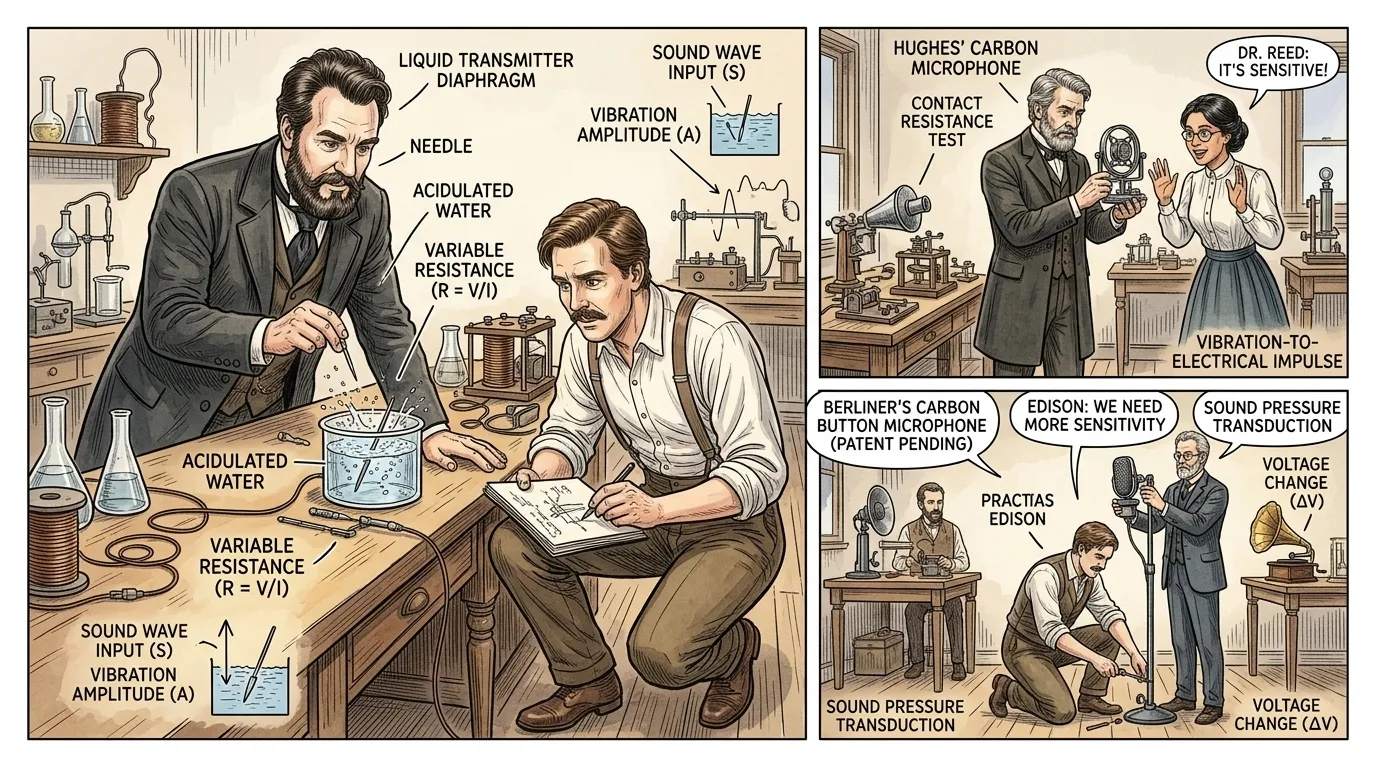
Alexander Graham Bell himself recognized the limitations of his initial electromagnetic transmitter. His subsequent 'liquid transmitter' offered a glimpse of a more effective solution. In this device, sound waves vibrated a diaphragm, which moved a needle in and out of a container of acidulated water.
""The needle's immersion changes the electrical resistance of the circuit," Bell explained to his assistant, Thomas A. Watson, demonstrating the splashing liquid. "More contact means less resistance, amplifying the sound. It's a clear improvement in modulation, but the corrosive liquid and delicate mechanics make it quite impractical for widespread use. The acid corrodes the components, and it's hardly user-friendly." Watson nodded thoughtfully, sketching in a notebook."
Page 4
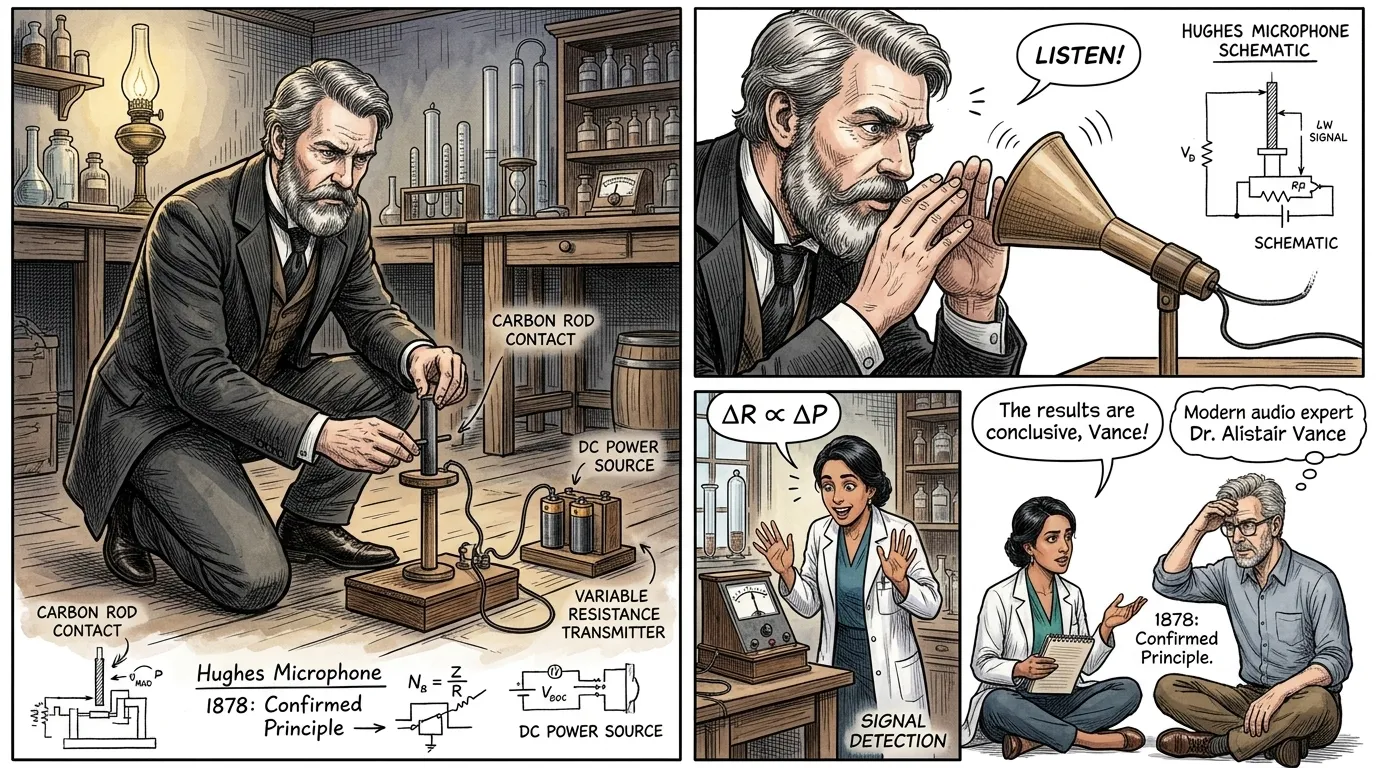
While Bell pursued liquid solutions, the British-American professor David Edward Hughes independently explored a different avenue: the variable resistance of loose conductors. In 1878, Hughes demonstrated that certain materials, particularly carbon, could dramatically alter their electrical resistance when subjected to even the slightest pressure variations from sound waves. This was a profound discovery, offering a robust method for sound-to-electricity conversion.
""It appears to magnify the faintest whisper," Hughes declared, his eyes gleaming with excitement as he adjusted a simple arrangement of carbon rods. "This phenomenon, where mere contact pressure can modulate an electric current, I call the 'microphone'—from the Greek 'mikros' meaning small, and 'phone' meaning voice. It amplifies the small voice. The potential for clear, loud transmission is immense.""
Page 5
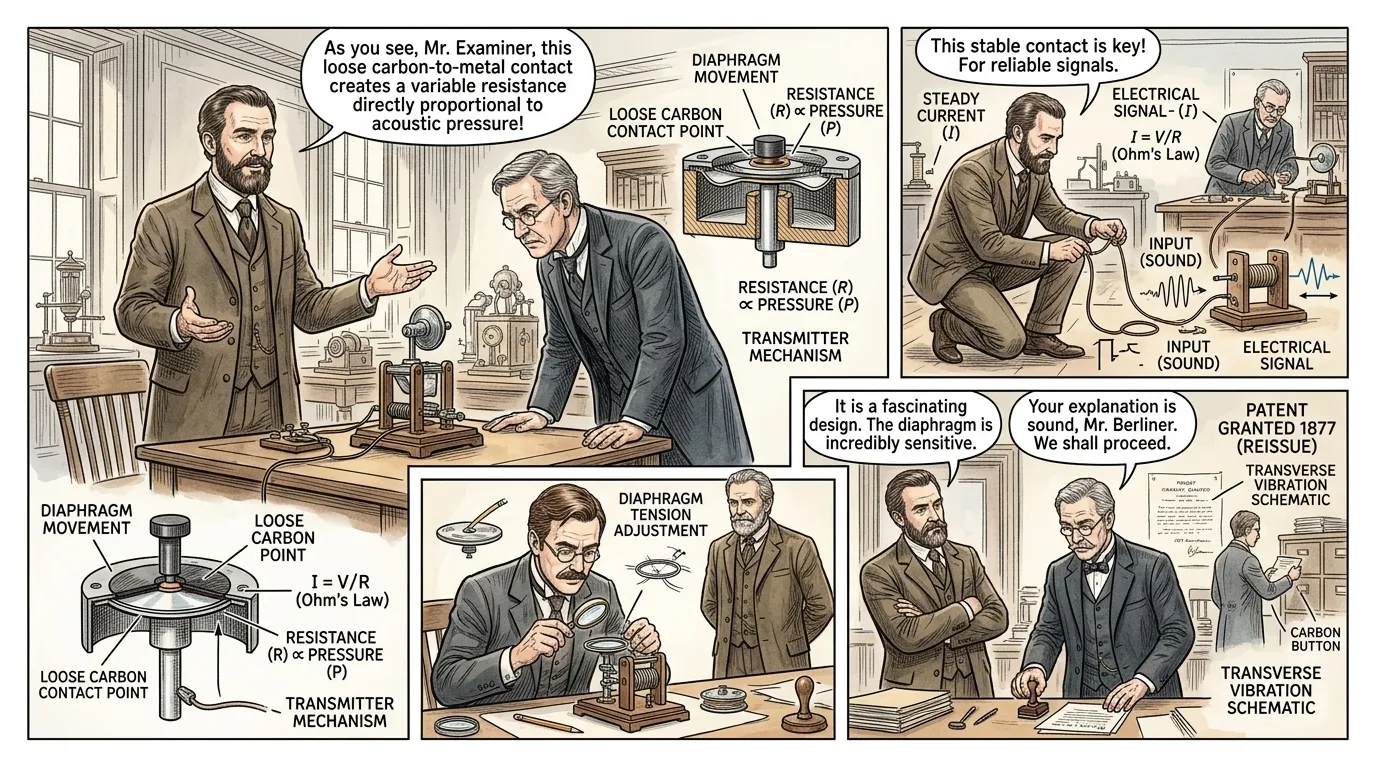
Hughes's demonstrations ignited a race to build practical devices. In 1877, just before Hughes's public announcement, German-American inventor Emile Berliner patented a 'loose-contact' carbon transmitter. Berliner's design, though distinct from Hughes's, utilized the same fundamental principle: the variation of electrical resistance at the point of contact between two conductors under pressure from sound waves. His innovation was a crucial step towards a stable, commercial device.
""The trick is maintaining a consistent, yet variable, contact," Berliner stated to a patent office official, gesturing at his prototype. "A metal diaphragm presses against a carbon button. As the diaphragm vibrates, the pressure on the carbon changes, modulating the current. It's simple, elegant, and crucially, reliable enough for sustained operation, unlike some of the earlier, more volatile designs. This solid contact avoids the issues of liquids or loosely balanced rods.""
Page 6
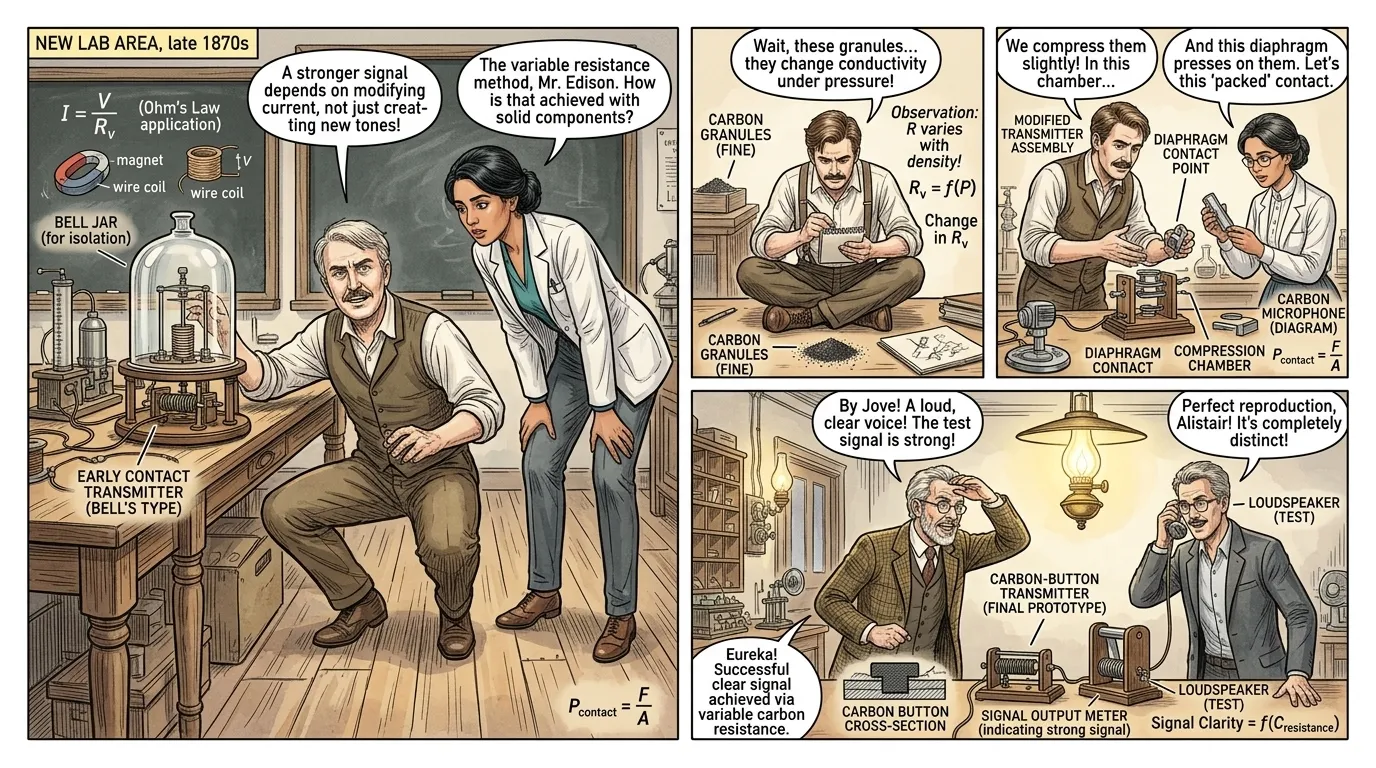
Building upon Berliner's work and Hughes's principle, Thomas Edison, the relentless inventor, focused on improving the carbon transmitter's stability and signal strength. His breakthrough came with the realization that using packed carbon granules, rather than a single carbon button, offered superior performance. Patented in 1878, Edison's carbon-button microphone became the standard for the nascent telephone industry.
""The genius is in the granules, not the single contact," Edison exclaimed to his team, pointing to a cross-section model. "Sound waves vibrate the diaphragm, and that diaphragm compresses the carbon granules. The more compact the granules, the better they conduct electricity. It's a dynamic, proportional resistance change, leading to a much stronger and clearer signal. The variability is greatly enhanced." His assistants nodded, taking notes, understanding the profound impact."
Page 7
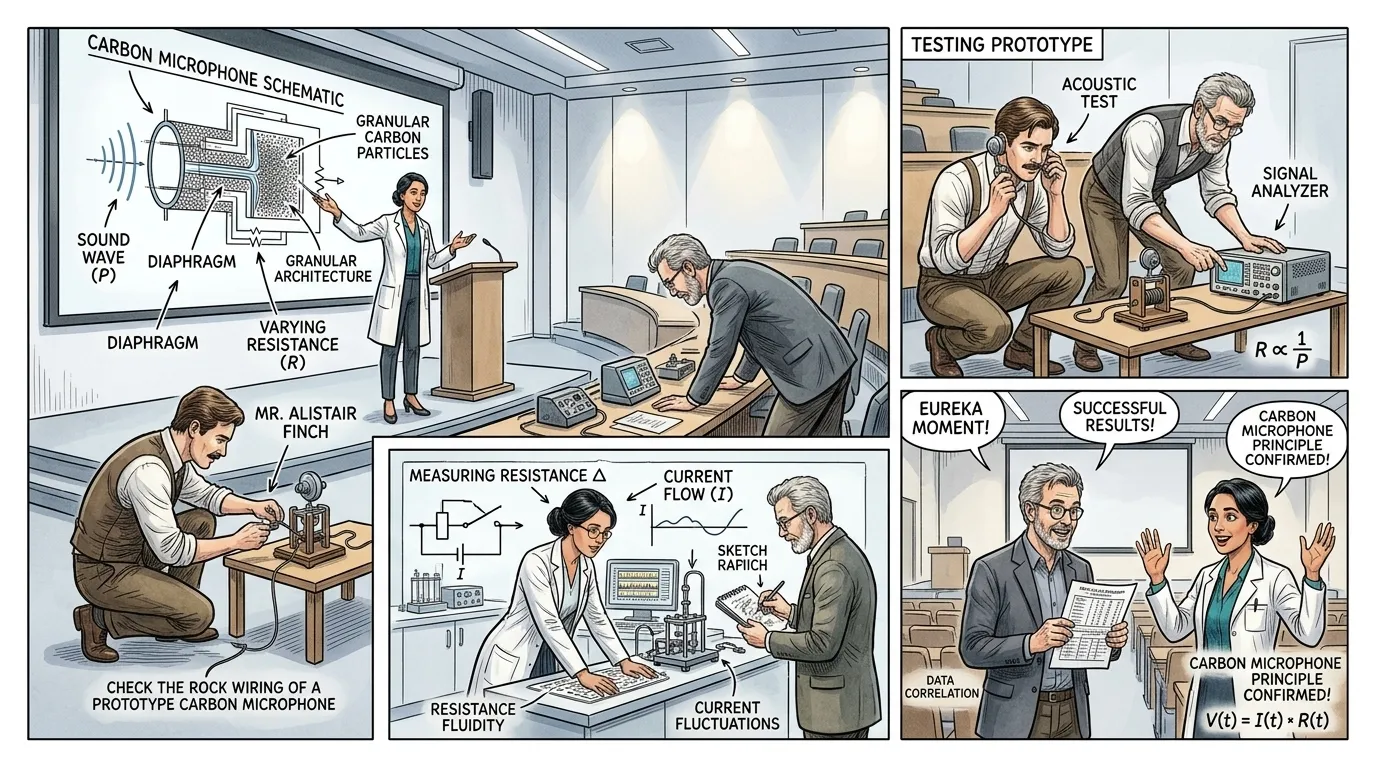
Edison's carbon microphone operates on a simple yet ingenious electromechanical principle. When sound waves strike the thin, sensitive diaphragm, it vibrates in response. This vibration, even subtle, exerts varying pressure on a small chamber filled with fine carbon granules. The key scientific knowledge, identified earlier, is the direct relationship between pressure and electrical resistance in these carbon particles.
""The beauty lies in the granular architecture," an expert, Dr. Anya Sharma, explains, gesturing to a detailed schematic. "Sound pressure changes the contact area between the carbon particles. More pressure means better contact, lower resistance, and thus more current flows. Less pressure means higher resistance, reducing the current. As the American inventor Robert H. Goddard once said about innovation, 'It is difficult to say what is impossible, for the dream of yesterday is the hope of today and the reality of tomorrow.' Our challenge was to make the 'impossible' of converting faint sound into a robust electrical reality, and this mechanism precisely does that, leveraging that very principle of variable resistance we discussed.""
Page 8
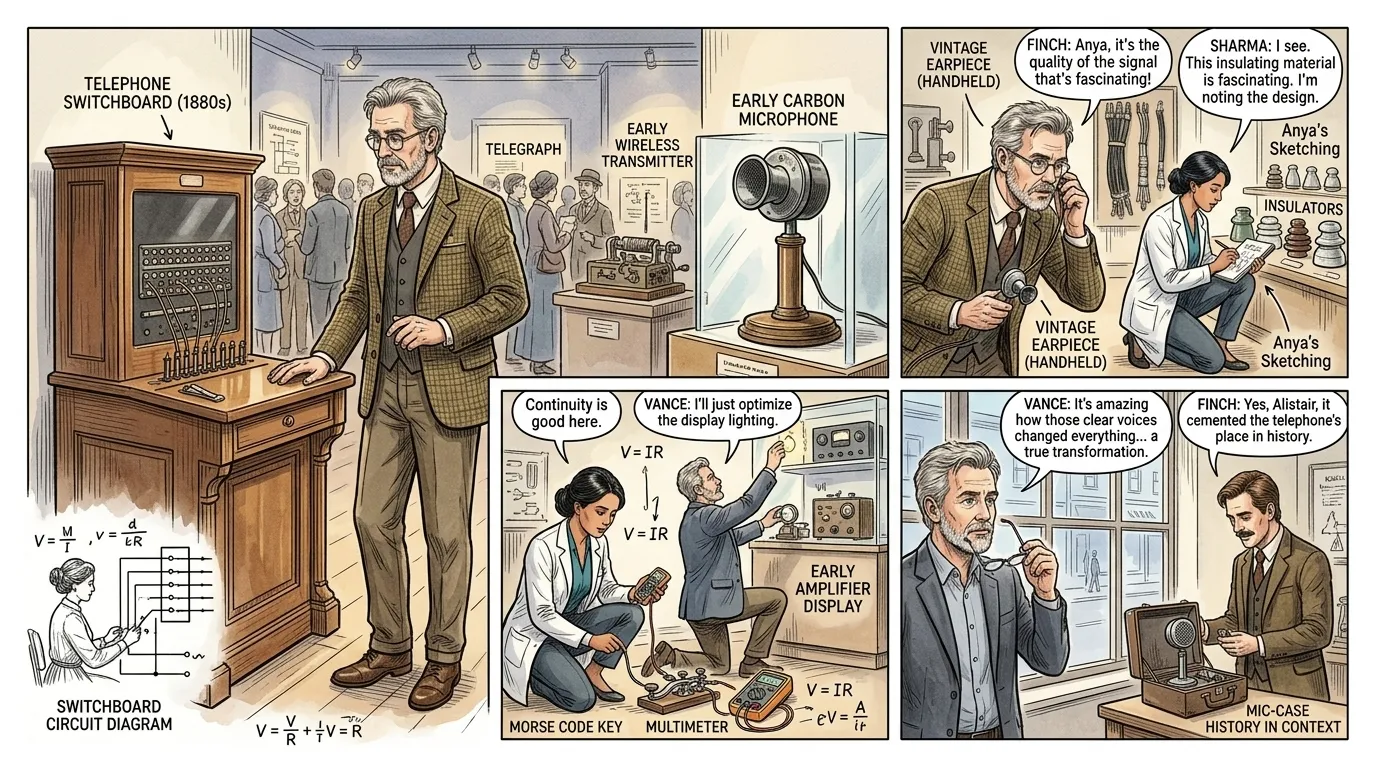
With Edison's robust and sensitive carbon microphone, telephone communication truly came into its own. The clear, amplified voices transformed the business world, allowing deals to be struck across continents and industries to coordinate with unprecedented speed. It was not merely an improvement; it was the enabling technology that made the telephone a practical, indispensable tool for a rapidly modernizing world, cementing its place in homes and offices.
""Before this, long-distance calls were a struggle of shouting and guesswork," a telecommunications historian, Mr. Alistair Finch, remarks, standing beside a vintage switchboard. "Now, voices carry with startling clarity. Imagine the shift: from a novelty to a necessity almost overnight. This microphone didn't just transmit sound; it transmitted human connection, emotion, and commerce over vast distances. It became the very mouth of the telephone.""
Page 9
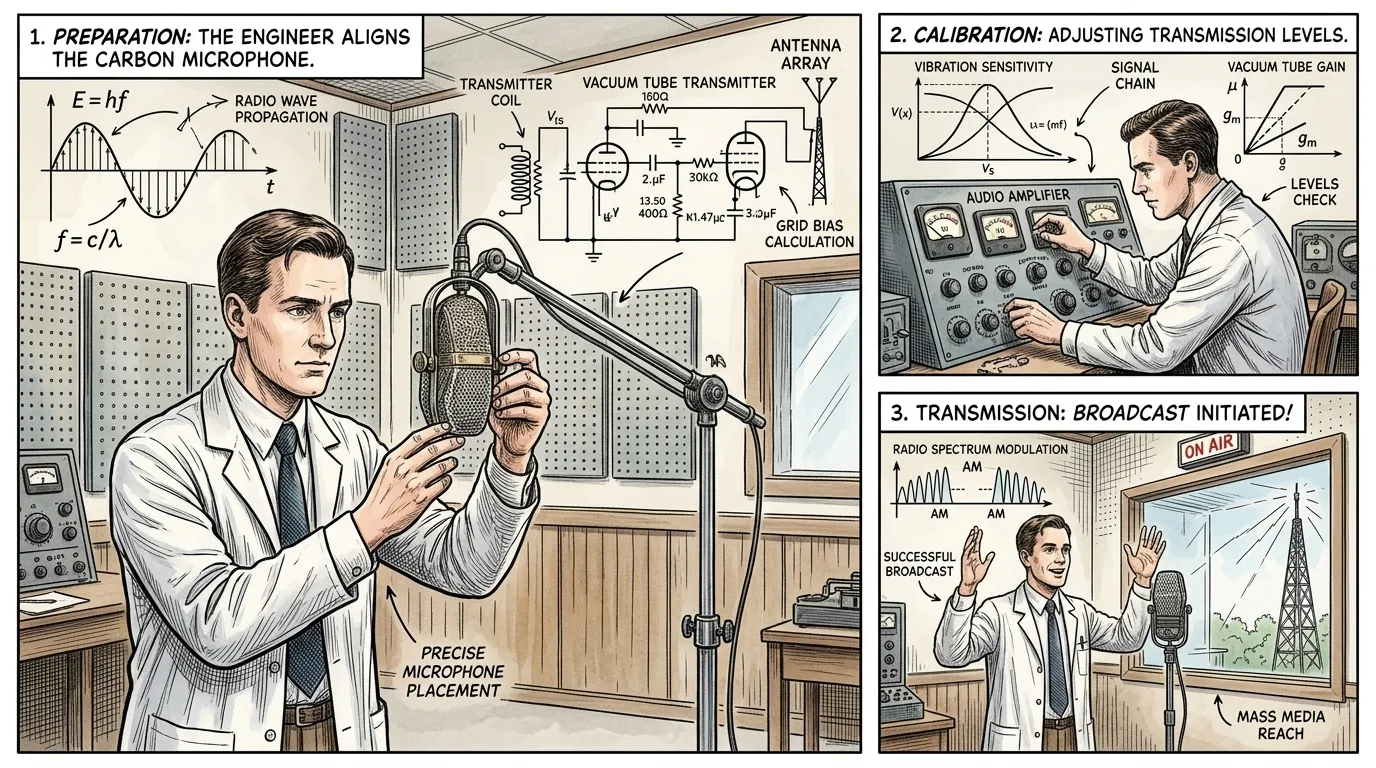
The carbon microphone's impact extended far beyond telephony. Its ability to accurately and robustly convert sound into electrical signals made it indispensable for nascent broadcasting technologies. Early radio stations, public address systems, and even primitive sound recording studios relied heavily on carbon microphones to capture voices and music, ushering in an era of mass media and entertainment. For the first time, a single voice could reach millions.
""Broadcasting would have been impossible without it," a radio engineer from the 1920s states, carefully positioning a large, ornate carbon microphone in a radio studio. "Imagine trying to transmit a symphony or a presidential address without a device capable of converting every note and inflection into a powerful electrical waveform. This microphone gave us the ears, and more importantly, the voice, of the airwaves. It birthed the concept of the audience beyond a single listener.""
Page 10
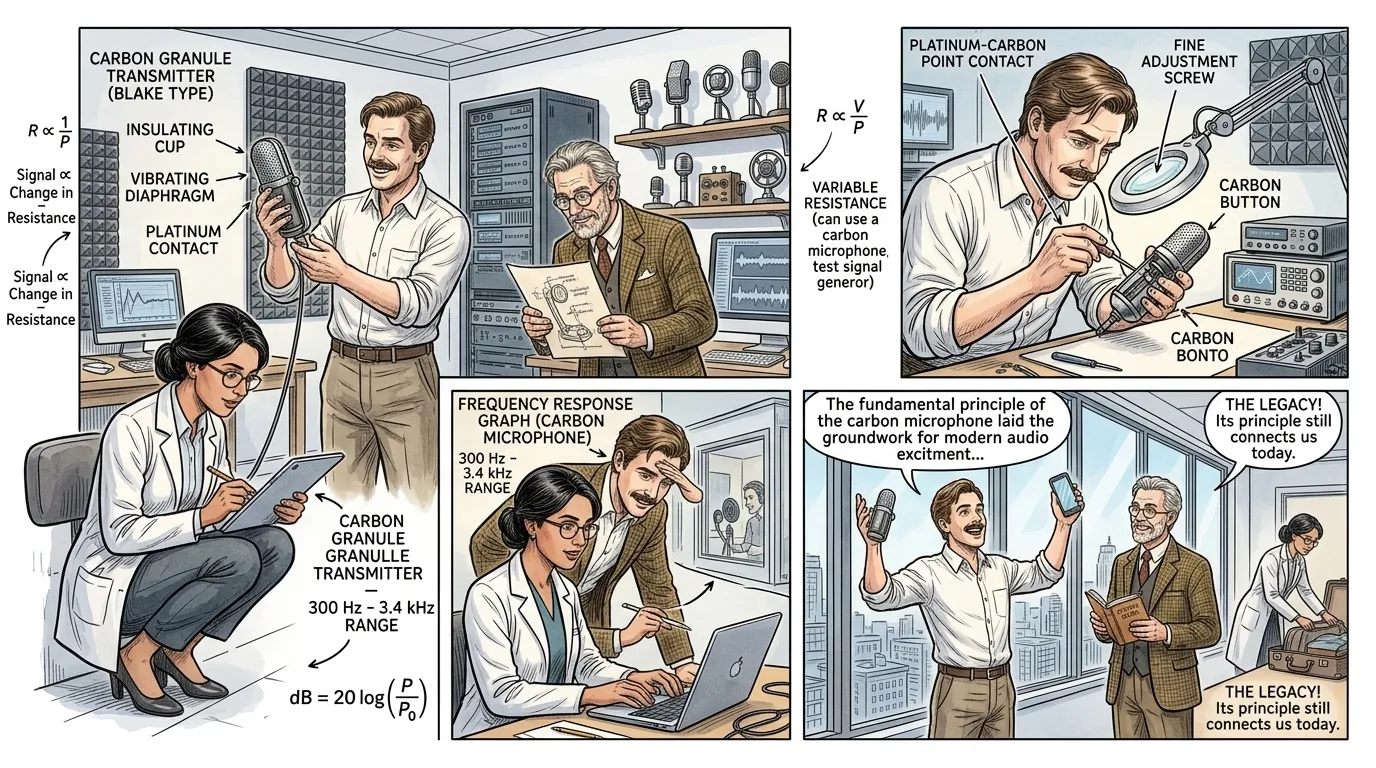
Though largely supplanted by more advanced technologies like condenser and dynamic microphones, the carbon microphone's fundamental principle—converting sound pressure into variable electrical resistance—remains a cornerstone of acoustic transduction. Its invention democratized distant communication and laid the groundwork for all modern audio technology, from studio recording to digital voice assistants. It was the crucial first step in giving human utterance an enduring, electrical life.
""From the fragile whispers of early telephony to the ubiquitous voice recognition of today, the legacy of the microphone is undeniable," remarks Dr. Alistair Vance, a modern audio technology expert, holding a vintage carbon microphone. "Every time we speak into a phone, record music, or command a smart device, we are tapping into the lineage of those early innovators who wrestled with sound and electricity. They proved that the human voice could not only travel but could also be captured and preserved. As the physicist J. Robert Oppenheimer once mused, 'Science is not a collection of facts, but a process of discovery.' The microphone embodies this, a continuous process of discovering how to better hear and be heard.""
About this story
- Location: Global
- Audience: general readers
Questions and answers
Read Wonder Inventions on your phone
Wonder Inventions is available on Android. Get Wonder Inventions on Google Play.