Social Media Platform
Social Media Platform — an illustrated inventions story, set in Global. 10 illustrated pages, free to read on Wonder Inventions.
Page 1
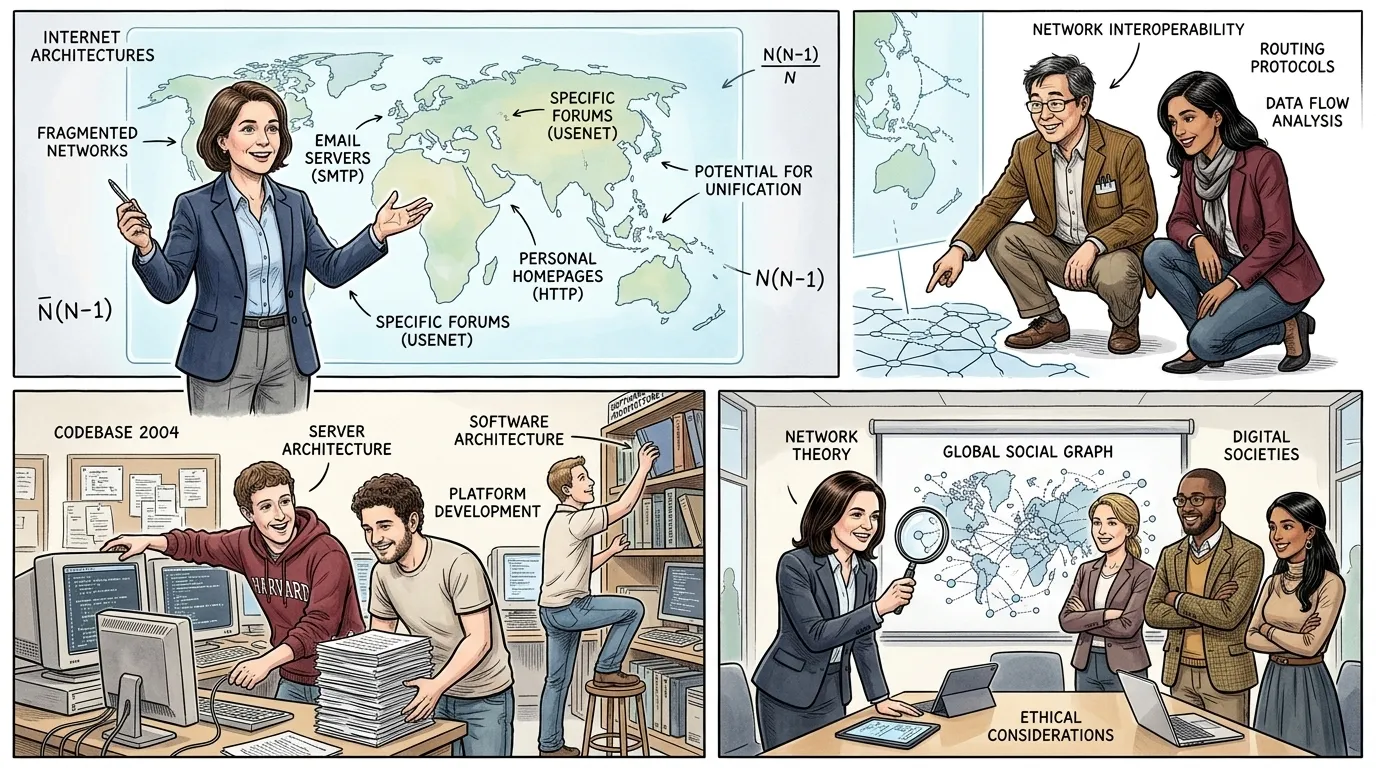
Before the advent of dedicated social media platforms, digital communication was largely fragmented. Individuals communicated via email, specialized online forums, or rudimentary personal webpages, but a cohesive digital space for broadcasting one's identity and maintaining a network of diverse connections simply did not exist. The challenge was to create a system that could dynamically map human relationships and facilitate persistent, easily accessible interaction across vast distances.
""The early internet was a collection of islands; the goal was to build the bridges." – Dr. Eleanor Vance, Digital Historian."
Page 2
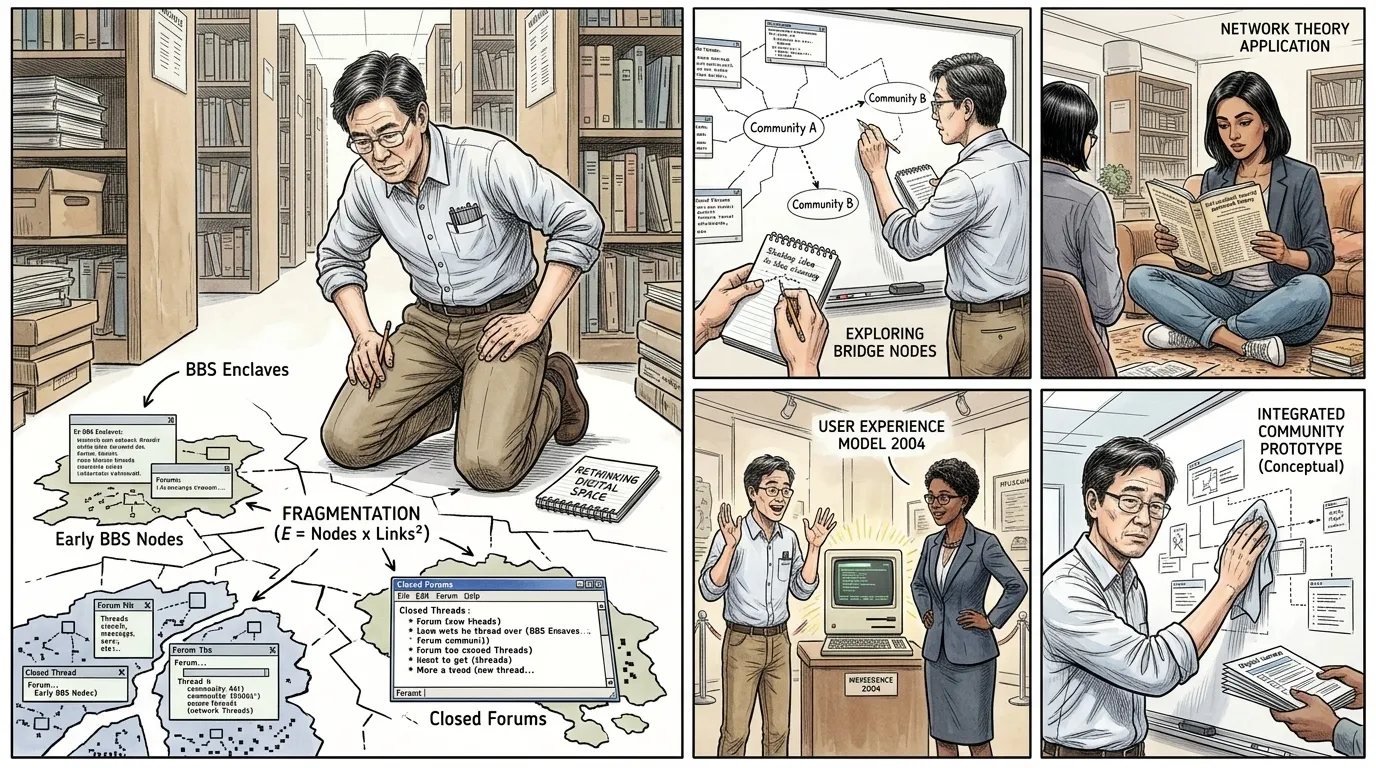
In the late 20th century, digital communities were typically insular. Bulletin board systems (BBS) and early online forums gathered people around specific interests, but connecting these disparate groups or managing a personal network across multiple platforms was a laborious, often impossible task. The digital world lacked a central nervous system for human social interaction, making sustained, broad-spectrum digital relationships difficult to cultivate beyond niche groups. This fragmentation meant that personal updates and broader social insights remained trapped within small, self-contained digital enclaves.
""Moving beyond simple message boards required a complete rethinking of how digital identities could be structured and interconnected." – Professor David Chen, Computer Science Ethicist."
Page 3
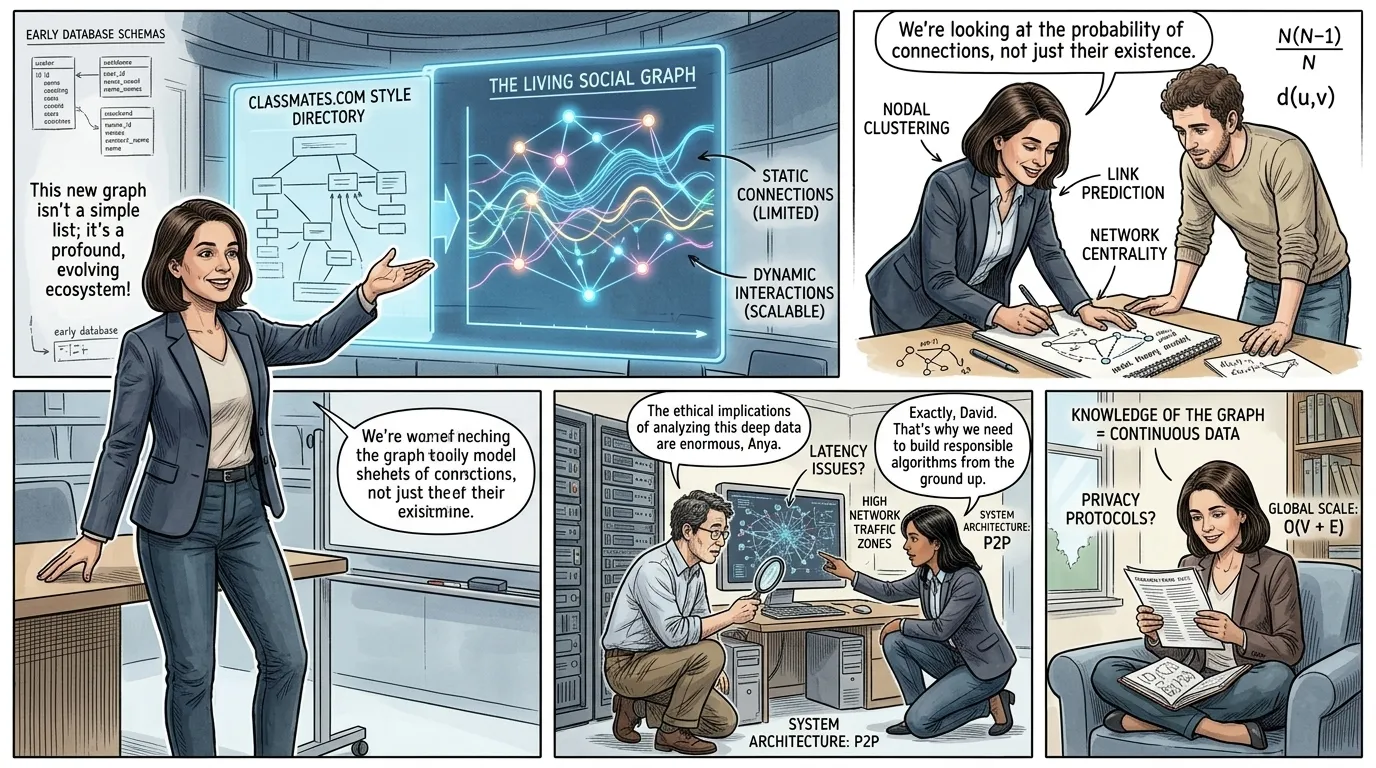
The foundational problem was how to digitally represent a 'social graph' – the complex web of real-world relationships between people. While simple directories like Classmates.com (founded 1995) attempted to list connections, they failed to capture the dynamic, evolving nature of human ties. The challenge lay not just in listing friends, but in enabling a continuous flow of shared experiences, updates, and interactions that mirrored real-life social dynamics in a scalable and intuitive manner, demanding new database architectures and interaction models. This concept of mapping and leveraging actual human connections was the profound 'knowledge' that needed to be digitally unlocked.
""Early attempts were like drawing a static map; we needed to build a living, breathing ecosystem." – Dr. Anya Sharma, Network Theory Specialist, reflecting on the difficulty of replicating complex social connections digitally."
Page 4
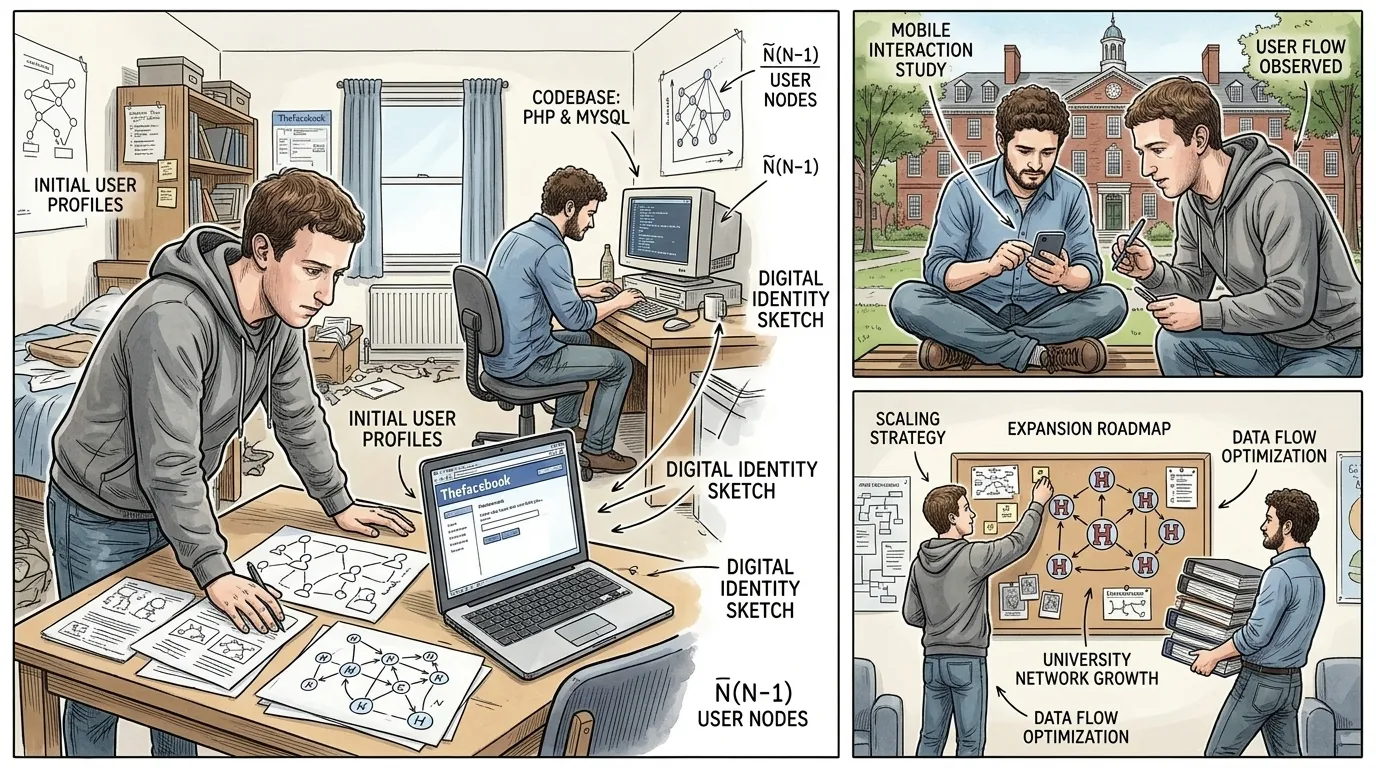
Mark Zuckerberg, a student at Harvard University, encountered these limitations firsthand. His initial projects, like 'Face mash', which compared student photos, underscored the latent desire for digital social interaction and identity within a defined community. Recognizing the absence of a universal online directory for university students, Zuckerberg conceived 'Thefacebook' in February 2004. His motivation was clear: to create a centralized, easy-to-use platform where students could connect, share information, and foster their collegiate social lives beyond physical proximity. This marked a pivotal shift from niche forums to a comprehensive personal identity network.
""The university environment was a microcosm of the global problem—people needed a better way to see and be seen, digitally." – Mark Zuckerberg, in an archival interview from 2005, reflecting on the platform's genesis."
Page 5
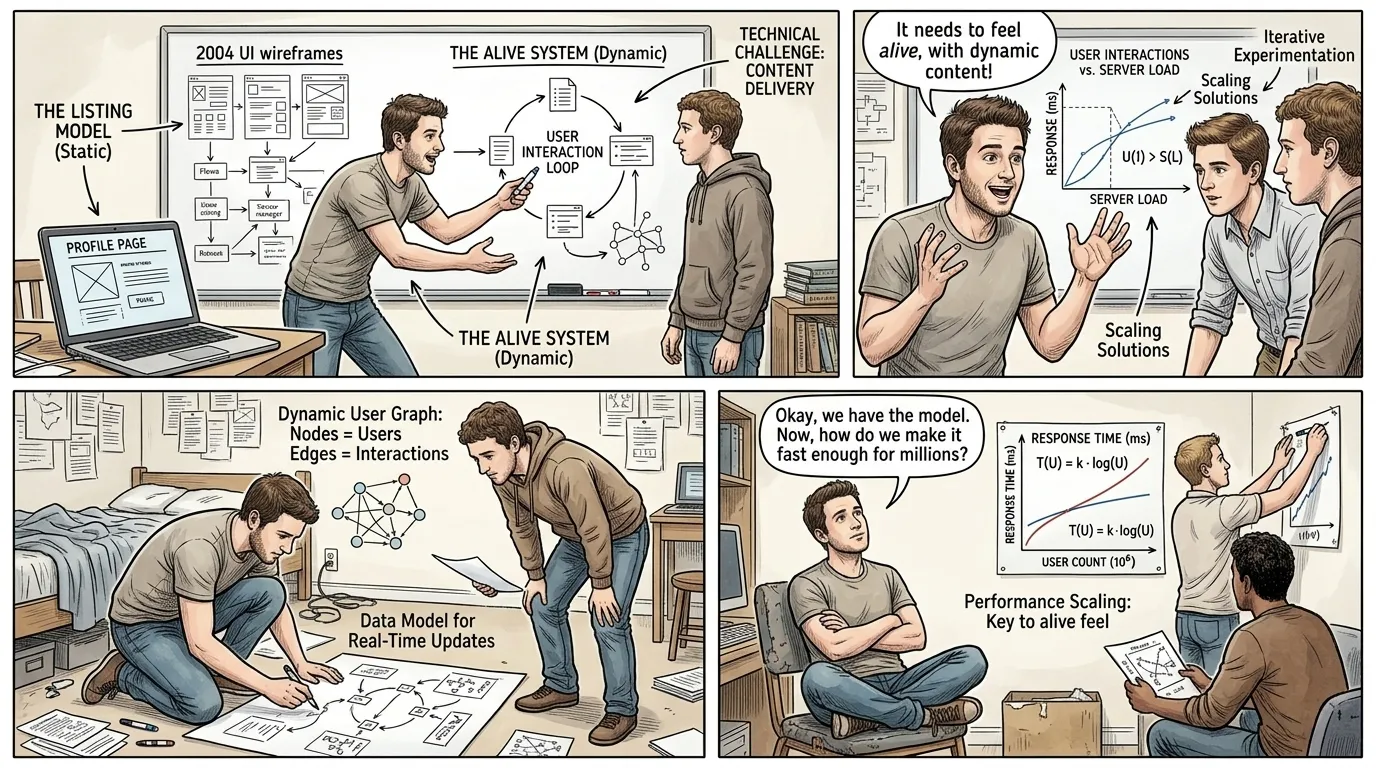
The earliest versions of what would become Facebook were relatively simple, serving primarily as online directories. Users could create profiles, add friends, and share basic information, echoing the functionality of earlier social sites like Six Degrees (1997) and Friendster (2002). However, Zuckerberg and his team quickly realized that mere listings were insufficient. The technical challenge shifted from static data representation to dynamic content delivery and interaction, grappling with how to scale the system to millions of users while maintaining speed and relevance. Early iterations experimented with various data models and user interfaces to discover what truly resonated with how people wanted to interact online.
""It was more than just a registry; it had to feel alive, like a conversation that never stopped." – Dustin Moskovitz, Co-founder of Facebook, in a retrospective interview."
Page 6
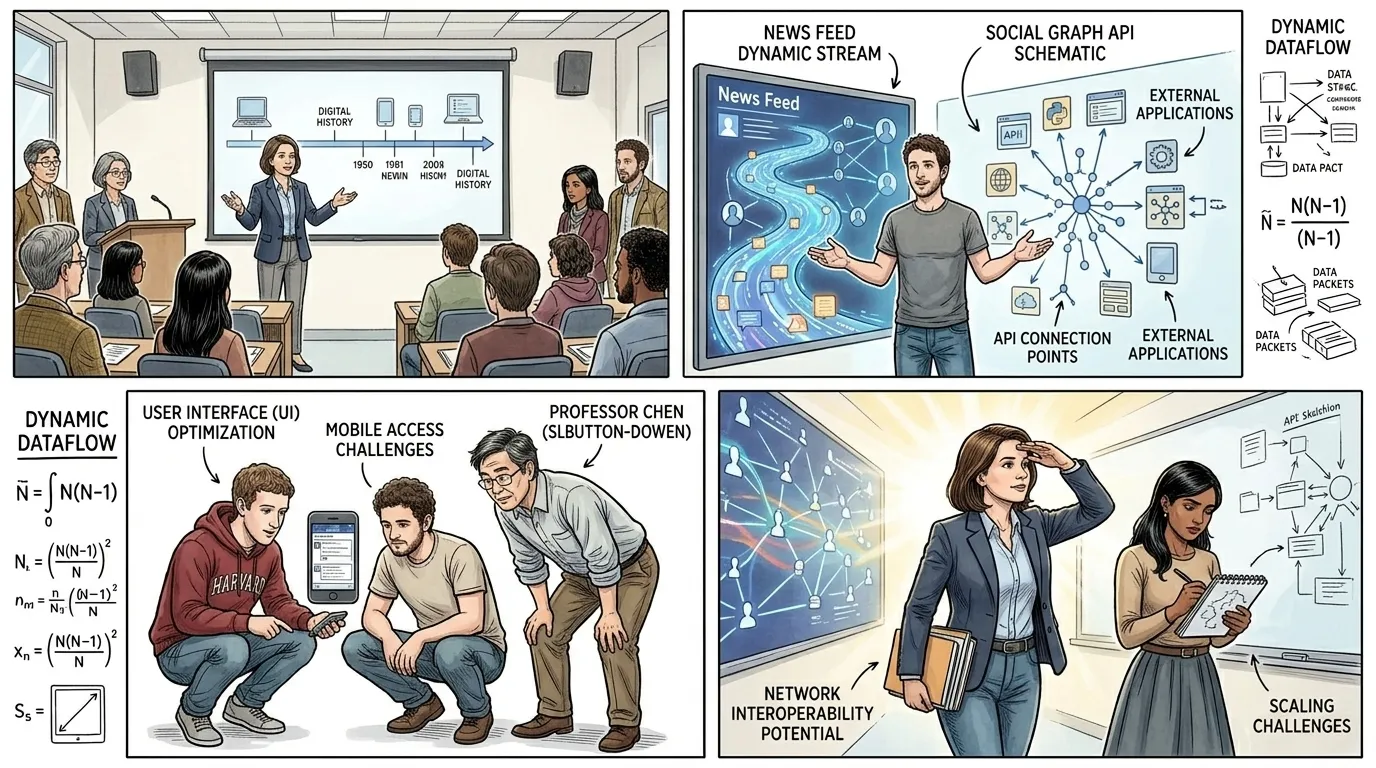
The critical breakthrough came in two major components: the News Feed (introduced in 2006) and the Social Graph API. The News Feed transformed the platform from a static profile repository into a dynamic stream of real-time updates from one's network, creating a constant incentive for engagement. Concurrently, the development of the Social Graph API allowed external developers to tap into Facebook's vast network data (with user permission), fostering an ecosystem of interconnected applications and solidifying the platform's utility far beyond simple social networking. These innovations were the pivotal 'operation' that scaled human connection.
""The News Feed wasn't just a feature; it was a paradigm shift in how information was consumed and shared online." – Blake Ross, co-creator of Firefox, commenting on its impact."
Page 7

At its core, a social media platform functions through sophisticated real-time data aggregation and delivery. When a user posts content – text, photo, video – that data is immediately ingested into a vast database. Specialized algorithms then process this content, evaluating its relevance based on a user's connections, past interactions, and stated preferences. This filtered data is then pushed to the News Feeds of relevant users, appearing almost instantly. This continuous cycle of input, algorithmic processing, and personalized output forms the engine of engagement, ensuring that each user experiences a unique, constantly updated stream of information pertinent to their 'social graph'.
""It's a perpetual engine: billions of inputs generating billions of customized outputs every second, creating a unique digital reality for each user." – Expert Systems Architect, Dr. Lena Petrova, in a simulated interview setting."
Page 8
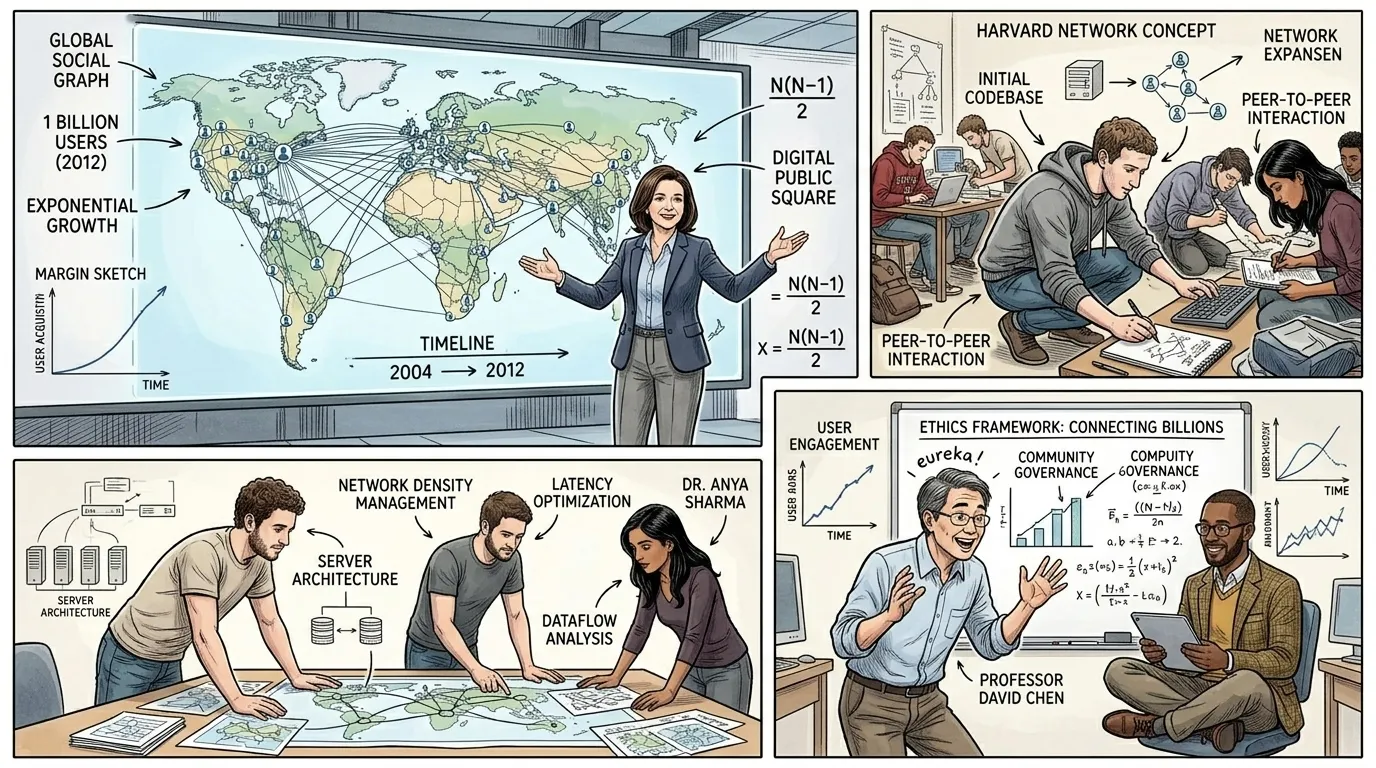
Following its key innovations, Facebook experienced explosive, unprecedented growth. What began as a university network quickly expanded to high schools, then globally to anyone over 13. By 2012, it had surpassed one billion active users, transforming it into a global phenomenon. This widespread adoption demonstrated the profound human desire for connection and self-expression, now facilitated by an intuitive, accessible digital interface. The platform became indispensable for personal communication, event organization, and even professional networking, fundamentally altering how billions navigated their social lives and information consumption. The earlier knowledge of the 'social graph' was now being used at an unimaginable scale.
""We quickly understood that the platform wasn't just for sharing updates; it was building a digital public square for the world." – Sheryl Sandberg, former COO of Facebook, in a historic statement."
Page 9
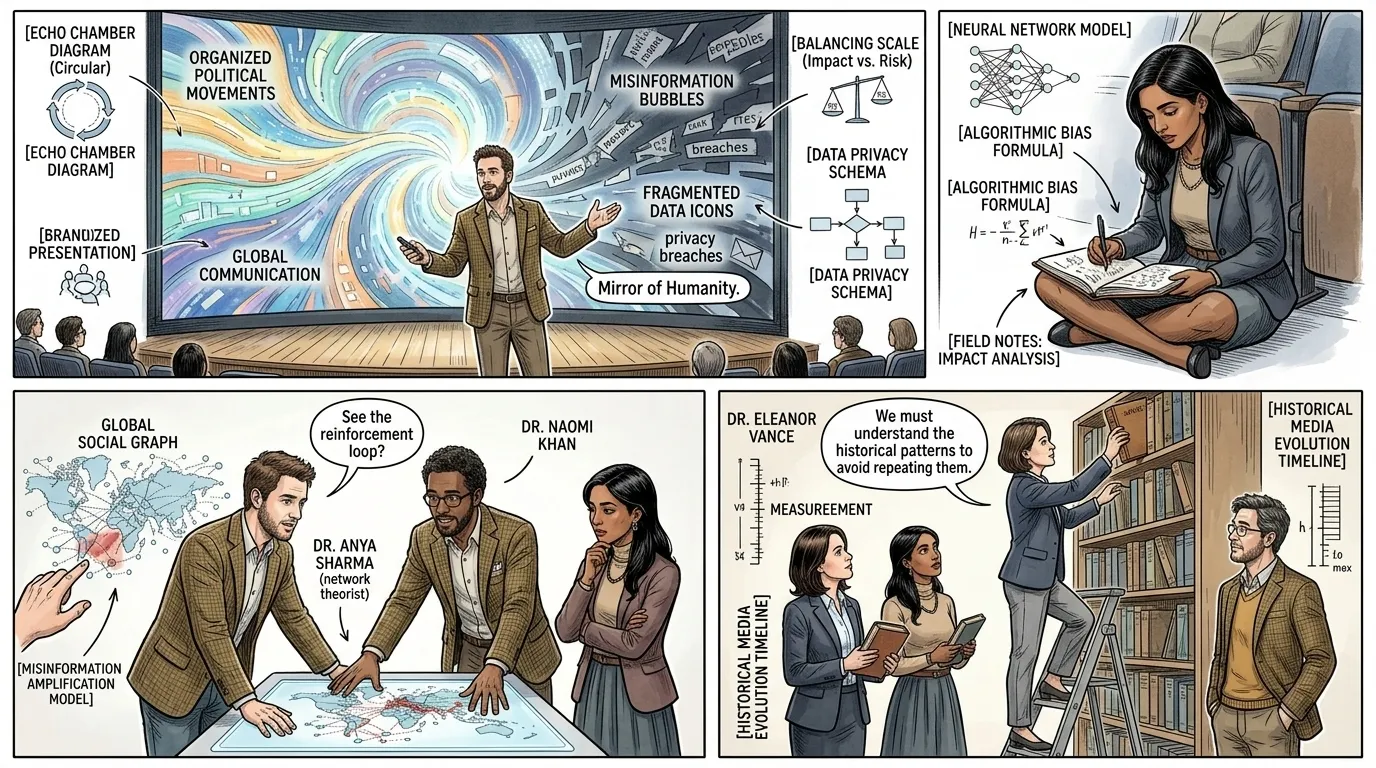
Social media platforms rapidly evolved from simple connection tools into powerful forces shaping culture, politics, and commerce. They provided unprecedented avenues for individuals and groups to organize, share information, and influence public discourse, from political movements to consumer trends. However, this transformative power also brought significant challenges, including the rapid spread of misinformation, issues of privacy, data security, and the psychological impacts of constant digital engagement. As Sherry Turkle, a prominent sociologist, once observed about our digital lives, 'We expect more from technology and less from each other.' This sentiment encapsulates the complex shift social media brought, connecting billions while paradoxically altering the nature of intimacy and community.
""The platform became a mirror, reflecting humanity's best and worst impulses, amplified by unprecedented reach." – Dr. Marcus Thorne, Media Studies Professor, in a contemporary analytical piece."
Page 10
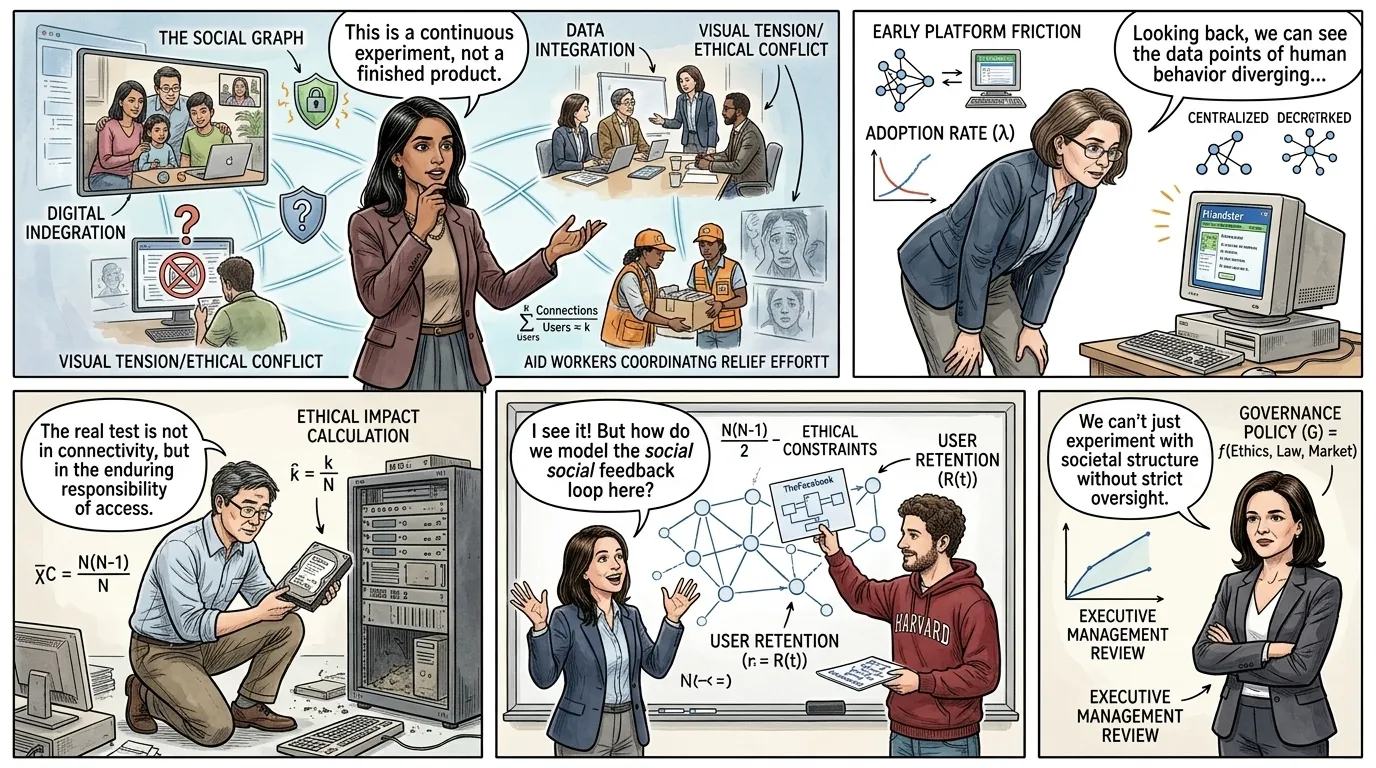
Today, social media platforms are deeply interwoven into the fabric of daily life for billions, fundamentally redefining communication, social interaction, and access to information. From personal expression and maintaining friendships to global business operations and disaster response, their utility is undeniable and vast. Yet, the ongoing debates surrounding their ethical implications – from privacy violations to content moderation and their influence on mental health – underscore that this invention, while revolutionary, is also a continuous experiment in human connection and societal governance within the digital realm. The core mechanism of the 'social graph' continues to evolve, shaping our collective future.
""The question is no longer whether we live with social media, but how we learn to live responsibly with its profound power." – Ethical AI Researcher, Dr. Naomi Khan, in a recent address."
About this story
- Location: Global
- Audience: general readers
Read Wonder Inventions on your phone
Wonder Inventions is available on Android. Get Wonder Inventions on Google Play.