Space Shuttle
Space Shuttle — an illustrated inventions story, set in Global. 10 illustrated pages, free to read on Wonder Inventions.
Page 1
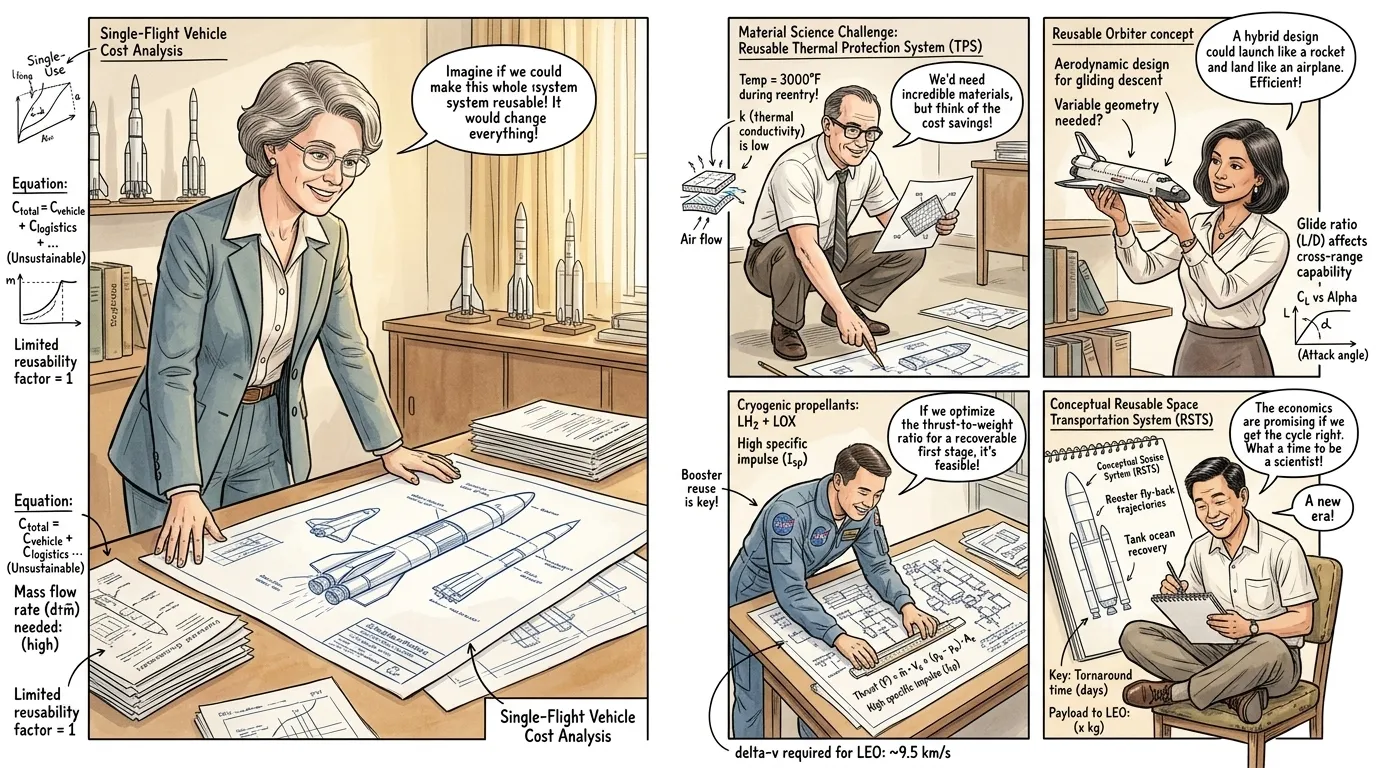
Before the Space Shuttle, space travel was an endeavor of immense cost and logistical complexity, relying entirely on rockets designed for a single, irreversible flight. Each mission meant discarding billions of dollars in hardware, hindering the dream of routine, affordable access to Earth's orbit. This unsustainable approach limited scientific opportunities and the scale of human endeavor in space.
"A veteran aerospace engineer, Dr. Evelyn Reed, once lamented, 'For decades, every launch was a monumental feat, yet inherently wasteful. We literally threw away billions of dollars in hardware with each mission, making true space exploration a luxury few could afford.'"
Page 2
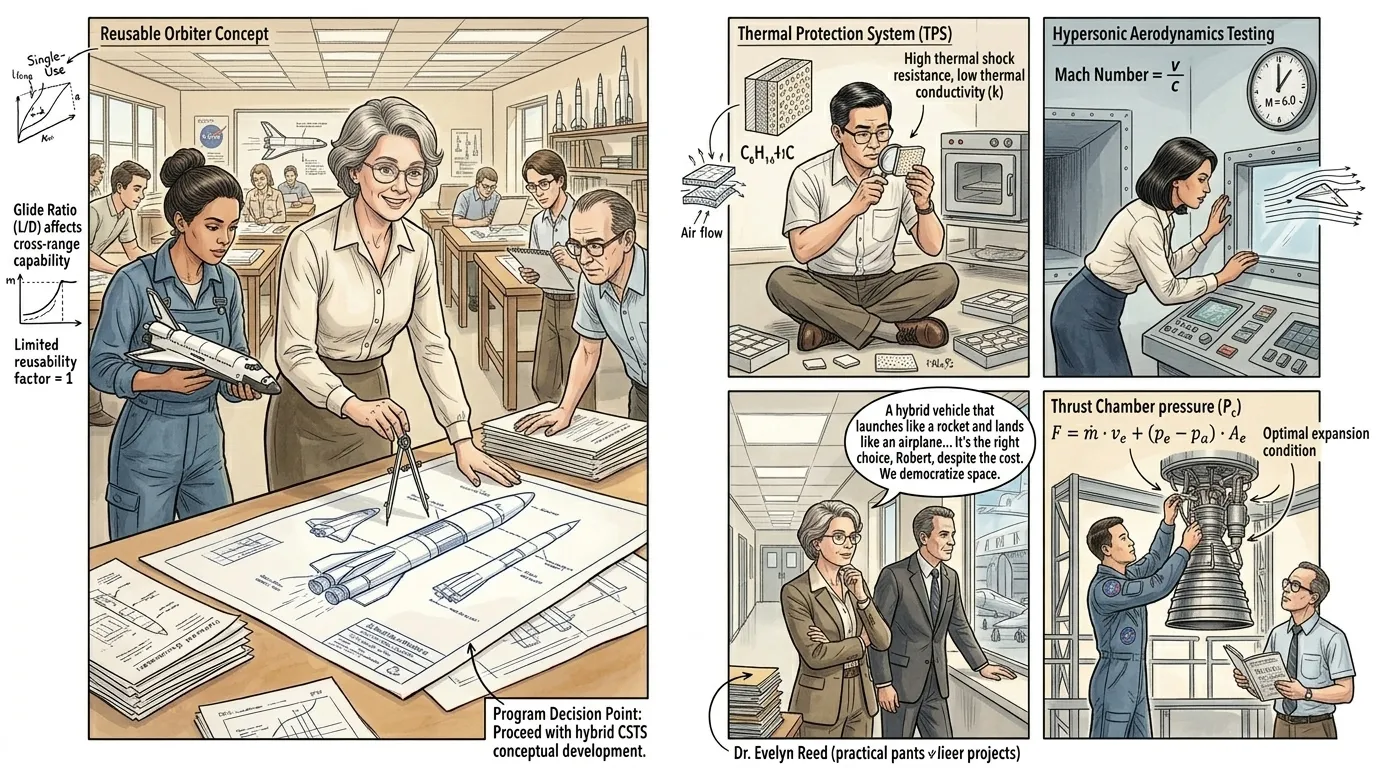
The audacious vision for the Space Shuttle emerged from a desire to break this cycle of expendability, offering a craft that could launch like a rocket, perform orbital missions, and return to Earth to land like an aircraft. This radical shift promised to democratize space, making it a routine destination rather than an exceptional journey. The challenge was immense, requiring innovations in propulsion, materials, and aerodynamics.
"A NASA administrator from the era once stated, 'The ambition was clear: to make space accessible, not a one-off adventure. We needed a vehicle that could truly deliver on the promise of routine operations, bringing samples back from space and even recovering satellites, fundamentally changing our relationship with the cosmos.'"
Page 3
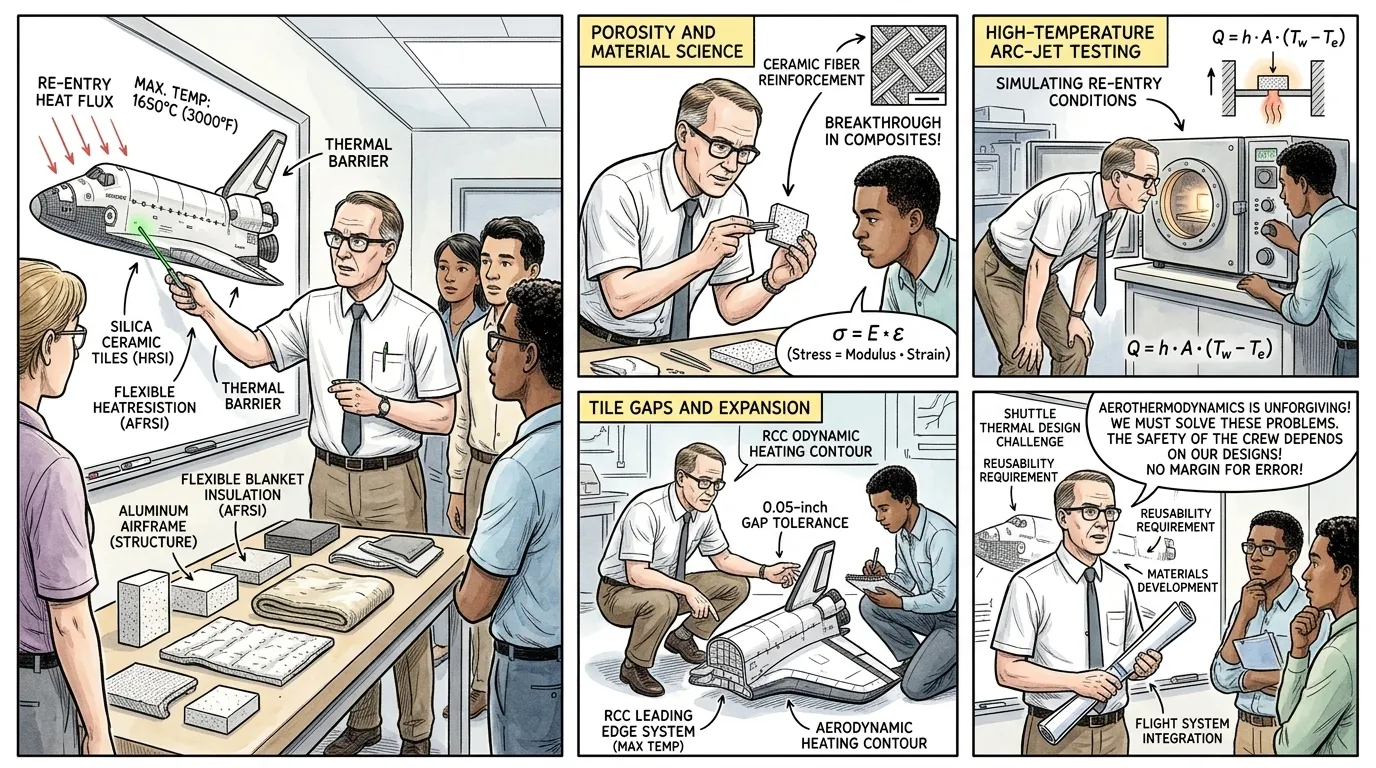
The engineering hurdles were monumental, particularly designing a vehicle capable of withstanding the searing temperatures of atmospheric re-entry at hypersonic speeds, then safely landing. Previous space capsules were either incinerated upon re-entry or required extensive, costly refurbishment, never offering the true reusability envisioned. The solution demanded unprecedented breakthroughs in material science and structural engineering to protect the crew and cargo.
"Reflecting on the era, lead design engineer Arthur Jenkins explained, 'The sheer physics of atmospheric re-entry presented an almost insurmountable challenge. As Wernher von Braun once stated, 'Man has to push himself to the limits of his ability and knowledge to conquer space.' We were pushing those limits, designing for heat, speed, and structural integrity that had never been combined in a reusable craft, particularly with the thermal protection system.'"
Page 4
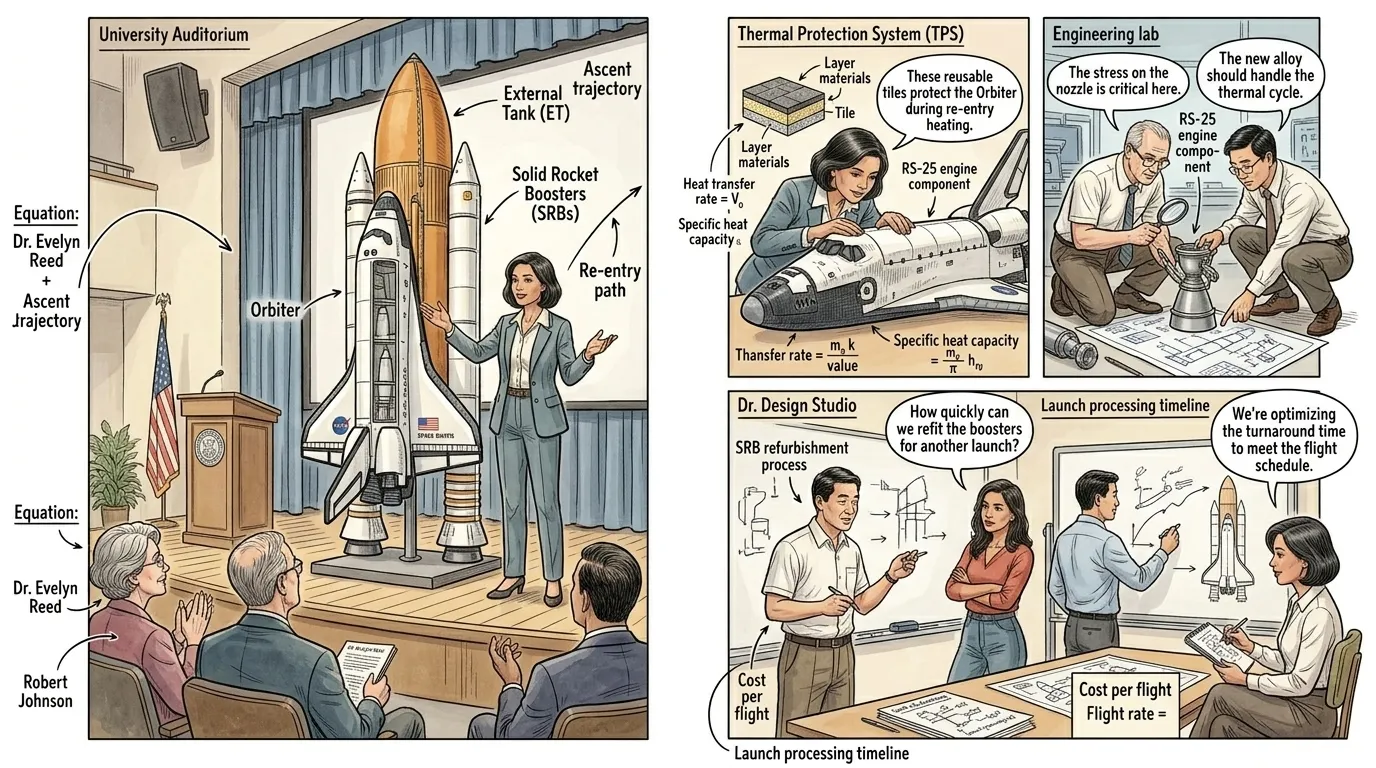
The Space Shuttle was an ingeniously complex system comprising three primary components: the Orbiter, the massive External Tank (ET), and two Solid Rocket Boosters (SRBs). Each part played a unique and critical role in achieving orbit, with only the Orbiter and SRBs designed for reuse. This modularity allowed for optimal performance across the ascent, orbital, and re-entry phases, making it a marvel of integrated engineering.
"A lead aerospace engineer working on the Shuttle program, Dr. Lena Sharma, often emphasized, 'The brilliance of the Space Shuttle system lay in its modularity. Each component, from the powerful Solid Rocket Boosters to the massive External Tank, played a critical, choreographed role in getting the Orbiter to space efficiently and safely.'"
Page 5
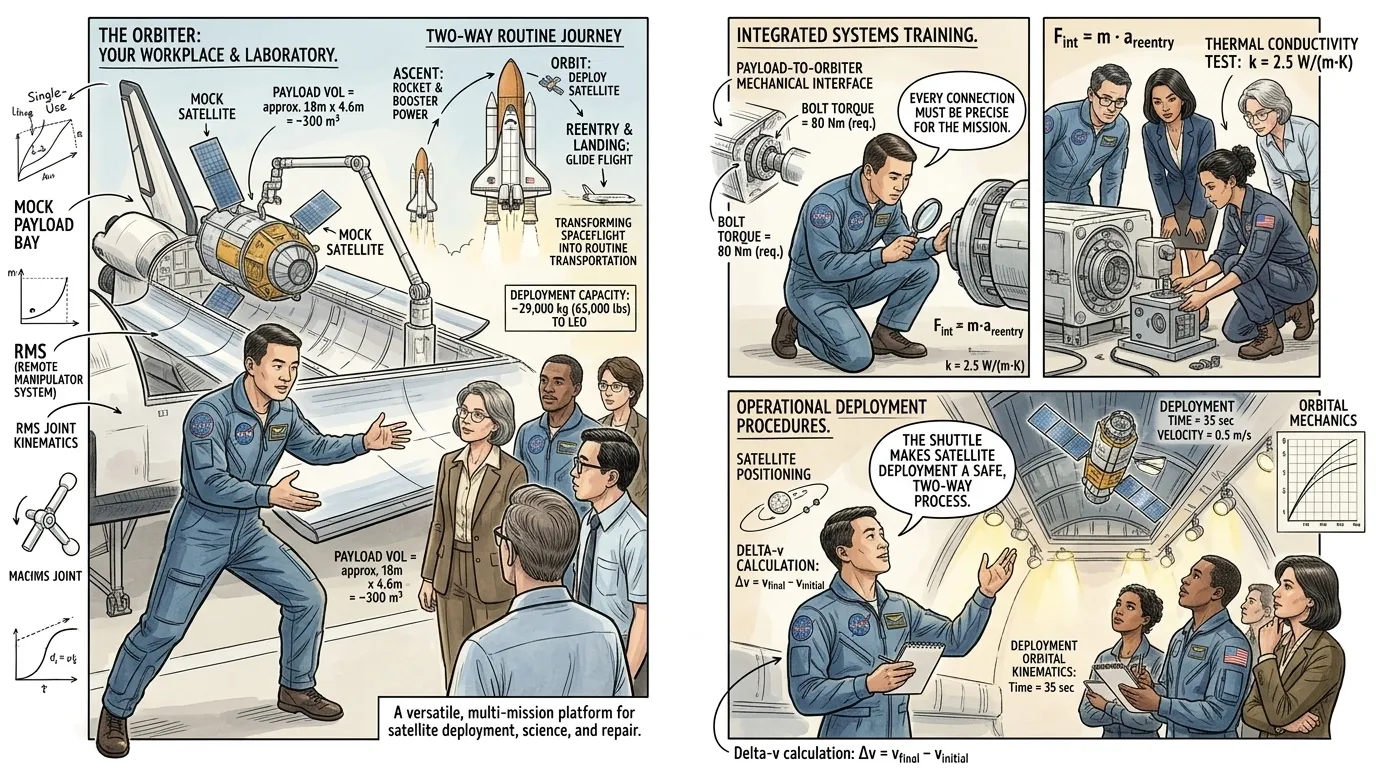
The Orbiter was the winged spacecraft that housed the crew, carried the payload, and ultimately returned to Earth, landing on a conventional runway. Its fuselage contained a vast payload bay capable of deploying satellites or constructing orbital structures, while its underside was covered in thousands of intricate ceramic tiles to protect against re-entry heat. This aspect made it the world's first reusable orbital workhorse, transforming space access.
"A mission specialist, Commander David Chen, frequently told new astronauts, 'The Orbiter was our workplace, our laboratory, and our return vehicle. It transformed the concept of spaceflight from a one-way trip to a return journey, opening up unprecedented possibilities for research and construction, truly making space an extension of Earth.'"
Page 6
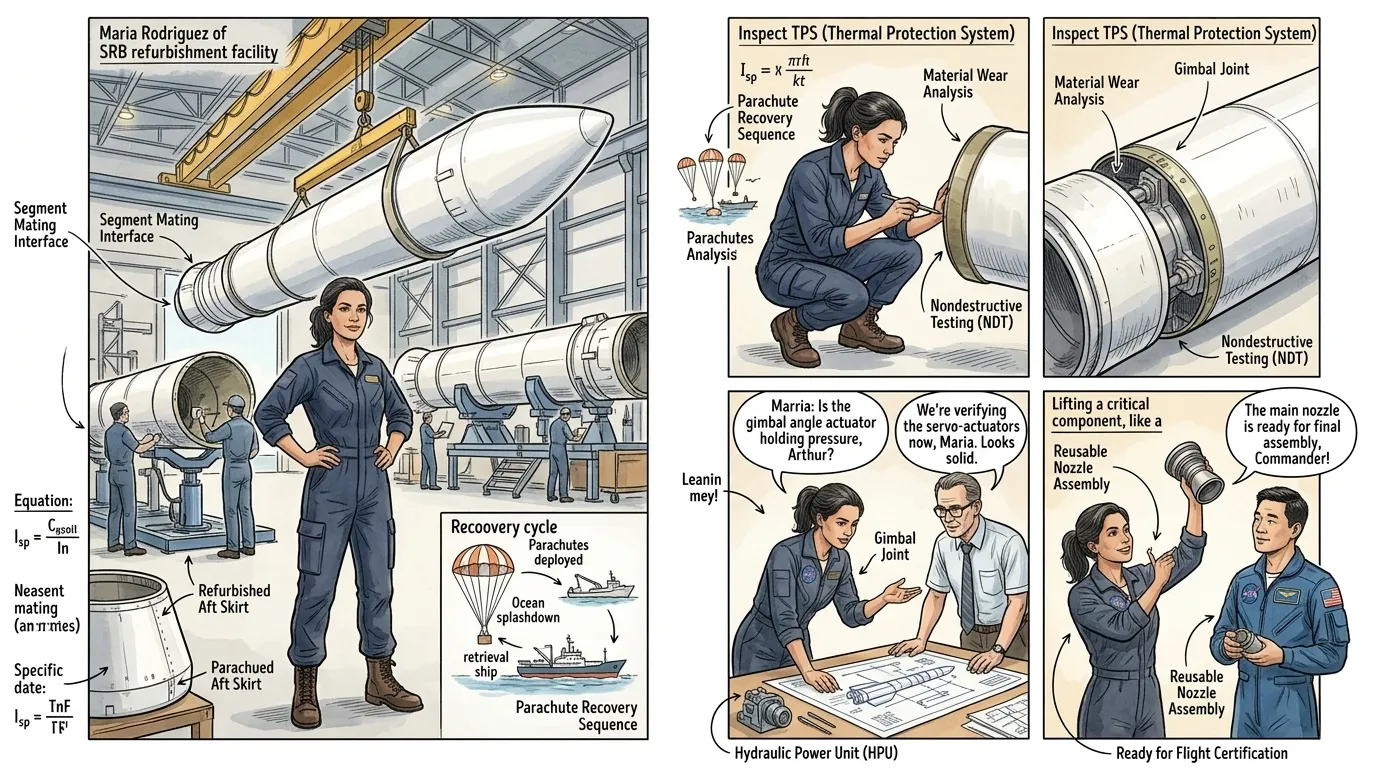
The twin Solid Rocket Boosters (SRBs) provided the primary thrust for the first two minutes of flight, generating an incredible 80% of the Shuttle's lift-off power. After burnout, they detached, deploying parachutes to slow their descent into the Atlantic Ocean, where recovery ships retrieved them. This groundbreaking recovery and refurbishment process was central to the Shuttle's reusable design and economic model, making previously expendable components recyclable.
"According to lead SRB refurbishment technician Maria Rodriguez, 'These boosters were raw power, generating millions of pounds of thrust for the critical first two minutes of flight. Their recovery and refurbishment cycle was a cornerstone of the Shuttle's economic viability – a truly innovative approach to reusing incredibly expensive hardware, proving that even rocket components could have a second life.'"
Page 7
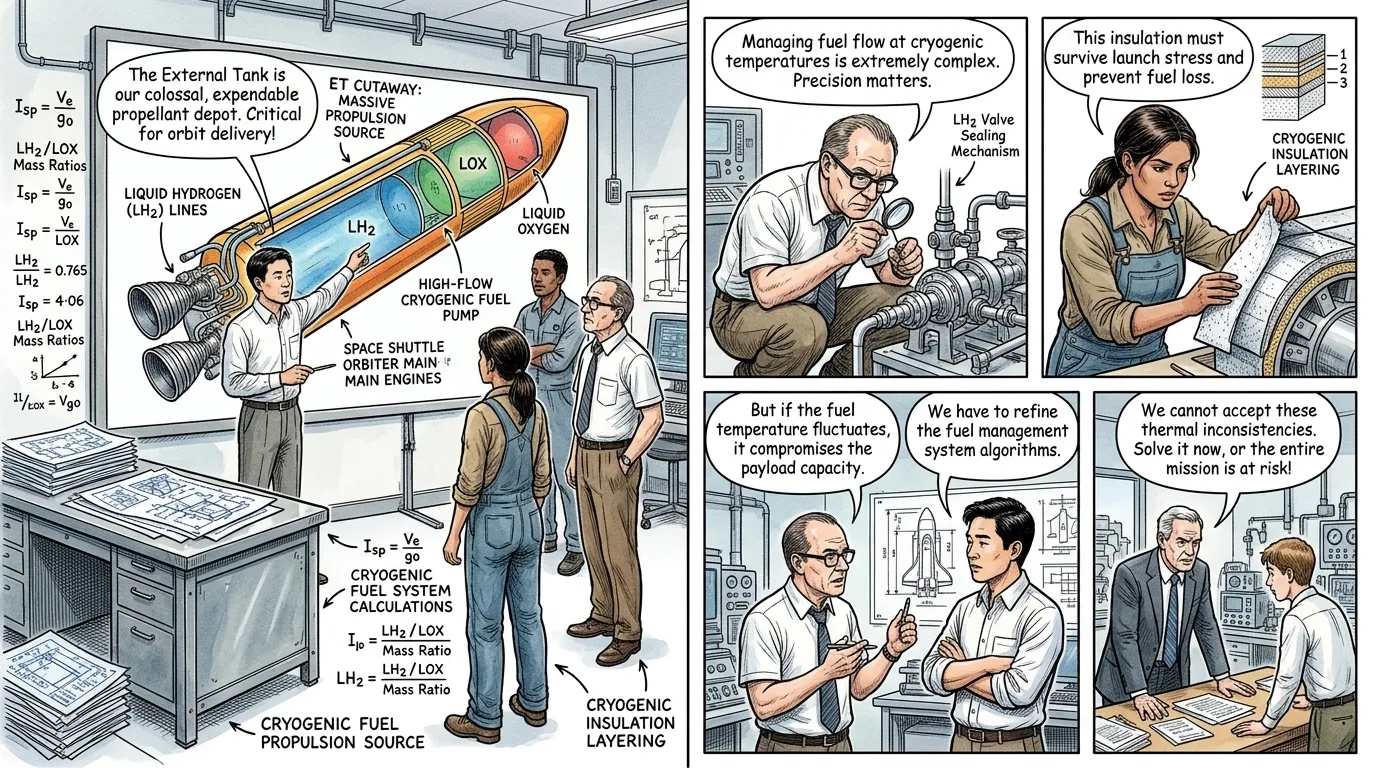
The External Tank (ET) was the largest component of the Space Shuttle stack, containing the vast quantities of liquid hydrogen and liquid oxygen needed to fuel the Orbiter's three main engines during ascent. Unlike the Orbiter and SRBs, the ET was designed to be expendable, jettisoning just before orbital insertion to burn up harmlessly in the atmosphere. Its sheer size and advanced cryogenic insulation were crucial for delivering the Orbiter's payload to orbit.
"A propulsion systems engineer, Dr. Alan Kim, often remarked, 'The External Tank was a colossal fuel depot, meticulously engineered to carry volatile cryogenics. Though it was the only major component not designed for reuse, its elegant simplicity and sheer capacity were fundamental to every mission's success, a testament to efficiency for a single purpose.'"
Page 8
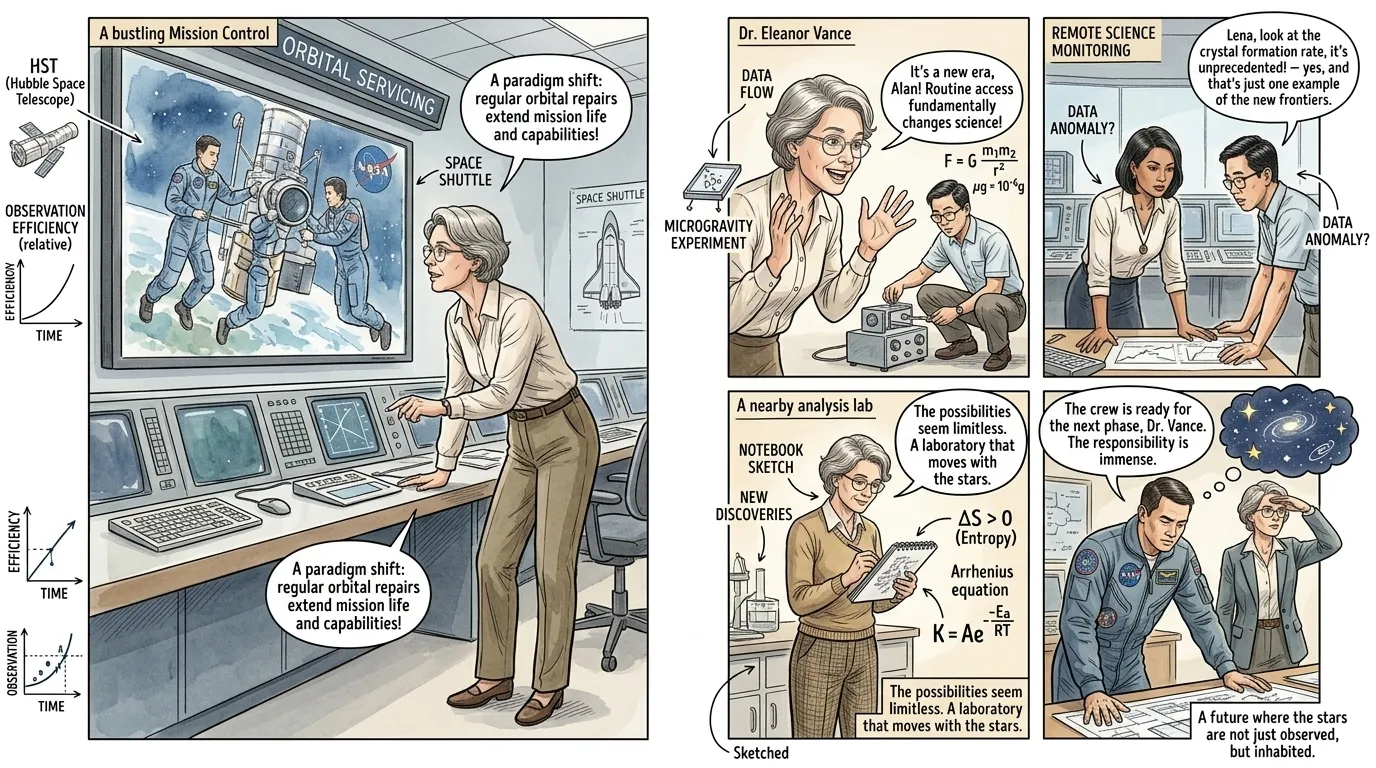
Once operational, the Space Shuttle became humanity's workhorse in low Earth orbit, enabling an unprecedented era of routine space access. It facilitated scientific research in microgravity, deployed numerous satellites, and famously serviced the Hubble Space Telescope, extending its life and groundbreaking discoveries. The ability to return large payloads and conduct on-orbit repairs revolutionized space-based astronomy and Earth observation.
"Dr. Eleanor Vance, a lead scientist on several Shuttle missions, often reflected, 'The Space Shuttle era marked a paradigm shift. We could deploy instruments, conduct experiments in microgravity, and even service the Hubble Space Telescope. As Albert Einstein once said, 'The important thing is not to stop questioning. Curiosity has its own reason for existence.' The Shuttle allowed that curiosity to flourish beyond Earth's bounds, truly empowering scientific discovery.'"
Page 9
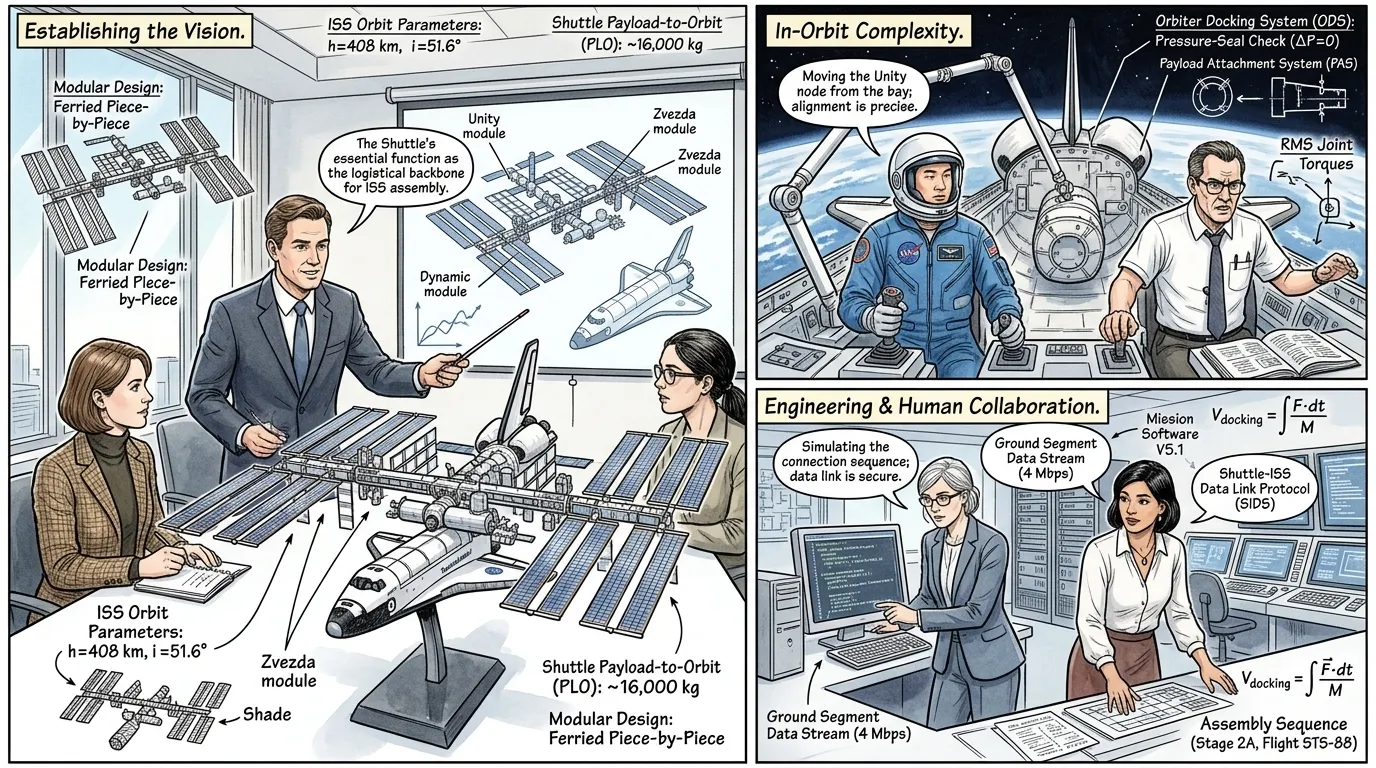
The Space Shuttle's most enduring legacy is arguably its indispensable role in assembling the International Space Station (ISS), the largest structure ever built in space. Over several years, Shuttle missions ferried massive modules, girders, and equipment, along with astronauts and supplies, to low Earth orbit. Its unique heavy-lift and precision docking capabilities were critical to constructing this multinational scientific outpost, piece by intricate piece.
"The ISS Program Manager at the time, Robert Johnson, asserted, 'Without the Space Shuttle, the International Space Station simply would not exist in its current form. It was an indispensable heavy-lift platform, enabling the assembly of a truly global scientific outpost, module by module, girder by girder, showcasing humanity's collaborative spirit in engineering.'"
Page 10
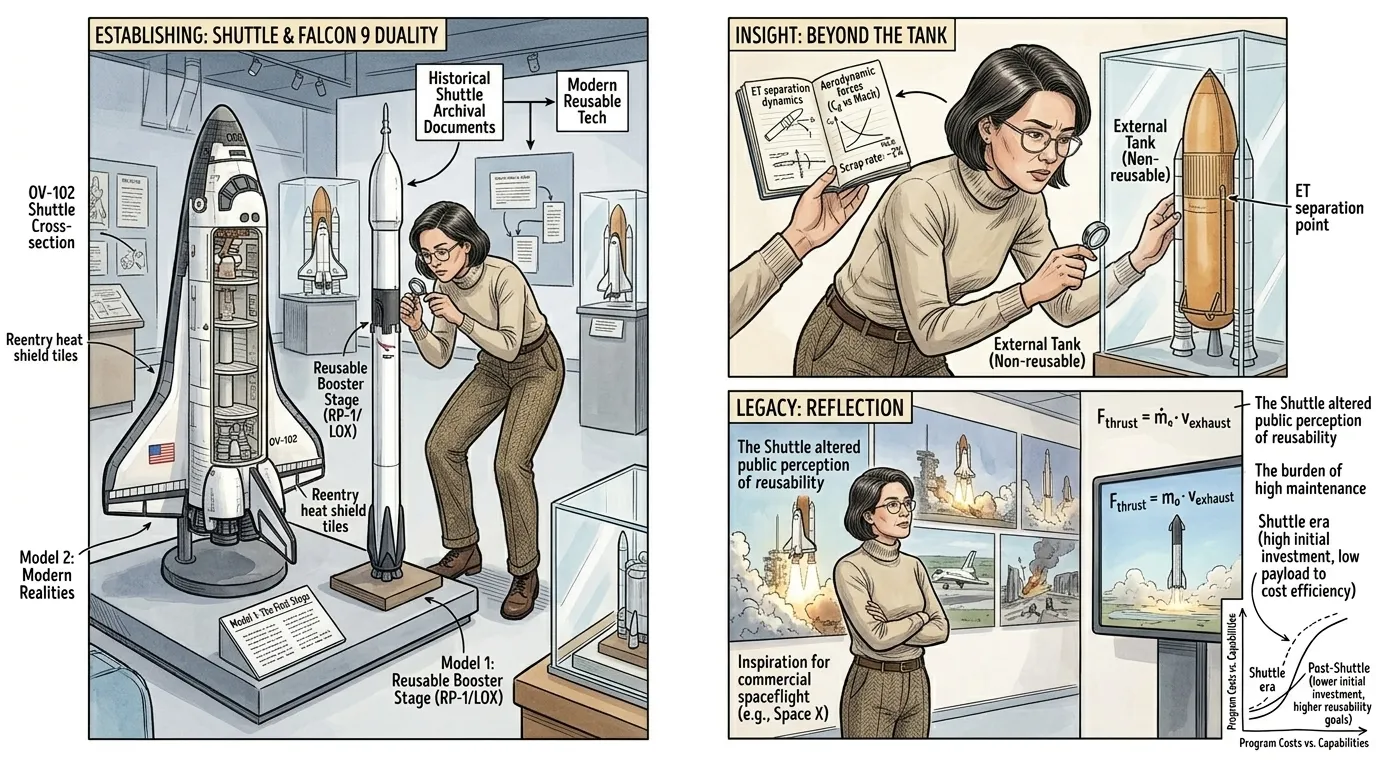
The Space Shuttle program, while achieving unprecedented operational capabilities, faced profound challenges, including the tragic losses of Challenger and Columbia. Its eventual retirement in 2011 marked the end of an era, but its innovative reusability concepts and operational experience profoundly influenced subsequent generations of spacecraft designers. The Shuttle's legacy paved the way for private sector involvement in space, inspiring a new era of reusable rockets and commercial spaceflight.
"As a prominent space historian, Dr. Julianne Park, observed, 'The Shuttle program, for all its triumphs and tragedies, irrevocably altered our perception of space access. It taught us invaluable lessons about engineering, risk, and the indomitable human spirit. Its complex legacy inspires the next generation of reusable rockets and spaceplanes, pushing us toward an even more accessible cosmos, showing what's possible when we dare to innovate.'"
About this story
- Location: Global
- Audience: general readers
Questions and answers
Read Wonder Inventions on your phone
Wonder Inventions is available on Android. Get Wonder Inventions on Google Play.